1. Introduction
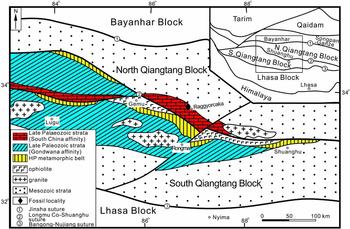
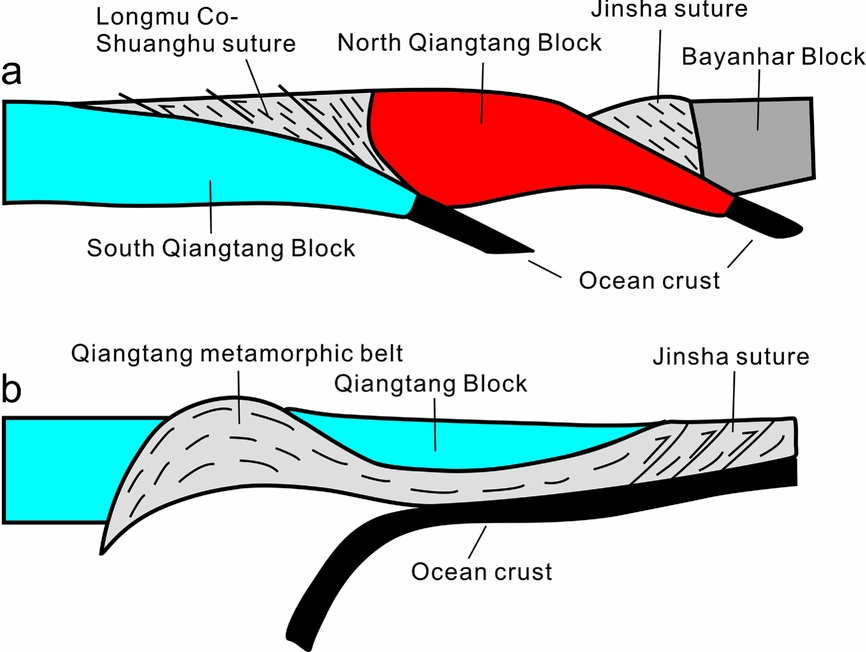
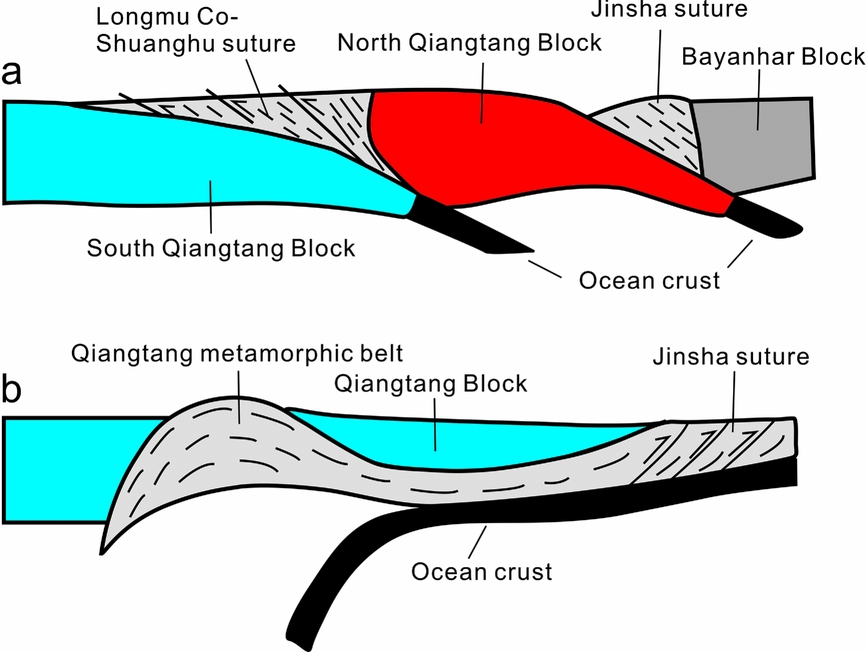
The Qiangtang Metamorphic Belt (QMB) covers an area longer than 500 km in central Qiangtang Basin, northern Tibet, which consists of a tectonic complex including metabasaltic rocks, ophiolitic melange, blueschist, ecologite, metasedimentary and ultramafic rocks (Li, Reference Li1987; Kapp et al. Reference Kapp, Yin, Manning, Murphy, Harrison, Spurlin, Ding, Deng and Wu2000, Reference Kapp, Yin, Manning, Harrison, Taylor and Ding2003; Li et al. Reference Li, Zhai, Dong and Huang2006; Zhang et al. Reference Zhang, Cai, Zhang and Zhao2006a , Reference Zhang, Zhang, Li, Zhu and Weib ; Pullen et al. Reference Pullen, Kapp, Gehrels, Vervoort and Ding2008, Reference Pullen, Kapp, Gehrels, Ding and Zhang2011; Liu et al. Reference Liu, Santosh, Zhao, Niu and Wang2011; Zhai et al. Reference Zhai, Zhang, Jahn, Li, Song and Wang2011; Liang et al. Reference Liang, Wang, Yuan and Liu2012; Pullen & Kapp, Reference Pullen and Kapp2014) (Fig. 1). The origin and formation of this metamorphic belt have been highly contentious issues (e.g. Kapp et al. Reference Kapp, Yin, Manning, Murphy, Harrison, Spurlin, Ding, Deng and Wu2000, Reference Kapp, Yin, Manning, Harrison, Taylor and Ding2003; Li et al. Reference Li, Zhai, Dong and Huang2006, Reference Li, Zhai, Dong, Zeng and Huang2007; Pullen et al. Reference Pullen, Kapp, Gehrels, Vervoort and Ding2008, Reference Pullen, Kapp, Gehrels, Ding and Zhang2011; Zhai et al. Reference Zhai, Zhang, Jahn, Li, Song and Wang2011; Pullen & Kapp, Reference Pullen and Kapp2014). Two basic but contrasting models, the ‘in situ model’ vs. the ‘underthrust model’, have been proposed to explain the formation of the QMB. The ‘in situ model’ holds that the QMB represents the location of the Longmu Co-Shuanghu suture along which the South Qiangtang Block was subducted beneath the North Qiangtang Block during Middle–Late Triassic time (Zhang et al. Reference Zhang, Cai, Zhang and Zhao2006a , Reference Zhang, Zhang, Li, Zhu and Wei b ; Li et al. Reference Li, Cheng, Hu, Yang and Chen1995, Reference Li, Zhai, Dong and Huang2006, Reference Li, Zhai, Dong, Zeng and Huang2007; Zhai et al. Reference Zhai, Zhang, Jahn, Li, Song and Wang2011; Zhao et al. Reference Zhao, Bons, Wang, Liu and Zheng2014, Reference Zhao, Bons, Wang, Soesoo and Liu2015) (Fig. 2a). By contrast, the alternative ‘underthrust model’ envisages that the QMB represents either the Palaeotethyan oceanic lithosphere or an arc terrane that was underthrust about 200 km southwards along the Jinsha suture and exhumed in the interior of a single ‘Qiangtang Block’ (Kapp et al. Reference Kapp, Yin, Manning, Murphy, Harrison, Spurlin, Ding, Deng and Wu2000, Reference Kapp, Yin, Manning, Harrison, Taylor and Ding2003; Pullen et al. Reference Pullen, Kapp, Gehrels, Vervoort and Ding2008, Reference Pullen, Kapp, Gehrels, Ding and Zhang2011; Pullen & Kapp, Reference Pullen and Kapp2014) (Fig. 2b). These two models reflect the two different theories regarding the position of the Palaeotethys Ocean. The ‘in situ model’ considers the Longmu Co-Shuanghu suture to be the remnants of the Palaeotethys Ocean (e.g. Li, Reference Li1987; Li et al. Reference Li, Cheng, Hu, Yang and Chen1995; Metcalfe, Reference Metcalfe2013; Zhang, Shi & Shen, Reference Zhang, Shi and Shen2013; Zhu et al. Reference Zhu, Zhao, Niu, Dilek, Hou and Mo2013), whereas the ‘underthrust’ model regards the Jinsha suture as the Palaeotethys Ocean (e.g. Yin & Harrison, Reference Yin and Harrison2000; Gehrels et al. Reference Gehrels, Kapp, DeCelles, Pullen, Blakey, Weislogel, Ding, Guynn, Martin, McQuarrie and Yin2011; Ding et al. Reference Ding, Yang, Cai, Pullen, Kapp, Gehrels, Zhang, Zhang, Lai, Yue and Shi2013). More importantly, the vague theories of the position of the Palaeotethys Ocean in Tibet have led to different correlation schemes between the Qinghai–Tibet Plateau and Pamirs (e.g. Robinson, Ducea & Lapen, Reference Robinson, Ducea and Lapen2012; Zhang et al. Reference Zhang, Shi, Shen and Yuan2014; Angiolini et al. Reference Angiolini, Zanchi, Zanchetta, Nicora, Vuolo, Berra, Henderson, Malaspina, Rettori, Vachard and Vezzoli2015). Consequently, knowing the origin and formation of the QMB is critical to unravelling the position of the widest ocean in the Qinghai–Tibet Plateau and understanding the tectonic evolution of the Tibetan blocks and other peri-Gondwanan blocks during late Palaeozoic time.
Simplified geological map of the central Qiangtang Basin showing the location of the Qiangtang Metamorphic Belt and the fossil locality concerned in this paper.

Two contrasting tectonic models explaining the formation of the Qiangtang Metamorphic Belt: (a) the in situ model (Li et al. Reference Li, Cheng, Hu, Yang and Chen1995); and (b) the underthrust model (Kapp et al. Reference Kapp, Yin, Manning, Harrison, Taylor and Ding2003). The ‘in situ model’ holds that the QMB marks a collision zone along the Longmu Co-Shuanghu suture (e.g. Li et al. Reference Li, Cheng, Hu, Yang and Chen1995). By contrast, the ‘underthrust model’ describes how the South and North Qiangtang blocks belong to a single block and the QMB was underthrust from the Jinsha suture (e.g. Kapp et al. Reference Kapp, Yin, Manning, Murphy, Harrison, Spurlin, Ding, Deng and Wu2000, Reference Kapp, Yin, Manning, Harrison, Taylor and Ding2003).
A key method of examining the validity of either model is to determine whether the late Palaeozoic strata and palaeobiogeography both north and south of the QMB belong to the same block. In this paper, we report a new earliest Permian fusuline fauna from the Raggyorcaka Lake area which is located to the north of the QMB. This fusuline fauna will assist in determining the validity of alternative models.
2. Carboniferous and Permian strata in the Raggyorcaka Lake area
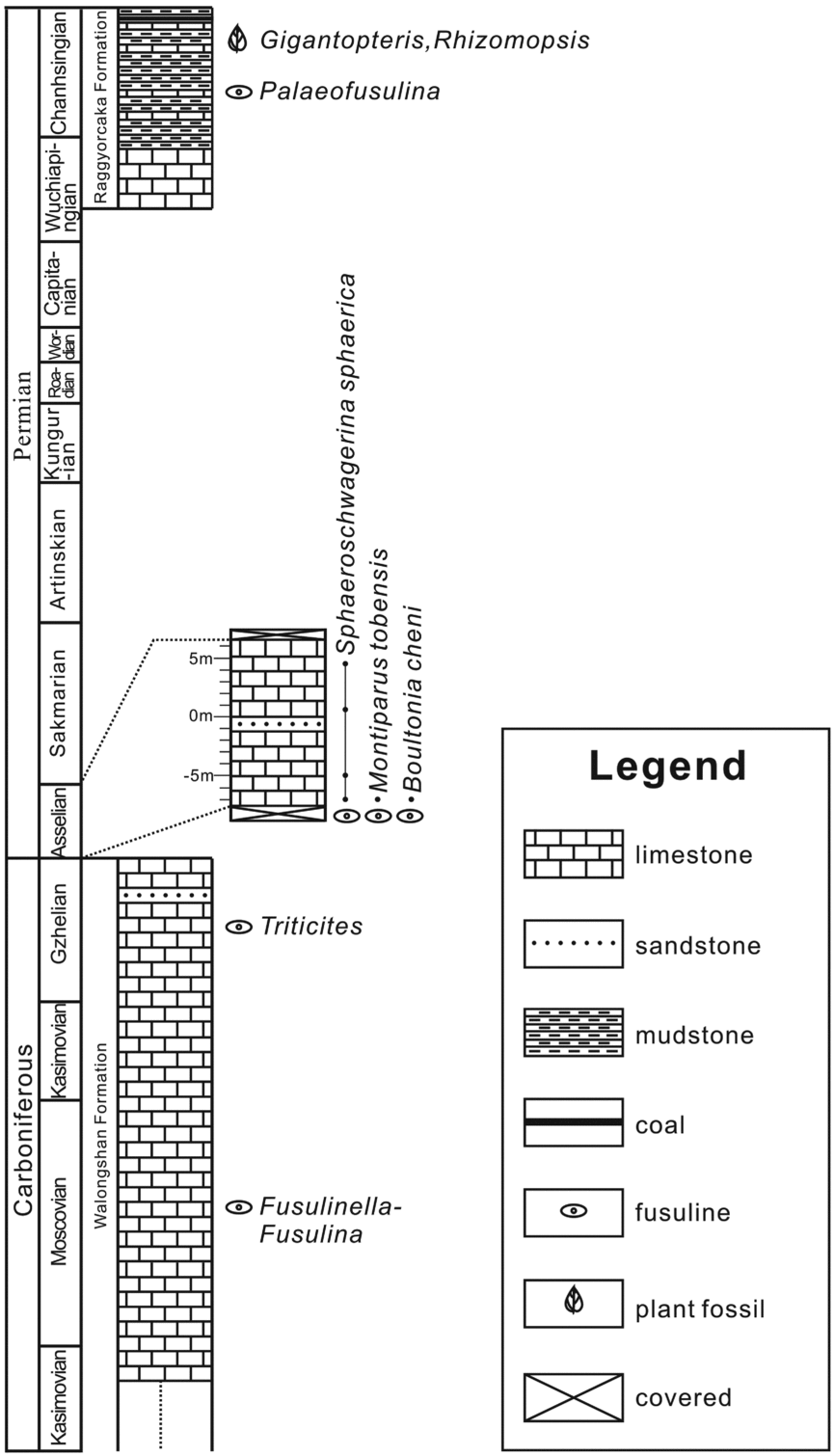
The Raggyorcaka Lake is located about 70 km north of Rongma Town, Nyima County. The Carboniferous and Permian strata are well exposed in that area. The Raggyorcaka Formation was the first recognized lithological unit, which is a paralic sequence composed of limestone, sandstone, shale and coal seams (Wen, Reference Wen1979). The fusuline genus Palaeofusulina, brachiopod genera Permophricodothyris and Cathaysia in the limestone and the plant fossil Gigantopteris in the shale all suggest a Lopingian (late Permian) age (Wen, Reference Wen1979). During the 1:250000 mapping work carried out in that area, a carbonate succession containing abundant fusulines was discovered about 15 km west of the Raggyorcaka Lake and was named the Walongshan Formation (Cheng et al. Reference Cheng, Cheng, Zhang and Wu2006). The fusulines in the carbonates suggest an age ranging from late Visean to Gzhelian (Cheng et al. Reference Cheng, Chen, Zhang and Wu2007; Wu, Yao & Ji, Reference Wu, Yao and Ji2009).
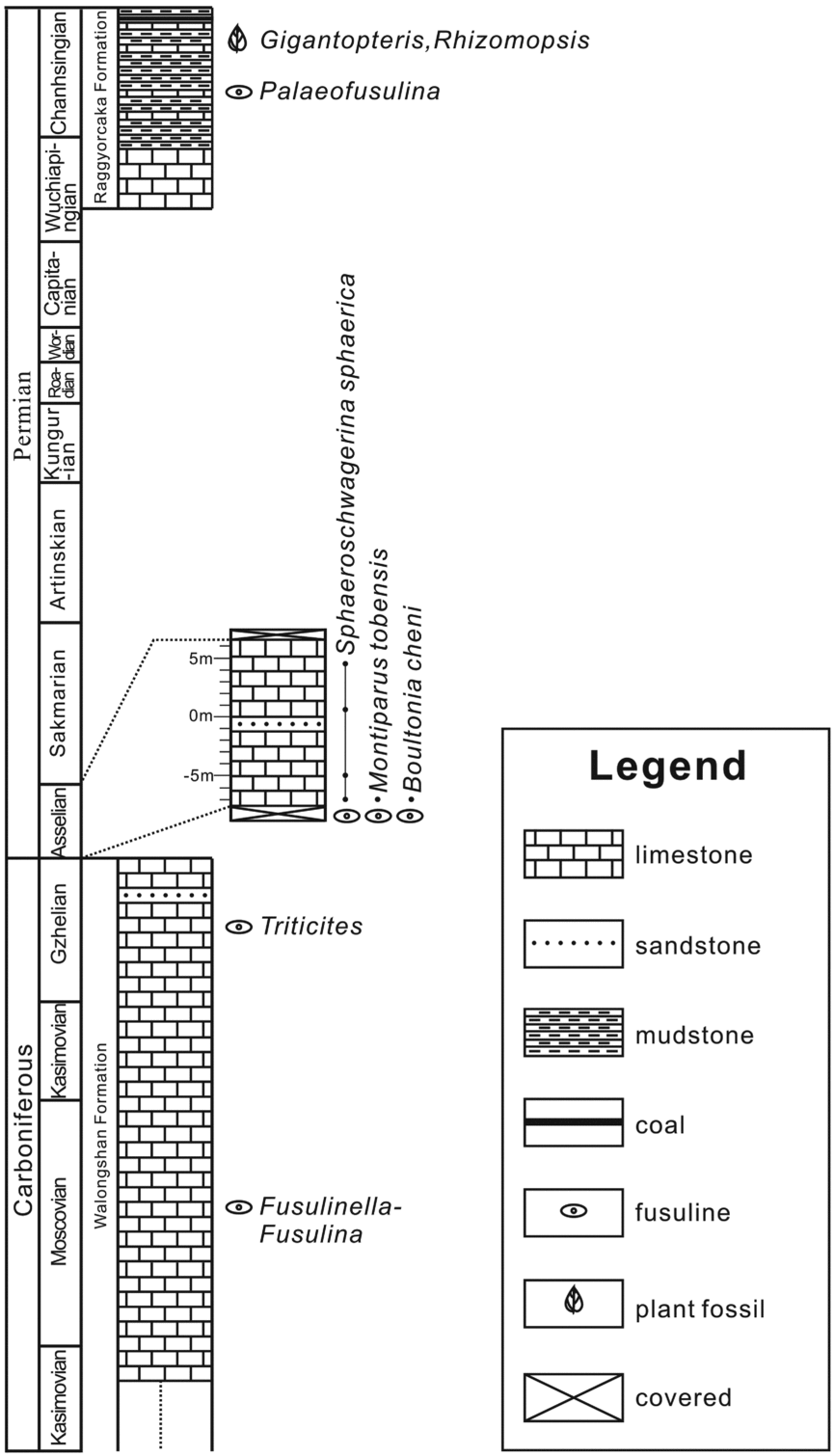
The fusulines reported in this paper were collected from a sequence in an isolated hill located to the west of Raggyorcaka Lake (33°43′45″N, 86°39′54″E). This sequence is composed mostly of median layered limestone with a few layers of thin-bedded sandstones (Fig. 3). Judging from the field occurrence, this sequence overlies the Walongshan Formation.
The generalized stratigraphic column showing the ranges of Sphaeroschwagerina fauna and its stratigraphic relationships with other formations in the Raggyorcaka Lake area.
3. Fusuline composition and its age
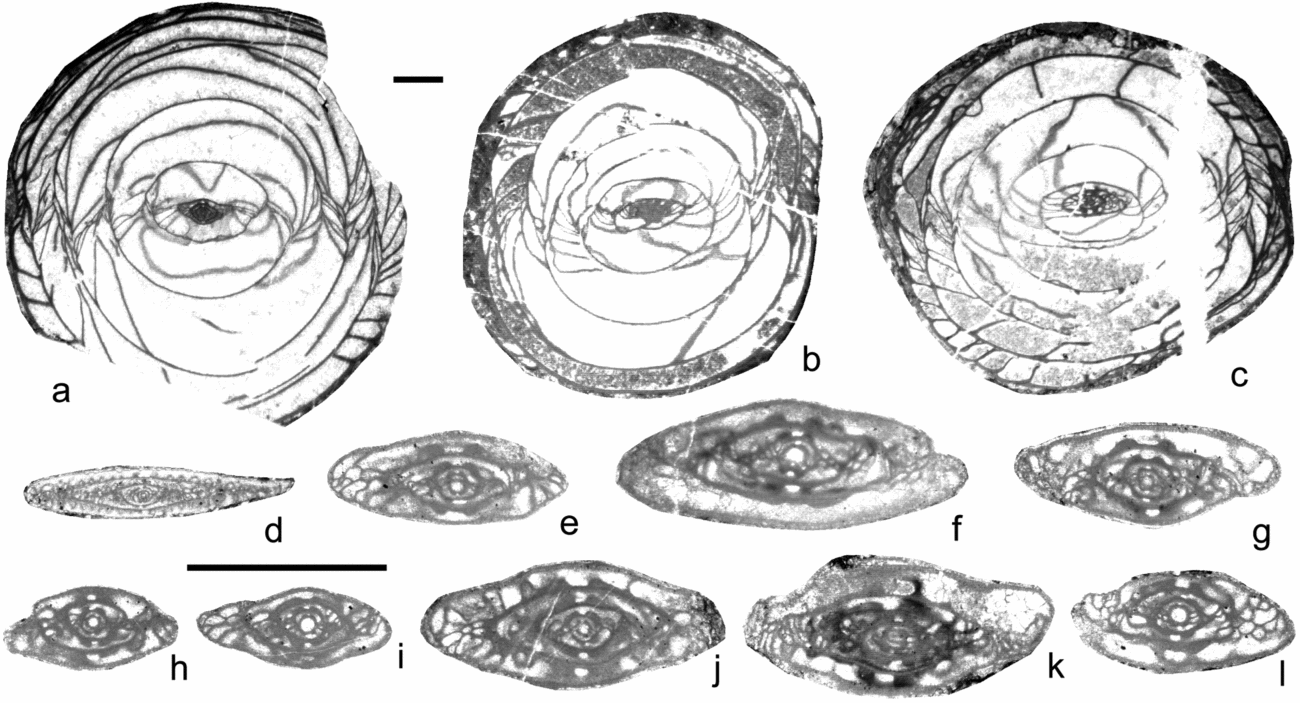
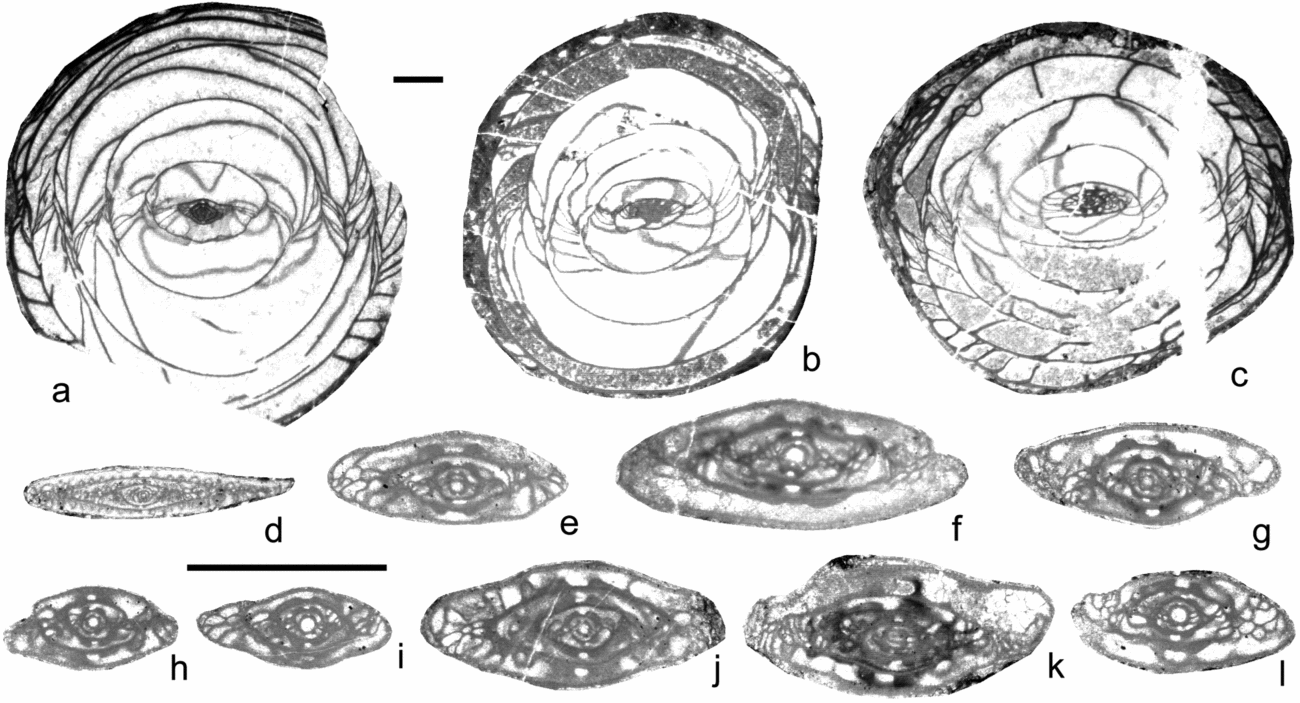
The fusuline fauna from this small hill comprise only three species: Sphaeroschwagerina sphaerica (Scherbovich), Boultonia cheni Ho and Montiparus tobensis (Zhang) (Fig. 4). Even if the diversity of the fusulines is relatively low, it presents valuable information regarding its palaeogeographic position. In particular, Sphaeroschwagerina sphaerica is widely distributed in the Palaeotethys realm such as the Chuanshan and Maping formations in South China (e.g. Chen & Wang, Reference Chen and Wang1983), the Taiyuan Formation in North China (e.g. Sheng & Wang, Reference Sheng and Wang1984), the Kangkelin and Keziliqiman formations in the Tarim Block (e.g. Li & Lin, Reference Li and Lin1994), the oceanic seamounts in the Changning–Menglian suture (Ueno, Wang & Wang, Reference Ueno, Wang and Wang2003), eastern Malaysia (Sakamoto & Ishibashi, Reference Sakamoto and Ishibashi2002), central Iran (Leven & Gorgij, Reference Leven and Gorgij2006), Darvaz (Leven, Reference Leven1987), Urals (e.g. Rauzer-chernousova & Scherbovich, Reference Rauzer-chernousova and Scherbovich1949), Russian platform (e.g. Rauzer-chernousova & Scherbovich, Reference Rauzer-chernousova and Scherbovich1958) and eastern Europe platform (Alekseeva et al. Reference Alekseeva, Glushenko, Ivanov, Inosova, Kalmykova, Kashik, Kozickaya, Kruzina, Movshovich, Redichkin and Shvardman1983). The age of this species is confined to Asselian– Sakmarian. However, the coexisting genus Montiparus renders a Sakmarian age unlikely. Consequently, the age of the fusuline fauna is definitely the Asselian of the earliest Permian.
Asselian fusulines from the Raggyorcaka Lake area: (a–c) Sphaeroschwagerina sphaerica (Scherbovich); (d) Boultonia cheni Ho; (e–l) Montiparus tobensis (Zhang). The scale bar is 1 mm; (a–c) short scale bar and (d–l) long scale bar.
4. Geological implications
The QMB was originally regarded as the remnants of the Palaeotethys Ocean by Li (Reference Li1987). The Carboniferous and Permian strata from the Qamdo area in eastern Tibet were invoked as the candidate sequences for the strata of the North Qiangtang Block. However, the long distance between the QMB and the Qamdo area makes this correlation unlikely. Later, the Lower Carboniferous Riwanchaka Formation and the Lopingian Raggyorcaka Formation were listed to represent the sequence for the strata of the North Qiangtang Block (Li & Zheng, Reference Li and Zheng1993). It is however argued that these formations in the North Qiangtang Block did not overlap with the glaciomarine deposits in the South Qiangtang Block, and further suggested that the glaciomarine deposits and other formations in the North Qiangtang Block came from a single block which was deposited under varying climatic conditions (Pullen et al. Reference Pullen, Kapp, Gehrels, Ding and Zhang2011; Pullen & Kapp, Reference Pullen and Kapp2014). This theory is partly correct because the warm water fauna would have invaded and occupied the Cimmerian continents during middle–late Permian time with the continuous northwards drifting of these continents and the climatic warming after the Late Palaeozoic Ice Age (Shi, Archbold & Zhan, Reference Shi, Archbold and Zhan1995; Shi & Archbold, Reference Shi, Archbold, Hall and Holloway1998; Zhang, Shi & Shen, Reference Zhang, Shi and Shen2013). The Lopingian Raggyorcaka Formation therefore provides weak evidence to account for the difference between the North Qiangtang Block and the South Qiangtang Block.
However, the discovery of the Sphaeroschwagerina fusuline fauna in this study significantly weakens the argument of Pullen et al. (Reference Pullen, Kapp, Gehrels, Ding and Zhang2011) and Pullen & Kapp (Reference Pullen and Kapp2014) for the following reasons. Firstly, a massive ice sheet covered most of the Gondwana continents such as South America, Antarctica, western and eastern Australia, India Peninsular and Saudi Arabia during Asselian – early Sakmarian time (Fielding, Frank & Isbell, Reference Fielding, Frank and Isbell2008; Isbell et al. Reference Isbell, Henry, Gulbranson, Limarino, Fraiser, Koch, Ciccioli and Dineen2012). Similarly, the glaciomarine deposits were widely distributed in the South Qiangtang Block, the Lhasa Block and the Tethys Himalaya area in the northern Gondwanan margin (e.g. Liang et al. Reference Liang, Nie, Guo, Xu, Zhang and Wang1983; Fan et al. Reference Fan, Li, Wang, Xie and Xu2015). Additionally, these blocks in the northern Gondwanan margin were governed by cold currents (Angiolini et al. Reference Angiolini, Gaetani, Muttoni, Stephenson and Zanchi2007). The fauna during the late Palaeozoic glaciations in these blocks was dominated mostly by bivalves and cold-water brachiopods without any warm-water fauna such as compound corals and fusulines (Liang et al. Reference Liang, Nie, Guo, Xu, Zhang and Wang1983; Zhang, Shi & Shen, Reference Zhang, Shi and Shen2013). The Asselian fusuline fauna was therefore unlikely to have survived in the cold water around the Gondwanan margin such as the South Qiangtang and Lhasa blocks. Secondly, the Carboniferous Walongshan Formation, the Sphaeroschwagerina-containing Asselian sequence and the Lopingian Raggyorcaka Formation constituted a successive Carboniferous–Permian carbonate sequence in the Raggyorcaka Lake area, which was devoid of any cold glaciomarine deposits. Finally, the Sphaeroschwagerina-containing Asselian sequence is comparable to the Zharigen Formation in the Tanggula area (Liu, Reference Liu1993) and the Licha Formation in the Qamdo area (Sichuan Regional Geological Survey & Nanjing Institute of Geology and Palaeontology, 1982). Consequently, the North Qiangtang Block is most likely a part of the larger Qamdo Block which was situated at low latitude areas during Permian time (Zhang, Shi & Shen, Reference Zhang, Shi and Shen2013).
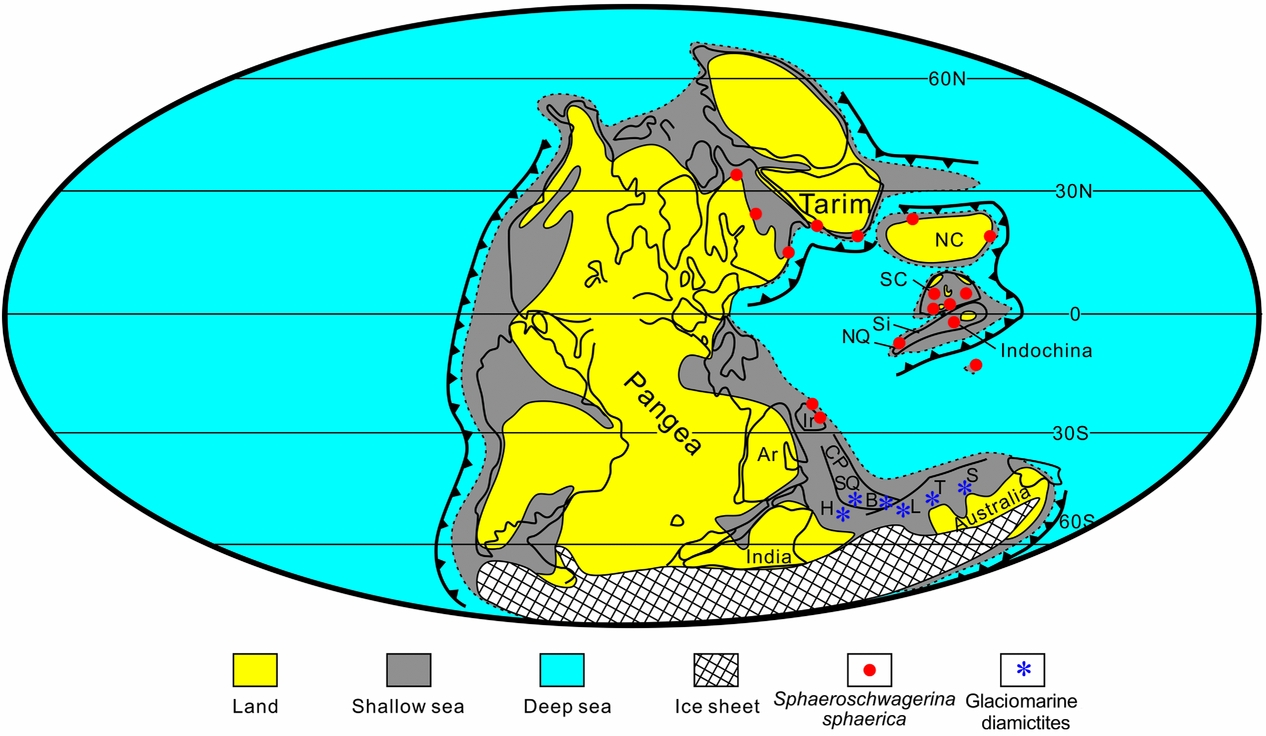
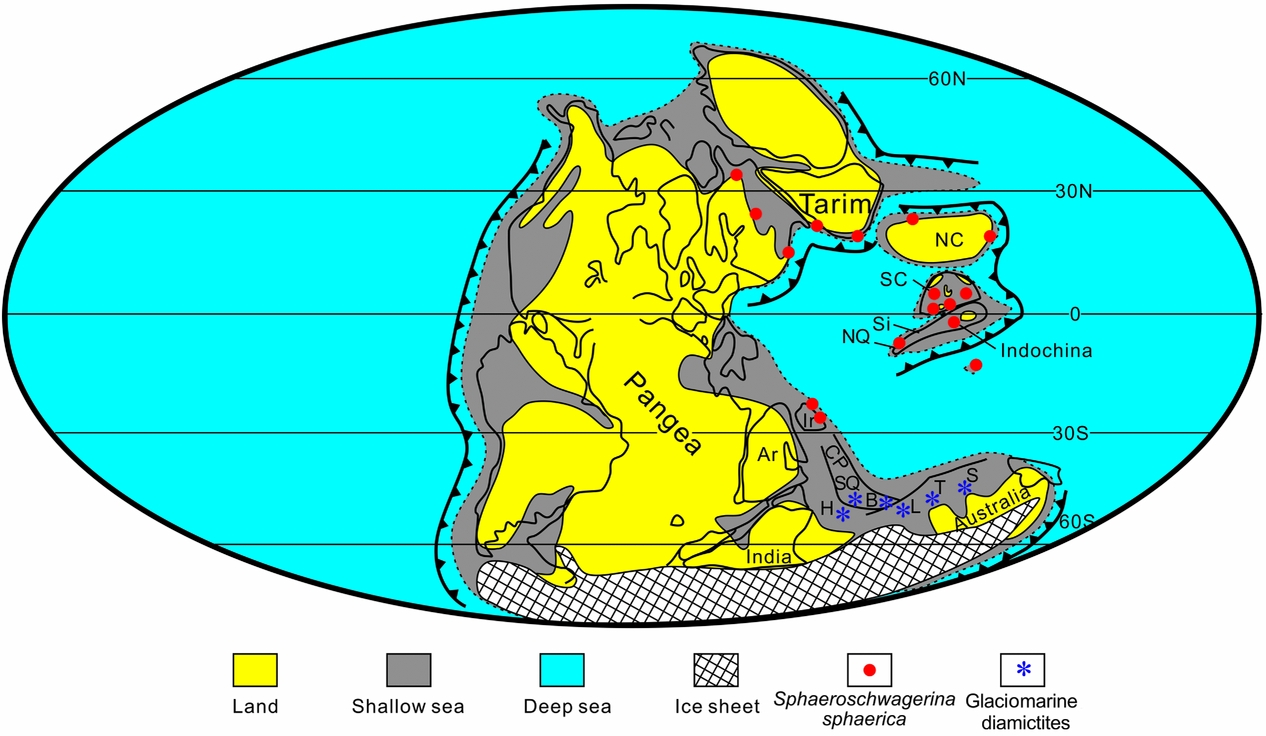
In conclusion, the Asselian Sphaeroschwagerina fauna discovered in the Raggyorcaka Lake area provides solid evidence in support of the notion that the North Qiangtang Block was located at low-latitude areas during Asselian time (Fig. 5). In contrast, the South Qiangtang Block in the south was situated in the Gondwanan margin during the same time as evidenced by widespread glaciomarine diamictites with cold-water faunas (Liang et al. Reference Liang, Nie, Guo, Xu, Zhang and Wang1983). In addition, the presence of Devonian radiolarian cherts and Carboniferous ophiolites suggests the existence of a wide Palaeotethys Ocean along the Longmu Co-Shuanghu suture (Zhu et al. Reference Zhu, Zhang, Dong, Wang, Yu and Feng2006; Zhai et al. Reference Zhai, Jahn, Wang, Su, Mo, Wang, Suohan and Lee2013). Such a palaeogeographic reconstruction favours the ‘in situ model’ for the formation of the QMB (Li et al. Reference Li, Zhai, Dong and Huang2006, Reference Li, Zhai, Dong, Zeng and Huang2007; Zhang et al. Reference Zhang, Cai, Zhang and Zhao2006a , Reference Zhang, Zhang, Li, Zhu and Wei b ; Zhai et al. Reference Zhai, Zhang, Jahn, Li, Song and Wang2011; Zhao et al. Reference Zhao, Bons, Wang, Liu and Zheng2014, Reference Zhao, Bons, Wang, Soesoo and Liu2015). The northwards drift of the South Qiangtang Block and its subsequent collision with the North Qiangtang Block resulted in the formation of the QMB that exhumed along the Longmu Co-Shuanghu suture during Triassic time (Li et al. Reference Li, Zhai, Dong and Huang2006, Reference Li, Zhai, Dong, Zeng and Huang2007; Zhang et al. Reference Zhang, Cai, Zhang and Zhao2006a , Reference Zhang, Zhang, Li, Zhu and Wei b ; Zhai et al. Reference Zhai, Zhang, Jahn, Li, Song and Wang2011; Liang et al. Reference Liang, Wang, Yuan and Liu2012).
Schematic palaeogeographic map of the Tethyan area during Asselian time showing the distribution of the fusuline genus Sphaeroschwagerina. The presence of Sphaeroschwagerina in the Raggyorcaka area suggests that the North Qiangtang Block was located at low-latitude areas during Asselian time. By contrast, the dominance of glaciomarine diamictites in the South Qiangtang Block suggests the position of a Gondwanan margin for this block. Base map modified after Metcalfe (Reference Metcalfe2013). Abbreviations of tectonic blocks/areas: Ar – Arabia; B – Baoshan Block; CP – Central Pamir; H – Himalaya; Ir – Iran (including Transcaucasia); L – Lhasa Block; NQ – North Qiangtang Block (Qamdo Block); S – Sibumasu Block; SC – South China; Si – Simao Block; SQ – South Qiangtang Block; T – Tenchong Block.
5. Conclusions
The Asselian fusuline Sphaeroschwagerina fauna discovered in the Raggyorcaka Lake area in the North Qiangtang Block rules out the possibility that the North Qiangtang Block and South Qiangtang Block belonged to a single block during early Permian time, but suggests a wide Palaeotethys Ocean between them. This fact suggests that the QMB was not originated from the oceanic lithosphere or an arc terrane underthrust from the Jinsha suture in the north, but from the collision between the North and South Qiangtang blocks marked by the closure of the main Palaeotethys Ocean along the Longmu Co-Shuanghu suture.
Acknowledgements
We thank Prof. Ian Metcalfe and Prof. Andrea Zanchi for their very helpful comments which improved the manuscript greatly. This work was supported by National Science Foundation of China (41472029, 41290260, 41420104003); China Geological Survey (1212011121257); and Strategic Priority Research Program (B) of the Chinese Academy of Sciences (XDB03010102).