A Tale of Two Countries
The diffusion of nuclear energy strongly hinges on socioeconomic and political factors as well as direct state intervention. Nuclear energy is therefore distinct from other energy technologies whose adoption relies both on decentralized market mechanisms and on the very evolution of the technology in conjunction with relative prices. Decisions to go nuclear and build the first nuclear facility often mark turning points in the course of national events and also in the global history of international relations.
The capital risks, and educational and technological systems involved in the commitment to going nuclear place this decision along the path dependence course. To unravel this scenario, academic research has clarified the circumstances that have impelled nations toward nuclear power solutions. Most studies are based on large datasets that gather economic, energy and policy variables with the dependent variable taken from the Power Reactor Information System database, to represent the nuclear energy path of a given country. The logistic regression approach thereby serves to model the relationships between the independent and dependent variables. Overall, statistical analysis indicates that economic growth and dependence on fossil fuel imports positively associate with the building of nuclear power plants.
The level of economic growth seems to decisively influence the attractiveness of nuclear power. Two main causal mechanisms seem to be at work within this influence: financial capacity and demand for electricity. On the one hand, a “high degree of national financial capacity for nuclear power development is necessary to allocate initial investments for creating the regulatory, legislative and basic physical infrastructure before construction, but similarly required to finance actual construction of the first nuclear power plant” (Neumann et al., 2020, p. 5); on the other hand, higher levels of growth increase the demand for electricity and foster the urgency to build nuclear power plants (Cherp et al., 2017; Jewell, 2011). In this respect, Jewell (2011, 2017) reports electricity consumption growth rates greater than 5% per year in the period prior to the construction of the first nuclear power stations. The second relevant discovery buttresses the connection between a significant level of dependence on fossil fuels and the introduction of nuclear energy. Conversely, “being a major fossil fuel exporter makes the introduction of nuclear energy unlikely” (Brutschin, Cherp, and Jewell, 2021, p. 4) apart from the exceptional case of the Soviet Union (Connors & Trushin, 2018). Concerns about energy security and continuity of supply therefore appear as major factors in the decision to go nuclear. This point was reinforced by Matthew Fuhrmann (2012), who identified Japan as a classic example of nuclearization driven by energy security concerns. Finally, the discovery that less democracy is statistically associated with more nuclear power, a relationship posited by Neumann et al. (2020; see also International Atomic Energy Agency, 2021), stems from the perspective that democracies, unlike nonfree nations, may develop veto powers or ease the organization of antinuclear movements. Similarly, Fuhrmann (2012, p. 48) states that democracies are more prone to feeling the negative impacts of nuclear accidents than authoritarian regimes. For instance, “highly authoritarian countries were less affected by the Chernobyl disaster than developed democracies like the United States.” In contrast to these conclusions, the historical evidence regarding the introduction of nuclear power brings out into the open the role of established democratic governments (the United States, the United Kingdom, Canada, France, Germany and Italy—with the Soviet Union again the exception). More tellingly, some scholars have turned to the quality of democracy, arguing that countries with centralized governance and strong state involvement in guiding economic policy were more inclined to deploy nuclear power than countries with higher degrees of decentralization (Valentine & Sovacool, 2010).
If these conclusions hold, countries with similar initial conditions should end up producing the same outcome. Portugal and Spain, two countries located in the Iberian Peninsula, provide interesting insights on this point. Both displayed quite similar levels of GDP per capita; similar varieties of capitalism in terms of mixed market economies’; and identical sectorial economic specialization along with identical active population distribution. Likewise, both Portugal and Spain embarked on a crash program of technocratic intensive industrialization when opening their economies to the exterior in the 1950s and 1960s (Carreras and Tafunell, 2005; Hancké, Rhodes, & Thatcher 2007; Valério, 2001). Such plans increased their dependence upon fossil fuels imports, especially oil. Finally, Portugal and Spain, maintained their authoritarian regimes long after World War II, under the personal dictatorships of Franco and Salazar, respectively, which were also overthrown at roughly the same time (1977 and 1974), giving way to liberal democratic regimes. As it turned out, these geographic, economic, and political similarities played out differently: Spain surged ahead, consolidating its position as a major nuclear power producer in Europe, while Portugal fell behind, remaining comparatively disadvantaged. When comparable circumstances yield disparate results, crucial factors may have been overlooked. Here, the state’s involvement in the adoption of nuclear energy along with business rivalry are proposed as the missing puzzle pieces in our understanding.
In one way or another, the commitment of the central state has been pointed out as a primary condition for nuclear power development. According to Rubio-Varas, De la Torre, and Connors (2022, p. 1396), massive investments of resources and capital are necessary to establish this industry from scratch, “through institutionalised state processes, whether in collaboration with the private sector or through a state owned nuclear-industrial complex and not through unconstrained market forces.” Promoted by the United States “to forge economic and entrepreneurial bonds between the United States and its allies during the Cold War,” the scale and scope of this business entailed central state involvement in scientific advancement, human capital training, law and regulation, financial support, and diplomacy. Pushing this argument further, in line with the French experience, it may be argued that, instead of multiple firms, the presence of a single public reactor supplier and a single electricity provider leads to economies of scale in reactor installation, standardization in design and enhanced learning by doing. Owing to the fact that construction costs (often associated with lead times) constitute a major proportion of nuclear power costs, standardization in design and replication in series of reactors and alternators can curb costs and foster nuclear competitiveness. Single business enterprises (state owned in the French case) rather than competing enterprises can therefore enhance efficiency (Finon & Staropoli, 2001).
Contrasting with the state-owned French nuclear complex, British political culture evolved toward the public utility management of power stations, the so-called generating boards, safeguarding market competition via the assignment of turnkey contracts for the construction of power stations. Grouped into consortia, private companies received training and formation from United Kingdom atomic institutions (Williams, 1980, 27–28, 85) and made cost-competitive offers to build atomic power plants. Somewhere in between the French and British blueprints, India’s nuclear progress was a “unique business-government partnership” (Sarkar, 2022, p. 27). Supported by a single private firm (the Tata group), India’s nuclear program entangled private interests with the priorities of the central state.
Returning to the core topic, even though Portugal and Spain shared similar political and economic conditions, there were huge differences regarding the Spanish promotion of nuclear power by means of central state policies and state-owned companies, and the oblivion of nuclear power in Portugal, overrun by the priority attributed to hydroelectric into the 1970s. The swift introduction of nuclear power stations in Spain, when compared to Portugal, therefore seems to confirm the view that nuclear power accounts for a technology requiring the state to step up as lead entrepreneur in establishing an entire industry (Rubio-Varas, De la Torre, & Connors, 2022, p. 1397). Either way, the authoritarian nature shared by both regimes also obscures certain differences. The administrative character of the Portuguese dictatorship differs from the military facet maintained by Franco’s regime (Pardo, 2013). In the international arena, gaining international acceptance constituted an early driver for the nuclearization undertaken by the Spanish government. Subsequently, the eventual access to atomic weapons attracted the backing of those nationalists who were otherwise more reluctant to accept the nuclear option, as in France (Connors & Trushin, 2018).
Aside from this factor, we also argue that competition was crucial. Given what has been evidenced regarding the lead role of the central state, such inclusion of private business structures and business history as a driving cause for the adoption of nuclear power needs further explanation. First, there are two core definitions of competition: one refers to states or situations in the economy and means openness to the entry of new business firms; the second refers to economic behavior underscoring rivalry: rivals compete for market share, resources, people, licenses, media attention, and bragging rights mostly by undertaking strategic long-term decisions (Andrews, 1964, 15–16; Vickers 1995). Although the idea of free market entry and decentralized competition is at odds with the nature of massive nuclear investments, economies of scale, standardization, and technological replication, the idea of competition as rivalry may apportion a dynamic element to the character of nuclear business. Rephrasing our argument, the rivalry among Spanish business enterprises concerning the race for nuclear power became a factor that sped up the adoption process. This is particularly true because the Spanish case of rivalry entailed competition between private groups and state-owned enterprises in addition to contributions from diverse lobby groups (nationalists and technocrats). Clearly, the arguments acknowledge how firms behave strategically in their markets (competition in the sense exposed by Porter, 2008). On the contrary, a low level of strategic commitment may arise when there is just a single public enterprise with a monopolistic license for advancing with the installation of nuclear power as happened in Portugal. In fact, the distinctiveness of the competitive Spanish nuclear milieu already has been buttressed by international comparisons. Rodríguez (2021, 18), for instance, pinpoints the high level of concentration attained by Spanish electricity enterprises “that translated into an almost monopoly activity … to the extent that the Electric Plan was consolidated, they disclose an early interest in participating in the nuclear business, fundamentally due to the diversified nature of their activities and the refusal to allow the entry of new competitors.” Diversification and obstruction to entry: in other words, business strategy and rivalry.
Herein, a fine-grained analysis of the circumstances surrounding the nuclear history of both nations is presented, coupling macroeconomic history and policy with business history and strategy. In addition, the description highlights turning point events.
Industrial Policy
During the embryonic stage of nuclear development, often referred to as “techno-scientific nationalism,” Western countries established organizations to consolidate nuclear research, following the American Manhattan Project model. Subsequently, they constructed imported reactors to train their researchers and technicians (Kirchhof, 2020; Nielsen & Knudsen, 2013). Early nuclear technology relied on a market for scarce uranium ore, which remained underdeveloped until the early 1970s (Hecht, 2012). As a result, many countries, including the above-mentioned Iberian governments, viewed access to fissionable raw material as crucial means for securing the funding and technology indispensable to embarking down the atomic path (Roitto et al., 2020, p. 3).
The earlier Portuguese nuclear program was an offshoot of the country’s uranium exploration operations. Even though the mining of uranium metallogenetic ores had been ongoing since 1913, with private companies exporting to France and Britain, the central state grasped the country’s potential mining wealth only when the British government requested special conditions for the continuity of British investments and exclusivity over uranium concentrate (U3O8) exports (Castaño, 2006, 2011). This was granted in 1947 within the context of the first inroads in the Cold War nuclear arms race. Given the then prevailing knowledge about world uranium ores reserves, the estimated Portuguese potential, although small, held strategic value to the Western bloc. First the British and then later the Americans tried to secure access to this European resource of fissionable raw materials.
Caught off guard, the authoritarian government of Oliveira Salazar sought to make up lost ground and regain national control over the activity. To this end, the central state moved quickly to establish a national organization entitled the Nuclear Energy Study Commission (Comissão Provisória de Estudos de Energia Nuclear—1952), later consolidated into the Nuclear Energy Board (Junta de Energía Nuclear [JEN]—1954). Held back by the costs of being a laggard, the government released unprecedent funding to ensure its hold on national mining resources, supporting a broad program of systematic uranium prospection in both continental Portugal and in the African colonies: launching wide programs of scientific and technical formation in nuclear science and technology; setting up laboratories and specialized libraries; and developing radiation applications in various fields of activity (Oliveira, 2002;Taveira, 2003). Despite the latecomer’s attempt to benefit from uranium reserves, there were no further signs of any advance toward a full nuclear production cycle, either in terms of nuclear power electricity generation or in terms of atomic bomb development. Uranium imbued the Portuguese state’s sociotechnical imaginary deepening the ideals of development, national sovereignty, and modernization but strictly under the auspices of natural resources nationalization (Pereira et al., 2018).
There are strong historical factors explaining why the leap from uranium mining to the buildout of a nuclear industry was skipped. When the nuclear agenda came over the horizon, Portugal had already embarked on a crash program of industrialization based on channeling public investment into electrification. Spurred by the nationalist commitment to substitute imported coal by hydropower sources and by the Marshall Plan funds, the medium-term program entailed the industrialization of rivers (Zêzere in the center and Douro and Cávado-Rabagão in the north), harnessing water flows to maximize their transformation into electricity. Considering available capital, the strategy was ambitious and there was little scope for any consideration of nuclear power.
In Spain, the exceptional authoritarian nature of Francoism did not prevent the Western powers from helping the regime in exchange for its collaboration in defending the West and ensuring unfettered access to uranium. In these early years, despite the precariousness of the human and technological capital, the government’s autarkic motivation favored Spain becoming a devoted U.S. pupil (Rubio-Varas & De la Torre, 2017).
Close international intervention in the uranium market represented the key factor. In an environment still characterized by insecurity about possible energy usages, the only certainty was the rise in the strategic demand for uranium post–World War II (Adamson et al., 2014). Spain contained some reserves, extending along the Hercynian massif that runs through the western half of the Iberian Peninsula, with their existence known to the nuclear powers (United States, Great Britain, France, and Italy) ever since the 1920s when an early “uranium rush” had taken place (Hecht, 2012). These deposits had only been poorly explored and still displayed broad potential. According to estimates produced by Antonio Carbonell in 1945, Spanish deposits of this mineral accounted for the fifth largest source worldwide (850–870 Tons) (Romero de Pablos, 2012). In exchange for their strategic control, the nuclear powers offered to provide technical and material advice (Romero de Pablos, 2012; Romero de Pablos & Sánchez Ron, 2001).
During this early stage of Francoism, two seemingly contradictory motivations coexisted. On one hand, the regime prioritized its nationalistic goal of achieving energy self-sufficiency, even at the expense of significant costs. This ambition included the exploitation of uranium to train technicians and ultimately secure independence in energy resources. This objective led to the nationalization of the entire uranium cycle to “win the battle for fuel” (De la Torre, 2017) and, therefore, hopefully laying the foundations for manufacturing nuclear weapons (Sánchez-Sánchez, 2017). On the other hand, uranium remained a priority means for obtaining hard foreign currency as the Spanish economic situation was critical into the 1950s. The authoritarian government also endeavored to gain international approval in the Western world. From 1945 to 1948, the pressure from France and the United States to promote the fall of Franco’s regime had not produced an effect, mostly because attentions were focused on the complex economic and political reconstruction of Europe (Hualde, 2011, p. 85). Hopes were high, but the outcomes of prospecting and exploitation fell short of expectations. In 1948, extraction of pitchblende began in Sierra Albarrana (Córdoba) with U.S. material and equipment provided by the American Atomic Energy Commission (Romero de Pablos & Sánchez Ron, 2001).
This process advanced alongside the establishment of specific research bodies, beginning with the Jia, Junta de Investiga-ciones Atómicas (JIA) in 1948 and followed by the JEN in 1951, which the Italian Centro Informazioni Studi Esperienze (CISE) model from 1946, which included representation from scientists across various fields—specifically, those who had survived the early Franco regime purges—alongside military personnel and directors from the central industrialist autarkical body, the Instituto Nacional de Industria (INI). JEN and INI henceforth stood in representation of the nationalist side, while the utility and electrotechnical companies were excluded (Garrués & Rubio-Mondéjar, Reference Garrués, Rubio-Mondéjar, Mar Rubio-Varas and De la Torre2017). Once the Madrid Pacts were signed with the United States in 1953, the door was open to Franco’s regime becoming a full member of the Western bloc (Guirao, 1998), but internal dissensions came to a head when a Spanish delegation attended the Geneva Conference in August 1955. Only after a powerful press campaign did delegates from private supply companies join the conference and their presence powerfully contributed to encouraging the alignment of private enterprise in favor of nuclearization (Piñeiro, 2006; Romero de Pablos & Sánchez Ron, 2001, pp. 57–67). In the early 1950s, despite the pragmatic nature of the regime, the nuclear issue managed to exacerbate the disagreement between two Francoist interest groups: ultranationalists around JEN and the INI and the technocrats, engineers, and representatives of major private business groups.
Apparently, access to atomic diplomacy (Krige, 2006) allowed for pursuing the nationalistic objective of building an atomic reactor but in return for losing technological and financial independence. The bilateral agreement between Spain and the United States signed on July 19, 1955 (renewed in 1974) sanctioned the supply of 20% enriched ore (no more than 6 kg) in exchange for technology—technical information and components. Furthermore, JEN began construction on the Jen-1 reactor (1958) and instituted the pattern of subsequent commercial reactors: cooperation with the U.S. government, with the General Electric Company (or Westinghouse) as the technological partner and Eximbank as the lending institution, apart from the participation of Spanish engineering companies in their construction (Romero de Pablos, 2012). This pattern was henceforth developed with only one difference: the commercial reactors would be privately and not publicly owned (De la Torre, 2017).
Hydroelectricity versus Nuclear Power
Following the “techno-scientific-nationalism” stage, events played out differently in Portugal and Spain owing to contrasting courses of action: while Portugal languished as a result of inconsequential state policies and weak private leadership, Spain benefited from a competitive environment that spurred the race for nuclear power among recently established state-owned firms and private electricity utilities concentrated in regional markets. In Portugal, business opportunities primarily arose in hydroelectricity. As detailed below, such different national dispositions not only reflected differences in the availability of capital but also especially in the international business integration of the Portuguese and Spanish electricity sectors.
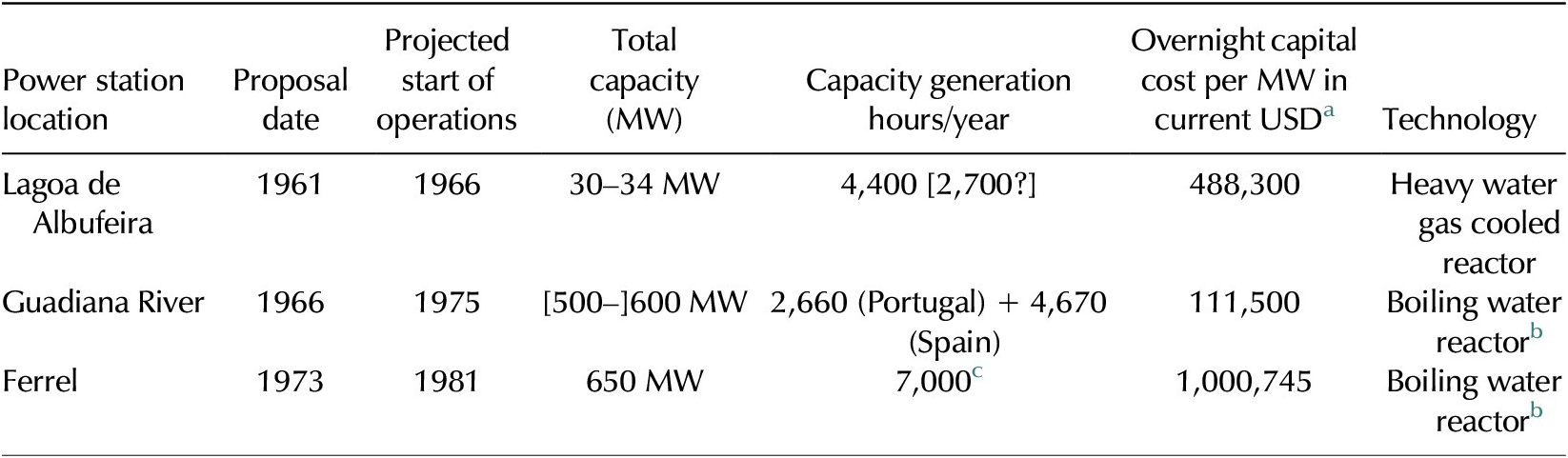
Ambitious and ground-breaking, the Portuguese hydroelectric program relied on pluriannual investments clustered into four-year plans financed by the national state Budget and by Marshall plan’s funds (Plano de Fomento) aimed at 1) boosting the overall national power capacity; 2) fostering countrywide electrification through the interconnection of major power stations into a national grid; and 3) paving the way for launching new industries, particularly in the electrochemical and electrometallurgical sectors (Dias, 1945; Madureira, 2008). In a nutshell, hydroelectricity accounted for the economic policy solution implemented to overcome Portuguese backwardness and bring about industrialization. Under such a strategy, there was a lack of scope (and financing) for any further consideration of nuclear power. The future electricity system was envisaged as a network of hydropower stations supplying the system’s baseload and medium-dimension thermal coal-power stations undertaking support roles during peak-load periods. Thermal nuclear power-stations simply had no function whatsoever in this new hydrobased electricity system. Furthermore, the national grid was far from attaining the scale necessary to accommodate the capacity of even a single nuclear powerplant: According to the International Atomic Energy Agency (2007), a single power plant should not exceed 5–10% of electricity grid capacity. Consequently, the technical requirement for the implementation of a Portuguese commercial nuclear reactor in the range of 600 MW (see Table 1) would need to operate in a network generating 6,000 MW. In Portugal, such cumulative capacity was only attained in 1987.
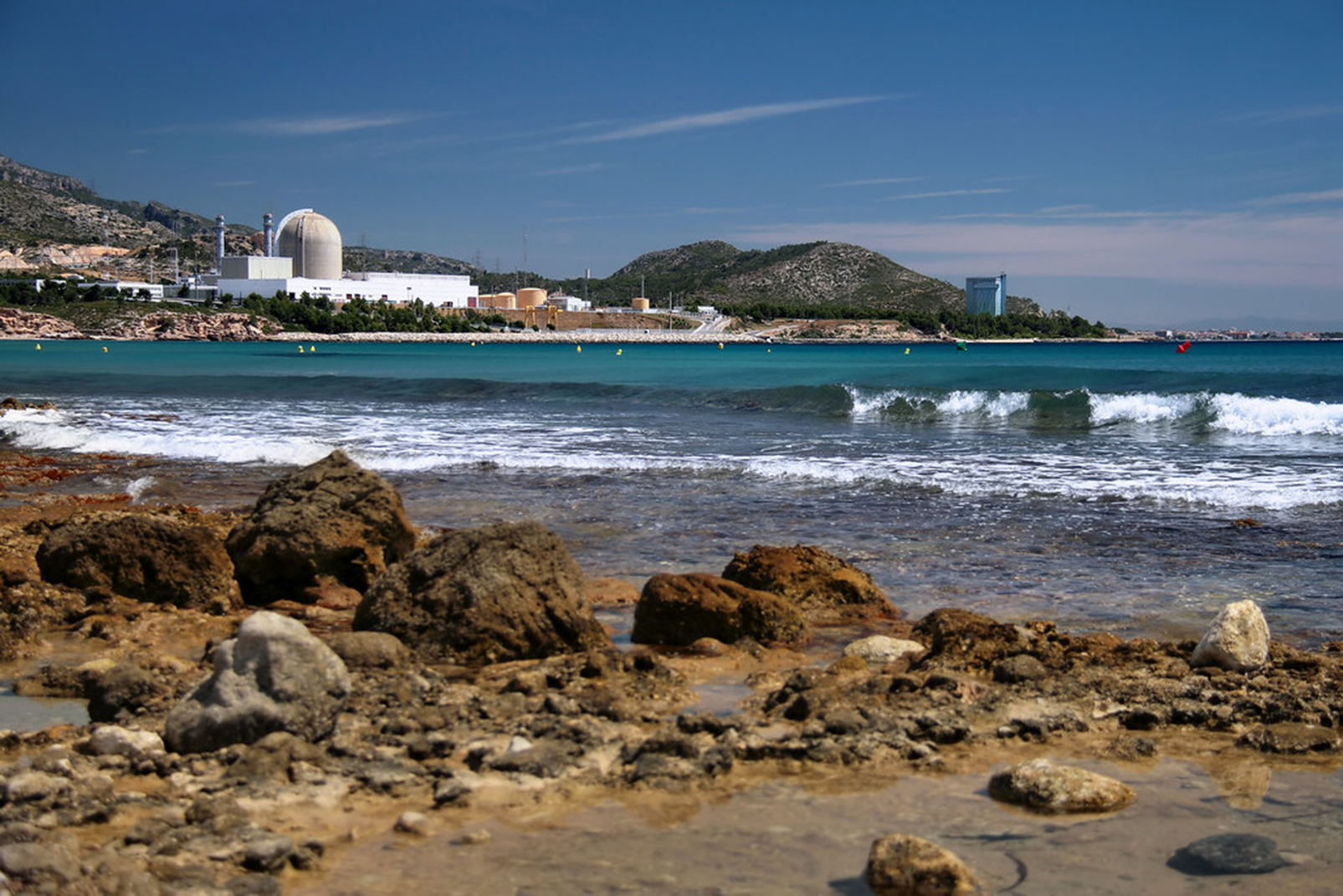
Central nuclear Vandellòs II, Spain.
Source: Jorge Franganillo.

Nuclear power station installation projects for Portugal (1961–1973)

a “Overnight” costs are what the plant would cost if built overnight at that point in time. They thus exclude time-related costs, such as those incurred by rising inflation and interest rate costs.
b Technology with the shortest comparative costs presented in the feasibility study.
c 7,000 hours after the third year of the nuclear power station first entering operation.
Sources: Estudos de uma companhia antecessora - a CPIN, G 3.3. 1-1, Arquivo EDP [EDP Archive]; Compañía Sevillana de Electricidad and Empresa Termoeletrica Portuguesa, Informe sobre viabilidad de una central nuclear hispano, portuguesa en el sur de la Peninsula Iberica, Madrid, 1966.
To sum up, the opportunity for nuclear power appeared at the wrong time and in the wrong place in Portugal. With the central state moving away from the nuclear industry path, most of the technological excitement and visionary prospects that pervaded the international atomic milieu in the late 1950s fell on a still incipient private sector. In this respect, Portuguese hydroelectrical development mirrored a state-based initiative that had taken place in Spain twenty years earlier.
Taking for granted the unavoidability of nuclear power and envisioning a larger share of the pie, all the major Portuguese businesses potentially capable of serving as suppliers of goods or services to the first nuclear reactor (metallurgical, chemical, petrochemical, transportation, electricity generation. and electrical material companies) founded the Portuguese Nuclear Industry Company (Companhia Portuguesa de Industrias Nucleares [CPIN]) in 1958. Their aim was to pressure the government into speeding up the construction of the first nuclear power station. Departing from overoptimistic prospects regarding the prospects of supplying about 50% of the first Portuguese nuclear power station with nationally produced goods and services,Footnote 1 CPIN positioned itself to sway and capture policy decisions, acting simultaneously as a lobbyist and an industrial representative. Later, improved knowledge about nuclear power engineering specifications would downscale national participation forecasts to 30% or 40% considering that, with the exception of the chemical industry and the construction sector, the remainder of the Portuguese industries would need to acquire engineering and materials experience and skills before becoming candidates eligible to supply nuclear power plants (Gilbert, 1962).Footnote 2
Nevertheless, private companies sought to force the door. To further pressure the government’s agenda, CPIN advanced with a project to build an experimental, low-capacity power station (30–34 MW), located on a lagoon (Lagoa de Albufeira, see Table 1) 40 km south of the capital. The experimental station would serve both as a learning school for Portuguese engineers and technicians and as a laboratory for greater strides in the future. The project was scrutinized by an inter-ministerial committee (dubbed an ad hoc commission) and presented to the Minister of Economy in 1961. “Inopportune” was the conclusion of the ministerial dispatch.
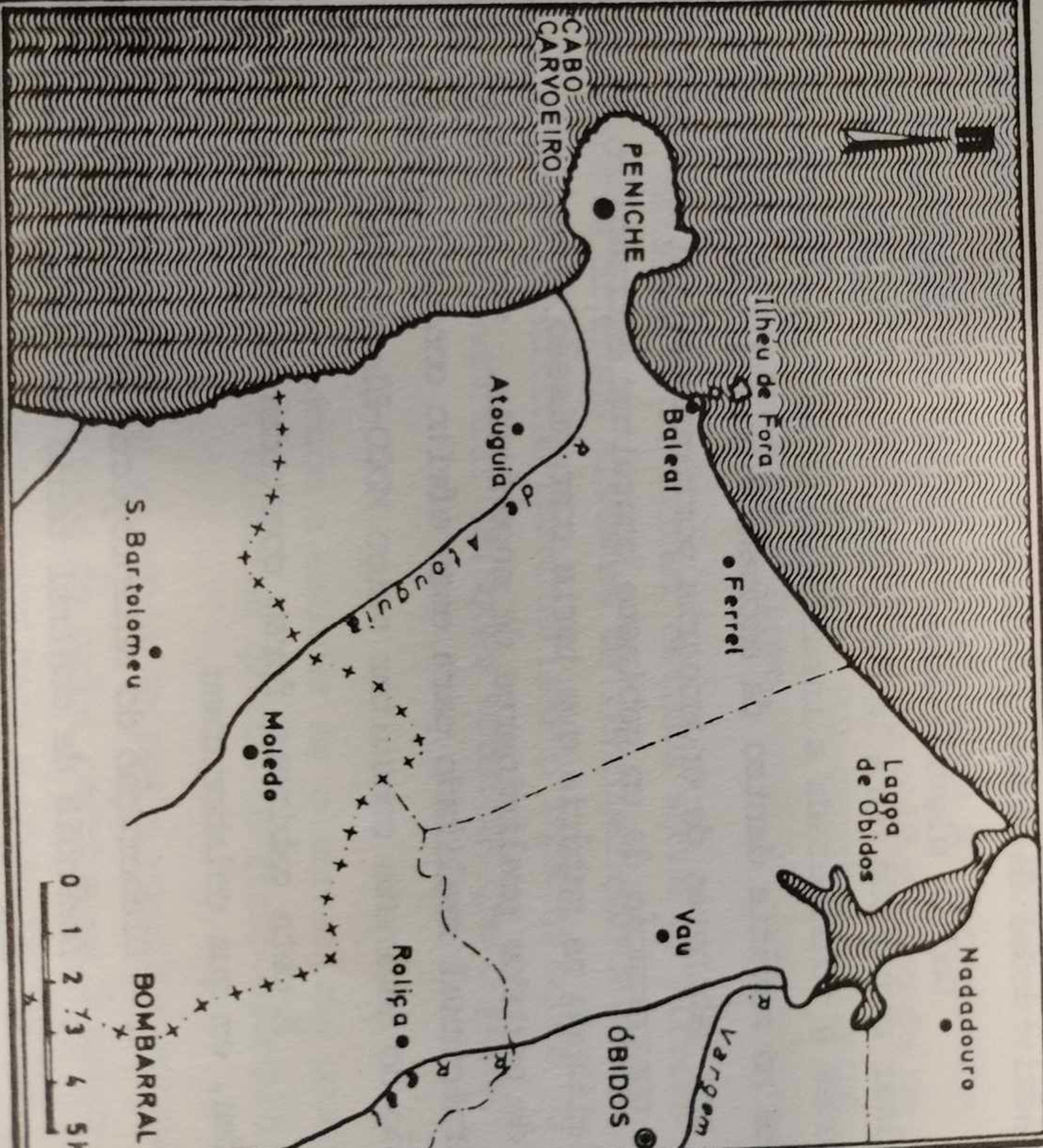
Location of the planned Ferrel nuclear power station, Portugal.
Source: Estudos de viabilidade e ante-projecto da central nuclear, Centro Documentação, EDP, Lisbon, Portugal.

The season of illusions came to an end. Above all, the failure revealed many of the shortcomings of the private Portuguese nuclear dream. First, during the ministerial project submission process, the dissent prevailing among CPIN member companies overtly unveiled the divergences existing with the large hydroelectrical companies (Figueira, 2012). The discord stems from the differential timings in the electrification plan; while the Zezere company accomplished its major investment projects in the early 1950s, the other companies were still coping with huge and ongoing investments programs in hydroelectric power stations. Once again, for these businesses, the scope for nuclear power simply arose at the wrong time and in the wrong place. Worst of all, doubts were voiced following an appreciation of CPIN’s cost estimates for the Lagoa de Albufeira power station. An independent study cast a further shadow over the competitiveness of nuclear power: within the national electricity system, any nuclear power station would perform a supporting role in the diagram charge during peak times, functioning complementarily with the existing Tapada do Outeiro coal power station. This constraint implied that out of a total of 8,760 hours/year of full potential, its contribution would only be feasible for peak times existing in 4,400 hours/year. Given the larger capital costs of installation and working at approximately half-capacity, the nuclear station would incur an operational loss of 20,500,000 escudos/year owing to capacity underutilization. Moreover, the analysis added that any thermal support power station with a 34-MW capacity could only be expected to operate for 2,700 hours/year, thereby decreasing both the volume of electricity generated and the amount sold and thereby driving the corporate losses still higher.Footnote 3 Contrary to certain wishful declarations, nuclear power did not yet display any sustainable competitive advantage over coal power in 1961.
Following the failure of this course of action, CPIN was disbanded, with its assets integrated into a new thermoelectricity mixed capital company—Empresa Termoelétrica Portuguesa (ETP), endorsed with the legal concession for installing nuclear reactors in Portugal. This integration strengthened the corporative powers behind the nuclear enterprise by establishing a monopolist concessionary agent that coopted independent economic interests in a mixed public-private company. Most of the lessons to be drawn from the failure of the first Portuguese nuclear project illustrate the difficulties for embryonic national electricity grids serving less developed economies adopting nuclear power: robust competition from incumbent energy technologies; the underperformance of nuclear power stations in nonintegrated electricity grids; fuzzy entrepreneurial leadership and capital; short replication and upscaling economies; and institutions tending to favor incumbents.
By the time of the second attempt to introduce nuclear power, many of these structural drawbacks had been partially overcome. By 1966, concentration in the electricity sector had paved the way for clear business leadership; the national electricity network was consolidated and operated by an independent public enterprise; and the incumbent hydroelectricity technology was displaying diminishing returns as the best water flows had already been captured. On the other hand, the government had to face enhanced budgetary expenses triggered by the military involvement in three colonial battlegrounds. The delicate issue of economic feasibility and cost competitiveness within the electricity system was sidestepped by a political decision: the installation of a nuclear power station on the river Guadiana on the southern border, thus entailing collaboration between the Portuguese and Spanish governments.
Transboundary political disputes over the usage of the rivers crossing the border had long existed but, in the 1960s, environmental commonalities and political affinities between the two Iberian dictatorships seemed to set the grounds for cooperative nuclear solutions (for an overview, see Rubio-Varas et al., 2018). In keeping with the pattern set for institutional collaboration, a power station in the range of 500–600 MW (the state of the art in upscaling dimensions and profitability in the mid-1960s) could reap the economies of scale associated with large power plants while distributing its output to Spain (4,670 hours) and Portugal (2,660 hours).Footnote 4 Owing to this solution, the extraordinary capital costs of constructing the power plant could be recouped by selling electricity, working at near full capacity (84%) in different markets. Even though the process was announced following inter-ministerial contacts between the two governments,Footnote 5 business companies from Spain and Portugal took over the planning and study phases. Compañía Sevillana de Electricidad (CSE) planned the main network connection with Sevilla (130 km), while ETP studied the main network connection with Lisbon (250 km) (CES-ETP, 1966, pp. 26–27). All the rush to finish the project contrasted with vagueness over ownership decisions: out of the desire to keep all options open, the investment in the nuclear power station was to be shared by the two nations. Similarly, to maintain all options on the table, two different locations were studied: Barcia Redonda (Spain), on the left bank of the river Guadiana, and Alcoutim (Portugal), on the right bank. Nonetheless, this diplomatic range of options was always likely to hamper a final compromise: with international relations issues superimposed onto business affairs making it difficult to reach any successful decision. In the end, practical divergences foreclosed project development. A similar outcome happened with the proposal for the Portuguese enterprise to acquire a 25% share in the nuclear facility planned for Almaraz, in the Caceres Province of Spain, which makes use of the Tagus River for cooling purposes at a location upstream to Portugal.Footnote 6
Meanwhile, the recently founded monopolistic concessionary company, ETP, pursued an alternative path designed to install an “independent” Portuguese nuclear power station with a planned capacity in the range of 300 MW. Perhaps the utmost legacy of the failed Luso-Spanish nuclear project was the learning process that engaged a Portuguese generation of engineers in planning all the details surrounding nuclear power facilities (Fernando Ivo Gonçalves, Francisco Correa Figueira, and Walter Rosa). In fact, these Portuguese representatives to the Iberian Guadiana River project would become core figures in the subsequent Portuguese history. The failure of the joint venture left a gap in the planning of future available capacity, thereby turning the installation of a domestic nuclear plant into a more urgent issue in keeping with the forecasts of hydroelectrical resource exhaustion by 1975. Subsequently, the pace of events came at a rush: an order from the President of the Council of Ministers on June 31, 1968, commissioned twelve technical studies on nuclear power generation in Portugal. In July 1973, the government launched an international tender for nuclear power station suppliers, embracing the natural water-cooled reactor technology (boiling water reactor and pressurized water reactor) for an upscaled version of a 600–700 MW power station. In May 1974, an international agreement was signed with the United States Atomic Energy Commission for the purchase of enriched uraniumFootnote 7.
As referenced above, Spanish electrical utilities had already moved far more swiftly toward concentration, cooperation, and integration. They approached the nuclear challenge with greater confidence and were committed from a business challenge perspective. Hydroelectricity had alleviated Spain’s persistent fossil fuel energy shortage prior to the civil war and high-power transmission networks and sizeable power generation plants, such as Saltos del Duero, were already interconnected even though the national grid project was yet to move beyond the speculative phase (Bartolomé, 2007). Vertically integrated companies had driven the development of electricity generation and distribution, and the largest firms formed the so-called Grupo Hidroeléctrico; a cartel first established in 1918. This was internationally interconnected with both electrotechnical manufacturers and financial institutions, such as Eximbank, having financed their conventional constructions prior to the nuclear program (Rubio-Varas & De la Torre, 2017). Furthermore, a majority of the private electricity companies composed a banking-energy oligopoly around Unidad Eléctrica, UNESA, in 1944, actively defending the business and leading to a singular form of self-regulation and avoiding nationalization at all costs (Gómez et al., 2007; Muñoz Linares, 1954).
Nationalization had represented a tangible threat ever since the launching of INI in 1941, under the supervision of Suanzes—the industrialist holding of public companies inspired by autarkic theory and self-sufficiency practices—and its electricity generation subsidiary, ENDESA (1944). Although ENDESA initially limited itself to implementing coal power at supplementary thermal power plants. The 1946 founding of Empresa Nacional Hidroeléctrica del Ribagorzana (ENHER) for the hydroelectric exploitation of the Noguera-Ribagorzana River positioned the public company with abundant hydroelectricity in the desirable and undersupplied Catalonian market (Gómez et al., 2007).
Despite the presence of new entrants in both the public and private sector, little was actually done to expand electricity supply and the Spanish electricity system was unable to meet demand for a period after 1947 due to obsolete equipment and fuel shortages, while some new-generation companies remained without markets while still seeking distribution agreements, such as Saltos del Sil (1945) and ENDESA and ENHER from 1951 (Aznar Colino, 2015; Bosch 2007). In addition to the scarcity of foreign currency, little incentive was there for investing due to a tariff freeze that extended throughout a long-lasting period of inflation. Thus, restrictions were imposed on domestic and industrial consumers that remained in effect until 1954. By 1953, the situation was clearly unsustainable and INI installed emergency thermal generators in some cities, including Barcelona, Valencia, Cartagena, Malaga, Bilbao, and Seville. A new billing system was also implemented, designed to meet the aspirations of suppliers and, therefore, to encourage investment,Footnote 8 even if the system immediately revealed signs of dysfunction (Gómez et al., 2007).
Once the worst of the “electricity famine” had passed, there emerged the issue of the future configuration of the electricity market. Furthermore, the nationalists were divided on this issue. On the one hand, Planell, the Minister of Industry, advocated usage of Spanish hydroelectric resources in 1955 in keeping with Uriarte’s (1951) recent studies on the hydropower potential of the Peninsula. On the other hand, Suanzes, the INI director, asserted that the public holding INI should lead a nuclear project transforming Compostilla II into a nuclear power plant with British technology (Gómez et al., 2007). At the time, private utility companies were tempted to transfer their nuclear projects to INI but, in March 1956, UNESA obtained unified control over the actions required. This included a market sharing agreement between Hidrola and Iberduero, the so-called Olaveaga Pact, with the commitment to not interfere in the other’s markets in the event of participating in nuclear projects (Garrués & Rubio-Mondéjar, 2017). Private firms remained unwilling to relinquish their competitive stance against public firms.
The Olaveaga incubation period had been lengthy but, when representatives of the private companies participating in UNESA met with the manufacturers of electrotechnical equipment in Bilbao in August 1956, an agreement was reached to set up a company involving 20 firms that would contribute 50% of the capital necessary to building a reactor assessed at 10 million dollars. Henceforth, both utility and equipment suppliers prepared to collaborate on launching the three companies implementing the forthcoming nuclear business, construction works, and the necessary equipment. These were the consortia that would effectively share out the nuclear market under the leadership of Iberduero-Viesgo in the north and Unión Eléctrica Madrileña (UEM)-Hidrola-Sevillana in the south: Centrales Nucleares del Sur S.A. (CENUSA), an association between the electricity sector and the Bilbao y Vizcaya bank, and Centrales Nucleares del Norte S.A. (NUCLENOR), an association of electricity companies with the banks Vizcaya, Bilbao, Español de Crédito, Central y Santander. The same year also saw the foundation of TECNATOM, a center for studying atomic techniques, by the firms Hidroeléctrica Española S. L. (Hidrola), Unión Eléctrica, and in an association with the Hispano Americano y Urquijo bank (De la Torre, 2017; Garrués & Rubio-Mondéjar, 2017; Rodríguez, 2021, pp. 115–116).
In August 1957, following ratification of the pact with the United States for civilian uses of nuclear energy, article VII included provisions for the participation of private individuals and organizations from both Spain and the United States. Even though the INI still remained reluctant to give up on its nuclear power plant projects (Gómez et al., 2007), once the 1959 stabilization plan had been decreed, the setting rapidly changed as the signs of regime liberalization emerged. NUCLENOR was then formally requested, still in 1959, to begin with preliminary studies and works for Garoña power station and, shortly afterward, TECNATOM and the American Bechtel Co. were entrusted with studies for Zorita. Additionally, in 1961, the Spanish Atomic Forum was launched as an alliance of industries seeking a market niche in nuclear energy, from metal-mechanics, electricity producers and distributors, and engineering, including auxiliary industries under INI and JEN. However, tensions persisted. When, in that same year, UNESA representatives met with the World Bank, the stance of the public companies on this matter was still under discussion. This rivalry between the public and private sector would become a never-ending story: JEN expressed caution against starting to issue any authorizations. Otero, their director, as an enthusiastic defender of the autarkic vision, demanded no reactor be built until JEN had manufactured its own fuel as the dream of nuclear weapons still lingered (Sánchez & López, 2020). From the perspective of CENUSA, TECNATOM, and NUCLENOR, this position was interpreted as a threat to their program of collaboration with U.S. industry (Garrués & Rubio-Mondéjar, 2017; Gómez et al., 2007).
To sum up, there were contrasting views across the different electricity systems: whereas in Portugal, an ongoing hydroelectrical revolution left little room for the installation of large thermal power plants (especially nuclear power stations), in Spain, the electricity famine called for swift increases in capacity resorting to nuclear energy. Furthermore, unlike the Portuguese cooperative scheme led by CPIN, with the property rights over the nuclear power station monopolized among CPIN shareholders, the Olaveaga Pact encouraged competitive entrepreneurial property rights, thereby fostering several fronts for the growth of nuclear power.
Breakthrough and Failure
All the while the process of nuclearization was acquiring momentum in Spain, over the border in Portugal, political events had doused any trace of enthusiasm in the national atomic business sector. In Spain, in 1962, the Minister of Industry was replaced by López Bravo, a convinced “developmentalist” and advocate of private enterprise. The Development Plan immediately commissioned UNESA to draft a proposal for breaking up INI’s thermal monopoly and, although the INI defended itself, with some skirmishes, its resistance was short lived. Suanzes (INI) had to resign in October 1963 (Gómez et al., 2007), and, with him out of the picture, the minister set about distributing licenses on a discretionary basis and delivering the contracting of reactors to the electricity companies themselves, thereby excluding the public entity previously responsible, JEN, which was relegated to undertaking nuclear related training initiatives as from 1964.Footnote 9
Nor can the Spanish nuclear plan be properly understood without its American friend Eximbank and the nuclear conglomerate, backed by support from the U.S. Congress. The bulk of the nuclear program financing came from the Eximbank with Spain becoming its main debtor and the Spanish electricity market its main customer (De la Torre & Rubio-Varas, 2014). Spanish government support was vital to obtaining the necessary credits from first the United States, then France and Germany, turning the country into a billion-dollar client. The Spanish government’s own interests in survival, aligned with those of the business conglomerates around the Atomic Forum, entailed the censorship of information to avoid concerns over nuclear energy—such as following the Palomares incident, with the accidental dropping of four thermonuclear bombs on the coast of Almeria in January 1966, or the radioactive leak at JEN in 1970. Government policy continuity was upheld between 1969 and 1974 by the new Minister of Industry, López de Letona, holding a professional career including strong connections to electricity equipment companies (ACS and British Westinghouse).
Thanks to this outpouring of millions of dollars, and following approval by Franco’s regime, business interests soon began gravitating toward promoting and constructing power stations and reactors. Three were started initially, with a total of 1,000 MW of installed capacity and as turnkey projects, with domestic industry participation defined by the 1964–1967 Development Plan at around 35–40% of total investment but with only a low level of technological complexity. This would subsequently increase with the National Electricity Plan raising it to 50% in 1969, to 60% in 1975, and to 75% in 1978 (De la Torre, 2017).
The first breakthrough came with Zorita on the Tagus River in February 1962. The project was 80% financed by Eximbank and Chase Manhattan. Among the Spanish financial institutions, the company’s banks, Urquijo and Hispano, and the utility itself provided the rest of the funding. The licenses and loans were granted in 1964, and TECNATOM took advantage of the experience for its own training process (Varas y De la Torre, 2017). In the same year, the Pressurized Boiler Reactor (PWR) was licensed and commissioned from Westinghouse with construction work beginning in July 1965 and with the first reactor inaugurated in 1968. Zorita was immediately followed by Garoña on the Ebro River, inaugurated in 1971, as a NUCLENOR project, commissioned from General Electric and with opposite characteristics Boiling Water Reactor (BWR). This was followed by the Gas Cooled Graphite Moderated reactor type Vandellós-1 on the Mediterranean, preauthorized in 1967 and coming on stream in 1972, fueled by natural uranium with a guaranteed credit from France of 750 million francs (Sánchez-Sánchez, 2017).
Natural uranium opened up new prospects for plutonium manufacturing and kept alive the nationalist dream of obtaining nuclear weapons (through the Islero project) between 1963 and 1981 (Sánchez & López, 2020). Nationalist lobbies and military interests were also pleased with import substitution, the surviving objective from the autarkic discourse: investment in the fuel cycle and in the production of capital goods for the nuclear industry. The INI and JEN would merely play supportive roles to the nuclear construction business for as long as the government’s industrial policy remained unaltered. JEN attempted to continue with its initial designs, launching the study for the feasibility of fast reactors as well as the eventual national production of nuclear weapons in 1969 while the INI also stepped up its plans for mineral production (Romero de Pablos & Sánchez Ron, 2001).
Symptomatic of its good terms with the Spanish government, UNESA oversaw the First National Electricity Plan, published in August 1969.Footnote 10 , Footnote 11 This projected 2,500 MW of nuclear power in 1975 (rising to 8,500 in 1981). Approved by the Ministry of Industry at the peak of the industrialist euphoria, the plan foresaw 50% of electrical energy would be of nuclear origin in 1983, with 1,000 MW of nuclear power installed per year in the forthcoming decade (De la Torre, 2017). The plan also included the Almaraz plant, the former Sevillana joint-venture project with Portugal but with the latter excluded when the Spanish Ministry of Industry agreed to award the project to Westinghouse in 1970 (aforementioned in the section “Hydroelectricity versus Nuclear power”), finally inaugurated in 1981.
In 1970, representatives from the major electricity companies (Sevillana, Hidrola, Iberduero, and UEM) travelled to the United States, accompanied by the General Director of Energy, with the nuclear construction program on the verge of an outstanding boom. Between 1970 and March 1975, there were submissions for 32 reactors (33,000 MW); 15 received preauthorization (15,000 MW) in August 1976. The pinnacle was reached in September 1973 when Iberduero simultaneously applied for five reactors with a total of almost 5,000 MW, including Lemóniz (authorized in May 1974) (Rubio-Varas & De la Torre, 2017). Once again, the competitive-collaborative environment emerged as crucial for Spanish economic groups surviving the step up to nuclear power, creating a rush to advance the technological frontier of electricity generation contrasting with Portugal’s monopolistic endeavors in which a single concessionary company had access to the nuclear business.
The stage was set, and all the pieces were in place in Portugal. There was now a solid rationale behind the adoption of nuclear power following the exhaustion of the hydropower cycle by 1975. Henceforth, the government and the electricity companies and their respective policy circles knew that capacity growth had to stem from alternatives to dam building.
What derailed the advent of any nuclear project was the Carnation Revolution of April 1974 and the end of the long-standing authoritarian regime. Bluntly put, democracy and the ensuing political instability seem to have ruined the chances for adopting nuclear power. The passage from technical-political decisions taken behind closed doors to debate in open society proved deleterious. However, the revolution did not change the fundamental driving forces pushing for the introduction of nuclear power. Instead, the institutional and political framework that came about in the wake of the 1974 democratic revolution strengthened the nuclear option. Three reasons explain the riddle: first, the pronuclear sociotechnical imaginary suited the new revolutionary spirit well, imbued by ideas of development and modernization: several public authorities repeatedly restated the intent to build an atomic power station in Portugal (Cautela, 1977); second, all the major political parties that emerged under democracy and obtained representation in parliament were favorable to the nuclear option; and third, the political changeover caused upheaval in the public administration that pushed those engineers technically involved in the ongoing nuclear project during the authoritarian regime into the democratic regime frontline, holding key posts in the Ministry of Economy and as State Secretary of Industry and sitting on the board of the nationalized electricity firm—Electricidade de Portugal (EDP). Counteracting these tendencies, the revolution also unleashed the emergence of a combative civic culture that questioned the nuclear option. Against the free lunch view bequeathed by the technocratic planning, a small group of academics, engineers, and intellectuals now brought to the fore the issues of radioactive poisoning of the environment, the risks of nuclear accidents, and the storage and disposal of fissionable materials (Salgado, 1974; Cautela, 1977). Then, following the announcement of construction beginning on a nuclear power plant in the designated site of Ferrel (a seashore village, 72 km north of the capital Lisbon), a grassroots movement of about 100 local inhabitants marched to the construction site and forced workers to stop all construction activities. The event triggered a subsequent cascade of protests and editorial initiatives in which the local people played a diminishing role while environmental activists and sympathetic scientists from urban centers took leading roles (Barca & Delicado, 2016). Despite the small scale of the protests—all reports of street happenings record hundreds rather than thousands of people—the antinuclear protest succeeded in presenting the rightfulness of public participation in paramount decision-making processes. Moreover, once set in motion, the movement did not stop.
With the victory of the Socialist Party in the 1976 elections and the reappointment of Minister Walter Rosa to lead the Ministry of Industry and Technology, the conditions for the “launch of the first nuclear group” were finally met as expressed in the program of the 1st Constitutional Government. Drawing on the consequences of the first oil shock, the Minister of Industry and Technology himself endorsed the urgency of the nuclear program: “two more fuel-fired thermal power stations are under construction, one in Barreiro and the other in Setúbal. The latter will reach a power output of 1,000 MW and should come into service next year (…) the relative position of oil in the national energy balance should not be favored (…) so the fuel-oil thermal power plants should only be built as far as necessary. When fully operational, hydroelectric reserves only guarantee the supply of another 5 or 6 TWh – which is about half the increase in our needs for the next seven years. (…) It is therefore indispensable and urgent to build nuclear power plants in Portugal. Other countries have already done so” (Rosa, 1977, p. 18).
From this standpoint, the democratic regime had more arguments in favor of nuclear power than the former authoritarian regime. Everything was technically and economically prepared and the minister knew this well as, prior to the revolution, he had participated in studies on integrating the first nuclear power plant, initially in the Iberian Project located on the Guadiana River and then within the scope of “working group M,” appointed by the Council of Ministers for Economic Affairs, for the Ferrel power station. Nevertheless, the nuclear question controversies also arrived in the inner circles of government and compounded other divisions over economic policy, financial policy, and agrarian policy. The Socialist Party had endorsed the suggestions of engineers from its own political sphere only to later verify that other hypotheses were also feasible and just how divisive the topic had become. For a government experiencing strong social protests and without any parliamentary majority, this nuclear dispute seemed avoidable. In an astonishing turnaround, in August 1976, the socialist prime minister, Mário Soares, announced the halt of nuclear construction at Ferrel and the formation of a technical commission for further considerations, thereby gaining time and margin of maneuver: “The nuclear program has raised doubts and given its fundamental character to diversify the sources of supply and to ensure the massive amounts of energy necessary for the development of the economy, the government proposes to organize a "white book’ to be submitted to the Assembly of the Republic” (Order No. 134/76 of 16 November 1976).
From the Livro Branco Commission, the Constitutional Government received a set of recommendations vaguely oriented toward the “perspective of not rejecting nuclear energy.” The executive branch was advised to mitigate nuclear power consequences by carrying out “research programs in the field of marine biology”; to create “regulations relating to the exposure of populations”; to “define the philosophy to be adopted in the management of radioactive waste” as well as the “responsibilities of each entity called for to intervene within the scope of protection against radiation”; and to adopt pressurized water reactors, of the PWR type, which “correspond to a markedly greater experience in construction and operation” (Sousa et al., 1978). The report was delivered on December 21, 1977, and the main findings were published in the press five months later. After all the controversy and expectations created around the Livro Branco, the government simply decided to remove the topic from the agenda. The Secretary of State for Energy and Basic Industries was counselled that it was not the appropriate moment as the government was not in a financial position to successfully complete the installation of a nuclear reactor. Afterward, there were factions opposed to nuclear energy within the government, grouped around the Subsecretary of State for the Environment (Fernandes, 1978; Martins, 1978). The final decision was thus to not decide and let the issue die. Correspondingly, the members of parliament would wait endlessly for the nuclear debate to be scheduled.
The Livro Branco had broadly aligned itself with the view that nuclear power would be mostly advantageous over classic coal power stations. To this end, the assessment team made an updated version of previously done nuclear cost accounting (commissioned by Motor-Columbus, Consulting Engineers) according to the international guidelines then in effect. Remarkably, at that precise moment, energy economists elsewhere, in the United States and the United Kingdom, were proposing new guidelines for the cost accounting of upscaled nuclear power stations in order to grasp and reflect enduring price escalations (Komanoff, 1976, 1981; Mackerron, 1982; Oak Ridge National Laboratory, 1980). Revising the standards and procedures entailed requirements for higher quality equipment, materials, and workmanship; the addition of supplementary systems to enhance safety and environmental regulations; increased engineering and construction management costs; and augmented interest charges due to the rise in indirect costs, longer construction schedules, and higher interest rates. Paradoxically, the outdated Livro Branco’s cost accounting was grounded in a world that no longer existed. Subsequent years would prove the divorce between these dated forecasts and the real economic costs of nuclear power (Lovering et al., 2016; Grubler, 2010; Koomeya & Hultman, 2007). One may therefore conclude that in a counterfactual world where the Socialist government endorsed the construction of Ferrel’s nuclear power station, based on the Livro Branco forecasts, it would certainly have been a ruinous project. Fate had written straight with crooked lines.
Despite the novelty of this emerging antinuclear grassroots movement, academic research has pinpointed how the protests achieved little impact on the ultimate political decisions to halt the power station’s construction. As one witness pointed out, “nuclear energy was not implemented for economic reasons, and not due to strong anti-nuclear opposition” (Barca & Delicado, 2016, p. 523). Examining the reasons for the failure of the third attempt to construct a nuclear power station in Portugal, one may conclude that transition periods, with high political volatility and social instability, enhance the discovery of the risks involved in the nuclear option and augment the stream of opinion that wonders whether nuclear power is necessary at all. In this vein, we would subscribe to the perspective that democratic transitions are detrimental to nuclear power.
Similarly, the oil crisis ushered in a period of uncertainty that affected the price of uranium as well as power plant equipment for Spain. After the suspension of dollar convertibility and the oil shocks, and despite Spain not signing the 1970 Nuclear Non-Proliferation Treaty, Eximbank still supported the Spanish nuclear program, which included ten new nuclear power plants in 1975. That same year, U.S. bidders lost their first auction, the Trillo project, to a German company (Rubio-Varas & De la Torre, 2016; Sanz Lafuente, 2017). Eximbank representatives organized a visit to Spain in June 1976 to gather with government, banking and business representatives in Madrid, Barcelona, and Bilbao, but the auction outcome was repeated in the case of Regodola in 1977, in favor of a German consortium with advantageous financing conditions. The Eximbank era was about to close.
Following the death of the Spanish dictator in 1975, democratization progressed in fits and starts with upheavals reverberating into the late 1980s: high inflation, industrial recession, falling electricity demand, and a deteriorating financial system, all alongside rising nuclear costs. Electricity output also slowed its pace of growth: after tripling between 1960 and 1970, in the following decade output doubled before increasing by only 50% between 1970 and 1980 (Tafunell & Carreras, 2005). The domestic financial crisis had jeopardized the stability of local banks. In addition, significant delays in material shipments from the United States were experienced while nuclear equipment costs soared. For the political opposition, the PSOE Socialist Party, nuclearization was perceived as belonging to the previous undemocratic period, and the first governments under Adolfo Suárez in 1979 downscaled the nuclear program (De la Torre, 2017). In 1982, with the socialist González in office, the nuclear plan was revised before the first halt was decreed in 1983 (lasting until 1985). Economists from both public and private circles recognized how this was inevitable, expressing regret about the impact on the ancillary industries. Between 1979 and 1981, the amounts owed to Eximbank had quadrupled as electricity companies registered more debts than revenues—with a debt ratio of 57% in 1986—in an atmosphere of rampant inflation (Garrués, 2016). Although seven reactors were initially earmarked, only Lemóniz (I–II), Valdecaballeros (I–II), and Trillo II were ultimately shut down—accounting for 4,850 MW. A compensation fund was launched (accruing 3.9% of electricity consumption turnover and 3.54% from 1988 to 1994). In 1986, the assumed debt was estimated at 3,334,106 euros, accruing to the Dirección General de la Energía, which was not even able to cover financing costs (Lasheras et al., 1995). Chernobyl in 1986 and the Vandellós I accident in 1989 put a definitive end to any hope of reversing this suspension. The nuclear dream was over.
In 1991, the utility companies (Iberdrola, Sevillana, and Unión-Fenosa) were granted compensation of 3.8 billion euros for their paralyzed assets. However, by the end of 1994, Iberdrola had accrued debt of over 9.616 billion euros while Sevillana had ratcheted up more than 2 billion euros. In 1994, the debt amounted to 4.278 billion euros. Then, a proper bailout was implemented by furthermore allowing the transfer of “harmful” assets to third parties with bonds guaranteed by the state and paid for by consumers through to 2015 (between 6 and 9 billion euros, of which more than 1.5 billion corresponds to bank charged interest). Thus, consumers finally came to the rescue of companies and banks, paying high prices for the bursting of the nuclear bubble: around 2.7 times the assumed debt in 1986 (Lasheras Merino, 1995). The first compensation agreement of 1988 attributed the overinvestment error to the coercion of Franco’s administrations rather than to the oversizing of the project to ensure continuity for the real nuclear lobby business, the Atomic Forum—a nuclear forum launched in 1998—(construction companies, engineering firms and suppliers) as long as both foreign and domestic credits were available.
Double or Quits
Portugal and Spain were poor countries in the European context and middle income in the world setting of the early 1950s (Calvo-González, 2021). Yet, both broke the middle-income trap during the Golden Economic Age, but only Spain adopted nuclear electricity generation. Despite Portugal and Spain sharing environmental commonalities and the political affinities between their dictatorships being more than clear at the dawn of the atomic business, the responses turned out significantly different. Portugal dismissed nuclearization after several failed endeavors while ten atomic reactors were connected to the Spanish national grid in 1988.
Throughout the Cold War, autarkic visions still fed into the energy policies of the Iberian countries with both authoritarian regimes aiming to become full members of the Western bloc. Thus, the earlier Iberian nuclear programs were a common offshoot of the peninsula’s uranium resource exploration. The international intervention in the uranium market would smooth the acquisition of foreign currency, along with training technicians and attempting to nationalize the entire uranium cycle. Scarcity of nuclear fuels in the 1950 strengthened the position of Iberian dictatorships in the diplomacy of the Western World.
Large differences may nevertheless be observed between the two countries. Portugal had just launched a public electrification plan based on the exploitation of national hydric resources, and the electricity grid had not yet even obtained a scale suitable to accommodating the capacity of one nuclear powerplant. During the 1960s, these structural drawbacks were partially overcome, and economic feasibility and cost competitiveness were bypassed via the decision to share a plant with Spain. Then, practical divergences arose, and an independent nuclear station project was launched on the eve of the Carnation Revolution in 1974. The adoption of nuclear power seemed nearer than ever because the exhaustion of the hydropower cycle was forecast for 1975. High expectations were raised when the technicians involved in the latter nuclear projects under the dictatorship were appointed in charge of decision-marking positions, and with consultation guidance from the Livro Branco in favor of beginning construction work in Ferrel. Nonetheless, the project was halted. Neither the prior authoritarian regime nor the democratic, albeit transitory, period was an ideal political setting for encouraging nuclearization.
Spain, in turn, suffered from an electricity famine, with consumption restrictions in effect as of 1947, but a competitive environment between public and private utility companies was also set in motion. Thus, nuclear generation represented opportunities for new entrants into the electricity business. Under these circumstances, the survival of the dictatorship aligned with the interests of the business conglomerate around the atomic consortiums, whose resources mainly gravitated toward promoting and building nuclear plants. Following the dictator’s death in 1975, democratization slowly progressed occurring against the backdrop of a severe economic crisis: the expansion in electricity demand slowed, and the amounts owed by the electricity companies to their American lender had quadrupled in an atmosphere of rampant inflation. The nuclear plan was eventually frozen and the blame for squandering such huge economic resources during the atomic era was then placed on coercion by the Franco government. Excessive competition in the sector ultimately fostered a lenient business outlook, where the accumulation of debt proved to be a significant liability. In the end, the very factors that once spurred Spain’s rapid advancement in the nuclear industry were also the culprits behind the nuclear industry’s financial downfall.
Strong governments, even dictatorships, were not decisive drivers of atomic progression in the Iberian countries. Contrasting the two experiences demonstrates how not only macropolicy factors mattered but also business competition and rivalry at the appropriate time.
Disclosure Statement
No potential conflict of interest was reported by the author.
Funding
This publication has been supported by the grant HAR2017-860086-R, funded by MCIN/AEI/10.13039/501100011033, and by the European RegionalDevelopment Fund (ERDF) “A way of making Europe.”