Introduction
Intracytoplasmic sperm injection (ICSI) is an assisted reproductive technique that is widely used for infertility treatment. Oxidative stress (OS) has been suggested as one of the important causes of female infertility and is defined as the imbalance between the oxidants produced and the antioxidants that scavenge them (Ruder et al., Reference Ruder, Hartman and Goldman2009; Agarwal et al., Reference Agarwal, Aponte-Mellado, Premkumar, Shaman and Gupta2012; Gupta et al., Reference Gupta, Ghulmiyyah, Sharma, Halabi and Agarwal2014). OS is shown to contribute to the development of many diseases including cancer, heart disease, diabetes and neurological diseases such as Alzheimer’s disease and Parkinson’s disease (Kryston et al., Reference Kryston, Georgiev, Pissis and Georgakilas2011; Radi et al., Reference Radi, Formichi, Battisti and Federico2014; Neri et al., Reference Neri, Fineschi, Di-Paolo, Pomara, Riezzo, Turillazzi and Cerretani2015; Newsholme et al., Reference Newsholme, Cruzat and Keane2016).
OS has also been shown to have an important role in the pathophysiology of reproductive capacity and is responsible for or partially contributes to the development of infertility (Agarwal and Allamaneni, Reference Agarwal and Allamaneni2011; Gupta et al., Reference Gupta, Ghulmiyyah, Sharma, Halabi and Agarwal2014). Studies that have investigated the effects of OS on female infertility have mainly focused on the microenvironment of the developing oocyte that includes the ovarian follicles and the follicular fluid in it (Oyawoye et al., Reference Oyawoye, Abdel-Gadir, Garner, Constantinovici, Perrett and Hardiman2003; Pasqualotto et al., Reference Pasqualotto, Agarwal, Sharma, Izzo, Pinotti, Joshi and Rose2004; Appasamy et al., Reference Appasamy, Jauniaux, Serhal, Al-Qahtani, Groome and Muttukrishna2008; Revelli et al., Reference Revelli, Delle-Piane, Casano, Molinari, Massobrio and Rinaudo2009; Fujimoto et al., Reference Fujimoto, Bloom, Huddleston, Shelley, Ocque and Browne2011; Agarwal et al., Reference Agarwal, Aponte-Mellado, Premkumar, Shaman and Gupta2012; Pereira and Martel, Reference Pereira and Martel2014). These areas are the sites of developing oocytes and therefore are shown to affect oocyte competency dramatically in a bidirectional manner (Tatemoto et al., Reference Tatemoto, Sakurai and Muto2000, Reference Tatemoto, Muto, Sunagawa, Shinjo and Nakada2004; Matos et al., Reference Matos, Stevenson, Gomes, Silva-Carvalho and Almeida2009). Several studies have reported the negative role of OS on oocyte quality and fertilization capacity (Oyawoye et al., Reference Oyawoye, Abdel-Gadir, Garner, Constantinovici, Perrett and Hardiman2003; Bedaiwy et al., Reference Bedaiwy, Elnashar, Goldberg, Sharma, Mascha, Arrigain, Agarwal and Falcone2012; Borowiecka et al., Reference Borowiecka, Wojsiat, Polac, Radwan, Radwan and Zbikowska2012; Gupta et al., Reference Gupta, Ghulmiyyah, Sharma, Halabi and Agarwal2014; Palini et al., Reference Palini, Benedetti, Tagliamonte, De-Stefani, Primiterra, Polli, Rocchi, Catalani, Battistelli, Canestrari and Bulletti2014).
ICSI treatment includes ovarian stimulation procedures that dramatically alter the hormonal, physiological, biochemical and genetic status of a menstrual cycle. As a result, regarding OS in subfertile women undergoing IVF cycles, treatment leading to ovarian stimulation was associated with an increased production of reactive oxygen species (ROS) (Aurrekoetxea et al., Reference Aurrekoetxea, Ruiz-Sanz, del Agua, Navarro, Hernández, Matorras, Prieto and Ruiz-Larrea2010; Borowiecka et al., Reference Borowiecka, Wojsiat, Polac, Radwan, Radwan and Zbikowska2012; Celik et al., Reference Celik, Celik, Kumbak, Yilmaz, Turkcuoglu, Simsek, Karaer, Minareci, Ozerol and Tanbek2012). Among the many reasons for IVF failure, OS seems to be one of the important contributors (Sikka, Reference Sikka2004). In the female reproductive system, OS and antioxidants perform physiological roles during folliculogenesis and oocyte maturation and may also be related to conditions that limit the success of assisted reproductive techniques (Pacella et al., Reference Pacella, Zander-Fox, Armstrong and Lane2012).
OS is induced as a result of various extrinsic and intrinsic agents, but the factors that induce OS during an ICSI cycle are not well known. We aimed to investigate several common conditions that may potentially be correlated with follicular oxidative status during an ICSI cycle and that included serum oestrogen level on day of oocyte pick-up, maternal age and pregnancy outcome.
Materials and methods
Study participants
This prospective clinical study was conducted at the Medicana Çamlıca Hospital, IVF Center between March 2018 and September 2019. In total, 1386 cycles were analyzed and, of these, 1265 cycles resulting in fresh embryo transfer in 1132 patients constituted our final study cohort.
Only female factor infertility cases were enrolled in the study to avoid the possible contribution of the male factor to the pregnancy outcome. Women with a smoking history, poor responders in accordance with European Society of Human Reproduction and Embryology (ESHRE) consensus, polycystic ovary syndrome as defined by the Rotterdam criteria (Rotterdam ESHRE/ASRM, 2004), endometriosis, a body mass index (BMI) of <19 and >26 kg/m2 were excluded from the study. ICSI cycles with preimplantation genetic screening, coasting, assisted hatching or any other empirical technique were also excluded.
Study design
Patients that were enrolled in the study were classified randomly into three groups using their numerical order. The first group were classified based on maternal age (<35 and ≥35 years) (n = 398), the second group on serum E2 level on the day of hCG (levels >90th percentile and ≤ 90th percentile) (n = 491) and the third group on pregnancy outcome (positive/negative) (n = 376).
The groups were matched for the other variables [stimulation protocol, dose of gonadotropin, duration of stimulation, antral follicle count, BMI, basal FSH, and oestradiol (E2) levels and day of hCG trigger] to prevent the possible contribution of those parameters to the results.
Follicular fluid collection and processing
Follicular aspirates of patients were collected by a single lumen follicle puncture needle (Swemed, Sweden) during oocyte retrieval for ICSI. Flushing was not performed to avoid the contamination of aspirates by flushing medium. Follicular samples with blood contamination were discarded. The aspirates of all follicles from each patient were combined and centrifuged at 1000 g for 5 min. Sedimented cell pellets were discarded to separate the fluid from the cells, as described by Rice et al. (Reference Rice, Christoforidis, Gadd, Nikolaou, Seyani, Donaldson, Margara, Hardy and Franks2005). Supernatants were then analyzed for oxidative status immediately after centrifugation.
Ovarian stimulation protocol
All women underwent ovulation induction using either long day 21 or antagonist protocols. In the long cycle protocol, a gonadotrophin-releasing hormone agonist was used to suppress the pituitary production of gonadotrophins for 2 weeks starting from the 21st day of the menstrual cycle. After confirmation of ovarian suppression by measuring an E2 level of <50, recombinant follicular stimulating hormone (recFSH) was started. The dose of recFSH used was based on ovarian reserve and maternal age and ranged between 125 and 600 units. Alpha-human chorionic gonadotropin (AhCG; Ovitrelle, Merck Serono) (5000 units) was administered when at least three follicles reached a diameter of ≥18 mm, and oocyte pick-up was carried out at about 35.5 h after hCG administration. The antagonist protocol was started on the third day of the menstrual cycle. Then, gonadotropin-releasing hormone (GnRH) antagonist (Cetrorelix or Ganirelix 0.25 mg daily, Merck Serono, Feltham, UK) was used from day 5. When at least three follicles reached a diameter of ≥18 mm, hCG (5000 units; Ovitrelle, Merck Serono) was administered and oocyte pick-up was carried out after about 35.5 h.
Microinjection and embryo manipulation
Oocytes were collected using a IVF Pasteur pipette (OMPP800 Optimas, Turkey) and denuded enzymatically; mature oocytes with a polar body (metaphase II) were microinjected using micromanipulation tools (OMIS6530 and OMH1202030, Optimas, Turkey). LifeGlobal (IVFOnline, USA) culture medium was used for the culture and manipulation of oocytes and embryos.
E2 measurement
Blood samples were taken on the day of hCG administration. Serum E2 concentrations (nmol/l) were determined using an enzyme-immune technique (AXSYM; Abbott, Germany).
Cycles were divided into two groups based on the serum E2 measurement on the day of hCG administration. Cycles with elevated E2 levels greater than the 90th percentile comprised the study group, while cycles with levels less than the 90th percentile served as the control. The 90th percentile threshold was chosen based on published data that suggested that patients with extremes of serum E2 levels measured on the day of hCG trigger were more likely to develop preeclampsia and deliver small-for-gestational-age infants (Farhi et al., Reference Farhi, Ben-Haroush, Andrawus, Pinkas, Sapir, Fisch and Ashkenazi2010; Imudia et al., Reference Imudia, Awonuga, Doyle, Kaimal, Wright, Toth and Styer2012).
Pregnancy assessment
Serological documentation of pregnancy was scheduled 16 days after embryo transfer. A blood positive pregnancy test (≥50) and ultrasound evidence of a gestational sac were defined as pregnancy.
Oxidative status determination
Total antioxidant status (TAS) and total oxidant status (TOS) levels in follicular fluid samples were determined using Rel assay kits (Rel Assay Diagnostics, Turkey). Spectrophotometric measurement (Molecular Devices SpectraMax i3 Multi-Mode Microplate reader) was used for absorbance.
TOS levels were measured using the Total Oxidant Status Assay Kit, whose method is based on the principle that oxidants in the sample oxidize the ferrous-o-dianisidine complex to ferric ions (Erel, Reference Erel2005). Absorbances were measured at 530 nm. Results were expressed in micromoles hydrogen peroxide equivalent per litre (H2O2eq µmol/µl). TAS levels were measured using the Total Antioxidant Status Assay Kit, based on the principle that hydroxy radicals, the product of the Fenton reaction, react with colourless o-dianisidine to form a radical bright yellowish brown dianisyl substrate. Absorbances were measured at 660 nm. Measurement results were expressed in Trolox equivalent of millimoles per litre (TroloxEq µmol/µl) (Erel, Reference Erel2004). The Oxidative Stress Index (OSI) was calculated using the formula: TOS/TAS.
DNA fragmentation and chromatin integrity assessment
Terminal deoxynucleotidyl transferase dUTP nick end labelling (TUNEL) was used to evaluate DNA fragmentation levels; toluidine blue (TB) staining was performed to determine the chromatin integrity of granulosa cells. TB staining was evaluated under a light microscope as positive (dark stained) or negative (pale stained) by comparing dye intake.
For the TUNEL procedure, slides were fixed in freshly prepared 4% paraformaldehyde (PFA) at room temperature for 20 min. For permeabilization, 0.1% Triton X-100 in phosphate-buffered saline (PBS) was used on ice for 2 min. DNA fragmentation was determined by TUNEL assay using a commercially available kit (In Situ Cell Death Detection Kit, fluorescein, Roche, Indianapolis, IN, USA). Cells were incubated at 37°C with the TUNEL reaction solution (supplied in the kit) for 1 h. Slides were rinsed three times with PBS. DAPI was used to label nuclei. Cells were examined under a Zeiss Cell Observer SD Spinning Disk Time-Lapse Microscope (Carl Zeiss, Jena, Germany) at ×400 magnification. A minimum of 100 granulosa cells was chosen randomly in at least 10 microscopic fields with a ×10 magnification and the results were given as mean percentage (%). TUNEL-positive cells were counted to calculate the ratio of apoptotic cells in each group. Cells that stained green were those with fragmented DNA, and cells not stained green did not contain fragmented DNA.
For TB staining, cells were fixed in freshly prepared 96% ethanol:acetone (1:1) at 4°C for 1 h and hydrolyzed in 0.1 N HCl at 4°C for 5 min. Slides were rinsed three times in distilled water for 2 min and stained with 0.05% TB for 5 min at room temperature. Slides were then rinsed thoroughly in distilled water before mounting. Images were obtained using a Nikon Eclipse (Nikon, Japan) microscope fitted with a ×100 oil-immersion objective.
Statistics
All statistical analyses were performed using Statistical Package for Social Sciences (SPSS, Version 21 for Windows; SPSS, Inc., Chicago, IL, USA). Sample size was calculated for a significance level of 5% and a power higher than 80%, to detect a difference between means higher than 15%. The StatMate for Windows (GraphPad Software, USA) program package was used for sample size calculations. Univariate (mean, standard deviation and frequency) and bivariate (Student’s t-test, Mann–Whitney U-test and Wilcoxon test) descriptive statistics were performed. Statistical comparisons for categorical variables were carried out using the chi-squared test. The Kolmogorov–Smirnov test was used to assess compliance of the variables to normal distribution. All tests were conducted using a P-value ≤ 0.05 defining statistical significance. Data were expressed as mean ± standard deviation for continuous variables and number of cases (n) and percentage of occurrence (%) for qualitative variables.
Results
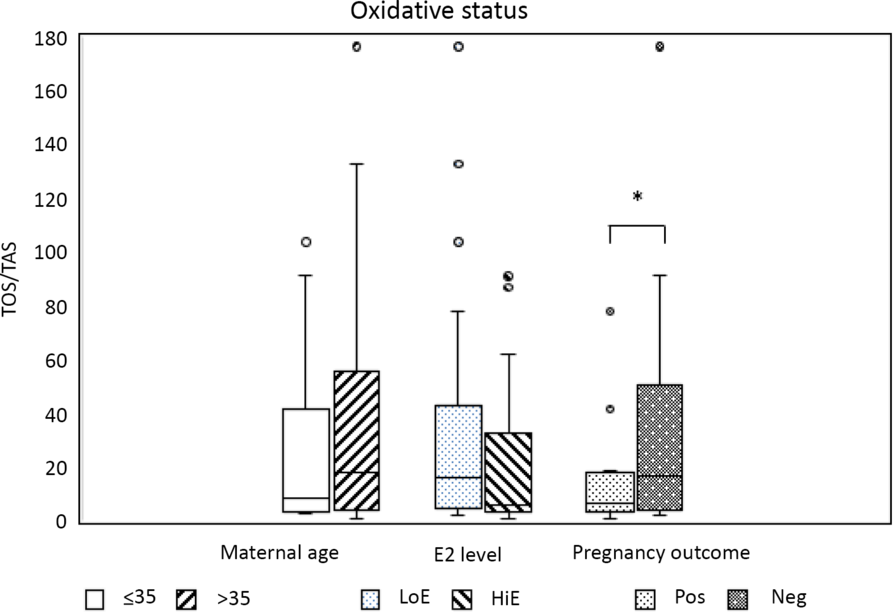
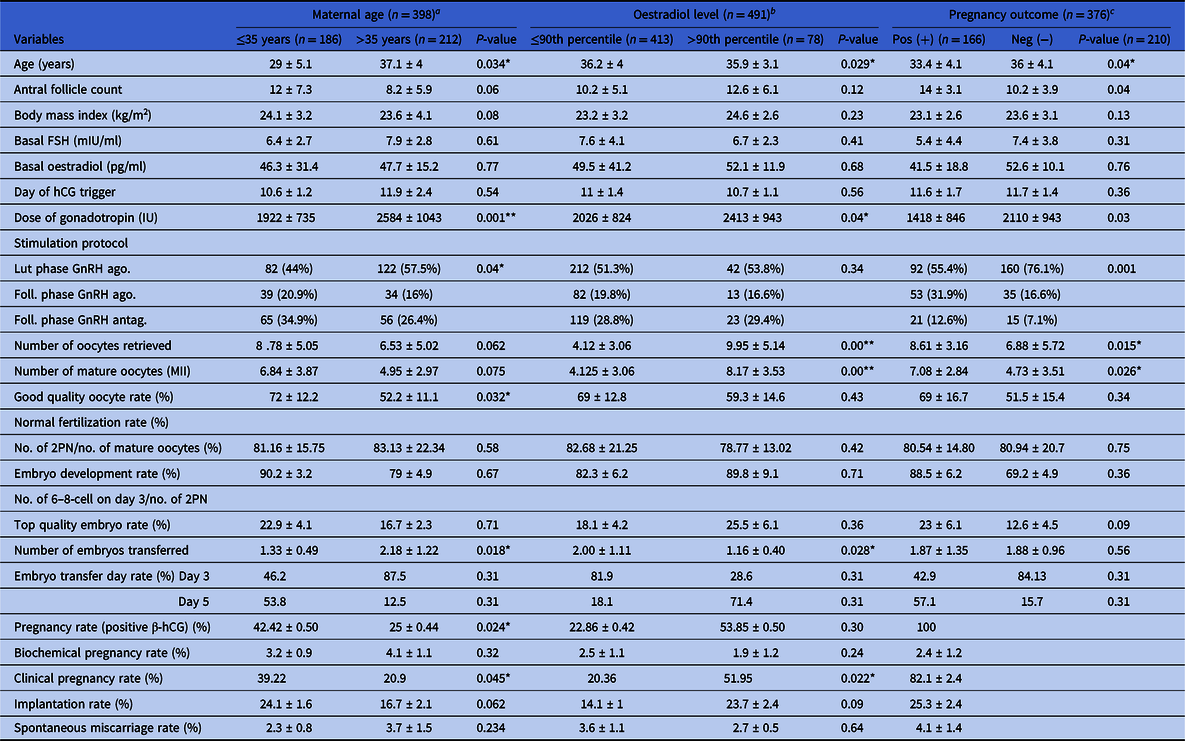
Total oxidant capacity (TOS) and total antioxidant capacity (TAS) levels are listed in Table 1 and total oxidative status (TOC/TAC ratio) in Fig. 1. Demographic characteristics and ICSI outcome parameters of each group are presented in Table 2. Each group was matched for other variables (stimulation protocol, dose of gonadotrophin, duration of stimulation, antral follicle count, BMI, basal FSH, and E2 levels and day of hCG trigger) that may affect the outcome except for the parameter under investigation (Table 1).
Oxidative parameters (TAC levels, TOC levels) in each subgroup

a Maternal age: ≤35 years and >35 years.
b Oestradiol (E2) level: ≤ 90th percentile (lower) and > 90th percentile (higher).
c Pregnancy outcome: positive (pos.) and negative (neg.) respectively.
d Results are given as mean optical density (OD).
*P < 0.05.
Oxidative status (TOC/TAC ratio) within three subgroups. Maternal age: ≤35 years and >35 years. Oestradiol level: LoE (lower) and HiE (higher) and pregnancy outcome: pos (positive) and neg (negative) (beginning from the left side, respectively). Box-and-whisker plot shows median, 25th and 75th percentiles, minimum and maximum values, and the outliers of the distribution. E2, oestradiol. *P < 0.05.

Demographic data and ICSI outcome measures among patients in three subgroups during an IVF cycle
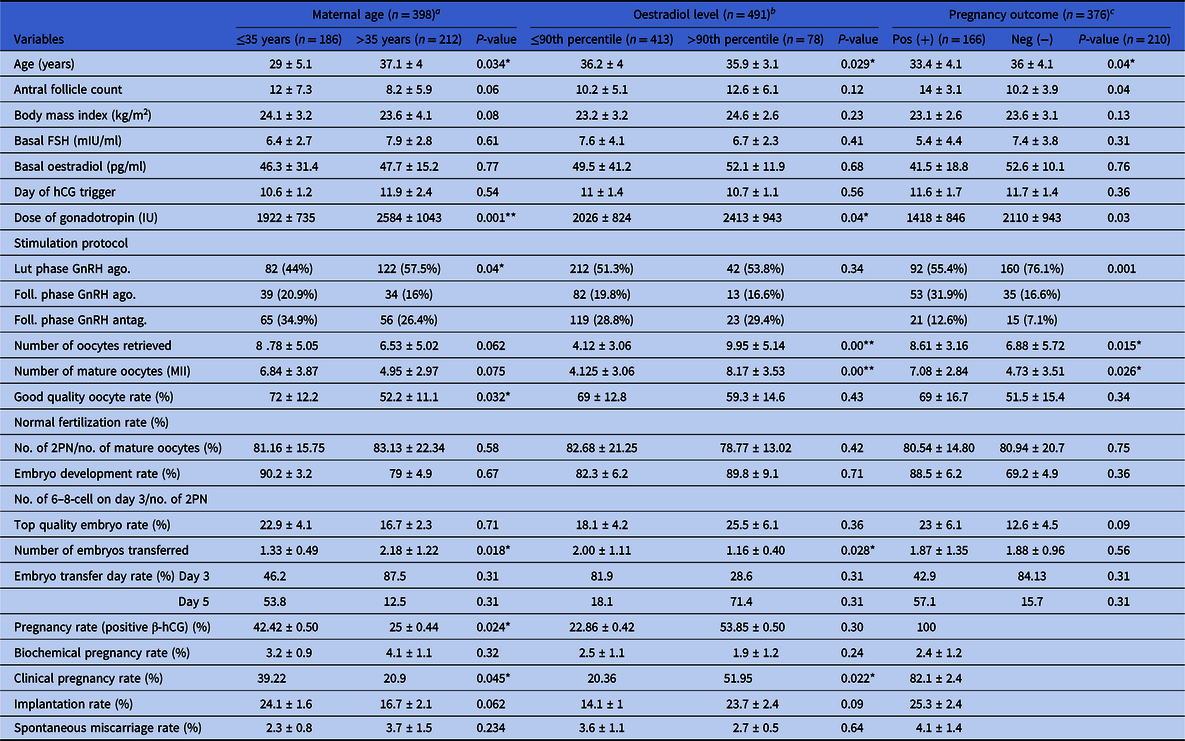
a Maternal age: ≤35 years and >35 years.
b Oestradiol level: ≤ 90th percentile (lower) and > 90th percentile (higher).
c Pregnancy outcome: positive (pos.) and negative (neg.) respectively.
Results are given as percentage (%) ± SD.
2PN, 2 pronucleus; MII, metaphase II.
*P < 0.05; **P < 0.005.
Maternal age, oestrogen level on the day of hCG administration and pregnancy outcome were found to be correlated with follicular oxidative status.
Maternal age
Maternal age was positively correlated with the oxidative status of the follicular fluid (P = 0.044, r = 0.418). DNA fragmentation and chromatin integrity were not statistically different between the older and younger patients, although a higher DNA fragmentation rate (32.12% ± 9.1 vs 45.2 ±11.2, respectively) and a lower mean chromatin integrity rate (47.2% ± 12.1 vs 39.2% ± 4.5, respectively) were observed in the older age group.
E2 level
Percentiles were determined and >90th percentile (higher) for E2 level was calculated as >3191 pg/ml. We found that oestrogen level was positively correlated with the oxidative status in the follicular fluid (P = 0.001, r = 0.436 respectively). DNA fragmentation and chromatin integrity were not statistically different between the lower and higher E2 groups with a mean DNA fragmentation rate of 42.7% ± 12.5 vs 36.8 ±10.1, respectively and a mean chromatin integrity rate of 39.5% ± 8.9 vs 50.2% ± 9.9, respectively.
Pregnancy outcome
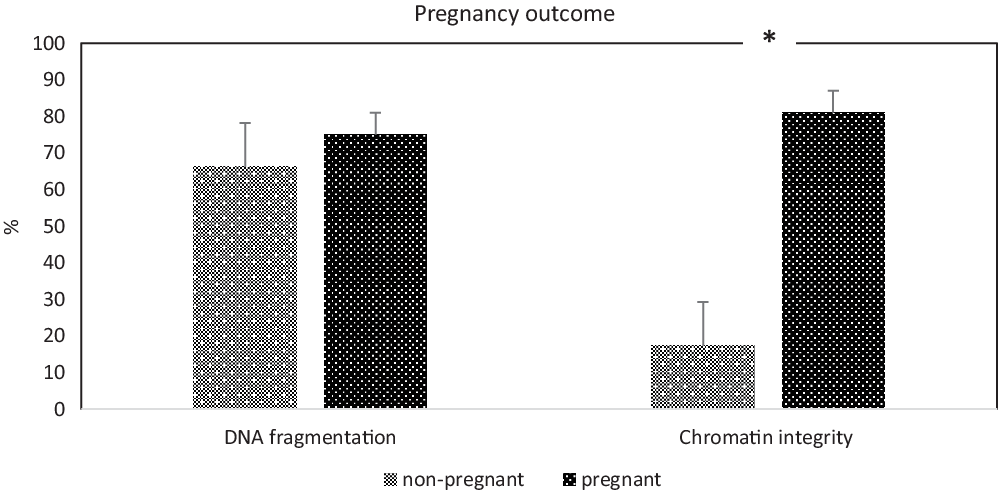
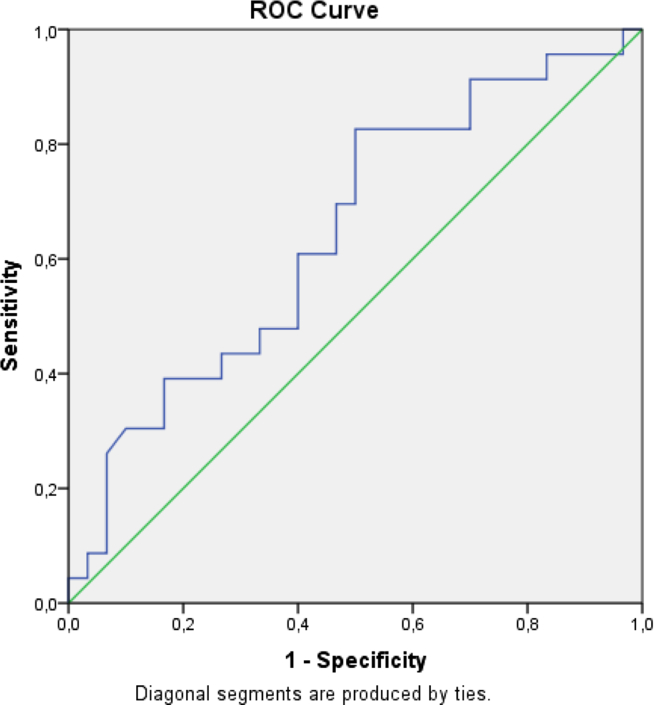
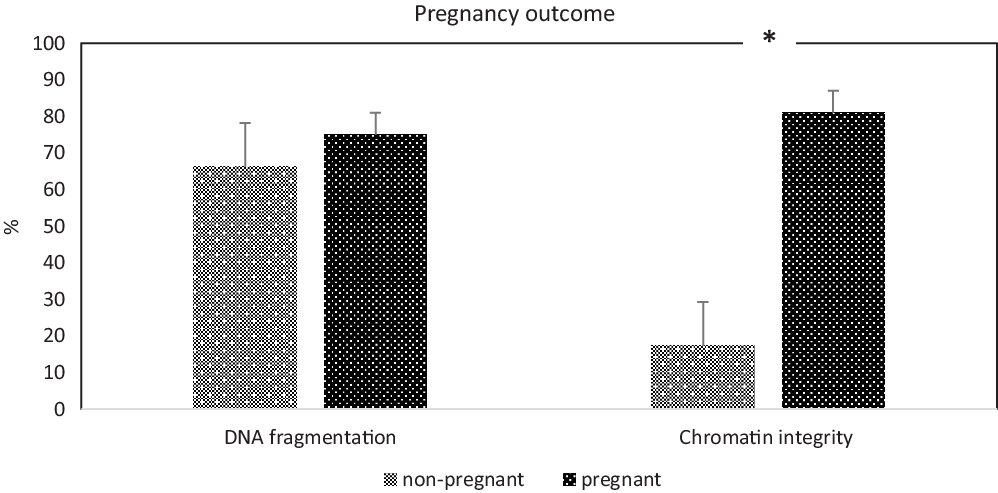
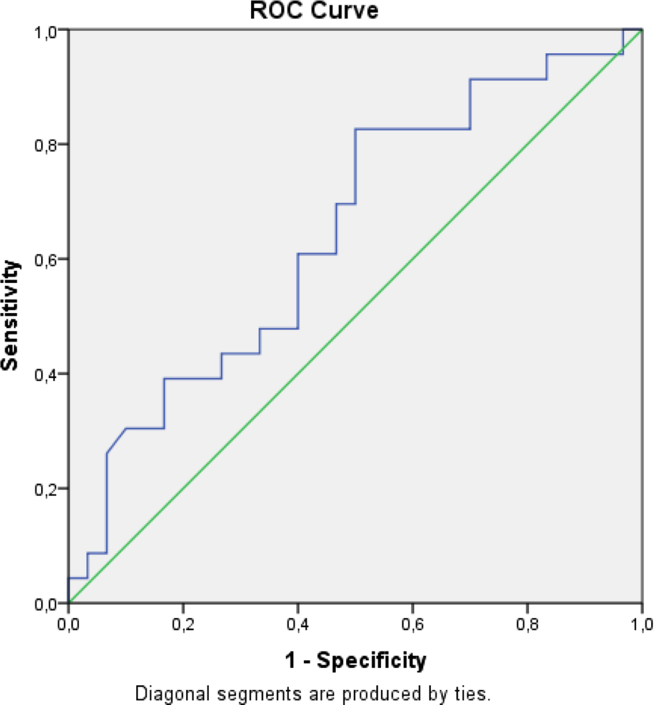
A significant increase in the total oxidative status of non-pregnant patients was observed compared with the pregnant women group (P = 0.042) (Fig. 2). Oxidative level was not predictive for pregnancy outcome as determined by receiver operating characteristic (ROC) curve analysis. (AUC = 0.65, P = 0.071) (Fig. 3). Although there was no significant difference in DNA fragmentation levels between pregnant and non-pregnant group, mean chromatin integrity rate was significantly higher in the pregnant group (Fig. 2).
DNA fragmentation and chromatin integrity rates in accordance with pregnancy outcome. Results are given as percentage (%). *P < 0.005.
ROC curve analysis for pregnancy outcome.
Discussion
ICSI treatment includes complex medications that aim to take control of women’s natural reproductive physiology that is altered dramatically during ovarian stimulation procedures. As a result, many modifications in the ovarian cycle and in the biochemical, genetic and metabolic processes inside the ovary become possible. OS is known to be induced by many intrinsic and extrinsic factors that are likely to develop during ICSI treatment. The factors that correlate with or accompany OS during ICSI cycles are not fully understood. We investigated three potential situations (maternal age, E2 level and pregnancy outcome) that may partially contribute to, or at least relate to, follicular OS in women undergoing ICSI cycles.
Maternal age
Maternal age is a very well known factor that negatively affects the overall outcome of an IVF cycle. Many studies have evidenced that there is age-related decrement in non-growing follicles (Klinkert, Reference Klinkert2005), oocyte quality subsequent to enhanced meiotic non-disjunction, oocyte damage, and changes in the quality of the surrounding cells (Miao et al., Reference Miao, Kikuchi, Sun and Schatten2009; Da Broi et al., Reference Da Broi, Giorgi, Wang, Keefe, Albertini and Navarro2018), further emphasizing the importance of the oocyte environment. The effect of maternal age on oocyte quality and fertilization is a well known phenomenon in female fertility and in the present study it was further correlated with follicular oxidative status.
We found that female age was positively correlated with the oxidative status of the follicular fluid. This may have been partially explained previously, as ageing accompanies an increase in ROS production and a decrease in antioxidant production (Fissore et al., Reference Fissore, Kurokawa, Knott, Zhang and Smyth2002; Takahashi et al., Reference Takahashi, Takahashi, Igarashi, Tezuka and Kurachi2003; Thouas et al., Reference Thouas, Trounson and Jones2005). This may be a reason why impaired oocyte competency accompanies increased maternal age (Tarín, Reference Tarín1996; Fissore et al., Reference Fissore, Kurokawa, Knott, Zhang and Smyth2002; Takahashi et al., Reference Takahashi, Takahashi, Igarashi, Tezuka and Kurachi2003; Thouas et al., Reference Thouas, Trounson and Jones2005; Lord and Aitken, Reference Lord and Aitken2013).
One of the main targets of oxidants is nucleic acids and, therefore, chromatin structure. To analyse this effect, we investigated DNA fragmentation and chromatin integrity based on maternal age and found that the incidence of DNA fragmentation and chromatin integrity levels were not significantly different between older and younger women, although both results were in favour of young women. A bovine animal study investigating the relationship between follicular cell DNA status and the oocyte reported that the degree of cumulus cell apoptosis was correlated with developmental competence of the enclosed oocytes (Janowski et al., Reference Janowski, Salilew-Wondim, Torner, Tesfaye, Ghanem, Tomek, El-Sayed, Schellander and Hölker2012). Our study was the first to investigate this correlation in humans. The difference we obtained did not reach a significant level, probably because of the limited number of patients in our study population. This non-significant decrease may be a cause or a result of OS, which may also be correlated with other ageing mechanisms within the cell. Further studies comparing DNA fragmentation in different age groups with or without OS, should be conducted to demonstrate this relationship more clearly. Subsequently, antioxidant therapies may be considered in the light of these data. This was investigated in a study by Luddi et al. (Reference Luddi, Capaldo, Focarelli, Gori, Morgante, Piomboni and De-Leó2016) who demonstrated increased oocyte quality following antioxidant intake in women aged >39 years who were undergoing IVF.
E2 level
Oestrogens are known to contribute to the redox state of cells, showing both pro-oxidative and antioxidative properties. The ovary, which is the main source of oestrogens and maintains the balance between the production and detoxification of ROS, is of critical importance. Current evidence suggests that oestrogens can reduce OS through two mechanisms: by preventing ROS production and by scavenging free radicals. Oestrogens have been shown to upregulate endogenous antioxidative defence mechanisms by regulating the expression and the activity of several antioxidant enzymes, including superoxide dismutase and glutathione peroxidase (Zhang et al., Reference Zhang, Fujii and Kosaka2007).
Oestrogen levels on the day of hCG administration in an ICSI cycle reflect the ovarian response to ovarian stimulation. In a recent study, Klinkert reported that E2 levels were correlated with follicular oxidative status and that OS markers had a negative effect on the ovarian response (Klinkert, Reference Klinkert2005). Recent studies have suggested that supraphysiological hormonal status during controlled ovarian hyperstimulation in an ICSI cycle may be responsible for adverse outcomes such as delivery of small fetuses (Farhi et al., Reference Farhi, Ben-Haroush, Andrawus, Pinkas, Sapir, Fisch and Ashkenazi2010; Calhoun et al., Reference Calhoun, Barnhart, Elovitz and Srinivas2011; Imudia et al., Reference Imudia, Awonuga, Doyle, Kaimal, Wright, Toth and Styer2012). One of the possible reasons for these findings may be OS, which was demonstrated in the recent study. We demonstrated that oestrogen level was positively correlated with the oxidative status measured in the follicular fluid (P = 0.001, r = 0.436, respectively). However, high E2 levels seemed not to significantly affect DNA fragmentation and chromatin integrity of the granulosa cells, which was found in our study to favour lower E2 levels.
Pregnancy outcome
In the third group, we classified patients based on their pregnancy outcome as pregnant or non-pregnant to provide data on whether pregnancy outcome was correlated with oxidative status. We found a significant increase in OS levels in the non-pregnant group, indicating the potential effect of OS on pregnancy outcome. Increased OS determined in non-pregnant patients confirmed the results of several studies, which also reported negative effects of OS on fertility potential and pregnancy (Okyay et al., Reference Okyay, Aslan, Taşkın, Selek, Cengiz-Altın and Kahraman2014; Smits et al., Reference Smits, Mackenzie-Proctor, Fleischer and Showell2018).
Although there were no significant differences in DNA fragmentation levels between the groups, chromatin integrity rates were significantly higher in the pregnant group. Based on these data, it may be concluded that DNA abnormalities could be overwhelmed by repair mechanisms, while chromatin problems in the granulosa cells reflect the epigenetic alterations of the individual that may somehow affect embryonic development and, therefore, implantation by affecting cell cycle and mitotic divisions.
In conclusion, age of women and oestrogen levels on the day of hCG administration were positively correlated with oxidative status measured in follicular fluid and there was a significant increase in the oxidative status of non-pregnant patients compared with the pregnant women group. Further studies are needed to investigate the correlation with other parameters such as dose of gonadotrophin, stimulation duration, ovulation induction protocol, and coasting procedure. Results obtained will help us to shield the patients from possible situations that may cause OS and therefore adverse outcomes during an ICSI cycle.
Financial support
None.
Conflicts of interest
The authors state no conflict of interest.
Ethical standards
Patients were informed about the study and written informed consent was obtained from all trial participants. Ethical Review Board of the Istanbul Medipol University ethics committee approved the study (10840098-604.01.01-E.58952). The project complies with the Turkish Law of Assisted Reproductive Technologies (09/2004). The study was conducted in accordance with the principles expressed in the Declaration of Helsinki.