Introduction
In the temperate climate prevailing in north-west Europe, winter wheat (Triticum aestivum L.) remains a most important cereal because of its high yield potential. Average grain yields have shown a steady annual increase of 0.1 t/ha from the start of the 1960s until the mid-1990s (Brisson et al. Reference Brisson, Gate, Gouache, Charmet, Oury and Huard2010; Petersen et al. Reference Petersen, Haastrup, Knudsen and Olesen2010). Subsequently, grain yields have plateaued although progress in cultivar performance does not appear to be a limiting factor. Recent decades have witnessed development of winter wheat cultivars with grain yields exceeding 10 t/ha (Barraclough et al. Reference Barraclough, Howarth, Jones, Lopez-Bellido, Parmar, Shepherd and Hawkesford2010), given an ample supply of nitrogen (N). The stagnation in wheat yields has been ascribed to climate change, declining frequency of legume crops in cereal rotations and increased constraints on N use in plant production (Brisson et al. Reference Brisson, Gate, Gouache, Charmet, Oury and Huard2010; Petersen et al. Reference Petersen, Haastrup, Knudsen and Olesen2010; Olesen et al. Reference Olesen, Trnka, Kersebaum, Skjelvåg, Seguin, Peltonen-Sainio, Rossi, Kozyra and Michale2011).
In response to EU directives on environmental protection, Denmark has implemented a regulatory framework with restrictive use of N in agricultural production. This is because 60% of the land surface is under intensive cultivation and supports high livestock densities, and because substantial net percolation during the autumn and winter periods and short distances from fields to coastal surface waters provide little retention of N in the landscape. The regulations include restrictions on the use of N fertilizer (application times and maximum rates for individual crops) and prescribed use efficiencies for N applied with animal manures (AMs) (Dalgaard et al. Reference Dalgaard, Hansen, Hasler, Hertel, Hutchings, Jacobsen, Jensen, Kronvang, Olesen, Schjørring, Kristensen, Graversgaard, Termansen and Vejre2014). Basically, the prescribed N use efficiency for different animal categories and types of manure implies that ammoniacal N, present in manure at the time of application, is as efficient as N added in mineral fertilizer. Moreover, AMs are ascribed mandatory residual N values for subsequent crops.
To compensate for restrictions on fertilizer N use while still harvesting the benefits of high-yielding wheat cultivars, other management options are scrutinized to optimize overall N use efficiency (Christensen Reference Christensen, Schjønning, Elmholt and Christensen BT2004). Autumn-sown wheat accounts for 42% of the present cereal area in Denmark and wheat is also the preferred cereal on farms specializing in livestock production. Alternative management options for winter wheat include better estimates of the residual value of previously added manure-N (Petersen et al. Reference Petersen, Thomsen, Mattsson, Hansen and Christensen2012; Sørensen et al. Reference Sørensen, Thomsen and Schröder2017), the use of nitrate catch crops in between main crops (Hansen et al. Reference Hansen, Kristensen and Djurhuus2000) and improved management of AMs during storage and application in the field (Webb et al. Reference Webb, Sørensen, Velthof, Amon, Pinto, Rodhe, Salomon, Hutchings, Burczyk and Reid2013).
Another alternative could be an earlier sowing date. While recent studies under north-west European conditions show marginal yield benefits of early sowing (Sieling et al. Reference Sieling, Stahl, Winkelmann and Christen2005; Myrbeck et al. Reference Myrbeck, Stenberg and Rydberg2012; Rasmussen & Thorup-Kristensen Reference Rasmussen and Thorup-Kristensen2016; Munkholm et al. Reference Munkholm, Hansen, Thomsen, Wahlström and Østergaard2017), early studies based on field trials with winter wheat in southeast England showed that wheat developed a greater root system, recovered more soil N and produced greater grain yields when the seeding date was moved from October to September (Barraclough & Leigh Reference Barraclough and Leigh1984; Widdowson et al. Reference Widdowson, Penny, Darby, Bird and Hewitt1987; Milford et al. Reference Milford, Penny, Prew, Darby and Todd1993). These studies relied on N added with mineral fertilizers. When mineral N fertilizer is substituted by ammoniacal N in AM, more total N is added to the soil and a greater N residual value is expected due to subsequent mineralization of organically bound manure N (Webb et al. Reference Webb, Sørensen, Velthof, Amon, Pinto, Rodhe, Salomon, Hutchings, Burczyk and Reid2013). For autumn-sown wheat grown in crop rotations with grass-clover and frequent use of AM, an earlier sowing date may therefore be beneficial to wheat growth and improve the recovery of soil N, thereby reducing N losses from soil.
The current study evaluated the effect of sowing date (early, mid-August; timely, mid-September) on two contemporary winter wheat cultivars (Hereford and Mariboss) grown with different rates of nutrients added as AM (cattle slurry) or mineral fertilizers. Overwinter plant N uptake and soil mineral N concentrations were determined in the cropping year 2014/15, while harvest yields (grain, straw, N content) were determined over two cropping years (2014/15 and 2015/16). The study was embedded in the Askov Long-Term Experiment on Animal Manure and Mineral Fertilizers (Askov-LTE).
Materials and methods
Askov-LTE: site characteristics and experimental layout
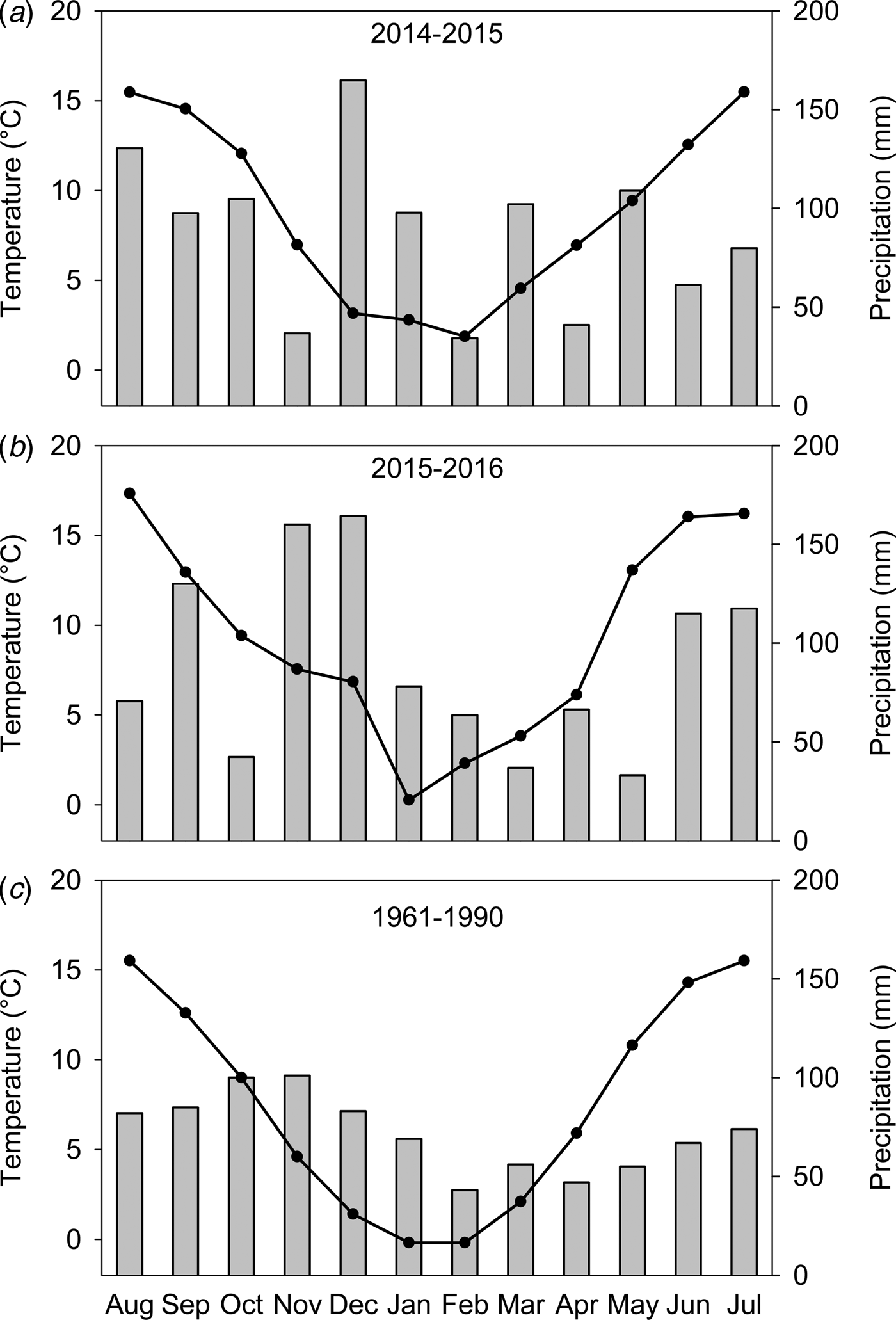
The Askov-LTE is located on the Lermarken site at Askov Experimental Station, South Jutland, Denmark (55o28′N, 09o07′E, 63 m a.s.l.). The soil is classified as Ultic Hapludalf (Soil Survey Staff 1999) and Aric Haplic Luvisol (IUSS Working Group WRB 2015). During the present study (August 2014–July 2015 and August 2015–July 2016), mean precipitation and temperature was 1115 and 1140 mm, and 9.5 and 9.8 °C, respectively (Fig. 1). The soil is a light sandy loam with 10% clay (<2 µm), 12% silt (2–20 µm), 43% fine sand (20–200 µm) and 35% coarse sand (200–2000 µm) in the 0–20 cm layer.
Monthly mean temperature (lines) and precipitation (bars) during (a) August 2014–July 2015 and (b) August 2015–July 2016 at Askov Experimental Station; (c) shows long-term mean values (1961–1990).

The Askov-LTE was initiated in 1894 and includes four separate fields (termed B2, B3, B4 and B5). The experiment carries a four-course rotation of winter wheat (T. aestivum L.), silage maize (Zea mays L.) and spring barley (Hordeum vulgare L.), undersown with a grass-clover mixture that is cut twice in the subsequent production year. The B2 field is divided into a west (B2w) and an east (B2e) section. The crops are rotated across the fields in a fixed sequence whereby a given field grows only one crop a given year. Above-ground biomass is removed from all plots at harvest. Magnesium-enriched lime is added every 4 years to maintain soil pH in the range 5.5–6.5, and sulphur (S) is added annually at a rate of 12.5 kg S/ha. Chemical crop protection measures are applied when needed.
The main nutrient treatments are different rates (0, ½, 1 and 1½ times the standard rate for a given crop; grass-clover remains without nutrient additions) of total N, phosphorus (P) and potassium (K) in AM (cattle slurry since 1973) or mineral fertilizers (NPK). The size of the nutrient-treated plots is 11.7 × 9.4 m (B3, B4 and B5 fields) and 7.3 × 9.4 m (B2 field). Averaged across the rotation, 1 AM and 1 NPK represent an annual input of 100 kg total N, 20 kg P and 80 kg K/ha. The cattle slurry has 5% dry matter (DM) and 60–70% of its total N content as ammoniacal N. Treatment 1 AM corresponds to 25 t slurry/ha (w/w). Further details are given by Christensen et al. (Reference Christensen, Petersen and Trentemøller2006).
Experiments with wheat sowing dates
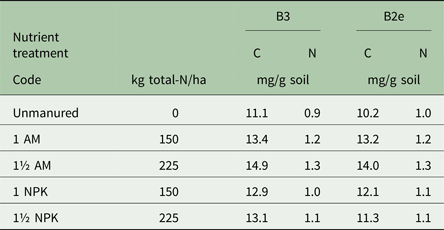
The present study was based on a split–split plot design and accommodated into the B3 field during 2014/15 (2015 harvest) and the B2e field during 2015/16 (2016 harvest). The study employed three field replicates of the nutrient treatments: 0 (unmanured), 1 AM, 1½ AM, 1 NPK and 1½ NPK (Table 1). For winter wheat, nutrient level 1 corresponds to 150 kg total N, 30 kg P and 120 kg K/ha. All nutrients were surface-applied in the spring (Table 2). The grass-clover crop that preceded winter wheat was terminated after the second cut by spraying with glyphosate and ploughing. Each nutrient plot was then divided into four sub-plots to accommodate the wheat cultivars Mariboss (Nordic Seeds, Denmark) and Hereford (Syngenta, Switzerland) and two sowing dates: early (mid-August) and timely (mid-September). For early-sown wheat, the seedbed in two sub-plots was prepared in August by harrowing and seeds of Hereford and Mariboss (treated with Latitude™ to prevent attacks of take-all (Gaeumannomyces graminis)) were sown in separate sub-plots at a rate of 225 seeds/m2. For timely-sown wheat, the seedbed in the remaining two sub-plots (left undisturbed after ploughing) was prepared in September and the wheat cultivars sown at a rate of 350 seeds/m2. The distance between wheat rows was 12 cm. Reduced seeding rates are recommended for early sowing of winter wheat to reduce fungal attacks during autumn and crop lodging in the subsequent production season. Table 2 includes dates for main field operations and measurements.
Animal manure (AM) and mineral fertilizer (NPK) treatments in the B3 and B2e fields involved in the present study

For winter wheat, the treatments 1 NPK and 1 AM correspond to 150 kg total N, 30 kg P and 120 kg K/ha. Concentrations of C and N in the soil were determined in autumn 2016.
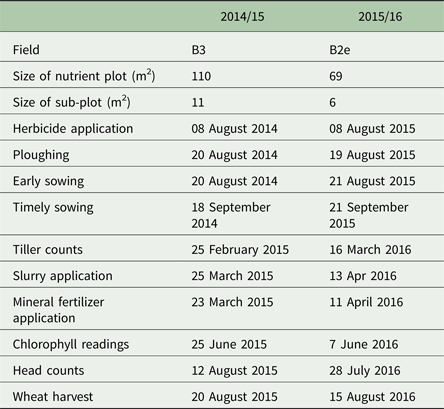
Plot sizes and dates for main field operations and measurements in the B3 and B2e fields for the 2014/15 (harvest year 2015) and 2015/16 (harvest year 2016) growing seasons

The nutrient plot is the area receiving the nutrient treatment while the sub-plot is the area of the nutrient plot allocated to each combination of sowing date and cultivar.
Measurements during crop growth
The concentration of mineral N (ammonium and nitrate) in 0–20 cm soil was determined on samples collected in the B3 field from each replicate plot on 18 August, 17 September and 20 November 2014, and on 18 March 2015. The soils were sieved to <2 mm and a 15 g sub-sample shaken for 1 h with 30 ml of 1 M potassium chloride. Ammonium-N and nitrate-N in the filtrate (0.7 µm fiberglass filter) was determined colorimetrically using a Bran + Lübbe AutoAnalyser 3 (Seal Analytical, Norderstedt, Germany). Another soil sub-sample was oven-dried at 105 °C for 24 h to determine soil moisture content at sampling. The concentration of mineral N in the soil is reported as mg N/kg dry soil.
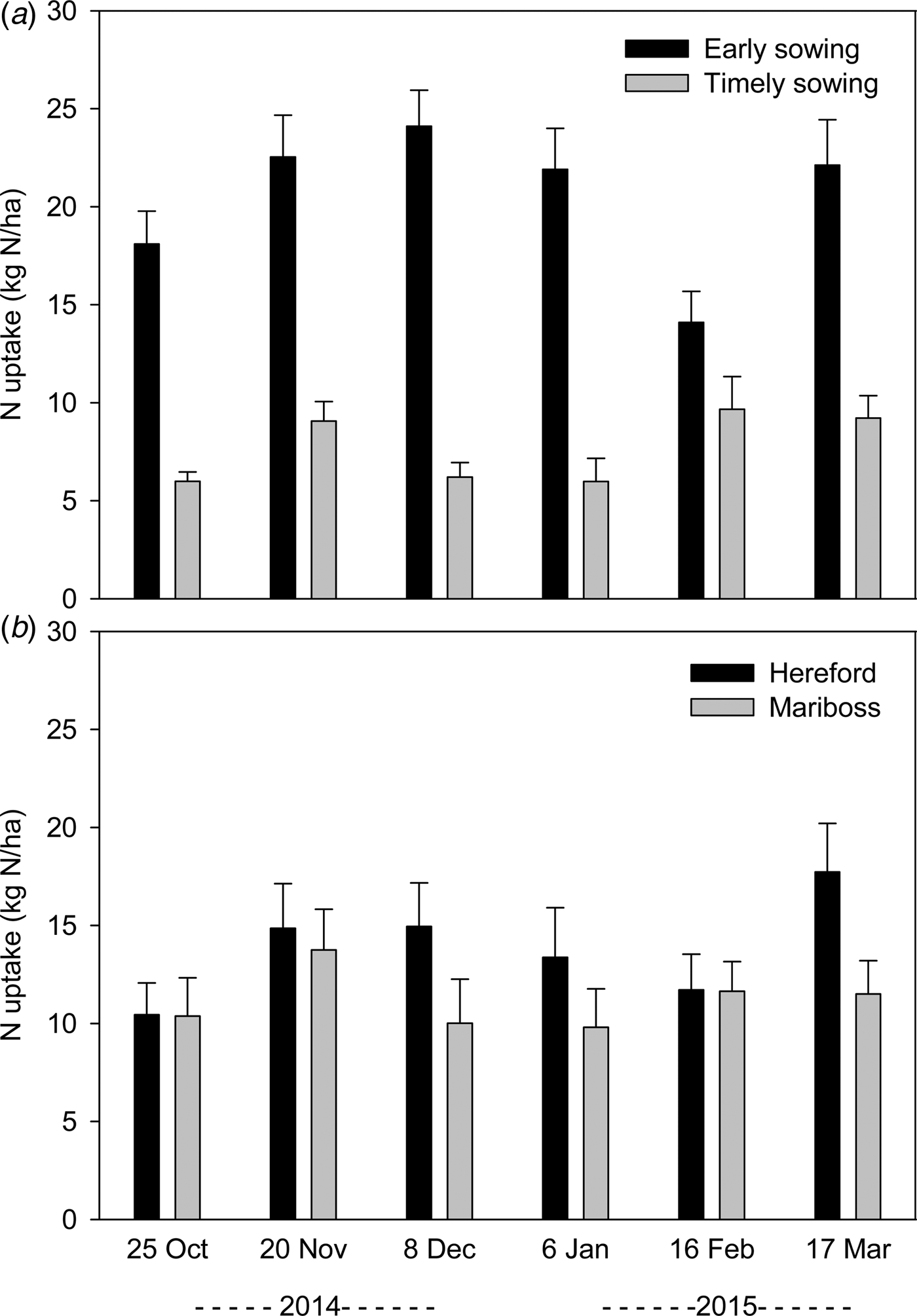
Six times during the period 25 October 2014 to 17 March 2015 (see Fig. 2 for sampling dates), above-ground N uptake was determined in the B3 field by collecting biomass from 0.9 m of a single plant row (corresponding to 0.11 m2) not included in the final harvest plot. The wheat plants were cut at the soil surface. After drying for 18 h at 80 °C, the milled (<0.5 mm) biomass was analysed for total N concentration using a Flash 2000 Organic Elemental Analyser (Thermo Fisher Scientific, USA). The N uptake in above-ground biomass is reported as kg N/ha after DM yields had been corrected for soil contamination by ashing a separate sub-sample.
Effect of (a) sowing date and (b) cultivar on N uptake in aboveground biomass of wheat grown in the B3 field during the 2014/15 autumn/winter period. Bars show means ± s.e. (n = 30).

The number of tillers was assessed on 25 February 2015 (B3 field) and 16 March 2016 (B2e field) at the end of winter dormancy. Within each plot, tillers were counted for plants collected from two randomly chosen areas of 0.06 m2 and expressed as tillers/m2.
To evaluate the N status of wheat, chlorophyll concentrations at anthesis was determined on 25 June 2015 (B3 field) and 7 June 2016 (B2e field) using a portable chlorophyll metre (CM-500; Sofranc Technologies, Spain). This device applies a closed chamber technique and measures light transmittance/absorbance to monitor leaf ‘greenness’ as an approximation of chlorophyll content (Ladha et al. Reference Ladha, Pathak, Krupnik, Six and Van Kessel2005); readings are given in SPAD units (Soil Plant Analysis Development units). The present study reports average readings taken on the upper fully expanded leaf of ten randomly selected plants within each subplot.
Finally, the number of heads present in a plant row of 0.6 m (representing 0.07 m2) was counted just before wheat ripeness. This measurement was non-destructive, and results are reported as heads/m2.
Measurements at crop harvest
At physiological maturity, the wheat was harvested with a plot combine harvester that allows separate determination of grain and straw yields and leaves 5 cm of stubble. Sub-samples of grain and straw were oven-dried at 80 °C for 18 h. Grain yields are reported with 85% DM, while straw yields are reported as 100% DM. Thousand kernel weight (TKW) is expressed as the weight in g of 1000 grains using a seed counter (Contador, Pfeuffer, Germany). The N concentration in grain and straw was determined using a Flash 2000 Organic Elemental Analyser and reported as mg N/kg DM. The N offtake is reported as kg N/ha.
Calculations and statistical analysis
Apparent N recovery (ANR) was calculated as:
 $${\rm ANR} = \displaystyle{{U_{\rm T}\; - U0} \over {F_{\rm N}}} \times {\rm 1}00$$
where U T is N offtake (kg N/ha) in wheat grain or straw in plots receiving AM or mineral fertilizer, U0 is corresponding N offtakes in unmanured plots and F N is N applied (kg N/ha) in AM or mineral fertilizer,
The recovery of N added with AM (ANR man) was related to the recovery of N added with mineral fertilizers (ANR min) by calculating the manure fertilizer value (MFV):
 $${\rm MFV} = \displaystyle{{{\rm ANR\; man}} \over {{\rm ANR\; min}}}\; $$
The experimental layout was a split–split–block design with three replicates and for the statistical analyses the following linear model was applied:
 $$\eqalign{ y_{{\rm ijkl}} & = \mu + B_{\rm i} + T{\rm j} + {\rm B}{\rm T}_{{\rm ij}} + P_{\rm k} + {\rm \; B}{\rm P}_{{\rm ik}} + {\rm T}{\rm P}_{{\rm jk}} \cr & + {\rm BT}{\rm P}_{{\rm ijk}} + V_{\rm l} + {\rm B}{\rm V}_{{\rm il}} + {\rm P}{\rm V}_{{\rm kl}} + {\rm TP}{\rm V}_{{\rm jkl}} \cr & + {\rm T}{\rm V}_{{\rm jl}} + {\rm BT}{\rm V}_{{\rm ijl}} + {\rm BP}{\rm V}_{{\rm ikl}} + {\rm BTP}{\rm V}_{{\rm ijkl}} + \varepsilon _{({\rm ijklm})}} $$
where i is block (three replicates); j is treatment (five replicates); k is sowing date (two replicates); l is wheat cultivar (two replicates); y ijk is observation of the l th wheat cultivar at k th sowing date and j th nutrient treatment; μ is grand mean; B i is random effect of the i th block NID (0,  $\sigma _{\rm b}^2 $); T j is fixed effect of the j th nutrient treatment; P k is fixed effect of the k th sowing date; TPjk is interaction between the j th nutrient treatment and the k th sowing date; V l is fixed effect of the l th cultivar; PVkl is interaction between the k th sowing date and the l th cultivar; TPVjkl is interaction between the j th treatment, the k th sowing date and the l th cultivar; TVjl is interaction between the j th sowing date and the l th cultivar, and ε (ijklm) is the random experimental error (0,
 $\sigma _{\rm e}^2 $)
The data were analysed using SAS 9.3 mixed-model procedure (SAS Institute 2013). Interactions and main effects were declared significant at P < 0.05. Variables were checked for assumptions of normality and homogeneity of variances based on the plot of residuals v. predicted values. Log transformations were performed where necessary based on the Box–Cox power transformation series (Box & Cox Reference Box and Cox1964). Back-transformed means are presented for ease of interpretation. Least-square means were separated using the PDIFF option of LSMEANS in SAS proc mixed. Pair-wise comparisons were based on the ESTIMATE statement in SAS. The least significant differences are reported at P < 0.05 significance level. All analyses refer to individual years/fields.
Results
Soil mineral nitrogen content and wheat nitrogen uptake in B3 field during the autumn/winter period
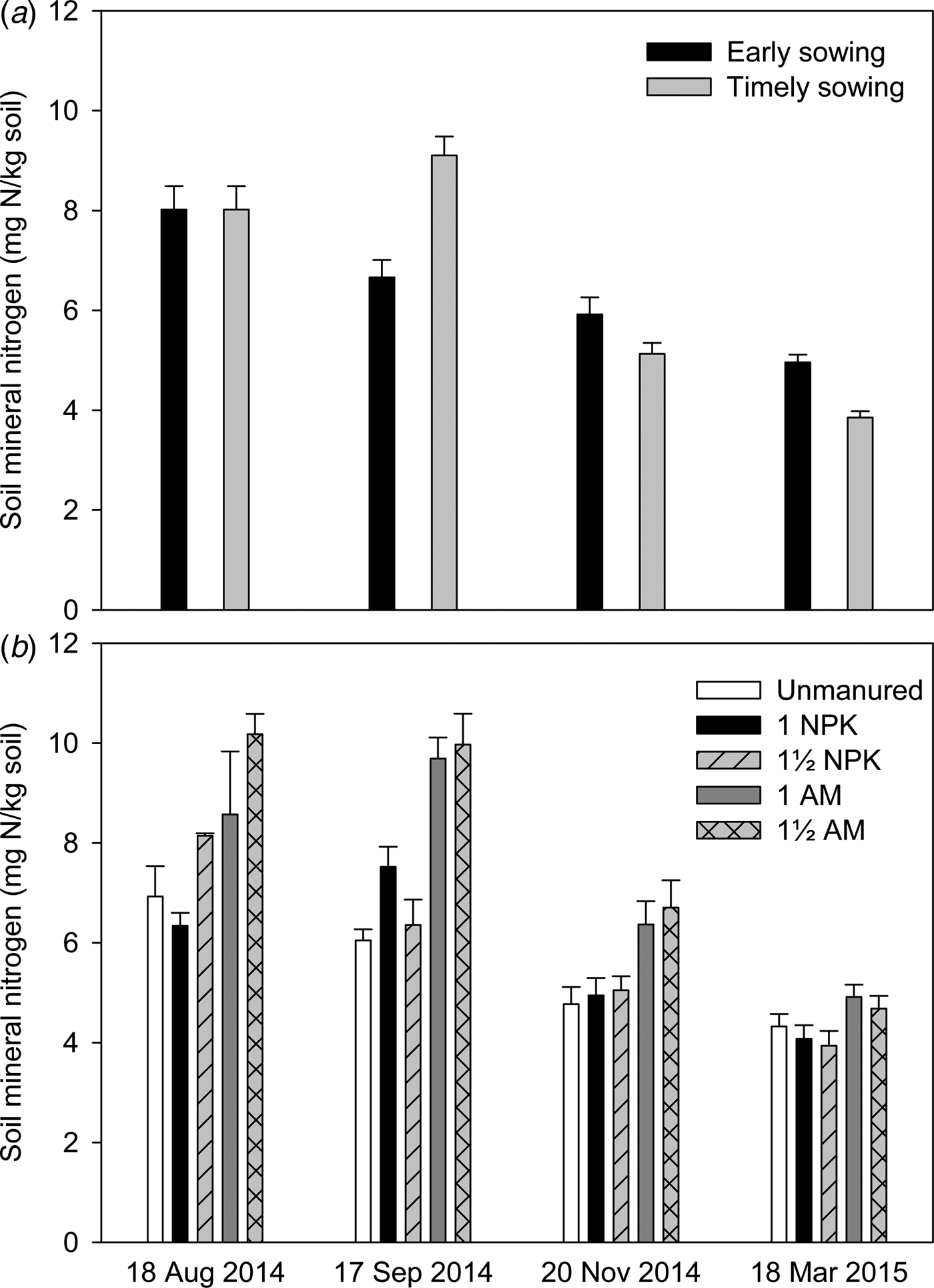
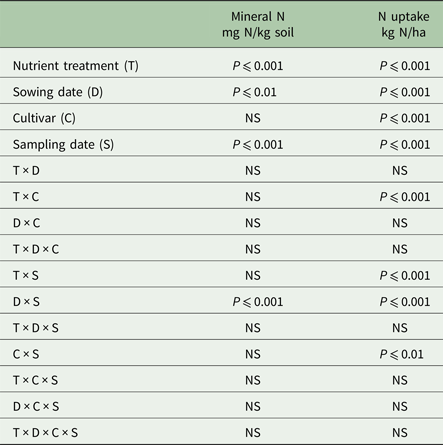
The concentration of mineral N in the 0–20 cm soil horizon differed significantly between nutrient treatments (P ⩽ 0.001), sowing date (P ⩽ 0.01) and soil sampling date (P ⩽ 0.001), but not between cultivars (Table 3). Generally, more mineral N was present in AM plots than in unmanured and NPK plots, although differences between plots with different nutrient treatments were small for soil sampled in spring (Fig. 3). Soil sampled 17 September 2014 under early-sown wheat was higher in mineral N than soil under timely-sown wheat; the opposite was true for subsequently sampled soil. The concentration of mineral N in soil showed a general decline during the autumn/winter period (Fig. 3) with a tendency for an interaction between soil sampling date and nutrient treatment (P = 0.06; Table 3).
Concentrations of mineral N (nitrate-N and ammonium-N in 0–20 cm soil) sampled at four dates in the B3 field during the 2014/15 autumn/winter period. (a) The effect of sowing date; bars show means ± s.e. (n = 15 for 18 August; n = 30 for other dates). (b) The effect of nutrient treatment; bars show means ± s.e. (n = 3 for 18 August; n = 12 for other dates). Early and timely sowing was on 20 August and 18 September 2014, respectively.

Main effects and interactions for soil mineral N (nitrate N and ammonium N) and N uptake in above ground biomass measured in the B3 field during the 2014/15 autumn/winter period

NS, not significant.
The overwinter N uptake in wheat differed significantly (P ⩽ 0.001) between nutrient treatments, sowing date, cultivar and plant sampling date (Table 3). At all plant samplings, the N uptake of early-sown wheat was significantly (P ⩽ 0.001) higher (average 22 kg N/ha) than that of timely-sown wheat (average 8 kg N/ha), with the largest differences (18 kg N/ha) appearing for plants sampled 8 December 2014 and 6 January 2015 (Fig. 2). The N uptake differed significantly between cultivars and sampling dates (P < 0.01), but differences between cultivars were not consistent at all sampling dates. There was an interaction between nutrient treatment and sampling date, and plant uptake decreased in the order: 1½ AM>1½ NPK>1 NPK>1 AM>unmanured.
Number of tillers
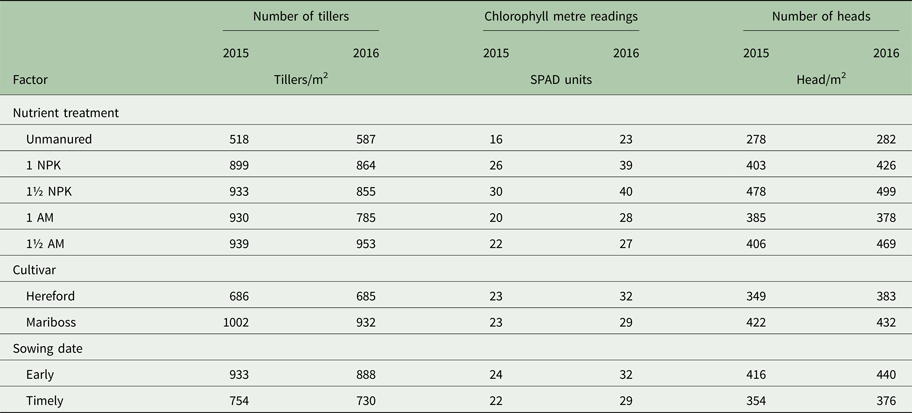
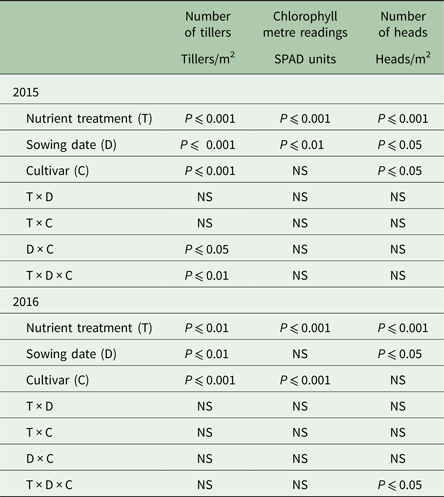
Early sowing increased the number of tillers counted after winter dormancy (Table 4). In 2015, early-sown wheat had 933 tillers/m2 while timely-sown wheat had 754 tillers/m2, the corresponding numbers in 2016 were 888 and 730 tillers/m2. In 2015, but not in 2016, Mariboss grew more tillers than Hereford. Wheat on unmanured plots had fewer tillers/m2 than wheat grown with AM or NPK (not including 1 NPK in 2016); differences between nutrient treatment were absent. Significant interactions were observed in 2015 for sowing date and cultivar (P ⩽ 0.05), and for nutrient treatment, sowing date and cultivar (P ⩽ 0.01) (Table 5) but none of these interactions were significant in 2016.
Mean values for tiller counts, chlorophyll metre readings and number of heads as influenced by nutrient treatment, cultivar and sowing date

Main effects and interactions for tiller counts, chlorophyll metre readings and number of heads

NS = not significant
Chlorophyll metre readings
Chlorophyll metre readings (CMR) at anthesis showed a significant (P ⩽ 0.001) effect of nutrient treatment in both years (Tables 4 and 5). The NPK treatments showed higher readings than AM treatments, while unmanured treatments showed the lowest CMR. There was a significant (P ⩽ 0.001) effect of sowing date for both years of the experiment. Early-sown wheat showed higher SPAD reading than timely-sown wheat. Cultivars differed only in 2016 with Hereford showing higher values than Mariboss.
Number of heads
Nutrient treatment (P ⩽ 0.001) and sowing date (P ⩽ 0.05) had significant effects on the number of heads (Tables 4 and 5). The smallest number of heads/m2 were registered for wheat grown on unmanured plots. Early sowing resulted in a larger number of heads compared with timely sowing, the average difference being 63 heads/m2 in favour of early sowing (P < 0.05). Mariboss developed a trend for a higher number of heads compared with Hereford with 60 heads/m2 in favour of Mariboss (P ⩽ 0.01).
Yields of grain and straw
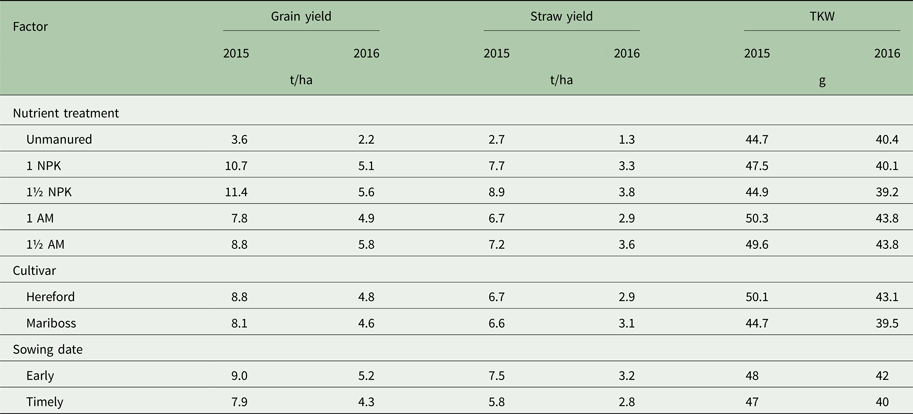
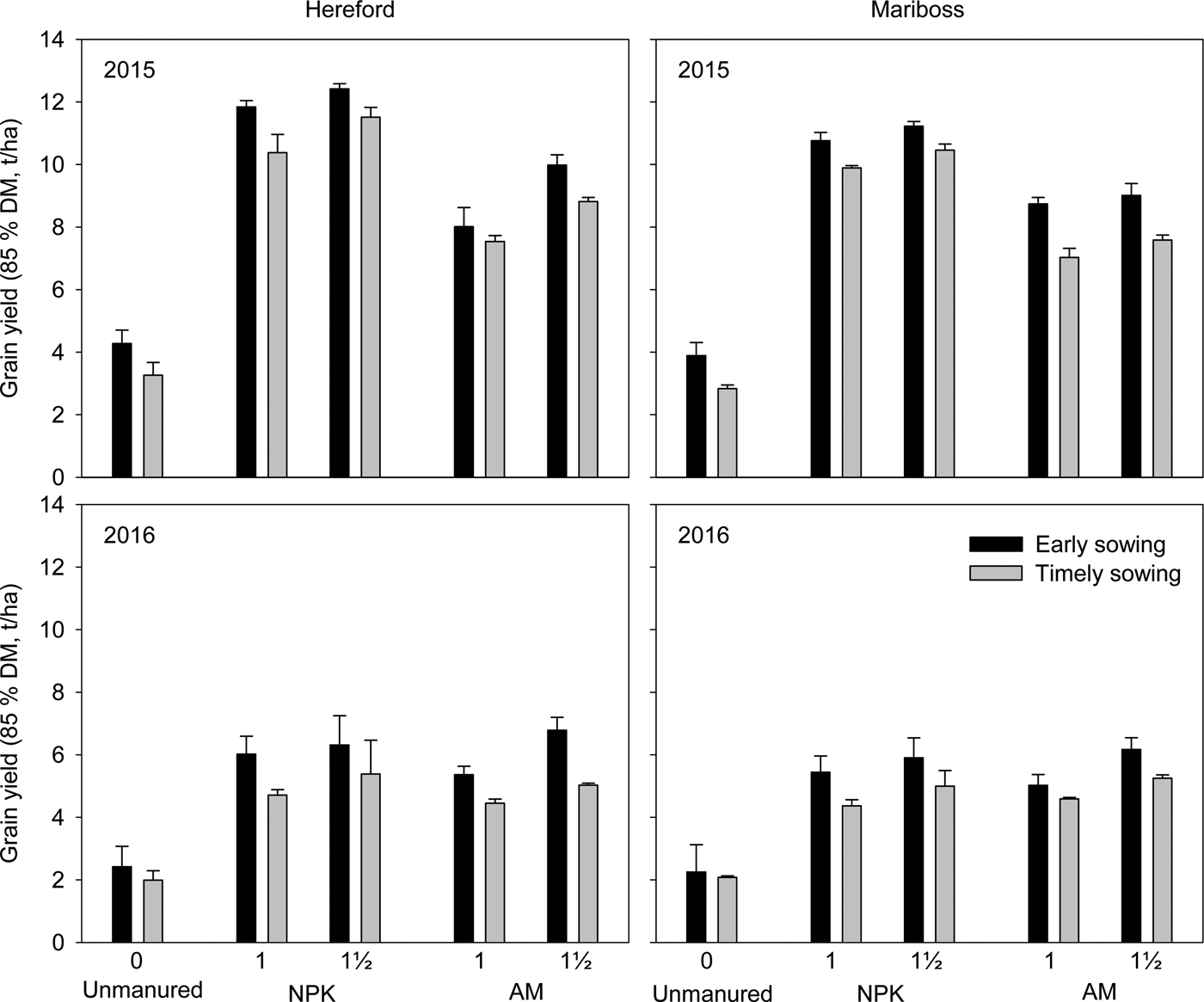
The winter wheat yielded considerably more grain and straw in 2015 than in 2016 (Table 6). The mean grain yield was 8.5 t/ha in 2015 and 4.7 t/ha in 2016; the corresponding straw yields were 6.7 and 3.0 t DM/ha. Yields peaked in 2015 for wheat grown with 1½ NPK; for this treatment, grain yield passed 11 t/ha. The grain yield decreased in the order: 1½ NPK>1 NPK>1½ AM>1 AM>unmanured. In 2016, grain yields were similar for 1½ AM and 1½ NPK, and for 1 AM and 1 NPK (Table 6).
Mean values for grain (85% DM) and straw (100% DM) yields, and thousand kernel weight (TKW) as influenced by nutrient treatment, cultivar and sowing date

Early-sown wheat yielded significantly (P ⩽ 0.001) more grain than timely-sown wheat (Fig. 4; Table 6). The effect of cultivar was significant in 2015 (P < 0.001) but not in 2016, and the effect of cultivar depended on nutrient treatment (P < 0.05). Hereford was more productive than Mariboss in plots given 1½ NPK and 1 NPK, whereas there was no difference between cultivars in plots dressed with 1 AM. On average, Hereford yielded 0.7 t/ha more grain than Mariboss (Fig. 4). Early-sown wheat produced more straw than timely-sown wheat in 2015 (P < 0.001) and in 2016 (P < 0.05). The two cultivars gave similar yields of straw.
Effect of nutrient treatment, sowing date and cultivar on grain yields in winter wheat harvested in the B3 field in 2015 and in the B2e field in 2016. Bars show means ± s.e. (n = 3).

Thousand kernel weight
The greatest kernel weight was obtained for wheat grown with AM, whereas grains harvested in NPK-treated plots and unmanured plots did not differ consistently in TKW (Table 6). Early sowing gave significantly (P ⩽ 0.001) higher TKW compared with timely sowing in 2015, although the difference was numerically small. Hereford provided significantly higher TKW than Mariboss in both 2015 (P ⩽ 0.05) and 2016 (P ⩽ 0.01). Seen across the two harvest years, the average grain of Hereford was 4.5 mg heavier than grains produced by Mariboss.
Crop nitrogen concentrations and nitrogen offtake
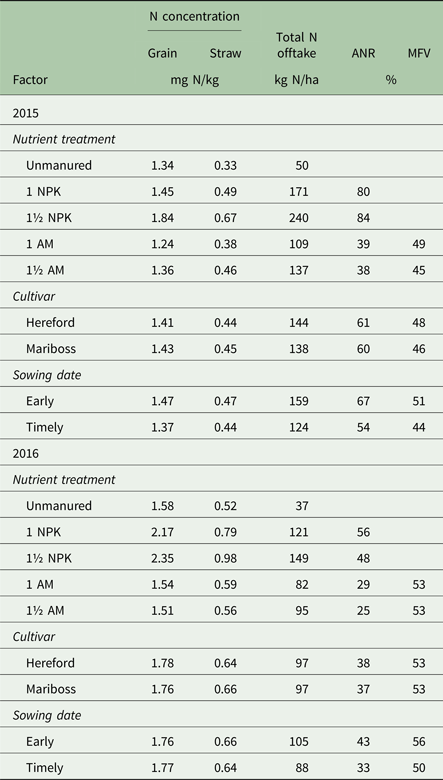
Nutrient treatments had a significant impact (P < 0.001) on the N concentration in grains and straw harvested in 2015 and 2016. The N concentrations differed between cropping years with smaller concentrations in 2015 than in 2016 (Table 7). However, for both years, wheat grown with mineral fertilizer (1 NPK and 1½ NPK) reached significantly (P ⩽ 0.001) higher N concentrations compared with wheat grown with AM (1 AM and 1½ AM). The concentration of N in wheat grains from animal manured plots was similar to grains from unmanured plots. In 2015, early sowing increased N concentrations in grain and straw compared with timely sowing while early and timely sowing did not differ for wheat harvested in 2016.
Mean values for concentrations of N in grain and straw, total N offtake at harvest, apparent N recovery (ANR) and mineral fertilizer value (MFV) determined for each factor: nutrient treatment, cultivar and sowing date

The N offtake in harvested grain and straw was affected significantly by nutrient treatment (P ⩽ 0.001), cultivar (P ⩽ 0.05) and sowing time (P ⩽ 0.001) in 2015 but only by nutrient treatment (P ⩽ 0.001) and sowing time (P ⩽ 0.01) in 2016. Crop N offtake increased in the order: unmanured<1 AM<1½ AM<1 NPK<1½ NPK (Table 7). Early-sown wheat removed 35 kg N/ha more than timely-sown wheat in 2015; in 2016 the difference was 17 kg N/ha. The difference between cultivars in N offtake was significant in 2015 but accounted for only 6 kg N/ha in favour of Hereford. The ANR was substantially smaller in 2016 than in 2015 (Table 7). The ANR was higher for NPK-treated wheat than for wheat grown on AM plots (P < 0.001), and ANR was 12% higher for early-sown than for timely-sown wheat (P < 0.001). The cultivars did not differ in ANR and showed an average of 61% in 2015 and 41% in 2016. The MFV did not differ between nutrient treatments, cultivars and sowing date, except for sowing date in 2015, where early sowing showed higher MFV than timely sowing.
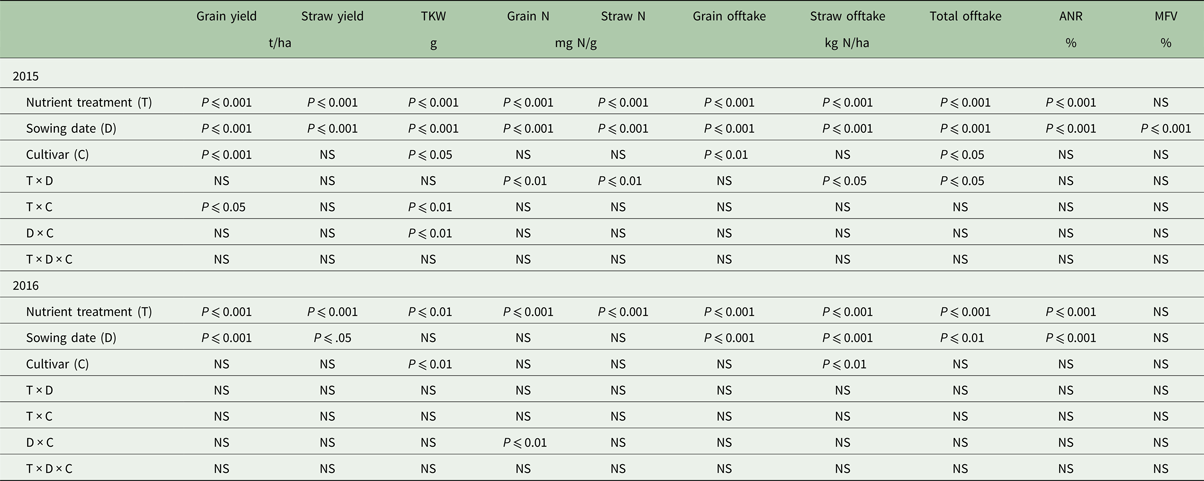
Table 8 summarizes main effects and interactions for grain and straw yields, TKW and N concentrations and N offtake at harvest in response to nutrient treatment, sowing date and cultivar. For main effects, the most consistent parameter was nutrient treatment and sowing date. In 2015, cultivar affected grain yield, grain N offtake and TKW in 2015; in 2016, effects of cultivar were only seen for straw N offtake and TKW. Most interactions were not significant.
Main effects and interactions for grain and straw yield, thousand kernel weight (TKW), concentration of N in grain and straw, N offtake in grain and straw, apparent N recovery (ANR) and mineral fertilizer value (MFV)

NS, not significant.
Discussion
The winter wheat harvested in 2015 yielded considerably more grain and straw and showed a higher total N offtake than wheat harvested in 2016. Several factors contributed to these differences. In 2016, May was characterized by low precipitation (33 mm), whereas precipitation in May 2015 reached 109 mm. Lack of water at the beginning of the critical reproductive stages may induce periodic stress in wheat plants (Musick & Dusek Reference Musick and Dusek1980) and this may have compromised 2016 harvest yields. Another contributing factor was the timing of nutrient applications in the spring. In 2015, mineral fertilizers and AM were applied on 23–25 March, whereas applications in 2016 were delayed by 3 weeks (11–13 April). However, the positive effects of earlier sowing persisted in spite of the major difference in yield levels.
Early sowing was associated with a number of benefits compared with timely sowing. During the autumn/winter period 2014/15, above-ground biomass of early-sown wheat held more N than timely-sown wheat, with the largest difference (18 kg N/ha) observed for wheat plants sampled in December and January. Similar benefits of earlier sowing on overwinter N uptake in wheat has been demonstrated in previous studies under north-western European growing conditions (Widdowson et al. Reference Widdowson, Penny, Darby, Bird and Hewitt1987; Milford et al. Reference Milford, Penny, Prew, Darby and Todd1993; Rasmussen & Thorup-Kristensen Reference Rasmussen and Thorup-Kristensen2016). The higher N uptake is ascribed to be deeper and more developed root systems found in early-sown wheat (Barraclough & Leigh Reference Barraclough and Leigh1984; Rasmussen & Thorup-Kristensen Reference Rasmussen and Thorup-Kristensen2016; Munkholm et al. Reference Munkholm, Hansen, Thomsen, Wahlström and Østergaard2017). The concentration of mineral N in 0–20 cm soil depth during the autumn/winter period remained relatively low and showed only small differences between early- and timely-sown wheat. Thus, the additional N uptake in early-sown wheat represents an environmental benefit as more N is being conserved in the soil/plant system and less N becomes exposed to loss from the root zone. Previous studies under comparable growth conditions show that earlier sowing dates can reduce the content of mineral N in 0–1 m soil depth by 10–35 kg N/ha during the autumn period (Widdowson et al. Reference Widdowson, Penny, Darby, Bird and Hewitt1987; Myrbeck et al. Reference Myrbeck, Stenberg and Rydberg2012; Rasmussen & Thorup-Kristensen Reference Rasmussen and Thorup-Kristensen2016; Munkholm et al. Reference Munkholm, Hansen, Thomsen, Wahlström and Østergaard2017). However, higher overwinter N uptake and reduced soil mineral N contents are not always reflected in larger harvest yields and N offtakes (Sieling et al. Reference Sieling, Stahl, Winkelmann and Christen2005; Rasmussen & Thorup-Kristensen Reference Rasmussen and Thorup-Kristensen2016; Munkholm et al. Reference Munkholm, Hansen, Thomsen, Wahlström and Østergaard2017).
In the present study, the advantage of early sowing was similar with regard to grain yields obtained in 2015 (1.1 t/ha) and 2016 (0.9 t/ha), despite the very different yield levels realized for the two cropping seasons. Similar yield benefits of earlier sowing have been reported for winter wheat grown in south-east England, where sowing dates were moved from late October to late September (Widdowson et al. Reference Widdowson, Penny, Darby, Bird and Hewitt1987; Milford et al. Reference Milford, Penny, Prew, Darby and Todd1993). For straw, early sowing also resulted in higher yields but the yield benefit was considerably greater in 2015 (1.7 t/ha) than in 2016 (0.4 t/ha). Apparently, the higher yield obtained by early sowing was derived from a more extensive root system (Barraclough & Leigh Reference Barraclough and Leigh1984), larger numbers of tillers, higher crop N status at anthesis and larger numbers of productive heads. The results of the present study align with the previous studies in which the larger yields associated with early sowing are ascribed to higher numbers of tillers and heads, and a longer vegetative period with earlier onset of stem elongation (Musick & Dusek Reference Musick and Dusek1980; Kiss et al. Reference Kiss, Balla, Banyai, Veisz and Karsai2014).
Early sowing also provided higher N offtake at harvest. This was determined mainly by higher DM yields rather than by N concentration, although grain and straw harvested in 2015 showed slightly higher N concentrations for early-sown wheat. In spring 2015, the difference in N uptake between early- and timely-sown wheat in the B3 field averaged 14 kg N/ha. This difference was increased to 35 kg N/ha at harvest, indicating that early-sown wheat was superior in utilizing N mineralized from the soil N pool and/or N added in the spring 2015. The ANR was higher in 2015 for early-sown wheat (ANR = 67%) than for timely-sown wheat (ANR = 54%). Compared with 2015, the ANR was reduced considerably for early (ANR = 43%) as well as timely-sown wheat (ANR = 33%) and the N offtake benefit associated with early-sown wheat was smaller (17 kg N/ha).
It was envisioned that early sowing would be more beneficial to wheat grown with AM than wheat grown with mineral fertilizers. However, higher grain yield was found for 1½ NPK and 1 NPK than for 1½ AM in both years of the experiment. Although the concentration of mineral soil N in autumn was higher for AM plots and more N was taken up in the wheat plants during the autumn/winter period in 1½ AM plots, these benefits of AM were not reflected in higher numbers of tillers in the spring, chlorophyll recordings or number of heads. The only consistent benefit of AM recorded in the present study was a higher grain weight at harvest. Thus, a beneficial effect of AM on grain and straw yields of early-sown wheat could not be confirmed in the present study, as illustrated by a lack of interactions between sowing date and nutrient treatment. The interaction between nutrient treatment and sowing date observed for N concentrations in grain and straw was due to higher concentrations of N in grain and straw from wheat grown with NPK. While grain and straw yields in 2015 were higher for wheat grown with NPK than with corresponding nutrient additions in AM, yield differences between corresponding NPK and AM treatments were not significant for wheat harvested in 2016. Nevertheless, differences in N concentrations in grain and straw caused N offtake and ANR to be higher for wheat given mineral fertilizers than for wheat given AM, regardless of cropping year.
By using the Askov-LTE, the present study included the residual N value derived from decades of AM and mineral fertilizer additions. Although treatment-induced differences in soil total-N content are relatively small, the plots dressed with AM had higher contrations of soil mineral N in the early autumn. The grass-clover crop preceeding the winter wheat remains unfertilized and the larger N mineralization must be ascribed to a residual N effect. However, this residual N effect did not compensate for the smaller input of plant-available N received by plots with cattle slurry. The ANR was considerably higher for NPK- than for AM-treated soils, and averaged over treatments and years, the mineral fertilizer value of cattle slurry was only 50.
Compared with Mariboss, the cultivar Hereford showed higher N uptake in the early spring, larger numbers of heads, heavier grains at harvest, and larger grain and total N offtake in 2015 (but not in 2016). Rasmussen et al. (Reference Rasmussen, Dresbøll and Thorup-Kristensen2015) also found higher yields for Hereford compared with three other contemporary wheat cultivars and attributed this to a deeper root system. For ANR, Gaju et al. (Reference Gaju, Allard, Martre, Snape, Heumez, LeGouis, Moreau, Bogard, Griffiths, Orford, Hubbart and Foulkes2011) observed significant interactions between N fertilization and cultivar when testing a range of UK and French winter wheat cultivars. In the present study, the general performance of the two cultivars did not differ consistently with respect to the yields of grain and straw, grain and straw N concentrations and offtake, ANR or effect of N added with cattle slurry.
The optimum sowing time for winter wheat differs from region to region, depending primarily on the climatic conditions and soil types, but also on the technological stage of plant production (including the capacity of farm equipment for harvesting, drying and storing of grains, seedbed preparation and crop protection). In the agro-climatic region encompassing Denmark, timely sowing is generally considered to be mid-September. In most years, winter wheat is harvested in mid-August, but the harvest period may stretch into September due to adverse weather conditions. It is recognized that moving the sowing date from mid-September to mid-August has practical implications, including a narrower time window between harvest and sowing, a shorter period to control grass weeds, and an increased risk of early attacks by barley yellow dwarf virus and fungi such as mildew and eyespot (Jørgensen et al. Reference Jørgensen, Secher, Olesen and Mortensen1997). These implications must be considered when evaluating the net benefits of earlier sowing in continuous winter wheat cropping and may call for more diverse cropping sequences leaving room for early sowing of wheat.
Conclusion
It is concluded that in the north-west European climatic region, moving the sowing date of winter wheat from mid-September to mid-August provides significant yield and N offtake benefits if management skills and sufficient equipment capacity is available.
Acknowledgements
The authors gratefully acknowledge the excellent technical assistance provided by the staff at the Askov Experimental Station and by Johannes L. Jensen in revising tables and figures. The study was supported financially by a personal grant to A. S.-T. from SENECYT (Ecuador).