




No CrossRef data available.
Article contents
- Abstract
- Stability and Change in BPD: A Review of the Literature
- Predicting Variation in Stability and Change in BPD From a Neurobehavioral Model Perspective: An Empirical Study
- General Discussion
- Appendix A: Definition and Interpretation of Parameters in the Multilevel Model for Growth (Change)
- References
Predicting change in borderline personality: Using neurobehavioral systems indicators within an individual growth curve framework
Published online by Cambridge University Press: 12 December 2005
Article contents
- Abstract
- Stability and Change in BPD: A Review of the Literature
- Predicting Variation in Stability and Change in BPD From a Neurobehavioral Model Perspective: An Empirical Study
- General Discussion
- Appendix A: Definition and Interpretation of Parameters in the Multilevel Model for Growth (Change)
- References
Abstract
The natural history and course of borderline personality disorder (BPD) has long been the focus of speculation, typically guided by impressions from clinical work with BPD-affected individuals. Not unlike the other personality disorders (PDs), it has long been assumed that BPD is relatively stable, traitlike, and enduring in nature. The extent to which BPD is or is not a plastic construct has implications not only for understanding its longitudinal course, but also for understanding its development and, ultimately, its treatment and/or prevention. This paper consists of two parts. The first part reviews the longitudinal research corpus that bears directly upon the issue of stability of BPD in both adolescents and adults. The consistent trend in very nearly all studies, whether using a categorical or dimensional approach to assessment, is one of considerable change over time. This literature presents complexities, however, because most of the extant studies examine BPD-affected individuals who have been exposed to treatment. However, at least two large-scale longitudinal studies, which include both treated and untreated persons, also provide support for viewing BPD as a malleable disorder that declines in severity over time. The second part presents original data from the Longitudinal Study of Personality Disorders that specifically examine the predictors of change in BPD using a neurobehavioral model of personality within an individual growth curve (IGC) analytical framework. This IGC analysis revealed important predictors of both overall level of BPD features as well as rate of change in BPD features, with particularly important roles played by the agentic positive emotion (i.e., incentive motivation) and anxiety (negative emotion) systems. The benefits of the IGC approach for understanding the developmental psychopathology of BPD is also stressed.
This research was supported in part by NIMH Grant MH 45448 to Mark F. Lenzenweger for the Longitudinal Study of Personality Disorders.
Information
- Type
- Research Article
- Information
- Copyright
- © 2005 Cambridge University Press
It has long been assumed that personality disorders (PDs) are stable, enduring, and traitlike in nature. This assumption has been the basis for what most psychologists and psychiatrists were taught regarding the longitudinal nature or natural history of PDs. Beginning with the introduction of the Axis II model in the DSM-III (American Psychiatric Association [APA], 1980), the prevailing diagnostic nomenclature (APA, 1980, 1987, 1994) for these prevalent disorders (Lenzenweger, Loranger, Korfine, & Neff, 1997; Torgersen, Kringlen, & Cramer, 2001) has continued to embrace this assumption in asserting that PDs are “enduring patterns” of behavior that are “inflexible” and “stable over time” (APA, 1994, pp. 629–630). What has been, and remains, particularly striking about this assumption is that data supporting it, drawn from properly designed longitudinal studies, were nonexistent in 1980. To this day, they remain essentially nonexistent with the exception of three or four multiwave longitudinal studies that are underway. However, despite this paucity of empirical data, it is not an uncommon experience, even now, to hear comments made at scientific meetings or read remarks in manuscript reviews or study section “pink sheets” that suggest the long-term stability of PDs is well established beyond doubt. In point of fact, the long-term stability of PDs remains essentially undocumented terrain. This is particularly true for borderline PD (BPD).
In this article we focus on stability and change in BPD. BPD is a relatively prevalent disorder affecting between 1.3 (Lenzenweger et al., 1997) and 0.7% (Torgersen et al., 2001) of the general population. These empirical figures are notably lower than the DSM suggested prevalences. The condition is well known to both clinicians and researchers alike, the former being familiar with the challenges of treatment and the latter being challenged by classification complexities and an opaque etiology. However, like the other PDs, the situation for BPD is no exception when it comes to the question of its longitudinal nature. It is fascinating that many clinicians and some researchers assume BPD represents a relatively stable disorder. In fact, clinical lore suggests that the BPD patient is best described as demonstrating “stable instability.” However, we believe the state of the research corpus, when confined to well-designed studies, is sufficiently thin so as to preclude definitive conclusions regarding the true longitudinal nature of BPD psychopathology. However, what is known, as will be reviewed below, raises doubts about clinical impressions that suggest unfailing stability and, simply put, many questions remain to be answered at present. For example, to what extent is BPD genuinely stable over time? How best should this question be answered? Should one rely on categorical diagnoses in the assessment of stability or should one use a more sensitive dimensional metric? Moreover, if change is documented in BPD over time, what are the predictors of such change? Are their underlying personality or temperament systems that can be used to understand the pattern of stability or change that is found to characterize BPD when properly studied?
This article represents a synthesis of the extant empirical literature on longitudinal studies of BPD, as no such review currently exists, as well as the presentation of original data on the neurobehavioral predictors of change in BPD. Thus, this article consists of two quasi-independent parts that complement each other. In the literature review, we examine what is known from extant studies regarding the stability of BPD diagnoses and dimensions as well as comment on some of the methodological issues that have prevented progress in our understanding of the longitudinal nature of PDs in general. We seek to build upon our first part “review and commentary” by conducting an empirical investigation of BPD features derived from the National Institute of Mental Health (NIMH)-sponsored Longitudinal Study of Personality Disorders (LSPD; Lenzenweger, 1999; Lenzenweger et al., 1997; Lenzenweger, Johnson, & Willett, 2004). Specifically, we demonstrate the utility of the individual growth curve (IGC) approach to the study of stability and change in BPD features over time. Moreover, we employ the neurobehavioral systems approach of Depue and Lenzenweger (2001, 2005) in an effort to predict change in BPD features from a prospective multiwave longitudinal perspective.
Stability and Change in BPD: A Review of the Literature
The longitudinal stability of BPD has not been the focus of detailed review; thus, we present such a review here. There have been a number of empirical studies that provide illumination for the question, “is BPD a stable form of psychopathology over time?” Although study populations, assessment measures, and time frames do vary, general support has been found for the presence of change over time in BPD, at the level of both categorical diagnosis and BPD features, in the direction of declining symptoms. Thus, change, not stability, appears to be the general thrust in terms of the natural course for BPD. We have arranged our review in terms of life-course stage (adolescence vs. adult), unit of measurement (dimensional vs. categorical), and time span covered (shorter vs. longer durations) to facilitate appreciation of the findings.
Methodological and substantive considerations in longitudinal research
Prior to examining the extant literature on the stability or change observed in BPD over time, it is necessary to consider some methodological issues that shape and constrain the meaning and direction that can be extracted from longitudinal studies generally. Most of the initial studies of the stability of BPD, as well as other PDs, have generally utilized two-wave, test–retest research designs (McDavid & Pilkonis, 1996). Typically conducted across relatively short time spans, such studies examine the stability of individual differences by examining pre–post correlation coefficients, comparing group averages of PD features at the two time points, or determining the proportion of subjects who retain the BPD diagnosis over time. The latter approach represents a particularly crude approach to the assessment of stability or change as it is hindered by loss of information due to reliance upon categorical decisions. However, regardless of the approach taken to assessing BPD (e.g., categories vs. dimensions), the fundamental inadequacy of the test–retest design for illuminating stability or change has long been noted in the longitudinal research methodology literature (Nesselroade & Baltes, 1979; Rogosa, Brandt, & Zimowski, 1982; Singer & Willett, 2003; Willett, 1988; see also Lenzenweger & Clarkin, 1996, 2005). In short, studies that rely upon only two waves of longitudinal data or assessments constrained to two time points do not constitute informative longitudinal studies. Two waves of longitudinal data represent an extremely limited design for investigating change because (a) the amount of change between the first and second occasions of measurement cannot tell us anything about the shape of each person's individual growth trajectory between those times, (b) estimates of true change are difficult to obtain from the observed two-wave data, and (c) regression to the mean effects cannot be disentangle from genuine change readily (Singer & Willett, 2003; Willett, 1988). Studies that rely upon two assessments and use the BPD diagnosis as the unit of analysis suffer not only from these well-known shortcomings of test–retest studies but also from the excessive loss of data that necessarily attends the use of a categorical metric.
The DSM approach to PDs argues that PDs should be evident by late adolescence or early adulthood. As an atheoretical approach that is largely shaped by epidemiologic relationships among variables, the DSM does not provide a substantive rationale for why PDs should manifest themselves during this time period of the life span. Implicitly, however, the working model of PD in the DSM, and the clinical vantage point generally, points to adolescence as a formative period for personality pathology. What aspects of development might be at play here in the development of PDs during adolescence and early adulthood? What makes this window of the life course ideal for the emergence of personality pathology? Clearly, other forms of severe psychopathology also begin to reveal themselves phenotypically at this time (e.g., schizophrenia, bipolar illness), but one must wonder why PDs should be in place by late-adolescence/early adulthood. That adolescence is a period of intense development and major strides in developmental integrations is well known, and this reality makes this period of development particularly rich for understanding the emergence of psychopathology (see Cicchetti & Rogosch, 2002). The adolescent, and even young adult, is faced with a number of compelling development tasks such as transitions to secondary schooling (and later college), academic achievement, psychological autonomy, formation of close relationships, and the construction of a cohesive sense of self-identity (see Cicchetti & Rogosch, 2002; Masten & Coatsworth, 1998). In addition to developmental tasks that inevitably occur between persons (e.g., peer relations, romantic relations) and at the level of the person (e.g., identity, self-efficacy), there is also considerable change happening within the person at the level of brain development. Spessot, Plessen, and Peterson (2004), informed by the neuroimaging literature, argue that normal brain maturation and developmental processes as well as the “plastic reorganization of the brain in response to experiential demands” results in the “increased capacity for self-regulation and impulse control during the transition from adolescence into adulthood” (p. 86). Spessot et al. (2004) view the frontal lobe of the brain and its maturation as a point of considerable empirical and substantive interest when conceptualizing the major brain maturation during this developmental epoch. Impaired self-regulatory capacities are suggested to be at the basis of many forms of psychopathology, whereas sufficiently acquired self-regulatory capacities are thought to reflect normal adolescent development (Spessot et al., 2004). Spear (2000) notes, in addition to changes in the prefrontal cortex, that considerable development also occurs in limbic circuitry during adolescence and, moreover, there are prominent shifts in balances amongst various neurotransmitter systems and within a single neurotransmitter systems (e.g., mesocortical vs. mesolimbic dopamine systems). Spear (2000) argues that successful negotiation of the developmental transition from adolescence to adulthood depends, in part, upon acquisition of skills needed for independent functioning, which may be aided by increased social behavior as well as increased risk-taking/novelty seeking behaviors. Spear (2000) notes the importance of positive incentive value of stimuli for development during this period, and suggests that reduced positive incentive value from stimuli may lead development astray by directing adolescents to appetitive reinforcers such as drug and alcohol use. Notably, Spear (2000) points out that there is little evidence of a simple and straightforward relationship between gonadal hormones, which reveal heightened activity during this period, and behavioral change during adolescence. Thus, one can see that at any level of analysis, there are considerable developmental strides that must be made during this period to navigate one's way to a healthy psychological adjustment at the beginning of adulthood. It is essential to note that vast amount of development that occurs during the adolescence/early adulthood period suggests that this is a highly plastic period, both in terms of brain development as well as behavioral/social development. This plasticity raises an important and fundamental question: if PDs emerge during the period of adolescence or early adulthood, will they remain stable across the life span or will they change with the passage of time? Bearing these methodological and substantive issues in mind, we now explore the existing longitudinal work on BPD.
Studies of BPD during adolescence
Although the onset of BPD is described in the DSM as occurring during early adulthood, onset during adolescence is not uncommon (Ludolph, Westen, Misle, Jackson, Wixom, & Wiss, 1990). As noted above, adolescence is a time of rapid developmental change in many individuals and psychopathology can clearly emerge during this portion of the life span (Cicchetti & Rogosch, 2002). One could argue that the assessment of BPD during this rich portion of the life span could be centrally important to understanding patterns of change and stability for the disorder. For example, the absence of meaningful amounts of change in BPD features during adolescence would provide early evidence for an enduring and stable nature to the disorder. In contrast, evidence of change in BPD features over time would suggest a pattern of flexibility and malleability from the very beginning of the disorder. Adolesence, therefore, represents a particularly useful natural window for understanding the developmental psychopathology of BPD.
Garnet, Levy, Mattanah, Edell, and McGlashan (1994) followed a small sample (N = 21) of adolescent inpatient subjects, ages 15–19, with a diagnosis of BPD for 2 years. At the 2-year follow-up, only one-third (7 of 21) of the subjects continued to meet the diagnostic criteria met the criteria for BPD. Individual symptom stability within the group of seven subjects with a consistent BPD diagnosis (i.e., same at baseline and follow-up) ranged from 50–100%, with emptiness or boredom the most stable, and intense, unstable relationships and impulsiveness being the least consistent features of BPD over time. It is interesting that the absence of one particular constellation of symptoms predicted a diminished likelihood to meet the BPD diagnostic threshold at a constellation that included inappropriate intense anger, suicidal behaviors, identity disturbance, and emptiness or boredom. Further investigation would have been necessary to determine if more basic characteristics of these individuals, such as personality systems, might be predictive of the change observed over time.
Low stability for the BPD diagnosis, based upon the Diagnostic Interview for Borderlines (DIB; Gunderson, Kolb, & Austin, 1981), was also found in another group of 14 adolescent inpatients that were followed over 3-year follow-up (Meijer, Goedhart, & Treffers, 1998). Only 2 of the 14 adolescents initially diagnosed with BPD still met criteria for the disorder at follow-up, and no new cases developed in those originally failing to meet criteria. Improvement in three particular symptom domains (self-mutilation and suicidal threats, dissociative symptoms, and paranoid experiences) appeared to contribute to improvement at follow-up.
Although some change may be expected when examining adolescent populations, due to the very nature of the amount of personal growth they are experiencing during this period of their development, the failure to maintain a diagnosis of BPD over time indicates that some amount of change is possible. That some adolescent individuals may experience these symptoms for periods of time and not necessarily display the same level of impairment years down the road is an important harbinger of potential change. At the same time, one must exercise caution in interpreting the findings from these two studies for at least two reasons. First, all the subjects in both of these studies were in treatment, which confounds the impact of time with treatment. Therefore, one cannot rule out the potential impact of treatment on the BPD symptoms in addition to or in interaction with time effects in understanding the observed change. Second, maintenance of a DSM PD diagnosis turns on the threshold value for the disorder, and if a subject falls short of the threshold by even one criterion, then the diagnosis for the disorder cannot be assigned. Thus, some minor amount of change could result is a picture of instability in the disorder that may be exaggerated. Third, in this context, it is important to note that the loss of a BPD diagnosis that comes from change in one criterion does not imply lack of impairment. An individual with a subthreshold number of symptoms can still be notably affected by the disorder.
At this time, there are no longer term studies of children or adolescents that focus on the stability or change of BPD pathology. This is clearly an area where a well-designed, prospective multiwave longitudinal study is needed. Although such studies are indeed labor intensive and require, quite simply, the passage of time, a study growth and development of BPD in a sample of children followed through adolescence would be invaluable.
Studies of BPD in adults: Shorter term duration investigations of 3 years or less
Although a good deal of the available research in this area has addressed long-term expression of BPD symptoms and diagnosis, some studies have examined change over shorter periods of time. It has become increasingly accepted that symptoms tend to decrease over the course of the life of BPD patients (as noted below); however, short-term studies provide valuable information regarding the rapidity with which these changes can actually occur.
Categorical unit of analysis
An early two-wave (test–retest) study of the stability of BPD in a group of 65 inpatients, using the DIB, found that 60% (39 of the 65) maintained their BPD diagnosis at 2-year follow-up (i.e., met criteria of score of 7 or more on DIB), while the remaining 40% (26 of 65) dropped below the diagnostic criterion level (Links, Mitton, & Steiner, 1992). This portion of the sample (n = 26) may still have displayed nontrivial borderline pathology, but they had dropped below the threshold for categorical diagnosis. According to Links et al. (1992), positive response to DIB questions regarding “unstable work or school history during the past 2 years,” “self-mutilation,” and “serious pattern of substance abuse,” as well as the presence of a lifetime, comorbid affective disorder and substance abuse were significantly higher in those with a stable BPD diagnosis over the 2 years of the study compared to those who dropped below threshold. Higher rates of physical abuse during childhood, history of unemployment during the 5 years prior to the study, and higher rates of psychiatric illnesses in first-degree relatives were also found in this continuous BPD group compared to the remitting subsample.
Categorical and dimensional units of analysis
A naturalistic, multiwave investigation of inpatients and outpatients known as the Collaborative Longitudinal Personality Disorders Study (CLPS; Gunderson et al., 2000) provides useful data on the short-term stability of BPD pathology. In this study, begun in 1996, the investigators examined four PDs (borderline, avoidant, schizotypal, and obsessive–compulsive PDs) over a 12-month period, with assessments at baseline, 6 months, and 12 months (Shea et al., 2002). Only 41% of those initially diagnosed with BPD at the beginning of the CLPS maintained this diagnosis at 1-year follow-up (Shea et al., 2002). When Shea et al. (2002) examined BPD symptoms from a dimensional perspective, the decrease in symptoms was found to be greatest during the first 6 months of the study, with minimal change during the second 6 months, which was a pattern reflected in the other three PDs as well. Individual differences in BPD features remained stable over time, which suggested that subjects maintained their position in the rank order with respect to BPD features over time.
The data from the CLPS, however, present complexities in terms of interpretation owing to design limitations of the study. Notable among these limitations is the fact that subjects in the study were all drawn from treatment settings, thus possible change due to time cannot be disentangled from change due to treatment in these data (i.e., no subjects were studied who had never been in treatment and many subjects in the study remained in treatment). Furthermore, the diagnosticians in the CLPS study were not blind to the prior assessments conducted on the patients they interviewed, with many subjects being reinterviewed by the same diagnostician. For studies using interview-based assessments, a critical design feature is the use of blinded assessment such that the same subject is never seen by the same interviewer more than once. This refinement helps to ensure against “halo effects,” which diminish validity and artifactually elevate stability estimates (see Loranger et al., 1991). It is well known in the assessment literature that memory of information about a prior assessment impacts adversely the validity of a current assessment (Nunnally & Bernstein, 1994). Thus, any study that seeks to inform the scientific issue of stability of BPD or any other PD cannot do so effectively without the use of multiple blinded assessment across all study waves. Finally, the BPD, and other PD, subjects included in the CLPS were selected on the same measure (independent variable) that would then be used later to study stability or change (dependent variable), namely, Diagnostic Interview for Personality Disorders (DIPD-IV; Zanarini, Frankenburg, Sickel, & Young, 1996) assessed BPD symptoms, which raises concerns about endogeneity in interpreting the results. The absence of selection independence (i.e., a different instrument is used for subject selection than the instrument used subsequently to track changes) also creates a situation where regression to the mean effects could be pronounced.
Putting these methodological concerns aside, it is informative to attempt to glean insights from the CLPS data with regard to BPD. A particularly interesting feature of the CLPS data on BPD is that fact that “sudden remissions” of BPD diagnosis and symptoms were observed in this sample (Gunderson et al., 2003). Gunderson et al. (2003) reported on 18 initially BPD diagnosed subjects that were drawn from the subsample of 175 individuals who received a baseline diagnosis of BPD based upon the criteria of the DIPD-IV (Zanarini et al., 1996). As with the CLPS data reviewed above, these subjects were also assessed 6 months, 1 year, and 2 years following baseline. A subgroup of 18 subjects was found to reveal dramatic reductions in borderline psychopathology at 6 months (defined as having met two or fewer of the diagnostic criteria), and maintained this decrease at 1-year follow-up. The investigators further examined this group to assess for the potential roles of four variables, remission of comorbid Axis I disorders, positive changes in negative life situations, effects of therapeutic interventions, and inaccurate baseline diagnosis, in the BPD remissions that were observed. Axis I remission (7 of 18) and relief from stressful life situations (9 of 18) were the two variables found to most frequently be the key factor in the decrease in BPD symptoms. The four variables were ranked with regard to importance for each individual based upon the consensus judgments of the project coordinators of the sites from which the patients came. Although other studies (noted above and below) reveal evidence that BPD symptoms decrease over the course of an individual's life, this subsample from the CLPS study is one of the few to indicate that more rapid and dramatic change can be witnessed in BPD, resembling an acute disorder rather than the chronic condition it has usually been assumed to be. Gunderson et al. (2003) apparently did not, however, compare the rate of occurrence of the four predictive variables in this subsample to rate for the same variables in the remainder of the BPD sample who did not remit or to those who did not meet criteria at 6 months, but relapsed at 1 year. It is therefore unclear whether the life changes mentioned above occurred with the same frequency in these other groups as well. If the rates of occurrence for these four variables did not differ across the remitting BPD and nonremitting BPD subjects, then their predictive importance would be somewhat questionable. Regardless of the importance of these four predictive variables, it remains unclear whether other contributing factors are being overlooked in the 18 cases that displayed spontaneous recovery. For example, there may have been baseline differences in temperament or personality systems that may have predicted change in those subjects who improved dramatically versus those that did not.
Studies of BPD in adults: Longer term duration investigations of 3 years or more
It is axiomatic that the passage of time in a longitudinal study is perhaps the most important aspect of the study, assuming the effects of time are unconfounded by other covariates or the study design is such that the effects of time and these covariates can be parsed. The passage of time, in many ways, reflects a powerful manipulation inasmuch as growth and change can only occur over time. Although clearly not a manipulation in the traditional sense of an experimental design, the impact of time cannot be denied. The longer the duration of time that passes, the greater the portion of the life span that is covered. There have been a number of studies of BPD that have examined subjects over a period of 3 years or more; however, much of the research conducted on the stability of BPD with adults has been in the form of test–retest studies. Thus, these studies are severely limited by the methodological shortcomings of the two-wave (test–retest) approach. Bearing this methodological caveat in mind, we now review those studies that have examined BPD pathology over longer durations.
Categorical unit of analysis
Clarke, Hafner, and Holme (1995) assessed the stability of BPD diagnosed individuals in a psychiatric inpatient population, which was receiving no consistent therapy except for medication. They found BPD to be a stable diagnosis in 38 of the 43 cases for which they had sufficient data available at 3-year follow-up. These data suggest relatively high stability for the BPD diagnosis; however, this high rate of stability may have been affected by the method of initially selecting candidates. Only those individuals who had presented with obvious BPD symptoms on a multiple number of admissions were included, perhaps biasing the sample for exceptionally severe cases with more persistent BPD features.
In a study by Links, Heslegrave, and van Reekum (1999), an attempt was made to examine whether stability or remission of a BPD diagnosis could be predicted by assessing the role of impulsivity in the disorder. The study subjects were psychiatric inpatients (ages 18–65) from four hospitals and they were diagnosed as definite BPD or non-BPD based on DIB criteria. A 2-year follow-up was conducted only with those receiving an initial diagnosis of BPD, whereas a second follow-up was conducted for all available subjects from the initial 130 subjects, 7 years after initial intake. Based upon the initial intake and 7-year data for subjects diagnosed with BPD at baseline, 52.6% (30 of 57) no longer qualified for a diagnosis of BPD. Impulsivity per se showed high reliability over this time period, and it was found that the impulsivity rating at intake was the best predictor of degree of borderline psychopathology at 7-year follow-up. The group of individuals who had data at all three points (those with an initial diagnosis of BPD) was divided into remitting and persistent BPD subgroups. Changes over time were assessed and compared between the two groups. The remitted group displayed greater decreases in impulsivity during the first 2 years, as well as less severe psychotic symptoms and less disruption of affect and impairment of interpersonal relations at 2- and 7-year follow-up compared with the group with a persistent BPD diagnosis. This study indicates that impulsivity may play a key predictive role in understanding change in borderline PD, and may provide important predictive information regarding the long-term course of the disorder in an individual. It should be noted that the those subjects who dropped out of the Links et al. (1999) study tended to be male. Furthermore, as the subjects in this study were from an inpatient population, it appears that additional investigations would be required to if these findings would generalize to males and outpatient or community populations. Nonetheless, over half of the sample studied no longer qualified for a BPD diagnosis at 7-year follow-up, a pattern of data again suggesting considerable change and flexibility in BPD.
Zanarini, Frankenburg, Hennen, and Silk (2003) reported on a multiwave study that included 290 borderline inpatients and 72 patients with other PDs. The diagnostic instrument used in this study was the Revised DIB (Zanarini, Frankenburg, & Vujanovic, 2002). The rich findings from this longitudinal study are quite striking and provide considerable food for thought. Zanarini et al. (2003) found that 34.5% of borderline patients remitted after 2 years, 49.4% after 4 years, 68.6% at 6-year follow-up, and 73.5% over the entire 6 years of the study (including all subjects with data at 2-year follow-up). Nearly three out of every four BPD patients in this study no longer met the diagnostic threshold for BPD at 6 years. Moreover, recurrence rates (meaning once again meeting criteria after remitting at a previous time period) were low, with 6% recurring at 4- and 6-year follow-up and 12% representing with criteria over entire study. These investigators sought to illuminate this remarkable pattern of change in the BPD patients. They found in an examination of specific symptoms that impulsive symptoms were the first to remit, followed by interpersonal and cognitive difficulties, and followed finally by the affective features. The Zanarini et al. (2003) data provide compelling evidence that BPD is clearly not a traitlike and enduring disorder that is resistant to change. If anything, the Zanarini et al. (2003) provide interesting data to ponder with respect to the true flexibility of BPD, mindful that the subjects were in treatment during the study period.
Dimensional unit of analysis
The loss of data that attends the sole use of categorical measures of PD constructs is well known and the clear-cut superiority of dimensional metrics for the study of growth and change is soundly established in the longitudinal methodology area (Singer & Willett, 2003). There are currently two studies of PD phenomenology that have followed subjects for 3 years or more. Both of these studies have made use of dimensional metrics for the assessment of stability and change.
The first study is the LSPD, which is under the direction of the first author (Lenzenweger, 1999; Lenzenweger et al., 1997; Lenzenweger, Johnson, et al., 2004). The LSPD is the first NIMH-funded prospective, multiwave longitudinal study of PDs, personality, and temperament that was begun in 1991. The LSPD is a naturalistic study that is following two samples of subjects across the life span: one sample was deemed to be at increased risk for a PD at the inception of the study, and the other sample was at diminished risk.
The LSPD established a prevalence rate for the PDs in a nonclinical sample (Lenzenweger et al., 1997) of approximately 11%, with a prevalence of BPD of 1.3%. These figures were subsequently replicated (e.g., Torgersen et al., 2001). In one of the initial reports from the LSPD, the traditional repeated-measures analysis of variance (MANOVA) approach was used to evaluate the stability of mean differences over time for PD ratings on the Personality Disorders Examination (PDE) as well as the symptom dimensions of the Millon Clinical Multiaxial Inventory (MCMI-II; Lenzenweger, 1999). It was found that the PD dimensions, including BPD, tended to decrease over time, and the effect sizes suggested some appreciable amount of change. With respect to BPD, both the PDE and the MCMI-II BPD dimensions revealed evidence of significant declines in symptomatology over time (particularly among the study subjects at increased risk for a PD). Lenzenweger (1999) also examined the stability of individual differences for the Axis II disorders on the PDE and the MCMI-II. The results of these correlational analyses revealed substantial evidence of rank order stability over time over a 4-year time. With respect to BPD, both the PDE and MCMI-II dimensions displayed substantial stability of individual differences over the 4-year period with correlations of .50 and .64, respectively (i.e., Wave I by Wave III associations). The approach taken by Lenzenweger (1999), however, represented a first pass at the issues of stability and change in personality pathology over time. Clearly, the data from the 1999 report suggested there was evidence of stability in the PD features over time, at the same time they suggested some degree of change and flexibility as well. This situation suggested that there was considerable meaning and direction yet to be extracted from these data to shed light on issues of stability and change, which suggested the need for a more fine-grained analysis.
How is it that more information could be extracted from these PD data? The stability of individual differences in the PDs over time that was documented in the Lenzenweger (1999) report was revealed using the between-wave correlation approach. However, this approach only provided thin two-wave “snapshots,” as it were, of the entire spectrum of interindividual differences in growth. The average levels of PD symptomatology, assessed using repeated MANOVA, revealed mean level stability and some evidence of PD feature reduction over time (albeit with small effect sizes). However, the MANOVA approach (a) could not accommodate the existing unequal spacing of PD assessments across study subjects (a typical reality of longitudinal studies); (b) could not disentangle important aspects of individual change such as initial levels of symptomatology and rate of change as typically implemented; and (c) implausibly assumed comparable growth across all subjects, wherein heterogeneity of growth is more likely. As such, although the correlational and MANOVA analyses reported previously represented a reasonable first pass through the LSPD data (Lenzenweger, 1999), they did not tap the true richness therein. An analysis of individual growth trajectories (Singer & Willett, 2003; Willett, 1988; Willett, Singer, & Martin, 1998) was required to represent this richness and to improve the understanding of stability/change in PDs over time.
The analytical technique ideally suited for maximal extraction of information from these LSPD data is IGC analysis (Singer & Willett, 2003; Willett, 1988; Willett et al., 1998). Therefore, Lenzenweger, Johnson, et al. (2004) undertook such an analysis of IGCs for the LSPD subjects using their International PDE (IPDE) dimensional scores as the metric for study over time. Lenzenweger, Johnson, and Willett (2004) reported that personality pathology, when viewed from the IGC perspective, was actually quite flexible. The IGC perspective allowed for the simultaneous analysis of level and rate of change parameters for personality pathology; thus, each subject was uniquely characterized with respect to their level of pathology over time as well as the rate at which that pathology changed. The general trend observed across all PDs was the decline of symptomatology with time. In fact, on the PDE, PD features declined at a rate of 1.4 features per year. When considering BPD features over time, such features were seen to decline significantly over time as well, and the amount of change represented a medium-sized effect. The IGC approach also allowed for the introduction of individual difference variables to predict variability in overall level of pathology and rate of pathology change over time. It was observed that BPD features were higher among those subjects deemed to be at increased risk for a PD, based upon initial selection, and the rate of change (i.e., decline) was also related to this between-subjects variable (i.e., at-risk subjects declined in BPD features at a faster rate over time; Lenzenweger, Johnson, et al., 2004). What was particularly striking about the BPD results from this IGC analysis was that they revealed considerable variance in the growth parameters (level, rate of change [slope]) remaining for explanation. In other words, the initial classification of the subjects (high-risk), gender, and age at entry into the study did not predict all of the variability that was inherent in the data. Lenzenweger, Johnson, et al. (2004) proposed that additional variance in these growth parameters might be explained by model-based predictions from a neurobehavioral model of the PDs (Depue & Lenzenweger, 2001, 2005). Such an analysis is the focus of the second part of this paper.
An additional multiwave naturalistic study that complements the LSPD has been undertaken under the direction of Patricia Cohen at the New York State Psychiatric Institute; it is known as the Children in the Community Study (CCS). The CCS is a community-based longitudinal investigation aimed at the examination of stability and change in PD trait levels between early adolescence and early adulthood. The CCS is a highly creative project that has made particularly effective use of rich archival data on a large number of individuals residing in the community in upstate New York to illuminate the longitudinal nature of PD symptomatology (Johnson et al., 2000). The subjects in the CCS were 14 years old, on average, at the beginning of the study and were reassessed 2 and 8 years later (ages 16 and 22, respectively). Like the LSPD, the CCS has the important methodological feature of community-based subjects, which allows one to study change/stability that is not the result of systematic or directed treatment effects. The general findings for PD features in the CCS are highly consistent with those of the LSPD, namely, PD features were observed to decline over time across the different disorders. Those subjects who presented elevated PD features during adolescence continued to display elevated levels of features during the early adulthood assessment, albeit fewer features compared to the assessment at adolescence. The CCS data also revealed that a considerable portion of change occurred from the Wave I to Wave II assessments, a feature of the data consistent with the LSPD (Lenzenweger, 1999).
With respect specifically to BPD features, Johnson et al. (2000) noted a 59% decline in the number of BPD features over the study period and this decline appeared to be relatively linear in shape. The rank order stability of BPD features in the tended sample was r = .31 over the study period, with ipsative stability for BPD being similar (intraclass correlation [ICC] = .28). Johnson et al. (2000) noted that the linear nature of the decline in BPD traits over time indicates that patterns of change across the various PDs require further exploration to enhance our understanding of the predictor of change. Although this study did not evaluate other potential predictors of change beyond age and initial symptom level, it highlighted the importance of multiwave data and the opportunity that such data represent for discerning predictors of change. These data, when viewed developmentally, are especially important because they document instability of BPD features during the period of adolescence: they clearly suggest a dynamic picture for BPD during this period of growth and development.
Aside from the LSPD and the CCS, there is but one other longitudinal study of BPD features conducted in a multiwave format. Najavits and Gunderson (1995) reported a waxing and waning course for BPD features over time in a small sample (n = 37) of female BPD diagnosed patients. A pattern of overall improvement over time was found in this 3-year naturalistic study. The assessments were conducted at baseline, 1, 2, and 3 years, with borderline symptoms measured using the DIB. Najavits and Gunderson (1995) found that 28 of the 37 subjects improved (20 showed erratic improvement, 8 showed steady improvement), but four subjects did show higher DIB scores at 3 years. It was found that depression and anxiety, as measured by the System Checklist-90, were predictive of poorer outcome at 3 years. Change, however, not unlike that observed in the CLPS study, was confounded with treatment effects; thus, it is unclear to what extent BPD features declined naturally over time versus declines that were in response to directed/systematic treatment.
Discussion of the longitudinal studies of BPD
The current corpus of data, drawn from both shorter and longer term longitudinal studies, for BPD is relatively clear in general trend. That trend is one that supports considerable flexibility in BPD features over time, with a general trend for decline in BPD features. It is also clearly the case that not all cases of BPD decline over time, nor do all dimensional scores decrease over time. As discussed by Lenzenweger (1999), Lenzenweger, Johnson, et al. (2004), and Johnson et al. (2000), there appears to be rich opportunity in longitudinal data sets for the PDs to find those predictors of change and, conversely those predictors of stability.
It has been suggested that there may be something consistently different about those individuals who display more persistent BPD symptoms over time. Perhaps those individuals are unable to alter their responses to the environment from the maladaptive strategies they have been using (Allen, 2003). This may indicate a potential role of temperament and personality systems in providing the basis for the maintenance of symptomatology these individuals. Clearly, the role of temperament and personality systems, reflective of underlying neurobehavioral systems (Depue & Lenzenweger, 2001, 2005) in the prediction of stability and change in BPD await examination. A similar view was espoused in a review of Gunderson et al. (2003), conducted by Fritsch and Ingraham (2003), wherein it was hypothesized that personality characteristics in the presentation of those BPD patients who remitted dramatically may be distinctive. Further evidence of a possible role for personality characteristics involves the potential importance of interpersonal relationships, perhaps reflective of affiliation systems (Depue & Lenzenweger, 2001, 2005), to the outcome of BPD patients (Waugaman & Goldstein, 2003). Personality traits, such as sociability, which are integral to interpersonal relations, may provide further information with regard to which patients will be most strongly influenced by changes in their interpersonal relationships. To date, personality and temperament systems have not been investigated from a rigorous multiwave perspective wherein variation in IGCs. Can change in BPD features over time be predicted from theoretically grounded individual difference constructs?
Predicting Variation in Stability and Change in BPD From a Neurobehavioral Model Perspective: An Empirical Study
Our prior review of change and stability in BPD features suggested the need to determine those predictors of change or stability within a longitudinal framework. Indeed, there may be no more important problem from the clinical standpoint. From the developmental psychopathology perspective, the determination of such predictors of change is also centrally important, as it would suggest those systems that are most malleable and/or influential in the unfolding of the disorder. We now present an empirical investigation of the predictors of change and stability in BPD using data drawn from the LSPD using an IGC perspective and guided by an integrative neurobehavioral model (Depue & Lenzenweger, 2001, 2005). However, before describing the results of this study, we should like to examine some critical substantive and methdological issues that impact any investigation that seeks to examine personality or temperament systems in relation to PDs.
Theoretical excursus
Currently, no general theory of personality exists that accounts for personality pathology and enjoys widespread acceptance as well as strong empirical support. Although there has been considerable correlational work linking the so-called five factor approach (along with its close cousin, the “big 5”: extraversion, neuroticism, openness, agreeableness, conscientiousness) to personality descriptors for PDs, this approach remains, in fact, merely descriptive. This is so because the five factor approach was largely derived via factor analytical work using the lexicon of trait descriptors in the English language. One must be mindful that the five factor approach is not theory based, nor is it instantiated in neurobehavioral systems. Moreover, it has been subjected to trenchant criticism (see Block, 1995, 2001; Shedler & Westen, 2004; Westen, 1996) as a substantive approach to understanding personality. Putting substantive criticisms of the five factor approach aside for the moment, one must ask what the approach has taught us about the nature of personality pathology. Although Reynolds and Clark (2001) demonstrated that four of the five traits account for a substantial proportion of the variance in interview-based ratings of DSM-IV PD diagnoses (openness shows no consistent relation to PDs), a recent meta-analysis of similar studies demonstrated the limitation of the approach of correlating four traits with PDs (Saulsman & Page, 2004). The meta-analysis showed what most such studies illustrate (a) the correlation of these four traits with PD categories is moderate to weak; (b) the complex “entity” of a PD category is defined by as little as one trait but never by four traits in a significant way; and (c) single traits (e.g., neuroticism) characterize more than one, sometimes several, putatively distinct PDs. Depue and Lenzenweger (2005) ask, for example, “how helpful is it to know that histrionic PD is characterized by moderately high extraversion but by no other trait; or, similarly, that dependent PD is associated with moderately high neuroticism but by no other trait. To what line of research or clinical intervention does that knowledge lead?” (p. 393). Moreover, the five factor traits relate more highly to PD categories that are studied in nonclinical samples, indicating that the traits may be less valuable in defining clinical entities. What the Saulsman and Page (2004) meta-analysis did reveal is that most PDs manifest, in common, higher trait levels of neuroticism and lower trait levels of agreeableness, meaning that most individuals with PDs are subject to negative emotionality and impaired affiliative or interpersonal behavior. Thus, again, when PD categories serve as the outcome variable, personality traits provide little in the way of power to discriminate between such categories. Moreover, many studies seeking to correlate the five factors with the various PDs have implicitly assumed that such correlations confirm a continuity between the five factors and personality pathology. However, it is probably not unfair to conclude that such correlational studies have done little to inform the issue of continuity from personality systems to states of disorder, most of them having merely specified correlates of PDs and nothing more, and most of these studies lacked an underlying neurobehavioral framework for understanding both personality and PDs. We should like to be clear on this last point; we see the need to related personality (or temperament) constructs with personality pathology; however, it needs to be done within an underlying framework that sensibly unifies both domains in terms of well-understood, biologically based neurobehavioral systems (cf., Depue & Lenzenweger, 2001, 2005).
In contrast to atheoretical descriptive approaches such as the five factor viewpoint, there have been attempts to link those processes thought to be central to PD development with underlying personality or neurobiological systems. Siever and Davis (1991) argued for PDs as subclinical variants of Axis I disorders and suggested one to one correspondences between single neurotransmitter systems and specific clusters of PDs. For example, disorders of impulse control, including BPD, were argued to be reflective of a serotonergic dysfunction. The limits, however, of such unidimensional models of personality pathology have been discussed (Depue & Lenzenweger, 2001). Another model seeking to link underlying biological and cognitive systems with PDs can be found in the work of Cloninger, Svrakic, and Przybeck (1993). Cloninger et al. (1993) have argued for a model of temperament and character that is linked, in part, to underlying memory systems, which are argued to be instantiated in a biological substrate. The primary “temperament” dimensions in the Cloninger model are harm avoidance, reward dependence, and novelty seeking, and the primary “character” dimensions are transcendence (spirituality), persistence, cooperativeness, and self-determination. It is interesting that the character dimensions (specifically self-directedness) in the Cloninger model are those that are argued to be the most determinative of PD, a hypothesis with some empirical support (Cloninger et al., 1993). The temperament dimensions hypothesized in the Cloninger model pose a challenge to resolving underlying neurobiological processes and genomic components as they represent phenotypic blends of latent systems with considerable heterogeneity at the phenotypic level. The character dimensions of the Cloninger model pose, perhaps, even greater challenges in terms of grounding such concepts as transcendence and self-directedness in neurobehavioral systems.
A recently proposed integrative model has sought to link underlying neurobehavioral systems to personality processes and PD symptomatology (including BPD; Depue & Lenzenweger, 2001, 2005). The Depue–Lenzenweger neurobehavioral model of PDs, which draws heavily upon the extant animal and human neurobiological literature, posits that PDs represent emergent phenomena that result from the interaction of underlying neurobehavioral systems. In this model, PDs are described as emergent because the disorders arise from the underlying neurobehavioral systems (in interaction with environmental forces) to create a configural phenotype that is not readily reducible to individual input components, although the necessary components can be known. The extent to which any given configural phenotype resulting from the interaction of neurobehavioral systems maps precisely on to an existing DSM Axis II disorder is open to question; however, this is viewed more as reflective of the shortcomings of the Axis II model rather than the structure of naturally occurring biologically based neurobehavioral systems (Depue & Lenzenweger, 2001, 2005). In fact, Depue and Lenzenweger (2005) have made the suggestion that one speak of general “personality disturbance,” rather than specific disorders per se; however, we are mindful that the DSM constructs will continue to be the principal mode of discourse for the coming years.
The Depue–Lenzenweger model (DLM), influenced in part by the work of Tellegen (1985), involves two independent interpersonal systems related to agentic extraversion (agency) and affiliation as well as separate anxiety, fear, and nonaffective constraint systems, each of which is linked to both behavioral expression and neurobiological processes (see Depue & Lenzenweger, 2001, 2005, for detail). The components of interpersonal behavior that are reflective of two separate underlying neurobehavioral systems require additional comment. The affiliation component reflects enjoying and valuing close interpersonal bonds, and being warm and affectionate; the other component, agency, reflects social dominance, assertiveness, exhibitionism, and a subjective sense of potency in accomplishing goals. According to the DLM (Depue & Lenzenweger, 2001, 2005), agentic extraversion reflects a positive incentive motivation process involving principally dopamine, anxiety reflects tonic aspects of norepinephrine activity, nonaffective constraint reveals itself through control and reflects a modulatory, neural constraint process underpinned by serotonin (5-HT), fear involves phasic aspect or norepinephrine, and the affiliation system is underpinned by oxytocin, vasopression, and endogenous opiate activity. The DLM differs from other conceptualizations of the etiology of PDs because it does not view PDs simply as quantitative extremes on dimensions of lexical adjectives (e.g., five factor model), as subclinical variants of an Axis I disorder dimension (e.g., 5-HT dysfunction and Cluster B disorders; Siever & Davis, 1991), or the result of numinous constructs (e.g., transcendence, self-directedness; Cloninger et al., 1993; see Depue & Lenzenweger, 2001, 2005, for details).
Predicting Change in BPD in Longitudinal Perspective Using Neurobehavioral Indicators and IGC Analysis: Overview
In the DLM (Depue & Lenzenweger, 2001, 2005), BPD specifically is reflective of a complex interaction involving (a) diminished agentic/incentive motivation (positive emotion) in relation to increased anxiety (negative emotion) in interaction with (b) diminished activity of the modulatory nonaffective neural constraint system and (c) exaggerated reactivity of the fear system. BPD is not distinguished by a unique patterning of dysfunction in affiliation, as it is well known that BPD patients range from being highly socially engaged to relatively withdrawn and disconnected. Prior research has shown that BPD does, in fact, conform to these theory-guided predictions (Lenzenweger, Clarkin, Fertuck, & Kernberg, 2004; see also Lenzenweger, Clarkin, Kernberg, & Foelsch, 2001); namely, BPD phenomenology is associated with diminished agentic extraversion, increased anxiety (negative affect), and diminished constraint. An important further question concerns the extent to which this profile of neurobehavioral systems indicators predict stability or change in BPD over time. This aspect of BPD has not been explored to date using a multiwave, prospective framework.
As noted above, an earlier IGC analysis of PD symptoms from the LSPD database revealed that considerable change was evident in PD features over time (Lenzenweger, Johnson, et al., 2004). Moreover, some of this change could be explained by the group status of the subjects in the LSPD (i.e., those subjects at increased risk for a PD changed more), but not by Axis I disorders or treatment effects. However, it is of paramount importance that the IGC analyses revealed that considerable variance remained to be explained in the observed IGCs for nearly all PDs (including BPD; Lenzenweger, Johnson, et al., 2004), and it was hypothesized that personality predictors selected in a theory-guided might be useful in explaining change in PD, including BPD, phenomenology over time. Therefore, in this study, we would like to determine if one could predict use the neurobehavioral indicators discussed in the DLM to augment the prediction framework in exploring change in BPD over time. We should also like to explore the predictors of change in BPD using BPD features that have been assessed using two different methodologies, both in longitudinal perspective, namely, symptoms assessed via interview (PDE; Loranger, 1988) and self-report (MCMI-II). We note that we are undertaking these analyses within a theory-guided context of exploration or discovery; we do not view this set of analyses as definitive or strictly confirmatory with respect to the model proposed by Depue and Lenzenweger (2001, 2005).
As noted above, the LSPD (Lenzenweger, 1999; Lenzenweger et al., 1997, 2004), which was begun in 1990, is an NIMH-sponsored prospective multiwave longitudinal study of personality pathology, normal personality, and temperament. A major goal of the LSPD is the life span study of the stability of PD symptomatology as well as the systematic study of individual difference variables that impact stability and change (e.g., personality, temperament, gender role conformity, anxiety, depression, Axis I psychopathology). The LSPD subjects were drawn initially from a nonclinical population, thus avoiding the usual confounds attending the study of hospital/clinic PD cases (e.g., treatment/time confounds, Berkson's bias, selection of extreme cases). Detailed descriptions of the LSPD can be found in the reports already noted, and will be reported only briefly here (see Lenzenweger, 1999; Lenzenweger et al., 1997, 2004).
The LSPD has a number of design features that should enhance the utility of the data emerging from the project over the long term, and these features set it apart from other existing multiwave longitudinal studies of personality pathology. First, the LSPD is concerned with all Axis II disorder dimensions (i.e., it is not limited to subset of disorders). Second, the primary Axis II diagnostic instruments for the LSPD are the PDE and the MCMI-II. The PDE (later the IPDE) was used in the LSPD owing to its selection during the late-1980s for the NIMH/WHO International Pilot Study of Personality Disorders (Loranger et al., 1994) as well as other features (e.g., scoring glossary, resilience to state-trait artifacts, associated screener [PDE-Screen]). Third, the subjects in the LSPD were never seen more than once by the same interviewer, thus maintaining a blind for the diagnostic raters. Fourth, the LSPD contains treated and untreated individuals, which enables this between-subjects factor to be modeled and separated from time effects. Fifth, the LSPD subjects were selected on an instrument (PDE-Screen) that differs from the primary assessment tool (PDE), and this separation helps to guard against regression to the mean effects on the PDE ratings and MCMI-II dimensions. It also prevents the blurring of the independent and dependent variables in the analyses. Sixth, the LSPD excluded all individuals with a prior history of any form of psychosis, which could affect the assessment of Axis II disorders (e.g., schizotypal PD). Seventh, the LSPD has been conducted at one study site, which makes it less vulnerable to multisite artifacts. Eighth, the subjects for the LSPD were all the same age at the start of the study, which eliminates potential Age × Stability confounds. Ninth and finally, inclusion of a low-risk contrast group of subjects in the LSPD allows for the study of the emergence of personality pathology over time in subjects who were previously free of PD pathology (inclusion of only diagnosed cases of PDs would have precluded the study of the emergence of PD).
The current study makes use of the powerful and conceptually rich analytical technique known as IGC analysis (also known as hierarchical linear modeling, multilevel modeling, covariance components models, or random-coefficient regression models). The IGC approach (Singer & Willett, 2003; Willett, 1988; Willett et al., 1998) is ideally suited to the problem at hand as the approach (a) accommodates the existing unequal spacing of PD assessments across study subjects (a common feature of nearly all developmental/longitudinal studies), (b) it disentangles important aspects of individual change such as initial levels of symptomatology and rate of change, and (c) it is highly sensitive to the reality that each subject has a unique developmental trajectory (other approaches, such as MANOVA, implausibly assume comparable growth across all subjects, wherein heterogeneity of growth is more likely; Estes, 1956)
Method
Subjects
The 258 subjects in the LSPD (Lenzenweger, 1999; Lenzenweger et al., 1997, 2004) were drawn from a population consisting of 2,000 first-year undergraduate students. Subjects were assigned to either a “possible PD” (PPD) or “no PD” (NPD) group according to the IPDE-Screen (IPDE-S; response rate = 84.2%). PPD subjects met the diagnostic threshold for at least one specific DSM-III-R PD, whereas NPD subjects (a) did not meet the DSM-III-R defined threshold for diagnosis and (b) had fewer than 10 PD features across all disorders. Extensive detail concerning the initial subject selection procedure and sampling is given elsewhere. The 258 subjects consisted of 121 males (47%) and 137 females (53%); 134 (66 female) were in the PPD group and 124 (71 female) were in the NPD group. The mean age of the subjects at entry into the study was 18.89 years (SD = 0.51). All subjects gave voluntary written informed consent and received an honorarium of $50.00 at each wave. Of the initial 258 subjects, 250 completed all three assessment waves and are included in this analysis. Five PPD and three NPD subjects did not complete all three waves. Sample characteristics are summarized in Table 1.
Demographic characteristics of the Longitudinal Study of Personality Disorders sample (N = 250) for subjects available at three waves of the study

PD assessments
As noted above, the LSPD has a prospective multiwave longitudinal design with subjects initially evaluated at three points in time (i.e., first, second, and forth years in college). Although not required for application of individual growth modeling (Singer & Willett, 2003), the LSPD data are balanced, in that all subjects have three waves of data, and are time structured in that everyone was assessed repeatedly on the same three-wave schedule, although the time between assessments varies from case to case. Interview assessments were conducted by experienced PhD or advanced MSW clinicians. Finally, because the LSPD is a naturalistic prospective study, subjects were free to seek psychological treatment of their own accord.
PDE DSM-III-R screen (PDE-S). This is a 250-item self-administered true–false PD screening inventory developed by A. W. Loranger. The diagnostic efficiency and psychometric properties of the IPDE-S in a two-stage screen application were described previously (Lenzenweger et al., 1997).
PDE. The PDE (Loranger, 1988), now known as the IPDE (Loranger, 1999; Loranger et al., 1994), was used in this study. It assessed the DSM-III-R criteria for the Axis II disorders. Clinically experienced interviewers received training in IPDE administration and scoring by Dr. A. W. Loranger and were supervised throughout the project by the first author (M.F.L.), who was blind to the subjects' identity, putative PD status, and all prior assessment information. The interrater reliability for IPDE assessments was excellent at all three waves, ranging between .84 and .92 for all PD dimensions. The interviewers were (a) blind to the putative PD group status of the subjects and (b) blind to all prior LSPD PD assessment data, and (c) the same interviewer did not assess the same subject more than once. The BPD dimensional score from the PDE was used in this analysis.
MCMI—II. The MCMI-II (Choca & Van Denburg, 1997; Millon, 1987) is the well-known 175-item, true–false, self-administered inventory designed to coordinate with DSM-III-R Axis II PDs. The MCMI-II possesses excellent psychometric properties and yields separate dimensional scores for each of the 11 Axis II PDs (Millon, 1987). The dimensional score used in this analysis was the MCMI-II BPD score (base rate [BR] scores; Millon, 1987).
Neurobehavioral indicators assessments.
Neurobehavioral systems indicators for the DLM. The major dimensions hypothesized to be reflective of the neurobehavioral systems that Depue and Lenzenweger (2001, 2005) posit correspond approximately with those discussed by Tellegen (1985) and assessed by his Multidimensional Personality Questionnaire (Tellegen, 1982). The Tellegen measure, however, was not included in the LSPD at the time of initial data collection, but the LSPD did include another personality measure, the NEO Personality Inventory (NEO-PI). Fortunately, Church (1994) conducted an extensive factor analytical study that compared the Tellegen approach with the NEO-PI factors and he provides a quantitative basis for deriving the Tellegen factors from the NEO-PI item pool. Thus, using the Church (1994) data, one can derive four of the five DLM dimensions from the NEO-PI: agentic positive emotion (agency, incentive motivation), communal positive emotion (affiliation), constraint (nonaffective constraint, neural constraint), and anxiety (negative emotion). The NEO-PI (Costa & McCrae, 1985) is the original version of the well-known, Likert-style self-report measure of the personality traits that are part of what has been termed the five factor model. The NEO-PI scores for each of the major personality dimensions have been shown to be internally consistent and reliable over time; the instrument has generally excellent psychometric properties (Costa & McCrae, 1985). Thus, using the approach of Church (1994), approximations of those dimensions hypothesized in the DLM could be extracted from the NEO-PI; we note these dimensions are not isomorphic with the dimensions in the five factor approach.
The fear component of the DLM was extracted from a different self-report inventory known as the Emotionality, Activity, and Sociability (EAS) Adult Temperament Scale. The EAS Adult Temperament Scale (Buss & Plomin, 1984), which is for use with adults, is a 20-item self-report measure of the three major temperament constructs: emotionality (E; which breaks down further to “fear” and “distress” subdimensions), activity (A), and sociability (S), which are thought to underlie personality processes in children and adults. For the purposes of this study, we used the fear dimension from the EAS to represent the fear component of the DLM.
Axis I disorders assessments.
Structured clinical interview for DSM-III-R—Nonpatient version (SCID-NP). This is the well-known semistructured DSM-III-R Axis I clinical interview for use with nonpatients (Spitzer, Williams, Gibbon, & First, 1990). The SCID interview was performed first and followed by the PDE.
Statistical analysis
We used IGC analysis to investigate change in BPD features over time. This method of analyzing within-subject change was popularized by Rogosa and colleagues (Rogosa et al., 1982; Rogosa & Willett, 1985), and represents the most powerful way to assess change in a continuous dimension over time within subjects (Bryk & Raudenbush, 1987; Raudenbush & Bryk, 2002; Rogosa & Willett, 1985; Singer & Willett, 1988, 2003; Willett et al., 1998). The dependent variables used in these analyses was the number of BPD features rated as present on the PDE or the BPD score on the MCMI-II, both of which represent continuous dimensional scores for the disorder. Dimensional measures of BPD ensured the greatest sensitivity to the investigation of stability and change (qualitative diagnoses would not be appropriate for a study of change in this framework).
The IGC approach remains underutilized in developmental psychopathology (especially in the study of PDs); therefore, we describe the method here in some detail. The IGC method hypothesizes that, for each individual, the continuous outcome variable (e.g., the number of BPD features) is a specified function of time, called the individual growth trajectory, plus error. This trajectory is often specified as a simple linear function of time, in which case it contains two important unknown individual growth parameters (an intercept and a slope) that determine the shape of individual true growth over time. The individual intercept parameter represents the net “elevation” of the trajectory over time; that is, the true mean level of the PD features for the individual at the onset of the study (or, alternatively, whenever the origin of the time scale has been defined). The individual slope parameter represents the rate of change over time and here it is the within-person rate of change in BPD features over time. Despite the obvious theoretical importance of individual slope in studies of change, it has not been widely examined in research on psychopathology. Once an individual growth trajectory has been specified (at Level 1) to represent the individual change over time, a Level 2 model can be specified to describe the investigators' hypotheses about the way that the individual growth parameters contained in the Level 1 model are related to between-subjects factors (e.g., subject gender, diagnostic group, neurobehavioral dimensions).
The IGC approach has several advantages. First, interindividual variability in assessment intervals can be tolerated in specifying the individual trajectories, unlike repeated-measures MANOVA. Second, although estimation of an individual growth trajectory and its precision generally requires more than two observations on the individual over time, the IGC modeling approach is highly tolerant of missing data, permitting subjects who have incomplete data to participate in the analyses. Third, using modern software, the IGC modeling approach simultaneously uses data on all individuals at every time point to concurrently investigate both within- and between-individual change, with concomitant improvements in precision and power. Fourth, when lengthy multiwave data are available, IGC modeling permits the flexible specification and rich investigation of nonlinear individual change over time.
In our analyses, the hypothesized Level 1 and Level 2 statistical models were fitted simultaneously to the LSPD data using full maximum likelihood estimation and the HLM-6 computer program. We conducted our analyses sequentially. First, we conducted a set of “unconditional” growth analyses (Singer & Willett, 2003) in which we posited a linear individual change trajectory at Level 1, but did not attempt to predict interindividual variation in the growth parameters by between-subject factors. Such unconditional analyses are useful for partitioning the outcome variation into variance components that describe the net variation in slope and intercept across individuals. Second, a set of “conditional” analyses were conducted in which we examined systematic interindividual differences in intercept and slope as a function of a set of between-subject predictors, namely, study group (PPD vs. NC), subject gender, and age at entry into the study (years) as well as the neurobehavioral systems indicator dimensions noted above. These predictors yield “fixed effects” in the prediction of the slope and intercept values retained from the Level 1 analysis. The fitting of the Level 2 model also yields estimates of residual variance that describe remaining interindividual variability in the individual slopes and intercepts (as well as their covariance) after accounting for the hypothesized fixed effects, giving rise to the variance components (i.e., σ02, σ12, σ01; see Appendix A for technical detail).
Improvement in model fit was assessed by comparison of deviance statistics. Fixed effects and variance components were tested for statistical significance using the provided z statistics (two tailed). Effect size estimates for the fixed effects are represented by the effect size r (Rosenthal & Rosnow, 1991).
Results
Clinical characteristics of the sample
As reported previously (Lenzenweger, 1999; Lenzenweger et al., 2004), the lifetime DSM-III-R Axis I diagnoses (Table 2) of the study subjects are for definite and probable disorders. Eighty-one (62.8%) of the PPD subjects received an Axis I diagnosis compared to 32 (26.4%) NPD subjects (χ2 = 33.30, df = 1, p < .00001). Forty-one (31.8%) PPD subjects versus 21 (17.4%) NPD subjects reported a prior history of treatment by Wave III (χ2 = 6.97, df = 1, p < .008). Finally, as of Wave III, 16% of the sample received a probable or definite diagnosis for at least one Axis II PD (or PD not otherwise specified). We note this figure is higher than that initially reported by Lenzenweger et al. (1997), which was 11%. This is so because some additional subjects developed a PD during the study period beyond those who were diagnosable at Wave I.
Lifetime DSM-III-R Axis I SCID-NP diagnoses (definite and probable) for a sample of 250 subjects

Assessment schedule characteristics
The PD features of each of the 250 study subjects were assessed three times over the 4-year period. The average age of study subjects at the assessment waves were 18.78 years (SD = 0.51) for Wave I, 19.83 years (SD = 0.54) for Wave II, and 21.70 years (SD = 0.56) for Wave III. The time between assessments for each subject was calculated in years, using each subject's date of birth and exact assessment date, and then centered on age at entry into the study for each study subject (with age at entry being included as a predictor at Level 2). The mean time between entry into the study (Wave I) and Waves II and III was 0.95 years (SD = 0.14) and 2.82 years (SD = 0.23), respectively. Centering the assessment intervals on age at entry and including age at entry as a predictor at Level 2 accounts for each subject's unique chronological age when he/she began the study and causes the individual Level 1 intercepts to represent the true value of the Wave I assessments as the subjects' “initial status.” Taking age at entry into the study into account is theoretically important because it helps to account for differences in the developmental level of the study subjects.
IGC modeling of BPD features
The IGC modeling analyses were performed separately for the two outcome variables: PDE BPD features and MCMI-II BPD dimensional score. The heterogeneity in the individual growth trajectories for the PDE and MCMI-II assessments is impressive and they are plotted, using an exploratory ordinary least squares approach, for BPD features in Figure 1.

Ordinary least squares individual growth trajectories for BPD features in 250 subjects over the study period. The time is reported in years since the beginning of the study, and it is centered for each subject using the subject's age at entry into the study. (a) The PDE assessments and (b) the MCMI-II assessments.
Unconditional analyses: Is there change present in the data for BPD?
First, an unconditional growth model (i.e., containing no Level 2 predictors) was fitted for both BPD dimensions, providing estimates of the average elevation and rate of change parameters, and their natural variation, across all subjects on entry into the study. The results of these fits are contained in Table 3, which contains estimates of the fixed effects and variance components for the unconditional growth trajectories for each of the two BPD dimensions. The estimated average elevation of the BPD individual growth trajectories on entry into the study (intercepts) differed significantly from zero for both BPD dimensions (p < .001; representing “large” effects). In addition, each intercept for the PDE and MCMI-II analyses contained significant variability (σ02; p < .001) available for prediction at Level 2 in subsequent conditional models. The goodness of fit (deviance) statistic, which indexes model fit, is also reported for both the PDE and MCMI-II data for the unconditional models.
Parameters of the unconditional growth (baseline) model of borderline personality disorder feature change from a prospective multiwave longitudinal perspective (N = 250)

The estimated average rates of change also differed significantly from zero for both of the BPD dimensions, indicating that considerable change over time was evident in the BPD data (both the PDE and MCMI-II revealed “medium” effects for slope). In addition, the variance components associated with rate of change (σ12), were statistically significant suggesting that there were significant amounts of variation in change that could potentially be predicted in subsequent Level 2 models. Finally, the estimated slopes from the unconditional growth analyses suggest insights with respect to the rate at which BPD features actually change with time. Specifically, we estimated that total BPD features decrease by 0.14 BPD features on the PDE dimensional score and 1.90 BPD units on the MCMI-II dimensional score with each passing year, both representing medium-sized effects.
Conditional analyses: Distinguishing the individual growth trajectories by subject's group, gender, age at study entry, and neurobehavioral systems indicators
Next, in conditional analyses, we introduced Level 2 predictors to explain any between-person variation in the individual elevation and rate of change parameters. The primary between-subjects Level 2 factors of interest were the group (PPD vs. NPD) membership, subject gender, and baseline values on each of the personality dimensions reflective of the primary DLM components. In addition, we included each subject's age at entry into the study as a predictor at Level 2 to account for interindividual variation in change associated with actual age (i.e., developmental level). For both the PDE and MCMI-II models fitted, intermodel comparisons of goodness of fit (deviance) statistics revealed that the inclusion of group, gender, age at study entry, and the personality dimensions as Level 2 predictors significantly improved the fit beyond that achieved in the unconditional growth models (both p < .001). The results of the conditional analyses are presented for the PDE and MCMI-II in Tables 4 and 5, respectively. These tables include estimates of the fixed effects and variance components associated with each Level 2 predictor (study group, gender, age at entry), agentic positive emotion (agency, incentive motivation), communal positive emotion (affiliation), constraint (nonaffective constraint, neural constraint), anxiety (negative emotion), and fear, the approximate p value for testing that these effects are zero in the population as well as an estimate of the effect size r for the effects, and a deviance statistic (−2 log likelihood) for the model. Tables 4 and 5 also contain estimates of the variance components from the Level 2 models, which were also tested for statistical significance.
Predicting interindividual differences in change of borderline personality disorder in multiwave perspective PDE (N = 250)

Predicting interindividual differences in change of borderline personality disorder in multiwave perspective MCMI-II (N = 250)

For the PDE BPD dimension, with respect to elevation of the individual growth trajectories, fear, anxiety (negative emotion), nonaffective constraint, and agentic positive emotion (agency, incentive motivation) were statistically significant predictors of individual elevation parameters in BPD features (all p < .01). Of these Level 2 predictors of elevation, anxiety (negative emotion), and constraint were associated with the largest effect sizes. Higher levels of negative emotion and agentic positive emotion were associated with higher BPD elevations, whereas lower levels of constraint were associated with higher BPD elevations. Higher levels of fear were associated with lower BPD elevations. The variance component estimate for elevation (σ02) indicated that there remained significant variation in elevation that could be modeled beyond the predictors that we had selected.
For the MCMI-II BPD dimension, with respect to elevation of the individual growth trajectories, group membership (PPD vs. NC), age at entry, anxiety (negative emotion), nonaffective constraint, and agentic positive emotion (agency, incentive motivation) were all statistically significant predictors of individual elevation parameters in BPD features (all p < .02 or less). Of these Level 2 predictors of elevation, group membership, anxiety (negative emotion), constraint, and agentic positive emotion medium to large largest effect sizes. Group membership (i.e., PPD status) was associated with higher BPD elevations, whereas younger age at entry was associated with increased BPD elevations. With respect to the personality dimensions, higher levels of negative emotion were associated with higher BPD elevations, lower levels of constraint were associated with higher BPD elevations, and lower levels of agentic positive emotion were associated with higher BPD elevations (all representing “medium” effect sizes). The variance component estimate for elevation (σ02) indicated that there remained significant variation in elevation that could be modeled beyond the predictors that we had selected.
The critical growth parameter for investigating stability and change in BPD features over time is the individual slope parameter as it directly indexes the rate and direction of individual change over time. In the Level 2 prediction of slope for the PDE data, fear, anxiety (negative emotion), constraint, and agentic positive emotions were significantly predictive of the rate of change in BPD features (all p < .05 or less). The effects were such that higher baseline levels of anxiety (negative emotion) and agentic positive emotion were predictive of declines in BPD features on the PDE over time. It is interesting that higher baseline levels of fear and constraint actually predicted small effect increases (or, in some cases, less steep declines) in BPD features over time on the PDE. With the exception of negative emotion (medium effect), each of these predictors represented a small effect in the prediction of change. The variance component estimates for rate of change (σ12) indicated there was also additional significant variation in elevation that could still be modeled beyond the predictors that we had selected.
Considering the MCMI-II data, in the Level 2 prediction of slope, group status (i.e., PPD classification) and agentic positive emotion were significantly predictive of change in BPD scores over time. Anxiety (negative emotion) was associated with change in BPD features, but at the trend level (p < .07). The effects were such that being a PPD classified subject was associated with a decline in BPD scores and higher levels of agentic positive emotion predicted declines in BPD scores; higher anxiety (negative emotion) levels were predictive (trend level) of declines in BPD scores. The variance component estimates for rate of change (σ12) indicated there was also additional significant variation in elevation that could still be modeled beyond the predictors that we had selected.
Finally, in sensitivity analyses suggested by the arithmetic and distributional properties of the dependent variable (as a count of features), we refitted all of our unconditional and conditional models replacing the existing outcome by its square root. This yielded a pattern of results completely consistent with those reported here for the untransformed PD variables.
General Discussion
The assumption regarding stability for BPD, and the other PDs, has largely been the same across the field for decades, namely, BPD (and personality pathology generally) is thought to be relatively stable, enduring, and traitlike over time. The available empirical data, however, that we reviewed in the first part of this article do not support this conception of the PDs. In short, it appears that change and flexibility are much more the norm for BPD than rigid stability, and the same is largely true for the other PDs as well. In this context, it is worth noting that some view the same as true for normal personality as well (Srivastava, John, Gosling, & Potter, 2003), which represents something of a sea change in that research realm. Our review of the literature for BPD, irrespective of whether studies use a dimensional or categorical unit of analysis, points to nontrivial change in BPD over time. The effect sizes associated with reductions in dimensional scores, for example, are in the medium effect range, and the rate of consistency for the categorical diagnosis over time is stunningly low (e.g., Zanarini et al., 2003). It is important, however, to realize that nearly all of the studies reviewed in the first section of this article involved clinical populations, and the subjects in those studies were receiving some form of treatment, as nearly all were recruited within a clinical setting. Aside from the two prospective multiwave naturalistic studies underway that include both treated and untreated cases (Cohen's CCS and Lenzenweger's LSPD), all other longitudinal and test–retest studies of BPD cannot escape the potential sway of treatment and, therefore, it must be considered when evaluating these trends in the literature. The impact of treatment, however, is not likely to explain the change that is observed in BPD features over time. For example, as reported by Lenzenweger, Johnson, et al. (2004), “treatment as usual” was not a significant predictor of change in PDs (including BPD) the LSPD. Clearly, future studies of change in BPD must address this vexing issue. The concern regarding treatment effects notwithstanding, the literature to date suggests considerable flexibility in BPD, with the general pattern being that of reduction in symptoms over time. From the standpoint of developmental psychopathology, we argue that the task ahead for the field is to use the most sensitive methods possible to extract meaning and direction from these investigations, methods that enable the investigator to evaluate the impact of treatment as well as other factors on change over time in BPD. Understanding the nature of the change process, the key factors in predicting change, and those factors that might support or maintain BPD features over time represent key research priorities for the future. Simply put, if we understand change as well as stability, we might not only illuminate basic developmental aspects of BPD, but we could also learn a great deal about effective intervention (namely, what neurobehavioral, affective, and/or cognitive systems to target in our intervention efforts). It is also likely to be the case that as we dissect the determinants of change in BPD, we are likely to discern that range of diverse factors that could contribute to this particular disorder via different pathogenic paths (i.e., equifinality; Cicchetti & Rogosch, 1996).
In the second part of this article, we reported on an original analysis of LSPD data for BPD that sought to illuminate those predictors of change, drawn from a neurobehavioral model, within an IGC framework. An elegant aspect of the IGC methodology is that it allows one to parse apart the two major components of a growth curve, namely, overall level and slope (or rate of change). In doing so, one can then investigate between-subjects individual difference variables that help to explain these two aspects of growth and development. The power of the growth curve approach has long been known to longitudinal investigators (Rogosa & Willett, 1985; Singer & Willett, 2003). The method was particularly well suited to the problem we addressed.
The results of this study suggest that different systems within the neurobehavioral model of personality pathology (Depue & Lenzenweger, 2001, 2005) are related to overall level of BPD features as well as the rate of change in BPD features over time. Moreover, as this analysis drew upon data that had been collected using two different assessment formats (structured psychiatric interview vs. self-report inventory), we could evaluate the extent to which predictors of level and rate of change in BPD maintained across assessment formats. To begin, in this study we found that the growth curves for BPD features over time displayed considerable heterogeneity across cases (see figures). There was clearly not one common trend that characterized all study subjects. This is an important point, as many prior studies have examined there data using methods that do assume homogeneity of change functions. One cannot overstate the richness of this heterogeneity as therein lies the “basic stuff” of development, so to speak. The observed variation harbors the impact of many variables and this richness can be mined with appropriate techniques, such as IGC. The unconditional analyses revealed that for both PDE and MCMI-II assessed BPD features there was considerable change over time (both displayed medium-sized effects). This finding was particularly salient given that BPD features, like other PDs, are thought to be stable, enduring, and traitlike, and any natural movement in the symptoms/features is typically viewed as minimal. Importantly, the unconditional analyses for both the PDE (interview) and MCMI-II (self-report) BPD data revealed that there was considerable variability within the data that could be modeled with between-subjects individual difference variables above and beyond the effect of time alone.
Using the theoretical framework proposed by Depue and Lenzenweger (2001, 2005), we were able to fit models to the PDE and MCMI-II data that incorporated indicators of the major neurobehavioral dimensions, namely, agentic positive emotion (agency, incentive motivation), communal positive emotion (affiliation), constraint (nonaffective constraint, neural constraint), and anxiety (negative emotion). For the PDE data, we found that the predictors of overall level of BPD features typically differed from those variables that predicted rate of change in the BPD symptoms. The difference tended to be in the direction of the relations. For example, higher levels of agentic positive emotion and anxiety predicted higher overall levels of BPD features, but these same two variables predicted rate of change in the BPD features such that higher levels of these variables predicted greater declines in BPD features over time. For constraint, lower levels of this variable were associated with higher overall levels of BPD features, but higher levels of constraint were associated with modest (but statistically significant) increases (or, in some cases, less steep declines) in BPD features over time. Finally, lower amounts of fear were associated with higher overall levels of BPD features, whereas higher amounts of fear were associated with increases (or, in some cases, less steep declines) in BPD features over time.
The IGC Level 2 analyses for the MCMI-II data yielded a slightly different picture as juxtaposed with the PDE. Higher levels of anxiety (negative emotion) and lower levels of constraint were associated with higher overall levels of BPD features, whereas higher levels of agentic positive emotion were associated with lower overall levels of BPD features. Thus, agentic positive emotion appears differently related to overall levels of BPD features depending on the assessment format; however, it should be cautioned that these differences may not be statistically reliable, and this is the focus of future analyses using other techniques. With respect to change, increased levels of agentic positive emotion and increased anxiety (negative emotion) were related to the rate of decline in BPD features over time. These Level 2 predictors of change in BPD features for the MCMI-II data are highly similar to those observed for the PDE data. In future analyses, we shall model both the PDE and MCMI-II growth curves simultaneously in relation to Level 2 (between-subjects) predictors. Finally, the conditional models revealed that additional variance in the overall level and rate of change for BPD remained in the data even after the impact of the neurobehavioral systems variables had been fitted, which suggests there are likely other important Level 2 variables that should be examined.
We believe these results highlight several important aspects of BPD that are of considerable developmental interest. First, BPD features do exhibit considerable change, and this change contains enough variability that it can be modeled with predictors of theoretical interest (i.e., they are not static and traitlike over developmentally meaningful periods of time). This plasticity of BPD features is consistent with the substantive developmental issues reviewed earlier, namely, the considerable change observed at all levels of development during this period (and just prior to this period) in social, personality, and brain development. Second, the neurobehaviorally based constructs of the Depue and Lenzenweger (2001, 2005) model are differentially related to both the overall level of BPD features and the rate of change (slope) observed for BPD features within an IGC framework. This suggests that one must move beyond simple cross-sectional relations to understand the relations between personality systems and BPD, as well as other PDs. One exciting possibility is the level at which a person is placed or found for a given neurobehavioral predictor has clear implications for the amount and nature of change that can occur over time. Third, these data suggest the interesting possibility that differences in assessment format could be relevant to understanding different patterns of relations among predictors and change in BPD. At the same time, there was reasonable consistency across the two assessment formats that point to the rich constructs of agentic positive emotion and anxiety (negative emotion) in the prediction of change in BPD. The results obtained for the PDE data also suggest a role for the fear and constraint systems in understanding both overall level of BPD features and rate of change in BPD feature.
We urge four caveats in understanding these IGC results for BPD drawn from the LSPD database. First, the time period covered by the LSPD was 4 years in duration. Although 4 years is a developmentally meaningful time span, it is reasonable to suspect that PD development continues beyond the early 20s. Clearly, the subjects in this study should be followed across the life span, and that is the intention of the LSPD. The subjects in the LSPD have just entered their 30s, and they are traversing one of the more complicated developmental periods in the life course. We hope to reassess them at least twice during this decade of their lives. In doing so the growth functions for the subjects will become greatly enriched, impacted not only by the passage of time and developmental hurdles, but also by the inclusion of more observations that will allow for even more complex modeling of the various effects of interest. Second, we should like to note that the indicators of the neurobehavioral systems were studied are clearly fallible, as they were drawn from psychometric assessment and it is best to regard them as approximations of the underlying neurobehavioral systems hypothesized by Depue and Lenzenweger (2001, 2005). Third, we should like to stress that we have not exhausted the list of possible factors that could be included as between-subjects variables for the Level 2 model estimations. One could surely include other variables such as contextual/experiential factors (e.g., parental rearing approaches, peer relations, social networks, rural vs. urban residence) as well as significant negative life events (e.g., trauma, neglect, maltreatment, unemployment, poverty, divorce, health declines, and/or death of spouse, parent, or child) in the prediction of overall level and rate of change in BPD features over time. We are currently examining the potency of a measure of “proximal process” in the prediction of PD in this sample. Proximal process represents a construct influenced in large part by the thinking of Vygotsky (1978) that proposes healthy/positive development occurs when children are consistently presented with learning and complex experiential opportunities that are slightly above their current level of competence. Preliminary results suggest that the higher the level of proximal process present during the childhood years the lower the level of BPD at all three waves of the LSPD study period. A measure such as this may help capture an early input into the development of BPD and may also be useful the long-term prediction of overall level and change in BPD. We hope to explore this construct in greater detail as well as include additional contextual and experiential variables in our future analyses of the LSPD data. Fourth and finally, because it was drawn from a university population, the present sample is more homogenous in age, educational achievement, and social class than the US population at large, as well as consisting of young adults, features that may differentially affect the study results. We note adjustment to university life across the college years (particularly the freshman year transition) may have played a role in the changes we observed. In this context, however, it is essential to note that the PDE assessments were based on an evaluation of the functioning during the current and past 5 years (i.e., a 5-year window) and were not merely reflective of current mental state or the most recent level of functioning. In addition, LSPD subjects were selected from a population of first-year university students that may have been censored for some of the most severely PD affected individuals. However, we note 16% of the LSPD sample was diagnosed with an Axis II condition by the end of the study period using the highly conservative IPDE and a rate that accords well with community studies (Samuels et al., 2002; Torgersen et al., 2001). Moreover, 45.2% of the LSPD subjects had received a lifetime (or current) Axis I disorder diagnosis by the end of college; Kessler et al. (1994) found that 48% of the US population received at least one Axis I diagnosis in the original National Comorbidity Study (Kessler et al., 1994). One must bear in mind the consistency of the LSPD data with population-based epidemiologic data before ascribing undue levels of mental health to the participants in this study merely on the basis of their student status at the initiation of the LSPD.
In sum, we believe it is clearly the case that BPD symptomatology is malleable, and shows evidence of change over time. This plasticity probably remains even when treatment effects can be accounted for (Lenzenweger, Johnson, et al., 2004). Moreover, we suggest such change should be investigated within an IGC framework that allows investigators to dissect overall level of BPD features from the rate of change observed for these features. We argue that our data also highlight the utility of incorporating model-based neurobehavioral indicators in an IGC framework to understand change in BPD over time. Clearly, the determinants of the rate of change in BPD must be more fully understood and this aspect of BPD phenomenology, when better understood, might also suggest more basic laboratory investigations (e.g., Bornstein, 2003; Lenzenweger & Hooley, 2003; e.g., Lenzenweger, Clarkin, et al., 2004) into the fundamental nature of the neurobehavioral, neurocognitive, and genomic systems involved in the development and organization of both BPD and normal personality.
Appendix A: Definition and Interpretation of Parameters in the Multilevel Model for Growth (Change)
Level 1 model
The Level 1 individual growth trajectory is assumed to be linear in time over the period of the study, as follows:

where Yij is the outcome score (e.g., number of PD features) of individual i at time j; Tij is the time at which assessment j of subject i took place (years) and centered for each subject on each individual subject's age at entry into the study; π0i is the intercept parameter or “elevation” of the hypothesized growth trajectory for individual i (i.e., the true initial status of a subject on the PD feature variable Y at the beginning of the study); π1i is the slope parameter for individual i (i.e., the true rate of change [yearly] in the number of PD features over time); and εij is a Level 1 residual, or the unexplained portion of the outcome, across all occasions of measurement for individual i in the population (the net [vertical] scatter of the observed data around individual i's hypothesized change trajectory). It is assumed to be normally distributed with mean zero and variance defined by σε2.
Level 2 model
At Level 2, each individual growth parameter from the Level 1 model is predicted by important time-invariant characteristics of the individual (e.g., study group, gender), such that

where γ00 is the population average of the Level 1 intercepts (π0i) for individuals with a Level 2 predictor value of 0; γ01 is the population average difference in Level 1 intercepts (π0i) for a 1-unit difference in the Level 2 predictor (X, alternatively, the impact of predictor [Xi] on initial status); γ10 is the population average of the Level 1 slopes (π1i), for individuals with a Level 2 predictor value of 0; γ11 is the population average difference in the Level 1 slope (π1i), for a 1-unit difference in the Level 2 predictor (alternatively, the impact of predictor [Xi] on the individual rates of change); Xi is a generic Level 2 time-invariant predictor, of which there may be several, such as subject study group (NC vs. PPD), biological gender, or personality dimensions; and ζ0i and ζ1i are the Level 2 residuals that represent those portions of the Level 2 outcomes that remain unexplained by the Level 2 predictors and are assumed to be drawn from a bivariate normal distribution with mean vector zero and unstructured error covariance matrix. Their variances are represented by σ02 and σ12, respectively, and their covariance as σ01.
References
REFERENCES
American Psychiatric Association.
(1980).
Diagnostic and statistical manual of mental disorders
(3rd ed).
Washington, DC:
Author.
American Psychiatric Association.
(1987).
Diagnostic and statistical manual of mental disorders
(3rd ed., revised).
Washington DC:
Author.
American Psychiatric Association.
(1994).
Diagnostic and statistical manual of mental disorders
(4th ed).
Washington, DC:
Author.
Block, J.
(1995).
A contrarian view of the five-factor approach to personality
description.
Psychological Bulletin
117,
187–215.CrossRefGoogle Scholar
Block, J.
(2001).
Millenial contrarianism: The five-factor approach to personality
description 5 years later.
Journal of Research in Personality
35,
98–107.CrossRefGoogle Scholar
Bornstein, R. F.
(2003).
Behaviorally referenced experimentation and symptom validation: A
paradigm for 21st-century personality disorder research.
Journal of Personality Disorders
17,
1–18.CrossRefGoogle Scholar
Bryk, A. S., &
Raudenbush, S. W.
(1987).
Application of hierarchical linear models to assessing
change.
Psychological Bulletin
101,
147–158.CrossRefGoogle Scholar
Buss, A. H., &
Plomin, R.
(1984).
Temperament: Early developing personality traits.
Hillsdale, NJ:
Erlbaum.
Choca, J. P., &
Van Denburg, E.
(1997).
Interpretive guide to the millon clinical multiaxial
inventory
(2nd ed.).
Washington, DC:
American Psychological Association.
Church, A. T.
(1994).
Relating the Tellegen and five-factor models of personality
structure.
Journal of Personality and Social Psychology
67,
898–909.CrossRefGoogle Scholar
Cicchetti, D., &
Rogosch, F. A.
(1996).
Equifinality and multifinality in developmental
psychopathology.
Development and Psychopathology
8,
597–600.CrossRefGoogle Scholar
Cicchetti, D., &
Rogosch, F. A.
(2002).
A developmental psychopathology perspective on adolescence.
Journal of Consulting and Clinical Psychology
70,
6–20.CrossRefGoogle Scholar
Clarke, M.,
Hafner, R. J., &
Holme, G.
(1995).
Borderline personality disorder: A challenge for mental health
services.
Australian and New Zealand Journal of Psychiatry
29,
409–414.CrossRefGoogle Scholar
Cloninger, C.,
Svrakic, D., &
Przybeck, T.
(1993).
A psychobiological model of temperament and character.
Archives of General Psychiatry
50,
975–990.CrossRefGoogle Scholar
Costa, P. T., &
McCrae, R. R.
(1985).
The NEO Personality Inventory.
Odessa, FL:
Psychological Assessment Resources.
Depue, R. A., &
Lenzenweger, M. F.
(2001).
A neurobehavioral dimensional model. In
W. J. Livesley (Ed.),
Handbook of personality disorders: Theory, research, and
treatment (pp.
136–176).
New York:
Guilford Press.
Depue, R. A., &
Lenzenweger, M. F.
(2005).
A neurobehavioral model of personality disturbance. In
J. F. Clarkin &
M. F. Lenzenweger (Eds.),
Major theories of personality disorder
(2nd ed., pp.
391–453).
New York:
Guilford Press.
Estes, W. K.
(1956).
The problem of inference from curves based on group data.
Psychological Bulletin
53,
134–140.CrossRefGoogle Scholar
Fritsch, R. C., &
Ingraham, L. J.
(2003).
Remission of personality or remission of symptoms?
Psychiatry
66,
124–128.Google Scholar
Garnet, K. E.,
Levy, K. N.,
Mattanah, J. J. F.,
Edell, W. S., &
McGlashan, T. H.
(1994).
Borderline personality disorder in adolescents: Ubiquitous or
specific?
The American Journal of Psychiatry
151,
1380–1382.Google Scholar
Gunderson, J. G.,
Bender, D.,
Sanislow, C.,
Yen, S.,
Rettew, J. B.,
Dolan–Sewell, R.,
et al.
(2003).
Plausibility and possible determinants of sudden
“remissions” in borderline patients.
Psychiatry
66,
111–119.CrossRefGoogle Scholar
Gunderson, J. G.,
Kolb, J. E., &
Austin, V.
(1981).
The diagnostic interview for borderline patients.
American Journal of Psychiatry
138,
896–903.Google Scholar
Gunderson, J. G.,
Shea, M. T.,
Skodol, A. E.,
McGlashan, T. H.,
Morey, L. C.,
Stout, R. L.,
et al.
(2000).
The Collaborative Longitudinal Personality Disorders Study:
Development, aims, design, and sample characteristics.
Journal of Personality Disorders
14,
300–315.CrossRefGoogle Scholar
Johnson, J. G.,
Cohen, P.,
Kasen, S.,
Skodol, A. E.,
Hamagan, F., &
Brook, J. S.
(2000).
Age-related change in personality disorder trait levels between
early adolescence and adulthood: A community-based longitudinal
investigation.
Acta Psychiatra Scandinavia
102,
265–275.CrossRefGoogle Scholar
Kessler, R.,
McGonagle, K.,
Zhao, S.,
Nelson, C.,
Hughes, M. Eshleman,
S.,
et al.
(1994).
Lifetime and 12-month prevalence of DSM-III-R psychiatric
disorders in the United States: Results from the National Comorbidity
Survey.
Archives of General Psychiatry
51,
8–19.CrossRefGoogle Scholar
Lenzenweger, M. F.
(1999).
Stability and change in personality disorder features: The
Longitudinal Study of Personality Disorders.
Archives of General Psychiatry
56,
1009–1015.CrossRefGoogle Scholar
Lenzenweger, M. F., &
Clarkin, J. F.
(1996).
The personality disorders: History, classification, and research
issues. In
J. F. Clarkin &
M. F. Lenzenweger (Eds.),
Major theories of personality disorder (pp.
1–35).
New York:
Guilford Press.
Lenzenweger, M. F., &
Clarkin, J. F. (Eds.).
(2005).
Major theories of personality disorder
(2nd ed.).
New York:
Guilford Press.
Lenzenweger, M. F.,
Clarkin, J. F.,
Fertuck, E. A., &
Kernberg, O. F.
(2004).
Executive neurocognitive functioning and neurobehavioral systems
indicators in borderline personality disorder: A preliminary study.
Journal of Personality Disorders
18,
421–438.CrossRefGoogle Scholar
Lenzenweger, M. F.,
Clarkin, J. F.,
Kernberg, O. F., &
Foelsch, P.
(2001).
The Inventory of Personality Organization: Psychometric properties,
factorial composition and criterion relations with affect, aggressive
dyscontrol, psychosis-proneness, and self domains.
Psychological Assessment
4,
577–591.CrossRefGoogle Scholar
Lenzenweger, M. F., &
Hooley, J. M. (Eds.).
(2003).
Principles of experimental psychopathology: Essays in honor of
Brendan A. Maher.
Washington, DC:
American Psychological Association.
Lenzenweger, M. F.,
Johnson, M. D., &
Willett, J. B.
(2004).
Individual growth curve analysis illuminates stability and change in
personality disorder features: The Longitudinal Study of Personality
Disorders.
Archives of General Psychiatry
61,
1015–1024.CrossRefGoogle Scholar
Lenzenweger, M. F.,
Loranger, A. W.,
Korfine, L., &
Neff, C.
(1997).
Detecting personality disorders in a nonclinical population:
Application of a two-stage procedure for case identification.
Archives of General Psychiatry
54,
345–351.CrossRefGoogle Scholar
Links, P. S.,
Heslegrave, R., &
van Reekum, R.
(1999).
Impulsivity: Core aspect of borderline personality disorder.
Journal of Personality Disorders
13,
1–9.CrossRefGoogle Scholar
Links, P. S.,
Mitton, M. J. E., &
Steiner, M.
(1992).
Stability of borderline personality disorder.
Canadian Journal of Psychiatry
38,
255–259.Google Scholar
Loranger, A. W.
(1988).
Personality disorder examination manual.
Yonkers, NY:
DV Communications.
Loranger, A. W.
(1999).
International personality disorder examination: DSM-IV and ICD-10
interviews.
Odessa, FL:
Psychological Assessment Resources.
Loranger, A. W.,
Lenzenweger, M. F.,
Gartner, A.,
Susman, V.,
Herzig, J.,
Zammit, G. K.,
et al.
(1991).
Trait-state artifacts and the diagnosis of personality
disorders.
Archives of General Psychiatry
48,
720–728.CrossRefGoogle Scholar
Loranger, A. W.,
Sartorius, N.,
Andreoli, A.,
Berger, P.,
Channabasavanna, S. M.,
Coid, B.,
et al.
(1994).
The International Personality Disorder Examination (IPDE): The World
Health Organization/Alcohol, Drug Abuse, and Mental Health
Administration International Pilot Study of Personality Disorders.
Archives of General Psychiatry
51,
215–224.CrossRefGoogle Scholar
Ludolph, P. S.,
Westen, D.,
Misle, B.,
Jackson, A.,
Wixom, J., &
Wiss, F. C.
(1990).
The borderline diagnosis in adolescents: Symptoms and developmental
history.
American Journal of Psychiatry
147,
470–476.Google Scholar
Masten, A. S., &
Coatsworth, J. D.
(1998).
The development of competence in favorable and unfavorable
environments: Lessons from research on successful children.
American Psychologist
53,
205–220.CrossRefGoogle Scholar
McDavid, J. D., &
Pilkonis, P. A.
(1996).
The stability of personality disorder diagnoses.
Journal of Personality Disorders
10,
1–15.CrossRefGoogle Scholar
Meijer, M.,
Goedhart, A. W., &
Treffers, P. D. A.
(1998).
The persistence of borderline personality disorder in
adolescence.
Journal of Personality Disorders
12,
13–22.CrossRefGoogle Scholar
Millon, T.
(1987).
Millon Clinical Multiaxial Inventory-II manual.
Minneapolis, MN:
National Computer Systems, Inc.
Najavits, L. M., &
Gunderson, J. G.
(1995).
Better than expected: Improvements in borderline personality
disorder in a 3-year prospective outcome study.
Comprehensive Psychiatry
36,
296–302.CrossRefGoogle Scholar
Nesselroade, J., &
Baltes, P.
(1979).
Longitudinal research in the study of behavior and
development.
New York:
Academic Press.
Nunnally, J., &
Bernstein, I. H.
(1994).
Psychometric theory
(3rd ed).
New York:
McGraw–Hill.
Raudenbush, S. W., &
Bryk, A. S.
(2002).
Hierarchical linear models: Applications and data analysis
methods
(2nd ed.).
Thousand Oaks, CA:
Sage.
Reynolds, S. K., &
Clark, L. A.
(2001).
Predicting dimensions of personality disorder from domains and
facets of the five-factor model.
Journal of Personality
69,
199–222.CrossRefGoogle Scholar
Rogosa, D.,
Brandt, D., &
Zimowski, M.
(1982).
A growth curve approach to the measurement of change.
Psychological Bulletin
92,
726–748.CrossRefGoogle Scholar
Rogosa, D. R., &
Willett, J. B.
(1985).
Understanding correlates of change by modeling individual
differences in growth.
Psychometrika,
50,
203–228.CrossRefGoogle Scholar
Rosenthal, R., &
Rosnow, R. L.
(1991).
Essentials of behavioral research: Methods and data analysis
(2nd ed.).
New York:
McGraw–Hill.
Samuels, J. E.,
Eaton, W. W.,
Bienvenu, O. J.,
Brown, C.,
Costa, P. T., &
Nestadt, G.
(2002).
Prevalence and correlates of personality disorders in a community
sample.
British Journal of Psychiatry
180,
536–542.CrossRefGoogle Scholar
Saulsman, L. M., &
Page, A. C.
(2004).
The five-factor model and personality disorder empirical literature:
A meta-analytic review.
Clinical Psychology Review,
23,
1055–1085.CrossRefGoogle Scholar
Shea, M. T.,
Stout, R.,
Gunderson, J. G.,
Moery, L. C.,
Grilo, C. M.,
McGlashan, T. H.,
et al.
(2002).
Short-term diagnositc stability of schizotypal, borderline,
avoidant, and obsessive–compulsive personality disorders.
American Journal of Psychiatry
159,
2036–2041.CrossRefGoogle Scholar
Shedler, J., &
Westen, D.
(2004).
Dimensions of personality pathology: An alternative to the
five-factor model.
American Journal of Psychiatry
161,
1743–1754.CrossRefGoogle Scholar
Siever, L. J., &
Davis, K. L.
(1991).
A psychobiological perspective on the personality disorders.
American Journal of Psychiatry
148,
1647–1658.Google Scholar
Singer, J. D., &
Willett, J. B.
(2003).
Applied longitudinal data analysis: Modeling change and event
occurrence.
New York:
Oxford University Press.CrossRef
Spear, L. P.
(2000).
The adolescent brain and age-related behavioral
manifestations.
Neuroscience and Biobehavioral Reviews
24,
417–463.CrossRefGoogle Scholar
Spessot, A. L.,
Plessen, K. J., &
Peterson, B. S.
(2004).
Neuroimaging of developmental psychopathologies: The importance of
self-regulatory and neuroplastic processes in adolescence.
Annals of the New York Academy of Sciences
1021,
86–104.CrossRefGoogle Scholar
Spitzer, R. L.,
Williams, J. B. W.,
Gibbon, M., &
First, M.
(1990).
Users' guide for the Structured Clinical Interview for
DSM-III-R.
Washington, DC:
American Psychiatric Association.
Srivastava, S.,
John, O. P.,
Gosling, S. D., &
Potter, J.
(2003).
Development of personality in early and middle adulthood: Set like
plaster or persistent change?
Journal of Personality and Social Psychology
84,
1041–1053.Google Scholar
Tellegen, A.
(1982).
Multidimensional Personality Questionnaire manual.
Minneapolis, MN:
University of Minnesota Press.
Tellegen, A.
(1985).
Structures of mood and personality and their relevance to assessing
anxiety, with an emphasis on self-report. In
A. H. Tuma &
J. D. Maser (Eds.),
Anxiety and the anxiety disorders (pp.
681–706).
Hillsdale, NJ:
Erlbaum.
Torgersen, S.,
Kringlen, E., &
Cramer, V.
(2001).
The prevalence of personality disorders in a community
sample.
Archives of General Psychiatry
58,
590–596.CrossRefGoogle Scholar
Vygotsky, L. S.
(1978).
Mind and society: The development of higher mental processes.
Cambridge:
Harvard University Press.
Waugaman, R. M., &
Goldstein, W. N.
(2003).
The pivotal role of interpersonal relationships in the outcome of
borderline patients.
Psychiatry
66,
129–132.CrossRefGoogle Scholar
Westen, D.
(1996).
A model and method for uncovering the nomothetic from the
idiographic: An alternative to the five factor model?
Journal of Research in Personality
30,
400–413.Google Scholar
Willett, J. B.
(1988).
Questions and answers in the measurement of change. In
E. Rothkopf (Ed.),
Review of research in education (1988–1989) (pp.
345–422).
Washington, DC:
American Educational Research Association.
Willett, J. B.,
Singer, J. D., &
Martin, N. C.
(1998).
The design and analysis of longitudinal studies of development and
psychopathology in context: Statistical models and methodological
recommendations.
Development and Psychopathology
10,
395–426.CrossRefGoogle Scholar
Zanarini, M. C.,
Frankenburg, F. R.,
Hennen, J., &
Silk, K. R.
(2003).
The longitudinal course of borderline psychopathology: 6-year
prospective follow-up of the phenomenology of borderline personality
disorder.
American Journal of Psychiatry
160,
274–283.CrossRefGoogle Scholar
Zanarini, M. C.,
Frankenburg, F. R.,
Sickel, A. E., and
Young, L.
(1996).
The Diagnostic Interview for DSM-IV personality disorders.
Belmont, MA:
McLean Hospital, Laboratory for the Study of Adult
Development.
Zanarini, M. C.,
Frankenburg, F. R., &
Vujanovic, A. A.
(2002).
The interrater and test–retest reliability of the Revised
Diagnostic Interview for Borderlines (DIB-R).
Journal of Personality Disorders
16,
270–276.CrossRefGoogle Scholar

Demographic characteristics of the Longitudinal Study of Personality Disorders sample (N = 250) for subjects available at three waves of the study
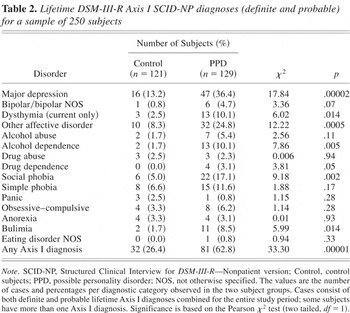
Lifetime DSM-III-R Axis I SCID-NP diagnoses (definite and probable) for a sample of 250 subjects
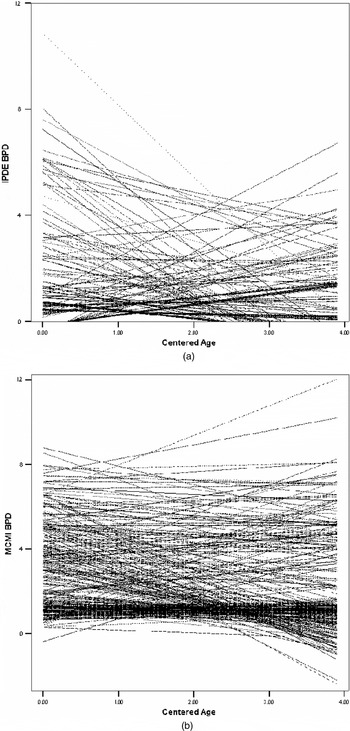
Ordinary least squares individual growth trajectories for BPD features in 250 subjects over the study period. The time is reported in years since the beginning of the study, and it is centered for each subject using the subject's age at entry into the study. (a) The PDE assessments and (b) the MCMI-II assessments.
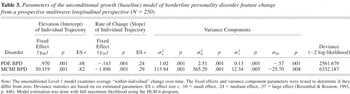
Parameters of the unconditional growth (baseline) model of borderline personality disorder feature change from a prospective multiwave longitudinal perspective (N = 250)
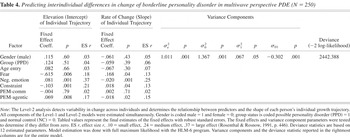
Predicting interindividual differences in change of borderline personality disorder in multiwave perspective PDE (N = 250)
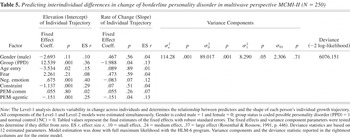
Predicting interindividual differences in change of borderline personality disorder in multiwave perspective MCMI-II (N = 250)
 You have
Access
- 29
- Cited by