BACKGROUND
Cancers of the head and neck (HNC) are generally considered to be aggressive, as they are often diagnosed at later stages, with more than 50% found at stages III and IV (Canadian Cancer Society, 2011). These include cancers of the upper aerodigestive tract (i.e., oral cavity, nasopharynx, oropharynx, hypopharynx, and larynx), the paranasal sinuses, and the salivary glands. Despite treatment advances (Murphy et al., Reference Murphy, Ridner and Wells2007), prognosis continues to be poor, with low five-year survival rates, especially when diagnosed at an advanced stage. Cancer recurrence or development of second primary cancers further reduce the likelihood of survival (Matthias et al., Reference Matthias, Harreus and Strange2006).
Lifestyle behaviors have generally been identified by the World Health Organization (WHO) as major contributing factors to cancer occurrence and are also involved in cancer recurrence (World Health Organization, 2009). These risk factors include tobacco use, alcohol misuse, low fruit and vegetable intake, lack of physical activity, and high body mass index. A study of 4,020 patients in oncology (all tumor sites) found rates of cigarette use of 4.5% (95% CI = 3.6–5.4%) and of alcohol abuse of 0.3% (95% CI = 0.1–0.6%), in striking contrast with rates found in HNC patients (Mehnert et al., Reference Mehnert, Brähler and Faller2014). There is a need for targeted preventive interventions in head and neck oncology, especially as continuation of smoking and alcohol abuse/dependence after diagnosis and treatment for HNC are known to be associated with an increased risk of cancer recurrence or second primaries, mortality, and morbidity, as seen in more severe treatment side effects, and poorer quality of life and functional status (Matthias et al., Reference Matthias, Harreus and Strange2006; Sharp & Tishelman, Reference Sharp and Tishelman2005).
The oncology literature suggests that a health promotion intervention such as motivational interviewing (MI) (Hettema et al., Reference Hettema, Steele and Miller2005) may be particularly potent during the period immediately following a cancer diagnosis, proposed in the literature as a “teachable moment,” as the trauma of the diagnosis may naturally facilitate behavioral change (Ozakinci et al., Reference Ozakinci, Wells and Williams2010; Sharp et al., Reference Sharp, Johansson and Fagerstrom2008). However, given that the HNC landscape comprises a diagnosis of advanced disease and aggressive treatments, it is unclear whether this would be a realistic moment for intervening using extensive health behavior strategies such as MI. The literature on the process of behavioral change in HNC is scarce and fails to show how these medical challenges may affect patients' motivation to change. The only qualitative study on health promotion from the perspective of HNC patients (Bjorklund et al., Reference Bjorklund, Sarvimaki and Berg2008) found a main theme of empowerment and reclaiming control, including three subthemes: (1) being enabled by an internal dialogue involving improved self-esteem and embracing existentiality and self-determination; (2) being enabled by contacts in a social network, including emotional and practical support; and (3) being enabled by one's contact with and passion for the environment, including nature, hobbies, and activities. Barriers have yet to be investigated qualitatively in patients with HNC. The present study was designed to fill this gap in our knowledge and determine the most appropriate way to promote behavior change in this population.
OBJECTIVES
The primary objective of our study was to better understand the needs and experiences of HNC patients with regard to behavioral change related to WHO target behaviors (e.g., tobacco use, alcohol misuse, diet, exercise, and UV protection), as well as the barriers and facilitators to change considering their medical treatment trajectory. The secondary objective was to determine whether MI would be deemed relevant by HNC patients, as well as to identify how best to tailor the intervention to meet the needs of this unique population, both in terms of the timing and content to be used in counseling.
METHODS
Sampling and Recruitment
We selected patients using maximum variability sampling (Patton, Reference Patton1990) on axes of gender, age, cancer site, and cancer trajectory phase. Patients approached: (1) had an HNC diagnosis (by TNM classification) within the past three years; (2) were 18 years or older; (3) were capable of giving free and informed consent; (4) were physically well enough (self-perceived, and Karnofsky Performance Scale (KPS) score ≥ 60) to participate in the focus groups; (5) were able to communicate and be understood in English or French; (6) were able and willing to communicate their thoughts in a group context; and (7) had the transportation means to be present for focus group sessions. Recruitment was conducted through the otolaryngology–head and neck surgery departments of the Jewish General Hospital and McGill University Health Centre–Royal Victoria Hospital and Montreal General Hospital sites. The study received ethics approval from McGill University's institutional review board, and all patients signed free and informed consent forms.
Focus Groups
Focus groups were conducted by both MH and AB and followed standards of practice (Krueger & Casey, Reference Krueger and Casey2000; Morgan, Reference Morgan1997; Stewart & Shamdasani, Reference Stewart and Shamdasani2014): (1) groups were constituted according to similar characteristics (i.e., language, smoking status, positive score on the Rapid Alcohol Problems Screen (RAPS4–QF)) (Cherpitel, Reference Cherpitel2000); (2) focus groups strove to obtain in-depth data through use of an interview guide with probes, concrete tools to set a clear agenda for the discussion (i.e., written questions, use of a blackboard, short introductory questionnaire), as well as a “humanistic” interviewer stance (i.e., empathy, active listening, authenticity, and openness); (3) attention was given to the group process (i.e., highlighting and discussing convergent and divergent thoughts and feelings); and (4) facilitators explored participants' concrete examples of health behavior change (HBC) and the status quo. Focus groups used a knowledge translation lens to assess barriers and facilitators to behavior change in WHO domains, with the interview themes guided by the Ottawa model of research use (OMRU) (Logan & Graham, Reference Logan and Graham1998) and the reach phase of the RE–AIM model (Glasgow et al., Reference Glasgow, Vogt and Boles1999). Domains of interest were also based on the health belief model and the theory of planned behavior (Carpenter, Reference Carpenter2010; Janz & Becker, Reference Janz and Becker1984; Rosenstock, Reference Rosenstock1974), including perceived severity of cancer, perceived susceptibility to developing a cancer recurrence, perceived benefits of taking action, perceived barriers to taking action, modifying variables, cues to action, attitudes, subjective norms, perceived behavioral control, and self-efficacy. All focus groups were observed by MC, who took notes on group interactions, gave feedback on interviewing style, and quoted patients verbatim during interviews in the rare cases where participants presented speech impairments. A log was kept to track any changes to the interview guide. MH, AB, and MC met after each focus group for discussions.
Data Analysis
Focus groups were audiotaped, transcribed, and progressively analyzed by MH and AB using content analysis (Hsieh & Shannon, Reference Hsieh and Shannon2005) within NVivo 10 software (2012). AB read each transcript line by line and coded relevant excerpts representing health behaviors, barriers and facilitators to HBC, and group interactions (Hollander, Reference Hollander2004; Kitzinger, Reference Kitzinger1994; Reference Kitzinger1995). A second coder (MH) then independently reviewed the coded transcript, after which both AB and MH met for discussion. Codes were progressively compared, contrasted, and combined into broader categories as the analysis evolved. MC reviewed 20% of the transcripts and gave additional feedback on the analysis. NVivo 10 was employed to analyze the percentage of a transcript that related to each health behavior, by barrier and facilitator, independently; as well as in combination for trends.
Methodological Rigor
We used several strategies throughout the project to ensure trustworthiness (i.e., qualitative rigor) (Shenton, Reference Shenton2004). Credibility was ensured by the first author and other coauthors' prolonged and varied field experience with HNC patients, as well as the first author's considerable experience in interviewing. Interviews were systematically discussed and changes made to the interview canvas to focus on areas deemed relevant based on previous interviews. Other measures ensuring credibility included the interviewers keeping a reflective journal after each interview to track thoughts, feelings and evolving conceptualizations, triangulation of data through multiple coders, peer examination, and member checking, whereby co-facilitators presented the findings to the last two focus groups and used them as an “expert group” to give feedback on preliminary results. Transferability was assured by maximum variability sampling and detailed description of context and researcher assumptions about the experience of HBC in HNC patients. Dependability was reached through an audit trail kept after each interview to track the understandings as they evolved; through triangulation (as described above), and through constant comparison of codes. Confirmability was ensured by having the data analysis reviewed by a member of the research team not involved in conducting interviews (MC), by allowing data checking with patients, and by the use of a reflective field journal.
RESULTS
Sample and Interviews
Of the 61 eligible patients approached for the study, 39 (63.9%) agreed to participate, 29 (74.4%) of whom presented to the focus groups as planned. Reasons for refusal to participate included being too busy/having limited availability (n = 16) and not being interested (n = 6). We conducted nine focus groups of an average length of 1 hour and 56 minutes (range 1h36–2h12). While focus groups had originally been planned to accommodate four to six participants, they comprised two to five HNC patients each: two participants, n = 1; three participants, n = 2; four participants, n = 3; and five participants, n = 2. Groups were conducted in both English and French. The number of groups was decided based on data saturation (i.e., when no new data emerged from three consecutive focus group sessions) and after obtaining a rich description of the studied phenomenon. Participants were mostly male (79.3%, n = 23), aged 64.6 years (SD = 10.1), were mostly married/common-law (51.7%, n = 15), living with someone (51.7%, n = 15), did (44.8%, n = 13) or did not have a university education (55.2%, n = 16), were retired (55.2%, n = 16) or working full-time (41.4%, n = 12), and had a familial salary of less than $59,000 (69%, n = 20). They had been diagnosed on average 18.7 months before (SD = 12.3; range 5.0–44.5 months) with mostly advanced-stage cancer (65.5%, n = 19; stage I: 20.7%, n = 6; stage II: 13.8%, n = 4; stage III: 13.8%; n = 4, stage IV: 51.7%, n = 15). Cancer sites included: oral (41.4%, n = 12), oropharyngeal (34.5%, n = 10), nasopharyngeal (0.03%, n = 1), laryngeal (13.8%, n = 4), parotid (0.03%, n = 1), and unknown (0.03%, n = 1).
Health Behaviors
Patients' Definitions
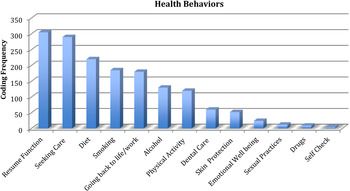
Focus group patients provided a larger than anticipated definition of health behaviors, encompassing not only the five WHO health behaviors but also those associated with the specific context of an HNC diagnosis and its treatments (see Figure 1). While the study was designed to investigate changes in WHO-related health behaviors, patients overwhelmingly defined health behaviors as those related to functional recovery (i.e., speech and eating) from treatment side effects (resume function); seeking medical care and support (seeking care); weight maintenance through eating orally or through a PEG (diet); returning to life, work, and hobbies (going back to life); staying active and engaged in daily living activities during treatments (physical activity); using daily fluoride treatments to protect their teeth during and after treatments (dental care); ultraviolet protection and using creams to treat radiation-induced burns and promote scarring (skincare); as well as maintaining emotional well-being (i.e., a positive attitude and outlook) (emotional well-being). Smoking and alcohol use were mostly described as abandoned in the past or upon diagnosis.
Head and neck cancer patients' definitions of health behaviors.

Main Theme: Patient Engagement
It was apparent that the HNC treatments constituted a major disruption in patients' lives, lasting for several months, involving multiple transitions, and requiring a shift in priorities toward survival and recovery. The main theme that emerged from the focus groups was patient engagement, defined as patients' capacity to be proactive during treatments, being informed, participating in rehabilitation activities, and seeking support when needed. Patients oscillated between what they described as a usual state of engagement and mostly transitory periods of disengagement during their illness trajectory and in the longer-term survivorship period. Their focus on rehabilitation precluded them from concentrating on reducing the risks of a cancer recurrence and acted as somewhat of a barrier to engaging in the health-promoting behaviors described by the World Health Organization.
Barriers and Facilitators of Health Behavior Change
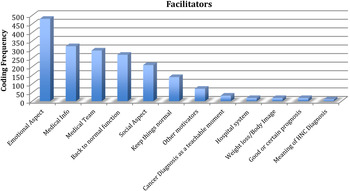
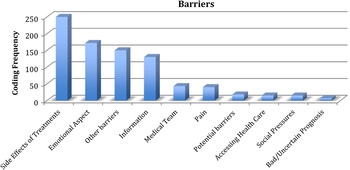
In the main, engagement was motivated by emotional well-being, information and support from the medical team, returning back to life/work, social support, and a desire to keep things normal. Disengagement was related to intense treatment side effects (especially pain and fatigue), emotional aspects (e.g., despair, trauma, discouragement, grief), lack of information, and factors related to the medical team, such as lack of continuity of care, missed referrals to team members, or inadequate pain management. These barriers and facilitators will be described below in order of importance (i.e., percentage of transcript covered) and illustrated with relevant quotes (see Figures 2 and 3). Barriers and facilitators differed according to WHO health behavior type. The emotional aspects and treatment side effects were significant for health behaviors associated with a return to function (i.e., diet and physical activity), while lack of medical information or misinformation, the relationship to the medical team, and change dynamics (i.e., difficulty forming new habits, reverting to past habits, or social pressures) were especially important with regard to smoking, alcohol, and skin protection. One frequently cited facilitator unique to smoking was the cancer diagnosis itself, as it motivated patients to stop smoking, thus supporting the concept of a “teachable moment.”
Facilitators to health behavior change as perceived by head and neck cancer patients.

Barriers to health behavior change as perceived by head and neck cancer patients.

Facilitators of Health Behavior Change
The most important facilitator of health behaviors discussed by patients was emotional well-being, defined as being able to stay optimistic and positive in the face of treatment side effects and functional compromises. This included the ability to adapt to changing circumstances, to be flexible in transitions, and to maintain determination and perseverance to “get through it” and “return to normal”:
You can't wait for the doctor to tell you what to do— to encourage you. No, they're doing their job. They cannot lift you out of there. You have to lift yourself.
Some described “an even better normal” whereby they increasingly lived in the moment and took time to “smell the roses”:
The thing about getting cancer is it's sort of— it's a great wake-up call to the things that are important in life.
I emerged from that determined that I would squeeze as much of what's left in me as possible.
Patients kept positive through self-talk and remembering what was meaningful to them in life. Personality traits of strength and resilience were recollected as facilitators within this context. Patients spoke about how important it was to have realistic expectations and accept that “recovery takes time”:
You need to accept the situation as it is, accept to live with the discomfort. That's the hardest part: not to blame, not to find a cause, a culprit … It's to try and be open and accept what you're going through, accept the present moment.
My concentration is not as good as it was two years ago; my calculations is not as good. I said, “Fine, attribute it to your age, you're aging normally, as long as you can still do that thing do it at a new level so you have to establish a new level for yourself.” On cycling I have a new level. On chess playing I have a new level. And I discuss it with my wife.
Information on treatment side effects and their management and recovery time was key to developing realistic expectations and the confidence that facilitates continuing engagement. Patients often discussed how important it was for them to obtain factual information on all health behaviors in an open, nonjudgmental, and authoritative way, with the healthcare team presenting the rationale to change while ultimately encouraging patients' freedom of choice: “One of the advantages is that you know you're being taken care of—you learn so much about your health and the want and need to change it.” This especially helped with behaviors such as smoking cessation and alcohol reduction/cessation, rendering it more probable for patients to find a “teachable moment” in their cancer diagnosis. A caring and compassionate medical team, available to listen and offer help, fostered a trusting and nurturing relationship motivating patients to stay engaged in healthy behaviors:
He [the surgeon] was like a trusty ol' sailor. After going through what I went through the operation and everything. I mean, they're great, so I always felt like I'm gonna try and be more observant [of the smoking cessation advice].
A hospital system “that worked,” with good communication between departments and “flow,” helped reinforce this alliance.
Along with support from the medical team through compassionate and accessible care, social support during treatment and recovery was a major facilitator to engagement in healthy behaviors. Patients accompanied to radiotherapy and chemotherapy sessions by family members or friends, encouraged by their colleagues at work, or helped by supportive partners with meal preparations and household chores reported that they found the motivation to fight for meaningful people in their lives when their resilience was low and they could no longer function:
I laid there [feeling desperate], and I thought “Oh, I have seven grandchildren,” and I thought of them, you know.
Even if you have somebody who comes and helps you, like your daughter, they've got to get the information. My wife was coached, and that was one of the reasons why despite my loss of weight I was always eating healthy. Even when I was feeding on the tube, my wife made sure there were fruits in there, fruit juices and all the rest … And she made sure I got enough water. When you're feeding down a tube, it's hard. So it's always good to have that kind of help.
While the extensive treatment side effects constituted a life disruption and barrier to engaging in healthy behaviors, patients highlighted the major motivators of returning to life, functioning, work, hobbies, and daily activities. No matter the trajectory or specific type of cancer or treatment they had undergone, resuming basic life functions (e.g., speaking clearly, eating or swallowing solid foods, opening their mouth wider than a certain amount, regaining strength and energy) allowed them to engage or reengage in life (i.e., work, hobbies, daily activities). In this sense, their previous life passions strengthened their current engagement toward getting better:
We want the same outcome. We all wanna see tomorrow. Everyone wants to see a healthy and normal tomorrow. Everybody's normal is different, but whatever is normal we want it to come back, and I think that's everybody's goal.
The motivation is you want to be like you were before. You want to get the strength back. You want to be able to live your life.
It was important for patients to be able to “keep things normal” throughout treatments, motivating them to remain active and engaged as best as possible in their usual routines and activities, both physically and mentally. While undergoing treatments, they spoke about the importance of focusing not only on the illness but, most of all, on living. This helped them stay engaged in healthy behaviors:
In the instructions about my particular treatment, the radiation, they said you can't go back to the pool for a year. Well, after I got the tube out, I couldn't see any reason why I couldn't go back, and the wound was healed. So I asked the nurse, and she said, “Sure you can go back to the pool.” So that makes a big difference for me because I've been going to the pool for ten years, and if I'd been told I'd have to wait a year before I could go back … what am I going to do? I don't like walking, not long distance. I have problems with my feet. Well, I can go back to the pool. Oh, I feel much better. It's just as important for me.
However, it became apparent that a balance was needed between “moving forward” and respecting the slow pace of recovery, as for some, moving forward too quickly was a way of avoiding current struggles and actually became a barrier to recovery (e.g., they became injured or “burnt out”):
I was so stressed for four to six weeks, and all I could think about was getting back to work and getting back to the game, and I think I went back too soon in the end, ‘cause I had a nervous breakdown about a month or two later.
Barriers to Health Behavior Change
As reported by our HNC patients, the major barrier to engaging in health-promoting behaviors was the radiotherapy treatment itself. Treatment side effects were frequently discussed and were often the main topic of focus groups, with patients describing the great toll these treatments took on their lives. Effects on vital functions such as eating, speaking, and swallowing, and on physical and mental health were emphasized as standing in the way of healthy eating (or eating at all) due to the dysphagia, reduced appetite, or reluctance to use the PEG tube for feeding. Physical effects, usually fatigue and pain, but also cognitive decline, often stood in the way of maintaining these vital functions, and of any attempt to remain active during and after treatments:
Lately I've been in a lot of pain, so I haven't been getting a lot of exercise.
I was always active. I died when I became ill. Because you don't have the energy.
The side effects cumulatively suppressed my will to live. That was kind of in a way—my experience. The worst part is when I was going through the chemotherapy and the radiation. It was as if my will to live was being stifled.
Emotional well-being was felt to be a major barrier, with patients often describing the stress and emotional challenges as affecting their capacity to take care of themselves (in terms of WHO and non-WHO patient-defined health behaviors), as well as their outlook on life. Almost all had had a period where their optimism failed, leading to discouragement, loss of hope, uncertainty, and in some cases even despair, demoralization, and loss of dignity. This especially happened when their bodies were eroded by the treatment side effects of radiotherapy to the point where they could no longer function. They felt incapacitated, incapable of living, and had become reliant on others. It also happened when the recovery period was felt to be excruciatingly long with no end in sight and no clear guidelines or information available on the extent to which they would recover functionally:
Our mind is kind of working overtime. And I found that that was in of in itself more difficult than the fear of dying of cancer. I mean, you think about it— But for me it was more— what am I going to do today? Because, you know, limited exercise— and you know you're tired from the radiation treatments, and you're not going to the office and you're not interacting professionally. So I found that to be quite a challenge.
Patients remembered being told by the medical team that recovery varied tremendously, that people “normally” resumed their functioning but that only time would tell. This ambiguity incited self-doubt, and patients then viewed their loss of function with tremendous fear. They were imbued with a sense of loss of identity and flirted with the notion that things might actually never get better, that this is how their life would be from now on. At that point, some patients gave up and even became suicidal. Almost all patients mentioned how challenging it was to stay invested in life amid the functional limitations brought on by the treatments:
I remember laying in a hospital bed for two weeks, and, you know, you have to go to the bathroom and you end up in diapers. It's so degrading. And I said to myself, “God, just take me, I can't live like this.”
Patients almost invariably described a critical point during radiotherapy treatments, at which they felt their morale “broke”:
It was like being hit by a bus.
It's like I didn't care, in a way I didn't wanna force myself to eat anymore.
I think I would have preferred to euthanize myself, jump off the Cartier Bridge. It was hell.
I'm a positive man, I've been positive all my life, but when I got really sick: “God, just let me die!” I was so sick! And it affected me, and it took work to get that grey matter between my two ears to come back and say, “Everything is cool, man. It's gonna be all right.”
Other emotional aspects were related to avoidance of the unpleasant experiences associated with the various transition periods, such as the fear of using the PEG tube or food aversions associated with the pain of radiotherapy or the trauma of PEG insertion/removal, and feeling embarrassed and discouraged socially by such treatment side effects as disfigurement, eating in public with the PEG tube, or having a speech impairment:
Getting all my nutrition through that stupid tube. I hated the thing! You know, you'd connect it, and it's messy when you connect it, and, yuk, jeez, I hated that thing! And then you go and get it taken out. They give you a piece of paper, and it describes how you take it out. So I thought it was a sort of complex twenty-first century … and I went in and the doctor said, “Oh no, we just yank it. And it'll hurt a lot, but it'll only last two or three seconds.” Friggin', and he did it! He just grabbed it and yanked it! I felt like I'd been shocked from the inside!
Two other themes identified under barriers were lack of information and factors related to the medical team. Although in most cases the medical team had generally addressed health behaviors, patients described the recommendations as focusing on anticancer treatments with less emphasis on rehabilitation posttreatment:
After the operation, every time I saw them: “Everything was great. Everything was great.” So, in other words, if they told me it's great, I didn't want to look for any negatives in anything, so it was kind of like— “Good! I'm good!”
I didn't get a lot of warnings, if you wish, like be careful of this. It was more ad hoc, so, I mean, they started radiation and treatments— They said, “Well, your skin is gonna become sensitive so don't go swimming.” Very— I find “oh, by the way,” you know, very informal. I never sat down with anyone who said, “Look, here are the ten things you have to do over the next three months. This is absolutely what you have to be careful of” or “This is what you need to change.”
A few participants highlighted a need for information regarding specific health behaviors such as preventive sexual practices following an HPV-related cancer diagnosis, guidelines as to type and amount of physical activity while in treatment and in recovery, clearer guidelines around alcohol consumption during versus posttreatment (i.e., total abstinence vs. reduction), as well as clarification regarding the causes of the cancer. In their quest for meaning, patients often concluded on their own that their cancer was “an arbitrary event” and “could happen to anyone,” a belief that some identified as influencing their refusal to implement behavioral change.
The medical team's approach was also highlighted as a factor affecting health behavior change, with an authoritarian approach inviting opposition and rebellion:
The nutritionist was telling me: “Mr. G., you are losing too much weight. We will need to force you to eat.” I said, “Who will force me?” She said, “We will.” And I said, “Just try!”
Just leave me alone. Leave me alone. Let me do my life the way I've done it before.
Patients felt a particular need for control over their lifestyle choices at a time when cancer and the treatments had “taken over their lives”:
At some point I would say, “I'm not taking this. I don't want it, I'm not taking it. Don't force me. I don't want it! That's all!” In the end, it's our right. It's our body, and we have the right to decide.
When you learn of your diagnosis, you're helpless, you're sad, you don't know where you're going, and it's a shock. Some become really lost. So having someone who accompanies you through it, that can help you understand, but not impose.
While respect for their autonomy was important, patients were still feeling very vulnerable and needed “tender love and care” from the medical team. Pressure from the dietician or from other team members to maintain weight or take in calories to gain weight was often cited as “stressful,” enticing some to avoid this confrontation and hide.
Other Barriers
Barriers to health behavior change that took the form of continued smoking and alcohol intake during and after treatments were described by patients in the context of their need to cope with stress, their enjoyment of these behaviors, and acceptance of the consequences, or, for some, a physical dependence. One participant even mentioned smoking to accelerate death, as he was afraid of the aging process and its associated physical decline. Another participant who had struggled with a lifelong dependency to alcohol had now started to become addicted to marijuana, recognizing that he was rationalizing its use “to increase appetite following radiotherapy.” Finally, a few patients discussed the disease prognosis as influencing behavior change. The consensus was that, in the context of a bad prognosis, patients felt it was too late to change and needed to “enjoy whatever time was left.” Some patients emphasized “moving on” to the extent of refusing to think about behavioral change and even surrendering to the medical team:
I'm happy. I'm over that thing, and I'm totally convinced that I'm out of it. Its just there's nothing. There's no emotion telling me yes or no. I'm out of it, period.
I didn't read the paragraph in “take care of yourself.” I just didn't pay attention.
Others explained returning to old habits or having difficulties transitioning into resuming life-roles:
It's like I'm lazy. It's back to normal. I know I'm supposed to do it, but now I'm back to the same bad habits. It's hard to change habits.
While getting back to normal was a motivator during recovery, it also became a barrier insofar as optimism and hope stifled the realistic perception of continued fragility post recovery:
During treatments and during the year after, it [keeping up healthy habits] was so present in my mind. It faded away with time. I need to remember, look at my scar and say, “Remember this …”
Group Interaction Data, Suggested Interventions, Timing Across the Cancer Continuum
Patients originally came to groups with the intention of meeting others with the same disease, sharing their experiences, and “giving back” to the hospital in gratitude for their care. In fact, it was difficult to focus the groups around WHO health behaviors, as participants kept coming back to the rehabilitative aspects of their experience and the importance of staying emotionally well. They felt normalized through the focus group discussions and encouraged to see others who had more fully recovered with time. Most patients mentioned not needing or wanting to receive psychotherapy or join support groups during or after treatments, instead suggesting that they would like to be involved as a role model for others. No agreement was reached on the best approach to doing this, whether by means of a mutual support group throughout radiotherapy treatments or a buddy system linking individual patients.
Patients made various references to what they thought would be the most appropriate type of intervention and timing to encourage health behavior change. First, they preferred a short intervention integrated into their already existent medical consultations upon diagnosis instead of additional meetings (i.e., they already felt they had multiple meetings with a variety of professionals in the workup period prior to cancer diagnosis as well as in preparation for their anticancer treatments). Second, written information on health behaviors in the form of pamphlets was described as being very useful, enabling patients to refer to it as needed, especially during times when they were overwhelmed with information and “unable to absorb it all.” Third, patients mentioned the importance of addressing emotional well-being/distress as part of a health behavior intervention. Fourth, patients mentioned that the information on health behaviors was geared toward treatment considerations and prevention of a cancer recurrence, rather than what was really of concern to them: resuming function and reclaiming normalcy. They reported being aware of the association between WHO health behaviors and cancer recurrence, especially smoking and alcohol, but they were mostly unaware of how health behaviors were associated with increased morbidity (i.e., increased treatment side effects, lower quality of life, and poorer functional status). The focus groups were an eye-opener for some, as these factors aligned more with their current goals than with the remotely felt possibility of a cancer recurrence. Finally, patients would also have wanted more guidance and continuity around health behaviors during the posttreatment and survivorship phase, rather than limiting the support to the active treatment period.
DISCUSSION
The focus group findings highlighted several points that contribute to our better understanding of the process of health behavior changes in HNC patients. First, we learned that patients would prefer a short intervention integrated into the medical consultations already booked upon diagnosis, rather than attend further meetings. They already have numerous hospital appointments for diagnostics and treatment planning (e.g., surgery, radiotherapy, oncology, dentistry, dietetics, nursing, social work, and psychology), and the cancer diagnosis period is fraught with a significant amount of emotional turmoil, challenging their capacity to integrate information (Beckjord, Reference Beckjord, Rutten and Arora2008).
Second, the most important barriers and facilitators to HBC were associated with patients' emotional well-being/distress (e.g., anxiety, depression, trauma, demoralization) and treatment-related symptoms (in particular, pain and fatigue). These have been found to be overwhelming concerns in HNC patients, considered to be the most distressed of oncologic populations, and have been associated with persistence in such unhealthy behaviors as smoking and alcohol misuse (Ranney et al., Reference Ranney, Melvin and Lux2006). In a study of 2,141 interviewed oncology patients (Mehnert et al., Reference Mehnert, Brähler and Faller2014), a 40.8% (95% CI = 28.5–53.0%) four-week prevalence rate was found in HNC of any mental disorder (mostly anxiety, adjustment, and mood disorders), higher than the 31.8% found in other cancer types (95% CI = 29.8–33.8%). In a metaanalysis of 52 studies including 19,985 oncology patients (van den Beuken–van Everdingen et al., Reference van den Beuken–van Everdingen, de Rijke and Kessels2007), pain was found to be overwhelmingly prevalent in 70% of HNC patients (95% CI = 51–88%), the highest rate of all cancer sites (64% CI = 58–69% in patients with metastatic, advanced, or terminal cancer; 59% CI = 44–73% during anticancer treatments; and 33% CI = 21–46% in patients cured of cancer). As for fatigue, its prevalence has been reported in 14 to 96% during anticancer treatments and in 19 to 82% posttreatment (National Cancer Institute, 2015), and it is especially elevated in patients with advanced cancers such as in HNC (Teunissen et al, Reference Teunissen, Wesker and Kruitwagen2007).
Third, health behavior information provided by staff was reported to be minimal and geared toward treatment considerations and prevention of cancer recurrence, rather than toward what was of immediate concern to patients: surviving treatments, resuming function, and reclaiming normalcy. This is consistent with previous studies indicating that health promotion information is typically only provided during initial consultations around the diagnosis period, without proper follow-up (Warren et al., Reference Warren, Marshall and Cummings2013). Patients tended to minimize the risk of a cancer recurrence and were more focused on rehabilitation, which, for most, is a lengthy process filled with transitions and the potential for demoralization. It appears that health promotion messages would benefit from being better aligned with patient narratives, providing more continuity in the posttreatment survivorship period, and including psychological strength building to potentiate patient engagement.
Based on our results, it would be helpful to develop a health promotion intervention combining screening for distress (Canadian Partnership Against Cancer, 2012) and clinically targeting treatment-related symptoms identified in our focus groups as barriers to HBC (pain, fatigue, anxiety, and depression). Preliminary data indicate that HNC patients exposed to routine screening for distress may report greater levels of well-being and lower levels of emotional, physical, and practical problems compared to historical controls (Bultz et al., Reference Bultz, Waller and Cullum2013). This strategy could be accompanied by short evidence-based HBC interventions provided by trained ENT surgeons and nurses as part of routine clinical care. The interventions should include key evidence-based and patient-centered messages around the known benefits of self-management and healthy lifestyles in reducing the risk of cancer recurrence, improving treatment resistance, and facilitating functional recovery posttreatment. 5A (Ask, Advise, Assess, Assist, and Arrange), FRAMES (Feedback, Responsibility, Advice, Menu, Empathic interviewing, Self-efficacy) (Babor & Kadden, Reference Babor and Kadden2005; Ciccolo & Busch, Reference Ciccolo and Busch2014; Simmons et al., Reference Simmons, Litvin and Unrod2012; Whitlock et al., Reference Whitlock, Polen and Green2004), and motivational interviewing (MI) (Miller & Rollnick, Reference Miller and Rollnick2002) are short interventions designed to foster HBC that have been found effective and easily applicable in medical outpatient settings for a variety of WHO health behaviors: MI effects 0–1 month posttreatment d = 0.77, 95% CI = 0.35–1.19; 1–3 months d = 0.39; 3–6 months d = 0.31; 6–12 months d = 0.30 (Rubak et al., Reference Rubak, Sandbaek and Lauritzen2005). They may be particularly potent in the period immediately following a cancer diagnosis, proposed in the oncologic literature as a “teachable moment” that naturally facilitates behavior change and is ideal for implementing behavioral interventions (Gritz et al., Reference Gritz, Fingeret and Vidrine2006). Helping patients increase “change talk” (i.e., their Desire, Ability, Reason, Need, and Commitment to change (DARN–C)) has been found to be MI's most potent contributor to HBC (Rollnick et al., Reference Rollnick, Miller and Butler2008) and could be used as part of doctor–patient communication strategies. Messages could be reinforced by the presence in ENT clinics of a health behavior change specialist, and continuity of care could be fostered through use of a survivorship care plan (Institute of Medicine, Reference Hewitt and Ganz2006) that includes health behavior history and relevant targets for follow-up in the community.
LIMITATIONS
While this study has highlighted significant findings in our understanding of health behaviors in HNC patients, it is important to note certain limitations. First, a potential selection bias may have been present, as patients who agreed to participate may have been those most proactive about their care, with its corollary impact on the valence of barriers and facilitators identified herein. Second, there may have been social desirability bias, as the PI co-conducted the focus groups and is a serving psychologist at one of the recruiting sites. However, all participants were reminded that the goal of the study was to collect both positive and negative accounts and that their confidentiality would be strictly protected. Finally, participant no-shows in our focus groups may imply that the findings are less complete than would be expected with full participation.
CONCLUSION
Our study underlines the key challenges in addressing health behaviors in head and neck oncology, including treatment-related functional impairments, symptom burden, and the disease's emotional toll. This delicate context requires health promotion strategies involving close rehabilitative support from a multidisciplinary team attentive to the many struggles of patients both during treatments and in the longer-term recovery period. Health promotion in HNC should be integrated into routine clinical care and target both traditional and HNC-related behaviors, emphasizing emotional and functional rehabilitation as key components. Emotional well-being is typically a buffer facilitating patient engagement or serves as a key barrier, as distress renders head and neck cancer patients less flexible to adapting to the many transitions they face during their recovery. In the final analysis, this study supports the assertion by the World Health Organization that “without mental health there can be no true physical health” (Kolappa & Henderson, Reference Kolappa and Henderson2013). Emotional and physical health go hand in hand, and we ought to allocate healthcare services accordingly.
FUNDING
This study was made possible through funding from the Fonds de Recherche du Québec–Santé (FRQS), which also awarded Dr. Henry a Clinician–Scientist Salary Award. Ms. Ala Bdira was supported by the Kevric Summer Research Bursary in the context of the McGill University Faculty of Medicine's 2014 Summer Research Bursary Program.