Although research on vivipary in non-agricultural flowering plants is very helpful in understanding evolutionary adaptation to the environment and regeneration mechanisms, there are relatively few comprehensive overviews of the subject (van der Pijl, Reference van der Pijl1982; Tomlinson, Reference Tomlinson1986; Elmqvist and Cox, Reference Elmqvist and Cox1996; Farnsworth, Reference Farnsworth2000). On the other hand, considerable attention has been (and is being) given to post-harvest (or post-maturity) germination in agricultural crops, in particular the genetic mechanisms of control of this form of vivipary in cereal grains, which causes significant economic loss to farmers and the food industry in general (Gubler et al., Reference Gubler, Millar and Jacobsen2005; Holdsworth et al., Reference Holdsworth, Bentsink, Koornneef, Varshney and Koeber2007; Barrero et al., Reference Barrero, Jacobsen, Talbot, White, Swain, Garvin and Gubler2012). However, in this opinion paper our comments on vivipary are in reference to its occurrence in non-crop species.
Goebel (Reference Goebel1905) defined vivipary in flowering plants as ‘the precocious and continuous growth of the offspring when still attached to the maternal parent’. Additionally, vivipary can be classified into two categories: true vivipary (plants produce sexual offspring) and pseudovivipary (plants produce apomictic or asexual propagules such as bulbils or plantlets in the place of sexual reproductive structures) (Elmqvist and Cox, Reference Elmqvist and Cox1996). For true viviparous plants, the embryos usually grow to very large size and penetrate through the fruit pericarp before dispersal from the mother plant. However, for some species with true vivipary the embryo does not extend through the pericarp but develops and grows to a considerably large size inside the fruit while still attached to the maternal plant (Farnsworth and Farrant, Reference Farnsworth and Farrant1998). This subcategory of true vivipary was called ‘cryptovivipary’ by Tomlinson (Reference Tomlinson1986).
Species reported to have true vivipary are largely confined to shallow marine systems (e.g. mangroves, seagrasses), with a few species found in other wet habitats (tropical/subtropical forest, riparian) (van der Pijl, Reference van der Pijl1982; Tomlinson, Reference Tomlinson1986; Elmqvist and Cox, Reference Elmqvist and Cox1996). However, a few studies have reported vivipary (cryptovivipary sensu the authors) in various taxa of Cactaceae native to a diversity of habitats, including dry, saline coastal areas with periodic flooding and dry, saline inland areas without flooding; and in bioclimatic zones from alpine dry to tropical humid (Cota-Sánchez, Reference Cota-Sánchez2004; Cota-Sánchez et al., Reference Cota-Sánchez, Reyes-Olivas and Sanchez-Soto2007, Reference Cota-Sánchez, Reyes-Olivas and Abreu2011). Furthermore, almost all species with vivipary are perennials, and Elmqvist and Cox (Reference Elmqvist and Cox1996) explained that lack of seed dormancy in species with true vivipary is incompatible with an annual habit.
In a recent review of very fast seed germination ( < 24 h), Parsons (Reference Parsons2012) summarized information on 20 species of Amaranthaceae, three of Salicaceae, two each of Acanthaceae and Brassicaceae and one of Poaceae with this seed character. He describes the germination behaviour of species of the subfamily Salsoloideae (Amaranthaceae) in some detail. The seeds of species in Salsoloideae usually have no endosperm and little or no perisperm, and embryos are fully developed, with some of them being chlorophyllous at seed maturity. Also, embryos are coiled in the form of a spiral. After imbibition, the embryo cells elongate, and the spiral embryo uncoils, thereby rupturing the seed/fruit coat; the seed has germinated (Parsons, Reference Parsons2012). Thus, as shown for gamma-irradiated seeds of Salsola tragus ( = S. kali var. tenuifolium), germination in Salsoloideae consists of two physical processes: elongation of embryo cells and uncoiling of the spiral embryo, without cell division (Wallace et al., Reference Wallace, Rhods and Frolich1968). Additionally, it can be completed very quickly. For example, diaspores of Anabasis aretioides can germinate in 10 min (Grenot, Reference Grenot and Brown1974) and those of S. tragus (Wallace et al., Reference Wallace, Rhods and Frolich1968) and Haloxylon stocksii (Sharma and Sen, Reference Sharma and Sen1989) within 30 min.
All of the above characters of the seed and germination of Salsoloideae species described by Parsons (Reference Parsons2012) indicate that embryos are developed further than can be expected (e.g. some are chlorophyllous) before they break through the covering layers surrounding them. Thus, the non-dormant (in some species following dormancy break, e.g. Young and Evans, Reference Young and Evans1972; Eddleman, Reference Eddleman1979) embryo-like ‘seedling’ (sensu Wallace et al., Reference Wallace, Rhods and Frolich1968; Young and Evans, Reference Young and Evans1972) remains in a quiescent state and protected by the fruit/seed coat until it is wetted, after which it immediately begins to grow rapidly and thus penetrates the fruit/seed coat within a very short period of time.
Further, seeds can germinate quickly over a wide range of temperatures. Seeds (probably utricles) of S. tragus germinated over a range of alternating temperatures from 2/10 to 15/30°C and of constant temperatures from 5 to 30°C in ≤ 24 h (Young and Evans, Reference Young and Evans1972). TG50 (time required to reach a mean gemination percentage of 50% of total seed number) of final germination (53.0–97.7%) of dewinged fruits (utricles) of Sarcobatus vermiculatus over the temperature range of 5–40°C was 2 d (1-d germination not recorded) (Romo and Eddleman, Reference Romo and Eddleman1985). For this same species, Gul et al. (Reference Gul, Khan and Weber2001) obtained 98–100% germination in 2 d (1-d germination not checked) of seeds (probably utricles) incubated across the alternating temperature range of 5/15–25/35°C. Non-dormant fruit (utricle) types A and B (fruit type C is dormant) of the trimorphic species Salsola affinis germinated rapidly (TG50 ≤ 29 h) over a constant temperature range of 5–30°C. TG50 decreased from about 29 to 9 h and 24 to 4 h for morphs A and B, respectively, over the 5–30°C temperature range (Wei et al., Reference Wei, Dong and Huang2007, Reference Wei, Dong, Huang and Tan2008). Very fast germination over a wide range of temperatures has also been reported for the family Acanthaceae. Seeds of Blepharis persica collected from Tiran Island (Dead Sea) in Israel germinated to 100% over the constant temperature range of 10–40°C and 10–35°C in light and darkness, respectively, in 24 h (Gutterman, Reference Gutterman1972). This trait of fast germination of non-dormant seeds being independent of temperature ensures that embryos can begin their growth as soon as they are wetted by rain in the growing season, which is beneficial for increasing efficiency of water use and is very important for desert species. Rapid germination would also increase the fitness of plants by increasing the length of their period of growth, thereby allowing them to grow larger and, in turn, to produce more seeds (e.g. Van Rooyen et al., Reference Van Rooyen, Grobbelaar, Theron and Van Rooyen1992).
It also should be pointed out that seeds of fast-germinating halophytic species may germinate quickly over a range of salt concentrations. After 1 d of incubation, the brown seed morph of the dimorphic euhalophyte Suaeda salsa had germinated to ≥ 80% in 0.6–23.4 ppt NaCl solutions and to >40% in a 35.1 ppt NaCl solution. Germination after 20 d was 100% or nearly so at all five NaCl concentrations tested (Song et al., Reference Song, Fan, Zhao, Jia, Du and Wang2008). Mean time to germination of the brown seed morph of a cold desert population of the dimorphic species Chenopodium album in 0, 100 and 200 mmol l− 1 solutions of both NaCl and KCl was 1 d (Yao et al., Reference Yao, Chen, Zhao, Xu, Lan and Zhang2010). Seeds of Kochia scoparia germinated to c. 85–100% at salt (Na2SO4 +K2SO4 + MgSO4) concentrations of 0–3% in 1 d at 22°C (Orlovsky et al., Reference Orlovsky, Japakova, Shulgina and Volis2011).
However, a caveat concerning very fast germination in Amaranthaceae is how germination is defined. Young et al. (Reference Young, Evans, Stevens and Everett1981) recognized three stages in the phenology of germination of Kochia prostrata (subfamily Chenopodioideae) seeds that have a curved embryo [peripheral sensu Martin (Reference Martin1946) and coiled sensu Young et al. (Reference Young, Evans, Stevens and Everett1981)]: uncoiling of embryonic seedlings, raising of hypocotyl arch and spreading of the cotyledons. They stated that the high mortality of seeds that uncoiled at high temperatures negated the use of uncoiling as the only criterion for germination and, further, that raising of the hypocotyl arch was the more appropriate criterion for germination of this species because it represented actual growth. For K. prostrata, Young et al. (Reference Young, Evans, Stevens and Everett1981) showed that seeds were fast germinating, i.e. germinated within 24 h over a range of constant temperatures from 20 to 45°C if uncoiling of the embryo was used as the criterion for germination. However, they were not fast germinating if raising of the hypocotyl arch was used as the criterion for germination. For example, using this latter criterion, no seeds had germinated after 1 d, and germination had occurred only at 25°C after 2 d, at 25 and 30°C after 3 d and at 20–35°C after 4 d. Therefore, in some subsequent studies on species in the Chenopodioideae and Salsoloideae development of the seedling beyond the uncoiling of the embryo stage has been used as the criterion for germination (Romo and Eddleman, Reference Romo and Eddleman1985; Romo and Haferkamp, Reference Romo and Haferkamp1987; Haferkamp et al., Reference Haferkamp, Ganskopp, Marietta and Knapp1990). However, regardless of how germination is defined, some seeds are truly fast germinating, e.g. A. aretioides (Grenot, Reference Grenot and Brown1974). Ten hours after a rain shower in the Saharan Desert, the embryo of this species had uncoiled and the green cotyledons, which are capable of photosynthesis, had spread apart.
Thus, seeds of fast-germinating species show several characteristics with cryptoviviparous species (sensu Tomlinson, Reference Tomlinson1986), including little or no endosperm/perisperm, fully developed chlorophyllous embryos at seed maturity (Negbi and Evenari, 1961; Young and Evans, Reference Young and Evans1972; Eddleman, Reference Eddleman1979) and very fast germination independent of temperature (see above). As such, then, we propose that these fast-germinating seeds are ‘cryptoviviparous-like’ in several ways.
In mangroves with cryptovivipary, growth of the embryo does not stop after dispersal from the mother plant. However, in fast-germinating desert species, such as those of Salsoloideae, growth of the embryo stops, and the embryo becomes dehydrated for a period of time after the seed is dispersed from the mother plant. Mangroves are mainly confined to shallow marine systems, where ‘plants face a rather predictable and uniform environment within both time and space’ (Elmqvist and Cox, Reference Elmqvist and Cox1996). Thus, mangroves do not need to disperse over time to increase their fitness, and their embryos can easily get water from such a wet habitat. On the other hand, in desert habitats the factor restricting plant growth is the scarce and unpredictable rainfall. Most of the time, fast-germinating seeds cannot germinate when they leave the mother plant because of lack of water. Under these circumstances, the embryo cannot continue to grow. Thus, the best adaptive strategy for cryptoviviparous-like species in deserts is for the embryos to become dehydrated and wait until the environment is suitable for germination and establishment.
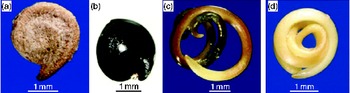
In species that produce dimorphic seeds, such as those discussed by Parsons (Reference Parsons2012), one seed morph is cryptoviviparous-like, whereas the other is not (Fig. 1). Furthermore, the fresh non-cryptoviviparous morphs are dormant (mostly non-deep physiological dormancy) (Baskin and Baskin, Reference Baskin and Baskin1998; Wei et al., Reference Wei, Dong and Huang2007; Wang et al., Reference Wang, Huang, Baskin, Baskin and Dong2008; Parsons, Reference Parsons2012) and may form a persistent seed bank. Like viviparous seeds of mangroves, non-dormant, fast-germinating cryotoviviparous-like morphs of species of Salsoloideae and other plant groups of harsh and disturbed habitats exhibit rapid initial growth as soon as they are wetted in the growing season, and in some species, such as those in cold deserts (e.g. Wei et al., Reference Wei, Dong and Huang2007, Reference Wei, Dong, Huang and Tan2008), after they have overwintered on the soil surface. In habitats with frequent changes in environmental conditions, such as deserts, it is very risky for all seeds to germinate at the same time, especially those of annuals. Various mechanisms have evolved in desert plants, especially in annuals, that reduce the risk of local extinction. Fruit/seed heteromorphism is one such adaptation, and it serves as a form of bet-hedging, which increases the geometric mean fitness of plant species over generations (Venable, Reference Venable1985; Clauss and Venable, Reference Clauss and Venable2000). The fast-germinating morph of a dimorphic species uses the water from rain effectively by germinating quickly (which is very important in arid and disturbed habitats), and the dormant morph forms a persistent seed bank, which is important in preventing extinction should seedlings from the very fast-germinating seeds fail to survive to the stage of reproduction. Thus, a fast-germinating seed morph combined with a dormant seed morph in heteromorphic species is an excellent survival strategy for species such as those in subfamily Salsoloideae of Amaranthaceae growing in arid habitats.
(colour online) (a) Cryptoviviparous-like seed; (b) dormant seed; (c) chlorophyllous embryo of cryptoviviparous-like seed; and (d) non-chlorophyllous embryo of dormant seed of the seed-heteromorphic desert halophyte species Suaeda aralocaspica. Reprinted from Wang, L., Huang, Z.Y., Baskin, C.C., Baskin, J.M. and Dong, M. (2008) Germination of dimorphic seeds of the desert annual halophyte Suaeda aralocaspica (Chenopodiaceae), a C4 plant without Kranz anatomy. Annals of Botany 102, 757–769, with permission from Oxford University Press.

Thus, it is evident that although cryptoviviparous mangroves and fast-germinating species such as those in the Salsoloideae grow in the two extreme habitats (wet and dry, respectively), they are similar in several ways. Both fast-germinating species and cryptoviviparous mangroves occur in harsh habitats in which seedling establishment is very difficult. Both have fully developed embryos when they become detached from the mother plant, and these fully developed embryos can become rooted quickly under certain conditions (for fast-germinating species after their seeds are wetted by rain and for cryptoviviparous mangroves after their seeds are dispersed and reach sandy substrates). The ability to become rooted quickly is an adaptation of both mangroves and fast-germinating species to their respective habitats. That is, mangroves need to become anchored quickly to avoid being washed away by waves and, after a rain, fast-germinating desert species need to become rooted quickly in deeper, moist soil before the upper layer of soil dries. Thus, fast germination combined with fast root growth should greatly improve the chances for seed survival and plant establishment in these two environmentally disparate habitats. Considering the overlap of several traits between fast-germinating desert species and mangroves, it seems justified to refer to the very fast-germinating desert species as being ‘cryptoviviparous-like’ in several ways.
Acknowledgements
This study was supported by the Fundamental Research Funds for the Central Universities (grant no.: lzujbky-2012-118).