Introduction
With the advent of genome wide association (GWA) study technologies (Ref. Reference Maurano1) and the recent publication of the ENCODE consortium findings (Ref. Reference Dunham2), the critical role of gene regulation in health and disease is becoming clearer. The following review will summarise our current understanding of the cell specific cis-regulatory components of the genome that interpret signal transduction cues and how they are affected by polymorphic variation and epigenetic changes. Thanks to our rapidly increasing understanding of the noncoding regulatory genome, and its role in translating signal transduction information into cell specific gene expression, it is likely that major health benefits will be realised within the life span of the majority of individuals reading this review and will facilitate delivery of the promises of personalised medicine.
The cis-regulatory genome
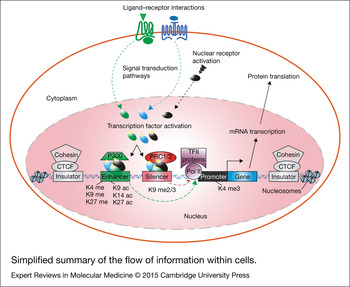
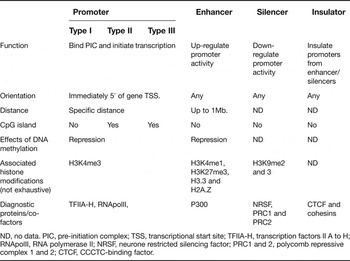
Recent publication of the ENCODE consortium findings has suggested that up to 80% of the human genome is functional (Ref. Reference Dunham2). Although this high figure has garnered substantial, and sometimes warranted, criticism (Ref. Reference Graur3), current methods of defining the functional regulatory genome suggest that up to 10% of the human genome is under strong selective pressure; a strong indicator of functionality. In addition, there is likely to be as much as 4.5 times more DNA with gene regulatory function than that coding for proteins (Ref. Reference Dunham2). Much of this conserved genomic information consists of cis-regulatory sequences which include promoters, enhancers, silencers and insulator sequences (summarised in Table 1 and Fig. 1); all of which work together to orchestrate and choreograph the cell-specific and inducible regulation of gene expression. A fact that has been largely overlooked is that the main purpose of cis-regulatory sequences is to receive, translate and relay information, in the form of activated signal transduction cascades, to the core transcriptional apparatus that is directly responsible for gene transcription (Ref. Reference MacKenzie, Hing and Davidson4). Therefore, in addition to defining the majority of differences between species, changes in the cis-regulatory genome also define individual differences within species including disease susceptibility and drug response.
Simplified summary of the flow of information within cells demonstrating the involvement of cis-regulatory regions in this process and demonstrating histone modification marks (K4/9/27 me/ac all refer to histone 3) and co-factor binding (p300 and PRC1/2). TFII proteins, transcription factors II A to H; polII, RNA polymerase II; PRC1/2, polycomb repressive complex 1 and 2; CTCF, CCCTC-binding factor.

Summary of the characteristics of cis-regulatory regions including promoters (types I–III), enhancers, silencers and insulators

ND, no data. PIC, pre-initiation complex; TSS, transcriptional start site; TFIIA-H, transcription factors II A to H; RNApolII, RNA polymerase II; NRSF, neurone restricted silencing factor; PRC1 and 2, polycomb repressive complex 1 and 2; CTCF, CCCTC-binding factor.
Promoters
Because of their critical role in transcription, promoters are highly dependent on their distance and orientation to the transcriptional start sites (TSS) of genes (Table 1). Evidently, there is still some level of confusion as to what a promoter is. For example, many publications describe gene promoters of many kilobases (kb) in length. Thus, clarification as to the precise definition of a promoter is urgently needed. For example, the term ‘core’ promoter only refers to the 80 or so base pairs required for the binding of the core transcriptional apparatus that, in the case of the production of mRNA, includes RNA polymerase II plus basal transcription factors (TFIIA-H and mediator) also collectively known as the pre-initiation complex (PIC). Therefore, it is likely that previously described multi-kb promoter sequences consist of a core promoter region together with proximal regulatory sequences called enhancers or silencers that will be discussed in the next section.
Comparative analysis of the vast majority of RNA polymerase II binding gene promoters in the human genome has recognised different types of promoter based on their interactions with nucleosomes (histone complexes associated with DNA) and the rigidity of their TSS (Ref. Reference Lenhard, Sandelin and Carninci5). Other classification criteria include epigenetic markers such as methylation and acetylation signatures at different lysine residues of histone 3 within each nucleosome (Fig. 1). For example, H3K4 mono-, di- and tri-methylation (H3K4me1, 2 and 3) are markers of active promoters and H3K9 di- and tri-methylation (H3K9me2 and 3) are associated with repressed promoters (Table 1 and Fig. 1) (Ref. Reference Bannister and Kouzarides6). In addition, the presence and relative extent of CpG islands (sequences of DNA close to TSS that are enriched with CpG dinucleotides) have previously been used as an accepted promoter diagnostic. However, only 60% of known promoters are associated with CpG islands and this forms another basis for their classification.
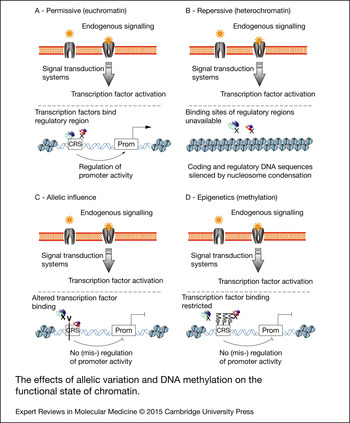
Another type of epigenetic modification which is known to affect promoter activity and gene expression, and which has been much more widely explored in disease, is methylation of the DNA of the genome itself. Methylation of CpG sequences within and around promoter regions has been shown to actively repress promoter function. Methylation at promoters is first established by the methyltransferases DNMT3A and DNMT3B and perpetuated through cell divisions by DNMT1 (Ref. Reference Jin and Robertson7). Methylated CpGs are then bound by methyl cytosine binding proteins that repress transcription by recruiting histone de-acetylases or by inhibiting transcription factor binding (Fig. 2D) (Ref. Reference Long8). It has been observed that many CpG islands in promoters remain heritably hypomethylated through many cell divisions and it has been suggested that secondary folding of CpG rich DNA is responsible (Ref. Reference Ginno9). It has also been hypothesised that continued hypomethylation of CpG island from birth is essential for health and that a contributing factor in the decline of health during the aging process is the gradual accumulation of methylation within these islands (Ref. Reference van Otterdijk, Mathers and Strathdee10).
A simplified diagram summarising (A) permissive and (B) repressive chromatin states and the effects of (C) allelic variants and CpG methylation on transcription factor binding. CRS, cis-regulatory sequence; A, disease associated allelic variant; Me, methylated CpG dinucleotide; Prom, promoter; V, allelic variant.

There is little doubt that epigenetic control through DNA-methylation has an important function during embryonic development and in early post-natal development. A number of studies have demonstrated that environmental factors, such as early life stress, results in altered methylation patterns at promoter sequences in rats (Ref. Reference Anier11) and humans (Refs Reference Kang12, Reference Ouellet-Morin13) with associated physiological and behavioural consequences.
Because of their relative ease of identification the effects of methylation has been mostly studied in promoter sequences. However, the amount of the genome represented by core promoters only represents a tiny proportion of the total human genome that can be affected by methylation. In contrast, a number of different lines of evidence suggest that enhancers and silencers represent a much larger component of the human genome. Thus, enhancers and silencers may represent a more promising reservoir of disease causing polymorphisms and epigenetic modification (Ref. Reference Sanyal14).
Enhancers
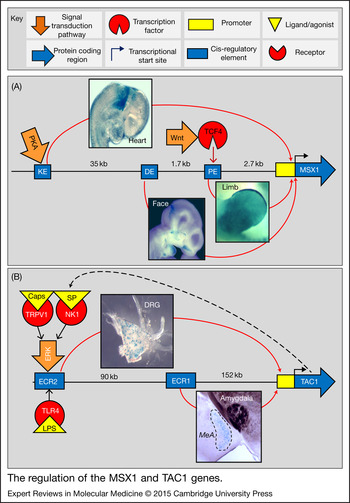
Unlike promoter sequences, which have been shown to contain a number of characteristic sequence motifs including TFIIB binding elements (BRE), TATA boxes and downstream core elements (Ref. Reference Wasserman and Sandelin15), sequence motifs that permit detection of tissue specific enhancer sequences remain to be identified (Table 1). Enhancers were first described as viral sequences that were able to enhance the expression of human genes in cell culture (Ref. Reference de Villiers and Schaffner16). Around this time ‘ground rules’ pertaining to enhancers were laid down such as the concept that their role is to increase promoter activity over great distances and to work in either orientation (Ref. Reference Veldman, Lupton and Kamen17). Since then, it has been realised that all eukaryotic genomes contain enhancer sequences and the majority of genes in the human genome are subject to enhancer-promoter interactions. During the 1980s and the 1990s identification and characterisation of enhancer sequences was largely undertaken by the painstaking deletion analysis of regions of DNA flanking gene sequences and subsequent testing in cell lines or in transgenic animals using reporter constructs. For example, a deletion analysis of 7 kb of genomic DNA immediately 5′ of the MSX1 gene, that plays a critical role in craniofacial (and limb) development, and its subsequent testing in transgenic mouse embryos, was able to accurately pinpoint the presence of a distal (DE) and proximal enhancer (PE) that drove expression of the reporter gene in either the face or limbs, respectively (Fig. 3A) (Ref. Reference MacKenzie18). Moreover, there is mounting evidence that the expression of genes within specific tissues may not be a function of individual enhancer sequences but may involve the co-ordinated interaction of many different enhancers. For example, recent studies of enhancer activity driving the expression of the FGF8 gene in embryonic limb buds suggested that the endogenous expression of FGF8 resulted from the activities of many different enhancer regions with overlapping functions (Ref. Reference Marinic19). The region of the genome containing these enhancers was referred to as a holo-enhancer whereby the whole population of enhancers within this region seemed to work as a ‘coherent integrated regulatory ensemble’. This study further suggested that enhancer–promoter selectivity of the FGF8 promoter was a function of the position of the gene within the locus rather than any intrinsic property of the FGF8 promoter (Ref. Reference Marinic19). Clearly, the role of developmental enhancers, and their overlapping functions is much more complicated that previously thought and it cannot be ruled out that similar levels of complexity may govern the expression of genes involved in modulating human behaviour and health.
A summary of two examples of what is known about the regulation of the MSX1 (A) and TAC1 (B) genes. Described are the regulatory elements responsible for supporting the tissue specific expression of these genes (shown in photographic insets) and the ligand–receptor and signal transduction pathways that modulate the cell specific activity of these enhancers.

Comparative genomics
By 2004, the availability of the human, mouse and chicken genome sequences had a huge effect on the ability to detect highly conserved cis-regulatory sequences. Aligning the genome sequences of multiple species, a process known as comparative genomics, could not only identify novel coding regions by virtue of their extreme conservation, but could also detect highly conserved intronic or intergenic sequences many of which subsequently proved to be cis-regulatory sequences. For example, one of the earliest uses of comparative genomics identified an enhancer region that was found to co-regulate the expression of several of the interleukin genes (Ref. Reference Loots20). Comparative genomics also allows a more rapid and less expensive identification of novel cis-regulatory sequences. For example, an analysis of the tissue specific proximal regulatory elements controlling MSX1 gene expression took at least 18 months to accomplish using transgenic mice (Fig. 3A). In contrast, comparative analysis of chicken, mouse and human genome sequences permitted the accurate identification of these enhancers within 1 day (Ref. Reference Miller21). Using this technique, other groups have successfully identified a number of highly conserved cis-regulatory regions that lie at significant distances from the genes they control (Ref. Reference Visel, Bristow and Pennacchio22). However, due to perceived differences in transcription factor binding between species (Ref. Reference Odom23) and by pilot ENCODE data which suggested a lack of significant evolutionary constraint on regulatory sequences within the human genome (Ref. Reference Birney24) comparative genomics has largely been replaced in favour of high throughput next generation sequence based technologies to be described in the following paragraphs.
ChIP-seq, FAIRE-seq, DNase-seq and CAGE
Enhancer identification by comparative genomics has been largely superseded in favour of genome wide chromatin immunoprecipitation (ChIP) based protocols (Refs Reference Visel25, Reference Visel, Rubin and Pennacchio26), detection of enhancer associated transcripts (CAGE) (Ref. Reference Andersson27) or by techniques that identify uncondensed or nucleosome depleted regions of the genome (FAIRE-seq and DNase-seq). Using these techniques a number of epigenetic and protein interaction markers have emerged as being diagnostic for enhancers. For example, H3K4me1 and H3K27me3 epigenetic markers and substitution of H3 and H2 with more ‘mobile’ histone proteins such as H3.3 and H2A.Z are now accepted and widely used markers for active enhancer regions (Table 1 and Fig. 1) (Ref. Reference Calo and Wysocka28). Furthermore, binding of co-factors such as the ubiquitously expressed p300 is also a proven enhancer diagnostic (Table 1,) (Ref. Reference Visel25). p300 does not bind DNA but associates with transcription factors bound at enhancers where it acts as a histone acetyltransferase (Fig. 1). Using p300 analysis Attanasio et al. (2013) were able to confirm the presence of enhancer sequences that had previously been described by deletion analysis next to the MSX1 locus (Refs Reference MacKenzie18, Reference Attanasio29).
Protein–DNA associations and epigenetic histone modifications, that are accepted diagnostics of active enhancer regions, are detected and analysed using a technique called ChIP-seq. ChIP-seq analysis initially involves the brief treatment of cultured cells with formaldehyde followed by chromatin recovery. The effects of formaldehyde ensure that protein–DNA interactions in the chromatin are, in essence, ‘freeze framed’ by covalent cross-linking. This chromatin is broken up by sonication and incubated with an antibody specific for the protein or histone modification under analysis. Chromatin–protein–antibody complexes are recovered using beads that can be pelleted by centrifugation or removed from suspension using magnets to permit washing and enrichment. Once formaldehyde cross links are reversed, all of the DNA that was contained in the chromatin–protein–antibody complexes are subjected to next generation sequencing. The presence and degree of binding of the antibody target proteins can then be assessed on a genome wide level by comparison of the immunoprecipitated DNA populations to the human genome sequence (Ref. Reference Barski and Zhao30). The protocol for finding specific histone modification or transcription factor and co-factor binding are essentially the same and only differ in the choices of antibodies used for chromatin precipitation (Ref. Reference Furey31).
Another diagnostic of active enhancers takes advantage of the premise that regions of the genome actively involved in controlling transcription do not associate as strongly with nucleosomes (Fig 2A and B). Thus, DNase1 sensitivity mapping (DNase-seq) and ‘Formaldehyde Assisted Identification of Regulatory Elements’ (FAIRE-seq) are similar in concept in that they involve processes that degrade nucleosome depleted DNA. In the case of DNase-seq, isolated cell nuclei are incubated with the DNase1 enzyme that diffuses into the nuclei and degrades exposed DNA. This fragmented DNA can then be recovered and sequenced using next generation sequencing (Ref. Reference Song32). FAIRE analysis also detects regions of nucleosome denuded DNA and can be carried out on whole cells but relies on the cross linking of tightly associated nucleosomes to their DNA (Ref. Reference Nagy and Price33). Chromatin is then recovered from these cells, sonicated and subjected to phenol extraction. Tightly cross linked nucleosome-DNA complexes will partition into the phenol phase whereas naked DNA, that was not so tightly associated with nucleosomes, will partition into the aqueous phase. All of the DNA in the aqueous phase is then sequenced using next generation sequencing. Comparisons of data derived from FAIRE-seq, DNase1-seq and ChIP-seq techniques show considerable consistency in predicting active chromatin and have been used widely by the ENCODE consortium to identify active enhancers across the human genome in a number of human cancer cells and embryonic stem cells (http://genome.ucsc.edu/).
Very recently studies have been published describing the identification of enhancer sequences using a technique called cap analysis of gene expression (CAGE) (Ref. Reference Andersson27). CAGE was originally developed as a method for identifying novel gene transcripts but has been adapted to identify enhancer activity that, in contrast to the single direction transcripts characteristic of protein coding promoters, can be characterised by balanced bi-directional caped transcripts (Ref. Reference Andersson27). In this way Andersson et al. (2014) have been able to produce the PHANTOM5 CAGE expression atlas based on a large number of human primary cell, tissue and transformed cell lines. Data based on CAGE defining the presence of active promoters seems to compare favourably with that derived from the ENCODE consortium but has been derived from a much larger pool of primary cells and tissue samples. In addition, Andersson et al. also reported significant multispecies conservation of the majority of enhancers identified by CAGE.
Silencer sequences
Silencers have not been as well studied as enhancers or promoters because they are harder to detect using cell or transgenic based methods of analysis. Despite this lack of knowledge, their requirement for health and their role in disease may be just as critical as for promoters and enhancers. Generally, repressed DNA has been associated with specific histone marks such as H3K9me2/3 and H3K27me2/3. However, evidence that these markers are specifically diagnostic for silencer elements is not compelling. Silencers have also been suggested through their binding by repressive protein binding sequences such as nuclear restrictive silencing factor (NRSF or REST) (Ref. Reference Zuccato34) or by co-repressors such as the polycomb group protein complexes PRC1 and PRC2 (Table 1 and Fig. 2) (Ref. Reference Schwartz and Pirrotta35). One of the suggested roles of silencer elements is to fine tune the activity of promoter and enhancer elements within regions of DNA that have been de-repressed by the loosening of nucleosome interactions. One other real possibility has not yet been ruled out; that many elements classed as silencers in one cell type may take on an enhancer role in another cell type. Thus a combination of transcription factor binding, histone modification, DNA-methylation and co-repressor binding may change, what would be classed as an enhancer in one cell type, to having the characteristics of a silencer element in another cell type (Ref. Reference Kolovos36).
Looping, insulators and CTCF
Many different independent studies have indicated the significant distances that enhancer sequences are able to influence promoter function. One of the most widely cited and elegant studies centres on the discovery of an enhancer within intron 5 of the LMBR1 gene that controls the expression of the Sonic Hedgehog (SHH) gene within the zone of polarising activity (ZPA) (Ref. Reference Lettice37). The ZPA is a structure essential to the development of the anterior–posterior axis of the mammalian limb bud which is a property governed by expression of SHH. An enhancer required to drive expression of SHH in the ZPA was discovered following the chance generation of a transgenic mouse (sasquatch) with pre-axial polydactyly (PDD) which closely resembled the human condition (Ref. Reference Lettice38). It was found that the deletions and point mutations associated with human PDD coincided with the transgene integration site in the sasquatch mouse. What was remarkable about this study was that the novel enhancer they discovered did not affect the expression of the LMBR1 gene but, instead, was found to be responsible for controlling the expression of SHH from a distance of 800 kb (Ref. Reference Lettice38). A number of examples of other remote enhancers have also been reported. For example, comparative genomics and transgenic analysis was able to identify remote enhancers of the TAC1 gene, that encodes substance-P (SP), which were responsible for driving TAC1 expression in sensory neurons and amygdala where SP plays a role in modulating pain and anxiety (Refs Reference Davidson39, Reference Shanley40). These enhancers lay 152 and 214 kb away from the TAC1 TSS (Fig. 3B). Further evidence for the distances at which enhancers operate comes from the ENCODE consortium which used chromatin conformation capture (3C) based technologies to survey long range DNA interactions within the human genome. 3C involves cross linking chromatin within cells with formaldehyde then restricting the DNA component with restriction enzymes. Restricted DNA is then ligated using DNA ligase to produce a population of circular DNA molecules whose composition reflects areas of DNA that were in close proximity prior to formaldehyde treatment. The main advance in this technique has been to analyse DNA derived from 3C by next generation sequencing using techniques called carbon copy 3C (5C) and Hi-C (Ref. Reference de Wit and de Laat41). 5C and HiC permit identification of long distance genomic interactions on a genome wide level. Using these techniques the ENCODE consortium calculated that the average distance at which distal regulatory regions (another name for silencers and enhancers) affect the activity of their target promoters is 120 kb (Ref. Reference Sanyal14). One caveat to this observation is that, despite being consistent with other evidence showing long range interactions, analysis of data derived from 5C and Hi-C technologies may be biased against closer interactions. The distances at which these enhancers lie from the genes they control is governed by the looping of intervening DNA by a process involving the binding of the CCCTC-binding factor (CTCF) to sequences called insulators (Table 1 and Fig. 1). Insulators protect promoters from the influence of enhancers or silencers. Because the cohesin protein is essential for DNA looping and is frequently co-localised with CTCF it is thought that CTCF and cohesin work together to form and stabilise DNA loops thus limiting the influence of enhancers and silencers within these loops (Fig. 1) (Ref. Reference Chetverina42). A recent study using random insertion of transposons containing LacZ reporters into the mouse genome by Symmons et al. (2014) helped to confirm these observations and identified large genomic segments called topological activation domains (TADs) that seemed to define the range of influence of groups of enhancer regions. Intriguingly, these TADs showed a strong correlation with long range interaction domains detected using Hi-C and were delimited by concentrations of CTCF and cohesin binding sites (Ref. Reference Symmons43).
Up until the turn of the millennium it was widely taken for granted that human RNA polII was distributed homogenously throughout the nucleus. However, immunohistochemical analysis of the distribution of RNA polII in the mammalian nucleus demonstrated extensive clustering. This suggests that transcription does not occur uniformly within the nucleus but is concentrated in immobilised regions called transcription factories. It has been hypothesised that loops of de-condensed chromatin are pulled into transcription factories where enhancers, and the promoters they control, are aligned together to permit tissue specific modulation of RNA polII activity rates (Ref. Reference Papantonis and Cook44).
Gene regulation and tissue specificity
Although there is now a huge amount of information available through the UCSC browser, ENSEMBL and ENCODE; information whose existence would have been inconceivable even 10 years ago, the majority of this information fails to address one of the most important aspects of gene regulation in multicellular species, namely tissue and cell specificity. The role of enhancers in ascribing cell specificity was first reported in 1982 (Ref. Reference de Villiers45). Since that time numerous studies have discovered hundreds of promoters and enhancers with very specific cell and tissue activity. Indeed, it is now understood that the purpose of enhancer–promoter interactions is not only to modulate gene expression within an individual cell, but to make sure that these genes are expressed in the correct cells, at the correct time, in the correct amount and, most importantly, in response to the correct signal transduction stimuli. One criticism of the ENCODE project is that, although the situation is changing and more emphasis is being placed on primary cells, it largely relied on exploring gene regulatory landscapes within cell lines that bear little or no resemblance to late embryonic, neonatal or adult human primary cells in-vivo. In addition, cancer and stem cells represent transcriptionally permissive cell types where RNApolII can be up to 1000 times more active than in normal human somatic cells (Ref. Reference Graur3). So it could be implied that much of the 75% of the genome undergoing transcription as determined using cancer and stem cells could be as a result of heightened RNA polII processivity within these cells.
Most importantly, the genomes of metazoan cells have evolved in heterogeneous cellular environments where the genomes in different cell types interact through highly specific and context dependent ligand–receptor interactions, signal transduction networks and transcription factor–DNA interactions. Attempting to understand these complex interaction using monocultures of highly divergent cancer or embryonic stem cells could be perceived as questionable when exploring the complexity of cell communication required for processes such as brain function, the immune system or embryonic development. The limitations of using cancer cell lines were recognised in the mid 1990s as many of the regulatory regions under examination, which had been shown to act as tissue specific enhancers in embryonic systems, were silent in transformed cell lines. Thus, only by exploring the regulation of the mouse Msx1 gene in transgenic embryos was it possible to detect and characterise the enhancers that drive MSX1 expression in limbs, face and neural crest cells migrating into the developing heart (Fig. 3A) (Refs Reference MacKenzie18, Reference Miller21, Reference Miller46).
Further strides in identifying and characterising tissue specific enhancers have recently been taken by the formidable teaming of Visel, Pennachio and Rubin who used ChIP-seq to detect the interaction of the p300 co-factor with chromatin derived from embryonic mouse facial tissues (Ref. Reference Attanasio29). p300 was previously found to act as a marker for active enhancer regions (Fig. 1) and the Visel group were able to use genome wide ChIP-seq in primary cells derived from mouse embryo craniofacial tissues to detect a series of enhancers which were active at embryonic day 11. Importantly, and in contrast to conflicting reports derived from preliminary ENCODE data, Attanasio et al. (Ref. Reference Attanasio29) were able to confirm that 87% of the 4399 enhancers discovered in this way had orthologous sequences in humans and showed evolutionary constraint. This ground breaking study not only demonstrated that ChIP-seq analysis of p300 chromatin binding in primary cells could identify active tissue specific enhancers but that these enhancer sequences where highly conserved demonstrating that comparative genomics still has an important role to play in detecting cis-regulatory sequences.
Signal transduction response and enhancer–promoter synergy
The cells of the human body are unable to maintain human health in isolation of each other and they must communicate. Cell–cell communication initiates at the cell surface as a result of ligand–receptor interactions and terminates by the activation of transcription factors that subsequently bind cis-regulatory sequences in the genome (Fig. 1). Signal transduction cascades are essential links in this flow of information from the cell surface to the nucleus (Fig. 1). Cis-regulatory sequences act as genomic ‘sense organs’ or ‘receptors’ whose primary functions are to recognise, organise and relay signal transduction information, by interfacing with transcription factors activated by signal transduction pathways. Once assembled in the correct order on cis-regulatory sequences, these activated transcription factors modulate the activity of RNApolII in a structured and cell specific manner. Thus far, extensive analysis has identified, isolated and characterised many hundreds of enhancer regions and many studies have gone onto describe their tissue specificity and to identity the transcription factors that bind to them. However, identifying the signal transduction pathways that maintain the tissue specific activity of these cis-regulatory sequences and how they relay this information to gene promoters is largely unexplored. This aspect of cis-regulatory function is critical to understand how SNPs and epigenetic modification cause disease as the effects of many SNPs are not obvious until viewed in the correct cellular context or until the correct signal transduction stimulus is applied. The way forward in this respect is to initiate studies that identify how the activity of these cis-regulatory sequences is altered by activation or inhibition of specific signal transduction pathways. For example at least 3 enhancer regions have been found that control aspects of the expression of the MSX1 gene in the developing mouse embryo using a combination of deletion analysis and comparative genomics (Fig. 3A) (Refs Reference MacKenzie18, Reference Miller46). Subsequent analysis using a combination of transgenic embryo culture and the application of cell signalling agonists and antagonists (soaked into agarose beads or applied in the culture medium) showed that activity of these enhancers was subject to modulation by PKA and Wnt signalling pathways (Fig. 3A) (Refs Reference Miller21, Reference Miller46).
In addition to understanding the role of tissue specific cis-regulatory regions in relaying signal transduction information during development it is also important to explore their role in adult physiological processes. For example, the TAC1 gene produces neuropeptides, that include substance P (SP) and neurokinin A (NKA), in a highly tissue specific manner and plays an important role in mood modulation, appetite and inflammatory pain (Ref. Reference MacKenzie, Hing and Davidson4). Publication of the chicken genome sequence in 2004 (Ref. Reference Consortium47) permitted a comparative genomic analysis that was able to identify two regions of extreme conservation (310 million years) that lay 152 and 214 kb 5′ of the TSS of the human TAC1 gene (Fig. 3B). Cloning of the closest sequence to TAC1, called ECR1 (evolutionally conserved region 1), and analysis using transgenic mice and immunohistochemistry demonstrated that it was active in medial amygdala neurones in cells also shown to express SP (Refs Reference Davidson39, Reference Davidson48) and where SP is known to increase anxiety behaviour in rodents (Fig. 3B) (Ref. Reference Ebner49). The second peak of homology that lay 214 kb from the TAC1 TSS (ECR2) proved to be more of a challenge to analyse as ECR2 did not support the activity of any of the generic ‘off the peg’ promoters that were initially used to determine its tissue specific properties. Only when ECR2 was combined with 996 bp of the TAC1 promoter region could transgenic animals that supported expression of the LacZ marker in SP expressing cells of the dorsal root ganglia be successfully produced (Fig. 3B) (Ref. Reference Shanley40). Whole dorsal root ganglion explant cultures, transgenic for the ECR2 enhancer in combination with the TAC1 promoter, were subsequently used to show that both the transgene and the endogenous TAC1 gene could be stimulated in larger diameter sensory neurons; an expression pattern associated with chronic pain, using the inflammatory mediator capsaicin (Ref. Reference Shanley40). Intriguingly, further experiments suggested that signalling through the MEK/ERK was responsible for relaying the effects of capsaicin and that treatment with a MEK antagonist could effectively reverse the effects of capsaicin on the induction of ECR2-TAC1 promoter activity (Fig. 3B) (Refs Reference Shanley40, Reference Shanley50). These experiments highlight the ability to identify tissue specific cis-regulatory sequences using comparative genomics and the use of in-vivo (transgenic mouse), ex-vivo (transgenic explant) and primary cell transfection based approaches. These observations also emphasised the requirement of many enhancers for specific promoters in order to support tissue specific expression and signal transduction responses and question the validity of using foreign ‘generic’ promoters. Thus, an ability to demonstrate a role for enhancer–promoter synergy in tissue specificity and the interpretation of signal transduction information represents an important step in the design of future personalised therapeutic strategies.
The role of gene regulatory polymorphisms in human health and disease
Regulatory polymorphisms can prevent the proper interaction of cis-regulatory sequences with the transcription factor proteins required to support their tissue specific and inducible properties by altering their recognition sequences (Fig. 2C). Conversely, allelic variants could also attract a transcription factor whose binding would induce significant functional changes. Despite strong evidence for the role of regulatory polymorphisms in the development of malformations such as preaxial polydactyly and Hirschsprung disease (Refs Reference Lettice37, Reference Lettice38, Reference Lettice, Heaney and Hill51, Reference Lettice and Hill52, Reference Lettice53, Reference Emison54) these elegant studies are regarded as the exception rather than the rule and many biomedical scientists continue to work under the assumption that human malformation and heritable disease are mostly a function of protein malfunction (hence the continued use of exome sequencing in the detection of disease causing variants). The sequencing of the human genome made possible the use of GWA studies for the non-biased association of polymorphic variation with disease. Unexpectedly, it was shown that up to 93% of disease associated SNPs fall within regions of the genome that do not encode protein. Moreover, 73% of these can be detected in regions that have been identified by FAIRE-seq and DNaseI-seq as having a possible regulatory function (Ref. Reference Maurano1). Thus, it is essential that more emphasis be placed on determining the role of gene regulation in disease susceptibility. The results of Maurano et al., (2012) lends further support to the idea that a better understanding of how to examine the effects of polymorphisms on cis-regulatory sequences is essential to the future progress of personalised therapeutic strategies.
Although GWA analysis overcame many of the limitations previously faced by association analyses of candidate loci, (now regarded by many as being statistically underpowered), GWA studies are still limited by their lack of resolution. Thus, although most GWA studies analyse SNP distributed across the whole genome only a limited proportion of the actual numbers of SNPs known to exist are represented (i.e. 500 thousand from a known 12 million SNPs). Although there is a current emphasis within clinical settings on the use of whole exome sequencing (WES) in the identification of disease causing variants this approach excludes the noncoding genome. However, thanks to the plummeting costs of whole genome sequencing it is likely that the limitations of GWA analysis and WES will be overcome by the availability of the whole genome sequence (WGS) of many thousand individuals within the next decade (Ref. Reference Ombrello, Sikora and Kastner55). In this way, it is likely that the identification of disease causing loci within the noncoding genome will become a possibility in the near future.
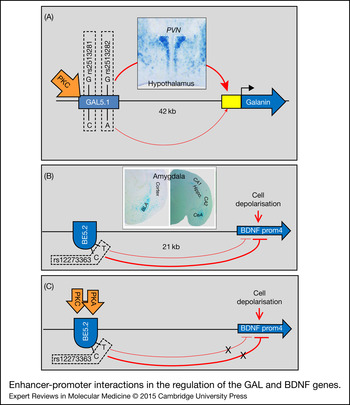
Although chromatin modification, co-factor binding (p300) and detection of open chromatin (FAIRE-seq and DNase-seq) represent powerful methods of enhancer detection they require that the enhancer is active. From what we have learned about enhancers, their high degrees of cell specificity, their reliance of specific promoters and the presence of the correct stimuli suggests that choosing the correct paradigm for characterising a specific enhancer is rarely achieved using cell lines. Thus, comparative genomics represents an effective way to identify tissue specific enhancer regions that may be silent in the majority of cell types thus eluding detection by ChIP-seq, FAIRE or DNaseI. For example, comparative genomics, molecular biology and transgenic mouse analysis was used to identify, clone and characterise an enhancer (GAL5.1) that was responsible for supporting the expression of the galanin gene in the paraventricular nucleus (PVN) of the hypothalamus where galanin modulates fat and alcohol intake (Fig. 4A) (Ref. Reference Davidson56). These studies also explored the signal transduction systems controlling GAL5.1 and demonstrated that GAL5.1 responded to PKC signalling (Fig. 4A) but did not respond to MAPkinase or PKA stimulation. Further analysis showed that GAL5.1 contained two polymorphisms and existed in the human population as two haplotypes (GG>CA) where the CA haplotype was 40% less active than the GG haplotype in primary hypothalamic neurons (Fig. 4A) (Ref. Reference Davidson56). Subsequent clinical studies involving fMRI studies multiple patient samples were able to determine that the ‘GG’ genotype was associated with alcohol abuse (Ref. Reference Nikolova57). However, attempts to recapitulate the identification of GAL5.1 using information contained in the UCSC browser (including ENCODE) were not encouraging. Only two conclusions can be drawn from this; that GAL5.1 is not an enhancer (unlikely given its capacity to drive highly cell specific expression in transgenic mice) or that because of its previous reliance on cancer and embryonic stem cell lines the techniques used by ENCODE are not able to efficiently identify cis-regulatory sequences that show highly tissue specific expression. These studies support the hypothesis that comparative genomics can still be regarded as a potent method of identifying highly tissue specific cis-regulatory sequences and complements ChIP-seq and DNAse/FAIRE-seq based technologies in defining the functional consequences of genetic variation and epigenetic modification in health and disease. Thus, it is also highly likely that combining comparative genomics with WGS will become a standard approach for the identification of disease causing loci.
A summary of enhancer–promoter interactions in the regulation of the GAL gene (A) and the BDNF gene (B and C) and the effects of disease associated allelic variants. (See figure 3 for key) (A) The tissue specific properties of the GAL5.1 enhancer in the periventricular nucleus (PVN) of the hypothalamus and the differential effects of the GG (Thick red arrow) and CA (thin red arrow) haplotypes in primary hypothalamic cell cultures. (B) Diagram describing the effects of different alleles (rs12273363, C-T) of the BE5.2 silencer element on BDNF promoter 4 in amygdala neurones. (C) Combined treatment with PKA and PKC reverses the repression BDNF promoter 4 by BE5.2 thus allowing its response to cell depolarisation in a manner analogous to a Boolean AND gate. BLA, basolateral amygdala; CeA, central amygdala: CA1, CA2, CA1 and CA2 regions of the hippocampus (Hippo).

Studies of the regulation of the BDNF gene have highlighted another factor that must be considered when attempting to define the effects of disease associated polymorphisms on cis-regulatory function; that of combinatorial signal transduction effects of cis-regulatory sequences. For example, a polymorphism associated with mood disorders (rs12273363) (Ref. Reference Juhasz58) was found within a highly conserved putative cis-regulatory sequence (BE5.2, Fig. 4B) close to the BDNF locus. Further analysis showed that this element acted as a silencer of BDNF promoter 4 (BP4) activity in primary neurones derived from cortex, hippocampus or amygdala; where BP4 is active and is required for mood modulation. These studies demonstrated that the depression associated C-allele was a stronger silencer than the T-allele (Fig. 4B) (Ref. Reference Hing59). Activation of PKA or PKC pathways failed to have any effect of the ability of BE5.2 to silence BP4 when activated in isolation (Ref. Reference Hing59). However, when PKA and PKC were activated together the silencing effects of BE5.2 were significantly reduced in a manner analogous to an AND gate in Boolean logic (Fig. 4B) (Ref. Reference Hing59). These experiments demonstrate the probability that many other cis-regulatory sequences act in a manner analogous to logic gates used in Boolean algebra where signal transduction systems act as inputs and RNApolII activity is the output.
Cis-regulatory sequences at the cross roads of genetics and epigenetics
Epigenetics is the study of heritable changes in gene activity that are not caused by changes in the DNA sequence. The mechanisms responsible include environmentally induced methylation/de-methylation of CpG dinucleotides (Fig. 2D) and histone acetylation/methylation (Fig. 1). Histone modification is used as an accurate marker of chromatin activity whereby promoters, enhancers and silenced chromatin are distinguished by methylation/acetylation of specific amino-acid residues (Table 1 and Fig. 1). What is less clear is whether these chromatin modification marks have any effect on health or play an important role in disease. In contrast, there is significant evidence that DNA-methylation can be altered by environmental influences such as early life stress and strongly influences gene expression (Fig. 2D). DNA-methylation through the production of 5-methyl-cytosine (5 mC) at CpG dinucleotides by the enzymes DNMT3A and DNMT3B is used as a marker for transcriptionally repressed chromatin. However, recent studies have determined that an intermediary product of de-methylation of 5 mC by the Tet enzyme to 5-hydroxymethyl-cytosine (5 hmC) is associated with both poised and active enhancers and promoters (Refs Reference Branco, Ficz and Reik60, Reference Ficz61). This observation presents problems for interpreting DNA-methylation databases generated using bi-sulphite conversion sequencing as these older techniques cannot differentiate between 5 mC and 5 hmC. However, a novel oxidative bi-suphite sequencing technique now permits differentiation between 5 mC and 5 hmC (Ref. Reference Booth62).
It is clear that CpG methylation plays a critical role in health and has shown to be significantly altered in many different disease states including cancer, cardiovascular disease, obesity and type II diabetes (Refs Reference Schmitt63, Reference Tarry-Adkins and Ozanne64, Reference Glier, Green and Devlin65, Reference Drummond and Gibney66). Epigenetics and DNA-methylation have also been linked to stress induced mood disorders (Ref. Reference Dalton, Kolshus and McLoughlin67). For example, early life stress resulted in hypomethylation of an enhancer that regulates the expression of the neuropeptide arginine vasopressin (AVP) in mice (Refs Reference Murgatroyd68, Reference Murgatroyd69). Murgatroyd et al., found that hypomethylation of this AVP enhancer increased the activity of the AVP gene in the PVN, an expression profile associated with depression (Refs Reference Murgatroyd69, Reference Nephew and Murgatroyd70, Reference Murgatroyd and Spengler71, Reference Murgatroyd and Spengler72, Reference Menger73, Reference Bettscheider, Murgatroyd and Spengler74, Reference Murgatroyd75, Reference Murgatroyd and Spengler76). Intriguingly, many polymorphisms are able to confer susceptibility or resistance of cis-regulatory sequences to epigenetic modification by DNA-methylation. For example, the CA allele of the galanin gene enhancer; GAL5.1, is rendered more susceptible to DNA methylation by the incorporation of a novel CpG site (Ref. Reference Davidson56). In addition, the obesity and addiction associated T-allele within an intronic enhancer of the cannabinoid-1 receptor gene decreased the susceptibility of this enhancer to methylation (Ref. Reference Nicoll77). Thus, cis-regulatory sequences are a major functional target for DNA-methylation in the genome and may represent the frontier at which epigenetic modification and genetics interact to maintain health or increase disease susceptibility. One important consideration that will have a significant impact on the future of discovering the causes of disease is the strong likelihood that manifestation of many disease phenotypes may be influenced by epigenetic modification. Thus, the effects of SNPs on enhancer or promoter function might be increased or masked by DNA-methylation raising the real possibility that the interpretation of many GWA studies of disease susceptibility may be skewed by the functional consequences of epigenetic modification.
The future of signal transduction and the cis-regulatory genome in personalised medicine
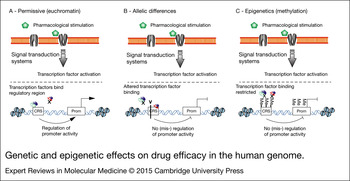
Recent emphasis in medical genetics has been the use of the human genome sequence to permit GWA analysis to explore the causes of heritable human disease, not just in exomic sequence but throughout the genome. Furthermore, the tremendous acceleration in our ability to sequence whole genomes brings the possibility of accessing individual patient genome sequence as easily as accessing patient records. By gaining insights into the functionality of the noncoding human genome, how this genome interacts and responds to signal transduction cues and how SNPs and epigenetic modification affect these responses, it is hoped that susceptibility to many life-threatening conditions might be predicted early in life to help decide the best therapeutic options; one of the targets of personalised medicine. A further obstacle to the provision of personalised medicine is the wide variation in drug responses obvious in the patient population which range from a complete lack of efficacy to the development of significant side effects. Although some of this variation can be accounted for by individual differences in drug metabolism by enzymes such as Cytochrome P450 (Ref. Reference Heller78) metabolism is unable to fully account for all variation in drug effects and a number of noncoding loci, that do not involve metabolic enzyme loci, have been identified that alter drug efficacy (Ref. Reference Lanni, Racchi and Govoni79). For example, because of its role in appetite, addiction, cognition and inflammatory pain the cannabinoid 1-receptor has been the subject of much interest in the development of novel anti-addiction and anti-obesity therapies. Rimonabant; an inverse agonists of CB1, was initially developed as an anti-smoking therapeutic and then as an appetite suppressant. However, rimonabant had to be withdrawn from the market because of side effects that included suicidal feelings and depression (Ref. Reference Kangas80). Indeed, drug response stratification continues to be a major problem in the development of novel cannabinoid-based therapeutics and analysis of the CB1 receptor coding region failed to identify a non-synonymous polymorphism that could account for these differences. An alternative to the involvement of metabolic or coding polymorphisms in cannabinoid drug response stratification is that regulation of components of the cannabinoid system, such as receptors or the enzymes involved in the production, or degradation of, endogenous cannabinoids, might be altered by SNPs or epigenetic modification of cis-regulatory sequences downstream of the receptor or signal transduction cascade drug target (Fig. 5). Clues to the possible mechanisms through which polymorphisms in the noncoding genome affects drug response can be seen in the significant differences observed between the C and T-allele of the CNR1 intron 2 enhancer where the T-allele responds much more strongly to activation of MAPkinase pathways (Ref. Reference Nicoll77). Indeed, these differences are currently being explored as a possible cause of cannabinoid drug stratification.
Simplified summary diagram describing (A) how the genome detects the effects of drug treatments in the cell and how drug effects are modulated by (B) allelic variation and (C) epigenetic modification. CRS, cis-regulatory sequence; Me, methylated CpG dinucleotide; V, allelic variant.

The future of understanding the role of the noncoding genome in personalised medicine
As was the case for gene coding sequences in the past the real ‘proof of the pudding’ with regard to the function of cis-regulatory elements and the effects of polymorphic variation will be to delete or manipulate their sequences from the genomes of living animals in order to explore disease related changes in physiology and behaviour. In the past this was achieved using gene knockout studies involving embryonic stem (ES) cell gene targeting in mice. Although ES cell targeting has sometimes been used to knock out putative enhancer regions in mice this technology proved to be too expensive, technically challenging and time consuming to permit the regular targeting of putative cis-regulatory sequences. However, with the recent promises of rapid and in-expensive genome editing techniques such as CRISPR (Refs Reference Gaj, Gersbach and Barbas81, Reference Singh, Schimenti and Bolcun-Filas82) for the manipulation of mammalian genomes we may be poised on a threshold of a new age of functional analysis of the cis-regulatory genome in mammals that will accelerate the development of personalised medicine.
Conclusions
The publication of the human genome sequence over 10 years ago allowed for the development of novel technologies such as GWA analysis of genetic disease and, more recently, the genome wide analysis of the regulatory genome using techniques reliant on next generation sequencing. This huge volume of information has permitted a revolution in our understanding of the role of gene regulation in the development of human disease and to make major inroads into understanding the transcriptional mechanisms behind many common human diseases. Indeed, it is almost certain that the future of predicting and combating disease will rely on understanding the complexities of the regulatory genome. Despite the huge advances made in our understanding of the cis-regulatory landscape of the human genome in the last 10 years, huge obstacles, such as a lack of tissue specific high throughput screening technologies, prevent further understanding of the effects of genetic and epigenetic changes on gene regulation and their roles in disease. Thus, mere examination the role of protein coding regions in disease and drug response is no longer a viable option. Only by factoring in the role of cell specificity and signal transduction responses in our study of the cis-regulatory genome and the effects of genetic and epigenetic variation can effective progress be made in delivering the promises of personalised medicine.
Acknowledgement
This work was funded by The BBSRC, the Wellcome Trust and the Medical Research Council. PC was funded by the Scottish Universities Life Science Alliance and EAH is funded by Medical Research Scotland. We would like to thank Neil Vargesson, Iain McEwan and Stefan Hoppler for critically reading our manuscript.