Fossil preparation is the act of exposing fossil information from the rock matrix in which it is encased and thereby transforming the object into a scientific specimen. This activity has by necessity accompanied palaeontological research for as long as people have studied ancient life. Peter Whybrow, a researcher and preparator at the British Museum Palaeontology Laboratory, credited Georges Cuvier with the first scientific description of a fossil preparation method in 1804 (Whybrow Reference Whybrow1985, p. 12). Since then, many different techniques have been ascribed as laboratory processes, yet application of these methods to specimens is rarely recorded in precise detail. If performed imprecisely, these methods possess a strong likelihood of altering morphology (Hermann Reference Hermann1909; Camp & Hanna Reference Camp and Hanna1937; Wylie Reference Wylie, Brown, Kane and Parker2009; Lòpez-Polìn Reference López-Polín2011). Despite being a necessary component of most palaeontological inquiry, the practice of preparation remains ill-defined and poorly understood within the field. The actions and responsibilities of preparators are generally characterised according to the nature of the individual preparator or institution (May et al. Reference May, Reser, Leiggi, Leiggi and May1994, p. 113), or because of locality or taxon specific research requirements. This has been the case since the genesis of the “modern” preparation laboratory, over 100 years ago (Brinkman Reference Brinkman, Brown, Kane and Parker2009).
The vertebrate palaeontology laboratory of today still shares much in common with that of the early 20th Century. Though the majority of current laboratory methods were well established by this period (Whybrow Reference Whybrow1985; Brinkman Reference Brinkman, Brown, Kane and Parker2009), more than a century later there remains no avenue for consistent training of these techniques. By contrast, conservators in other fields, such as art conservation, had already established academic programmes for training by the early 1900s (Bewer Reference Bewer2010, p. 55). A number of works outlining palaeontological techniques have been compiled through this time period (Mantell Reference Mantell1844; Hill Reference Hill1886; Schuchert Reference Schuchert1895; Bather Reference Bather1908; Hermann Reference Hermann1908, Reference Hermann1909; Stromer Reference Stromer1920; Seitz & Gothan Reference Seitz and Gothan1928; Prokhorov Reference Prokhorov1929; Efremov & Kuzmin Reference Efremov and Kuzmin1931; Camp &Hanna Reference Camp and Hanna1937; McAnulty Reference McAnulty and Evans1939; Kummel & Raup Reference Kummel and Raup1965; Rixon Reference Rixon1976; Converse Reference Converse1984; Feldman et al. Reference Feldman, Chapman and Hannibal1989; Leiggi & May Reference Leiggi and May1994; Brown et al. Reference Brown, Kane and Parker2009), but most are not well known today, and none of the recent contributions are comprehensive of current best practices. Additionally, the complete body of knowledge that they represent is not widely possessed in the preparation community. Training has almost exclusively taken place in a master/apprentice model throughout this period (Matthew Reference Matthew1919; Camp & Hanna Reference Camp and Hanna1937; May et al. Reference May, Reser, Leiggi, Leiggi and May1994; Brown & Kane Reference Brown and Kane2008; Brown Reference Brown and Cavigelli2009). This results in persisting misinformation in the field, as well as an enormous amount of duplicated effort.
The earliest of these papers (1844–1909) represent the historical development of laboratory methods; they demonstrate the evolution of equipment, techniques and materials within a few generations. Preparation in the 20th Century was marked by the early inheritance of a core group of methods and a subsequent refinement of those technologies, coupled with a steady improvement in the conservation properties of materials available. The technical literature published between 1895 and 1939 exhibit an international consensus on best practices; at no point since then has a body of knowledge been represented in such a widespread fashion with such a diversity of authors.
This paper describes the development of preparation and conservation methods prior to World War II through a review of historical publications, identifies three distinct transitions in the nature of the related technical literature from the beginning of the 19th Century through the present day, and critiques the consciousness of laboratory methods today. Methods are limited here to mechanical and chemical exposure of fossils, consolidation and adhesion, conservation, housing, and thin-section and serial grinding techniques. Due to limitations of space, fieldwork, moulding and casting and mounting methods are largely excluded.
1. Why study old methods?
1.1. Practical effects
Students of palaeontology are obligated to understand the genesis of modern techniques for several reasons. The acts of preparation and conservation alter fossils permanently, and these modifications can interfere with study or re-treatment. The historical methods literature may be the only documentation of past preparation and conservation treatments. Understanding trends in methods is also an underlying element of professional development.
First, and perhaps most importantly, historical treatments applied to fossil specimens do not remain in the past – they endure as an integral component of the fossil into the future. They typically cannot be reversed, and continually affect observations and interpretations of fossil material. An understanding of the long-term impact that methods and materials have on fossils is crucial to accurate interpretation of morphology.
An awareness of the functional properties of materials already present in fossils is an essential component of responsible handling. Specimens cannot be reliably and safely treated without knowing how pre-existing components of them will react to new applications of chemicals and processes. When considering re-treatment or re-preparation of specimens, every possible effort should be made to identify all previous procedures and materials that have been applied to specimens. Early publications are often the only record of materials applied to specimens. A paper that described a new technique can provide geographical or temporal clues useful in reconstructing the past treatment history of fossils, based on common practices in a given place or time. Familiarity with the methods literature benefits the research team when diagnosing materials or techniques.
Understanding of past techniques allows for a mature and historically informed understanding of modern methods. While palaeontologists have largely remained cognisant of more than two centuries of literature relating to anatomical descriptions of fossils, the technical literature is almost entirely ignored. This leads nearly every generation of researchers, conservators and technicians to repeat work, damage specimens and expend unnecessary resources.
Due to this lack of emphasis on techniques publications, the worker in a palaeontology laboratory rarely performs a literature search before attempting a new treatment; often investigation of methods is restricted to a query to a mailing list or consultation with close colleagues. The lack of academic training and focus on apprenticeship accompanying laboratory work is partially responsible for the absence of a canon of knowledge. Consequently, fossil preparators and conservators are often characterised by possessing great ingenuity (e.g. Rixon Reference Rixon1976; Wylie Reference Wylie, Brown, Kane and Parker2009), and working in relative isolation (Leiggi & May Reference Leiggi and May1994, p. xv). This leads to a natural self-reliance and independence in technique development.
Nevertheless, a thorough understanding of the body of knowledge of the field is a key component to professionalism and a prerequisite to development of a rationale for selecting and applying appropriate treatments to specimens. One method for rebuilding an awareness of best practices is by resuming regular publication of methods papers. Historically, research or curation department members, rather than laboratory staff, generated methods publications. Even when laboratory personnel made significant contributions, it was often at the direction of supervisors. For example, even American Museum Chief Preparator Adam Hermann's landmark papers were a result of prompting from Director H. F. Osborn (Matthew Reference Matthew1919, p. 742).
1.2. Generational perceptions
American Museum palaeontologist Gilbert Stucker (Reference Stucker1961, p. 332) pointed out that “the aim and scope of palaeontology have changed since the early days … this has brought a demand for more exacting laboratory preparation” and that “if a laboratory is to keep pace with the research rooms, new tools and new techniques must constantly be sought.” However, this same point was the topic of a paper by Efremov & Kuzmin (Reference Efremov and Kuzmin1931) and was also reflected by Hermann's recollections of the work performed under the direction of O. C. Marsh, E. D. Cope and Joseph Leidy: preparation, Hermann wrote, “was carried out in a rather crude manner. Bones were cut out of the matrix in the simplest way with poor tools, and as they came out in pieces they were cemented together with common carpenter's glue. This held them together as long as the glue retained some moisture; they fell apart just as soon as the glue became dry” (Hermann Reference Hermann1909, p. 283). This focus on the development of new methods does not mean that older techniques and philosophies have no place in the modern laboratory. Rather, the “tool box” of the preparator is constantly expanding. A proven challenge is for workers in the laboratory to remain aware of these early techniques and philosophies, their benefits and limitations, all the while experimenting with new ones.
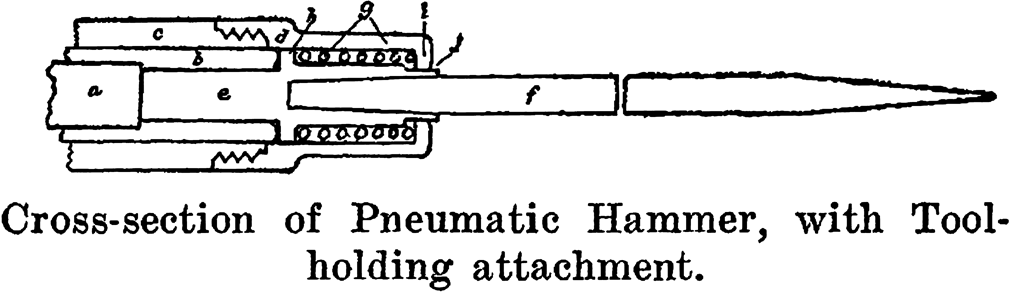
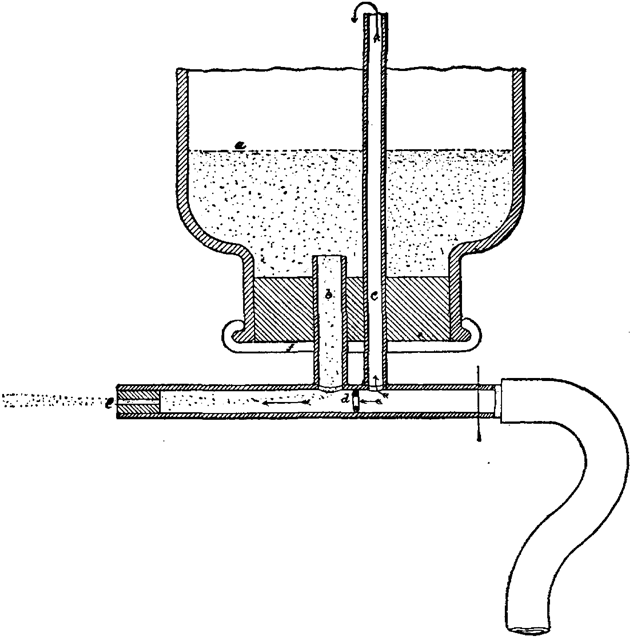
Evidence of this challenge is readily apparent in the literature. For example, at the American Museum of Natural History, Stucker et al. (Reference Stucker, Galusha, McKenna, Kummel and Raup1965, p. 272) described air abrasive sandblasting as “a method of fossil preparation [that] has come into use recently” despite the development and first publication of this technique over seventy years earlier (Bernard Reference Bernard1894), and shortly after that within his own institution (Osborn Reference Osborn1904). Rixon (Reference Rixon1976, p. 79) similarly ignores Riggs' Reference Riggs1903 adaptation of pneumatic chisels (Fig. 1) to the work of preparation when he introduces the same as a tool available “in recent years”. It may be that in the 1960s, Stucker and colleagues were unaware of Bernard's work on trilobite preparation (Fig. 2). It is likewise possible that Riggs' short paper in Science (Riggs Reference Riggs1903) may have been difficult to locate sixty years after publication; however, the technique itself rapidly spread from the Field Columbian Museum to the American Museum of Natural History and the United States National Museum (Osborn Reference Osborn1904; Brinkman Reference Brinkman, Brown, Kane and Parker2009, p. 33) and was promoted by Hermann in both his Reference Hermann1908 and Reference Hermann1909 papers. These latter works were cited widely (e.g. Stromer Reference Stromer1920; Camp & Hanna Reference Camp and Hanna1937). Efremov & Kuzmin (Reference Efremov and Kuzmin1931) also experimented with pneumatic tools in Russia. Rixon had been involved in both the preparation of fossils and publication of methods papers since at least the mid-1930s (Toombs & Rixon Reference Toombs and Rixon1959, p. 304), making it hard to believe that he was unaware of so much previous work on the topic. More recently, Leiggi & May (Reference Leiggi and May1994, p. xv) discuss their development of a preparation manual beginning in 1983, asking why “a techniques volume had never been specifically written for the science of vertebrate palaeontology.” However, British Museum palaeontologist A.E. Rixon's 304-page, heavily referenced textbook had accomplished this objective just seven years earlier in the UK (Rixon Reference Rixon1976).
A pneumatic chisel as modified by Elmer Riggs for use in palaeontological preparation (from Riggs Reference Riggs1903, p. 748). This tool design remains very similar in airscribes today.

Part of H. M. Bernard's device for cleaning fossils via sandblasting techniques (from Bernard Reference Bernard1894, p. 555).
In an age of instant electronic communication, there is little reason for preparators, conservators and others in palaeontology to remain unaware of the history and use of best practices in laboratory methods. For example, even though early materials choices for stabilising fossil material do not meet current museum conservation standards (Howie Reference Howie1984; Horie Reference Horie2010), those choices represent an evolution of method as workers continually experimented with new materials in an effort to determine best practices. However, adoption of better materials has not been universal, as palaeontologists still sometimes use products such as shellac or Glyptal for consolidation of specimens, even 30 or more years after conservation scientists demonstrated that these products are unstable (Damiani & Hancox Reference Damiani and Hancox2003; Sidor & Welman Reference Sidor and Welman2003).
Other recent examples of this information gap between the literature and the workbench include Cavin's (Reference Cavin, Olstad and Aase2011) attempts to develop small-scale moulding and casting methods, initially without knowledge of existing descriptions of similar techniques and equipment (e.g., Waters & Savage Reference Waters and Savage1971; Reser Reference Reser1981), despite requests for information from online mailing lists (J. Cavin pers. comm. 30 Apr Reference Cavin, Olstad and Aase2011). Likewise, early drafts of Cavigelli (Reference Cavigelli, Brown, Kane and Parker2009) were revised by the author and editors without knowledge of or credit to (M. Brown pers. obs.) prior publications regarding the use of polyethylene glycol to stabilise fossils (e.g., Rixon Reference Rixon1965; Converse Reference Converse1984). To be sure, each recent author has generated novel uses of materials in their respective endeavours (e.g., Cavigelli's (Reference Cavigelli, Brown, Kane and Parker2009) recycling of polyethylene glycol), yet this is hardly the most effective approach for development of a field. These are examples of failings, not of the individual authors, but of a science that does not prioritise laboratory methods. Whybrow makes this point in his scathing assessment of this situation: “Vertebrate palaeontology must be one of the few ‘sciences’ where the techniques used to establish the facts appear to be of little consequence” (Whybrow Reference Whybrow1985, p. 5). In part, this is a result of the absence of a taught body of knowledge for laboratory techniques.
2. Historical literature review
2.1. Establishing modern methods: 1804–1909
The record of technical publication of laboratory methods extends back to at least 1804 (Whybrow Reference Whybrow1985). Cuvier described his basic technique for exposing morphology: “I dug carefully, using a fine steel needle, and had the satisfaction to have discovered the whole anterior portion of the pelvis” (Cuvier Reference Cuvier1804, p. 286). This methodology was crucial to confirming his predictions, and he took pride in demonstrating his ability to anticipate the morphology of anatomical structures (Huxley Reference Huxley1880). In addition to describing his methods in the literature, he also arranged an audience to validate his results. “This operation took place in the presence of a few to whom I had announced the result in advance, with the intention of proving in fact the justness of our zoological theories: since the true character of a theory is unquestionably the faculty that it gives to predict phenomena” (Cuvier Reference Cuvier1804, p. 286). Whybrow interprets this undertaking as evidence that Cuvier “recognised the historical significance” of his preparation activity, a step further would be to suggest that Cuvier realised that a record of the methods used to expose morphology supports the validity of the operation as a scientific enterprise. In sum, that publication of laboratory methods is a logical and requisite component of the scientific method.
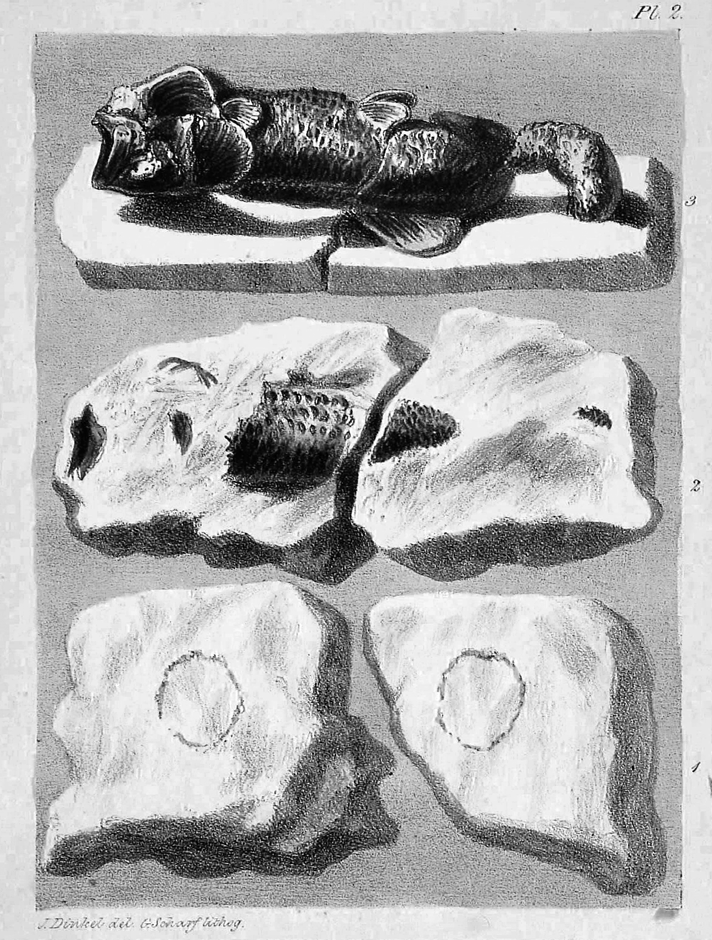
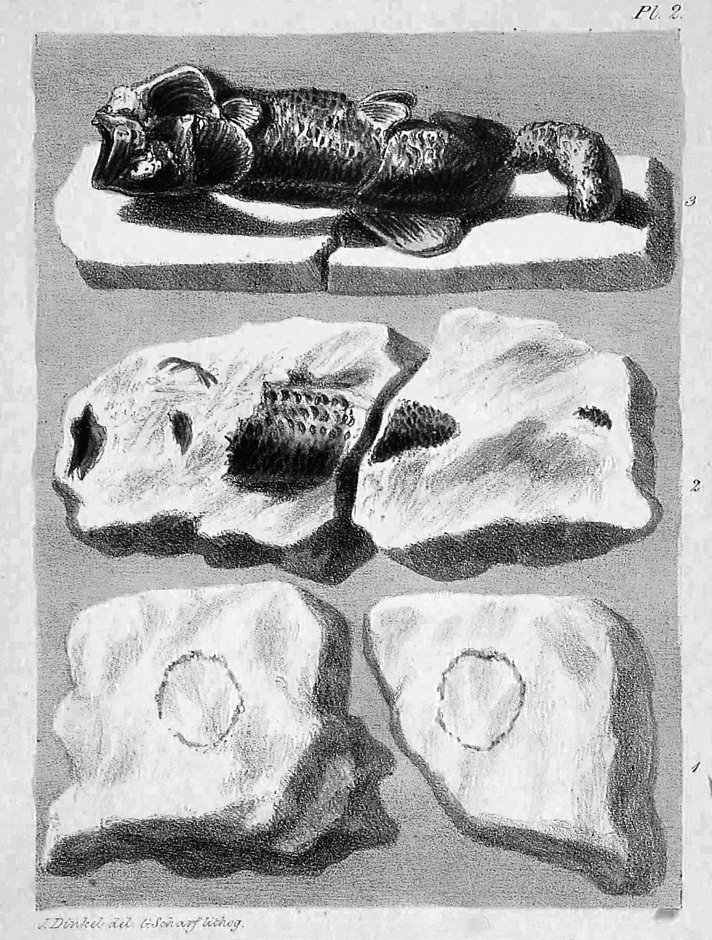
While several collectors discussed techniques that they developed for recovery of specimens from the field, information about fossil preparation methods is sparse throughout the early and mid 19th Century. The notable standout is Gideon Mantell's Reference Mantell1844Medals of Creation, followed by the revised 1854 Second Edition. An overview of the nascent field of palaeontology, Mantell incorporates directions for preparing fossils as a preliminary step in the process of study, instructing that the student of palaeontology should “visit some of the localities described; collect specimens, and develope [sic] them with his own hands; examine their structure microscopically; nor rest satisfied till he has determined their general character, and ascertained their generic and specific relations” (Mantell Reference Mantell1844, p. xiv). He briefly describes techniques for mechanical and chemical preparation, histological sample preparation and microscopy techniques, and experimentation with consolidants and adhesives. Each method is related as relevant to specific localities or taxonomic groups. Importantly, Mantell notes examples of anatomical insights gained during the preparation process, echoing Cuvier. Just as Cuvier was likely the first to describe the process of preparation, forty years later Mantell was likely the first to illustrate it (Fig. 3).
The earliest illustration of the process of preparation, showing the stages of preparation of the fossil fish Osmeroides mantelli from a block of chalk (from Mantell Reference Mantell1854, p. iv): “(1) The two corresponding surfaces of a block of Chalk split asunder. The irregular oval lines, seen on each surface, are the only apparent indications that the stone contains an extraneous body; (2) In this figure the two pieces represented above are shown cemented together; care having been taken that the oval markings on each surface were accurately adjusted. The chalk has been chiselled away in the supposed longitudinal direction of the enclosed extraneous body, and part of the scaly surface of a fish has been thus brought to light. A portion of chalk has also been removed towards both ends, with the view of ascertaining the extent and direction of the fossil; and at each place indications of its presence are visible; (3) Represents the specimen completely developed. It proves to be a fish almost perfect, lying on its back, with the body uncompressed, the mouth open, the arches and opercula of the gills expanded, and the dorsal, pectoral and ventral fins entire. The caudal fin, or tail, is imperfect. The original is nine inches long, and is one of the most extraordinary fossil fishes ever discovered. It belongs to the Salmon family, and is allied to the Osmerus, or Smelt; it is now in the British Museum. We thus perceive the oval markings on the surface of fig. 1 were occasioned by the section of the scales covering the cylindrical body of the fish (see p. 627). A magnified view of one of the scales is figured Lign. 185 fig. 4, p. 567” (Mantell, Reference Mantell1854, p. v).
Several authors (Buckland Reference Buckland1866; Hill Reference Hill1875) published recipes for adhesives, but another forty years passed following Mantell's work before a volume approaching a manual for laboratory preparation was published, appearing in 1886 (Hill Reference Hill1886). Though described as one of the first publications devoted solely to mounting techniques (Howie Reference Howie1986, p. 20), Princeton Geological Museum curator Franklin Hill's pioneering report was the first to outline the tools, equipment and philosophies that guide palaeontological preparation and conservation. Hill described a laboratory setup complete with the now-familiar hammers, chisels, sharpened steel needles and brushes. He also outlined the need for sufficient lighting, magnification and support for specimens.
Beyond tools, Hill also seems to be the first author intentionally to address conservation concerns. Though Howie (Reference Howie1986, p. 13) highlights Richard Owen's (Reference Owen1855) direction to staff to place plaster casts on exhibit rather than real bones to preserve their utility as research specimens as an early step on the path of conservation, Hill explicitly documents his concerns about the storage, handling and treatment of fossils in the context of damage prevention. He also describes the recipe and properties of mucilage, the preferred consolidant for use on fossils in his laboratory, based on years of testing against other concoctions. This is the first documented example of archival materials testing in the fossil preparation laboratory.
Hill poses the question of “how to keep [a fossil] safely and show it to advantage” once preparation and consolidation is complete. In contrast to the modern collections standard, where priority is placed on housing research specimens in stable storage isolated in cabinets, Hill endeavoured to create anatomical mounts of important specimens. This was because “experience shows that a bone in its natural position … is easier to understand than when reversed, while if several bones are combined so as to form a foot, or leg, a spinal column or a skull, the value of each is greatly increased” (Hill Reference Hill1886, p. 355). Additionally, Hill was motivated to mount specimens as a protective measure, since “a single ramus of a lower jaw … in a tray … is liable to be thrust aside and jostled, to the great danger of its teeth and coranoid” (Hill Reference Hill1886, p. 355). Hill's mounts were designed to be “so obvious that the most careless or dull student can hardly fail to see it … because if a blunder be possible some persons can always be depended on to make it, and hence come many breakages” (Hill Reference Hill1886, p. 356). This is a topic we will return to later.
Charles Schuchert (Reference Schuchert1895), of the Smithsonian Institution National Museum of Natural History, was the next palaeontologist to address preparation and collecting comprehensively. He described the process of laboratory preparation systematically, beginning with sorting of specimens from the field into boxes and trays. He recommended washing and sieving bulk matrix for microfossils, and scrubbing larger specimens with wire brushes to remove mud. Rock, he advised, should be removed with a progressively finer series of hammers and chisels, small picks, knives and needles. Acid preparation was a technique already in use in palaeontology, and had been described for use both on vertebrates and invertebrates (Mantell Reference Mantell1844; Holm Reference Holm1890). Schuchert noted that the National Museum employed muriatic (hydrochloric) acid and vinegar (acetic acid), as well as caustic potash (potassium hydroxide). Schuchert intentionally omitted discussion of techniques for preparation of large-scale vertebrates “since none but the large institutions attempt to prepare such bones” (Schuchert Reference Schuchert1895, p. 27).
Schuchert's handbook contains much in the way of excellent advice, and its instructions for applying techniques are very thorough. However, some recommendations are cause for concern, due to their implications for researchers studying historic specimens. For example, Schuchert (Reference Schuchert1895, p. 27) directed that scratches or marring occurring during the preparation process should be eradicated with a brushing of muriatic acid. It is unclear whether he meant these marks should be removed from matrix or bone, but the latter seems most likely. Scratches in the surface of the bone are evidence of modification; eradication of that evidence forever alters the real morphology of the fossil. A consequence of preparation by caustic potash is a white film blooming on the surface of the bone if not adequately removed. This may effloresce for years afterward, and both Schuchert and Bather (Bather Reference Bather1908, p. 88) suggest that it be removed by scrubbing with acid. If this fails, Schuchert recommended staining the white film with India ink. While Schuchert's treatment masks the unsightly precipitate, it does nothing to halt or reverse the conservation issue and likewise obscures morphology.
Several conservation treatments were in use during Schuchert's era for the prevention of pyrite oxidation within specimens (Schuchert Reference Schuchert1895; Bather Reference Bather1908; Wylie Reference Wylie, Brown, Kane and Parker2009). Schuchert noted that none of these treatments were capable of halting oxidation without altering the natural colour of vertebrate specimens. A promising treatment was then being developed at the National Museum for minerals, whereby specimens were painted with “retouching varnish” (further identified only as a fixative for crayon artwork). Established methods at that institution involved coating or submerging the specimen in molten wax, or soaking it in petroleum jelly. None of these treatments are completely reversible, and can result in considerable difficulty to re-expose covered morphology.
Not long after Schuchert's paper, F. A. Bather experimented extensively with chemical preparation and conservation at the British Museum, including procedures for dealing with pyrite. Indeed, his 1908 paper, The Preparation and Preservation of Fossils, was the next major work published on palaeontology laboratory methods, and it detailed a broad range of chemical and mechanical innovations. In addition to introducing methods in development by Bather, this paper also synthesised the work of his contemporaries, explaining techniques used to solve locality or preservation-specific problems. Examples include little-known contributions on mechanical preparation, such as Rowe's (Reference Rowe1896) use of the dental engine on specimens in soft chalk, extraction of fossils from the Tully Limestone via thermal shock (Clarke Reference Clarke1903), and a technique for splitting nodules along the plane of the specimen by expansion due to freezing (Moysey Reference Moysey1908). Incidentally, Moysey acknowledges that his method was not novel (Moysey Reference Moysey1908, p. 221), and that many geologists had probably employed the method. In fact, Mantell had reported its use as early as Reference Mantell1844 (Mantell Reference Mantell1844, p. 49).
Schuchert and Bather also dedicated sections of their papers to methods of hardening or preserving (consolidating) fossil specimens. Schuchert's instructions call for the application of “hot, thin, glue water,” or the faster but more expensive alternative of using a shellac mixture. A noted disadvantage to the “glue water” option is that an overly thick mixture will result in a glossy surface coating which then adheres to other surfaces under humid conditions. Bather likewise advocated for the use of shellac for small specimens, but noted concern over mould growth and humidity. He introduced a mixture of copal (a tree resin) and paraffin wax in a petroleum solvent as a replacement. Although highly flammable and generating unsafe fumes, this treatment penetrated specimens more deeply than other options, and was durable enough to protect against atmospheric damage. Noting safety concerns, Bather reported recommendations to replace the solvents benzene or petroleum with carbon tetrachloride as a safer alternative; although this material is now known to be hazardous and subject to regulation.
Several materials that were to see long usage in the preparation laboratory entered the literature at this time. Bather mentioned silicate of potash (potassium silicate, commonly known as water-glass, isinglass, or sodium silicate), a widely used material (Stromer Reference Stromer1920; Efremov & Kuzmin Reference Efremov and Kuzmin1931; Howie Reference Howie1984), even though it lacks penetrating ability, has a propensity to effloresce and sometimes to form a scale and flake off. Two formulations of water-glass became available under the trade name “Perpetuin.” These were purportedly more stable and capable of greater penetration than traditional water-glass. A type of cellulose acetate branded “Zapon” was marketed at this time and was used to seal specimens, as well as to change the colour or contrast of elements to improve the visibility of fossil structures (Bather Reference Bather1908, p. 87).
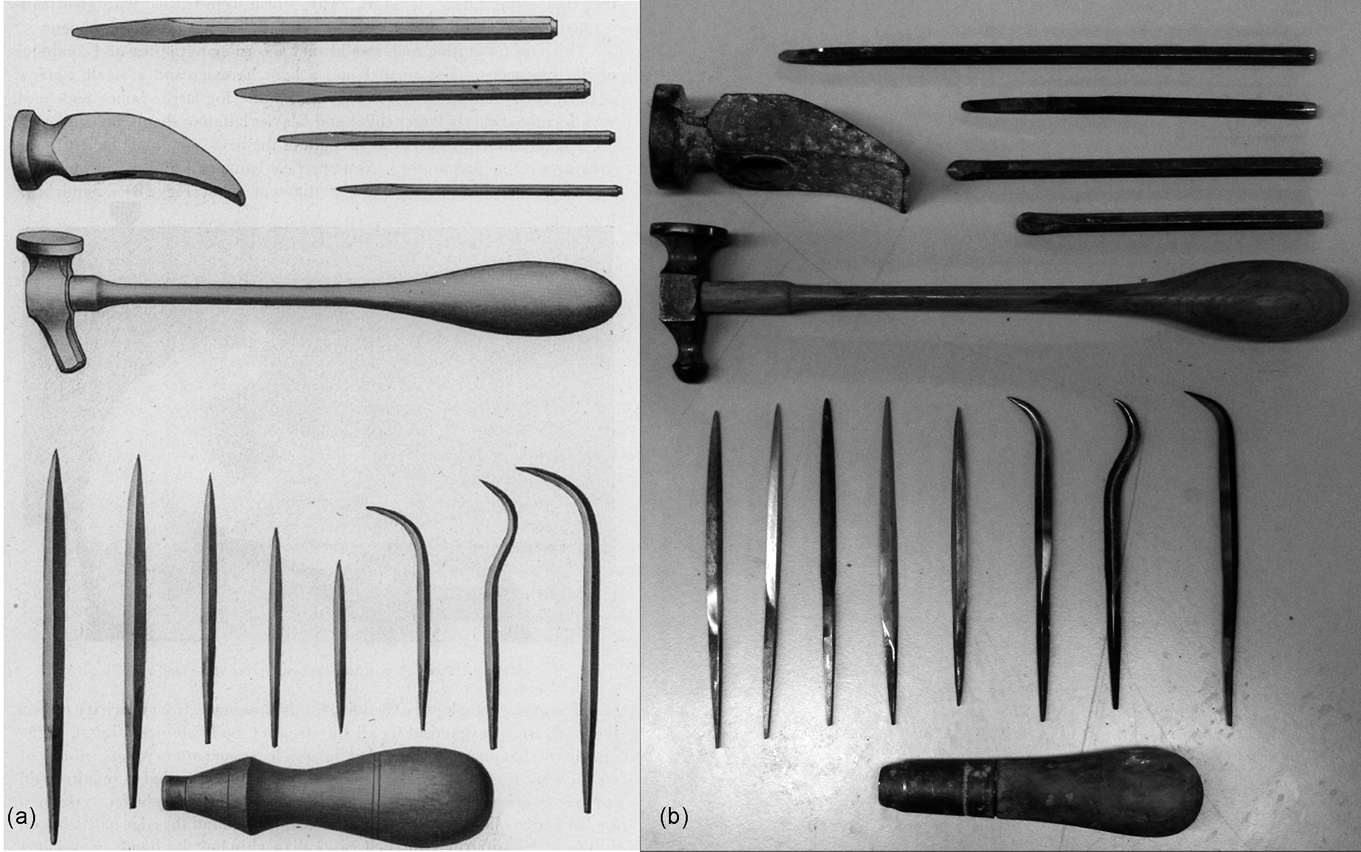
Adam Hermann's two papers, Modern methods of excavating, preparing and mounting fossil skeletons (Reference Hermann1908) and Modern laboratory methods in vertebrate paleontology (Reference Hermann1909) foreshadow much of 20th-Century laboratory work (Fig. 4). Hermann had both witnessed and contributed to the bulk of the development of palaeontological methods, having worked as a preparator since 1877. To support a commitment to high quality fossil preparation, Hermann's laboratories in the American Museum of Natural History were constantly being upgraded (Brinkman Reference Brinkman2010, p. 221). Hermann appears to be the only author employed principally as a preparator who published on laboratory methods until 1959.
(a) Common fossil preparation and excavation tools in use in the early 20th Century. Custom-made chisels were used with chasing and cobblers' hammers to chip matrix from bone. The modified harness awls at the bottom were introduced by Marsh. (from Hermann Reference Hermann1909, p. 289). (b) Identical tools still in use for the same purpose at The University of Texas at Austin Vertebrate Paleontology Laboratory.
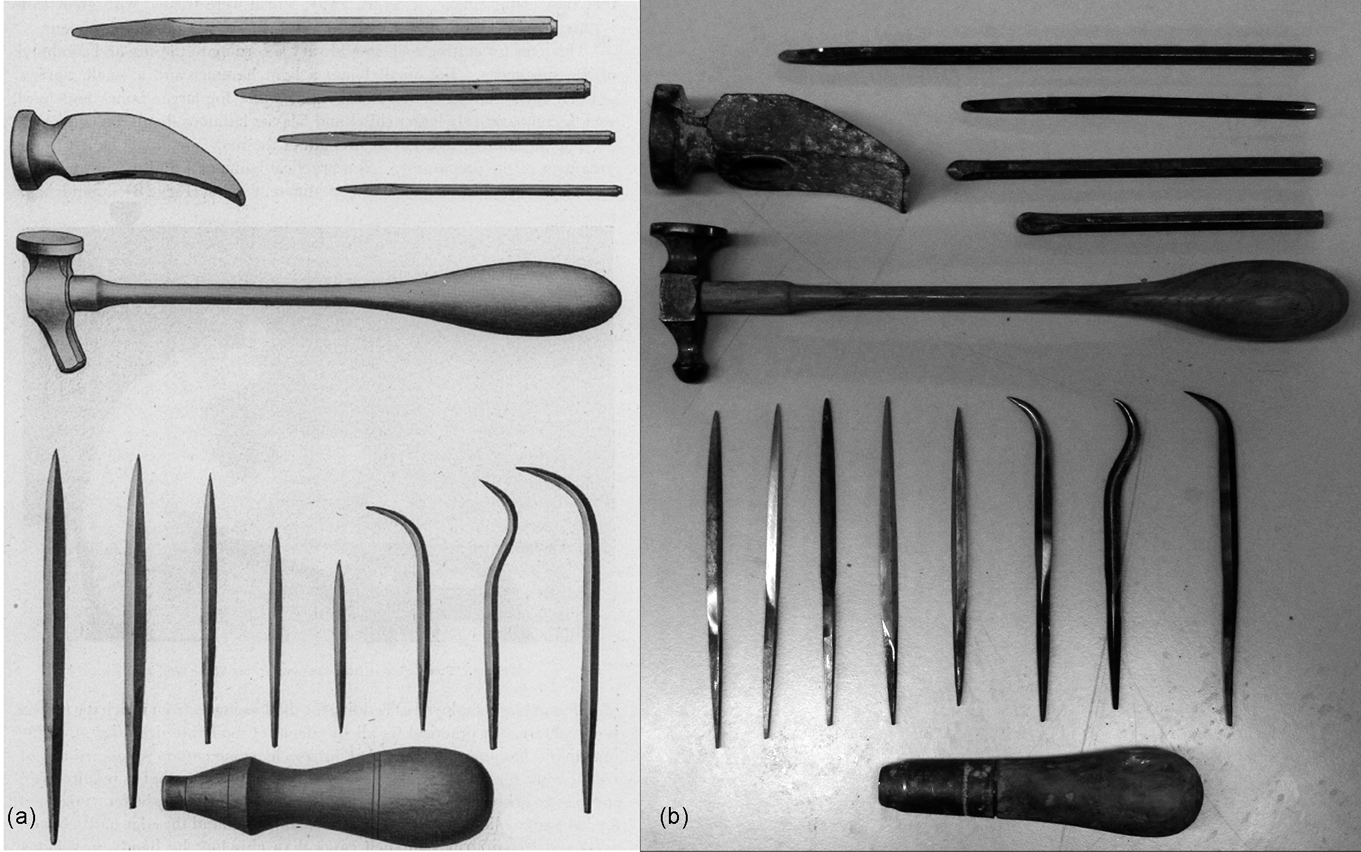
Hermann presented the “best results … and present practice” (Hermann Reference Hermann1909, p. 283) in palaeontological preparation, advocating for the adoption of more efficient techniques in laboratories. Like previous accounts of laboratory techniques (e.g., Hill Reference Hill1886; Schuchert Reference Schuchert1895), Hermann described conditions of specimens upon collection from the field, and how the state of the specimen at this stage influenced the requirements for laboratory preparation. Hermann provided recommendations for the use of specific tools, including both hand tools and newer pneumatic and electric options. For instance, Hermann presented instruction for forging custom chisels, scrapers and awls specific to the needs of the fossil preparator and credited Marsh with their initial use in palaeontology (Hermann Reference Hermann1909, p. 291). Looking forward, he reviewed Riggs' pneumatic hammer in use at the Field Museum of Natural History in Chicago (Hermann Reference Hermann1908, p. 44). Hermann also described the adoption of electric dental lathes and dental hammers, the pneumatic abrasive unit and chemical preparation (Hermann Reference Hermann1909, pp. 291–293), as well as uses for overhead trolley and hoist systems, rotary diamond saws, lathes, blast furnaces and the electric drill (Hermann Reference Hermann1909, pp. 330–331).
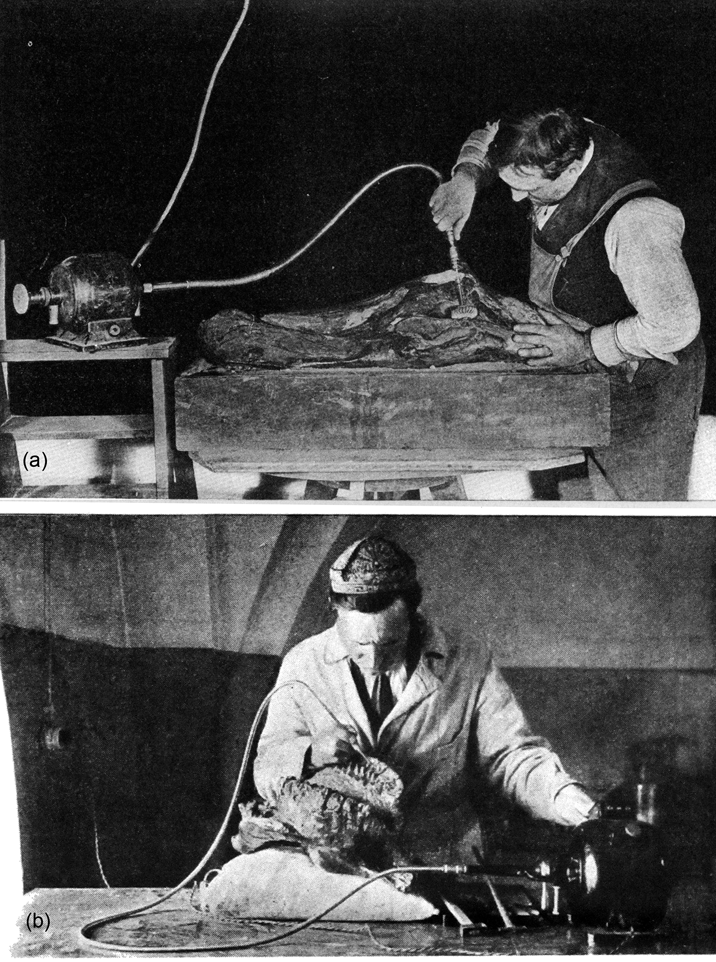
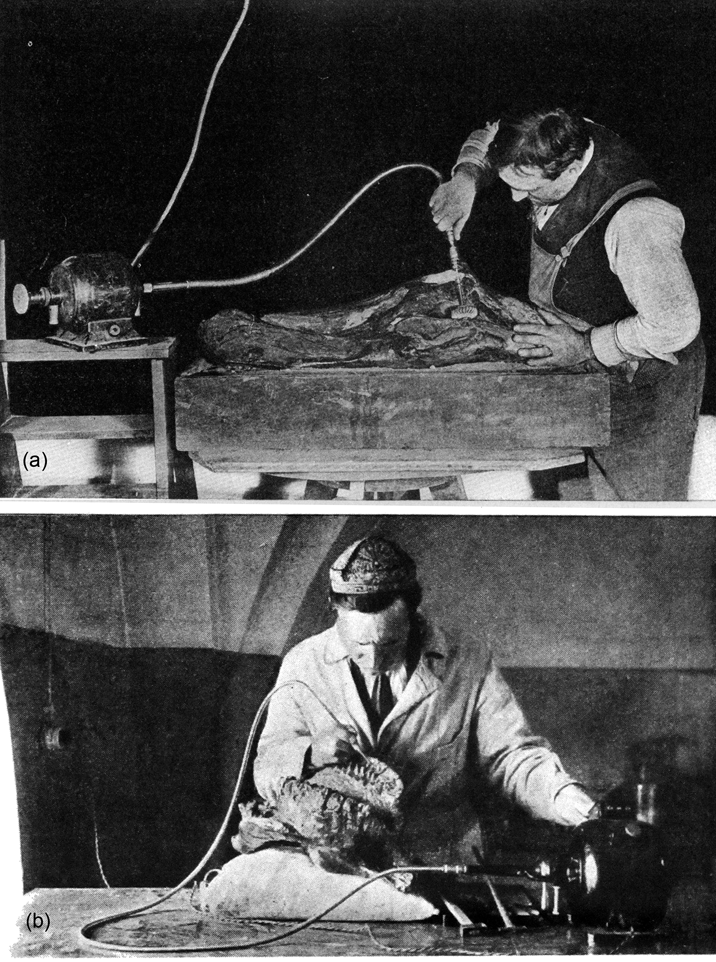
While many of the advances described by Hermann were innovated at other institutions, the American Museum laboratory was the first to compile them into a work flow and promote them as an integrated system. Nor are Hermann's papers unique in discussing early 20th-Century techniques and philosophy alongside new applications of larger tools and equipment, yet they serve as the model for each methods text that followed in the subsequent thirty years. The tone he takes to report “the latest and most practical methods for general use in a vertebrate paleontological laboratory” (Hermann Reference Hermann1909, p. 283), coupled with his prominence as the Chief Preparator at the American Museum, accounts for the comparatively wide familiarity with Hermann's publications through time. These papers succinctly and authoritatively summarise the best ideas in use for lab design, equipment, materials selection and preparation philosophy (Matthew Reference Matthew1919; Camp & Hanna Reference Camp and Hanna1937), and their influence is evident in the literature (e.g., Fig. 5).
(a) A preparator using an electric motor and flexshaft to prepare a fossilised skull at the American Museum of Natural History (from Hermann Reference Hermann1909, p. 293). (b) A preparator using an electric motor and flexshaft to prepare a fossilised skull in Russia in the 1920s (from Prokhorov Reference Prokhorov1929, p. 78). Adam Hermann's publications had an impact not only on methods and tools employed throughout the 20th Century, but also upon their visual representation.
2.2. The Inter-war years: 1920–1939
Where laboratory methods are concerned, the two decades between the first and second World Wars can be characterised by a shift in technical publications away from descriptions of new methods at specific institutions. Instead, authors built on Hermann's ‘modern methods,’ establishing and championing a system of best practices. This was the era of the practical handbook, texts intended for the training of palaeontology students in essential aspects of field, laboratory, and curatorial work.
Six works epitomised this period. Four of them – Ernst Stromer's Paläozoologisches Praktikum (Reference Stromer1920), O. Seitz and W. Gothan's Paläontologisches Praktikum (Reference Seitz and Gothan1928), M. Prokhorov's Instruktsiia Dlia Raskopok Preparirovki I Monthirovki Iskopaemykh Pozvonochnykh (Reference Prokhorov1929) and Charles Camp and Dallas Hanna's Methods in Paleontology (Reference Camp and Hanna1937) – provided detailed instruction in the principles of laboratory techniques in the manner of a textbook. Each started with field work and a brief discussion of geological processes that lead to the preservation, discovery and recovery of fossils. Topics were usually subdivided into techniques for macroscopic, microscopic, mechanical and chemical preparation. Specific methods were identified for vertebrate, invertebrate and palaeobotanical preparation techniques. Following Hermann (Reference Hermann1909), a frequent theme was protection of the welfare of the specimen (e.g., Stromer Reference Stromer1920, p. 16). The ultimate aim of each of these texts was to provide guidance for the novice preparator through collection, preparation, curation, casting and mounting.
The remaining major inter-war publications, Preparation of the remains of the oldest Tetrapoda in hard stones (Efremov & Kuzmin Reference Efremov and Kuzmin1931) and The Laboratory Unit (McAnulty Reference McAnulty and Evans1939) approached laboratory methods from unique perspectives. Ivan Efremov and F. M. Kuzmin (Reference Efremov and Kuzmin1931) recounted the introduction of the “modern” preparation methods and philosophy in Russia, beginning in 1921. Efremov, a preparator and influential researcher, was highly critical of the state of palaeontological research in Russia and around the world. Efremov and Kuzmin admonished their colleagues: “to our sorrow, in the greatest scientific institutes of Europe and America, exceptionally interesting remains of Paleozoic Reptilia and Amphibia are preserved that were written about by many authors who did not even do the basic preparations of their objects” (Efremov & Kuzmin Reference Efremov and Kuzmin1931, p. 2). Efremov and Kuzmin argued for an understanding of the importance of preparation to the process of science; their instruction in preparation was, like Mantell before them, framed from the context that palaeontological research is predicated on an understanding of the laboratory methods.
Efremov and Kuzim document specific cases where specimens were obscured or damaged through inattention in the laboratory, and describe how this affected research. They point out (Efremov & Kuzmin Reference Efremov and Kuzmin1931, p. 5) that typical practice involving grinding of matrix for aesthetic purposes “destroys and distorts” the fossil. Impact tools must be used to ensure good separation. To achieve this end, the authors provide instructions for forging chisels, discussing ideal properties of steel for specific applications, and appropriate sizes of hammer and chisel combinations for varying hardness in matrices. They also introduced an electric dental hammer for use when bone was not overly fragile, and highlight the optical and ergonomic benefits of using quality magnification. Through these methods, they announce that “a new period of exact palaeontology begins with a new, braver and much more detailed preparation,” and stress the importance that “in the future a close contact be established between Russian and foreign laboratories” (Efremov & Kuzmin Reference Efremov and Kuzmin1931, p. 14).
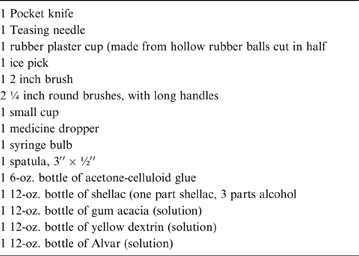
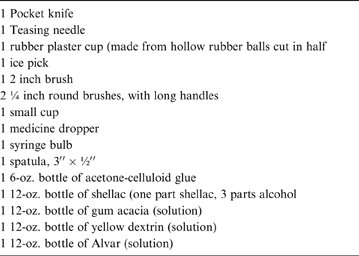
McAnulty's (Reference McAnulty and Evans1939) work comprised a section in a larger handbook for a very specific project, a Depression Era Works Progress Administration palaeontological survey of 219 of the 254 counties in the State of Texas. The majority of the manual is devoted to field work and collecting logistics. However, the enterprise employed an average of 38 preparators at a time between 1939 and 1941, and thousands of specimens were prepared during this period (McAnulty Reference McAnulty1941). Consequently, the scope of the operation presented challenges, especially relating to the amount of laboratory space required and the difficulty in training so many unskilled workers (McAnulty Reference McAnulty and Evans1939, p. 76). Tools and furnishing for the laboratories, including the physical spaces required to support so many preparators, were scaled to accommodate the tens of thousands of fossils collected by the end of the project in 1941. Each worker was issued a standardised tool kit to facilitate uniform results (Table 1), and for the first time, rudimentary laboratory records were required, that tied the worker to a specimen and accounted for labour expended (McAnulty Reference McAnulty and Evans1939).
Tools and supplies issued by the Works Progress Administration to each fossil preparator during the Texas Survey (McAnulty, Reference McAnulty and Evans1939, p. 75)
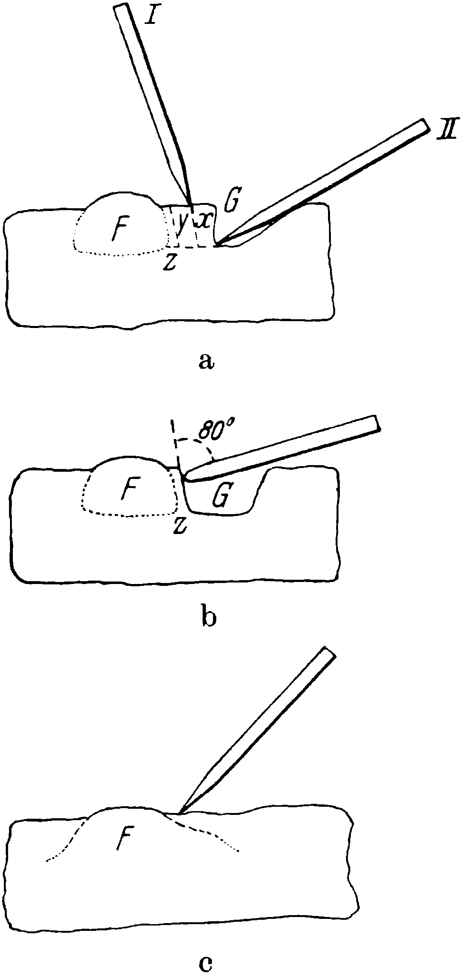
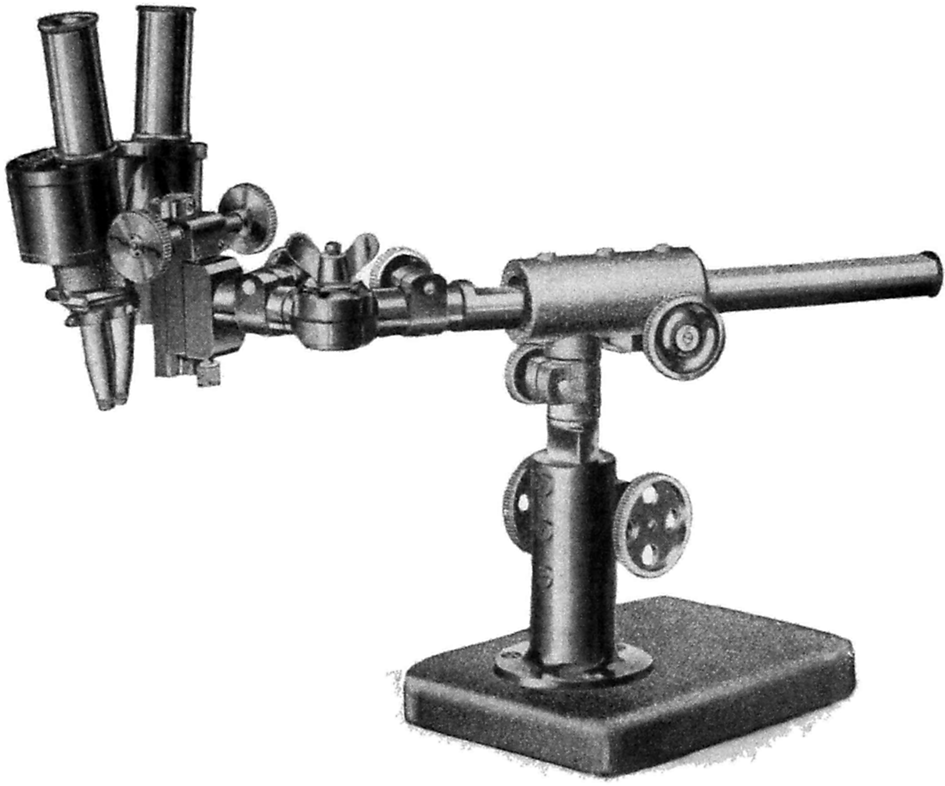
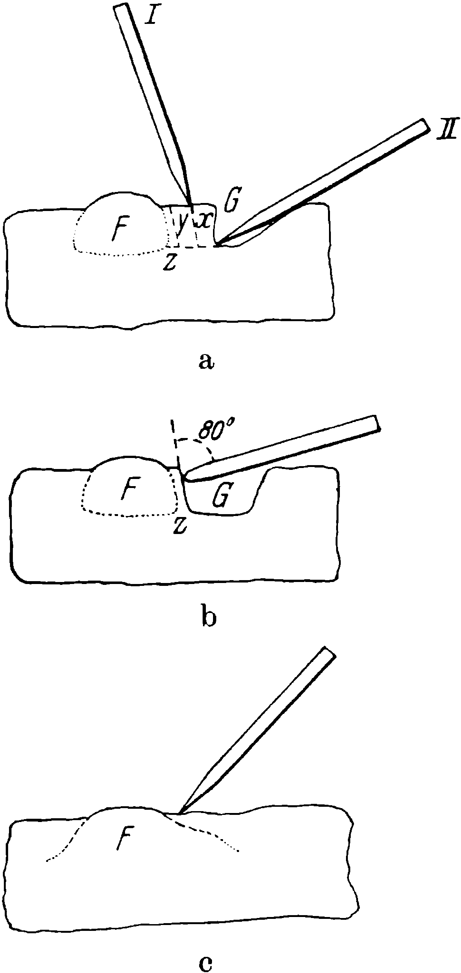
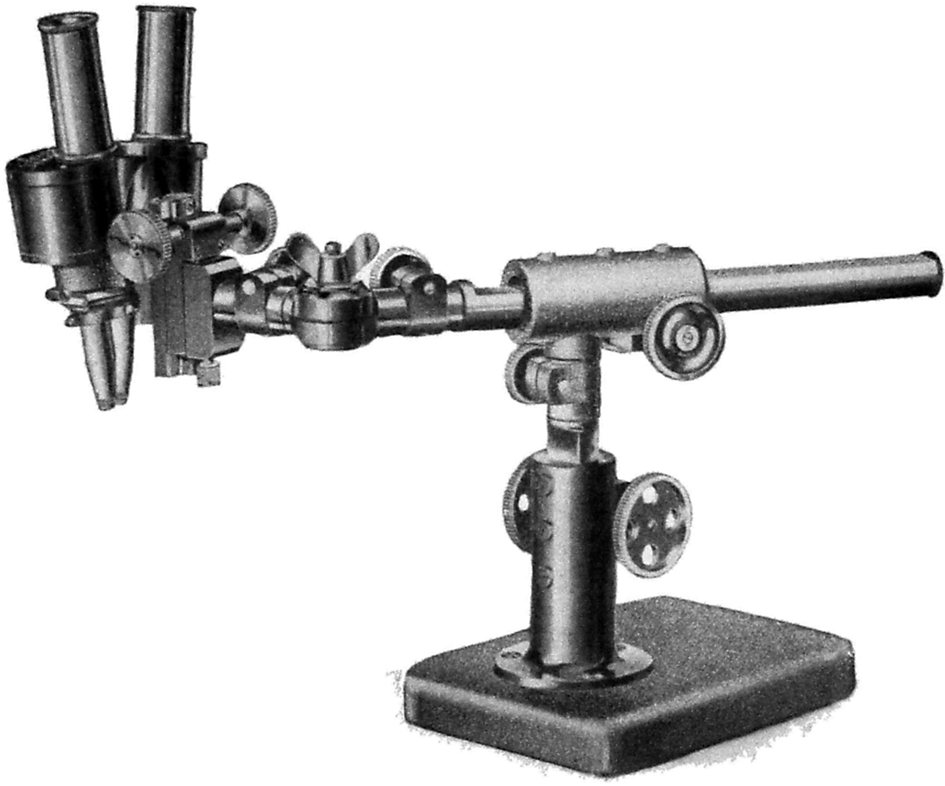
As there had not been extensive change in the basic techniques and tools since 1909, the majority of methods described in this interwar period were repeated from the works of Schuchert, Bather and Hermann. When existing techniques or equipment had been refined, or new ones innovated, they were described accordingly. This was especially true of chemicals, where the most change had taken place. For example, Camp & Hanna (Reference Camp and Hanna1937, p. 34) reported on the use of the synthetic resin Bakelite by previous authors (Case Reference Case1925; Swinton Reference Swinton1933) and provided instructions for application to both vertebrate and invertebrate fossils. Trends in chemical choices for adhesives and consolidants were beginning to shift further in favour of synthetic chemicals; this movement was far from complete, as shellac and plaster of Paris were still commonly used (e.g., Camp & Hanna Reference Camp and Hanna1937; McAnulty Reference McAnulty and Evans1939). There were instances of exacting guidance, as well. Seitz & Gothan (Reference Seitz and Gothan1928, p. 59) imparted explicit direction for the use of hammer and chisel to remove matrix from fossils (Fig. 6), these instructions established angles of approach and sequence of stroke with the tools with a specificity that have not been published elsewhere. Some pieces of equipment were of such importance that authors not only identified the type of tool, such as a “binocular microscope on extension arm” (Camp & Hanna Reference Camp and Hanna1937, p. 31), they also recommended particular brands, i.e. Zeiss or Leitz (Efremov & Kuzmin Reference Efremov and Kuzmin1931), and even specific models (Fig. 7), such as the Zeiss XB binocular microscope with boom stand (Seitz & Gothan Reference Seitz and Gothan1928, p. 108). The Zeiss XB was used in laboratories around the world for many decades after (e.g., Fig. 8).
A rare example of explicit instructions for the application of hammer and chisel to remove rock matrix from fossil specimens (from Seitz & Gothan, Reference Seitz and Gothan1928, p. 59).
An example of a stereomicroscope used in many palaeontology laboratories through the middle of the 20th Century, the Carl Zeiss XB (from Seitz & Gothan, Reference Seitz and Gothan1928, p. 108).
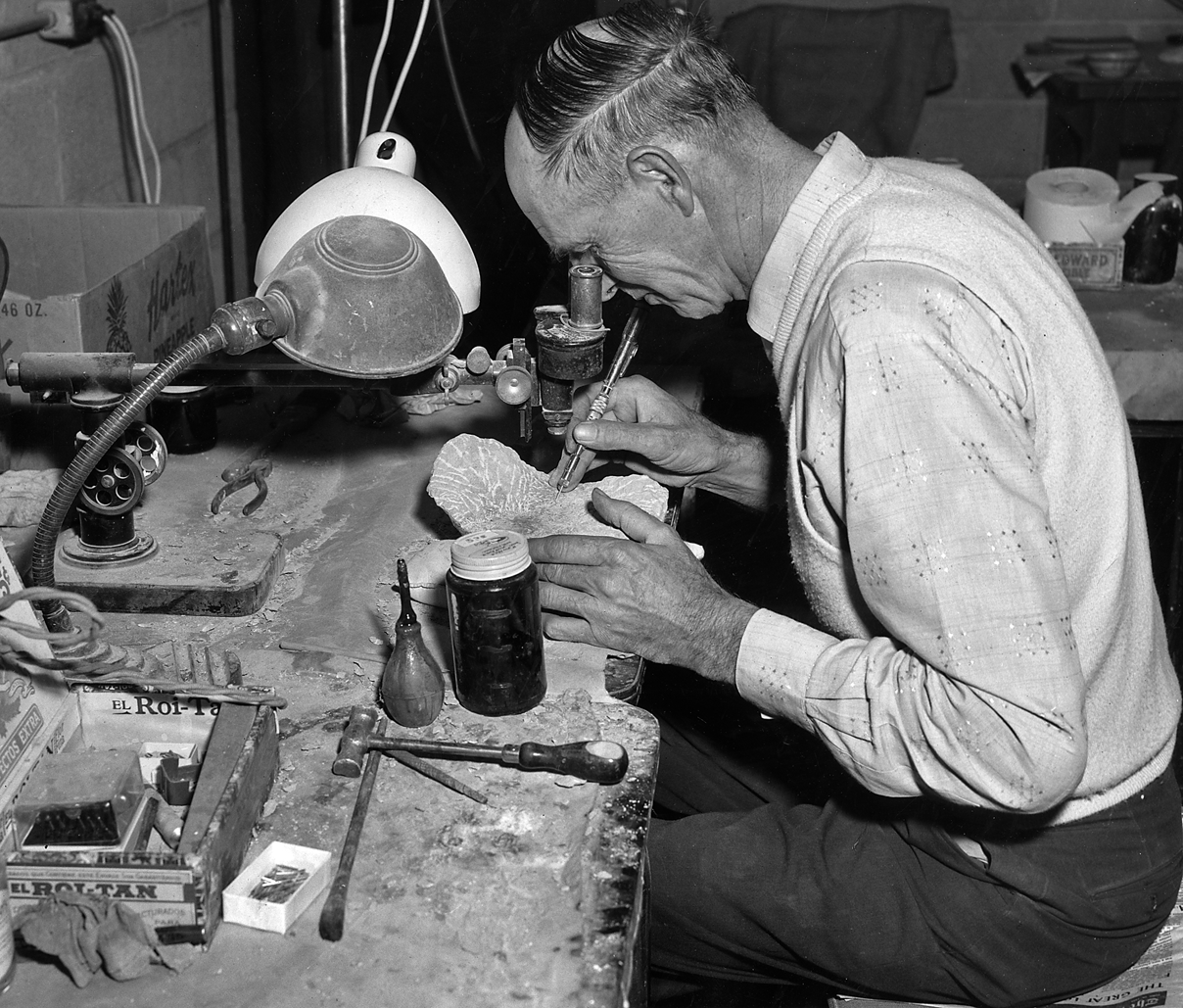
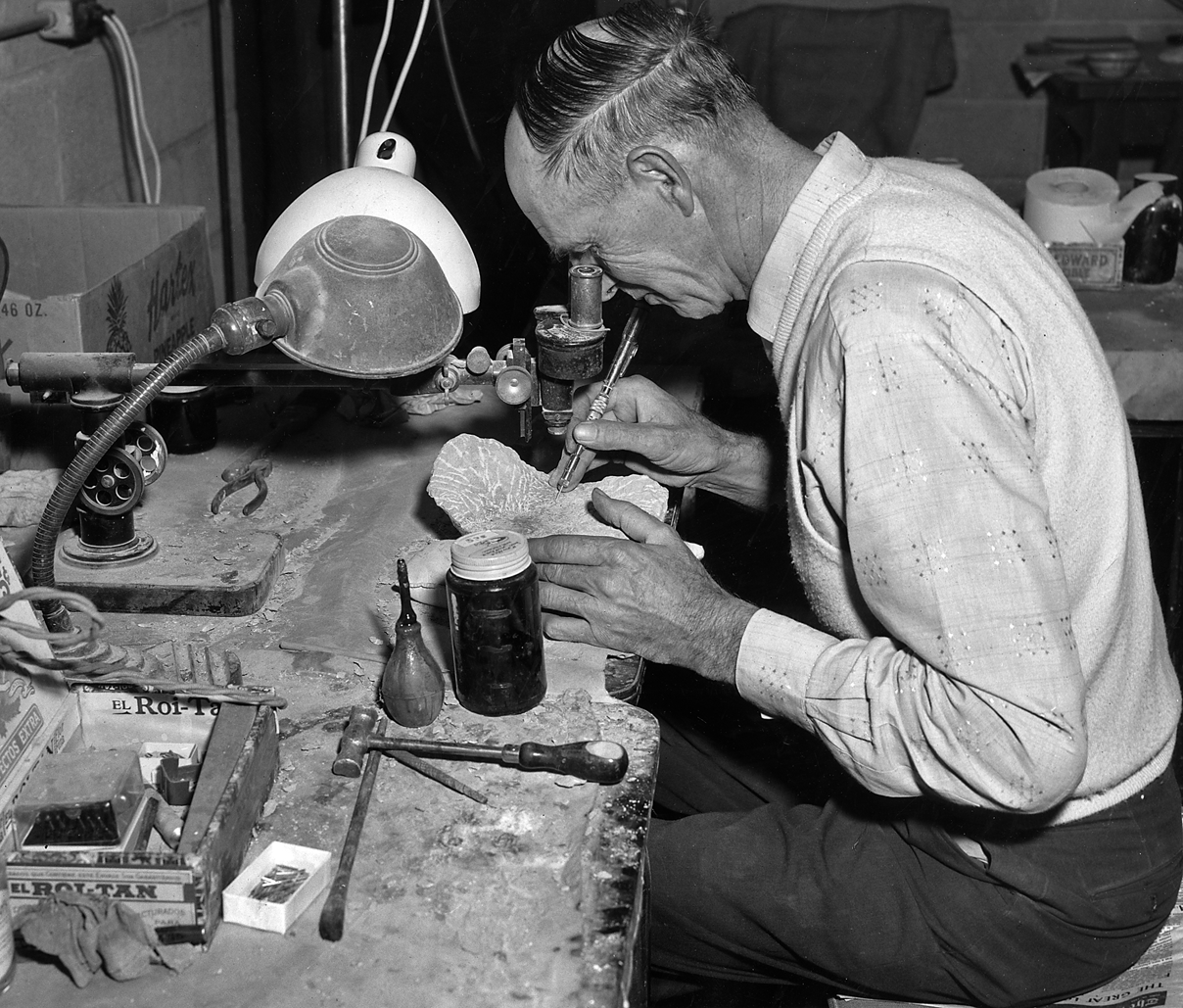
Lansing Craig, preparator at the University of Texas at Austin Vertebrate Paleontology Laboratory in the 1950s. Visible in this photo is a Zeiss XB stereoscopic microscope, a pneumatic airscribe, several types of adhesive, a hammer, chisel, brushes and other hand tools common to nearly every palaeontology laboratory.
Methods in Paleontology (Camp & Hanna Reference Camp and Hanna1937), the most widely known of these works today, represents the legacy of this period (Schuchert Reference Schuchert1938; Hildebrand Reference Hildebrand1968; Rixon Reference Rixon1976). Like the works of Hermann (Reference Hermann1908, Reference Hermann1909), Camp & Hanna (Reference Camp and Hanna1937) remained significant not necessarily for the novelty of the content within, but rather for the comprehensive synthesis of then-current palaeontological practices. Charles Camp's prominent positions as Chair of the University of California, Berkeley Department of Paleontology and Director of the University of California Museum of Paleontology also contributed to the longevity of this volume.
2.3. Post-World War II
Shortly after World War II, palaeontologists began consistently sharing refinements in established methodologies. This shift in publication reflects a more scientific approach to methods reporting. Papers appeared in publications catering to the museum professional, such as The Museums Journal and Curator.
The refinement of chemical preparation techniques through the mid-20th Century by H. A. Toombs and A. E. Rixon is a well-documented example of this progression. Innovation upon a method for using organic acids (e.g. acetic) to replace mineral acids (e.g. hydrochloric) in the preparation of fossils is recorded in articles spanning thirty years. Beginning with the development of the technique by Toombs (White Reference White1945, p. 216), constant experimentation with acids and synthetic resins (Toombs Reference Toombs1948; Rixon Reference Rixon1949, Reference Rixon1976; Toombs & Rixon Reference Toombs and Rixon1950, 1959) led to the establishment of a method that remains little altered today (e.g., Rutzky et al. Reference Rutzky, Elvers, Maisey, Kellner, Leiggi and May1994; Bergwall Reference Bergwall2001; Padilla et al. Reference Padilla, Páramo, Noè, Gómez Pérez and Luz Parra2010). Modification of transfer preparation practices first described by Holm (Reference Holm1890) uses plastics instead of less solvent-resistant natural resins such as gum dammar or Canada balsam. Toombs and Rixon thus provided a way for fossil specimens to be permanently embedded in a transparent plastic resin block to preserve anatomical relationships or delicate structures while undergoing both preparation and study.
Generally, the literature of the mid–late 20th and early 21st centuries followed this model of experimentation and reporting. As specialised knowledge grew, publications reflected concentrated examination of techniques (e.g., Kummel & Raup Reference Kummel and Raup1965; Feldman et al. Reference Feldman, Chapman and Hannibal1989; Leiggi & May Reference Leiggi and May1994; Brown et al. Reference Brown, Kane and Parker2009). Between 1958 and 1987, the journal Curator alone published over 30 papers on vertebrate palaeontology techniques (Nicholson Reference Nicholson1987). Only rarely did workers again attempt a handbook for preparation (Rixon Reference Rixon1976; Converse Jr. Reference Converse1984), and as present there is no comprehensive text of modern techniques and philosophies.
3. Discussion
3.1. The professionalisation of laboratory work
During the middle and late 1800s, the practice of science underwent a transformation; research was conducted more often by professional scientists rather than amateur “natural philosophers” (Orosz Reference Orosz1990). With greater frequency, this work took place in public natural history museums and university research centres. Historian Joel Orosz calls this shift “the American Compromise … the synthesis of popular education and professionalism” (Orosz Reference Orosz1990, p. 180). The popularity of enigmatic collections such as fossils fuelled public interest in museums and science, which in turn drove museums to bring in larger quantities of specimens to study and exhibit. The increased volume of newly backlogged material created a specialised role, that of fossil preparator. Division of labour meant that preparation once done by individual researchers (e.g., Cuvier, Mantell) was now handled by an increasingly diversified staff. The greater demand for large and impressive specimens propelled innovations towards efficiency, such as the progression from hand tools to power tools, which served to drive standards higher (Brinkman Reference Brinkman2010, pp. 220, 228). A similar reciprocal effect was generated by the interplay between laboratory techniques and research questions. As preparation efforts became more skilled, more anatomical information was available for study, which led researchers to request more detailed exposure (Whybrow Reference Whybrow1985, p. 5; Brinkman Reference Brinkman2010, p. 220). This trend mirrors the increased frequency of reporting other types of data, such as stratigraphic or locality information (Brinkman Reference Brinkman2010, p. 220). The advancement of laboratory techniques led to the advances in the sophistication of research lines.
3.2. Historic practices and modern conservation
Elements of all of the fundamental palaeontological practices and philosophies in use today were in development by the end of 1909 (Whybrow Reference Whybrow1985; Brinkman Reference Brinkman, Brown, Kane and Parker2009, 2010). Mechanical preparation was taking place via brush and pick, hammer and chisel, dental drill, sandblasting and pneumatic tools. Chemical preparation was underway using acids and caustic bases, including transfer preparation techniques. Internal structure of specimens could be determined by cutting cross-sections of bone and making histological slides (Mantell Reference Mantell1844), by using the newly discovered X-rays (Brühl Reference Brühl1896; Lemoine Reference Lemoine1896), or by serial grinding of bones (Sollas Reference Sollas1903). Protocols were initiated for handling and storage of specimens in a manner where they were protected from damage, and high priority was placed on the proper labelling and documentation of all locality and taxonomic information, as well as relationships of fragments of broken bone and associated skeletal material. Preparators were continuously experimenting with new materials, as they continue to do today.
The 21st-Century museum conservator will disagree with the suitability of methods employed at the end of the nineteenth and beginning of the twentieth centuries. In fact, there is abundant evidence that some of these techniques damage specimens (Evander Reference Evander2009) and obscure data (Efremov & Kuzmin Reference Efremov and Kuzmin1931; Camp & Hanna Reference Camp and Hanna1937; Wylie Reference Wylie, Brown, Kane and Parker2009). This includes applying non-reversible adhesives and consolidants to specimens, materials that fail mechanically or chemically or attract pests, or even drilling holes in bones for mounting or threading armatures. However, these early palaeontologists were using the technology and materials available to them to face the challenges of the day as well as possible (Matthew Reference Matthew1919; Stucker Reference Stucker1961). While complications from these processes must be mitigated, harsh judgment of the rationale for their decisions is inappropriate (Horie Reference Horie2010, p. 8).
As has been shown, objects and materials conservation was a priority for most early authorities on preparation. When disadvantages of materials or techniques were noted, use of these materials was discouraged. Countless suggestions would be well heeded today. For example, Hill's instruction to house specimens such that they do not crowd and damage one another is often ignored in most collections 126 years later (Fig. 9).
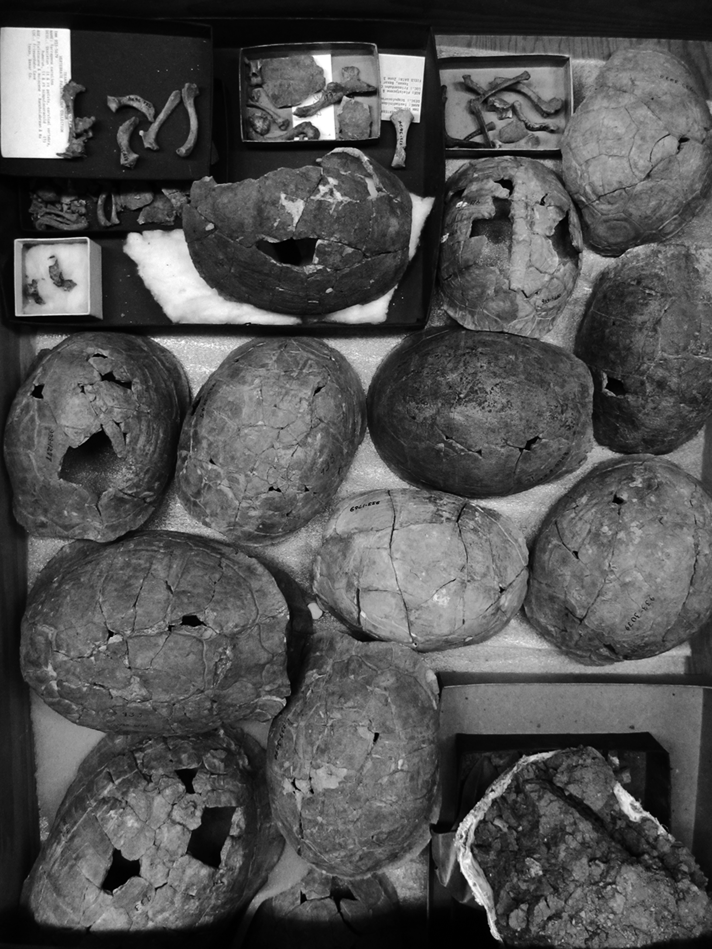
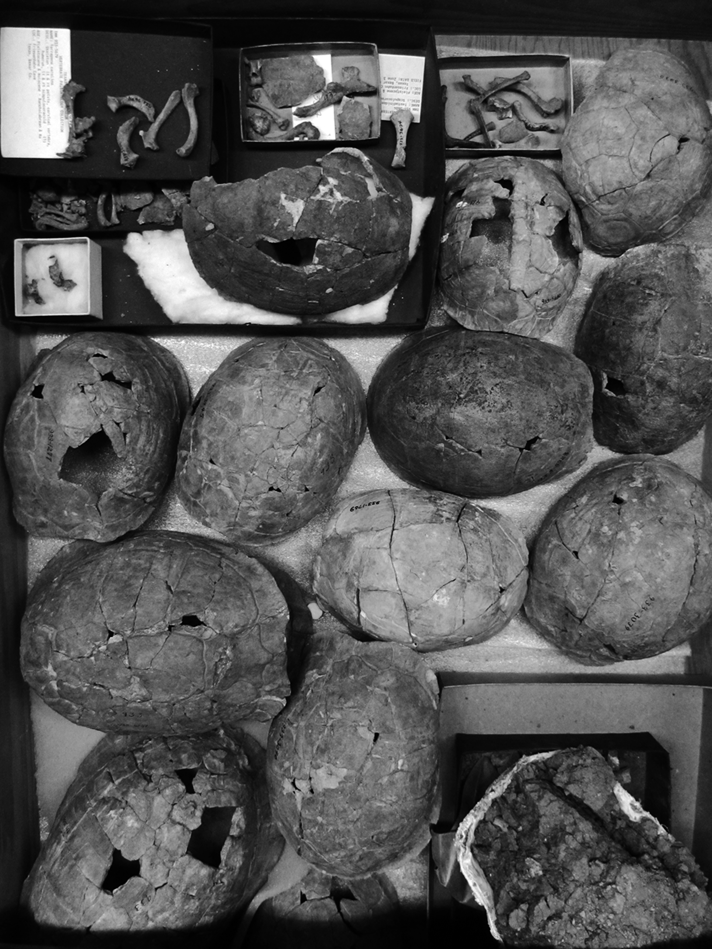
An overcrowded drawer in the collections of the Texas Memorial Museum, with specimens in contact with one another, with the walls of the drawer, and in trays stacked in multiple layers. This condition is common in collections around the world, despite the damage that regularly results from abrasion and shock.
Accepting past conservation issues as a necessary concession to preservation of the specimens at all, many points made in the historical literature remain applicable to the training of today's laboratory staff. Patience and skill are crucial components of success in the palaeontology laboratory (Hill Reference Hill1886; Schuchert Reference Schuchert1895; Hermann Reference Hermann1909; Camp & Hanna Reference Camp and Hanna1937; McAnulty Reference McAnulty and Evans1939). Many consider these traits to be inherent abilities that cannot be taught (e.g., Camp & Hanna Reference Camp and Hanna1937; Wylie Reference Wylie, Brown, Kane and Parker2009). Selectivity of preparation staff is key. Good judgment must be developed through experience, and the work of beginners must be carefully supervised; but even allowing this, “relatively few … ever qualify for the most exacting jobs” (Camp & Hanna Reference Camp and Hanna1937, p. 28). Camp observed that “a good technician will study and test the character of his specimen and its matrix before starting to work upon it,” considering the varied needs according to quality of fossil preservation, requirements for consolidation and evaluation of potential for additional data (e.g., soft tissue) which “might easily be destroyed by a preparator whose attention rested only on the bony skeleton” (Camp & Hanna Reference Camp and Hanna1937, p. 34).
3.3. Documentation
Another critical issue addressed in the literature that remains valid is that of documentation. As phrased by Camp, “loss of data accompanying a specimen almost entirely destroys its scientific value” (Camp & Hanna Reference Camp and Hanna1937, p. 55). Hermann (Reference Hermann1909) placed the responsibility for tracking both locality and accession information with laboratory staff, as well as that of maintaining a record of relative location of bones to one another within the matrix. McAnulty (Reference McAnulty and Evans1939) insisted upon creating laboratory record work sheets before work commenced on any specimen. This remains a fundamentally important practice that is inconsistently applied even today (Whybrow Reference Whybrow1985, p. 5; Fitzgerald Reference Fitzgerald1988, p. 39; Collins Reference Collins and Collins1995, p. 16).
There are few exemplar anatomical descriptions of fossil taxa that accurately report laboratory methods (e.g., Whybrow & Andrews Reference Whybrow and Andrews1978), and often methods have been ignored completely in anatomical or systematic publications (Whybrow Reference Whybrow1985, p. 5). Laboratory records are often incomplete or nonexistent (Fitzgerald Reference Fitzgerald1988). Therefore, the historic literature is often the only documentation of laboratory methods available to researchers. Some past publications (Hermann Reference Hermann1908, Reference Hermann1909; McAnulty Reference McAnulty and Evans1939) are thorough enough to constitute a general Laboratory Master Report (Appelbaum Reference Appelbaum2007, pp. 414–417), whereby researchers can reconstruct a probable treatment history. In this way, they can make decisions for research or conservation appropriate to the materials present in a specimen (e.g., Evander Reference Evander2009).
4. Conclusion
There are many lessons to be learned from seminal papers on palaeontology laboratory methods. Expectations of laboratory outcomes remain the same today; fossils should be prepared as accurately and expediently as possible, while preserving maximal information for future generations. This requires persistent attention to detail in the laboratory, great care in handling and materials selection, and diligence in recording data. Early authors maintain these points as universal themes. Like many others (e.g., Schuchert Reference Schuchert1895, p. 5), Hermann argued that “no standard rules … can be prescribed as to the manner of treating different bones” (Hermann Reference Hermann1909, p. 286). However, the consensus reached by these early palaeontologists on many of the fundamental principles of laboratory work indicates otherwise. Camp and Hanna asserted that “a good technician develops his own methods, but even the expert finds it necessary to refer to manuals” (Camp & Hanna Reference Camp and Hanna1937, p. 28).
The consequences of poor preparation and lack of understanding of laboratory processes were often highlighted by early paleontologists. In their own words, they present a warning to workers of today. “I therefore say, that a beginner in a paleontological laboratory never ought to be trusted with a delicate and rare specimen. In my experience, I have seen irremediable damage done on account of poor judgment” (Hermann Reference Hermann1909, p. 331). Charles Camp explains the ramifications of this damage from the specimen's perspective: “Every museum contains sad examples of hastily collected and poorly prepared fossil material. Sometimes these broken specimens are irreplaceable, and similar ones will perhaps never be found again” (Camp & Hanna Reference Camp and Hanna1937, p. ix). As Bather examines the cost of damage in terms of research, he notes that “it is also interesting to remark how many of the specimens that have been described and figured by writers of a past generation have been wrongly determined, or have yielded only half their secrets, owing to the lack of adequate cleaning” (Bather Reference Bather1908, p. 77). Efremov and Kuzmin summarise the exhortations of all of these authors succinctly, “every palaeontologist who is performing the hard work of studying the oldest Tetrapoda should be able to know the methods of preparation perfectly, so that his work would not pass by and become one of the many pseudo-scientific descriptions that stand in the way of simple and clear reasoning in the field. The quality of work that has been done improperly lowers the value of a scientific collection” (Efremov & Kuzmin Reference Efremov and Kuzmin1931, p. 2).
Palaeontology suffers through the marginalisation of laboratory methods. Resumption of the regular publication of new and refined laboratory techniques is perhaps the most important mechanism to inculcate current and future generations of palaeontologists with an understanding of both historic and current best practices. At minimum, each institution should establish a system for documenting their laboratory practices in general, and treatments of specimens specifically. A standard system of rules governing palaeontological methods is certainly possible, and just as certainly necessary. However, best practices cannot be advanced without an awareness of the development of techniques over time. Nor can best practices be perpetuated without a commitment on the part of palaeontologists, especially preparators, to stay abreast of current technical literature.
5. Acknowledgments
This paper is dedicated to Dr. Wann Langston, Jr. who entered the field of palaeontology around the time this literature review ends. Professor Langston's education in vertebrate anatomy was in large part a result of his childhood experiences reproducing in clay the animals that he saw in museums and zoos. By high school, he was preparing fossils and conducting fieldwork for University of Oklahoma professor Willis Stovall. He published his first paper in 1948 on field methods. As a graduate student at the University of California, Berkeley under Charles Camp, he supervised the preparation and reconstruction of what would become the holotype of Dilophosaurus weatherilli, and later in his career became well known for his expertise reconstructing and mounting extinct reptiles. His famous library hosts one of the most comprehensive reference sections covering laboratory and museology methods in all of palaeontology. I count myself as fortunate indeed to have had the opportunity to work with and learn from Dr. Langston in the laboratory; he was a true rarity in the science, being just as comfortable in the field as the research office, in the preparation lab as with students, and in the welding shop as the library.
Thanks to Amy Davidson, Sarah Werning, Andrea Thomer, William Parker, Ernest Lundelius and Wann Langston, Jr. for discussion. Chris Bell provided hard copies of several publications. Thanks to Amy Davidson for comments on an early draft. Innumerable thanks to Editor Vicki Hammond. Critical reviews by Paul Brinkman and Caitlin Wylie dramatically improved this manuscript.