





The global number of forcibly displaced people continues to rise due to ongoing conflicts and wars, with recent United Nations High Commissioner for Refugees (UNHCR) data highlighting this trend and revealing that a substantial proportion of those affected are children and young refugees. 1 In Europe, recent conflicts and wars have led to significant migration flows and ongoing humanitarian challenges. In 2023, 254 900 first-time asylum applicants in the EU were under 18 years of age, making up 24.3% of all applicants. 2
Displaced young people are frequently exposed to multiple adversities, including potentially traumatic experiences, precarious living conditions and separation from family and loved ones, all of which increase the risk of mental health problems. Reference Blackmore, Gray, Boyle, Fazel, Ranasinha and Fitzgerald3 Although many conflict-affected children and adolescents demonstrate considerable resilience, Reference Sleijpen, Mooren, Kleber and Boeije4 accumulating evidence indicates substantial vulnerability to psychological distress. Importantly, post-traumatic stress disorder (PTSD) stands out as a particularly prevalent concern in this population: a meta-analysis reported PTSD rates of 22.71% compared with 13.81% for depression and 15.77% for anxiety disorders among child and adolescent refugees. Reference Blackmore, Gray, Boyle, Fazel, Ranasinha and Fitzgerald3 Similarly, a systematic review found point prevalence estimates for PTSD among young refugees ranging from 19.0% to 52.7%, Reference Kien, Sommer, Faustmann, Gibson, Schneider and Krczal5 emphasising the considerable psychological burden faced by this group. Recent evidence indicates that trauma-focused psychological interventions may reduce PTSD symptoms among refugee and other forced-migrant children and adolescents, although findings should be interpreted with caution given the heterogeneity and generally low quality of the available evidence. Reference Velu, Kuiper, Schok, Sleijpen, de Roos and Mooren6 Despite the high prevalence rates and potentially effective interventions, young refugees often face significant barriers to accessing mental health care. In high-income countries such as the Netherlands, despite well-established services, access to mental health care for refugee youth remains limited. This is due to long waiting lists, language barriers, stigma, and low mental health literacy. Reference Satinsky, Fuhr, Woodward, Sondorp and Roberts7 Qualitative research among young refugees in the Netherlands similarly indicated that cultural differences, shame and mistrust of formal services further hinder help-seeking. Reference Alozkan Sever, Cuijpers, Dawson, Mittendorfer-Rutz, Akhtar and Bryant8
The World Health Organization (WHO) developed a series of scalable interventions aimed at addressing the mental health treatment gap, characterised by high demand and insufficient resources. 9 These scalable interventions are brief, structured, often delivered via task-shifting, transdiagnostic and potentially cost-effective. Reference Bryant10 One such intervention, with evidence of its effectiveness among affected populations, is Problem Management Plus (PM+). 11 Earlier studies proved its effectiveness in reducing symptoms of depression, anxiety, PTSD, functional impairment and self-identified problems both in low-resource. Reference Bryant, Schafer, Dawson, Anjuri, Mulili and Ndogoni12,Reference Rahman, Hamdani, Awan, Bryant, Dawson and Khan13 and high-income settings. Reference de Graaff, Cuijpers, Twisk, Kieft, Hunaidy and Elsawy14 A recent systematic review and meta-analysis of WHO’s scalable interventions (PM+ and Step-by-Step) reported small to moderate benefits for reducing psychological distress and improving mental health outcomes across diverse populations and settings. Reference Schäfer, Thomas, Lindner and Lieb15
PM+ is a transdiagnostic intervention targeting common mental disorders such as depression and anxiety, especially in populations exposed to adversity or trauma. Reference Dawson, Bryant, Harper, Kuowei Tay, Rahman and Schafer16 Delivered by trained non-specialist helpers, PM+ uses scalable strategies including stress management, problem-solving, behavioural activation and strengthening social support. Most PM+ trials showed that PM+ reduced symptoms of distress, including depression and anxiety, Reference Schäfer, Thomas, Lindner and Lieb15 whereas some PM+ trials also showed modest reductions in PTSD symptoms, Reference Bryant, Schafer, Dawson, Anjuri, Mulili and Ndogoni12–Reference de Graaff, Cuijpers, Twisk, Kieft, Hunaidy and Elsawy14 which have been found to diminish over the longer term (e.g. 12 months Reference de Graaff, Cuijpers, Elsawy, Hunaidy, Kieft and Gorgis17 ). The less pronounced effect on PTSD may be explained by the fact that PM+ does not include direct trauma-focused techniques, such as exposure. Trauma-focused interventions (e.g. trauma-focused cognitive behavioural therapy (TF-CBT)) Reference Cohen, Mannarino and Deblinger18 or narrative exposure therapy (NET) Reference Schauer, Neuner and Elbert19 show stronger efficacy for PTSD than non-trauma-focused interventions or control conditions. Reference Turrini, Purgato, Acarturk, Anttila, Au and Ballette20 However, these interventions are less scalable and not transdiagnostic due to their training demands and disorder-specific focus. Additionally, the effectiveness of interventions such as NET is variable, with some evidence reporting limited effects in refugee populations. Reference Turrini, Purgato, Acarturk, Anttila, Au and Ballette20
To address this, we developed a brief, scalable emotional processing module to integrate into Problem Management Plus (PM+) to enhance trauma symptom reduction. Reference Alozkan Sever, Cuijpers, Dawson, Mittendorfer-Rutz, Akhtar and Bryant8 The term ‘emotional processing’ (EP) was chosen deliberately, as the module involves briefly revisiting meaningful positive and distressing memories rather than prolonged trauma exposure, which was considered to be less feasible for brief, scalable interventions. The module was informed by emotional-processing theory, which proposes that persistent distress may be maintained by maladaptive emotional memory structures that can be modified through engagement with emotionally salient information. Reference Foa and Kozak21 Through structured imagery-based reflection on both positive and distressing memories, participants were encouraged to explore associated thoughts, emotions and personal meanings. These processes were hypothesised to complement the existing PM+ strategies and potentially contribute to greater improvements in emotional and trauma-related symptoms. Based on previous findings showing that generating positive future imagery can enhance positive affect and buffer the effects of stressful life events on depressive symptoms in adolescents, Reference Pile and Lau22 this module also includes future-oriented imagery exercises, such as envisioning one’s ‘good-enough self’ to foster hope, goal-directed thinking and coping resources. Given the disproportionate burden of PTSD among young refugees, this pilot feasibility randomised controlled trial (RCT) examined the feasibility and acceptability of PM+ with EP module (PM+EP) compared with PM+ without the EP module but with supportive counselling (PM+SC), and a care-as-usual (CAU) condition. As a second, exploratory aim, this study also explored the potential effectiveness of these interventions on psychological distress, depression, anxiety, PTSD severity, functional impairment and self-identified problems, to inform future, larger trials.
Method
Study setting and participants
The current study was embedded in the REMAIN project, coordinated by the Department of Clinical Neuroscience at Karolinska Institutet in Sweden, and conducted in the Netherlands, which is among the European countries receiving a significant number of asylum applications annually, predominantly from countries such as Syria, Eritrea, Yemen and Turkey. 23 In addition to these groups, the number of Ukrainian nationals residing in the Netherlands under the Temporary Protection Directive exceeded 120 000 by mid-2024, with nearly 40% of them under the age of 25. 24
The sample consisted of young people (aged 16–25) with a refugee background who spoke Arabic, Tigrinya or Ukrainian, residing in the Netherlands. Recruitment took place between January 2022 and December 2024 through social media, language courses, integration schools and organisations supporting refugee youth. Participants were eligible if they had elevated psychological distress (K10 > 15; Reference Kessler, Andrews, Colpe, Hiripi, Mroczek and Normand25 ) and impaired daily functioning (World Health Organization Disability Assessment Schedule 2.0 (WHODAS 2.0) > 16). 26 Exclusion criteria included acute medical conditions, imminent suicide risk (assessed using the PM+ manual suicidal thoughts interview), 11 acute protection needs, severe mental disorders or cognitive impairment (assessed using the PM+ observation checklist 11 ), current specialised psychological treatment, recent changes in psychotropic medication (within the past 2 months) or PTSD primarily related to severe or repeated childhood abuse identified at baseline.
Procedure
Ethical considerations
The authors assert that all procedures contributing to this work comply with the ethical standards of the relevant national and institutional committees on human experimentation and with the Helsinki Declaration of 1975, as revised in 2013. All procedures involving human subjects/patients were approved by the Medical Ethics Committee of Amsterdam UMC (Protocol ID: NL72668.029.20), and the study was embedded in the Amsterdam Public Health (APH) Institute’s Mental Health Program. Participants received oral and written study information and had 1 week to decide on participation. Those who consented provided written informed consent on paper until 3 August 2023 and digital consent thereafter via Qualtrics (web-based survey platform; Qualtrics International Inc., Provo, Utah, USA; available at https://www.qualtrics.com).
Study design, randomisation and assessments
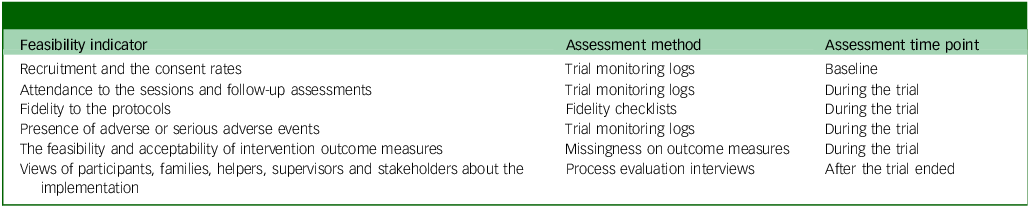
This mixed-methods study comprised a single-blind, pilot RCT and a qualitative process evaluation. The protocol is described in detail elsewhere. Reference Alozkan Sever, Cuijpers, Mittendorfer-Rutz, Bryant, Dawson and Holmes27 Baseline and follow-up assessments included two components: (a) a self-administered online questionnaire via Castor Electronic Data Capture (Castor EDC, 2023, web-based electronic data capture system; Castor B.V., Amsterdam, The Netherlands; available at www.castoredc.com) and (b) a structured interview conducted by a trained research assistant, which included clinician-administered symptom assessments, service use and safety monitoring when indicated. Following the baseline assessment, participants were randomised into one of the three study groups: PM+EP, PM+SC and CAU. Randomisation was performed using Castor EDC on a 1:1:1 basis, stratified by the participant’s language (Arabic, Tigrinya, Ukrainian), in random block sizes of 3, 6 and 9. A team member fluent in the participant’s language (but not involved in assessments) informed participants of their allocation by phone. When this was not possible, the matched helper (non-specialist PM+ counsellor) contacted participants to inform them of their group assignment. The primary outcome was the feasibility and acceptability of the delivery of PM+ and PM+EP. Primary outcome time point varied from baseline to post-trial evaluation, depending on the specific feasibility indicator (see Table 1). Secondary outcomes included depressive and anxiety symptoms, post-traumatic symptom severity and functioning and the time point for secondary outcomes was the 3-month assessment.
Primary outcome indicators: feasibility and acceptability assessment methods and time points

Table 1 Long description
A table with three columns and six rows, detailing feasibility indicators, assessment methods, and assessment time points for a study. The columns are labeled ‘Feasibility indicator’, ‘Assessment method’, and ‘Assessment time point’. Row 1: Recruitment and the consent rates, Trial monitoring logs, Baseline. Row 2: Attendance to the sessions & follow-up assessments, Trial monitoring logs, During the trial. Row 3: Fidelity to the protocols, Fidelity checklists, During the trial. Row 4: Presence of adverse or serious adverse events, Trial monitoring logs, During the trial. Row 5: The feasibility and acceptability of intervention outcome measures, Missingness on outcome measures, During the trial. Row 6: Views of participants, families, helpers, supervisors and stakeholders about the implementation, Process evaluation interviews, After the trial ended.
Intervention participants began sessions within 1 week of randomisation. Post-assessments were conducted 1 week after the final session (or 7 weeks post-baseline for CAU) and follow-up assessments occurred 3 months later. Blinded, trained, native-speaking research assistants conducted assessments via Microsoft Teams (2023; web-based video conferencing platform; Microsoft Corporation, Redmond, Washington, USA; available at https://www.microsoft.com/microsoft-teams), with reassignment as needed to maintain blinding. Participants received €10 gift cards at each assessment point.
Measures
Primary outcome: feasibility and acceptability measures
Feasibility was assessed via mixed models using predefined indicators: recruitment/consent (≥70%), adherence (session attendance and follow-up, ≥70%) and fidelity (helper checklists and rated audiotapes, ≥75%). Fidelity to both PM+EP and PM+SC protocols was monitored using helper-completed session checklists, ratings of audio-recorded sessions and regular supervision meetings in which supervisors reviewed adherence to the intervention protocols and provided corrective feedback where necessary. Safety was monitored through adverse event reporting with escalation protocols. Acceptability was explored through qualitative feedback from participants and helpers.
Secondary outcome measures
Psychological distress was measured at all assessment points using the 25-item Hopkins Symptom Checklist (HSCL-25), which also assessed anxiety (10 items) and depression (13 items). Reference Derogatis, Lipman, Rickels, Uhlenhuth and Covi28 Scores range from 1 to 4 (total range: 25–100), with higher scores indicating worse symptomatology. PTSD symptom severity was measured with Clinician-Administered PTSD Scale for DSM-5 (CAPS-5) Reference Weathers, Bovin, Lee, Sloan, Schnurr and Kaloupek29 at all assessment points. The CAPS-5 includes seven clusters (A–G) reflecting DSM-5 30 PTSD criteria. Each criterion is rated from 0 (absent) to 4 (extreme/incapacitating). Total symptom severity (0–80) is calculated by summing the severity scores for items 1 to 20. Psychological functioning was assessed with WHODAS 2.0 26 (range 12–60; at screening, post-intervention and follow-up assessments). Self-identified problems were measured using Psychological Outcome Profiles (PSYCHLOPS) Reference Ashworth, Shepherd, Christey, Matthews, Wright and Parmentier31 (range 0–20) at all assessment points.
Other measures
Sociodemographic data collected during screening included gender, age, living situation, education, employment, duration of displacement, unaccompanied status and legal status in the Netherlands. Trauma exposure was assessed using the 27-item Checklist of Traumatic Events, scored as yes/no. Reference Schick, Zumwald, Knöpfli, Nickerson, Bryant and Schnyder32 Social support was measured with a single-item question on bonding social capital from the Stockholm Public Health Cohort, categorised as ‘high’ or ‘low’. Reference Johnson, Rostila, Svensson and Engström33 Post-migration challenges were assessed with the Post-Migration Living Difficulties Checklist (PMLD), which includes 23 items rated from 0 to 4; scores ≥3 were counted as difficulties and summed. Reference Silove, Sinnerbrink, Field, Manicavasagar and Steel34 Healthcare use was recorded using a modified Client Service Receipt Inventory (CSRI), capturing service contacts and psychotropic medication use. Reference Beecham and Knapp35 The Checklist of Traumatic Events Reference Schick, Zumwald, Knöpfli, Nickerson, Bryant and Schnyder32 was administered at baseline and follow-up, while all other measures were assessed at every time point.
Sociodemographic information, CAPS-5, PSYCHLOPS and the CSRI were collected during interviews with trained assessors, whereas all other measures were completed by participants via self-administered questionnaires.
Treatment arms
For this study, the generic PM+ protocol Reference Dawson, Bryant, Harper, Kuowei Tay, Rahman and Schafer16 was adapted for refugee youth living in the Netherlands. Details of the adaptation process are reported elsewhere. Reference Alozkan Sever, Cuijpers, Dawson, Mittendorfer-Rutz, Akhtar and Bryant8 The adaptation involved qualitative work with young refugees, key community members, professionals and policymakers (free-list interviews n = 33; key-informant interviews n = 24; focus groups n = 11) and expert review (n = 14) of the new emotional-processing module. As a result, the version used in the trial consisted of six sessions of 75 min each, delivered either face-to-face at Vrije Universiteit Amsterdam or online via Microsoft Teams, with adaptations including age- and culture-appropriate language, relevant refugee experiences, updated illustrations and integration of a module targeting distressing memories. In the PM+EP arm, participants received six weekly sessions covering stress management, problem-solving, behavioural activation, strengthening social support and relapse prevention. Sessions 3–5 included an EP module, which was developed to introduce a brief, scalable, memory-focused component into PM+. During these sessions, participants were guided to revisit two positive and one distressing autobiographical memory using a puzzle metaphor, generate detailed mental images of these experiences, explore associated thoughts, emotions and personal meanings, and rate emotional intensity before and after the exercise. The aim was to promote engagement with emotionally salient memories and facilitate their integration in a structured format that could be delivered by trained non-specialist helpers. In session 5, participants were invited to imagine their ‘good-enough self’ 5 years from now and explore what life might look like at that point. This future-oriented reflection was designed to help integrate emotional experiences related to past events and to foster a sense of hope and personal agency. Reference Alozkan Sever, Cuijpers, Dawson, Mittendorfer-Rutz, Akhtar and Bryant8
In the PM+SC arm, participants received six weekly sessions, with sessions 3–5 replaced by non-directive supportive counselling according to a written protocol developed for the study. This condition was selected as an active comparator for methodological reasons. Specifically, it allowed both intervention arms to be matched on treatment duration, helper contact, attention and expectancy effects, thereby enabling a more direct evaluation of the potential added value of the EP module. The supportive counselling sessions were therefore designed to provide empathic listening and support on participants’ current everyday concerns while avoiding the structured memory-focused exercises and emotional-processing techniques that characterised the EP module. If participants attempted to focus on earlier traumatic experiences, helpers redirected the conversation towards current daily challenges. The adjustment ensured that both intervention arms required the same amount of time while differing in their intended therapeutic mechanism, thereby facilitating assessment of the specific contribution of the EP component beyond the established PM+ intervention.
Participants in the CAU condition did not receive a study-specific intervention but continued to have access to existing health and mental health services in the Netherlands and were advised to consult their general practitioner if needed. After completing follow-up assessments, CAU participants were offered PM+. Participants in both intervention arms could also access regular care services as needed.
Data analysis
Qualitative data analysis
Semi-structured interviews were conducted in participants’ native language (Arabic or Ukrainian), Dutch or English. All interviews were audio-recorded, transcribed verbatim and translated into English when necessary. Data were analysed in ATLAS.ti (version 23 for macOS; ATLAS.ti Scientific Software Development GmbH, Berlin, Germany; available at https://atlasti.com) following thematic analysis, Reference Braun and Clarke36 focusing on feasibility, facilitators and barriers. Transcripts were closely read for familiarisation, coded inductively and deductively, refined into categories and organised into overarching themes.
Quantitative data analysis
Given the pilot nature of this study, no power calculations were carried out. All quantitative analyses were performed using RStudio (version 2022.12.0+353 for macOS; Posit Software, PBC, Boston, Massachusetts, USA; available at https://posit.co). Baseline differences between conditions were assessed using one-way analysis of variance (ANOVA) for continuous variables meeting normality and homogeneity assumptions, Kruskal–Wallis tests for those violating assumptions and chi-squared tests for categorical variables. Linear mixed models (LMMs) were used on the intention-to-treat sample to estimate intervention effects at 1-week and 3-month follow-ups, following Twisk et al’s Reference Twisk, Rijnhart, Hoekstra, Schuster, ter Wee and Heymans37 recommendations. Models included fixed effects for time (TIME_T2, TIME_T3) and condition-specific interactions (e.g. PM + SC_post, PM + EP_followup), enabling comparisons across intervention arms. A random intercept for participant ID accounted for within-subject variability. The condition main effect was excluded, allowing the intercept to reflect baseline scores and adjust for baseline differences. Interaction term coefficients represented estimated mean differences between conditions. This approach was applied to the total distress scores (HSCL-25 total) and other outcomes: depression, anxiety, PTSD (CAPS-5), functional impairment (WHODAS 2.0) and self-identified problems (PSYCHLOPS).
Effect sizes (Hedges’ g) were calculated at each follow-up assessment as the difference between baseline-adjusted estimated marginal means for each pairwise group comparison, divided by the pooled standard deviation at that assessment. Hedges’ g was selected because it provides a small-sample correction to Cohen’s d. Reference Hedges and Olkin38 As the trial focused on feasibility and acceptability, it was not powered for statistical significance. Effect sizes were reported to guide future research. Sensitivity analyses included 3-month completers. A p-value < 0.05 indicated statistical significance.
Results
Recruitment and consent rates
Between January 2022 and December 2024, 175 individuals requested study information. Of these, 39 declined to participate, 5 were ineligible (due to age or location) and 58 were unreachable, leaving 73 assessed for eligibility. The first participant was included on 18 January 2022 and the last one on 1 December 2024. Recruitment stopped when we reached 52 participants (58% of the target sample) due to the end of the funding period, leaving enough time to complete all the remaining sessions and follow-up assessments of the included participants. The final follow-up assessment took place in July 2025. The study flow, following the CONSORT guidelines, is depicted in Fig. 1.
CONSORT flow diagram. WHODAS, World Health Organization Disability Assessment Schedule; PM+, Problem Management Plus; EP, emotional processing; SC, supportive counselling; CAU, care as usual.

Study population and baseline characteristics
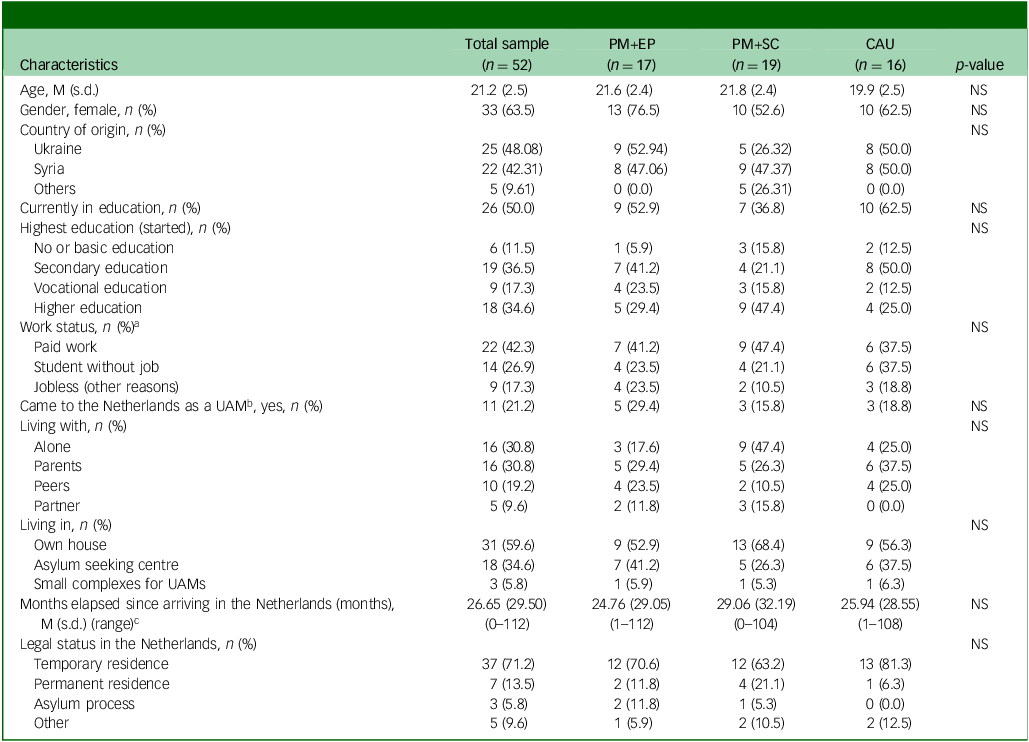
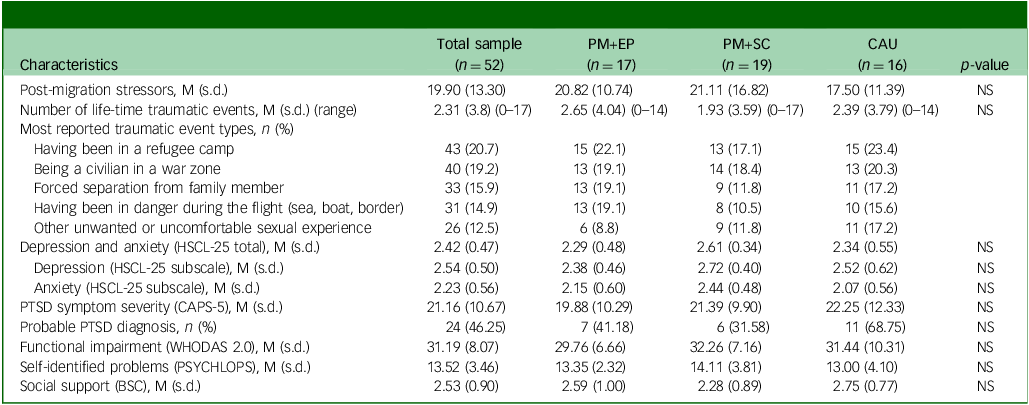
A total of 52 young refugees participated (Mage = 21.20, s.d.age = 2.50; 63.5% female) in the study. Participants were allocated to one of the three conditions: PM+EP (n = 17), PM+SC (n = 19) or CAU (n = 15). Nearly half of the participants (48.1%, n = 25) were from Ukraine, 42.3% (n = 22) from Syria and the remaining five participants (9.6%) from other countries, including Jordan, Somalia and Eritrea. Eleven participants (21.2%) had arrived in the Netherlands as unaccompanied minors. Demographic and baseline characteristics are summarised in Tables 2 and 3. No significant differences were observed between the three groups in terms of baseline characteristics.
Demographic characteristics

Table 2 Long description
The table presents demographic characteristics of 52 young refugees divided into three groups: PM+EP (n = 17), PM+SC (n = 19), and CAU (n = 16). The table has 12 rows and 6 columns, including headers. Row 1: Age, M (s.d), Total sample 21.2 (2.5), PM+EP 21.6 (2.4), PM+SC 21.8 (2.4), CAU 19.9 (2.5). Row 2: Sex, female, n (%), Total sample 33 (63.5), PM+EP 13 (76.5), PM+SC 10 (52.6), CAU 10 (62.5). Row 3: Country of origin, n (%), Ukraine 25 (48.1), Syria 22 (42.3), Others 5 (9.6), Total sample, PM+EP, PM+SC, CAU. Row 4: Currently in education, n (%), Total sample 26 (50), PM+EP 9 (52.9), PM+SC 7 (36.8), CAU 10 (62.5). Row 5: Highest education (started), n (%), No or basic education 6 (11.5), Secondary education 19 (36.5), Vocational education 9 (17.3), Higher education 18 (34.6), Total sample, PM+EP, PM+SC, CAU. Row 6: Work status, n (%), Paid work 22 (42.3), Student without job 14 (26.9), Jobless (other reasons) 9 (17.3), Total sample, PM+EP, PM+SC, CAU. Row 7: Came to the Netherlands as a UAM, yes, n (%), Total sample 11 (21.2), PM+EP 5 (29.4), PM+SC 3 (15.8), CAU 3 (18.8). Row 8: Living with, n (%), Alone 16 (30.8), Parents 16 (30.8), Peers 10 (19.2), Partner 5 (9.6), Total sample, PM+EP, PM+SC, CAU. Row 9: Living in, n (%), Own house 31 (59.6), Asylum seeking centre 18 (34.6), Small complexes for UAMs 3 (5.8), Total sample, PM+EP, PM+SC, CAU. Row 10: Months elapsed since arriving in the Netherlands (months), M (s.d.) (range), Total sample 26.65 (29.50) (0–112), PM+EP 24.76 (29.05) (1–112), PM+SC 29.06 (32.19) (0–104), CAU 25.94 (28.55) (1–108). Row 11: Legal status in the Netherlands, Temporary residence 37 (71.2), Permanent residence 7 (13.5), Asylum process 3 (5.8), Other 5 (9.6), Total sample, PM+EP, PM+SC, CAU. The table also includes p-values indicating no significant differences between the groups.
PM+, Problem Management Plus; EP, emotional processing; SC, supportive counselling; CAU, care as usual; NS, non-significant.
a. Data missing for one PM+EP participant, valid per cent reported.
b. UAM, unaccompanied minor.
c. Data missing for one PM+SC participant.
Baseline characteristics

Table 3 Long description
The table presents baseline characteristics of 52 young refugees divided into three groups: PM+EP (n = 17), PM+SC (n = 19), and CAU (n = 16). It includes data on post-migration stressors, number of lifetime traumatic events, types of traumatic events, depression and anxiety scores, PTSD symptom severity, probable PTSD diagnosis, functional impairment, and self-identified problems. Row 1: Post-migration stressors, M (s.d.): Total sample 19.90 (13.30), PM+EP 20.82 (10.74), PM+SC 21.11 (16.82), CAU 17.50 (11.39). Row 2: Number of life-time traumatic events, M (s.d.) (range): Total sample 2.31 (3.8) (0-17), PM+EP 2.65 (4.04) (0-14), PM+SC 1.93 (3.59) (0-17), CAU 2.39 (3.79) (0-14). Row 3: Most reported traumatic event types, n (%): Having been in a refugee camp: Total sample 43 (20.7), PM+EP 15 (22.1), PM+SC 13 (17.1), CAU 15 (23.4). Row 4: Being a civilian in a war zone: Total sample 40 (19.2), PM+EP 13 (19.1), PM+SC 14 (18.4), CAU 13 (20.3). Row 5: Forced separation from family member: Total sample 33 (15.9), PM+EP 13 (19.1), PM+SC 11 (14.7), CAU 9 (14.1). Row 6: Having been in danger during the flight: Total sample 31 (14.9), PM+EP 13 (19.1), PM+SC 10 (13.2), CAU 8 (12.5). Row 7: Other unwanted or uncomfortable sexual experience: Total sample 26 (12.5), PM+EP 6 (8.8), PM+SC 9 (11.8), CAU 11 (17.2). Row 8: Depression and anxiety (HSCL-25 total), M (s.d.): Total sample 2.42 (0.47), PM+EP 2.29 (0.48), PM+SC 2.61 (0.34), CAU 2.34 (0.55). Row 9: Depression (HSCL-25 subscale), M (s.d.): Total sample 2.54 (0.50), PM+EP 2.38 (0.46), PM+SC 2.72 (0.48), CAU 2.52 (0.62). Row 10: Anxiety (HSCL-25 subscale), M (s.d.): Total sample 2.23 (0.56), PM+EP 2.15 (0.60), PM+SC 2.44 (0.48), CAU 2.07 (0.56). Row 11: PTSD symptom severity (CAPS-5), M (s.d.): Total sample 21.16 (10.67), PM+EP 19.88 (10.29), PM+SC 21.93 (9.90), CAU 22.25 (12.33). Row 12: Probable PTSD diagnosis, n (%): Total sample 24 (46.2), PM+EP 7 (41.18), PM+SC 6 (31.58), CAU 11 (68.75). Row 13: Functional impairment (WHOAS 2.0), M (s.d.): Total sample 31.19 (8.07), PM+EP 29.76 (6.66), PM+SC 32.26 (7.16), CAU 31.44 (10.31). Row 14: Self-identified problems (PSYCHLOPS), M (s.d.): Total sample 13.52 (3.46), PM+EP 13.35 (2.32), PM+SC 14.11 (3.81), CAU 13.00 (4.10). Row 15: Social support (OSS-3), M (s.d.): Total sample 2.53 (0.90), PM+EP 2.59 (1.00), PM+SC 2.28 (0.89), CAU 2.75 (0.77).
HSCL-25, Hopkins Symptom Checklist-25; CAPS-5, Clinician-Administered PTSD Scale for DSM-5; PTSD, post-traumatic stress disorder; WHODAS 2.0, World Health Organization Disability Assessment Schedule 2.0; PSYCHLOPS, Psychological Outcome Profiles; BSC, brief supportive counselling; PM+, Problem Management Plus; EP, emotional processing; SC, supportive counselling; CAU, care as usual; NS, non-significant.
Group allocation and blinding
Blinding was compromised in only three cases during the trial. In these instances, subsequent follow-up assessments were conducted by a different assessor who remained blinded to the participant’s allocation. The main researcher (C.A.S.) was responsible for matching participants in the intervention conditions with helpers. Matching was based on availability, session load and, where possible, participant preferences (e.g. helper’s gender or preferred mode of delivery).
Attendance at sessions and follow-up assessments
In the PM+EP group, 16 of 17 participants (94.1%) completed all 6 sessions, while 1 participant attended a single session before withdrawing. In the PM+SC group, 14 of 19 participants (73.7%) completed all sessions. Of the remaining participants, three never initiated the intervention, one attended one session and was subsequently lost to follow-up and one attended two sessions before withdrawing.
The assessments took around 1.5 to 2 h. At the 3-month follow-up, assessments were completed by 38 participants (73.1%). Reported reasons for non-completion were being unreachable (n = 11) and voluntary withdrawal (n = 3). Additionally, one participant declined the interview component of the assessment but completed the online questionnaire due to ‘lack of time’.
Fidelity to the protocols
Of participants in the PM+ groups, 36 (77.7%) consented to session recording, with 33 sessions recorded. Reasons for fewer recordings included withdrawal of consent (n = 4), technical/logistical issues (n = 10) and dropouts (n = 5). About one-third of recordings (n = 12) were reviewed for fidelity, showing 82.6% of components delivered in PM+EP and 76.6% in PM+SC. Helpers’ checklists (n = 134) indicated 93.1% fidelity for PM+EP and 95.7% for PM+SC.
Presence of adverse or serious adverse events
During the trial, one serious adverse event was reported to the Research Ethics Review Committee, which was unrelated to the interventions delivered (participant was in the control arm).
Qualitative evaluation
Semi-structured interviews were conducted with six participants who received either PM+EP or PM+SC, two family members, five helpers, two supervisors and three stakeholders involved in or familiar with PM+. Interviews explored perceptions of effectiveness, feasibility, acceptability, implementation barriers and scale-up potential. Key quotes are in Supplementary Table 1.
Feasibility and acceptability
Participants and family members found PM+ acceptable and helpful, especially its practical strategies such as breathing and problem-solving. Improvements were noted in emotional expression (Q1.8) and daily functioning (Q1.18). As one family member noted, ‘I felt that these two years, she started talking about these things more quickly. For example, I’m not very happy today. It’s a sentence that we didn’t hear before.’ Similarly, a participant described how applying the skills helped break down challenges: ‘When you understand why, the main reason for the problem, the problem starts to be solved step by step instead of looking at it as a big problem.’ However, participants also suggested that the intervention could include more practical exercises and less theory (Q1.20), while family members and stakeholders noted that the six-session format was relatively brief (Q1.21; Q3.5). Although helpers viewed the programme as structured and feasible, some felt that certain components were repetitive or overly simplistic for participants who were already familiar with psychological concepts (Q2.3; Q2.12; Q2.16).
Facilitators and challenges of delivery
Delivery in the participants’ own language (Q1.27, Q1.29) and with cultural sensitivity (Q1.28) were seen as the main facilitators for delivery. One participant mentioned, ‘I want to point out an important matter that it was in my mother tongue, meaning I could talk about anything I wanted and feel it in the right way, for example.’ Helpers also emphasised the importance of cultural similarity in building trust and facilitating communication. One helper noted, ‘…especially when they feel like, okay, the other person understands my language, it’s a chance… the same culture, speak my language… so it’s the chance also to vent out.’ Supervision played a key role in supporting helpers. Reported challenges were participants’ busy schedules, unstable living conditions, travel distance and limited privacy or connectivity for online sessions. Despite these barriers, helpers reported that the adherence was generally good (Q2.21, Q2.22).
Views on helpers
Participants described helpers as competent, supportive and empathetic, and supervisors praised their motivation and commitment. The shared cultural or linguistic background was seen as enhancing trust, though stakeholders emphasised the need to maintain boundaries (Q3.8) and ensure referral options for more complex cases (Q3.7).
Views on scalability
Supervisors and stakeholders viewed PM+ as a low-threshold, fast and culturally sensitive intervention with the potential to reduce pressure on mental health services. While they noted the short duration as a limitation, they supported embedding PM+ within schools, municipalities and health insurance systems to enhance accessibility and sustainability.
Clinical outcomes
Missing data were minimal (0.0–3.8% across outcomes) and handled with single imputation at the item level, while unit non-response was addressed within the LMMs. We assumed data were missing at random. Reference Little and Rubin39
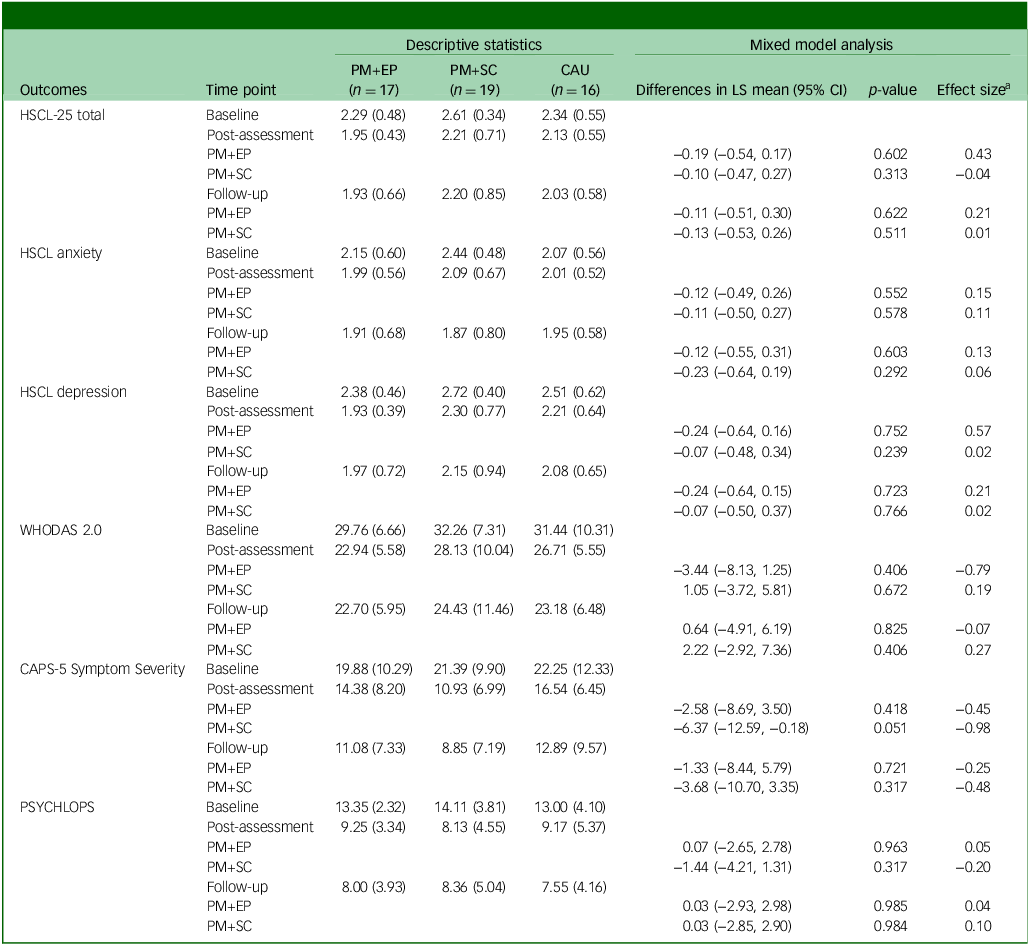
LMMs showed that HSCL-25 total scores decreased from baseline to follow-up across all groups (Table 4). However, no significant between-group differences were observed at post-assessment or follow-up. For anxiety and depressive symptoms, mean scores improved from baseline to post-assessment and remained similar at follow-up. Again, no significant differences were found between either PM+ conditions and CAU at any time point.
Summary statistics and results from mixed model analysis of primary and secondary outcomes

Table 4 Long description
A table with descriptive statistics and mixed model analysis of primary and secondary outcomes. The table has 6 rows and 10 columns. Column headers are Outcomes, Time point, PM+EP, PM+SC, CAU, Differences in LS mean (95% CI), p-value, and Effect size. Row labels include HSCL-25 total, HSCL-25 anxiety, HSCL-25 depression, WHODAS 2.0, CAPS-5 Symptom Severity, and PSYCHLOPS. Each row provides data for baseline, post-assessment, PM+EP, PM+SC, and follow-up. The table shows mean values and standard deviations for each outcome and time point, along with differences in least squares mean, p-values, and effect sizes for the mixed model analysis.
HSCL-25, Hopkins Symptom Checklist-25; PM+, Problem Management Plus; EP, emotional processing; SC, supportive counselling; CAU, care as usual; LS, least squares; WHODAS 2.0, World Health Organization Disability Assessment Schedule 2.0; CAPS-5, Clinician-Administered PTSD Scale for DSM-5; PTSD, post-traumatic stress disorder; PSYCHLOPS, Psychological Outcome Profiles.
a. Effect sizes are reported as Hedges’ g and represent comparisons of each intervention group (PM+EP or PM+SC) with the control group (CAU). Negative values indicate lower outcome scores in the intervention group relative to CAU, whereas positive values indicate higher outcome scores relative to CAU. For all outcome measures, lower scores indicate more favourable outcomes.
Post-traumatic stress symptom severity (CAPS-5) decreased across all groups, with no differences in reduction between groups. No significant differences were observed between groups at follow-up. Functional impairment (WHODAS) and self-identified problems (PSYCHLOPS) also decreased over time in all groups, with no significant between-group differences at post-assessment or follow-up.
Although no between-group differences reached statistical significance, observed effect size estimates provided useful information for planning future trials. For post-assessment outcomes, effect sizes ranged from small to large (Hedges’ g = −0.98 to 0.19), with the largest effect size estimates observed for functional impairment (WHODAS; PM+EP versus CAU, g = −0.79) and post-traumatic stress symptoms (CAPS-5; PM+SC versus CAU, g = −0.98). Effect size estimates for depressive symptoms (HSCL-25 depression subscale) were moderate for PM+EP versus CAU (g = −0.57), whereas effect sizes for anxiety symptoms (HSCL-25 anxiety subscale) and self-identified problems (PSYCHOLOPS) were generally small. At follow-up, effect size estimates generally decreased, although small to moderate effects remained for some outcomes (e.g. WHODAS, PM+SC versus CAU, g = 0.27) (see Table 4 for details).
Completer analyses produced results consistent with the main ITT analyses (see Supplementary Table 2). Exploratory subgroup analyses in both the ITT and completer samples revealed a significant interaction between baseline probable depression and the PM+EP intervention at post-assessment (ITT: b = −0.79, s.e. = 0.38, t(104.65) = −2.08, p = 0.040). Participants with probable depression at baseline showed greater symptom reductions in the PM+EP group compared with CAU. No other subgroup effects were observed.
Discussion
This mixed-methods pilot RCT and qualitative evaluation examined the feasibility and acceptability of PM+ with a newly developed brief emotional processing module among refugee youth in the Netherlands. Recruitment, randomisation and delivery procedures were feasible, with high attendance, good fidelity and minimal missing data. Participants, helpers and stakeholders found the interventions acceptable, practical and culturally appropriate, despite challenges such as unstable living conditions and limited time availability. While all groups showed improvement, between-group differences were small and not statistically significant, as expected in a pilot trial. The results further suggest that PM+ can be implemented safely with young refugees. While no additional benefit of the EP module was observed, the study was not powered to draw any conclusions regarding comparative effectiveness.
This was the first study to evaluate PM+ among participants younger than 18 years. Another novel aspect was the integration of a brief trauma-processing component into PM+. PM+ proved feasible and acceptable for this younger group, reflected in high attendance and positive feedback, even though the results did not show any added value of the EP module compared with generic PM+. However, exploratory analyses indicated a significant interaction between baseline probable depression and intervention condition: participants with probable depression at baseline who received PM+EP showed greater reductions in depressive symptoms at post-assessment compared with participants with probable depression in the care-as-usual condition. No such interaction was observed for the other intervention groups. Because this analysis was not pre-specified, and given the pilot nature of the study, the limited sample size and the multiple exploratory analyses conducted, this finding should be interpreted with caution and regarded as hypothesis-generating rather than evidence of differential intervention effectiveness. Nonetheless, this finding aligns with previous findings indicating that PM+EP is particularly effective for participants with probable depression at baseline. Reference de Graaff, Cuijpers, Elsawy, Hunaidy, Kieft and Gorgis17 One possible explanation is that the integration of psychoeducation, emotion regulation and brief trauma processing may have provided additional support in managing emotional distress. Since this effect was not sustained at follow-up, it suggests that longer or booster sessions may be needed to maintain benefits. Replication in a fully powered trial with pre-specified subgroup analyses is needed to determine whether baseline depression meaningfully influences treatment response. Future research should explore the mechanisms through which PM+ and its components produce change and identify strategies such as booster sessions or tailored delivery to sustain improvements in post-traumatic stress and related symptoms over time.
For PTSD symptom severity, no statistically significant differences were observed between groups at post-assessment or follow-up. Trauma-focused approaches are typically considered first-line treatments for PTSD Reference Olff, Monson, Riggs, Lee, Ehlers and Forbes40 ; however previous studies have shown that PM+, even without trauma-specific components, can lead to reductions in trauma-related symptoms. Reference Bryant, Schafer, Dawson, Anjuri, Mulili and Ndogoni12–Reference de Graaff, Cuijpers, Twisk, Kieft, Hunaidy and Elsawy14 These effects have been attributed to PM+’s emphasis on problem-solving, stress management and coping skills. Moreover, longitudinal research suggests that post-traumatic stress symptoms in adolescents often decline naturally over time. Reference Smith, Dalgleish and Meiser-Stedman41 Consistent with this, all groups in our study (including CAU) showed improvements, suggesting that natural recovery and non-specific therapeutic factors such as attention, hope and repeated assessments may have contributed to the reductions observed. Although the EP module targeted memory-focused emotional processing, some emotional expression and reflection may also have occurred in the PM+SC condition despite efforts to maintain a clear distinction between interventions. This overlap, together with other common therapeutic factors, may have reduced the likelihood of detecting additional effects of the EP module.
This study has several strengths. It is the first to include adolescents aged 16 to 18 in a PM+ study and to evaluate an integrated trauma-processing module. Feasibility and acceptability were strong, as indicated by high attendance (94% completion in PM+EP and 74% in PM+SC), good fidelity and positive feedback from participants, helpers and stakeholders. Participants appreciated the practical skills and reported that the intervention fit their cultural and daily realities. These findings demonstrate that PM+ can be delivered effectively in a complex context involving young refugees with diverse backgrounds and languages.
Several limitations warrant consideration. Recruitment proved challenging, raising questions about the level of demand for this type of intervention and the suitability of the strategies used to reach all target groups. Despite good adherence among those who enrolled, certain cultural groups were particularly difficult to engage, in particular Eritreans in our case. This suggests that uniform recruitment strategies may not be equally effective across diverse populations. Although efforts were made to collaborate with key community members and organisations, some were reluctant to participate, often due to concerns about increased workload or limited capacity. The target age group, consisting of older adolescents and young adults, may have presented additional challenges, as this population is often less inclined to commit to research projects requiring substantial time and effort. Previous studies have similarly highlighted the difficulties of recruiting and retaining older adolescents and young adults in health and intervention research. Reference Vogel, Comtesse and Rosner42 Moreover, the length of the informed consent procedure and overall study participation may have contributed to loss of interest among some participants, as the trial procedures were relatively demanding for this age group. These challenges contributed to a relatively small sample size, which represents an additional limitation of the study. As this pilot RCT was designed to assess feasibility and acceptability rather than effectiveness, it was not powered to detect between-group differences. Consequently, both the absence of statistically significant findings and the observed effect size estimates should be interpreted with caution. Because treatment-effect and effect size estimates derived from small samples may be unstable and associated with considerable uncertainty, the findings of this pilot trial should be considered exploratory and used primarily to inform the design of a future definitive trial. Reference Eldridge, Lancaster, Campbell, Thabane, Hopewell and Coleman43 Another limitation was that most sessions were conducted online for logistical reasons, resulting in few available recordings for fidelity checks. The timing of the trial added further complexity, as it began shortly after the COVID-19 pandemic and coincided with the war in Ukraine. Nearly half of the sample consisted of participants from Ukraine, and improvements associated with post-migration adjustment, including greater stability in housing, education, employment and social connections, may have contributed to the symptom reductions observed across all groups, including CAU. This natural recovery process may have reduced our ability to detect between-group differences. Furthermore, qualitative findings should be interpreted with caution. Although participants identified several limitations, including the simplicity of some intervention components, the short duration of the programme and practical barriers to participation, social desirability bias may have influenced responses. Finally, post-migration living difficulties were examined only as a composite measure. However, different post-migration stressors may have distinct relationships with mental health outcomes and recovery trajectories. Reference Schick, Zumwald, Knöpfli, Nickerson, Bryant and Schnyder32,Reference Silove, Sinnerbrink, Field, Manicavasagar and Steel34 While previous PM+ studies have demonstrated benefits even in highly adversity-exposed populations, Reference Bryant, Schafer, Dawson, Anjuri, Mulili and Ndogoni12–Reference de Graaff, Cuijpers, Twisk, Kieft, Hunaidy and Elsawy14 future research should investigate which specific stressors are most strongly associated with intervention outcomes and whether additional practical or social support may further enhance treatment benefits.
The findings from this study align with prior PM+ research showing it is safe, feasible and acceptable for trauma-exposed populations (e.g. Reference Bryant, Schafer, Dawson, Anjuri, Mulili and Ndogoni12,Reference de Graaff, Cuijpers, Twisk, Kieft, Hunaidy and Elsawy14 ), now extended to youth aged 16–18 years. Given that PM+ was originally developed as a scalable intervention for use across diverse settings, Reference Dawson, Bryant, Harper, Kuowei Tay, Rahman and Schafer16 the present findings also provide preliminary support for exploring whether brief trauma-processing components can be incorporated into PM+ without compromising feasibility or delivery by non-specialist helpers. However, the current findings originate from a pilot study conducted among refugee youth in the Netherlands and further adaptation and evaluation in other cultural and resource settings, including low- and middle-income countries. In addition, a fully powered RCT is required to obtain more precise estimates of the comparative effects of PM+EP and PM+.
Supplementary material
The supplementary material is available online at https://doi.org/10.1192/bjo.2026.12122
Data availability
Data are available only upon reasonable request. Interested researchers may contact the principal investigator, M.S., via the corresponding author, C.A.S.
Acknowledgements
We thank all participants, supervisors and outcome assessors who contributed to this study. We are especially grateful to the helpers involved in the project for their invaluable contributions. The authors used Microsoft Copilot to assist with language editing of the manuscript.
Author contributions
C.A.S. is the main researcher of this study. She was responsible for the preparation of the trial, training, data collection, data analysis and writing this manuscript. M.S. is the principal investigator of the study, conceptualised the study and supervised the whole process. P.C. supervised the study. E.M.-R. is the coordinator of the REMAIN Project, of which this study is a part. R.A.B. and K.S.D. collaborated with C.A.S. and M.S. in writing the novel EP module used in the study. A.A. worked in close collaboration with C.A.S. in the implementation of the trial, interpretation of the findings and writing the manuscript. I.V. built the data collection structure and helped with the initiation of the trial. J.M., S.V., M.M.A. and Z.S. were responsible for data collection and the assessments. All authors reviewed the first manuscripts and approved the final manuscript.
Funding
This study is funded by the Swedish Research Council (grant no. 2018-05783). Open access funding provided by Vrije Universiteit Amsterdam.
Declaration of interests
None.



 Open access


eLetters
No eLetters have been published for this article.