


%20--%3e%3c!DOCTYPE%20svg%20PUBLIC%20'-//W3C//DTD%20SVG%201.0//EN'%20'http://www.w3.org/TR/2001/REC-SVG-20010904/DTD/svg10.dtd'%3e%3csvg%20version='1.0'%20id='Layer_1'%20xmlns='http://www.w3.org/2000/svg'%20xmlns:xlink='http://www.w3.org/1999/xlink'%20x='0px'%20y='0px'%20width='64px'%20height='64px'%20viewBox='5.5%20-3.5%2064%2064'%20enable-background='new%205.5%20-3.5%2064%2064'%20xml:space='preserve'%3e%3cg%3e%3ccircle%20fill='%23FFFFFF'%20fill-opacity='0'%20cx='37.785'%20cy='28.501'%20r='28.836'/%3e%3cpath%20fill='%23595959'%20d='M37.441-3.5c8.951,0,16.572,3.125,22.857,9.372c3.008,3.009,5.295,6.448,6.857,10.314%20c1.561,3.867,2.344,7.971,2.344,12.314c0,4.381-0.773,8.486-2.314,12.313c-1.543,3.828-3.82,7.21-6.828,10.143%20c-3.123,3.085-6.666,5.448-10.629,7.086c-3.961,1.638-8.057,2.457-12.285,2.457s-8.276-0.808-12.143-2.429%20c-3.866-1.618-7.333-3.961-10.4-7.027c-3.067-3.066-5.4-6.524-7-10.372S5.5,32.767,5.5,28.5c0-4.229,0.809-8.295,2.428-12.2%20c1.619-3.905,3.972-7.4,7.057-10.486C21.08-0.394,28.565-3.5,37.441-3.5z%20M37.557,2.272c-7.314,0-13.467,2.553-18.458,7.657%20c-2.515,2.553-4.448,5.419-5.8,8.6c-1.354,3.181-2.029,6.505-2.029,9.972c0,3.429,0.675,6.734,2.029,9.913%20c1.353,3.183,3.285,6.021,5.8,8.516c2.514,2.496,5.351,4.399,8.515,5.715c3.161,1.314,6.476,1.971,9.943,1.971%20c3.428,0,6.75-0.665,9.973-1.999c3.219-1.335,6.121-3.257,8.713-5.771c4.99-4.876,7.484-10.99,7.484-18.344%20c0-3.543-0.648-6.895-1.943-10.057c-1.293-3.162-3.18-5.98-5.654-8.458C50.984,4.844,44.795,2.272,37.557,2.272z%20M37.156,23.187%20l-4.287,2.229c-0.458-0.951-1.019-1.619-1.685-2c-0.667-0.38-1.286-0.571-1.858-0.571c-2.856,0-4.286,1.885-4.286,5.657%20c0,1.714,0.362,3.084,1.085,4.113c0.724,1.029,1.791,1.544,3.201,1.544c1.867,0,3.181-0.915,3.944-2.743l3.942,2%20c-0.838,1.563-2,2.791-3.486,3.686c-1.484,0.896-3.123,1.343-4.914,1.343c-2.857,0-5.163-0.875-6.915-2.629%20c-1.752-1.752-2.628-4.19-2.628-7.313c0-3.048,0.886-5.466,2.657-7.257c1.771-1.79,4.009-2.686,6.715-2.686%20C32.604,18.558,35.441,20.101,37.156,23.187z%20M55.613,23.187l-4.229,2.229c-0.457-0.951-1.02-1.619-1.686-2%20c-0.668-0.38-1.307-0.571-1.914-0.571c-2.857,0-4.287,1.885-4.287,5.657c0,1.714,0.363,3.084,1.086,4.113%20c0.723,1.029,1.789,1.544,3.201,1.544c1.865,0,3.18-0.915,3.941-2.743l4,2c-0.875,1.563-2.057,2.791-3.541,3.686%20c-1.486,0.896-3.105,1.343-4.857,1.343c-2.896,0-5.209-0.875-6.941-2.629c-1.736-1.752-2.602-4.19-2.602-7.313%20c0-3.048,0.885-5.466,2.658-7.257c1.77-1.79,4.008-2.686,6.713-2.686C51.117,18.558,53.938,20.101,55.613,23.187z'/%3e%3c/g%3e%3c/svg%3e)
%20--%3e%3c!DOCTYPE%20svg%20PUBLIC%20'-//W3C//DTD%20SVG%201.0//EN'%20'http://www.w3.org/TR/2001/REC-SVG-20010904/DTD/svg10.dtd'%3e%3csvg%20version='1.0'%20id='Layer_1'%20xmlns='http://www.w3.org/2000/svg'%20xmlns:xlink='http://www.w3.org/1999/xlink'%20x='0px'%20y='0px'%20width='64px'%20height='64px'%20viewBox='5.5%20-3.5%2064%2064'%20enable-background='new%205.5%20-3.5%2064%2064'%20xml:space='preserve'%3e%3cg%3e%3ccircle%20fill='%23FFFFFF'%20fill-opacity='0'%20cx='37.637'%20cy='28.806'%20r='28.276'/%3e%3cg%3e%3cpath%20fill='%23595959'%20d='M37.443-3.5c8.988,0,16.57,3.085,22.742,9.257C66.393,11.967,69.5,19.548,69.5,28.5c0,8.991-3.049,16.476-9.145,22.456%20C53.879,57.319,46.242,60.5,37.443,60.5c-8.649,0-16.153-3.144-22.514-9.43C8.644,44.784,5.5,37.262,5.5,28.5%20c0-8.761,3.144-16.342,9.429-22.742C21.101-0.415,28.604-3.5,37.443-3.5z%20M37.557,2.272c-7.276,0-13.428,2.553-18.457,7.657%20c-5.22,5.334-7.829,11.525-7.829,18.572c0,7.086,2.59,13.22,7.77,18.398c5.181,5.182,11.352,7.771,18.514,7.771%20c7.123,0,13.334-2.607,18.629-7.828c5.029-4.838,7.543-10.952,7.543-18.343c0-7.276-2.553-13.465-7.656-18.571%20C50.967,4.824,44.795,2.272,37.557,2.272z%20M46.129,20.557v13.085h-3.656v15.542h-9.944V33.643h-3.656V20.557%20c0-0.572,0.2-1.057,0.599-1.457c0.401-0.399,0.887-0.6,1.457-0.6h13.144c0.533,0,1.01,0.2,1.428,0.6%20C45.918,19.5,46.129,19.986,46.129,20.557z%20M33.042,12.329c0-3.008,1.485-4.514,4.458-4.514s4.457,1.504,4.457,4.514%20c0,2.971-1.486,4.457-4.457,4.457S33.042,15.3,33.042,12.329z'/%3e%3c/g%3e%3c/g%3e%3c/svg%3e)
Introduction
Infections are a significant cause of morbidity and mortality in patients with cancer. Reference Valentine, Hall and Spelman1 Although it is well understood that systemic chemotherapy increases the risk of infection through immune impairment and gastrointestinal mucosal disruption, novel targeted treatments (immune, oral targeted and cellular therapies) Reference Fernández-Ruiz, Meije and Manuel2 and other cancer treatments (radiation therapy and surgery) are also associated with significant infection-related complications. Reference Hiong, Thursky, Teh, Haeusler, Slavin and Worth3–Reference Terrones-Campos, Ledergerber, Specht, Vogelius, Helleberg and Lundgren5 As a result, patients with cancer have more frequent interactions with healthcare and consume more antimicrobials relative to those without cancer. Reference Douglas, Hall, James, Worth, Slavin and Thursky6 These factors increase the risk of colonization and infection with multidrug-resistant organisms (MDROs) Reference Gupta, Satlin and Yu7 which are becoming increasingly prevalent in Australia. 8 Infections with MDROs compromise the efficacy of empiric antibiotics leading to adverse outcomes including treatment failure, prolonged hospitalizations, cancer treatment delays and mortality. Reference Gupta, Satlin and Yu7 These challenges highlight the need for antimicrobial stewardship (AMS) programs tailored to the complex oncology setting.
Prospective audit and feedback (PAF) is a core AMS activity 9 that is associated with improved prescribing appropriateness. Reference Segala, Murri and Taddei10 A growing focus of AMS PAF is facilitating early intravenous to oral antimicrobial switch (IV to PO switch) as emerging data support its safety and efficacy. Reference Wald-Dickler, Holtom and Phillips11 Reported benefits of AMS prompted IV to PO switch include reduced length of stay (LOS), antibiotic consumption, hospital readmission and C. difficile infection. Reference Kurtzhalts, Sellick, Ruh, Carbo, Ott and Mergenhagen12 Further, a time-and-motion study has suggested that IV to PO switch reduces nursing administration time. Reference Jenkins13 However, data regarding the feasibility and safety of early IV to PO switch in patients with cancer, particularly in the Australian setting, are limited. Reference Itoh, Akazawa-Kai, Yamaguchi and Kawabata14
The primary objective of this study was to evaluate the impact of AMS PAF on the timeliness of IV to PO switch among medical and surgical oncology inpatients compared to treating team-directed care. Secondary objectives were to evaluate antimicrobial consumption, LOS, clinical outcomes (unplanned readmission, ICU admission and mortality), and nursing time associated with antimicrobial administration. We hypothesized that AMS PAF would improve timeliness of IV to PO switch, reduce antimicrobial consumption and LOS without worsening clinical outcomes, after adjusting for key clinical confounders.
Methods
Study setting and description of routine AMS team practice
The Peter MacCallum Cancer Centre (Melbourne, Australia) is a quaternary 100-bed cancer center providing inpatient and outpatient hematology, medical oncology, surgical oncology and radiotherapy services.
The infectious diseases (ID) and AMS service are embedded throughout the hospital. The ID service provides a consult service at the request of treating teams and attend weekly interdisciplinary hematology ward rounds. The AMS team is responsible for local guidelines, audits and feedback, antimicrobial formulary restrictions and monitoring of antimicrobial consumption. The AMS team conduct twice weekly, pharmacist-led ward rounds providing antimicrobial PAF to the medical and surgical oncology teams. Ward rounds are also attended by a specialist nurse/nurse practitioner and a rotating ID physician. Patients who are receiving restricted IV antimicrobials (eg, piperacillin-tazobactam, meropenem), longer courses of IV therapy, have multiple comorbidities or are commenced on the institutional sepsis pathway are prioritized for AMS PAF. Following review, recommendations are documented in the electronic medical record (EMR). PAF recommendations are communicated to treating teams via an EMR secure chat function.
In October 2023, the AMS team implemented a hospital wide IV to PO switch guideline. Interdisciplinary education and promotion was conducted during this period. Following guideline implementation, the AMS team documented patient eligibility for IV to PO switch (Appendix 1) in the EMR following PAF.
Between 19/03/2024 and 23/08/2024, AMS ward rounds were rotated every four weeks between two inpatient streams, medical and surgical oncology. The intervention cohort comprised of inpatient admissions where AMS PAF occurred, and the comparator cohort comprised of inpatient admissions to the non-reviewed oncology team during the same rotational period and were managed by treating teams without AMS PAF (treatment team-directed care). For treatment team-directed care encounters, “potential review” was defined as the corresponding date on which AMS PAF would have occurred had that oncology stream been allocated to AMS PAF.
To assess impact of AMS PAF, a retrospective chart review was conducted to compare the patient cohorts who received AMS PAF to those who did not (treating team-directed care). Data was collected using an online database (REDCap®, Version 15.5.38, Vanderbilt University, Nashville, TN). Patients were included if they were prescribed an IV antimicrobial at the time of first AMS PAF or potential review. Patients were excluded if, at the time of first AMS PAF or potential review, the patient was being consulted by ID or if antimicrobials prescribed were for prophylaxis or for a non-infective indication.
Data
Baseline characteristics including age, gender, admitting specialty and Charlson Comorbidity Index were collected. Antimicrobial prescription data including the antimicrobial name, route, dose/frequency, start and end dates and indication (categorized by the study team into respiratory, intra-abdominal, urinary/genitourinary, fever or suspected infection without defined clinical syndrome and others) were collected. For antimicrobial courses given for an indefinite duration (eg, suppressive therapy), the date of IV to PO switch was assigned as the end date.
For the AMS PAF encounters, the types of recommendations made for each prescription were recorded (cease antimicrobial, IV to PO switch, seek expert advice, change spectrum, change dose, commence antimicrobial prophylaxis or duration advice) as well as acceptance of recommendations (within 24 h, 24–72 h or not accepted).
For treating team-directed care encounters, the date of potential AMS review(s) was collected (ie, the dates a patient was on an IV antimicrobial where an AMS round occurred in the corresponding group). The IV to PO switch criteria was assessed retrospectively by the study team AMS pharmacist to determine if the patient was eligible for switch on the days of a corresponding AMS round.
Outcomes
The primary outcome was the proportion of eligible IV antimicrobial prescriptions switched to oral therapy within 24 hours of meeting switch criteria (assessed at the time of first AMS review or potential review), excluding prescriptions where antibiotic therapy were ceased entirely.
Secondary outcomes included LOS, antimicrobial consumption, 90-day C. difficile infection and 30-day all-cause mortality, ICU admission, unplanned re-admission and antibiotic recommencement. The 30- and 90-day periods were measured from the date of the first AMS PAF or for those in the treatment team-directed care cohort, the first potential review.
Antimicrobial consumption was measured using length of therapy (LOT), days of therapy (DOT) and inpatient DOT/patient days. LOT was defined as the total number of calendar days during which a patient received any antimicrobial therapy regardless of the number of agents or their frequency. DOT was defined as the total number of calendar days on which a patient received at least one dose of an antimicrobial agent (with each antimicrobial counted separately), regardless of the number of doses administered per day. LOT and DOT included the number of days antibiotics were prescribed during the entire hospital admission and the intended duration following hospital discharge. Inpatient DOT/patient days was defined as the DOT accrued during inpatient admission only, divided by the number of days admitted to mitigate the impact of differences in LOS between cohorts.
Time-and-motion study
A time-and-motion study was performed alongside the retrospective review; the aim was to quantify the nursing time taken to prepare and administer IV and PO antimicrobials. Nurses on the medical and surgical oncology wards were selected using convenience sampling and provided verbal consent to be observed from 8am to 11am from Wednesday to Friday over a four-week period (14/08/2024–06/09/2024).
Single observers measured the time taken to administer IV and PO medicines. This included the time taken from the point the nurse entered the medication room to find the antimicrobial to the time point where the medicine was marked as given in the clinical record. For IV antimicrobial infusions, the time the infusion ran was not included.
Statistical analyses
Categorical variables were summarized using frequency and percentage. Continuous variables were summarized using mean, standard deviation (SD) and range; and/or median, interquartile range (IQR) and range as appropriate. Time-to-event outcomes were summarized and visualized using Kaplan-Meier survivor functions and survival and failure curves.
The primary outcome was analyzed using Cox proportional hazards regression. Effect sizes were expressed as hazard ratios (HRs) with 95% confidence intervals (CIs). Hazard proportionality was assessed using scaled Schoenfeld residuals. Univariate and multivariate models were fitted, with multivariate analyses adjusting for age, sex, specialty type (medical vs surgical oncology), cancer type (gastrointestinal, head and neck, lung, sarcoma and other) and comorbidities (defined by Charlson Comorbidity Index variables). Variable selection was based on clinical relevance and univariate model performance. Models were assessed for collinearity and interactions.
Secondary outcomes were analyzed using regression models appropriate to the outcome type. Antimicrobial consumption (LOT, DOT and inpatient DOT/patient days) were analyzed using negative binomial regression with follow-up time included as an offset where appropriate. Binary clinical outcomes were analyzed using logistic regression. Effect sizes were expressed as risk ratios (RR) with associated 95% CIs. The same covariates previously described were included in the analysis as adjusting confounder covariates.
A stabilized inverse probability of treatment weight (IPTW) analysis was performed as a sensitivity analysis to further account for baseline differences between the AMS PAF and treatment team-directed care cohorts. Propensity scores were estimated using a multivariate logistic regression model including the covariates listed previously. Stabilized inverse probability weights were calculated to estimate the average treatment effect and covariate balance before and after weighting was assessed using standardized mean differences (SMDs), with an absolute SMD < 0.10 considered indicative of adequate balance. IPTW analyses were considered sensitivity analyses, with results compared with the primary multivariate-adjusted analyses to assess the robustness of the findings.
Estimated cumulative nursing administration time and mean nursing administration time per inpatient encounter were derived by applying the observed mean IV and PO antimicrobial administration times from the time-and-motion study to the estimated numbers of IV and PO antimicrobial administrations in each cohort. Uncertainty around these estimates was quantified using non-parametric bootstrapping. IV (n = 20) and PO (n = 31) administration times were resampled independently with replacement over 100,000 iterations. For each bootstrap sample, mean IV and PO administration times were recalculated and applied to the observed administration counts to estimate cumulative nursing time and mean nursing time per encounter. Point estimates are presented with percentile-based 95% CIs.
For all analyses, P < .05 was considered significant. All analyses were undertaken in Stata version 18 (StataCorp. 2023. Stata Statistical Software: Release 18. College Station, TX: StataCorp LLC.).
Ethics approval was granted by the Peter MacCallum Cancer Centre Human Research Ethics Committee (HREC/108201/PMCC).
Results
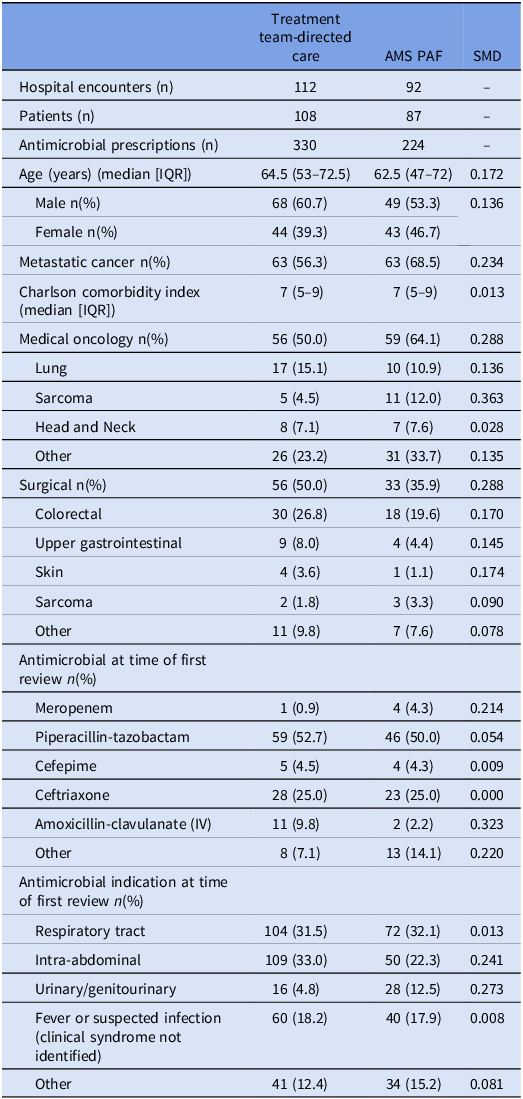
A total of 204 hospital encounters and 554 antimicrobial prescriptions were included from 19/03/2024 to 23/08/2024. Baseline patient characteristics of the cohorts are shown in Table 1.
Patient characteristics in the treatment team-directed care and AMS prospective audit and feedback cohorts

Table 1. Long description
A table comparing patient characteristics between treatment team-directed care and AMS prospective audit and feedback cohorts. The table has 22 rows and 7 columns. The columns are labeled Treatment team-directed care, AMS PAF, and SMD. The rows are labeled with various patient characteristics and their corresponding values. Row 1: Hospital encounters (n), 112, 92. Row 2: Patients (n), 108, 87. Row 3: Antimicrobial prescriptions (n), 330, 224. Row 4: Age (years) (median [IQR]), 64.5 (53-72.5), 62.5 (47-72), 0.172. Row 5: Male n(%), 68 (60.7), 49 (53.3), 0.136. Row 6: Female n(%), 44 (39.3), 43 (46.7). Row 7: Metastatic cancer n(%), 63 (56.3), 63 (68.5), 0.234. Row 8: Charlson comorbidity index (median [IQR]), 7 (5-9), 7 (5-9), 0.013. Row 9: Medical oncology n(%), 56 (50.0), 59 (64.1), 0.288. Row 10: Lung, 17 (15.1), 10 (10.9), 0.136. Row 11: Sarcoma, 5 (4.5), 11 (12.0), 0.363. Row 12: Head and Neck, 8 (7.1), 7 (7.6), 0.028. Row 13: Other, 26 (23.2), 31 (33.7), 0.135. Row 14: Surgical n(%), 56 (50.0), 33 (35.9), 0.288. Row 15: Colorectal, 30 (26.8), 18 (19.6), 0.170. Row 16: Upper gastrointestinal, 9 (8.0), 4 (4.4), 0.145. Row 17: Skin, 4 (3.6), 1 (1.1), 0.174. Row 18: Sarcoma, 2 (1.8), 3 (3.3), 0.090. Row 19: Other, 11 (9.8), 7 (7.6), 0.078. Row 20: Antimicrobial at time of first review n(%), Meropenem, 1 (0.9), 4 (4.3), 0.214. Row 21: Antimicrobial at time of first review n(%), Piperacillin-tazobactam, 59 (52.7), 46 (50.0), 0.054. Row 22: Antimicrobial at time of first review n(%), Cefepime, 5 (4.5), 4 (4.3), 0.009. Row 23: Antimicrobial at time of first review n(%), Ceftriaxone, 28 (25.0), 23 (25.0), 0.000. Row 24: Antimicrobial at time of first review n(%), Amoxicillin-clavulanate (IV), 11 (9.8), 2 (2.2), 0.323. Row 25: Antimicrobial at time of first review n(%), Other, 8 (7.1), 13 (14.1), 0.220. Row 26: Antimicrobial indication at time of first review n(%), Respiratory tract, 104 (31.5), 72 (32.1), 0.013. Row 27: Antimicrobial indication at time of first review n(%), Intra-abdominal, 109 (33.0), 50 (22.3), 0.241. Row 28: Antimicrobial indication at time of first review n(%), Urinary/genitourinary, 16 (4.8), 28 (12.5), 0.273. Row 29: Antimicrobial indication at time of first review n(%), Fever or suspected infection (clinical syndrome not identified), 60 (18.2), 40 (17.9), 0.008. Row 30: Antimicrobial indication at time of first review n(%), Other, 41 (12.4), 34 (15.2), 0.081.
AMS PAF, antimicrobial stewardship prospective audit and feedback.
There was no difference in the median days [IQR] to first AMS PAF (1 [1–3] d) or potential review (1 [1–2] d) between cohorts (SMD 0.22, 95% CI −0.05, 0.50).
AMS team recommendations
A total of 125 antimicrobial prescriptions were reviewed (including the first AMS PAF per encounter only) resulting in 168 recommendations, with multiple recommendations permitted per prescription. Overall, 57.8% (97/168) of recommendations were accepted within 24 hours and 69.1% (116/168) within 72 hours.
Recommendation types and acceptance are shown in Figure 1. Duration advice was provided in 83.3% (25/30) of IV to PO switch recommendations.
Antimicrobial stewardship team prospective audit and feedback recommendations (first review only, 168 recommendations in 92 encounters).

Eligibility for IV to PO switch
At the time of the first AMS PAF or potential review, 44.2% (61/138) of prescriptions were eligible for IV to PO switch in the AMS PAF cohort and 38.9% (58/149) in the treatment team-directed care cohort.
In the AMS PAF cohort, 35% (21/60) of IV antimicrobial prescriptions eligible for switch had antimicrobial therapy ceased entirely within 24 hours compared to 15.5% (9/58) in the treatment team-directed care cohort.
Primary outcome
Among eligible IV antimicrobial prescriptions that were not ceased, IV to PO switch within 24 hours of meeting eligibility criteria occurred more frequently in the AMS PAF cohort than in the treatment team-directed care cohort (72.5% [29/40] vs 40.8% [20/49]). Consistent with this, the time to IV to PO switch was significantly shorter in the AMS PAF cohort (adjusted HR 2.05, 95% CI 1.08–3.86; Figure 2), after adjustment for specialty type (medical vs surgical oncology), cancer type (sarcoma vs other) and chronic obstructive pulmonary disease (COPD).
Proportion of patients switched following first AMS PAF or potential review.

Secondary outcomes
Length of stay
There was no statistically significant difference in the median [IQR] LOS in the AMS PAF cohort (9.7 [5–17.1] d) compared to treating team-directed care cohort (12.8 [5.3–21.9] d) (P = .111).
Antimicrobial consumption
The most common IV antimicrobials prescribed were piperacillin-tazobactam (n = 151) and ceftriaxone (n = 72). Amoxicillin-clavulanate was more commonly prescribed PO (n = 122) than IV (n = 22).
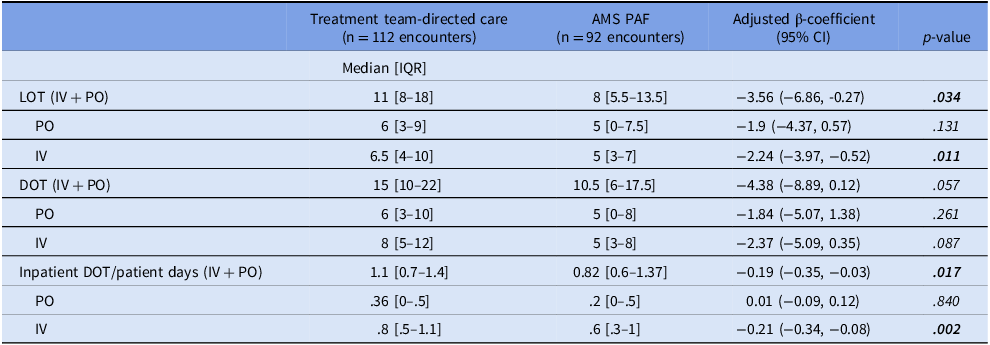
Antimicrobial consumption in the treatment team-directed care and AMS PAF cohorts are shown in Table 2. Significantly lower IV antimicrobial LOT and inpatient DOT/patient days were observed in the AMS PAF cohort.
Antimicrobial consumption (length of therapy (LOT), days of therapy (DOT) and inpatient DOT/patient days) adjusted for significant variables identified from specialty type, cancer diagnosis and Charlson comorbidity index

Table 2. Long description
A table comparing antimicrobial consumption between treatment team-directed care and AMS PAF cohorts. The table has 10 rows and 5 columns. Column headers are Treatment team-directed care (n = 112 encounters), AMS PAF (n = 92 encounters), Adjusted β-coefficient (95% CI), and p-value. Row labels include LOT (IV + PO), PO, IV, DOT (IV + PO), PO, IV, Inpatient DOT/patient days (IV + PO), PO, and IV. Each row provides median values with interquartile ranges for both cohorts, followed by adjusted β-coefficient with 95% confidence intervals and p-values. Notable trends include significantly lower IV antimicrobial LOT and inpatient DOT/patient days in the AMS PAF cohort.
LOT, length of therapy; DOT, days of therapy; AMS PAF, antimicrobial stewardship prospective audit and feedback. The bold values indicate statistically significant differences.
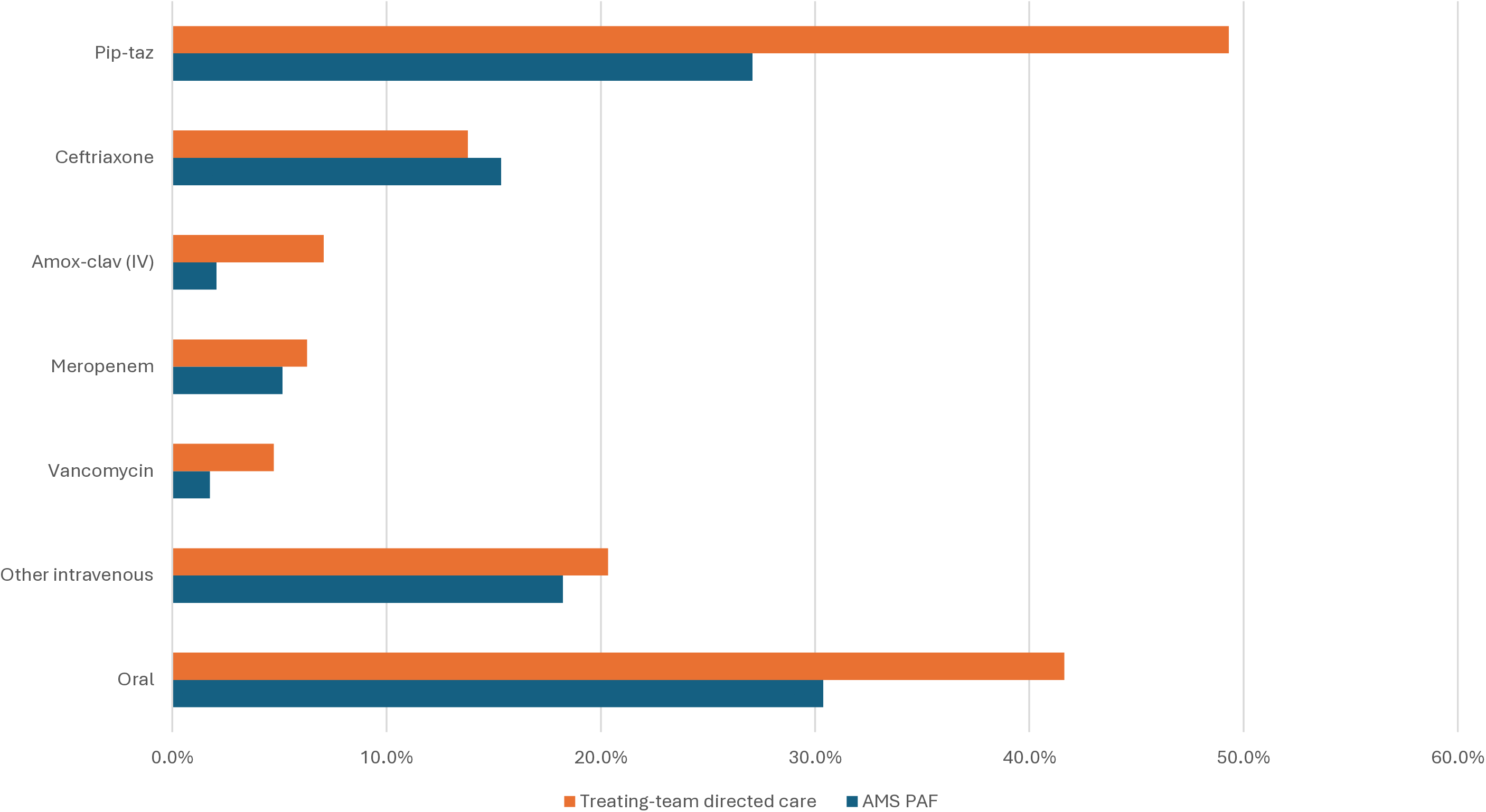
Antimicrobial use as a proportion of inpatient DOT/patient days are shown in Figure 3. Lower consumption of anti-Pseudomonas beta-lactam antibiotics (eg, piperacillin-tazobactam and meropenem) were observed in the AMS PAF cohort.
Antimicrobial use as a proportion of inpatient DOT/Patient days.

Outcomes
Following multivariate analysis, there were no differences observed in 30-day mortality (adjusted for specialty type (surgical vs medical oncology)), unplanned hospital readmission (adjusted for age) and re-commencement of antibiotics (adjusted for age) (Table 3). No difference was observed in ICU admission following univariate analysis (insufficient event numbers to perform multivariate analysis).
Clinical outcomes adjusted for significant variables identified from specialty type, cancer diagnosis and Charlson Comorbidity Index

Table 3. Long description
A table comparing clinical outcomes for treatment team-directed care and AMS PAF. The table has 6 rows and 5 columns. The columns are labeled Treatment team-directed care, AMS PAF, Unadjusted OR (95% CI), Adjusted oOR (95% CI), and p-value. The rows are labeled Mortality (30-day), ICU admission (30-day), Unplanned readmission (30-day), Antibiotic re-commencement (30-day), and C. difficile infection (90-day). Each row provides data for the respective clinical outcome, including the number of events and percentages for Treatment team-directed care and AMS PAF, unadjusted and adjusted odds ratios with 95% confidence intervals, and p-values.
OR, Odds ratio, ICU, intensive care unit, AMS PAF, antimicrobial stewardship prospective audit and feedback.
Sensitivity analysis
Propensity weighting successfully balanced the treatment groups and after IPTW, all measured baseline covariates were balanced. The overall findings were consistent with the primary multivariate analyses. A higher proportion of AMS PAF cohort prescriptions that were eligible for IV to PO switch at the time of first AMS review or potential review were switched within 24 hours (HR 1.87 (1.02, 3.01) (P = .031). Total (intravenous and oral) and intravenous antimicrobial usage as measured by LOT, DOT and inpatient DOT/patients days were significantly shorter in the AMS PAF cohort (Supplementary Table 1). No differences in clinical outcomes were observed (Supplementary Table 2).
Time-and-motion study
The median [IQR] administration time for PO antimicrobials (n = 31) was 1 [0.5–4] minute compared to 10.2 [3–17.4] minutes for IV antimicrobials (n = 20)(P < .001). There were an estimated 3,446 IV and 990 PO doses administered in the treatment team-directed care cohort compared to 1,808 IV and 602 PO doses in the AMS PAF cohort.
Cumulative nursing time spent administering antimicrobials was 602.1 (95% CI 500.4, 694) in the treatment team-directed care cohort and 315.4 (95% CI 264.1, 365.7) hours in the AMS PAF cohort, representing an estimated saving of 286.7 hours (95% CI 236.3, 328.2). The mean nursing administration time per inpatient encounter was 5.4 hours (95% CI 4.47, 6.20) and 3.4 hours (95% CI 2.87, 3.98), respectively.
Discussion
In this retrospective cohort study of oncology inpatients, AMS PAF was associated with substantially higher uptake of timely IV to PO antimicrobial switch compared with treating team-directed care. The intervention was also associated with lower intravenous antimicrobial exposure and reduced estimated nursing administration time, without statistically significant differences in LOS, readmission, mortality, ICU admission, or antimicrobial recommencement.
Randomized controlled trials have consistently demonstrated that PO antibiotics are safer and as effective as IV antibiotics. Reference Wald-Dickler, Holtom and Phillips11 Consequently, there is a growing interest in implementing early IV to PO switch strategies. We observed higher rates of early IV to PO switch in patients receiving AMS PAF. Among recommendation types, IV to PO switch was the most accepted suggesting that clinicians are willing to perform switch even in hospitalized patients with cancer. Although IV to PO switch uptake was higher in the AMS PAF cohort, there was no reduction in LOS, hospital readmission or C. difficile infection as reported by other studies. Reference Kurtzhalts, Sellick, Ruh, Carbo, Ott and Mergenhagen12 Though not statistically significant, an association was observed between AMS PAF and 30-day unplanned hospital readmission. Our study did not collect the reason for hospital readmission; therefore, it is unknown what proportions were infection-related. This association may be in part due to baseline differences between the cohorts. The AMS PAF cohort had a higher proportion of patients with metastatic cancer who may be more likely to have unplanned admissions due to cancer complications. Further, the AMS PAF rounds select for those perceived to be more complex which can introduce unmeasured differences between cohorts.
Beyond early IV to PO switch it is also imperative to safely reduce overall antimicrobial exposure and related harms (eg, nausea/vomiting, C. difficile infection and antimicrobial resistance). Additionally, in patients with cancer, gastrointestinal microbiome dysbiosis is associated with adverse outcomes including decreased survival and higher rates of treatment-related adverse effects. Reference Fernandez, Wargo and Helmink15 At least two validated metrics for measuring antimicrobial consumption are recommended, Reference Stanic Benic, Milanic and Monnier16 we measured LOT, DOT and Inpatient DOT/Patient days. Despite duration recommendations being accepted in less than half of cases, we still observed lower antimicrobial consumption (LOT and inpatient DOT/patient days) in the AMS PAF cohort. This reduction was likely also driven by cessation and IV to PO switch recommendations. Although not statistically significant, there was an association between AMS PAF and 30-day antimicrobial recommencement, however despite this, overall antibiotic consumption remained lower. An immortal time bias may have contributed to the association, those who stopped antibiotics earlier had more opportunities to recommence. This bias likely disproportionately affected the AMS PAF cohort.
Our time-and-motion study findings are consistent with other published results. Reference MacDonald, Lobban and Rose17,Reference Tan, Powell and Hearsey18 Applying the time-and-motion data to the retrospective review, we observed a mean 2-hour reduction in administration time per inpatient admission associated with AMS PAF. This time saving facilitates completion of other important clinical and administrative nursing duties thus improving efficiency of healthcare delivery. Additionally, decreased intravenous medication use reduces plastic waste promoting sustainable healthcare practices. Reference Tan, Powell and Hearsey18 This highlights an underrecognised benefit of AMS PAF.
We conducted a pragmatic study mostly utilizing existing data generated from routine AMS PAF processes; however, due to the nature of the study there are several limitations. The unblinded nature of the IV to PO switch assessments by the study team may introduce bias. Differences in baseline demographics and antimicrobial indications between cohorts were identified. For example, there was a higher proportion of antibiotics prescribed for urinary/gethird nitourinary infections in the AMS PAF cohort, whereas a higher proportion of intra-abdominal infections were observed in the treatment team-directed care cohort. In these scenarios, antimicrobial indication may have influenced clinician willingness to perform IV to PO switch. As discussed, a higher proportion of patients with metastatic cancer were observed in the AMS PAF cohort which may have affected the observed clinical outcomes. We adjusted for this using the Charlson Comorbidity Index; however, it is not validated as a measure of the likelihood of receiving prolonged intravenous antimicrobials. Reference Charlson, Pompei, Ales and MacKenzie19 Additionally, since the resource-limited AMS team selectively prioritize complex patients for review, there may be other, unmeasured confounders. Despite these limitations, our study still supports IV to PO switch as a feasible and safe intervention in cancer cohorts.
Conclusion
In a dedicated cancer cohort, AMS PAF was associated with earlier IV to PO switch and decreased antimicrobial consumption. There was no difference in clinical outcomes or LOS, suggesting safety of the approach despite reduced antimicrobial consumption. These findings support the feasibility and safety of implementing AMS PAF facilitated IV to PO switch protocols in oncology settings.
Supplementary material
The supplementary material for this article can be found at https://doi.org/10.1017/ash.2026.10880
Data availability statement
Data are not publicly available due to patient privacy and ethics restrictions.
Acknowledgements
We acknowledge the Royal Melbourne Hospital Microbiology Department and Peter MacCallum Cancer Centre Health Services Research Unit for providing 90-day C. difficile infection and length of stay data, respectively.
Author contribution
Nikhil Singh: Conceptualization, Investigation, Data curation, Methodology, Project administration, Formal analysis, Writing—original draftA/Prof. Tim Spelman: Conceptualization, Methodology, Formal analysis, Writing—review and editingJacob Howell: Investigation, Data curation, Methodology, Writing—review and editingChulong Luo: Investigation, Data curation, Methodology, Writing—review and editingKanon Machray: Investigation, Data curation, Methodology, Writing—review and editingRosie Tran: Investigation, Data curation, Methodology, Writing—review and editing A/Prof Safeera Y Hussainy: Conceptualization, Methodology, Supervision, Writing—review and editingChiao X Lim: Conceptualization, Methodology, Supervision, Writing—review and editingSenthil Lingaratnam: Conceptualization, Methodology, Supervision, Writing—review and editingProf. Karin A Thursky: Conceptualization, Methodology, Supervision, Writing—review and editingA/Prof. Gabrielle M Haeusler: Conceptualization, Methodology, Formal analysis, Supervision, Writing—original draft.
Financial support
No funding was received to assist with the preparation of this manuscript.
Competing interests
Nikhil Singh: no conflicts A/Prof. Tim Spelman: no conflictsJacob Howell: no conflicts Chulong Luo: no conflictsKanon Machray: no conflictsRosie Tran: no conflictsA/Prof Safeera Y Hussainy: no conflictsChiao X Lim: no conflictsSenthil Lingaratnam: no conflictsProf. Karin A Thursky: no conflictsA/Prof. Gabrielle M Haeusler: no conflicts.
Appendix A: Intravenous to oral switch criteria






 Open access

