





Promoting healthy eating behaviours in the first 1000 days is important for long-term health. Healthy eating behaviours may influence the risk of developing non-communicable diseases (NCD), including obesity, type 2 diabetes, cardiovascular diseases and depression(Reference Wagner, Carmeli and Jackisch1). Therefore, it is important to understand the cost-effectiveness of interventions aimed at improving healthy eating behaviours. Healthy eating is defined as eating a variety of whole (i.e. unprocessed) and fresh food every day and avoiding food high in sugar, fats and salt(2). The term ‘first 1000 days’ refers to a period from conception to a child’s second birthday during which rapid growth and development take place and where the foundations for future health and wellbeing are built, making optimised nutrition including healthy eating behaviours critical for healthy development for the newborn(Reference Beluska-Turkan, Korczak and Hartell3). Parents’ and primary carers’ prior knowledge, behaviours and beliefs on healthy eating have lasting impacts on the formation of eating habits of newborns and infants. Therefore, early-life nutrition interventions to promote healthy eating during the first 1000 days are critical for achieving health and wellbeing benefits related to meeting nutritional needs and by preventing overweight, obesity and NCD. The importance of economic evaluation for cost-effective resource allocation to improve child nutrition in low- and middle-income countries was highlighted in a recent systematic review(Reference Baek, Ademi and Paudel4). However, a review of economic evidence related to nutrition interventions to promote healthy eating in the first 1000 days is lacking.
This review aims to identify economic evidence and methodological approaches used in evaluations of early-life nutrition interventions to promote healthy eating in the first 1000 days in community, education and home settings and establish evidence gaps. Evidence gaps and challenges identified from this review will highlight areas for future research.
Key messages
-
• Economic evaluation of early-life nutrition interventions to promote healthy eating during first 1000 days are typically embedded within complex public health interventions, making it challenging to identify relevant comparators and to capture costs and consequences.
-
• Health service utilisation, earnings, strengthened workforce, reduction in NCD and health-related quality of life (HRQoL) were considered as important outcomes but not reported in the included studies.
-
• A health economic analysis plan (HEAP) should be an integral part of a study protocol, including defined economic questions, population, intervention, comparator(s), outcomes (PICO), analytical perspective(s), the approach to handling uncertainties and decision contexts.
-
• Pathway modelling along the early child development (ECD) stages provides an opportunity to capture both costs and the full range of intervention impacts.
Methods
Search strategy
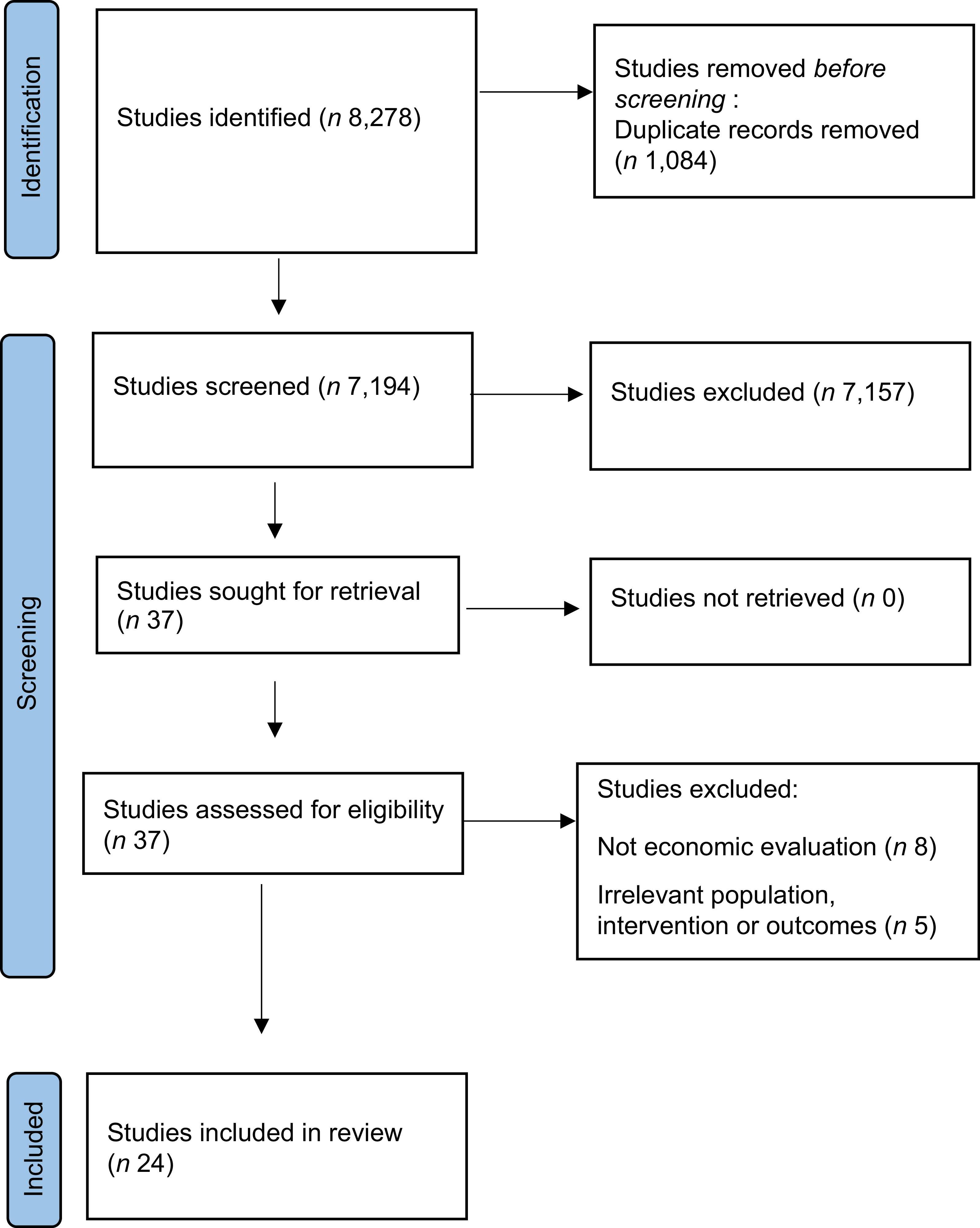
A search strategy was developed using cost-effectiveness, economic evaluation, nutrition, healthy eating, first 1000 days, children in home, education and/or community settings as key words (Appendix 1). Geographic search filters were not used to ensure capturing relevant studies. Databases searched include Embase, MEDLINE, EconLit and HTA database. WHO websites, Google (restricted to the UK domains) and Google Scholar were searched, and, where appropriate, the first fifty results were examined to identify any relevant publications that have not already been identified through database searches. From identified literature, duplicates were removed, and the titles and abstracts were screened based on eligibility criteria (Appendix 1). The literature search was conducted on 11 April 2024 and identified 7194 studies after removing duplicates. After screening titles and abstracts based on eligibility criteria, thirty-seven studies were selected for full-text review. The Preferred Reporting Items for Systematic Reviews and Meta-Analyses (PRISMA) is shown in Figure 1.
Preferred Reporting Items for Systematic reviews and Meta-Analyses (PRISMA).

Studies were included based on the following criteria:
-
• Population: pregnant women, infants and young children aged 0–2 years in home, education and community settings.
-
• Intervention: activities such as education, feeding or dietary practices to promote healthy eating. Healthy eating includes breast-feeding, daily consumption of grains, protein, dairy products, fruits and vegetables while limiting intake of processed foods, saturated and trans fats, salt and sugar.
-
• Comparison: usual or standard practice, including do nothing, where appropriate.
-
• Primary outcomes – improved frequency of healthy eating (e.g. changes in the weekly/monthly fruits and/or vegetables intake, starting and continuing breast-feeding, BMI, BMI-z score, height, weight and existing anthropometric measures.
-
• Secondary outcomes – HRQoL, quality-adjusted life year (QALY) and disability-adjusted life year (DALY).
-
• Study design: cost–utility analysis (CUA), cost–benefit analysis (CBA), cost-effectiveness analysis (CEA), cost–consequence analysis (CCA) and DALY averted.
-
• Publication types and years: peer-reviewed publications in English language from 1 January 2000 to April 2024.
Studies were excluded based on the following criteria:
-
• Title/abstract that are irrelevant to nutrition interventions for the first 1000 days.
-
• Conference abstracts or study protocols with no full publication of economic evaluation.
-
• Unspecified or not clearly defined early-life nutrition interventions.
-
• Nutrition interventions for clinical diagnosis.
-
• Interventions for children older than 2 years or non-pregnant women.
-
• Interventions related to clinical diagnosis, food (in)security, malnutrition, food fortification, micronutrients and home parenteral/enteral feeding.
Study selection and quality assessment
The full text of selected studies was assessed independently by both reviewers. The Consolidated Health Economic Evaluation Reporting Standards (CHEERS 2022) checklist was used to assess reporting quality(Reference Husereau, Drummond and Augustovski5). Methodological quality was assessed using a widely recognised framework for evaluating economic evaluations, including study design, well-defined decision problem, identifying comparator(s) and perspective on costs and consequences, time horizon and discounting, synthesis on health effects, evidence on resource use and costs and the chosen modelling approach to measuring outcomes, sources of data for measurement of HRQoL(Reference Drummond, Sculpher and Torrance6) such as European Quality of Life 5 Dimensions (EQ-5D), Short-Form 6-Dimensions (SF-6D), 15-dimensional HRQoL (15D), source of preference data for valuation of changes in HRQoL, handling uncertainties in costs and consequences, interpretation of cost-effectiveness results and the interpretation of results compared to those of other studies. Any disagreements were resolved through discussion at each stage. EndNote® and Microsoft Excel® were used for the data management. Please see the PRISMA (Figure 1). Search results are in Appendix 2. Findings are presented in the following section, grouped by intervention aims to facilitate comparison, and a narrative synthesis focusing on methodological approaches was undertaken due to substantial heterogeneity.
Results
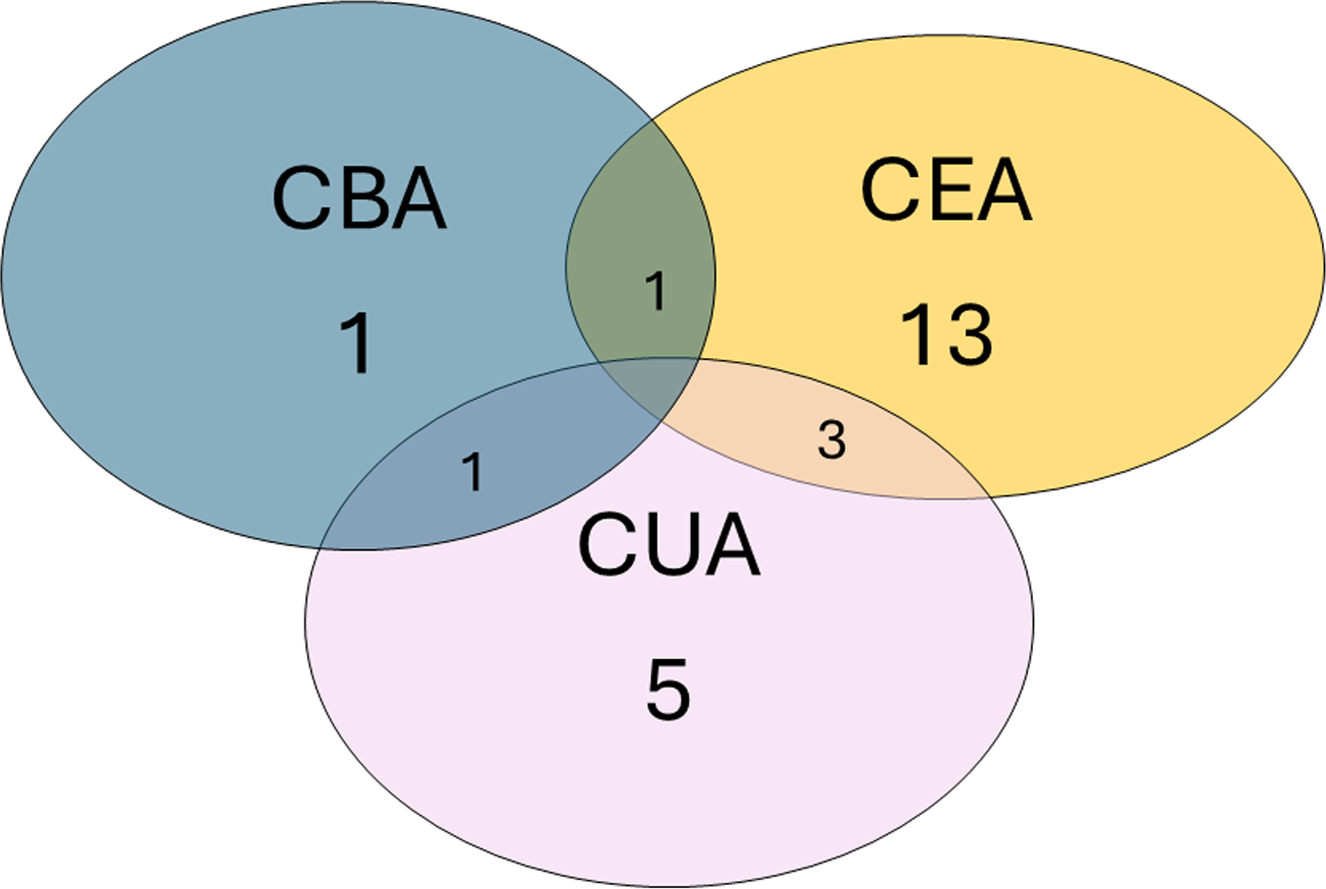
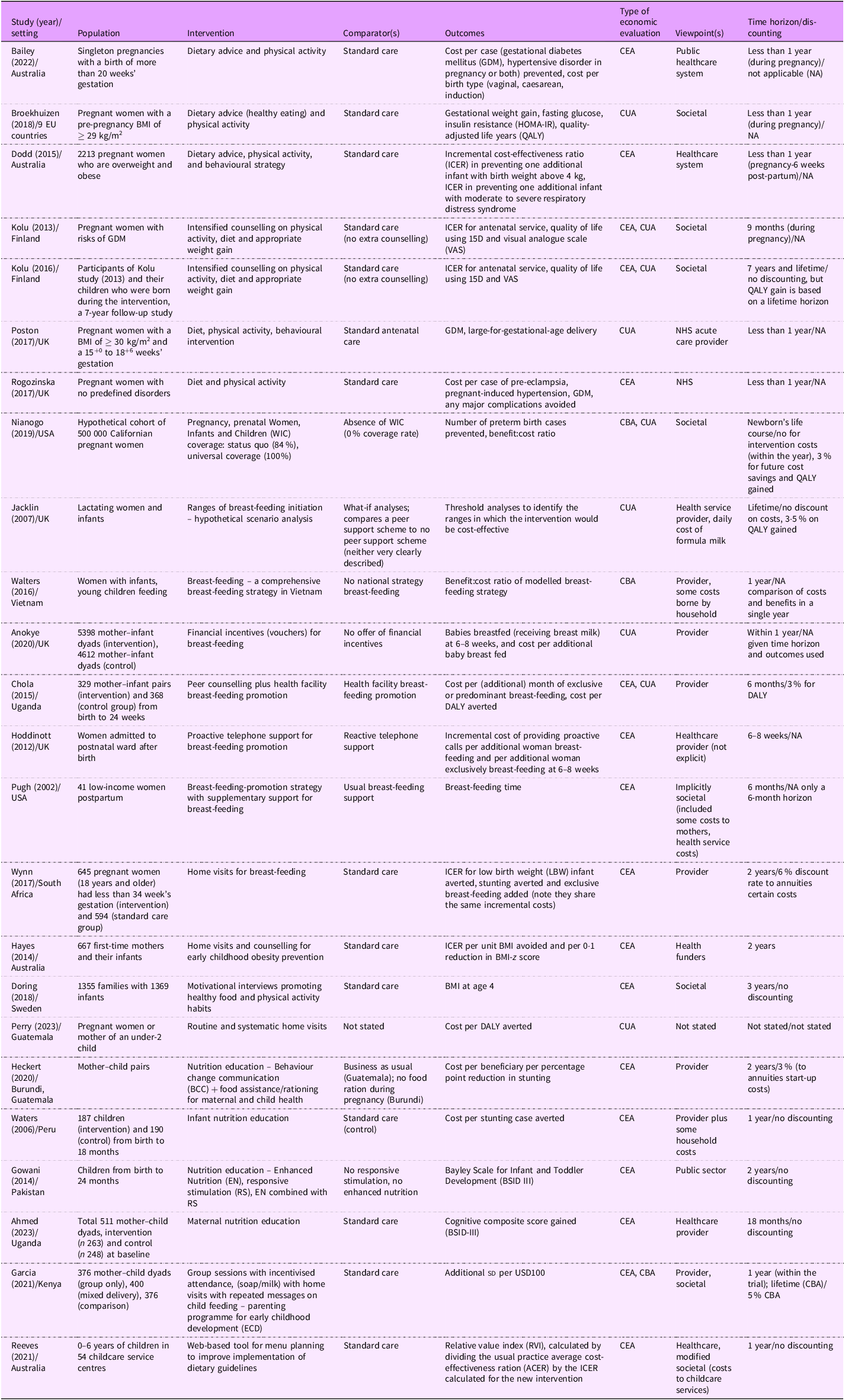
The literature search was conducted on 11 April 2024 and identified 7194 studies after removing duplicates. After screening titles and abstracts based on eligibility criteria, thirty-seven studies were selected for full-text review (Figure 1). Of thirty-seven studies, thirteen studies were excluded after independent reviews and discussions by two reviewers (Appendix 3). The common reasons for exclusion were that studies were not economic evaluations or that the study population, intervention or reported outcomes were irrelevant. Of twenty-four included studies, the most common type of economic evaluation was CEA (Figure 2). The studies varied by setting; one multi-centre European randomised controlled trial (RCT)(Reference Broekhuizen, Simmons and Devlieger7), four studies were in Australia(Reference Bailey, Skouteris and Harrison8–Reference Reeves, Edmunds and Szewczyk11), five in the UK(Reference Anokye, Coyle and Relton12–Reference Rogozinska, Marlin and Jackson16), two in Finland(Reference Kolu, Raitanen and Puhkala17,Reference Kolu, Raitanen and Rissanen18) , two in the USA(Reference Nianogo, Wang and Basurto-Davila19,Reference Pugh, Milligan and Frick20) , two in Uganda(Reference Ahmed, Muhoozi and Atukunda21,Reference Chola, Fadnes and Engebretsen22) and one in Guatemala(Reference Perry, Stollak and Valdez23), Burundi & Guatemala(Reference Heckert, Leroy and Olney24), South Africa(Reference Wynn, Rotheram-Borus and Leibowitz25), Pakistan(Reference Gowani, Yousafzai and Armstrong26), Peru(Reference Waters, Penny and Creed-Kanashiro27), Kenya(Reference Garcia, Saya and Luoto28), Sweden(Reference Doring, Zethraeus and Tynelius29) and Vietnam(Reference Walters, Horton and Siregar30) (Table 1).
Included studies by study types. CBA, cost–benefit analysis; CEA, cost-effectiveness analysis; CUA, cost–utility analysis.

Summary of included studies

Table 1 Long description
The table presents a summary of included studies on economic evaluations of interventions for pregnant women. It has 24 rows and 7 columns. The columns are labeled as Study, Country, Population, Intervention, Comparator, Outcome, and Type of economic evaluation. Each row provides details for a specific study, including the study ID, country where the study was conducted, the population studied, the intervention applied, the comparator used, the outcome measured, and the type of economic evaluation performed. The studies cover various countries and interventions, with the most common type of economic evaluation being cost-effectiveness analysis (CEA).
CEA, cost-effectiveness analysis; CUA, cost–utility analysis; NHS, National Health Service; DALY, disability-adjusted life year.
Comparator terminology varied across studies and was harmonised as ‘standard care’ for clarity.
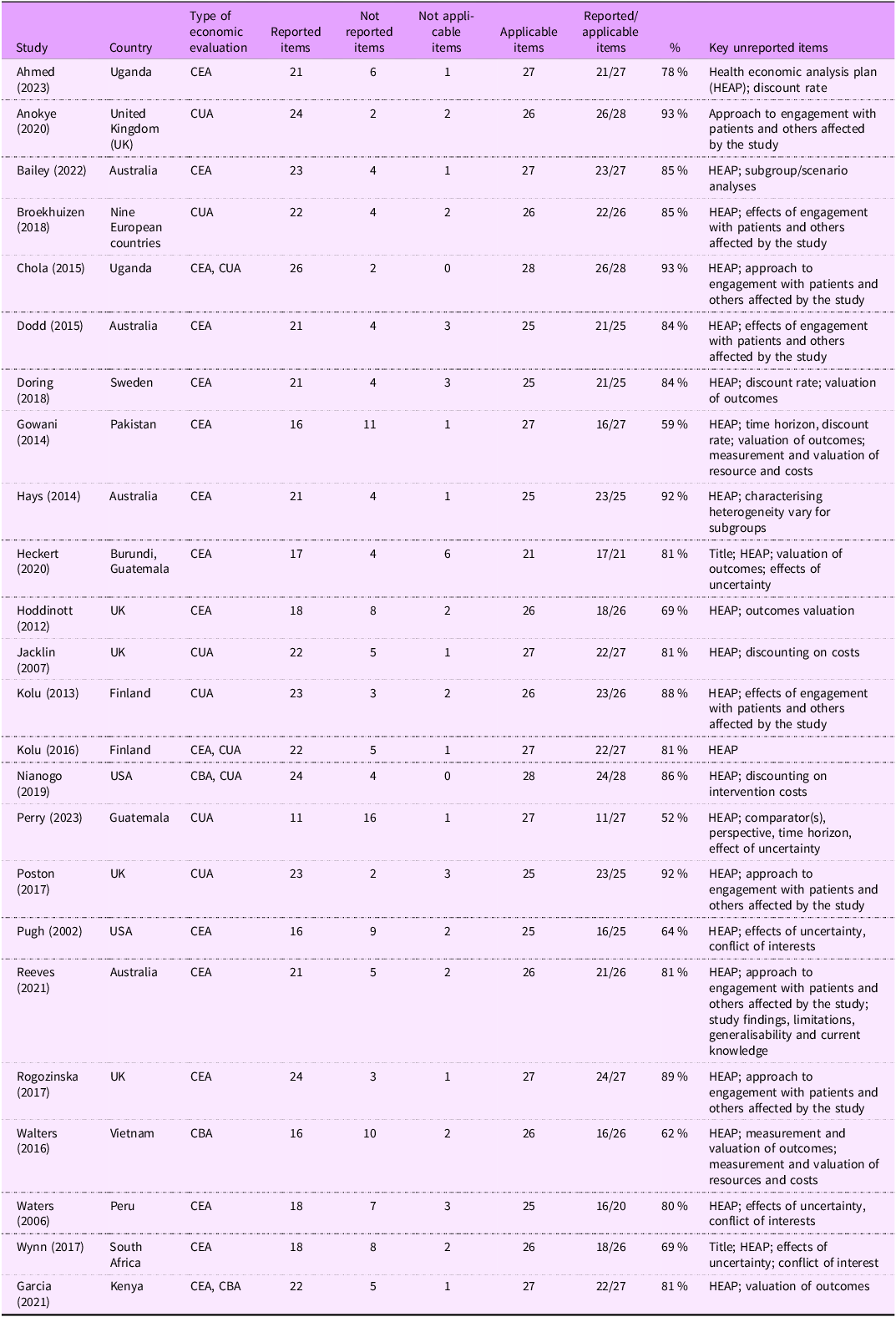
Reporting completeness ranged from 52 % to 93 % of applicable CHEERS items(Reference Husereau, Drummond and Augustovski5) across the twenty-four studies (Table 2). Most studies reported title, comparators and outcomes; however, HEAP, heterogeneity and uncertainty were the least reported items (Table 2). Interventions from twenty-four included studies comprised nutrition education(Reference Ahmed, Muhoozi and Atukunda21,Reference Heckert, Leroy and Olney24,Reference Gowani, Yousafzai and Armstrong26,Reference Waters, Penny and Creed-Kanashiro27) , diet (healthy eating) and physical activity (PA) with or without behavioural strategies(Reference Broekhuizen, Simmons and Devlieger7–Reference Dodd, Ahmed and Karnon9,Reference Poston, Bell and Briley15,Reference Rogozinska, Marlin and Jackson16) , counselling(Reference Kolu, Raitanen and Puhkala17,Reference Kolu, Raitanen and Rissanen18,Reference Chola, Fadnes and Engebretsen22) , home visits or home visits with group sessions(Reference Perry, Stollak and Valdez23,Reference Wynn, Rotheram-Borus and Leibowitz25,Reference Garcia, Saya and Luoto28) , home visits with counselling(Reference Hayes, Lung and Wen10), motivational interviews to promote healthy food and PA habits(Reference Doring, Zethraeus and Tynelius29), a web-based tool for menu planning(Reference Reeves, Edmunds and Szewczyk11), supplementary support to promote breast-feeding(Reference Pugh, Milligan and Frick20), telephone support(Reference Hoddinott, Craig and Maclennan13) and information booklets and incentives (vouchers) for breast-feeding(Reference Anokye, Coyle and Relton12) (Table 1). In addition, scenario analysis approach was used in a prenatal Women, Infants and Children (WIC) coverage(Reference Nianogo, Wang and Basurto-Davila19), breast-feeding initiation ranges(Reference Jacklin, Retsa and Dougherty14) and a national breast-feeding strategy(Reference Walters, Horton and Siregar30). Of twenty-four studies, eighteen studies used data from clustered RCT, four from observational studies(Reference Jacklin, Retsa and Dougherty14,Reference Rogozinska, Marlin and Jackson16,Reference Nianogo, Wang and Basurto-Davila19,Reference Walters, Horton and Siregar30) , one from a systematic review(Reference Bailey, Skouteris and Harrison8) and one stated no source of effectiveness evidence(Reference Perry, Stollak and Valdez23). Across studies, comparators were described as usual care(Reference Reeves, Edmunds and Szewczyk11,Reference Jacklin, Retsa and Dougherty14,Reference Kolu, Raitanen and Puhkala17,Reference Kolu, Raitanen and Rissanen18) , standard care(Reference Bailey, Skouteris and Harrison8,Reference Rogozinska, Marlin and Jackson16,Reference Ahmed, Muhoozi and Atukunda21,Reference Wynn, Rotheram-Borus and Leibowitz25) or routine care(Reference Poston, Bell and Briley15), representing the continuation of existing practice (Table 1). Comparator terminology varied across studies and was harmonised as ‘standard care’ for clarity (Table 1).
Summary of reporting quality based on the CHEERS 2022 checklist (reported/applicable items) for the included studies (n 24)

Table 2 Long description
A table summarizing the reporting quality of 24 studies based on the CHEERS 2022 checklist. The table has 24 rows and 8 columns. The columns are labeled Study, Country, Type of economic evaluation, Reported items, Not reported items, Not applicable items, Applicable items, Reported/applicable items %, and Key unreported items. Each row lists the details for a specific study, including the study name, country, type of economic evaluation, number of reported items, not reported items, not applicable items, applicable items, percentage of reported/applicable items, and key unreported items. The studies are from various countries and cover different types of economic evaluations such as CEA, CUA, and CBA. The percentage of reported/applicable items ranges from 52% to 93%. Key unreported items include health economic analysis plan, discount rate, approach to engagement with patients and others affected by the study, and more.
CHEERS, Consolidated Health Economic Evaluation Reporting Standards; CEA, cost-effectiveness analysis; CUA, cost–utility analysis; CBA, cost–benefit analysis.
Reporting quality was assessed using the CHEERS 2022 checklist. Each item was scored as reported or not reported. Items considered not applicable (e.g. model-based components in trial-based studies) were excluded from scoring. The overall percentage score for each study was calculated as the number of reported items divided by the number of applicable items × 100. Scores are presented as the number of reported items out of applicable CHEERS 2022 checklist items.
The majority of studies (n 15) adopted a time horizon of 1 year or shorter, while eight studies used longer time horizons(Reference Hayes, Lung and Wen10,Reference Jacklin, Retsa and Dougherty14,Reference Kolu, Raitanen and Puhkala17,Reference Nianogo, Wang and Basurto-Davila19,Reference Ahmed, Muhoozi and Atukunda21,Reference Wynn, Rotheram-Borus and Leibowitz25,Reference Gowani, Yousafzai and Armstrong26,Reference Doring, Zethraeus and Tynelius29) , and one study did not report the time horizon(Reference Perry, Stollak and Valdez23). Additional costs were compared to incremental effects, but they were not always associated with incremental benefits(Reference Ahmed, Muhoozi and Atukunda21). Costs and relevant consequences of the intervention were not always discounted to bring future costs and consequences to the present values(Reference Hayes, Lung and Wen10,Reference Kolu, Raitanen and Puhkala17,Reference Ahmed, Muhoozi and Atukunda21,Reference Doring, Zethraeus and Tynelius29) (Table 1). Uncertainties were not fully addressed in the form of sensitivity analyses in most studies (Table 2). Due to substantial heterogeneity, quantitative synthesis was not appropriate; therefore, the review focused on methodological approaches. Like interventions have been grouped together to provide an overview of the different forms of intervention for which economic evaluations have been conducted.
Interventions during pregnancy to improve maternal health
Three studies focused on interventions to improve maternal health during pregnancy including interventions of PA, healthy eating and PA promotion(Reference Broekhuizen, Simmons and Devlieger7), intensified counselling on PA, diet and appropriate weight gain with the subsequent 7-year follow-up compared to usual care(Reference Kolu, Raitanen and Puhkala17,Reference Kolu, Raitanen and Rissanen18) (Table 1).
A decision-tree approach was applied with a time horizon of less than 1 year (during pregnancy) from the societal perspective with no discounting(Reference Broekhuizen, Simmons and Devlieger7,Reference Kolu, Raitanen and Rissanen18) , and the societal perspective was supplemented by a healthcare provider perspective in a sensitivity analysis(Reference Broekhuizen, Simmons and Devlieger7). Costs and consequences were not discounted owing to the short time horizon(Reference Kolu, Raitanen and Rissanen18). Discounting was not considered, even though the QALY gained was based on a lifetime horizon(Reference Kolu, Raitanen and Puhkala17). Other than including sickness absence(Reference Kolu, Raitanen and Puhkala17), outcomes were predominantly health outcomes(Reference Broekhuizen, Simmons and Devlieger7,Reference Kolu, Raitanen and Puhkala17) that were measured by QALY gained or incremental cost-effectiveness ratio (ICER) for antenatal service, gestational weight gain, fasting blood glucose, insulin resistance and newborn birth weight. HRQoL data were collected using a generic tool, EQ-5D from a multi-centre RCT, valued using a European tariff. Only maternal health outcomes were reported and not longer-term outcomes for the newborns(Reference Broekhuizen, Simmons and Devlieger7). The valuation of consequences using a visual analogue scale and a generic tool 15D to assess HRQoL and produce ICER was difficult to interpret(Reference Kolu, Raitanen and Puhkala17,Reference Kolu, Raitanen and Rissanen18) .
Costs were mainly Dutch healthcare costs that might be inappropriate, as country-specific cost data from a multi-centre study involving nine European countries would provide a better estimate(Reference Broekhuizen, Simmons and Devlieger7). Estimated cost savings in a 7-year follow-up did not consider relevant intervention costs or cost savings from newborn’s health(Reference Kolu, Raitanen and Puhkala17), while cost savings in later life from obesity prevention and disturbances in glucose metabolism in childhood were not reported(Reference Kolu, Raitanen and Rissanen18).
Linear multi-level analysis using multiple imputation for missing data was undertaken with an unjustified sensitivity analysis(Reference Broekhuizen, Simmons and Devlieger7). Sensitivity analyses were undertaken with doubled intervention costs without justifications(Reference Kolu, Raitanen and Rissanen18) and the complete case and standardised productivity costs(Reference Kolu, Raitanen and Puhkala17).
Interventions during pregnancy to improve fetal outcomes
Two studies examined interventions during pregnancy to improve fetal outcomes. Dietary advice, PA and behavioural strategies were compared to standard care(Reference Dodd, Ahmed and Karnon9) (Table 1). The effects of varying coverage rates of the special supplemental nutrition programme for women, infants and children were assessed compared to current practice with an assumed 84 % coverage(Reference Nianogo, Wang and Basurto-Davila19). A ‘do-nothing’ strategy was considered as a comparator by not including explicitly any dietary or lifestyle advice(Reference Dodd, Ahmed and Karnon9) or by including 0 % coverage(Reference Nianogo, Wang and Basurto-Davila19). A decision tree was used with a short time horizon (pregnancy to 6-week postpartum) from a healthcare perspective(Reference Dodd, Ahmed and Karnon9), while a newborn’s life course from pregnancy was modelled from a societal perspective with the discounting rate of 3 % for costs and QALY(Reference Nianogo, Wang and Basurto-Davila19).
Outcomes included cost per additional infant with birth weight above 4 kg prevented, cost per additional infant with respiratory distress syndrome prevented and cost per preterm birth avoided. Health state utility values from pregnancy to 4 months postpartum (follow-up) were derived from a generic instrument, the SF-6D using the thirty-six-item Short Form Health Survey data. The authors described methods to measure differences in health state utility values in the follow-up period between the intervention and control groups; however, the results were not reported(Reference Dodd, Ahmed and Karnon9). Data sources for the willingness-to-pay for a QALY and costs of preterm birth were reported(Reference Nianogo, Wang and Basurto-Davila19).
Potential maternal benefits from the intervention were not modelled given the short time horizon, but future cost savings were supported by reference to literature(Reference Dodd, Ahmed and Karnon9). Costs directly associated with the additional resource use from the time of randomisation until 6 weeks postpartum were included; however, the societal costs reported were not disaggregated, making it difficult to consider different viewpoints(Reference Dodd, Ahmed and Karnon9).
Bootstrapping of patient-level data was used to estimate confidence intervals and to derive cost-effectiveness acceptability curves(Reference Dodd, Ahmed and Karnon9). A range of absolute risk reductions was explored through sensitivity analyses of results, but a potential impact in particular socio-economic groups was not explored(Reference Nianogo, Wang and Basurto-Davila19).
Interventions to promote breast-feeding
Six studies examined interventions aimed at promoting breast-feeding compared to usual care using a decision tree(Reference Anokye, Coyle and Relton12–Reference Jacklin, Retsa and Dougherty14,Reference Pugh, Milligan and Frick20,Reference Walters, Horton and Siregar30) or a state transition model with three health states (well, diarrhoea and dead (Markov model)(Reference Chola, Fadnes and Engebretsen22) (Table 1). The effectiveness of the intervention was established through RCT(Reference Anokye, Coyle and Relton12,Reference Hoddinott, Craig and Maclennan13,Reference Pugh, Milligan and Frick20,Reference Chola, Fadnes and Engebretsen22) , assumed(Reference Walters, Horton and Siregar30) or derived from different observational datasets(Reference Jacklin, Retsa and Dougherty14). Economic questions, PICO and analytical perspectives were stated in a HEAP(Reference Anokye, Coyle and Relton12).
The valuation of consequences using cost per DALY averted(Reference Chola, Fadnes and Engebretsen22) and the cost per QALY at £20 000 were appropriate for the decision problems posed(Reference Jacklin, Retsa and Dougherty14). A provider’s perspective was adopted with some costs borne by the household(Reference Jacklin, Retsa and Dougherty14,Reference Walters, Horton and Siregar30) , and a societal perspective was adopted where some costs for mothers’ time spent feeding the infant and health service costs were considered(Reference Pugh, Milligan and Frick20). DALY were not age-weighted but discounted at an unjustified rate of 3 %, and the discount rates for costs and consequences were varied at 0 % and 6 % in the sensitivity analysis(Reference Chola, Fadnes and Engebretsen22). QALY gained from reduced illnesses were discounted at 3.5 %, but it was unclear if the cost savings reported from the literature were discounted(Reference Jacklin, Retsa and Dougherty14). Improved infant survival, reduced breast milk substitutes purchases, health service utilisation and health outcomes were identified as important outcomes but were not measured, underestimating full consequences such as improved workforce (productivity) or reduced health service utilisation(Reference Anokye, Coyle and Relton12,Reference Hoddinott, Craig and Maclennan13,Reference Pugh, Milligan and Frick20,Reference Chola, Fadnes and Engebretsen22) .
Regression models were used to adjust for baseline variables and potential imbalances in the intervention group, with appropriate statistical analysis of patient-level data for estimating the transition probabilities(Reference Anokye, Coyle and Relton12,Reference Chola, Fadnes and Engebretsen22) . Limited statistical analysis was appropriate given the small sample size(Reference Pugh, Milligan and Frick20). Although ranges were justified for the one-way sensitivity analysis, no details were provided on the distributions of values for the probabilistic sensitivity analysis(Reference Chola, Fadnes and Engebretsen22). Only a threshold analysis was reported with unjustified ranges used(Reference Jacklin, Retsa and Dougherty14), while an assumed association between breast-feeding and increased IQ was combined with a relationship between IQ and earnings without testing such assumptions(Reference Walters, Horton and Siregar30). The interpretation of cost-effectiveness appeared appropriate; however, it was unclear whether the reported results were valid due to the assumed intervention effectiveness(Reference Walters, Horton and Siregar30). The incremental cost per change in breast-feeding is difficult to interpret when the value of increased breast-feeding is not explicitly stated(Reference Hoddinott, Craig and Maclennan13). The probability of the intervention being cost-effective at different willingness-to-pay levels for an additional breastfed baby was estimated among socio-economically disadvantaged groups in the National Health Service (NHS), but it was unclear if the findings could be applied to a broader population(Reference Anokye, Coyle and Relton12).
Interventions to improve early childhood development
Three studies used simple decision trees to evaluate the cost-effectiveness of interventions designed to improve ECD compared to the status quo(Reference Garcia, Saya and Luoto28) or current practice(Reference Ahmed, Muhoozi and Atukunda21,Reference Gowani, Yousafzai and Armstrong26) . Costs and consequences were discounted at 5 % for the CBA(Reference Garcia, Saya and Luoto28), while no discounting was undertaken for the interventions over 18–24 months(Reference Ahmed, Muhoozi and Atukunda21,Reference Gowani, Yousafzai and Armstrong26) (Table 1). The pathway for delivering the intervention was outlined, ensuring the health outcomes were assessed(Reference Ahmed, Muhoozi and Atukunda21).
The progress and changes of ECD were measured using the Bayley Scales of Infant and Toddler Development – III (BSID-III)(Reference Ahmed, Muhoozi and Atukunda21,Reference Gowani, Yousafzai and Armstrong26,Reference Garcia, Saya and Luoto28) ; however, these measures did not capture other relevant costs and consequences beyond ECD. The effectiveness of intervention was established through RCT(Reference Ahmed, Muhoozi and Atukunda21,Reference Gowani, Yousafzai and Armstrong26) . An 18-month time horizon with a focus on cognitive scores might not be wide enough for the decision problem from the perspectives of providers and mothers(Reference Ahmed, Muhoozi and Atukunda21). The only effect considered was ECD using the BSID-III, while all costs to the service providers were considered(Reference Ahmed, Muhoozi and Atukunda21,Reference Gowani, Yousafzai and Armstrong26) , although incorporating costs incurred by mothers in addition to the public perspective would have been better for decision-making.
Costs to service providers(Reference Ahmed, Muhoozi and Atukunda21,Reference Gowani, Yousafzai and Armstrong26) and mothers’ time and costs of additional schooling were considered(Reference Garcia, Saya and Luoto28). Future costs beyond 18 months and consequences(Reference Ahmed, Muhoozi and Atukunda21) and the costs to mothers(Reference Gowani, Yousafzai and Armstrong26) were identified but not reported. No attempts were made to explore the value of child development as measured using BSID-III(Reference Ahmed, Muhoozi and Atukunda21,Reference Gowani, Yousafzai and Armstrong26,Reference Garcia, Saya and Luoto28) . Costs may be incremental, but the effectiveness measure using BSID-III used in the reported cost-effectiveness ratio was not incremental(Reference Gowani, Yousafzai and Armstrong26). Threshold analyses and deterministic sensitivity analysis were undertaken to address uncertainty in the estimates of costs and consequences(Reference Garcia, Saya and Luoto28). A regression analysis and a probabilistic sensitivity analysis(Reference Ahmed, Muhoozi and Atukunda21) or limited sensitivity analysis were conducted to address uncertainties(Reference Gowani, Yousafzai and Armstrong26). An additional sd per 100 US dollars is not readily interpretable for decision-making(Reference Garcia, Saya and Luoto28). The future benefits of ECD from the maternal nutrition intervention, such as academic attainments, resources for the provision of school dropouts and productivity (earnings) gains/losses were not explored(Reference Ahmed, Muhoozi and Atukunda21,Reference Gowani, Yousafzai and Armstrong26,Reference Garcia, Saya and Luoto28) .
Interventions to improve maternal and child health
Five studies examined interventions to improve maternal and child health among pregnant women compared to standard or routine care from the provider or the NHS perspective(Reference Bailey, Skouteris and Harrison8,Reference Poston, Bell and Briley15,Reference Rogozinska, Marlin and Jackson16,Reference Wynn, Rotheram-Borus and Leibowitz25) or without stating a comparator or a perspective(Reference Perry, Stollak and Valdez23). A decision tree was used to estimate costs and consequences at a cohort level(Reference Bailey, Skouteris and Harrison8,Reference Poston, Bell and Briley15,Reference Rogozinska, Marlin and Jackson16,Reference Wynn, Rotheram-Borus and Leibowitz25) (Table 1).
Effectiveness was established through RCT(Reference Poston, Bell and Briley15,Reference Wynn, Rotheram-Borus and Leibowitz25) or a meta-analysis of individual-level data(Reference Rogozinska, Marlin and Jackson16). The impact on child and maternal mortality was estimated indirectly using a relationship mortality and increased coverage of the interventions(Reference Perry, Stollak and Valdez23). The effectiveness of intervention was based on literature where baseline data were from a representative dataset(Reference Bailey, Skouteris and Harrison8). The reference to the literature to justify the value of the outcomes achieved appeared unsystematic, and the within-trial analysis provided only costs and consequences up to the delivery of baby(Reference Wynn, Rotheram-Borus and Leibowitz25).
Costs per complication avoided were estimated by utilising the meta-analysis of patient data with six identified clinical pathways(Reference Rogozinska, Marlin and Jackson16). Admissions to neonatal intensive care unit were included without other health outcomes for the child(Reference Bailey, Skouteris and Harrison8), or only costs and outcomes during pregnancy were considered(Reference Poston, Bell and Briley15). The valuation of consequences was appropriate where the analysis focused on the cost per additional case prevented or the QALY estimated from EQ-5D(Reference Bailey, Skouteris and Harrison8,Reference Poston, Bell and Briley15) .
Resource utilisation was described and justified from the RCT or literature(Reference Bailey, Skouteris and Harrison8,Reference Poston, Bell and Briley15,Reference Rogozinska, Marlin and Jackson16,Reference Wynn, Rotheram-Borus and Leibowitz25) ; however, the broader maternal and neonatal benefits and related costs were omitted beyond pregnancy(Reference Bailey, Skouteris and Harrison8,Reference Poston, Bell and Briley15,Reference Rogozinska, Marlin and Jackson16) . Any lives saved in under-fives or mothers were assumed to live without any disability, but this assumption was not explored in a sensitivity analysis(Reference Perry, Stollak and Valdez23). The source of costs and consequences were clearly stated(Reference Poston, Bell and Briley15,Reference Wynn, Rotheram-Borus and Leibowitz25) . An appropriate statistical analysis was applied to patient-level data(Reference Poston, Bell and Briley15,Reference Rogozinska, Marlin and Jackson16) , and repeated analyses were performed with low and high estimates of the outcomes(Reference Wynn, Rotheram-Borus and Leibowitz25). However, only one study specified distributions for all the variables in the probabilistic sensitivity analysis(Reference Rogozinska, Marlin and Jackson16). The most deprived group was compared to less deprived groups in a subgroup analysis(Reference Poston, Bell and Briley15).
Interventions to reduce child stunting
Two studies assessed the costs and consequences of interventions aimed at reducing stunting compared to usual practice using a decision tree from the provider perspective(Reference Heckert, Leroy and Olney24) and from the provider perspective plus a degree of societal perspective(Reference Waters, Penny and Creed-Kanashiro27) (Table 1). A 3 % discount rate was applied to costs and consequences over 2 years(Reference Heckert, Leroy and Olney24), while no discounting was applied owing to the 1-year time horizon(Reference Waters, Penny and Creed-Kanashiro27). Although a wide range of impacts was collected in a multi-arm cluster RCT, only detailed programme costs were reported(Reference Heckert, Leroy and Olney24). The utilisation of health services, well-baby check-ups, nutritional status and percentage of stunting were reported from a cluster RCT(Reference Waters, Penny and Creed-Kanashiro27).
An activity-based costing approach was used, but the multisectoral nature of the programme(Reference Heckert, Leroy and Olney24) or the chosen 1-year time horizon(Reference Waters, Penny and Creed-Kanashiro27) made relevant measurement of stunting prevention challenging. The costs of intervention for stunting prevention occur within the chosen 1- or 2-year time horizon(Reference Heckert, Leroy and Olney24,Reference Waters, Penny and Creed-Kanashiro27) . The cost per percentage point reduction in stunting was not readily interpretable which was not incremental costs compared to incremental effects(Reference Heckert, Leroy and Olney24). No sensitivity analysis was undertaken(Reference Heckert, Leroy and Olney24,Reference Waters, Penny and Creed-Kanashiro27) . None of the studies provided the generalisability of reported results to other settings. Reduced stunting may have wider benefits, but such benefits were not considered. The valuation for the reported cost per case of stunting prevented was appropriate for the decision problem, in which incremental costs were compared to incremental effects; however, the willingness-to-pay remained unknown(Reference Waters, Penny and Creed-Kanashiro27).
Interventions to prevent early childhood obesity
Two studies estimated the cost-effectiveness of motivational interviews, home visits and counselling to prevent early childhood obesity among first-time parents and children using a decision tree, compared to usual or standard care(Reference Hayes, Lung and Wen10,Reference Doring, Zethraeus and Tynelius29) (Table 1). Effectiveness data came from cluster RCT, and BMI at age 4 years and a unit BMI avoided were primary outcomes(Reference Hayes, Lung and Wen10,Reference Doring, Zethraeus and Tynelius29) . No other information was collected or modelled on health consequences for the children, especially from the chosen societal perspective(Reference Doring, Zethraeus and Tynelius29). Costs for intervention and healthcare including downstream costs due to healthcare utilisation of the children were considered from the health funder’s perspective(Reference Hayes, Lung and Wen10). There were no attempts to value a unit decrease in BMI or BMI-z or any consequences of such a change(Reference Hayes, Lung and Wen10,Reference Doring, Zethraeus and Tynelius29) . QALY estimation for children can be challenging, and the unknown willingness-to-pay for preventing BMI increases in childhood made the reported cost per BMI unit prevented difficult to interpret(Reference Doring, Zethraeus and Tynelius29). Only costs were discounted at a justified rate of 5 %(Reference Hayes, Lung and Wen10).
Appropriate non-parametric bootstrapping was used to address uncertainties in costs and consequences and the cost-effectiveness acceptability curves(Reference Hayes, Lung and Wen10,Reference Doring, Zethraeus and Tynelius29) . Parameter uncertainties were addressed by halving of meeting times(Reference Doring, Zethraeus and Tynelius29) or using lower costs(Reference Hayes, Lung and Wen10). Motivational interviews offered to promote healthy eating and PA habits among families with infants were embedded in the existing child healthcare centres that might facilitate the adoption and sustainability of newly introduced intervention(Reference Doring, Zethraeus and Tynelius29). The results were reported to be generalisable as most population attend the regular child healthcare centre meetings in Sweden(Reference Doring, Zethraeus and Tynelius29), while the RCT recruited from antenatal clinics in socio-economically disadvantaged areas of Sydney, which limits the generalisability of results(Reference Hayes, Lung and Wen10).
Intervention to improve the implementation of dietary guidelines
One study assessed the cost-effectiveness of a web-based tool for menu planning to improve the implementation of dietary guidelines compared to usual care over one year(Reference Reeves, Edmunds and Szewczyk11) (Table 1). Effectiveness data were taken from a cluster RCT that focused on the compliance of dietary guidelines. Resource utilisation and consequences were taken from a trial, but relevant and identified consequences including dietary behaviour of children were omitted from the measurement. The cost of feeding children or relevant consequences were omitted. The non-significant increase in the mean number of food groups that were compliant with the guidelines was based on a 1-week data collection, and the unclear value of increased compliance made it difficult to measure the intervention effectiveness.
Discussion
The aims of this review are to identify economic evidence and evidence gaps relevant to early-life interventions to promote healthy eating within the first 1000 days, and the findings will inform the future economic evaluation of relevant interventions. This review highlights gaps in the evidence and opportunities for strengthening future economic evidence for early-life interventions to promote healthy eating to better inform decision-making. Overall, the twenty-four studies demonstrated mixed quality (Tables 1 and 2). Notably, four studies presented relatively transparent methods with the interpretation of CUA results being helpful for decision-making(Reference Anokye, Coyle and Relton12,Reference Jacklin, Retsa and Dougherty14–Reference Rogozinska, Marlin and Jackson16) , while remaining studies claimed the cost-effectiveness or cost savings of interventions without clearly specifying the decision context. Most studies identified the PICO excluding one study(Reference Perry, Stollak and Valdez23). Reduced breast milk substitutes purchase, health service utilisation, earnings, strengthened workforce, reduction in NCD and changes in HRQoL were identified as important outcomes but were not measured in the studies mainly due to the short time horizon chosen(Reference Broekhuizen, Simmons and Devlieger7–Reference Hayes, Lung and Wen10,Reference Anokye, Coyle and Relton12,Reference Hoddinott, Craig and Maclennan13,Reference Poston, Bell and Briley15,Reference Rogozinska, Marlin and Jackson16,Reference Kolu, Raitanen and Rissanen18–Reference Pugh, Milligan and Frick20,Reference Chola, Fadnes and Engebretsen22,Reference Waters, Penny and Creed-Kanashiro27,Reference Walters, Horton and Siregar30) . Additionally, the challenges in QALY estimation among children were recognised(Reference Doring, Zethraeus and Tynelius29). The CHEERS checklist(Reference Husereau, Drummond and Augustovski5) was applied to assess reporting quality; however, this does not necessarily reflect the methodological quality or decision relevance of the included studies. Therefore, reported CHEERS scores (Table 2) should be interpreted with caution, as they represent ‘adherence to reporting standards rather than the overall quality of reporting’(Reference Husereau, Drummond and Augustovski5).
Only one study had a HEAP, examining the within-trial cost-effectiveness of incentivised breast-feeding alongside a cluster RCT(Reference Anokye, Coyle and Relton12). A HEAP should be an integral part of a study protocol, outlining economic questions, PICO and analytical perspectives(Reference Anokye, Coyle and Relton12). Subsequently, the type of economic evaluation with the most appropriate outcome measures and valuation can be determined, leading to the identification and collection of relevant data for estimating the cost and consequences compared to relevant comparators. Uncertainties arise from the chosen modelling approach and parameters, and appropriate approaches to handling uncertainties should be part of a HEAP.
A decision tree was mostly connected with a short time horizon, which captured immediate costs and consequences of interventions. Of the twenty-four studies, early-life nutrition interventions were mostly embedded in complex interventions except for three studies(Reference Dodd, Ahmed and Karnon9,Reference Reeves, Edmunds and Szewczyk11,Reference Anokye, Coyle and Relton12) . It is encouraging to see mother–child dyads as the study populations(Reference Hayes, Lung and Wen10,Reference Anokye, Coyle and Relton12,Reference Jacklin, Retsa and Dougherty14,Reference Ahmed, Muhoozi and Atukunda21,Reference Chola, Fadnes and Engebretsen22,Reference Heckert, Leroy and Olney24,Reference Garcia, Saya and Luoto28) , as this approach facilitates the capture of the costs and benefits of interventions for both mothers and children. The expected place of interventions in the care pathway was clearly stated, which helped understanding of the interactions in different stages of development. Healthy eating in relation to weight management during pregnancy and relevant complications such as gestational diabetes mellitus or maternal behaviour changes would have consequences beyond pregnancy, but these were not considered(Reference Hayes, Lung and Wen10,Reference Ahmed, Muhoozi and Atukunda21,Reference Garcia, Saya and Luoto28) . Several studies(Reference Broekhuizen, Simmons and Devlieger7–Reference Dodd, Ahmed and Karnon9,Reference Anokye, Coyle and Relton12,Reference Poston, Bell and Briley15,Reference Kolu, Raitanen and Puhkala17,Reference Kolu, Raitanen and Rissanen18,Reference Pugh, Milligan and Frick20–Reference Chola, Fadnes and Engebretsen22,Reference Heckert, Leroy and Olney24,Reference Gowani, Yousafzai and Armstrong26,Reference Doring, Zethraeus and Tynelius29) were limited to narrowly identified outcomes with a short time horizon (6–12 months) that subsequently failed to capture the full benefit of interventions, for example, prevention of maternal and childhood obesity, and reduced NCDs. Future economic evaluation may be able to include relevant outcomes specific to the different interventions or different sequences and which may subsequently improve the cost-effectiveness of interventions to promote healthy eating behaviours. Early-life interventions to promote healthy eating habits in the first 1000 days may be expected to have particularly strong effects among socially vulnerable population groups. However, the included studies did not provide sufficient data to allow exploration of heterogeneity by socio-economic status. This highlights an important gap in the existing evidence base. Future research should prioritise the inclusion and reporting of socio-economic characteristics to enable assessment of differential effects in different population groups and inform more equitable decision-making.
This review has several limitations. Reported results were not aggregated, reported costs were not presented to a common monetary value/year or a meta-analysis of reported results was not undertaken due to the heterogeneity of reported outcomes and used methods. A key word, e-learning (digital tools), was not included in the search as a focused search would retrieve studies with a narrow range resulting in missing relevant studies. This was related to the findings from the review, which indicated that most early-life nutrition interventions to promote healthy eating were part of complex interventions. Like any validated checklists, the chosen checklists for this review have limitations(Reference Husereau, Drummond and Augustovski5,Reference Drummond, Sculpher and Torrance6) , with less focus on capturing intersectoral costs and consequences(Reference Weatherly, Drummond and Claxton31). The (un)intended consequences of public health interventions are not always evenly distributed across the population, and understanding the impact of interventions by segmenting the population would offer better insights to decision-making. The search was limited to the English language, potentially excluding relevant studies published in other languages. Reference cases outline a set of principles that set out the range of methodologies deemed most appropriate for a decision context when undertaking an economic evaluation of health interventions(32). However, when those principles are applied to the economic evaluation of public health interventions, including nutrition interventions that are often complex, a longer time horizon is required to capture relevant costs and (un)intended consequences(Reference Lord, Willis and Eatock33,Reference Owen, Morgan and Fischer34) .
Overall, this review provides evidence to support improvements in the future economic evaluation of interventions to promote healthy eating in the first 1000 days. Most of all, a HEAP should be developed and specified in advance. Healthy eating habits established during the first 1000 days can influence dietary habits later in life with potentially important implications for health conditions such as diabetes and obesity. Long-term or recurrent health events, such as diabetes, would be better represented using a pathway modelling with defined health states, moving through different stages over time (Markov states)(Reference Lord, Willis and Eatock33). Key elements of early-life interventions to promote healthy eating can be mapped along the ECD stages to inform economic evaluation with a longer time horizon, enabling the capture of costs and outcomes. Pathway modelling links short- and medium-term outcomes, for example, connecting early-life nutrition interventions and breast-feeding promotion(Reference Anokye, Coyle and Relton12,Reference Hoddinott, Craig and Maclennan13,Reference Pugh, Milligan and Frick20,Reference Chola, Fadnes and Engebretsen22,Reference Wynn, Rotheram-Borus and Leibowitz25) to ECD outcomes(Reference Ahmed, Muhoozi and Atukunda21,Reference Gowani, Yousafzai and Armstrong26) , as well as later behaviours such as healthy eating, later diet and PA at the age of 4 years(Reference Doring, Zethraeus and Tynelius29). These pathways may further develop into longer-term health outcomes, including diabetes, obesity and related NCDs, enabling a more comprehensive assessment of costs and full benefits. Furthermore, a 7-year follow-up study considering longer time horizon in the analysis(Reference Kolu, Raitanen and Puhkala17) and a study including a HEAP(Reference Anokye, Coyle and Relton12) demonstrated the possibility of designing a study from the outset incorporating a long-term follow-up with a HEAP. The analytical perspectives and the decision context with respect to resource allocation should be stated(Reference Anokye, Coyle and Relton12,Reference Jacklin, Retsa and Dougherty14–Reference Rogozinska, Marlin and Jackson16) .
The comparator ‘standard care’ is not necessarily the same across different studies/settings.
‘Usual care’ was described as reflecting what would happen in routine practice(Reference Hayes, Lung and Wen10). Nutrition education interventions are commonly embedded as part of complex interventions, adding further challenge to defining the comparator. Studies adopted ‘status quo’, ‘standard care’, ‘standard practice’ or ‘usual care’ as a comparator but rarely provided detail. However, ‘standard care’ as a comparator cannot be assumed the same across different studies/settings. Furthermore, the estimated cost-effectiveness of a nutrition intervention compared to ‘standard care’ might not be helpful in the decision-making context, especially a multi-centre trial in nine European countries because the definition of ‘standard care’ is unlikely to be the same in each country(Reference Broekhuizen, Simmons and Devlieger7). ‘Standard care’ should be clearly described along with the intervention in economic evaluation. It is not known whether the chosen ‘standard care’ comparators were cost-effective alternatives in the included studies. Having a HEAP offers an opportunity to clearly identify the relevant comparators(Reference Husereau, Drummond and Augustovski5,Reference Drummond, Sculpher and Torrance6) . In two studies, relevant comparators were identified through a systematic evidence review(Reference Poston, Bell and Briley15,Reference Rogozinska, Marlin and Jackson16) , representing a more robust approach.
Short- and medium-term outcomes should include the changes in the quantity of fruits and vegetables eaten weekly (or monthly), weight and height measurements, maternal weight changes, gestational diabetes mellitus status, ECD(Reference Ahmed, Muhoozi and Atukunda21,Reference Gowani, Yousafzai and Armstrong26) and a unit change in BMI linked to healthy eating(Reference Kolu, Raitanen and Puhkala17,Reference Doring, Zethraeus and Tynelius29) . Long-term outcomes should extend beyond immediate health effects to include maternal and child obesity, measured through longitudinal BMI tracking and the incidence of obesity and related NCD. Future research should also prioritise broader outcomes, including school attainment, cognitive development, employment and income trajectories, and psychosocial and mental health outcomes. Measuring HRQoL using validated questionnaires such as EQ-5D and deriving health state utility values for a pathway modelling with Markov states would be recommended(Reference Broekhuizen, Simmons and Devlieger7,Reference Dodd, Ahmed and Karnon9,Reference Anokye, Coyle and Relton12,Reference Poston, Bell and Briley15,Reference Nianogo, Wang and Basurto-Davila19) . Nutrition interventions to promote healthy eating tended to be embedded in a complex intervention such as intensive counselling by specially trained professionals that may be more effective but also cost more, adding further complexity to clearly defining relevant comparators(Reference Hayes, Lung and Wen10,Reference Kolu, Raitanen and Puhkala17,Reference Overby, Hillesund and Helland35) . Costs from the health service utilisation, costs of providing healthy eating environments, academic attainments, resources for the provision for school dropouts and productivity (earnings) gains/losses could be captured to demonstrate the costs and consequences. Uncertainties arising from the data sources should be addressed through sensitivity analyses for the robustness of reported results.
Several studies (n 13) had narrowly defined outcomes and short time horizon with unclear decision context for the evaluation of early-life nutrition interventions to promote healthy eating in the first 1000 days, making the reported results less helpful in decision-making. Four CUA stated the perspective of analysis with clear decision rules, making the results useful in decision-making(Reference Anokye, Coyle and Relton12,Reference Jacklin, Retsa and Dougherty14–Reference Rogozinska, Marlin and Jackson16) . The findings from this review may offer important insights to inform the design and planning of future economic evaluation of early-life nutrition interventions to promote healthy eating. Future economic evaluation should include relevant comparators both separately and in combination, such as intensified counselling, home visits or different combinations of comparators to better inform decision-making and resource allocation.
Conclusion
This review identified consistent methodological challenges in the economic evaluation of early-life nutrition interventions. Comparators were inconsistently defined, with the varied definition of ‘standard care’ across studies and settings, limiting comparability and decision relevance. Furthermore, most studies adopted short time horizons, often one year (or shorter), limiting the ability to capture longer-term outcomes such as obesity, educational attainment and life-course health impacts. Chosen outcomes were narrow, focusing on immediate health outcomes without consideration of broader or downstream effects. In addition, socio-economic characteristics or exploring differential effects across population groups were rarely reported in the included studies. Addressing these identified issues requires more robust and transparent approaches to economic evaluation. Incorporating a HEAP as an integral part of a study protocol ensures that key methodological elements (such as the economic question, PICO, analytical perspectives and the approaches to handling uncertainties) are pre-specified and aligned with decision contexts to support evidence-based decision-making.
Supplementary material
For supplementary material accompanying this paper visit https://doi.org/10.1017/S1368980026103061
Acknowledgements
J.C. and K.J. are grateful for advice from Professor Elisabet Rudjord Hillesund, Professor Nina Cecilie Øverby and Ellen Sejersted.
Financial support
This study was funded by the Norwegian Research Council (reference number: 320521).
Competing interests
K.J. and J.C. declared no conflict of interests.
Author contributions
K.J.: Conceptualisation-Lead, Formal analysis-Lead, Methodology-Equal, Project administration-Lead, Writing – original draft-Lead, Writing – review and editing-Lead; J.C.: Formal analysis-Supporting, Methodology-Equal, Validation-Equal, Writing – original draft-Supporting, Writing – review and editing-Supporting.
Ethics of human subject participation
Not applicable.


 Open access

