Introduction
After its victory in 1949, the Chinese Communist Party (CCP) launched a dramatic political, economic, social, and cultural transformation of China. Although much scholarly attention has been devoted to the political, economic, and social realms (for example, Diamant Reference Diamant2000; Dutton Reference Dutton2005; U Reference Eddy2007; Friedman et al. Reference Friedman, Pickowicz, Selden and Johnson1991; Hershatter Reference Hershatter1997; Howlett Reference Howlett2013; Kaple Reference Kaple1994; Yan Reference Yan2003), the process and mechanism of cultural transformation—especially the transformation of mass culture—deserves more scrutiny. ‘Culture’ is one of the most complicated words and there is no consensus regarding how to define it. In this article, we follow Raymond Williams's (Reference Williams2015: 52) definition, especially his idea of the third dimension of culture: ‘the independent and abstract noun which describes the works and practices of intellectual and especially artistic activity.’Footnote 1 In particular, we focus on what the CCP referred to as ‘the culture of the masses’ (qunzhong wenhua), though our analysis is less about the culture of the masses per se than the conversion of organizations that produce it, as illustrated in the course of socialist cultural transformation (shehuizhuyi wenhua gaizao).Footnote 2
Cultural transformation was an essential part of state-building efforts and socialist reform in ‘New China’. Employing communist ideology to drive cultural reform, the young Communist state envisaged that such reform would help to legitimize and strengthen its rule. An emphasis on the connections between culture and politics has long been embedded in the tradition of the CCP, upheld by its early leaders from Chen Duxiu to Qu Qiubai to Mao Zedong. As Elizabeth J. Perry (Reference Perry2012: 4–5, Conclusion) notes, from the earliest days of the party down to the present, the CCP has been aware of the power of symbolic resources—such as religion, ritual, rhetoric, dress, drama, and art—and has been strategic in deploying a range of these cultural assets to mobilize a mass following, treating such mobilization as critical to the party's mission. For instance, in the 1930s, during the Communist Party's armed struggles against Japanese invaders and the Nationalist army, Mao stated: ‘We want not only the power of the sword (wude), but also the power of culture (wende); we want to be masters of both culture and sword (wenwu shuangquan).’Footnote 3 After the establishment of the People's Republic of China (PRC), the close relationship between culture and politics was built upon the principle that culture should serve politics. This principle was highlighted in Mao's well-known speeches, ‘Talks at the Yan'an Forum on Literature and Art’, in which he emphasized that literature and art should be subordinate to politics. The speeches later became a guiding document for socialist cultural transformation in the post-1949 era. In practice, the party also consistently stressed the primacy of political and cultural transformation along with economic change: ‘if you want to turn the body (fanshen, a metaphor for economic transformation), you have to turn the mind (fanxin), turn from the head and the feet will follow’ (DeMare Reference DeMare2015: 15). The ties between politics and culture were embodied in the CCP's numerous transformation measures, such as ‘thought reform’ (Smith Reference Smith2013b, Reference Smith2013a), an organized, institutional adult re-educational regime that was sometimes simplistically referred to in the West as ‘brainwashing’.
Recent studies, such as those on ‘crosstalk’ comedy (xiangsheng), movies, and grassroots drama troupes (for example, Brown and Pickowicz Reference Brown and Pickowicz2007; DeMare Reference DeMare2012, Reference DeMare2015; Link Reference Link, Brown and Pickowicz2007), have provided a nuanced and sophisticated picture of cultural transformation in the early PRC era. Brian J. DeMare (Reference DeMare2012, Reference DeMare2015), for example, illustrates how performances by amateur actors and drama troupes were utilized as a means of propaganda to support political campaigns and facilitate mobilization in Chinese villages. While this technique was considered effective, state control of these drama troupes could be inherently problematic. First, professional actors were difficult to discipline and talented amateurs naturally moved towards professional status—a move the party unrelentingly opposed. The new regime was also concerned about the essential divides that existed between elite cultural workers and village artists, and about the difficulty that many cultural workers had in approaching, understanding, and living with peasants. Additionally, audiences generally preferred traditional plays to those produced by the new regime and ‘Mao's cultural army’ was in a constant struggle with audience preferences long after the CCP came to power. Highlighting the tension between state intervention in cultural performances and grassroots tastes, DeMare (Reference DeMare2015) notes that the regime sometimes had to make concessions to the latter. Tensions regarding culture appeared in urban areas as well. As James Gao (Reference Gao2004: 3, 5, 261) points out, in the Communist takeover of Hangzhou, revolutionary and non-revolutionary cultures both confronted and compromised with each other: while the CCP sought to transform urban culture in order to consolidate its rule, its efforts were thwarted by that very culture's resiliency, and the CCP's peasant cadres fell under the influence of urban culture when exposed to it. These examples reveal certain cultural continuities between the periods before and after the CCP takeover. Notwithstanding the enormous cultural change affected under the new regime, culture tends to exhibit some autonomy, and even a powerful state like the PRC cannot alter this. In this sense, cultural continuity and rupture have always been central themes in the process of socialist cultural transformation.
Current scholarship on cultural transformation has greatly enriched our understanding of early PRC history. Nevertheless, less is known about how cultural organizations were reformed and how relevant policies and social mechanisms played out in the transformation process. The reconfiguration of cultural organizations, however, was an essential part of the state's cultural transformation. A key goal of the socialist cultural transformation was to use deep state penetration to convert the highly marketized and entertainment-focused mass culture of the Republican era (1912–49) into a so-called ‘culture of the masses’. Considering the influential role that cultural organizations (such as amusement centres) played in promulgating ideas, shaping people's thoughts, and building ideology, reshaping these cultural organizations was critical to replacing the old culture with a new one. Therefore, in this article, we present an in-depth case study of the socialist transformation of a well-known cultural organization in China. We explore the transformation process and its consequences, giving special attention to practices, tactics, and the dynamic interactions of actors. We show that the state played a dominant role throughout the process and, due to its considerable capacity to organize, mobilize, and penetrate society, it accomplished this transformation in a fairly short time.
We also identify a number of challenges the state encountered in the transformation process. In particular, we find that the regime was more effective and powerful in erasing the old culture than substituting it with a new one. In concurrence with previous literature (for example, Gao Reference Gao2004; Hung Reference Hung1993; Perry Reference Perry1994; Shue Reference Shue1988; Smith Reference Smith2006; Zhang Reference Zhang2006), our finding challenges the totalitarianism thesis by showing that even Mao's China was far from an all-powerful state. Instead, as detailed below, the young Communist regime had a weak/limited side as well as a powerful side; it could promote many changes, but it was by no means omnipotent. As Theda Skocpol (Reference Skocpol, Rueschemeyer, Evans and Skocpol1985: 17–18) and others argue, state capacities are uneven across policy areas, and even a far-reaching revolution may result in disparate transformations across sociopolitical sectors. Moreover, a strong state can lead to a paradox: its powerfulness can be counterproductive. As Vivienne Shue (Reference Shue, Lieberthal, Kallgren, MacFarquhar and Wakeman1991: 209) elaborates, the Communist regime's early autonomy allowed it to restructure society and redefine social values in ways that later, quite paradoxically, set severe limitations on its own freedom of action and ability to respond in the face of shifting social needs and demands. With regard to the socialist cultural transformation of the PRC, the regime's accomplishment in breaking down the old culture, including the institutional and personnel framework undergirding it, ironically impeded the state's goal of creating a ‘beloved’ new socialist culture—a goal set by Mao.Footnote 4 New culture could not simply be founded on a heap of cultural debris. The complexity of state capacities shaped and was embodied in the course and consequences of socialist cultural transformation. Therefore, to advance our understanding of the historical process and outcomes of the PRC's cultural transformation (as well as transformations in other realms), it is important to direct more attention to the complexity of state capacities.
The goal of socialist cultural transformation was to change people (for example, cultural workers), institutions, and dramas (cultural products) so that they adhered to norms established by the Communist Party. For cultural venues like amusement centres, reshaping cultural space was another critical dimension of the transformation because space per se embodied substantial cultural and political meanings and was linked to ‘festival politics’ (Hung Reference Hung2003).Footnote 5 Previous studies have examined the spatial dimension of cultural transformation in the PRC. For instance, Ning J. Chan (Reference Chan2005) scrutinizes how the British-owned Shanghai Racecourse—a sporting facility for the foreign community in China and one of the symbols of imperialism in Shanghai—was transfigured between 1946 and 1951 into what is known today as the ‘People's Square’ and ‘People's Park’. In the same vein, Chang-tai Hung (Reference Hung2010) analyses how political-cultural projects such as Tiananmen Square—a space reconstructed to commemorate the Communist Revolution—was used by the CCP to build nationalist fervour among the people and to affirm its legitimacy. These works highlight the political and cultural significance of such spatial reconstruction. Through these spatial changes, the new regime sought to strengthen its legitimacy and to develop political culture in its favour. By the same token, we devote attention to the spatial redesign of a cultural organization that we regard as a vital element and mechanism of the socialist cultural transformation.
The cultural organization examined in this article is the ‘Dashijie’ (Great World)—a well-known amusement centre in Shanghai.Footnote 6 We chose Shanghai because it was China's cultural centre during the Republican era. The popular culture created in Shanghai became influential not only in China, but also in Southeast Asia (Jones Reference Jones2001). The new Communist regime viewed Shanghai as the ‘bastion of capitalist culture’. Shanghai's popular culture, characterized as being highly commodified and focused purely on entertainment, was indeed the opposite of the ‘culture of the masses’ advocated by the Communist Party. Thus, how to transform Shanghai became the key issue in the PRC's socialist cultural transformation. Of Shanghai's numerous cultural organizations, Dashijie was selected because of its social influence and its status as an embodiment of the ‘ugly’ and ‘decadent’ culture that the Communist Party wanted to change. Dashijie, built in 1917, was a highly popular cultural venue in Shanghai, attracting millions of visitors each year. It became so influential that there was even a popular saying: ‘If you haven't been to Dashijie, you haven't really been to Shanghai’ (Budao Dashijie, wanglai dashanghai). Dashijie was also involved in a series of activities deemed obscene and criminal by the new regime, as manifested in its burlesque shows, its connections with organized crime, and its involvement in high-profile criminal events such as gangland murders. Thus, transforming Dashijie to a ‘lofty, beloved people's amusement centre’ was considered a critical part of the Communist Party's struggle to realize ‘socialist cultural transformation’.
Our case study draws upon declassified archival collections (1949–66) from the Shanghai Archives pertaining to Dashijie and the PRC's administration of cultural life. The article first examines the mechanism and process of reforming Dashijie's people, institutions, and performances, analyses its spatial ‘purification’ and reconfiguration, and finally discusses some of the challenges the state encountered in the implementation of these transformations.
Organizational and institutional change
This section illustrates how the young PRC regime stepped up efforts to reform Dashijie's personnel, institutional foundations, and drama performances, seeking to change the power structure within the organization and to convert Dashijie into a tool for promulgating the new regime's policies and ideology. Specifically, these efforts included initiating a ‘Campaign to Suppress Counterrevolutionaries’, mobilizing labour, reforming management and troupe structure, issuing regulations to strengthen control, undertaking ‘democratic reform’, and formally implementing the state takeover of Dashijie. These measures were instrumental in paving the way for the penetration of state power from management all the way down to the grassroots level.
The Campaign to Suppress Counterrevolutionaries
As a vital means of stabilizing its rule and cracking down on oppositional forces, the new Communist regime staged a high-profile national campaign—the ‘Campaign to Suppress Counterrevolutionaries’ (zhenya fangeming yundong). Cultural organizations such as Dashijie also became involved in this campaign. By proclaiming that Dashijie's managers belonged to the category of ‘counter-revolutionary’, the CCP was able to dissolve Dashijie's management and purge its owners, thus taking a critical initial step toward the creation of a new power structure within Dashijie.
Shanghai came under Communist control on 27 May 1949. Dashijie was not formally taken over by the state until July 1954. Throughout this time, it continued to be called ‘Rong's Dashijie’ after its owner, Huang Jinrong, one of the most influential Shanghai gangsters in the Republican period. However, well before the official takeover, the regime took measures to reshuffle Dashijie's leadership through the Campaign to Suppress Counterrevolutionaries. In 1950, authorities arrested a group of ‘hooligan counter-revolutionaries’ in Shanghai, including Ding Yongchang, then-manager of Dashijie. Most of Dashijie's management at that point were disciples of Huang Jinrong, and Ding Yongchang was no exception. Ding himself also had a great many men who had pledged allegiance to him in accordance with traditional Chinese gang hierarchical structure. As a result, the CCP considered Ding to be a gangster and was, like many such individuals, suspected by the CCP's underground organizations of being a spy for the Nationalist Party, the arch enemies of the CCP.Footnote 7 As a result, Ding Yongchang's gangster organization was bannedFootnote 8 and, in its place, a trade union was established at Dashijie. Furthermore, by eliciting accusations and complaints from actors, the government first arrested Wu Jinkui, a leading member of a major Beijing opera troupe at Dashijie, who was denounced as a ‘despotic actor’ (xiba),Footnote 9 and then went on to dismiss other ‘despotic actors’.Footnote 10 Similar campaigns took place in other cultural organizations as well. For instance, at the Zhongguo Theatre, as many as 59 per cent (of a total of 267) of its employees were red-flagged for their political and historical backgrounds. Indeed, the new regime had no trust in these cultural organizations and regarded their members as ‘impure’ (buchun): as people who mixed with ‘villains and crooks’ and who thus required screening and education.
In effect, the new regime was well prepared for the Campaign to Suppress Counterrevolutionaries. Even before the CCP occupied Shanghai, its underground organizations had collected a great deal of information that could later be used by the campaign. Once the campaign started, authorities were quick to identify their targets because many bosses and managers of theatres and troupes had already been added to the blacklist compiled by the underground organizations. Some of those on the blacklist fled from Shanghai to Hong Kong prior to or not long after the founding of the PRC, others were purged during the campaign, and still others—though not repressed initially—were expelled from leadership.
At the peak of the campaign, Huang Jinrong, the behind-the-scenes boss of Dashijie, became a target of attack. Huang, then in his eighties, was forced to clean the street. Moreover, under pressure, Huang wrote an open letter of repentance expressing his resolution to be educated by the new regime that was published in a major Shanghai newspaper.Footnote 11 These dramatic events undoubtedly clearly indexed the power change at Dashijie.
The shift in the relationship between labour and capital
The Campaign to Suppress Counterrevolutionaries was the first heavy blow to the former management. Mobilizing labour was a second way to promote the restructuring of power within cultural organizations. Trade unions played a critical role in this process.
With the government's endorsement, Dashijie's unions moved to take back what they thought rightfully belonged to workers and demanded increases in salaries and benefits, and some labourers even claimed administrative rights over the organization. However, at the time this mobilization got underway, Dashijie's performance was unstable and its profits were in decline.Footnote 12 The Nationalist Party air strikes on 6 February 1950 took a toll on Shanghai's economy, leading to an enormous drop in the revenues of amusement centres and theatres. In this context, the employees’ calls for salary and benefit increases were in bitter conflict with the interests of their employers. The conflicts continued and often escalated. In the ensuing fights, workers mainly relied on support from the trade unions, while employers turned to the newly reformed association of theatres (yingjuyuan tongye gonghui).
According to the minutes, labour-capital disputes were a major topic at the theatre association's meetings, even leading to the establishment of special committees to address the issue. The newly reformed theatre association, however, had no decision-making power. It simply played a role in listening to problems, discussing solutions, and turning to the government for final resolutions. After labour disputes at Dashijie had been repeatedly reported to the theatre association, the association sent people to investigate and mediate. Such mediation often relied on help from the Labour Bureau, Cultural Bureau, and Shanghai Associations of Industry and Commerce (the institution under the auspices of which the theatre association operated). All of them, together with Shanghai trade unions, worked to promote the founding of the labour-capital consultative conference (laogong xieshang huiyi) to devise effective solutions. Unlike in the Republican era, the association of theatres under Communist rule became a loosely organized forum that did not even have authority to collect membership fees. Thus, the support that members could receive from the association was quite limited. Furthermore, the ideology of the time was in no way in favour of capitalists. Labour, therefore, was in a better position to press capitalists for compromise. For instance, in some labour disputes at Dashijie, after multiple rounds of mediation by the theatre association, the workers involved still refused to accept any solutions offered by the association. Despite this, the management did not dare to fire the employees. In one illustrative case, a worker at the Hebei Theatre named Xiang not only refused to do his assigned chores, but also lashed out and insulted his employer. Although the employer wanted to expel Xiang, he did not dare to carry out his intention.Footnote 13 Instead, the employer reported the case to the theatre association, but the latter was also unwilling to make any decision except to encourage a negotiation between labour and capital. The case suggests caution by employers and the theatre association in their treatment of labour.
To be sure, at this time, many cultural organizations still belonged to capitalists. There were also cases in which capitalists took a strong position against labour and retaliated against workers. Nevertheless, the growth of labour disputes at least suggests some power restructuring and the penetration of the Communist state into these organizations.
Reforming management
In 1952, further steps were taken to adjust Dashijie's organizational structure, including, notably, appointing personnel who endorsed a socialist ideology. The adjustment required that leaders in each of the organization's sectors had to be those who were able to gain support from the majority (if not all) of the workers in order to lead and unite them. Moreover, these leaders were required to have good knowledge of the state's new policies on literature and art.Footnote 14 The adoption of such appointment rules facilitated the penetration of state ideology at Dashijie.Footnote 15
In addition, the new regime employed education and propaganda to transform cultural organizations at the management level. Prior to reforming Dashijie's organizational structure, the regime had already initiated thought education targeting the managers of cultural venues to ensure that they understood the state's ideology and policy orientations. As noted, the state's reform efforts in literature and art consisted of three major parts: transforming personnel, institutions, and dramas. Among these, ‘transforming personnel’ included altering the thoughts of managers of entertainment venues. Managers were required to attend various education classes. Between April and June of 1951, the Shanghai Cultural Bureau held classes for Shanghai theatre managers, with a total of 151 attendees.Footnote 16 Attendees studied the decisions of the Shanghai People's Congress, documents describing the CCP's ‘revolutionary worldview’, the Campaign to Suppress Counterrevolutionaries, the PRC's new labour polices, and information related to ‘socialist theatre management’. Through the classes, authorities hoped to strengthen the relationship between the government and theatres, and to signal that the amusement centres were no longer purely business organizations, but also platforms for propaganda and education.Footnote 17
Through the campaign to suppress counter-revolutionaries, labour activism, and Dashijie's management reform, Dashijie witnessed remarkable changes in its power structure and internal politics. However, to consolidate and institutionalize those changes, further measures were still necessary.
Reforming troupes
Cultural organizations such as Dashijie were composed of two parts: performance venues and troupes. In addition to reshuffling management in its performance venues, transforming Dashijie's troupes was also vital to the organization's reform.
According to a national survey on China's cultural organizations conducted by the Ministry of Culture in 1952,Footnote 18 many of Dashijie's troupes rarely performed modern drama; instead, traditional forms of drama such as Beijing opera, following or adapted from conventional themes, constituted these troupes’ flagship performances. For example, the survey revealed that Qunlian Beijing Opera Troupe's most popular and most frequently performed plays were, without exception, traditional dramas and among their best-received dramas were stories of the interregnum between the Qin dynasty (221–206 bce) and the Han dynasty (206 bce–220 ce) (for example, ‘Chu–Han Contention’), the Three Kingdoms period (220–280) (for example, ‘The Battle of Changban’ and ‘Escape from Maicheng’), and the Song dynasty (960–1279) (for example, ‘Liangshan Heroes’).Footnote 19 Troupes staging other types of dramas, such as the Youyi Yangju Troupe, also focused on traditional dramas. This suggests that, although the government had indeed begun to impose restrictions on particular forms of drama (such as by banning so-called ‘obscene plays’), cultural policies had not yet been radicalized, which left a relatively wide space for the performance of conventional dramas. Furthermore, the bias toward traditional dramas was also linked to audience preference, which was, in turn, linked to the troupes’ motivation to earn a greater profit by satisfying such preferences (of which more will be discussed below) and to their greater familiarity with traditional plays than with new ones.
Nonetheless, these troupes were aware of the political climate and thus instilled the traditional dramas with new political meaning, moving closer to the new state ideology. For instance, dramas such as ‘Liangshan Heroes’ were affixed with labels of ‘eliminating bureaucrats and opposing feudalism’—words that echoed state rhetoric. Interestingly, this kind of serious political rhetoric is best illustrated in the names of Dashijie's magic shows. For instance, the playbills of Nanyang Scientific Magic TroupeFootnote 20 include show titles such as ‘Protecting World Peace’, ‘Resisting U.S. Aggression and Aiding Korea’, ‘The Liberalized People’, ‘The Opened Chains’, and ‘Increasing Production’.Footnote 21 Such tactics reflect pragmatism within ideological constraints—a balance between the ideologies that the new regime advocated and the troupes’ survival and economic interests. It should be noted that the space for pragmatism hinged upon the strength of the ideological constraints: by 1963, the ideological constraints had been considerably tightened and the leeway for pragmatism had therefore shrunk substantially.Footnote 22
By contrast, among Dashijie's other troupes, such as those staging comedies or comedic operas, modern dramas were more frequently performed. Many modern dramas, as their titles (for example, ‘Resisting U.S. Aggression and Aiding Korea’) show, were designed to serve the core political tasks of that time—such as resisting aggression and aiding Korea (the PRC's mass movements in support of the Korean War effort), advocating the new Marriage Law, and proclaiming the glory of the new society. These dramas closely followed the state's directives that literature and art should serve politics. Thus, during socialist transition, Dashijie's troupes carefully studied and weighed the situation and were able—albeit to varying degrees—to make adjustments that were in line with the new ideology. They either performed modern dramas that echoed the regime's political aims or assigned new meanings to old shows.
In addition to shaping the troupes’ playbills, authorities were also concerned with their organizational arrangement and daily activities. This is exemplified in the Shanghai Cultural Bureau's survey of troupes, which covered the following items:
Genre of dramas staged, title of the troupe, number of troupe members and their names, the foundation date of the troupe, past and current troupe performance venues, any tour performances in other cities or townships, situations when it performs outside Shanghai, its organizational structure, sources of its benefits, and its participation in study classes within the past three years, its participation in study campaigns (such as those organized by the Cultural Bureau, unions, and drama reform associations) in or outside Shanghai and institutional reforms (including troupe reform, revision of the troupe charter, salary adjustment in the troupe, and suggestions for improving the organization and institution) completed or ongoing in the past three years.Footnote 23
The survey covered a wide range of issues, suggesting the regime's intention to gain full knowledge of cultural organizations’ structure, activities, and so on. The items listed in the survey also pinpointed areas of interest to the state and in which the troupes were expected to perform well. One such area was the troupes’ participation in political education; the troupes were required to report their status in this area to the Cultural Bureau in a timely manner. In addition, they were also required to reform their organizational structure to match the new ideology. As an example, the so-called ‘troupe-owner system’ (banzhu zhi)—an organizational arrangement adopted in the past in which the owner of a troupe monopolized power in the troupe—was now regarded by the state as a system of exploitation that therefore had to be replaced by a new form of organization called a ‘republic group’ (gonghe ban), which was supposed to put greater emphasis on equality among troupe members. Under the republic-group system, troupe members should have more participation in deliberation and decision-making on affairs concerning their troupes and salaries among employees should become more equal. How did the troupes respond to the survey? We can find some answers in a report submitted by one of Dashijie's Beijing opera troupes:
Qunlian Beijing Opera Troupe, established on January 1, 1952, has a troupe commission, sitting at the top of its organization structure; below the commission are the performance section, section of general affairs, section of inspection, and study commission.
Our troupe's welfare fund is composed of account balances from when the bandit Wu Jinkui was denounced and of the surplus accumulated since the establishment of the troupe. Now, we have tens of thousands of yuan, which are used to provide loans to troupe members who have economic difficulties.
Five people in our troupe have participated in the literature and art union's ‘artists and cadres study classes.’ Approximately 30 troupe members have attended Shanghai's first drama study classes held by the Cultural Bureau. A total of 50 attended study classes on suppressing counterrevolutionaries organized by the literature and art union, and all troupe members attended amusement centre artists’ study classes held by the Cultural Bureau. Moreover, in January this year, we started a cultural study class, in which our members were taught to quickly gain literacy. After denouncing Wu Jinkui, the feudal gang master, through the election of the troupe commission and through a democratic evaluation of wage levels, our troupe was formally founded on January 1, 1952.
Through the condemnation of Wu, class consciousness and political awareness have grown. The troupe commission has gained the masses’ trust. These are our merits. But our drawbacks lie in the lack of frequent political education and in falling short of active reforms and bold innovations. Thus, our political and professional levels are stagnant. No new activists have appeared in our troupes and, on political issues, we still fall behind. The stagnation at the professional level is even more serious.
Difficulties: We perform day and night. Due to time limits and for the sake of our comrades’ health, we have not managed to organize all troupe members to attend political education together. That we have not tried our best is also to blame. Furthermore, due to playwright problems and the lack of professional leadership, script shortage is especially severe.Footnote 24
The above passage illustrates that troupes like Qunlian Beijing Opera Troupe, at least on the surface, established a new form of organization and set up commissions to discuss various affairs of concern to troupe members (including salaries) instead of simply following troupe leaders’ opinions, as was done in the past. Such organizational and institutional changes, in line with the requirement of socialist transformation, emphasized values such as equality, mutual help, and democratic decision-making. That being said, it is still unknown how things were eventually carried out in reality; while Qunlian Beijing Opera Troupe was relatively active in political education (as shown by its troupe members’ participation in a variety of study classes), its participation was still quite limited.
Furthermore, while most troupes were active in attending political classes, a few troupes avoided this activity. One troupe with a total of 38 members had only two who had attended the classes. Although such troupes were in the minority, their daring to be passive in this matter suggests that the state's new policies on literature and art were not strictly implemented. In addition, as shown in the aforementioned report in which the troupe admitted its lack of frequent political education, political education was often done as a mere formality or was simply put aside. Such ‘formalism’ was not rare in Chinese politics.Footnote 25
Importantly, the troupe's report repeatedly refers to its difficulties within the realm of professional activities. Compared to issues related to political education, a more severe problem was the shortage of playwrights and scripts. Indeed, this shortage was common among cultural organizations during that time. There were few people capable of writing scripts in traditional troupes, as performers in these troupes were usually not well educated, and the troupes adopted an apprenticeship system and largely depended on impromptu performances, not scripts. Moreover, at that moment, people who could write scripts had either left or were not trusted by authorities. Additionally, many old scripts were considered incompatible with the ideology of the new regime, and new scripts were needed. All these factors contributed to the shortage of scripts. From managers to troupe members, improving the professional functioning of troupes was a critical issue.
To be sure, during the power transition, most of the troupes worked hard to court the new regime. Nonetheless, there were great variations in the reactions of different troupes and individuals. Individuals had their own interests and distinct outlooks on the political environment, and the moderated degree of state enforcement allowed for this variability. Thus, prior to the nationalization of Dashijie, its troupes, though experiencing all kinds of reforms, still had some flexibility and independence in their repertoire and daily agendas, which suggests that they retained some political agency.
Regulation of cultural venues
In addition to political campaigns and direct reform measures, the state also established regulations to institutionalize its control of cultural venues. Among them was the Provisional Regulations to Manage Shanghai Private Theatres, Amusement Centres, and Storytelling Venues (shuchang), enacted in February 1954.Footnote 26 The regulations, as the title indicates, targeted private cultural and entertainment venues, and were issued in response to problems created by the explosion in the number of theatres between 1953 and 1954. During this period, cultural and entertainment venues witnessed unprecedented prosperity owing to the restoration of social and economic order, the initiation of the central government's first five-year plan, and the CCP's relatively tolerant cultural policies. This was especially true in the arena of the dramatic arts. For instance, in Shanghai alone, 20 cinemas, three dance halls, and ten teahouses were converted into theatres. The theatre boom, in turn, stimulated the growth of troupes and troupe performances. As a result, some troupes split into two. Many actors who previously had little chance to perform on stage could now form their own troupes and play prominent roles. Quite a few non-local troupes came to Shanghai to make their fortune as well. According to government regulators, the ‘quality’ of the performances, however, was uneven. For instance, in the field of storytelling and ballad singing (pingtan), some people who had learnt the performance for only a short period began to recruit disciples; in the regulators’ eyes, this would lower the ‘quality’ of this art.Footnote 27 Through the implementation of the Provisional Regulations, authorities hoped to keep a lid on the explosive growth of theatres.
To rein in these cultural venues, the regulations imposed a range of sanctions, including requiring the submission of drama scripts to the Shanghai Cultural Bureau and prohibiting theatres’ intervention in troupes’ performances. Previously, with an eye toward profit, theatres might require troupes to stage dramas popular among the masses but incompatible with the new regime's ideology. These new regulations were aimed at keeping the content of shows in check. In fact, among the regulating methods, the most critical were the rules on registration. Through registration, the new regime gained detailed information about cultural organizations and was able to examine and authorize their ticket prices and playbills. More importantly, it held the power to determine the life or death of an organization. Beginning in April 1954, theatres and storytelling venues started to apply for registration and, in May 1954, the Cultural Bureau began to issue permits. More than 70 per cent of the theatres and storytelling venues received permits, whereas the rest obtained only temporary permits.Footnote 28 Generally speaking, for theatres that had more than 300 seats (for storytelling venues that had over 250 seats) and had good management, equipment, and buildings, they were granted the permits; otherwise, temporary permits were issued. The registration regulation ensured authorities’ further control over theatres’ daily operation and management, enabling an even deeper penetration of the state.
Communist takeover and ‘democratic reform’
In 1949, the Communist regime began steadily taking over numerous cultural and entertainment venues in Shanghai.Footnote 29 Dashijie was nationalized on 2 July 1954, though three other major amusement centres in Shanghai were untouched. The takeover of Dashijie, the largest amusement centre, was meant to be a model for the future nationalization of other similar organizations. To consolidate its control over these cultural organizations following their takeover, the regime launched ‘democratic reform’ in these organizations: democratic reform was a national campaign to restructure a variety of production organizations (for example, factories and mines) and cultural organizations by mobilizing the masses. Democratic reform was a continuation of political campaigns such as the Campaign to Suppress Counterrevolutionaries and the Three-Anti (sanfan; against corruption, waste, and bureaucratism) and Five-Anti (wufan; against bribery, tax evasion, theft of state assets, cheating on labour or materials, and stealing state economic intelligence) campaigns.Footnote 30 A 14 September 1951 article by Liu Zijiu in the People's Daily reads: ‘After the campaign to suppress counterrevolutionaries this April and May, most of the heinous counterrevolutionaries sitting at the top have been arrested or killed; yet those gang masters who bullied and exploited the workers and masses in the past and who continue to do so today are still untouched.’ In other words, the previous campaigns mostly targeted leaders and top-level administrators, while the goal of the democratic reform was to penetrate to the grassroots level. Democratic reform in factories and mines began as early as late 1951. In cultural organizations, democratic reform generally began later: it was not initiated in Shanghai until 1953 and followed the model and experience of democratic reform in factories and mines.
At that point, except for the Campaign to Suppress Counterrevolutionaries, other political campaigns had not had a serious impact on Shanghai's cultural organizations. For instance, the vast majority of cultural organizations were not involved in the national Three-Anti and Five-Anti campaigns, except for a very few state-owned theatres. The penetration of the Party and Youth League into such organizations was weak to non-existent. The new regime regarded these organizations as impure, mixed with hidden counter-revolutionary elements, and believed that they still had not adopted the new socialist style in their operation and management, which included strengthening the working class's leadership in an organization, managing the organization in a democratic way, building trust among employees and solidarity, and reforming the wage system (He Reference He1990). Briefly, by mobilizing the masses, democratic reform aimed to eliminate any remaining ‘counter-revolutionary forces’, rebuild grassroots organizations, and create new regulations and institutions (as explained below).Footnote 31
Specifically, democratic reform of Dashijie began in October 1954. By then, democratic reform in other types of cultural and entertainment venues had begun, progressing from state-owned to privately owned venues and from cinemas to theatres to troupes. An initial pilot programme for democratic reform was launched at the People's Stage in January 1953 and lasted for over a month. Then, in April 1953, reform formally kicked off in 14 other venues, including five state-owned theatres—Shangyi, Jiefang, Xinguang, Huxi, and Dazhong. By the end of 1953, when democratic reform in state-owned theatres and cinemas was almost complete, the reform in private theatres and cinemas had not yet begun.Footnote 32
Democratic reform was roughly divided into three stages: complaining, confessing, and developing democracy. The reform of Dashijie followed the same procedural order. Due to the large number of Dashijie employees, the scale of the reform there was enormous. A total of 842 participants (excluding representatives of employers) were categorized into 77 small groups belonging to three different teams. As many as 73 democratic reform cadres were deployed to Dashijie.Footnote 33
The first phase of the reform mainly concerned ideological education, requiring participants to ‘recollect’, ‘compare’, ‘speak bitterness’ (suku), and ‘dig into the roots’ (wagen). Specifically, participants were required to recollect the ‘misery of the old society’ and compare it with the improvements brought about by the new society in order to recognize the differences between the two; these measures were expected to help the masses comprehend the root causes of the differences between old and new. The goal of this process was to demarcate the boundaries between the old and new societies, to arouse people's hatred toward the old social systems, to further their embrace of socialist society, and to cultivate their class consciousness. The main content of the reform included delivering reports on democratic reform mobilization, the General Line of Socialist Transition (guodu shiqi zong luxian), and the ‘two societies, two statuses, and two futures’ (i.e. comparing differences between the old and new societies); cultivating ‘masters of bitterness’ (kuzhu; that is, people who were skilful at speaking bitterness in public meetings); and holding discussions of revolutionary films.Footnote 34 Among these, expressing bitterness was the key procedure and was expected to foster resentment against the old society.
In the second phase, participants were required to confess, self-criticize, and report ‘stains’ in their past, such as being forced to join ‘counter-revolutionary’ associations. The purpose of this exercise, as it was announced, was to stamp out burdens in workers’ and staff's thoughts; to bridge the gulfs between workers, between workers and staff, and between cadres and the masses; and to promote internal solidarity.Footnote 35 Over half (458 out of 842) of the employees of Dashijie participated in these confessions. Among these participants, those who had severe problems (for example, those who previously were gangsters, key members of the Nationalist Party, and spies) were immediately fired, whereas others were appeased and left unscathed. Through this procedure, the regime learned the general history and political opinions of the grassroots-level employees of Dashijie.
Unlike the first two stages, which were focused on changing people's minds, the third stage—developing ‘democracy’—centred on organization-building. This phase consisted of three parts: ‘strengthening solidarity’, ‘administrative adjustment of the front and back stages’, and ‘re-electing trade unions, establishing security commissions, and building a reasonable work system’.
In state discourse, tensions and competition existed widely among theatres and troupes prior to government takeover. Various conflicts were seen between front-stage actors and backstage staff, between famous actors and unknown ones. Such a schism was labelled ‘capitalist individualism’ and was at odds with the new regime's ideal vision of establishing ‘collectivist thoughts of solidarity and friendship within the working class’. Strengthening solidarity was implemented to address these problems. To this end, the masses were mobilized to uncover obstacles (geda) to unity, to rank the obstacles according to their severity, and to condemn them in small or large meetings. The campaign was ostensibly aimed at strengthening solidarity but was still based on distinctions between social groups, such as between small gang masters (xiao batou)—who controlled the theatre and troupe industry and exploited employees as bosses—and ordinary people. Unsurprisingly, this discrimination had a negative effect on in-group relationships.
As the second part of developing democracy, the state required the separation of the front stage from the backstage and the development of the two into independent administrative organizations. Troupes (the front stage) should become independent and free themselves from the control of the backstage contingent (the theatres and amusement centres that ran the performance venues). Previously, each Dashijie performance venue had its own troupes. Acrobatics, for instance, had long been performed primarily by a troupe called ‘The Pans’ (Panjia ban; the head of the troupe was Pan Yushan, and most troupe members also had the last name Pan). Similarly, other theatres, such as the Tianchan Stage, had their own Beijing opera troupes. Therefore, long-term employment relationships had arisen between the venues and the troupes. According to the new regime, such relationships made the troupes an easy target for manipulation: to increase profits, theatres often pressured troupes to perform ‘vulgar’ shows, as previously noted. Separating troupes from theatres was seen as a way to change this and became a common model of drama reform. The front and back stages also established their own administrative organizations and trade unions. Other conventions were eliminated as well as part of the democratic reform. In the past, amusement centres such as the Xianshi Amusement Centre had implemented a stimulus policy that encouraged ticket sales: when more than 6,500 tickets were sold, the extra sales revenue would be distributed to actors and employees according to a certain rate. This policy was so successful in motivating actors and employees to strive for more sales that they ignored the maximum-occupancy regulations, which had been established for fire security. In this way, it increased the risks of fire accidents.
The next step in developing democracy was to re-elect the trade unions. As indicated in the above discussion, trade unions had played a critical role in issues such as labour disputes and benefits distribution. Indeed, after many managers and administrators fled Shanghai or were subjected to persecution in the early days of the PRC, trade unions became the de facto managers of cultural venues. Nevertheless, the new regime was suspicious of the qualifications of the union members and believed that, due to a lack of strict background checks, a large number of people with ‘impure’ political backgrounds had been allowed to join the unions, and some had even become union leaders. This, of course, was unacceptable to the new regime, which required that only ‘good people’ be elected to lead the unions. As a result, during this next step, many members of the Communist Party or Youth League were elected to union leadership and took charge of the cultural and entertainment institutions. At Xianshi Amusement Centre, for instance, Communist Party member Yao Xiao'an was elected as the union president and Youth League member Liu Zhongli was elected as the vice president. Ultimately, 14 cadres of the democratic reform team dispatched by the CCP stayed and became the new leaders of Dashijie. By contrast, very few former leaders were allowed to keep their leadership positions. Overall, through union re-elections, the new regime was able to place people it considered reliable in charge and to establish more effective control over Dashijie. This restructuring of power and organization was the most dramatic change brought about by the democratic reform.
Space purification and redesign
In addition to the changes made to Dashijie's personnel, institutional structures, and drama performances, spatial change was also undertaken to transform the amusement centre from a ‘dirty, lewd, dark, evil, and filthy space’, as it was described in official discourse, into a ‘clean, healthy, bright, righteous, and graceful’ venue. This conversion required not only modifying the content of the shows performed at Dashijie, but also changing its physical make-up. This goal was achieved in part by treating the cleaning-up of its space as a ceremonial event that bade farewell to the old and ushered in a brand new Dashijie. However, spatial change in a broader sense also included getting rid of ‘unclean’ customs and certain types of people. This change is exemplified in an article entitled ‘Legends of Dashijie’ written by Cao Juren (Reference Cao1996: 3, emphasis added):
A 62-year-old ticket salesman called Ma Jiahong, who had worked at Dashijie for over 40 years, recalled that Dashijie previously was surrounded by many brothels, casinos, opium dens, and the like. Its gate abounded with thieves. Its hall was full of shrines to a variety of gods, such as the god of wealth …. Huang Chujiu, Dashijie's founder, was the boss of gangsters; so was Huang Jinrong, Dashijie's later boss. After bloodsucking exploitation of actors and staff, they also reined in the latter's thoughts through the shrines and wood and clay sculptures. The pedestrian bridge to each theatre was a place where prostitutes gathered and where they openly solicited customers. Upstairs, the scene—replete with obscene painting booths, dance halls, puzzle stalls, fortune-telling stands, and so forth—was even messier.
In the last 10 years or so, Dashijie has experienced three thorough cleanings: 1) eliminating hooligans and bullies, 2) removing symbols of gods and ghosts, which enslaved employees spiritually and burning all the shrines and incense tables, and 3) cleaning the physical space (e.g., the extermination of more than 12,000 cockroaches). In accordance with building a new Shanghai, these cleanings made Dashijie a people's amusement centre.
The first two of the three cleanings are broadly defined, referring to the elimination of social groups such as the old management class (namely the target of the Campaign to Suppress Counterrevolutionaries) and of old customs or cultural symbols, while the last of the three cleanings is more specific. The detail about ‘the extermination of more than 12,000 cockroaches’ not only shows how filthy the old Dashijie was, but also suggests the thoroughness of the cleaning under Communist rule. The cleaning took place against the backdrop of the Patriotic Hygiene Campaign and the Four Pests Campaign wherein citizens were mobilized to catch, count, and kill ‘pests’ (Rogaski Reference Rogaski2004). Thorough cleanings such as this were organized many times from then on, often through campaigns in which authorities dispatched cadres to check the sanitation conditions of cultural organizations and rank them citywide. Dashijie performed well in these evaluations, signalling its intention to actively play up to the new regime.
The Communist regime endeavoured to discard conventions or culture that did not conform to its ideology and substitute them with its own beliefs. Because many Chinese people practised Buddhism, former boss Huang Jinrong, to make some extra money, had set up a venue called ‘Jigong Hall’ where people could worship Buddha and burn incense. However, as the new regime advocated atheism, it is no surprise that Jigong Hall was demolished in the early PRC period. The state also banned fortune-telling stands at Dashijie.Footnote 36
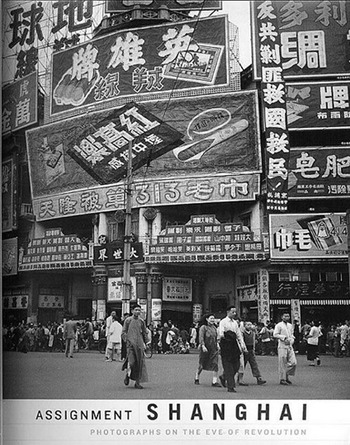
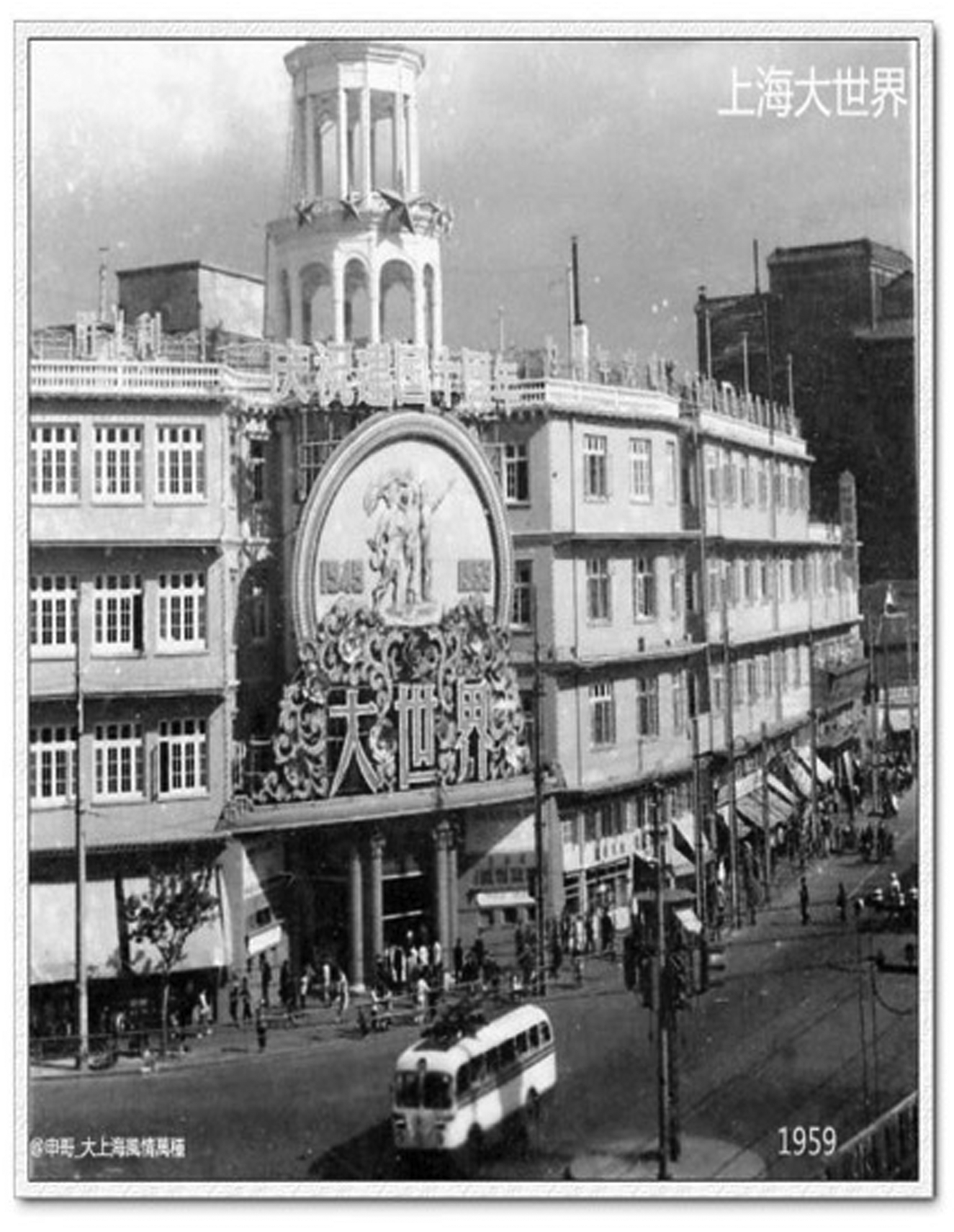
Moreover, on the inner wall of Dashijie, the new regime replaced commercial advertisements with revolutionary banners and posters with messages such as ‘Resisting U.S. Aggression and Aiding Korea’ and ‘Protecting the Country and Home’.Footnote 37 The outer wall of Dashijie, before the Communist takeover, had also abounded with a variety of commercial advertisements, though the Nationalist Party had also made room there for its own political propaganda—a banner displayed on the outer wall read: ‘Opposing Communism, Suppressing Bandits, Saving the Country and People’ (see Figure 1). After the socialist transformation, not a single advertisement was left, and Dashijie's outer aspect became more streamlined and simpler (see Figure 2). Moreover, before the establishment of the PRC, there were a number of stores clustered around the gate into Dashijie, usually crowded with customers (see Figure 1). Under the new regime, however, these stores were closed, as Figure 2 shows.
Dashijie on the eve of the 1949 Communist Revolution. The banner hanging on the outer wall of Dashijie, which reads ‘Opposing Communism, Suppressing Bandits, Saving the Country and People’, suggests that the picture was taken prior to the Communist takeover. Source: Sohu.com, http://roll.sohu.com/20130607/n378276716.shtml (accessed 5 January 2017).

Dashijie in 1959. Source: Sina.com, http://blog.sina.com.cn/s/blog_68f536840101dx4s.html (accessed 5 January 2017).

The spatial change at Dashijie was also evident in the events it hosted during festivals and holidays. For instance, on Children's Day, Dashijie was transfigured into a children's palace:
The Solidarity Hall, Science Academy, and Big Family (Da jiating) are situated on the ground level, the Democratic Hall and Mutual Help Court are on the second floor, the Health and Happiness Hall and Joy Palace are on the third floor, and the Labour Hall, Happiness Hall, and Assistance Hall are located on the fourth floor.Footnote 38
Both the spatial layout and the names reflected the regime's ideology—an ideology promulgated through festival politics. Likewise, on Women's Day and National Day, the space at Dashijie was usually rearranged to make it a venue for celebration, propaganda, and political education.Footnote 39 In other words, spatial politics and holiday politics went hand in hand at Dashijie.Footnote 40
Discharge of ‘unclean’ persons
The thorough cleanings at Dashijie, as mentioned earlier, included the dismissal of ‘unclean’ social groups. Bullies and malicious capitalists (as noted) fell into this category. Another type that was targeted was the ‘hostess’. The presence of hostesses was a long-standing practice at Dashijie and was also common at other amusement centres (Li Reference Li1994). The history of hostesses in Shanghai dates at least to the Shanghai opium dens of the 1870s. Later, hostesses began to appear in teahouses and cafes. While they were not strictly prostitutes, hostesses did provide similar services (Chen Reference Chen2008). Due to the fierce market competition among amusement centres in the Republican era, hostesses were employed to attract customers. Their ages ranged between 23 and 33, and most of them were illiterate.Footnote 41 Every afternoon at 2:00, hostesses began their workday either at fixed venues or by moving from venue to venue in search of customers. After patrons had tea, hostesses might accompany them to chat or eat or to tour the amusement centre. They would deploy various means to solicit relatively high tips, some as high as 10,000 or 30,000 yuan. In the evenings, some hostesses went to the theatre or went dancing with patrons, whereas others provided sex services. Generally, it was difficult to make ends meet solely by selling tea, forcing some hostesses to sell sex for a living.
The working mode of hostesses made them intolerable to the Communist regime. To pre-empt resistance, the dismissal of hostesses proceeded in an incremental manner. As the first step, the Public Security Bureau began to limit the number of hostesses working at the amusement centres. For instance, the numbers at Xianshi Amusement Centre and Daxin Amusement Centre were limited to 210 and 260, respectively. In this process, the relationship between hostesses and teahouse waiters started to change. Previously, in addition to plying their own trade, hostesses were in thrall to teahouse waiters, who exacted payment from them. With intervention from the Labour Bureau, hostesses were no longer under the control of or exploited by teahouse waiters, who no longer paid them money. Instead, a direct employment relationship between hostesses and teahouse owners was established. By 1953, after the government took measures to reform prostitutes (Hershatter Reference Hershatter1997), hostesses at amusement centres began to be seen as undermining the social order; some citizens even wrote to Shanghai's mayor, Chen Yi, arguing that the existence of hostesses was not in harmony with the image of New China. Initially, the Shanghai Public Security Bureau proposed taking incremental measures to address the problem, especially by helping hostesses to find employment in other industries. However, the proposal was not accepted by the government due to concerns over the difficulty of arranging such employment. In 1953, when cultural and entertainment organizations began undergoing democratic reform, hostesses were left out for fear that their involvement might undermine the reform's objective of eliminating counter-revolutionaries.Footnote 42 Until 1955, the municipal government adopted gradual measures to resolve the issue. The Public Security Bureau, with cooperation from cultural organizations, was able to make hostesses leave the amusement centres—they were not detained as was done in the reform of prostitutes.Footnote 43 By the time the socialist transformation ended in 1956, hostesses had largely disappeared from these venues.
The incremental steps taken by the state to deal with hostesses, coupled with the state's powerful penetration and organizational and mobilization capacities, ensured the relatively smooth dismissal of hostesses and forestalled protests of the type that had happened during the Republican era.Footnote 44 It is worth noting that the state did not accomplish the dismissal overnight and initially postponed its efforts. There were several reasons for this. At the founding of the PRC, the new regime did not have enough personnel or financial resources to simultaneously reform both prostitutes and hostesses, and was also unable to provide new jobs for both groups. Since prostitutes were more politically ‘incorrect’ than hostesses, the state undertook prostitute reform first.
In summary, through various measures, including physically cleaning the centre, demolishing the Buddhist Jigong Hall, outlawing fortune-telling stands, cleaning up advertisements in and outside of Dashijie, and gradually discharging hostesses, Dashijie was ‘purified’. It was transformed from a space full of commercial opportunities to a zero-advertisement venue and from a space of erotic seduction to one of state-sanctioned decorum and purity.
Redesigning the space
In addition to purifying Dashijie, the new regime also worked to restructure its spatial layout, especially redefining the functions of its performance venues. In the Republican era, Dashijie was popular primarily because it featured a variety of dramas and non-stop performances. An amusement centre like Dashijie was an ‘entertainment supermarket’, providing a wide range of entertainment choices—including operas, acrobatics, magic shows, movies, food, sports, divination, dances, and pornography—in other words, anything imaginable. At Dashijie, consumers could freely move between different venues and choose the shows they wanted to see, like using a remote control to conveniently switch between TV channels. Furthermore, entertainment was available from noon until night, and intervals between the main performances were filled with small performances, such as magic shows. In this way, visitors could easily fill the time while waiting for the main shows to begin. Accordingly, all four floors of Dashijie were divided into venues for different shows or other entertainment activities. With customers milling around and the plethora of seductive hostesses, solicitous vendors, and other characters, it is easy to imagine just how bustling, chaotic, and full of life Dashijie once was.
Dashijie's practice of putting entertainment first (yule zhishang), however, was in conflict with the CCP's definition of the function of urban culture, which was to promote production growth. It is therefore no surprise that Dashijie's old performance model was re-evaluated under the new regime. As a result, its spatial layout and venue arrangement were altered, and its appearance and style were refashioned. For instance, in a 1952 report on Shanghai dramas and operas, the Shanghai Cultural Bureau recommended that the government take over a sizeable amusement centre and convert it into a cultural palace (wenhua gong) to ‘purify its air’.Footnote 45 Unlike amusement centres, cultural palaces and other mass cultural organizations such as workers’ clubs (gongren julebu), which were created by the new regime following the Soviet model, prioritized propaganda and educational functions and services rather than entertainment ones.Footnote 46 Another fundamental characteristic that distinguished the amusement centre from the cultural palace was that, at an amusement centre, customers needed to buy only one ticket or a one-day pass, which allowed them to amble around the centre's various performance venues and watch whatever interested them. This selling point of the amusement centre, however, drew disapproval from the new regime, as the packed and bustling centre was at odds with the vision of an ordered socialist space. Believing that amusement centres were harmful to the social order, the Shanghai Cultural Bureau suggested that they should all be scaled down, with the exception of Dashijie,Footnote 47 which should be positioned neither as a theatre nor as a cultural palace.Footnote 48 As a result, Shanghai's other amusement centres were all transformed into cultural palaces or workers’ clubs,Footnote 49 whereas Dashijie maintained its status as an amusement centre and retained its one-day-pass system. Dashijie became the only exception probably because of its scale and historical reputation, which suggests some compromise on the part of the regime.
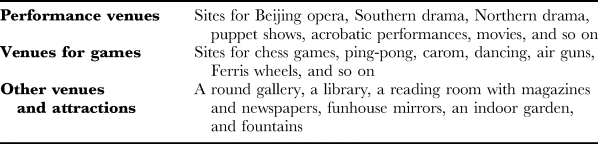
Despite the compromise, Dashijie nevertheless increasingly came to resemble a cultural palace. Cultural palaces or workers’ clubs typically had theatres, libraries, and different rooms for painting, singing, dancing, playing ping-pong and chess, and so on.Footnote 50 Many of these facilities were incorporated into the transfigured Dashijie as well. For instance, Dashijie provided sites for activities such as sports, chess, reading, and art exhibitions—all considered to have health and mental benefits. This was in line with the official transformation plans. A 1955 plan, for instance, required that Dashijie should incorporate a book shop, reading room, and gallery; be furnished with fitness equipment and educational and scientific toys; hold a variety of chess games, ping-pong matches, and dancing exercises; screen short films on science, current events, and news in its movie theatres to improve people's scientific knowledge and political awareness; and organize scientific lectures at appropriate times.Footnote 51 Such events were usually held at mass cultural organization venues such as cultural palaces but were at odds with Dashijie's previous image. The report also made clear that Dashijie's cultural and entertainment activities were expected to follow the model of cultural palaces and workers’ clubs. Table 1 illustrates the specific changes proposed for the rearrangement of the layout of Dashijie.
The layout of Dashijie as described in a 1955 reform plan

Source: Shanghai Archives, B172-4-357, The Shanghai Cultural Bureau's Report on the Development Direction of Dashijie Amusement Centre.
The emphasis on amusement centres’ propaganda and education functions was reiterated multiple times thereafter, which further affected Dashijie's spatial layout. For instance, a 1958 scheme for improving amusement centres underscored that they should strengthen political promulgation, fully serve their function as a front for socialist education, paint propaganda pictures and slogans on the walls, and hold small exhibitions with frequently updated content to publicize the latest events and policies and to introduce new achievements and products as well as ‘advanced’ (xianjin) individuals and deeds.Footnote 52 Another report, expressing that amusement centres should further strengthen Communist education and more directly serve politics, production, workers, peasants, and soldiers, recommended reducing the number of performance venues (from 11 to eight at Dashijie) but increasing each centre's exhibitions, galleries, and sports facilities.Footnote 53
Overall, with the socialist transformation underway, as manifested by ideological change, venue conversion, altered play repertoire, and the dismissal of many entertainers, Dashijie was no longer characterized by its variety of shows and non-stop performances. Rather, it became increasingly similar to a cultural palace.
How, then, was this transfiguration received by the masses? The following excerpt from an article written by an ordinary audience member provides a clear answer:
At 5:30 pm, when I enter the amusement centre, the performance venues on the second, third, and fourth floors are all empty: shows in the daytime have ended, whereas those in the evening have not started yet. Customers, having nothing to do, are simply sleeping on chairs. It turns out that only the audience lounge, located on the third floor, is full of life: some people are playing chess, while others are reading illustrated magazines. However, the lounge is too small to hold so many people, and it doesn't feel good being sandwiched between people. The earliest show scheduled that evening don't start until 6:15 pm, and other plays don't start until 6:45 pm. A customer like me who comes in at 5:30 pm will have no performances whatsoever to watch in the following hour or so. This is nothing like in the past, when most venues at dusk were occupied with plays. In the old days, entertaining shows such as comedy doubles (shuangren huaji) or movies were put on between daytime and evening shows, and no venues were empty for longer than half an hour. Today, the People's Amusement Centre is like an ordinary theatre, which puts on plays only twice a day (2:30 pm and 7:30 pm), making the Centre's twilight dull and hollow. From the ground level to the fourth floor, the Centre has become a resting lounge for customers.’Footnote 54
The words above detail audience members’ feelings about the reformed Dashijie. Apparently, the author was disappointed and upset by the disappearance of Dashijie's previous schedule, which included non-stop performances. To some extent, Dashijie's ‘twilight’ can be seen as a metaphor for its decline as an amusement centre. As examined below, after the government takeover, Dashijie was faced with economic losses and decreasing patron numbers. The double loss of income and patrons not only posed a serious challenge to the cultural organization, but also brought about some setbacks in the socialist cultural transformation. After all, the transformation goal was to turn Dashijie into a ‘lofty, beloved People's Amusement Centre’. Through the transformation, it indeed seemed to have become lofty but, in doing so, it lost its popularity among the people. The tension between indoctrination and entertainment was, in fact, the core challenge and dilemma of the socialist cultural transformation.
Challenges to socialist cultural transformation: the force of habitus
Thus far, this article has documented a series of measures adopted by the Communist regime to transform cultural organizations such as Dashijie. However, the reform was not a smooth process and encountered a series of hurdles, the first being that achieving cultural transformation hinged on support from the employees of the cultural organizations, and winning their support was anything but easy. As archival materials show, during the democratic reform, many employees were indifferent to political education, caring, instead, more about their personal gains and losses. At that time, theatres were in poor condition and employees’ salaries were low. People were much more concerned about putting dinner on the table than transforming their political status. They were disillusioned with the theatres’ poor operation. Although employees completely embraced socialist transformation on the surface, in private, they were anxious about their own future. Hence, the transformation attracted ‘very few activists’.Footnote 55 The lack of activists was indeed a difficulty that the Communist regime encountered throughout the transformation process.
In addition to the lack of enthusiasm among cultural organization employees, a more serious challenge to socialist transformation lay in the resilience of the people's habitus,Footnote 56 reflecting a kind of cultural autonomy. While the Communist regime had strong organizational, mobilization, and penetration capacities, common people's tastes, ideas, and daily habits were difficult to change within a short time period.
Performances during the Spring Festival: audiences’ enthusiasm for superstars
To transform culture, before taking over Dashijie, the state had repressed the ‘despots’ (e ba) in the cultural arena through the Campaign to Suppress Counterrevolutionaries. A subsequent task was to ensure that socialist culture fully penetrated the amusement centre. An important means to this end was to organize state-owned troupes to perform in major festivals at Shanghai's three major amusement centres (Dashijie, Daxin, and Xianshi). The Spring Festival (Chinese New Year) is the most important holiday in China and was the busiest time for entertainment venues. For instance, Dashijie had audiences that numbered nearly 20,000 each day during the season of the Spring Festival—twice as many as attended on ordinary days. Taking advantage of these circumstances to disseminate government policies and state ideologies could therefore produce optimal results. At the three amusement centres, from Lunar January 1st to 4th in 1951, the Shanghai state-owned troupes held a total of 41 shows, including dramas, operas, and musical performances. All the shows were about the Korean War, new patriotism education, anti-espionage, and similar topics. In particular, to accommodate what was the Shanghai government's core task in February, namely anti-espionage, these troupes performed a special show on preventing ‘bandits and spies’ from spreading rumours to damage the regime. In addition to the shows, over 8,000 banners, hundreds of pictures, and dozens of poems promulgating state policies and ideologies were displayed at the centres. In this sense, from spatial arrangements to performance content, the amusement centres embodied the new regime's ideologies.
According to Dashijie's management, these shows were a huge success, attracting the highest turnout of its 30-year history. Furthermore, a Cultural Bureau report claimed that the performances effectively changed the tastes of the masses, who now adored modern operas. As evidence, the report noted that, although it was raining on Lunar January 3rd, the amusement centre was packed and no catcalls or whistles were heard. The Cultural Bureau attributed the audience's earnest attitude to the serious content of the shows.Footnote 57
However, whether the events were as successful as claimed or whether their success truly achieved the desired goal is debatable. While the performances drew large audiences, this did not mean that the spectators were all fond of modern shows. Historically, the Shanghainese favoured traditional operas. As noted previously, in the wake of the Communist victory, many troupes still focused on staging traditional dramas, which were audience favourites. Thus, it is unconvincing to claim that the people's taste suddenly changed just because of the Spring Festival performances. Why, then, did the events attract such a following? In addition to the timing—the Spring Festival—curiosity about the new culture might explain this phenomenon. More importantly, to guarantee the quality of the events, the Cultural Bureau invited prominent figures such as Zhou Xinfang (a grand master of Peking opera and the most important representative of the Shanghai School of Peking opera)Footnote 58 and Yuan Xuefen (one of the most important performers of Yue opera and the founder of the Yuan School of Yue opera)Footnote 59 to perform. Enthusiasm for performances by famous actors was prevalent at all levels of society in the late Qing and Republican eras. However, in those times, common people could seldom afford to watch the superstars’ performances because they appeared only in large theatres, such as Tianchan Theatre, where the price of a ticket was often more than one yuan. In 1951, Dashijie's ticket price was a mere 0.25 yuan, which was affordable for ordinary families. The people were pleased to be able to see well-known performers at such a low price. For this reason, the high turnout was probably attributable more to the crowd's interest in the celebrities than to the reasons provided by the Cultural Bureau. Additionally, though the new regime did not forbid the idolizing of superstars, they did not encourage it either. This disaccord suggests the continuity of the masses’ habitus, which did not evaporate with regime transition.
Dilemma after the takeover: audience attachment to the old Dashijie
After the government takeover, how to rebuild Dashijie and maintain its attractiveness to the masses became a constant and critical problem. The resilience of the masses’ habitus emerged as an important constraint on the government's approach to the problem.
On the heels of the government takeover, Dashijie lost 48,373 yuan between July and November 1954—an average of 318 yuan per day. Its ticket sales dropped by nearly 4,000 tickets per day.Footnote 60 To address this issue, Dashijie conducted a survey to gauge audiences’ opinions of the changes brought about under the new regime. The feedback indicated that the patrons, on the one hand, acknowledged that Dashijie had become tidier, cleaner, and more serious but, on the other hand, found that Dashijie was not as lively, vibrant, or diverse as it had been before. The shows lacked variety, the local operas were outdated, and non-local dramas were not on the playbills. Furthermore, the lighting was deficient, the stage settings were dull, and the didactic elements of the operas were excessive.Footnote 61 Audiences hoped to see a wide variety of operas, neither monotonous nor too serious—sentiments that echoed the opinion piece quoted earlier. The feedback indicates that patrons’ tastes did not change dramatically with the progress of socialist cultural transformation. While they realized that the transformation had improved the hygiene and general cleanliness of Dashijie, they were still attached to the old Dashijie, which was characterized by constant change and a variety of operas without many stern didactic messages. In other words, the regime's effort to reform Dashijie found itself challenged by theatre-goers’ attachment to the old Dashijie.
To reduce economic losses, the Cultural Bureau dispatched several large state-owned troupes, including the People's Huju (Shanghai Opera) Troupe, the People's Huaiju (Anhui Opera) Troupe, and the People's Acrobatic Troupe, to perform one after another at Dashijie. These top-notch troupes usually performed only in professional theatres where ticket prices were high. Their performances, combined with Dashijie's much lower prices, drew large numbers of spectators, temporarily improving Dashijie's operations. Nevertheless, when these troupes left, the amusement centre fell into debt again. In July 1955, sales dropped at a pace unseen in the previous 20 years or so. At worst, as few as 3,000 customers visited Dashijie per day. Again, in response, state-owned troupes (from the Shanghai Opera and the Red Flag Dancing Group) were invited to Dashijie, and their performances again temporarily reversed the decline. In brief, this support from prominent troupes was merely expedient and did not fundamentally or lastingly improve Dashijie's sales.Footnote 62 Hence, how to rebuild Dashijie while retaining its attractiveness to patrons became a persistent and severe problem, affected by the audience's tastes and the continuation of their habitus.
Patrons’ attachment to the old Dashijie was also reflected in decisions regarding its name. Since the founding of the PRC, Dashijie's name had been altered several times. First, to sever its association with the notorious gang boss, Huang Jinrong, ‘Rong's Dashijie’ was renamed ‘Dashijie’. To further distance it from the old Dashijie and its reputation as a ‘filthy venue spreading capitalist culture’, Dashijie again changed its name, this time to ‘People's Amusement Centre’. This was done on 1 May 1955, with the approval of the Shanghai Party Secretary. The word ‘people’ has political significance, as can be seen in the name People's Republic of China or the People's Parks that are common across the country.Footnote 63 People's Amusement Centre announces its function of serving the masses rather than a handful of the privileged, particularly capitalists or counter-revolutionaries. Nonetheless, Dashijie and the image attached to it had existed in people's minds for the more than three decades since its creation. The name of Dashijie was well known across the nation and even around the world. As a result, though the organization had been renamed, ordinary people still referred to it as ‘Dashijie’. Many foreigners who came to Shanghai also expected to visit ‘Dashijie’. In the face of this stubborn persistence, the government capitulated and changed the name back to ‘Dashijie’ in 1957.Footnote 64
This name-change decision indicates the resilience of the masses’ habitus. Such resilience does not indicate a total rejection or active resistance or objection to government policies, but rather suggests the continuity of culture. This continuity means that cultural transformation cannot be achieved easily or shaped arbitrarily. Facing the force of the masses’ habitus, even a strong state like Mao's China had to make some concessions.
Conclusion
Focusing on Shanghai Dashijie, this article examines the process of the socialist transformation of cultural organizations in the early PRC era. By launching a campaign to suppress counter-revolutionaries, mobilizing labour, reforming management and troupes, issuing regulations to tighten control, undertaking the institutional takeover of Dashijie, and initiating ‘democratic reform’, the new regime gradually promoted changes to Dashijie's personnel, institutional structure, and cultural products, which enabled state power to penetrate from the management level to the grassroots. Spatially, the regime also succeeded in ‘purifying’ Dashijie through physical cleaning and the dismissal of ‘unclean’ social groups and, by rearranging Dashijie's spatial function, rendering it similar to a Soviet-style cultural palace. Such transfiguration reflects well the Communist regime's values and vision of a great society, which at its core was to be clean, hygienic, pure, scientific, and orderly (Hershatter 1997; Kwok Reference Kwok1965; Rogaski Reference Rogaski2004). These restructuring measures, along with the power transformation within cultural organizations, were vital for accomplishing the goal of socialist cultural transformation.
The transformation process as demonstrated in this work reveals the state's considerable capacities for organizing, mobilizing, governing, and penetrating society. It was due to these impressive state capacities that the transformation process was able to be accomplished in a fairly short time. State capacity during the PRC era differed remarkably from that during the Republican era: the Nationalist Party also sought to manage and control cultural venues, attempting to outlaw racecourses and dance halls, but these efforts all ended in failure (Chan 2005; Ma 2005). By contrast, the more powerful CCP achieved these goals, turning racecourses into the People's Square and People's Park, and abolishing dance halls altogether. Interestingly, both parties’ negative attitudes toward cultural and entertainment venues reflect a degree of ideological continuity.Footnote 65
Paradoxically, however, precisely because of this substantial state capacity, the Communist regime's accomplishment in promoting the transformation of institutions, dramas, and spatial layout caused problems for the goal of cultural transformation itself. Following the purge of the previous culture, the new culture was not well received by the people, and cultural organizations like Dashijie struggled to attract audiences and turn a profit. Indeed, there was no way to establish a new socialist culture on a heap of ruins. Audiences tended to maintain their previous ‘bad’ habitus, to appreciate the old dramas and Dashijie's former operation model, and to retain their enthusiasm for the long-standing cultural meanings attached to the old Dashijie. The Chinese people did not automatically obtain a revolutionary consciousness and were unable to quickly break with the past. The resilience of the masses’ inherent habitus suggests the existence of some cultural autonomy and continuity, which could not be changed even by as strong a state as Mao's China. In response, the regime had to make some concessions. In this sense, although Mao's China was undoubtedly powerful, it was not omnipotent. Notwithstanding the enormous changes it brought about, there were still many areas that it could not alter in the short term. This observation is in line with remarks about the ‘unevenness’ of state capacities (Skocpol 1985) and the ‘limitations of the Maoist State's Power’ (Shue Reference Shue1988). It also suggests that state capacities are by no means self-sufficient. Rather, they are always constrained by culture and lifeworlds. The strength of state capacities, therefore, hinges on relationships between the state and society, as Joel Migdal (Reference Migdal2001) reminds us.Footnote 66
As a result, the socialist cultural transformation attempted by the CCP in the early 1950s can be considered both a success and a failure to some extent. The reform goal was to turn Dashijie into a ‘lofty, beloved’ People's Amusement Centre, or to combine loftiness and amusement in accordance with the old saying, ‘education through entertainment’ (yujiao yule). Indeed, Dashijie, serving as a vehicle for political indoctrination and propaganda, seemed to become loftier, neater, and cleaner; at the same time, however, it incrementally lost its unique character, becoming monolithic and less attractive. This was highly problematic for a cultural entertainment organization such as Dashijie, which had to pursue profit-making owing to its financial constraints. These two responsibilities—indoctrination and profit-making—were thus at odds with each other. Overemphasizing the former made it difficult to pull in audiences, thereby incurring financial losses, whereas overemphasizing the latter meant deviating from the organization's political function (Xiao Reference Xiao2013). Such a dilemma was a lingering problem for socialist cultural transformation. In this sense, this detailed case study illustrates the complexity of history and the paradoxes of the government-led attempts to transform society.
The cultural transformation of Dashijie proceeded in a step-by-step manner. In the early years of the PRC, while in principle the state emphasized ideological control, in practice it showed some flexibility and pragmatism. Shying away from radical measures, it instead employed relatively peaceful means and stressed that change should be made through thought reform and propaganda education. The dynamics of change here share some similarities with those of socialist transformations in other arenas in China (Wasserstrom Reference Wasserstrom2009). For instance, in the economic field, Western companies were not eliminated instantly following the Communist takeover; rather, foreign capital was only incrementally squeezed out of control over time (Hooper Reference Hooper1986: 183; Howlett Reference Howlett2013). Similarly, extreme measures were also avoided in the nationalization of private universities, the reform of Chinese Buddhism, and the abolishment of prostitution (Bergère Reference Bergère2009; Hershatter 1997; Hooper Reference Hooper1986; Xue Reference Xue2015). The state's pragmatism can be partly explained by its awareness of its own limited capacities. In the economic realm, for example, the new authorities needed the expertise and financial resources of Western and domestic private firms to minimize disruption to production and reduce unemployment in the wake of the Communist victory (Bergère Reference Bergère2009: 350; Hooper Reference Hooper1986: 183). Therefore, to ensure a smooth transition and to achieve political consolidation, economic rehabilitation, and social stability, the Communists largely adopted a cautious approach in the early PRC period.
Mao's doctrine that culture should serve politics deeply influenced cultural work during the Mao era. In the post-Mao era, though the doctrine was somewhat downplayed in the early reform period, the CCP has more recently repeatedly instructed that literature and art be refocused on publicizing socialist values and extolling the nation,Footnote 67 suggesting continuity in the CCP's cultural governance. On the other hand, as illustrated in this article, the complexity of state capacities—the unevenness, paradox, and limitations of state capacities—suggests that the CCP's cultural governance cannot be autonomous from the existing culture and lifeworlds. In this sense, an overview of cultural transformation in the early PRC era has important contemporary implications.