Introduction
Blood culture (BC) is the gold standard for detecting bloodstream infections and is essential for providing high-quality medical care. However, contamination of BC samples during collection or inoculation can lead to misleading results, incorrectly attributing the bloodstream infection to an unrelated organism. This, in turn, can lead to unfavorable outcomes such as unnecessary antibiotic use, extended hospital stays, and excessive medical costs.Reference Little, Murray, Traynor and Spitznagel1–Reference van der Heijden, Miller, Wright, Shepherd, Daniels and Talbot5 Several factors, including skin disinfection, aseptic technique, blood collection sites, and even the job category of the person taking blood, are associated with the frequency of BC contamination.Reference Mimoz, Karim, Mercat, Cosseron, Falissard and Parker6–Reference Weinstein11
A landmark study published in 2001 showed an association between weekend hospitalization and in-hospital mortality.Reference Bell and Redelmeier12 Since then, the association between weekend medical settings and unfavorable clinical outcomes, referred to as the “weekend effect,” has been controversial. When assessing the weekend effect, it is essential to consider the impact of weekend/off-hour care-side problems, including understaffing and less experienced staff.Reference Galloway, Hegarty, McGill, Arulkumaran, Brett and Harrison13,Reference Aldridge, Bion, Boyal, Chen, Clancy and Evans14 We hypothesized that weekend care settings would affect BC performance. To our knowledge, no previous study has evaluated whether blood sampling on weekends is associated with a higher incidence of BC contamination. Identifying the weekend effects on BC contamination can contribute to the provision of better quality healthcare. In the present study, we determined whether there was a weekend effect on BC contamination using BC data from a Japanese university hospital.
Methods
Study design and settings
We conducted a single-center retrospective observational study to examine the weekend effect on BC contamination at Jikei University Hospital, a 1075-bed tertiary medical center in Tokyo, Japan. The hospital operates from Monday to Saturday to provide regular medical services. Off-hours are from 5:00 p.m. to 9:00 a.m. on these days, as well as the entire day on Sundays, public holidays, and university anniversaries. During off-hours, at least one designated physician is assigned to each department to address patient needs as required. The emergency department is open 24 hours a day and 365 days a year. Patients admitted to the emergency department during the off-hours are attended by the emergency department staff or on-duty physicians of the respective department.
This study was approved by the Institutional Review Board of Jikei University School of Medicine (Approval number: 35-177 [11806]). The need for informed consent was waived because the study design was retrospective, and clinical information about the patients was not used.
Blood sampling and BC procedure
Aligning with our hospital’s usual practice, all blood samples for BC were collected by physicians, not phlebotomists or nurses. In principle, two or more sets of BCs should be performed either simultaneously or within a 24-hour period.Reference Weinstein15,Reference Lee, Mirrett, Reller and Weinstein16 A set of BCs consists of two bottles, one for aerobic bacteria and one for anaerobic bacteria. Samples for BC are collected primarily by peripheral venipuncture; however, in some cases, they may be collected via a hemodialysis (HD) circuit or long-term indwelling catheter, such as a central venous catheter. While our facility does not have a licensing system for blood sampling for BC, newly employed physicians must take video or on-site lectures on the proper blood sampling technique shortly after they start work. Physicians collecting blood samples are required to implement appropriate procedures to reduce BC contamination, which include hand washing before blood sampling, thorough skin asepsis, and disinfection of culture bottles before use.
The BCs were processed in the hospital bacteriology laboratory. Since April 2017, blood samples collected during the day shift on holidays or weekdays were processed in the laboratory on the same day, while samples collected during the night shift were processed the following day. Before March 2017, an on-duty bacteriologist was not for all holidays. They were assigned to holiday shifts every other day only when there were more than two consecutive holidays. Therefore, until March 2017, the processing of blood samples collected on holidays could have been delayed by up to 24 hours compared with samples collected on weekdays. BC tests were performed using a BD BACTEC FX system with BD BACTEC Plus Aerobe/Anaerobe bottles (Becton, Dickinson and Company, USA). Bacterial identification and susceptibility testing were performed using the MicroScan WalkAway system (Beckman Coulter, USA).
Study subjects and data collection
The BC results, until 31 December 2019, were screened. The coronavirus disease 2019 (COVID-19) pandemic in 2020 led to changes in our practice structure, including restrictions on regular medical services, priority acceptance of patients with COVID-19, and the associated reorganization of staff and beds. Several studies have reported an increase in the frequency of BC contamination during the COVID-19 pandemic.Reference Esquer Garrigos, Wingler, Svoronos, Vijayvargiya, Goodman-Meza and O’Horo17,Reference Ohki, Fukui, Morishita and Iwata18 Given this background, this study did not include BC results obtained after 1 January 2020.
The BC data consisted of information on the date of blood sampling, specimen identification number, department ordering of the test, test site, site of phlebotomy, route of blood sampling, and organism species isolated. BCs performed on pediatric patients were excluded from the study, considering the volume of BC samples and the number of bottles collected may differ between adult and pediatric patients.Reference Doern, Carroll, Diekema, Garey, Rupp and Weinstein19 Because the BC results did not include patient-level information such as age, the ordering department, the location of the test (eg, pediatric ward), and other comments indicating that the test was performed on a pediatric patient were used to exclude pediatric BC results. In some cases, pleural fluid and ascites were inoculated into BC bottles and cultured; these were also excluded.
Definitions of weekend and contamination
Based on our hospital settings, BC using blood collected on closed days (Sundays, public holidays, or university anniversaries) were considered as tests performed on weekends (weekend group); all other BCs were considered as tests performed on weekdays (weekday group).
Two or more sets of BCs should be collected within 24 hours to accurately detect the causative organisms of bloodstream infections.Reference Lee, Mirrett, Reller and Weinstein16 In this study, the two-set sampling proportion was calculated by dividing the number of BCs obtained with at least two sets within 24 hours by the total number of BCs during the same period. BC contamination was defined as the identification of the following organisms in only one set from BC obtained with a two-set sampling within seven consecutive days: coagulase-negative staphylococci (CoNS) other than Staphylococcus lugdunensis, Propionibacterium spp. including Cutibacterium (Propionibacterium) acnes, Micrococcus spp., viridans group streptococci (VGS), Corynebacterium spp., Clostridium perfringens, or Bacillus spp. other than Bacillus anthracis.Reference Doern, Carroll, Diekema, Garey, Rupp and Weinstein19–Reference Dargère, Cormier and Verdon21 The proportion of BC contamination was calculated by dividing the number of contaminated BC sets by the number of BC sets obtained with a two-set sampling during the same period.Reference Palavecino, Campodónico and She22
Study period and outcome
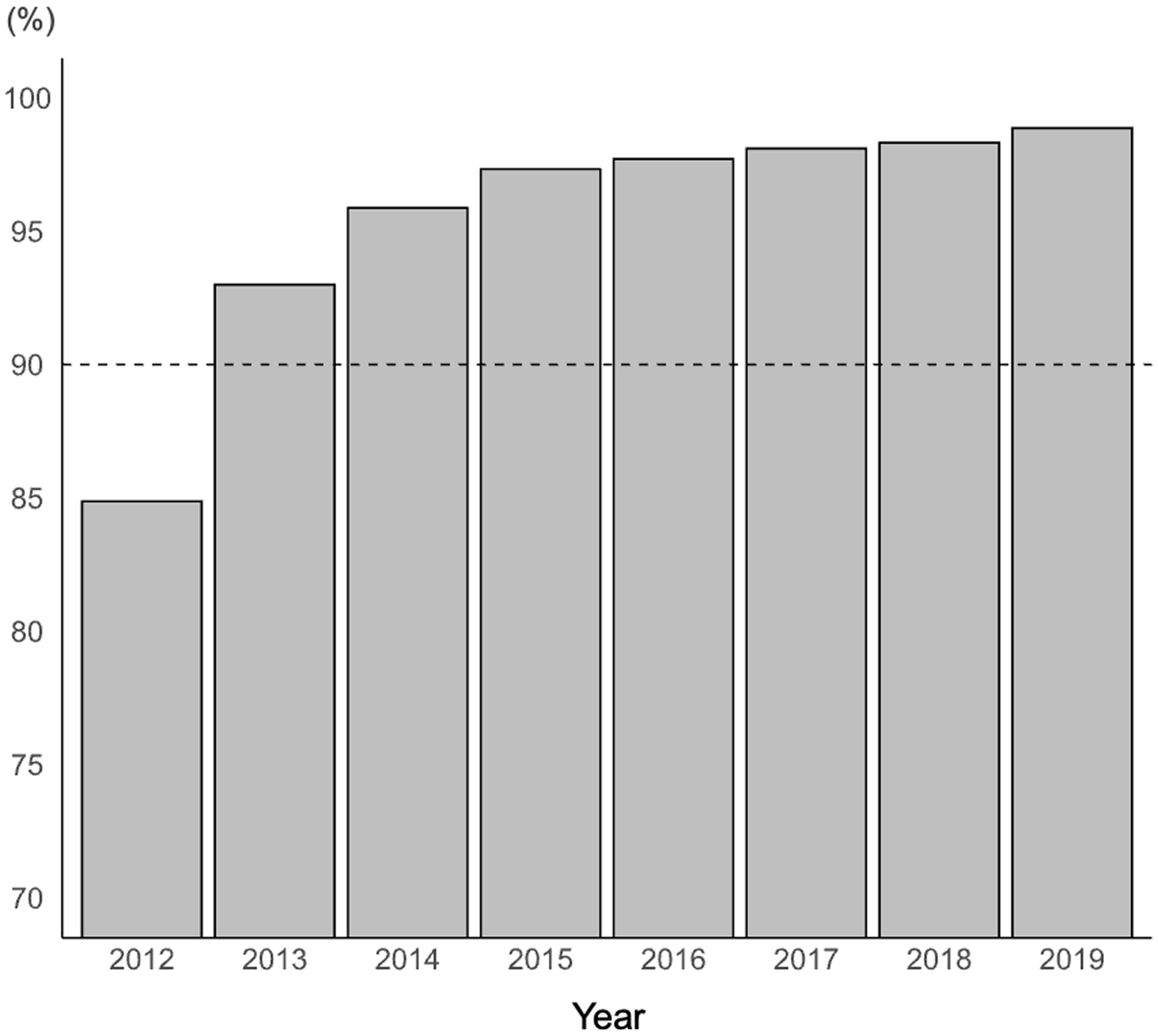
This study defined the proportion of BC contamination according to the criteria, which were not based on clinical judgment. If the two-set sampling proportion was low, the calculated BC contamination proportion in this study could potentially deviate from the actual contamination proportion. Therefore, we calculated the two-set sampling proportion for each year and used the data of the years in which the proportion exceeded 90% for the data analysis.
The primary outcome of the present study was the incidence of BC contamination, which was compared between the weekend and weekday groups.
Statistical analyses
Descriptive statistics are expressed as frequencies and percentages for categorical variables. We evaluated the association between weekend sampling and BC contamination using multivariable logistic regression analysis. Our analysis was based on several assumptions. BCs should be performed immediately after a patient presents with symptoms suggestive of bacteremia, such as fever, hypotension, or loss of consciousness. Considering that these events would occur randomly on weekends and weekdays, the decision to perform BCs on weekends or weekdays is not influenced by patient or physician discretion. Therefore, it is reasonable to assume that there was no bias in the background information of the patients whose BCs were performed on weekends or weekdays. However, considering most patients visiting hospitals on weekends are treated in the emergency department, more BCs may be ordered in the emergency department on weekends, and blood sampling settings are expected to differ between weekends and weekdays. Furthermore, differences may exist depending on how samples were collected for BCs on weekends and weekdays. For example, the site and route of blood sample collection may differ between weekends and weekdays because the choice of sampling method is at the discretion of the physician collecting the blood samples. Based on these assumptions, we analyzed the association between weekend blood sampling and BC contamination using a multivariable model adjusted with variables related to the settings in which blood sampling was conducted (general ward, intensive care unit, general outpatient setting, emergency department),Reference Liaquat, Baccaglini, Haynatzki, Medcalf and Rupp23–Reference Aiesh, Daraghmeh, Abu-Shamleh, Joudallah, Sabateen and Al Ramahi25 route of blood sampling (via intravascular catheter, HD circuit, or others),Reference Boyce, Nadeau, Dumigan, Miller, Dubowsky and Reilly9,Reference Norberg, Christopher, Ramundo, Bower and Berman26 and site of phlebotomy (femoral vessel or other),Reference Ota, Oba, Fukui, Ito, Hamada and Mori27 rather than patient-level background information. Multicollinearity was assessed using the variance inflation factor (VIF). A VIF > 5–10 was considered indicative of multicollinearity.Reference Kim28 Statistical analyses were performed using R (version 4.1.3) and R Studio (version 2022.02.1). Statistical significance was defined as a two-sided P-value <0.05.
Results
Figure 1 shows the changes in the two-set sampling proportion during the past eight years until 2019. The two-set sampling proportion at our hospital has improved over the years and has been consistently above 90% since 2013. Consequently, we used data from 1 January 2013 to 31 December 2019 for the analysis.
The proportion of blood cultures obtained with two-set sampling. The two-set sampling proportion at our hospital was consistently above 90% between 2013 and 2019.

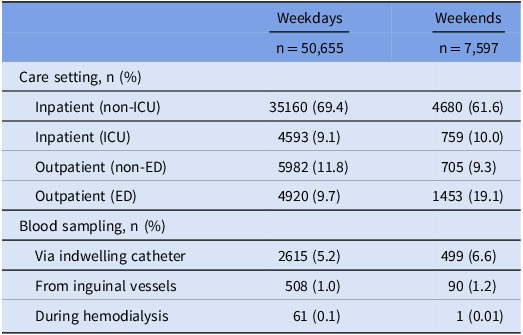
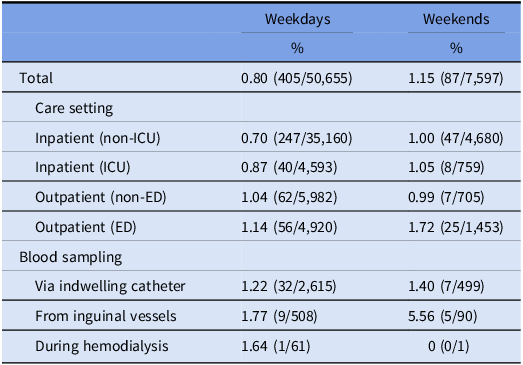
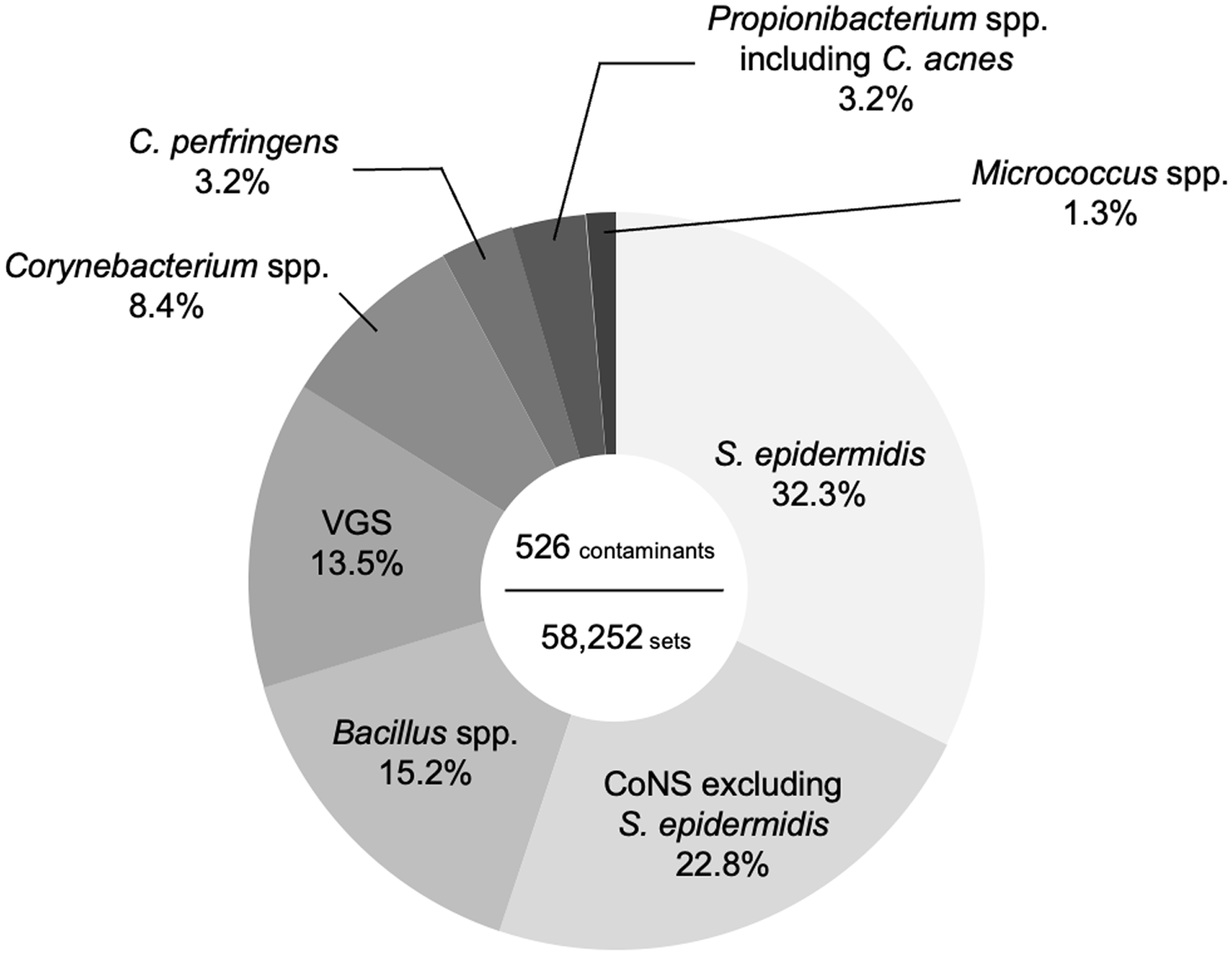
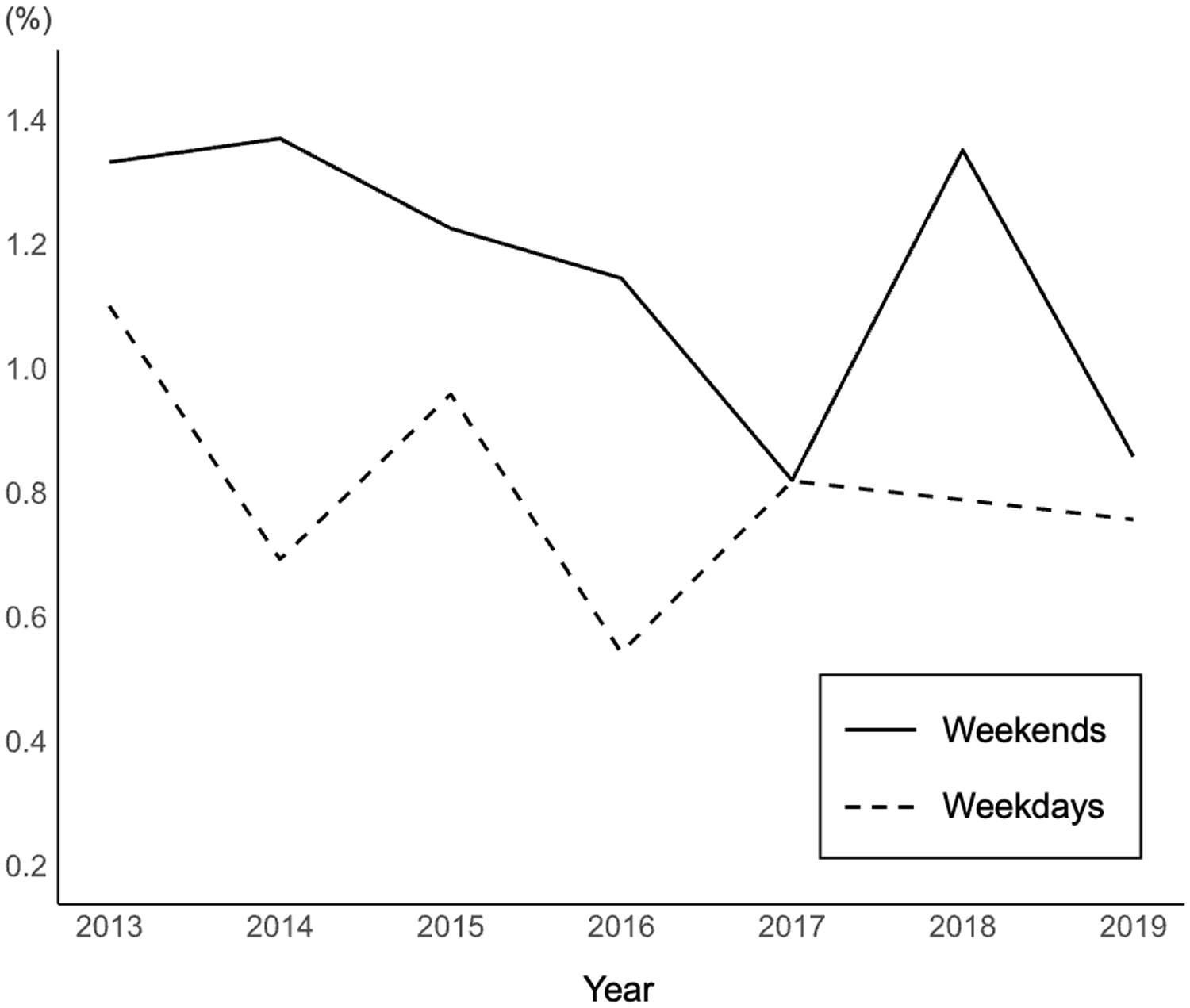
From 1 January 2013 to 31 December 2019, the total BCs collected with two-set sampling were 7,597 and 50,655 sets for weekends and weekdays, respectively. Information on blood sampling settings in each group is presented in Table 1. The percentage of BCs ordered in the emergency department was higher on weekends than weekdays. Additionally, catheters were often used as the route of blood collection on weekends, with femoral vessels frequently chosen as the phlebotomy site. The total number of contaminated BCs during this period was 492 sets. The percentage of BC contamination was 1.15% (87/7,597) and 0.80 % (405/50,655) in the weekend and weekday groups, respectively. The percentage of contamination for each setting in the two groups is shown in Table 2. When blood was taken from inguinal vessels, a higher contamination incidence was observed on weekends than weekdays. A total of 562 organisms were identified as contaminants, of which more than half were CoNS, followed by Bacillus spp., and VGS (Figure 2). The percentages of each contaminant were similar between the weekend and weekday groups. Figure 3 shows the percentage of BC contamination in each group by year. Across all the years, the percentage of BC contamination on weekends was higher than on weekdays.
Blood sampling settings in the weekend and weekday groups

ED, emergency department; ICU, intensive care unit.
The percentage of contamination for each setting in the weekend and weekday groups

ED, emergency department; ICU, intensive care unit.
Contaminants detected in blood cultures. The total blood cultures obtained with two-set sampling between 2013 and 2019 were 58252 sets. A total of 526 organisms were detected as contaminants. Coagulase-negative staphylococci (CoNS), excluding S. lugdunensis, accounted for more than half of the contaminants, followed by Bacillus spp. and viridans group streptococci (VGS).

Blood culture contamination proportion in the weekend and weekday groups across different years. In 2013–2019, the proportion on weekends was higher than on weekdays.

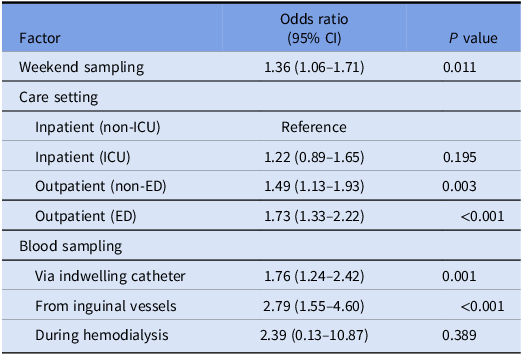
In the multivariable logistic regression analysis adjusted for the blood sampling settings, the route of blood sampling, and the site of phlebotomy, weekend sampling was significantly associated with a higher incidence of BC contamination (odds ratio, 1.36; 95% confidence interval, 1.06–1.71) (Table 3). Multicollinearity was not indicated because the VIFs for the independent variables in the model were < 2.0.
Multivariable logistic regression analysis for blood culture contamination

ED, emergency department; ICU, intensive care unit.
Discussion
We evaluated the weekend effect on BC contamination using data from BC tests performed on adult patients at a university hospital in Japan. Our study demonstrated that BC contamination occurs more frequently on weekends than weekdays. In the multivariable logistic regression analysis adjusted for factors that could affect BC contamination, weekend blood sampling was significantly associated with a higher incidence of contamination. To our knowledge, no study has examined the difference in BC contamination frequency between weekends and weekdays using a large multiyear dataset, as reported in this study. The contamination proportion at our institution was well below the generally reported 3% or less.Reference Doern, Carroll, Diekema, Garey, Rupp and Weinstein19,29 Even under these circumstances, there was a significant difference between weekends and weekdays.
Our study is novel in its focus on BC contamination as an indicator of hospital care quality rather than on patient clinical outcomes, which were the focus of previous studies that examined the weekend effects. BC contamination is associated with unfavorable healthcare outcomes, including unnecessary antibiotic use, extended hospital stays, and increased healthcare costs.Reference Little, Murray, Traynor and Spitznagel1–Reference van der Heijden, Miller, Wright, Shepherd, Daniels and Talbot5 This study demonstrated that hospital care practices on weekends may contribute to an increase in these unfavorable events owing to increasing BC contamination. The “weekend” itself cannot be considered to cause undesirable outcomes. The weekend effect should be considered as composed of various factors associated with weekend healthcare quality. It can be divided into two categories: the “patient effect,” attributed to factors on the part of patients, and the “care effect,” associated with factors related to caregivers and medical facilities.Reference Concha, Gallego, Hillman, Delaney and Coiera30 The former is thought to be due to case selection bias among patients, which is one of the reasons contributing to inconsistent results across studies examining weekend effects.Reference Pauls, Johnson-Paben, McGready, Murphy, Pronovost and Wu31–Reference Smith, Yamamoto, Roberts, Tang, Ronksley and Dixon33 BCs are performed when symptoms suggest bacteremia, such as fever, hypotension, or loss of consciousness. Such clinical events occur unexpectedly on any day, regardless of whether the patients are inpatients or outpatients. Thus, it is reasonable to assume that patient background bias is unlikely between BCs performed on weekends and weekdays. The weekend effects observed in this study are likely the result of care-related effects.
The weekend effect observed in this study may be due to differences in practice quality, which were not accounted for in the analysis. The data used in this study did not include information on staff attributes (eg, gender, years of work experience, and proficiency in knowledge and skills) or detailed information about blood collection (eg, the volume of blood sampled, presence of a caregiver during blood sampling, and adherence to appropriate cleanliness protocols). Thus, adjustments for these factors could not be performed. Compared with weekdays, there is often a staff shortage on weekends, with a corresponding lack of skilled staff. Therefore, in settings with an increased workload per staff member, compliance with proper blood collection procedures may decrease, contributing to increased BC contamination.Reference Lee, Lee, Chuang, Chen, Chang and Ko24 In this study, a higher contamination incidence was also observed on weekends than weekdays when blood was taken from inguinal vessels, which also suggests poor adherence to the proper blood sampling procedure on weekends. More detailed evaluations of the differences in staffing and blood collection processes on weekends and weekdays could provide further insights into reducing BC contamination.
Some limitations of this study should be considered when interpreting its results. First, this study was conducted in a single center. The setting of our hospital is similar to that of many other acute care hospitals in Japan. However, being a university hospital means that our hospital is likely to have more human resources than other hospitals. Therefore, the results should not be directly extrapolated to settings in which the types of positions for collecting blood samples, staffing on holidays, and laboratory operation schedules on holidays differ significantly from those at our facility. In this study, all blood sampling was performed by doctors, which is not unusual in Japanese medical institutions but may be uncommon in hospitals in other countries. This is also a factor that limits the generalizability of this study. Second, the data used in the analysis was from 2013 to 2019, the pre-COVID-19 pandemic. Several studies have reported an increase in the frequency of BC contamination during the COVID-19 pandemic.Reference Esquer Garrigos, Wingler, Svoronos, Vijayvargiya, Goodman-Meza and O’Horo17,Reference Ohki, Fukui, Morishita and Iwata18 Different results from this study might be observed in the post-COVID-19 pandemic era. In addition, some information was lacking due to the retrospective nature of this study. Staff with inadequate knowledge or skills in collecting blood samples for BC are at higher risk of causing BC contamination than other staff members with more experience. Our data does not contain information regarding the identity of the person who collected the blood samples; thus, we could not perform an analysis to account for the impact of staff members who frequently cause BC contamination.
In conclusion, the present study demonstrated a significant association between weekend blood sampling for BC and increased contamination incidence. Further studies performing detailed evaluations of the differences in staffing and blood collection processes on weekends and weekdays are warranted to provide better quality care.
Acknowledgments
We want to thank our hospital’s infection control team and bacteriology laboratory members for their substantial support in preparing and during the study.
Author contribution
All authors conceived the study concept and design and performed the data acquisition. K. N. was responsible for performing the statistical analyses and created the initial draft of the manuscript. K. N. and T. T. were responsible for data management. All authors participated in the interpretation of the results and approved the final version of the manuscript.
Financial support
This study received no funding.
Competing interests
All authors have no conflicts of interest to declare in relation to this study.