Introduction
In common with many other developed nations, Australia has a rapidly ageing population (Australian Institute of Health and Welfare, 2018; United Nations, 2019). There were 703 million older people (aged 65 years or over) in the world in 2019 and this is forecasted to increase markedly to 2.1 billion older people by 2050 and 3.1 billion by 2100 (United Nations, 2017). Due to the natural process of ageing, many older people experience declines in their physical health and cognition over time which may increase their need for additional care and support. Over 1.2 million older Australians currently receive aged care services, and this number is set to increase exponentially in the coming decades (Australian Bureau of Statistics (ABS), 2018a). In the Australian context the term ‘aged care services’ covers residential aged care (known as ‘long-term care’ internationally) and community care, i.e. caring for older people in their own homes (sometimes known as ‘social care’). Although an increasing number of older people are accessing aged care services in the community, Organisation for Economic Co-operation and Development data indicate that Australia is a comparatively high user of residential aged care with a relatively low financial investment in the aged care sector as a whole in comparison with many other developed nations (Dyer et al., Reference Dyer, Valeri, Arora, Tilden and Crotty2020). Currently, the Australian government meets approximately 75 per cent of the costs of Australia's aged care system, financed mainly through income tax contributions (for details on the Australian context, see Table 1). Overall government expenditure in 2018–2019 was Aus $19.9 billion, with the remainder (25%) financed from means-tested co-contributions from older people and their families receiving aged care services (Department of Health, 2019; Royal Commission into Aged Care Quality and Safety, 2020a).
The Australian context: person-level perspective

Source: My Aged Care Website, Australian Government, 2021, https://www.myagedcare.gov.au/. Australian Bureau of Statistics average weekly earnings data from November 2020, https://www.abs.gov.au/statistics/labour/earnings-and-work-hours/average-weekly-earnings-australia/latest-release.
The quality of aged care in Australia, particularly that of residential aged care, has recently been placed under a global spotlight following the instigation of a Royal Commission into Aged Care Quality and Safety in 2019 (The Lancet, 2019). The Commission's interim report entitled ‘Neglect’ (Royal Commission into Aged Care Quality and Safety, 2019a, 2019b), documented systemic failures and shocking incidences of abuse and neglect of our most vulnerable older citizens. The COVID-19 pandemic has further exposed the cracks in the system; a situation that is being mirrored in other countries, including the United Kingdom (UK) and Canada (McGilton et al., Reference McGilton, Escrig-Pinol, Gordon, Chu, Zúñiga, Sanchez, Boscart, Meyer, Corazzini, Jacinto and Spilsbury2020). Furthermore, long-term care reforms that have taken place in other countries have had mixed success (Ranci and Pavolini, Reference Ranci and Pavolini2015), which may be in part due to many reforms taking place against a backdrop of austerity measures as well as increasing demands being placed on aged care systems due to ageing populations (Ranci and Pavolini, Reference Ranci and Pavolini2015; Deusdad et al., Reference Deusdad, Comas-d'Argemir and Dziegielewski2016; United Nations, 2017). Ranci and Pavolini (Reference Ranci and Pavolini2015) argue that long-term care has become a ‘weak social right’ given that it is not expected in most developed nations that such care will be fully covered by governments. Thus, the need for general public support changes to funding of aged care is essential. Though the failings of the aged care system have been prevalent on mainstream and social media, it is not clear to what extent Australian adults in the general community, who have not utilised aged care services themselves, have a good understanding of the aged care system and whether higher levels of understanding translate to different expectations for standards of quality of aged care service delivery.
Internationally, few large-scale surveys of general public perceptions of aged care have been undertaken previously. Two large-scale general public surveys reported upon in this journal include a study by Hussein et al. (Reference Hussein, Manthorpe and Penhale2007), who surveyed 1,000 adults in the UK to ascertain their knowledge of the neglect and mistreatment of older people in the UK, and a recent study in Ireland surveying over 1,200 members of the general public to investigate public knowledge and understanding of dementia (Glynn et al., Reference Glynn, Shelley and Lawlor2017). To date, there have been no largescale surveys to investigate the general public's expectations for standards of quality of aged care service delivery nor the perceptions of the general public as to how well the system is performing in meeting societal expectations of these quality standards. This research seeks to address this gap by examining the influence of aged care literacy, categorised according to self-assessed levels of understanding of Australia's aged care system, on general public expectations and perceptions of quality of care from a general population survey sample of over 10,000 Australians. In addition to examining attitudes towards quality standards, this study also examined the general public's willingness to pay additional taxation to support future funding of the aged care sector and finance quality improvements.
Methods
Survey design
Data for this study were extracted from a wider cross-sectional online survey developed by the authors. The survey was designed for anonymous completion by respondents and comprised four sections. Section A contained a series of attitudinal statements relating to the quality of care experience provided in home and residential care settings. Section B comprised a discrete choice experiment (DCE) whereby respondents were presented with a series of hypothetical choices between two aged care service providers differing in terms of key quality of care characteristics and asked to indicate their preferences. After completing each choice set, participants were asked to provide a quality rating for the option they selected based on a five-point scale of unacceptable, poor, satisfactory, high or very high. Section C contained questions about attitudes to funding and individuals’ willingness to pay for aged care via income taxation. Participants were asked how much additional taxation (over and above their current personal level of taxation) they would be willing to pay for ‘satisfactory’ aged care and for ‘high-quality’ aged care. In considering these levels of care, they were asked to reflect on the DCE choice sets and their quality ratings. The final section (Section D) comprised a series of questions about socio-demographic characteristics.
Study sample
The study sample comprised survey respondents who were recruited by Quality Online Research (www.qor.com.au), an online fieldwork provider with an extensive panel network and national coverage in Australia. Panel members were invited to participate via email if they met the selection criteria (aged 18 years and over, able to read and respond in the English language, residing in Australia and no personal experience of accessing aged care services). This survey specifically targeted Australian adults, the majority of whom were current income tax payers and hence contributing to the funding of Australia's aged care system as potential future recipients of aged care (Dyer et al, 2019). Ethics approval for the study was granted by the Flinders University Human Research Ethics Committee. The survey aimed to recruit 10,000 general public participants. Quotas were set on key demographic variables (age, gender, state/territory) to ensure the final sample was representative of the Australian population and aligned with ABS population estimates (ABS, 2018a).
Measuring aged care literacy and attitudes towards quality in aged care
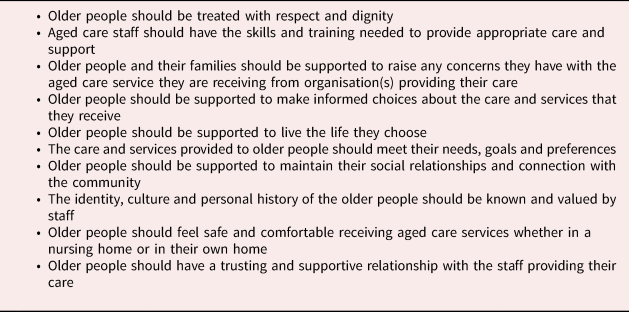
Aged care literacy was categorised according to responses to the following question included in Section A of the survey: ‘How well do you think you understand Australia's current aged care system?’ Response categories were ‘not at all’, ‘slightly’, ‘somewhat’, ‘fairly well’, ‘very well’ and ‘don't know’. Ten attitudinal statements relating to quality of care in aged care were developed in consultation with our Project Advisory Group comprising aged care-sector service providers, consumer representatives and senior researchers with experience in aged care, end-of-life care, social gerontology, psychology and health economics. The statements originated from a review of literature on quality of care and person-centred care in aged care contexts, published between 2010 and 2020, which identified eight key themes: (a) respect and dignity; (b) spiritual, cultural, religious and sexual identity; (c) aged care staff; (d) informed choices; (e) social relationships and community engagement; (f) supporting older peoples’ health and wellbeing; (g) safety and comfort; and (h) feedback and complaints (Cleland et al., Reference Cleland, Hutchinson, Milte, Khadka and Ratcliffe2021). The attitudinal statements were finalised by our Project Advisory Group and presented alongside the aged care literacy question in Section A of the survey (Table 2). Survey respondents were asked to read through each statement and indicate how important each statement was, in their own opinion, to ensuring quality of care in home and residential care on a five-point Likert scale ranging from ‘not important’ to ‘very important’.
Attitudinal statements relating to quality of care in aged care

Those survey respondents who indicated a reasonable or higher level of understanding of Australia's aged care system (categorised by ‘somewhat’, ‘fairly well’, ‘very well’ responses to the aged care literacy question; N = 6,877) were then asked a series of follow-up questions including selecting their top three priority statements, from the ten statements previously provided, which in their opinion reflected the most important elements of quality aged care for older Australians. These respondents were then asked to think about each of these three selected statements in turn and rate how successful they felt the aged care system in Australia was in achieving them at the time of survey completion. A five-point Likert response scale ranging from ‘not at all successful’ to ‘always successful’ was applied to categorise individual responses.
Attitudes towards future funding
A series of statements about the future funding of Australia's aged care system to ensure sustainability and to guarantee universal access to high-quality aged care for all Australians in need were presented in Section C of the survey. These were: (a) The government should provide more funding for aged care; (b) I would be willing to pay more tax to ensure Australians are able to access aged care services when they need them; (c) Australians should contribute towards the funding for the aged care services they receive in line with their ability to pay; and (d) I would be willing to pay more tax to improve the quality of the aged care services being provided to older Australians.
These funding statements were developed in consultation with the Project Advisory Group and focused on the two main funding pillars currently applied in Australia's aged care system: personal co-contributions and government expenditure financed through income tax. Respondents were asked to indicate their level of agreement with each funding statement on a five-point Likert scale ranging from ‘strongly disagree’ to ‘strongly agree’. The survey questions were piloted on a sample of people from the general population (N = 12, age 18–70 years). Following the pilot study, minor amendments were made to a small number of survey items to improve understanding and comprehension.
All tax-paying survey respondents (N = 6,557) were initially asked an opt-in or opt-out question as to whether they would be willing to pay any additional income tax to support ‘satisfactory’ quality aged care with Yes/No response options. Respondents who indicated a No response received no further questions on this topic. Those respondents who indicated a Yes response (N = 3,988) were asked an additional follow-up contingent valuation question using a payment scale approach with a series of six possible response options increasing in 0.5 per cent increments ranging from a minimum of 0.5 per cent additional income tax to a maximum of 2.5 per cent income tax and an additional more than 2.5 per cent response option. Those respondents who indicated that they would personally be willing to pay more than 2.5 per cent additional income tax were asked to indicate the maximum amount they would be prepared to pay to support universal access to satisfactory quality aged care for all older Australians in need.
Current income tax payers were then asked a second similar opt-in or opt-out question as to whether they would be willing to pay more income tax to support ‘high- quality’ aged care with Yes/No response options. Like the previous question framing, respondents who indicated a No response received no further questions on this topic. Those respondents who indicated a Yes response (N = 3,568) were reminded of how much additional income tax they had previously indicated that they would be willing to pay to support universal access to satisfactory quality aged care for all older Australians in need and asked a further follow-up contingent valuation question about how much additional income tax they would be willing to pay (beyond their initially specified amount) using a payment scale approach with a series of six possible response options increasing in 0.5 per cent increments ranging from a minimum of 0.5 per cent additional income tax to a maximum of 2.5 per cent income tax and an additional more than 2.5 per cent response option. Those respondents who indicated that they would be willing to pay more than 2.5 per cent additional income were asked to indicate the maximum amount they would be prepared to pay to support universal access to high-quality aged care for all older Australians in need.
Data analysis
Data analyses were conducted using the statistics package R version 3.6.1 (Heinzen et al., Reference Heinzen, J, Atkinson, Gunderson, Dougherty, Votruba, Lennon, Hanson, Goergen, Lundt, Broderick and McCullough2019). Descriptive and summary statistics were calculated and presented for the socio-demographic variables and expressed as frequencies and percentages. Responses to the attitudinal statements relating to quality of care and future funding were collated and presented for the total sample, and for participant sub-groups stratified according to aged care literacy. Differences between response categories based on self-assessed knowledge of the aged care system were examined using the chi-square test (χ2) for categorical variables (Field, Reference Field2013).
Results
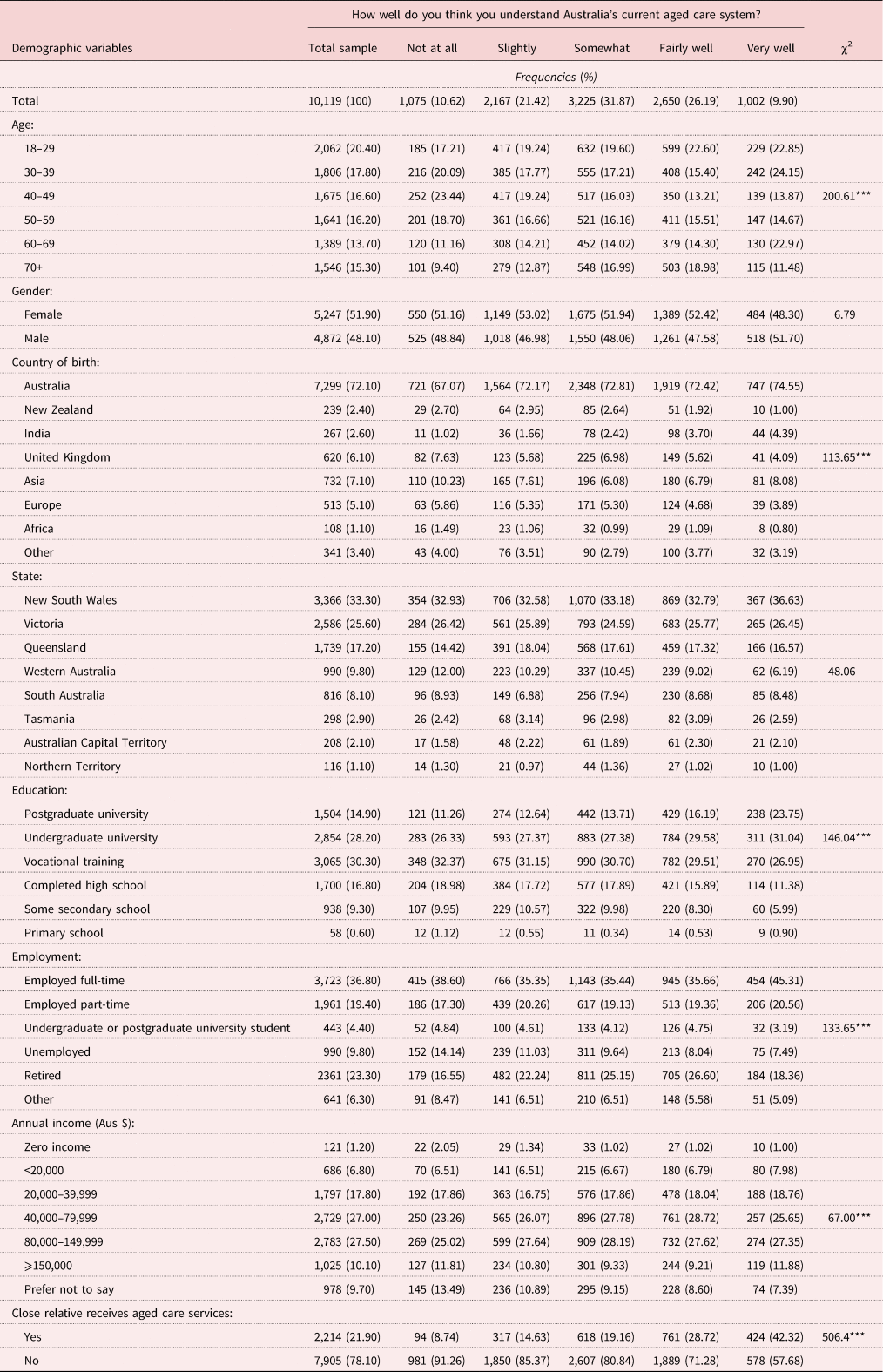
A total of 15,798 members of the general public accessed the survey and 10,315 (65%) completed the survey fully. Participants were excluded if they did not meet the inclusion criteria, the demographic quota into which they fitted was already full or they were characterised as ‘speedsters’ (completing the survey in less than 5 minutes). The average completion time was approximately 22 minutes. Table 3 presents the categorisation of aged care literacy according to key socio-demographic criteria. The final study sample was representative of the Australian general population by age group, gender, and state or territory of residence. Many respondents were born in Australia (72%), were employed either full-time or part-time (58%) and indicated that they had no prior experience of aged care through a close family member receiving aged care services (78%). Australia has a long history of migration, with 30 per cent of Australians born overseas (ABS, 2020). Despite the limitation (due to resource constraints) of being able to read and respond in the English language, the study sample was broadly representative of migration status, with 28 per cent of survey respondents reporting that they were born outside Australia (Table 3).
Socio-demographic characteristics: total sample and by levels of aged care literacy

Note: Participants who responded with ‘Don't know’ to the question ‘How well do you think you understand Australia's current aged care system?’ were removed (N = 196).
Significance level: *** p < 0.001.
Age care literacy
Overall, only 9.7 per cent of participants reported that they understood the aged care system in Australia ‘very well’, and over a quarter (25.7%) reported that they understood the aged care system ‘fairly well’. Conversely, one in ten of those surveyed reported that they did not understand the system at all (Table 3).
Table 3 also illustrates that those who were born in Australia were more likely to indicate at least some understanding of Australia's aged care system than those born overseas, with these differences being statistically significant (χ2 = 113.65, p < 0.001). In addition, those who reported some experience of Australia's aged care system through having a close relative receiving aged care services were also more likely to indicate at least some understanding of Australia's aged care system than those without this experience (χ2 = 506.4, p < 0.001). Survey respondents who were employed were more likely to report that they understood the aged care system better than those who were unemployed or students (χ2 = 133.65, p < 0.001). Level of income was also associated with reported self-knowledge (χ2 = 67.0, p < 0.001) and experience of the aged care system (χ2 = 54.06, p < 0.001).
Attitudes towards aged care standards
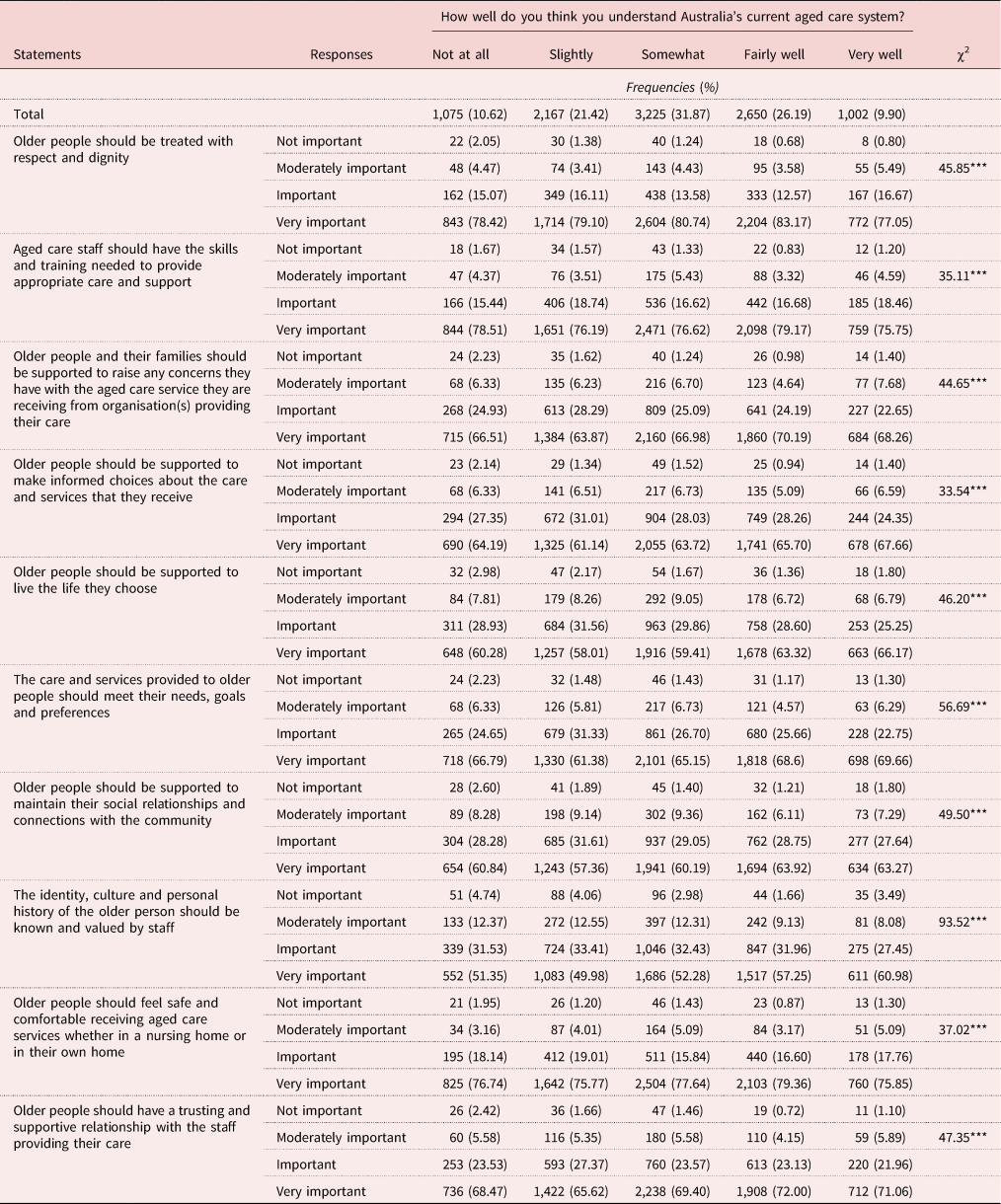
Table 4 presents responses to the ten attitudinal statements according to aged care literacy. It can be seen that regardless of their level of self-assessed understanding of the aged care system, the vast majority of survey respondents ranked the ten attitudinal statements as ‘important’ or ‘very important’ to defining a quality aged care system.
Responses to attitudinal statements about quality of care: total sample and by levels of aged care literacy

Notes: Participants who responded with ‘Don't know’ to the question ‘How well do you think you understand Australia's current aged care system?’ were removed (N = 196). Responses of ‘Not important’ and ‘Slightly important’ were combined into the single category ‘Not important’ because of small numbers.
Significance level: *** p < 0.001.
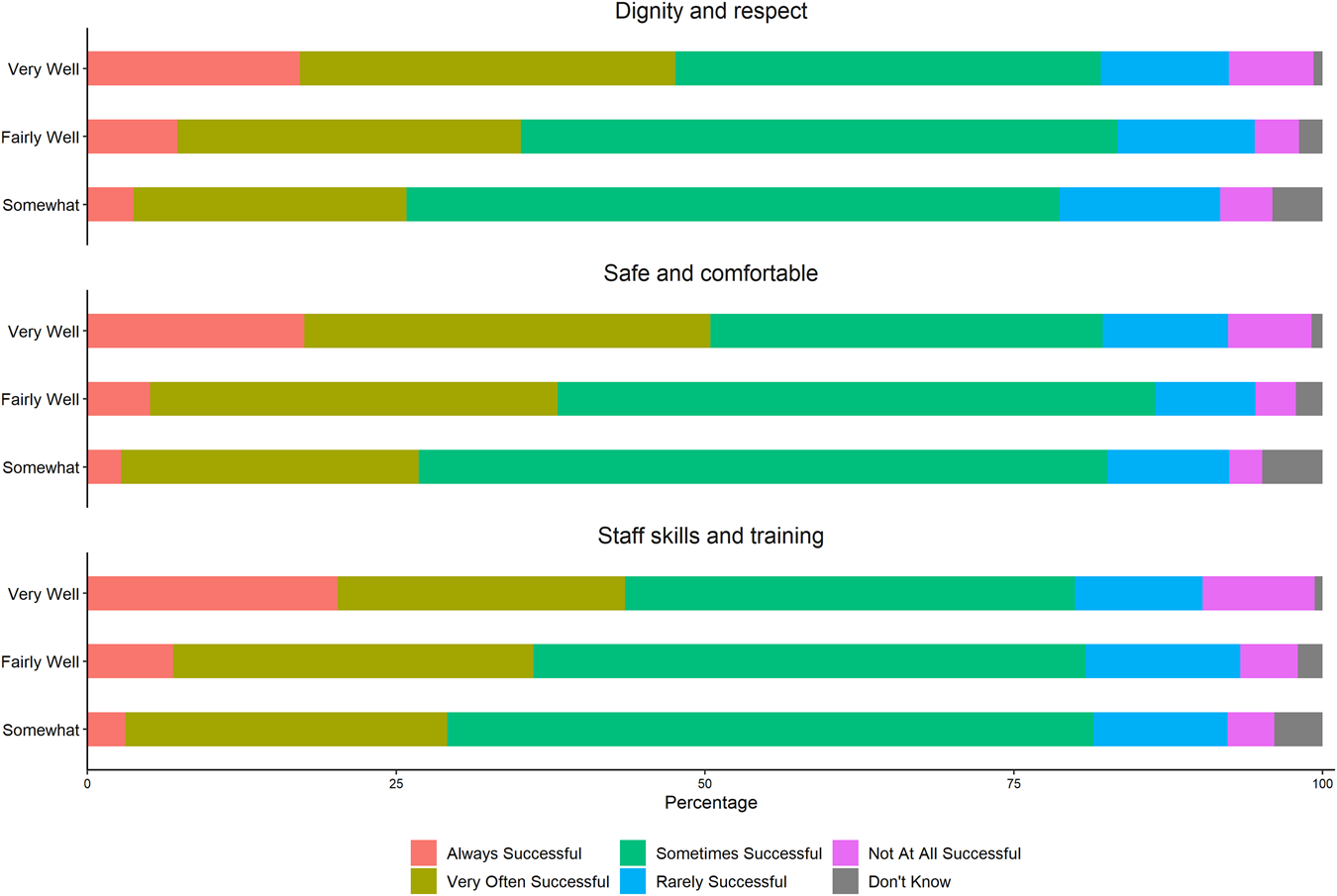
Respondents who reported their understanding of Australia's aged care system as ‘somewhat’, fairly well’ or ‘very well’ were asked to select their top three priorities for quality aged care from the ten attitudinal statements (Figure 1). The top three ranked priority statements, ‘older people should be treated with respect and dignity’, ‘older people should feel safe and comfortable receiving aged care services whether in a nursing home or in their own home’ and ‘aged care staff should have the skills and training needed to provide appropriate care and support’ were consistent across all three categories of aged care literacy (somewhat, fairly well, very well), with all other statements ranked in a similar priority order regardless of the level of aged care literacy. These same participants were then asked how successful they thought Australia's aged care system is in achieving their top three priorities. Figure 2 illustrates that these survey respondents who indicated that they knew the system ‘very well’ were more likely to rate the system as ‘always successful’ or ‘very often successful’ in achieving each of these quality of care statements at the time of survey completion relative to those who indicated that they understood the system ‘fairly well’ or ‘somewhat’.
Elements of aged care identified as a top three priority: compared by level of self-reported understanding of Australia's aged care system.

Performance of the system in meeting the top three-ranked priority statements: compared by level of self-reported understanding of Australia's aged care system.

Attitudes towards future funding of aged care
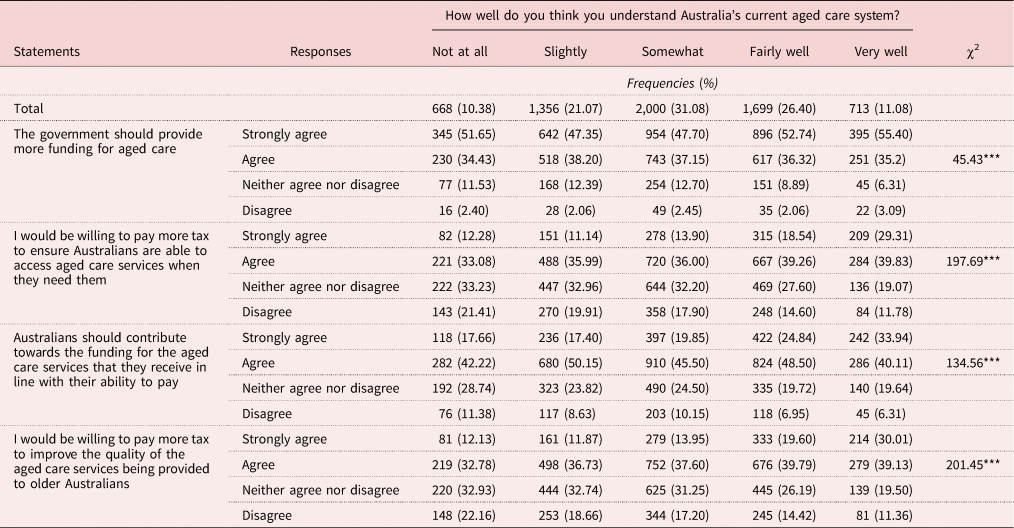
Table 5 summarises responses to the four attitudinal statements relating to aged care funding according to aged care literacy levels for the sub-group of respondents who indicated that they were current income tax payers (N = 6,557, 65% of the total sample). There were highly statistically significant differences (p < 0.001) in the levels of agreement for all four funding statements. Relative to those who indicated that they had no knowledge of the aged care system, tax-paying respondents who indicated that they knew the system ‘very well’ were more likely to either ‘agree’ or ‘strongly agree’ that: ‘I would be willing to pay more tax to ensure Australians are able to access aged care services when they need them’ (69% versus 45%); ‘Australians should contribute towards the funding for the aged care services that they receive in line with their ability to pay’ (74% versus 60%) and ‘I would be willing to pay more tax to improve the quality of the aged care services being provided to older Australians’ (69% versus 44%).
Responses to attitudinal statements about funding of aged care: total sample and by levels of aged care literacy

Notes: Participants who responded with ‘Don't know’ to the question ‘How well do you think you understand Australia's current aged care system?’ were removed (N = 196). Participants who declared that they do not have an income (N = 121) and respondents who do not pay income tax (N = 3,562) were removed. Responses of ‘Disagree’ and ‘Strongly disagree’ were combined into the single category ‘Disagree’ because of small numbers.
Significance level: *** p < 0.001.
Willingness to pay
Finally, current income tax payers were asked a series of supplementary questions about their willingness to pay additional personal income tax contributions to support ‘satisfactory’ and ‘high’ levels of quality aged care, respectively, for all Australians in need. When responding to the willingness-to-pay questions, respondents were directly prompted to think about their responses to an earlier section of the survey where they were asked to consider what quality of care characteristics, in their view, constituted satisfactory and high-quality aged care, respectively.
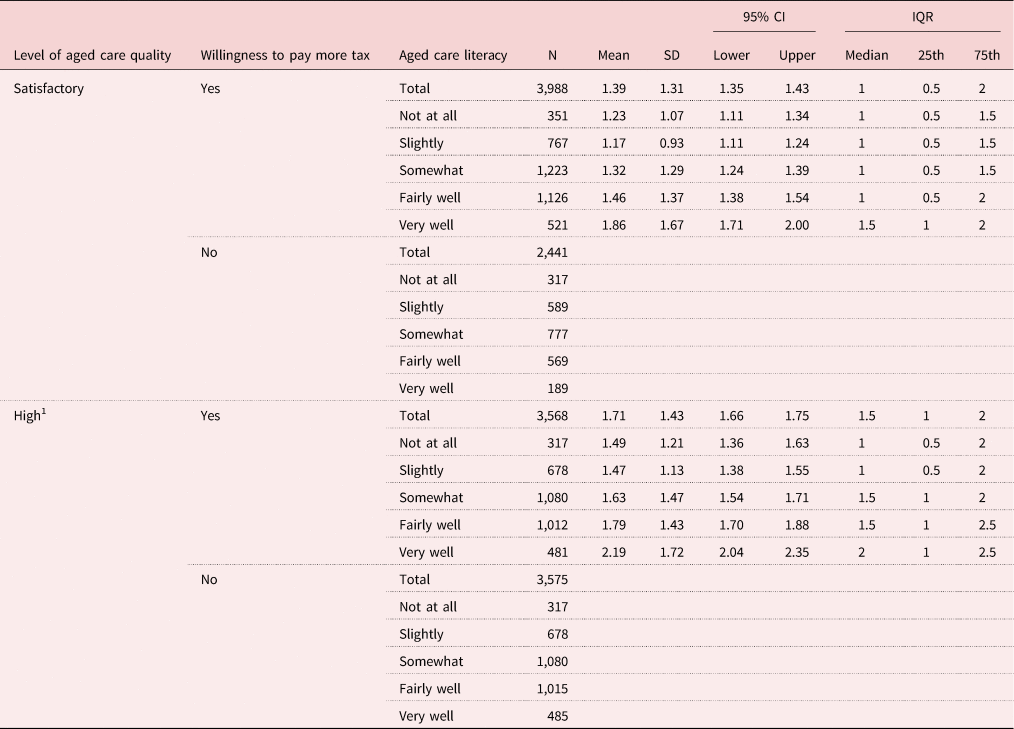
In total, 62 per cent of current income tax payers indicated that they would be willing to pay additional taxation to support the aged care system. On average, these tax payers were willing to pay an additional 1.39 per cent to support satisfactory quality care and an additional 1.71 per cent beyond that amount (i.e. 3.1% additional income tax in total) to support high-quality aged care. Table 6 and Figure 3 illustrate that those survey respondents who indicated that they knew the system very well were more likely to indicate a higher willingness to pay additional income taxation relative to those with lower levels of aged care literacy. For satisfactory quality care, those who knew the system very well, and indicated a willingness to pay additional taxation, indicated a mean willingness to pay of 1.86 per cent additional income tax in comparison to 1.23 per cent for those with no understanding at all. For high-quality care, a mean willingness to pay of 2.19 per cent was found for those who knew the system very well, and indicated a willingness to pay additional taxation, compared to 1.49 per cent for those with no understanding at all.
Mean willingness to pay additional income tax contributions for satisfactory and high-quality aged care by levels of aged care literacy.
Note: Error bars represent 95 per cent confidence intervals.

Willingness to pay additional income tax for satisfactory or high-quality aged care: total sample and by levels of aged care literacy

Notes: 1. Indicates % willingness to pay beyond the amount already indicated to support satisfactory quality aged care. Participants who responded with ‘Don't know’ to the question ‘How well do you think you understand Australia's current aged care system?’ were removed (N = 196). Participants who declared that they do not have an income (N = 121) and respondents who do not pay income tax (N = 3,562) were removed. Respondents who suggested a tax rate of greater than 20 per cent were also removed (N = 6). SD: standard deviation. CI: confidence interval. IQR: inter-quartile range.
Discussion
To our knowledge, this study is the first of its kind in Australia and internationally to investigate general public perceptions and attitudes to quality of care in aged care and the future funding of the aged care system differentiated by levels of aged care literacy. Our study findings indicate that aged care literacy categorised according to self-assessed levels of understanding of Australia's aged care system differentiates general public perceptions about the importance of quality standards in aged care, attitudes towards funding the aged care sector, and willingness to pay in terms of taxation and future personal contributions. Not surprisingly, members of the general public who reported some recent experience of Australia's aged care system through having a close relative receiving aged care services were more likely to indicate at least some understanding of Australia's aged care system than those without this experience. Irrespective of knowledge of the aged care system, it was evident that the vast majority of our general public respondents indicated that all of the quality of care statements presented to them were either ‘important’ or ‘very important’.
When rating the top three priority statements (Figure 1), it was evident that these rankings were generally consistent across all respondents regardless of aged care literacy levels. The relatively low priority ranking for ‘understanding and valuing the identity, culture and personal history of the older person’ may have implications for groups under-represented in the aged care sector such as LGBTIQ (Harrison, Reference Harrison2006; Waling et al., Reference Waling, Lyons, Alba, Minichiello, Barrett, Hughes, Fredriksen-Goldsen and Edmonds2020) and indigenous older Australians, suffering trauma due to institutional abuse in childhood and adolescence (Cations et al., Reference Cations, Laver, Walker, Smyth, Fernandez and Corlis2020). More broadly, due to high levels of migration, approximately 25 per cent of older people are from culturally and linguistically diverse backgrounds and the importance of meeting the needs of this diverse group has been highlighted in previous research (Orb, Reference Orb2002; Rao et al., Reference Rao, Warburton and Bartlett2006).
The recent focus on excess deaths of older people in aged care as a consequence of the ramifications of the COVID-19 pandemic internationally, and the proceedings of the Royal Commission into Aged Care Quality and Safety in Australia, may mean that more specific issues relating to personal identity and culture may be viewed as a lower priority by the general public relative to addressing the basic fundamentals of care quality (McGilton et al., Reference McGilton, Escrig-Pinol, Gordon, Chu, Zúñiga, Sanchez, Boscart, Meyer, Corazzini, Jacinto and Spilsbury2020; Royal Commission into Aged Care Quality and Safety, 2020b). Alternatively, it can be argued that understanding and valuing the identity, culture and personal history of the older person is a distinct and key element of the over-arching quality of care standard that the older person should always be treated with respect and dignity (Cook et al., Reference Cook, Schouten and Henrickson2018; Bylund-Grenklo et al., Reference Bylund-Grenklo, Werkander-Harstäde, Sandgren, Benzein and Östlund2019). This quality of care characteristic was consistently highly rated and prioritised by our general public respondents irrespective of the level of aged care literacy.
Willingness to pay additional taxation for ‘satisfactory’ and ‘high’ levels of quality aged care were found to be differentiated by aged care literacy levels, with higher levels of literacy associated with greater willingness to pay on average. With a rapidly ageing population, general public knowledge and awareness is critical in elevating the care of older people and investment in aged care as a national priority in Australia and in many other countries. Presently, approximately 4 per cent of Australia's income tax contributions are allocated to aged care (Ratcliffe et al., Reference Ratcliffe, Chen, Cleland, Kaambwa, Khadka, Hutchinson and Milte2020). Modelling by the Royal Commission into Aged Care Quality and Safety indicates that a doubling of this expenditure base may be required in the short to medium term to meet the needs of Australia's rising numbers of older people, coupled with the need to implement substantial improvements in the quality and safety of aged care (Royal Commission into Aged Care Quality and Safety, 2020a).
This study has several limitations which are important to highlight. Whilst the survey sample was representative of the Australian general population by age, gender, and state or territory of residence, the survey might have over-sampled people with higher levels of education and income. This is principally due to participants requiring access to the internet to complete the survey, which is more common in higher-income families (ABS, 2016; Wilson et al., Reference Wilson, Thomas and Barraket2019). Data from the ABS also indicate that fewer older people (aged 65 years and above) are regular internet users in contrast to younger age groups (ABS, 2018b). The survey also likely under-sampled people from culturally and linguistically diverse backgrounds given that respondents needed a good level of English reading and comprehension in order to complete the survey. As with all contingent valuation studies eliciting stated (as opposed to revealed) preference data, it is impossible to eliminate the possibility of hypothetical and social desirability bias in the responses. However, several steps were taken to minimise their potential bias in this study. The survey was conducted as an anonymous self-complete survey. There is less potential for social desirability bias with a survey of this type, relative to an interviewer-administered survey, where due to the interactive nature of the survey administration the participant may feel more compelled to provide socially desirable responses.
Respondents were informed prior to answering the contingent valuation questions that Australia's aged care system is currently predominantly funded through income tax contributions. Hence respondents were being asked to make willingness-to-pay choices about a real (rather than a hypothetical) situation that applies directly to them as current income tax payers.
Conclusion
This study has highlighted that regardless of the level of aged care literacy, there is a consensus amongst the general public about what constitutes quality of care in aged care and the priorities for the aged care system in achieving higher-quality aged care. However, in contrast, aged care literacy is a concept that was found to influence attitudes towards funding and willingness to pay. The current crisis facing Australia's aged care system and that of many other countries internationally demonstrates the central importance of general public support to drive quality improvements, recognising that increasing public expenditure on aged care is a necessary part of the solution. The disproportionate adverse impact of the COVID-19 pandemic for older people in aged care internationally has further heightened public consciousness and concerns relating to neglect, under-investment and devaluation of aged care. This study provides important baseline data from which to commence national and international conversations, galvanising a collective responsibility amongst members of the general public and societies to consider carefully all options for ensuring the quality, safety and sustainability of aged care now and into the future.
Acknowledgements
We acknowledge the contributions of our colleagues Associate Professor Gang Chen and Associate Professor Billingsley Kaambwa who contributed to the wider project from which this study emanated. We thank Jenny Cleland who led the literature review from which the attitudinal statements were developed. Finally, we wish to express our gratitude to the many younger and older Australians who generously gave up their time to participate and without whom this study would not have been possible.
Author contributions
The project was led by JR. CH, JK, RM and JR contributed to the development of the survey items and approved the final survey. SK, JK and MC conducted the analysis. CH developed the first draft of the manuscript. All authors contributed to and approved the final manuscript.
Financial support
This work was commissioned and funded by the Australian Royal Commission into Aged Care Quality and Safety.
Conflict of interest
The authors declare no conflicts of interest.
Ethical standards
Ethics approval for this research was granted by the Human Research Ethics Committee at Flinders University (project number 8378).