Antisocial behaviors (ASB), including physical aggression and nonviolent rule-breaking behaviors, are common during adolescence (1-year prevalence of 2%–10%; American Psychiatric Association, 2013) and confer a high risk for negative outcomes in later life, including substance use disorder (Roy, Reference Roy2008), criminality (Mercer et al., Reference Mercer, Farrington, Ttofi, Keijsers, Branje and Meeus2015), emotional instability (Castellani et al., Reference Castellani, Pastorelli, Eisenberg, Gerbino, Di Giunta, Ceravolo and Milioni2014), and employment challenges (Farrington, Reference Farrington1995). The costs of ASB to society are immense, drawing upon extensive resources from the mental health and juvenile justice service sectors (Foster & Jones, Reference Foster and Jones2005). Given the pervasive and substantial negative impact of adolescent ASB, research has prioritized the identification of risk factors in the hopes of creating effective prevention programs for ASB. However, this literature has focused predominantly or exclusively on Caucasian populations, despite known racial-ethnic differences in the prevalence, causes, and consequences of ASB (Angold et al., Reference Angold, Erkanli, Farmer, Fairbank, Burns, Keeler and Costello2002; Bird et al., Reference Bird, Canino, Davies, Zhang, Ramirez and Lahey2001).
Notably, African American youths experience more negative consequences for their ASB relative to their Caucasian peers; for instance, African American youths represent a disproportional part of the juvenile detention population relative to their Caucasian counterparts. In 2016, 42% of juvenile offenders were African Americans (Office of Juvenile Justice and Delinquency Prevention, 2015), even though African Americans represent only 13.3% of the total population in the United States (US Census Bureau, 2016). Furthermore, African American youths experience harsher and more frequent school-based consequences for their ASB, including more expulsions and suspensions in comparison to their Caucasian peers (Brinkley-Rubinstein, Craven, & McCormack, Reference Brinkley-Rubinstein, Craven and McCormack2014; McIntosh, Girvan, Horner, & Smolkowski, Reference McIntosh, Girvan, Horner and Smolkowski2014). Although these disparities may partially reflect sociocultural influences such as socioeconomic status (Skiba, Michael, Nardo, & Peterson, Reference Skiba, Michael, Nardo and Peterson2002) or racial discrimination (Caldwell, Kohn-Wood, Schmeelk-Cone, Chavous, & Zimmerman, Reference Caldwell, Kohn-Wood, Schmeelk-Cone, Chavous and Zimmerman2004), relatively little is known about the developmental phenomenology of ASB for African Americans relative to Caucasians. For instance, few studies have examined how the developmental course of ASB unfolds over time among African American youths relative to Caucasian youths, despite this being an important area to explore (Piquero, Reference Piquero2015). Furthermore, few studies have investigated whether risk and protective factors (e.g., school and family influence), which have also been studied in predominantly Caucasian populations, affect African American populations in similar or different ways (Bird et al., Reference Bird, Canino, Davies, Zhang, Ramirez and Lahey2001). This research is crucial for the development of targeted prevention and interventions for African American youths with ASB, who are overrepresented in our justice system, yet underrepresented in the research context.
Developmental trajectories of ASB
There has been extensive research on the developmental taxonomies of ASB (e.g., Luyckx et al., Reference Luyckx, Tildesley, Soenens, Andrews, Hampson, Peterson and Duriez2011; Moffitt, Reference Moffitt1993; Moffitt, Caspi, Harrington, & Miline, Reference Moffitt, Caspi, Harrington and Milne2002). These studies have converged on the identification of several distinct developmental trajectories of ASB. The life course–persistent (LCP) trajectory is characterized by physical aggression and rule-breaking behaviors, beginning at an early age, and negatively affects a constellation of socioemotional and behavioral domains, including neurocognition, physical health, and psychological well-being (Aguilar, Sroufe, Egeland, & Carlson, Reference Aguilar, Sroufe, Egeland and Carlson2000; Hyde, Burt, Shaw, Donnellan, & Forbes, Reference Hyde, Burt, Shaw, Donnellan and Forbes2015; Moffitt et al., Reference Moffitt, Caspi, Harrington and Milne2002; Piquero, Daigle, Gibson, Piquero, & Tibbetts, Reference Piquero, Daigle, Gibson, Piquero and Tibbetts2007). Individuals with the LCP trajectory exhibit escalating behavioral problems over time and experience poorer outcomes in adulthood, including worse employment outcomes, higher rates of depression, and greater involvement in crime, compared with individuals with the adolescence-limited (AL) trajectory (Farrington, Reference Farrington1995; Mercer et al., Reference Mercer, Farrington, Ttofi, Keijsers, Branje and Meeus2015). In contrast, the more common AL trajectory is characterized by the presence of ASB exclusively during adolescence, desisting in early adulthood (Moffitt, Reference Moffitt1993). Whereas the LCP trajectory is more strongly driven by dispositional characteristics (e.g., genetics; Burt, Reference Burt2009), the AL trajectory is more strongly linked to environmental factors, such as deviant peer affiliation (Moffitt, Reference Moffitt, Lahey, Moffitt and Caspi2003; Moffitt & Caspi, Reference Moffitt and Caspi2001). More recent models have also identified additional ASB trajectories that are differentiated by high and low levels of callous and unemotional traits (Frick & Viding, Reference Frick and Viding2009).
However, very few studies have examined how the developmental trajectories of ASB extend beyond the early years of adulthood (i.e., mid-20s), with two notable exceptions (i.e., Odgers et al., Reference Odgers, Moffitt, Broadbent, Dickson, Hancox, Harrington and Caspi2008; Sampson & Laub, Reference Sampson and Laub2003). Evidence of a third developmental trajectory emerged in a study by Odgers et al. (Reference Odgers, Moffitt, Broadbent, Dickson, Hancox, Harrington and Caspi2008) when ASB was assessed from ages 7 to 32 using data from the Dunedin Multidisciplinary Health and Development Study. This group, called the “adolescent-onset” ASB group, was characterized by a persistent (albeit modest) level of ASB that extended beyond early adulthood. Sampson and Laub (Reference Sampson and Laub2003) found evidence of two adult-onset pathways in which peak criminal offending was exhibited during the mid-30s in a sample of 500 delinquent males followed from childhood (age 7) to late adulthood (age 70; although these pathways may also represent within-group variation in LCP ASB). More studies are needed to characterize its developmental course across the lifespan because ASB is a developmental phenomenon and not just a child and adolescent one (Moffitt, Reference Moffitt, Lahey, Moffitt and Caspi2003).
Furthermore, few longitudinal studies have been positioned to examine racial-ethnic differences in the phenomenology and course of ASB, leaving a significant gap in our understanding about ASB, especially as it relates to one of the most vulnerable populations in African American youths. Existing studies of ASB that have included African American subgroups have largely been cross-sectional (e.g., Bernat, Oakes, Pettingell, & Resnick, Reference Bernat, Oakes, Pettingell and Resnick2012; Connell, Cook, Aklin, Vanderploegg, & Brex, Reference Connell, Cook, Aklin, Vanderploeg and Brex2011; Cook, Pflieger, Connell, & Connell, Reference Cook, Pflieger, Connell and Connell2015) and have yielded inconsistent findings in cases in which longitudinal data were examined. For instance, Mata and van Dulmen (Reference Mata and van Dulmen2012) analyzed three waves of data from the National Longitudinal Study of Adolescent to Adult Health (Add Health), which consisted of 59% Caucasian, 14% African American, 7% Asian, 6% Hispanic, and 14% “other” youths followed into early adulthood (N = 5,579). They found evidence for four trajectories of aggressive ASB from adolescence to early adulthood: an abstainers group, which had consistently low levels of ASB (60.0%); an AL group, which had high levels of ASB during mid-adolescence, but decreased into early adulthood (20.3%); an adult-onset group, which had low ASB during adolescence but increased ASB at early adulthood (13.0%); and a chronic group, which had the highest levels of ASB across development, but slightly declined in ASB over time (6.7%). Brook et al. (Reference Brook, Lee, Finch, Brown and Brook2013) examined trajectories of ASB in a sample comprising African American and Hispanic participants who were followed from adolescence (age 14) into early adulthood (age 24; N = 1,332). Although they also identified four developmental trajectories of ASB, the nature of these trajectories differed from those found in Mata and van Dulmen (Reference Mata and van Dulmen2012). In contrast to Mata and van Dulmen, there was no evidence of a similar chronic trajectory that exhibited high or severe levels of ASB consistently over time, although the number of participants identified in each of their ASB groups was very small, thus limiting the generalizability of their findings (Brook et al., Reference Brook, Lee, Finch, Brown and Brook2013). Collectively, these studies show that different patterns of ASB may emerge when longitudinal models are applied to ethnically diverse populations, and these patterns may reflect underlying differences in the development of ASB within each racial-ethnic subgroup.
Development of ASB in African American youths
There are scant but emerging lines of research on how developmental trajectories of ASB may be specifically expressed in African Americans. Evans et al. (Reference Evans, Simons and Simons2016) recently identified four distinct developmental trajectories of ASB in a sample of 354 African American male delinquents recruited from rural and suburban settings, assessed from approximately ages 10–19 across four waves of data collection. “Negligible delinquents” represented 40% of the sample and included individuals who showed minimal delinquency from childhood to young adulthood. The “early starter/declining” group accounted for 23% of the sample and described youth that engaged in high levels of delinquency in adolescence but gradually decreased in young adulthood. “Late starters” included 23% of the sample, in which individuals started with low levels of delinquency in childhood but sharply increased by young adulthood. Finally, the “early starter/chronic” group presented with the highest levels of delinquency across development and represented 13.5% of the sample. Additionally, African Americans that self-reported having experienced more racial discrimination and who affiliated with deviant peers were more likely to be included in the early starter/chronic group relative to the negligible groups (Evans et al., Reference Evans, Simons and Simons2016), which is consistent with recent lines of research showing the negative sequelae of certain social factors on the development of ASB among African Americans specifically (Liu, Mustanski, Dick, Bolland, & Kertes, Reference Liu, Mustanski, Dick, Bolland and Kertes2017). Although the Evans et al. (Reference Evans, Simons and Simons2016) study featured a relatively small and selective sample of African American male offenders, and a very limited age range in which ASB was assessed, the results are notable because the ASB trajectories were still fairly consistent with models established using predominantly Caucasian samples. Park et al. (Reference Park, Lee, Sun, Vazsonyi and Bolland2010) identified three unique developmental trajectories of ASB among inner-city African American youths (n = 566) between the ages of 11 and 16, including “low risk,” “incremental,” and “high starter” ASB groups, which similarly resembled each of the developmental trajectories of ASB identified by Evans et al. (Reference Evans, Simons and Simons2016). Overall, these findings seem to suggest developmental trajectories of ASB may be expressed in African American populations similarly to Caucasian populations, but both studies (i.e., Evans et al., Reference Evans, Simons and Simons2016; Park, Lee, Sun, Vazsonyi, & Bolland, Reference Park, Lee, Sun, Vazsonyi and Bolland2010) featured highly selective samples of African American youths that were not representative of a general population. Given the potentially important policy implications stemming from these findings, there is a great need for further inquiry regarding the developmental taxonomy of ASB by examining larger and more representative samples of African Americans.
Supportive parenting and ASB
In addition to the paucity of research that has examined trajectories of ASB for African Americans and Caucasians separately, little is known about whether risk and protective factors may differentially affect the development of ASB depending on racial-ethnic status. One particularly salient environmental factor that may affect the development of ASB is supportive parenting (Li, Reference Li2017; Miller et al., Reference Miller, Clayton, Miller, Bilyeu, Hunter and Kraus2000). Supportive parenting, including how emotionally close to a parent the adolescent feels, the quality of their communication, the parents’ knowledge about their adolescent's whereabouts, and parents’ warmth and involvement in their adolescent's life, is a well-established protective factor for adolescent mood problems and ASB (Li, Reference Li2017; Li, Berk, & Lee, Reference Li2013). Conversely, adolescents who feel unsupported and distant from their caregivers were found to have a higher risk of engaging in ASB (Bosco, Renk, Dinger, Epstein, & Phares, Reference Bosco, Renk, Dinger, Epstein and Phares2003; Odgers et al., Reference Odgers, Caspi, Russell, Sampson, Arseneault and Moffitt2012).
There is mixed evidence as to whether there are racial-ethnic differences with respect to how responsive African American and Caucasian youths may be to supportive parenting in relation to the development of their ASB. For instance, McLeod, Kruttschnitt, and Dornfield (Reference McLeod, Kruttschnitt and Dornfeld1994) used data from the Children of the National Longitudinal Survey of Youth and found that poor parenting practices, including low maternal affection (i.e., mother's low use of praise, compliments, and shows of affection) and use of physical discipline, was significantly related to having offspring with ASB for Caucasian youths, but not for African American youths. They concluded that harsher, stricter parenting among African Americans may better prepare their children for a harsh society that frequently marginalizes African Americans and not Caucasians (McLeod et al., Reference McLeod, Kruttschnitt and Dornfeld1994). However, relatively more recent studies have not found racial-ethnic differences in the effects of supportive parenting and their offspring with ASB (when comparing Caucasian, African American, and Hispanic populations; Arbona & Power, Reference Arbona and Power2003), especially when neighborhood advantage/socioeconomic status were also taken into account (Brody et al., Reference Brody, Conger, Gibbons, Ge, McBride Murry, Gerrard and Simons2001; Schofield et al., Reference Schofield, Conger, Conger, Martin, Brody, Simons and Cutrona2012). Considering the centrality of improving parenting practices in evidence-based interventions for juvenile delinquency (Henggeler & Sheidow, Reference Henggeler and Sheidow2012), more studies are needed to determine whether there may be differential effects of supportive parenting on ASB between African American and Caucasian youths, while concomitantly accounting for socioeconomic factors.
School connectedness and ASB
The school environment may also represent an important ecological context that may serve as either a risk or protective factor on the development of ASB, especially given that adolescents spend most of their time in the school setting (McNeely, Nonnemaker, & Blum, Reference McNeely, Nonnemaker and Blum2002). School connectedness, which reflects the extent to which adolescents feel accepted and supported by others in their school environment, predicts lower levels of delinquency and alcohol use, albeit in a sample of middle class, mostly Caucasian youths from suburban communities (Crosnoe, Erickson, & Dornbusch, Reference Crosnoe, Erickson and Dornbusch2002). In other community-based samples (also predominantly Caucasian ones), adolescents who felt disengaged from their schools or had poor relationships with their teachers were generally more likely to engage in delinquency during adolescence and have more substance use and mental health problems in their later years (Jacobson & Rowe, Reference Jacobson and Rowe1999; Resnick et al., Reference Resnick, Bearman, Blum, Bauman, Harris, Jones and Ireland1997; Shochet, Dadds, Ham, & Montague, Reference Shochet, Dadds, Ham and Montague2006).
There are few studies that have examined the effects of school connectedness and ASB as a function of a racial-ethnic status, particularly in African American populations. There is emerging evidence that minorities experience a different school climate, even within the same schools, relative to their Caucasians peers. For instance, a survey study of middle school students in California found that African American and Hispanic students reported a less favorable school climate in terms of their feelings of safety, connectedness, relationship with adults, and opportunities for meaningful participation compared with their Caucasian peers (Voight, Hanson, O'Malley, & Adekanye, Reference Voight, Hanson, O'Malley and Adekanye2015). In other words, the same school that produces a safe and connected school climate for a Caucasian student may produce an unsafe and disconnected climate for an African American or Hispanic student (Voight et al., Reference Voight, Hanson, O'Malley and Adekanye2015). However, it remains unclear whether school connectedness is protective of ASB in African American as it is for Caucasian youths. A survey study of 652 predominantly minority (approximately 75% African American and Hispanic), inner-city adolescents transitioning into high school found that higher levels of perceived school attachment (i.e., students’ enjoyment of being in school, connecting with their teachers/peers) correlated with lower levels of aggressive beliefs (i.e., beliefs that physical aggression is an appropriate response to provocation), suggesting that perceived school connectedness may have a protective affect for ASB in minority groups as well (Frey, Ruchkin, Martin, & Schwab-Stone, Reference Frey, Ruchkin, Martin and Schwab-Stone2009). ASB was not directly assessed and racial-ethnic status was only treated as a covariate in this study. We are aware of no studies, to date, that have directly assessed the association between school connectedness and ASB within African Americans. Group differences in the perception of school connectedness may potentially lead to racial-ethnic differences in the development of ASB, but this hypothesis has never been directly tested.
We also note that previous studies on the risk factors of ASB have largely focused on deviant peer affiliation, given the centrality of peer influences on risk taking behaviors during adolescence (Cleveland, Wiebe, & Rowe, Reference Cleveland, Wiebe and Rowe2005; Kendler et al., Reference Kendler, Jacobson, Gardner, Gillespie, Aggen and Prescott2007; Lee, Reference Lee2011; Wills & Cleary, Reference Wills and Cleary1999). The extant literature on parenting and school effects has infrequently been studied independent from peer influences (for a rare exception, see Li, Reference Li2017). Accounting for peer influences may provide important insights into the unique role of support provided by school personnel, which may serve as a protective factor against deviant peer influences or low family support (Mrug & Windle, Reference Mrug and Windle2009).
Current study
The current study aims to better understand whether (and how) trajectories of ASB differ between African American and Caucasian populations by conducting growth mixture analyses in large samples of African American and Caucasian populations separately. This study had two primary objectives. The first was to identify developmental trajectories of ASB among Caucasian (n = 10,764) and African American (n = 4,091) individuals separately. Given the four waves of Add Health data, growth mixture models were used to examine latent class trajectories of ASB from early adolescence (age 13) into adulthood (age 32) for both groups. Informed by previous research on the trajectories of ASB among African Americans (i.e., Evans et al., Reference Evans, Simons and Simons2016; Park et al., Reference Park, Lee, Sun, Vazsonyi and Bolland2010), we hypothesized a similar latent class growth architecture to emerge between Caucasians and African Americans.
The second objective followed from the first. After latent class trajectories of ASB were identified for each population, we aimed to examine the effects of supportive parenting and school connectedness as predictors of latent classes (relative to a “normal” ASB class) using multinomial logistic regression models, controlling for sex, number of friends who use substances, and socioeconomic variables (i.e., parental education and income). Given the relative degree of inconsistency in the extant literature regarding the effects of supportive parenting and school connectedness and ASB among African Americans and Caucasians, we hypothesized that higher levels of supportive parenting and school connectedness would confer a protective effect on trajectories of ASB for both Caucasians and African Americans generally.
Method
Participants
Participants were from Add Health (Harris et al., Reference Harris, Florey, Tabor, Bearman, Jones and Udry2009). Extensive behavioral, health, and demographic data were collected from adolescents, parents, school administrators, fellow students, siblings, friends, and romantic partners across four waves: Wave 1 (1994–1995, Grades 7–12, N = 20,745), Wave 2 (1995–1996, Grades 8–12, N = 14,738), Wave 3 (2001–2002, ages 18–26, N = 15,197), and Wave 4 (2007–2008, ages 24–32, N = 15,701). At Wave 1, the average age was 15.22 years (standard deviation = 1.65; age range = 12–20), 49.5% were males, and the racial-ethnic composition was 62.1% Caucasian (including Hispanic or Latino), 23.0% Black or African American, 7.1% Asian or Pacific Islander, 1.2% Native American, and 6.6% Other. African American individuals were oversampled from high socioeconomic regions; therefore, the Add Health sample is not entirely representative of the general population (Harris et al., Reference Harris, Florey, Tabor, Bearman, Jones and Udry2009). Given the aims of the current study, the current analyses focused on participants who self-identified as either non-Hispanic White or Black (individuals who self-reported mixed ancestry were excluded from the analyses). A total of 10,764 (50.2% male) self-identified Caucasian and 4,091 (46.8% male) self-identified African American individuals were thus included from this larger sample. Caucasians reported greater parental education (χ2 = 8.41, p = .04) than African Americans. Specifically, 20.0% of Caucasian and 18.9% of African American parents received a bachelors or higher degree. There were no significant differences between participants excluded and those included in the final analysis on measures of supportive parenting, school connectedness, and ASB at Wave 1.Footnote 1
Measures
ASB
ASB was assessed during the Add Health in-home interviews conducted at Waves I–IV. Ten identical (or similar) items were assessed at each wave, paralleling previous Add Health longitudinal investigations of ASB (Li, Reference Li2017). These items reflect the presence of nonaggressive rule-breaking behaviors (e.g., property damage, stealing, selling drugs) and aggressive behaviors (e.g., pulling a knife or gun on someone, engaging in a fight). For example, participants were asked how often they engaged in a particular behavior over the past 12 months (0 = never, 1 = 1 or 2 times, 2 = 3 or 4 times, and 3 = 5 or more times). Items were summed to create a composite score at each wave.Footnote 2 The scale demonstrated good to adequate internal consistency for the current sample across waves (α = .75, .75, .61, and .65 for Waves 1, 2, 3, and 4, respectively).
Supportive parenting
Supportive parenting was assessed during Wave 1 using 12 items from the in-home interviews. The items assessed maternal warmth (e.g., “your mother is warm and loving toward you”), care (e.g., “how much do you feel that your parents care about you?”), closeness (e.g., “how close do you feel to your mother?”), communication quality (e.g., “you are satisfied with the way your mother and you communicate with each other”), understanding (e.g., “how much do you feel that people in your family understand you?”), and the overall quality of the parental relationship (e.g., “overall, you are satisfied with your relationship with your mother”). All 12 items were rated on a 5-point scale, in which 0 = not at all and 4 = very much. Scores for each item were summed and the resultant score was then standardized. This construct demonstrated very good internal consistency in the current study (α = .83) as well as strong predictive validity per previous studies (Borowsky, Ireland & Resnik, Reference Borowsky, Ireland and Resnick2001; Li, Reference Li2017; Li, Berk, & Lee, Reference Li2013; Resnick et al., Reference Resnick, Bearman, Blum, Bauman, Harris, Jones and Ireland1997). The current study focused on maternal and/or general ratings of parenting to avoid potential confounds driven by racial-ethnic differences in the presence of a father (Bean, Barber, & Crane, Reference Bean, Barber and Crane2006). In the current sample, Caucasians were more likely to report a father figure in the home (χ2 = 13.65, df = 2, p < .01), but were not more likely to report having a maternal figure in the home (χ2 = 3.28, df = 2, p = .19) relative to their African American peers.
School connectedness
Six items from Wave I assessed the degree to which participants felt connected to their school. These items came from the in-home interviews and assessed feelings of belongingness (e.g., “you feel close to people at your school,” “you feel like you are part of your school”), teacher support (e.g., “your teachers care a lot about you,” “teachers treat students fairly”), and safety (e.g., “you feel safe in your school”). Given that the focus of the investigation was on the risk/protective role of the broader school context independent from peer effects, items pertaining to peer closeness were not included. All items were rated on a 5-point scale, in which 0 = strongly disagree and 4 = strongly agree. Some items were reverse coded to maintain the consistency of the scale so that higher scores represent higher levels of school connectedness. Scores for each item were summed and the resultant score was then standardized. The scale also demonstrated adequate internal consistency for the current sample (α = .73). The school connectedness scale has demonstrated good predictive validity in previous Add Health studies (Batanova & Loukas, Reference Batanova and Loukas2014; Li, Reference Li2017; McNeely et al., Reference McNeely, Nonnemaker and Blum2002).
Analytic plan
ASB sum scores were modeled using growth mixture modeling (GMM) separately for Caucasian and African American groups in Mplus 7.4 (Muthén & Muthén, Reference Muthén and Muthén2015). GMM is a group-based analytic method that identifies subpopulations characterized by their observed trajectories. In contrast to latent growth curve analysis, GMM allows for within-class variation of the growth parameters (Muthén & Muthén, Reference Muthén and Muthén2015). In fact, the decision to use GMM over other group-based modeling methods (e.g., latent class analysis) was driven in part by the hypothesized heterogeneity in growth parameters between latent classes (Wickrama, Lee, O'Neal, & Lorenz, Reference Wickrama, Lee, O'Neal and Lorenz2016), which has previously been observed in other longitudinal studies of ASB. To model growth trajectories from adolescence into adulthood, data were restructured such that time was represented by age rather than by wave, resulting in a large amount of “missing data by design” (Little, Reference Little2013). Missingness was accounted for by full information maximum likelihood estimation in Mplus. To account for the non-normality of ASB sum scores in the GMM (Walters & Ruscio, Reference Walters and Ruscio2013), a zero-inflated model was specified such that two growth models were estimated: the first growth model described the count part of the outcome for all individuals who are able to assume values of zero and higher, and the second growth model described the inflation part of the outcome (i.e., the probability of being able to assume any value except zero; Muthén & Muthén, Reference Muthén and Muthén2015). To account for the nonlinear growth of ASB across this age range (i.e., Bongers, Koot, van der Ende, & Verhulst, Reference Bongers, Koot, Van der Ende and Verhulst2003; Odgers et al., Reference Odgers, Moffitt, Broadbent, Dickson, Hancox, Harrington and Caspi2008; Thompson & Tabone, Reference Thompson and Tabone2010), a quadratic function was specified in the model.
The optimal number of classes was determined based on the Bayesian information criterion (BIC) and the Vuong–Lo–Mendell–Rubin likelihood ratio test (LRT; Lo, Mendell, & Rubin, Reference Lo, Mendell and Rubin2001). Simulation studies have shown that BIC and LRT indices are more reliable indicators of the “true” number of classes in growth mixture models (Nylund, Asparouhov, & Muthen, Reference Nylund, Asparouhov and Muthén2007). Models that have lower BIC values indicate better fit to the data, whereas Vuong–Lo–Mendell–Rubin LRT provides a hypothesis test in which a significant p value (p < .05) indicates rejection of the null hypothesis (k classes – 1) in favor of a model with at least k classes (Lo et al., Reference Lo, Mendell and Rubin2001). In addition to examining traditional measures of fit, models were also evaluated on the basis of their interpretability (i.e., meaningfulness of classes, consistency with existing theories). Regarding potential sex differences, although prevalence rates of ASB are known to differ between males and females, sex differences in developmental pathways of ASB have been inconsistent. For example, although some studies yielded trajectories that did not differ by sex (Côté, Zoccolillo, Tremblay, Nagin, & Vitaro, Reference Côté, Zoccolillo, Tremblay, Nagin and Vitaro2001; Mazerolle, Brame, Paternoster, Piequero, & Dean, Reference Mazerolle, Brame, Paternoster, Piquero and Dean2000; Odgers et al., Reference Odgers, Moffitt, Broadbent, Dickson, Hancox, Harrington and Caspi2008), others did find significant qualitative differences in ASB trajectories between males and females (Fontaine, Carbonneau, Vitaro, Barker, & Tremblay, Reference Fontaine, Carbonneau, Vitaro, Barker and Tremblay2009; Zheng & Cleveland, Reference Zheng and Cleveland2013). Although the literature regarding potential sex differences in trajectories of ASB is still unclear, this is beyond the scope of the current investigation, which was focused on racial-ethnic differences. To reduce concerns related to multiple testing, the GMM was conducted for the sample (i.e., separated by race-ethnicity) rather than separately for each sex.
After the best fitting model from the GMM was determined, multinomial logistic regressions were conducted separately for Caucasians and African Americans to examine the association between supportive parenting and school connectedness on the log-likelihood of ASB class membership relative to the most prevalent (i.e., negligible) class. All models included a stratification variable (“region”), sample weights (“GSWGT1”), and the sampling unit variable (“PSUSCID”).
Covariates
The multinomial logistic regression models included the following covariates: highest parental education level (1 = less than high school; 2 = high school/GED/vocational; 3 = bachelors, 4 = advanced degree), household income (1 = $0–$20,000; 2 = $20,000–$40,000; 3 = $40,000–$60,000; 4 = $60,000–80,000; 5 = $80,000–100,000; 6 = >$100,000), adolescent sex (0 = female, 1 = male), and number of friends who use substances (labeled throughout this study as “peer substance use” for brevity). Parental education, income, and sex are known to covary with the variables in the current study (i.e., ASB, supportive parenting, and school connectedness); thus, their inclusion in the multinomial logistic regression models (Ingoldsby et al., Reference Ingoldsby, Shaw, Winslow, Schonberg, Gilliom and Criss2006; Thibodeau, Cicchetti, & Rogosch, Reference Thibodeau, Cicchetti and Rogosch2015). Peer substance use was measured as a proxy for deviant peer affiliation, given evidence that individuals who associate with peers who use substances tend to also engage in other ASB as well (Wills & Cleary, Reference Wills and Cleary1999). Three items from the Wave 1 in-home youth interview were used to assess peer substance use during adolescence. Items related to ASB were omitted to avoid overlap between the variables. The questions asked the youth to report how many of their three best friends used certain substances on a 4-point scale, in which 0 = no friends and 3 = three friends. Items included: “of your three best friends, how many smoke at least one cigarette a day?,” “of your three best friends, how many drink alcohol at least once a month?,” and “of your three best friends, how many use marijuana at least once a month?” This construct demonstrated good internal consistency (α = .76). Scores for each item were summed and the resultant score was then standardized.
Results
Demographics
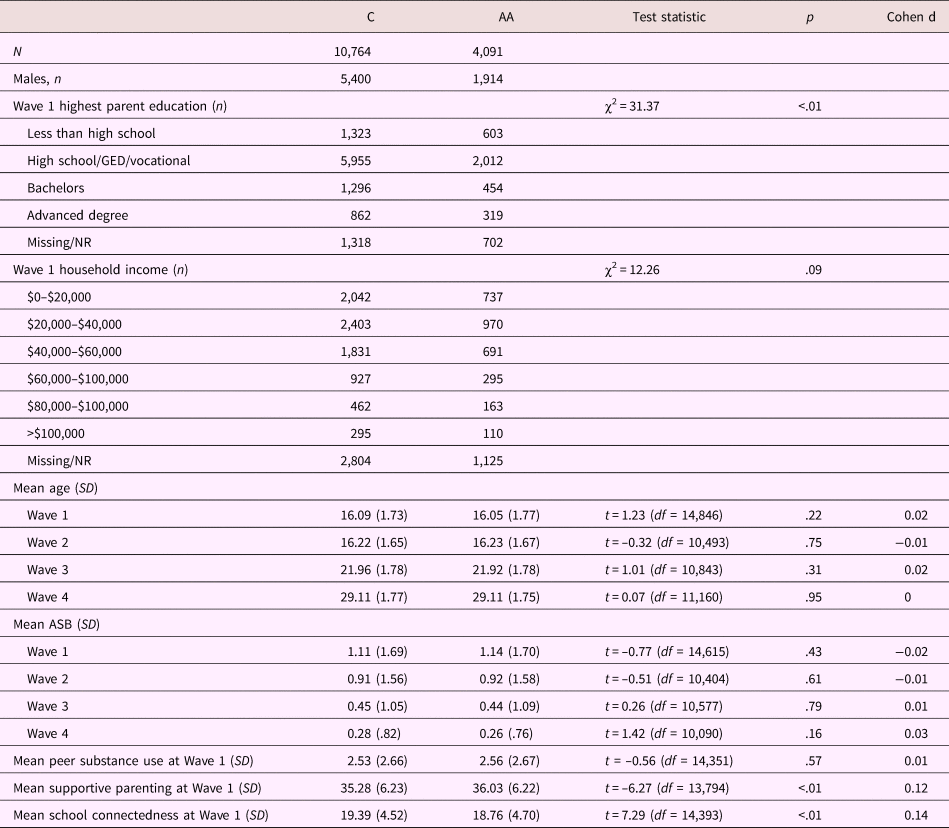
Table 1 displays mean comparisons between Caucasians and African Americans for each study variable. Caucasians and African Americans engaged in similar levels of ASB at Wave 1 [t (14,615) = –0.77, p = .43], Wave 2 [t (10,404) = –0.51, p = .61], Wave 3 [t (10,577) = 0.26, p = .79], and Wave 4 [t (10,090) = 1.42, p = .16]. Importantly, the effect size difference was relatively small for each wave (Cohen d = –0.02, –0.01, 0.01, and 0.13, respectively). Parental income was similar for Caucasians and African Americans (χ2 = 12.26, p = .09), but Caucasians reported more parental education (χ2 = 31.37, p < .01) compared with African Americans. Significant differences were also observed between Caucasian and African American individuals for supportive parenting and school connectedness, such that Caucasians reported lower supportive parenting [t (13,794) = –6.27, p < .01] and African Americans reported lower school connectedness [t (14,393) = 7.29, p < .01]; however, each of these differences were “small” in effect (Cohen d = 0.12 and 0.14, respectively). Caucasians and African Americans did not significantly differ in their report of peer substance use [t (14,351) = –0.56, p = .57].
Mean comparisons on demographic variables between Caucasian and African American individuals

Note: AA = African Americans; C = Caucasian; NR = not reported; peer substance use = number of friends who were reported to use the following substance: cigarette smoking, heavy alcohol consumption, and marijuana; SD = standard deviation.
Growth mixture models of ASB for Caucasians and African Americans
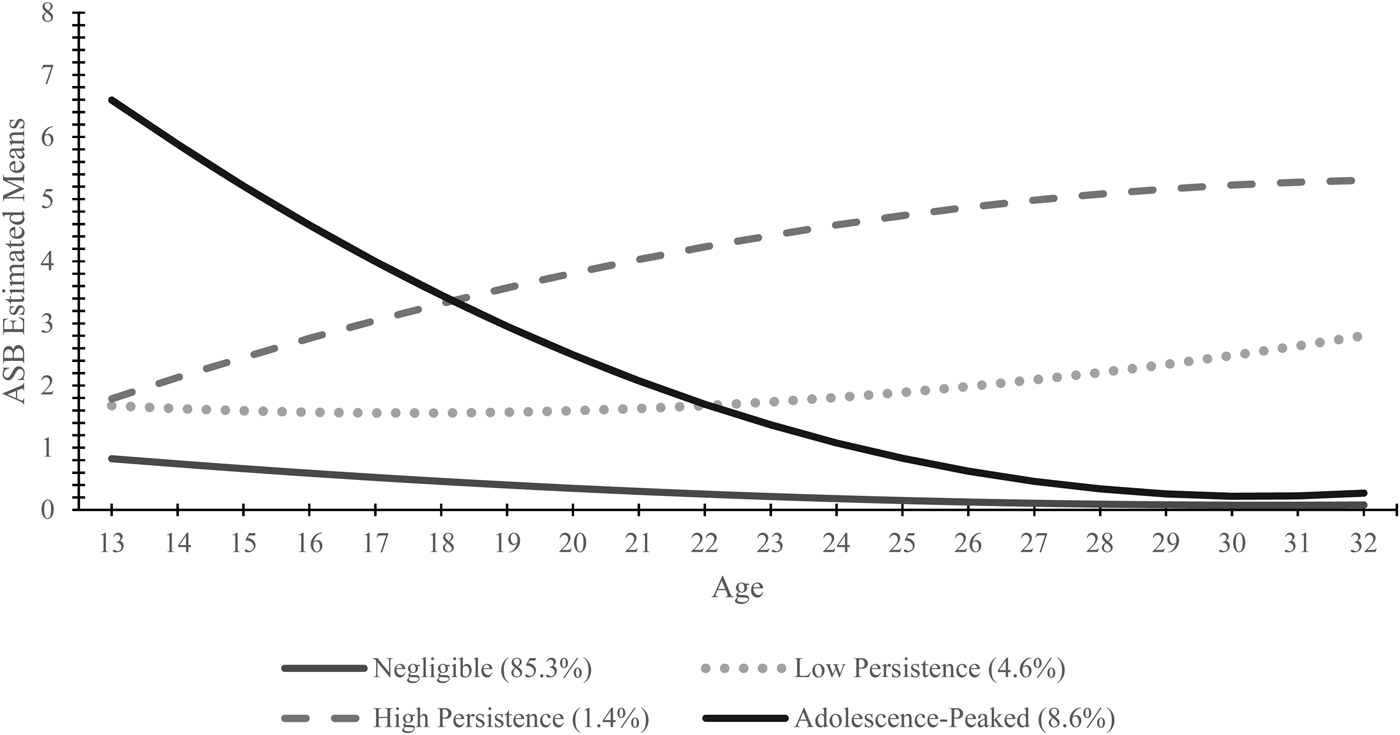
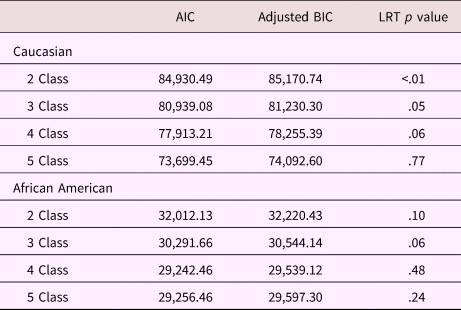
We tested iterative GMM from two to five classes to determine the best fitting latent class structure of ASB for Caucasians and African Americans separately. Table 2 provides the Akaike information criterion, adjusted BIC, LRT, and p values for each model by race-ethnicity. For the Caucasian group, we chose a four-class solution because of its optimal model fit indices relative to the other class solutions, and also in part because the five-class solution produced an overlapping class that was indistinguishable from the four-class solution. From the GMM, we detected a negligible (85.3% of Caucasian sample), adolescence-peaked (8.6%), low-persistence (4.6%), and high-persistence classes (1.4%; Figure 1).
Estimated means of the latent trajectories of ASB for Caucasians

Fit indices for growth mixture models

Note: AIC = Akaike information criterion; BIC = Bayesian information criterion adjusted for sample size; LRT = Lo–Mendell–Rubin likelihood ratio test for k classes (null) versus k + 1.
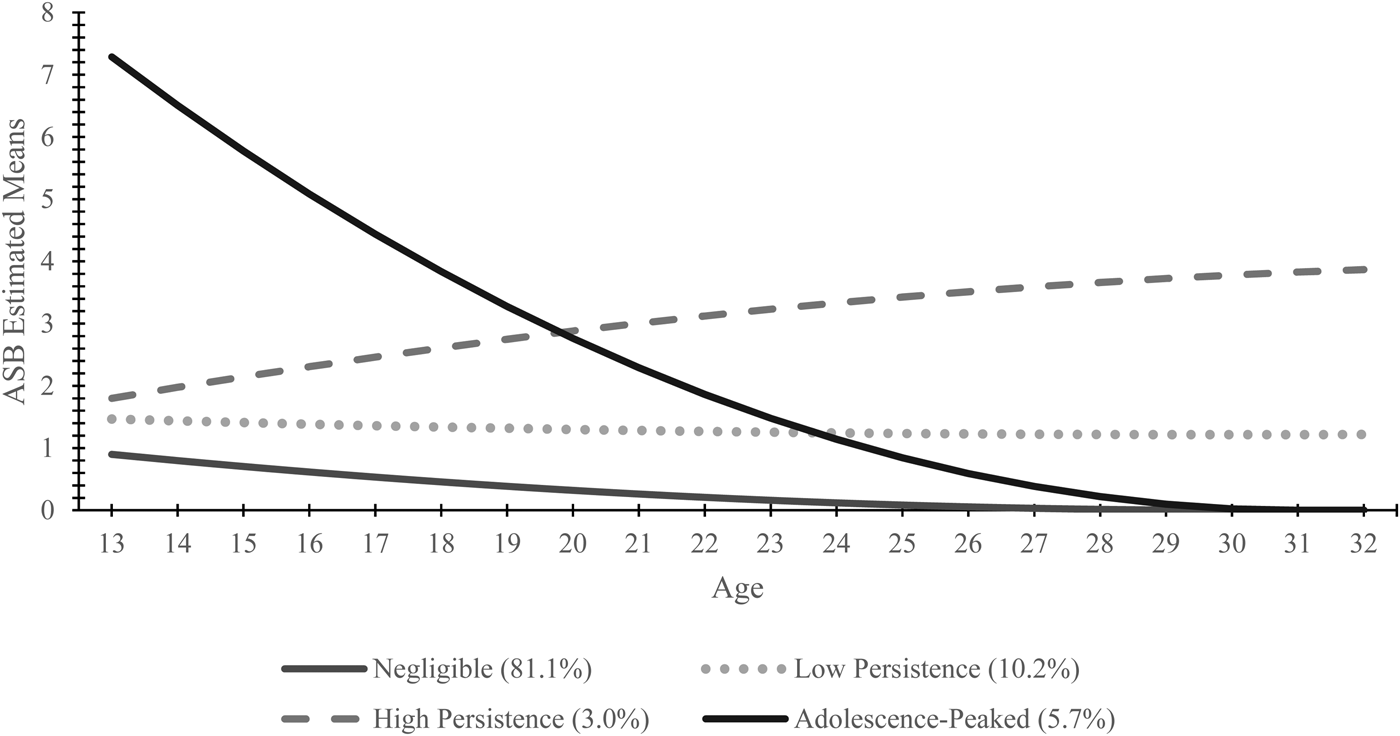
For the African American group, a four-class solution was also selected, similarly because of more optimal model fit indices relative to other class solutions (i.e., lowest Akaike information criterion/adjusted BIC) and because this model was also most consistent with previous longitudinal studies on ASB in African Americans (i.e., Evans et al., Reference Evans, Simons and Simons2016; Park et al., Reference Park, Lee, Sun, Vazsonyi and Bolland2010) (Table 2). Similar to the Caucasian GMM analyses, the four classes were negligible (81.1% of African American sample), adolescence-peaked (5.7%), low-persistence (10.2%), and high persistence (3.0%) classes (Figure 2).
Estimated means of the latent trajectories of ASB for African Americans

Briefly, the negligible group consisted of individuals reporting typically developing levels of ASB from early adolescence through adulthood. The adolescence-peaked ASB class, similar to the AL and early starter/declining trajectories described by Moffitt (Reference Moffitt1993) and Evans et al. (Reference Evans, Simons and Simons2016), respectively, displayed the highest levels of ASB between the ages of 13 of 16 but exhibited a rapid decline in their ASB thereafter. We used the term adolescence-peaked (rather than AL) because of the absence of childhood data on ASB in Add Health, as we were unable to confirm that individuals in this class did not exhibit ASB during childhood. The low persistence ASB class consisted of individuals reporting relatively low levels of ASB throughout adolescence and adulthood, but clearly higher than what was observed among individuals in the negligible class. Finally, the high persistence ASB class consisted of individuals who consistently engaged in high to moderate levels of ASB throughout the course of development, relative to the negligible and low persistence ASB classes.
Predicting ASB trajectories in Caucasians from supportive parenting and school connectedness
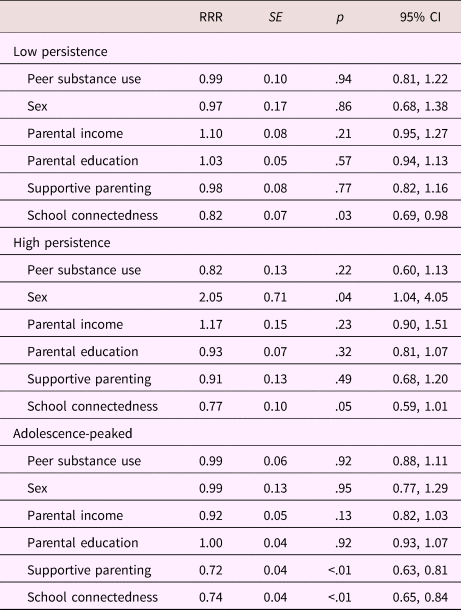
Next, we conducted multinomial logistic regression analyses to examine the association of supportive parenting and school connectedness on ASB class membership. We first conducted these analyses for the Caucasian group, controlling for parental education level, household income, peer substance use, and adolescent sex (Table 3). The negligible class was the reference class in each model. Supportive parenting was associated with a reduction in the relative risk of membership into the adolescence-peaked class (relative risk reduction [RRR] = 0.72, 95% confidence interval [95% CI] [.63, .81], p < .01), but not the low persistence class (RRR = 0.93, 95% CI [.82, 1.16], p = .77), or high persistence class (RRR = 0.91, 95% CI [.68, 1.20], p = .49) compared with the negligible class. School connectedness was associated with a reduction in the relative risk of membership into the adolescence-peaked class (RRR = 0.74, 95% CI [.65, .84], p < .01), low persistence class (RRR = 0.82, 95% CI [.69, .98], p = .03), and high persistence class (RRR = 0.77, 95% CI [.59, 1.01], p < .01) compared with the negligible class.
Multinomial logistic regression results with negligible class as base outcome for Caucasians

Note: CI = confidence interval; RRR = relative risk ratio; SE = standard error of the RRR.
Predicting ASB trajectories in African Americans from supportive parenting and school connectedness
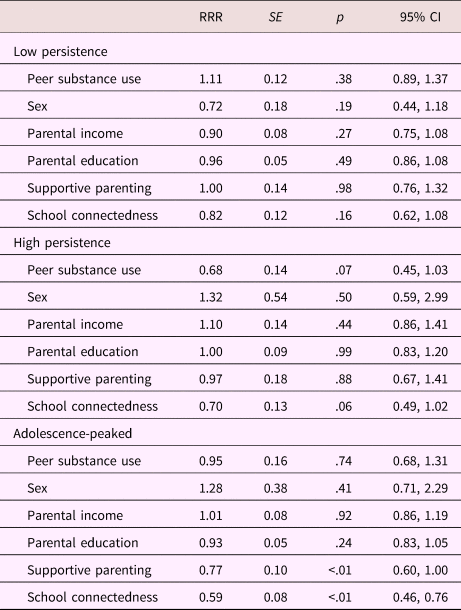
Multinomial logistic regression analyses were then conducted for the African American ASB classes to examine the association of supportive parenting and school connectedness on ASB class membership, controlling for parental education level, household income, peer substance use, and adolescent sex (Table 4). The negligible class was the reference class in each model. Supportive parenting was associated with a reduction in the relative risk of membership into the adolescence-peaked class (RRR = 0.77, 95% CI [.60, 1.00], p < .01), but not the low persistence class (RRR = 1.00, 95% CI [.76, 1.32], p = .98), or high persistence class (RRR = 0.70, 95% CI [.67, 1.41], p = .88). Compared with the negligible class, school connectedness was associated only with a reduction in the relative risk of membership into the adolescence-peaked class (RRR = 0.59, 95% CI [.46, .76], p < .01) but not the low persistence class (RRR = 0.82, 95% CI [.62, 1.08], p = .16) or the high persistence class (RRR = 0.70, 95% CI [.49, 1.02], p = .06). In other words, high levels of school connectedness were not protective of engaging in ASB for a significant portion of African American youths.
Multinomial logistic regression results with negligible class as base outcome for African Americans

Note: CI = confidence interval; RRR = relative risk ratio; SE = standard error of the RRR.
Effects of covariates in predicting ASB trajectories in Caucasians and African Americans
For Caucasians, higher levels of parental income and education attainment were not associated with the relative risk of membership into any of the ASB classes relative to the negligible class. Peer substance use also did not associate with a reduction in the relative risk of class membership in any ASB class. For African Americans, peer substance use similarly did not reduce the relative risk of membership into the adolescence-peaked, low persistence, or high persistence classes relative to the negligible class. Similarly, parental education and parental income did not reduce the relative risk of membership for nay class relative to the negligible class.
Discussion
The present study had two objectives. First, we separately identified latent class developmental trajectories of ASB in Caucasian and African American youths using four waves of Add Health data. Both groups exhibited nearly identical latent developmental trajectories of ASB, including adolescence-peaked, high persistence, low persistence, and negligible ASB; however, the rates of group membership in these trajectories differed between Caucasians and African Americans. The second objective was to examine the role of supportive parenting and school connectedness in predicting latent class membership among Caucasian and African American groups. Higher levels of supportive parenting reduced the risk of adolescence-peaked ASB class membership, but not high or low persistence ASB, relative to the negligible class regardless of racial-ethnic status; however, supportive parenting did not lead to a reduction of risk of high and low persistence ASB (relative to negligible class) class membership in either Caucasians or African Americans. Furthermore, we found significant group differences with respect to the protective effects of school connectedness and ASB developmental trajectories. Higher levels of school connectedness reduced the risk of membership into the adolescence-peaked, high persistence and low persistence ASB classes compared with the negligible class for Caucasians, whereas, for African Americans, higher levels of school connectedness only reduced the risk of membership in the adolescence-peaked ASB class relative to the negligible class.
As hypothesized, the results indicated that latent developmental trajectories of ASB were similar for Caucasian and African American groups; however, Add Health prevalence rates for these trajectories differed between Caucasian and African American groups. Overall, compared with Caucasians, African American individuals were much more likely to belong to the low persistence (4.6% vs. 10.2%) and high persistence (1.4% vs. 3.9%) ASB classes, and less likely to belong to the negligible (85.3% vs. 81.1%). and adolescence-peaked (8.6% vs. 5.7%) ASB classes, suggesting phenomenological differences at the highest (i.e., most severe) and lowest (i.e., typically developing) ends of the ASB spectrum. Previous research has theorized that some persistent forms of ASB classes may reflect a group of individuals who have been “ensnared” by social forces and ecological factors that are in part driven by their earlier ASB (e.g., incarceration, substance use), thus slowing down their desistance from delinquency during the adolescent/young adult years (Hussong, Curran, Moffitt, Caspi, & Carrig, Reference Hussong, Curran, Moffitt, Caspi and Carrig2004). Our results suggest that African American youths are more likely to experience “snares” relative to Caucasian youths, which we speculate may be because African American youths tend to receive more severe consequences for their ASB compared with Caucasian youths (Brinkley-Rubinstein et al., Reference Brinkley-Rubinstein, Craven and McCormack2014; McIntosh et al., Reference McIntosh, Girvan, Horner and Smolkowski2014; Office of Juvenile Justice and Delinquency Prevention, 2015). Thus, even though a subset African American youths may have naturally desisted in their ASB, their experience of harsher punishments and higher incarceration rates compared with their Caucasian counterparts may lead to a greater likelihood of persistence in their ASB into adulthood. Another possible factor underlying the higher prevalence of persistent forms of ASB among African American youths relative to Caucasians may be racial discrimination (Burt, Simons, & Gibbons, Reference Burt, Simons and Gibbons2012; Sellers, Caldwell, Schmeelk-Cone, & Zimmerman, Reference Sellers, Caldwell, Schmeelk-Cone and Zimmerman2003; Unnever & Gabbidon, Reference Unnever and Gabbidon2011). Racial discrimination in African American adolescents can uniquely contribute to the onset and increase in ASB over time. For example, Evans et al. (Reference Evans, Simons and Simons2016) found that early experiences with racial discrimination in African American adolescent males predicted greater risk in the onset of ASB with a high increasing rate of ASB (i.e., early starter/chronic group). Follow-up studies that test this hypothesis comparing racial-ethnic subgroups is warranted.
High supportive parenting reduced the risk of membership in the adolescence-peaked ASB class relative to the negligible class for both Caucasians and African Americans, which is consistent with previous literature (Connell et al., Reference Connell, Cook, Aklin, Vanderploeg and Brex2011; Cooper, Brown, Metzger, Clinton, & Guthrie, Reference Cooper, Brown, Metzger, Clinton and Guthrie2013; Logan-Greene et al., Reference Logan-Greene, Nurius, Herting, Hooven, Walsh and Thompson2011; Mazefsky & Farrell, Reference Mazefsky and Farrell2005). Crucially, we found no evidence of a protective effect of supportive parenting on the persistent forms of ASB (high and low persistence ASB) for either Caucasians or African Americans. Overall, these findings are consistent with the notion that the persistent forms of ASB may be more heritable (and less influenced by shared/unique environmental influences) relative to other developmental subtypes of ASB (Burt, Reference Burt2009; Li, Reference Li2017; Zheng & Cleveland, 2015). Furthermore, although the centrality of high-quality parenting (warmth, involvement) as a protective factor for ASB has been well-established, few studies had examined whether its positive effects on ASB generalize across racial-ethnic subgroups. We found that the protective effects of supportive parenting on adolescence-peaked ASB was invariant to racial-ethnic status; however, there may be different mechanisms by which these effects operate in Caucasian versus African American youths. For instance, supportive parenting may play an especially crucial role in protecting against social forces (i.e., racial discrimination) unique to African American males (Simons et al., Reference Simons, Simons, Burt, Drummund, Stewart, Brody and Cutrona2006).
The adolescents’ perceived level of school connectedness was generally protective of ASB trajectories for Caucasians, but this association was not entirely replicated for African Americans. For African Americans, higher levels of school connectedness only reduced the risk of membership in the adolescence-peaked ASB class compared with the negligible class (and only a marginally significant reduction in risk of membership in the high persistence ASB class compared with the negligible class); school connectedness did not reduce the risk of membership in the low persistent ASB class relative to the negligible class for African American youths. This result is consistent with Frey et al. (Reference Frey, Ruchkin, Martin and Schwab-Stone2009), but contrary to other reports that focused exclusively on the effects of the school environment and behavioral outcomes among African American youths. Previous studies have found that African American students who felt more connected and cared for by their teachers had more positive social, behavioral, and engagement outcomes compared with African American students who felt less connected (Decker, Dona, & Christenson, Reference Decker, Dona and Christenson2007; Gregory & Weinstein, Reference Gregory and Weinstein2008). Why might a subset of African American youths not benefit from feeling more connected within their schools? There is evidence to suggest race affects the way teachers and administrators feel about their students. African American teachers, for instance, rate African American students more favorably than do Caucasian teachers (Downey & Pribesh, Reference Downey and Pribesh2004); furthermore, Caucasian teachers rate African American students as more “deserving” of harsh punishments relative to African American teachers for the same behaviors displayed by their Caucasian peers (Downey & Pribesh, Reference Downey and Pribesh2004). This may partially explain why African American youths are overrepresented in school suspensions and expulsions in the American school system; thus, racial bias (potentially stemming from a racial mismatch between teachers and students) may play an indirect role on the lack of a protective effect of school connectedness for certain trajectories ASB in the African American population.
Although we were primarily interested in associations of parental and school influences on trajectories of ASB, we also note the effects of covariates (i.e., sex, peer substance use, and parental income/education) on these trajectories herein. First, we found that peer substance use had no significant effect on trajectories of ASB regardless of race-ethnicity, which is contrary to what was expected based on the literature. We speculate that the normative nature of tobacco, alcohol, and marijuana use during this developmental epoch (i.e., adolescence) may partially explain why this variable contributed to such little variance in ASB. Furthermore, we found interesting effects of parental education that diverged from theoretical expectations as well; that is, neither parental education nor income was associated with ASB class membership for either racial-ethnic subgroup. This is contrary to previous studies that reported robust associations of high socioeconomic status and reduced offspring behavioral problems (Dubow, Boxer, & Huesmann, Reference Dubow, Boxer and Huesmann2009; Nagin & Tremblay, Reference Nagin and Tremblay2001; Davis-Kean, Reference Davis-Kean2005). One important consideration is that socioeconomic status is a distal characteristic on family processes that may be mediated by more proximal characteristics, such as supportive parenting (which was actually measured here). Deković, Janssens, and Van As (Reference Deković, Janssens and Van As2003) found that the effects of distal and contextual factors were not associated with offspring ASB after accounting for proximal family-level characteristics, indicating the importance of accounting for these factors in complex models of psychopathology (as was done here).
Several study limitations should be noted. First, data on ASB, supportive parenting, and school connectedness were derived exclusively from individual self-reports rather than from multiple informants. It would have been preferable to use more objective measures of ASB (e.g., arrest records), although these records may also underestimate ASB in the general population. Furthermore, self-reported perceptions of ASB, school connectedness, and parental support may be more accurate than when these variables are reported by parents or other informants (Jaffee, Caspi, Moffitt, & Taylor, Reference Jaffee, Caspi, Moffitt and Taylor2004). Second, only two racial-ethnic populations (i.e., Caucasian and African American) were examined in the current study. More research is needed to establish whether racial-ethnic differences in ASB prevalence rates extend to other groups as well. Third, neighborhood factors were not included in the study, which limits our understanding of the effect of broader ecological factors such as crime rates and exposure to violence on these developmental trajectories. Fourth, childhood data on ASB were not collected on the sample, because Add Health began collecting data on participants when they were adolescents. The absence of these data makes it difficult to compare the pathways derived from the current study with those theorized by Moffitt (Reference Moffitt1993, Reference Moffitt, Lahey, Moffitt and Caspi2003). Fifth, this study was unable to truly study ASB from ages 13 to 32 because only four waves of data were collected, meaning that each individual could have only contributed to a maximum of four data points to the GMM analyses. Also, given the relatively high degree of age heterogeneity at each wave of Add Health, there may have potential “cohort effects” present that could not have been directly assayed. Finally, this study did not additionally examine phenomenological differences in the latent class architecture of ASB (e.g., overt vs. covert, male vs. female), which is beyond of the scope of the current study.
These findings may have important implications for clinical practice and policy making; for instance, positive and supportive parenting plays a protective role that may have lasting effects on offspring behavioral trajectories into adulthood. And although the protective effects of supportive parenting generalize to Caucasian and African American populations, unique familial and cultural values should still be considered in the context of family-based interventions for ASB (Clauss-Ehlers, Reference Clauss-Ehlers2017). With respect to the school context and ASB, school administrators should consider fostering more positive interactions between teachers and students more generally, but perhaps especially with African American youths. Enhancing sensitivity to cultural differences may be a key area of focus for teachers working with youths that come from diverse racial-ethnic backgrounds (Sleeter, Reference Sleeter2001), and emerging studies suggest that such trainings may be effective in improving teacher-student relationships (Brown, Reference Brown2004; Tucker et al., Reference Tucker, Porter, Reinke, Herman, Ivery, Mack and Jackson2005). The extent to which these trainings benefit African American youth (in terms of behavioral outcomes) is unknown, however, especially given that there has been little research on whether teachers even implement “culturally sensitive” skills into their classrooms (Milner, Flowers, Moore, Moore, & Flowers, Reference Milner, Flowers, Moore, Moore and Flowers2003). Considering the multitude of ways in which racial-ethnic differences manifest in ASB (e.g., prevalence, consequences, risk/protective factors), further study into proximal and distal levels of mechanisms that underlie these differences are needed.
Financial support
Ryann A. Morrison and James J. Li were supported in part by a core grant to the Waisman Center from the National Institute of Child Health and Human Development (P30-HD03352) and from the Wisconsin Alumni Research Foundation. No direct support was received from grant P30-HD03352 for this manuscript. This research uses data from Add Health, a program project directed by Kathleen Mullan Harris and designed by J. Richard Udry, Peter S. Bearman, and Kathleen Mullan Harris at the University of North Carolina at Chapel Hill, and funded by grant P01-HD31921 from the Eunice Kennedy Shriver National Institute of Child Health and Human Development, with cooperative funding from 23 other federal agencies and foundations. Information on how to obtain the Add Health data files is available on the Add Health website (http://www.cpc.unc.edu/addhealth). No direct support was received from grant P01-HD31921 for this analysis.
Acknowledgments
Special acknowledgment is given to Ronald R. Rindfuss and Barbara Entwisle for assistance in the original design.