





Introduction
Seedlings/plants derived from seeds at different positions on the mother plant of some species exhibit differences in life-history characteristics (Chipenete et al. Reference Chipenete, dos Santos, da Silva Lino, Oliveira, de Andrade, Pereira, Moreno and de Oliveira Pires2025; Imbert Reference Imbert2002; Imbert et al. Reference Imbert, Escarré and Lepart1997; Liyanage et al. Reference Liyanage, Ayre and Ooi2016; Morad et al. Reference Morad, Anderson and Chastain2025; Susko and Jamil Reference Susko and Jamil2024; Wang et al. Reference Wang, Tan, Baskin and Baskin2010). These effects are manifested across multiple traits, including seed morphs, germination, seedling growth and survival, plant size, biomass, and reproductive output. For instance, plants of sacred hawksbeard [Crepis sancta (L.) Bornm.] derived from peripheral fruits exhibit greater biomass and competitive ability than those from central fruits within the same capitulum (Imbert et al. Reference Imbert, Escarré and Lepart1997). Similarly, seed position within spikelets of Eremopyrum distans (K. Koch) Nevski (Wang et al. Reference Wang, Tan, Baskin and Baskin2010) and within diaspores of the invasive grass Tausch’s goatgrass (Aegilops tauschii Coss.) (Wang et al. Reference Wang, Baskin, Baskin and Ding2022) affects seedling emergence, survival, plant size, and seed production. Beyond inflorescence-level variation, two distinct seed types produced by variable bossiaea (Bossiaea heterophylla Vent.) and swamp oak [Viminaria juncea (Schrad.) Hoffmanns.] led to differences in seedling growth rates (Liyanage et al. Reference Liyanage, Ayre and Ooi2016), and position-dependent effects also have been reported for seedling size in American redbud (Cercis canadensis L.) (Susko and Jamil Reference Susko and Jamil2024) and reproductive success in spring vetch [Lathyrus vernus (L.) Bernh.] (Valdés and Ehrlén Reference Valdés and Ehrlén2024). In tomato (Solanum lycopersicum L.), number and mass of fruits and seeds varied by branch position (Chipenete et al. Reference Chipenete, dos Santos, da Silva Lino, Oliveira, de Andrade, Pereira, Moreno and de Oliveira Pires2025). These studies suggest that developmental and life-history differences in seedlings/plants from fruits/seeds in different positions on the mother plant, which represent spatial or temporal heterogeneity in environments during time of seed development, may have evolved as a “bet-hedging” strategy that increases species’ adaptation to unpredictable environments (Imbert Reference Imbert2002). Recent studies pointed out that seed position effects may facilitate dispersal of alien plants to new areas and may contribute to successful naturalization (Annamária et al. Reference Annamária, Dorottya, Petr, Wayne, Eszter, Franz, Holger, Jan, Patrick and Marten2019) and invasion, especially into croplands (Wang et al. Reference Wang, Baskin, Baskin and Ding2022). However, most studies considered only one level of seed position effect, and thus studies of seed position effect on life-history traits of invasive plants are rather scare (Wang et al. Reference Wang, Baskin, Baskin and Ding2022).
Seed germination timing is of great importance in the life history of plants, influencing seedling/plant survival, growth, and reproduction (Burghardt et al. Reference Burghardt, Metcalf and Donohue2016; Donohue et al. Reference Donohue, Rubio de Casas, Burghardt, Kovach and Willis2010; Gremer et al. Reference Gremer, Wilcox, Chiono, Suglia and Schmitt2020; Schütz Reference Schütz2002). Thus, it is particularly evident that in annual plants, germinating at different times influences life-history traits (Guo et al. Reference Guo, Baskin, Baskin, Wang, Liu, Liu, Ye, Grafi, Yang and Huang2025; Lu et al. Reference Lu, Tan, Baskin and Baskin2017; Wang et al. Reference Wang, Tan, Baskin and Baskin2010, Reference Wang, Baskin, Baskin and Ding2022, Reference Wang, Baskin, Baskin and Ding2024). For instance, a study of the model plant Arabidopsis thaliana revealed that plants from seeds germinating in November had higher survival percentages and entered the reproductive growth stage earlier than those from seeds that germinated in December. However, plants from seeds that germinated in December had a faster growth rate and tended to be larger than those from seeds that germinated in November (Donohue Reference Donohue2002). Moreover, different emergence seasons of A. thaliana determined life-history characteristics of plants, such as winter annual or summer annuals (Burghardt et al. Reference Burghardt, Metcalf, Wilczek, Schmitt and Donohue2015; D’Aguillo and Donohue Reference D’Aguillo and Donohue2023; Taylor et al. Reference Taylor, Cooper, Sellamuthu, Braun, Migneault, Browning and Perry2017). For the annuals Diptychocarpus strictus (Fisch. ex M. Bieb.) Trautv., E. distans, and A. tauschii, plants derived from seeds that germinated in autumn had a longer life cycle, greater size, and higher seed production than those from seeds that germinated in spring (Lu et al. Reference Lu, Tan, Baskin and Baskin2010; Wang et al. Reference Wang, Tan, Baskin and Baskin2010, Reference Wang, Baskin, Baskin and Ding2022). For spring-emerging plants of Isatis violascens Bunge, survival percentages of seedlings were higher and biomass allocation to reproductive organs greater than that for autumn-emerging plants (Lu et al. Reference Lu, Tan, Baskin and Baskin2017). Tripathi et al. (Reference Tripathi, Vedi, Raghuvanshi and Pandey2023) found that late sowing of wheat (Triticum aestivum L.) resulted in higher seedling emergence percentages than early sowing, but plants derived from early-sown seeds exhibited a longer time from emergence to heading than those derived from late-sown seeds. In wheat (Tripathi et al. Reference Tripathi, Vedi, Raghuvanshi and Pandey2023), A. thaliana (Hayama et al. Reference Hayama, Sarid-Krebs, Richter, Fernández, Jang and Coupland2017; Kinoshita and Richter Reference Kinoshita and Richter2020), and many annual grasses (Osnato et al. Reference Osnato, Cota, Nebhnani, Cereijo and Pelaz2022), it is widely recognized that the time from emergence to heading is largely controlled by photoperiod sensitivity, and this in turn influences various life-history traits.
Traits of plants in each stage of the life cycle are strongly influenced by environmental conditions, with soil moisture acting as a critical factor, particularly for annual species. Due to their shallow root systems and complete reliance on current-season precipitation, annual grasses are uniquely sensitive to soil water availability, which directly drives seedling emergence, survival, and growth (Mahajan and Chauhan Reference Mahajan and Chauhan2020). Further, in the annual Brassicaceae A. thaliana, spring-emerged plants under natural soil moisture failed to reach reproduction, whereas those under increased moisture completed their life cycle (Donohue Reference Donohue2002). This response is largely explained by the species’ rapid life history and inability to access deeper soil water reserves. Similarly, seedlings of A. thaliana watered every 1 to 3 wk had increased survival and fitness compared with those under natural moisture (D’Aguillo and Donohue Reference D’Aguillo and Donohue2023). In the facultative winter annual D. strictus, frequent watering (every 1 to 3 d) significantly increased survival, plant size, seed production, and dry mass. Interestingly, smaller plants under natural moisture allocated a higher proportion of biomass to reproduction—a classic stress-induced response—suggesting that soil moisture not only determines overall fitness but also alters reproductive strategy (Lu et al. Reference Lu, Tan, Baskin and Baskin2014). Increased soil moisture also promotes establishment and survival of annual invasive species such as yellow star-thistle (Centaurea solstitialis L.), barbed goatgrass (Aegilops triuncialis L.) (Eskelinen and Harrison Reference Eskelinen and Harrison2014), and A. tauschii (Wang et al. Reference Wang, Baskin, Baskin and Ding2022), whereas low moisture reduces seedling dry mass in A. tauschii (Wang et al. Reference Wang, Yuan, Chen and Li2019a). However, these previous studies have paid little attention to how water availability may affect life-history characteristics in invasive species, particularly regarding the effect of seed position.
It is well known that growth and reproduction of annual plants are affected by seed position, time of seed germination, and soil moisture. However, less well known is how two levels of seed position combined with seed germination time and soil moisture level affect life-history characteristics of annual invasive plants such as A. tauschii, a diaspore heteromorphic species with two levels of seed position effects; newly emerging A. tauschii seedlings have been observed in the field in both autumn and (the next) spring (Baskin and Baskin Reference Baskin and Baskin2023; Wang et al. Reference Wang, Baskin, Baskin and Ding2022, Reference Wang, Baskin, Baskin and Ding2024). As a weedy winter/spring ephemeral grass (Poaceae), A. tauschii is indigenous to eastern Europe and western Asia (Wang et al. Reference Wang, Tian and Chen2021; Zohary et al. Reference Zohary, Baker, Stebbins, Baker and Stebbins1965). Wild populations of A. tauschii occur widely in arid and semiarid environments across central Eurasia, extending from Turkey to western China (Zhou et al. Reference Zhou, Bai, Li, Sun, Zhang, Ma, Zhao, Nie, Li, Chen, Lv, Zhu, Fan, Ge and Shaheen2021). Within China, the species has rapidly colonized the critical winter wheat–growing provinces of Shandong, Shanxi, Shaanxi, Henan, and Hebei (N Wang et al. Reference Wang, Yuan and Chen2018; N Wang et al. Reference Wang, Tian and Chen2021), and it is now recognized as one of the most challenging weeds to manage in wheat fields (Fang et al. Reference Fang, Zhang, Wei, Huang and Liu2012; H Wang et al. Reference Wang, Zhao, Li, Chen and Wang2020; N Wang et al. Reference Wang, Tian and Chen2021).
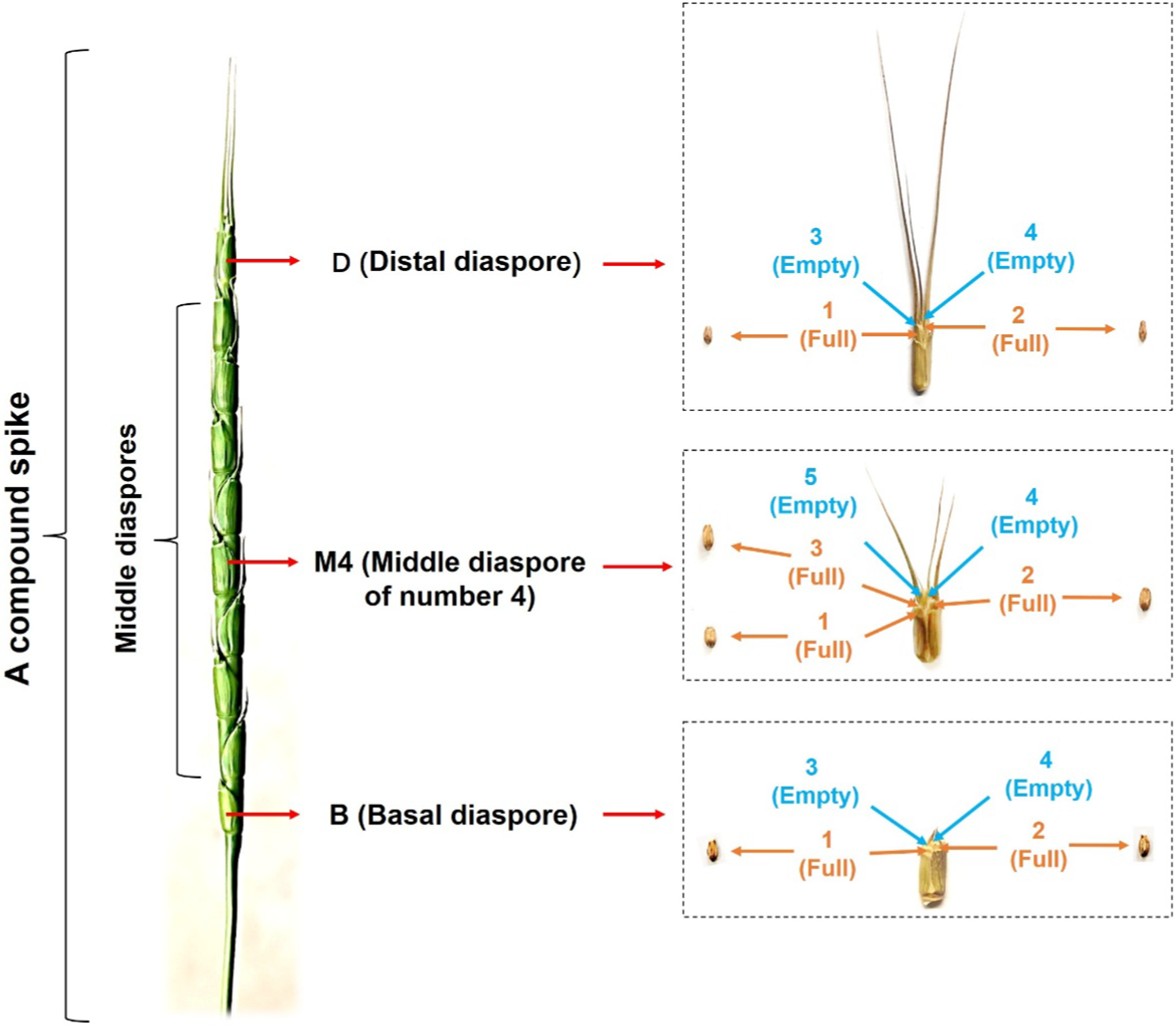
Thus, we conducted a field experiment using seeds from different diaspore and seed positions on mother plants of A. tauschii (Figure 1). All types of seeds were sown under both increased soil moisture (hand-watered) and natural soil moisture. We monitored phenology, seedling emergence, and seedling survival and measured plant size, seed production, dry mass, and biomass allocation. We hypothesized that all three factors—seed position, germination time, and soil moisture—significantly affect life-history traits of A. tauschii and, more importantly, that significant two- and three-way interactions exist among these factors. Specifically, then, we predicted that (1) increased soil moisture enhances performance across all seed positions and germination times, (2) seeds from different positions respond differently to moisture variation, and (3) autumn- and spring-germinating cohorts differ in their responses to these factors.
Diaspore and seed positions for Aegilops tauschii.

Figure 1. Long description
A diagram of a compound spike showing the positions of diaspores. The spike is divided into three main sections: distal, middle, and basal diaspores. Panel A: The compound spike is shown with labels indicating the distal diaspore (D), the middle diaspore of number 4 (M4), and the basal diaspore (B). Panel B: A close-up view of the distal diaspore, showing five positions labeled 1 to 5. Positions 1 and 2 are full, while positions 3 and 4 are empty. Panel C: A close-up view of the middle diaspore of number 4, showing five positions labeled 1 to 5. Positions 1 and 2 are full, while positions 3, 4, and 5 are empty. Panel D: A close-up view of the basal diaspore, showing five positions labeled 1 to 5. Positions 1 and 2 are full, while positions 3 and 4 are empty.
Materials and Methods
Study Site, Seed Collection, and Field Experiment Design
The study site is located in the experimental field of Henan University, Kaifeng, Henan Province, China (14.23°E, 34.52°N, altitude 73 m asl), with sandy soil and a warm temperate continental monsoon climate. The region has distinct seasonal variations. Autumn (September to November) is typically mild and dry, with a mean temperature of 15 to 20 C, low rainfall (average monthly precipitation <50 mm), and large diurnal temperature fluctuations. Spring (March to May) is characterized by rapid warming and high evaporative demand, with mean temperatures ranging from 12 C in early March to 24 C in late May, and monthly precipitation often below 60 mm (www.cma.gov.cn).
Fully mature seeds were collected from the main shoot of each of approximately 3,000 individual plants of A. tauschii growing at the study site from June 1 to June 7, 2022. Seeds from two positions in diaspores B and D and three positions in diaspore M4 were isolated (Figure 1). Viability and germination of fresh seeds were tested, and the results were consistent with those reported by Wang et al. (Reference Wang, Baskin, Baskin and Ding2023, Reference Wang, Baskin, Baskin and Ding2024). Initial seed viability was close to 100% for all positions, while germination percentage ranked from highest to lowest as follows: D2, D1, M4-3, M4-2, M4-1, B2, B1.
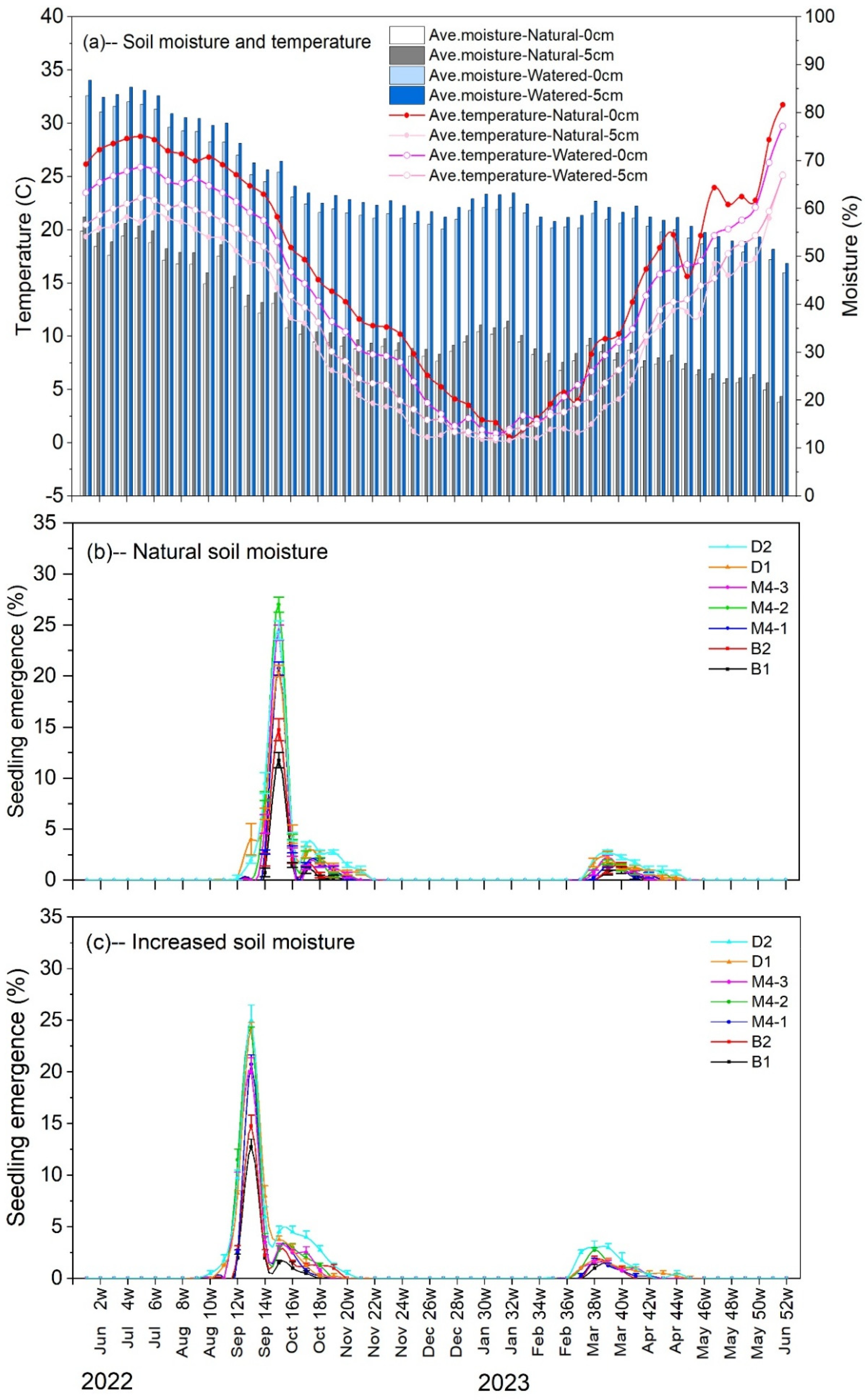
In the planting experiment, there were two watering treatments. In one, the soil received water only from natural precipitation, and in the other, the soil was watered to field capacity weekly, except from December to mid-February, when seeds received moisture only from snow and rain; evaporation was very low during this period. The soil moisture content was measured daily using a tension meter (MP-100). Before sowing, the soil was plowed and leveled, and then the soil was divided into 2 m by 2 m plots with each plot having 100 equally sized grids. On June 14, 2022, a total of 100 seeds from each position were sown on the surface in 100 grids of each of 8 plots, of which 4 were watered and 4 were not watered (rainfed). After being sown, seeds were uniformly covered with about 1 cm of soil. Total number of plots = 7 (seeds from different positions) × 2 (soil watering conditions) × 4 (replicates) = 56. Newly emerged seedlings were monitored (marked) daily, and both seedling emergence and seedling survival were summarized weekly after daily observations. All seeds were only sown on June 14, 2022. A portion of seeds germinated in autumn 2022, and another portion germinated in spring 2023, which is regarded as the “emergence season (autumn vs. spring)” factor (Figure 2).
Soil temperature and moisture and Aegilops tauschii seedling emergence during the experimental period. B, basal diaspore; M4, middle diaspore; D, distal diaspore; Numbers 1, 2, and 3 following B, M4, and D indicate seed positions from bottom to top in diaspores.

Phenology
Beginning and ending times of each phenological stage from seedling emergence to seed maturation were recorded: emergence: first to last day of seedling emergence; tillering: first to last day of tiller emergence; elongation: first to last day of elongation of stems; heading: first to last day of compound spikes growing up from the leaf sheaths; flowering: first to last day of flowering; filling: first to last day of seed filling; maturation: first to last day of plant color turning from green to gold (Supplementary Figure S1).
Plant Size, Seed Production, Biomass, and Biomass Allocation
After plants matured, plant height was measured as the distance from the base of the stem to the highest point of the plant, and the number of tillers per plant, number of diaspores per tiller, and number of seeds per diaspore were determined. Seed production per plant is the number of tillers per plant by number of diaspores per tiller by number of seeds per diaspore. Then, an area extending approximately 2 cm beyond the plant canopy was excavated to a depth of about 35 cm. Each plant, along with its entire root system, was carefully dug out. After the soil adhering to the root surfaces was shaken off, the roots were rinsed repeatedly under running water to remove remaining soil, then blotted dry with absorbent paper. The roots, stems, leaves, and seeds of each plant were separated and placed individually in paper bags. Samples were dried in an oven at 60 C for 8 h, after which their dry mass was measured using an electronic balance, and biomass allocation of each plant organ was determined.
Statistical Analyses
A generalized linear model was used to test effects of diaspore position in a compound spike, seed position in the diaspore, soil moisture, emergence season (autumn and spring) and their interactions on seedling emergence percentages, seedling survival percentages, plant height, number of tillers per plant, number of diaspores per tiller, number of seeds per diaspore, dry mass of roots, stems, leaves and seeds, and biomass allocation.
A one-way ANOVA was used to test differences in each trait among different positions of diaspores in a compound spike, among different positions of seeds in diaspores, between the two soil moisture levels, between the two emergence seasons (autumn and spring), and among duration times of each phenological stage in the life cycle.
Before analysis, normality and homogeneity of variance tests were conducted. If the data did not meet these tests, they were log10 or square-root transformed (untransformed data ± SE shown in all figures and tables).
All data analyses were performed using R software (R v. 4.2.1). Tukey’s honest significant difference test was used to determine whether differences between each treatment were significant (P < 0.05).
Results and Discussion
Effect of Seed Position on Emergence and Growth
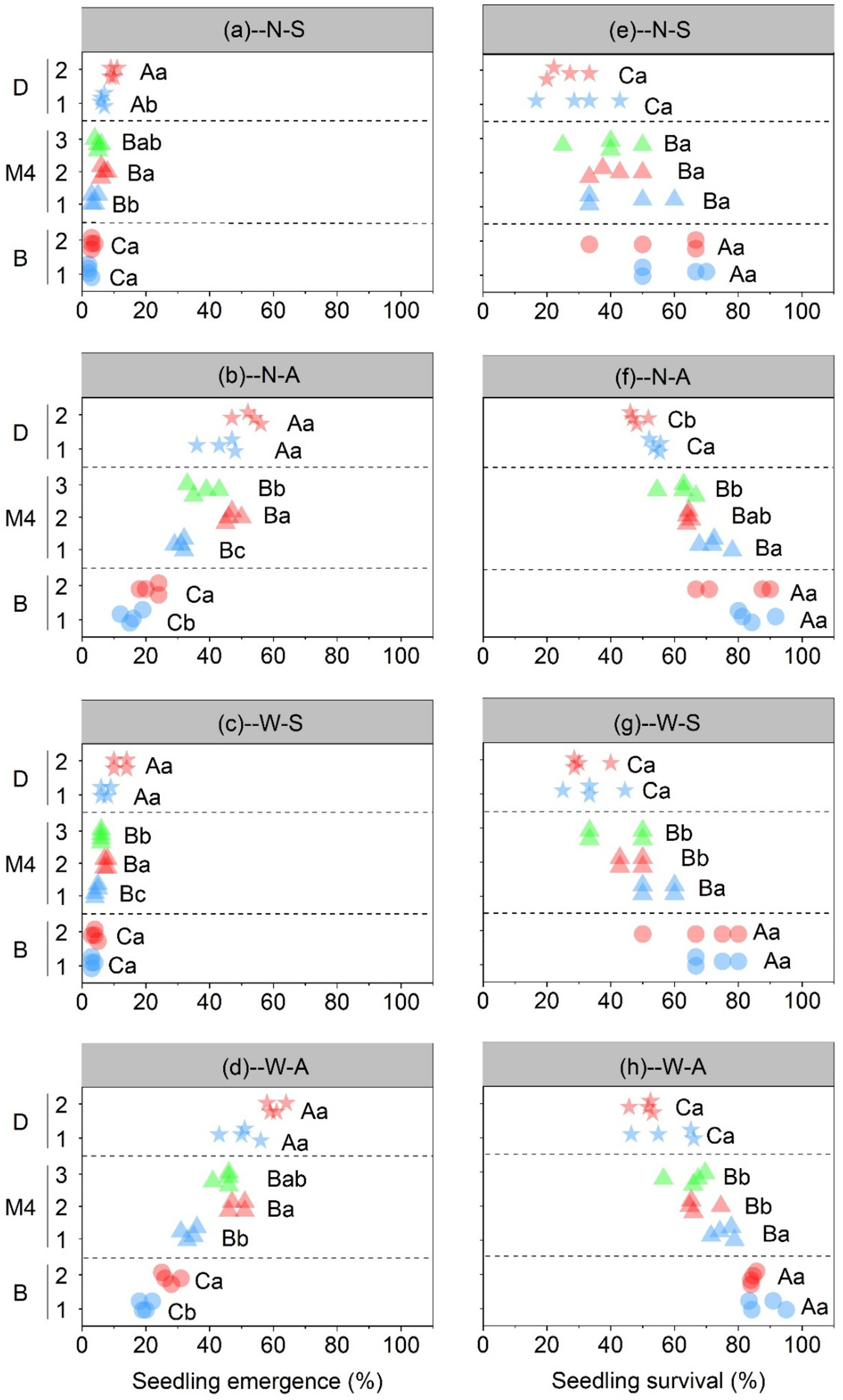
Regardless of emergence season and watering regime, seedling emergence of distal diaspores on compound spike/distal seeds in diaspore began earlier and ended several days later than emergence of basal ones (Figure 2). According to preliminary experimental results, germination percentage ranked from highest to lowest as follows: D2, D1, M4-3, M4-2, M4-1, B2, B1; higher seedling emergence percentages for distal diaspores/seeds than for basal ones (Figure 3) were not surprising. However, seedling survival percentages of plants derived from distal diaspores/seeds were >25% lower than those from basal ones (Figure 3).
Aegilops tauschii seedling emergence and survival percentages. N-S, spring plants under natural soil moisture; N-A, autumn plants under natural soil moisture; W-S, spring plants under increased soil moisture condition; W-A, autumn plants under increased soil moisture condition; Blue, pink, and green indicate the first, second, and third position of seeds within a diaspore, respectively. B, basal diaspore; M4, middle diaspore; D, distal diaspore. Numbers 1, 2, and 3 following B, M4, and D indicate seed positions from bottom to top in diaspores. Different uppercase letters indicate significant differences among different diaspore positions in compound spike, and different lowercase letters significant differences among/between different seed positions in diaspores.

Early seedling emergence might increase the risk of encountering adverse conditions for survival in the early part of the growing season, thus increasing the risk for survival (Gremer et al. Reference Gremer, Wilcox, Chiono, Suglia and Schmitt2020). For example, early seedling emergence of winter annuals in autumn may increase the possibility of exposure to high temperatures and drought (D’Aguillo and Donohue Reference D’Aguillo and Donohue2023), and early seedling emergence of spring annuals in spring also may increase the possibility of exposure to low temperatures and drought. In our study, autumn and spring are both relatively dry (www.cma.gov.cn), and the average soil temperatures in autumn and spring were below 15 C (Figure 2), which might increase risk of survival of early-emerging seedlings. Moreover, a long period of seedling emergence also might increase the risk of environmental stress for seedlings (D’Aguillo and Donohue Reference D’Aguillo and Donohue2023). Therefore, compared with basal diaspores/seeds, distal diaspores/seeds with earlier and longer seedling emergence times had lower survival percentages, which was quite understandable.
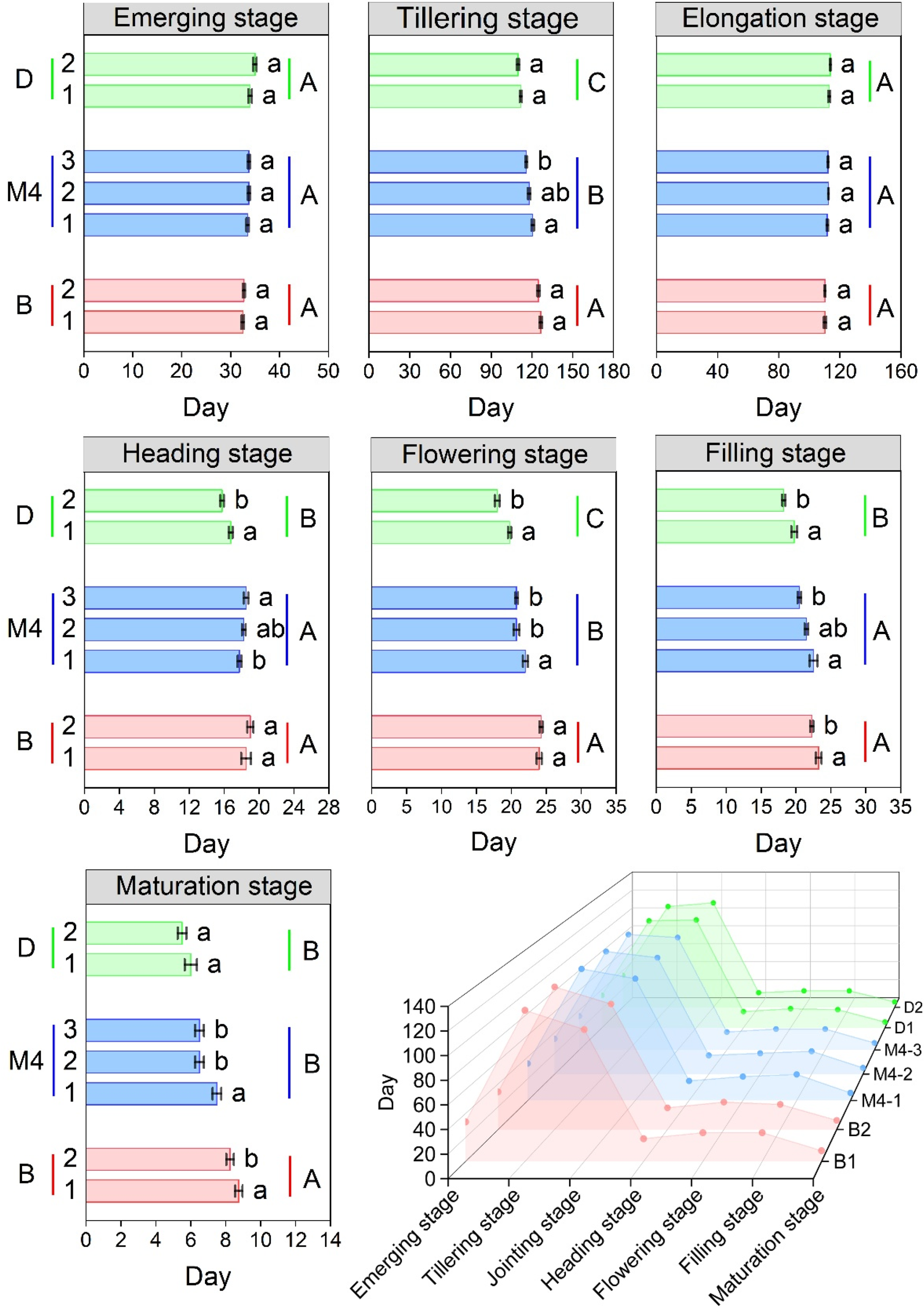
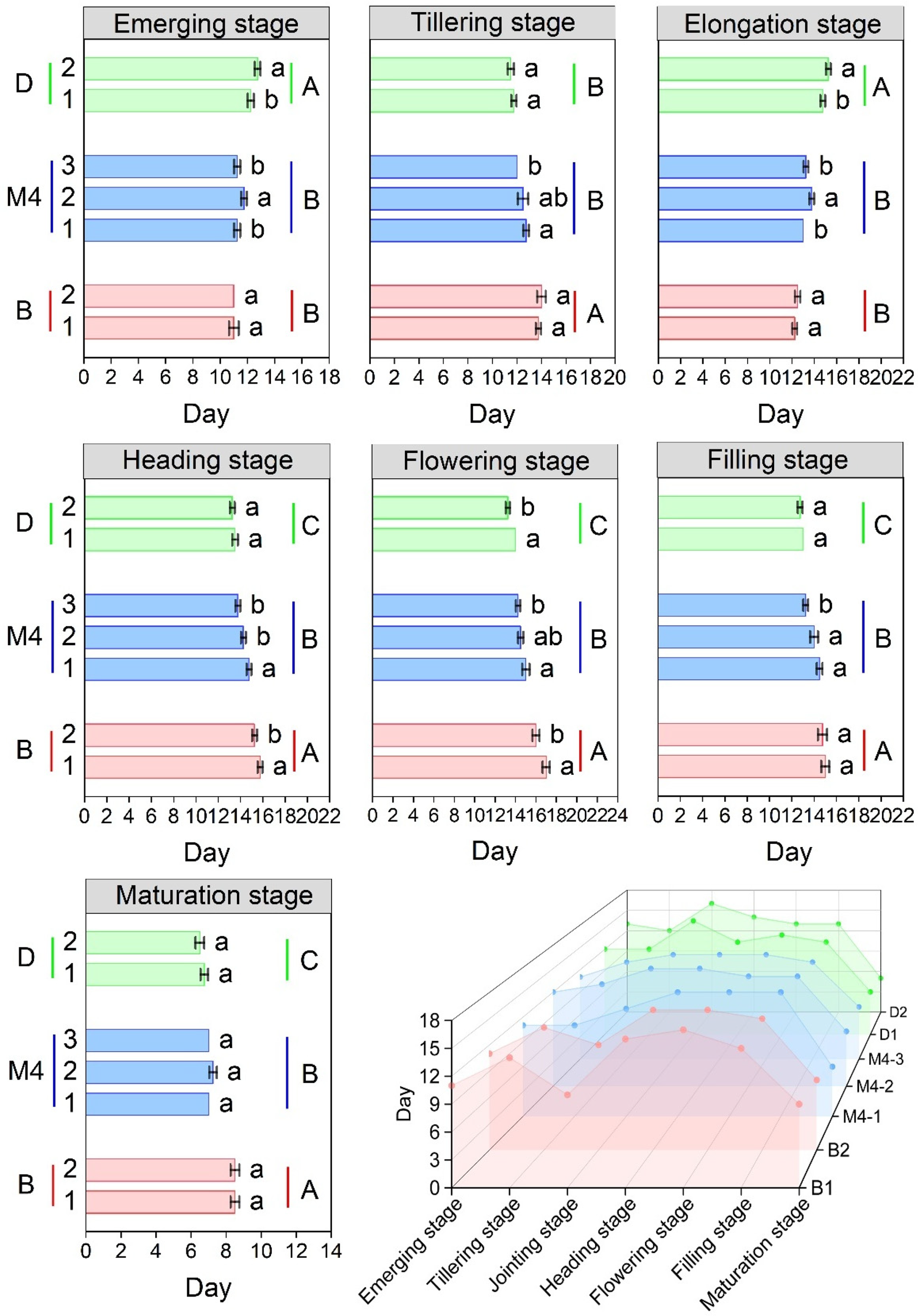
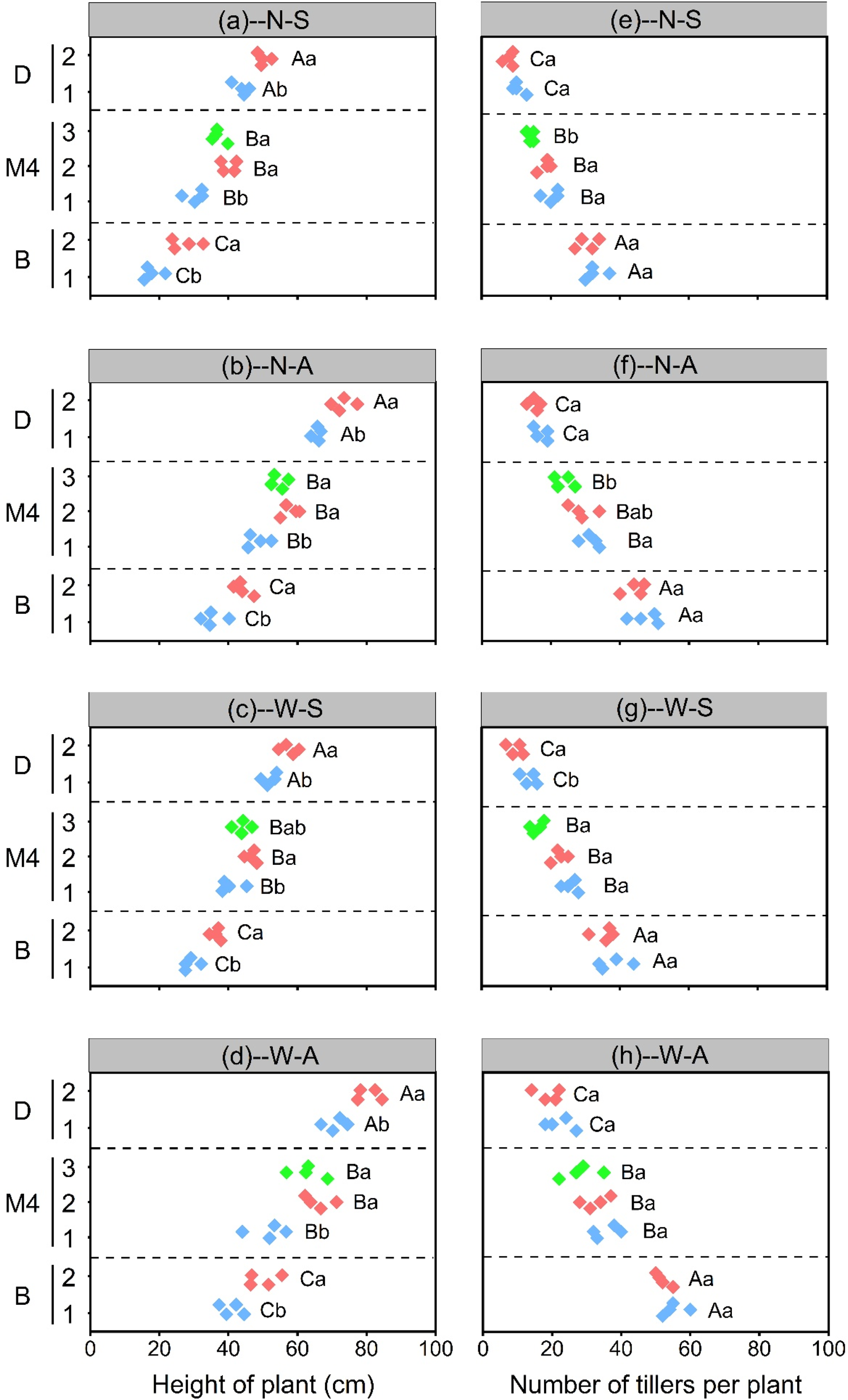
In A. tauschii, the starting time of each phenological stage and persistence time of emergence and stem growth (vegetative growth stages) of plants increased, while persistence time of heading, flowering, and seed filling (reproductive growth stages) decreased as diaspore position on the compound spike and seed position in the diaspore increased (Figures 4 and 5; Supplementary Figures S2 and S3). To some extent, duration of a phenological period is positively correlated with the accumulation time of growth during that period (Lu et al. Reference Lu, Tan, Baskin and Baskin2014). Compared with basal diaspores/seeds, plants of A. tauschii derived from distal diaspores/seeds achieved greater plant height (Figure 5), higher vegetative allocation (stem and leaf biomass allocation) (Supplementary Table S1), lower seed production (Supplementary Table S2), and lower reproductive allocation (seed biomass allocation) (Supplementary Table S1), which might be related to the longer duration of the vegetative growth stage and the shorter duration of the reproductive growth stage.
Phenological stages of autumn Aegilops tauschii plants under natural soil moisture. B, basal diaspore; M4, middle diaspore; D, distal diaspore. Numbers 1, 2, and 3 following B, M4, and D indicate seed positions from bottom to top in diaspores. Different uppercase letters indicate significant differences among different diaspore positions, and different lowercase letters significant differences among/between different seed positions in diaspores.

Figure 4. Long description
Multiple graphs depict the phenological stages of autumn Aegilops tauschii plants under natural soil moisture, comparing different diaspore positions and seed positions. The graphs include bar charts and line graphs. Panel A: Emerging stage. The bar chart shows the days taken for the emerging stage for different diaspore positions (B, M4, D) and seed positions (1, 2, 3). The x-axis represents the number of days, and the y-axis represents the diaspore and seed positions. Different uppercase letters indicate significant differences among different diaspore positions, and different lowercase letters indicate significant differences among different seed positions in diaspores. Panel B: Tillering stage. The bar chart shows the days taken for the tillering stage for different diaspore positions and seed positions. The x-axis represents the number of days, and the y-axis represents the diaspore and seed positions. Panel C: Elongation stage. The bar chart shows the days taken for the elongation stage for different diaspore positions and seed positions. The x-axis represents the number of days, and the y-axis represents the diaspore and seed positions. Panel D: Heading stage. The bar chart shows the days taken for the heading stage for different diaspore positions and seed positions. The x-axis represents the number of days, and the y-axis represents the diaspore and seed positions. Panel E: Flowering stage. The bar chart shows the days taken for the flowering stage for different diaspore positions and seed positions. The x-axis represents the number of days, and the y-axis represents the diaspore and seed positions. Panel F: Filling stage. The bar chart shows the days taken for the filling stage for different diaspore positions and seed positions. The x-axis represents the number of days, and the y-axis represents the diaspore and seed positions. Panel G: Maturation stage. The bar chart shows the days taken for the maturation stage for different diaspore positions and seed positions. The x-axis represents the number of days, and the y-axis represents the diaspore and seed positions. Panel H: A 3D scatter plot shows the phenological stages of autumn Aegilops tauschii plants under natural soil moisture for different diaspore positions and seed positions. The x-axis represents the phenological stages, the y-axis represents the number of days, and the z-axis represents the diaspore and seed positions.
Phenological stages of spring Aegilops tauschii plants under natural soil moisture. B, basal diaspore; M4, middle diaspore; D, distal diaspore. Numbers 1, 2, and 3 following B, M4, and D indicate seed positions from bottom to top in diaspores. Different uppercase letters indicate significant differences among different diaspore positions, and different lowercase letters significant differences among/between different seed positions in diaspores.

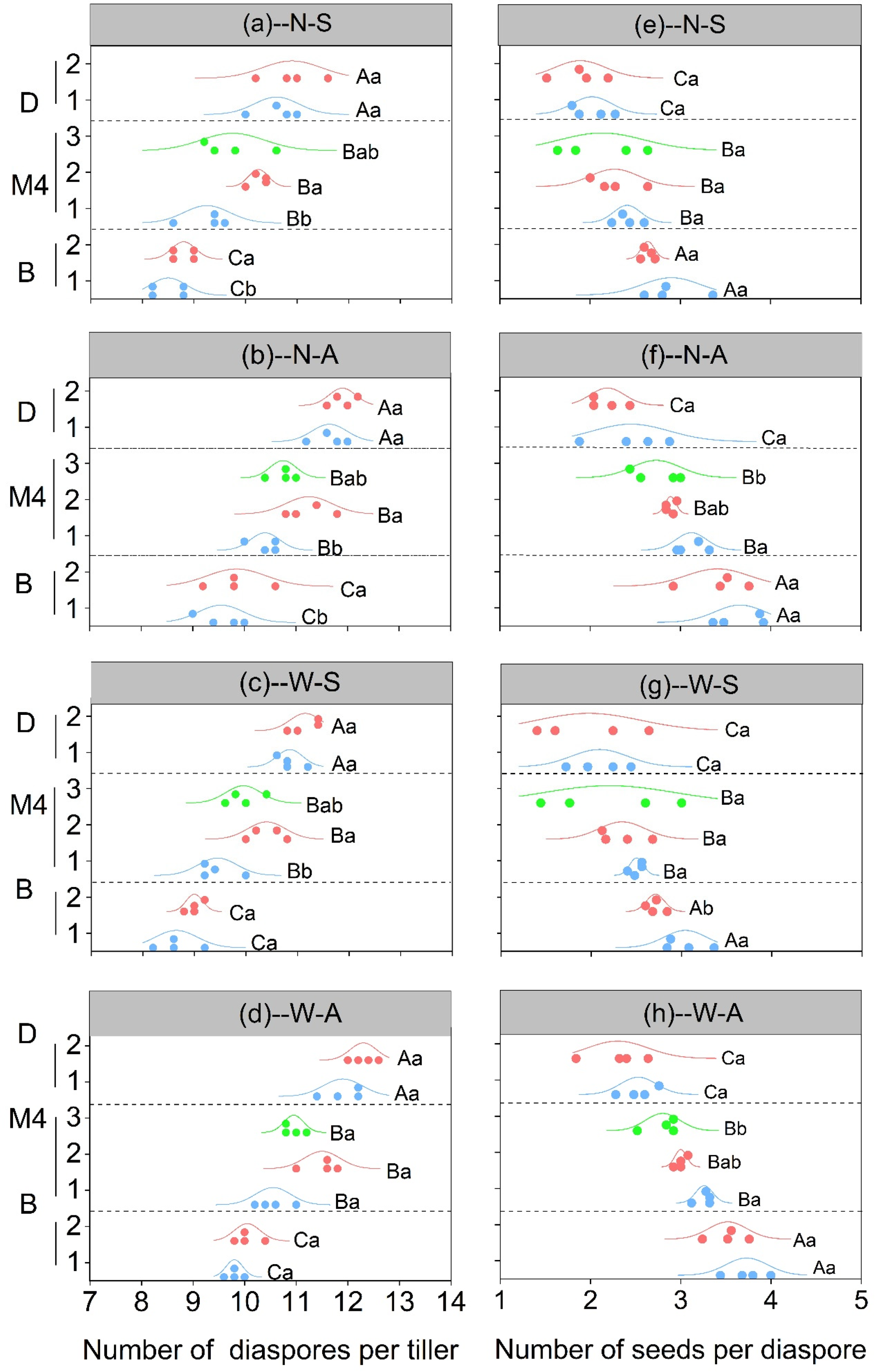
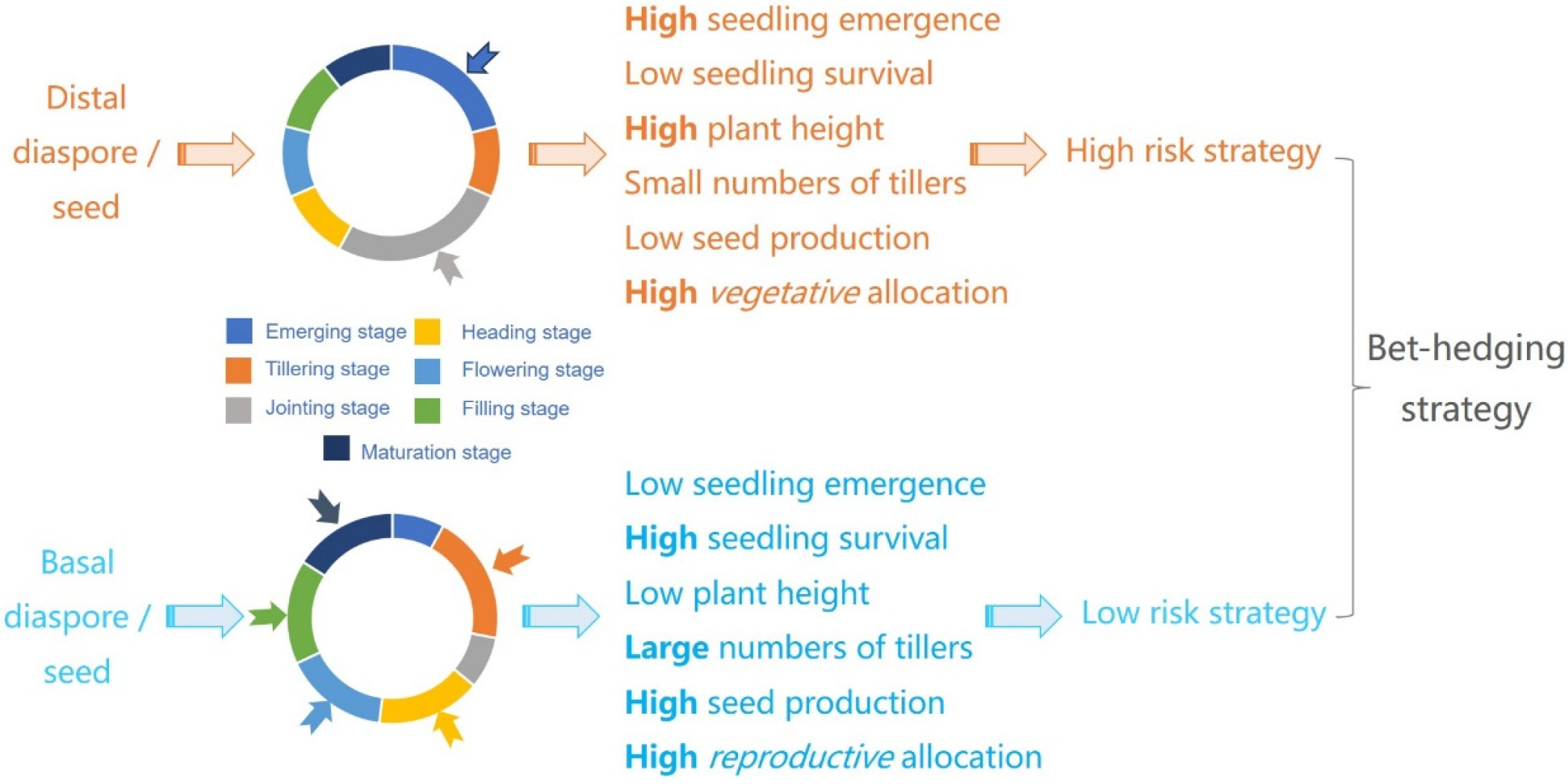
Seedling emergence was earlier, and seedling emergence percentages, plant height, number of diaspores per tiller, total dry mass of plant, dry mass of each organ, and vegetative allocation were higher, while seedling survival percentages, number of tillers, number of seeds per diaspore, seed production, and reproductive allocation were lower for plants derived from distal diaspores/seeds than for those derived from basal diaspores/seeds (Figures 2–7; Supplementary Figures S2–S5; Supplementary Tables S1 and S2). These traits indicated that distal diaspores/seeds germinate rapidly in large numbers, which helps the population to expand rapidly under suitable conditions. However, survival ability and reproductive capacity of the seedlings are relatively low. Basal diaspores/seeds germinate slowly and in small numbers, which is not conducive to the rapid expansion of the population under suitable conditions; however, their higher seedling survival ability and reproductive capacity are beneficial for their survival under unfavorable conditions. Thus, distal diaspores/seeds represent a high-risk strategy, and basal ones a low-risk strategy. Middle diaspores/seeds were in between. Both high-risk and low-risk strategies in a species suggest a bet-hedging strategy in the life-history of the species, which can lead to evolutionary advantages (Gremer et al. Reference Gremer, Venable and Buckley2014; Venable Reference Venable2007).
Height and number of tillers per Aegilops tauschii plant. N-S, spring plants under natural soil moisture condition; N-A, autumn plants under natural soil moisture; W-S, spring plants under increased soil moisture condition; W-A, autumn plants under increased soil moisture; B, basal diaspore; M4, middle diaspore; D, distal diaspore. Numbers 1, 2, and 3 following B, M4, and D indicate seed positions from bottom to top in diaspores. Different uppercase letters indicate significant differences among different diaspore positions, and different lowercase letters significant differences among/between different seed positions in diaspores.

Figure 6. Long description
Panel A: A scatter plot shows the height of Aegilops tauschii plants in centimeters under natural soil moisture conditions in spring (N-S). The x-axis represents the height of the plant in centimeters, and the y-axis represents different diaspore positions (B, M4, D) with seed positions indicated by numbers 1, 2, and 3. Different uppercase and lowercase letters indicate significant differences among diaspore positions and seed positions. Panel B: A scatter plot shows the height of Aegilops tauschii plants in centimeters under natural soil moisture conditions in autumn (N-A). The x-axis represents the height of the plant in centimeters, and the y-axis represents different diaspore positions (B, M4, D) with seed positions indicated by numbers 1, 2, and 3. Different uppercase and lowercase letters indicate significant differences among diaspore positions and seed positions. Panel C: A scatter plot shows the height of Aegilops tauschii plants in centimeters under increased soil moisture conditions in spring (W-S). The x-axis represents the height of the plant in centimeters, and the y-axis represents different diaspore positions (B, M4, D) with seed positions indicated by numbers 1, 2, and 3. Different uppercase and lowercase letters indicate significant differences among diaspore positions and seed positions. Panel D: A scatter plot shows the height of Aegilops tauschii plants in centimeters under increased soil moisture conditions in autumn (W-A). The x-axis represents the height of the plant in centimeters, and the y-axis represents different diaspore positions (B, M4, D) with seed positions indicated by numbers 1, 2, and 3. Different uppercase and lowercase letters indicate significant differences among diaspore positions and seed positions. Panel E: A scatter plot shows the number of tillers per Aegilops tauschii plant under natural soil moisture conditions in spring (N-S). The x-axis represents the number of tillers per plant, and the y-axis represents different diaspore positions (B, M4, D) with seed positions indicated by numbers 1, 2, and 3. Different uppercase and lowercase letters indicate significant differences among diaspore positions and seed positions. Panel F: A scatter plot shows the number of tillers per Aegilops tauschii plant under natural soil moisture conditions in autumn (N-A). The x-axis represents the number of tillers per plant, and the y-axis represents different diaspore positions (B, M4, D) with seed positions indicated by numbers 1, 2, and 3. Different uppercase and lowercase letters indicate significant differences among diaspore positions and seed positions. Panel G: A scatter plot shows the number of tillers per Aegilops tauschii plant under increased soil moisture conditions in spring (W-S). The x-axis represents the number of tillers per plant, and the y-axis represents different diaspore positions (B, M4, D) with seed positions indicated by numbers 1, 2, and 3. Different uppercase and lowercase letters indicate significant differences among diaspore positions and seed positions. Panel H: A scatter plot shows the number of tillers per Aegilops tauschii plant under increased soil moisture conditions in autumn (W-A). The x-axis represents the number of tillers per plant, and the y-axis represents different diaspore positions (B, M4, D) with seed positions indicated by numbers 1, 2, and 3. Different uppercase and lowercase letters indicate significant differences among diaspore positions and seed positions.
Number of diaspores per tiller and number of seeds per diaspore for Aegilops tauschii plants. N-S, spring plants under natural soil moisture; N-A, autumn plants under natural soil moisture; W-S, spring plants under increased soil moisture; W-A, autumn plants under increased soil moisture condition; B, basal diaspore; M4, middle diaspore; D, distal diaspore. Numbers 1, 2, and 3 following B, M4, and D indicate seed positions from bottom to top in diaspores. Different uppercase letters indicate significant differences among different diaspore positions in compound spike, and different lowercase letters significant differences among/between different seed positions in diaspores.

Effect of Emergence Season on Emergence and Growth
Our previous studies demonstrated that A. tauschii is a facultative winter annual. Autumn-emerging plants behave as winter annuals, and spring-emerging plants as spring annuals (Wang et al. Reference Wang, Baskin, Baskin and Ding2022). In the present study, seeds from all positions of A. tauschii plants germinated in both autumn and spring. Compared with spring-emerging plants, those emerging in autumn exhibited longer phenological stages (Figure 3; Supplementary Figures S2–S4; Supplementary Tables S3–S6), higher seedling emergence and survival percentages (Figure 4), larger plant size (Figure 5), greater seed production (Supplementary Table S2), higher total and organ dry mass (Supplementary Figure S5), more stems, and greater leaf biomass allocation (Supplementary Table S1).
These differences can be explained by the well-established role of photoperiod in regulating flowering time in annual grasses (Norihito Reference Norihito2015). Autumn-emerging plants experience shorter daylengths during early development, which delays floral induction and extends the vegetative growth phase, allowing greater biomass accumulation and competitive ability (Jensen et al. Reference Jensen, Robson, Norris, Cookson, Farrar, Donnison and Clifton-Brown2012). In contrast, spring-emerging plants are exposed to increasing daylength shortly after emergence, which accelerates the transition to reproduction and shortens vegetative development (Norihito Reference Norihito2015). For many annual grasses, including wheat and barley (Hordeum vulgare L.), flowering time is largely controlled by photoperiod sensitivity, with long-day conditions promoting floral transition (Flood and Halloran Reference Flood and Halloran1982; Norihito Reference Norihito2015). This photoperiodic regulation explains why autumn-emerging plants achieve greater size and reproductive output despite having lower reproductive allocation.
Consistent with this interpretation, the reproductive allocation of autumn-emerging A. tauschii plants was relatively lower than that of spring-emerging plants (Supplementary Table S1), a pattern also observed in the annual plants African daisy (Dimorphotheca sinuata DC.), Namaqua parachute daisy [Ursinia calenduliflora (DC.) N.E. Br.], hanging sunflax (Heliophila pendula Willd.) (Van Rooyen et al. Reference Van Rooyen, Grobbelaar, Theron and Van Rooyen1992), A. thaliana (Picó Reference Picó2012), and D. strictus (Lu et al. Reference Lu, Tan, Baskin and Baskin2014). This lower reproductive allocation in larger, autumn-emerging plants reflects a trade-off. Extended vegetative growth allows greater resource accumulation, but a smaller proportion of these resources is diverted to reproduction compared with smaller, stress-induced spring-emerging plants.
Additionally, plants derived from seeds that germinated in different seasons were affected by different environmental conditions, and these environmental conditions can significantly impact the life-history traits of plants (D’Aguillo Reference D’Aguillo2025; D’Aguillo and Donohue Reference D’Aguillo and Donohue2023; Donohue Reference Donohue2002; Lu et al. Reference Lu, Tan, Baskin and Baskin2014). Autumn-emerging plants of A. tauschii (under cooler conditions) entered the heading stage about 2 wk earlier than spring-germinating plants, while duration of reproductive growth stage of both was almost the same (Figure 4; Supplementary Figures S2–S4). The reproductive growth stage (heading, flowering and filling stages) of spring-emerging plants was relatively shorter than that of autumn-emerging plants; thus, dry mass of seeds of spring-emerging plants was less than that of autumn-emerging plants (Supplementary Figure S5), as expected. However, compared with spring-emerging plants, autumn-emerging plants had much larger and heavier plant size and dry mass of vegetative organs, giving rise to lower reproductive allocation. Similar results were reported in D. strictus (Lu et al. Reference Lu, Tan, Baskin and Baskin2014) and I. violascens (Lu et al. Reference Lu, Tan, Baskin and Baskin2017).
Effect of Soil Watering on Emergence and Growth
Soil moisture is a fundamental determinant of plant growth and physiological performance (C Wang et al. Reference Wang, Yuan and Chen2018; Wang Reference Wang2020, with annual grasses being particularly sensitive to soil water availability due to their shallow root systems and reliance on current-season precipitation (Mahajan and Chauhan Reference Mahajan and Chauhan2020; Singh et al. Reference Singh, Bird and Saul2003). In our study, soil moisture under natural conditions was relatively low (drought) during most months, whereas regular watering maintained consistently higher moisture levels (Figure 2; Supplementary Figure S5).
Compared with natural soil moisture conditions, regular watering significantly extended life-cycle duration (Figure 4; Supplementary Figures S2–S4); increased seedling emergence and survival (Figure 3); and enhanced plant size (Figure 5), seed production (Supplementary Table S2), and biomass (Supplementary Figure S5) of A. tauschii. These findings align with previous reports for annual and invasive plants (Donohue Reference Donohue2002; Eskelinen and Harrison Reference Eskelinen and Harrison2014; Lu et al. Reference Lu, Tan, Baskin and Baskin2014). More importantly, reproductive allocation (seed mass allocation) was higher under natural (drought) than under increased moisture (Supplementary Table S1)—a classic adaptive strategy whereby stressed plants shift resources to reproduction that ensures population persistence. This response becomes ecologically significant when linked to A. tauschii’s seed position effects and germination phenology.
Previous work showed that distal diaspores/seeds exhibit higher dispersal and lower dormancy, while basal diaspores/seeds were, on the contrary, forming a trade-off between dispersal and dormancy that spreads germination failure risk across time and space (Wang et al. Reference Wang, Baskin, Baskin and Ding2023, Reference Wang, Baskin, Baskin and Ding2024). Thus, A. tauschii has a multifaceted adaptive framework under variable environments: (1) drought-induced reproductive allocation maintains seedbank input under stress; (2) seed position effects diversify germination timing and conditions; and (3) interactions with soil moisture and emergence season (autumn vs. spring) further modulate establishment success. Together, these mechanisms likely enhance invasiveness by ensuring that some fraction of the seedbank encounters favorable conditions for establishment.
In summary, A. tauschii has two levels of seed position effects in its life-history traits. Distal diaspores/seeds represent a “high-risk” strategy and basal ones a “low-risk” strategy (Figure 8), indicating a bet-hedging strategy for survival of the species, which could not only enhance species survival but also increase population expansion into new habitats (Dyer Reference Dyer2004; Guzzon et al. Reference Guzzon, Orsenigo, Gianella, Müller, Vagge and Rossi2018; Imbert Reference Imbert2002). Thus, a bet-hedging strategy might help facilitate the invasiveness of A. tauschii (Annamária et al. Reference Annamária, Dorottya, Petr, Wayne, Eszter, Franz, Holger, Jan, Patrick and Marten2019). The difference in life-history traits of plants germinated in autumn and spring may be due to duration of the vegetative growth phase before floral induction, which is determined by emergence timing (Hayama et al. Reference Hayama, Sarid-Krebs, Richter, Fernández, Jang and Coupland2017; Kinoshita and Richter Reference Kinoshita and Richter2020); seasonal environmental conditions may further modify these responses (D’Aguillo Reference D’Aguillo2025; D’Aguillo and Donohue Reference D’Aguillo and Donohue2023; Donohue Reference Donohue2002; Lu et al. Reference Lu, Tan, Baskin and Baskin2014). Watering increased duration of the life and growth of the plants but decreased reproductive allocation, suggesting that plants tend to allocate more resources to reproductive organs under stress conditions such as drought (AB Wang et al. Reference Wang, Baskin, Baskin and Ding2022; N Wang et al. Reference Wang, Yuan, Chen, Li and Zhang2019b). However, because reproductive allocation is a proportional measure, increased allocation under drought does not necessarily indicate greater absolute seed production or reproductive biomass. Given that water availability also promotes overall plant growth and productivity, inferences regarding seedbank inputs and population persistence should be based on absolute reproductive output rather than on relative allocation alone.
Summary of life-history traits of distal and basal diaspores/seeds of Aegilops tauschii.

Management Strategies
The bet-hedging strategy arising from two-level seed position effects and the existence of autumn and spring germination cohorts have important implications for the management of A. tauschii as an invasive weed. First, production of both high-risk (distal) and low-risk (basal) diaspores/seeds creates a persistent soil seedbank with variable dormancy and germination timing, making single-season control efforts (e.g., herbicide application or mechanical removal) unlikely to eliminate the population entirely. Second, the presence of both autumn- and spring-emerging cohorts extends the period of seedling emergence across the growing season, meaning that management interventions timed to target one cohort may miss the other. Third, because drought stress increases reproductive allocation, water-limited environments may paradoxically enhance seedbank inputs, promoting long-term persistence even when aboveground biomass is reduced. Collectively, these life-history features suggest that effective management of A. tauschii will require integrated, multi-year strategies targeting multiple emergence cohorts and depleting the soil seedbank for at least two seasons, rather than relying on short-term or single-application control methods.
Supplementary material
To view supplementary material for this article, please visit https://doi.org/10.1017/wsc.2026.10134
Acknowledgments
The authors are grateful to Ding Jianqing, the State Key Laboratory of Crop Stress Adaptation and Improvement, School of Life Sciences, Henan University, China, for his valuable suggestions and extensive comments on the manuscript.
Funding statement
This work was supported by the Scientific Research Projects of the Education Department of Hunan Province (24C0256), the Natural Science Foundation of Hunan Province (2026JJ50426), the National Natural Science Foundation of China (32560271, 32301472), the Key Scientific and Technological Research Project of Henan Province (232102110020), and the university-level scientific research project of Jishou University (Jdx25007).
Competing interests
The authors declare no conflicts of interest.


 Open access

