






1. Introduction
In recent years there has been a resurgence in the study of polynomials with non-generic Galois group, in particular the following noted breakthrough.
Theorem 1·1 (Bhargava [
Reference Bhargava7
, theorem 1]; conjectured by van der Waerden [
Reference Zywina32
]). For an integer
 $n \geq 2$
, let
 $E_n(T)$
be the number of monic integer polynomials
 \[ f(x) = x^n + a_1 x^{n-1} + \cdots + a_n, \quad |a_i| \leq T\]
with Galois group strictly smaller than the full symmetric group
 $S_n$
, where
 $T \mathop{\rightarrow}\limits \infty$
. Then
 \[ E_n(T) \asymp T^{n-1}.\]
Theorem 1·1 follows decades of incremental advances on the problem [ Reference Anderson, Gafni, Lemke Oliver, Lowry-Duda, Shakan and Zhang2, Reference Chow and Dietmann10, Reference Gallagher15, Reference Knobloch22, Reference Zywina32 ]. The dominant contribution comes from f having a rational root. The asymptotic probability is unaffected by whether or not we require f to be monic.
This breakthrough concerns the “large box model” where n is fixed and the height
 $T \mathop{\rightarrow}\limits \infty$
. Work has also been fruitful for the complementary “restricted coefficient model” where the coefficients
 $a_i$
are drawn from a fixed set and
 $n \mathop{\rightarrow}\limits \infty$
[
Reference Bary-Soroker, Koukoulopoulos and Kozma4, Reference Bary-Soroker and Kozma5, Reference Breuillard and Varjú9
].
Many directions of generalisation are possible. In a recent preprint [
Reference Anderson, Bertelli and O’Dorney1
], the authors and Bertelli proved the analogue of the van der Waerden–Bhargava theorem for reciprocal polynomials, where the generic Galois group is the wreath product
 $S_2 \wr S_n$
. We found that the most common non-generic Galois group is the index-2 subgroup
 $(S_2 \wr S_n) \cap A_{2n} \lt S_{2n}$
, which also yields the best known bounds for occurrence of non-generic Galois groups in the restricted coefficient model [
Reference Hokken20
].
In this paper, we pursue a different direction: we look at the Galois groups of the characteristic polynomials
 $\chi_A$
of random
 $n \times n$
matrices A. These were considered by Eberhard [
Reference Eberhard12
] under a natural analogue of the restricted coefficient model, showing that if the entries
 $a_{ij}$
are drawn independently from a finitely supported measure on
 $\mathbb{Z}$
satisfying some conditions, then with high probability as
 $n \mathop{\rightarrow}\limits \infty$
, the Galois group of
 $\chi_A$
is either
 $S_n$
or
 $A_n$
. A follow-up paper of Ferber, Jain, Sah and Sawhney [
Reference Ferber, Jain, Sah and Sawhney14
] specialises to symmetric matrices, showing again that irreducibility of
 $\chi_A$
holds almost surely as
 $n \mathop{\rightarrow}\limits \infty$
. We recently learned of work of Bary-Soroker, Garzoni and Sodin [
Reference Bary-Soroker, Garzoni and Sodin3
] that shows a similar result for tridiagonal matrices. While these papers address the restricted entry model, we think it timely to revisit the large box model. Define
 $M_n(T)$
to be the number of integer
 $n\times n$
matrices A with entries in
 $[\!-\!T, T]$
such that the characteristic polynomial
 $\chi_A$
of A does not have Galois group the full
 $S_n$
. We wish to improve upon the trivial bound
 $M_n(T) \ll T^{n^2}$
from counting all matrices.
One way that
 $\chi_A$
can fail to be of type
 $S_n$
is if it is reducible, that is, the action of A on
 $\mathbb{Q}^n$
has an invariant subspace defined over
 $\mathbb{Q}$
. We conjecture that this is the most common way for the Galois group to drop:
Conjecture 1·2. Let
 $M_n(T)$
be the number of integer
 $n\times n$
matrices A such that the characteristic polynomial
 $\chi_A$
of A does not have Galois group the full
 $S_n$
. Let
 $R_n(T) \leq M_n(T)$
be the number of A for which
 $\chi_A$
is reducible. Then as
 $T \mathop{\rightarrow}\limits \infty$
,
 \[ R_n(T) \sim M_n(T) \asymp T^{n^2 - n + 1} \log T. \]
For
 $R_n(T)$
, this asymptotic was conjectured by Rivin [
Reference Rivin26
, conjecture 12]. Similarly to the van der Waerden–Bhargava theorem, the lower bound is known and comes from counting matrices with an integer eigenvalue, as we explain in Section 2 below. It is interesting to note the necessity of the
 $\log$
factor, which is also present in [
Reference Anderson, Bertelli and O’Dorney1
] when counting reciprocal polynomials, but absent in the van der Waerden–Bhargava theorem. Refining these estimates into precise asymptotic formulae would be an exciting (and lofty) goal for future work.
1·1. Notation
In this paper, the norm of a matrix or vector is the
 $\infty$
-norm,
 $\lVert [a_{ij}] \rVert = \max_{i,j} \lvert a_{ij} \rvert$
, except where otherwise noted. Some literature uses the 2-norm (Euclidean norm) instead; this only affects outlying constants, which are outside the scope of this paper.
If A is a matrix, we denote by
 $\chi_A(x)$
its characteristic polynomial,
 $\det(xI - A)$
. If
 $\chi_A$
is irreducible over
 $\mathbb{Q}$
, we denote by
 $K_A$
the attached number field
 $\mathbb{Q}[x]/\chi_A(x)$
. We let
 $G_A$
be the Galois group of
 $\chi_A$
, a subgroup of
 $S_n$
that permutes the roots of
 $\chi_A$
(transitively if and only if
 $\chi_A$
is irreducible).
As usual, if f(T), g(T) are real-valued functions of a sufficiently large real number T, then the notations
 \[ f(T) \ll g(T), \quad g(T) \gg f(T), \quad f(T) = O(g(T)) \]
mean that
 $\lvert f(T) \rvert \lt c \cdot \lvert g(T) \rvert$
for sufficiently large T and some constant c, while the notations
 \[ f(T) \asymp g(T), \quad f(T) = \Theta(g(T)) \]
mean that
 $f(T) \ll g(T)$
and
 $f(T) \gg g(T)$
. Finally,
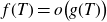 $f(T) = o\bigl(g(T)\bigr)$
means that
 $\lim_{T \mathop{\rightarrow}\limits \infty} f(T)/g(T) = 0$
. The implied constants c may depend on the degree n but not on the height T; if they depend on any other variables, we will include these variables in a subscript.
1·2. Results
In this paper we make progress toward proving Conjecture 1·2, which appears to be very hard to prove in general. We use a number of techniques, which are effective for different classes of matrices. In Section 3, we use the Cohen–Serre irreducibility theorem (an application of the large sieve) to get a power saving upon the trivial bound
 $M_n(T) \ll T^{n^2}$
:
Theorem 1·3. We have the bound
 \begin{equation} M_n(T) \ll T^{n^2 - 1/2} \log T. \end{equation}
In Section 4, we reduce modulo a prime of suitable size and apply Fourier analysis, modeled after the work of a group including the first author [
Reference Anderson, Gafni, Lemke Oliver, Lowry-Duda, Shakan and Zhang2
], to get a bound on the number of matrices A such that
 $\chi_A$
is reducible with an irreducible factor of low degree:
Theorem 1·4. The number
 $R_{n,k}(T)$
of
 $n\times n$
matrices A with
 $\lVert A \rVert \leq T$
and characteristic polynomial
 $\chi_A$
having an irreducible factor of degree
 $k \leq n/2$
is bounded by
 \[ R_{n,k}(T) \ll T^{n^2 - \frac{n-k}{n+k-1}}. \]
This improves on the large sieve when
 $k \leq n/3$
. For
 $k \gg \sqrt{n}$
, it also improves on the bound
 $R_{n,k}(T) \ll T^{n^2 - n + k(k+1)/2}\log T$
due to Ostafe and Shparlinski [
Reference Ostafe and Shparlinski24
, equation (3·2)]. When k is fixed and n is large, we obtain a savings of
 $1 - O(1/n)$
over the trivial bound.
In Section 5, we use a combinatorial argument to get the full upper bound
 $T^{n^2 - n + 1} \log T$
but for a rather restricted class of matrices A, namely those which preserve a subspace generated by vectors of low height:
Theorem 1·5. For integers
 $1 \leq k \leq n/2$
, let
 $S_{n,k}(T) \leq R_{n,k}(T)$
be the number of
 $n\times n$
matrices A with
 $\lVert A \rVert \leq T$
satisfying the following properties:
-
(a) a preserves a lattice
 $\Lambda \subset \mathbb{Z}^n$
of dimension k;
-
(b) the characteristic polynomial of
$A|_{\Lambda}$
is irreducible; -
(c) the orthogonally complementary lattice
$\Lambda^\perp$
is generated by vectors of length
$\leq T$
.


Then
 \[ S_{n,k}(T) \ll T^{n^2 - n + 1}\log T. \]
Observe that conditions (a) and (b) force
 $\chi_A$
to have an irreducible factor
 $\chi_{A|_\Lambda}$
of degree k. Also,
 $\Lambda^\perp$
is an invariant lattice of dimension
 $n - k$
for the transpose
 $A^\top$
, with
 $\chi_{A^\top|_{\Lambda^\perp}} \cdot \chi_{A|_\Lambda} = \chi_A$
.
Finally, in Section 6, we use a geometric sieve modeled after Bhargava’s proof of Theorem 1·1 to obtain a bound on the number of A for which
 $\chi_A$
defines a primitive number field of large discriminant. Our main new twist used in the proof is to take a double discriminant with respect to the direction of translation by a diagonal matrix with separable characteristic polynomial. Recall that a field extension
 $K/\mathbb{Q}$
is primitive if it has no proper intermediate extensions
 $K \supsetneq L \supsetneq \mathbb{Q}$
; this is equivalent to the Galois group
 $G_A \subseteq S_n$
not lying in any of the wreath products
 $S_a\wr S_b \subset S_n$
, where
 $a,b\gt1$
are integers with
 $ab = n$
.
Theorem 1·6. Let
 $L_n(T) \leq M_n(T)$
be the number of matrices A with
 $\lVert A \rVert \leq T$
such that
 $\chi_A$
is a defining polynomial for a primitive degree n number field
 $K_A$
with discriminant
 $D \;:\!=\; \lvert\operatorname{disc} K_A \rvert \geq T^2$
with Galois group
 $G_A \subsetneq S_n$
. Then
 \begin{equation} L_n(T) \ll_\varepsilon T^{n^2 - 1 + \varepsilon}. \end{equation}
Just as in [
Reference Bhargava7
], it is plausible that using Fourier analysis, one could remove the
 $\varepsilon$
from the bound (1·2) and also extend the region of applicability to
 $D \geq T^{2 - \delta}$
for some small constant
 $\delta$
. However, we do not attempt this strengthening, which is of doubtful value in the absence of a complementary result for small discriminants
 $D \leq T^{2 - \delta}$
. In [
Reference Bhargava7
], the needed bound for small discriminants (Case II therein) is quickly proved by multiplying Schmidt’s upper bound on the number of number fields of bounded discriminant [
Reference Schmidt28
] by Lemke Oliver–Thorne’s upper bound on the number of polynomials of bounded height cutting out a given field [
Reference Lemke Oliver and Thorne23
, proposition 2·2]. However, to apply such a technique in our setting would require a third factor, namely, the number
 $M_n(T;\; f)$
of matrices A with a given characteristic polynomial f. For fixed irreducible f and
 $T \mathop{\rightarrow}\limits \infty$
, Eskin–Mozes–Shah [
Reference Eskin, Mozes and Shah13
] show that
 \begin{equation} M_n(T;\; f) = (C_f + o_f(1)) T^{n(n-1)/2},\end{equation}
but the constant
 $C_f$
and the rate of convergence depend heavily on f. The best uniform bound is due to Habegger, Ostafe and Shparlinski [
Reference Habegger, Ostafe and Shparlinski18
, theorems 2·1–2·2]:
 \[ M_n(T;\; f) \ll_n T^{n^2 - n - 1 + o(1)}.\]
Observe that this result can be applied to at most
 $T^{n+1}$
polynomials f if we want to obtain nontrivial bounds. It is believed that [
Reference Habegger, Ostafe and Shparlinski18
, conjecture 1·1]
 \[ M_n(T;\; f) \ll_n T^{n(n-1)/2 + o(1)},\]
but this conjecture is apparently hard. We expect that progress in the small discriminant case will require a sharper error term in (1·3) by careful analysis of the spectral and ergodic theory on the manifolds involved, inspired by the recently improved error terms due to Blomer–Lutsko [
Reference Blomer and Lutsko8
] for the related question of counting matrices of bounded norm in
 $\mathrm{SL}_n\mathbb{Z}$
.
2. Integer eigenvalue and the lower bound of Conjecture 1·2
In the van der Waerden–Bhargava setting, the main term was for polynomials with a rational root. Analogously, we conjecture that the dominant contribution to
 $M_n(T)$
comprises matrices with an integer eigenvalue. As pointed out by Rivin [
Reference Rivin26
, corollary 11], the count of such matrices is a consequence of work of Katznelson [
Reference Katznelson21
, theorem 1]. We can easily get
 $T^{n^2 - n + 1}$
such matrices by setting all but the last entry in the last column to 0, which makes
 $[0\cdots 0\;1]^\top$
an eigenvector. The true order of magnitude is only slightly larger:
Theorem 2·1. The number
 $R_{n,1}(T)$
of integer
 $n \times n$
matrices with entries bounded by T and at least one integer eigenvalue is given asymptotically by
 \[ R_{n,1}(T) \asymp T^{n^2 - n + 1} \log T. \]
Proof. Let A be such a matrix with eigenvalue
 $\lambda$
. Then
 $\lvert \lambda \rvert \leq nT$
, and
 $B = A - \lambda I$
is singular. Counting singular matrices in an expanding box was done by Katznelson [
Reference Katznelson21
, theorem 1], who showed that for any bounded convex open set
 $\mathcal{B} \subset \operatorname{Mat}_n(\mathbb{R})$
containing the origin, there is a constant
 $c_\mathcal{B} \gt 0$
for which
 \begin{equation} \left\lvert \{A \in T\mathcal{B} \cap \operatorname{Mat}_n(\mathbb{Z}) \;:\; \det A = 0\} \right\rvert = c_\mathcal{B} T^{n^2 - n} \log T + O(T^{n^2 - n}). \end{equation}
In our case, we can simply take
 $\mathcal{B}$
to be the box
 $\{A \in \operatorname{Mat}_n(\mathbb{R}) \;:\; \lVert A \rVert_\infty \leq 1\}$
consisting of matrices whose entries are bounded in absolute value by 1. Summing over
 $\lambda \ll T$
, we get
 $R_{n,1}(T) \ll T^{n^2 - n + 1} \log T$
, which is the desired upper bound.
For the lower bound, note that if
 $\lambda \leq T/2$
and
 $\lVert B \rVert_\infty \leq T/2$
, then
 $\lVert A \rVert_\infty = \lVert B + \lambda I \rVert \leq T$
. Moreover, each A counted by
 $R_{n,1}(T)$
has at most n integer eigenvalues and so is expressible in at most n ways as
 $B + \lambda I$
with B singular.
Remark 2·2. A different proof for the upper bound may be found in Shparlinski [ Reference Shparlinski30 , theorem 6].
3. The Cohen–Serre irreducibility theorem and Theorem 1·3
The Cohen–Serre quantitative Hilbert irreducibility theorem, proved in special cases by Cohen [
Reference Cohen11
] and generalised by Serre [
Reference Serre29
, section 13·1; theorem 1] is a tool that applies quite generally to the Galois group of any family of polynomials whose coefficients are themselves polynomials in a family of variables. We follow the presentation of Zywina [
Reference Zywina32
, theorem 1·2], specialising to
 $k = \mathbb{Q}$
:
Theorem 3·1 (Cohen–Serre). Let
 $F = F(x, Y_1,\ldots, Y_m) \in \mathbb{Q}(Y_1,\ldots, Y_m)[x]$
be a separable polynomial of degree n having Galois group
 $\Gamma \subseteq S_n$
over the rational function field
 $\mathbb{Q}(Y_1,\ldots, Y_m)$
. For
 $y = (y_1,\ldots, y_m) \in \mathbb{Q}^m$
, let
 $\Gamma_y \subseteq \Gamma$
be the Galois group of
 $F(x, y_1,\ldots, y_m)$
as a polynomial in x. Denote by
 $\Omega_F$
the subvariety of those
 $(y_1,\ldots, y_m)$
for which
 $\Gamma_t$
is undefined (because f has a multiple root or one of its coefficients has a pole). Then as
 $T \mathop{\rightarrow}\limits \infty$
,
 \[ |\{y \in \mathbb{Z}^m \setminus \Omega_F \;:\; \lvert y_i \rvert \leq T, \Gamma_y \neq \Gamma\}| \ll_{m,F} T^{m-1/2} \log T.\]
In our situation, we take
 $Y_1,\ldots, Y_m = Y_{n^2}$
to be the entries of the matrix A and
 $F = \chi_A$
. We have
 $\Gamma = S_n$
since any integer polynomial can be realised as a characteristic polynomial. The exceptional set
 $\Omega_F$
comprises matrices with a repeated eigenvalue, of which there are at most
 $O(T^{n^2 - 1})$
of norm up to T. Hence we obtain Theorem 1·3.
Remark 3·2. For some subgroups
 $\Gamma \subsetneq S_n$
, the number of matrices A with Galois group
 $\Gamma$
has a better bound
 $T^{n^2 - 1 + \delta(\Gamma)} \log T$
, where
 $0 \lt \delta(\Gamma) \lt 1$
is determined combinatorially from
 $\Gamma$
; see Zywina [
Reference Zywina32
, theorem 1·4]. Unfortunately, it does not seem possible to tighten the exponent below
 $n^2 - 1$
with these methods.
4. Reducible matrices and Theorem 1·4
If the characteristic polynomial
 $\chi_A(x)$
is reducible but does not have an integer root, it has a factor g(x) of degree k,
 $2 \leq k \leq n/2$
. In this section we estimate the number
 $R_{n,k}(T)$
of matrices A having this kind of decomposition.
It is not so hard to show that reducibility of
 $\chi_A$
is equivalent to the existence of a nontrivial invariant subspace
 $W \subsetneq \mathbb{Q}^n$
for the action of A. With care, the volume of the corresponding invariant lattice
 $\Lambda = W \cap \mathbb{Z}^n$
can also be bounded:
Lemma 4·1. Let g(x) be an irreducible factor of
 $\chi_A(x)$
of degree k,
 $1 \leq k \lt n$
. There is a subspace W of
 $\mathbb{Q}^n$
such that:
-
(a) A preserves W, and
$A|_W$
has characteristic polynomial g; -
(b) The lattice
$\Lambda = W \cap \mathbb{Z}^n$
has volume the implicit constant depending only on n.
\[ \operatorname{covol}(\Lambda) \ll \lVert A \rVert^{k^2(n-k) + \tbinom{k}{2}}, \]


Proof. Our strategy is to find a short vector
 $v \in \ker g(A)$
and take W to be the
 $\mathbb{Q}$
-span
 $\mathbb{Q}\left\langle v, Av, \ldots, A^{k-1} v\right\rangle$
.
Let
 $T = \lVert A \rVert$
. Since
 $g \mid \chi_A$
, the matrix g(A) has rank at most
 $n-k$
. To estimate
 $\lVert g(A) \rVert$
, we write
 $g(x) = \sum b_i x^i$
and note that since all eigenvalues of A have absolute value at most n T, we have
 $b_i \ll T^{k-i}$
. Therefore g(A) is a sum of
 $k+1$
matrices
 $b_i A^i$
of norm
 $\ll T^{k-i} T^i = T^k$
, so
 $\lVert g(A) \rVert \ll T^k$
. Now to find a kernel vector v of g(A), we set up a system of n linear equations in the n coordinates of v. The requirement
 $g(A) v = 0$
can be expressed in at most
 $n-k$
linear equations (one for each linearly independent row of g(A)), and then we fill out the system by setting one coordinate equal to 1 and the others to 0 in such a way that there is a unique solution. The solution (up to scaling) is a vector of cofactors of the coefficient matrix, which has
 $n-k$
rows of norm
 $\ll T^k$
and k rows of norm 1, so all cofactors are
 $\ll T^{k(n-k)}$
, yielding
 $\lVert v \rVert \ll T^{k(n-k)}$
.
Now take
 $W = \mathbb{Q}\left\langle v, Av, \ldots, A^{k-1} v\right\rangle$
, noting that since g is irreducible, W has dimension k and
 $A|_W$
has characteristic polynomial g. Lastly,
 \begin{align*} \operatorname{covol}(\Lambda) &\leq \operatorname{covol}\big(\mathbb{Z}\big\langle v, Av, \ldots, A^{k-1} v\big\rangle\big) \\ &\leq \lVert v \rVert \cdot \lVert Av \rVert \cdots \big\lVert A^{k-1}v \big\rVert \\ &\ll T^{k(n-k)} \cdot T^{k(n-k) + 1} \cdots T^{k(n-k) + k-1} \\ &= T^{k^2(n-k) + \binom{k}{2}}, \end{align*}
as claimed.
Remark 4·2. It is an interesting follow-up question to improve the exponent
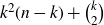 $k^2(n-k) + \binom{k}{2}$
. For this paper, any bound
 $\lVert A \rVert^{O_n(1)}$
will do.
Proof of Theorem
1·4. Straightforward adaptation of Katznelson’s methods leads to difficulties in which the error terms swamp the main term. Instead, we use a Fourier-analytic method inspired by recent successes in counting problems of this type [
Reference Anderson, Bertelli and O’Dorney1, Reference Anderson, Gafni, Lemke Oliver, Lowry-Duda, Shakan and Zhang2, Reference Bhargava6
]. Let
 $p \gt T$
be a large prime to be specified more precisely later. We sieve out A based on the fact that, if
 $\chi_A(x)$
has an irreducible factor g(x) of degree k, the same is true modulo p, and this factor g must still have the form
 \[ g(x) = \sum_i a_i x^{k-i}, \quad a_i \ll T^i.\]
By Lemma 4·1, there is a subspace
 $W \subset \mathbb{Q}^n$
on which the characteristic polynomial of
 $A|_W$
is g. Let
 $\Lambda = W \cap \mathbb{Z}^n$
be the corresponding primitive lattice. Then the image
 $\overline\Lambda$
of
 $\Lambda$
in
 $\mathbb{F}_p^n$
is a k-dimensional subspace such that
 $A|_{\overline\Lambda}$
has characteristic polynomial
 $\overline g = g \bmod p$
. If
 $p \nmid \operatorname{disc} g$
(as holds for all but at most O(1) primes
 $p \gt T$
), then
 $\overline g$
has no repeated roots, so there is a unique linear operator on
 $\mathbb{F}_p^k$
up to conjugacy that has characteristic polynomial
 $\overline g$
, namely the companion matrix
 $C_{\overline g}$
. For each particular choice of conjugate
 $C \;:\; \overline \Lambda \mathop{\rightarrow}\limits \overline \Lambda$
of the companion matrix, let
 $\Psi_C \;:\; \operatorname{Mat}_n(\mathbb{F}_p) \mathop{\rightarrow}\limits \mathbb{Z}$
be the selector that sends a matrix
 $A \;:\; \mathbb{F}_p^n \mathop{\rightarrow}\limits \mathbb{F}_p^n$
to 1 if
 $A|_{\overline\Lambda} = C$
, and 0 otherwise. Let
 $\Psi_g$
be the sum of the
 $\Psi_C$
, over all distinct
 $\Lambda$
and C. Then for A with
 $g \mid \chi_A$
, we have shown that
 \[ \Psi_g(A) \geq 1.\]
Let
 $\Phi \;:\; \operatorname{Mat}_n(\mathbb{R}) \mathop{\rightarrow}\limits \mathbb{C}$
be a Schwartz bump function that is identically 1 on matrices of norm at most 1. Then the count
 $R_{n,g}(T)$
of
 $n\times n$
matrices of norm at most T whose characteristic polynomial is divisible by g is bounded by
 \[ R_{n,g}(T) \leq \sum_{A \in \operatorname{Mat}_{n}(\mathbb{Z})} \Phi\left(\frac{A}{T}\right) \Psi_g(A).\]
We now apply twisted Poisson summation [
Reference Anderson, Bertelli and O’Dorney1
, proposition 5·2], taking the inner product of two matrices A, B to be
 $\operatorname{tr}(AB)$
, and get
 \[ R_{n,g}(T) \leq \sum_{A \in \operatorname{Mat}_{n}(\mathbb{Z})} \Phi\left(\frac{A}{T}\right) \Psi_g(A) = T^{n^2} \sum_{B \in \operatorname{Mat}_{n}(\mathbb{Z})} \widehat{\Phi}\left(\frac{TB}{p}\right)\widehat{\Psi}_g(B).\]
We first compute the main term
 $\widehat{\Phi}(0)\widehat{\Psi}_g(0)$
. To compute
 $\widehat{\Psi}_g(0)$
, we multiply:
-
(1) there are
$\binom{n}{k}_p \asymp p^{kn - k^2}$
subspaces
$\bar \Lambda$
, where
$\binom{n}{k}_p$
is the Gaussian q-binomial coefficient; -
(2) for each
$\bar \Lambda$
, the number of C is
$\asymp p^{k^2 - k}$
, because we can conjugate C by any of the
$\asymp p^{k^2}$
matrices in
$\mathrm{GL}_k(\mathbb{F}_p)$
, but the centraliser of C has order
$\Big\lvert\big(\mathbb{F}_p[X]/g(X)\big)^\times\Big\rvert \asymp p^k$
; -
(3) for fixed C,
$\Psi_C$
is supported on an
$n(n-k)$
-dimensional affine subspace of
$\operatorname{Mat}_n(\mathbb{F}_p)$
.


Hence
 \begin{align*} \widehat\Psi_C(0) &= p^{n(n-k) - n^2} = p^{-kn} \\ \widehat\Psi_g(0) &\asymp p^{kn - k^2} \cdot p^{k^2 - k} \cdot p^{-kn} = p^{-k} \\ \widehat\Phi(0) \widehat\Psi_g(0) &\asymp p^{-k}.\end{align*}
(Note that the probability that
 $g \mid \chi_A$
is
 $p^{-k}\big(1 + O(1/p)\big)$
, because the characteristic polynomials of matrices over a finite field are equidistributed modulo p up to
 $O(1/p)$
as
 $p \mathop{\rightarrow}\limits \infty$
for fixed n by Proposition 6·4. Thus, the loss due to those A for which
 $\Psi_g \gt 1$
is of low order.)
As to the error terms
 $\widehat{\Phi}(B/p)\widehat{\Psi}_g(B)$
, we may assume that
 $\lVert B \rVert \ll p/T$
, as
 $\widehat{\Phi}(BT/p)$
drops precipitously to zero outside this range. Observe that
 $\Psi_C$
is the selector for a coset of
 \[ N_{\bar{\Lambda}} = \{ A \;:\; A|_{\overline\Lambda} = 0\},\]
the subspace of matrices
 $A \in \operatorname{Mat}_{n}(\mathbb{F}_p)$
whose rows belong to
 $\Lambda^\perp$
. Hence the support of
 $\widehat{\Psi}_C$
is the orthogonal complement
 $N_{\bar{\Lambda}}^\perp$
, the subspace of matrices A whose columns belong to
 $\bar \Lambda$
. In particular,
 $\widehat{\Psi}_g(B) = 0$
unless the rank r of
 $B \in \operatorname{Mat}_n(\mathbb{F}_p)$
satisfies
 $r \leq k$
. If
 $r = 0$
, then
 $B \equiv 0 \mod p$
, and hence
 $B = 0$
since
 $\lVert B \rVert \ll p/T \lt p$
. For fixed B and r (
 $1 \leq r \leq k$
), observe that there are
 $\binom{n - r}{k - r}_p \asymp p^{kn - k^2 - rn + rk}$
subspaces
 $\bar \Lambda$
containing the column space of B. The remaining factors are unchanged from the main term, so
 \[ \widehat\Phi(TB/p) \widehat\Psi_g(B) \ll p^{kn-k^2-rn+rk} \cdot p^{k^2 - k} \cdot p^{-kn} = p^{-k - rn + rk}.\]
To sum these terms, we must estimate the number of matrices B having each rank r modulo p. Note that B is determined by
 $2rn - r^2$
coefficients: an
 $r\times r$
submatrix, nonsingular modulo p, and all entries in those r rows and r columns. Hence the number of B is
 \[ \ll \left(\frac{p}{T}\right)^{2rn - r^2} \ll \left(\frac{p}{T}\right)^{2rn - r},\]
since
 $p \gg T$
, for a total
 \begin{align*} R_{n,g}(T) &\ll \sum_{r = 0}^k T^{n^2 - 2rn + r} p^{rn + rk - r - k}.\end{align*}
At this point, we must take
 $p \ll T^2$
or else the
 $r = 1$
term will start to outpace the main term. We take
 $p \asymp T^{\frac{2n-1}{n+k-1}}$
to equalise the
 $r = 0$
and
 $r = 1$
terms and get
 \[ R_{n,g}(T) \ll T^{n^2} p^{-k}.\]
Lastly, we sum over g. Note that modulo p, the trace-coefficient
 $a_1$
of g is bounded by O(T), whereas the other coefficients admit no bound better than p, so we sum over
 $O(T p^{k-1})$
polynomials g over
 $\mathbb{F}_p$
(and also over O(1) primes
 $p \asymp T^{\frac{2n-1}{n+k-1}}$
, to ensure at least one prime not dividing
 $\operatorname{disc} g$
for each g over
 $\mathbb{Z}$
) to bound the desired quantity
 \begin{align*} R_{n,k}(T) &\ll T p^{k-1} \cdot T^{n^2} p^{-k} \\ &= T^{n^2 + 1} p^{-1} \\ &\ll T^{n^2 + 1 - \frac{2n-1}{n+k-1}}\\ &= T^{n^2 - \frac{n-k}{n+k-1}}.\end{align*}
5. Reducible matrices fixing a lattice of short vectors and Theorem 1·5
Each lattice
 $\Lambda$
defines a subspace
 $\operatorname{Inv}_\Lambda \mathbb{R} \subset \operatorname{Mat}_n \mathbb{R}$
of linear maps on
 $\mathbb{R}^n$
that fix
 $\Lambda$
. Hence one approach to bounding
 $R_n(T)$
is to count lattice points of norm
 $\ll T$
in the integer lattice
 $\operatorname{Inv}_\Lambda \mathbb{Z} = \operatorname{Inv}_\Lambda \mathbb{R} \cap \operatorname{Mat}_n \mathbb{Z}$
and then sum over
 $\Lambda$
. For instance, if
 $\Lambda = \left\langle e_1,\ldots, e_k\right\rangle$
is the primitive lattice in a coordinate hyperplane, then
 \[ \operatorname{Inv}_\Lambda \mathbb{Z} = \left\{\left[ \begin{array}{c|c} * & * \\ \hline 0 & * \end{array} \right]\,:\; * \in \mathbb{Z} \right\}\]
is the set of matrices with an
 $(n-k) \times k$
lower left block of zeros, and thus
 \[ R_\Lambda(T) \;:\!=\; \lvert \operatorname{Inv}_\Lambda \mathbb{Z} \cap T\mathcal{B} \rvert \asymp T^{n^2 - k(n-k)},\]
which is evidently the maximum-order contribution to
 $R_n(T)$
among lattices
 $\Lambda$
, since we always have
 $\dim \operatorname{Inv}_\Lambda \mathbb{Z} = n^2 - k(n-k)$
.
We take a reduced basis for
 $\Lambda$
, as in [
Reference Katznelson21
, §2]. Namely, a reduced basis is a
 $\mathbb{Z}$
-basis
 $\{v_1, \ldots, v_k\}$
for
 $\Lambda$
that minimises the product of the Euclidean lengths
 $\ell_i = \lVert v_i \rVert_2$
, arranged in increasing order of length:
 $\ell_1 \leq \cdots \leq \ell_k$
.
Let
 $G = [g_{ij}]_{i,j = 1}^k$
be the matrix describing the action of
 $A|_\Lambda$
with respect to the basis
 $\{v_i\}$
. Our approach to estimating
 $R_\Lambda(T)$
is by two steps: we count G, that is,
 $A|_\Lambda$
; then we count A given
 $A|_\Lambda$
. One might hope that there are
 $\ll T^{k^2}$
-many G and
 $\ll T^{n(n-k)}$
-many A for each G, with equality when
 $\Lambda$
spans a coordinate hyperplane. The bound on the number of A given G indeed holds, but there may be more G for some lattices:
Example 5·1. Let
 $\Lambda$
be the primitive lattice in
 $n = 6$
dimensions spanned by the
 $k = 3$
vectors
 \[ \begin{bmatrix} 1 \\[4pt] 0 \\[4pt] 0 \\[4pt] 0 \\[4pt] 0 \\[4pt] 0 \end{bmatrix},\quad \begin{bmatrix} 0 \\[4pt] 1 \\[4pt] T \\[4pt] 0 \\[4pt] 0 \\[4pt] 0 \end{bmatrix},\quad \begin{bmatrix} 0 \\[4pt] 0 \\[4pt] 0 \\[4pt] 1 \\[4pt] T \\[4pt] T^2 \end{bmatrix}. \]
Observe that any matrix A of the shape
 \[ A = \left[ \begin{array}{c|cc|ccc} a & b & c & d & e & f \\ \hline & g & & h & i & \\ & & g & & h & i \\ \hline & & & j & & \\ & & & & j & \\ & & & & & j \end{array} \right] \]
fixes
 $\Lambda$
. Moreover, each choice of integers
 $a, b, \ldots, j$
in the range [0, T) yields a different choice of the corresponding restriction
 \[ G = \begin{bmatrix} a & b + Tc & d + Te + T^2 f \\[4pt] & g & h + Ti \\[4pt] & & j \end{bmatrix}. \]
So there are at least
 $T^{10}$
(in fact,
 $\asymp T^{10}$
) matrices G, more than the
 $\asymp T^{k^2} = T^9$
that appear for
 $\Lambda = \left\langle e_1,e_2,e_3\right\rangle$
.
Generalising this example appropriately, we find that there is a lattice
 $\Lambda$
for
 $n = \binom{k + 1}{2}$
with
 $\gg T^{\binom{k + 2}{3}}$
choices for G. The exponent
 $\binom{k + 2}{3}$
is of higher order than
 $k^2$
, and indeed is smaller only by a constant factor than the bound
 $\#G \ll T^{k n}$
, which arises by noting that G is determined by the k rows of A describing the projection of outputs of A onto any coordinate k-plane whose projection to W is faithful.
5·1. Counting G
Our first lemma limits the possibilities for G.
Lemma 5·2. The matrix G as above has entries
 \begin{equation} g_{ij} \ll \frac{T \ell_j}{\ell_i}. \end{equation}
Proof. A reduced basis
 $v_1,\ldots,v_k$
for a lattice
 $\Lambda$
has the useful property that, for any decomposition of a vector
 $v = a_1 v_1 + \cdots + a_k v_k$
, we have
 \[ \lVert a_i v_i \rVert \ll \lVert v \rVert, \]
where the implied constant depends only on k. Thus, we can write
 \begin{align*} \lvert g_{ij} \rvert &= \frac{\lVert g_{ij} v_i \rVert}{\lVert v_i \rVert} \\ &\ll \frac{\left\lVert \sum_{h} g_{hj} v_h \right\rVert}{\lVert v_i \rVert} \\ &= \frac{\left\lVert A v_j \right\rVert}{\left\lVert v_i \right\rVert} \\ &\ll \frac{\left\lVert A \right\rVert \left\lVert v_j \right\rVert}{\left\lVert v_i \right\rVert} \\ &\ll \frac{T \ell_j}{\ell_i}, \end{align*}
proving the assertion.
Lemma 5·3. The number of possible G, for a given
 $\Lambda$
, is
 $\ll T^{kn - n + 1}$
.
Proof. Let c be the implied constant in (5·1), so that
 $|g_{ij}| \leq c T \ell_j / \ell_i$
. Note that if
 $c T \ell_i / \ell_j \lt 1$
, then
 $g_{ij} = 0$
; in this case, we say that (i, j) is a pinch point. For instance, in Example 5·1, there is a pinch point at (3,1). Let
 $P \subseteq [n]^2$
be the set of pinch points. If (i, j) is not a pinch point, the number of possibilities for
 $g_{ij}$
is
 $\ll T \ell_j / \ell_i$
. Multiplying,
 \begin{align} \# G &\ll \prod_{(i,j) \notin P} \frac{T \ell_j}{\ell_i} \nonumber \\ &= \prod_{i,j = 1}^k \frac{T \ell_j}{\ell_i} \prod_{(i,j) \in P} \frac{\ell_i}{T \ell_j} \nonumber \\ &= T^{k^2} \prod_{(i,j) \in P} \frac{\ell_i}{T \ell_j}. \end{align}
Since
 $\Lambda$
is k-dimensional, the projection of
 $\Lambda$
onto some k-dimensional coordinate subspace, WLOG the first k coordinates, is full-dimensional. Then the first k rows of A determine G. Moreover, each pinch point imposes an independent linear condition on the entries in the first k rows of A. Hence G is determined by
 $kn - \lvert P \rvert$
entries of A, each of which is
 $\ll T$
, so we get the bound
 \begin{equation} \# G \ll T^{kn - \lvert P \rvert}. \end{equation}
If
 $\lvert P \rvert \geq n - 1$
, then (5·3) proves the lemma. Hence we may assume that
 $\lvert P \rvert \leq n - 2$
.
Note that if (i, j) is a pinch point,
 $i^{\prime} \geq i$
, and
 $j^{\prime} \leq j$
, then
 $(i^{\prime},j^{\prime})$
is also a pinch point. In other words, the pinch points form a lower left corner of the
 $k \times k$
array. Clearly there are no pinch points (i, j) with
 $i \leq j$
. Also,
 $(i + 1, i)$
is never a pinch point: if it is, it forces the entire lower left
 $i \times (k - i)$
submatrix of G to be zero, so that G is block upper triangular, contradicting our hypothesis that its characteristic polynomial g is irreducible! So we have the bound
 \begin{equation} \ell_{i+1} \ll T \ell_i. \end{equation}
Let row i have
 $p_i$
pinch points
 $(i,1),\ldots,(i,p_i)$
. For
 $(i,j) \in P$
, each factor in (5·2) is bounded by
 \[ \frac{\ell_i}{T \ell_j} \ll T^{p_i + 1 - j} \frac{\ell_i}{T \ell_{p_i + 1}} \ll T^{p_i + 1 - j}, \]
yielding a bound
 $\#G \ll T^r$
where
 \begin{align*} r &= k^2 + \sum_{i = 3}^k \sum_{j = 1}^{p_i} (p_i + 1 - j) \\ &= k^2 + \sum_{i = 3}^k \frac{p_i(p_i + 1)}{2} \\ &\leq k^2 + \sum_{i = 3}^k \frac{p_i(k - 1)}{2} \\ &= k^2 + \frac{k - 1}{2} \sum_{i = 3}^k p_i \\ &= k^2 + \frac{k - 1}{2} |P| \\ &\leq k^2 + \frac{k - 1}{2} (n-2) \\ &\leq k^2 + \frac{k - 1}{2} (2n - 2k - 2) \\ &= nk - n + 1. \end{align*}
5·2. Counting A given G
Proof of Theorem
1·5. If
 $\Lambda$
and G are fixed, then A is determined up to translation by the lattice
 $N_\Lambda$
of matrices each of whose rows is in
 $\Lambda^\perp$
. If
 $\Lambda^\perp$
is generated by vectors of length
 $\leq T$
, we get
 \begin{equation*} \#A \ll \#G \cdot \frac{T^{n(n - k)}}{\operatorname{covol}(N_\Lambda)} = \#G \cdot \frac{T^{n(n-k)}}{\operatorname{covol}(\Lambda^\perp)^n}.\end{equation*}
Now the covolumes of a pair of mutually orthogonal primitive lattices
 $\Lambda, \Lambda^\perp$
are equal (see Schmidt [
Reference Schmidt27
, equation (6)]), so
 \begin{equation*} \#A \ll \#G \cdot \frac{T^{n(n-k)}}{\operatorname{covol}(\Lambda)^n} \ll \frac{T^{n^2 - n + 1}}{\operatorname{covol}(\Lambda)^n}.\end{equation*}
Finally, we have
 $\Lambda$
with
 $\operatorname{covol}(\Lambda) \ll T^{O(1)}$
(by Lemma 4·1). From Schmidt’s asymptotic for the number of primitive lattices of bounded volume [
Reference Schmidt27
, theorem 1]
 \[ |\{\Lambda \;:\; \operatorname{covol}(\Lambda) \leq H\}| \sim a(n,k) H^n,\]
we get
 \[ \sum_{\operatorname{covol}(\Lambda) \ll T^{O(1)}} \operatorname{covol}(\Lambda)^{-n} = O(\log T),\]
so
 $\# A \ll T^{n^2 - n + 1} \log T$
, as claimed.
Note that the restriction on the length of the vectors (bounded by T) is closely related to the difficult “large value problem” [
Reference Guth17
] that appears in multiple fields of mathematics and computer science. Essentially, this problem asks: for a given matrix A and bounded input vector v, how many entries of Av can be large? The lack of control of large entries of
 $\Lambda^\perp$
leads to our restriction on the length of its generating vectors, which then leads to the overall savings from counting these matrices. It is possible that developments in large value problems could be useful in similar matrix counting problems.
6. Primitive groups with large field discriminant and Theorem 1·6
In this section, we bound the number
 $L_n(T)$
of matrices such that
 $\chi_a$
defines a primitive number field
 $K_A$
of discriminant
 $D = \operatorname{disc} K_A \geq T^2$
. Our methods are direct adaptations of Bhargava’s.
Let
 $C = \prod_{p\mid D, p \gt n} p$
. First, we note that D is squarefull (apart from the small primes which we ignore here):
Lemma 6·1 ([
Reference Bhargava7
, remark following proposition 11]). If a prime p divides C, then
 $p^2 \mid D$
.
Recall [
Reference Bhargava7
, proposition 21] that if
 $f \in \mathbb{F}_p[x]$
is a polynomial of degree n, we factor
 $f = \prod_i f_i^{e_i}$
into powers of distinct irreducibles and define the index of f to be
 \[ \operatorname{ind} f = \sum_i (e_i - 1) \deg f_i = n - \sum_i \deg f_i.\]
The index has the following useful properties:
Lemma 6·2 (see [
Reference Anderson, Bertelli and O’Dorney1
, lemma 5·3]). If
 $p \gt n$
is a prime and
 $p^k \mid D$
, then the index of
 $\chi_A$
mod p is at least k.
Lemma 6·3 (see [
Reference Bhargava7
, proposition 21]). The fraction of polynomials modulo p having index at least k is
 $O(p^{-k})$
.
We need the approximate equidistribution of characteristic polynomials of matrices over
 $\mathbb{F}_p$
. Indeed, an exact formula for the number of matrices with a given characteristic polynomial is given in [
Reference Gerstenhaber16
] and [
Reference Reiner25
]:
Proposition 6·4 (Reiner [
Reference Reiner25
, theorem 2], and Gerstenhaber [
Reference Gerstenhaber16
]). For any monic
 $f \in \mathbb{F}_q[x]$
of degree n over a finite field
 $\mathbb{F}_q$
, the number of matrices
 $A \in \operatorname{Mat}_n(\mathbb{F}_q)$
having characteristic polynomial f is
 \[ q^{n^2 - n}\bigg(1 + O\Big(\frac{1}{q}\Big)\bigg). \]
(Here the implied constant depends on n, but not q or f.)
Observe that Lemma 6·3 and Proposition 6·4 together imply that the fraction of matrices
 $A \in \operatorname{Mat}_n \mathbb{F}_p$
with
 $\operatorname{ind} (\chi_A \bmod p) \geq k$
is
 $O(p^{-k})$
. We are now ready to prove Theorem 1·6.
Proof of Theorem
1·6. We separate the cases
 $C \leq T$
and
 $C \gt T$
, corresponding to Bhargava’s Cases I and III respectively.
If
 $C \leq T$
, then the A having any particular value of D satisfy congruence conditions modulo C for which the solution set has density
 $O(1/D)$
. Therefore, there are at most
 $O(T^{n^2}/D)$
such A. Summing, the total contribution to
 $L_n(T)$
is
 \[\ll \sum_{D \geq T^2} \frac{T^{n^2}}{D} \ll T^{n^2 - 1}.\]
We now assume
 $C \geq T$
. Let
 $S = \operatorname{Diag}(1,2,\ldots, n)$
; note that
 $\chi_S$
is separable modulo every prime
 $p \gt n$
. For a matrix A, define the double discriminant of A to be
 \[ \mathrm{DD}(A) = \operatorname{disc}_{t} \operatorname{disc}_x \chi_{A + tS}(x) = \operatorname{disc}_t \operatorname{disc}_x \det(xI - tS - A).\]
Note that
 $\mathrm{DD}(A)$
is an integer polynomial in the entries of A that is invariant under translation by multiples of S. We can check that DD is not identically zero modulo any prime
 $p \gt n$
by observing that for a general diagonal matrix A over
 $\overline{\mathbb{F}_p}$
, there are the full
 $\binom{n}{2} = \deg_t \operatorname{disc}_x \det(xI - tS - A)$
values of t that cause two of the diagonal entries of
 $A + tS$
to coincide.
If
 $p \gt n$
is a prime dividing C, so that
 $\operatorname{ind} (\chi_A \bmod p) \geq 2$
, we claim that
 $p \mid \mathrm{DD}(A)$
(compare [
Reference Bhargava6
, proposition 4]). This is an easy consequence of the following lemma:
Lemma 6·5. If
 $f_0 \in K[x]$
is a polynomial of index k over a field K, then the point
 $f_0$
has multiplicity at least k on the hypersurface of polynomials of discriminant 0; that is,
 $\operatorname{disc}(f)$
and all its derivatives of order up to
 $k - 1$
with respect to the coefficients vanish at
 $f = f_0$
.
Remark 6·6. In fact, the multiplicity is exactly k, at least in characteristic zero, by a Riemann–Hurwitz argument; see the MathOverflow post by user Harambe and the answers therein [ 19 ].
Proof of Lemma
6·5. Without loss of generality, assume that K is algebraically closed and factor
 $f_0 = c \prod_{j = 1}^{n-k} (x - r_i)^{m_i}$
, noting that there are
 $n - k$
distinct roots. The discriminant
 $\operatorname{disc}(f)$
is given (up to sign) by the determinant of the
 $(2n - 1) \times (2n - 1)$
resultant matrix of f and
 $f^{\prime}$
. Note that this matrix has corank at least k because all its rows, viewed as polynomials, are divisible by the degree k polynomial
 \[ \prod_{j = 1}^{n-k} (x - r_i)^{m_i - 1}.\]
It remains to prove that if a matrix
 $M_0$
has corank k, then the determinant (viewed as a polynomial in the entries) vanishes to order at least k at
 $M_0$
. But this is easy: after a coordinate transformation we have
 \[ M_0 = \operatorname{Diag}(\overbrace{1,\ldots,1}^{n-k}, \overbrace{0,\ldots,0}^{k}),\]
and every transversal of
 $M_0$
includes at least k zero entries, hence vanishes to order at least k at
 $M_0$
.
In our situation,
 $\operatorname{ind}(\chi_A \mod p) \geq 2$
, and Lemma 6·5 tells us that
 $\operatorname{disc}_x \det(x I - A)$
vanishes to order at least 2 modulo p. In particular,
 $\operatorname{disc}_x \det(xI - tS - A)$
has a double root modulo p at
 $t = 0$
, so
 \[ \mathrm{DD}(A) = \operatorname{disc}_t \operatorname{disc}_x \det(xI - tS - A) \equiv 0 \mod p.\]
Therefore, the A having a given D are constrained by the relations
 \begin{equation} \operatorname{disc} \chi_A \equiv \mathrm{DD}(A) \equiv 0 \mod C.\end{equation}
There are
 $O(T^{n^2 - 1})$
congruence classes of matrices A modulo
 $\mathbb{Z} S$
, because the
 $n-1$
linear combinations of diagonal entries
 \[ 2a_{11} - a_{22}, \quad 3a_{11} - a_{33}, \quad \ldots, \quad n a_{11} - a_{nn},\]
together with the
 $n^2 - n$
off-diagonal entries, determine A up to
 $\mathbb{Z} S$
and are O(T) in size. Also, in each congruence class there are O(T) matrices of norm
 $\leq T$
because
 $a_{11}$
determines A. Since
 $\mathrm{DD}(A)$
is a nonzero polynomial, there are
 $O(T^{n^2 - 1})$
matrices A lying in congruence classes on which
 $\mathrm{DD}(A) = 0$
. Excluding these, when
 $A = A_0 + tS$
is in a fixed congruence class, there are at most
 $2^{\omega(\mathrm{DD}(A))} \ll_\varepsilon T^\varepsilon$
choices of
 $C \gt T$
that divide
 $\mathrm{DD}(A)$
. Then t is constrained by
 \begin{equation} \operatorname{disc} \chi_A = \operatorname{disc}_x \det(xI - tS - A_0) \equiv 0 \mod C.\end{equation}
We claim that (6·2) is a nonzero polynomial equation in t modulo every prime
 $p \mid C$
with
 $p \gt n$
. For this, note that
 $\det(xI - tS - A_0)$
is a polynomial of degree n in x and t whose leading homogeneous piece is
 \[ \det(xI - tS) = \chi_{t S}(x) = (x - t)(x - 2 t)\cdots (x - n t).\]
Hence
 \[ \mathrm{DD}(A) = \mathrm{DD}(A_0) = \operatorname{disc}_x \det(xI - tS - A_0)\]
has leading term
 $t^{n^2 - n} \operatorname{disc} \chi_S \not\equiv 0 \mod p$
and in particular is not identically 0 modulo p.
Now (6·2) has O(1) solutions modulo every prime
 $p \mid C$
, and so
 $O(1)^{\omega(C)} \ll_\varepsilon T^\varepsilon$
solutions overall. Hence the total number of matrices A in this case is
 $O_\varepsilon(T^{n^2 - 1} \cdot T^\varepsilon \cdot T^\varepsilon) = O_\varepsilon(T^{n^2 - 1 + \varepsilon})$
, as desired.
Acknowledgements
This research was supported by the NSF. We thank Alina Ostafe, Igor Shparlinski, Daniele Garzoni and Ofir Gorodetsky for insightful comments and Robert J. Lemke Oliver for helpful conversations about this work.


 Open access

