Introduction
The blue shark Prionace glauca (Linnaeus, 1758) is a large pelagic Carcharhinid, widely distributed in temperate and tropical waters (Compagno et al., Reference Compagno, Dando and Fowler2005; Hazin & Lessa, Reference Hazin and Lessa2005). Its distribution and movements are strongly influenced by seasonal variation of water temperature, reproductive condition and availability of prey (Nakano, Reference Nakano1994; Nakano & Stevens, Reference Nakano, Stevens, Camhi, Pikitch and Babcock2008). This species is mainly captured by tuna longline and driftnet fisheries as a target or by-catch species (Nakano & Stevens, Reference Nakano, Stevens, Camhi, Pikitch and Babcock2008). There is a growing concern over the impact of commercial fisheries on this species and the effects on the oceanic ecosystem of major reductions in their abundance (Stevens et al., Reference Stevens, Bradford and West2010). According to Froese & Pauly (Reference Froese and Pauly2005), the impact of fisheries on blue shark annual mortality (mainly by-catch) has been estimated at 10–20 million individuals, which could have a marked effect on the world population.
Knowledge of the reproductive aspects of exploited species is essential for the sustainable management of fisheries since these parameters are used to estimate productivity and rebound potential of a fish stock in assessment models (Baremore & Passerotti, Reference Baremore and Passerotti2013). Given its abundance, distribution range and commercial importance, the reproduction biology of P. glauca has been extensively studied (Pratt, Reference Pratt1979; Francis & Duffy, Reference Francis and Duffy2005; Megalofonou et al., Reference Megalofonou, Damalas and De Metrio2009; Zhu et al., Reference Zhu, Dai, Xu, Chen and Chen2011; Jolly et al., Reference Jolly, da Silva and Attwood2013; Montealegre-Quijano et al., Reference Montealegre-Quijano, Cardoso, Silva, Kinas and Vooren2014; Fujinami et al., Reference Fujinami, Semba, Okamoto, Ohshimo and Tanaka2017) as well as its distribution patterns and population structure in different oceans (Mejuto & García-Cortés, Reference Mejuto and García-Cortés2005; Coelho et al., Reference Coelho, Mujeto, Domingo, Liu, Cortés, Yokawa, Hazin, Arocha, da Sylva, Garcia-Cortés, Ramos-Cartelle, Lino, Forselledo, Mas, Ohshimo, Carvalho and Santos2018). Despite its importance in catches (Clarke et al., Reference Clarke, McAllister, Milner-Gulland, Kirkwood, Michielsens, Agnew, Pikitch, Nakano and Shivji2006), no published works exist on its reproductive biology in the central eastern Atlantic, except that of Castro & Mejuto (Reference Castro and Mejuto1995) in the Gulf of Guinea. In Ivory Coast, the available works are restricted to N'Goran & Amon-Kothias (Reference N'goran and Amon-Kothias2002), N'Goran et al. (Reference N'Goran, Kouassi and Barrigah2005) and Konan et al. (Reference Konan, Diaha, Sylla, Amande and Tapé2014) on abundance and catch composition. The aim of the present study was to determine the reproductive parameters of P. glauca caught in the central eastern Atlantic by the artisanal driftnet fishery of Ivory Coast.
Materials and methods
Sampling and data collection
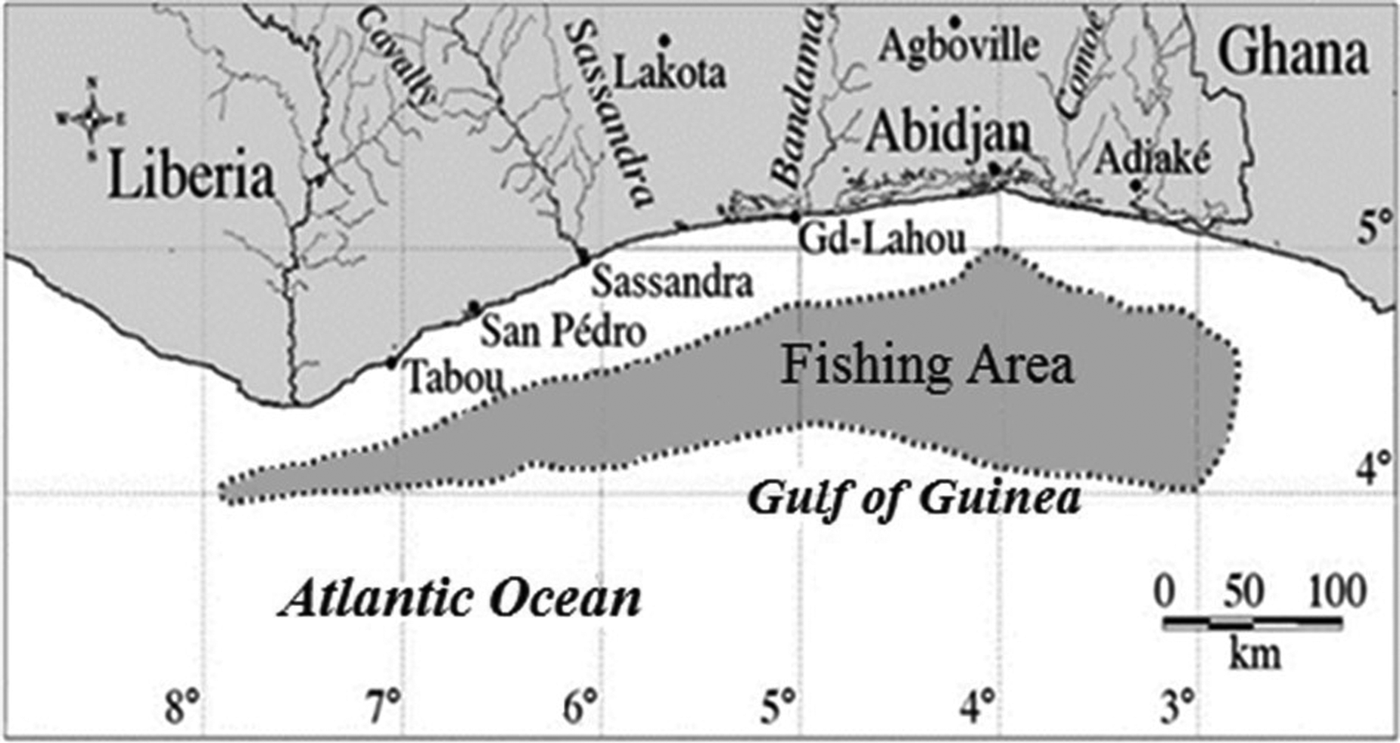
Samples of Prionace glauca used for this study were collected from commercial catches at the fishing harbour of Abidjan from the artisanal driftnet fishery targeting tuna species, which operated between latitudes 4°N and 5°N and longitudes 2.30°W and 8°W (Figure 1). The specimens were sampled monthly from August 2014 to November 2016.
Fishing area of blue shark, Prionace glauca in the coastal waters of Ivory Coast.

All specimens were sexed and the body weight was recorded to the nearest kg. The total length (TL) was measured in a straight line from the snout tip to the end of the upper tail to the nearest cm below. The inner clasper length (from cloaca posterior edge to clasper distal tip) was measured to the nearest cm using callipers. After dissection, the reproductive organs (testes, ovary, ovarian oocytes, oviducal gland and uterus) were weighed or measured and preserved in 10% neutral formalin for later analysis. In pregnant females, the presence of fertilized eggs, the number and the sex of embryos were recorded. Because the caudal fins of embryos <7 cm were not forked, the stretch total length (STL, from the tip of the snout to the upper lobe of the caudal fin flexed towards the midline to provide maximum extension) in cm was used as standard measurement. The stages of sexual maturity were determined by visual inspection of the reproductive organs, using the scale of sexual maturity proposed by Stehmann (Reference Stehmann2002) for placental viviparous fishes which we modified according to our own observations, as follows:
In male, Stage 1 (immature) – claspers undeveloped, shorter than posterior tips of pelvic fin lobes, small whitish testis, sperm ducts straight and thread-like; Stage 2 (maturing) – claspers partially calcified and longer than posterior tips of pelvic fin; their tips (glans) becoming structured. The sperm ducts beginning to coil; Stage 3 (mature) – claspers fully calcified and longer than pelvic fin; the sperm ducts coiled and well filled with sperm (a white liquid extruded from a cross-sectional cut through the thick caudal portion of the kidney, where the ampullae are situated); Stage 4 (mature active) – claspers fully calcified, clasper glans often dilated and swollen; the sperm present in the clasper grooves flows under pressure.
In females, Stage 1 (immature) – ovaries undeveloped, their internal structure gelatinous and no oocytes differentiated. Uteri narrow and thread-like; Stage 2 (maturing) – ovary somewhat enlarged, wall transparent with translucent oocytes starting to differentiate, diameter <5 mm. The oviducts are narrow and becoming slightly widened posteriorly (uterus width about 20–35 mm); Stage 3 (preovulatory) – ovary with developing oocytes, some already large (diameter about 12–20 mm) can easily be counted and measured. Uterus width about 40–55 mm, with internal structure spongy; Stage 4 (Ovulating) – oocytes sometimes un-ovulated, diameter of 16–20 mm. Uteri width >80 mm contains fertilized eggs, no embryos are visible; Stage 5 (differentiating) – Uteri contains visible embryos but unpigmented; Stage 6 (expecting) – Uteri contains pigmented embryos; Stage 7 (post-natal) – ovaries at resting stage, similar to stage 1 or 2. Uteri empty but still widened considerably over their full length in contrast to stages 1 or 2.
For both sexes, maturity stages 1 and 2 were considered immature, while stages 3–4 in males and 3–7 in females were considered mature.
Data analysis
The proportion of mature individuals in 10-cm TL classes, calculated as the ratio between the number of mature sharks and the total number of sharks, was determined for males and females separately. The size at 50% maturity (L50) was estimated using the logistic regression model by fitting the fraction of mature fish against the total length. This model is described as follows:
 $$P\, = \,\displaystyle{1 \over {\lsqb {{\rm 1}\,{\rm}+{\rm } \,{\rm e}^{{\rm -} \,{\rm (\alpha} \,{\rm +} \,{\rm \beta} \,X{\rm )}}} \rsqb }}$$
Where P is the proportion of mature fish, X is the total length, and α, β are coefficients.
The value of L50 was estimated from the negative ratio -α/β by substituting P = 0.5.
The gonadosomatic index (GSI), which represents the gonad (ovary or testis) weight expressed as a percentage of the wet body weight, was estimated as follows:
 $${\rm GSI}\,{\rm}={\rm } \,\displaystyle{{{\rm Gonad\ weight}} \over {{\rm Body\ weight}}}\, \times \,{\rm 100}$$
The oviducosomatic index (OSI) which expresses the percentage of the oviducal gland weight by wet body weight (Capapé et al., Reference Capapé, Mnasri-Sioudi, El Kamel-Moutalibi, Boumaïza, Ben Amorc and Reynaud2014) was calculated for the females using the following formula:
 $${\rm OSI}={\rm } \displaystyle{{{\rm Oviducal\ gland\ weight}} \over {{\rm Body\ weight}}} \times 100$$
The trends of indices throughout the year, with fresh wounds or scars observed on females' skin (Pratt, Reference Pratt1979), were used to estimate the mating period as well as likely ovulation and fertilization period. The litter size was estimated by counting the number of embryos in the intact uterus of the pregnant females. The ovarian fecundity was estimated by counting the number of fully developed oocytes (>5.0 mm) in the intact ovary of the preovulatory females. The gestation period was estimated as the approximate length in months of embryonic development from fertilization to parturition.
Statistical analysis
The size distribution plot and Kolmogorov–Smirnov test (K-S) considering a significant level of 95%, were applied to compare the size-frequency distribution between sexes. A χ2 test was applied to test the significant differences between the sex ratio of females and males in both adults and embryos. The relationships between total length and clasper length for males as well as the total length and litter size for gravid females and the relationship between the number of oocytes and total length for preovulatory females were examined. The analysis of variance (ANOVA) was used to test the monthly variations of mean GSI and OSI values for each separate sex. Tukey's HSD multiple contrasts test was used to determine significant differences between months.
Results
Size distribution and sex ratio
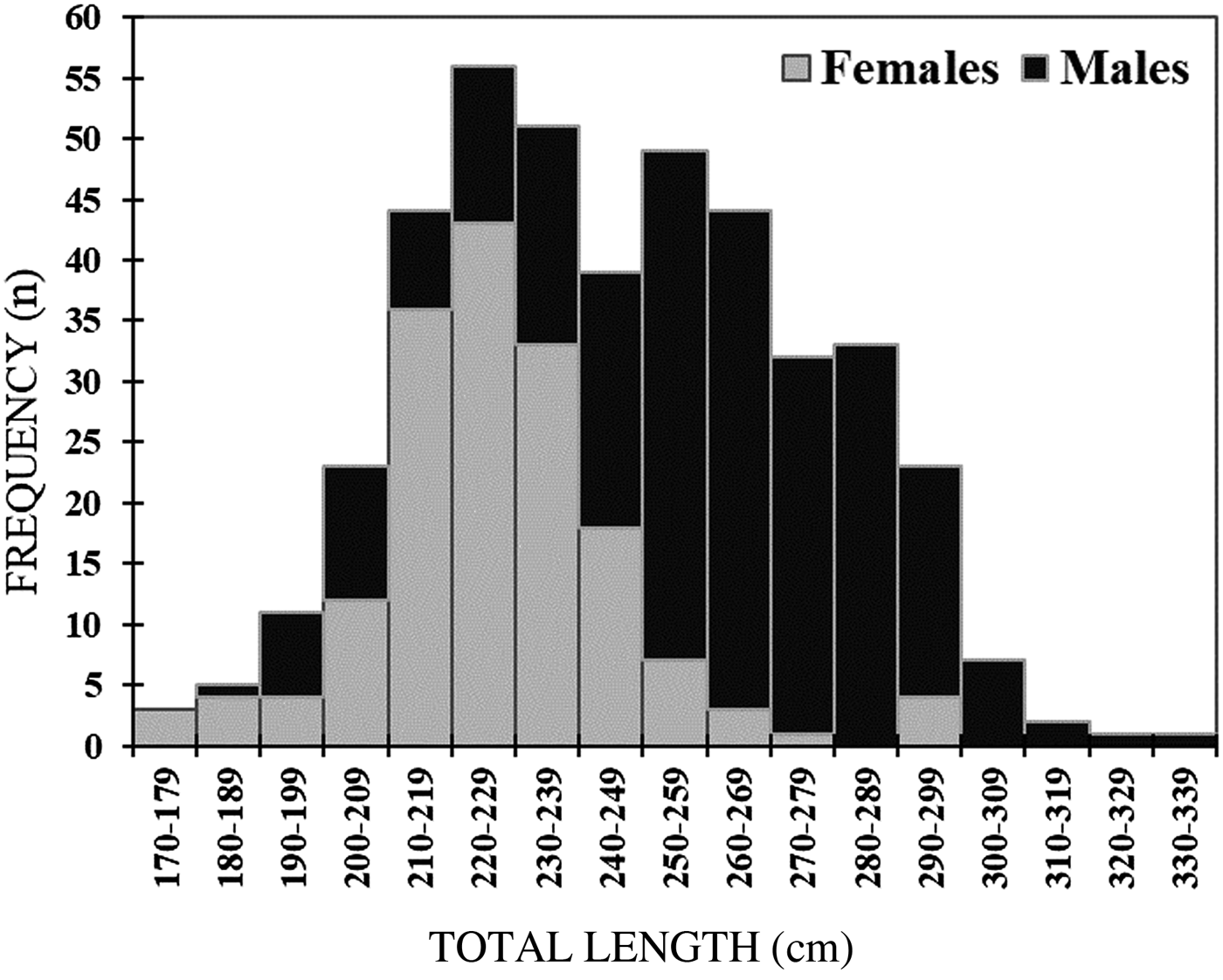
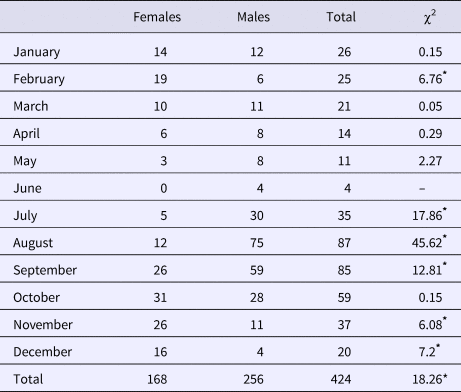
A total of 424 specimens made up of 256 males and 168 females were sampled (Table 1). The size ranged between 170 and 295 cm TL for females and between 180 and 330 cm TL for males (Figure 2). The size frequency distribution indicated significant differences in the total length of male and female specimens (K-S test, P = 0.05; D-stat = 0.656 > D-crit = 0.137; N = 256 and 168). The females were more numerous than males from October to February and progressively outnumbered by males from March to September. However, the number of specimens collected between April and June was low. The analysis by size group showed that for specimens of size 170–239 cm TL, the sex ratio of 1 F: 0.42 M was significantly different from the theoretical sex ratio 1:1 in favour of females (χ2 = 30.72; P < 0.05, N = 193). In specimens >239 cm TL, the sex ratio of 1 F: 6.00 M was significantly different in favour of males (χ2 = 117.86, P < 0.05, N = 231) in catches (Figure 2). Sixty-one pregnant females were examined of which 1117 embryos (38 litters) were measured. The sample for embryonic sex ratio was obtained from 18 litters of 503 individuals (255 males and 248 females). The embryonic sex ratio of 1 F: 1.03 M was not statistically different from the theoretical sex ratio 1:1 (χ2 = 0.10, P > 0.05, N = 503).
Length-frequency distribution for male and female blue sharks, Prionace glauca caught in the coastal waters of Ivory Coast during August 2014 and November 2016.

Monthly and total sample size by sex of blue shark, Prionace glauca, in continental shelf waters of Ivory Coast from August 2014 to December 2016

A χ2 test was applied to test the monthly and total sex ratio differences. * = Significant difference.
Size at sexual maturity
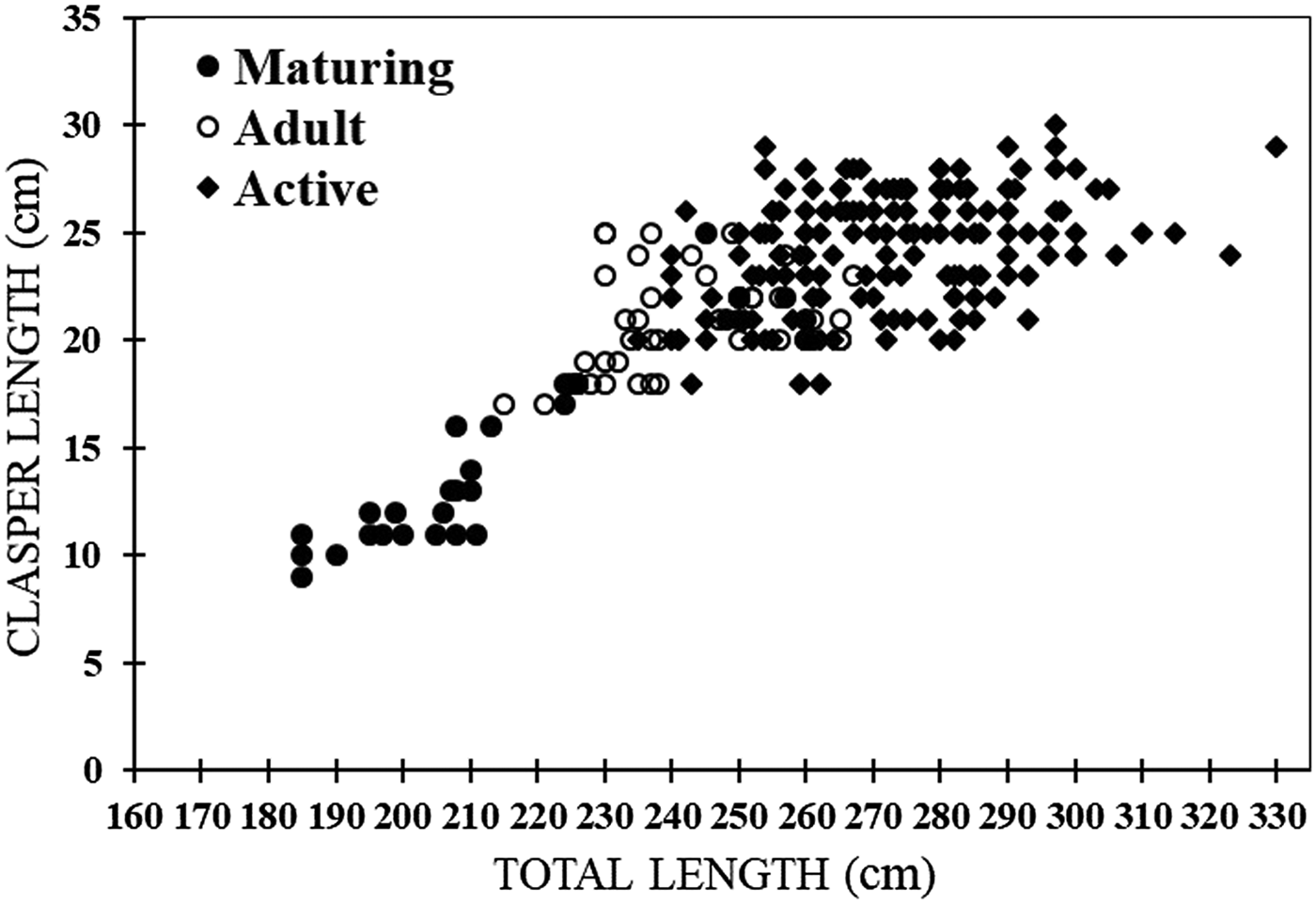
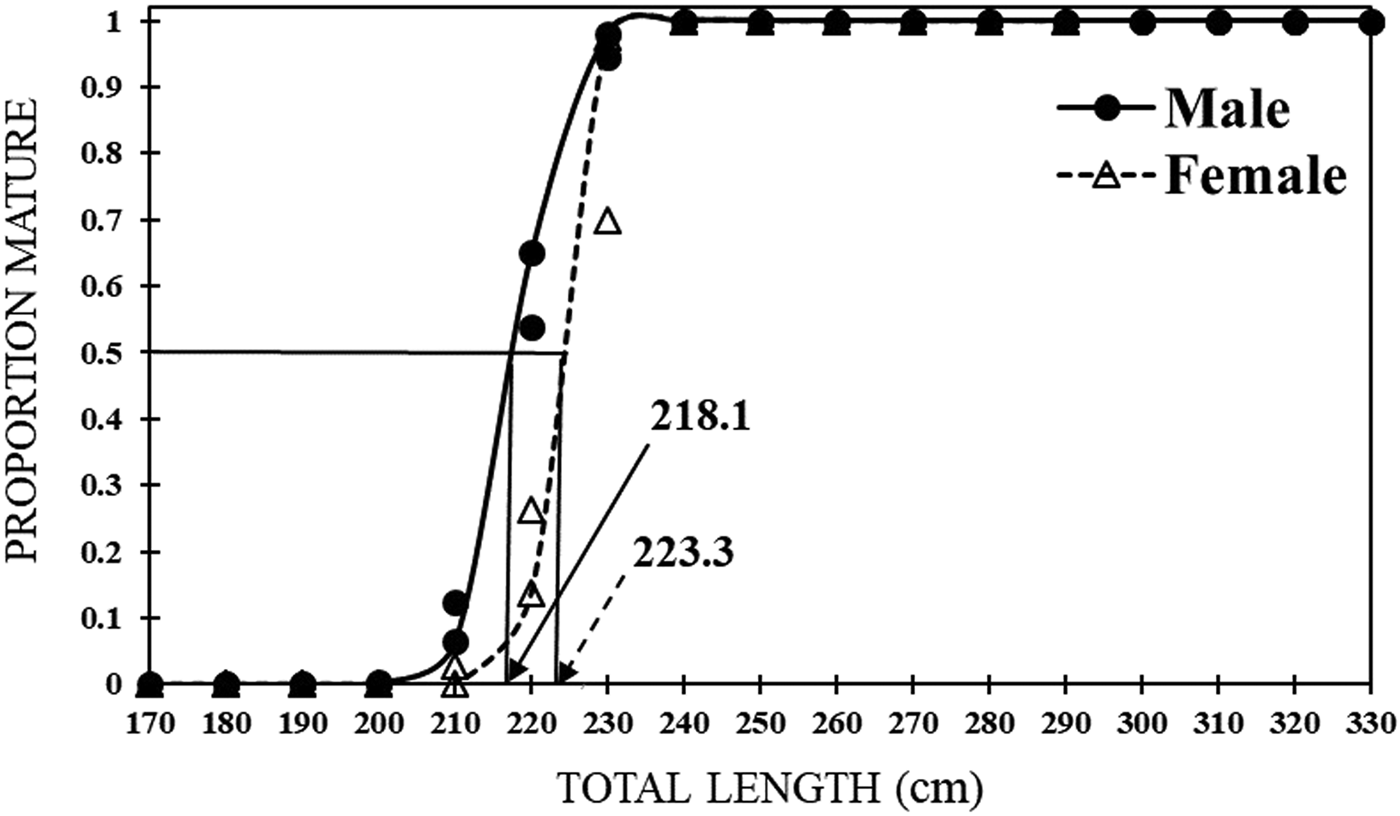
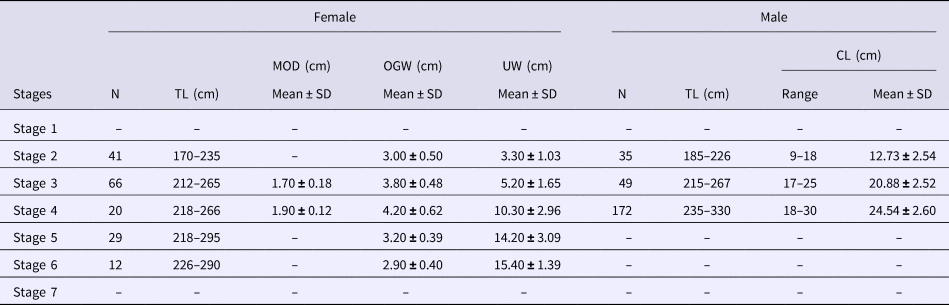
Maturing males (stage 2, N = 35) ranged in size from 185–226 cm TL, with partly calcified claspers of 9–18 cm (mean ± SD; 12.73 ± 2.54). For 221 mature males of size 215–330 cm TL, the claspers were fully calcified and measured 17–25 cm (20.88 ± 2.52) for stage 3 and 18–30 cm (24.54 ± 2.60) for stage 4. The claspers develop and gradually calcify as the shark increases in size (Table 2 and Figure 3). For females, 41 maturing females (stage 2) from 170–235 cm TL had undifferentiated vitellogenic oocytes; and mean widths of the oviducal glands and uterus measured 3.00 ± 0.50 cm and 3.30 ± 1.03 cm respectively (Table 2). One hundred and twenty-seven mature females (stage 3 to 6) from 212 to 295 cm TL, with the uterus width larger than 5 cm for stage 3 and between 10–15 cm for stages 4, 5 and 6 were recorded (Table 2). The diameter of ovarian oocytes was 1.70 ± 0.18 cm for stage 3 and 1.90 ± 0.12 cm for stage 4. The smallest mature male and female had 215 and 212 cm TL, respectively. All males and females larger than 226 and 235 cm TL, respectively, were mature (Table 2 and Figure 4). The size at 50% maturity for males was 218.1 and 223.3 cm TL for females (Figure 4).
Clasper-body length relationship compared with calcification degree in males of blue shark, Prionace glauca caught in the coastal waters of Ivory Coast.

Length at maturity ogives for male and female blue sharks, Prionace glauca. Size class interval is 10-cm of total length.

Average values for the maximum oocytes diameter (MOD), oviducal gland width (OGW), uterus width (UW) in females, clasper length (CL) range and average values in males, and total length (TL) range for each reproductive stage in blue shark, Prionace glauca, in the coastal waters of Ivory Coast

N, number; SD, standard deviation.
Sexual maturity stages and mating scars
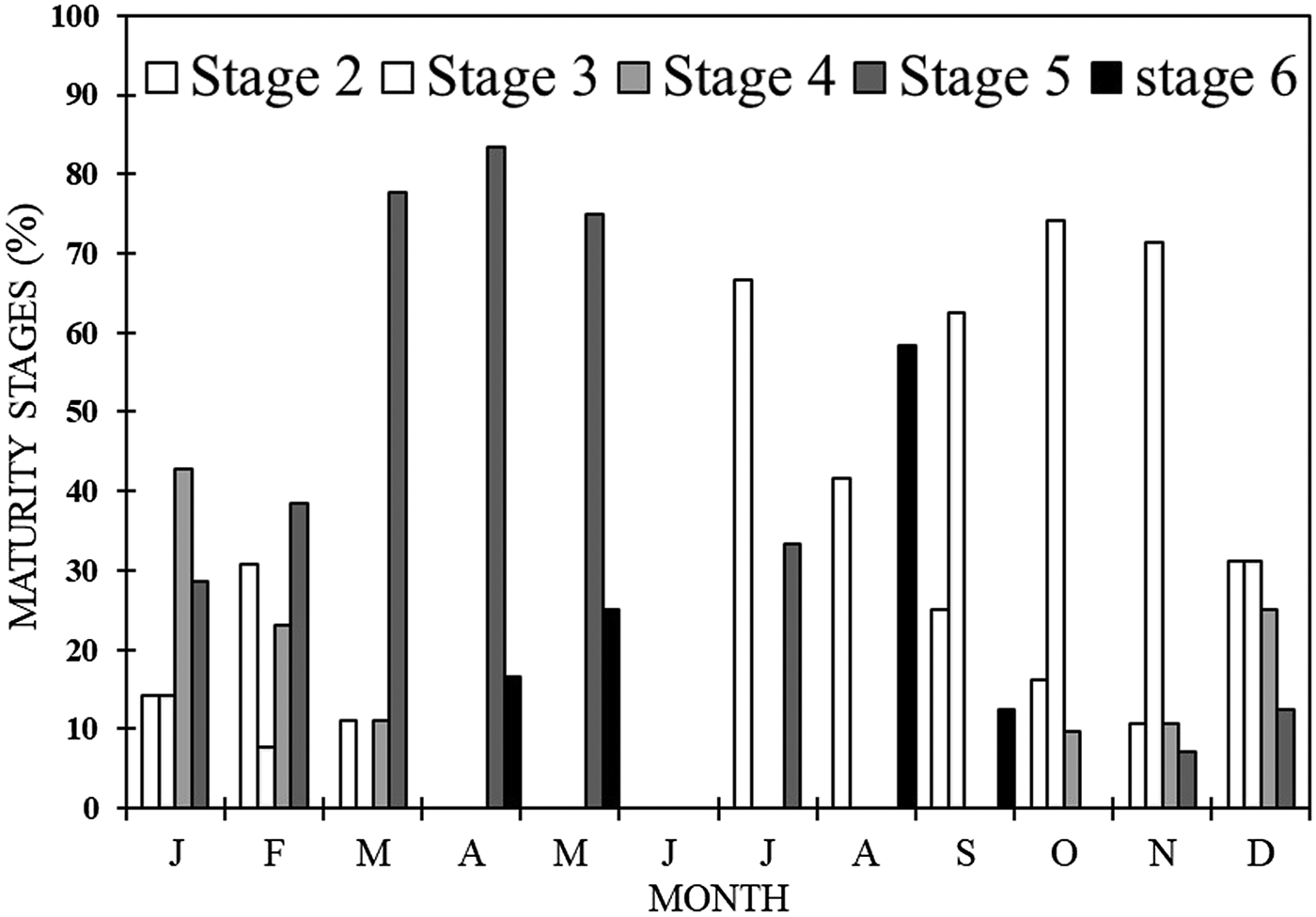
The monthly percentage of the sexual maturity stages is summarized in Figure 5. The maturing females (stage 2) were recorded throughout the year, except April–June, with the greatest number in July. The number of preovulatory females (stage 3) increased gradually from September to November and decreased thereafter from December to February. The ovulating females (stage 4) were found from late October to March, with the greatest number between December and January. The number of pregnant females (stage 5) with embryos unpigmented (3–18 cm STL) increased from November, peaked in April and then decreased until July. Most gravid females (stage 6), with largest and well pigmented embryos (22–42 cm STL), were obtained between August and September. Two gravid females with fully pigmented embryos (21–35 cm STL) were recorded between April and May. The stages 1 and 7 were not recorded in this study. The first mating wounds or scars on females' skins were observed in early July and continued until November.
Relative frequencies of maturity stages for female blue shark, Prionace glauca, caught in the coastal waters of Ivory Coast from August 2014 to November 2016.

Change of GSI and OSI
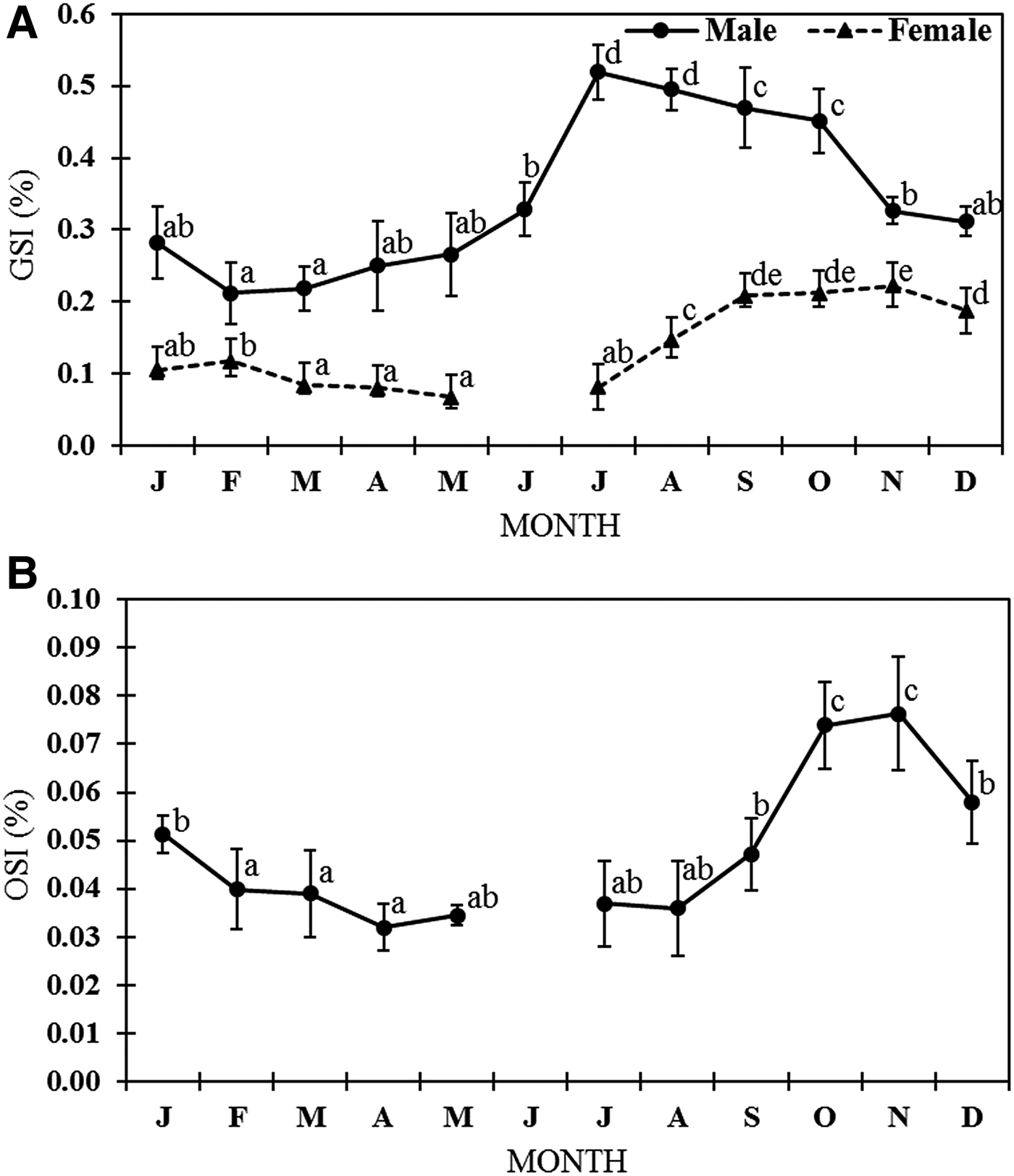
The monthly changes of male and female GSI showed a different trend (Figure 6A). There were significant differences in mean values of male and female GSI between months (ANOVA, males, df = 11, F = 109.94, P < 0.001; females, df = 10, F = 92.20, P < 0.001) as well as the mean values of female OSI between months (ANOVA, df = 10, F = 36.28, P < 0.001). The GSI of males increased from March (0.22 ± 0.03) and peaked in July (0.52 ± 0.04), followed by a slight decrease from August to October and sudden drop from November to February. In females, no specimen was recorded in June. The female GSI increased after July and peaked in November (0.22 ± 0.03), followed by a decrease from December to January. A second slight increase in GSI occurred in February, then declining from March to May. Concomitant with the increase of female GSI (Figure 6A), the OSI of females (Figure 6B) increased from September to October–November (0.07 ± 0.01), followed by a decrease from December to April (0.03 ± 0.01).
(A) Monthly change in gonadosomatic index (GSI) of blue shark, Prionace glauca, caught in the coastal waters of Ivory Coast from August 2014 to November 2016. The sample sizes are shown in Table 1. Different superscript letters denote statistically significant differences (Tukey's test, P < 0.05) among months; Error bars represent standard deviation (±SD). (B) Monthly change in oviducosomatic index (OSI) of blue shark, Prionace glauca, caught in the coastal waters of Ivory Coast from August 2014 to November 2016. The sample sizes are shown in Table 1. Different superscript letters denote statistically significant differences (Tukey's test, P < 0.05) among months; Error bars represent standard deviation (±SD).

Gestation period
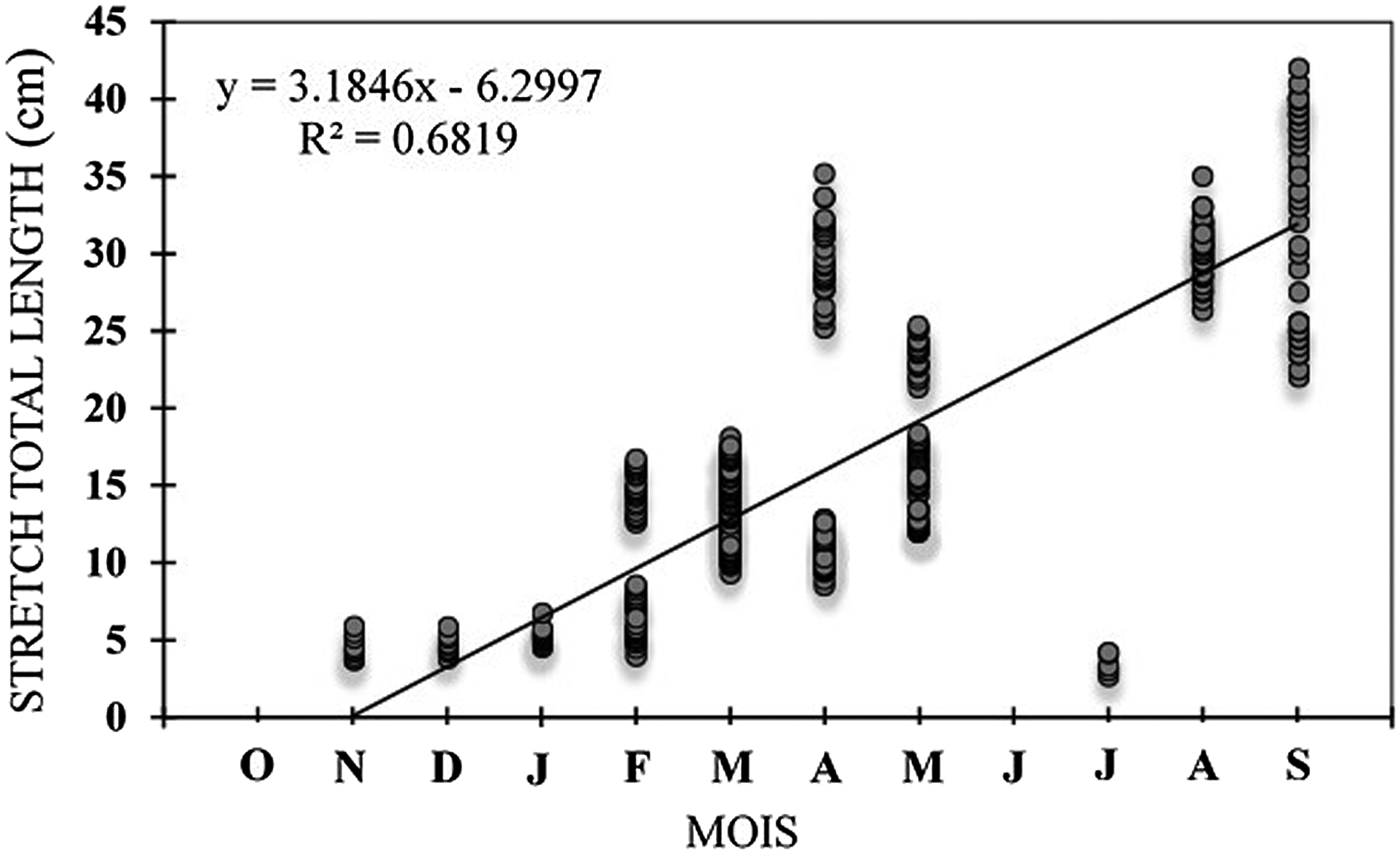
Pregnant females with different stages of embryonic development from fertilized egg stages to near-term embryo stages were collected. First females with fertilized eggs were caught in late October whereas females with the smallest embryos (3–5 cm STL) were observed in November–January and July. The largest embryos were found from August to September with a mean length of 33.48 ± 6.49 cm STL, measured in three females caught in September. Thus, the size of embryos progressively increased from November to September (Figure 7). On the basis of these results, the length of gestation period was estimated to be around 11 months.
Linear regression to illustrate the increase in embryonic stretch total lengths of blue shark, Prionace glauca, through time in the coastal waters of Ivory Coast.

Fecundity
The fecundity was variable and no relationship between fecundity and female size was observed. The number of vitellogenic oocytes in the ovary varied from 10–66 oocytes, with a mean of 37 ± 13.0 oocytes. The litter size ranged from 6–62 embryos with a mean of 30 ± 12.3 embryos. There was no relationship between the number of ovarian oocytes and maternal length or between litter size and maternal length (Table 3).
Number of oocytes (NO), embryos (NE) and total length (TL) relationship of blue shark, Prionace glauca, caught in the coastal waters of Ivory Coast

N, number; SD, standard deviation.
Discussion
The sample of the present study consisted mainly of adult individuals of both sexes with males more numerous and larger than females. The assumption of an influence of capture methods and gear does not seem to support the fact that our results contain only larger individuals, as fishermen used baited hooks in association with driftnet to attract sharks, so smaller individuals would have been caught if they were present. This result seems to follow the length-frequency distributions of immature and mature specimens across sub-regions of the Atlantic Ocean. Mejuto & García-Cortés (Reference Mejuto and García-Cortés2005) noted a clear latitudinal stratification of blue shark sizes in the Atlantic Ocean, with the larger specimens tending to occur along the equatorial and tropical regions, and the smaller sizes occurring mainly in temperate waters in higher latitudes both in the northern and southern hemispheres. Coelho et al. (Reference Coelho, Mujeto, Domingo, Liu, Cortés, Yokawa, Hazin, Arocha, da Sylva, Garcia-Cortés, Ramos-Cartelle, Lino, Forselledo, Mas, Ohshimo, Carvalho and Santos2018) also noted longitudinal gradients in size distribution along the Atlantic Ocean. The larger specimens occurred mainly in the north-west and south-east equatorial and tropical regions, especially in the Gulf of Guinea and in the central and western tropical Atlantic, while immature specimens occurred mainly in the north-east and south-west. On the other hand, presence of more males in catches has been reported by most of the earlier studies (Castro & Mejuto, Reference Castro and Mejuto1995; Mejuto & García-Cortés, Reference Mejuto and García-Cortés2005; Carrera-Fernandez et al., Reference Carrera-Fernández, Galvan-Magana and Ceballos-Vazquez2010; Zhu et al., Reference Zhu, Dai, Xu, Chen and Chen2011). This general size segregation corroborates the patterns previously described by Mejuto & García-Cortés (Reference Mejuto and García-Cortés2005) in the Atlantic Ocean, especially in the Gulf of Guinea. This study also revealed that the embryonic or pups sex ratio was not statistically different between sexes, suggesting that this difference in catches is not due to an imbalanced birth ratio. Differential natural mortality and differential preference of habitat by sex can partially explain these differences observed in catches. These results are consistent with the findings of Nakano & Seki (Reference Nakano and Seki2003), Wu (Reference Wu2003), Mejuto & García-Cortés (Reference Mejuto and García-Cortés2005) and Zhu et al. (Reference Zhu, Dai, Xu, Chen and Chen2011). The prevalence of sexes was also observed on a temporal scale, where females were more numerous than males during the fourth and first quarters (October–February) and progressively outnumbered by males during the second and third quarters (March–September). In the South-western Atlantic, Hazin & Lessa (Reference Hazin and Lessa2005) noted the same preponderance of female blue sharks in the fourth and first quarters of years. We assumed that variations in sex composition of catches might partly reflect different natural distributions of the sexes and sizes, possibly resulting from sexual differences in reproductive behaviour. This distribution pattern of sexes suggests that males were distributed in shallow waters between March and September and that females from October to February had a shallower distribution than males, as all sets were performed in shallow depths (<45 m). Differential growth rates with respect to sex (Cailliet et al., Reference Cailliet, Martin, Kusher, Wolf, Welden, Prince and Pulos1983; Cailliet & Bedford, Reference Cailliet and Bedford1983) and depth distribution of specimens depending on size, sex, temperature and area (Nakano & Seki, Reference Nakano and Seki2003) may explain this finding; though data from a wider geographic range are required before conclusions can be reached.
The size at maturity for males and females was similar to that reported by Pratt (Reference Pratt1979), of 218 cm TL for males and 178–227 cm TL for females in the North-western Atlantic. These values are also in agreement with estimates of Castro & Mejuto (Reference Castro and Mejuto1995) in Gulf of Guinea for females and fall in the interval proposed by White (Reference White2007) off Indonesia Sea for males. However, the sizes at maturity found in this study are slightly larger than those of Jolly et al. (Reference Jolly, da Silva and Attwood2013) in South African waters, Megalofonou et al. (Reference Megalofonou, Damalas and De Metrio2009) in the Mediterranean and Carrera-Fernandez et al. (Reference Carrera-Fernández, Galvan-Magana and Ceballos-Vazquez2010) and Francis & Duffy (Reference Francis and Duffy2005) in the Pacific Ocean. The fact that size at first maturity was higher for females than males seems to be common for sharks in general and had previously been observed for blue shark in the Atlantic Ocean (Pratt, Reference Pratt1979). However, other studies reported that the size at maturity in male blue shark was found to be slightly higher than that of females (Francis & Duffy, Reference Francis and Duffy2005; Jolly et al., Reference Jolly, da Silva and Attwood2013; Fujinami et al., Reference Fujinami, Semba, Okamoto, Ohshimo and Tanaka2017). Size at maturity is subjected to intraspecific change that could be related to the regional differences of maturation in agreement with Moreno's opinion (Reference Moreno1995). However, the use of different maturation criteria to distinguish the maturity stages could have affected these estimates. There is no consensus on the definition of ‘maturity’ and although most authors had analysed reproductive variables to classify mature sharks, the respective critical values or maturity criteria have rarely been defined. This is an important source of variation, because depending on the critical values used to define the maturity criteria, the proportion of mature animals by size class changes, and thus also the estimated median size at maturity. Megalofonou et al. (Reference Megalofonou, Damalas and De Metrio2009) and White (Reference White2007) used only calcification of claspers as a way to determine the male maturation. Despite the subjectivity and inaccuracy of this method, authors studying the reproductive biology of P. glauca have used the clasper size and rigidity as criteria of maturity (Hazin et al., Reference Hazin, Kihara, Otsuka, Boeckman and Leal1994; Nakano, Reference Nakano1994; Carrera-Fernández et al., Reference Carrera-Fernández, Galvan-Magana and Ceballos-Vazquez2010). These authors also reported that the presence of sperm alone was not a good indicator of maturity, because maturing sharks can produce sperms prior to calcification of claspers for males or store it in the oviducal glands for females (Pratt, Reference Pratt1979). The sexual maturity of males in this study was assessed using both criteria, presence of sperm as well as the possession of fully developed claspers. Carrera-Fernández et al. (Reference Carrera-Fernández, Galvan-Magana and Ceballos-Vazquez2010) and Joung et al. (Reference Joung, Hsu, Liu and Wu2011) used the presence of semen or spermatozeugmata as an indicator of maturation, and thus their estimate was suggested to be smaller than our estimates. Maturation in males involves the gradual development of the testes, the calcification of the claspers and the presence of sperm aggregates in the seminal vesicle. The ovarian oocytes, the oviducal glands and the uterus cycles were the criteria used to separate immature to mature females, as indicated by Hazin et al. (Reference Hazin, Kihara, Otsuka, Boeckman and Leal1994) and Carrera-Fernández et al. (Reference Carrera-Fernández, Galvan-Magana and Ceballos-Vazquez2010).
Monthly changes of gonadosomatic index (GSI) showed different trends between sexes. The highest GSI values were recorded in July for males and between September and November for females. The presence of fresh wounds or scars observed on females' skin were recorded in early July. The mating period based on males' GSI and the presence of fresh wounds or scars on females' skin was July–November with a peak in September–October.
The oviducosomatic index (OSI) reached its highest values in October–November and at the same time, the first females with fertilized eggs in uteri appeared in catches, indicating that fertilization occurred likely around these months. According to Paiva et al. (Reference Paiva, Neves, Sequeira and Gordo2011), the greatest values of oviducal gland width preceding or during the ovulation, support the hypothesis that the oviducal gland must reach its largest width to allow the passage of the follicle towards fertilization. Taking into account the occurrence of females in catches, the mature and pregnant females were the most common in Ivorian waters, indicating that this tropical region is important for the reproduction cycle of this species. Based on observation of the likely fertilization period, appearance of fertilized eggs in the uterus as well as embryonic development, the gestation period was estimated to be around 11 months. This result was similar to the reports of Pratt (Reference Pratt1979) in the Atlantic Ocean and Carrera-Fernández et al. (Reference Carrera-Fernández, Galvan-Magana and Ceballos-Vazquez2010) and Fujinami et al. (Reference Fujinami, Semba, Okamoto, Ohshimo and Tanaka2017) in the Pacific Ocean. However, no synchronous ovarian follicle development and embryonic growth were observed in the sampling period, suggesting that female blue sharks have a reproduction cycle of over 12 months. The presence of numerous gravid females, as well as pregnant females with embryos of 3–42 cm STL were recorded from November to September. In addition, the embryo sizes varied widely among months and largest individuals of 33.48 ± 6.49 cm STL were recorded, indicating that this length is near to the size at birth (35–59 cm) in blue sharks as reported by some authors (Pratt, Reference Pratt1979; Nakano, Reference Nakano1994; Nakano & Stevens, Reference Nakano, Stevens, Camhi, Pikitch and Babcock2008). Although the Ivorian waters are frequented by reproducing females, the absence of neonates with lengths near the birth size in catches as well as parturition females, does not support a hypothesis that parturition takes place in the Gulf of Guinea. Hazin et al. (Reference Hazin, Pinheiro and Broadhurst2000) reported that parturition would probably take place in more temperate waters off South Africa, as confirmed by the presence of neonate sharks with umbilical scars and females with post-parturition scars.
The vitellogenic oocytes and litter size are quite variable and uterine fecundity was close to that reported by other authors (Hazin et al., Reference Hazin, Kihara, Otsuka, Boeckman and Leal1994; Montealegre-Quijano et al., Reference Montealegre-Quijano, Cardoso, Silva, Kinas and Vooren2014; Fujinami et al., Reference Fujinami, Semba, Okamoto, Ohshimo and Tanaka2017). No direct relationship between litter size and maternal size was found, as was proposed by Castro & Mejuto (Reference Castro and Mejuto1995) and Fujinami et al. (Reference Fujinami, Semba, Okamoto, Ohshimo and Tanaka2017). Ovarian fecundity was higher than uterine fecundity because some observed fully yolked oocytes were not ovulated and entered atresia. Moreover, pregnant females probably aborted during capture or handling, and may have partially lost their brood. This phenomenon is considered as a rule in viviparous elasmobranchs (Mellinger, Reference Mellinger1989). Since we did not count placental scars in the uterus to determine if embryos were aborted, our estimates of fecundity should be considered as the lower limit of fecundity. The reproductive parameters determined in the present paper match fairly well within the general global pattern. In light of the increase of fishing pressure on fishes, this biological information will be useful in identifying suitable management measures for the blue shark population off coastal waters of Ivory Coast.
Acknowledgements
We would like to thank artisanal fishermen and sellers of the harbour of Abidjan for their help during sampling. We also thank Bernard Seret for helpful comments and advice.