




Introduction
Animal-contact visitor attractions are popular leisure destinations in the United Kingdom (UK), drawing millions of visitors each year and contributing substantially to rural tourism and public education [Reference Gormley, Little, Chalmers, Rawal and Adak1–3]. These venues bring large numbers of people, particularly families with young children, into close proximity with farm animals, creating well-recognized interfaces for zoonotic transmission [Reference Gormley, Little, Chalmers, Rawal and Adak1, Reference Davies and Chalmers4].
Cryptosporidiosis is a major cause of diarrhoeal disease worldwide and represents a substantial One Health challenge [Reference Davies and Chalmers4–Reference Dong, Yang, Wang, Yang, Yang, Shi, Li, Li, Chen, Jiang and Zhou6]. Cryptosporidium species are among the most widespread intestinal protozoan parasites, with a global pooled prevalence estimated at approximately 7–8%, disproportionately affecting young children, people living in rural locations, and populations with frequent animal contact [Reference Davies and Chalmers4, Reference Dong, Yang, Wang, Yang, Yang, Shi, Li, Li, Chen, Jiang and Zhou6]. The burden is shared across human and animal health, with C. parvum widely recognized as a leading cause of diarrhoea in young ruminants and a dominant zoonotic species [Reference Davies and Chalmers4, Reference Ras, Abdelkhalek, Raya-Álvarez, Shady, AlGabbani, Abdelbaset, Saleem, Shukry, Agil and Elmahallawy5]. Owing to its combined human, animal, and socioeconomic impact, Cryptosporidium has been designated as a neglected disease by the World Health Organization [Reference Davies and Chalmers4, Reference Ras, Abdelkhalek, Raya-Álvarez, Shady, AlGabbani, Abdelbaset, Saleem, Shukry, Agil and Elmahallawy5].
In England and Wales, cryptosporidiosis is endemic and remains a recurrent cause of outbreaks [Reference Gormley, Little, Chalmers, Rawal and Adak1, Reference Chalmers, Robinson, Elwin and Elson7, 8]. Cryptosporidium is the most frequently reported protozoal cause of acute gastroenteritis, with several thousand laboratory-confirmed cases reported annually, although the true burden is likely underestimated due to under-ascertainment [Reference Davies and Chalmers4, 8]. National outbreak surveillance indicates that animal contact remains a major transmission pathway [Reference Chalmers, Robinson, Elwin and Elson7, 8]. Analysis of outbreaks between 2009 and 2017 identified nearly 200 incidents, with animal-contact settings accounting for a substantial proportion; all such outbreaks were caused by zoonotic C. parvum and were strongly seasonal, peaking in the spring [Reference Chalmers, Robinson, Elwin and Elson7]. Young ruminants, particularly lambs, were repeatedly implicated, and the same gp60 subtypes recurred across multiple outbreaks and premises, highlighting the persistent nature of this public health problem [Reference Chalmers, Robinson, Elwin and Elson7].
The risks associated with animal-contact settings are amplified by the biological characteristics of Cryptosporidium. Young ruminants shed extremely high numbers of oocysts during the neonatal period, often in the absence of clinical disease [Reference Armon9]. Oocysts are immediately infectious, survive for prolonged periods in soil, bedding, water, and on fomites, and are resistant to many commonly used disinfectants [Reference Davies and Chalmers4, Reference Ras, Abdelkhalek, Raya-Álvarez, Shady, AlGabbani, Abdelbaset, Saleem, Shukry, Agil and Elmahallawy5, Reference Armon9]. Human infection can occur following ingestion of very low numbers of oocysts, meaning that brief, incidental or indirect contact with contaminated animals, environments or surfaces may be sufficient for transmission [Reference Davies and Chalmers4, Reference Ras, Abdelkhalek, Raya-Álvarez, Shady, AlGabbani, Abdelbaset, Saleem, Shukry, Agil and Elmahallawy5, Reference Armon9].
An Industry Code of Practice in England provides guidance intended to reduce zoonotic risks at animal-contact visitor attractions; however, outbreaks linked to these settings continue to occur despite regulatory oversight [2, 8, 10]. A key gap in the literature is therefore understanding why zoonotic transmission persists and which exposure pathways remain incompletely controlled.
Between 2023 and 2025, four discrete outbreaks of C. parvum infection were epidemiologically linked to a single animal-contact visitor attraction in South West England. This unusual occurrence of repeated outbreaks within the same setting provided an opportunity to examine recurrent zoonotic transmission over time using an integrated One Health approach.
Methods
Hypothesis and study aim
We hypothesized that human cases acquired C. parvum infection through direct contact with infected young livestock or indirectly via exposure to faecally contaminated surfaces within the visitor attraction [Reference Davies and Chalmers4, Reference Ras, Abdelkhalek, Raya-Álvarez, Shady, AlGabbani, Abdelbaset, Saleem, Shukry, Agil and Elmahallawy5, Reference Armon9, Reference Peake11, Reference Jones12]. We further hypothesized that the recurrence of outbreaks reflected persistent opportunities for zoonotic transmission despite existing infection prevention and control measures [Reference Ras, Abdelkhalek, Raya-Álvarez, Shady, AlGabbani, Abdelbaset, Saleem, Shukry, Agil and Elmahallawy5, Reference Dong, Yang, Wang, Yang, Yang, Shi, Li, Li, Chen, Jiang and Zhou6, Reference Peake11, Reference Jones12]. Accordingly, the study aimed to identify factors plausibly associated with repeated C. parvum transmission, and to draw insights for infection prevention and control in this setting, based on descriptive analysis of outbreak data.
Study design
A retrospective outbreak investigation, incorporating elements of a descriptive case series, was undertaken using data from four outbreaks epidemiologically linked to a single site (2023–2025). The investigation integrated epidemiological, veterinary, environmental and molecular data to triangulate human, animal, and environmental evidence. Analysis was descriptive; no analytical study was undertaken, and exposure data were summarized without formal comparison between groups or estimation of relative risk. This approach reflected the inability to define a study cohort from the available data. A cohort study may have been feasible with access to detailed booking or visitor records; however, these data could not be extracted by the site operators.
Veterinary expertise and animal faeces sampling
Veterinary expertise was provided by the Animal and Plant Health Agency (APHA). Remote veterinary input was considered proportionate during the first two outbreaks; however, following the third outbreak, an on-site assessment was undertaken to identify additional measures to reduce transmission risk. Recommendations were provided to the attraction operators and their private veterinary practice.
Animal faecal sampling was not undertaken during the first and second outbreaks, as zoonotic transmission pathways were well recognized and confirmatory evidence of livestock involvement was not considered necessary. Freshly voided faecal material was, however, selectively sampled during the third and fourth outbreaks for testing of Cryptosporidium spp. Selection was guided by case-reported animal contact and the recognized role of the species as reservoirs for C. parvum [Reference Gormley, Little, Chalmers, Rawal and Adak1, Reference Ras, Abdelkhalek, Raya-Álvarez, Shady, AlGabbani, Abdelbaset, Saleem, Shukry, Agil and Elmahallawy5, Reference Chalmers, Robinson, Elwin and Elson7].
During the third outbreak, faecal samples (n = 30) were collected from goats, cows, sheep, rabbits, guinea pigs, pigs, and calves. During the fourth outbreak, faecal samples (n = 20) were collected from lamb and goat pens to assess whether these livestock constituted an active source of C. parvum during bottle-feeding and petting activities identified as potential risk exposures in this outbreak.
Diagnostic and reference laboratory testing
Diagnostic testing of human stools was performed using the EntericBio Dx polymerase chain reaction (PCR) gastrointestinal panel [13]. As a notifiable causative agent [14], any Cryptosporidium spp. detected was reported to the UK Health Security Agency by the diagnostic microbiology laboratory.
Animal faecal samples were tested at the APHA-accredited parasitology laboratory using the Crypto-Cel IF Test (direct immunofluorescence microscopy) [15, 16].
Positive human and animal samples were referred to the Cryptosporidium Reference Unit (Public Health Wales) for species identification and genotyping [Reference Chalmers, Robinson, Elwin and Elson7, Reference Robinson, Elwin and Chalmers17–Reference Risby, Robinson and Chalmers20]. In the first instance, species-level confirmation of human specimens was undertaken using real-time PCR assays targeting suitable regions of the Lib13 (C. parvum) and A135 (C. hominis) genes in a duplex PCR, with the small-subunit rRNA (SSU-rRNA) gene used as required [Reference Robinson, Elwin and Chalmers17]. For animal samples, C. parvum was specifically sought as that had been identified as the cause of the outbreaks.
gp60 subtyping
Subtyping of C. parvum was undertaken by PCR amplification and Sanger sequencing of the hypervariable gp60 locus [Reference Chalmers, Robinson, Elwin and Elson7, Reference Robinson, Elwin and Chalmers18]. Amplicons were purified and sequenced in the reverse direction in the first outbreak and in both directions in the second, third, and fourth, and chromatograms were examined to generate high-quality consensus sequences. Gp60 subtypes were assigned by comparison with a reference sequence database, based on the characteristic A-, G-, and R-repeat motifs that define established subtypes [Reference Robinson, Chalmers, Elwin, Guy, Bessonov, Troell and Xiao19]. Samples exhibiting reproducible mixed chromatogram peaks within repeat regions were interpreted as mixed infections.
Multiple-locus variable-number tandem-repeat analysis (MLVA)
To assess genetic relatedness between C. parvum from human cases and animal samples, a seven-locus MLVA scheme was applied [Reference Risby, Robinson and Chalmers20, Reference Chalmers, Robinson, Risby, Elwin, Howarth, Simkin and Nelson21]. This scheme has been validated and implemented as a national reference method for C. parvum surveillance and outbreak investigations in England and Wales [Reference Chalmers, Robinson, Risby, Elwin, Howarth, Simkin and Nelson21]. Loci were amplified using fluorescently labelled primers and amplicons were size-separated by capillary electrophoresis [Reference Risby, Robinson and Chalmers20]. Alleles were assigned using established locus-specific conversion matrices, with non-amplifying loci recorded as ‘Ø’ [Reference Risby, Robinson and Chalmers20, Reference Chalmers, Robinson, Risby, Elwin, Howarth, Simkin and Nelson21]. MLVA profiles were expressed as the ordered repeat numbers across all seven loci. Mixed alleles were reported when multiple peaks at a given locus exceeded analytical thresholds and were reproducible across replicate assays; such results were displayed as slash-separated repeat values. The resulting multilocus profiles provided high-resolution discrimination for comparing isolates within and across outbreaks. Integration of MLVA with gp60 subtyping supported assessment of epidemiological linkage and inference of potential transmission between human and animal samples.
Case questionnaire and exposure assessment
Local authority teams took primacy for case investigations and administered a retrospective cryptosporidiosis-specific surveillance questionnaire (Supplementary Material) to capture exposures within the 14 days preceding symptom onset. Completed questionnaires were shared with UKHSA for entry into the Case and Incident Management System. Details on the nature and extent of animal contact, including stroking, feeding, kissing, holding, or cuddling, as well as hand hygiene practices, were captured.
Case definition
A confirmed case was defined as a person with a faecal sample positive for C. parvum who had visited the implicated animal visitor attraction within 14 days before symptom onset.
Retrospective surveillance review
UKHSA reviewed regional surveillance data from 2020 to 2025 to determine the number of animal-contact C. parvum outbreaks reported in the region and to identify transferable learning, including from a zoonotic C. parvum outbreak linked to an animal-contact event in the South West in 2023 [Reference Peake11].
Environmental investigations
Local authority outbreak-response visits were undertaken to assess compliance with statutory health and safety requirements and to audit practices against the Industry Code of Practice [2]. To better understand the persistence of transmission despite these measures, a detailed human-factors observational assessment of an in-pen lamb-feeding and petting session was conducted during the fourth outbreak. Attention was focused on behaviours and circumstances that could facilitate faecal–oral transmission, including incidental hand-to-mouth actions, contamination of clothing and footwear, and the adequacy of physical and procedural controls intended to mitigate these risks.
This observation was based on a single session and was not intended to be representative of routine practices across all visits or outbreaks, but rather to provide a descriptive assessment of visitor behaviour and environmental conditions under typical operating conditions to inform risk mitigation.
Environmental sampling
Environmental surface sampling was not undertaken during the first three outbreaks, as investigations were initiated after visitor exposure had ceased and routine cleaning and disinfection of the animal-contact areas had already been completed prior to site visits. Under these circumstances, environmental sampling was considered unlikely to yield interpretable results or meaningfully inform source attribution.
In addition, these outbreaks were managed as incident responses, with investigative efforts prioritized towards case identification, epidemiological assessment, implementation of control measures, and, where available, animal health intelligence, rather than exploratory environmental microbiology. The lack of contemporaneous access to implicated animals or freshly used visitor-contact surfaces further limited the feasibility and added value of environmental sampling during these earlier incidents.
During the fourth outbreak, environmental sampling was incorporated prospectively as part of a more detailed, hypothesis-driven investigation to better understand persistent transmission under routine operating conditions. Twelve representative environmental swabs were collected from high-frequency touch surfaces within and immediately adjacent to animal-contact areas. Sampling targeted locations with a high likelihood of faecal contamination or frequent hand contact, including metal railings surrounding the petting pens, laminated in-pen seating bales, and hand-wash facilities serving the animal-contact areas.
Samples were obtained immediately after visitors exited the barn following participation in supervised bottle-feeding and petting activities, and before any cleaning took place, thereby maximizing the likelihood of detecting contamination arising from these activities. In addition to surface swabs, a single lamb lap-cuddling blanket, used once during the observed session and laundered beforehand on a hot wash cycle, was collected for faecal indicator testing.
Samples were analysed at the UKHSA Food, Water and Environmental Microbiology Services laboratory using UKAS-accredited methods for the enumeration of Enterobacteriaceae and β-glucuronidase-producing Escherichia coli , as specific testing for Cryptosporidium spp. on environmental swabs was not operationally feasible [22, 23]. Given the recognized potential for co-circulating zoonotic pathogens in farm environments, and informed by findings from a previous high-profile outbreak [24], additional PCR and culture testing for the detection of Shiga toxin-producing E. coli (STEC) was undertaken [25], with confirmatory whole-genome sequencing performed at the Gastrointestinal Bacterial Reference Unit, UKHSA Colindale.
Results
Case numbers and demographics
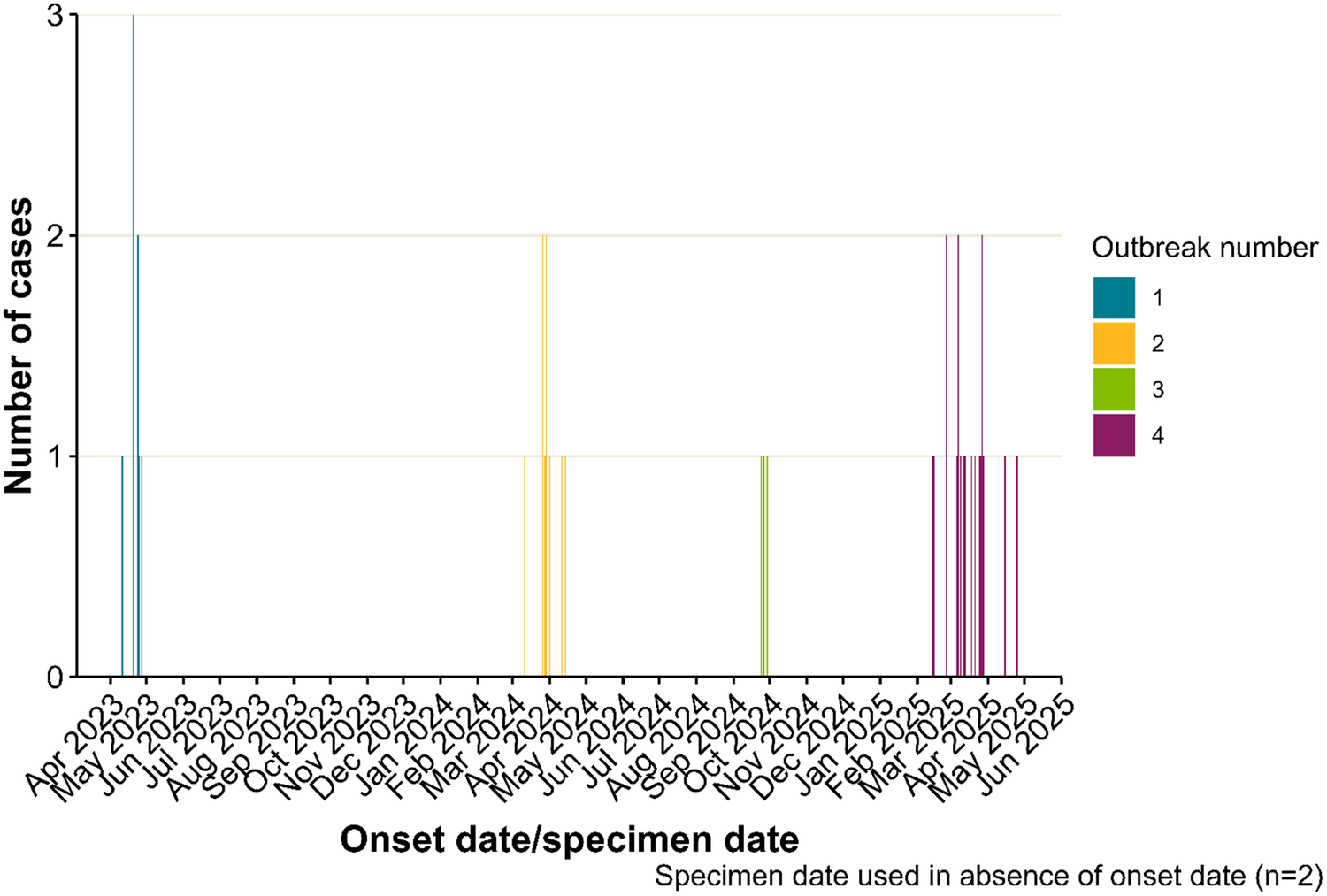
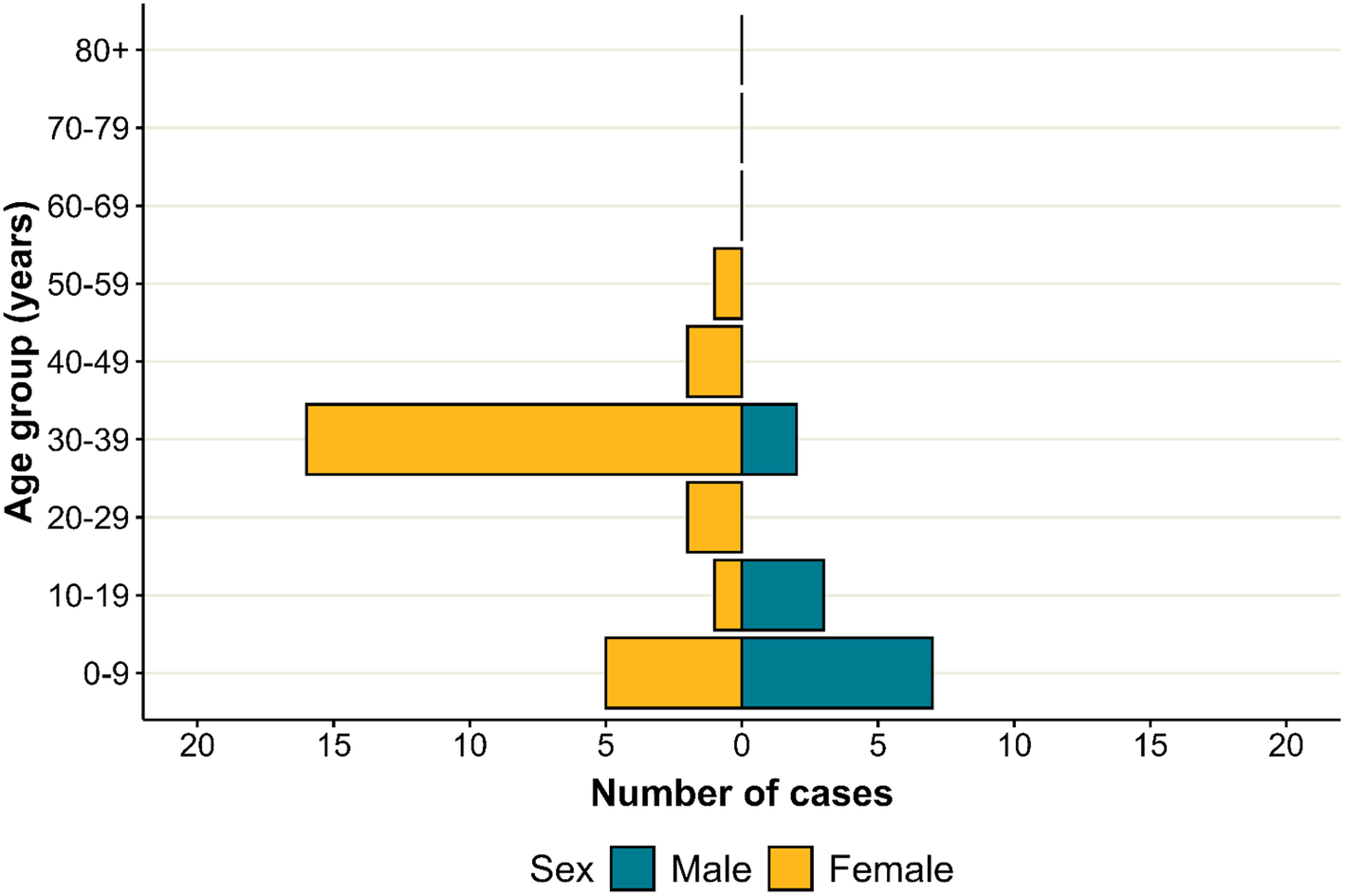
A total of 39 laboratory-confirmed primary human cases of C. parvum were identified across the four outbreaks (Figure 1). The outbreaks occurred in spring 2023 (n = 8), spring 2024 (n = 9), autumn 2024 (n = 3), and spring 2025 (n = 19). Most cases occurred in children under 10 years of age, with approximately equal distribution of boys and girls, and were commonly accompanied by female parents or carers in their 30s (Figure 2). A smaller number of cases were identified among older children and adolescents aged 10–19 years.
Laboratory-confirmed cases of C. parvum associated with the visitor attraction (2023–2025).

Figure 1 Long description
A bar chart with the Y-axis labeled Number of cases, ranging from 0 to 3, and the X-axis labeled Onset date/specimen date, ranging from April 2023 to June 2025 in monthly increments. A legend identifies four outbreaks by color.
* Outbreak 1 (teal): Occurs between April and June 2023. It shows three spikes: one case in April, three cases in May, and two cases in June.
* Outbreak 2 (yellow): Occurs between March and May 2024. It shows one case in March, two cases in April, and one case in May.
* Outbreak 3 (green): A small cluster in October 2024 showing one case.
* Outbreak 4 (purple): The largest temporal cluster, occurring between February and May 2025. It shows one case in February, two cases in March, two cases in April, and one case in May.
A note at the bottom right states: Specimen date used in absence of onset date (n=2).
Population pyramid of laboratory-confirmed cases of C. parvum associated with the visitor attraction (2023–2025).

Figure 2 Long description
A population pyramid with the Y-axis representing Age group in years from 0-9 to 80 plus, and the X-axis representing the Number of cases from 0 to 20 on both sides of a central vertical line. The left side (yellow bars) represents Females and the right side (teal bars) represents Males.
* Age 0-9: 5 female cases and 7 male cases.
* Age 10-19: 1 female case and 3 male cases.
* Age 20-29: 2 female cases and 0 male cases.
* Age 30-39: 16 female cases and 2 male cases.
* Age 40-49: 2 female cases and 0 male cases.
* Age 50-59: 1 female case and 0 male cases.
* Age 60-69, 70-79, and 80 plus: 0 cases for both sexes.
The distribution shows a significant outlier in the female 30 to 39 age group, which has the highest number of cases in the entire dataset.
Molecular testing and subtyping
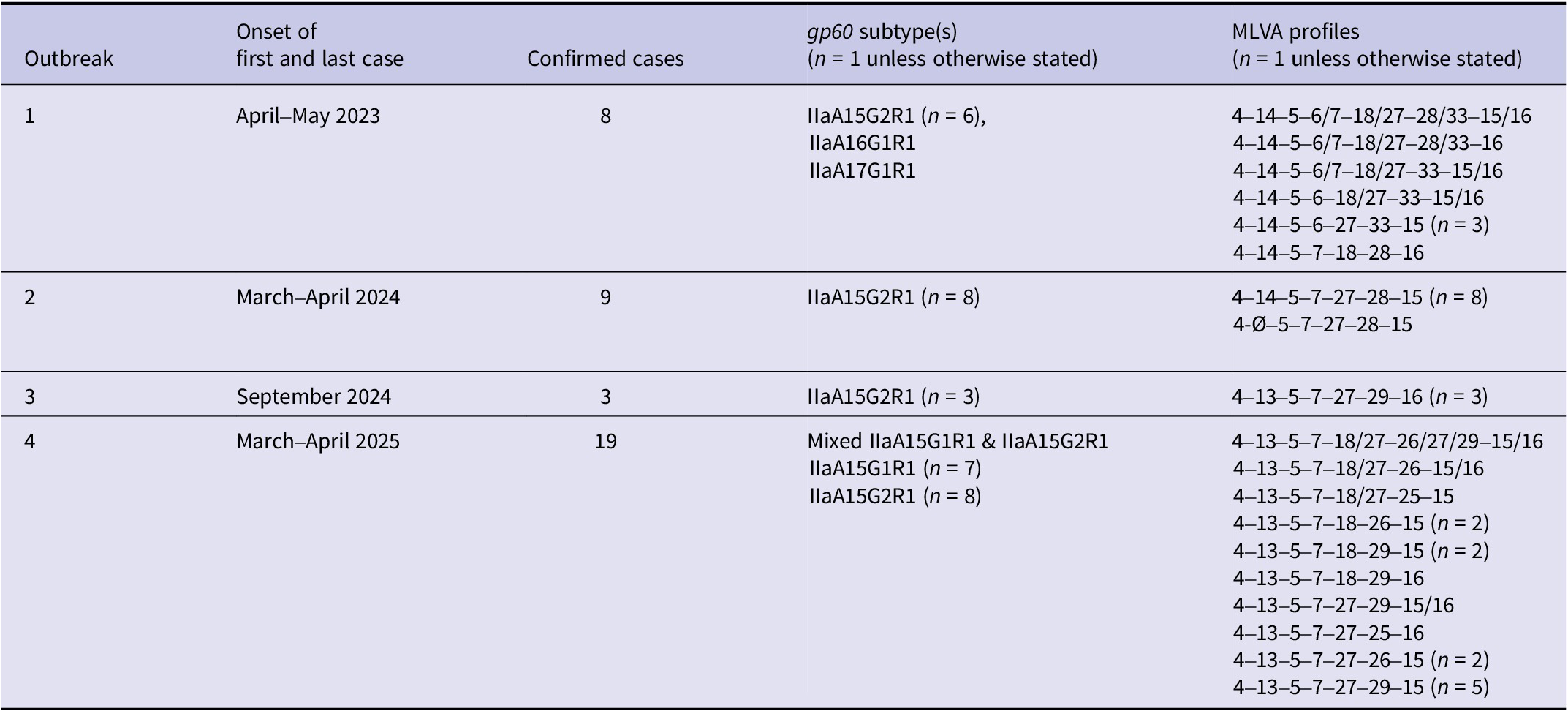
Molecular characterization confirmed that all typed human cases across the four outbreaks were infected with C. parvum [Reference Robinson, Elwin and Chalmers17]. Gp60 subtyping and MLVA profiles were obtained for most specimens, allowing assessment of genetic relatedness within and between outbreaks (Table 1). Representative gp60 sequences for each outbreak were submitted to GenBank under accession numbers PZ293349-PZ293356.
C. parvum gp60 and MLVA results by outbreak

Table 1 Long description
The table consists of five columns: Outbreak, Onset on first and last case, Confirmed cases, g p 60 subtype(s), and M L V A profiles.
* Outbreak 1: Occurred April to May 2023 with 8 confirmed cases. Subtypes include I I a A 15 G 2 R 1 (n equals 6), I I a A 16 G 1 R 1, and I I a A 17 G 1 R 1. Six distinct M L V A profiles are listed, including variations with mixed alleles like 4-14-5-6/7-18/27-28/33-15/16.
* Outbreak 2: Occurred March to April 2024 with 9 confirmed cases. Subtype is I I a A 15 G 2 R 1 (n equals 8). Two M L V A profiles are noted, one with a failure to amplify at the second locus (4-null-5-7-27-28-15).
* Outbreak 3: Occurred September 2024 with 3 confirmed cases. Subtype is I I a A 15 G 2 R 1 (n equals 3). The M L V A profile is 4-13-5-7-27-29-16 (n equals 3).
* Outbreak 4: Occurred March to April 2025 with 19 confirmed cases. Subtypes include mixed I I a A 15 G 1 R 1 and I I a A 15 G 2 R 1, with individual counts of 7 and 8 respectively. Ten distinct M L V A profiles are listed, showing high diversity in the fifth and sixth loci, such as 4-13-5-7-27-29-15 (n equals 5).
MLVA profiles represent the repeat numbers in the seven loci of the validated C. parvum MLVA scheme. Each integer represents the inferred number of tandem repeats (alleles) at the respective locus. Slash-separated values denote mixed alleles detected at that locus, while ‘Ø’ indicates failure to amplify at that locus.
Outbreak 1
All eight confirmed cases were typed. Three gp60 subtypes were identified, indicating multiple concurrent circulating strains. MLVA results showed similar diversity: four cases exhibited simple profiles, and four had mixed profiles, with no single dominant MLVA pattern.
Outbreak 2
Among the nine cases, eight shared an identical gp60 subtype and MLVA profile, consistent with a single point source. One case yielded incomplete molecular results (gp60 non-amplifying; MLVA failure at the second locus), preventing further comparison.
Outbreak 3
All three cases shared the same gp60 subtype and MLVA profile, supporting a single outbreak cluster. Animal sampling for the outbreak yielded no positive results.
Outbreak 4
Of the 19 confirmed cases, complete molecular typing was available for 17. Only two gp60 subtypes were detected, but extensive diversity was seen through multiple simple and mixed MLVA profiles, indicating greater heterogeneity than in outbreaks two and three and the presence of multiple C. parvum populations within the same site. In addition to the commonly found IIaA15G2R1 gp60 subtype that was seen in all the previous outbreaks, IIaA15G1R1 was also detected for the first time at this attraction. The MLVA profiles in the fourth outbreak included some alleles that had been seen in the third.
A lamb faecal sample isolate matched seven human cases by gp60 subtype and shared alleles at all seven MLVA loci with 17 of the 19 confirmed primary cases (Table 2). A goat faecal sample isolate, although gp60 PCR-negative, shared six MLVA alleles with the lamb isolate and nine primary confirmed cases (Table 2), supporting epidemiological linkage between livestock and human infection.
Genetic linkage between human and animal samples in outbreak four

Table 2 Long description
The table consists of four columns: Sample type, g p 60 subtype, Alleles present in the M L V A profiles, and Linkage to primary confirmed human cases.
* Row 1: Human sample type. g p 60 subtypes are I I a A 15 G 2 R 1 and I I a A 15 G 1 R 1. M L V A alleles are 4-13-5-7-18/27-25/26/27/29-15/16. These serve as the Reference alleles.
* Row 2: Lamb faeces sample type. g p 60 subtype is I I a A 15 G 1 R 1. M L V A alleles are 4-13-5-7-18/27-25/26/29-15. This sample shares M L V A alleles at all loci with 17 cases.
* Row 3: Goat faeces sample type. g p 60 subtype is P C R negative. M L V A alleles are 4-null-5-7-27-29-15, where null indicates no P C R amplification at that locus. This sample shares 6 M L V A alleles with the lamb sample and 9 cases.
Ø = No PCR amplification at this locus.
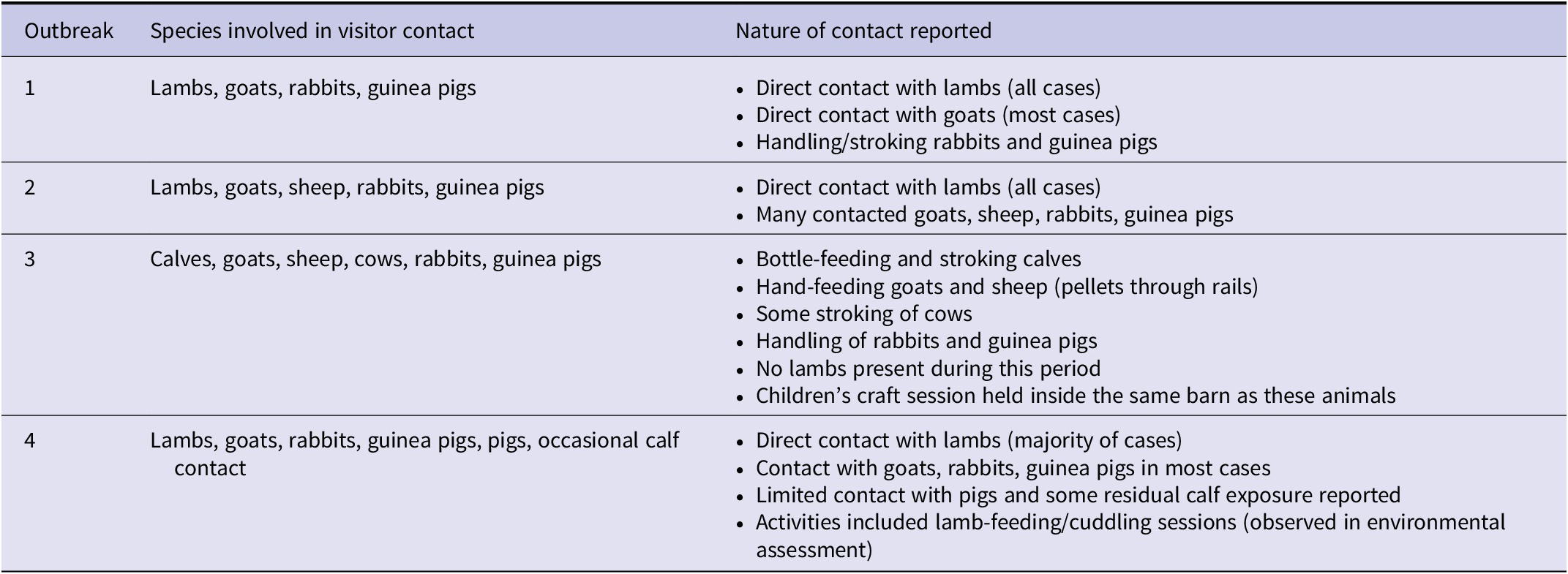
Extent of close contact by animal type

Table 3 Long description
The table consists of three columns: Outbreak, Species involved in visitor contact, and Nature of contact reported.
* Outbreak 1: Species include lambs, goats, rabbits, and guinea pigs. Contact reported includes direct contact with lambs in all cases, direct contact with goats in most cases, and handling or stroking rabbits and guinea pigs.
* Outbreak 2: Species include lambs, goats, sheep, rabbits, and guinea pigs. Contact reported includes direct contact with lambs in all cases and contact with goats, sheep, rabbits, and guinea pigs in many cases. No calf contact was reported.
* Outbreak 3: Species include calves, goats, sheep, cows, rabbits, and guinea pigs. Contact reported includes bottle-feeding and stroking calves, hand-feeding goats and sheep with pellets through rails, some stroking of cows, and handling of rabbits and guinea pigs. No lambs were present. A children’s craft session was held inside the same barn as these animals.
* Outbreak 4: Species include lambs, goats, rabbits, guinea pigs, pigs, and occasional calf contact. Contact reported includes direct contact with lambs in the majority of cases, contact with goats, rabbits, and guinea pigs in most cases, and limited contact with pigs and residual calf exposure. Activities included lamb-feeding and cuddling sessions.
Animal contact
Table 3 provides a breakdown of case contact by animal type. All cases interviewed reported direct animal contact. During the first, second, and fourth outbreaks, a total of 36 cases had direct contact with lambs, and 25 additionally reported contact with goats. In the third outbreak, all three cases described close interaction with multiple animal species, including bottle feeding and stroking calves, hand-feeding goats and sheep through railings, and handling rabbits and guinea pigs; lambs were not present during this autumn season. Notably, the third outbreak coincided with children’s craft sessions taking place within the same barn in which calves, goats, rabbits, and guinea pigs were housed, creating additional opportunities for indirect environmental exposure.
Compliance assessment
Compliance audits by a multi-agency team identified incremental improvements following implementation of recommendations from earlier outbreaks. However, despite these measures, further outbreaks occurred, indicating that residual transmission risks remained.
Observational findings
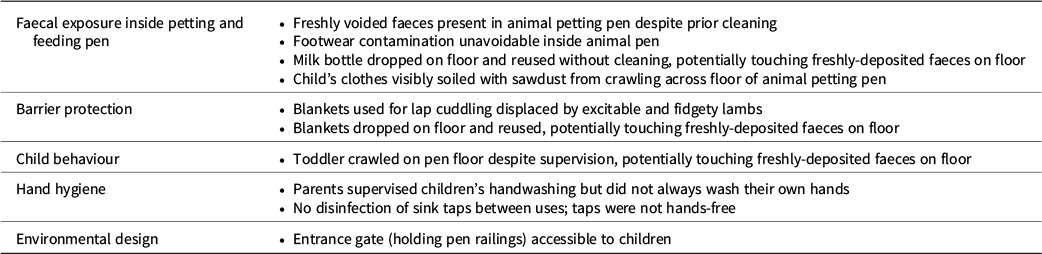
An observational assessment of a lamb-feeding and cuddling session confirmed that the recommended controls for designated animal-contact areas were in place [2]; visitors remained outside the pens where the animals were housed, activities were supervised, prior cleaning had occurred, and handwashing facilities were accessible [2]. Nevertheless, several opportunities for faecal−oral transmission were identified, including visitor contact with freshly voided faeces, subsequent contamination of footwear and limited barrier protection afforded by lap blankets. Box 1 summarizes the observational findings documented during the fourth outbreak site visit. These reflect descriptive indicators of potential faecal–oral exposure pathways and should not be interpreted as recommendations.
Observed behaviours and environmental conditions associated with faecal−oral transmission risk.

Box 1. Long description
The table is organized into five rows of risk categories and their corresponding observations.
* Faecal exposure inside petting and feeding pen: Observations include freshly voided faeces present despite cleaning, unavoidable footwear contamination, a milk bottle dropped on the floor and reused without cleaning, and a child’s clothes soiled with sawdust from crawling.
* Barrier protection: Observations note that blankets used for lap cuddling were displaced by fidgety lambs and that blankets were dropped on the floor and reused.
* Child behaviour: A toddler was observed crawling on the pen floor despite supervision.
* Hand hygiene: Observations indicate that parents supervised children’s handwashing but did not always wash their own hands, and sink taps were not hands-free or disinfected between uses.
* Environmental design: The entrance gate and holding pen railings were noted as being accessible to children.
Environmental sampling
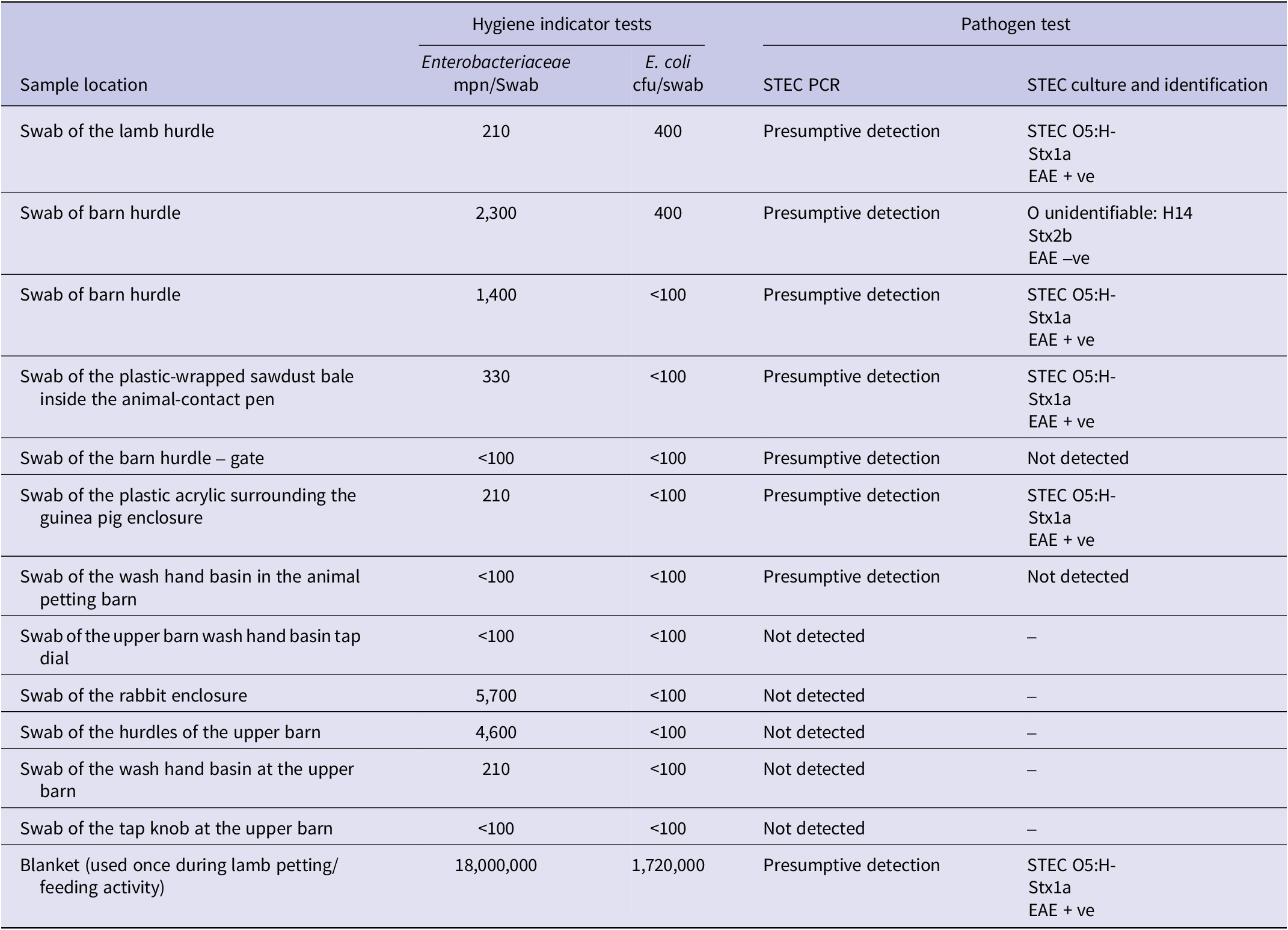
Enterobacteriaceae were detected in eight of the swabs of the animal-contact area, and E.coli was detected in two of the swabs (Table 4). Shiga toxin-producing E.coli (STEC) was detected in 5 of the 12 environmental samples and the lamb-cuddling blanket (Table 4). The STEC-positive swabs came from inside the animal-contact area, including the metal pen railings and the seating structure (a plastic-wrapped sawdust bale).
Results of the environmental (swab) samples taken from the animal petting barns and surrounding areas on 25th March 2025

Table 4 Long description
The table contains five columns: Sample location, Enterobacteriaceae M P N per Swab, E. coli C F U per swab, S T E C P C R, and S T E C culture and identification.
* Swab of the lamb hurdle: 210 Enterobacteriaceae, 400 E. coli, Presumptive detection, S T E C O 5:H- Stx 1 a E A E positive.
* Swab of barn hurdle: 2,300 Enterobacteriaceae, 400 E. coli, Presumptive detection, O unidentifiable: H 14 Stx 2 b E A E negative.
* Swab of barn hurdle: 1,400 Enterobacteriaceae, less than 100 E. coli, Presumptive detection, S T E C O 5:H- Stx 1 a E A E positive.
* Swab of the plastic-wrapped sawdust bale: 330 Enterobacteriaceae, less than 100 E. coli, Presumptive detection, S T E C O 5:H- Stx 1 a E A E positive.
* Swab of the barn hurdle gate: less than 100 Enterobacteriaceae, less than 100 E. coli, Presumptive detection, Not detected.
* Swab of the plastic acrylic surrounding the guinea pig enclosure: 210 Enterobacteriaceae, less than 100 E. coli, Presumptive detection, S T E C O 5:H- Stx 1 a E A E positive.
* Swab of the wash hand basin in the animal petting barn: less than 100 Enterobacteriaceae, less than 100 E. coli, Presumptive detection, Not detected.
* Swab of the upper barn wash hand basin tap dial: less than 100 Enterobacteriaceae, less than 100 E. coli, Not detected.
* Swab of the rabbit enclosure: 5,700 Enterobacteriaceae, less than 100 E. coli, Not detected.
* Swab of the hurdles of the upper barn: 4,600 Enterobacteriaceae, less than 100 E. coli, Not detected.
* Swab of the wash hand basin at the upper barn: 210 Enterobacteriaceae, less than 100 E. coli, Not detected.
* Swab of the tap knob at the upper barn: less than 100 Enterobacteriaceae, less than 100 E. coli, Not detected.
* Blanket used during lamb petting: 18,000,000 Enterobacteriaceae, 1,720,000 E. coli, Presumptive detection, S T E C O 5:H- Stx 1 a E A E positive.
A follow-up sampling visit, conducted on a separate occasion immediately after routine post-session cleaning, found no detectable faecal contamination, suggesting that the cleaning procedures were effective when applied promptly.
Discussion
Overview of key findings
Over a two-year period, four outbreaks of zoonotic C. parvum infection were linked to a single animal-contact visitor attraction, with recurrent transmission associated with close contact between visitors and young ruminants. Molecular, epidemiological, and environmental findings together support the interpretation that each outbreak represented a distinct but internally related transmission event occurring within a shared operational context.
Although each outbreak was discrete, the repeated occurrence of transmission within the same setting suggests the presence of persistent exposure pathways rather than isolated failures. Environmental and observational evidence indicates ongoing opportunities for faecal–oral exposure during routine activities. Taken together, these findings suggest that persistent environmental contamination, in-pen contact with young ruminants and behavioural factors were plausible contributors to transmission, and that existing measures did not fully mitigate exposure risk under routine operating conditions. Given the descriptive nature of the investigation, these findings should be interpreted as indicative of plausible transmission pathways rather than as evidence of causal relationship or relative risk.
Interpretation of results
The molecular findings indicate a complex pattern across the four outbreaks. Although multiple gp60 subtypes were detected overall, each outbreak exhibited a dominant subtype and corresponding MLVA profiles consistent with four distinct epidemiological clusters. These observations align with the known diversity of C. parvum shed by young ruminants [Reference Feng, Ryan and Xiao26] and support the interpretation that the outbreaks were genetically distinct but internally coherent.
Epidemiologically, all cases reported direct contact with young ruminants, and each outbreak coincided with periods when these animals were central to visitor activities. While each outbreak represented a discrete event, the recurrence of cases over a two-year period suggests persistent transmission opportunities rather than isolated failures of practice. This interpretation is supported despite the absence of positive findings from targeted animal sampling during the third outbreak.
Environmental sampling provides additional contextual evidence but should be interpreted with caution. Sampling was limited to a single outbreak and a small number of targeted samples, and did not include direct detection of Cryptosporidium spp. Instead, faecal indicator organisms, including Enterobacteriaceae and E.coli, were used as proxies for faecal contamination. The detection of these indicators on recently cleaned high-touch surfaces within and adjacent to animal-contact areas, as well as on a laundered lap-cuddling blanket, suggests the presence of ongoing faecal contamination during routine activities, but does not provide direct evidence of pathogen-specific transmission. Taken together, and when considered alongside epidemiological and observational findings, the environmental data are consistent with conditions that may facilitate zoonotic transmission, but it should be interpreted as indicative rather than confirmatory.
Plausible contributors of repeat transmission
Analysis of the outbreaks suggests that repeated transmission was associated with persistent environmental contamination, in-pen contact with young ruminants, and behavioural factors. Collectively, these conditions impose a sustained operational burden on staff attempting to maintain hygiene and mitigate exposure risks in real time, particularly during seasonal pressures of high visitor throughput.
Young lambs and goat kids can shed high loads of C. parvum and defecate frequently, leading to rapid and repeated re-contamination of animal-contact areas [Reference Ras, Abdelkhalek, Raya-Álvarez, Shady, AlGabbani, Abdelbaset, Saleem, Shukry, Agil and Elmahallawy5, Reference Armon9, Reference Adjou27]. This continual faecal reseeding compromises the effectiveness of routine cleaning and disinfection practices, increases the likelihood that visitors will touch contaminated surfaces, and results in animal hindquarters frequently remaining soiled, thereby sustaining opportunities for faecal–oral exposure.
Observational findings suggested that age-appropriate but risk-unaware behaviours among young children further increased opportunities for exposure, consistent with environmental and molecular findings. For example, children were observed crawling on the floor of the animal-contact area, touching pen railings and inadvertently handling the hindquarters of lambs during lap-cuddling activities.
Even with staff supervision and parental or carer oversight, such behaviours are difficult to prevent or control in real time without fundamentally altering the nature of these activities. Consequently, effective risk reduction relies largely on rigorous hand hygiene and prompt decontamination of clothing and footwear following contact, acting as downstream mitigation rather than primary prevention of exposure [Reference Davies and Chalmers4, Reference Peake11, Reference Utsi28]. In addition, blankets used during lap-cuddling sessions provided limited and unreliable barrier protection, becoming easily displaced and contaminated despite laundering between sessions, and therefore offered only partial mitigation of direct contact risk.
Taken together, these findings suggest that certain in-pen close-contact activities involving young ruminants represent intrinsically high-risk exposure scenarios that are difficult to mitigate reliably, even when operators comply with the recommendations for animal-contact areas [2, Reference Ras, Abdelkhalek, Raya-Álvarez, Shady, AlGabbani, Abdelbaset, Saleem, Shukry, Agil and Elmahallawy5, Reference Peake11, Reference Utsi28]. Understanding these nuances is essential for developing more effective, proportionate approaches.
Regional outbreak context
A retrospective review of regional surveillance data (2020–2025) identified ten C. parvum outbreaks associated with animal-contact visitor attractions across the South West, of which four (40%) occurred at the attraction described in this study. These outbreaks accounted for nearly half of all linked cases during this period, with an even greater proportion observed in 2024–2025.
Although multiple venues reported isolated incidents, only one other attraction experienced more than a single outbreak. This concentration of outbreaks and cases suggests that transmission may persist in a subset of animal-contact settings despite broadly similar regulatory oversight and access to existing guidance.
Global epidemiology of the IIaA15G2R1 subtype
Across the four outbreaks, the most frequently detected subtype was IIaA15G2R1, a globally widespread C. parvum subtype commonly associated with zoonotic transmission [Reference Oladele29, Reference Bellinzona, Nardi, Castelli, Batisti Biffignandi, Adjou, Betson, Blanchard, Bujila, Chalmers, Davidson, D’Avino, Enbom, Gomes, Karadjian, Klotz, Östlund, Plutzer, Rimhanen-Finne, Robinson, Sannella, Sroka, Stensvold, Troell, Vatta, Zalewska, Bandi, Sassera and Cacciò30]. Reviews of gp60 diversity show that the IIa and IId subtype families dominate C. parvum infections in both humans and livestock worldwide, with IIaA15G2R1 among the most frequently reported zoonotic subtypes [Reference Oladele29, Reference Bellinzona, Nardi, Castelli, Batisti Biffignandi, Adjou, Betson, Blanchard, Bujila, Chalmers, Davidson, D’Avino, Enbom, Gomes, Karadjian, Klotz, Östlund, Plutzer, Rimhanen-Finne, Robinson, Sannella, Sroka, Stensvold, Troell, Vatta, Zalewska, Bandi, Sassera and Cacciò30]. Surveillance studies across Europe, including recent national data from Norway, similarly identify IIa and IId as the principal circulating subtype families and recognize IIaA15G2R1 as the predominant C. parvum subtype, particularly in settings involving young ruminants and agricultural exposure [Reference Oladele29–Reference Tipu, Sivertsen, Afset, Sandven, Brekke, Lund, Elburg, Gaustad, Lier, Tverelv, Johansen, Robertson and Hanevik31].
Recent comparative genomic analyses indicate that IIaA15G2R1 isolates from Europe and the USA cluster within a recently expanded “Western” lineage associated with multiple outbreaks [Reference Bellinzona, Nardi, Castelli, Batisti Biffignandi, Adjou, Betson, Blanchard, Bujila, Chalmers, Davidson, D’Avino, Enbom, Gomes, Karadjian, Klotz, Östlund, Plutzer, Rimhanen-Finne, Robinson, Sannella, Sroka, Stensvold, Troell, Vatta, Zalewska, Bandi, Sassera and Cacciò30, Reference Tipu, Sivertsen, Afset, Sandven, Brekke, Lund, Elburg, Gaustad, Lier, Tverelv, Johansen, Robertson and Hanevik31]. While the biological basis for this expansion remains incompletely understood, these findings provide a genomic context for its repeated detection in outbreak investigations. The recurrence of IIaA15G2R1 in this study is therefore consistent with broader global and European epidemiological patterns and reinforces the well-established role of young ruminants as major reservoirs for zoonotic C. parvum transmission [Reference Oladele29–Reference Tipu, Sivertsen, Afset, Sandven, Brekke, Lund, Elburg, Gaustad, Lier, Tverelv, Johansen, Robertson and Hanevik31].
Interpretation and implications of molecular subtyping
The molecular subtyping added substantial value to the investigation, and its implications extend beyond confirming genetic relatedness [Reference Chalmers, Robinson, Elwin and Elson7]. Subtyping demonstrated internal genetic consistency within each outbreak, characterized by the presence of dominant gp60 subtypes and corresponding MLVA profiles. The second and third outbreaks exhibited uniform gp60 and MLVA profiles, whereas the first and fourth outbreaks showed greater diversity, with multiple subtypes and mixed MLVA profiles detected. Nevertheless, the overall pattern remained consistent with epidemiologically linked transmission within each outbreak, despite observed subtype and MLVA variability. In the fourth outbreak, identical molecular profiles in human and ruminant faecal samples supported zoonotic transmission.
Detecting multiple C. parvum subtypes within or between outbreaks has important implications for how cases are defined in epidemiological investigations [Reference Chalmers, Robinson, Elwin and Elson7]. Early reliance on gp60 results alone may narrow case definitions prematurely, risking the exclusion of true cases infected with less common or initially undetected subtypes. Conversely, the presence of multiple subtypes does not necessarily indicate separate outbreaks, particularly in settings where young ruminants co-shed diverse strains.
Subtype heterogeneity also influences the interpretation of transmission patterns [Reference Chalmers, Robinson, Elwin and Elson7]. Mixed profiles, incomplete amplifications, or discordant gp60/MLVA results require cautious interpretation, as they may reflect underlying biological diversity rather than multiple infection sources [Reference Robinson, Elwin and Chalmers17, Reference Chalmers, Robinson, Risby, Elwin, Howarth, Simkin and Nelson21, Reference Oladele29, Reference Bellinzona, Nardi, Castelli, Batisti Biffignandi, Adjou, Betson, Blanchard, Bujila, Chalmers, Davidson, D’Avino, Enbom, Gomes, Karadjian, Klotz, Östlund, Plutzer, Rimhanen-Finne, Robinson, Sannella, Sroka, Stensvold, Troell, Vatta, Zalewska, Bandi, Sassera and Cacciò30]. Once complete human and animal typing data were available, integration of molecular and epidemiological evidence enabled clearer discrimination between outbreaks [Reference Chalmers, Robinson, Risby, Elwin, Howarth, Simkin and Nelson21].
Together, these considerations highlight that molecular findings should not be interpreted in isolation but used to inform evolving case definitions and support hypothesis generation during outbreak investigations [Reference Chalmers, Robinson, Elwin and Elson7].
Comparison with previous UK outbreaks
The findings of this study are consistent with evidence from previous UK outbreak investigations demonstrating the challenges of preventing cryptosporidiosis where close contact with young ruminants is permitted [Reference Gormley, Little, Chalmers, Rawal and Adak1, Reference Peake11, Reference Jones12, Reference Utsi28]. Utsi et al. suggest that infection risk can persist even at venues operating in line with the guidance in place at the time, highlighting the importance of behavioural and environmental factors in exposure [Reference Utsi28]. Peake et al. reported significantly increased odds of illness among children who entered lamb pens or engaged in close contact with animals [Reference Peake11]. More recently, Jones et al. provided robust epidemiological evidence that illness risk increases with escalating levels of lamb contact, and that visible faecal contamination of clothing or skin was a strong independent predictor of infection [Reference Jones12].
These findings highlight the difficulty of preventing faecal–oral exposure in settings where animals are handled, held or cuddled, even with supervision and hygiene measures in place. Collectively, this body of evidence suggests that close-contact activities involving young ruminants present inherent control challenges that may not be fully mitigated through existing guidance alone [2, Reference Peake11, Reference Jones12, Reference Utsi28].
Differences in national guidance on close animal contact
Public Health Wales has issued strengthened public-facing advice recommending that visitors to farms avoid close contact with animals, including holding, cuddling, or kissing, due to the increased risk of illness [Reference Jones12, 32, 33]. This advice, which explicitly discourages handling and close interaction with lambs, was reiterated in March 2026 and reported in national media [32, 33]. In contrast, the Industry Code of Practice used in England [2] continues to permit close-contact animal interactions provided certain controls are in place.
This divergence in national advice highlights the challenge of developing proportionate guidance in the absence of applied evidence on the real-world effectiveness of infection prevention and control measures.
Operational constraints and policy implications
The findings suggest that these inherent exposure pathways limit the effectiveness of existing control measures, and that further risk reduction may be difficult to achieve through procedural controls alone. Many attractions operate under significant operational constraints, including staffing pressures, variable visitor numbers, and peaks in seasonal workload.
Measures such as increased supervision, enhanced cleaning frequency, installation of additional barriers, or upgrades to handwashing facilities can be effective in principle but may be difficult to sustain at the intensity required for highly dynamic, high-contact activities. Smaller or recently established businesses may be particularly constrained in their ability to implement structural or staffing changes without external support.
Close-contact activities, such as lamb lap-cuddling, are often central to the visitor experience and, consequently, to the commercial appeal of these attractions. Restricting or modifying such activities may therefore affect visitor satisfaction, attendance, and financial viability, particularly in seasonal settings.
Operators may be reluctant to adopt more restrictive or less hands-on measures in the absence of clear, consistent national guidance underpinned by robust empirical evidence, while visitors may continue to seek close animal-contact experiences despite risk messaging.
These findings highlight a tension between public health objectives and operational feasibility that cannot be resolved solely through enforcement or improved compliance. Strengthening national guidance may therefore require greater focus on differentiating between activities according to intrinsic risk and systematically evaluating alternative activity designs and behavioural interventions.
Generating applied evidence on what can be delivered under real-world conditions will be essential to support proportionate, implementable policy that reduces zoonotic risk while preserving the educational and economic value of animal-contact visitor attractions. Sector-based support, including training resources, infrastructure improvements, and harmonized public health messaging, may also assist operators in implementing proportionate measures without undermining the viability or attractiveness of their business model.
Recommendations for further research
This investigation highlights several areas of uncertainty where retrospective outbreak analysis alone is unlikely to provide sufficient resolution. In particular, little is known about the extent to which operators would be willing to alter their business models, or about visitors’ willingness to forgo close-contact activities such as lap-cuddling in favour of safer alternatives. Addressing these gaps is essential for developing evidence-based risk stratification frameworks capable of identifying activities that are acceptably low risk without compromising financial viability.
Future studies should prioritize structured observational and experimental approaches to assess exposure dynamics during routine visitor operations. This includes examining how contamination accumulates and is redistributed within animal-contact areas, how visitors interact with animals, and how these interactions vary by age, supervision, and setting. Generating transferable insights from such work would support more targeted and proportionate recommendations than those achievable through compliance-based inspection alone.
In parallel, further application of Cryptosporidium molecular epidemiology could strengthen understanding of transmission dynamics across animal-contact settings. Expanded use of multilocus typing with epidemiological and environmental data would improve understanding of strain diversity, persistence, and reintroduction over time.
Taken together, these approaches would enable a shift from predominantly reactive outbreak investigation towards evidence-based prevention strategies, supporting the development of guidance that is both scientifically robust and practical to implement across diverse animal-contact visitor attractions.
Limitations
This investigation has several limitations that should be considered when interpreting the findings. Exposure data were derived from retrospective questionnaires and are therefore subject to recall and social-desirability bias, particularly where parents reported on behalf of young children.
No analytical epidemiological assessment was undertaken, as it was not possible to define a study cohort from the available data. Although a cohort study may have been feasible with access to detailed booking or visitor records, IMT members were advised that these data could not be extracted by the site operators. Consequently, exposure data were analysed descriptively without comparison between groups, and it was not possible to estimate relative risks or quantify the relative importance of specific exposures.
Animal faecal sampling was not undertaken during the first two outbreaks, reflecting their management as incident responses rather than prospectively designed research studies. Consequently, there was no contemporaneous microbiological confirmation of livestock involvement in these outbreaks, limiting direct comparison of animal and human data across all incidents. In later outbreaks, the number of animal faecal samples analysed was relatively small, and sampling during the third and fourth outbreaks was selective and risk-based rather than as a comprehensive census of all animals present. These data therefore cannot be used to estimate the prevalence of C. parvum infection among animals at the attraction.
Environmental sampling was limited to a single outbreak and a small number of target samples collected during one site visit. As such, these findings cannot be generalized to other time points or conditions and do not provide information on temporal variation or persistence of contamination. In addition, swab samples could not be tested for Cryptosporidium spp. and faecal indicator organisms were used as proxies for contamination. As such, these findings support the plausibility of faecal contamination but do not provide direct evidence of pathogen-specific transmission pathways.
Observational assessment of animal-contact activities was restricted to a single lamb-feeding and cuddling session and may not capture the full range of visitor behaviours, staff supervision practices, or environmental conditions that may occur on other occasions.
Molecular typing was incomplete for some human and animal samples, and mixed infections complicated subtype interpretation, necessitating specialist laboratory input.
Finally, as the investigation focused on a single attraction with a specific layout, activity profile, and operational context, the findings may not be fully generalisable to all animal-contact visitor attractions.
Conclusion
This investigation highlights how in-pen, close-contact activities involving young ruminants can present sustained opportunities for faecal–oral exposure at animal-contact visitor attractions, even where operators implement elements of existing guidance. The findings suggest that persistent environmental contamination, in-pen animal contact, and behavioural factors contribute to ongoing transmission risk under routine operating conditions. These observations underscore the challenges of mitigating zoonotic transmission in such settings and suggest that further refinement of industry guidance, alongside evaluation of alternative activity designs, may be necessary. Future work should focus on developing and assessing practical interventions that reduce exposure while maintaining the educational and operational viability of these attractions.
Supplementary material
The supplementary material for this article can be found at http://doi.org/10.1017/S0950268826101927.
Data availability statement
The data that supports the findings of this study are available on reasonable request to the authors. Restrictions apply to the availability of data, linked to commercial sensitivity of the study location and patient-identifiable information embedded within some of the investigation materials.
Acknowledgements
With thanks to Kathleen Bamford, Simon Bealey, Jonathan Blackman, Liz Bowler, Kevin Brader, Mary Dawe, Matt Edmunds, Gemma Fear, Ruth Goldstein, Nick Kelly, Liz Nabb, Fiona Neely, David Parkes, Megan Rawlins, Caroline Willis, and the wider laboratory staff at UK Health Security Agency, Animal and Plant Health Agency, Cryptosporidium Reference Unit, and Royal Cornwall Hospital Trust that did the testing.
Author contribution
Conceptualization: B.S., J.T.; Data curation: B.S., R.M.C., G.R., S.L., J.T.; Formal analysis: B.S., A.M., R.M.C., G.R., S.L., C.E.B., N.Y., C.B., J.T.; Investigation: B.S., A.M., R.M.C., G.R., S.L., C.E.B., N.Y., C.B., J.T.; Methodology: B.S., A.M., R.M.C., G.R., S.L., C.E.B., N.Y., J.T.; Project administration: B.S., A.M., G.R., S.L.; Writing - original draft: B.S., A.M., R.M.C., G.R., S.L., C.E.B., N.Y., C.B., J.T.; Writing - review & editing: B.S., A.M., R.M.C., G.R., S.L., C.E.B., N.Y., C.B., J.T.; Supervision: J.T.
Funding statement
No financial support or grant was awarded for this research; however, APHA work contributing to this publication was funded collectively by Defra, SG and WG.
Competing interests
The authors declare none.
Ethical standard
Formal ethical approval was not sought as this investigation was conducted as part of an urgent public health response under statutory functions. Data were collected under routine health protection duties for the purposes of outbreak control and were analysed in fully anonymized form. No intervention, randomization, or research procedures involving human or animal participants were undertaken.



 Open access

