




No CrossRef data available.
Article contents
Physico-chemical determinants of helminth component community structure in whitefish (Coregonus clupeaformes) from adjacent lakes in Northern Alberta, Canada
Published online by Cambridge University Press: 25 July 2005
Abstract
Populations of hosts vary extensively in the types and numbers of parasites that the average individual contains. Understanding the factors that lead to this variation is an important goal for parasite ecologists. We characterized patterns of helminth component community structure in whitefish collected from a cluster of 7 lakes located on an isolated plateau in northern Alberta, Canada. Component communities were species rich (5–6 species per lake), high in mean helminth intensity (approximately 80–500 individuals/host), and high in between-lake similarity (50–100%), a pattern consistent with results from studies on whitefish sampled from other localities in Northern Canada and Europe. Multivariate analyses indicated that the structure of the component communities was associated with 2 opposing environmental gradients. One was defined primarily by water colour, the second by phosphorous concentration. Thus, 4 lakes were characterized by a combination of high colour, low productivity, low parasite intensities, and the absence of larval acanthocephalans. Habitat/species associations were less clear as intensities increased, but the 3 remaining lakes tended to have the opposite characteristics. These results provide evidence that variation in helminth component community structure in fish is associated with variation in physicochemical characteristics that are linked to aquatic productivity.
Information
- Type
- Research Article
- Information
- Copyright
- © 2005 Cambridge University Press
INTRODUCTION
The earliest studies on the ecology of fish parasite assemblages by Dogiel (1961) and Wisniewski (1958) emphasized the description of differences in helminth distribution, richness and abundance between lakes. These authors were the first to recognize the extensive variation in helminth community structure that existed between fish populations, even those sampled from inter-connected, adjacent lakes. Questions at this scale (the component community; sensu Bush et al. 1997) continue to be a central focus for parasite ecologists, primarily with the aim of characterizing and explaining this variation (reviews by Esch, Bush and Aho, 1990; Combes, 2001; Poulin and Morand, 2004). Results of studies completed on a wide variety of parasite community types (helminths, ectoparasites, microparasites), within a wide variety of habitat types (lakes, rivers, oceanic reefs) have confirmed and refined the patterns of variation first identified by Dogiel (1961) and Wisniewski (1958). Thus, while many (perhaps most; Kennedy, 1990) helminth component communities in fish tend to be low in species richness and mean abundance, and also low in between-population similarity, others have the opposite characteristics (Holmes, 1990; Valtonen, Holmes and Koskivaara, 1997; Choudhury and Dick, 1998; Karvonen and Valtonen, 2004).
A large number of factors contribute to this extensive variation. Thus, variation between populations in host-related factors such as diet, density, age, sex ratio and geographical distribution has been shown to contribute to variation in component community structure in fish (reviewed by Hartvigsen and Halvorsen, 1994; Combes, 2001; Poulin and Morand, 2004). Variation in parasite-related factors such as specificity (Choudhury and Dick, 1998) and life-history characteristics (Esch et al. 1988) can also play a role. Lastly, variation between populations in habitat characteristics such as size, depth, and isolation is important in several lotic systems (Kennedy, 1978; Marcogliese and Cone, 1991; Bergeron, Marcogliese and Magnan, 1997; Poulin and Morand, 2004), as is variation in limnological characteristics such as pH, calcium concentration, and temperature (reviewed by Marcogliese, 2001). Given that subsets of these host-related, parasite-related, and habitat-related factors are likely to interact, extensive variation in component community structure should perhaps not be surprising.
Variation in component community structure in fish may also be associated with variation in aquatic productivity. Following earlier work by Wisniewskii (1958), Esch (1971) predicted that as lakes become increasingly productive, the dominant helminths would shift from species that completed their life-cycles in fish (autogenic species), to species that completed their life-cycles in birds (allogenic species). By extension, Esch (1971) predicted that helminth diversity and abundance would increase as lake productivity increased. However, predictions regarding linkages between aquatic productivity and component community structure remain untested. One problem is that multidisciplinary studies that combine limnological assessments (designed to include measures of productivity) with parasitological surveys are absent in the literature (Marcogliese, 2001). Another is that the evaluation of productivity effects in isolation of the numerous and complex anthropogenic effects is an increasingly difficult task. Ideally then, field-based tests of Esch's (1971) predictions would be best performed with multi-disciplinary projects completed in relatively pristine habitats.
The first objective of this study is to characterize the component communities of helminths of whitefish (Coregonus clupeaformes) sampled from 7 lakes in the Caribou Mountains, Alberta, Canada. These lakes have never been stocked, they receive only light fishing pressure, and there are no anthropogenic impacts to surrounding watersheds. Also, the helminths of whitefish are well known in this region (Baldwin and Goater, 2003) and are representative of the specialist-dominated communities of whitefish in other regions of northern Canada (Leong and Holmes, 1981; Poole, 1985) and Scandinavia (Valtonen et al. 1997; Karvonen and Valtonen, 2004). For this aspect of the study, our focus is on describing variation in helminth component communities, using the helminths of individual whitefish within lakes (i.e. infracommunities; Bush et al. 1997) as replicate samples. Our second objective is to use multivariate ordination procedures to evaluate whether variation in helminth component communities is associated with variation in select physico-chemical factors, including factors associated with aquatic productivity.
MATERIALS AND METHODS
Study area
The Caribou Mountains (Fig. 1) comprise an isolated plateau in northern-most Alberta, Canada bordered to the north by the Northwest Territories (60 ° N) and to the east by Wood Buffalo National Park (details in Baldwin and Goater, 2003). Summers are short and cool, with an average of 160 frost-free days. The 4300 km2 plateau contains numerous lakes, ponds and sloughs. Margaret Lake is the largest water body on the plateau (8160 ha) and contains the only permanent man-made dwelling. Water drainage flows off the plateau into the Arctic Ocean via the Peace River to the Mackenzie River.

Fig. 1. Map of the study area on the Caribou Mountains Plateau, Alberta, indicating lakes that contained whitefish.
Host and parasite collections
The methods used to collect whitefish and their parasites have been described by Baldwin and Goater (2003). In brief, there are 7 whitefish-containing lakes on the plateau. Each was sampled once, between 14 and 22 July 1997. Margaret Lake was accessed by boat; all others were accessed by floatplane. Fish from all lakes were sampled by gillnet following standard methods. Each panel of gillnet was 3 m long and 1·5 m wide, giving a total net area of 63 m2. Gillnets were placed overnight at a minimum of 3 and a maximum of 16 (depending on the size of the lake) randomly selected sites along the perimeter of each lake. The number of nets set overnight for 14–16 h determined fishing effort per lake. To keep depth zones consistent, gillnets were set parallel to the shoreline.
To obtain a representative sample of whitefish for analyses of parasite assemblages, a total of 1–5 size-matched adults was haphazardly selected from each gillnet until a maximum of 25 whitefish was sampled per lake. All fish were processed at Margaret Lake Lodge. For each individual, total length, weight, and sex was determined. Total length was measured as the length from the tip of the snout to the end of the caudal fin; whole fish weight was determined to 0·1 g.
Each fish was immediately filleted after removal from the nets to obtain counts of Triaenophorus crassus cysts. The fillets were cut into approximately 1 cm-wide strips to facilitate counting cysts buried within muscles. After counting all T. crassus cysts, the viscera (heart, stomach, intestine, swim bladder and liver) were stored in individual bags and frozen for subsequent necropsy. Necropsies followed standard protocols for fish. All individual helminths were identified and counted.
Collection of environmental variables
Selected abiotic, biotic and morphometric data were determined for each lake. The variables were selected primarily to evaluate specific limnological characteristics of these lakes as part of a biodiversity survey of lakes on the plateau. Morphometric characteristics of the lakes were estimated from 1[ratio ]50000 topographic and 1[ratio ]15000 Province of Alberta Phase 3 Forest Inventory and bathymetric maps and included lake area (ha), watershed area (ha), lake volume (103 m3), maximum lake depth (m) and mean lake depth (m). Biotic characteristics of the lakes included numbers of sampled whitefish, host species richness, relative whitefish density, and mean host size.
We collected water samples for total phosphorus (TP), total nitrogen (TN), pH, suspended solids (non volatile), calcium, temperature and colour to determine whether they could explain variation in helminth species richness and interspecific intensities. In July 1997, vertically integrated water samples from the epilimnion were collected using a weighted PVC tube. Samples were collected and analysed using standard protocols described by McEachern et al. (2000) and Scrimgeour et al. (2001). Briefly, TP was analysed using the molybdate blue absorption method whereas TN was determined by spectroscopic analysis of persulfate-oxidized samples (Crumpton, Isenart and Mitchell, 1992). Non-volatile suspended solids were collected on pre-washed GF/F filters and analysed following methods defined by the American Public Health Association (1992). Water temperature was recorded using a YSI Model 50B dissolved oxygen meter. Samples for colour (mg/l platinum), which is strongly correlated with dissolved organic carbon in lakes in northern Alberta, were measured at 44 nm with a MiltonRoy 19001 spectrophotometer (Cuthbert and Del Giogio, 1992) and water pH was determined in the field using a Fisher Accumet model 925 pH meter.
Data analyses
Initial description of parasite assemblages in the 7 lakes involved standard descriptors of helminth component communities (Bush et al. 1997). Thus, data on the average population size of each helminth species in each lake was estimated as the average number of worms counted in individual hosts where ‘mean helminth abundance’ incorporates uninfected hosts and ‘mean helminth intensity’ does not. Total helminth species richness represented the total number of species of helminth per lake. We defined parasite dominance as the abundance of each parasite divided by the sum of the abundances of all parasites in whitefish in that lake, parasite diversity as the reciprocal of Simpson's index, and evenness as the equitability of each parasite species distribution within a lake (Begon, Harper and Townsend, 1996).
Similarity in the occurrence of parasite species between pairs of lakes was evaluated qualitatively with Jaccard's Index; similarity in their mean abundances was evaluated with the Percentage Similarity index (Hurlbert, 1978). Calculated similarity values were summarized with cluster analyses (PC-ORD-Version 2.0; McCune and Mefford, 1995) to determine whether specific lakes could be distinguished based upon the presence, and/or abundance of their parasite communities, respectively. Cluster analyses were determined using mean euclidean distances and Ward's linkage.
We used Redundancy Analysis to evaluate associations between parasite assemblages and selected environmental characteristics of lakes (RDA; ter Braak and Verdenschot, 1995). RDA is a common type of multivariate analysis that is used to characterize species-environment associations and to detect patterns that are best explained by a particular set of environmental variables. We chose RDA rather than a Canonical Correlation Analysis since preliminary analyses showed that the range of ordination sample scores was <2 standard deviations (McCune, Grave and Urban, 2002). The RDA was completed from a data matrix that crossed mean helminth intensities in the 7 lakes with 7 environmental variables: total phosphorus, total nitrogen, suspended solids (non-volatile suspended solids), calcium, water temperature, pH, and colour. This relatively small suite of environmental variables was selected from a larger set that was highly inter-correlated (r>0·7) with the majority of other variables. However, we chose to retain water colour in our analysis since it was correlated only with pH (r=−0·75) and total phosphorus (r=−0·94). Initial analysis also showed that colour was highly correlated with dissolved organic carbon (r=0·87) whereas total phosphorus was positively correlated with phytoplankton biomass measured as chlorophyll a (r=0·92). Subsequent analyses showed that water temperature and total nitrogen were not important explanatory variables and were excluded from the final model that comprised 5 variables.
Preliminary analysis, together with data from Baldwin and Goater (2003), indicated that 3 of 10 species of whitefish helminth were rare relative to the other species. These 3 species were all acanthocephalans. They were present in only 3 of 7 lakes and their intensities never exceeded more than 7 individuals per host. Thus, the final RDA was completed without these 3 rare species. In addition, the RDA was completed separately with and without the 2 common allogenic species (Diphyllobothrium dendriticum and Cotylurus erraticus). Because these 2 species utilize birds as final hosts, it is possible that their responses to environmental conditions differs from species that complete all life-cycle stages within the confines of a lake. With the exception of pH, all environmental variables were log10 transformed. Analyses were completed using CANOCO, Version 4) (ter Braak and Milauer, 1998).
Spearman's correlation tests were used to evaluate associations between helminth assemblage structure and lake area and minimum distance between lakes. Connectivity between lakes was determined as the minimum linear distance between lakes from a 1[ratio ]250000 regional map of the Caribou Mountains.
RESULTS
General characteristics of component communities
Ten helminth species were found in the 135 lake whitefish from the 7 lakes (Table 1). Seven of the 10 species were found in each of the 7 lakes. Variation in mean intensity and prevalence was high between lakes. For 6 of these species, there was an approximate 10-fold difference between the lowest and highest mean intensity. The exception was the mean intensity of C. farionis that tended to be similar between lakes. Of the 10 helminth species found, 2 were allogenic (C. erraticus, D. dendriticum) and 8 were autogenic. The distribution of prevalences of helminth species within the total sample of 135 whitefish identified a group of 7 species with prevalences greater than 70% and the 3 species of acanthocephalans that had prevalences less than 20%.

Whitefish were infected with an average of 5·2±1·5 S.D. (range=1–7) parasite species and 180·6±125·8 (range=7–1682) individuals. Species richness and mean number of species per host varied relatively little among lakes (Table 2). However, variation in mean intensity between lakes was associated with variation in parasite dominance. In 6 of the 7 lakes, 1 of the 2 allogenic species dominated the communities. Their relative intensities tended to have a strong effect on the overall structure of the parasite assemblage. Thus, when dominance of an allogenic was high (i.e. Eva, Sucker and Wenztel lakes), Simpson's index was low, and evenness was low (Table 2). Three lakes with low helminth intensities (i.e. Margaret, Semo and Pitchimi Lakes) were still dominated by an allogenic species, yet their values for evenness and Simpson's index were relatively high.

The mean number of helminth species per whitefish was not associated with lake area (Spearman's Rho=−0·11, P=0·82) or with the minimum distance between lakes (Rho=0·75, P=0·052). Mean helminth intensity/lake was also not correlated with lake area, (Rho=0·04, P=0·93) or to the distance between lakes (Rho=0·68, P=0·09). There was no indication that lakes closer together had higher Jaccard's index (Rho=0·20, P=0·40) or Percent Similarity (Rho=−0·14, P=0·55). Correlations remained statistically non-significant when the analyses were repeated without the 2 allogenic species (ranges for Rho=0·07 to 0·61 and P=0·14 to 0·88).
Community similarity
Values for Jaccard's index ranged from 0·47 to 1·00 (mean=0·80±0·03); Percentage Similarity ranged from 0·39 to 0·93 (mean=0·65±0·03) (Table 3). The high values for Jaccard's similarity were expected because 7 of the 10 helminth species were found in each lake. Of the 21 lake-species combinations, 4 contained identical species, 9 differed by the presence or absence of one species, and 2 differed by the presence or absence of 2 species. Values for Percent Similarity were lower than Jaccard's values, primarily reflecting variation in intensities of the dominant allogenic species. A lake pair with a high value for Jaccard's index did not necessarily correspond to a high value for Percent Similarity. For example, the Jaccard's index for Margaret and Eva Lakes was 88%, but Percent Similarity was only 39%. This indicates that although the two lakes shared all but 1 species (the acanthocephalan, N. crassus), the two lakes had different patterns of helminth intensity.

Cluster analyses (Fig. 2) based on the presence or absence of helminth species distinguished those lakes with acanthocephalans (Margaret, Caribou, Semo and Pitchimi) from those without (Eva, Wentzel and Sucker). Analysis based upon quantitative similarities formed similar clusters, distinguishing lakes containing whitefish with high mean helminth intensities from lakes with low mean intensities.

Fig. 2. Cluster analyses of helminth communities of whitefish from 7 lakes in the Caribou Mountains, Alberta. Analyses were performed with single linkage, Euclidean distances between groups for the presence (A) of the 10 species of helminth and their mean abundances (B).
Redundancy analysis
The selected physico-chemical characteristics varied extensively between lakes (Table 4). High variation was especially apparent for the morphometric characteristics and those associated with aquatic productivity. Thus, TP ranged from 13·3–40·0 μg/l, TN from 411·5 to 610 μg/l and Chl-a from 2·1–15·6 μg/l. The exceptions involved variables such as water temperature and pH that tended to vary little among lakes (Table 4).

The RDA ordination of the 7 lakes using 5 environmental variables showed that 90·1% of the variation in parasite intensities was explained by the first two axes. Of this total variation, Axis 1 explained 67·7% of the total variance, while Axis 2 explained 22·4%. Monte Carlo tests indicted that both axes were statistically significant (P<0·05). The first axis was most strongly correlated with colour (r=−0·61), total phosphorus (r=0·42) and to a lesser extent pH (r=0·25), whereas Axis 2 was most strongly associated with suspended solids (r=0·32). Analyses repeated without the 2 allogenic species did not result in detectable improvement in the amount of variation explained by either of the first two Axes (Axis 1=64·1%, Axis 2=21·3%).
Mean intensities of D. dendriticum and C. erraticus were positively associated with Axis 1, reflecting positive relationships with total phosphorus and water pH (Fig. 3A). In contrast, mean intensities of Raphidascaris acus, Triaenophorus crassus, Cystidicola farionis, Proteocephalus neglectus and Crepidostomum farionis were negatively associated with Axis 1 reflecting positive relations to water colour and calcium concentration (Fig. 3A). The mean intensity of Diphyllobothrium dendriticum was positively related to Axis 2 reflecting a positive correlation with concentrations of suspended solids whereas mean intensity of Cotylurus erraticus was negatively related to suspended solids (Fig. 3A).

Fig. 3. Redundancy analysis biplots (A, B) of environmental variables and parasite intensities in lake whitefish from 7 lakes in the Caribou Mountains, Alberta, Canada. Eigenvalues for Axes 1 and 2 are shown in parentheses. Dashed ellipses highlight the 2 helminth community types. Parasite species abbreviations: Rapi=Raphidascaris acus, Tria=Trianophorus crassus, Cyst=Cystidicola farionis, Prot=Proteocephalus neglectus, Crep=Crepidostomum farionis; Diph=Diphyllobothrium dendriticum, Coty=Cotylurus erraticus. Environmental variables: Susp=non-volatile suspended solids, Calc=calcium concentration, Phos=total phosphorus concentration. Lake abbreviations: Cari=Caribou, Marg=Margaret, Pitch=Pitchimi, Suck=Sucker, Went=Wentzel.
Helminth assemblages in whitefish formed 2 distinct groups comprising lakes Semo, Pitchimi, Margaret and Caribou (Group 1) and lakes Wentzel, Sucker and Eva (Group 2). Lakes in Group 1 were positively associated with colour and calcium, whereas Group 2 lakes were positively associated with phosphorus and pH (Fig. 3B). Lake whitefish from Group 1 contained moderate intensities of larval Diphyllobothrium dendriticum (overall lake average=35 individuals/fish), Crepidostomum farionis (34 individuals/fish), Proteocephalus neglectus (30 individuals/fish), and low intensities of larval Triaenophorus crassus (5 individuals/fish), Cystidicola farionis (4 individuals/fish) and larval Raphidascaris acus (3 individuals/fish). In contrast, helminth assemblages in whitefish from Wentzel, Sucker and Eva lakes (Group 2) had relatively high intensities of the two allogenic species, Cotylurus erraticus (165 individuals/fish) and Diphyllobothrium dendriticum (213 individuals/fish).
DISCUSSION
Results from this study indicate that the 7 whitefish-containing lakes in the Caribou Mountains vary widely in features such as size, depth, and water chemistry. Results from concurrent studies on the same lakes indicate similarly high variation in limnological features (McEachern et al. 2000) and in the diversity and abundance of macroinvertebrates (Scrimgeour et al. 2001) and fish (Baldwin, 2000). Yet despite this extensive background variation, 7 species of helminth were consistently present in whitefish sampled from each of the 7 lakes. In 43 of the 49 species/lake combinations, prevalence of infection for these 7 species exceeded 50%. The mean total number of helminths per whitefish was highly variable among lakes, but in most cases, it exceeded 100 worms/host. Similar patterns of distribution, prevalence and intensity have been reported for each of these species (or congeners) in whitefish sampled from other northern lakes in Alberta (Leong and Holmes, 1981), Manitoba (Poole, 1985) and eastern Canada (Curtis, 1988). They are also similar to those reported for whitefish (Coregonus lavaretus) collected from lakes in Finland (Valtonen et al. 1997; Karvonen and Valtonen, 2004). These results indicate that whitefish across their extensive range are consistently colonized by similar species of helminth, despite wide variation in habitat characteristics between localities. The occurrence of this set of common species therefore confers a degree of predictability to the component communities of whitefish.
Results from a helminth survey of all species of sympatric fishes in these lakes (Baldwin and Goater, 2003) showed that 8 of the 10 species occurring in whitefish were specialists in coregonids, and that the majority of these were specialists in whitefish alone. Although larvae of at least one species, R. acus, are known to infect a range of sympatric hosts in other localities (McDonald and Margolis, 1995), this was not the case in the Caribou Mountain lakes. Domination of whitefish component communities by specialists is a further feature that is consistent among studies (Leong and Holmes, 1981; Karvonen and Valtonen, 2004). In the Caribou Mountains, all lakes that contained whitefish, also contained pike (Esox lusius) and cisco (Coregonus artidii). This suite of 3 hosts allowed the completion of 2 life-cycles (T. crassus and R. acus) that involved pike as final host. Thus, in whitefish from Caribou Mountains lakes, sympatric hosts do not exchange generalist helminths (Baldwin and Goater, 2003), but instead they permit the completion of specialist life-cycles. It is this group of specialists, that in addition to conferring consistent patterns of prevalence and intensity, also conferred high component community similarity among lakes. Patterns of high community similarity, domination by specialists, and high mean intensity/lake appear to be consistent among studies involving whitefish (Leong and Holmes, 1981; Karvonen and Valtonen, 2004). However, such a pattern contrasts the widely held view of component communities in fish that are dominated by generalist helminths (often acanthocephalans) that are erratic and unpredictable in their occurrence and intensity (Kennedy, 1990; Hartvigsen and Kennedy, 1993).
Despite the predictable occurrence of the 7 specialists within most lakes, variation in mean helminth intensity between lakes was extremely high. Results from the RDA and Cluster analyses indicated that this variation was associated with variation in selected physicochemical characteristics of the lakes. Two distinctive types of helminth community were present. One group of lakes (Margaret, Caribou, Semo and Pitchimi) contained whitefish with low mean intensities and no acanthocephalans, and another group (Wentzel, Eva and Sucker) had high mean intensities and the 3 species of acanthocephalans. Since both analyses identified approximately the same clusters of lakes, the implication is that factors leading to the successful colonization of lakes by a variety of parasite taxa also lead to their successful transmission within them.
The strongest predictors of helminth community structure in whitefish were water colour and the concentration of total phosphorus. Our analyses also showed that water colour, which is strongly and positively related to concentrations of dissolved organic carbon, was also strongly and negatively correlated with concentrations of total phosphorus. In general, 5 of the 7 lakes in the Caribou Mountains were highly coloured relative to 26 other lakes in northern Alberta (Mitchell and Prepas, 1990). These also contained relatively low concentrations of phosphorus, and supported relatively low levels of primary production. Overall, levels of colour in Eva and Sucker Lakes (<30 mg/l platinum) were particularly low compared to the other 5 lakes (>100 mg/l platinum). Both lakes were also highest in TP and Chl-a concentrations. These results indicate that the 7 largest lakes on the Caribou Mountains plateau could be segregated into 2 general types: those that were highly coloured but low in productivity (as indicated by phosphorous and chlorophyll-a concentrations) and those that were clear and relatively productive. In general, RDA indicated that the distinction between these two lake types was robust, independent of factors such as lake size and depth.
Results from the species-level ordination showed that variation in helminth intensities reflected these two environmental gradients. Thus, Eva, Sucker and Wentzel lakes had low colour and high phosphorous concentrations, yet these lakes contained fish with high intensities of species such as D. dendriticum, C. erraticus, T. crassus and R. acus. In contrast, Margaret, Semo, Pitchimi and Caribou Lakes were highly coloured, had low phosphorous concentrations, yet they contained whitefish with low mean intensities of these 4 species, but high intensities of Crepidostomum farionis and P. neglectus. These results are important because they provide the first evidence that variation in parasite intensities between populations of aquatic hosts can be predicted on the basis of variation in limnological characteristics.
Overall, our results provide support for 1 of 2 predictions regarding the link between component community structure and aquatic productivity (Esch, 1971). On the one hand, the prediction that increased productivity is associated with a shift from species with autogenic life-cycles to those with allogenic life- cycles is not met in Caribou Mountain lakes. Rather, the composition of the component communities was consistent across lakes. While allogenics such as D. dendriticum had high intensities in the productive lakes, so too did autogenics such as T. crassus. In contrast, Esch's prediction that helminth intensities increase as aquatic productivity increases was met in the Caribou Mountain lakes. Unfortunately, a lack of comparable studies makes it difficult to evaluate the generality of this result. Moreover, we caution that our ability to detect linkages between helminth intensity and productivity may be more readily discerned in isolated habitats such as the Caribou Mountains. Here, variation between adjacent lakes in features such as water transparency are likely due to high variance in drainage ratios (i.e. area of the drainage basin divided by the surface area of the lake) combined with the predominance of black spruce, nutrient rich wetlands, and extensive organic soils. These types of isolated, northern habitats tend also to be free of the types of anthropogenic impacts (e.g. stocking, resource extraction) that are known to have strong effects on helminth component communities (Leong and Holmes, 1981; Valtonen et al. 1997).
We currently can only speculate on the processes that link variation in parasite intensity with variation in aquatic productivity. It is unlikely that water transparency or phosphorous concentrations act directly upon the larval stages of these helminths, although it is conceivable that transparency might interfere with the transmission of trematode cercariae. Rather, productivity is more likely to indirectly affect helminth transmission via nutrient availability to intermediate hosts. For the helminths of lake whitefish, these are primarily aquatic snails, zooplankton, amphipods, and mayflies (Baldwin, 2000). Studies completed across productivity gradients have established positive associations between concentrations of phosphorus and the biomass of phytoplankton (Watson, McCauley and Downing, 1997), zooplankton (Pace, 1986) and zoobenthos (Scrimgeour et al. 2001). In Caribou Mountain lakes, Scrimgeour et al. (2001) showed that the biomass of oligochaete and chironomid larvae was positively correlated with phosphorus concentrations. Thus, in general, aquatic invertebrate biomass tends to be highest in the more productive lakes in the Caribou Mountains. While untested, it is plausible that nutrient availability might also influence the transmission of larval helminths that these and other organisms carry. This result leads to the prediction that nutrient availability may mediate the degree to which the abundance (or diversity) of aquatic organisms is correlated with the intensity (or diversity) of helminths within particular locations.
An alternative explanation is that linkages between colour, productivity, and component community structure are determined by an additional causal factor that we did not evaluate. For instance, one unavoidable shortcoming of our sampling regime was its restriction to a narrow temporal window. Thus, we may have missed factors that are important determinants of parasite transmission at certain times of year. Similarly, several of the limnological factors that we evaluated are known to fluctuate markedly over a single season, such that estimates taken in July may not be the most relevant to the transmission of these species of helminth. For example, free-living larvae of the cestode Triaenophorus crassus infect their copepod hosts during a narrow window in early spring when surface water temperatures are favourable for spawning pike (Shostak and Dick, 1989). Thus, between-lake differences in the dimensions of this transmission window, which itself is likely to be linked to aquatic productivity or water transparency, may be an important determinant of component community structure.
In summary, the results of our analyses of helminth component communities in lake whitefish provide 2 important advances. First, these component communities were dominated by a group of specialists that occurred in most hosts, in most lakes, leading to community similarity values that usually exceeded 70%. Such predictable component communities are rarely observed in studies aimed to evaluate spatial variation in parasite community structure (e.g. Holmes, 1990; Kennedy, 1990). A second advance is that the mean intensities of this same suite of helminths were associated with a set of environmental variables that are linked to aquatic productivity. The significance of this result, in addition to providing support for Esch's (1971) previously untested predictions, is the notion that helminth component communities can form a predictable structure on the basis of specific environmental characteristics.
We thank members of the Caribou Mountains Research Partnership, especially P. McEachern, E. Prepas, B. Tonn, P. Aku, J. Carvallo, V. Neal and J. Tallcree for assistance with field collections and project coordination. We are also grateful to A. Shostak for help with parasite identifications. Funding was provided to C.P.G. by the Sustainable Forest Management Network (University of Alberta) and NSERC and to G.S. from the Alberta Conservation Association.
References
REFERENCES
American Public Health Association (
1992).
Standard Methods for the Examination of Water and Wastewater, 18th Edn. (
ed. Greenberg, A. E., Clesceri, L. S. and Eaton, A. D.)
Washington, D.C., USA.
Baldwin, R. (
2000).
Community structure of parasites in whitefish from the Caribou Mountains, Alberta. M.Sc. thesis, University of Lethbridge,
Lethbridge, Alberta.
Baldwin, R. and
Goater, C. P. (
2003).
Circulation of parasites among fishes from lakes in the Caribou Mountains, Alberta, Canada.
Journal of Parasitology
89,
215–225.CrossRefGoogle Scholar
Begon, M.,
Harper, J. L. and
Townsend, C. R. (
1996).
Ecology: Individuals, Populations and Communities, 3rd Edn.
Blackwell Scientific Publications,
Oxford.
Bergeron, M.,
Marcogliese, D. J. and
Magnan, P. (
1997).
The parasite fauna of brook trout, Salvelinus fontinalis (Mitchill), in relation to lake morphometrics and the introduction of creek chub, Semotilus atromaculatus (Mitchill).
Ecoscience
4,
427–436.CrossRefGoogle Scholar
Bush, A. O.,
Lafferty, K. D.,
Lotz, J. M. and
Shostak, A. W. (
1997).
Parasitology meets ecology on its own terms: Margolis et al. revisited.
Journal of Parasitology
83,
575–583.CrossRefGoogle Scholar
Choudhury, A. R. and
Dick, T. A. (
1998).
Patterns and determinants of helminth communities in the Acipenseridae (Actinopterygii: Chondrostei), with special reference to the lake sturgeon, Acipenser fulvescens.
Canadian Journal of Zoology
76,
330–349.CrossRefGoogle Scholar
Combes, C. (
2001).
Parasitism: the Ecology and Evolution of Intimate Interactions.
University of Chicago Press,
Chicago,
USA.
Crumpton, W.,
Isenhart, G. M. and
Mitchell, P. L. (
1992).
Nitrate and organic N analyses with second-derivative spectroscopy.
Limnology and Oceanography
37,
907–913.CrossRefGoogle Scholar
Curtis, M. A. (
1988).
Determinants in the formation of parasite communities in coregonids.
Finnish Fisheries Research
9,
303–312.Google Scholar
Cuthbert, I. D. and
Del Giogio, P. (
1992).
Towards a standard method for measuring color in freshwater.
Limnology and Oceanography
37,
1319–1326.CrossRefGoogle Scholar
Dogiel, V. A. (
1961).
Ecology of the parasites of freshwater fishes. In
Parasitology of Fishes (
ed. Dogiel, V. A., Petrushevski, G. K. and Polyanski, Y. I.). pp.
1–47.
Oliver and Boyd.
London.
Esch, G. W. (
1971).
Impact of ecological succession on the parasite fauna of centrarchids from oligotrophic and eutrophic ecosystems.
American Midland Naturalist
86,
160–168.CrossRefGoogle Scholar
Esch, G. W.,
Bush, A. O. and
Aho, J. M. (
1990).
Parasite Communities: Patterns and Processes.
Chapman and Hall,
London.
Esch, G. W.,
Kennedy, C. R.,
Bush, A. O. and
Aho, J. M. (
1988).
Patterns in helminth communities in freshwater fish in Great Britain: alternative strategies for colonization.
Parasitology
96,
519–532.CrossRefGoogle Scholar
Hartvigsen, R. and
Kennedy, C. R. (
1993).
Patterns in the composition and richness of helminth communities in brown trout, Salmo trutta, in a group of reservoirs.
Journal of Fish Biology
43,
603–615.CrossRefGoogle Scholar
Hartvigsen, R. and
Halvorsen, O. (
1994).
Spatial patterns in the abundance and distribution of parasites in freshwater fish.
Parasitology Today
10,
28–31.CrossRefGoogle Scholar
Holmes, J. C. (
1990).
Helminth communities in marine fishes. In
Parasite Communities: Patterns and Processes (
ed. Esch, G. W., Bush, A. O. and Aho, J. M.), pp.
101–130.
Chapman and Hall,
London.CrossRef
Hurlbert, S. H. (
1978).
The measurement of niche overlap and some relatives.
Ecology
59,
67–77.CrossRefGoogle Scholar
Karvonen, A. and
Valtonen, E. T. (
2004).
Helminth assemblages of whitefish (Coregonus lavaretus) in interconnected lakes: similarity as a function of species specific parasites and geographical separation.
Journal of Parasitology
90,
471–476.CrossRefGoogle Scholar
Kennedy, C. R. (
1978).
The parasite fauna of resident char Salvelinus alpinus from Arctic islands, with special reference to Bear Island.
Journal of Fish Biology
6,
613–644.CrossRefGoogle Scholar
Kennedy, C. R. (
1990).
Helminth communities in freshwater fish: structured communities or stochastic assemblages? In
Parasite Communities: Patterns and Processes (
ed. Esch, G. W., Bush, A. O. and Aho, J. M.), pp.
131–156.
Chapman and Hall,
London.
Leong, T. S. and
Holmes, J. C. (
1981).
Communities of metazoan parasites in open water fishes of Cold Lake, Alberta.
Journal of Fish Biology
18,
693–713.CrossRefGoogle Scholar
Marcogliese, D. J. (
2001).
Pursuing parasites up the food chain: implications of food web structure and function on parasite communities in aquatic systems.
Acta Parasitologica
46,
82–93.Google Scholar
Marcogliese, D. J. and
Cone, D. K. (
1991).
Importance of lake characteristics in structuring parasite communities of salmonids from insular Newfoundland.
Canadian Journal of Zoology
69,
2962–2967.CrossRefGoogle Scholar
McDonald, T. E. and
Margolis, L. (
1995).
Synopsis of the parasites of fishes of Canada: Supplement 1978–1993.
Canadian Special Publication of Fisheries and Aquatic Sciences Number 122.
McCune, B. and
Mefford, D. K. (
1995).
PC-ORD. Multivariate Analysis of Ecological Data. User's Guide. Version 2.0.
MjM Software Design,
Gleneden Beach, Oregon,
USA.
McCune, B.,
Grave, J. B. and
Urban, D. L. (
2002).
Analysis of Ecological Communities.
MJM Software Design,
Gleneden Beach, Oregon,
USA.
McEachern, P.,
Prepas, E. E.,
Gibson, J. J. and
Dinsmore, W. P. (
2000).
Forest fire induced impacts on phosphorus, nitrogen, and chlorophyll a concentrations in boreal subarctic lakes of northern Alberta.
Canadian Journal of Fisheries and Aquatic Sciences
57 (Suppl.),
73–81.CrossRefGoogle Scholar
Mitchell, P. and
Prepas, E. E. (
1990).
Atlas of Alberta Lakes.
The University of Alberta Press,
Edmonton.
Pace, M. L. (
1986).
An empirical analysis of zooplankton community size structure across lake trophic gradients.
Limnology and Oceanography
31,
45–55.CrossRefGoogle Scholar
Poole, B. C. (
1985).
Fish-parasite population dynamics in seven small boreal lakes of central Canada. M.Sc. thesis, University of Manitoba,
Winnipeg, Canada.
Poulin, R. and
Morand, S. (
2004).
Parasite Biodiversity.
Smithsonian Books,
Washington, USA.
Scrimgeour, G. J.,
Tonn, W. M.,
Paszkowski, C. A. and
Goater, C. P. (
2001).
Benthic macroinvertebrate biomass and wildfires: evidence for short and long-term enrichment of boreal subarctic lakes.
Freshwater Biology
46,
367–378.CrossRefGoogle Scholar
Shostak, A. W. and
Dick, T. A. (
1989).
Variability in timing of egg hatch of Triaenophorus crassus Forel (Cestoda: Pseudophyllidea) as a mechanism increasing temporal dispersion of coracidia.
Canadian Journal of Zoology
67,
1462–1470.CrossRefGoogle Scholar
Ter Braak, C. J. F. and
Verdonschot, P. F. M. (
1995).
Canonical correspondence analysis and related multivariate methods in aquatic ecology.
Aquatic Sciences
57,
255–289.CrossRefGoogle Scholar
Ter Braak, C. J. F. and
Milauer, P. (
1998).
CANOCO Reference Manual and User's Guide to Canoco for Windows: Software for Canonical Community Ordination (version 4).
Microcomputer Power,
Ithaca, NY,
USA.
Valtonen, E. T.,
Holmes, J. C. and
Koskivaara, M. (
1997).
Eutrophication, pollution and fragmentation: effects on the parasite communities in roach (Rutilus rutilus) and perch (Perca fluviatilis) in four lakes in central Finland.
Canadian Journal of Fisheries and Aquatic Sciences
54,
575–585.CrossRefGoogle Scholar
Watson, S. B.,
McCauley, E. and
Downing, J. A. (
1997).
Patterns in phytoplankton taxonomic composition across temperate lakes of different nutrient status.
Limnology and Oceonography
42,
487–495.CrossRefGoogle Scholar
Wisniewski, W. L. (
1958).
Characterization of the parasitofauna of an eutrophic lake.
Acta Parasitologica Polonica
6,
1–64.Google Scholar

Fig. 1. Map of the study area on the Caribou Mountains Plateau, Alberta, indicating lakes that contained whitefish.

Table 1. Mean intensity (±standard deviation) of 10 species of helminths recovered from lake whitefish collected from 7 lakes in the Caribou Mountains, Alberta

Table 2. Diversity characteristics of the helminth assemblages of lake whitefish from 7 lakes in the Caribou Mountains, Alberta

Table 3. Similarity between whitefish helminth assemblages in 7 lakes in the Caribou Mountains, Alberta

Fig. 2. Cluster analyses of helminth communities of whitefish from 7 lakes in the Caribou Mountains, Alberta. Analyses were performed with single linkage, Euclidean distances between groups for the presence (A) of the 10 species of helminth and their mean abundances (B).
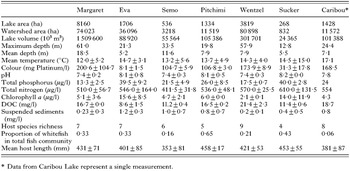
Table 4. Summary of physicochemical and biotic characteristics of the 7 study lakes from the Caribou Mountains, Alberta

Fig. 3. Redundancy analysis biplots (A, B) of environmental variables and parasite intensities in lake whitefish from 7 lakes in the Caribou Mountains, Alberta, Canada. Eigenvalues for Axes 1 and 2 are shown in parentheses. Dashed ellipses highlight the 2 helminth community types. Parasite species abbreviations: Rapi=Raphidascaris acus, Tria=Trianophorus crassus, Cyst=Cystidicola farionis, Prot=Proteocephalus neglectus, Crep=Crepidostomum farionis; Diph=Diphyllobothrium dendriticum, Coty=Cotylurus erraticus. Environmental variables: Susp=non-volatile suspended solids, Calc=calcium concentration, Phos=total phosphorus concentration. Lake abbreviations: Cari=Caribou, Marg=Margaret, Pitch=Pitchimi, Suck=Sucker, Went=Wentzel.
 You have
Access
- 24
- Cited by