Despite current prevention efforts, adolescent substance use remains prevalent. In a recent study by the US Department of Health and Human Services (2010), 15% of 12- to 17-year-olds report using alcohol, 12% report using tobacco, and 7.3% report using marijuana in the past month, highlighting the number of youths affected. These rates are concerning because adolescent substance use has been linked to both short- and long-term health, social, and economic problems for individuals and society (Cornelius et al., Reference Cornelius, Reynolds, Martz, Clark, Kirisci and Tarter2008; Masten, Faden, Zucker, & Spear, Reference Masten, Faden, Zucker and Spear2008), including substance use disorders in adulthood (Newcomb & Bentler, Reference Newcomb and Bentler1988). By identifying developmental precursors of adolescent substance use, it may be possible to identify at-risk individuals and families when behavior is less entrenched and more malleable to preventative efforts (Reid, Reference Reid1993). Although multiple risk factors for adolescent substance use have been established in adolescence (Hawkins, Catalano, & Miller, Reference Hawkins, Catalano and Miller1992) and to a lesser extent during middle childhood (Dodge et al., Reference Dodge, Malone, Lansford, Miller, Pettit and Bates2009), relatively few studies have provided longitudinal data on predictors of adolescent substance use beginning in early childhood (Block, Block, & Keyes, Reference Block, Block and Keyes1988; Caspi, Moffit, Newman, & Silva, Reference Caspi, Moffitt, Newman and Silva1996).
Considering that multiple risk factors already established for adolescent substance use span multiple domains (e.g., individual temperament, and familial and peer influence), a developmental psychopathology perspective provides an advantageous framework for studying potential influences on adolescent substance use. Within this framework, child characteristics remain influential on development, but they are constantly being affected by forces within a child's proximal and more distal ecology. Consistent with a developmental psychopathology perspective, we emphasize the changing relative impact of ecological forces on child development (Cicchetti & Rogosch, Reference Cicchetti and Rogosch2002), with family factors taking on a more prominent role in early childhood, and peer and neighborhood factors becoming more critical during middle childhood and adolescence as youth spend more time away from home.
Theoretical models of adolescent substance use also have supported a developmental psychopathology perspective. Tarter (Reference Tarter2002) has proposed that multiple domains of risk generate liability for substance use disorders. In addition, Sher's (Reference Sher1991) deviance-process model simultaneously incorporates individual characteristics, family history and environment, and academic and peer environments. In this model, substance use develops within the context of antisocial behavior, with negative family and individual characteristics leading to affiliation with deviant peers, which in turn is hypothesized to result in increased risk for substance use. Empirically, this model is well supported (for a review, see Chassin, Ritter, Trim, & King, Reference Chassin, Ritter, Trim, King, Mash and Barkley2003), but the vast majority of research testing this model has been initiated during adolescence rather than earlier in childhood. Research on the developmental antecedents of substance use has rarely prospectively examined risk factors from multiple domains and beginning as early as early childhood (Mayzer, Fitzgerald, & Zucker, Reference Mayzer, Fitzgerald and Zucker2009; Wong et al., Reference Wong, Nigg, Zucker, Puttler, Fitzgerald and Jester2006).
Exceptions to this trend are recent studies that test cascade models to study risk factors for adolescent substance use. In such models, risk factors assessed in early childhood are hypothesized to lead to risk factors assessed in early then later middle childhood, and ultimately to adolescent substance use. For instance, Dodge et al. (Reference Dodge, Malone, Lansford, Miller, Pettit and Bates2009) found that nonsupportive parenting in early childhood was associated with externalizing problems at school entry and consequently problems with peers. School-age peer problems were associated with deviant peer affiliation and exacerbated nonsupportive parenting during later middle childhood and adolescence (Dishion, Spracklen, Andrews, & Patterson, Reference Dishion, Spracklen, Andrews and Patterson1996), increasing the likelihood of adolescent substance use. Martel et al. (Reference Martel, Pierce, Nigg, Jester, Adams and Puttler2009) also utilized a cascade model to investigate adolescent substance use. In their study, temperament traits between 3 and 5 years of age were affiliated with later innattention and disruptive behavior, which were linked with adolsecent substance use. Finally, researchers investigating child maltreatment as a risk factor for later cannibas abuse and dependence utilized a cascade model to suggest that maltreatment prior to ages 7 to 9 increased the likelihood of externalizing problems in middle childhood and early adolscence, leading to subsequent cannabis use (Rogosch, Oshri, & Cicchetti, Reference Rogosch, Oshri and Cicchetti2010).
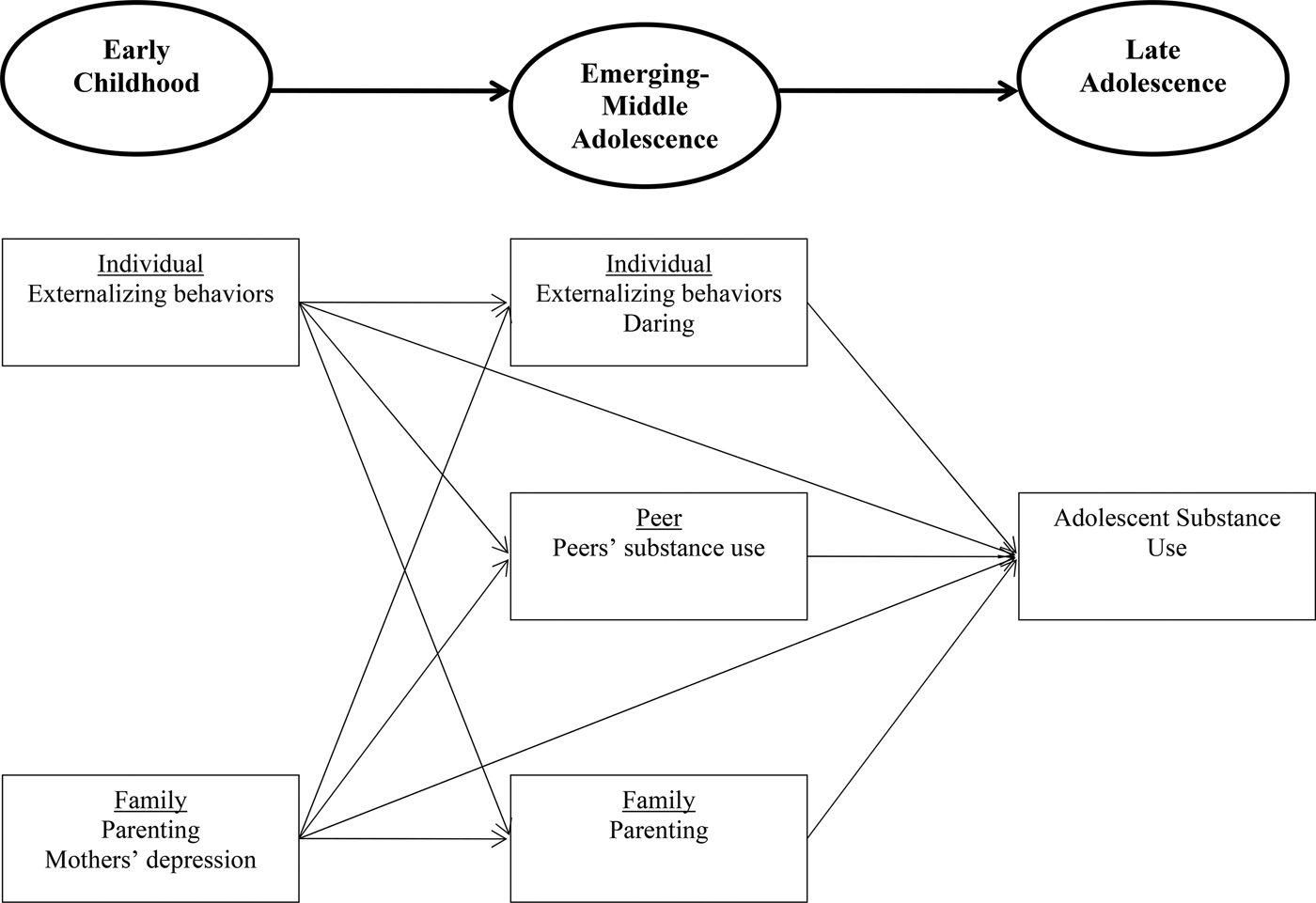
These three studies demonstrate the utility of taking a developmental cascade approach, emphasizing the role of both child and ecological factors in pathways to substance use trajectories from early childhood to adolescence. However, with the exception of the study by study Martel et al. (Reference Martel, Pierce, Nigg, Jester, Adams and Puttler2009), which measured child temperament prior to age 5, none of the other studies assessed child attributes in early childhood. In addition, none of the three studies prospectively measured ecological influences prior to age 5. It is likely that many of the risk factors purported to emerge at school entry may be identifiable in early childhood, because risk factors for emerging adolescent antisocial behavior have been found for children as young as 2 to 3 years of age (Aguilar, Sroufe, Egeland, & Carlson, Reference Aguilar, Sroufe, Egeland and Carlson2000; Henry, Caspi, Moffit, & Silva, Reference Henry, Caspi, Moffit and Silva1996; Moffit & Caspi, Reference Moffit and Caspi2001; Shaw & Gross, Reference Shaw, Gross and Lieberman2008). This earlier identification could inform prevention efforts to disrupt the cascading pathway leading to substance use outcomes. The purpose of this paper is to identify pathways leading to the use of alcohol, tobacco, and marijuana during adolescence by exploring developmental pathways from very early childhood through adolescence (as shown in Figure 1).
The conceptual model of developmental risk factors for adolescent substance use.

Precursors of Adolescent Substance Use
A key challenge to understanding early antecedents of adolescent substance use within a developmental psychopathology framework is the limited research on early childhood predictors, with the vast majority of studies being initiated during adolescence (for a review, see Hawkins et al., Reference Hawkins, Catalano and Miller1992). However, studies examining the structure and comorbidity of adult psychopathology (Krueger, Reference Krueger1999), the hierarchical structure of child psychopathology (Jessor, Donovan, & Costa, Reference Jessor, Donovan and Costa1991), and behavioral genetic studies of externalizing problems (Krueger et al., Reference Krueger, Hicks, Patrick, Carlson, Iacono and McGue2002) all suggest that substance use overlaps considerably with antisocial behavior and that both categories of behavior share common risk factors. Moreover, because conduct problems and more serious antisocial behavior are strong risk factors for later substance use (Tarter, Kirisci, Ridenour, & Vanyukov, Reference Tarter, Kirisci, Ridenour and Vanyukov2008; Windle, Reference Windle1990) and many studies examining “externalizing” utilize measures that include substance use (e.g., see Elliott, Huizinga, and Ageton's Self-Report of Delinquency; Reference Elliott, Huizinga and Ageton1985), it is logical to assume that risk factors for substance use during adolescence overlap to a moderate degree with risk factors for antisocial behavior. Thus, where available, we examine studies investigating risk for substance use, and where the literature is lacking (i.e., during early childhood), we utilize research examining early predictors of youth antisocial behavior to guide the present inquiry.
Early childhood precursors
Early conduct problems
Conduct problems in early childhood have been linked to substance use in adolescence both theoretically and empirically (Hawkins et al., Reference Hawkins, Catalano and Miller1992; Zucker, Donovan, Masten, Mattson, & Moss, Reference Zucker, Donovan, Masten, Mattson and Moss2008). Consistent with research linking early-starting patterns of conduct problems to more serious antisocial activities during adolescence (Dodge et al., Reference Dodge, Malone, Lansford, Miller, Pettit and Bates2009; Moffitt, Reference Moffitt1993; Patterson, Reference Patterson1982), early-starting antisocial behavior has repeatedly been shown as a risk factor for adolescent substance use (Cohen, Chen, Crawford, Brook, & Gordon, Reference Cohen, Chen, Crawford, Brook and Gordon2007; Hawkins et al., Reference Hawkins, Catalano and Miller1992; Windle, Reference Windle1990). Behavioral problems at age 3 have been longitudinally linked to drug and alcohol use as early as age 14 (Block et al., Reference Block, Block and Keyes1988), and these early behaviors are linked to increased rates of alcohol dependence at age 21 in community samples (Caspi et al., Reference Caspi, Moffitt, Newman and Silva1996). Studies utilizing high-risk samples, including children of alcoholic fathers, have shown that it is not only initial behavior problems at preschool age but also a persistence of problem behavior over time that predicts adolescent substance use (Mayzer et al., Reference Mayzer, Fitzgerald and Zucker2009; Wong et al., Reference Wong, Nigg, Zucker, Puttler, Fitzgerald and Jester2006). Considering the links between early problem behavior and adolescent substance use, it is also not surprising that antisocial behavior and delinquency during adolescence are well-established individual-level risk factors for adolescent substance use (Hawkins et al., Reference Hawkins, Catalano and Miller1992). In addition, studies examining the relationship between externalizing problems and parenting, another precursor of adolescent substance use (see review below), indicate the presence of a reciprocal relationship between the two constructs, with children's early externalizing problems increasing the likelihood of later harsh parenting (Lansford et al., Reference Lansford, Criss, Laird, Shaw, Pettit and Bates2011; Vuchinich, Bank, & Patterson, Reference Vuchinich, Bank and Patterson1992).
Parenting
It is clear that early individual risk factors are likely to partially account for the persistence and expansion of problem behavior across developmental periods; however, family-level factors also have been found to contribute to risk for adolescent substance use. For example, parental monitoring during both middle childhood (Chilcoat & Anthony, Reference Chilcoat and Anthony1996; Cohen, Richardson, & LaBree, Reference Cohen, Richardson and LaBree1994) and adolescence (see review below) has been found to be a protective factor for adolescent substance use, and there are strong theoretical reasons and indirect empirical support to suggest indirect or even direct links between parenting practices during early childhood and adolescence substance use. Unfortunately, there are relatively few studies that have examined direct or indirect paths between early caregiving practices and youth substance use (Baumrind, Reference Baumrind1991; Dodge et al., Reference Dodge, Malone, Lansford, Miller, Pettit and Bates2009; Shelder & Block, Reference Shelder and Block1990).
The few studies that have investigated associations between early parenting and adolescent substance use focus on the presence or absence of positive parenting. As previously mentioned, Dodge et al. (Reference Dodge, Malone, Lansford, Miller, Pettit and Bates2009) found that nonsupportive parenting at school entry was associated with later adolescent substance use via deviant peer affiliations and problem behavior. Shelder and Block (Reference Shelder and Block1990) found that observations of parent–child interactions in preschool characterized by low levels of maternal responsiveness, warmth, and acceptance were associated with higher levels of drug use at age 18. Finally, Baumrind (Reference Baumrind1991) found that 15-year-old adolescents who did not use drugs were more likely to have authoritative parents (i.e., high levels of demandingness and responsiveness) at age 4 than were those who did use drugs. In the Baumrind study, parenting style was found to be relatively stable from early childhood to adolescence, the latter of which was also associated with adolescent substance use.
Although studies of early parenting behavior and adolescent substance are limited, they do suggest that early parenting characterized by high levels of responsivity, supportiveness, and acceptance is related to reduced risk of later substance use. For the purposes of this paper, parenting practices that are considered to be high in responsivity, support, and acceptance will be deemed nurturant parenting. Furthermore, because parenting practices between the ages of 2 and 3 have been repeatedly related to early-starting pathways of antisocial behavior (Aguilar et al., Reference Aguilar, Sroufe, Egeland and Carlson2000; Moffitt & Caspi, Reference Moffit and Caspi2001; Shaw & Gross, Reference Shaw, Gross and Lieberman2008), it follows that similar associations could be evident for adolescent substance use. Moreover, because studies emphasizing the contribution of early parenting behaviors for risk of later antisocial behavior (e.g., Shaw, Bell, & Gilliom, Reference Shaw, Bell and Gilliom2000) have led to increasing emphasis and success using early preventive interventions (Dishion et al., Reference Dishion, Shaw, Connell, Gardner, Weaver and Wilson2008), understanding the role of early parenting, especially as it is related to risk factors for substance use assessed later in development, could be critical to understanding substance use and preventing its onset.
Theoretically, from social learning (Patterson, Reference Patterson, Chamberlain and Reid1982) and attachment models (Sroufe, Fox, & Pancake, Reference Sroufe, Fox and Pancake1983), one might expect similar processes leading to the development of antisocial activities from early childhood through adolescence to generalize to the use of substances (Shaw & Bell, Reference Shaw and Bell1993). Although Dodge et al. (Reference Dodge, Malone, Lansford, Miller, Pettit and Bates2009) assessed negative parenting behaviors, it is possible that positive parenting could follow a similar cascading pattern in which effective parent management strategies and secure parent–child attachments would be expected to set into motion a series of protective factors from cascading risks (Patterson, Reference Patterson, Chamberlain and Reid1982), with early nurturant parenting protecting against early and continuing child oppositional and aggressive behavior, rejection from prosocial peers and acceptance from deviant peers, and subsequently such antisocial activities as substance use. Developmental continuity in early nurturant parenting would also be expected, taking the form of involved parenting during early adolescence characterized by high levels of monitoring during adolescence, which would serve as a buffer from an adolescent's involvement with deviant peers and engagement in deviant activities. Evidence suggests that early individual and family risk factors of antisocial behavior affect later risk factors through indirect and direct pathways (Trentacosta & Shaw, Reference Trentacosta and Shaw2008).
Maternal depression
Similar to parenting in early childhood affecting risk for adolescent substance use, it is likely that parental depression, particularly maternal depression, would initiate a similar process in which high levels of depressive symptoms would compromise parental caregiving quality (e.g., reductions in involvement and responsivity and increasing harshness; Shaw, Gilliom, Ingoldsby, & Nagin, Reference Shaw, Gilliom, Ingoldsby and Nagin2003; Shaw et al., Reference Shaw, Schonberg, Sherrill, Huffman, Lukon and Obrosky2006) and lead to increases in child disruptive behavior and affiliation with deviant peers. Beginning in middle childhood, research has supported an association between clinical levels of maternal depression and later substance use problems, with children of clinically depressed mothers being five times more likely to experience alcohol dependence during adolescence than children whose parents are not clinically depressed (Weissman, Warner, Wickramaratne, Moreau, & Olfson, Reference Weissman, Warner, Wickramaratne, Moreau and Olfson1997). In addition to clinical diagnosis, levels of maternal depressive symptoms in a community sample during middle childhood have been linked to youth substance use by the seventh grade (Cortes, Fleming, Mason, & Catalano, Reference Cortes, Fleming, Mason and Catalano2009). Although there is little research examining associations between maternal depression during early childhood and adolescent substance use via either direct or indirect pathways of risk factors measured during early adolescence (e.g., affiliation with deviant peers or low parental knowledge), in studies of early-starting antisocial behavior initiated during the toddler period, maternal depression has been directly linked to other early childhood risk factors, including harsh parenting and child externalizing problems, both of which have been associated with early-starting externalizing problems (Goodman, Reference Goodman2007; Goodman & Gotlib, Reference Goodman and Gotlib1999; Gross, Shaw, & Moilanen, Reference Gross, Shaw and Moilanen2008; Shaw, Hyde, & Brennan, Reference Shaw, Hyde and Brennan2012). Thus, we expected that maternal depression during early childhood would be indirectly related to adolescent substance use via associations with parenting and externalizing behavior problems during adolescence.
Adolescent precursors
Sensation seeking
Beginning during middle childhood and continuing during adolescence, sensation seeking is an individual risk factor that has frequently been associated with both substance use (Andrew & Cronin, Reference Andrew and Cronin1997; Dorard, Berthoz, Phan, Corcos, & Bungener, Reference Dorard, Berthoz, Phan, Corcos and Bungener2008; Martin et al., Reference Martin, Kelly, Rayens, Brogli, Brenzel and Smith2002) and delinquency (Trentacosta, Hyde, Shaw, & Cheong, Reference Trentacosta, Hyde, Shaw and Cheong2009). Characterized by a preference for high levels of novel stimulation and risk taking (Zuckerman, Reference Zuckerman1994) and thought to be driven by cortical underarousal in brain functioning (Zuckerman, Reference Zuckerman1996), the association between sensation seeking and substance use appears consistent longitudinally. Research from Crawford, Pentz, Chou, Li, and Dwyer (Reference Crawford, Pentz, Chou, Li and Dwyer2003) suggests that sensation seeking assessed as early as middle school predicted increases in alcohol and marijuana use as well as initial cigarette use during later adolescence in a sample of typical children. Other researchers have found that sensation seeking in the 4th and 5th grades has an indirect effect on substance use in the 11th and 12th grades via deviant peer associations in 7th through 10th grades (Hampson, Andrews, & Barckley, Reference Hampson, Andrews and Barckley2008). For the purposes of this study, sensation seeking was assessed during emerging adolescence using the daring factor derived from the Child and Adolescent Disposition Scale (Lahey et al., Reference Lahey, Applegate, Chronis, Jones, Williams and Loney2008), which, akin to sensation seeking, assesses youth preferences for high levels of novel stimulation and risk taking. In addition, because emerging adolescence was the earliest that propensity for daring was measured, the hypothesized model in this study includes a pathway from externalizing problems in early childhood to daring during emerging adolescence to account for previously established correlations between daring and externalizing problems (for a review, see Lahey & Waldman, Reference Lahey, Waldman, Lahey, Moffitt and Caspi2003).
Parental knowledge
As previously mentioned, longitudinal links have been consistently established between parental monitoring of adolescent's activities and location as a protective factor from adolescent's initial and continued use (and disuse) of substances (Steinberg, Fletcher, & Darling, Reference Steinberg, Fletcher and Darling1994), with some data to suggest that monitoring is particularly salient for youth at highest risk for using substances (Dishion, Nelson, & Kavanagh, Reference Dishion, Nelson and Kavanagh2003). Theoretically, this link is consistent with emerging adolescents' increasing mobility and time spent with peers outside of the home, including exposure to deviant peers and deviant activities, such as substance use (Dishion et al., Reference Dishion, Spracklen, Andrews and Patterson1996). Thus, parental monitoring during adolescence has been found to be negatively associated with adolescents' tobacco, alcohol, and marijuana use directly and indirectly, via deviant peer affiliation (Dishion & Loeber, Reference Dishion and Loeber1985). Stattin and Kerr (Reference Stattin and Kerr2000) have posited that parental knowledge, a specific aspect of parental monitoring that addresses parental awareness of children's activities resulting from children disclosing information to their parents, is a more robust predictor of deviancy when compared to other measures of monitoring that investigate only parents' surveillance and tracking of their children. Studies are needed that incorporate both parental awareness and child disclosure as potential buffers from adolescent substance use.
Peer influences
In addition to individual- and family-level risk factors, deviant peer affiliation has also been shown to be a robust predictor of adolescent substance use (Chassin et al., Reference Chassin, Ritter, Trim, King, Mash and Barkley2003; Dishion & Loeber, Reference Dishion and Loeber1985). For example, longitudinally, deviant peer group membership at ages 15 and 16 predicted substance use at 18 years of age (Fergusson, Swain-Campbell, & Horwood, Reference Fergusson, Swain-Campbell and Horwood2002). Furthermore, peers' substance use, a specific form of deviance, has been found to be a consistent predictor of adolescent substance use (Steinberg et al., Reference Steinberg, Fletcher and Darling1994). Whereas research supports peer substance use as a critical risk factor for adolescent substance use, some have suggested that the influence of peer substance use may be overestimated (Bauman & Ennett, Reference Bauman and Ennett1996) because much of the extant research has failed to distinguish between adolescents' perceptions of peers' substance use and peers' actual substance use, creating a potential selection bias. Research from Iannotti and Bush (Reference Iannotti and Bush1992) supports this claim that perceptions of peer use and actual peer use independently contribute to adolescent substance use. In their study, perceptions of peer use were more highly correlated with adolescents' use of tobacco, alcohol, marijuana, and cocaine when compared to actual peer use. Additional studies are needed that can simultaneously address the influence of both perceptions of peer substance use and peer report of substance use.
The Current Study
The purpose of this paper is to identify developmental pathways leading to the use of alcohol, tobacco, and marijuana during adolescence by testing a cascading model of risk from very early childhood through adolescence (as shown in Figure 1). Developmental cascades models emphasize the potential for one domain of development (e.g., parenting) to sequentially influence additional domains of development (e.g., externalizing problems and peer affiliation), leading to increased risk of a problem behavior. Cascade models routed in conservative theory generally include three or more domains of development and three or more developmentally salient time points (Cole & Maxell, Reference Cole and Maxwell2003), and they predict across domains while controlling for within-time covariance across domains and change within the domain itself (Masten & Cicchetti, Reference Masten and Cicchetti2010; Masten et al., Reference Masten, Roisman, Long, Burt, Obradović and Riley2005). Alternatively, many researchers have utilized cascade models to look at developmental processes without strict adherence to all of the previously mentioned criteria (Dodge et al., Reference Dodge, Malone, Lansford, Miller, Pettit and Bates2009; Lynne-Landsman, Bradshaw, & Ialongo, Reference Lynne-Landsman, Bradshaw and Ialongo2010; Martin et al., Reference Martin, Conger, Schofield, Dogan, Widaman and Donnellan2010). The current study utilizes a cascade approach to investigating risk for adolescent substance use, recognizing that all three domains of development assessed (individual, familial, and peer) are not all assessed at all three time points (early childhood, emerging adolescence, and middle adolescence).
Based on research emphasizing established links among intraindividual risk (antisocial behavior and sensation seeking), caregiving risk and protective factors (parental knowledge and maternal depression), peer risk (perceptions of and actual substance use), and substance use in adolescence, and among many of these risk factors examined in early childhood and adolescent antisocial behavior, the current study addresses how risk factors in early childhood indirectly contribute to the prediction of substance use during adolescence through their effects on risk factors during emerging adolescence. In addition, we also reexamine associations between established correlates of adolescent substance use during emerging adolescence while controlling for risk factors in earlier childhood. The sample includes an ethnically diverse, low-income cohort of boys at heightened risk for antisocial behavior problems and takes advantage of extensive longitudinal data collected from observational and multiple reporters across a 15-year period, where both direct and indirect contributions of early risk factors can be assessed. The following hypotheses, focusing on cascading processes, guided the current study:
1. It was expected that early externalizing problems would be linked to later substance use via emerging adolescent individual characteristics (i.e., externalizing problems and daring) and parental knowledge.
2. It was anticipated that nurturant parenting in early childhood would be negatively related to adolescent substance use and that this relationship would be mediated by lower levels of youth externalizing problems in emerging adolescence, higher levels of parental knowledge during midadolescence, and lower levels of peer substance use during midadolescence.
3. It was expected that mothers' early depressive symptoms would be indirectly related to adolescent substance use in adolescence through higher levels of externalizing problems during emerging adolescence and lower levels of parental knowledge in midadolescence.
4. It was hypothesized that the relationship between daring and externalizing problems in emerging adolescence and later substance use would be partially mediated by peer substance use (i.e., assessed using both perceptions of peers' substance use and peers' self-report of substance use). In addition, it was predicted that boys' externalizing problems during midadolescence would be negatively related to levels of parental knowledge.
Methods
Participants and procedures
This study used data from the Pitt Mother and Child Project, an ongoing longitudinal study on vulnerability and resiliency in boys from low socioeconomic status (SES) backgrounds. Participants were recruited from the Allegheny County Women, Infants, and Children program in the Pittsburgh Metropolitan area (Shaw et al., Reference Shaw, Gilliom, Ingoldsby and Nagin2003). Because the original intent of the study was to examine precursors of antisocial behavior, the study was restricted to boys. A sample of 310 families with 1.5-year-old sons participated in the study. Fifty-three percent of the target children in the sample were European American, 36% were African American, 5% were biracial, and 6% were of other races (e.g., Hispanic American or Asian American). At the initial assessment when boys were 18 months old, the age of mothers ranged from 17 to 43 years (M = 27.82, SD = 5.33), and two-thirds of mothers in the sample had 12 years of education or fewer. When the boys were 18 months, 44% of the mothers indicated that they were married, 21% were living together, and the remaining 35% were single, separated, or divorced. The mean per capita income was $241 per month ($2,892 annually), and the mean Hollingshead SES score was 24.5, indicative of impoverished to working class.
For the present study, data from assessments at ages 1.5, 2, 3.5, 11, 12, 15, and 17 were utilized. Retention rates have been generally high at each time point, with 89% of the initial 310 participants completing assessments at ages 11 or 12 years and some data available on 87% and 81% of participants at 15 and 17 years of age. Families who did not complete assessments at later ages did not differ on variables included in the study from those for whom complete data were available. Therefore, all 310 families were included in the final analyses.
For the current study, target children and their mothers were seen in the home and/or the lab for 2- to 3-hr visits at ages 1.5, 2, 3.5, 11, 12, 15, and 17 years old. During these assessments, mothers completed questionnaires regarding sociodemographic characteristics, family issues (e.g., parenting, family members' relationship quality, and maternal well-being), and child behavior. Assessments at ages 1.5, 2, 3.5, and 11 were conducted in the lab, and all other visits were conducted in the participants' homes, including a combined home–lab assessment at age 2, which featured observations of the quality of the home environment and parent–child interaction during structured tasks and during an interview with the mother. During the age 15 assessment, questionnaires were also completed by a peer of the target child whom the target child identified as a friend with whom he spends considerable time. Participants who had missing data at ages 15 and 17 did not differ from the rest of the sample in relation to SES, race, marital status, or any other study variables.
Measures
Early childhood
Nurturant parenting
Nurturant parenting at age 2 was derived using the Nurturance factor from the Home Observation for Measurement of the Environment (Caldwell & Bradley, Reference Caldwell and Bradley1978). This measurement assesses the quality and quantity of support and stimulation in the child's home environment using observations and parent interview. The nurturance score was obtained by calculating separate means for the responsivity and acceptance subscales (Trentacosta & Shaw, Reference Trentacosta and Shaw2008). For the 11-item Responsivity Scale (α = 0.71), examiners rated the parent's emotional and verbal responsivity to the child with such items as “parent responds verbally to children's verbalizations” and “parent spontaneously praises child at least twice.” Examiners assessed parents' acceptance of the child's behavior using the 8-item acceptance subscale (α = 0.67), which comprised items such as “parent does not shout at child” and “parent does not express overt annoyance with or hostility to the child.”
Mothers' depressive symptomatology
Mothers completed the Beck Depression Inventory (Beck, Steer, & Ranieri, Reference Beck, Steer and Ranieri1988), a widely used measure of depressive states, during study assessments when their sons were 1.5, 2, and 3.5 years old. Mothers rated the intensity of 21 symptoms and characteristics of depression on a 4-point Likert scale ranging from 0 (no symptomatology) to 3 (severe symptomatology). Responses were summed so that higher scores reflect higher levels of depressive symptoms (αs range = 0.82–0.87).
Externalizing problems
Mothers completed the Child Behavior Checklist 2–3 (CBCL; Achenbach, Reference Achenbach1992) during study visits when their sons were 2 and 3.5 years of age, from which the broadband externalizing factor was used for the present study. The CBCL is a widely used parent-report measure of child adjustment problems in which parents of preschool-age children respond to items regarding their child's behavior within the past 2 months using a 3-point Likert scale ranging from 0 (not true at all) to 2 (very true or often true). The Cronbach αs for the externalizing factor at ages 2 and 3.5 were 0.88 and 0.85, respectively. We used T scores for analyses.
Covariates
Families' SES at 1.5 years of age was calculated using the mean Hollingshead (Reference Hollingshead1975) Four Factor Index score and used as a covariate in the final structural model. The target's race was dummy-coded for European American and other ethnicities. Finally, mother's age when her child was 1.5 years of age was also included in the final structural model.
Adolescence
Externalizing problems
To provide an assessment of broadband disruptive behaviors, the externalizing factor was derived from the CBCL age 4–18 version (Achenbach, Howell, Quay, & Conners, Reference Achenbach, Howell, Quay and Conners1991). Mothers reported on their sons' behavior when boys were 11 (α = 0.92) and 12 (α = 0.93) years of age. We used T scores for analyses.
Adolescent daring
Daring was assessed at age 12 using the five-item factor of the same name from the Child and Adolescent Disposition Scale (Lahey et al., Reference Lahey, Applegate, Chronis, Jones, Williams and Loney2008; Trentacosta et al., Reference Trentacosta, Hyde, Shaw and Cheong2009). Both parent and target youth report were utilized. Respondents rated each item on how well the emotion or behavior describes the target youth on a 4-point Likert scale ranging from 1 (not at all) to 4 (very much/very often). Examples of items include “Is he/are you daring or adventurous?” and “Does he/do you enjoy doing things that are risky and dangerous?” A mean score was calculated for mother (α = 0.74) and target youth report (α = 0.63) separately.
Parental knowledge
At age 15 target youth were asked a series of questions about their parents' monitoring of their whereabouts and of their disclosure of their activities to their parents using an interview developed by Dishion, Patterson, Stoolmiller, and Skinner (Reference Dishion, Patterson, Stoolmiller and Skinner1991; Moilanen, Shaw, Criss, & Dishion, Reference Moilanen, Shaw, Criss and Dishion2009). Youth rated parental monitoring using five items (e.g., “How often does at least one of your parents know where you are after school?” and “How often does at least one of your parents have a pretty good idea about your interests, activities, and whereabouts?”) and rated youth disclosure using four items (e.g., “In the past week, how often did you begin or start a conversation with either parent about who your friends are and what you do together?”) on a 5-point Likert scale ranging from 1 (never or almost never) to 5 (always or almost always). Means for monitoring (α = 0.74) and youth disclosure (α = 0.78) items were calculated separately.
Perceptions of peer substance use
Youth perceptions of peer substance use were assessed at age 15 for their self-identified neighborhood and school peer groups. Youths were asked to indicate separately on a 4-point Likert scale (0 = never, 3 = a lot/always) how often in the past 6 months their school peer group and neighborhood peer group drank alcohol and used marijuana. Scores for alcohol use and marijuana use were highly correlated for both school peers (r = .70, p < .001) and neighborhood peers (r = .74, p < .001) and were therefore averaged to create a composite perceptions of substance use score for both school and neighborhood peers.
Peer substance use
Substance use of peers invited to the age 15 assessments by target youth was assessed using five items from the Self-Report of Delinquency (SRD; Elliott et al., Reference Elliott, Huizinga and Ageton1985). Peers were asked to indicate the extent to which they had engaged in various delinquent behaviors during the past year using a 3-point rating scale (0 = never, 1 = once/twice, and 2 = more often). Peers were asked separate questions for drinking beer, wine, and liquor (e.g., “Have you secretly taken a sip from a glass or bottle of beer?”; α = 0.87). To aggregate these three questions into a single measure of alcohol use, the highest rated item was used to represent the extent of overall alcohol use. Peers also indicated their tobacco use (i.e., “Have you secretly smoked a cigarette, smoked a pipe, or chewed tobacco?”) and marijuana use (i.e., “Have you smoked marijuana?”). The Cronbach α for these three items was 0.84.
Youth substance use
Youth reports of substance use at age 17 also were assessed using the SRD, the same measures administered to peers at age 15 (α = 0.81). In addition, youths were asked to indicate if they had used cocaine, glue, LSD, heroin, ecstasy, or methamphetamine in the past year. However, we chose to only focus on alcohol, marijuana, and tobacco use because of the extremely low base rate of other substances, all of which were less than 2%.
Data analysis plan
Mplus 5.2 (Muthén & Muthén, Reference Muthén and Muthén2009) was utilized to conduct the structural equation modeling (SEM) for these analyses. Prior to testing SEM models, log transformations were conducted on the externalizing problems and mothers' depressive symptoms variables to correct for their nonnormal distribution. Missing data were determined to be missing at random as per recommendations by Shafer and Graham (Reference Shafer and Graham2002) and Acock (Reference Acock2005).
Prior to computing the full SEM model, latent factors were constructed for mothers' depressive symptomatology, nurturant parenting, childhood externalizing problems, early adolescent externalizing problems, daring, perceptions of peer substance use, peer report of substance use, and target youth report of substance use. The early childhood (externalizing problems and mothers' depressive symptomatology) and early adolescent (externalizing problems) factors were created by treating each age point at which data were collected for that measure as an indicator variable. By using this method, the latent variable is indicative of the behavior during the entire age span of the indicator variables. This approach was used because, for the purposes of this study, the interest of the effect of the predictor variables on substance use was not specific to one age but to the developmental periods of early childhood and emerging adolescence. The use of latent variables also served to rectify such instances in which the α for one of the indicator values was less than 0.7, which was found for adolescent daring and nurturant parenting. For all variables for which only two indicators were available (i.e., nurturant parenting, childhood externalizing problems, early adolescent externalizing problems, daring, parental knowledge, and perceptions of peers' substance use), the two indicators were treated as parallel such that each manifest variable was fixed to one to load equally onto the latent construct. In addition, target and peer responses to their alcohol, tobacco, and marijuana use were treated as categorical indicators because there was not an equidistant spacing between the thresholds for each response.
Based on recommendations from Cole and Maxwell (Reference Cole and Maxwell2003), a measurement model was tested in which all latent variables were permitted to correlate with one another. Next, to capture a developmental psychopathology framework in which risk factors from multiple domains at earlier developmental periods are hypothesized to influence risk factors at later periods (i.e., cascade model), a fully saturated SEM model was tested that included direct pathways from all upstream variables to all downstream variables. Finally, a restricted structural model that reflected the proposed hypotheses was tested. Specifically, following the first hypothesis, early externalizing problems were modeled as a predictor of adolescent daring, externalizing problems, and parental knowledge. Following the second hypotheses, pathways from nurturant parenting to adolescent externalizing problems, parental knowledge, perceptions of peers' substance use, and peers' self-report of substance use were included in the model. Based on the third hypothesis, mother's early depressive symptoms were modeled as predictors of later externalizing problems and parental knowledge. In addition, pathways from daring to perceptions of peers' substance use and peers' report of substance use, and pathways from adolescent externalizing problems to subsequent parental knowledge, perceptions of peers' substance use, and peers' report of substance use were included. Finally, pathways from all earlier variables to substance use at age 17 were retained in the final model. Both the fully saturated and the hypothesized restricted model included within-time correlations of residual covariances among constructs. For instance, the correlations among the residual covariances among early externalizing problems, nurturant parenting, and mother's depressive symptoms were freely estimated. Finally, covariates for SES, mother's age, and target child's ethnicity were included in both models.
A weighted least squares with mean and variance adjustment estimator was used to estimate the structural model according to the recommendations of Muthén, du Toit, and Spisic (Reference Muthén, du Toit and Spisic1997) because it provides useful fit indices (see below) that are advantageous with categorical indicators such as those that comprised the target youth and peer substance use factors. To evaluate the fit of the structural models, several fit indices were used, including the chi-square goodness of fit statistic, the root mean square error of approximation (RMSEA; Browne & Cudeck, Reference Browne and Cudeck1992), the Tucker–Lewis index (TLI; Tucker & Lewis, Reference Tucker and Lewis1973), and the comparative fit index (CFI; Bentler, Reference Bentler1990), all of which have been typically used as indices of practical fit. Finally, to test for mediation, the paths from the independent variables were freed and estimated. Bootstrapping was used to test for indirect effects (Mackinnon, Lockwood, & Williams, Reference Mackinnon, Lockwood and Williams2004).
Results
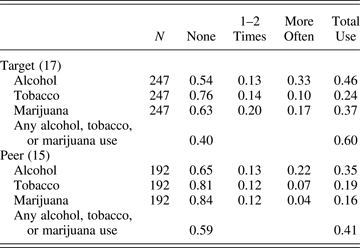
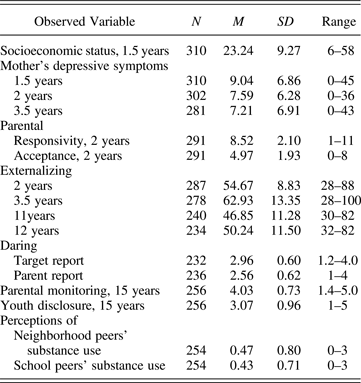
Table 1 provides descriptive data for the categorical substance use data. Specifically, the proportions of responses from targets and peers reporting their frequency of alcohol, tobacco, and marijuana use as “none,” “one to two times,” or “more often” are listed. In addition, the combined proportions of responses that indicated “one to two times” and “more often” are provided in the total use column. Finally, the proportion of individuals reporting use of any substance within the past year is also listed with target youth and peers reporting 60% and 41% of some form of substance use in the past year, respectively. For all substances reported, target youth at age 17 reported higher proportions of use than did peers at age 15. Table 2 provides descriptive statistics for all remaining continuous indicators used in testing the theoretical model.
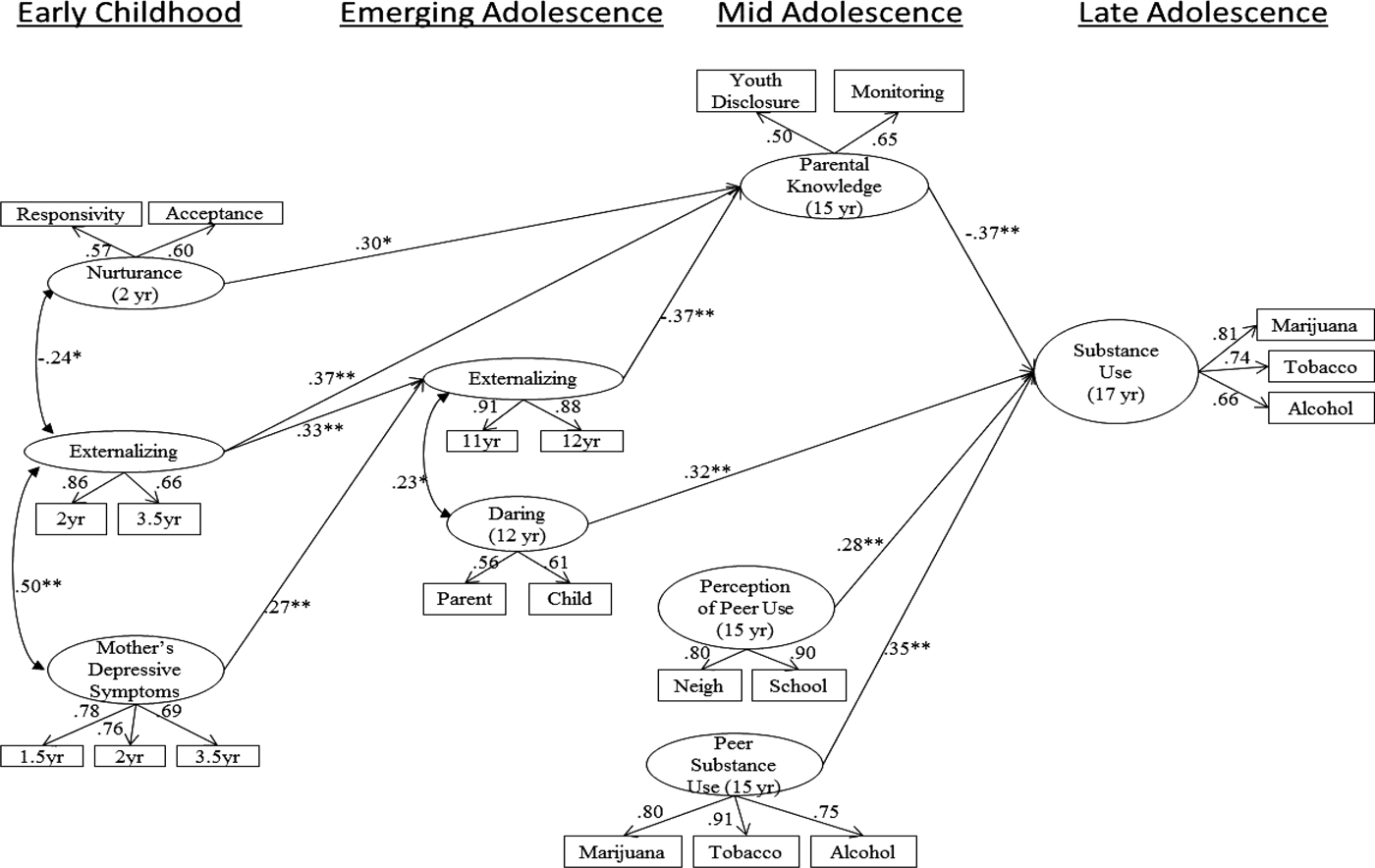
The empirical results of the structural equation model. Standardized β scores are reported (n = 310). Practical fit indices of the structural model were as follows: Tucker–Lewis index = 0.916, comparative fit index = 0.912, and root mean square error of approximation = 0.041. Only significant pathways are presented in the figure. *p < .05. **p < .01.
Self-reported proportions of substance use
Note: The total use is the sum of responses 1–2 times and more often.
Descriptive statistics of continuous measures
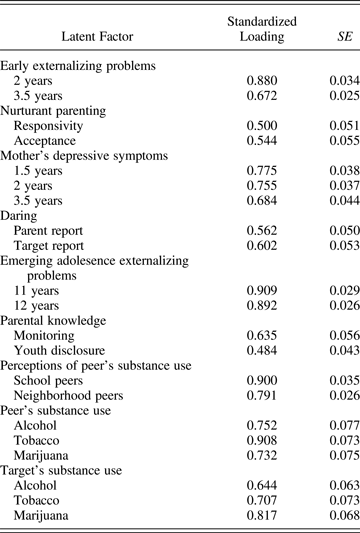
According to the recommendations of Cole and Maxwell (Reference Cole and Maxwell2003), a measurement model was first computed to ensure that the manifest variables were related to one another. The measurement model suggested an acceptable model fit (TLI = 0.952, CFI = 0.945, RMSEA = 0.034), and the loadings of the resulting latent factors are presented in Table 3. Next, an unrestricted saturated model was computed, and fit indices suggested acceptable model fit (TLI = 0.933, CFI = 0.930, RMSEA = 0.035). Finally, the restricted hypothesized model was computed and the DIFFTEST command in Mplus revealed no significant differences between the saturated model and the restricted hypothesized model (Δ2 = 11.12, df = 6, p = .09). Therefore, the restricted model was retained as the final model. The covariance coverage of data ranged from 0.73 to 0.98, and the practical fit indices indicated that the final model provided an acceptable fit to the data (TLI = 0.916, CFI = 0.912, RMSEA = 0.041). The amount of variance explained had the following R 2 estimates: for externalizing problems and daring in emerging adolescence, R 2 estimates were .30 and .03, respectively; for parental knowledge, the R 2 estimate was .22; for perceptions of peers' substance use and peers' substance use, R 2 estimates of .04 and .05 were obtained; for substance use, the R 2 estimate was .58.
Measurement model: Loadings for latent variables
Note: Fit indices for the measurement model were as follows: comparative fit index = 0.945, Tucker–Lewis index = 0.952, root mean square error of approximation = 0.034.
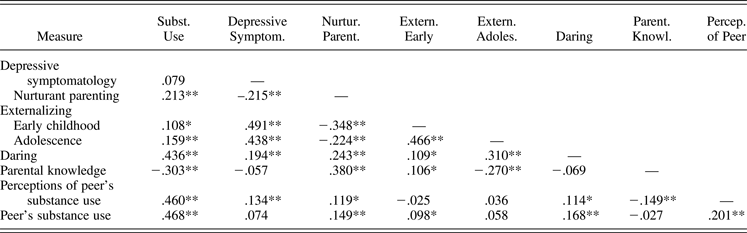
Correlations among latent variables are presented in Table 4. All three early childhood constructs were significantly correlated with one another, with nurturant parenting being negatively correlated with externalizing problems (r = –.35, p < .01) and mothers' depressive symptomatology (r = –.22, p < .01), and externalizing problems and mothers' depressive symptoms being positively correlated (r = .49, p < .01). Among risk variables assessed during adolescence, daring was related to adolescent externalizing problems (r = .31, p < .01), and both peers' substance use and targets' perceptions of peer substance use were significantly correlated (r = .20, p < .01). Of the early childhood precursors, nurturant parenting (r = .21, p < .01) and externalizing problems (r = .11, p < .05) were correlated with later substance use. Adolescent risk variables, assessed at ages 12–15 were each related to target youth substance use at age 17 (p < .01).
Correlations between latent constructs
*p < .05. **p < .01.
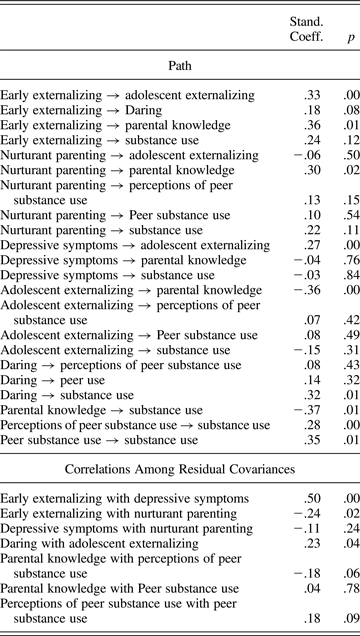
Figure 2 presents the results of the final multivariate structural model. Although only significant level pathways are shown in Figure 2, all of the pathways for the final structural model are presented in Table 5. Significant pathways from early externalizing problems to adolescent externalizing problems (β = 0.33, p < .01) and parental knowledge (β = 0.37, p < .01) emerged. Nurturant parenting was positively related to parental knowledge in adolescence (β = 0.30, p < .05). Greater mothers' depressive symptomatology during early childhood predicted higher levels of early adolescent externalizing problems (β = 0.27, p < .01). Adolescent externalizing problems were negatively associated with later parental knowledge (β = –0.37, p < .01). Direct pathways to target youth report of substance use at age 17 were evident for daring (β = 0.32, p < .01), parental knowledge (β = –0.37, p < .01), perceptions of peers' substance use (β = 0.35, p < .01), and peers' report of substance use (β = 0.28, p < .01). Higher rates of daring, perceptions of peer substance use, and peer report of substance use, and lower rates of parental knowledge were related to increased substance use within the model.
Path coefficients and covariates in the final structural model
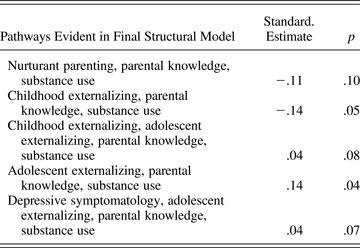
Finally, the indirect effects are reported in Table 6. Parental knowledge significantly mediated the relationships between early externalizing problems and substance use (β = –0.14, p < .05) as well as between adolescent externalizing problems and substance use (β = 0.14, p < .05). Only trend-level mediation (p < .10) was evident in all additional indirect effects explored.
Indirect effects
Discussion
The current findings contribute to the field by demonstrating that pathways leading to adolescent substance use can begin to be established beginning as early as the toddler period and progress in a catenated fashion throughout development. The sample itself was selected on the basis of being at risk for antisocial behavior, a strong correlate of adolescent substance use (Hawkins et al., Reference Hawkins, Catalano and Miller1992). As researchers of adolescent substance use have recommended (Hussong, Gould, & Hersh, Reference Hussong, Gould and Hersh2008; Wills, McNamara, Vaccaro, & Hirky, Reference Wills, McNamara, Vaccaro and Hirky1996), multiple developmental influences were examined simultaneously (individual, familial, and peer influence), which included the use of multiple informants (i.e., observer, mother, target youth, and peer report) and methods (i.e., questionnaires, interviews, and observations) to reduce informant and method bias.
Hypothesis 1: Early externalizing problems as a risk factor for adolescent substance use
The first hypothesis of the current study was that the relationship between externalizing problems in early childhood and later substance use would be mediated by adolescent externalizing problems, daring, and parental knowledge. Partial support was found for this hypothesis because early externalizing problems were related to higher levels of early adolescent externalizing problems and parental knowledge in middle adolescence. However, no direct pathway from early adolescent externalizing problems to substance use was evident in the final model. Instead, parental knowledge sequentially mediated the relationship between adolescent externalizing problems and substance use, highlighting the protective role of positive parenting in adolescence. It is noteworthy that the pathway from early childhood externalizing problems to parental knowledge was positive, such that higher levels of early externalizing problems in early childhood were associated with higher levels of parental knowledge. However, a negative relationship was found between early adolescent externalizing problems and parental knowledge. Although past research, even within the current sample, has indicated that parents of emerging adolescents with externalizing problems are less involved with their children (Moilanen et al., Reference Moilanen, Shaw, Criss and Dishion2009), if high levels of disruptive behavior are perceived by parents during early childhood, it may elicit more, rather than less, parental involvement and knowledge of children's activities during adolescence (Stern & Smith, Reference Stern and Smith1999). Clearly, research further exploring this relationship is warranted. Even though during adolescence parents with disruptive toddlers showed higher levels of parental knowledge, early externalizing problems during early childhood were positively correlated with substance use at age 17 (see Table 4), and parental knowledge during midadolescence served to mitigate this relationship.
Despite past research suggesting that individuals who have high levels of sensation seeking and daring are more likely to exhibit delinquent behavior (White, Labouvie, & Bates, Reference White, Labouvie and Bates1985) and despite the fact that in the current study a similar association was found between early childhood externalizing and emerging adolescent daring in univariate analysis (see Table 4), this association became nonsignificant in the multivariate model that accounted for the contribution of other risk factors. These results for daring lend support to researchers who have suggested that the propensity for daring activities and sensation seeking is an aspect of one's temperament (Trentacosta et al., Reference Trentacosta, Hyde, Shaw and Cheong2009) and is less predicated by earlier experiences. Although this might account for nonsignificant associations in the links between daring and early indices of parenting, a modest association was expected from early child externalizing problems, because a proclivity to engage in high stimulus activities is thought to be one of several components underlying early disruptive behavior. Perhaps by ages 2 and 3.5, when early externalizing problems were assessed, this component of disruptive behavior is not fully established.
Regardless, the results from this study support externalizing problems in early childhood as a precursor to adolescent substance use. These results are not surprising based on the extent of research linking early behavior problems to adolescent substance use and abuse (Block et al., Reference Block, Block and Keyes1988; Caspi et al., Reference Caspi, Moffitt, Newman and Silva1996; Cohen et al., Reference Cohen, Chen, Crawford, Brook and Gordon2007; Hawkins et al., Reference Hawkins, Catalano and Miller1992; Windle, Reference Windle1990), but results from the current study extend these findings back to early childhood.
Hypothesis 2: Nurturant parenting as a protective factor for adolescent substance use
The second hypothesis of the current study was that nurturant parenting in early childhood would be negatively and indirectly related to adolescent substance use via associations with higher levels of parental knowledge and lower levels of peer substance use (i.e., perceptions of peers' substance use and peers' report of substance use) during midadolescence and youth externalizing problems in emerging adolescence. Nurturant parenting at age 2 was not related to lower levels of externalizing problems or to peers' substance use in adolescence. However, as expected, there was continuity between nurturant parenting at 2 years of age and parental knowledge during adolescence, which in turn was associated with decreased adolescent substance use. Nurturant parenting in early childhood was positively correlated with substance use at age 17 (see Table 4); however, after accounting for other risk factors in the multivariate model, the direct pathway between nurturant parenting and substance use was no longer significant. Although it is possible that the univariate association between early nurturant parenting and later problem behavior might be spurious, it is possible that nurturant parenting in the context of poor structuring and monitoring of child behavior might encourage children to engage in antisocial activities and substance use, especially in neighborhoods where such behavior is normative. This highlights the complexity of parenting as a construct and the importance of measuring multiple dimensions of parenting rather than focusing on unidimensional constructs such as nurturance. As previously discussed, parental knowledge also served as the factor linking both early childhood and early adolescent externalizing problems to substance use. These findings are consistent with previous literature emphasizing the importance of parental knowledge during adolescence as a robust predictor of youth substance use (Dishion et al., Reference Dishion, Nelson and Kavanagh2003), but they also further extend its importance by showing parental knowledge to be a critical link that buffers the risk of multiple types of early childhood risk on adolescent substance use.
Hypothesis 3: Mother's early depressive symptoms as a risk factor for adolescent substance use
The third hypothesis was that mothers' early depressive symptoms would be indirectly related to substance use in adolescence through links with higher levels of externalizing problems in emerging adolescence and lower levels of parental knowledge in middle adolescence. A positive path emerged between mothers' early depressive symptoms and boys' later externalizing problems. Although such paths have more routinely been investigated for parenting in relation to antisocial behavior (Downey & Coyne, Reference Downey and Coyne1990), these results suggest that similar pathways emerge in the relationship between early maternal depressive symptoms and later adolescent substance use. Specifically, a pathway was evident from early maternal depressive symptoms to later externalizing problems, from later externalizing problems to parental knowledge, and from parental knowledge to adolescent substance use. This pathway to adolescent substance use is consistent with recent work showing that changes in maternal depressive symptoms mediated improvements in toddler age externalizing problems (independent of similar mediating effects of changes in positive parenting) among a sample of extremely high-risk male and female toddlers recruited on the basis of SES, family, and child risk factors (Shaw, Connell, Dishion, Wilson, & Gardner, Reference Shaw, Connell, Dishion, Wilson and Gardner2009).
Hypothesis 4: Daring and externalizing problems in emerging adolescence as risk factors for adolescent substance use
The final hypothesis was that relationships between daring and externalizing problems in emerging adolescence and later substance use would be partially mediated by associations with peer substance use and that parental knowledge would mediate the relationship between adolescent externalizing problems and later substance use. Support was found only for the latter part of this hypothesis. It is surprising that neither externalizing problems nor daring in adolescence was associated with perceptions of peers' substance use or peers' self-reports of substance use in the final model. It was expected that individuals with higher levels of externalizing problems would be more likely to associate with peers who use substances given adolescents' tendency to associate with peers with similar levels of antisocial behavior (Dishion et al., Reference Dishion, Patterson, Stoolmiller and Skinner1991). However, despite significant correlations between daring and either youths' perceptions of peer substance use or peers' self-reports of substance use, these associations were not evident in the final structural model. Because researchers have reported that adolescents tend to seek out and affiliate with peers with similar levels of daring and sensation seeking (Donohew, Clayton, Skinner, & Colon, Reference Donohew, Clayton, Skinner and Colon1999), one might expect this pathway to emerge based on common characteristics. Future research on this topic is recommended before drawing definitive conclusions; however, the current findings suggest that although both daring and peers' use of substances predict substance use independently, these two correlates were unrelated to one another in the multivariate model (Figure 2). Furthermore, it is noteworthy that the measures of peer problem behavior were specific to peers' use of substances. It is possible that pathways between daring and peer problem behavior in the structural model may have emerged if a broader measure of peer deviant behavior had been utilized, because sensation seeking and daring are associated with a multitude of deviant and risky behaviors beyond substance use (Arnett, Reference Arnett1996; Dåderman, Reference Dåderman1999; Shaw, Wagner, Arnett, & Aber, Reference Shaw, Wagner, Arnett and Aber1992; Trentacosta et al., Reference Trentacosta, Hyde, Shaw and Cheong2009). More research is needed to determine if such a relationship would be evident using a more general scale of problem behavior (e.g., using the full scale of Elliott's Self-Report of Delinquency rather than limiting the results to substance use).
Conversely, the hypothesis that parental knowledge would mediate the relationship between adolescent externalizing problems and substance use was fully supported. As previously mentioned, parental knowledge fully mediated this relationship, resulting in a nonsignficant direct pathway from adolescent externalizing problems to substance use. Although the nonsignificant pathway from externalizing problems to substance use was surprising, these results again highlight the important preventive role of parental monitoring and child disclosure during the adolescent years. Parental knowledge has been associated with parents and adolescents spending more time together and increased enjoyment derived from these interactions (Laird, Pettit, Dodge, & Bates, Reference Laird, Pettit, Bates and Dodge2003). It is likely that the positive aspects of the parent–child relationship associated with higher levels of parental knowledge also contribute to the attenuation of the relationship between externalizing problems and later substance use.
Adolescent predictors
In the final structural model, both youth perceptions of their peers' substance use and peers' self-report of substance use were found to be reliable predictors of youth substance use. Direct pathways to adolescent substance use from youth perceptions of peers' substance use and peers' self-report of substance use remained significant despite the inclusion of one another in the final model, lending support to previous literature suggesting that perceptions of peers' drug use and peers' actual drug use are not necessarily synonymous in their influence on adolescent drug use (Iannotti & Bush, Reference Iannotti and Bush1992). Thus, future research should be clear in its distinction of these two constructs because they are not tantamount to one another. Moreover, the results suggest that drug prevention programs should target both perceptions of peers' use and peer affiliation.
In addition to the direct and indirect pathways leading to substance use that emerged from the structural model, it is also important to consider that some researchers consider experimental use of substances during adolescence a normative (Newcomb & Bentler, Reference Newcomb and Bentler1988) and healthy aspect of development (Shelder & Block, Reference Shelder and Block1990). Whereas this may be true, associations between substance use and risk factors for psychopathology were evident in the current sample. Although not a focus of the current paper, youth reports of substance use were significantly correlated with concurrent self-reports of depressive symptoms (Beck Depression Inventory, r = .30, p < .01) and anxiety symptomatology (Multidimensional Anxiety Scale, r = .13, p < .05), as well as both parent and youth reports of antisocial behavior (mother-reported CBCL, r = .20, p < .01; youth reports on Elliott SRD excluding substance use items, r = .62, p < .01). Considering their already heightened risk for mental health problems (McLeod & Shanahan, Reference McLeod and Shanahan1993), it is likely that for male adolescents from predominantly low-income families, even experimental substance use is associated with multiple types of maladaptive outcomes during adolescence.
Limitations and future directions
Although the current study has many strengths, incorporating 15 years of longitudinal data with an at-risk sample of male youth, using multiple informants and methods, as well as using a developmentally informed model, there are several limitations that need to be considered when interpreting the findings. As noted above, the original study from which participants were drawn was designed to investigate the precursors of childhood antisocial behavior, and thus it recruited only boys from low-income families living in an urban setting. Therefore, the findings may not be generalizable to girls, children from higher SES samples, or nonurban settings. Future studies should investigate whether similar processes in early childhood are indicative of adolescent substance use.
In addition, the current study utilizes reports of alcohol, tobacco, and marijuana use at age 17 only. This study does not examine clinical diagnoses of substance use disorders, age of first use, the recreational use of prescription drugs, or the use of other illicit drugs, and therefore findings cannot be generalized to these outcomes. Future studies should investigate whether a similar process is evident in these heightened risk groups at such a young age. Moreover, it is possible that by not accounting for substance use at earlier ages, associations found with substance use at age 17 could be overinflated. In addition, the measure for substance use itself was less than ideal. The response to frequency of use was rather limited (never, one to two times, and three or more times) and did not capture specific frequencies of use. Although other studies have also assessed frequency of substance use with the same number of categories (Shelder & Block, Reference Shelder and Block1990; Steinberg et al., Reference Steinberg, Fletcher and Darling1994), future studies should include measures that provide more detailed information regarding adolescents' substance use. Nevertheless, results suggest that early child indicators are precursors of later substance use even with this limited measure.
It is also possible that additional factors (e.g., genetic predisposition to alcoholism) are influential in the development of adolescent substance use. For instance, although the purpose of this study was not to study high-risk children of alcoholics, future studies should investigate whether similar pathways emerge for this population that is at both increased genetic and increased environmental risk of later substance use. Regardless of clinical levels of parental substance use, it is likely that parental use of any substances would be influential to adolescent substance use. The lack of inclusion and availability of these data is a limitation of this study.
Finally, the target youth at age 17 reported higher rates of substance use when compared to their peers at 15 years of age. Although this was previously attributed to the difference in ages at the time of report, it is also possible that the peers who were participating in the study for the first time at age 15 may have felt some reluctance to reveal their substance use to relative strangers compared to target youth, who have been in the study for 15 years. Regardless, even with the potential for peers underreporting, direct pathways from peers' self-reported substance use to targets' substance use emerged in the final structural model.
Conclusions and clinical implications
In sum, these findings provide novel information about early developmental pathways of adolescent substance use. The use of prospective longitudinal analyses with multiple informants allowed us to investigate developmental pathways over a 15-year period. These results are consistent with previous findings on the development of adolescent antisocial behavior by implicating individual-, familial-, and peer-level risk factors during childhood and emerging adolescence with later adolescent substance use. Furthermore, the present study extends past research by documenting evidence of familial and individual risk factors during early childhood. These findings also provide targets for early intervention to prevent later adolescent substance use. Specifically, they indicate that young children would benefit from interventions that focus on encouraging positive parenting behaviors and reducing maternal depressive symptoms, two factors that have been implicated in the development of children's early externalizing problems (Dishion et al., Reference Dishion, Shaw, Connell, Gardner, Weaver and Wilson2008; Shaw et al., Reference Shaw, Connell, Dishion, Wilson and Gardner2009). Moreover, by exploring predictors common between externalizing problems and substance use, the current study supports the notion that research and prevention efforts for delinquency may have collateral effects on substance use.