Altered functioning of the hypothalamic–adrenal–pituitary (HPA) axis, one of the body's major stress-sensitive biological systems, is a robust correlate of major depressive disorder (MDD), particularly in adult populations (Chrousos & Gold, Reference Chrousos and Gold1992; Ehlert, Gaab, & Heinrichs, Reference Ehlert, Gaab and Heinrichs2001; Thase, Jindal, & Howland, Reference Thase, Jindal, Howland, Gotlib and Hammen2002). Theoretical models suggest that HPA axis changes in response to extreme or chronic stress may be part of the causal pathway by which environmental stress or trauma contribute to the development of depression. They also suggest that preexisting differences in HPA axis function may make certain individuals more vulnerable to the depressogenic effects of stress (Holsboer, Reference Holsboer2000; van Rossum et al., Reference van Rossum, Binder, Majer, Koper, Ising and Modell2006).
Despite this focus on the role of HPA axis functioning in depression in clinical research studies, HPA axis measures have rarely been measured in clinical settings to aid in the diagnosis, treatment, or prediction and prevention of depression (Holsboer, Reference Holsboer2001). To what extent might knowledge of HPA axis functioning help guide treatment of depression, or more critically, help guide efforts to prevent the initial onset of depression in adolescents and young adults? Prevention of depression in this age range is considered a particularly crucial task, given that the prevalence rates of depression increase dramatically during the adolescent years. Moreover, those who develop depression during the adolescent years are more likely to develop recurrences of this disorder in adulthood, and are also at greater risk for a wide range of other problems, including substance use and suicide (Burke, Burke, & Rae, Reference Burke, Burke and Rae1994; Gould, Greenberg, Velting, & Shaffer, Reference Gould, Greenberg, Velting and Shaffer2003; Petronis, Samuels, Moscicki, & Anthony, Reference Petronis, Samuels, Moscicki and Anthony1990).
This paper assesses the current state of knowledge regarding the role of the HPA axis in the development of depression, and asks the question of which specific measures of HPA axis activity might be most useful in guiding prevention/intervention efforts. We examine the extent to which HPA axis information might serve (a) as a criterion by which to select youth at high risk for depression, (b) as a moderator variable predicting which youth will be most responsive to various types of prevention/intervention efforts, and (c) as an indicator of the extent to which a given prevention/intervention effort is working and for whom it is working.
We first review some background information on adolescent depression and on the HPA axis, and then describe existing theories and evidence regarding the role of the HPA axis in adult and adolescent depression. We next summarize several recent studies suggesting that certain indicators of HPA axis activity may indeed be prospectively predictive of initial onsets of depression in youth, thus potentially providing a new criterion by which to select at-risk youth. We then describe the nature of current efforts to prevent adolescent depression and the extent to which these efforts are effective, and compare these with the types and efficacy of interventions used in attempts to alter HPA axis activity. Finally, we describe the features of a prototype prevention study incorporating HPA axis measures that, if conducted, would help to clarify the causal role of the HPA axis in the development of adolescent depression. Such a study would also help to confirm which specific subset of HPA axis markers is most useful to gather, such that future prevention programs might more efficiently and confidently rely on HPA axis information to help prevent depression in at-risk youth.
Prevalence and Morbidity of Adolescent Depression
Approximately 2.5% of children and about 8.3% of adolescents suffer from major depression every year (National Institute of Mental Health, updated 2002, April). Across the adolescent years, approximately 15–20% of all adolescents will experience a major depressive disorder (Lewinsohn & Essau, Reference Lewinsohn, Essau, Gotlib and Hammen2002). In adults, the 1-year prevalence of major depression is nearly 7% and lifetime prevalence is nearly 17% (Kessler et al., Reference Kessler, Berglund, Demler, Jin, Merikangas and Walters2005). Thus, rates of depression increase notably from the childhood to the adolescent years. The gender difference in depression also emerges over this time period. Starting in midadolescence, and continuing into adulthood, prevalence rates are nearly twice as high in females as they are in males (Burke, Burke, Regier, & Rae, Reference Burke, Burke, Regier and Rae1990; Hankin, Abrahamson, Moffitt, Silva, & McGee, Reference Hankin, Abramson, Moffitt, Silva and McGee1998; Seroczynski, Jacquez, & Cole, Reference Seroczynski, Jacquez, Cole, Adams and Berzonsky2003). Many adolescents with emotional (anxiety and mood) disorders (30–50%) have recurrences in adulthood. It has been suggested that the majority of adult emotional disorders are likely to have had symptom onsets by late adolescence (Costello et al., Reference Costello, Pine, Hammen, March, Plotsky and Weissman2002).
Mood disorders take a substantial emotional toll on young adults and their families and friends, and have broad societal costs in terms of health care expenditures and decrements to the present and future human capital of young adults. The “disease burden” of depressive disorders cost the United States approximately $83.1 billion in direct and indirect costs in 2000 (Greenberg et al., Reference Greenberg, Kessler, Birnbaum, Leong, Lowe and Berglund2003), and was the fourth leading cause of disability in the world (and first in the United States) in that same year (Üstun, Ayuso-Mateos, Chatterji, Mathers, & Murray, Reference Üstun, Ayuso-Mateos, Chatterji, Mathers and Murray2004).
Depression may also represent an entry point to other undesirable and costly behaviors such as substance use/abuse and suicide. Both substance abuse and suicide rates are significantly increased among young adults following the development of major depression (Burke et al., Reference Burke, Burke and Rae1994; Gould et al., Reference Gould, Greenberg, Velting and Shaffer2003; Petronis et al., Reference Petronis, Samuels, Moscicki and Anthony1990). Indeed, suicide represents the third most common cause of death in the 15- to 24-year age range in the United States (National Institute of Mental Health, 2006). Even when such catastrophic outcomes are not present, depression can have important effects on developmental outcomes, causing psychosocial and cognitive impairment at a time when adolescents and young adults are making important long-term choices regarding schooling, career, and relationships (Reinherz, Giaconia, Hauf, Wasserman, & Silverman, Reference Reinherz, Giaconia, Hauf, Wasserman and Silverman1999). Improving our ability to prevent adolescent depression is therefore an essential research goal.
General Theoretical Models
What distinguishes adolescents who will develop emotional disorders during this period from those who will not? Certainly, individual differences in exposure to environmental challenges such as life stress play a role (Hankin & Abramson, Reference Hankin and Abramson2001), but not all individuals exposed to high levels of stress go on to develop mood or anxiety disorders. Some researchers have argued for the importance of genetic risk and preexisting biological vulnerabilities (Depue & Iacono, Reference Depue and Iacono1989; Thase et al., Reference Thase, Jindal, Howland, Gotlib and Hammen2002; Wallace, Schneider, & McGuffin, Reference Wallace, Schneider, McGuffin, Gotlib and Hammen2002), others for temperamental or personality vulnerabilities (Compas, Connor-Smith, & Jaser, Reference Compas, Connor-Smith and Jaser2004; Klein, Durbin, Shankan, & Santiago, Reference Klein, Durbin, Shankan, Santiago, Gotlib and Hammen2002), cognitive risk factors (Abramson et al., Reference Abramson, Alloy, Hankin, Haeffel, MacCoon, Gibb, Gotlieb and Hammen2002; Abramson, Metalsky, & Alloy, Reference Abramson, Metalsky and Alloy1989; Beck, Reference Beck1987; Garber & Horowitz, Reference Garber, Horowitz, Gotlib and Hammen2002; Hankin & Abramson, Reference Hankin and Abramson2001), or the impact of past and present negative social environments (Goodman, Reference Goodman, Gotlib and Hammen2002; Kaslow, Deering, & Racusin, Reference Kaslow, Deering and Racusin1994).
Going beyond the statement that various aspects of biology, personality, cognition, emotion, and environment interact, to specifying the nature of these interactions and the pathways by which they lead to the development of disorder is no simple matter. In specifying the role of biological processes in the development of depression, the following vocabulary is helpful in describing the timing of changes in biological factors in relation to the timing of depressive episodes (Dahl & Ryan, Reference Dahl, Ryan, Cicchetti and Toth1996; Kaufman, Martin, King, & Charney, Reference Kaufman and Charney2001). A biological parameter associated with a mental disorder may be a “trait marker,” a “state marker,” or a “scar marker.” Trait markers are preexisting (preepisode) biological characteristics associated with risk of developing disorder, that remain present following onset; state markers are biological changes only present during a depressive episode; and scar markers are pathophysiological consequences of disorder, not evident before the first depressive episode but present after onset regardless of current diagnostic status (Dahl & Ryan, Reference Dahl, Ryan, Cicchetti and Toth1996).
This vocabulary highlights the point that an association between a biological marker and the presence of disorder does not necessarily imply that the biological factor is involved causally in the development of disorder. Rather, it may be a spurious correlate of, or a consequence of the disorder. Prospective longitudinal studies better allow investigators to distinguish between the “trait,” “state,” and “scar” marker roles of various biological factors. Such distinctions have implications for treatment, in that trait markers represent ways to identify individuals with vulnerability, state markers help us understand the phenomenology of disorder and may serve as targets for symptom reduction, whereas scar markers are inappropriate targets for prevention, but may help clarify some consequences of the experience of disorder.
Why Focus on the HPA Axis?
Although numerous biological systems could and have been examined in relation to adolescent depression, the current review focuses on the potential role of individual differences in the activity of the HPA axis, and its major hormonal product, cortisol, for several reasons. First, there are strong associations between exposure to adverse early environments and depression (Kaufman & Charney, Reference Kaufman and Charney2001), and between recent life stress and depression (Kessler, Reference Kessler1997; Hammen, Reference Hammen2005; Monroe & Hadjiyannakis, Reference Monroe, Hadjiyannakis, Gotlib and Hammen2002). The HPA axis is one of the bodies' major stress–responsive systems, reacting both to physical and psychological stress, making it a reasonable candidate for a psychobiological pathway by which exposure to adverse early environments or high levels of life stress might affect the body and brain (Heim & Nemeroff, Reference Heim and Nemeroff2001). Second, as will be reviewed below, alterations of HPA axis activity are a robust biological correlate of unipolar depression in adults, and there are some signs of altered activity in depressed adolescents as well (Angold, Reference Angold2003; Chrousos & Gold, Reference Chrousos and Gold1992; Dahl et al., Reference Dahl, Ryan, Puig-Antich, Nguyen, Al-Shabbout, Meyer and Perel1991; Ehlert et al., Reference Ehlert, Gaab and Heinrichs2001). Third, both central and peripheral aspects of HPA axis activity interact with other biological systems and brain regions that are plausibly linked to the generation of depressive symptomatology. These include sympathetic nervous system activity, immune and inflammatory markers relevant to fatigue, and neurological processes relevant to mood, memory, and vigilance (de Kloet, Joels, & Holsboer, Reference de Kloet, Joels and Holsboer2005; Gold & Chrousos, Reference Gold and Chrousos2002; Holsboer, Reference Holsboer2000). Fourth, genetic polymorphisms associated with altered HPA axis functioning are disproportionately found among depressed individuals (van Rossum et al., Reference van Rossum, Binder, Majer, Koper, Ising and Modell2006). Fifth, and finally, cortisol levels may be reliably and noninvasively measured in small amounts of human saliva, making it a convenient measure in naturalistic settings and studies of children and youth (Kirschbaum & Helhammer, Reference Kirschbaum, Helhammer and Fink2000).
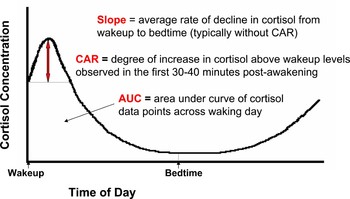
The HPA axis is responsible for basic physiological processes related to the regulation of metabolism and arousal across the day and exhibits a regular diurnal pattern (see Figure 1 for a stylized depiction of a typical diurnal rhythm).Footnote 1 In adults, cortisol levels are high in the morning at awakening and increase approximately 50–60% in the first 30–40 min after waking (called the cortisol awakening response [CAR]). They then drop off rapidly in the first few hours after waking, and continue to drop more slowly across the day, reaching a low point or nadir around midnight (Kirschbaum & Hellhammer, 1989; Pruessner et al., Reference Pruessner, Wolf, Hellhammer, Buske-Kirschbaum, von Auer and Jobst1997; Weitzman et al., Reference Weitzman, Fukushima, Nogeire, Roffwarg, Gallagher and Hellman1971). The CAR has recently gained the interest of investigators because individual differences in the size of this postawakening increase have been correlated both with acute and chronic psychosocial processes, and with a variety of disease states (Adam, Hawkley, Kudielka, & Cacioppo, Reference Adam, Hawkley, Kudielka and Cacioppo2006; Clow, Thorn, Evans, & Hucklebridge, Reference Clow, Thorn, Evans and Hucklebridge2004; Pruessner et al., Reference Pruessner, Wolf, Hellhammer, Buske-Kirschbaum, von Auer and Jobst1997).
Stylized typical diurnal cortisol rhythm and some important HPA axis parameters derived from it. [A color version of this figure can be viewed online at journals.cambridge.org/dpp]

Cortisol levels also increase in response to both physical and psychological sources of stress or threat. Psychological activation of the HPA axis begins with affective information from the limbic system activating corticotropin-releasing hormone (CRH)-releasing neurons in the hypothalamus. CRH, along with increased levels of arginine vasopressin, stimulate the release of adrenocorticotropin hormone (ACTH) from the pituitary gland into general circulation (Herman & Cullinan, Reference Herman and Cullinan1997). ACTH, in turn, stimulates the release of cortisol from the adrenal cortex. Most cortisol (95%) is immediately bound to corticosteroid binding globulin and albumin, making it biologically inactive, whereas the rest remains active to affect a wide variety of processes in the body through a combination of fast-acting nongenomic, and slower acting genomic mechanisms (de Kloet & Derijk, Reference de Kloet and Derijk2004).
About 15 to 25 min after the onset of a stressor, peak levels of cortisol are seen in blood, and peak levels of the unbound portion of cortisol are detectable in human saliva about 5 min after levels peak in the bloodstream (20–30 min poststressor). Upon cessation of the stressor these decline to prestress levels over the course of the next 60 to 90 min (de Kloet et al., Reference de Kloet, Joels and Holsboer2005; Johnson, Kamilaris, Chrousos, & Gold, Reference Johnson, Kamilaris, Chrousos and Gold1992; Lovallo & Thomas, Reference Lovallo, Thomas, Cacioppo, Tassinary and Bernston2000). Finally, negative feedback of cortisol to receptors in the hippocampus, hypothalamus, pituitary, and the prefrontal cortex help to self-contain the activation of the HPA, with high circulating levels of cortisol reducing further release of CRH, ACTH, and cortisol (Chrousos & Gold, Reference Chrousos and Gold1992; Gold & Chrousos, Reference Gold and Chrousos2002; Herman & Cullinan, Reference Herman and Cullinan1997).
Stress-related increases in cortisol have a number of short-term effects on the body. A major role of cortisol in the stress response is to increase available energy resources in the form of increased glucose production. Cortisol also helps to temporarily suppress the activity of systems that operate in the absence of threat, such as digestion, growth, and sexual behavior (Johnson et al., Reference Johnson, Kamilaris, Chrousos and Gold1992), and serves to contain immune and inflammatory responses (Miller, Cohen, & Ritchey, Reference Miller, Cohen and Ritchey2002). Cortisol and the central CRH component of the HPA response also influence cognitive processes such as memory and learning (Chrousos & Gold, Reference Chrousos and Gold1992; de Kloet, Reference de Kloet1991; Johnson et al., Reference Johnson, Kamilaris, Chrousos and Gold1992). Although HPA activation increases alertness, vigilance to, and memory of threat-relevant stimuli, it impairs more complex and nonthreat-relevant cognitive processes, and has been associated with less effective processing of information and poorer memory for new information (Lupien, Gillin, & Hauger, Reference Lupien, Gillin and Hauger1999; Lupien & McEwen, Reference Lupien and McEwen1997).
It is notable that the systems influenced by HPA activity overlap considerably with the systems affected by symptoms of depression and/or anxiety: alertness, vigilance, sleep, and emotion, as well as cognitive, digestive, metabolic, sexual, and memory processes. The effects of glucorticoids, including their negative feedback actions in the brain, are mediated by two classes of receptors: mineralocorticoid receptors (MRs) and glucocorticoid receptors (GRs; de Kloet, Vreugdenhil, Oitzl, & Joels, Reference de Kloet, Vreugdenhil, Oitzl and Joels1998). MRs have a far greater affinity for glucocorticoids than GRs. As a result, under low or trough basal and nonstress conditions, far more MR than GR receptors will be occupied, with GR receptors and their actions only coming into play at peak basal points in the day or under stress conditions. As will be elaborated below, variations in the number and balance of these two receptor types play a major role in theories of the origins of HPA axis abnormalities in MDD (de Kloet & Derijk, Reference de Kloet and Derijk2004; Holsboer, Reference Holsboer2000).
HPA Axis Activity in Adult Depression
A long history of research has found altered HPA axis activity in the presence of unipolar depression in adults. About 20–40% of depressed outpatient adults and 60–80% of depressed inpatients show evidence of cortisol hypersecretion (higher basal levels of cortisol) compared to nondepressed adults (Thase et al., Reference Thase, Jindal, Howland, Gotlib and Hammen2002). Depressed adults are also more likely than nondepressed adults to show impaired negative feedback of the HPA axis, as indicated by a failure to suppress production of cortisol the morning after taking an oral dose of dexamethasone (DEX, a synthetic glucocorticoid; Gold, Licinio, Wong, & Chrousos, Reference Gold, Licinio, Wong and Chrousos1995). As a result of these and many other clinical and preclinical findings, theories of the role of the HPA axis in MDD have suggested that an overproduction of central CRH, reduced number or efficiency of GRs in the central negative feedback circuits of the HPA, or a combination of both these factors, may play a causal role in the development of depressive disorder (Ehlert et al., Reference Ehlert, Gaab and Heinrichs2001; Gold & Chrousos, Reference Gold and Chrousos2002; Holsboer, Reference Holsboer2000). Increased activation of central CRH circuits are thought to help explain the mood and behavioral symptoms of depression, whereas reduced GR activity helps account for the less efficient negative feedback functioning and elevated basal levels of cortisol frequently seen in MDD in adults (de Kloet et al., Reference de Kloet, Joels and Holsboer2005). Experimental animal models have demonstrated that continually heightened cortisol levels may over time contribute to hippocampal damage (Sapolsky, Reference Sapolsky1996), helping explain cognitive and memory deficits, and findings of reduced hippocampal volume in MDD (Bremner, Reference Bremner2000).
The origins of increased central CRH activation and reduced GR functioning in MDD adults are subject to debate, but researchers typically suggest that a combination of genetic factors (particularly in the case of reduced GR function) and exposure to adverse environmental experience, especially early in life, contribute to these HPA axis abnormalities. A common model suggests that repeated or chronic stress exposure, resulting in extreme, prolonged, or frequent elevations of glucocorticoids, contributes over time to downregulation of GR receptors in the negative feedback circuits of the HPA, especially the hippocampus, and thus to further elevations in circulating glucocorticoids (Sapolsky, Krey, & McEwen, Reference Sapolsky, Krey and McEwen1986).
Such a positive cascade may be especially likely to occur in individuals with genetic vulnerabilities toward reduced GR function. Several functional polymorphisms of the GR receptor have been identified that have been related both to altered stress reactivity and to greater risk for MDD. In contrast, extensive evidence exists, particularly in animal models, for modulation of GR populations and central CRH activity by early experience (Heim & Nemeroff, Reference Heim and Nemeroff2001; Sanchez, Reference Sanchez2006; Weaver et al., Reference Weaver, Cervoni, Champagne, D'Alessio, Sharma and Seckl2004). Many HPA axis variations that may appear to be trait vulnerabilities for depression are themselves developed, rather than being inborn (Meyer, Chrousos, & Gold, Reference Meyer, Chrousos and Gold2001). The extensive literature on modulation of HPA axis function by prenatal, early postnatal, and later social experience has been reviewed elsewhere (Adam, Klimes-Dougan, & Gunnar, Reference Adam, Klimes-Dougan, Gunnar, Coch, Dawson and Fischer2007; Bremner & Vermetten, Reference Bremner and Vermetten2001; Heim & Nemeroff, Reference Heim and Nemeroff2001; Kaufman & Charney, Reference Kaufman, Martin, King and Charney2001; Meyer et al., Reference Meyer, Chrousos and Gold2001; Sanchez, Reference Sanchez2006; Wadhwa, Dunkel-Schetter, Chicz-DeMet, Porto, & Sandman, Reference Wadhwa, Dunkel-Schetter, Chicz-DeMet, Porto and Sandman1996), the details of which will therefore not be reexamined here.
One important point regarding the effects of early experience that deserves attention in relation to our discussion is Heim, Plotsky, and Nemeroff's (Reference Heim, Plotsky and Nemeroff2004) suggestion that an etiological pathway from early traumatic life stress (ELS) to depressive disorder by way of altered HPA axis activity may be the case for only a subset of individuals with MDD. That is, subtypes of MDD might exist based on the presence or absence of exposure to early life stress, with ELS subtypes showing differences in neurobiology and differing responses to treatments. Heim et al. (Reference Heim, Plotsky and Nemeroff2004) found that depressed adults with early life stress were more responsive to psychosocial than psychopharmacological interventions. To the extent that Heim's theory is correct, it implies that only some individuals at risk for depression will be identifiable to way of preexisting HPA axis alterations, and that differing approaches to prevention might be implied for those with and without ELS exposure and its resulting HPA axis alterations.
In the upcoming sections, we review (a) what is known regarding the activity of the adolescent HPA axis during and after the presence of, and prior to the onset of MDD, (b) what is known regarding the efficacy of interventions designed to prevent adolescent depression, and (c) whether incorporating measures of adolescent HPA axis activity into such prevention programs might be useful in helping us design better programs to prevent the onset of depression in youth.
HPA Axis Activity in Adolescent Depression
Associations between HPA axis parameters and depression are far less consistent in children and adolescents than in adults (Dahl, Reference Dahl and Carskadon2002; Kaufman et al., Reference Kaufman, Martin, King and Charney2001). The most robust cross-sectional correlate of depression in adolescents is elevated cortisol levels in the evening hours, shortly before sleep onset (Angold, Reference Angold2003; Dahl et al., Reference Dahl, Ryan, Puig-Antich, Nguyen, Al-Shabbout, Meyer and Perel1991), compared to a more general basal hypercortisolism observed in adult depression. This finding of elevated evening cortisol in depressed adolescents tends to be found more consistently for inpatient populations and for suicidal adolescents (Dahl et al., Reference Dahl, Ryan, Puig-Antich, Nguyen, Al-Shabbout, Meyer and Perel1991). Findings regarding depressed adolescents' responses to DEX have also been mixed, with greater DEX nonsuppression in inpatients, compared to outpatients, and lower rates of DEX nonsuppression found for depressed adolescents than for depressed adults (Birmaher & Heyal, Reference Birmaher and Heydl2001).
Kaufman et al. (Reference Kaufman, Martin, King and Charney2001) suggest three possible reasons why less consistent HPA-axis associations with depression are seen for adolescents: (a) developmental factors such as the ongoing maturation of neurotransmitter systems during the adolescent years (as described below, developmental changes in HPA axis function may also be occurring over this time period, with relevance for understanding developmental changes in depression); (b) factors regarding the progression of disorder such as a larger number of prior episodes and longer total duration of depressive episodes in adults; and (c) heterogeneity of later clinical outcome, such that groups that look the same in adolescence may actually be at the early stages of development of different disorders (e.g., unipolar depression vs. bipolar disorder). If different trajectories do not become apparent until later in the course of the disorder, diagnostic groups in adolescence may not be as accurately defined, and associations with biological parameters obscured by these diagnostic impurities (Rao, Dahl, & Ryan, Reference Rao, Dahl and Ryan1996).
Other investigators (Gispen-de Wied, Jansen, Duyx, Thijessen, & Engeland, Reference Gispen-de Wied, Jansen, Duyx, Thijessen and Engeland2000) argue that the use of categorical measures or “clinical caseness” to define depression may not be fine-tuned enough to show significant associations during adolescence. They found a positive association between continuous measures of depressive symptoms and cortisol.
In some cases, failure to appropriately consider comorbid conditions, or atypical forms of depression, may also contribute to the inconsistencies in the adolescent depression literature, in particular if such comorbidities are less readily identified in adolescents than adults. Elevated basal cortisol levels are found in panic disorder and bipolar disorder (Ellenbogen, Hodgins, Walker, Couture, & Adam, Reference Ellenbogen, Hodgins, Walker, Couture and Adam2006; Stones, Groome, Perry, Hucklebridge, & Evans, Reference Stones, Groome, Perry, Hucklebridge and Evans1999). Low basal levels of cortisol have been found in PTSD (Colomina, Canals, Carbajo, & Domingo, Reference Colomina, Canals, Carbajo and Domingo1997; Susman, Reference Susman1997; Walker, Walder, & Reynolds, Reference Walker, Walder and Reynolds2001; Yehuda, Reference Yehuda2003) and in children with externalizing problems (Gunnar & Vazquez, Reference Gunnar and Vazquez2001; Klimes-Dougan, Hastings, Granger, Usher, & Zahn-Waxler, Reference Klimes-Dougan, Hastings, Granger, Usher and Zahn-Waxler2001; McBurnet, Lahey, Rathouz, & Louber, Reference McBurnet, Lahey, Rathouz and Loeber2000; Pajer, Gardener, Rubin, Perel, & Neal, Reference Pajer, Gardener, Rubin, Perel and Neal2001; Shirtcliff, Granger, Booth, & Johnson, Reference Shirtcliff, Granger, Booth and Johnson2005; Smider et al., Reference Smider, Essex, Kalin, Buss, Klein and Davidson2002). Studies in adults also suggest that differing subtypes of depression (e.g., melancholic vs. atypical) may be associated with divergent patterns of HPA axis activity (Antonijevic, Reference Antonijevic2006; Gold & Chrousos, Reference Gold and Chrousos2002). As noted above, Heim, Plotsky, and Nemeroff (Reference Heim, Plotsky and Nemeroff2004) suggested that subtypes based on whether early life stress was experienced will also result in divergent HPA axis indicators. There has been little attention to whether such subtypes exist in adolescents, or whether they help resolve inconsistencies in the literature on HPA axis functioning in depressed adolescents.
The fact that cross-sectional associations between that HPA axis alterations during the presence of a depressive episode are less robust in adolescence does not mean that the HPA axis plays no role in the development of depression over this period. As will be discussed below, certain HPA axis measures are emerging as relatively consistent prospective predictors of the onset of depression over the adolescent years. In addition, recent evidence on changes in the HPA axis with development raises the possibility that developmental changes in the HPA axis could play a role in the increased rates of depression that occur over the adolescent years.
Several researchers have argued that developmental increases in basal levels of cortisol may occur over the transition to adulthood, and may trigger symptoms of psychopathology among vulnerable adolescents (Adam, Reference Adam2006; Walker et al., Reference Walker, Walder and Reynolds2001). Cross-sectional studies have supported the possibility of a developmental increase in cortisol levels over the pubertal and especially postpubertal periods in adolescents (Kenny, Gancayo, Heald, & Hung, Reference Kenny, Gancayo, Heald and Hung1966; Kenny, Preeasambat, & Migeon, Reference Kenny, Preeasambat and Migeon1966; Kiess et al., Reference Kiess, Meidert, Dressendorfer, Schriever, Kessler and Konig1995; Lupien, King, Meaney, & McEwen, Reference Lupien, King, Meaney and McEwen2001). One cross-sectional study noted developmental increases in basal cortisol levels, as well as increased cortisol reactivity to negative emotion in naturalistic settings (Adam, Reference Adam2006).
If developmental increases in cortisol levels and reactivity are indeed present, and if increased levels and reactivity, in turn, prospectively predict the onset of depressive disorder, developmental changes in HPA axis activity may help account for increasing rates of depression over the adolescent years. Longitudinal evidence on changes in cortisol activity with adolescent development is scarce. One longitudinal study found a developmental rise in cortisol in a laboratory setting in a very small sample of adolescents, but focused on relations with personality disorders rather than depression (Walker et al., Reference Walker, Walder and Reynolds2001). Of more relevance, Shirtcliff and colleagues (Reference Shirtcliff, Granger, Booth and Johnson2005), found that increases in cortisol from one year to the next in a sample of 6- to 13-year-olds predicted increases in internalizing symptoms over this time period in both boys and girls. If replicated, this study supports the possibility that developmental changes in HPA axis activity could help to account for increased rates of depression over this time period. In future research, it will also be of interest to examine whether developmental changes in HPA axis activity are more pronounced for adolescent girls than boys, or whether changes in stress system activity interact with gender-specific changes in pubertal hormones to place adolescent girls at particularly high vulnerability for depressive disorders.
As suggested above, the HPA axis factors that are reflections of risk in adolescents, and those that are associated with the presence of disorder, will not necessarily be the same. Indeed, many of the theories cited above argue that depressive symptoms emerge because of changes in the HPA axis as a result of chronic stress exposure. As noted by Ehlert et al. (Reference Ehlert, Gaab and Heinrichs2001), “The shift from the activation of the HPA axis following stress to the distinct dysregulations of the axis associated with psychological and physical disturbances remains unexplained” (p. 148). That is, risk markers are not always “trait” in nature; some may, in fact, be present prior to, but not observable during or after symptom onset. If a “shift” in HPA axis activity does indeed occur between the time of stress exposure and symptom onset, the only way to observe the “predisorder” functioning of the HPA axis that places individuals at risk for depressive disorder is to observe the HPA axis prior to the first onset of disorder and follow individuals over time. Given that many first onsets of MDD occur in adolescence, it is a good time for capturing the predisorder state of the HPA axis and observing any changes that occur with the onset and progression of depressive disorder. In addition, the possible contributions of normative developmental changes in HPA axis activity to the emergence of depression can be examined prospectively over this time period, and the extent to which these developmental changes interact with or potentiate existing risk processes can also be observed.
It is therefore quite surprising that only a few studies have taken a prospective longitudinal approach to studying the role of the HPA axis in the onset of depression, and fewer still have done so during the adolescent years. Notably, the studies that have taken a prospective approach are starting to provide a convergent picture of which aspects of premorbid HPA axis function appear to confer increased risk for the later development of depression. Because of their importance in thinking about the role of HPA axis measures in prevention of depression, these studies will be described in some detail. An emphasis will be placed on adolescent studies, but because of the limited number of available prospective studies on the role of the HPA axis in the development of depressive disorders, some data on adults will also be included.
Prospective Studies
Morning cortisol as a prospective predictor of MDD
Among a sample of 116 adult women (42% of whom had experienced prior episodes of depression), Harris et al. (Reference Harris, Borsanyi, Messari, Stanford, Brown and Cleary2000) examined the impact of psychosocial risk factors as well as cortisol levels (measured at 8 a.m. and 8 p.m.) on the onset of depressive episodes. Higher cortisol levels at 8 a.m. predicted more onsets of MDD over the next 13 months.Footnote 2 This effect was significant independent of the impact of provoking life events and psychosocial vulnerability factors (negative self esteem, chronic negative social interactions, or chronic subclinical depression or anxiety) measured at study entry. It was also not attributable to the residual or scar effects of prior episodes on morning cortisol levels because effects were similarly strong among individuals with and without prior episodes of disorders. Although significant, the predictive power of morning cortisol was relatively weak: an odds ratio [OR] of 1.3, compared to 7.8 for the occurrence of intervening provoking life events or 3.8 for baseline psychosocial vulnerabilities when all variables were entered simultaneously.
A similar finding of high morning cortisol predicting onset of depression was found in a study of 180 adolescents at risk for depression because of either psychosocial factors (such as experiencing two or more recent life events or a history of two or more exit events/separations), high emotionality, or the presence of parental psychopathology (Goodyer, Herbert, Tamplin, & Altham, Reference Goodyer, Herbert and Tamplin2000). Cortisol was measured at 8 a.m. and 8 p.m. over a period of 4 days at study entry, along with a range of psychosocial risk factors, and the occurrence of life events and depressive episodes over the next 12 months was assessed. Adolescents who had one or more elevated morning cortisol peaks at baseline (termed “peak positive,” having one or more morning cortisol samples higher than the 80th percentile of the morning values for that day, defined separately by gender), were more likely to have a depressive episode over the next 12 months. Unlike in the study by Harris et al. (Reference Harris, Borsanyi, Messari, Stanford, Brown and Cleary2000), average level of morning cortisol was not a significant predictor, but rather only the occurrence of peak cortisol levels, suggesting that the presence of extreme morning cortisol values is the factor that confers risk.Footnote 3 Goodyer, Herbert, and Tamplin (Reference Goodyer, Herbert and Tamplin2000) argue that these peak levels may have more potent impact on later functioning because they are more likely to occupy Type I (glucocorticoid) receptors, which are only occupied in the presence of very high cortisol levels. Cortisol peaks, recent life events (in particular, personal disappointments and losses in the past month), and baseline self-reported depressive symptoms each independently predicted the occurrence of a depressive episode in the 12 month follow-up period (with odds ratios of 7.1 for peak morning cortisol, 1.1 for depressive symptoms, 58.9 for disappointments, and 8.8 for losses). Because baseline morning cortisol peaks were not associated with baseline depressive symptoms, baseline emotionality, or the occurrence of recent life events, Goodyer et al. conclude that high morning peaks in cortisol are not of recent psychosocial origin, but rather either of genetic, or early psychosocial origin.Footnote 4
Evidence of the latter comes from a recent study by Halligan, Herbert, Goodyer, and Murry (Reference Halligan, Herbert, Goodyer and Murray2007), in which cortisol was measured in the morning (8 a.m.) and evening (8 p.m.) every day for 10 days in a sample of 13-year-olds who either had (N = 48) or had not (N = 39) been exposed to maternal postnatal depression (PND) measured at 6 weeks postpartum (a variety of other intervening risk factors were also assessed). Morning cortisol at age 13 was found to predict high levels of depressive symptomsFootnote 5 at age 16, controlling for symptom levels at 13 years and a variety of other possible confounds. In this study, three different measures of morning cortisol (average, maximum level, and variability in 8 a.m. cortisol across the 10 days) were each significant positive predictors of later depressive symptoms, but the maximum level of the 10 measurement days was the best predictor when prior depressive symptoms and covariates were included (OR = 1.37). Of even more interest, exposure to maternal postnatal depression predicted the morning cortisol measures (Halligan et al., Reference Halligan, Herbert, Goodyer and Murray2004), as well as age 16 depressive symptoms. Maximum morning cortisol was a significant mediator of the association between maternal PND and age 16 depressive symptoms (OR = 1.41 for morning cortisol controlling for all covariates and PND). Although we are unable to rule out the possibility of genetic contributions to both maternal PND and adolescent cortisol, this study suggests that maternal postnatal depression is an early psychosocial influence that may have important implications for morning cortisol levels and levels of adolescent depression.
Limitations of existing prospective studies
Although groundbreaking, the prior prospective studies contain some important limitations. The largest of these is that morning cortisol is measured at fixed clock times (8 a.m. and 8 p.m.), rather than sampling occurring in relation to each participants' own wake times and bedtimes. It is well established that cortisol rhythms are defined according to person-specific sleep–wake schedules (Edwards, Evans, Hucklebridge, & Clow, Reference Edwards, Evans, Hucklebridge and Clow2001; Kudielka & Kirschbaum, Reference Kudielka and Kirschbaum2003; Wilhelm, Born, Kudielka, Schlotz, & Wust, Reference Wilhelm, Born, Kudielka, Schlotz and Wust2007). Thus, fixed-time sampling is problematic because individuals may be at different points in their waking day when samples are taken, and thus levels may be because of differing amounts of time awake, rather than true differences in cortisol level. This is particularly problematic for fixed-time samples taken in the morning, as it is unclear the extent to which morning measures are capturing levels associated with the CAR, during which cortisol levels change dramatically (typically increasing 50–60% within the first 30–40 min after waking, and declining rapidly within the next hour thereafter).
Precise timing of sampling is essential for the validity of the CAR measure, with even small variations in timing having a significant impact on CAR estimates (Broderick, Arnold, Kudielka, & Kirschbaum, Reference Broderick, Arnold, Kudielka and Kirschbaum2004; Kudielka, Broderick, & Kirschbaum, Reference Kudielka, Broderick and Kirschbaum2003). In addition, the CAR is thought to be regulated by different biological mechanisms (Clow et al., Reference Clow, Thorn, Evans and Hucklebridge2004; Wilhelm et al., Reference Wilhelm, Born, Kudielka, Schlotz and Wust2007) and to be associated differently with psychosocial and health processes than the rest of the diurnal rhythm as defined by levels from waking to bedtime (Adam et al., Reference Adam, Hawkley, Kudielka and Cacioppo2006). More precisely, the CAR is a physiologic response to the biologic process of awakening that is superimposed on top of the existing circadian rhythm (Wilhelm et al., Reference Wilhelm, Born, Kudielka, Schlotz and Wust2007). It is thus important to obtain separate measures of the CAR and the rest of the diurnal rhythm; this requires multiple morning samples timed in relation to specific waketimes each day.
CAR as a predictor
In a recent study (Adam et al., Reference Adam, Doane, Mendelsohn, Griffith, Mineka and Zinbarg2007) a more precise sampling schedule was utilized, in which sampling times were set in relation to participants' own wake and bedtimes. Just over 200 late adolescents (average age = ~17 years) were oversampled for high risk for the development of emotional disorders based on high baseline levels of neuroticism, such that approximately 60% of the sample came from the top tertile of neuroticism on a screening questionnaire. Salivary cortisol measures were gathered six times per day over 3 consecutive weekdays: at wakeup; wakeup plus 40 min; at approximately 3, 8, and 12 hr postawakening; and at bedtime. Wakeup values, CAR responses (wakeup + 40 min − wakeup cortisol level), evening values, and slopes of the diurnal cortisol rhythm from wakeup to bedtime (all averaged across the 3 days) were examined as potential predictors of the onsets of unipolar major depressionFootnote 6 approximately 1.5 years later. All analyses controlled for the presence of baseline clinical or subclinical MDD as well as baseline measures of life stress, neuroticism, and a wide range of health covariates. Controlling for these effects, the size of the CAR at baseline was a significant prospective predictor, with a 1 standard deviation increase in the CAR associated with approximately twice the risk for the onset of MDD over the 1.5-year follow-up.
Wakeup cortisol levels, wakeup plus 40-min levels, diurnal cortisol slope, evening levels, and the area under the diurnal curve (AUC with the CAR rise excluded) were also examined; of these, the size of the CAR was the only significant prospective predictor of MDD. These findings suggest that it is the CAR, rather than elevated wakeup levels or generally elevated morning levels that represent the risky component of morning cortisol levels. This makes some sense, given that the CAR values are typically the highest levels of the day, and therefore most likely to occupy the low affinity GR receptors implicated in theoretical models of depression. It seems likely that the prior studies utilizing a fixed sampling time (8 a.m.) were inadvertently capturing some aspect of the CAR in their measure of morning cortisol activity, perhaps especially so when they used the “peak positive” or “maximal” cortisol indices, which may reflect the sampling occasions on which the peak CAR values were inadvertently captured by the fixed-time sampling protocol. The finding of the CAR being the actively predictive ingredient of morning cortisol levels should be confirmed in additional research. However, our large sample size, extensive controls, more frequent morning sampling protocol, and increasing interest in the CAR as an important indicator of HPA axis functioning (Clow et al., Reference Clow, Thorn, Evans and Hucklebridge2004) makes this suggestion a relatively compelling one.
In considering possible origins of individual differences in CAR values, prior research on the determinants of the CAR has suggested a substantial genetic component (Wüst, Federenko, Hellhammer, & Kirschbaum, Reference Gaab, Sonderegger, Scherrer and Ehlert2000). The CAR may thus, in part, reflect a trait biological risk factor for depression. In contrast, numerous studies have also shown this HPA axis indicator to be related to, and influenced by, psychosocial experience. Studies have found cross-sectional associations between chronic stress and higher CAR levels (Pruessner, Hellhammer, & Kirschbaum, Reference Pruessner, Hellhammer and Kirschbaum1999; Schulz, Kirschbaum, Pruessner, & Hellhammer, Reference Schulz, Kirschbaum, Pruessner and Hellhammer1998; Wüst et al., Reference Wüst, Federenko, Hellhammer and Kirschbaum2000), and between loneliness and CAR levels (Steptoe, Owen, Kunz-Ebrecht, & Brydon, Reference Steptoe, Owen, Kunz-Ebrecht and Brydon2004). CAR levels are regulated by levels of social contact (Stetler & Miller, Reference Stetler and Miller2005). Although most prior studies have been cross-sectional, Adam et al. (Reference Adam, Hawkley, Kudielka and Cacioppo2006) more recently noted that even subtle day-to-day variations in experience can cause day to day changes in the size of the CAR. In particular, prior-day levels of loneliness predicted the size of the CAR the next morning, whereas CAR levels that morning did not predict loneliness for the rest of the day, suggesting a causal impact of loneliness on next-day levels of the CAR.
Although CAR values that are extremely low might be protective against the later development of depressive disorder, they may paradoxically place individuals at risk for disorders associated with hypocortisolemia, such as burnout (Pruessner et al., Reference Pruessner, Hellhammer and Kirschbaum1999) or chronic fatigue (Roberts, Wessely, Chalder, Papadopoulos, & Cleare, Reference Roberts, Wessely, Chalder, Papadopoulos and Cleare2004). Fries, Hesse, Hellhammer, and Hellhammer (Reference Fries, Hesse, Hellhammer and Hellhammer2005) propose that hypocortisolemia, including an abnormally low CAR, is likely to have developed over time to protect the individual from the effects of exaggerated glucocorticoid levels, but may come at the cost of greater fatigue, pain, and inflammatory and autoimmune type disorders. As a result, current evidence would suggest that an optimal HPA-related intervention would have the effect of reducing CAR values to a moderate level. It would not be optimal to create this CAR profile pharmacologically, as it has been shown that ongoing psychosocial modulation of the CAR is important for responding to daily demands (Adam et al., Reference Adam, Hawkley, Kudielka and Cacioppo2006). Rather, providing the individual with the social and cognitive resources to better contain their affective responses to daily events may provide them the ability for more appropriate and fine-tuned modulation of the CAR response. This would also allow the CAR response to provide the energy needed to cope with daily demands, without being elevated to such a degree that it places the individual at risk for the negative effects associated with hypercortisolemia, including MDD.
Is HPA axis reactivity also predictive of depression?
Given that the CAR itself reflects a form of reactivity overlaid on the diurnal profile (Wilhelm et al., Reference Wilhelm, Born, Kudielka, Schlotz and Wust2007), and increased HPA axis reactivity features prominently in theoretical models of depression, it is worth questioning whether it is greater cortisol reactivity more generally, rather than just a larger CAR, that places an individual at risk for depression. Although the latter idea is well established in theoretical models of depression, there is very little research on the question or whether or not greater stress-related HPA axis reactivity is in fact a prospective risk factor for depression.
In one short-term longitudinal study, clinic-referred children participated in a parent–child conflict paradigm and were assessed for internalizing problems and cortisol reactivity to the conflict at the time of the conflict paradigm and also 6 months later (Granger, Weisz, McCracken, Ikeda, & Douglas, Reference Granger, Weisz, McCracken, Ikeda and Douglas1996). Those who exhibited high cortisol reactivity to the conflict discussion at the time of the first assessment exhibited more internalizing symptoms at the second time point. In addition, increases in internalizing problems were associated with higher cortisol reactivity at the follow-up. Although based on a younger sample, these results suggest the possibility that multiple aspects of cortisol reactivity, rather than just the size of the CAR, may serve as a risk factor for the later onset of depressive symptoms.
Future studies should confirm whether it is the CAR or reactivity to stressors throughout the day that is the best prospective predictor of the onset of depression and whether these are related or independent effects. Research should also examine whether the size of the CAR serves as a mediator between the experience of earlier psychosocial adversity and the later experience of depression. Halligan, Herbert, Goodyer, and Murray's (Reference Halligan, Herbert, Goodyer and Murray2007) recent study suggests that this could indeed be the case, at least for their measure of morning cortisol. However, whether such a mediation model holds up, and is perhaps strengthened, when the CAR is examined more specifically needs to be examined in future longitudinal research of this nature. If possible, it would be important to identify the mechanisms by which the “risky” HPA axis indicators emerged: as a result of increased perceptions or interpretations of stress, increased central CRH levels, increased ACTH responses to CRH, increased adrenal output, or inefficiency of central negative feedback mechanisms.
Differences between cross-sectional and prospective associations with depression
Additional analyses (Doane, Adam, Mineka, Zinbarg, & Craske, Reference Doane, Adam, Mineka, Zinbarg and Craske2008) support our prior statements that HPA axis predictors of depression are different than the HPA axis measures associated concurrently with the presence of disorder. In the same study of youth at risk for depression described above, there were no significant cross-sectional associations between adolescent MDD and concurrent HPA axis parameters at baseline. Importantly, the aspect of HPA axis activity that was prospectively predictive (the size of the CAR) was not significantly associated cross-sectionally with the presence of clinical or subclinical depression at either the baseline or follow-up time points. A similar divergence between cross-sectional associations and prospective prediction was found in the other prospective studies described above. While reporting significant prospective associations of baseline morning cortisol to later depressive symptoms, Goodyer et al. (Reference Goodyer, Herbert and Tamplin2000) and Harris et al. (Reference Harris, Borsanyi, Messari, Stanford, Brown and Cleary2000) found no associations between baseline morning cortisol and baseline depressive symptoms, and Halligan et al. (Reference Halligan, Herbert, Goodyer and Murray2007) found only a nonsignificant trend for such an association. Thus, in all cases effects for the prospective prediction of depression from prior morning cortisol were more robust than any concurrent associations found between cortisol and depression. It is thus not surprising that past research has yielded inconsistent associations between adolescent depression and HPA axis activity, as most prior research has measured HPA axis activity in currently depressed adolescents.
Directions for future research
To truly shed light on this issue of how HPA axis indicators change in response to chronic and acute stress exposure across the entire course of depressive disorder, studies are required that trace changes in the HPA axis over time. For example, it would be useful to observe the hypothesized transition from extreme reactivity during stress exposure to the hyper- or hypocortisolemic state thought to result from chronic strain (Ehlert et al., Reference Ehlert, Gaab and Heinrichs2001; Fries, Hess, Hellhammer, & Hellhammer, Reference Fries, Hesse, Hellhammer and Hellhammer2005; Miller, Chen, & Zhou, Reference Miller, Chen and Zhou2007). The extent to which changes in HPA axis function occur over time, and the extent to which they track with changes in symptomatology, should be an important focus of these studies. Particularly important will be prospective studies that examine multiple aspects of HPA axis function, including diurnal profiles, reactivity to awakening and to psychosocial stressors, and responses to pharmacological challenge tests over the developmental course of depressive disorder. These should start prior to onset, follow through depressive episodes, and follow individuals during remission to predict stable recovery or the recurrence of new depressive episodes.
Through such studies we could better identify which HPA axis markers serve as trait risk factors, state and scar markers, or additional roles not well described by these terms. Given that evidence increasingly suggests that prospective predictors of disorder are likely to have been influenced, set up, or organized by a prior history of stress exposure (Essex, Klein, Cho, & Kalin, Reference Essex, Klein, Cho and Kalin2002; Halligan et al., Reference Halligan, Herbert, Goodyer and Murray2007), and evidence cited above that they may not still be observable after the onset of disorder, a focus on “traits” as predisorder characteristics conferring later risk for disorder may be somewhat misleading. A distinction should be made between true “trait” risk factors, or individual differences in HPA axis function that are nonmodifiable and therefore constant across the life span (such as genetic polymorphisms relevant to HPA axis function), and “developed” or “epigenetic” risk factors, which are predisorder characteristics conferring risk that have emerged during ontogeny in response to a developmental history of stress exposure (and likely mediated by enduring changes in gene expression and to the central and peripheral physiology of the HPA axis).
If preventive interventions were to incorporate HPA axis measures at multiple time points throughout the intervention process, they would provide important insights on whether the HPA axis measures predictive of adolescent depression can be altered by systematic attempts to change adolescent experience. Examining whether HPA axis changes are, in turn, related to improved outcomes at the level of depressive symptoms would provide important insights into the causal role of the HPA axis, and whether HPA axis changes are an important or necessary component of the efficacy of the intervention. Do interventions exist that can effectively prevent adolescent depression? Do interventions exist that can change cortisol levels? Is there sufficient overlap in the types of interventions that are efficacious for each to suggest that preventive interventions might operate, at least in part, by way of altered HPA axis activity? In the next sections, we turn to a detailed examination of “what works” in preventing depression, and what works in terms of interventions designed to alter HPA axis activity. In the final section of the paper, we outline the design of a prototypic preventive intervention for adolescent depression that would help to confirm which aspects of HPA axis activity are the best indicators of risk for depression, whether youth with certain HPA axis features might benefit from particular prevention approaches, and whether changes in HPA axis functioning serve as an indicator of intervention efficacy or a mediator of the effects of the intervention.
What works in preventive interventions for adolescent depression?
To discuss the efficacy of various types of preventive interventions, some basic “Prevention 101” vocabulary is required. The standard definitions currently used in prevention research are derived from the Institute of Medicine's (IOM) 1994 report (Mrazek & Haggerty, Reference Mrazek and Haggerty1994), which is the output of the Committee on Prevention of Mental Disorders. Prevention refers to those interventions implemented prior to the first onset of a disorder (Muñoz, Mrazek, & Haggerty, Reference Muñoz, Mrazek and Haggerty1996). This explicit focus on “disorder” emphasizes the use of diagnostic outcomes. Notably, however, most prevention studies of depression in youth populations have examined symptom level outcomes, although there is ample justification for examining symptoms in addition to categorical outcomes. That is, depressive symptoms have demonstrated significant concurrent association with impairment (Lewinsohn, Solomon, Seeley, & Zeiss, Reference Lewinsohn, Solomon, Seeley and Zeiss2000) and prospective associations with later full-blown depressive disorder (Pickles et al., Reference Pickles, Rowe, Simonoff, Foley, Rutter and Silberg2001). Another implication of the IOM's definition of prevention is that interventions that occur after the person crosses the threshold for disorder are considered either treatment or maintenance interventions. This distinction between initial onsets and recurrences is important when examining depression outcomes because different psychosocial (and psychobiological) processes may be implicated in first versus later episodes (Lewinsohn, Allen, & Seeley, Reference Lewinsohn, Allen, Seeley and Gottlib1999; Monroe & Harkness, Reference Monroe and Harkness2005).
Interventions are also categorized according to the type of population they target (Mrazek & Haggerty, Reference Mrazek and Haggerty1994). Universal interventions are administered to the general population without restriction. Selective interventions are targeted to individuals who are at heightened risk for a mental disorder. The selected risk factor may be based in biological, psychological, or social domains. Indicated interventions focus on subpopulations who are already manifesting some signs, symptoms, or biological markers of disorder, but whose psychopathology is below the diagnostic threshold.
HPA axis functioning has not, to our knowledge, been previously examined as a risk factor in depression prevention studies in adolescents or adults. It is not entirely clear whether focusing an intervention on participants with abnormalities on particular cortisol measures would be better classified as indicated or selective. Resolution of this debate requires knowing whether the HPA axis changes are part of the etiology of the disorder (indicated), or whether they simply allow us to better identify those individuals at risk for disorder (selective). For the present paper, this question is solved by using the language “targeted,” which refers to selective or indicated interventions, and underscores that the intervention is only given to a subset of the population.
Status of preventive interventions for depression in adolescents
Two recent meta-analyses have comprehensively examined the efficacy of depression prevention in youth populations (Horowitz & Garber, Reference Horowitz and Garber2006; Merry, McDowell, Hetrick, Bir, & Muller, Reference Merry, McDowell, Hetrick, Bir and Muller2004). One of these (Horowitz & Garber, Reference Horowitz and Garber2006) examined 30 studies that randomly assigned participants (under age 21) to intervention or control conditions. Focusing on symptom-level outcomes, the authors reported significantly larger effect sizes at postintervention for selective (d = .30) than for universal interventions (d = .12), with indicated interventions demonstrating intermediate effects (d = 23). At follow-ups ranging from 3 to 8 months, selective and indicated interventions (d = .34 and .31, respectively) were also significantly more effective than universal interventions (d = .02). Thus, across targeted interventions, effects were in the small to moderate range for symptom reduction, with targeted interventions (both selective and indicated) performing better than universal ones.
Far fewer studies have been conducted using diagnostic outcomes, five of which were reviewed by Merry et al. (Reference Merry, McDowell, Hetrick, Bir and Muller2004). Two of these studies were universal, showing significant effects posttreatment but no effects at 1-year follow-up. Three studies were targeted interventions with significant prevention effects on depressive disorders noted both at posttreatment (risk difference = −.13) and at 12-month follow-up (risk difference = −.12). Taking the reciprocal of those risk differences demonstrates that the cited interventions would need to be administered to approximately eight to nine adolescents to reduce the incidence of depression by one case (Merry et al., Reference Merry, McDowell, Hetrick, Bir and Muller2004). Studies of targeted interventions of youth (age range = 10–16 years) conducted since the Merry et al. meta-analysis have yielded a range of findings: (a) substantial reductions in onsets of major depression/dysthymia (Arnarson & Craighead, Reference Arnarson and Craighead2006); (b) significant reductions in anxiety, depressive, and adjustment disorders in participants with elevated depressive symptoms at baselineFootnote 7 (Gillham, Hamilton, Freres, Patton, & Gallop, Reference Gillham, Hamilton, Freres, and Gallop2006); and (c) the absence of significant differences in rates of depression between the intervention and comparison groups (Seligman, Schulman, & Tryon, Reference Seligman, Schulman and Tryon2007; Sheffield et al., Reference Sheffield, Spence, Rapee, Kowalenko, Wignall and Davis2006).
In sum, although there has been heterogeneity across studies, there are several examples of interventions (particularly targeted ones) that do decrease risk for subsequent depressive disorder. What are the characteristics of these successful interventions? Do they operate on processes that are known to influence HPA axis activity?
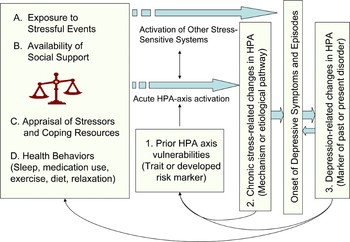
As shown in Figure 2, changes in exposure to objectively determined stressful life events, changes in available social support systems, and changes in individuals' interpretations of stressors or supports are all candidate mechanisms that could be influenced by such interventions and have implications for HPA axis functioning and risk for depression. In addition, changes in sleep, diet, exercise, medication use, or other health behaviors with biological consequences for the HPA axis, could also play a role (see Figure 2, left column). To what extent do effective preventive interventions target these HPA axis relevant processes?
Access points (A–F) by which interventions may influence the HPA axis, and the possible roles (1–3) of individual differences in HPA axis activity in depression. [A color version of this figure can be viewed online at journals.cambridge.org/dpp]

Description of effective interventions for adolescent depression
It is useful to review the nature of the interventions with documented efficacy to examine their relevance for HPA axis functioning in youth populations. Although, as noted above, we believe that changes in subclinical symptoms are also important, in line with the IOM report, we focus here on studies examining clinical depressive disorder as an outcome. Some of the strongest prevention effects have been found in the work of Clarke and colleagues (Clarke et al., Reference Clarke, Hawkins, Murphy, Sheeber, Lewinsohn and Seeley1995, Reference Clarke, Hornbrook, Lynch, Polen, Gale and Beardslee2001). Across both studies, the Coping with Stress Course resulted in decreased incidence of depressive disorders through 1-year follow-up after completion of the intervention. One caveat to this important work is that many participants had a prior history of depression (see Sutton, Reference Sutton2007). This intervention focuses especially on cognitive restructuring techniques: identifying and challenging irrational or negative beliefs (Clarke et al., Reference Clarke, Hornbrook, Lynch, Polen, Gale and Beardslee2001). For example, the intervention paid particular attention to combating negative cognitions related to the adolescents' having a depressed parent, such as thinking that they were inevitably going to get depressed themselves. Although the intervention appeared to target dysfunctional cognitions, no mediational analyses have yet been reported, so the mechanisms of action are not entirely clear. Hypothetically (as HPA axis activity was not examined), potential influences on HPA axis activity for this intervention would occur at the level of appraisal of events as stressful or not (Figure 2, Point B).
Arnarson and Craighead (Reference Arnarson and Craighead2006) used a broader cognitive behavioral approach that included mood monitoring, pleasant events training, problem solving, and relaxation techniques, in addition to identifying and troubleshooting dysfunctional cognitions. Whereas the results by Clarke and colleagues contained a mix of first onset and recurrent depressive disorder, Arnarson and Craighead examined only first onsets of depression. The investigators found that their intervention resulted in fewer cases of major depression and dysthymia compared to the control condition through 1-year follow-up (Arnarson & Craighead, Reference Arnarson and Craighead2006). Neither mediators of treatment outcome nor component analyses, which focus on the efficacy of different aspects of the treatment protocol, were reported, so it is unclear which of the elements of this intervention were efficacious. This intervention addressed multiple factors relevant to HPA axis activity simultaneously, targeting levels of exposure to stressful events (Figure 2, Point A, via pleasant events training), availability and use of coping resources (Figure 2, Point B, via the problem solving component), appraisal or cognitive interpretation of potential stressors or supports (Figure 2, Point C, via the component addressing dysfunctional cognitions), and health behaviors (Figure 2, Point D, via the relaxation training component).
Another set of studies includes the Penn Resiliency Program (Gillham et al., Reference Gillham, Hamilton, Freres, and Gallop2006) and the APEX/Penn Resiliency Training for College Students program (Seligman et al., Reference Seligman, Schulman and Tryon2007; Seligman, Schulman, DeRubeis, & Hollon, Reference Seligman, Schulman, DeRubeis and Hollon1999). These have substantial overlap, although the programs differ in several ways including intervention structure, targeted population (youth vs. college age) and complexity of the cognitive skills taught (J. E. Gillham, personal communication, June 9, 2007). Both programs implement a cognitive–behavioral framework that includes the following skills: cognitive skills include identifying negative cognitions, examining the evidence for those thoughts, challenging negative thoughts, and developing alternative thoughts; behavioral skills, include training in assertiveness, social skills, problem solving training, and relaxation techniques. Gillham et al. (Reference Gillham, Hamilton, Freres, and Gallop2006) did not examine potential mediators for the effect of the intervention in preventing cases of depressive, anxiety, and adjustment disorder. Seligman et al. (Reference Seligman, Schulman, DeRubeis and Hollon1999) reported that changes in attributional style, hopelessness, and dysfunctional attitudes from preintervention to postintervention mediated the effect of the intervention on depressive symptoms averaged across postintervention and follow-up (see also Seligman et al., Reference Seligman, Schulman and Tryon2007). However, mediational effects for the reduction in depressive episodes over 3-year follow-up were not reported.
Neither of these research programs has conducted component analyses for their broad-based interventions (Sutton, Reference Sutton2007). However, an earlier investigation of the Penn Prevention Program found no substantial differences at postintervention for groups receiving cognitive tools (e.g., challenging negative thoughts) alone, social problem-solving skills alone, or a combined treatment involving both (Jaycox, Reivich, Gillham, & Seligman, Reference Jaycox, Reivich, Gillham and Seligman1994). Thus, this intervention operates on multiple HPA axis-relevant processes including altering appraisals of events and resources (Figure 2, Point C), altering the availability and efficacy of social support by way of improved social problem solving (Figure 2, Point B), and altering stress levels by the use of relaxation techniques (an aspect of Figure 2, Point D).
Finally, a preliminary investigation by Young Mufson, and Davies (Reference Gillham, Hamilton, Freres, and Gallop2006) suggests that interpersonal psychotherapy adolescent skills training (IPT-AST) may also serve as an effective preventive program for adolescents. IPT-AST is a modified version of group IPT for adolescents (Mufson, Gallagher, Dorta, & Young, Reference Mufson, Gallagher, Dorta and Young2004). This intervention focuses on three potential problem areas: role disputes, role transitions, and interpersonal deficits. It also includes psychoeducation about depression, exploration of the relationship between feelings and interpersonal interactions, and communication and interpersonal skill building. The interpersonal skill building component teaches several techniques such as: analyzing difficult interpersonal situations, examining how those situations could have gone differently, expressing emotions constructively, choosing an appropriate time to engage in significant discussions, and negotiating a compromise (Mufson et al., Reference Mufson, Gallagher, Dorta and Young2004). Young et al. (Reference Young, Mufson and Davies2006) reported that the differences in rates of depressive disorders (major depression, dysthymia, depressive disorder not otherwise specified) approached statistical significance with lower incidence in adolescents who received IPT-AST versus referral to the school counselor. This study had a relatively small sample size (N = 41), and no mediators were explored. However, these results tentatively suggest that a focus on interpersonal relationships may also be viable in prevention programs for adolescent depression, and could plausibly influence the HPA axis by way of reducing stressful interpersonal events (Figure 2, Point A), and improving the quantity and quality of social support and coping resources (Figure 2, Point B).
This section has attempted to illustrate several key points. First, multiple interventions, largely focusing on cognitive–behavioral skills, have been effective in preventing depressive disorders in adolescents (see Sutton, Reference Sutton2007, for a more detailed review). Second, there is some indication that cognitive changes may mediate the effects of the cognitive–behavioral interventions (Seligman et al., Reference Seligman, Schulman and Tryon2007), although none of the studies has directly examined that possibility using diagnostic outcomes. Third, initial results suggest that targeting interpersonal functioning may also have preventive effects. Fourth, although several of the interventions inculcate a range of tools, the relative absence of component studies prohibits elucidation of which aspects of the interventions might be particularly effective in preventing depression. Fifth and finally, in contrast to those with positive effects, it must be noted that some studies (Seligman et al., Reference Seligman, Schulman and Tryon2007; Sheffield et al., Reference Sheffield, Spence, Rapee, Kowalenko, Wignall and Davis2006) focusing on cognitions and social problem solving have not found significant preventive effects on depressive disorder, so conclusions about what works must be appropriately nuanced (Sutton, Reference Sutton2007).
These interventions touched upon all the elements (stress exposure, availability of social support resources, interpretation of events, and stress-reducing health behaviors) that we had a priori suggested might be important pathways by which HPA axis activity could be modified in an intervention (although among the possible health behaviors relevant to depression, only relaxation was addressed).Footnote 8 Thus, it seems reasonable that changes in the HPA axis could be a candidate pathway by which these successful interventions exerted at least some of their effects. Rather than simply speculating on what might work to influence HPA axis activity, however, we next consider what evidence exists that HPA axis functioning can indeed be altered in the context of a random assignment psychosocial (rather than pharmacological) intervention.
Can HPA axis parameters change as a result of psyschosocial intervention?
To get a better handle on whether “risky” cortisol parameters can be altered by systematic attempts to change psychosocial or cognitive environments among those not already depressed, we turn now to the literature on randomized case-control experiments designed to alter HPA axis activity. There are relatively few of these efforts available, and studies are particularly lacking during the adolescent age period. As a result, we include data from interventions with young children (briefly) and then focus on adult interventions that more closely resemble the types of preventions described above that are typically implemented in attempts to reduce depression in adolescents (currently without the benefit of HPA axis information).
Given accumulating evidence of prenatal and early postnatal influences on the HPA axis, and the contribution of these early HPA axis alterations to increased vulnerability to disorder in adolescence (Halligan et al., Reference Halligan, Herbert, Goodyer and Murray2007), one possibility would be to focus preventive interventions on altering maternal stress experiences during the prenatal period, or maternal depression and behavior in the early postnatal period. Such attempts are a valuable approach with potentially great pay off in the long term, but are not helpful to clinicians who hope to prevent disorder among those who have already reached late childhood and early adolescence. For such individuals the combination of early experience and genetic predisposition may have already created either a risky or robust HPA. Rather, we focus our thoughts on how to supplement existing interventions designed to prevent adolescent depression, with the intention of improving our ability to intervene more immediately to prevent depression in at-risk children and youth.
No studies that we are aware of have tracked changes in glucorticoids over time during the course of a random assignment preventive intervention with adolescents. Two studies, however, have demonstrated that diurnal cortisol profiles in infants, toddlers, and preschoolers are sensitive to a psychosocial intervention involving modifications of caregiver behavior. In each case, the population was children in foster care, and random assignment was made to either a regular foster care setting or an experimental intervention foster care setting (and a regular nonfoster care control group was also available but not part of the random assignment process).
In Dozier and colleagues' (Reference Dozier, Peloso, Lindhiem, Gordon, Manni and Sepulveda2006) study, infants and toddlers who received the Attachment and Biobehavioral Catchup experimental intervention (which involved training caregivers in sensitive responding to infant and toddler signals in 10 weekly sessions) had wake-up to bedtime diurnal cortisol profiles 1 month later that were similar to the nonfoster care control group of children. Those in the regular foster care group also received an educational control intervention (focused on cognitive and language skills) conducted with the same frequency and intensity as the experimental intervention; this group had cortisol profiles that were significantly elevated (at both wakeup and bedtime) over the other two groups.
In the study by Fisher and colleagues, changes in cortisol levels were tracked over time among preschoolers involved in either (a) a foster care experimental intervention group in which consistent and supportive caregiving was taught, (b) a regular foster care group, and (c) a nonfoster care community control group (Fisher, Gunnar, Dozier, Bruce, & Pears, Reference Fisher, Gunnar, Dozier, Bruce and Pears2006; Fisher, Stoolmiller, Gunnar, & Burraston, in press). In this study, the diurnal cortisol patterns of the children in the foster care intervention group remained similar to those of the control children, whereas those in the regular foster group had drops in their morning cortisol levels with increasing time in foster care, resulting in a flattening of their diurnal rhythms. In addition, children in the foster care intervention group who began with low morning cortisol and flattened rhythms had increases in morning cortisol over time, resulting in stronger rhythms.
Both of these studies with infants and toddlers demonstrate that diurnal cortisol profiles appear to be responsive to psychosocial intervention, but have yet to demonstrate whether or not the changes in diurnal cortisol are long lasting. They also have not yet demonstrated whether or not these alterations result in changes in immediate behavioral symptoms or in long-term risk for the development of emotional disorders.Footnote 9 In addition, the fact that diurnal cortisol profiles are responsive to psychosocial interventions in infants and young children does not imply that adolescent cortisol profiles are equally malleable. Obviously, the types of interventions implemented in adolescent populations will be different from those employed with younger children, because adolescents have greater responsibility for their own biobehavioral regulation, and because of cognitive development, individual differences in appraisal may become important targets for intervention.
Several studies have focused on the effects of immediate manipulations of mood or social support on salivary cortisol reactivity examined within the context of the same testing session, showing that improvements in mood or the presence of a supportive figure reduced acute cortisol reactions to laboratory-based stressors (Heinrichs, Baumgartner, Kirschbaum, & Ehlert, Reference Heinrichs, Baumgartner, Kirschbaum and Ehlert2003; Kirschbaum, Klauer, Filipp, & Hellhammer, Reference Kirschbaum, Klauer, Filipp and Hellhammer1995). These are of less interest for our purposes than studies in which the interventions were implemented well prior to the stress exposure, such that we know that the manipulation has efficacy beyond the intervention setting itself. Of even more interest are studies in which interventions are conducted and changes in HPA axis activity observed in naturalistic settings. We focus here on the latter two types of studies.
Past theory and research has suggested that HPA axis responding is dependent not only the nature of the stressor encountered, but also on appraisal processes (Herman & Cullinan, Reference Herman and Cullinan1997; Lazarus & Folkman, Reference Lazarus and Folkman1984). Relevant appraisal processes include the individual's interpretation of the stressor, as well as their assessment of their available coping resources (Figure 2, Point C). As a result, researchers have suggested that alteration of cognitive processes related to threat and stressor appraisal, such as those often employed in cognitive–behavioral therapy, may be an effective way to lessen the frequency or severity of HPA axis reactions to everyday events. Others have suggested that interventions aimed at more directly reducing the early physiological manifestations of stress, such as progressive muscle relaxation, might be helpful in reducing HPA axis responses. Several studies have employed randomized case-control designs to examine whether these approaches alter HPA axis activity. Most have focused on responses to a standardized laboratory stressor (the Trier Social Stress Test [TSST]); a few have attempted to influence cortisol responses to real-life stressors or to alter aspects of basal cortisol profiles.
A series of studies has examined the effects of cognitive–behavioral stress management intervention (CBSM) on stress reactivity, comparing individuals randomly assigned to this protocol with control participants (who received CBSM after the posttest; Gaab et al., Reference Gaab, Blattler, Menzi, Pabst, Stoyer and Ehlert2003; Gaab, Sonderegger, Scherrer, & Ehlert, Reference Gaab, Sonderegger, Scherrer and Ehlert2006; Hammerfald et al., Reference Hammerfald, Eberle, Grau, Kinsperger, Zimmermann and Ehlert2006). This group-based intervention involved a combination of cognitive–behavioral techniques, including stress management (cognitive restructuring, problem solving, and self-instruction) and relaxation training (progressive muscle relaxation). In the Gaab et al. (Reference Gaab, Blattler, Menzi, Pabst, Stoyer and Ehlert2003) study, the group intervention was delivered in two sessions (from 10:00 a.m. to 5:00 p.m.) on a weekend, and the effects on the TSST were observed 2 weeks later. Hammerfald et al. (Reference Hammerfald, Eberle, Grau, Kinsperger, Zimmermann and Ehlert2006) used a similar scheduling and intensity of the CBSM training (a total of 10 hr delivered over two weekends), but the TSST was administered 4 months after CBSM treatment.
In both studies, participants in the CBSM training had lower cortisol responses to the TSST, with slightly stronger results when the TSST was examined closer in time to the intervention. These two studies assessed self-reported stress levels, and appraisal processes, including primary appraisal (including items assessing challenge and threat) and secondary appraisal (including self-concept of own competence and control expectancy). They found that it was changes in primary appraisals of stressors that served to partially mediate the intervention effect on TSST responses. This suggests that an intervention aimed at reducing threat and stress appraisals may be most important, at least for reducing acute physiological stress reactions. Although direct attempts to modify threat appraisals are likely to be important, other strategies, including improving perceived social support resources, may indirectly affect threat appraisals and thus also play an important role.
In negotiating stressors encountered in daily life, children and even adolescents are still highly dependent on external coping resources such as parents and friends, and thus interventions aimed more directly at supporting positive social relationships and social support resources may prove to be especially relevant in these younger populations. Future research should involve a component analysis to help identify which aspects of multifaceted interventions have the largest impact on HPA axis activity. It should also examine impacts of the intervention on basal cortisol functioning in addition to stress reactivity, and when examining stress reactivity, should examine changes in responses to naturalistic stressors in addition to responses to the TSST.
In one study that did examine the effect of an intervention on a naturalistic stressor, Gaab and colleagues (Reference Gaab, Sonderegger, Scherrer and Ehlert2006) examined the impact of the CBSM training on college students' reactions to an important exam. Participants in the intervention group had lower levels of anxiety in the weeks leading up to the exam. However, paradoxically and in opposition to the effects found for the acute lab-based stressor, they found that participants in the intervention group had a larger CAR on the days of testing than those in the control group. It is also of interest, however, that there was no association between perceived stress level and cortisol responses in the control group, but for the intervention group 27% of the variation in cortisol levels was accounted for by participants' perceived stress levels immediately before the exam. The authors argue that because of the chronic nature of the stressor (prolonged anticipation of the exam), the control participants' increased anxiety levels may have downregulated their HPA axis activity, such that it was no longer responding appropriately to the presence of challenge. It would have been interesting to know what the typical daily CAR values looked like for these two groups; in this study, the authors only examined the CAR on the day the students were encountering an extreme stressor. It is debatable what an optimal outcome is in terms of a CAR level. One would not want the CAR to be too high, as heightened CARs are associated with risk for MDD, but nor would one want it to be too low, as this increases risk for disorders related to hypocortisolism such as chronic fatigue, burnout, or rheumatoid arthritis.
One study that focused specifically on a burnout population used a cognitive–behavioral intervention in an attempt to increase the significantly lower CAR values found in individuals with clinical burnout (Mommersteeg, Keijsers, Heijnen, Verbraak, & van Doornen, Reference Mommersteeg, Keijsers, Heijnen, Verbraak and van Doornen2006). A combination of cognitive therapy and practical interventions to improve work-related functioning resulted in a significant increase in CAR levels in the burnout group, and significant reduction of symptom complaints. There was, however, no significant association between the degree of increase in CAR values and the degree of improvement in burnout-related symptoms.
In an attempt to resolve the question of what represents a “healthy” CAR, we have previously hypothesized that optimal CAR functioning is reflected in CAR values that are on average moderate in level, with some variability from day to day such that CAR levels are appropriately calibrated to the anticipated demands of each particular day (Adam et al., Reference Adam, Hawkley, Kudielka and Cacioppo2006). Under this “CAR calibration” theory, CAR values that are chronically high, chronically low, and those that do not modulate in response to changing daily demands would be considered maladaptive. In the Gaab et al. (Reference Gaab, Sonderegger, Scherrer and Ehlert2006) study, those who received the intervention had CAR values that were significantly associated with the perceived level of the stressor they were facing. There is, therefore, some sign that cognitive interventions appear to normalize CAR values to a moderate level and perhaps improve the degree to which CAR responses are calibrated to situational demands (as in the Gaab et al., Reference Gaab, Sonderegger, Scherrer and Ehlert2006, study). All told, this particular aspect of HPA axis activity appears to be an important target that is both related to psychological and physical functioning and modifiable by intervention. Nonetheless, other aspects of HPA axis functioning (such as diurnal cortisol slopes and evening cortisol levels and reactivity to momentary stressors) remain of interest and the effects of interventions on these parameters should also be evaluated.
To summarize the above studies, there is a clear indication that the reactivity of the HPA axis can be influenced in a randomized intervention and that the intervention effects occur at least partially by way of altered appraisal processes. There is much work to be done, however, in examining the impact of interventions on reactivity to real-life stressors, both anticipated (like the exam situation used in Gaab et al., Reference Gaab, Sonderegger, Scherrer and Ehlert2006) and unanticipated (perhaps using an experience sampling method approach to capture participants' cortisol responding to everyday events; Adam, Reference Adam2006; van Eck, Berkhof, Nicolson, & Sulon, Reference van Eck, Berkhof, Nicolson and Sulon1996), and in examining the modifiability of basal HPA axis functioning.
Given success of both cognitive–behavioral and social support strategies in altering aspects of HPA axis activity, it appears that there is some convergence between what works in terms of prevention of adolescent depression and the types of interventions that are effective (at least in adults) in altering HPA axis activity. Whether similar strategies would be effective in adolescents remains to be demonstrated. It seems plausible that changes in social support, and changes in threat appraisal/evaluation, might be relevant in modulating adolescent HPA axis activity, particularly given prior correlational evidence that the adolescent HPA axis is responsive to within-person variation in social experience and appraisal processes (Adam, Reference Adam2006).
Many questions remain, however, that can only be answered by the actual incorporation of HPA axis measures into a preventive intervention study for adolescent depression. These include (a) whether or not the HPA axis changes induced by interventions would be effective in reducing the onset of depression in youth, (b) whether premorbid HPA axis differences would predict which youth are most likely to respond to treatment, and (c) whether the degree of change in HPA axis parameters would serve to indicate which youth are responding most to the intervention. An outline of such a study, drawing on best practice knowledge regarding prevention of depression and our growing understanding of the role of the HPA axis in adolescent depression, is provided below.
Prototype for a HPA axis-focused prevention study
In designing an intervention that would benefit from and inform our understanding of the role of HPA axis activity in depression, our suggested approach would (a) capitalize on the design features of existing preventive interventions for adolescent depression that we know to be effective, (b) supplement those successful interventions with strategies that we know to influence HPA axis activity, and (c) include repeated measures of both HPA axis activity and depression, as well as repeated measures of the stress appraisal and social support processes that may mediate the effects of the intervention on the HPA axis and depression. Given that we know targeted interventions to be the most effective, it would be important to start with a high-risk sample, but it would be somewhat premature, at this point, to select that risk sample based on HPA axis characteristics. We would, however, want to measure HPA axis parameters at baseline among the selected sample to examine whether certain profiles of HPA axis functioning at baseline do indeed place certain individuals at higher risk, or whether certain HPA axis parameters provide insights into which adolescents are most responsive to particular intervention approaches. We would also want to continue to measure HPA axis parameters throughout the intervention and follow-up period to examine whether HPA axis changes occur in response to the intervention and are related to the efficacy of the intervention. Based on our review, the important features of a prevention program with the potential to modify risk for youth depression, and to reveal whether this occurs by way of changes in HPA axis activity include the following:
1. Adequate dosage. The effective depression prevention protocols reviewed above were all conducted in small group format over the course of many weeks, for example, Clarke et al. (Reference Clarke, Hornbrook, Lynch, Polen, Gale and Beardslee2001) had 15 1-hr meetings, Arnarson and Craighead (Reference Arnarson and Craighead2006) conducted 14 90-min sessions, and Young et al. (Reference Young, Mufson and Davies2006) had eight 90-min sessions.Footnote 10 Thus, we would recommend approximately 15–20 hr of intervention time. Based on our review, we would suggest 15 small-group (6–10 adolescents) meetings lasting 60–90 min each.
2. Substantial cognitive component. The research by Clarke et al. (Reference Clarke, Hawkins, Murphy, Sheeber, Lewinsohn and Seeley1995, Reference Clarke, Hornbrook, Lynch, Polen, Gale and Beardslee2001) has demonstrated that challenging negative cognitions can have a substantial effect on reducing risk for depressive disorder. In related work, Gaab and colleagues (Reference Gaab, Blattler, Menzi, Pabst, Stoyer and Ehlert2003, Reference Gaab, Sonderegger, Scherrer and Ehlert2006; also Hammerfeld et al., 2006) has found that primary cognitive appraisals of threat and challenge are partial mediators of the relationship between their CBSM intervention and cortisol reactivity to the TSST. We envision that six to seven sessions of the intervention protocol would focus on the development of cognitive skills, for example, identifying negative thoughts, examining evidence, and challenging negative thoughts.
3. Interpersonal component. Several of the depression prevention programs reviewed above included some social skill-building component. The strongest emphasis on interpersonal relationships is found in the IPT-AST trial conducted by Young et al. (Reference Young, Mufson and Davies2006), and some modified version of that protocol would be implemented here. Additional rationale for inclusion of this component comes from findings that immediate cortisol levels are affected by the presence of social support (e.g., Heinrichs et al., Reference Heinrichs, Baumgartner, Kirschbaum and Ehlert2003). Thus, it seems plausible that improvement in one's social network via the inculcation of social skills (e.g., constructive expressive of feelings, improved listening, and negotiation of a compromise) might affect both depressive psychopathology and HPA response. We would designate five to six sessions for this module.
4. Physical relaxation component. Several of the depression prevention programs reviewed above incorporated physical relaxation into the protocol. Although none of the programs has explicitly looked at the effects of relaxation alone, there may be good reason for its inclusion here. First, over 20 years ago Reynolds and Coates (Reference Reynolds and Coats1986) found that relaxation training was associated with significantly decreased depressive symptomatology versus wait-list control in a moderately depressed adolescent sample. Thus, there is some evidence that relaxation training (albeit at a higher dosage than will be implemented here) can directly affect symptomatology. Second, relaxation has been not only a component of several effective depression prevention protocols, but it is also part of the CBSM program used by Gaab and colleagues (e.g., Gaab et al., Reference Gaab, Blattler, Menzi, Pabst, Stoyer and Ehlert2003, Reference Gaab, Sonderegger, Scherrer and Ehlert2006), which has been associated with changes in cortisol reactivity. We would include two sessions focusing on these skills.
5. Measurement of HPA axis activity at multiple points throughout the intervention process and across the follow-up period. Given the weight of evidence that morning cortisol (and probably specifically the size of the CAR) are the best prospective predictors of MDD in youth, and that elevated evening levels have been shown in at least some research to be a correlate of the presence of depressive symptoms/disorder in adolescents, the HPA axis measurement protocol utilized should capture each of these aspects of HPA axis functioning. At a minimum, a protocol gathering cortisol at waking, 30 – 40 min postawakening, and at bedtime across 2 days would be desired. This would allow measurement of wake-up cortisol levels, the size of the CAR, evening cortisol levels, the slope of the diurnal cortisol rhythm from wake-up to bedtime, and an estimate of the AUC of cortisol levels across the day, and some indication of whether the CAR changes in response to daily demands.Footnote 11 This HPA axis protocol should be implemented at baseline, several times during the course of the intervention, immediately postintervention, and at follow-up 6 and 12 months postintervention.
Although perhaps less easily put into practice in a large-scale study, several additional HPA axis measures would be desirable. First, a measure of reactivity to acute psychosocial challenge, such as the TSST, measured at baseline and postintervention would also be useful, beyond our basal measures, as a potential candidate marker of risk for depression. In addition, use of a DEX suppression test (or combined DEX suppression-CRH challenge test) at baseline and postintervention would be helpful in examining whether there is any sign of central HPA axis dysregulation at baseline or whether impairments in negative feedback regulation of the HPA axis emerge with the development of disorder.
6. Attention to gender, age, and pubertal stage as possible mediators or moderators. Given the dramatic changes in prevalence rates of depression by age/pubertal stage and gender over adolescence, inclusion of a sufficient range of ages (or sufficiently length of longitudinal follow-up period) would be important to examine the role of age/pubertal stage and gender and their potential relation to HPA axis measures. For example, it would be important to examine whether the “risky” aspects of HPA axis function vary by gender and age or pubertal stage, and whether age and/or gender-related changes in these parameters help to account for age and/or gender-related changes in onsets of MDD.
7. Assessment of early stress exposure as well as current life stress. We noted evidence that early exposure to trauma and/or to maternal postnatal depression may affect the organization of HPA axis function (Halligan et al., Reference Halligan, Herbert, Goodyer and Murray2007; Heim, Plotsky, & Nemeroff, Reference Heim, Plotsky and Nemeroff2004), and that early stress exposure may sensitize individuals to the effects of later life events on HPA axis function (Essex, Reference Essex, Klein, Cho and Kalin2002). Measurement of early stress exposure might help explain individual differences in HPA axis function upon entering the prevention program, and serve as a moderator helping to explain variations in responses to treatment. Reductions in current life stress, changes in appraisals of these stressors, and strengthening of social support resources may have particularly advantageous effects on youth whose HPA axes have been sensitized by prior stress exposure.
Conclusion
In our title, we posed a question: “Are we there yet” in terms of incorporating HPA axis measures into studies of the prevention of youth depression? After our review of the literature, we believe that more research is necessary before HPA axis measures can be confidently used by clinicians to guide selection of youth for intervention or to make judgments regarding treatment approaches or outcomes. In other words, we are NOT there yet in terms of HPA axis measures being a definitive and accurate clinical tool. We ARE, however, convinced that including HPA axis measures into adolescent depression prevention studies, in a manner similar to that outlined in the prior section, would be extremely beneficial to the scientific knowledge base on the role of the HPA axis in the development of depression.
Doing so would provide more definitive information on the extent to which aspects of HPA axis activity serve in some of the various roles depicted in Figure 2: (a) which aspects of HPA axis function serve as an indicator of increased risk for MDD; (b) whether certain aspects of HPA axis activity change in response to the preventive intervention; and (c) whether such changes, in turn, serve to decrease risk for disorder, suggesting they may play a mediating role in intervention efficacy, and thus, a potentially causal role in the development of the disorder; (d) how aspects of HPA axis function change with changes in symptom severity and the onset or offset of disorder, providing a marker not of risk but of disorder progression, severity, and consequences (state or scar marker roles); and (e) whether certain aspects of HPA axis function serve to moderate intervention effects, such that individuals with particular HPA axis features at baseline are more or less likely to benefit from intervention.Footnote 12
Based on current studies of intervention effects on HPA axis functioning, we believe it is reasonable to suggest that at least some aspects of HPA axis function are likely to be responsive to the types of interventions typically employed to prevent adolescent depression. Whether those changes will, in turn, translate into reduced risk for disorder remains to be seen. If current prevention studies were to incorporate HPA axis measures in a manner that involved careful measurement of various aspects of HPA axis function, and their changes over time in relation to the intervention and changes in symptomatology, we would “be there” much sooner in terms of knowing how best to use HPA axis information to improve our clinical efforts to prevent adolescent depression and prevent its damaging long-term consequences for youth.