Introduction
Maize (Zea mays L.) (Poaceae) is a major crop widely grown by millions of farmers in western Africa. In the Republic of Benin, maize is produced on approximately 0.6 million ha annually (FAO, 2007). It is a central component of most farming systems and the diets of rural and urban people in Benin. The importance of maize is also related to its leading role in the socio-cultural life of the people of Benin (Adandé, Reference Adandé1984). Per capita consumption of maize in Benin is 96 kg/year (CIMMYT, 1992). There is a huge disparity between the north, with a per capita consumption of 15 kg/year, and the southern zone, where consumption levels can reach 136 kg/year, especially in rural areas (ONASA, 1997). Maize is subjected to significant commercial transactions (Fanou et al., Reference Fanou, Lutz and Salami1991; Lutz et al., Reference Lutz, Van Tilburg and van der Kamp1995) and is involved in several food processing chains. About 40 different maize processing methods have been reported in Benin (Nago, Reference Nago1997). It is therefore a significant source of employment and income in urban and rural Benin (Nago and Hounhouigan, Reference Nago and Hounhouigan1998).
In Benin, the larvae of several lepidopteran species inflict serious damage on pre-harvest maize stems and cobs and significantly lower maize yields (Atachi, Reference Atachi1984, Reference Atachi1987; Shanower et al., Reference Shanower, Schulthess and Gounou1991). Larval feeding in the stem leads to tunnelling and quite often plant breakage. These insects infest maize throughout its development, from the seedling stage to maturity. The direct feeding on the cob leads to quantitative and qualitative yield losses varying between 20 and 80% (Schulthess et al., Reference Schulthess, Bosque-Perez and Gounou1991). The extent of the damage and loss depends on the population density of the pest, the phenological stage of the plant infested (Kalule et al., Reference Kalule, Ogenga-Latigo and Okoth1997; Oigiangbe et al., Reference Oigiangbe, Ivbijaro, Ewete and Mutsaers1997) and the geographical region. Of the ten identified Lepidoptera species that attack maize in Benin, the most frequently encountered are Sesamia calamistis (Hampson), Sesamia botanephaga (Tams and Bowden) (both Lepidoptera: Noctuidae), Eldana saccharina (Walker) (Lepidoptera: Pyralidae), Busseola fusca (Fuller) (Lepidoptera: Noctuidae), Mussidia nigrivenella (Ragonot) (Lepidoptera: Pyralidae), Chilo spp. (Lepidoptera: Crambidae), Cryptophlebia leucotreta (Meyrick) (Lepidoptera: Tortricidae) and Spodoptera exempta (Walker) (Lepidoptera: Noctuidae) (Atachi, Reference Atachi1987; Shanower et al., Reference Shanower, Schulthess and Gounou1991). S. calamistis is a serious pest, especially on maize in the minor season in southern and central Benin (Atachi, Reference Atachi1987) and on late planted maize in the northern regions.
Sustainable integrated management of insect pests of crops is now a widely preferred option over the indiscriminate use of synthetic insecticides. Among the integrated pest management options available for stemborers are the use of resistant/tolerant varieties (Bosque-Pérez et al., Reference Bosque-Pérez, Kling, Odubiyi and Mihm1997), transgenic plants (e.g. Bt maize) (Smale and de Groote, Reference Smale and de Groote2003), manipulation of soil fertility (Sétamou et al., Reference Sétamou, Schulthess, Bosque Perez and Thomas-Odjo1995; Denké et al., Reference Denké, Schulthess, Bonato, Gounou and Smith2000; Ali et al., Reference Ali, Jiang, Schulthess, Ogol and Omwega2006) and the use of trap plants (Ndemah et al., Reference Ndemah, Gounou and Schulthess2002; Van den Berg, Reference Van den Berg2006; Matama-Kauma et al., Reference Matama-Kauma, Schulthess, Mueke, Omwega and Ogwang2006; Koji et al., Reference Koji, Khan and Midega2007). Other approaches include reduced use of pyrethroids (Sinzogan et al., Reference Sinzogan, Kossou, Atachi and van Huis2006), the use of essential oils or plant extracts (IITA, 2006) or natural enemies, including parasitoids (Cugala et al., Reference Cugala, Schulthess, Ogol and Omwega2006; Omwega et al., Reference Omwega, Muchugu, Overholt and Schulthess2006). The manipulation of the ecosystem for the purpose of disrupting the pest or for promoting the development of its natural enemies (Chabi-Olaye et al., Reference Chabi-Olaye, Schulthess, Nolte and Borgemeister2002; Songa et al., Reference Songa, Jiang, Schulthess and Omwega2007) and a number of agronomic practices (crop hygiene, crop rotation, crop association, choice of time of planting or harvest, management of soil fertility and water) are also considered as important options.
Cultural control based on the manipulation of planting date is one of the oldest agronomic practices affecting stemborer infestation (Lawani, Reference Lawani1982; Polaszek, Reference Polaszek1998; Songa et al., Reference Songa, Overholt, Mueke and Okello2002). However, for better efficiency, this method needs to be combined with other control methods to reduce the overall incidence of pests below the economic damage threshold (Van den Berg et al., Reference Van den Berg, Nur, Polaszek and Polaszek1998). According to Youm et al. (Reference Youm, Mamalo and Nwanze1993), this method has not been very effective in reducing populations of Acigona ignefusalis (Hampson) (Lepidoptera: Pyralidae) on pearl millet. The effectiveness of any option for the integrated management of insect pests depends on its adoptability, accessibility, economic feasibility, suitability and on the possibility of large-scale implementation of its components taken individually and/or as a whole (van Huis and Meerman, Reference van Huis and Meerman1998).
Investigations were conducted on the effect of planting dates of maize on the incidence of S. calamistis and its damage to maize cobs in southern Benin, where the effects of climate change are being felt increasingly.
Materials and methods
Study locations
Experiments were conducted in the main cropping season in 2003 and 2004 and in the minor season in 2003 at the Research Station of the International Institute of Tropical Agriculture (IITA) in Abomey-Calavi (15 m above sea level (masl), latitude 6°25′E and longitude 2°20′N) and during the main and the minor seasons in 2004 at Sèhouè village (150 masl, latitude 6°53′N; longitude 2°15′E). Both the sites are in the savannah zone (IITA station in the Coastal Savannah and Sèhouè in the Southern Guinea Savannah) characterized by a bimodal rainfall with two peaks, one in May and another in September, and an annual rainfall of 1100–1500 mm. The first and main production season extends from April to July, while the minor season covers the months of September–November, with a break between July and August (Fig. 1). The long dry season starts in November and lasts until March. The average annual temperature fluctuates between 25 and 30 °C with a minimum in July and August and a peak in March (Fig. 1). The soil is sandy clay in both locations, where the trials were laid out in a 1-year-old fallow of velvet bean Mucuna pruriens (L.) DC. (Fabaceae) and maize and cowpea Vigna unguiculata (L.) Walp (Fabaceae).
Monthly rainfall in mm (A), temperature (°C) (B) and relative humidity (RH in %) (C) at the IITA station in Abomey-Calavi and at Sèhouè, both in Republic of Benin, in 2004.

Experimental design
The experimental design used in the main season at both the sites was a randomized complete block, with the following three treatments of different planting dates after the onset of the rains, replicated four times. The first treatment (T1 – early planting) happened the day after the first rain. Depending on the rains, the second treatment (T2 – intermediate planting) was planted during 16–19 days after T1 and the third treatment (T3 – late planting) was during 35–36 days after T1.
Specific planting dates (treatments) over seasons were as follows:
- Treatment 1:
early planting – IITA station: 26 April 2003 and 22 April 2004; Sèhouè: 29 April 2004
- Treatment 2:
intermediate planting – IITA station: 12 May 2003 and 10 May 2004; Sèhouè: 16 May 2004
- Treatment 3:
late planting – IITA station: 01 June 2003 and 28 May 2004; Sèhouè: 04 June 2004
In the minor cropping season, late planting was excluded due to the short duration of the season, and the two treatments were replicated four times in a completely randomized block design and included therefore:
- Treatment 1:
early planting – IITA station: 31 August 2003; Sèhouè: 25 August 2004
- Treatment 2:
intermediate planting – IITA station: 17 September 2003; Sèhouè: 10 September 2004
The experimental field was ploughed to a depth of 20 cm with a tractor at the IITA station but manually at Sèhouè. At both the sites, each plot measured 10 m × 5 m (50 m2), with 5 m between plots, 3 m between blocks and a 2 m weeded border around the experimental field.
The improved maize variety DMR developed by IITA was used. The variety is resistant to downy mildew (Peronosclerospora sorghi (Weston & Uppal)) and to the maize streak virus. It matures early (90 days), has white and hard grains, and is up to 2 m tall. The average yield of DMR is 4 tonnes/ha with a potential of 7–8 tonnes/ha with higher soil fertility and lower pest pressure (Bosque-Pérez and Mareck, Reference Bosque-Pérez and Mareck1989). Two weeks after planting (WAP), maize was thinned to one seedling per hill at a spacing of 80 cm between rows and 25 cm within rows, giving a plant density of 50,000 plants/ha. The plots received NPK fertilizer (14–23–14) at a dose of 150 kg/ha 3 weeks after planting 100 kg/ha of urea 6 weeks after planting. All the plots were weeded at least twice before harvest and generally prior to the application of fertilizer.
Sampling method and parameters measured
Destructive sampling was done weekly from 3 to 12 weeks after planting using the methods described by Atachi (Reference Atachi1984). Samples of ten randomly chosen maize plants were collected along the diagonals and medians of the plots and at predetermined distances. Seedlings were removed from the soil by uprooting them, while older plants were cut with a knife just above the soil level and then dissected. The dissected samples were inspected in the field if infestation was low, or taken to the laboratory where the following parameters were recorded: number of S. calamistis larvae or pupae per plant, percentage of plants infested by S. calamistis, and percentage of cob damaged assessed as the proportion of attacked kernels out of total kernels on the ear. The study focused on S. calamistis because the numbers of other stemborer species during the study at the two sites were negligible.
Data analysis
To balance the data structure and to avoid its potential confounding effects, a factor called ‘Trial’ was introduced to correspond to the five trials across locations, years and seasons as follows: (1) IITA 2003 major season, (2) IITA 2004 major season, (3) Sèhouè 2004 major season, (4) IITA 2003 short season, (5) Sèhouè 2004 short season. Then a model selection approach with the linear mixed model and repeated measures using the procedure MIXED in SAS (SAS Institute, 2004) was used to identify the best statistical model based on the possible presence of heterogeneity of error variances among trials (So and Edwards, Reference So and Edwards2009), and the linear autoregressive variance–covariance matrix (AR(1)) was incorporated to model the possible autocorrelation among residual terms (Littell et al., Reference Littell, Pendergast and Natarajan2000). The variables analysed were number of plants infested by S. calamistis, insect density per plant and per cob and percentage damage to cobs. To meet the normality assumption of the analysis of variance, percentage data such as ‘damage’ were subjected to square root ((X+0.5)1/2) transformation, where X was the original data (Gomez and Gomez, Reference Gomez and Gomez1984).
The linear autocorrelations between pairs of WAP were not significant and the error variance among WAP within each trial was found to be stable and homogeneous. Hence the following linear mixed model statements were used: fixed effects factors: season, trial (nested in season), treatment (nested in season), WAP and their interactions; random effects factors: Rep (nested in trial and treatment). The general Satterthwaite approximation for the computation of the denominator degrees of freedom to produce an accurate F-test approximation was used (SAS Institute, 2004).
Where three-way or higher interactions among main effects were significant (P < 0.05), simple effect differences were evaluated among treatments and represented with the aid of figures and graphics to understand the nature of the interactions. Mean separation was performed using the SAS LSMEANS test (pair-wise comparisons at P < 0.05).
Results
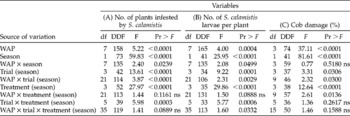
The significance of fixed effect factors (sampling dates, season, trial, treatments) and their interactions on plant infestation by S. calamistis, its densities per plant and damage to cobs is summarized in Table 1.
Analysis of variance from mixed model procedures for plant infestation by Sesamia calamistis (A) and insect density per plant referring to Sesamia calamistis (B), and for damage to cobs (C), as influenced by sampling dates (weeks after planting (WAP)), season (major, short), trial (nested in season), treatments ((planting dates) (nested in season)) and their interactions, during 2003 and 2004 in southern Benin

df, numerator degree of freedom; DDF, denominator degree of freedom of covariance parameters; ns, not significant at the P < 0.05 probability level.
Infestation of maize plants by S. calamistis
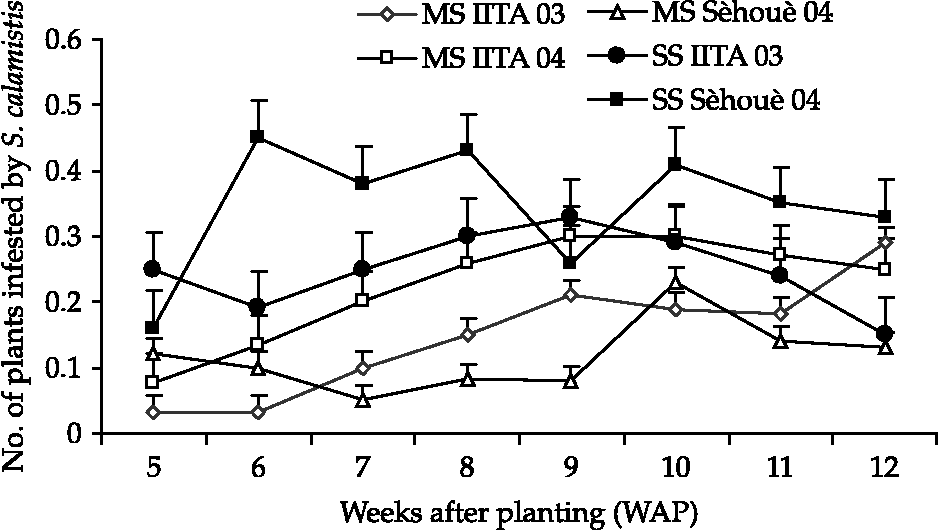
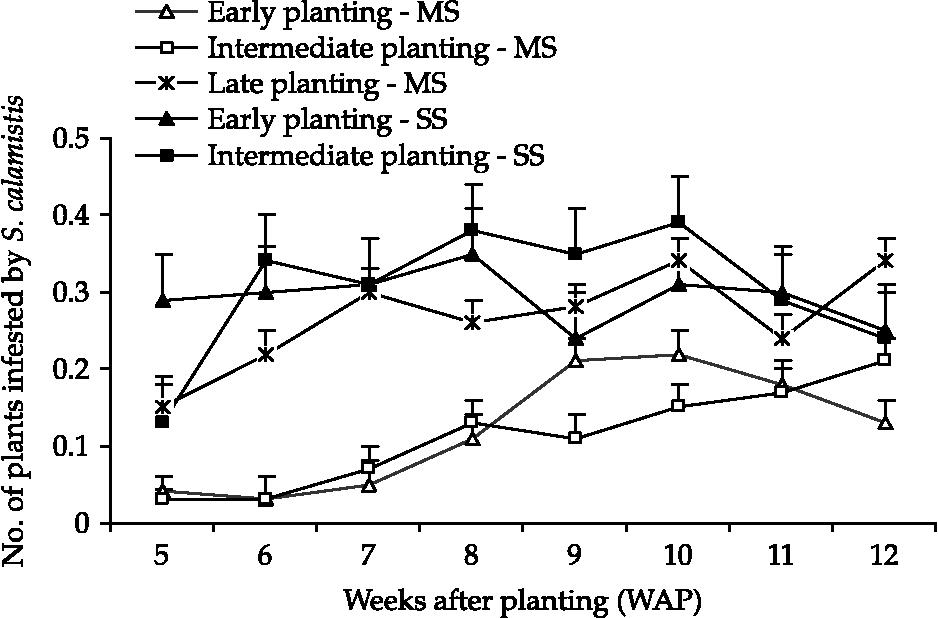
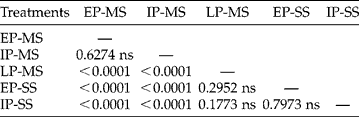
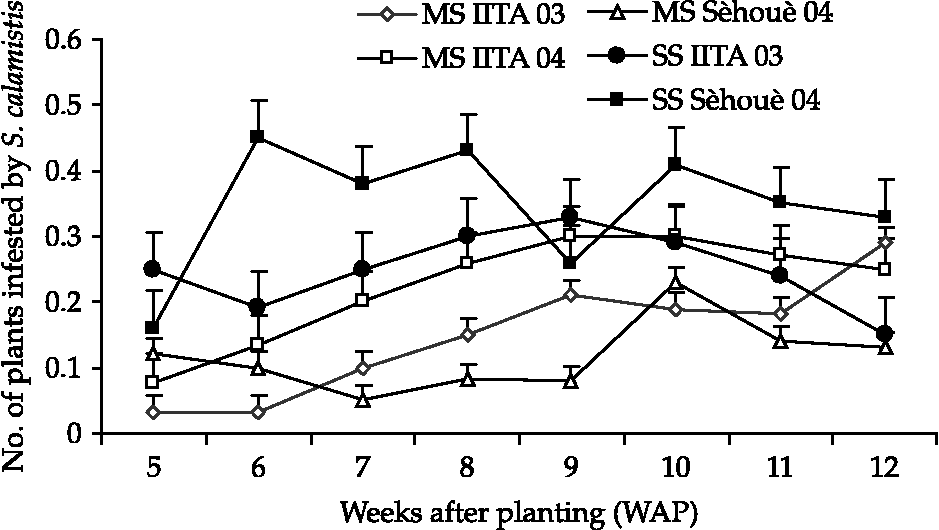
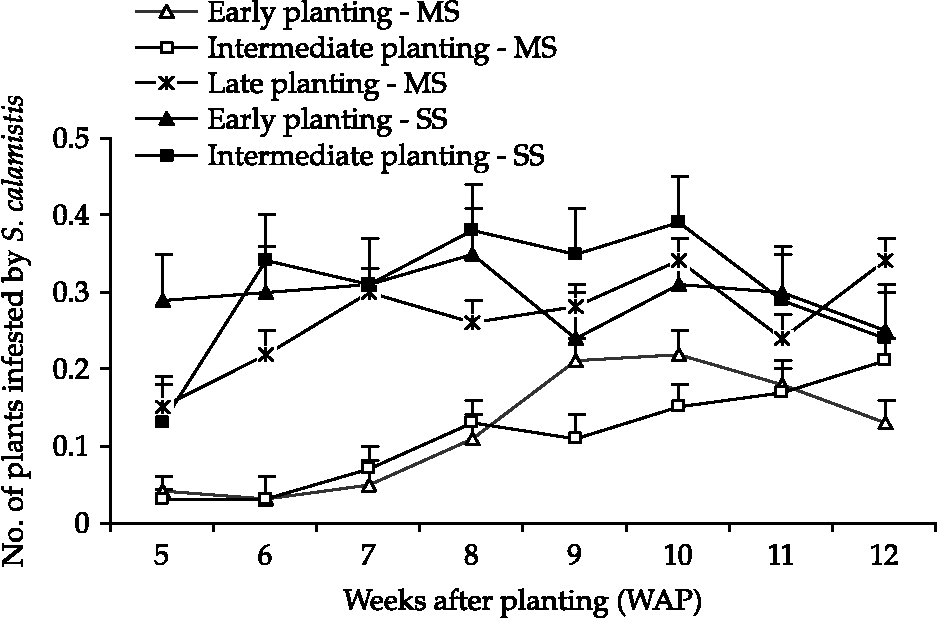
Overall, sampling dates (WAP) significantly affected infestation of plants with S. calamistis (F 7, 158 = 5.22; P < 0.0001; Table 1A). Similarly, season had a significant effect on infestation with that insect (F 1, 73 = 59.83; P < 0.0001). Lower levels were recorded during the major season (Fig. 2). Pair-wise comparisons of the years and seasons revealed that they were all significantly different from each other, except the major season in 2004 that showed similarity with the trial conducted in the short season in 2003 (P = 0.5403; Table 2). Across trials, planting dates significantly affected the mean percentage of plants infested by S. calamistis (F 3, 52 = 27.97; P < 0.0001; Table 1A). During the major seasons, the level of infestation of maize plants by S. calamistis was lower in early and intermediate planting than in late plantings (Fig. 3). Infestation levels in the early plantings were not significantly different from the intermediate ones (P = 0.6247; Table 3), but these two planting dates were each significantly different from the late plantings (P < 0.0001). There was no significant difference between the early and intermediate plantings (P = 0.7973) during the short season in both the years (Table 3).
Least square mean+standard error of maize plants infested by Sesamia calamistis in various trials across treatments (planting dates) in major season (MS) or in short season (SS) in southern Benin, 2003 and 2004.
Pair-wise comparisons (P-values) of trials (nested in season) based on the least square mean number of maize plants infested by Sesamia calamistis across treatments (planting dates) in two locations (IITA and Sèhouè) of southern Benin, 2003 and 2004

MS IITA03, major season at IITA in 2003; MS IITA04, major season at IITA in 2004; MS Sèhouè 04, major season at Sèhouè in 2004; SS IITA03, short season at IITA in 2003; SS Sèhouè 04, short season at Sèhouè in 2004; ns, not significant at the P < 0.05 probability level.
Least square mean+standard error of maize plants infested by Sesamia calamistis in various treatments (planting dates) across trials in major season (MS) or in short season (SS) in southern Benin, 2003 and 2004.
Pair-wise comparisons (P-values) of treatments (planting dates) (nested in season) based on the least square mean number of plants infested by Sesamia calamistis across trials in southern Benin, 2003 and 2004
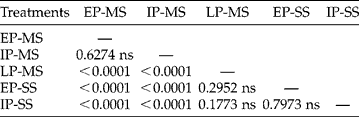
EP-MS, early planting in the major season; IP-MS, intermediate planting in the major season; LP-MS, late planting in the major season; EP-SS, Early planting in the short season; IP-SS, Intermediate planting in the short season; ns, not significant at the P < 0.05 probability level.
S. calamistis larval densities per plant
Table 1B shows that planting dates (nested in season) significantly affected S. calamistis densities (F 3, 35 = 29.86; P < 0.0001). The same was true for sampling dates (F 7, 165 = 4; P = 0.0004) and seasons (F 1, 41 = 25.95; P < 0.0001; Table 1B).
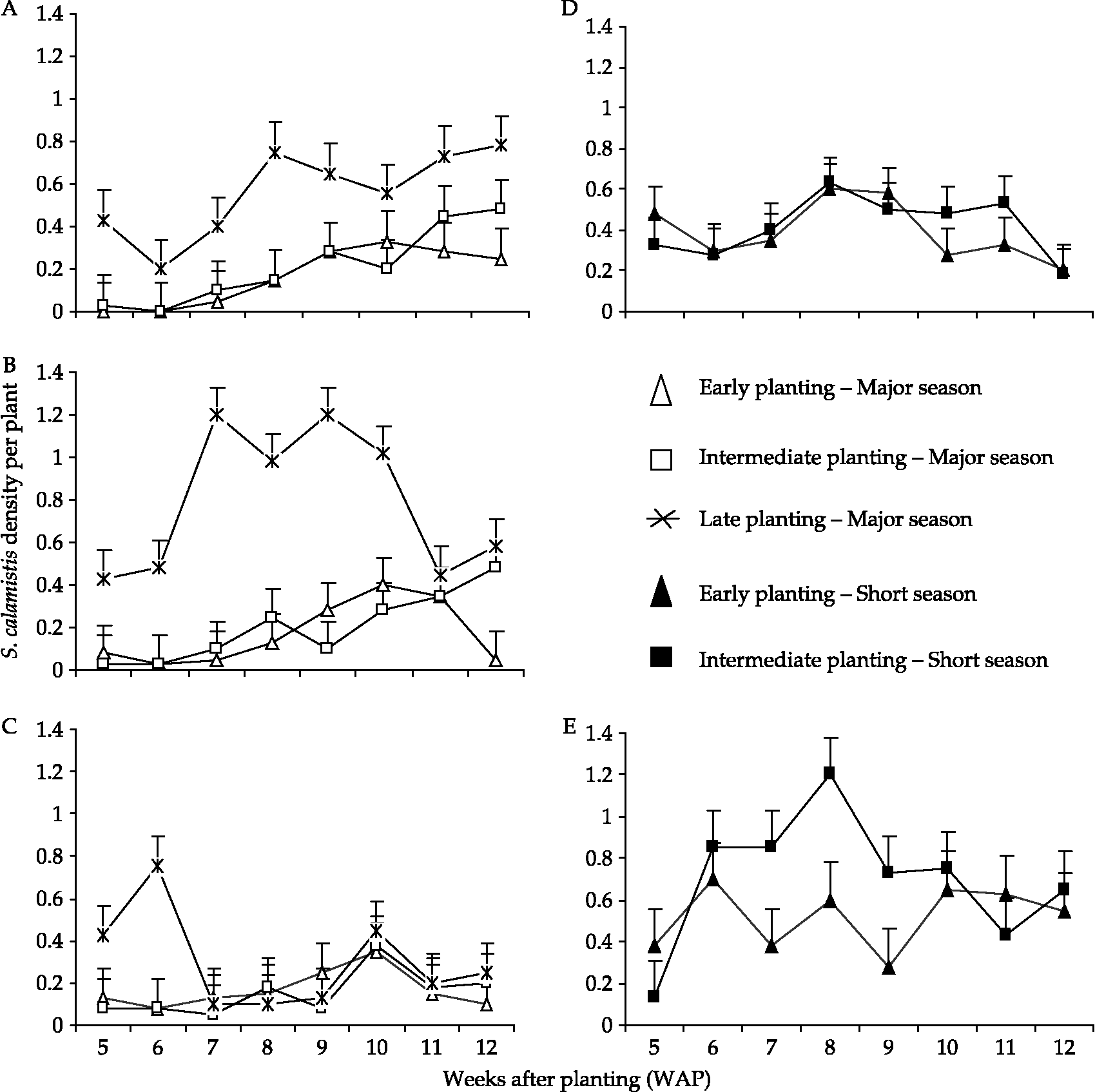
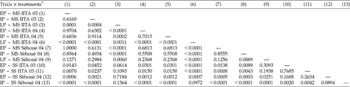
Irrespective of year and location, the number of S. calamistis larvae per plant in the main cropping season increased slowly from 5 to 9 WAP in the early and in the intermediate planting (Fig. 4), but very rapidly in the late planting. Between 5 and 10 WAP the density of S. calamistis ranged from 0 to 0.4 larvae per plant in the early and intermediate plantings compared with 0.4 to 1.2 larvae per plant in late plantings, especially at the IITA station in 2003 and 2004 (Fig. 4A and B), where the mean density of S. calamistis in the late planting was at least three times the level in the early planting. Between 6 and 10 WAP there was a sharp reduction in the density of S. calamistis (0.1–0.3 larvae per plant) for the three planting dates at Sèhouè in 2004. Pair-wise comparisons of planting dates during the main cropping season at the IITA station in 2003 showed that there was no significant difference between early planting and intermediate planting (P = 0.6160), but late planting was different from early planting (P = 0.0001) and from intermediate planting (P = 0.0004; Table 4). The same trend was observed in the major season at the IITA station in 2004, where early planting is statistically similar to intermediate planting (P = 0.7015), but these two planting dates were different from the late planting (P < 0.0001). However, at Sèhouè during the major season 2004, there was no significant difference between the three planting dates (Table 4) in spite of a relatively high density of S. calamistis recorded in the late planting early in the season (Fig. 4C).
Least square mean+standard error of Sesamia calamistis larvae per plant according to planting dates in the major season at IITA in 2003 (A), in 2004 (B) and at Sèhouè (C) and in the minor season at IITA in 2003 (D) and at Sèhouè in 2004 (E).
Pair-wise comparisons (P-values) of interaction between trials and planting dates based on least square mean number of Sesamia calamistis larvae per plant in two locations (IITA and Sèhouè) of southern Benin, 2003 and 2004

EP, early planting; IP, intermediate planting; LP, late planting; MS IITA 03, major season at IITA in 2003; MS IITA 04, major season at IITA in 2004; MS Sèhouè 04, major season at Sèhouè in 2004; SS IITA 03, short season at IITA in 2003; SS Sèhouè 04, short season at Sèhouè in 2004.
† Interaction between trials and treatments (nested in season).
During the short cropping season at the IITA station in 2003, there was no significant difference between early and intermediate planting (P = 0.7685). A similar result was obtained at Sèhouè in 2004 between these two planting dates (P = 0.0894; Table 4). While S. calamistis density ranged between 0.2 and 0.6 larvae per plant in the minor season at the IITA station in 2003 (Fig. 4D), a higher pressure of the insect was observed in the short season at Sèhouè in 2004 (Fig. 4E) with an insect density ranging between 0.4 and 1.2 larvae per plant from 6 to 12 WAP.
Damage to maize cobs
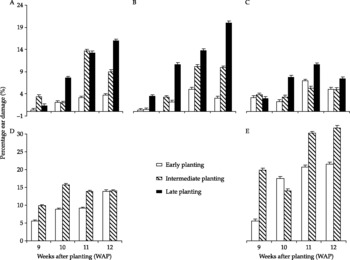
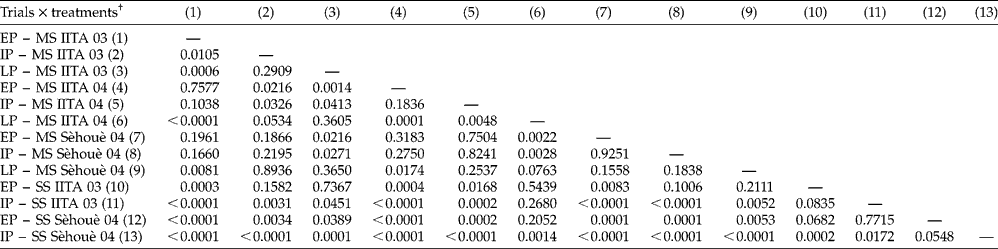
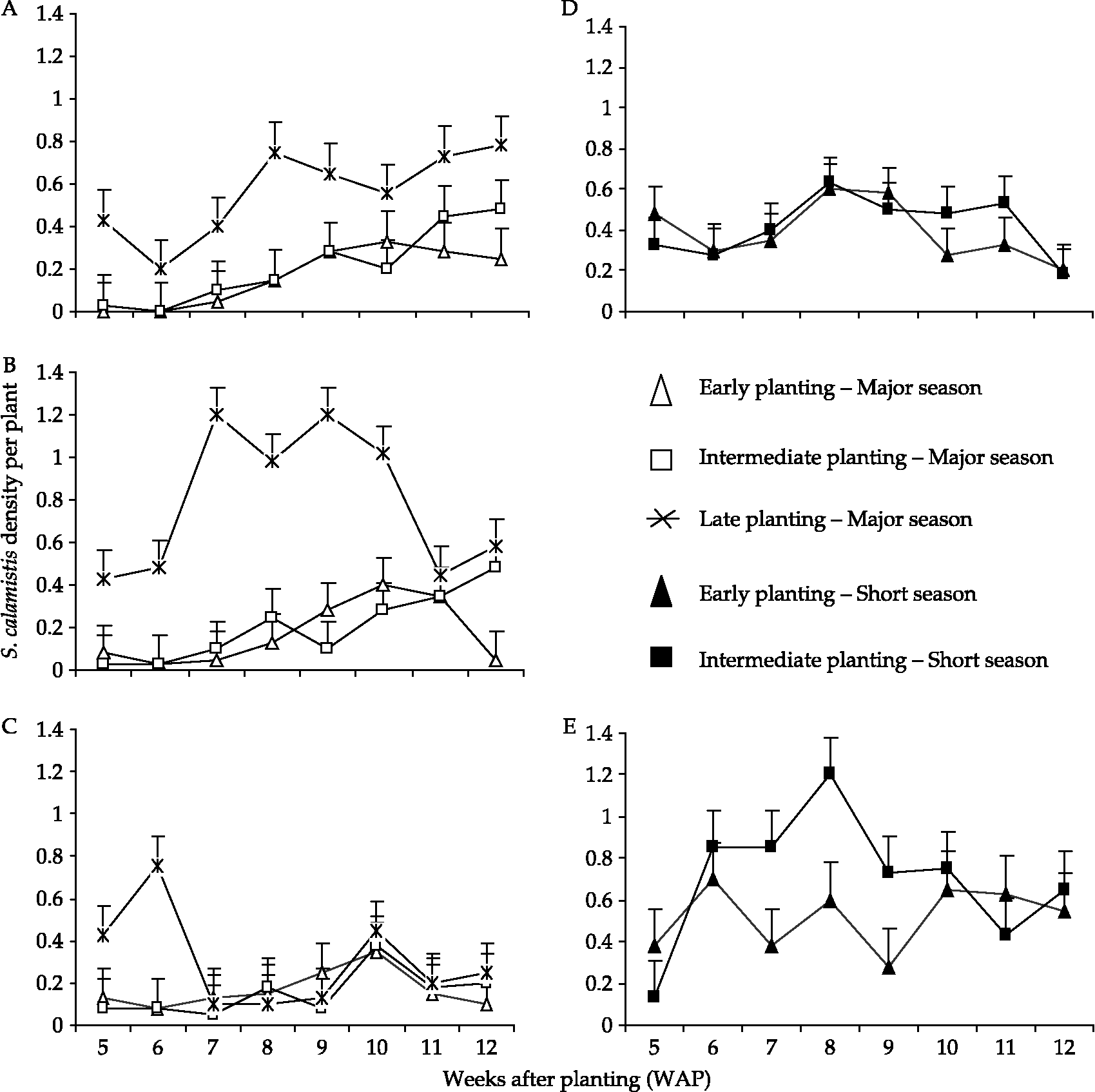
Table 1C shows that damage to maize cobs was significantly affected by sampling dates (F 3, 74 = 37.11; P < 0.0001), season (F 1, 41 = 81.61; P < 0.0001) and planting dates (F 3, 38 = 12.64; P < 0.0001). During the main cropping season, maize cobs were generally more damaged at the IITA station (Fig. 5A, B) than at Sèhouè (Fig. 5C). In addition, irrespective of location and year of observation, the lowest damage levels were always observed in early planting. Pair-wise comparisons of trial and treatment interactions showed that during the major season at the IITA station in 2003, cob damage in early planting was significantly different from the result in intermediate planting (P = 0.0105) and in late planting (P = 0.0006), but there was no difference between early and intermediate plantings (P = 0.2929; Table 5). At the IITA station in 2004, cob damage in early planting was not significantly different from intermediate planting (P = 0.1836), but late planting was different from early planting (P = 0.0001) and intermediate planting (P = 0.0048). In the major season at Sèhouè in 2004, cob damages in the three planting dates were not significantly different (Table 5).
Incidence of damage least square mean+standard error on maize ears according to planting dates in the major cropping season in 2003 (A) and in 2004 (B) at the IITA station in Abomey-Calavi and in 2004 (C) at Sèhouè, both in Republic of Benin; and in the minor season at the IITA station in Abomey-Calavi in 2003 (D) and at Sèhouè in 2004 (E).

Pair-wise comparisons (P-values) of interaction between trials and planting dates based on percentage cob damage in two locations (IITA and Sèhouè) of southern Benin, 2003 and 2004
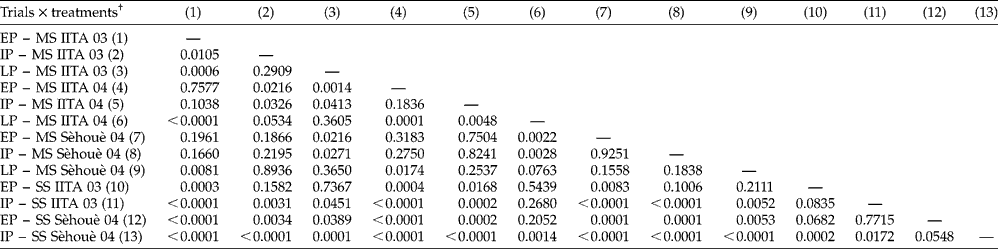
EP, early planting; IP, intermediate planting; LP, late planting; MS IITA 03, major season at IITA in 2003; MS IITA 04, major season at IITA in 2004; MS Sèhouè 04, major season at Sèhouè in 2004; SS IITA 03, short season at IITA in 2003; SS Sèhouè 04, short season at Sèhouè in 2004.
† Interaction between trials and treatments (nested in season).
During the short cropping season in both the years, lowest damage levels were observed with early planting similarly to the main season; however, overall damage to maize cobs was lower at the IITA station (Fig. 5D) than at Sèhouè (Fig. 5E). During the short cropping season in both the years, cob damage did not vary significantly with planting date as shown by the pair-wise comparisons (Table 5). At the IITA station, damage levels recorded in 2003 in early planting were not statistically different from intermediate planting (P = 0.0835); the same was observed at Sèhouè (P = 0.0548). It is important to stress that the damage recorded cannot only be attributed to S. calamistis and should rather be considered the product of a complex of cob borers including E. saccharina, C. leucotreta and M. nigrivenella. However, the current studies did not focus on these insects whose densities were negligible.
Discussion
Irrespective of location and year, S. calamistis density and percentage of infested plants during the main cropping season were significantly lower in early and/or intermediate planting than in late planting. The early sown maize plants were probably beyond their most susceptible development stage before the periods of maximum activity of the pest. Most likely, there was no synchrony between moth activity and early plant stages. According to Oigiangbe et al. (Reference Oigiangbe, Ivbijaro, Ewete and Mutsaers1997), two generations of S. calamistis are possible on a single crop of maize. The first generation attacks plants from 2 to 6 weeks after emergence (WAE) and the second generation is found on plants from 7 to 11 WAE. Larvae of this second generation can be found in high numbers on maize cobs at harvest. Régine and Coderre (Reference Régine and Coderre2000) confirmed the existence of two maxima in the temporal fluctuations of S. calamistis. The first is related to the emergence of the first generation moths, while the second, which is more abundant, occurs when maize becomes physiologically mature and coincides with the period of emergence of other borers like M. nigrivenella and E. saccharina. Skovgård and Päts (Reference Skovgård and Päts1997) found in Kenya, that emergence of non-diapausing borers when synchronized with maize planting leads to a high infestation and concluded that very late planting of maize should be discouraged even under favourable weather conditions. Bonhof et al. (Reference Bonhof, van Huis, Kiros and Dibogo2001), working in Kenya, demonstrated that early planting can reduce damage by stemborers like S. calamistis but, to be effective, the operation must be conducted on a large scale, which in practice depends on local climatic conditions. The results of this study confirm those of Gounou et al. (Reference Gounou, Schulthess, Shanower, Hammond, Braima, Cudjoe, Adjakloe, Antwi and Olaleye1994) who reported an increase in infestation levels of borers, including S. calamistis, in Ghana as planting was delayed.
The incidence of S. calamistis was remarkably low at the beginning of the main season, particularly in the early and in the intermediate plantings. This was especially noticeable at the IITA-Benin station where, in 2003 and 2004, the insect was virtually absent until 5–7 WAP. In a study on the spatial and temporal distribution of lepidopteran stemborers or maize cobs in West Africa, Schulthess et al. (Reference Schulthess, Bosque-Perez and Gounou1991) found that the density of borers, including S. calamistis, was low during the main season (April–July) and was generally never high in southern Benin. Atachi (Reference Atachi1987) observed that the long and detrimental dry period (early November–mid-March), which preceded that season, was unfavourable to stemborers. In the major cropping season, the earlier onset of S. calamistis at Sèhouè compared with the IITA station did not result in a higher incidence of the pest later in the season. Agboka et al. (Reference Agboka, Gounou and Tamo2006) also found that during the main cropping season, the density of S. calamistis was significantly higher at the IITA-Benin station than under field conditions at Djidja and Banté in central Benin. The situation is probably the result of biological control that limited the activity of the pest under field conditions. Chabi-Olaye et al. (Reference Chabi-Olaye, Schulthess, Poehling and Borgemeister2001) showed a very high rate of parasitism of S. calamistis eggs by Telenomus isis (Polaszek) (Hymenoptera: Scelionidae). Similarly, Fiaboe et al. (Reference Fiaboe, Chabi-Olaye, Gounou, Smith, Borgemeister and Schulthess2003) found that in Benin, the natural enemies of S. calamistis (T. isis and Telenomus busseola (Gahan)) kept it under control in maize crops. The wild plants hosting borers would undoubtedly harbour populations of natural enemies, which, in their turn, would colonize the subsequent maize crops and hence reduce the borer population (Borgemeister et al., Reference Borgemeister, Chabi-Olaye, Nolte, Schulthess, Ndemah and Sétamou2005).
Agro-climatic conditions, including rainfall, could also explain the differences in the activity of S. calamistis at the two experimental sites during the major cropping season. In 2004, for example, at the IITA station total rainfall (802 mm) was higher than at Sèhouè (387 mm) in April, May and June. Jiang et al. (Reference Jiang, Zhou, Overholt, Muchugu and Schulthess2006) confirmed that rainfall has a positive impact on the population of borers as was found by Ndemah et al. (Reference Ndemah, Schulthess, Poehling and Borgemeister2000), who argued that populations of borers are strongly influenced by the quantity and distribution of rain. This assertion seems to be justified by the findings of the present study.
The short duration of the minor season excluded a late planting treatment. Bowden (Reference Bowden1976) reported a very limited margin for manoeuvring even under irrigated conditions when it comes to manipulating the planting date to avoid severe attacks of borers in the minor growing season. Despite the relatively higher density of S. calamistis during the minor maize-growing season compared with the main season, no significant differences were observed between early and intermediate planting, regardless of the location.
Conclusions
The current studies confirm that late planting of maize causes higher levels of S. calamistis incidence, as measured by larval density per plant and percentage of infested plants. Many farmers fear the early planting due to the uncertainty of the rain, which often leads to the loss of their seed. The introduction of drought-resistant varieties provides new opportunities for encouraging farmers to engage in the practice of early planting because the maize seedling could withstand the pockets of drought that often follow the first rains, especially during the main growing season. Nevertheless, it should be admitted that early planting is quite demanding in labour, especially at the beginning of the production season, and is therefore a real challenge. Manipulation of planting dates during the minor growing season is not advisable in spite of the higher incidence and population of insects recorded.
Acknowledgements
We would like to express our gratitude to Henri Vignondé, Théophile Adda and Nestor Agbotomè for their technical assistance. We are pleased to thank Drs O. Ajayi, F. Nwilene and A. Chabi-Olaye for their valuable critical readings of the manuscript.