This article explores the Zionist cultural economy in interwar Palestine, by studying Jewish campaigns advocating ethnonational separatism in consumption. The campaigns urged consumers to consider the ethnonational origins of products they were purchasing, in an effort to create and maintain sociocultural borders between “Jewish” and “foreign.” Using various archival and media sources, the article uncovers political and economic disputes within the Jewish community that exacerbated the inherent difficulties in defining objects as originating purely inside or outside of these borders. In exploring separatist attempts to divide British Palestine's socioeconomic space into Arab and Jewish spheres and to weave this division into daily life in Palestine, the article also uncovers the mundane divergences and convergences that undermined such a division. The endeavors to politicize the emerging sphere of consumption in interwar Palestine as a contested arena for identity construction reflected broader attempts to preserve communal borders in supposedly open markets, borders that were often undermined or diffused in the shared sphere of consumption.
Methodologically, the article focuses on shifting meanings ascribed to the economic activity of consuming, following the cultural turn in the study of consumption.Footnote 1 It focuses on “the social life of things,” that is, the attribution of sociocultural and political properties to objects.Footnote 2 In this case, the Jewish nationalist movement in interwar Palestine attempted to politicize the commercial sphere by identifying objects such as bananas, pipes, and socks as either “Jewish” or “foreign.” That is, in addition to the economic aims of the campaigns, they were part of an identity project that associated objects with the ethnonational cause and conceptually constituted the unit that was to be built and protected.
The separatist campaigns were based on the doctrine of economic nationalism, which became globally dominant after World War I, partially supplanting the 19th-century belief that free trade would bring wealth and prosperity. According to David Levi-Faur, economic nationalism was based on three fundamental maxims: “A nation's citizenry largely shares (or should share) a common economic fate; the state has a crucial positive role in guiding the national economy to better performance; and the imperatives of nationalism should guide the state's economic policies.”Footnote 3 For interwar nation-states, this often meant promoting protectionism and industrialization (or, in some cases, agrarianism) as well as the purchase of locally produced goods in both national and foreign markets. At times, these policies weakened the purchasing power of consumers, when they paid higher prices for local products protected against competition. Governments tended to impose tariffs on imported products while subsidizing local development, policies associated with Keynesian ideas on the necessity of governmental intervention in national economies.Footnote 4 In interwar anticolonial movements, economic nationalism meant forging an economic life independent of the colonial powers, as part of the struggle to establish a sovereign nation-state.Footnote 5
Economic nationalism was thus not only a fiscal doctrine; it also involved attempts to shape national identity in the sphere of consumption by linking the mundane act of purchase to the nation's strength and associating the consumption of foreign products with national degradation. Industrialists, merchants, labor unions, journalists, consumer organizations, and, in some cases, government authorities waged extensive campaigns to “buy local,” imploring consumers to favor local products even if (or precisely when) those were more expensive or of lower quality. Several historians who have studied interwar “buy local” campaigns, whether in the context of nation-states or anticolonial movements, have argued that their effects on the shopping habits of consumers were often negligible. In many cases, their main achievement was to create a certain moral pressure that generated a sense of national belonging in public discourse, particularly at times of political crisis.Footnote 6 Such campaigns helped to “expand the political field by drawing nonpolitical social groups and realms of activity into nationalist movements.”Footnote 7
As elsewhere, “buy local” campaigns were uncommon in the Middle East before World War I, with a few exceptions, such as Ottoman campaigns in the period around the constitutional movement of 1908.Footnote 8 In the interwar period, “buy local” campaigns cropped up across the region, reflecting new discourses of economic nationalism that attributed national identity to the borders drawn after the defeat and division of the Ottoman Empire.Footnote 9 At the same time, processes of urbanization and industrialization had contributed to the expansion of middle-class consumer societies in parts of the Middle East, including Arab Palestine.Footnote 10 Palestine's Jewish sector also witnessed the emergence of a consumer urban middle class, particularly in the rapidly developing Tel Aviv metropolitan area, despite the dominance of the socialist-Zionist anti-urban ethos.Footnote 11 These new middle-class cultures emphasized self-fulfillment and self-expression through the act of consumption, which was increasingly politicized by both nationalist movements in Palestine via “buy local” campaigns directed against the other movement no less than against imports.
The Jewish separatist consumption campaigns in interwar Palestine were also part of a consistent attempt, characteristic of Zionism from its outset, to promote the construction of an exclusivist Jewish identity en route to an independent Jewish polity.Footnote 12 In line with the doctrine of economic nationalism, the Zionist movement attempted to build a Jewish economy that would be as independent from non-Jewish interests as possible. Yet the situation of the Yishuv, a settler-immigrant society building political institutions as a “state-in-the making,” was different from that of both sovereign nation-states and anticolonial movements in this period.Footnote 13 Unlike the former, Jews in Mandate Palestine did not control a state with the sovereign power to collect tariffs or manage a consistent fiscal policy.Footnote 14 And unlike anticolonial economic nationalist movements, their main thrust was directed against the competing national movement with which they shared the territorial unit, and not, in the economic realm, against the imperial power. Hence, the Jewish economy that took shape was defined by two parameters—ethnonational (“Jewish”) and territorial (“Palestine”)—that were not fully aligned.
Economic ethnonational separatism in British Mandate Palestine was based on land, labor, and consumption. Similar to the movements for “Hebrew land” and “Hebrew labor,” separatist consumption campaigns had to deal with the absence of any territorial border between the Jewish and Arab communities and indeed were designed with the aim of constructing those borders on the sociocultural and economic levels. While land and labor have been studied extensively, consumption remains relatively unexplored in the historical and sociological literature on Mandate Palestine's economy and on the struggle between the Jewish and Arab nationalist movements, perhaps because it was the least organized of the three.Footnote 15 In some ways, the ethnonational politicization of consumption was more complicated than the land and labor campaigns; in any case, it was intertwined with them, especially with labor.
While this article focuses on the Jewish separatist consumption movement, it is important to note that there was a parallel nationalist movement in Palestine that advocated the purchase of Arab products by Arab consumers, in a similar attempt to produce and protect an Arab–Palestinian economy, and with similar conceptual complications around the definition of an Arab product.Footnote 16 The nationalist Arab–Palestinian press criticized Arab consumers who purchased items from “Jews who refuse to employ Arab workers,” and civil-society organizations called on the public to boycott Jewish and foreign products.Footnote 17 The extent to which this movement developed as a reaction to the Zionist separatist consumption campaign, and its relations with nationalist movements in neighboring Arab states, are beyond the scope of this study.
The following section analyzes the responses of British Mandate authorities to ethnonational economic separatism in Palestine and the tensions inherent in the dual concepts of “buying Jewish” and “buying local.” I then turn to the separatist campaigns’ institutional development after 1920 and their escalation from the mid-1930s (before and during the “Arab Revolt”) until World War II. The penultimate section of the article explores the conceptual and political conflicts and contradictions of these campaigns, and I conclude by reflecting on some implications of the study of separatist consumption for our understanding of the relationship between Jews and Arabs in Mandate Palestine.
“THE LAND'S PRODUCTS”: ETHNIC OR TERRITORIAL?
As a political and thus economic unit, Palestine was created by the British after World War I under the League of Nations Mandate system, which validated the Balfour Declaration of 1917. Britain was mostly concerned with its own economic interests, which during the interwar period were increasingly linked to the imperial provinces as markets for British manufactured products.Footnote 18 In 1921, the Mandate government also signed a bilateral trade agreement with French Mandate Syria, which inundated the country with inexpensive agricultural and light-industrial products throughout the interwar period.Footnote 19 Given their reliance on British support, Zionist “buy local” campaigns were very cautious about opposing British imports, in contrast to nationalists in places such as India and Egypt who boycotted British products as part of the anticolonial struggle for independence.Footnote 20
The British officially rejected ethnonational economic separatism in Palestine, taking the position that “such distinction [between Arabs and Jews] could not, in fact, be made for fiscal purposes in a community where there is no geographical or economic separation between the two great homogeneous groups.”Footnote 21 Attempting to keep the hostility between the two sectors to a minimum, some British policies were based on a conception of Mandate Palestine as one economic unit. For example, when calculating the yearly quota of Jewish immigration certificates, which was linked to the unemployment rate in Palestine, the British considered the overall unemployment in the territory, in opposition to the Zionist demand to consider Jewish unemployment alone.Footnote 22
Nonetheless, this position proved difficult to maintain, because the two ethnic groups in Palestine had not only contrasting political visions but also different economic structures, which often yielded opposing interests. The Jews were largely urban dwellers who worked in industry and services, while most Arabs were engaged in agriculture. Throughout the British Mandate period, there was some growth in the rural Jewish population and an increase in Jewish agricultural employment, along with some increase in industrial employment in the Arab sector. Both ethnic communities actively participated, though unequally, in the urbanization of Palestine and both saw the emergence of a new middle class.Footnote 23 The available statistical data regarding divided patterns of consumption are conjectural, but it is clear that the Jews’ purchasing power was considerably stronger than that of the Arabs and that the former were far more urbanized than the latter.Footnote 24 Nevertheless, and despite the separatist tendencies in both sectors, there were extensive economic interactions between them.Footnote 25
British officials had to maneuver between the needs and demands of the two communities when developing economic policy in Mandate Palestine. The Arab leadership usually demanded taxes on agricultural imports, while the Zionist leadership demanded taxes on manufactured imports and customs exemptions for imported industrial raw materials.Footnote 26 Moreover, although the British were troubled by economic separatism, they saw Jewish immigrants as Western allies with whom to modernize the country, at least in the 1920s. During the first decade of the Mandate, many British officials claimed that building a Jewish national home in accord with the Balfour Declaration was not at odds with the welfare of Palestinian Arabs. Even later, when British policy was not always favorable to the Zionist political cause, it generally favored Jewish industrial development in the economic sphere.Footnote 27 The British and the Zionists did not always see eye to eye on the political future of Palestine, but each considered the other an ally in relation to the “non-Western” inhabitants of the territory.
The tension between the territorial and ethnic definitions of the economic unit was apparent in the main separatist campaign slogan: “buy only totseret ha-arets!” The literal meaning of this slogan is “buy only local products of this land [Palestine]!” or in short, “buy local.” However, it clearly meant “buy Jewish”: repudiate not only imports but also non-Jewish local products.Footnote 28 Another Zionist way to designate separate Jewish identity was to refer to it as “Hebrew,” which literally referred to language, but was in practice a more general politicocultural reference to the Yishuv as distinct from both the surrounding Arab world and diaspora Jewry. This designation denoted the linked ethnic and territorial components of the new Jewish identity.Footnote 29 When prestatehood Jews said or wrote the Hebrew term ha-arets (the land), they often imagined a Jewish space, disregarding the present inhabitants of Palestine.Footnote 30
The products boycotted by the campaigns therefore fell into two categories: imports into Palestine and local non-Jewish products.Footnote 31 However, these categories differed in the level of political threat they posed to Zionist economic separatism and did not receive the same treatment. The campaigners’ fight against imported products was explicit and often shared by the Arabs and the British because Palestine's trade imbalance often concerned them as well. The campaigns against local non-Jewish products were more important to establish a separatist Zionist identity and the exclusive character of the Yishuv in relation to the Arab world, even if, politically, explicit ethnonational separatism was not always expedient. For example, when some organizations promoting separatist consumption translated their names into English, they used territorial rather than ethnic wording, such as the Council for Home Products, the Pro-Palestine Products Committee, and Palestine Home Products.Footnote 32 Other organizations retained the Hebrew name in Latin transliteration, for example, Lemaʿan Totseret ha-Arets (Promoting the Land's Products). In 1933, the Palestine Association of Citron Growers campaigned against competing Arab products, and was rebuked by Haim Arlozorov, the prominent secretary of the political department of the Jewish Agency, who warned activists not to be too blunt in their advocacy of ethnic separatism in consumption.Footnote 33 Indeed, a British firm investigating the idea of establishing a factory in Palestine expressed surprise in discovering that “when the Jews advocate for local products, they do not mean the country's products, but Jewish products.”Footnote 34 For most people involved, this was not much of a surprise.
A telling illustration of both the overlap and the tension between the ethnic and the territorial in Zionist economic policies was the handling of the bilateral trade agreement with French Mandate Syria. In 1939, Nahum Tishby, a Zionist official and a prominent advocate for separatist consumption, asked a Syrian biscuit manufacturer what he would do if the British abrogated this treaty and levied taxes on Syrian imports. To Tishby's disappointment, the manufacturer replied that he would relocate his factory from Beirut to Acre and continue selling to Tel Aviv.Footnote 35 From the perspective of many Zionists, the economic struggles against Arab Palestinian products and Syrian imports were one and the same. Had they wanted to conduct an effective struggle against the Syrian treaty, they would have more fully cooperated with Arab–Palestinian manufacturers and merchants. As we shall see, such collaboration was rare, though by no means nonexistent.
THE 1920S: GRASSROOTS CAMPAIGNS
The first documented call to protect totseret ha-arets (the land's products) in Palestine appeared in 1920, when B. Makhlis, the secretary of the managing committee of the colony of Petah Tikva, proposed steps that could be taken to decrease the territory's dependency on imported products by protecting local manufacturing and improving the Yishuv's productivity.Footnote 36 Over the next few years, this call was repeated by local entrepreneurs, politicians, and educators, but no organized movement was formed.Footnote 37 Starting in 1923, the Department for Commerce and Industry of the Zionist Executive, located in Jerusalem, tried to organize and coordinate separatist Jewish consumption campaigns, under the vigorous leadership of Nahum Tishby (1885–1952). Educated as an engineer at Imperial College London, of Russian origins and with a socialist past, Tishby spent World War I in London, actively contributed to the British war effort, and participated in subsequent British diplomatic affairs.Footnote 38 After arriving in Jerusalem in 1922 to establish the Department for Commerce and Industry, he sought to build an industrialized Jewish economy. Tishby's actions reflected a clear separatist approach to both industry and agriculture in the Yishuv. In 1923, he worried that “half a million pounds are paid [annually] to the Arabs for vegetables, milk, butter, cheese, eggs, poultry, meat, and grain.”Footnote 39 His office's efforts to coordinate local initiatives for separatist consumption achieved limited success until the mid-1930s.
Nevertheless, during the 1920s a number of organizations were created to encourage separatist Jewish consumption. Many of them were merchants’ and manufacturers’ associations that coordinated marketing endeavors and used nationalist–patriotic arguments to promote their products in the Jewish market.Footnote 40 Others were local civil-society initiatives, including chambers of commerce, workers’ councils, youth groups, and political clubs. Teachers, political leaders, and other cultural figures were the initiators and activists of these campaigns, which were sometimes partially financed by manufacturers and, on rare occasions, by Zionist institutions such as Tishby's department. There were also attempts to coordinate the marketing of Palestine's Jewish products abroad, but this is beyond our scope here.Footnote 41
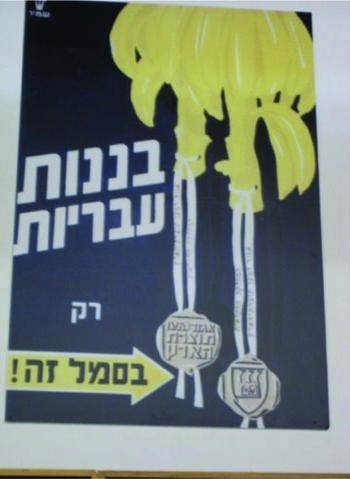
The Zionist institutions attempted to behave like a government and to regulate and intervene in the economy in order to increase the purchase of Jewish products. But none of them, not even the Municipality of Tel Aviv, possessed sufficient legislative power to do so effectively. Most activity thus revolved around mobilizing and negotiating among different Jewish sectors: manufacturers, retailers, wholesalers, importers, and consumers. At least until the mid-1930s, most of the campaigns addressed consumers directly, urging them, for example, to “buy Hebrew bananas” (see Figure 1). These campaigns included movies, pamphlets, posters, songs, public lectures, newspapers columns, public entertainment events (such as balls and processions), and similar activities that called on the public to boycott “foreign” products.Footnote 42 Fairs and exhibitions of totseret ha-arets were frequently organized in the Yishuv and many local organizations assisted with promoting Jewish products, declaring “Hebrew Flower Week,” “Hebrew Honey Month,” and so forth.Footnote 43 For example, in Petah Tikva in 1937 (the year it became a township), an exhibition was organized of totseret petaḥ tiḳṿah, that is, the products of local agriculture and industry.Footnote 44
Hebrew bananas. From the Lavon Labor Movement Archive, http://www.amalnet.k12.il/LavonInstitute/RightMenu/PostersCollection/תוצרת+הארץ.htm (accessed 12 June 2012). [A color version of this figure can be viewed online at http://journals.cambridge.org/mes]

Some activists asserted that campaigns targeting consumers were of limited effect and that, in the words of a writer in the Labor Movement newspaper Davar, “patriotic–moralistic lectures do not bring results”; it was equally important, according to these critics, to reach out to wholesalers and retailers and pressure them to prioritize Jewish products.Footnote 45 In the mid-1920s, Tishby's department distributed “concessions” to sellers of Jewish products in different regions, including Jerusalem, Haifa, Petah Tikva, and Tiberias. It issued notarized contracts that granted the merchant a label assuring customers that his shop was the only one in the region that sold exclusively Jewish products. In return, the merchant promised to sell only “products produced by Jews in Palestine”; in not recognizing the ethnic component of separatism, the term totseret ha-arets was insufficiently precise in this context.Footnote 46 In one case, a merchant was given a concession and three Egyptian pounds to ride around the city of Jerusalem on a blue-and-white carriage and sell Jewish products.Footnote 47 Tishby conducted extensive inquiries into every concessionaire's background and asked for recommendations from public figures, who were often members of local volunteer organizations.Footnote 48 In one case, the merchant Yitzhak Cohen received a loan of 50 Egyptian pounds from Zionist banks as an incentive to sell only Jewish products.Footnote 49 However, several merchants in Petah Tikva who signed the contract with the department backed out of the agreement later in order to sell imported products—apparently, the arrangement was not lucrative enough for them.Footnote 50
Another, often ineffectual, course of action was to pressure Zionist institutions themselves, which were far from strict in limiting their purchases to local Jewish products such as Hebrew school uniforms or JNF blue boxes. The campaigners expressed surprised to learn that the national institutions were inattentive to the needs of the national economy.Footnote 51 Even after the escalation of 1936, to which we will return, the Hebrew University used the services of a Christian insurance company, while the utility and potash companies ordered pipes from abroad instead of from a local Tel Aviv factory.Footnote 52 When functioning as consumers, these institutions sought to cut their expenses just as households did.
Consumer leagues such as those that emerged in the United States and Europe in the late 1800s did not exist in interwar Palestine.Footnote 53 Women's groups were the Yishuv's main civil society organizations that focused on consumer issues such as the standardization of products and consumer protection and education. As elsewhere, the rise of consumer culture in Palestine was in tension with moralist discourses about consumption as a destructive form of materialism. The nationalist press, Hebrew and Arabic alike, valorized “authentic” peasant culture (fallāḥ for the Arabs, narodniḳ for Jews of eastern European origin), attacking the Westernized culture of the economic elite as a moral threat to the nation.Footnote 54 These attacks were linked to the distinction between “basic needs” and “luxury,” encouraging frugality and sometimes even asceticism. On the Jewish side, this anticonsumerist discourse was mainly produced by dominant Labor Movement circles, which promoted the puritan ethos of the pioneer.Footnote 55 The Zionist bourgeoisie, the main target of these attacks, was not well organized politically, but it did dominate the urban space of Tel Aviv. The discourse was also influenced by the masculine nature of Zionist ideology and was often understood through the notion of a gendered division of labor in which men produce and women consume.Footnote 56
Sporadic campaigns during the early 1920s advocated a pioneering puritan ethos of modest needs.Footnote 57 In due course, however, this moralist discourse withdrew in the face of the ethnonational discourse that focused on the product's origins rather than on its qualities and legitimized consumption, even if excessive, as long as it contributed to the Jewish economy. From the mid-1920s, the separatist campaigns indirectly legitimized the culture of consumerism and luxury goods, which was otherwise at odds with the nationalist ethos of modest needs. Unlike the “Hebrew labor” campaign, which was often depicted as a working-class struggle, the campaign for separatist consumption bore the stamp of the middle class.
The consumption campaigns frequently targeted Jewish women and children, two groups often seen as relatively detached from the other two Zionist economic struggles, those over labor and land. In public discourse dominated by the puritan ethos, those two groups were often perceived as nonproductive. The campaigners called on women and children to refute this image by demonstrating nationally responsible consumption. On more than one occasion, Tishby explained that “the well-being of the individual family depends on the balance between its expenses and income, and the same is true in the life of the large family—the nation. And just as the private family is obligated to attend to maximal savings, so is the nation and the state.”Footnote 58 This analogy drew women, and to some extent children, into the politicized sphere of consumption.
Batsheva Margalit Stern has shown how Jewish women's organizations were prominent in the separatist consumption campaigns, enjoining responsible consumers to prioritize nationalist interests over those of their household, and providing the campaigns with resources and battalions of volunteers (whereas many of their male leaders were paid officials).Footnote 59 A writer of a campaign pamphlet urged her fellow women to realize that the woman's “small-scale duties, embedded in managing the home economy, do not devalue her.” In other words, women's consumer choices could shape the strength of the Jewish economy.Footnote 60
The consumption of luxuries by women was also harnessed to support the Jews’ economic struggle.Footnote 61 For example, Jewish campaigns legitimized the high-fashion industry as a way to create jobs for Jewish textile workers and to attract Jewish capital to Palestine, despite fashion being a futile luxury. A pamphlet published in 1939 by the Merkaz Lemaʿan Totseret ha-Arets proudly reported that while in 1923 every Jew spent on average 20.5 pounds per year on textiles, in 1939 it had risen to 40 pounds per year, while the share of local manufactures among purchased textiles had increased from 33 to 50 percent. The pamphlet attributed this growth to the alleged feminine inclination to buy more clothes than everyday life necessitates.Footnote 62 These data may be questionable, but their public assertion reveals the moral legitimization of the rise in the standard of living. In another case, the Merkaz organized a fashion exhibition in which models walked the streets wearing women's clothes produced by local Jews.Footnote 63
The campaigns also involved children. Youth movements and sports clubs provided young volunteers for street and door-to-door campaigns. Other initiatives targeted younger children through the Zionist school system; indeed, many separatist campaigners were teachers. Advertisements urged children to convince their parents to buy local Jewish products. Tishby, for example, asked the head of the education department of the Zionist executive to address a confidential letter to all school principals urging them to convince the children to avoid an imported chocolate and buy only the locally produced Jewish chocolate of “Raʿanan.”Footnote 64 Some campaigners employed modern marketing strategies to convince parents to buy the right product. An example was the “child's forest,” a project initiated by the Merkaz in collaboration with Moʿetset ha-Morim le-Maʿan Kakal (the teachers’ council for the JNF), a voluntary educational organization that attempted to instill nationalist feelings among schoolchildren. Children collected one stamp for every 20 mil purchase (a mil was 1/1000 of a Palestine pound) from shops certified by the Merkaz as selling Jewish products. For three stamp books, each containing 200 stamps, a special tree was planted on behalf of the child in a JNF forest. Some 3,900 saplings were funded in this way.Footnote 65 The aim and the “prize” (planting a new forest) were part of the classical nationalist ethos, but the method was taken from capitalist consumer culture. These developments indicated the emergence of a consumer society with increased purchasing power for women and children, who could demonstrate political agency through their involvement in the sphere of consumption while remaining relatively remote from the other fronts of nationalist struggle.
In the 1920s and early 1930s, both grassroots and institutional initiatives to buy Jewish products appeared in every region of the Yishuv. Yet attempts to better coordinate them during these years failed, and the organizations complained continuously of public indifference. While this is a familiar complaint of political campaigners, in this case the activists’ influence on the shopping habits of consumers was indeed questionable.Footnote 66 This was true even during and after the violent conflict of August 1929, known as the Western Wall Uprising, in which 133 Jews and 116 Arabs were killed and 198 Jews and 232 Arabs injured in one week. There is evidence that calls for mutual boycotts between Jews and Arabs had little effect on consumption habits and inter-ethnonational trade.Footnote 67
During most of the interwar period, a civic Palestinian identity was not yet off the table. Jews and Arabs occasionally worked together toward a shared territorial interest and campaigned for more stringent protection of the autarkic Palestinian economy. In the footwear industry, for example, Palestinian Jewish and Arab manufacturers banded together against the flooding of the local market with cheap Syrian and European shoes. In 1930, a new Czech shoe company opened four branches, in Jerusalem, Tel Aviv, Nazareth, and Tiberias. It offered inexpensive products along with innovative marketing and advertising techniques, such as commercials during movie screenings in theaters. In response, more than 700 Jewish and Arab shoemakers gathered in Jerusalem, elected an Armenian as chair, and demanded that the Mandate government implement a protectionist policy favoring Palestinian domestic production.Footnote 68 According to a senior Zionist official, this meeting was quietly organized by none other than Nahum Tishby.Footnote 69 In Tel Aviv, too, hundreds of shoemakers assembled to discuss similar concerns, though all the members of this group were Jewish and were more concerned with Jewish than domestic Palestinian production. They did not come up with any effective policy proposal, but only “express[ed] their confidence in the quality of their products.”Footnote 70 Two months later, someone pasted placards in Tel Aviv that printed the names of residents who dared to buy foreign shoes, revealing that confidence to be unwarranted.Footnote 71
THE MID-1930S: ESCALATION
Ethnonational separatism in consumption gained effective momentum only in the mid-1930s, as the political and economic competition between the two ethnonational sectors escalated. While the Yishuv witnessed rising economic prosperity due to the influx of new immigrants and capital from Europe, many Palestinian fallāḥīn lost their land and were proletarianized. In April 1936, this fueled the outbreak of the most violent conflict in Mandatory Palestine, commonly referred to as the Arab Revolt, which lasted until 1939 and in which several thousand Arabs and hundreds of Jews and British officers were killed. Recent scholarship on the revolt emphasizes the deepening economic conflicts between the two ethnonational sectors in the fields of land and labor as contributing factors.Footnote 72 This escalation was also apparent in the field of consumption: in 1935, after fifteen years of grassroots activity, the diverse local organizations came together under an umbrella organization, the Merkaz Lemaʿan Totseret ha-Arets (Center for the Land's Products), which was financially sponsored by ha-Vaʿad ha-Leʾumi (the Jewish National Committee in Palestine) and several Jewish businesses. Although this coordination was catalyzed by the 1936 violent conflict, it had actually started earlier.Footnote 73
The separatist campaigns expanded further during the violence of 1936–39, which interrupted manufacturers’ access to markets and fueled mutual, and now more effective, calls for boycotts of Jewish and Arab products. Even the influential writer and citrus grower Moshe Smilansky, chair of the farmers’ association and previously an opponent of economic separatism, changed his mind in the wake of the Arab Revolt.Footnote 74 Shortly after April 1936, the industrialist H. Frumkin from the Merkaz (not to be confused with supreme judge Gad Frumkin, an opponent of economic separatism) told activists they “must not miss the rare opportunity to use the national sentiment.”Footnote 75 Later he reported to the economic committee of the Tel Aviv municipality on “some improvement” in national consumption habits during May 1936.Footnote 76 This was supported by statistical data. For example, from April to June 1936 Jewish vegetables were sold in much higher quantities than in the same quarter the previous year.Footnote 77 The violent conflict also rendered the campaigns’ condemnation of disloyal merchants and consumers more effective. Interethnic trade in Palestine continued to take place, but was considerably reduced; for the first time, the campaigns for Jewish labor and consumption seemed to work, at least to a degree.
The Arab Revolt disclosed the “buy local” campaigns as “buy Jewish” campaigns that advocated ethnonational separatism rather than just local production. This was evident, for example, in the particularly militant activities of the Agricultural Department of the local Tel Aviv Igud Lemaʿan Totseret ha-Arets (Union for the Land's Products). The domestic Arab–Palestinian competition posed a greater threat in agricultural production and the construction industry than it did in most fields of industrial production and financial services, which were not based on the cheap labor of Arab unskilled workers.Footnote 78
Another aspect of the 1936 escalation was the increasingly central role played by the Municipality of Tel Aviv in separatist consumption campaigns. The municipality had concerned itself earlier with consumer issues such as standardization and regulation; however, unlike its support for geopolitical separatism between Jews and Arabs, the trademark of “the first Hebrew city” since 1910, Tel Aviv's leadership had been ambiguous on economic separatism. Before 1936, it launched several interethnic trade initiatives, including the Levant Fair.Footnote 79 In the wake of the 1936 violence, the municipality established an economic committee, formalized in May 1937. Its tasks included guaranteeing the routine influx of products to the city's markets and combating profiteering to prevent excessive prices. At the same time, paradoxically, it encouraged consumers to buy Jewish, a goal that contributed to a general rise in prices, since Arab products were usually cheaper. This committee's separatist tendency is illustrated by the measures it took to encourage consumption of flour imported from Syria rather than flour manufactured by Arab Palestinians, so as “not to strengthen the rioters,” in the words of A. Kamini, the municipal secretary and a prominent member of the economic committee.Footnote 80
Starting in the mid-1930s, the voluntary ideological activity was broadened to include more direct attempts to improve the competitiveness of Jewish industries. New civil society organizations provided scientific research on the efficiency of materials and products and increased the quality testing of products labeled as Hebrew. After 1936, more and more financial and human resources of the voluntary organizations were shifted from the campaigns and cultural activity to economic work to improve Jewish competitiveness.
For the first time, separatist activity called for governmental attention: before 1936 the British seemed mostly indifferent to the inefficient campaigns, but the 1936 events made them more suspicious of separatist activities. During the Arab Revolt there were several police searches of the Merkaz premises, and an “inspector” from a local Jerusalem organization was fined P3 for enforcement activity that may have been too violent.Footnote 81
The escalation of the conflict also intensified the means used to encourage Jewish production. In 1936, the Merkaz began to seek legal grounds to raid consumers’ homes for foreign products by (unsuccessfully) asking citizens to sign a “loyalty alliance for totseret ha-arets” that would permit such raids.Footnote 82 The agricultural department of the local Tel Aviv Igud tried to collect “the Yishuv tax” (kofer ha-yishuv, a voluntary tax of the pre-state Yishuv institutions) from importers, to replace protective tariffs. Most Jewish businesses did not pay these taxes, but some did.Footnote 83 When the campaigners tried to enforce policies such as boycotts and fines, violent incidents broke out between campaign volunteers and “deviant” merchants. The official response of the Merkaz was usually to condemn both sides.Footnote 84 The escalation of the conflict thus also exposed the complications of the campaign, which tried to carry out the doctrine of economic nationalism by behaving like a state, without actually being one.
The outbreak of World War II in 1939 inaugurated a different economic order: full employment in Palestine and, in due course, partial austerity. The movement for economic separatism drastically changed its means from primarily moral pressure in the interwar era to greater emphasis on standardization and consumer protection in the 1940s, a period that deserves a separate study.Footnote 85
Similar to other “buy local” campaigns around the world, buying Jewish was depicted as serving the common good of Jewish workers, capitalists, farmers, and the urban middle class, in spite of their conflicting interests.Footnote 86 However, the goals of this activity were diverse not only because of the competing interests of the British, Jewish, and Arab sectors, but also because of significant internal differences within the Jewish community, to which we now turn.
DIVERSITY BEHIND UNITY IN THE YISHUV
Before they could promote the purchase of “Jewish products,” campaigners had to identify such products in the market, including by making “white lists” of legitimate businesses and products that were labeled totseret ha-arets, that is, local and Jewish. Drawing up those lists involved major political decisions regarding the conceptual problem of how a Jewish product should be defined, uncovering the sociopolitical diversity behind the apparent unity of the Yishuv.
Merchants who received the concession to sell only Hebrew products often discovered that the tag “Hebrew” was often perceived as connoting broader nationalist values.Footnote 87 In one case, Tishby delayed the signing of a contract with a Petah Tikva merchant, apparently because the latter wrote his accounts and conducted his affairs in Yiddish rather than Hebrew.Footnote 88 Customers, meanwhile, felt free to complain to Tishby about an approved store's alleged violation of the Sabbath.Footnote 89 Obviously, those customers felt that the concession of a “Jewish store” obligated the concessionaires not only to sell Jewish products but also to conduct themselves in accordance with the consumers’ own conception of acceptable nationalist behavior.
The politico-conceptual problem of how to define “Jewish” products did not end there. Most of all, there was the burning political dispute over what constituted the Jewishness of a product: Jewish capital or Jewish labor? The representatives of the Histadrut (the Jewish workers’ federation) and other Zionist-socialist organizations argued that a Jewish product was one that was produced by Jewish hands and enabled Jewish workers to provide for their families. In other words, they explicitly linked separatism in consumption to separatism in labor. In contrast, representatives of manufacturers and farmers argued that a Jewish product was one produced by Jewish capital, not necessarily Jewish labor.Footnote 90 While the criterion of Jewish labor excluded Jewish businesses that employed non-Jews, the criterion of Jewish capital excluded businesses with non-Jewish partners, such as the Yitzhar oil factory.Footnote 91 The debate was fueled by a number of harsh labor disputes that fragmented the Yishuv in the 1930s, along with many violent incidents between the Zionist right and left.Footnote 92 The growing dominance of the Labor movement in Zionist institutions in the 1930s was also felt in the campaigns, leading to a decision by the Merkaz that “the label [of a Hebrew product] will be given only to those producers that use Jewish raw materials and exclusively Hebrew labor.”Footnote 93 This focus on labor rather than capital in defining a Jewish product reflected not only the changing power balance within Zionist institutions but also contemporary economic-nationalist philosophies, which generally held that labor determines the national identity of products.Footnote 94 Nevertheless, government concessionaires such as the electric and potash companies, which were financed and operated by international companies, were “permitted” by the Merkaz to have only 50 percent Jewish labor, as were businesses that sold to the Arab market and thus pulled Arab money into the Jewish economy. Other companies that employed a tiny percentage of non-Jews also qualified as Jewish.Footnote 95
Another issue was the organizational alliances of the business in question. In the interwar Yishuv, a few large Jewish cooperative organizations such as Tnuvah and ha-Mashbir were affiliated with the Histadrut and marketed the products of Zionist-socialist settlements. Tnuva, for example, falsely advertised itself as the only seller of Jewish vegetables, inciting protests by other Jewish greengrocers.Footnote 96 After difficult negotiations, the Golan cooperative, which represented Jewish farmers, was pressured to sign an agreement that only farmers who employed Jews could market their products through the Merkaz.Footnote 97 Some Jewish manufacturers claimed they were denied the label, despite meeting the ethnic standards, because they were not affiliated with any of the major organizations of the Labor movement.Footnote 98 In several cases, the label was even given to importers who had made donations to the Merkaz. In others, Jewish growers accused the Merkaz of assisting the marketing of Arab products sold by Arab merchants who were considered to be political allies of the Zionists; the Merkaz denied these accusations.Footnote 99
The most difficult conceptual complication in determining the “Jewishness” of products was linked to the extension of commodity chains, which made identifying a product's origins almost impossible.Footnote 100 Due to the rapid industrialization of Palestine's economy during the Mandate period, production and distribution processes involved increasing numbers of stages, not only in financial services such as banking and insurance but also in agriculture and manufacturing. Hence, it was more and more difficult to make clear distinctions between the various sources of raw materials, packing materials, credit services, and transportation. For example, “Jewish bread” was baked in Jewish bakeries, but where did the flour come from? In some cases it did come from a Jewish mill, such as ha-Tahanot ha-Gedolot (the Great Mills) in Haifa, but those mills did not use the Jewish shipping company to import their grain.Footnote 101 And what about Jewish oranges picked by Jewish workers but packed in imported boxes?Footnote 102 A subcommittee of the Merkaz deliberated upon these quasi-Talmudic (but quite practical) issues and came to incoherent conclusions. Hardly any product could be found that was handled solely by Jews throughout the entire chain of production and distribution.Footnote 103
Nonetheless, once products were tagged, they were spoken of as “Jewish” or “foreign” as if those were their essential qualities, and discourses about purity and danger intensified.Footnote 104 Words such as “defilement” and “purification” were used quite literally in discussions of money, labor, or products in the market or at home. For example, one industrialist defined imported products as ḥamets (unleavened bread) and claimed that they should be banished from the market like bread during Passover according to traditional Jewish observance.Footnote 105
In addition to the conceptual complexities regarding the products, it was also not quite clear who was authorized to define “Hebrew products.” In one case, Tishby was surprised to discover that a local Tel Aviv organization had independently given the designation to unauthorized merchants.Footnote 106 The establishment of the Merkaz in 1935 resolved this problem only in part, because the campaigns were still coordinated on a purely voluntary basis. For example, there was no agreed-upon logo for Hebrew products. In January 1935, the Igud Lemaʿan Totseret ha-Arets, a local Tel Aviv organization, created a general label to clearly distinguish Jewish from foreign products and announced an artists’ competition to design the new symbol, which was called semel ha-magen la-yetsirah ha-ʿivrit (the protective mark for Hebrew production).Footnote 107 It then tried to register the winning label, but the application was rejected by the Mandate government, which was already uneasy with the separatism promoted by these campaigns. In fact, at least four different labels coexisted, and none ever attained exclusivity. Moreover, any merchant or manufacturer could hypothetically sell their products as “Jewish,” regardless of the decisions made in the central offices, and with no legal risk.Footnote 108
Finally, there was the question of who had the authority to enforce the concessions. In one case, Tishby thought that a contract had been violated but discovered that it was almost impossible to enforce. In 1925, he received several complaints about the “impurity” of some construction materials that were sold in Yitzhak Cohen's totseret ha-arets store, opened on Jaffa Road in Jerusalem in November 1923. Tishby wrote to Cohen and demanded that he immediately remove the sign on his store that read “agent of totseret ha-arets,” since his products were “non-Jewish, foreign, imported.”Footnote 109 In response, Cohen accused Tishby of buying meat from non-Jews and implied that Tishby's wife shopped in Cohen's store without paying for her purchases. However, Cohen's main argument was much more fundamental. The slogan totseret ha-arets, he wrote, belonged to the public and not to any institution, however Zionist it may be.Footnote 110 When Cohen refused to remove the sign from his store, Tishby filed suit against him in the Yishuv's voluntary court.Footnote 111 Cohen did not show up to three sessions in the toothless court and the charges against him were dropped. It is unknown whether he eventually removed the sign, but shortly thereafter Tishby granted another business the concession to sell Jewish-only products in Jerusalem and its surroundings.Footnote 112
This incident reveals the improvised nature of defining Hebrew products, even when this definition was validated by a notarized contract, as all of these concessions were. Although Tishby believed that Cohen had blatantly violated the contract, he chose not to sue him in a British court, probably because the court (if it had even agreed to hear such a case) would then have had to determine what “the land's products” meant and could easily have included Arab–Palestinian products in accordance with the literal Hebrew meaning of totseret ha-arets. Tishby was probably not eager to instigate such a legal discussion.
CONCLUSION
During the Mandate period, the political logic of ethnic nationalism fostered economic separatism, as Jews and Arabs increasingly organized their economic lives as capitalists, workers, and consumers within their own national communities. As we have seen, there was some overlap, but a process of separation is apparent in historical perspective. Zionism employed the discourse of economic nationalism, supported by the voluntary moral power of ideology rather than sovereign power, and sought to define the economy on an ethnonational rather than an interethnic territorial basis. Although many individual Jewish consumers ignored the moral pressure and favored their families’ needs over national interests, the language of a separate “Jewish economy” and “Arab economy” rather than a shared “Palestinian economy” was gradually created during the Mandate period, supported by the deepening structural economic divergences between the two communities.
The history explored here suggests another look at the “dual society” thesis, which views the two ethnonational sectors in Palestine as homogeneous groups leading relatively separate lives. This thesis has recently come under debate, with some alternative models proposed in the scholarship, such as that of the “split labor market,” which explains the separatist tendencies by the competition between Jewish and Arab workers fueled by the Zionist Labor movement.Footnote 113 The conceptual emphasis on separatist consumption explored here investigates the discursive mechanisms that simultaneously created, reflected, and undermined the dual society model in the eyes of Palestine's residents. It reveals that more and more Jews demonstrated the priority of ethnic identification over other possible identifications, including class, gender, age, or a binational form of territorial citizenship.
In purchasing a product identified as “Jewish,” customers fulfilled the ideological directive of supporting the national struggle. In a way, buying Jewish was similar to other voluntary practices that recruited members of the Jewish public to the Zionist cause and socially constructed the Jewish “state-in-the-making” in Mandatory Palestine, such as voting for Zionist political institutions and enrolling one's children in Hebrew schools.Footnote 114 Consumption was an ongoing daily practice in which all Jewish consumers participated in building the Jewish economy, albeit with varying degrees of personal involvement. The consumer thus emerged as an informal citizen of the Jewish economic nation.
The centrality of women and youth as targets of the campaign and as volunteers promoting it calls attention to the specificities of consumption in relation to the other two arenas of ethnonational economic struggles, land and labor, insomuch as the campaign politicized the private sphere and highlighted the middle-class character of the Yishuv society. The campaigns for separatist consumption were waged with much less rigor than the parallel struggles over land and labor. The consumer was less easily identified than the worker or the landowner, and that made her or him more difficult to pressure. The ethnonational division of Arab and Jewish was thus more difficult to maintain in the sphere of consumption than in the spheres of land and labor.
Moreover, as we have seen, the ethnic origins of products could be defined only as long as the details of the production process were not examined too closely. The campaigns indeed failed to clearly define a Jewish product. Yet, these were precisely the contradictions and tensions that fostered the emergence of the consumer as a citizen and of the sphere of consumption as an arena for identity struggles in interwar Palestine. The movement for separatist consumption revealed the particularly ethnic exclusivist nature of Jewish nationalism, not only in the eyes of the Yishuv's leadership or organized workers but also in those of the Jewish middle class, which increasingly perceived Mandate Palestine as a dual society, divided along ethnonational lines.