Implications
The average yield of essential oil per thyme plant is around 3% (w/v), which means that large amounts of apparently useless distilled leaves are produced. These distilled leaves do not have a specific commercial use, so it would be a very interesting alternative to provide food for livestock. The use of these by-products as natural antioxidants in feed for ewes could be a simple and interesting opportunity to replace synthetic antioxidants and to improve the quality of lamb meat. The results presented in this study are the first to study the meat quality of lambs obtained from ewes fed with by-products from the thyme essential oil industry.
Introduction
The optimum colour stability of packaged red meat is obtained by using a mixture of gases with high concentrations of oxygen and low proportions of carbon dioxide (Linares and Vergara, Reference Linares and Vergara2009). The carbon dioxide in the package atmosphere restricts the growth of aerobic spoilage bacteria (Gill, Reference Gill1991), whereas a high oxygen concentration increases lipid oxidation, which adversely affects the flavour and nutritional value of the meat.
In recent years, consumers’ pressure to reduce artificial additive use in foods has led to attempts to increase meat stability by dietary strategies. The use of by-products as natural antioxidants is a way to replace synthetic antioxidants, such as wastes from industrial residues of olive oil (Lesagemeessen et al., Reference Lesagemeessen, Navarro, Maunier, Sigoillot, Lorquin, Delattre, Simon, Asther and Labat2001), essential oil of rosemary (Moñino et al., Reference Moñino, Martínez, Sotomayor, Lafuente and Jordán2008; Nieto et al., Reference Nieto, Díaz, Bañon and Garrido2010b) and grapes (Torres and Bobet, Reference Torres and Bobet2001). Thymus zygis ssp. gracilis, also known as red thyme, is a plant of the Labiatae family and is one of the most widely used Spanish thymes because it contains more thymol in its essential oil than the other members of the thymus family. The average yield of essential oil per plant is around 3% (w/v), which leads to a high quantity of unexploited distilled leaves as by-product of the production (Jordán et al., Reference Jordán, Martínez, Martínez, Moñino and Sotomayor2009). The use of by-products from the essential oil industry as natural antioxidants and antimicrobials in feed could be a simple and interesting alternative to improve the quality of meat. The effect of adding herbs from the Labiatae family to feed in the final quality of the meat has been successfully evaluated in a variety of studies of different meat types leading to less oxidative deterioration in the meat products: in lamb (Moñino et al., Reference Moñino, Martínez, Sotomayor, Lafuente and Jordán2008; Nieto et al., Reference Nieto, Díaz, Bañon and Garrido2010a, Reference Nieto, Díaz, Bañon and Garrido2010b, Reference Nieto, Bañon and Garrido2011a and Reference Nieto, Estrada, Jordán, Garrido and Bañon2011b) and turkey (Govaris et al., Reference Govaris, Florou-Paneri, Botsoglou, Giannenas, Amvrosiadis and Botsoglou2007).
To our knowledge, pertinent research into the use of distilled thyme leaves (DTL) in the feed for ewes has never been accomplished. The objective of this study was to investigate whether the inclusion of DTL during 240 days in the diet of pregnant ewes (coinciding with the gestation and lactation periods) affects the meat quality of lambs by measuring the oxidative stability, bacterial spoilage and sensorial characteristics of fresh lamb meat when stored in modified atmosphere packaging (MAP; 70% O2 : 30% CO2) for up to 21 days.
Material and methods
The research protocol used in this work was according to guidelines regarding the protection of animals used in research and for scientific purposes (Directive 2003/65/EC, 2003).
Plant material
Steam-distilled thyme leaves were obtained from a local company (Nutrafur-Furfural Español S.A., Murcia, Spain). Leaves were steam-distilled for 3 h using a distillation system with a stainless-steel steam boiler. Before its use, the distilled product of thyme was dried and kept at room temperature and the leaves and stems separated. The distilled leaves were incorporated into the feed by the company Cargill Animal Nutrition (Torres Pacheco, Murcia, Spain). To maintain the proper conditions of freshness, the feed was produced quarterly. The total phenolic content of the DTL is 79.6 ± 2.8 mg gallic acid equivalents/g dry plant (Nieto et al., Reference Nieto, Huvaere and Skibsted2011c) and the concentration (μg/g) of caffeic, ferulic, rosmarinic, carnosic acid and apigenin was: 96.5 ± 20.5, 181.6 ± 96.9, 223.5.6 ± 113.4, 109.7 ± 28.8 and 225.4 ± 75.4, respectively, as determined by Jordán et al. (Reference Jordán, Martínez, Martínez, Moñino and Sotomayor2009).
Animals
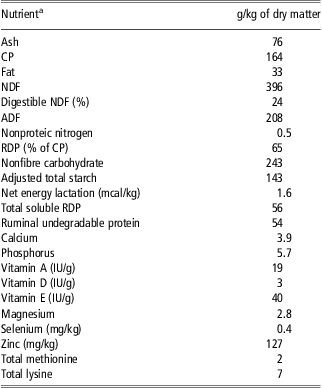
A total of 36 pregnant ewes (Segureña breed) were randomly assigned to three homogeneous groups of same age (3 years old), weight (46.8 ± 7.14 kg) and body condition (2 ± 0.15) calculated according to Russel and Doney (Reference Russel and Doney1969). The three different groups of sheep were reared in individual pens throughout the trial period. Sheep in the control group were given a basal diet (BD; Feed A, Table 1) and barley consisting of 1.3 kg feed/day. The diet of the other two groups was modified by substituting 10% (T 1) and 20% (T 2) of the BD by DTL using a pellet made from 50% barley and 50% DTL (Feed B). Therefore, the control group was fed with 100% of BD + barley; T 1 with 90% ‘Feed A + barley’ + 10% ‘Feed B’ and T 2: 80% ‘Feed A + barley’ + 20% ‘Feed B’. The diets of the three groups were balanced according to protein (164.2 g/kg of dry matter) and lipid content (33.1 g/kg of dry matter) by the company Cargill Animal Nutrition. Table 2 shows a description of the different diets and the administration of feed per day. Dietary compositions of polyphenolics were determined by Moñino (2010), and stated that in the diet from DTL, the levels of gallic, ferulic, coumaric acid, naringin, hesperidin, luteolin, rosmarinic acid, apigenin, genkwakin, carnosol and carnosic acids were higher than in the control diet. The sheep given these diets were fed for 240 days, coinciding with the gestation (5 months) and lactation periods (55 days) in order to study the quality of the subsequent lamb meat. Both the sheep and lambs (9 lambs per level: 27 in total) were intensively reared on a research farm (CIFEA-Lorca, Murcia, Spain). Following the practices recommended by Segureño farmers, all the lambs were weaned when they reached the weight of 13 ± 1 kg and were fed commercial fattening pellets until they reached the slaughter weight of 25 ± 2 kg. Finally, the lambs were slaughtered in a local slaughterhouse according to Spanish regulations (RD 147/1993). The carcasses were stored at 2°C for 24 h in a cooling room.
Chemical composition of the concentrated basal diet (Feed A)
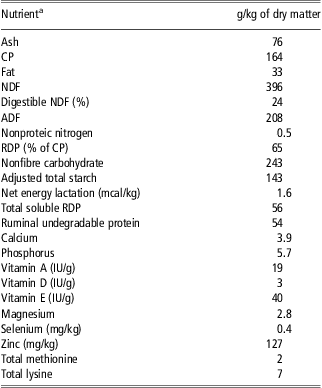
RDP = ruminal degradable protein.
aFormulated using the following ingredients/tone: wheat bran, 16%; scale soy, 26.1% kg; barley, 27.4%; malt comb, 2.46%; sunflower oil, 3.87%; beet pulp, 3.36%; corn flour 11.4%; calcium carbonate, 14.6%; sorghum, 3.35%; molasses-cane, 2.5%; vitaminic and mineral feed additives, 1.16%. Data provided by Cargill Animal Nutrition (Torre Pacheco, Murcia, Spain).
Rations of basal diet (Feed A), barley and distilled thyme leaves (Feed B) administered to ewes

DTL = distilled thyme leaves.
Feed A: ‘basal diet’, ingredients are shown in Table 1.
Feed B: DTL diet formulated using: 50% DTL + 50% barley.
Sample preparation and experimental design
Twenty-four hours post mortem, the longissimus dorsi (LD) muscle was removed from both sides of the carcasses and was cut into 1.5-cm portions of 10 g of weight. Four different portions of meat were individually packaged in two different polystyrene trays (two trays with four portions of meat for each day of storage) B5-37 (Aerpack, Madrid, España) in BB4L bags (Cryovac, Madrid, ESpaña) of low gas permeability (8 to 12 cm3/m2 per 24 h). The air in the packs was replaced by 70% O2 : 30% CO2 (EAP20, Carburos Metálicos S.A., Barcelona, Spain) (MAP) in a discontinuous INEINI packer (Pack Multifunction). After sealing, the atmosphere inside the bags was checked using a Pack12P analyser (Abiss, Madrid, España). No significant variation in the mixture was found during storage. Samples were stored at 4 ± 2°C for 0, 7, 14, or 21 days in a display cabinet (Helkama, Finland) illuminated with white fluorescent light (1600 lx), simulating retail display conditions. For every day of analysis, two packs with four portions of LD were opened for the different analysis.
Measurement of colour
The fresh meat samples were kept at 4°C for 4 h to allow colour development (bloom) and the colour was measured using a CR-200/08 Chroma Meter II (Minolta Ltd, Milton Keynes, United Kingdom) directly on the meat surface (illuminant/observer D65/28, Diffuse/O mode, 8 mm aperture of the instrument for illumination and 8 mm for measurement). Results were expressed as CIELab values (Commission Internationale de L′Eclairage (CIE), 1978): L*, a*, b*, Chroma (C*) and Hue angle (°H) (expressed as sexagesimal degrees); C* = (a*2 + b*2) 1/2; °H = t/g (b*/a*). The metmyoglobin (MM) percentage at the lamb steak surface was estimated spectrophotometrically, according to Stewart et al. (Reference Stewart, Zipser and Watts1965), by measuring steak surface reflectance at 525 and 572 nm (Minolta CM-2002; Osaka, Japan). The maximum value of the ratios of (K/S)572 to (K/S)525 at the beginning of the experiment was fixed as 0% MM; K and S were the absorption and the scattering coefficients, respectively, and K/S ratios were calculated from reflectivity (R ∞) values using the Kubelka–Munk equation. The value of 100% MM was obtained following the same procedure after oxidizing a sample in a 1% (w/v) solution of potassium ferricyanide. Six measurements were made per sample for all the colour measurements.
Measurement of lipid oxidation
Lipid oxidation was expressed as thiobarbituric acid reactive substances (TBARS; mg malondialdehyde/kg meat), as determined by Botsoglou et al. (Reference Botsoglou, Fletouris, Papageorgiou, Vassilopoulos, Mantis and Trakatellis1994), using a UV2 spectrophotometer (Pye Unicam Ltd, Cambridge, United Kingdom).
Sensory analysis
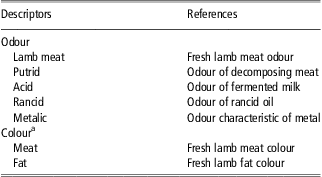
A sensory analysis of the raw lamb meat was conduced by a panel formed of eight persons from the university community and trained according to ISO 8586-1 (1992). Panel training consisted of four sessions and was carried out using the descriptors shown in Table 3. Sensory analysis was carried out according to ISO 4121 (2003), using a 6-point scale (1, minimum; 6, maximum). The descriptors used were: MO, lamb meat odour; PO, putrid odour; RO, rancid odour; AO, acid odour; MC, meaty colour; and FC, fat colour.
Reference food used for sensory analysis of raw lamb meat
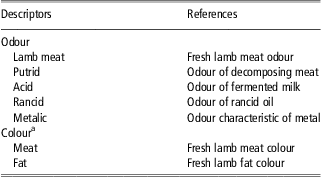
aEvaluated under normalised artificial light.
Microbiological analysis
For the microbiological assays, bags were aseptically opened in a 131 Bio-II-A microbiology cabinet (Telstar, Tarrasa, Spain) and meat samples (10 g) were weighed with sterile tweezers into stomacher bags and blended with peptone water 0.1% w:w in a stomacher (IUL Instruments, GMBH, Königswinter, Germany). Total viable (TV) and total psychrotroph (PSY) counts were determined on PCA (Plate Count Agar), incubating at 37°C for 24 h (TV) (ISO 4833:2003) and 4°C for 7 days (PSY) (ISO 17410:2001). Moulds and yeasts (MY) were counted on RB (Rose-Bengal) with chloramphenicol, incubating at 25°C for 5 days (ISO 21527-2:2008). Lactic acid bacteria (LA) were counted on MRS Agar plates (de man, Rogosa, Sharpe) and incubated at 30°C for 72 h (ISO 15214:1998). Total Enterobacteriaceae (ENT) were counted on VRBG plates (Violet Red Bile Glucose Agar) and incubated at 37°C for 24 h (ISO 21528-2:2004). All the microorganisms tested were incubated in an ST 6120 culture incubator (Heraeus S.A., Boadilla, Madrid, Spain). The results are expressed as log cfu/g.
Statistics
A randomized design using lamb diet and storage time as treatments was performed. A two-way analysis of variance was used to investigate the effect of diet, storage time as factor and the interaction between the two factors on the dependent variables. When no significant interaction was found (P > 0.05), the model was reduced to main effects only (one-way ANOVA). Loin samples from 27 different lambs feed with dietary 10% DTL (n = 9), 20% DT (n = 9) or not (n = 9) were analysed in triplicate. The least squares means (LSM) and the significance of the treatment were calculated using type IV sum of squares. The Scheffe Means Test was used to compare the LSM, which were considered to be statistically different when P < 0.05. Data were analysed using the Statistix 8.0 for Windows (Analytical Software, New York, USA).
Results and discussion
Tables 4, 5 and 7 show probability (P-values) for dependent variables. According to probability, the storage time affected meat quality more than lamb diet. Variability data indicated that the prooxidant conditions (70/30 O2/CO2 and 1600 lx lighting) for up to 21 days of storage largely exceeded the antioxidant capacity of the meat. The storage time affected all dependent variables, while the lamb diet affected a*, °H, C*, MO, RO, MC, PSY, ENT, LA, TBARS and MM. Interactions between storage time and diet were found for MO, PO, AO, MC, TV, MY and MM (P < 0.01).
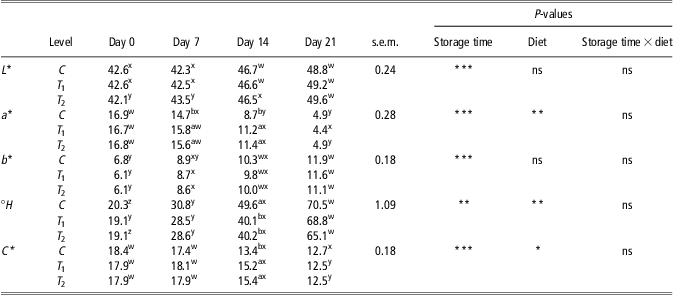
Table 4 shows the effects of DTL feeding and storage time on CIELab coordinates (L*, a* and b*) in raw lamb meat. The diet had no effect (P > 0.05) on the CIELab coordinates at day 0. In contrast, Simitzis et al. (Reference Simitzis, Deligeorgis, Bizelis, Dardamani, Theodosiou and Fegeros2007) observed that in meat from lambs fed with oregano supplements, the values of a* and b* were higher than control meat at day 0. There was a gradual increase (P < 0.05) in the L* and b* values, whereas a* decreased during lamb meat storage, probably as a result of gradual protein decomposition, which lead to increased light scattering. Although DTL did not affect the L* values, there were significant differences (P < 0.05) between the a* value of C and T 1 − T 2 on days 7 and 14. Nieto et al. (Reference Nieto, Díaz, Bañon and Garrido2010b) reported slightly better colour stabilization in chilled-packed lamb cuts as result of a distilled rosemary leaves (DRL) diet. However, O'Grady et al. (Reference O'Grady, Maher, Troy, Moloney and Kerry2006) concluded that the dietary supplementation of cattle feed with rosemary extract (1000 mg/animal per day) did not significantly improve the surface redness of fresh beef.
Effect of DTL feeding and storage time on mean values of L*, a*, b*, C* and °H in raw lamb meat stored in MAP (70% O2 : 30% CO2) kept for 0, 7, 14 and 21 days under retail conditions
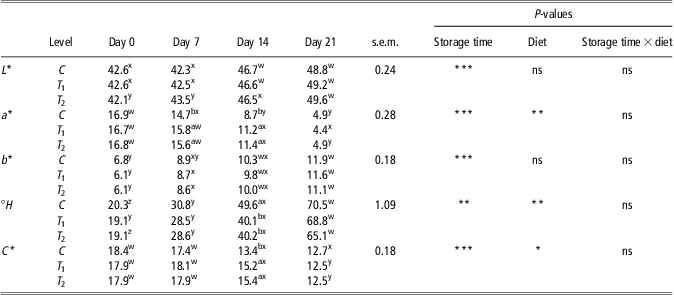
DTL = distilled thyme leaves; L* = lightness; a* = redness; b* = yellowness; C* = chroma; °H = hue; MAP = modified atmosphere packaging; s.e.m. = standard error of mean; C = Control; T 1 = 10% DTL; T 2= 20% DTL.
Means with different superscripts are significantly different (P < 0.05). a,b,cDifferent letters within same column (different diet treatment) differ significantly (P < 0.05). w,x,y,zDifferent letters within same row (different storage day) differ significantly (P < 0.05). P: probability; significance levels: ***P ⩽ 0.001; **P ⩽ 0.01; *P ⩽ 0.05; ns: P > 0.05.
Table 4 shows the effects of DTL feeding and storage time on Hue angle and Chroma. Hue angle (°H) increased (P < 0.05) during storage, the highest values occurring in C (70.58; most intense meat browning) and the lowest values in T 2 (65.1) on day 21. Significant differences were found in °H between C and T 1 − T 2 on day 14 of storage. Larraín et al. (Reference Larraín, Krueger, Richards and Reed2008) reported slower increases in °H over time of storage in bacon from pigs fed a phenol-rich cranberry extract as compared with animals control. Chroma values fell from day 14 onwards (P < 0.05) in all the treatments. As in the case of a* and °H, DTL only affected Chroma on day 14, T 1 and T 2 showing significantly higher Chroma values than C, meaning that the meat from DTL had a more vivid colour than C on day 14. The decrease in Chroma and increase in °H are used to monitor colour in lamb meat during their display life, as both are correlated with MM formation (Sánchez-Escalante et al., Reference Sánchez-Escalante, Djenane, Torrescano, Beltrán and Roncalés2003).
All the results for the CIELab coordinates follow the same trend: a tendency of DTL to maintain the meat colour on days 7 (a*) and 14 (a*, Chroma, °H). This improvement in colour on days 7 and 14 is in accordance with Luciano et al. (Reference Luciano, Monahan, Vasta, Biondi, Lanza and Priolo2009), who showed than the inclusion of natural antioxidants (tannins) in sheep diet improved the colour stability of fresh lamb meat during 14 days of storage. The colour results reflected the changes that are normally associated with the loss of redness in meat. Redness (a*) in meat is related with reduced iron in myoglobin (Fe+2) and can be controlled by several strategies that prevent oxidation, as the use of plants rich in phenolic compounds. DTL, which is rich in phenols with antioxidant properties, prevents red haem pigments from undergoing oxidation to brown MM. For this reason, DTL diet could be a good alternative for reducing colour degradation in lamb meat, because the most important sensory attribute affecting consumers’ purchasing decisions of red meats is colour.
Metmyoglobin percentage
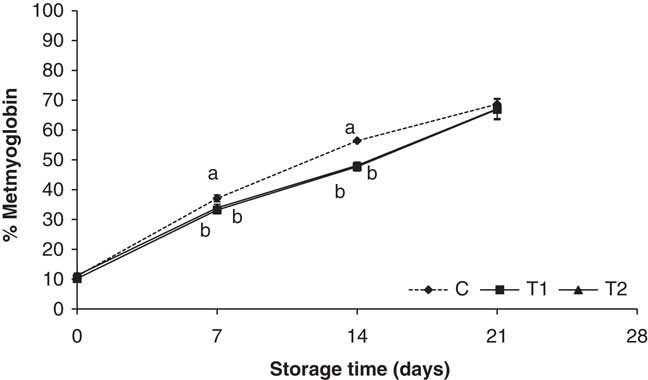
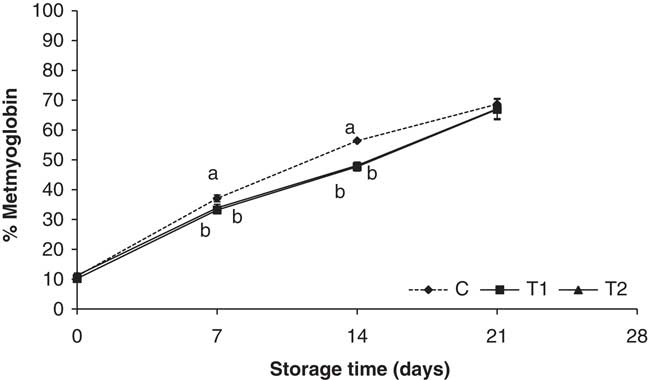
Figure 1 shows the effects of DTL feeding on metmyoglobin percentage (MM) in raw lamb meat. In the case of MM, we have found a significant interaction (F-value: 59.1, P < 0.01) between DTL diet and storage time. There were significant differences (P < 0.05) in the MM values between C and T 1 − T 2 on days 7 and 14. Therefore, the incorporation of DTL at 10% and 20% improved (P < 0.05%) lamb meat colour on these days, and this effects is due to the phenolics compounds presents in the DTL. Hayes et al. (Reference Hayes, Stepanyan, Allen, O'Grady, O'Brien and Kerry2009) also found that the direct addiction of purified phenolics and of polyphenol-rich plant extracts to a muscle model system delayed MM formation.
Effect of distilled thyme leaves (DTL) feeding on surface metmyoglobin percentage (MM) of raw lamb meat stored in modified atmosphere packaging (MAP; 70% O2 : 30% CO2) for 0, 7, 14 and 21 days under retail conditions.
Lipid oxidation
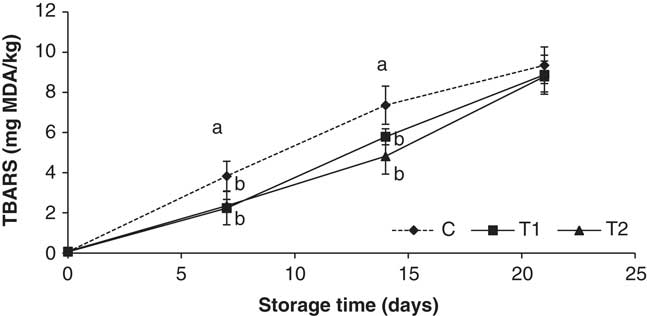
Figure 2 shows the effects of DTL feeding on lipid oxidation (TBARS) in raw lamb meat. TBARS values increased (P < 0.05) with storage time in the three levels of diet. The highest values were recorded in C, whereas TBARS evolved similarly in both T 1 and T 2. Significant differences (P < 0.05) were found between C and DTL samples on days 7 and 14. Both T 1 and T 2 delayed lipid oxidation, probably because of the antioxidant effect of compounds of DTL administered during gestation and through the mother's milk, which are absorbed along the gastrointestinal tract and deposed in the tissues. In this sense, Moñino (2010) determined the polyphenolic compositions in T 1 and T 2, and concluded that the concentrations of coumaric acid, rosmarinic acid and carnosic acids were significantly higher in T 1 and T 2 than in C. Furthermore, these authors stated the transmission of phenolic compounds to the lamb meat.
Effect of distilled thyme leaves (DTL) feeding on lipid oxidation (thiobarbituric acid reactive substances, TBARS) in raw lamb meat stored in modified atmosphere packaging (MAP, 70% O2 : 30% CO2) kept for 0, 7, 14 and 21 days under retail conditions.
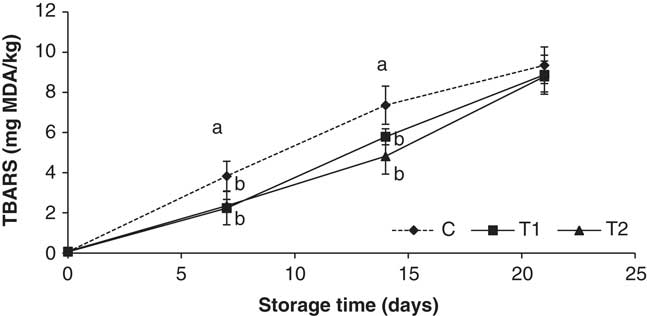
The antioxidant effect of DTL on days 7 and 14 is due to the presence of phenolic compounds that contain conjugated ring structures and hydroxyl and carboxylic acid groups, which inhibit lipid oxidation either by metal chelation or by stabilizing the free radicals. Several authors have shown that dietary supplementation with natural antioxidants is a convenient strategy for inhibiting oxidative reactions: Botsoglou et al. (Reference Botsoglou, Giannenas, Botsoglou and Papageorgiou2007) showed that an effective way to delay lipid oxidation is to incorporate dehydrated rosemary in feeds for turkeys; Moñino et al. (Reference Moñino, Martínez, Sotomayor, Lafuente and Jordán2008) demonstrated the positive effect of a diet containing rosemary on controlling lipid oxidation in meat. However, O'Grady et al. (Reference O'Grady, Maher, Troy, Moloney and Kerry2006) concluded that a diet supplemented with rosemary did not affect the lipid stability of fresh beef meat.
In comparison of the results obtained from the two ewe groups fed thyme leaves (10% or 20%), it is important to remark that no statistically significant differences were detected between the values of the two experimental groups. From this, it can be concluded that the incorporation of distilled thyme leaves at 10% of the ewe diet should be enough to improve the meat's antioxidant status. This affirmation is in accordance with our previous observations (Nieto et al., Reference Nieto, Díaz, Bañon and Garrido2010b) using 10% or 20% rosemary leaf. On the contrary, Botsoglou et al. (Reference Botsoglou, Giannenas, Botsoglou and Papageorgiou2007) showed that the incorporation of dehydrated rosemary in turkey feed had a dose-dependent effect on the meat, where a high level (1%) was more effective than a low level (0.5%).
Sensory analysis
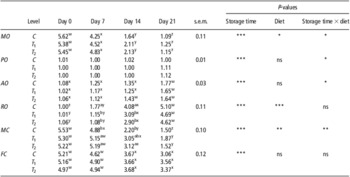
Table 5 shows the effects of diet and storage time on the sensory quality of lamb cuts kept under retail display conditions. Chilled-packed lamb suffered characteristic sensory spoilage associated with oxidizing phenomena, such as lean browning, fat darkening, exudation, loss of metallic-blood odour and growing rancid odour. Odour quickly deteriorated in the chilled-packed lamb, in particular, when a rancid odour began to be detected. Lamb meat odour (MO) scores were maximal in the freshly cut meat and decreased gradually during storage (P < 0.05) because of oxidative changes (pigment and lipid) that directly affect flavour. Acid odours (AO) were low and ranged from ∼1 to 2 during the storage period. There were no significant differences (P > 0.05) in MO, PO (putrid odour), AO between T 1, T 2 and C.
Effect of DTL feeding and storage time on mean values of sensory scores in raw lamb meat stored in MAP (70% O2 : 30% CO2) for 0, 7, 14 and 21 days under retail conditions

DTL = distilled thyme leaves; MAP = modified atmosphere packaging; s.e.m. = standard error of mean; MO = meat odour; PO = putrid odour; AO = acid odour; RO = rancid odour; MC = meaty colour; FC = fat colour; C = Control; T 1 = 10% DTL; T 2= 20% DTL.
Means with different superscripts are significantly different (P < 0.05). a,b,cDifferent letters within same column (different diet treatment) differ significantly (P < 0.05). w,x,y,zDifferent letters within same row (different storage day) differ significantly (P < 0.05). P: probability; significance levels: ***P ⩽ 0.001; **P ⩽ 0.01; *P ⩽ 0.05; ns: P > 0.05.
The mean score for rancid odour was lower in T 1, T 2 than in C lamb at days 7 and 14. The results of the sensory analysis of RO reflected the TBARS indices obtained: the highest RO scores corresponded to the samples with the greatest concentration of malonaldehyde (MDA). DTL delayed rancidity and the loss of lamb meat colour during storage. These results are in accordance with Fernández-López et al. (Reference Fernández-López, Zhi, Aleson-Carbonell, Pérez-Álvarez and Kuri2005), who showed that the application of rosemary extracts (Herbalox®) to beef meatballs delayed the development of rancidity and off-flavour. In contrast, the results published by O'Grady et al. (Reference O'Grady, Maher, Troy, Moloney and Kerry2006), showed that dietary supplementation of beef with rosemary extract did not result in a significant improvement in the odour of cooked meat stored in MAP for up to 6 days at 4°C.
According to the meaty colour (MC) fat colour (FC) scores, which are the main sensory traits contributing to raw meat acceptability, reduced throughout storage; DTL affected the MC scores, which showed differences (P < 0.05) between the C and T 1 − T 2 samples on days 7 and 14. T 1 and T 2 samples had a better appearance on days 7 and 14. Likewise, Djenane et al. (Reference Djenane, Sánchez-Escalante, Beltrán and Roncalés2003) stated a better appearance in beef steaks with added rosemary extracts. Similarly MM, there was a significant interaction (F-value: 59.1, P < 0.01) between DTL diet and storage time (P < 0.01) According to Djenane et al. (Reference Djenane, Sánchez-Escalante, Beltrán and Roncalés2002), colour loss is unacceptable when it reaches scores of 3 (using a 5-point descriptive scale), therefore, on a scale of 6 points (as presented in this study), the colour loss would be unacceptable when it reaches scores of 2.5. Table 6 shows that MC reached this score in C after 14 days of storage, whereas in T 1 and T 2 this score was reached on day 21; thus, dietary DTL led to an extended shelf life in the conditions tested.
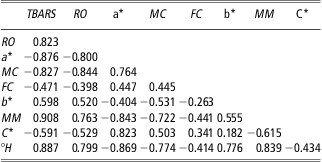
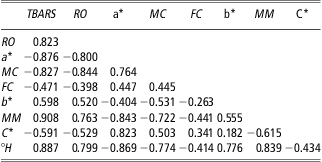
Correlation coefficients (R) between sensory attributes (MC, FC, RO), CIELab coordinates (a*, b*, C* and °H), MM and TBARS for raw lamb meat stored in MAP (70% O2 : 30% CO2) for 21 days under retail conditions
MC = meaty colour; FC = fat colour; RO = rancid odour; a* = redness; b* = yellowness; C* = chroma; °H = hue; MM = metmyoglobin; TBARS = thiobarbituric acid reactive substances; MAP = modified atmosphere packaging.
All the correlations are significant, P ⩽ 0.001.
Table 6 shows Pearson's correlation coefficients between TBARS, a*, b*, C*, °H, MM and sensory attributes. RO scores were positively and significantly related with TBARS (R = 0.823, P ⩽ 0.001), °H (R = 0.799, P ⩽ 0.001), MM (R = 0.762, P ⩽ 0.001) and b* (R = 0.598, P ⩽ 0.001), while, a* values (R = −0.800, P ⩽ 0.001), C* (R = −0.529, P ⩽ 0.001), MC (R = −0.844, P ⩽ 0.001) and FC (R = −0.398, P ⩽ 0.001) were negatively correlated with rancid scores in lamb meat. The higher the RO values, the higher the yellowness and browning and the lower the redness of the meat and fat. The strong negative correlation between TBARS-Chroma (R = −0.591, P ⩽ 0001) and TBARS-Hue (R = 0.887, P ⩽ 0001) in the present work confirm the published by Sánchez-Escalante et al. (Reference Sánchez-Escalante, Djenane, Torrescano, Beltrán and Roncalés2003), who reported a correlation between TBARS and Chroma of R = −0.9222, and stated that myoglobin and oxymyoglobin oxidation to MM is associated with a reduction in reddish colour (higher hue values and lower chroma).
Microbial spoilage
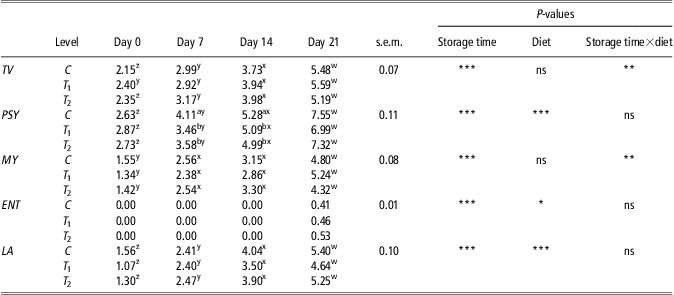
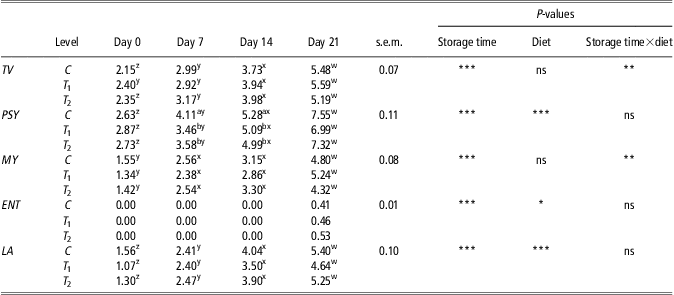
Table 7 shows the effects of DTL feeding and storage time on total viable (TV), psychrotroph (PSY), mould and yeast (MY), enterobacteriaceae (ENT) and lactic acid bacteria (LA) counts in raw lamb meat stored in MAP under retail conditions. The initial bacterial load is important for determining the shelf life of meat, because a high number of microorganisms in meat before storage shortens its shelf life. The initial results reported in the present work confirm those published by Lauzurica et al. (Reference Lauzurica, De la Fuente, Díaz, Álarez, Pérez and Cañeque2005). TV counts increased with storage time but did not reach 106 cfu/g in any treatment, which is the limit established by Spanish legislation for TV in fresh lamb meat (Regulation EC 2073/05, DOUE L338/1, 2005). No pH changes that could have affected microbial growth were found as the mean pH was similar, ranging from to 5.54 to 5.69. Compared with the initial values, the mean TV counts showed statistically significant increase (P < 0.05) for both C and T 2 on every sampling day, whereas no significant differences (P > 0.05) were found between days 0 and 7 in T 1. DTL did not reduce the TV counts (P < 0.05). In our previous work (Nieto et al., Reference Nieto, Díaz, Bañon and Garrido2010b), a positive antimicrobial effect of a diet with distilled rosemary leaves in fresh lamb meat on TV was found. There was a significant increase (P < 0.05) in PSY values in C, T 1 and T 2 during the 21 days of storage; the highest value was reached on day 21 in C (7.55 cfu/g), whereas the lowest values were always found in T 1. The samples treated with DTL exhibited lower counts than C from 7 days of storage onwards, although the differences were only significant (P < 0.05) on days 7 and 14. According to our results, studies have shown the antimicrobial properties of thyme against PSY: in vitro (Singh et al., Reference Singh, Singh, Bhunia and Singh2004) and in chicken meat (Hao et al., Reference Hao, Brackett and Doyle1998).
Effect of DTL feeding and storage time on mean values of TV, total PSY, MY, LAbacteria and ENT counts (log cfu/g) in raw lamb meat stored in MAP (70% O2 : 30% CO2) kept for 0, 7, 14 and 21 days under retail conditions
DTL = distilled thyme leaves; TV = total viable; PSY = psychrotroph; MY = mould and yeast; LA = lactic acid; ENT = Enterobacteriaceae; MAP = modified atmosphere packaging; C = Control; T 1 = 10% DTL; T 2 = 20% DTL.
Means with different superscripts are significantly different (P < 0.05). a,b,cDifferent letters within same column (different diet treatment) differ significantly (P < 0.05). w,x,y,zDifferent letters within same row (different storage day) differ significantly (P < 0.05). P: probability; significance levels: ***P ⩽ 0.001; **P ⩽ 0.01; *P ⩽ 0.05; ns: P > 0.05.
Direct comparison of our results with other studies is difficult as there have been no reports of the in vivo antimicrobial effects of DTL. In general, the antibacterial properties of phenolic compounds are in part associated with their lipophilic character, which leads to their accumulation in membranes and to subsequent membrane-associated events such as energy depletion (Conner and Beuchat, Reference Conner and Beuchat1984).
MY counts showed a significant increase (P < 0.05) during storage. This was evident in C, T 1 and T 2 on days 7 and 21, although the increase between days 7 and 14 was not statistically significant in any treatment. In addition, ENT counts remained at 1 cfu/g throughout storage and in all the treatments. The development of MY and ENT was unaffected. The atmosphere used – gas mixtures containing high concentrations of oxygen together with low proportions of carbon dioxide, which restricts the growth of aerobic spoilage bacteria – and hygienic handling of the meat ensured the absence or very low counts of MY and ENT in lamb meat after 21 days of storage at 4°C. According to Grau (Reference Grau1981), the pH of the meat (pH < 5.8) ensured that the ENT growth was completely inhibited. Gill and Penney (Reference Gill and Penney1985) reported the development of ENT in lamb meat packed in MAP, but in this case the pH was higher (5.9). There was a significant increase (P < 0.05) in LA counts in C, T 1 and T 2 on all sampling days during storage. The highest LA counts corresponded to C on day 21 (5.40 cfu/g) while the count was 4.64 (14% lower) and 5.25 (2.7% lower) in T 1 and T 2, respectively. However, Soultos et al. (Reference Soultos, Tzikas, Christaki, Papageorgiou and Steris2009) showed that the addition of 100 mg/kg of oregano essential oil to the diet of rabbits inhibited the growth of LA and ENT in carcasses. In addition, Govaris et al. (Reference Govaris, Florou-Paneri, Botsoglou, Giannenas, Amvrosiadis and Botsoglou2007) observed an inhibitory effect of rosemary contained in the diet of turkeys on the growth of TV, PSY, MY, LAB, ENT and PSY.
Estimation of shelf life of Segureño MAP lamb meat
The shelf life of refrigerated lamb meat does not usually exceed 10 days before spoilage becomes evident. Soldatou et al. (Reference Soldatou, Nerantzaki, Kontominas and Savvaidis2009) estimated the shelf life of Souvlaki (a fresh lamb meat product) samples using colour coordinate (Hunter a* value of <9 as colour limit), TBARS (4.4 mg MDA/kg as marking the initiation of lipid oxidation/rancidity of lamb meat samples) and microbiological analysis (TV: establishing an arbitrary TV level of 7 log cfu/g as the limit of microbiological acceptability). In our study, a level of 7 log cfu/g was not reached even in the control group during the 21 days of the study; therefore, the shelf life of meat was increased only when TV was taken into account. However, Hunter a* values close to 9 and values higher than 4.4 mg MDA/kg were found on day 14. Thus, we could affirm that there is a tendency of DTL diet to increase (P < 0.05) the shelf life of meat by 3 days (until day 13), because the colour, lipid oxidation and microbiological analysis were within the values limited by Soldatou et al. (Reference Soldatou, Nerantzaki, Kontominas and Savvaidis2009).
Finally, if we made a comparison between the uses of distilled or not distilled thyme leaves, we will refer to a previous work (Nieto et al., Reference Nieto, Díaz, Bañon and Garrido2010a) where the pregnant ewes were fed with undistilled thyme leave (TL). The TL diet reduced TV and PSY counts throughout the entire duration of storage and only at the end of storage for MY (day 21). However, the diet with DTL only reduced the PSY in the middle of the storage (days 7 and 14). With regard to the colour coordinates, while TL diet improved the colour of the meat on days 14 and 21, DTL improved the colour on days 7 and 14. The TL diet decreased lipid oxidation, showing TBARS values on day 21 that were 16% lower than those in C meat; however, no effect of DTL diet on lipid oxidation was observed on day 21. The use of thyme leaves in the diet for ewes is more effective in improving the quality of lamb meat that the use of DTL, because TL contains more effective antioxidant and antimicrobial compounds. However, the objective of the present work is the use of by-products from the essential oil industry, and the results showed in the present work are also quite positive.
Conclusions
The results presented in this study are the first to show the meat quality of lambs obtained from ewes fed by-products from the thyme essential oil industry; it shows that maternal DTL diet could improve lamb meat quality. Dietary DTL inhibited lipid oxidation, rancid odour, colour deterioration and was moderately efficient in preventing microbial spoilage and sensory deterioration. By-product from the distillation industry can be regarded as sources of natural antioxidants for sheep rearing and as interesting new feed additives.
Acknowledgement
The authors thank the Fundación Séneca (Agencia de Ciencia y Tecnología de la Region de Murcia) for the postdoctoral fellowship of Gema Nieto (12494/PD/09).