Introduction
The proportion of older adults in many Western countries has increased and will continue to do so in the immediate future, and along with this, the total number of older drinkers is rising (Ahlström, Reference Ahlström2008). Existing published research often adopts a variety of ages to delineate who an older person is. For example, consideration has been given to drinking alcohol and the relationship with lifecourse transitions, gender, and people aged 45 years and over (Holdsworth et al., Reference Holdsworth, Frisher, Mendonça, De Oliveiria, Pikharts and Shelton2017). In the United States of America (USA), self-report data from the National Survey of Drug Use & Health indicates an emerging trend demonstrating an increased prevalence of alcohol use among older adults in the 50 and over age group (Han et al., Reference Han, Moore, Sherman, Keyes and Palamar2017). A Dutch population-based study (N > 16,000) found that alcohol consumption was high in the older population (65+ years), and men and women aged 55+ drank alcohol more frequently than younger adults (Geels et al., Reference Geels, Vink, Van Beek, Bartels, Willemsen and Boomsma2013). Whilst in the United Kingdom (UK), although alcohol data are collected slightly differently across each country (Holley-Moore and Beach, Reference Holley-Moore and Beach2016), there is evidence in England that suggests the frequency of drinking increases with age, with a greater growth in men than women (Ng Fat and Fuller, Reference Ng Fat, Fuller, Craig and Mindell2012). In Scotland, the mean number of days adult drinkers drank alcohol during the previous week ranged from 2.0 for those aged 16–24, to 3.6 days for those aged 75 and over (The Scottish Government, 2019). Consequently, there is growing concern that even the low-risk drinking guidelines may still be too high for those older people who experience physical and mental conditions and take medications (The Royal College of Psychiatrists, 2018). For example, emphasis has been placed on widening health professionals’ understanding of the possible interactions of prescribed or over-the-counter medications with at-risk older drinkers aged between 65 and 89 years (Foster and Patel, Reference Foster and Patel2019).
Whilst the relationship between the health, social and economic impacts of alcohol consumption and older people may not be well understood (Hallgren et al., Reference Hallgren, Högberg and Andréasson2010), a recent survey in the UK begins to help gather insight into drinking in later life (Holley-Moore and Beach, Reference Holley-Moore and Beach2016). This illustrated that the majority of respondents (50+ years; N = 16,710) were identified as ‘lower-risk’ drinkers, however 17 per cent of participants were ‘increasing-risk’ drinkers and 3 per cent were ‘higher-risk’ drinkers. In addition, 17 per cent of those surveyed tended to drink four or more times a week. Of those drinking more than in the past, reasons included retirement, bereavement, diminished purpose in life, less opportunities to socialise and altered finances (Holley-Moore and Beach, Reference Holley-Moore and Beach2016). These findings concur with the assertion that lifecourse transitions often experienced in older age, such as changing health status and retirement, can lead to social isolation and loneliness, potentially leading to hazardous drinking habits developing in later life (Hallgren et al., Reference Hallgren, Högberg and Andréasson2010; Holley-Moore and Beach, Reference Holley-Moore and Beach2016). This is important as drinking alcohol may be more likely to take place in the home, increasing the risk of social isolation (Wadd et al., Reference Wadd, Lapworth, Sullivan, Forrester and Galvani2011). Conversely, harmful drinking in the over 50 age group in England has been described as a middle-class phenomenon; older adults who have better health, higher income and education, including greater social connection (Iparraguirre, Reference Iparraguirre2015). Consequently, existing research exploring drinking alcohol in later life represents a complex picture where, for some, people can begin to drink more heavily due to a disruption in lifestyle (e.g. retirement, bereavement) which can lead to decreased social connection with people (Institute of Alcohol Studies, 2017), whereas for others, better health may mean more regular alcohol consumption.
Nevertheless, despite growing recognition that alcohol problems are now a common feature of caring for older people (Karlsson and Gunnarsson, Reference Karlsson and Gunnarsson2018), many health professionals continue to overlook alcohol-related harm in this age group primarily due to a lack of knowledge and awareness (Wadd et al., Reference Wadd, Lapworth, Sullivan, Forrester and Galvani2011). In part, this may be because the nature of drinking patterns in older age often are not identified as alcohol misuse or dependency (O'Connell et al., Reference O'Connell, Ai-Vyrn, Cunningham and Lawlor2003). Irrespective, drinking alcohol in later life can adversely impact physical and psychological wellbeing, in addition to causing social problems (Wadd et al., Reference Wadd, Lapworth, Sullivan, Forrester and Galvani2011). It has been suggested there is a need to improve the assessment of substance misuse, including alcohol, with older people, through partnership working of health-care staff, including the Allied Health Professionals (AHPs) (The Royal College of Psychiatrists, 2018). In the UK, the term ‘Allied Health Profession’ represents a collective expression of a variety of health-care professionals, including physiotherapists, occupational therapists, dieticians, arts therapists, orthopists, orthotists, paramedics, podiatrists, prosthetists, radiographers, and speech and language therapists. Despite the breadth of professions, AHP research that considers the knowledge and awareness of drinking alcohol in later life is relatively scarce. One example of inter-disciplinary research including AHPs (nursing, occupational therapy, physiotherapy, psychology, social work, speech and language therapy) was undertaken and adopted a cross-sectional survey design (N = 157) to explore knowledge of alcohol disorders in older adults among health professionals (Waldron and McGrath, Reference Waldron and McGrath2012). Whilst high levels of overall knowledge were identified, generally, participants had not received specialist education in alcohol-related disorders, and psychologists possessed higher levels of knowledge in comparison to nurses and occupational therapists. As such, there have been calls to improve all health professionals’ assessment of substance misuse, including alcohol, with older people (The Royal College of Psychiatrists, 2018).
Occupational therapy is a health profession centred on an understanding of the relationship between occupations (everyday activities) that people do as individuals, in families and as part of communities to occupy time and bring meaning and purpose to life and their health (World Federation of Occupational Therapy, 2019). Consequently, drinking alcohol in later life should be of particular interest to the profession, given that alcohol consumption is influenced by a variety of factors, including elements of the person (reasons for drinking) and their wider environment. Recent theoretical developments in occupational therapy have built and grown theories of person–environment relationships to highlight and emphasise the importance of the environment and its influence on the health and wellbeing of people, communities and the wider population (Stewart and Law, Reference Stewart, Law, Letts, Rigby and Stewart2003). However, often these theories have not yet been applied to understanding and responding to drinking in older age. Due to the changing patterns of alcohol consumption in later life (Barry and Blow, Reference Barry and Blow2016) and, moreover, growing insight into the complex reasons why older people drink, there is a need for the profession of occupational therapy to respond. Drawing on the theoretical perspective of person-centredness (McCormack and McCance, Reference McCormack, McCance, McCormack and McCance2017) and collective occupation (Kantartzis and Molineux, Reference Kantartzis and Molineux2017), this paper examines when occupational therapists in an acute hospital setting will initiate a conversation with older people (65+ years) about their drinking and how this can contribute to a wider multi-systems approach.
This paper builds on our prior research in the field, including a recent survey of occupational therapists in Scotland (N = 122) who indicated that they were hesitant to ask older people about their alcohol consumption when admitted to an acute hospital setting (Maclean et al., Reference Maclean, Gill, O'May and Breckenridge2015). This hesitancy exists despite recognition in the occupational therapy literature that substance misuse, including alcohol consumption, is rising in the older population (Ashford and McIntyre, Reference Ashford, McIntyre, Atwal and McIntyre2013). In order to improve the occupational therapy response to this issue, we need to unravel the intricacies behind this hesitancy in asking older people about their drinking. One explanation might be connected to the lower numbers of older people identified earlier as higher- and increasing-risk drinkers (Holley-Moore and Beach, Reference Holley-Moore and Beach2016). Occupational therapists are probably more likely to see and work with older people admitted to hospital who come into this category, but the relatively low numbers in this group mean that therapists may lack experience in identifying and raising the topic of drinking alcohol with older people. As such, there is a need to consider the contribution of the profession in terms of prevention with lower-risk drinkers, and early and extended intervention with higher- and increasing-risk older adults. Moreover, occupational therapists have a professional responsibility to consider all aspects of a person's life as part of their practice in acute contexts, including wider concerns of the ways through which a person continues to live on discharge from hospital (Roberts and Robinson, Reference Roberts and Robinson2014). This can be especially complex when considering the role alcohol can play in some older people's lives due to the acknowledged tension that can exist between the need to prevent alcohol misuse, balanced with the recognised role alcohol can play in maintaining social cohesion in later life (The Royal College of Psychiatrists, 2018). If conversations associated with alcohol and the reasons older people drink in later life (e.g. social cohesion) are avoided as part of acute hospital admission, the potential to enable an older person to make an informed decision to influence the way they choose to live their life on discharge can be lost. In this paper, therefore, we explore what influences occupational therapists’ practice in acute hospital settings when choosing whether to open a conversation with an older person about their drinking. This is guided by a theoretical lens that encompasses both person-centredness and collective occupation.
Theoretical framework
As a philosophical position, person-centredness places persons at the centre of health-care systems (McCormack and McCance, Reference McCormack, McCance, McCormack and McCance2017). The underpinning principles of which focus on treating people as individuals; respecting their rights as a person; building mutual trust and understanding; and developing therapeutic relationships (McCormack and McCance, Reference McCormack, McCance, McCormack and McCance2017). Essential to this is the need to build person-centred cultures that are considered by McCormack and McCance (Reference McCormack, McCance, McCormack and McCance2017: 3) as ‘healthful’, that are relationship orientated, and which are consistent with current theories of wellbeing and wellness as health goals. Consequently, an ethos of person-centredness is to acknowledge and value healthfulness, which is defined by McCormack (Reference McCormack2012: 1) as ‘the totality of health as lived by the person, reflected through the quality of their relationships and social engagement’. This is supported by the growing recognition of the need to consider older people's experiences of loneliness and social isolation that can increasingly occur in later life (Davidson and Rossall, Reference Davidson and Rossall2015). This perspective can be complemented by an understanding of collective occupation, which, in its simplest form, is when multiple people come together to share in an occupation (activity) and can shape the nature in which people experience social relationships and the ways through which social engagement can be influenced (Kantartzis and Molineux, Reference Kantartzis and Molineux2017). For example, a person's social connection may be experienced through celebratory and commemorative events, and/or through the informal encounters experienced in public spaces, that are characterised by the involvement and engagement of numerous people (Kantartzis and Molineux, Reference Kantartzis and Molineux2017). This highlights the need and responsibility of occupational therapists in practice to gain an appreciation of the nature of collective occupations people participate in as part of their communities and, further, to understand the reasons why people engage in collective activities (Adams and Casteleijn, Reference Adams and Casteleijn2014). This perspective can guide occupational therapy practice in acute settings when considering alcohol and older people. Specifically, that for some, drinking alcohol may be regarded as an occupation in later life, to occupy time, including undertaken as a shared or collective occupation, to support social relationships with others.
Adopting a person-centred approach through which to guide and consider the occupational needs of older people in acute health-care settings can be problematic, however. For example, it has been recognised that the complexity of the acute care environment can impact the quality of engagement with patients (Boomer and McCance, Reference Boomer, McCance, McCormack and McCance2017). Similarly, in considering the occupational needs of an older person in an acute context, there can be a tendency for practice to concentrate on a person's self-care only (Griffin and McConnell, Reference Griffin and McConnell2001). Nevertheless, consideration of these theoretical perspectives highlights an intersection between the lifecourse transitions of older age and drinking alcohol. Specifically, it directs professional attention towards growing an understanding of the quality of an older person's relationships and social connection with others; including the extent of their social network, how this is valued by the person and the context or environment(s) where older people go to connect socially with others. To date, adopting this duality of theoretical approaches (person-centredness and collective occupation) has been rarely considered in the context of alcohol, or indeed wider inter-disciplinary research and practice. However, this combined theoretical perspective is arguably more helpful in enabling a deeper appreciation of the role alcohol takes in some older people's lives, and the complexities of the relationship with how older people live with alcohol use and misuse. Consequently, the primary purpose of this paper is to extend further knowledge and understanding of the professional reasoning guiding an occupational therapist's judgement in deciding when to ask an older person, admitted to an acute hospital, about their alcohol use. Specifically:
(1) What are the influencers of when, and the reasons why, occupational therapists ask older people (aged 65+ years) about their alcohol consumption, when admitted to an acute hospital?
(2) How do the concepts of person-centredness, collective occupation and ‘healthfulness’ influence the way in which therapists value and understand older people's use of alcohol?
Methodology
Research design
A generic qualitative research design was chosen as this methodology aligns with qualitative endeavour but does not necessarily claim a known methodological perspective (Caelli et al., Reference Caelli, Ray and Mill2003). The adoption of generic qualitative methodologies in emergency care research has been considered and often can be chosen for pragmatic reasons (Cooper and Endacott, Reference Cooper and Endacott2007). Despite potential limitations where there is close consideration of a number of factors, including choosing appropriate methods of data collection, there can be value in this approach (Cooper and Endacott, Reference Cooper and Endacott2007). Consequently, where a generic qualitative design is adopted, there should be transparency and openness in the reporting of methods, and the processes used to support rigour should be identified (Cooper and Endacott, Reference Cooper and Endacott2007). The following description of methods responds to this need.
Data collection
Face-to-face semi-structured interviews were used to gather data, in depth. An open-ended interview format allowed participants to express their own views, attuned to the research aims, supporting the development of detailed understanding (Wengraf, Reference Wengraf2001). The questions and format of the interview were agreed by all members of the research team and were informed by relevant literature. Prior to commencing the study, ethical approval was gained from the Centre for Person-centred Practice Research Ethics Committee, Queen Margaret University. Research and Development approvals were also obtained from the two participating National Health Service (NHS) acute hospital sites. This process included informed consent, where the right to withdraw from the study was described to potential participants, and the assurance of anonymity and confidentiality, including the secure storage of data.
Participants
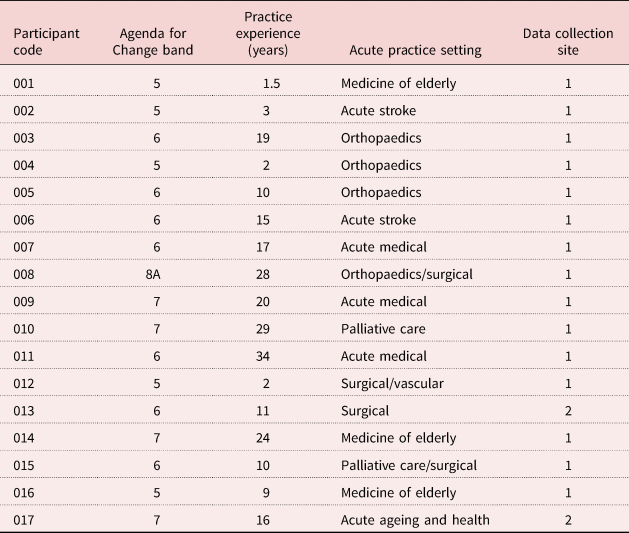
Registered occupational therapists from Band 5 (the typical entry level for newly qualified AHPs) upwards of the Agenda for Change banding (UK career progression framework connecting pay to a national Knowledge and Skills Framework) were recruited from two NHS acute hospital sites in Scotland. Inclusion criteria required that participants were employed as a qualified occupational therapist in either of the two acute NHS hospital sites for which ethical approval had been granted. Therapists from across a range of acute specialities (Table 1) were recruited, due to recognition that the majority of patients admitted and receiving acute care in Scotland are aged 65 or older (Healthcare Improvement Scotland: iHub, 2020).
Summary description of participants related to grade, experience, practice setting and recruitment site

Procedure
The recruitment strategy involved distributing information sheets to occupational therapy staff teams, in advance of the interview, via the Head Occupational Therapist, with the opportunity to speak to a member of the research team (FM) regarding further questions. The information sheet detailed the aims of the research, the interview procedure and included additional contacts for further information. All participants signed informed consent prior to being interviewed. Interested participants in the case of data collection site 1 were then asked to contact their departmental administrative team lead to co-ordinate a date and time for the interview. In the case of data collection site 2, interested participants directly contacted the principle investigator of the research team (FM) to co-ordinate a mutually agreed interview date and time. All those who met the inclusion criteria (N = 17) and were interested in taking part in the interviews were recruited into the study. To ensure anonymity and protect confidentiality, a numbered code was assigned to all participants.
Data collection
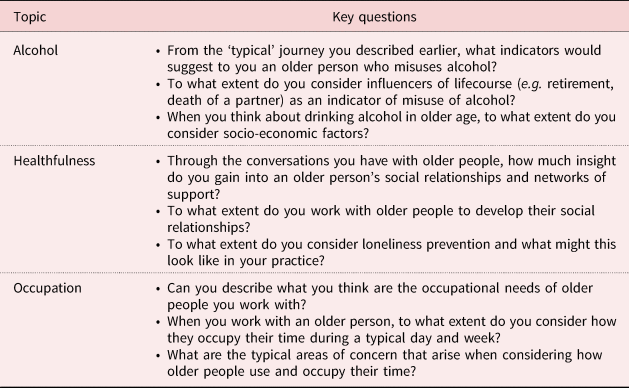
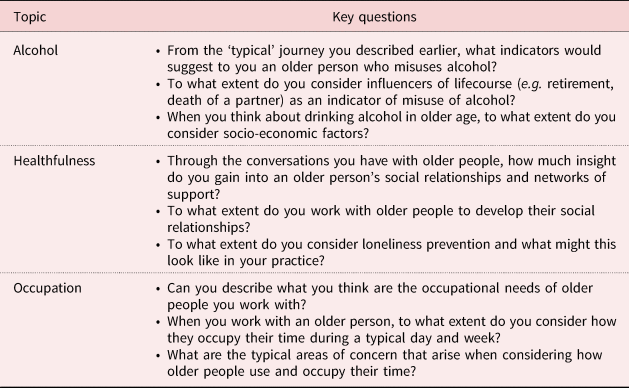
The same member of the research team (FM) conducted all semi-structured interviews with participants at the acute hospital site of their employment. Initially, three closed questions were asked which included participants’ Agenda for Change banding, years of experience since qualification and their practice area of speciality (see Table 1). Key open-ended questions, covering topics connected to the research aims, were then used to structure the interview. Interviews began with the question ‘Could you walk me through the typical journey of an older person (65+ years) as part of your occupational therapy service?’ Table 2 lists the key questions characterising the semi-structured interview, however, throughout these were also supported by flexible prompts to follow up the interviewee's response to the original questions, where appropriate (Wengraf, Reference Wengraf2001). All interviews were audio recorded with participant permission. The recorded interviews were then subsequently transcribed verbatim by professional transcribers and FM checked for accuracy of transcription.
Interview guide
Data analysis
The General Inductive Approach was adopted for analysis, as one purpose of this approach is to derive themes from the raw data connected to the research objectives of the study, without the restraint enforced by structured methodologies (Thomas, Reference Thomas2006). This General Inductive Approach is similar to grounded theory, however, the coding process can be less prescriptive. This analysis approach aligned with the generic qualitative research design selected.
Following each interview, initial notes were made of the broad themes captured and considered. As each interview was transcribed, iterative reading of the transcriptions was undertaken by FM, and a sub-sample was reviewed by JD. Emerging tentative themes were developed by reading the transcripts repeatedly, in the context of the raw data. Preliminary themes were then developed by FM, grouping segments of text by theme. Further iterative reading of the grouped text informed the shaping of the preliminary themes, collapsing one into another, to refine the eventual themes. The themes were consolidated by JD independently applying the themes to the grouped segments of text, demonstrating similarity of outcome.
To support credibility of the findings, it has been recommended to include stakeholder checks, or member checking (Mays and Pope, Reference Mays, Pope, Pope and Mays2006). Since the majority of the participants were recruited from data collection site 1 (N = 15), the preliminary findings were presented to all members of the occupational therapy team as part of an in-service training day. This included members of staff who had not participated in the study. Overall, there was general agreement that the themes reflected their experience of practice, with comments emphasising the opportunity to identify staff training needs.
Findings
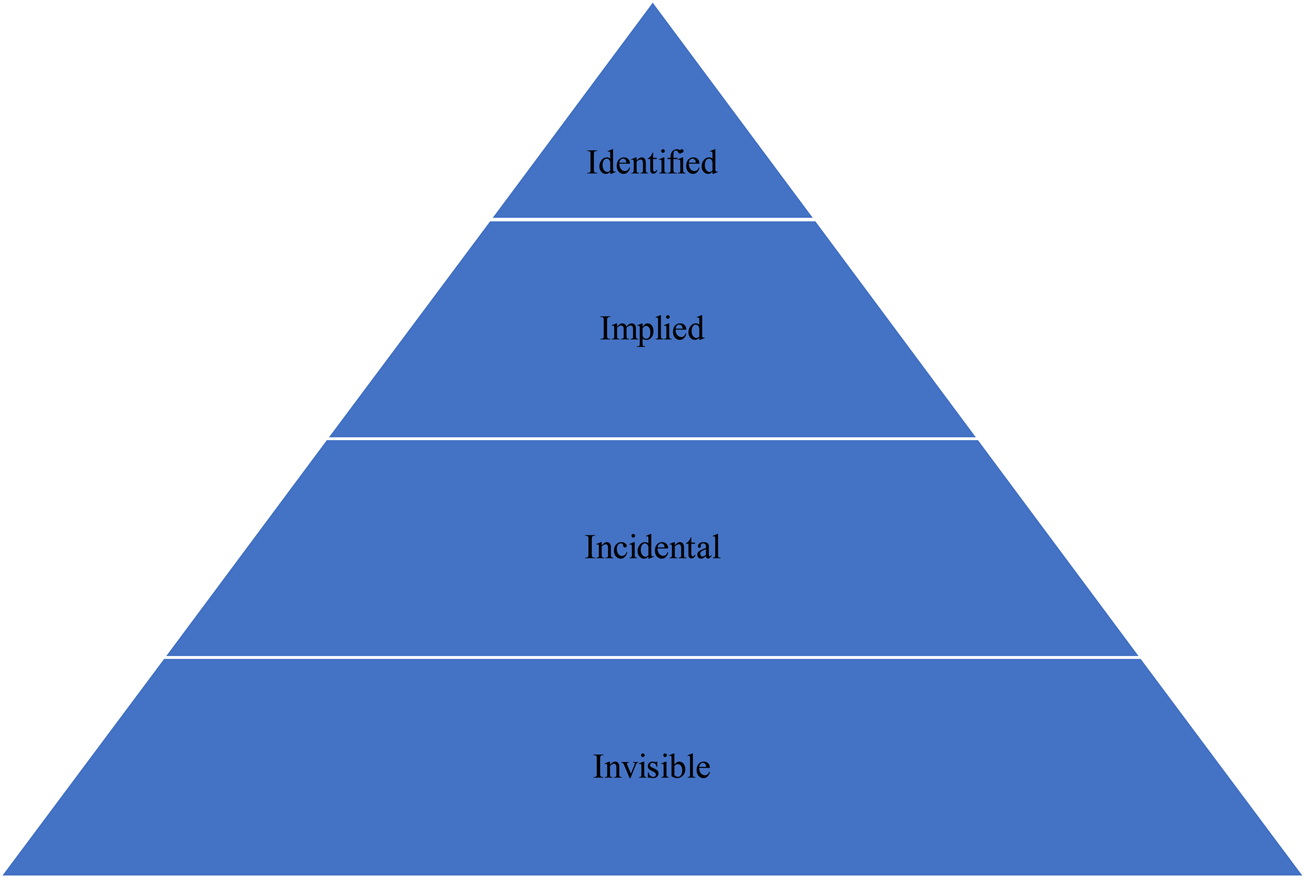
Data analysis generated a typology of the different ways in which occupational therapists ask older people about their alcohol use. Occupational therapists’ approach to discussing alcohol use with older people can be categorised using four ‘I's’: identified, implied, incidental and invisible. This typology is represented diagrammatically in Figure 1.
The four ‘I's’: a typology of the different ways that occupational therapists ask older people about their alcohol use.

Therapists felt able to ask an older person about their alcohol consumption where the person had been identified as having a problematic relationship with alcohol. Typically, an older person would be ‘identified’ by another health professional, usually a medical practitioner, where permission had been offered to open this conversation between the therapist and older person. The ‘flag’ to initiate this conversation was commonly represented by the phrase ‘drinking to excess’, which could appear either as part of medical notes or through the referral processes to occupational therapy. This was clearly illustrated by participant 005:
I don't ask that question, no, I don't ask unless it's in the notes or it's been flagged up that there's an issue, I don't tend to ask that question.
The second layer in the typology describes therapists’ willingness to ask about alcohol only if the older person themselves has implied that they have difficulty with their alcohol consumption. For example, in the majority of cases where alcohol concern was not documented in the medical notes, this would only emerge if brought up by the person themselves. As participant 013 describes, they did not ask about alcohol use ‘unless it's something they brought up in that conversation, yeah, organically comes up’.
The third layer in the typology describes how therapists may only be prompted to have a conversation about drinking alcohol if there is incidental acknowledgment that the older person might be experiencing difficulty. Incidental admissions were usually raised by another person, typically a family member, directly with the occupational therapist; for example:
I've got a patient at the moment who wasn't able to tell me himself or either chose not to tell me himself or has been unable to tell me himself. But his son who I've had a conversation with this morning tells me that he is a binge drinker. So, he can go for quite a few weeks without having any alcohol and then when he starts his son says he can't stop. (Participant 005)
The fourth layer in the typology describes when therapists do not ask older people about their alcohol use, and thus the conversation about alcohol is invisible. Most therapists in this study fell into the invisible category, with many older people not being asked at all about their use, experiences and feelings about drinking alcohol.
Influencers on the types of approach that therapists take to alcohol conversations
The type of approach that therapists take to asking about alcohol is shaped by three themes: (1) therapists’ ‘hesitancy in practice’ about whether or not they asked older people about their drinking when admitted to an acute hospital, (2) therapists’ ‘failure to link life transitions to alcohol use’, and (3) ‘challenges of focusing on healthfulness’ that were influenced by the nature of how and where older people occupied their time when drinking.
Theme 1: Hesitancy in practice
Therapists were consistent in their hesitancy to ask older people about drinking alcohol, with the majority falling into the invisible layer of the typology. This was influenced by their inconsistent knowledge, often unrecognised, of older people's changing drinking patterns which may not necessarily correspond to the criteria for misuse but may cause harm. Commonly, participants would only address (or ask about) older people's drinking when set within the parameters of already knowing alcohol excess was a concern.
Participant 008 describes this:
I wouldn't routinely ask, actually, no. I would probably only if it was in the notes somewhere, if they had a medical history of alcohol excess. Unless it is documented that they have got alcohol excess issues then I wouldn't routinely ask how much they drink … But it shouldn't be mentioned if it's not in the notes. And if it's not in the notes, I wouldn't just take that information.
The reasons why there was hesitancy in asking older people about their drinking, where alcohol excess had not been noted, tended to vary across the participant group. For example, for some there was a fear of offending older people in asking how much alcohol they consumed. Participant 004 considers this:
I think some people can take it the wrong way. I think it's something that maybe they don't want to think about or that's a bit of a taboo to it.
Participant 014 also described a fear of offending the older person and highlighted concern in knowing what to do:
And I wonder if it feels disrespectful for an older person, I don't know. I find it quite uncomfortable asking, it's a bit invasive asking. I don't know why, or maybe I don't know how to deal with the answer when I get it, what advice I would give them.
Resulting from a lack of knowledge in what to do next, in turn led to a tendency to avoid the conversation altogether:
If you don't have anywhere to send them on to, or any kind of solutions, then you don't want to approach the problem, which is not brilliant. But it's one of those things, if you can't provide recommendations or a suggestion, then you don't really want to open up a can of worms. (Participant 002)
A lack of knowledge in knowing how to respond was also framed by limited awareness of drinking patterns in later life, described by participant 015:
The younger generation would have a drink at home and middle-aged people drink at home or pubs, restaurants, I don't see it as being an issue for the older age, but I suppose we're not asking the question so that's probably why I'm not knowing what their habits are.
Theme 2: Failure to link life transitions to alcohol use
Beyond older people who were identified as drinking to excess, wider influencers of alcohol consumption in later life, such as transitions, tended to go unnoticed. This did not mean that transitions of later life were not considered as part of practice, e.g. participant 006 stated:
It is an issue, I'm lonely, and a lot of the time it's patients that have lost partners and things, or don't have family around about.
Consequently, transitions leading to loneliness were identified as a common concern, with a tendency not to explore more deeply the potential impact on an older person. For example, participant 001 described:
Because, I suppose a lot of older people, in particular, maybe are a bit isolated, or have raised a thought that they would like to attend a lunch club or be more social, but I suppose we don't maybe delve, we don't ask about those kind of things.
Consequently, there was a further tendency to dissociate concern connected to the transitions of later life with drinking alcohol. This is described by participant 004:
If somebody says they are retired, or they've maybe lost their partner, it doesn't mean they drink. I wouldn't specifically ask if they had issues with alcohol if they were retired or alone at home.
This further emphasised the impact of invisibility in asking older people about their drinking, as it would not prompt a question about drinking alcohol, ‘they're lonely, I don't think we would ask, are you drinking’ (participant 008).
However, where practice examples were offered by participants connected to the transitions of the lifecourse, e.g. bereavement and social isolation, drinking alcohol was implied; for example:
She was probably late sixties and it came out she had lost two babies in the past. She had grandchildren now but then she lost her son I think, but she'd never wanted to go to counselling or anything like that. We had all these conversations and whether she felt that now would be a good thing to do. She was just no. Even though she could see that had a direct relation to her drinking, all these things that had happened in her past and being able to drink and kind of got rid of those horrible feelings. (Participant 007)
Similarly, an example influenced by the nature of social relationships:
I had one gentleman who had no family, but he got the bus every morning and went into town to have a late breakfast, I think he maybe had a pint with his breakfast. Then go home and have a late lunch and open a bottle of wine at lunchtime but then he would finish the bottle of wine off throughout the day and that was his social life.
As such, the complexity of transitions in later life were often acknowledged by participants, but these would not necessarily identify concern connected to drinking alcohol.
Theme 3: Challenges of focusing on healthfulness
The majority of therapists considered occupation and its inter-relationship with healthfulness in the context of how older people occupied their time; ‘you can't do nothing with your whole day’ (participant 009); also, perhaps more importantly, the ways through which the day could be occupied, influenced by the opportunity to meet others. This was typically understood by asking older people what their usual day consisted of and to describe their day, highlighted by participant 004:
So, I would ask what do you do during the day, to get a better sense of how mobile the person was and what sorts of things they were doing for themselves … often patients will play light sports like bowls, golf, etc.
The need to experience social connection and sustain relationships with others was recognised, and therefore examples of collective occupations were offered by participants, including the environment in which this took place. For example, ‘They do it for the company. They're down the pub to meet their friends’ (participant 006).
Conversely, where participation in collective occupations was no longer possible, the impact connected to the experience of healthfulness was also considered:
I had a patient recently – this isn't really to do with alcohol – but she was functionally very well, managing everything herself, but just didn't want to go home because she couldn't garden, she couldn't go out with friends anymore. (Participant 012)
Whilst recognition of the value and importance of relationships in older age existed, and how this was intertwined, or not, with collective occupation, the acute context itself led to a general sense of frustration expressed by participants. This grew from their sense of pressured time, leading to their limited ability to address how older people occupy their time, influencing healthfulness:
It's supposed to be person-centred, and we're supposed to think about the person as a whole, but I feel like, with hospital pressures, you don't, you can't think about things like that; you just have to get them out the door as quick as possible, and you don't think about what they enjoy doing. And if they can't do it anymore, is that maybe why they're drinking alcohol? (Participant 012)
Discussion
This research is of national and international significance as the changing trends of drinking alcohol in older age groups is characteristic of Western societies. The findings from this study reveal the extent to which therapists overlook the potential of alcohol-related harm due to a lack of knowledge and awareness. This is comparable with wider published opinion in health professionals’ practice more generally (Wadd et al., Reference Wadd, Lapworth, Sullivan, Forrester and Galvani2011) and contributes to the research agenda by identifying a significant gap in the knowledge, confidence and willingness of therapists to ask older people about drinking alcohol. Moreover, in developing a typology of the four layers (identified, implied, incidental, invisible) in Figure 1 influencing therapists’ decisions to initiate a conversation with older people about their drinking, this paper provides a potentially useful tool for therapists, services and organisations to self-assess their approach to asking older people about alcohol use. The findings of this study build upon existing data (Maclean et al., Reference Maclean, Gill, O'May and Breckenridge2015), which demonstrate occupational therapists’ hesitancy to ask older people about their alcohol consumption in acute settings. By exploring qualitatively why this hesitancy exists and detailing what influencers prompted occupational therapists to initiate a conversation about drinking, this paper adds to a growing evidence base indicating the need to raise professional awareness and understanding of alcohol consumption in later life.
The majority of therapists in our study fell into the ‘invisible’ layer of the typology: ‘we don't ask the question, so we don't know their drinking habits’. Not only are therapists hesitant in asking older people about alcohol use, but they also lack understanding of older people's drinking patterns, especially when these do not conform to the criteria for misuse or dependency, or where low-risk drinking guidelines are too high in the context of co-morbidity and/or polypharmacy (O'Connell et al., Reference O'Connell, Ai-Vyrn, Cunningham and Lawlor2003; The Royal College of Psychiatrists, 2018). Therapists’ hesitancy to discuss alcohol use with older people is undoubtedly influenced by the acute practice setting – characterised by its emphasis on pathology rather than personhood – which can negatively influence the quality of patient engagement (Boomer and McCance, Reference Boomer, McCance, McCormack and McCance2017). However, the self-perpetuating cycle of therapists failing to ask about alcohol, and thus older people's drinking habits being ‘invisible’, is at odds with the theoretical core of person-centredness, which locates the person at the centre of their health care. A person-centred perspective inherently positions persons as individuals, with a focus on respecting a person's rights and valuing what matters to the person (Dewing and McCormack, Reference Dewing and McCormack2017). In Scotland, the UK and worldwide, health-care organisations are striving for more person-driven services and, as such, this study highlights the need to supplement the traditional biomedical model with more holistic theories and approaches (World Health Organization, 2015: 9–13; Pickersgill et al., Reference Pickersgill, Chan, Haddow, Laurie, Sridhar, Sturdy and Cunningham Burley2018).
Many therapists in this study felt impeded in initiating discussion about drinking due to a fear of offending older people. It has been suggested that older people are more likely to experience age discrimination connected to conversations about drinking in later life, in part because of assumptions held by health practitioners (Wadd and Jones, Reference Wadd, Jones, Wadd, Holley-Moore, Riaz and Jones2017). For example, health professionals may believe that alcohol problems predominately affect younger people and that it is not worth intervening in later life due to potential life expectancy (Wadd and Jones, Reference Wadd, Jones, Wadd, Holley-Moore, Riaz and Jones2017). These assumptions, however, lead to an absence of conversation in practice and ultimately render potential problem drinking invisible. This adversely affects the rights of older people to make informed choices about their drinking and to access appropriate support. It also denies their personhood, particularly when therapists fail to make the link between key life transitions and alcohol use. In our study, transitions of later life were often identified, with recognition they could lead to diminished social connection, but how this could influence drinking patterns was generally not acknowledged. Furthermore, this recognition tended to emerge only as part of the narrative offered by therapists associated with the case examples of older people they worked with, who were already identified as drinking to excess.
The concept of collective occupation provides a particularly useful conceptualisation in helping to shape therapists’ understanding, and to inform the professional response to alcohol. Our data yielded several examples from therapists who talked about older people's patterns of collective occupations, such as going to the pub or travelling on a bus into town for breakfast, to drink alcohol. The examples illustrated therapists’ awareness of the needs of older people to participate in collective occupations, in public spaces; to remain part of their social world, rather than apart. The examples of collective occupations illustrated in these findings demonstrate similarity to those previously identified (Kantartzis and Molineux, Reference Kantartzis and Molineux2017), e.g. informal encounters in public spaces. Therapists also made implicit links between loss of social connection, e.g. through bereavement, and older people's drinking patterns. However, these conversations were rarely explored any further with older people, yet previous research (Adams and Casteleijn, Reference Adams and Casteleijn2014) has signalled a need to understand not only the nature of collective occupation in which people participate, but also the reasons why people engage in collective occupations. Collective occupations have an important role in sustaining a person's healthfulness and therapists provided examples of when loss of meaningful collective occupations (e.g. visiting and seeing friends) led to a less-healthful live, and problem drinking at home. The linked concepts of collective occupation and healthfulness therefore offer a useful lens through which occupational therapists can approach conversations about alcohol to ensure that this important part of many older people's lives does not remain invisible.
It is important to note with caution, however, that this inter-relationship could also be paradoxical, whereby collective occupations in drinking environments could further exacerbate problematic drinking. The findings here illustrate the perceived value and importance in promoting the role of collective occupations, to sustain healthfulness in later life, yet this study also highlights the intricacy of framing this inter-relationship connected to drinking alcohol. The existence or absence of collective occupation influencing a person's healthfulness can be equally detrimental to an older person's drinking patterns. The complexity of this relationship therefore must also be understood within the context of a person's physical environment, where drinking occurs. Consequently, a fine balance exists associated with drinking patterns in older age that must be carefully understood in the context of the person, their environment and the occupations identified as being of importance, to sustain relationships and social connection with others. There is, therefore, an opportunity for future research into this relationship. Importantly, however, it is evident that there is a need for occupational therapy research, education and practice to develop a more complex understanding and approach to older people and alcohol.
Methodological considerations and limitations
This research has limitations regarding transferability. The study was predominately limited to one site, potentially reflecting findings that illustrate the knowledge, awareness and understanding of occupational therapists from that one service. However, the criteria and reasoning for selecting the sample, based on previous research illustrating therapist hesitancy to ask older people about their drinking, supported the need to undertake further in-depth qualitative inquiry to address and understand in detail the reasons for this. The inclusion of more than one participant site was originally designed to address, to some extent, concern connected to transferability, however in practice, recruitment from participant site 2 was extremely low. Moreover, the abstraction of a useable typology gives this study a conceptual generality; the four ‘I's’ can be applied and modified through use in other contexts, making it a useful contribution to the field. One further point of note is that this study did not ask therapists about their own drinking habits, which may influence how alcohol is viewed and valued as an influencer of health and wellbeing generally. Future research in this area could include additional discussion with participants connected to their own reflections of their attitudes associated with drinking alcohol.
Conclusion
In this study we have developed, for the first time, a typology classifying the different ways in which occupational therapists ask older people about their use of alcohol in acute hospital settings. It extends existing knowledge to identify and name the circumstances in which therapists will initiate, or not, conversations with older people about their drinking. It also considers the reasons underpinning this, such as a lack of awareness of drinking patterns in later life and a fear of offending. It signals a need, therefore, to develop continuing professional development opportunities that can address practitioner knowledge gaps and build therapist confidence to ask older people about their alcohol consumption. However, developing educational opportunities is only one small element of a wider multi-systems approach needed in how we, as a profession, respond to the changing nature of the occupational needs of older adults. By making sure there is an occupation-focus to practice, connected to a person-centred approach, occupational therapy services will be more likely to respect the rights of older people to make informed choices about their drinking, and how this influences their health.
Acknowledgement
Thanks to Dr Fiona Kelly for her feedback on this paper.
Author contributions
FM led the conception and design of the study, secured all approvals, collected and analysed data, and drafted the manuscript. JD advised on study design, approvals, audit checked data, and contributed to data analysis and drafting the final manuscript. SK advised on conception of the study and study design, including qualitative interview process and recording of data, and contributed to data analysis and drafting final manuscript. JPB advised on study design and contributed to data analysis and drafting the final manuscript. BMC advised on study design, and contributed to data analysis and drafting of final manuscript.
Financial support
This work was supported by the Carnegie Trust for the Universities of Scotland (grant number 70434).
Conflict of interest
The authors declare no conflicts of interest. The authors alone are responsible for the content and writing of the paper.
Ethical standards
Ethical approval was gained from the Centre for Person-centred Practice Research Ethics Committee, Queen Margaret University.