Introduction
Insect populations in agroecosystems often depend on the structure and composition of the surrounding landscapes (Gardiner et al. Reference Gardiner, Landis, Gratton, Difonzo, O’Neal and Chacon2009; Martin et al. Reference Martin, Reineking, Seo and Steffan-Dewenter2013; Veres et al. Reference Veres, Petit, Conord and Lavigne2013). For instance, several studies have shown that greater plant diversity in agricultural landscapes often enhances biological control of insect pests because natural enemies (predators and parasitoids) can use non-crop habitats surrounding agricultural systems as a source for alternative food (i.e., prey, pollen, nectar) and overwintering sites (Chaplin-Kramer et al. Reference Chaplin-Kramer, O’Rourke, Blitzer and Kremen2011). Conversely, landscape diversity can negatively impact agriculture production if these non-crop habitats provide suitable hosts for the pests themselves (Karp et al. Reference Karp, Chaplin-Kramer, Meehan, Martin, DeClerck and Grab2018). For example, proximity to forest habitats has a positive effect on the occurrence of blueberry maggot, Rhagoletis mendax Curran (Diptera: Tephritidae), in blueberry (Vaccinium Linnaeus; Ericaceae) fields (Rodriguez-Saona et al. Reference Rodriguez–Saona, Polk, Oudemans, Holdcraft, Zaman, Isaacs and Cariveau2018). Rhagoletis mendax is a pest native to the northeastern United States of America, where blueberries originated and were first domesticated about 100 years ago (Rodriguez-Saona et al. Reference Rodriguez-Saona, Vincent, Polk and Drummond2015, Reference Rodriguez-Saona, Vincent and Isaacs2019b). However, less is known about the impact of non-crop habitats surrounding cropping systems on invasive insect pests (Leach et al. Reference Leach, Hagler, Machtley and Isaacs2019).
The spotted-wing drosophila, Drosophila suzukii (Matsumura) (Diptera: Drosophilidae), is a pest native to southeastern Asia that has rapidly expanded its geographic range to include many countries in North America, South America, and Europe, where it has become an important agricultural pest of small fruit crops (Hauser Reference Hauser2011; Calabria et al. Reference Calabria, Máca, Bächli, Serra and Pascual2012; Cini et al. Reference Cini, Ioriatti and Anfora2012; Asplen et al. Reference Asplen, Anfora, Biondi, Choi, Chu and Daane2015; Arnó et al. Reference Arnó, Solà, Riudavets and Gabarra2016). Drosophila suzukii was first detected in the continental United States of America in 2008 and was found in the northeastern United States of America in 2011 (Hauser Reference Hauser2011; Asplen et al. Reference Asplen, Anfora, Biondi, Choi, Chu and Daane2015). This insect can be a challenging pest in agroecosystems because of its wide host range, which includes many wild hosts (e.g., wild cherry (Prunus Linnaeus; Rosaceae), dogwood (Cornus Linnaeus; Cornaceae), buckthorn (Rhamnus Linnaeus; Rosaceae), and honeysuckle (Lonicera Linnaeus; Caprifoliaceae)) (Lee et al. Reference Lee, Dreves, Cave, Kawai, Isaacs and Miller2015; Poyet et al. Reference Poyet, Le Roux, Gibert, Meirland, Prévost, Eslin and Chabrerie2015; Arnó et al. Reference Arnó, Solà, Riudavets and Gabarra2016; Briem et al. Reference Briem, Eben, Gross and Vogt2016; Kenis et al. Reference Kenis, Tonina, Eschen, van der Sluis, Sancassani and Mori2016; Klick et al. Reference Klick, Yang, Walton, Dalton, Hagler and Dreves2016; Ballman and Drummond Reference Ballman and Drummond2017; Little et al. Reference Little, Chapman, Moreau and Hillier2017; Thistlewood et al. Reference Thistlewood, Gill, Beers, Shearer, Walsh and Rozema2018; Leach et al. Reference Leach, Hagler, Machtley and Isaacs2019). Non-crop habitats in the landscape surrounding agricultural fields can be important drivers of D. suzukii populations, allowing them to persist in the absence of cultivated hosts because they can provide alternative foods and mating and overwintering sites (Pelton et al. Reference Pelton, Gratton, Isaacs and Timmeren2016; Elsensohn and Loeb Reference Elsensohn and Loeb2018), as well as refugia from insecticides (Tonina et al. Reference Tonina, Grassi, Caruso, Mori, Gottardello and Anfora2018). Therefore, knowledge on the use of host plants by D. suzukii in non-crop habitats adjacent to cropping systems can provide important insights into the factors determining local population dynamics and may help develop non-chemical methods to manage this pest.
In New Jersey (United States of America), highbush blueberries, Vaccinium corymbosum Linnaeus (Ericaceae), are commonly cultivated near wild blueberries in a region known as the Pinelands National Reserve (McCormick Reference McCormick and Forman1979). This forest region is dominated by pitch pine, Pinus rigida Miller (Pinaceae), where wild blueberry plants are typically found in the understorey (McCormick Reference McCormick and Forman1979). Recently, Rodriguez-Saona et al. (Reference Rodriguez-Saona, Cloonan, Sanchez-Pedraza, Zhou, Giusti and Benrey2019a) demonstrated that D. suzukii adults, under laboratory conditions, have an oviposition preference for and a greater immature performance in cultivated than wild blueberry fruits. These authors found that cultivated blueberry fruits are larger and have reduced amounts of anthocyanins and phenolics, which may explain the greater D. suzukii oviposition and performance in cultivated blueberries as compared with their wild ancestors. This study (Rodriguez-Saona et al. Reference Rodriguez-Saona, Cloonan, Sanchez-Pedraza, Zhou, Giusti and Benrey2019a) indicated that, in the absence of control measures, cultivated blueberry habitats may facilitate higher levels of D. suzukii populations than non-crop habitats. In contrast, non-crop habitats may serve as constant sources of D. suzukii to neighbouring cultivated crops because they provide alternative hosts and refugia from insecticide applications. Although mark-recapture studies have determined the movement of D. suzukii flies from wild hosts, such as honeysuckle and wild blackberry (Rubus Linnaeus; Rosaceae), into adjacent crops (Klick et al. Reference Klick, Yang, Walton, Dalton, Hagler and Dreves2016; Leach et al. Reference Leach, Hagler, Machtley and Isaacs2019), the contribution of wild blueberry hosts in non-crop habitats surrounding cultivated blueberries to seasonal D. suzukii population dynamics remains largely unknown.
In this two-year (2015–2016) study, we investigated whether non-crop habitats serve as potential sources of D. suzukii adults to adjacent highbush blueberry fields by providing suitable alternative hosts during the harvest and post-harvest periods in New Jersey. We asked the following specific questions: (1) does D. suzukii adult seasonal abundance differ between blueberry fields and the surrounding non-crop habitats? and (2) are there seasonal differences in the levels of D. suzukii oviposition and adult emergence between wild and blueberry fruits? If non-crop habitats serve as sources for D. suzukii to infest cultivated blueberries, we predicted (1) D. suzukii activity in these non-crop habitats to synchronise with the activity in the crop and (2) wild hosts to be susceptible to D. suzukii infestation during the entire cropping season (i.e., fruit ripening period).
Materials and methods
Study area
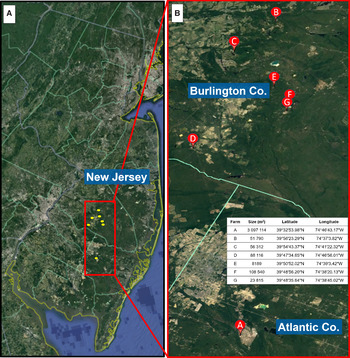
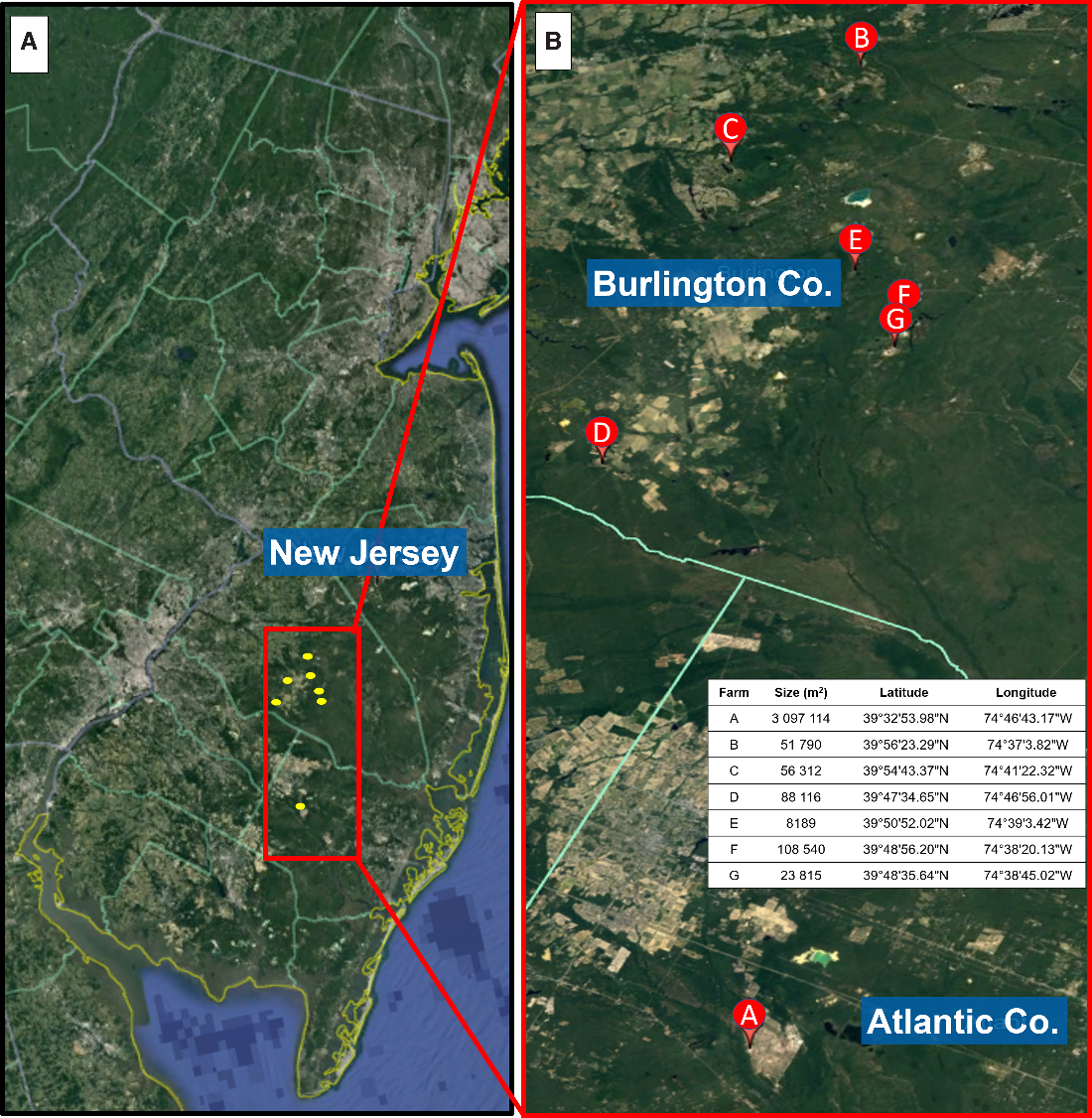
Field surveys were conducted from June through August of 2015 and 2016 in seven and six commercial highbush blueberry farms, respectively (Farms A–G; Fig. 1). All farms are in the Pinelands National Reserve in southern New Jersey. Farm A is in Atlantic County, while the other six farms (B–G) are in Burlington County, New Jersey. Within farms, blueberry fields (cultivar Bluecrop) were used as the source of cultivated plants. Bluecrop is a mid-season variety that was released in 1952 and is one of the most widely planted cultivars in the United States of America (Hancock Reference Hancock2001; Gallardo et al. Reference Gallardo, Zhang, Dossett, Polashock, Rodriguez-Saona and Vorsa2018). All blueberry fields were paired with adjacent forest land, located 5–30 m from the cultivated field. These non-crop (forest) habitats served as the source for wild blueberry plants. Multiple sites (blocks) were used at Farm A for the trap monitoring studies; this farm was picked for these studies because it is one of the largest blueberry farms in New Jersey (Fig. 1) and is mostly surrounded by forest. Farms B–G are smaller farms (Fig. 1) and were used to assess oviposition and adult emergence (see Methods below). Different farms were used for these two experiments to avoid interference between them. The distance between farms was > 100 m. Even though farm size was variable, the sampling area (approximately 40 m edge × 15 m interior plots) within sites (blocks) was standardised across farms for both the blueberry fields and adjacent non-crop habitats.
A, A map of New Jersey (United States of America) showing the location of the seven sites (commercial highbush blueberry, Vaccinium corymbosum, farms, and their surrounding habitats) (yellow circles) used for trapping Drosophila suzukii and for fruit collections. B, A map of the enlarged area in red showing the locations of each of the sites, one in Atlantic County and six in Burlington County. Embedded is a table with the farm size and specific geographic coordinates of each site.
Maximum and minimum temperature data for the study period (June–August) were taken for Atlantic County from the weather station at Hammonton, New Jersey (39°38′11.42″N, 74°48′8.59″W) and for Burlington County from the weather station at Chatsworth, New Jersey (39°42′55.97″N, 74°30′39.24″W) (Office of the New Jersey State Climatologist; Rutgers University, New Brunswick, New Jersey, United States of America). The weather data were downloaded from the New Jersey Weather and Climate Network website (www.njweather.org/data). Also, records on insecticide applications from June through August were collected from all farms at the end of each season.
Adult trapping
A trapping study was conducted to determine whether differences exist in the seasonal abundance/activity of D. suzukii adults between blueberry fields and surrounding non-crop habitats. Paired traps were placed at eight and four sites in 2015 and 2016, respectively, in a complete block design, in Farm A (Fig. 1). Each site had Bluecrop fields positioned with long borders along wooded areas with wild host plants and was considered as an independent replicate. At each site (block), one of the traps was placed inside a blueberry field at least 10 m from the edge of the field, while the other trap was placed approximately 10 m inside the neighbouring non-crop (forest) habitat within individual plots. Sites were at least 100 m apart.
Traps consisted of 1-L clear deli containers with two approximately 2-cm diameter entry holes placed approximately halfway up the side of the container that were covered by mesh netting with openings approximately 2.5 mm wide (Michel et al. Reference Michel, Nielsen, Polk and Rodriguez-Saona2015). Traps were baited with commercial D. suzukii lures (Scentry Biologicals, Billings, Montana, United States of America) and had 150 mL of soapy water added in the bottom as a drowning solution (Cha et al. Reference Cha, Hesler, Wallingford, Zaman, Jentsch and Nyrop2018). Unscented soap was mixed at 3 mL per 4 L of water (approximately 0.8%) (Free & Clear dish liquid; Seventh Generation, Burlington, Vermont, United States of America). Traps were placed on poles at a height of approximately 1.5 m from the ground and were checked weekly from 22 June until 21 August 2015 (total of nine weeks) and from 20 June until 12 August 2016 (eight weeks), which corresponds to the entire period of fruit maturation when blueberries are susceptible to D. suzukii (Lee et al. Reference Lee, Bruck, Curry, Edwards, Haviland, Van Steenwyk and Yorgey2011), including the harvest (i.e., mid/late-June through mid-July) and post-harvest (mid-July through mid-August) periods. The trap drowning solution was replaced weekly, and the lure was replaced every four weeks (Cha et al. Reference Cha, Hesler, Wallingford, Zaman, Jentsch and Nyrop2018). The content of each trap was drained of the drowning solution, the remaining sample was sorted under a stereo-microscope, and the number of D. suzukii females and males was recorded. For both years, temperature data from the Hammonton station were used to calculate cumulative degree-days (base 10 °C) from 1 January (used as biofix).
Oviposition and adult emergence
Field studies were done to compare the risk of fruit infestation by D. suzukii between wild and cultivated blueberries from 22 June until 28 August 2015 (total of 10 weeks) and from 13 June until 12 August 2016 (nine weeks). Fruits of wild and cultivated blueberries were collected weekly from six sites in 2015 (one site per farm; Farms B–G; Fig. 1) and five sites in 2016 (one site per farm; Farms B–F; Fig. 1); each site (block) was considered an independent replicate, and the experiment was set up in a complete block design. In each week and at each site, five cultivated and five wild blueberry bushes were randomly selected within plots. Ten blueberries from 1–2 clusters were picked from each bush, placed in 17.5 × 10-cm polyethylene zip-lock clear bags, and transported to the laboratory for processing. An average of 50 cultivated and 50 wild blueberry fruits were randomly collected weekly per site, for a season total of approximately 300 fruits of each type in 2015 and 250 fruits in 2016. This sampling size was limited by fruit availability, in particular because wild blueberries do not produce many fruits. Later in the season (August), the number of sampled sites was reduced due to a limited number of berries on bushes. Within 24 hours after arrival, fruit was examined for D. suzukii eggs with a stereo-microscope to assess oviposition by checking for the presence of egg filaments (Lee et al. Reference Lee, Bruck, Curry, Edwards, Haviland, Van Steenwyk and Yorgey2011; Little et al. Reference Little, Chapman, Moreau and Hillier2017). Subsequently, to determine the seasonal suitability of fruits for D. suzukii development, all fruits containing eggs were kept for 14 days, which allowed enough time to complete immature development (Tochen et al. Reference Tochen, Dalton, Wiman, Hamm, Shearer and Walton2014), in 118-mL plastic Solo cups lined with number 4 filter paper (Whatman International, Maidstone, United Kingdom) at room temperature (approximately 24 °C, 40–60 relative humidity, 16:8 light:dark cycle). Five fruits were placed in each cup, and cups had small holes on the lid to allow airflow and prevent moisture build-up. After 14 days, the number of emerged D. suzukii adults per cup was recorded and used to calculate the number of emerged adults per fruit. Per cent egg-to-adult survivorship was calculated as (number of flies emerged/number eggs laid) × 100 and was also used as a measure of immature success.
Because seasonal changes in fruit phenology can strongly affect D. suzukii oviposition selection (Lee et al. Reference Lee, Bruck, Curry, Edwards, Haviland, Van Steenwyk and Yorgey2011), we compared differences in phenology between cultivated and wild blueberry fruit. For this, we classified the fruit based on colour into green, pink-blue, and blue and then calculated the percentage of mature fruit (i.e., pink-blue and blue fruit) that was susceptible to D. suzukii for oviposition (Lee et al. Reference Lee, Bruck, Curry, Edwards, Haviland, Van Steenwyk and Yorgey2011). For both years, temperature data from the Chatsworth station were used to calculate cumulative degree-days (base 10 °C) from 1 January (used as biofix).
Data analysis
Prior to analysis, the numbers of eggs and of adults emerging per fruit were averaged to obtain a mean value per site. Data on the number of D. suzukii adults captured in traps (males and females), fruit phenology (per cent maturity), oviposition (number of eggs per fruit), and adult emergence (number of adults emerging per fruit) were first checked for normality using the Shapiro–Wilk test (Shapiro and Wilk Reference Shapiro and Wilk1965) and for homoscedasticity using the Levene’s test (“car” package in R). Then, data were analysed using generalised linear models with a quasipoisson distribution and a logit-link function in R 3.3.1 (R Development Core Team 2016). For the trapping data, the model included “Habitat” (non-crop versus crop), “Sex” (males versus females), “Date”, and their interaction as independent variables. For the oviposition, adult emergence, and fruit phenology data, we included “Cultivation” (wild versus cultivated fruit), date, and their interaction in the model as independent variables. If an interaction was significant, we conducted Kruskal–Wallis tests to determine differences between specific pairs. Per cent data were arcsine square root transformed prior to analysis. Data from each year were analysed separately. Immature success, measured as the per cent egg-to-adult survivorship, was compared between cultivated and wild blueberries by using paired t-tests in both years (SPSS Statistics version 23.0; IBM, Armonk, New York, United States of America).
In addition, the seasonal total number of D. suzukii females and males caught in traps in the non-crop habitat was correlated with those numbers caught in the crop habitat using Pearson correlation. Similarly, we used Pearson correlation to correlate the seasonal mean number of eggs laid in wild blueberries with those laid in cultivated fruits. To test the effects of local management practices on D. suzukii oviposition and adult emergence in cultivated fruits, we also correlated the number of insecticide applications with the seasonal mean number of eggs laid and adult emerged per fruit using Pearson correlation.
Results
Adult trapping
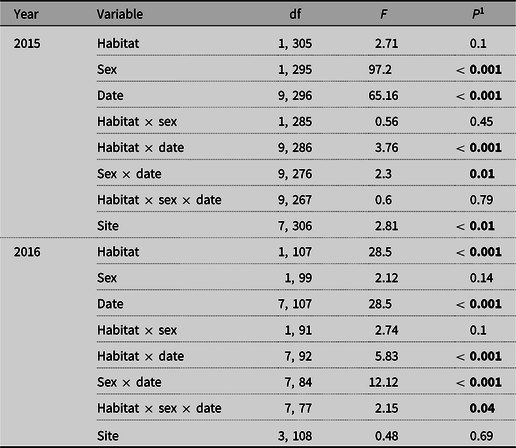
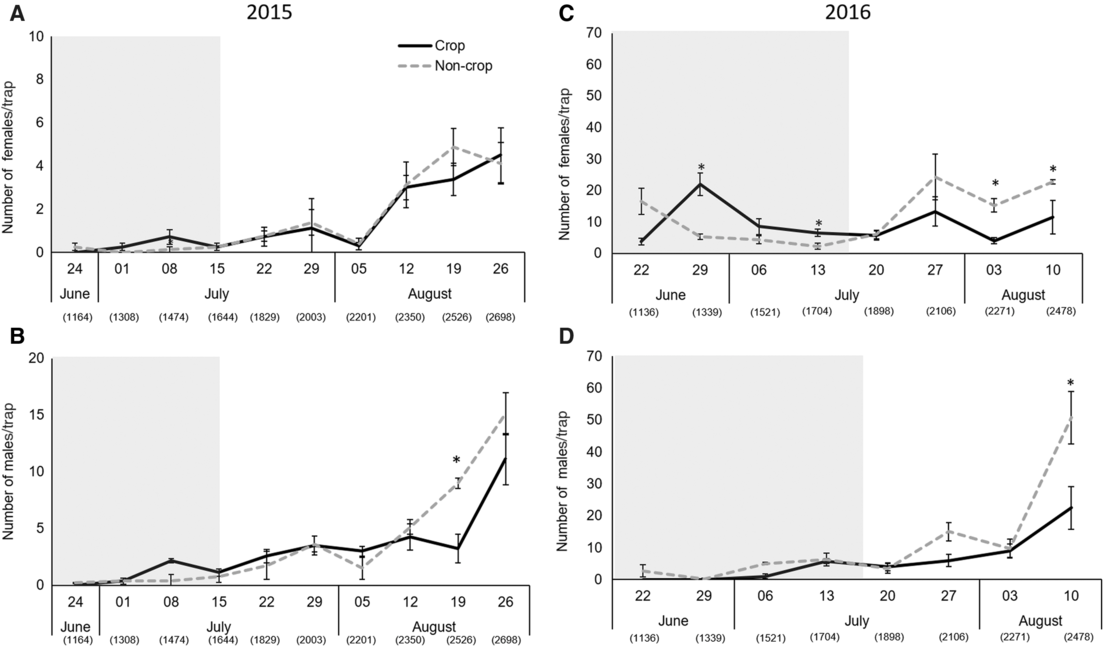
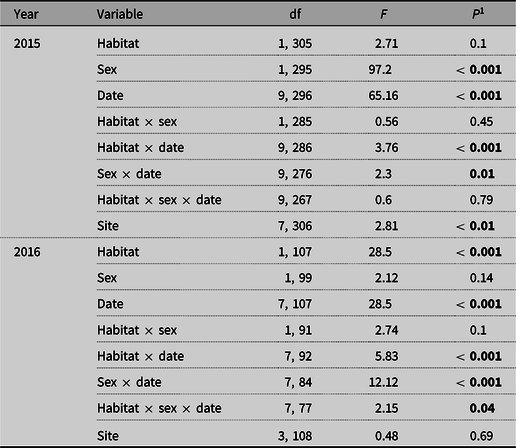
In both years, adult captures were generally low during harvest and increased post-harvest (significant date effect; Table 1; Fig. 2). In 2015, the number of D. suzukii adults captured in traps was not significantly different between crop and non-crop habitats (Table 1; Fig. 2A–B). Although, there was a significant effect of sampling date (Table 1) and a significant habitat-by-date interaction effect (Table 1) on the number of adults captured in traps (Fig. 2A–B), indicating that the effect of habitat varied by date. In general, the number of adults in traps tended to be similar between the two habitats during the harvest period, but after harvest, adult captures were mostly higher in non-crop habitats (Fig. 2A–B). Traps also captured more males than females (significant sex effect; Table 1), but this effect varied by sampling date (significant “Sex-by-Date” effect; Table 1), with more males captured later in the season (Fig. 2A–B).
Results from generalised linear models for the effects of habitat, sex, date, and their interactions on the numbers of Drosophila suzukii adults in traps during 2015 and 2016.
1 Values in bold indicate statistical significance at α = 0.05.
Numbers (mean ± standard error) of Drosophila suzukii females (A and C) and males (B and D) captured per trap in non-crop (forest) and crop (highbush blueberries, Vaccinium corymbosum cultivar Bluecrop) habitats in 2015 and 2016. The period in grey represents the time of harvest. On the x-axis, degree-days for each sample are shown in brackets. An asterisk indicates significant differences between non-crop and crop habitats on the number of flies captured in traps (Kruskal–Wallis tests; α = 0.05).
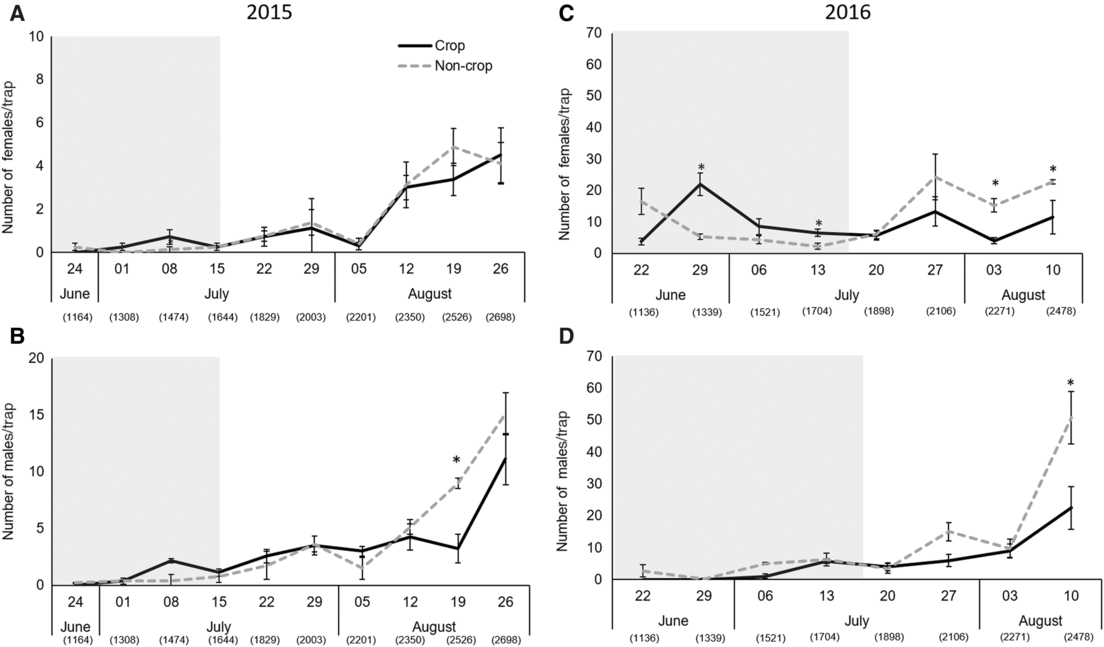
In 2016, there was a significant effect of habitat on the number of D. suzukii adults captured in traps (Table 1), with 15% more flies captured in non-crop than in crop habitats. However, this effect was influenced by sex and sampling date (significant three-way interaction effect; Table 1). Females were captured in higher numbers in non-crop habitats after harvest, whereas their numbers were higher in crop habitats during the middle of the harvest period (Fig. 2C). Males tended to be more abundant in non-crop habitats, particularly in the middle of the harvest period and after harvest (Fig. 2D).
There was no correlation between the number of adults (females or males) captured in the non-crop habitat and those caught in the crop habitat in both years (2015 females: Pearson correlation = 0.025, P = 0.954; 2015 males: Pearson correlation = 0.04, P = 0.924; 2016 females: Pearson correlation = 0.284, P = 0.716; 2016 males: Pearson correlation = −0.875, P = 0.125).
Oviposition
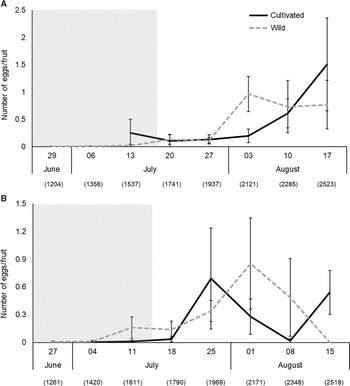
Similar to adult abundance, oviposition in both years was low for most of the harvest period and increased post-harvest (significant date effect; 2015: F 10,113 = 17.87, P < 0.001; 2016: F 9,77 = 7.7, P < 0.001; Fig. 3). In 2015, there was no effect of cultivation (wild versus cultivated fruit) (F 1,123 = 0.11; P = 0.73) on the number of D. suzukii eggs laid per fruit (Fig. 3A). However, there was a marginal cultivation-by-date interaction effect (F 10,103 = 1.7; P = 0.08). Numerically, there were more eggs laid in wild fruits in one of the sampling dates after harvest (Fig. 3A). Site also had a significant effect on the number of eggs laid per fruit (F 5,124 = 11.83; P < 0.001), which indicates variation in oviposition across sites.
Numbers (mean ± standard error) of Drosophila suzukii eggs laid in wild and cultivated highbush blueberries (Vaccinium corymbosum cultivar Bluecrop) in 2015 (A) and 2016 (B). The period in grey represents the time of harvest. On the x-axis, degree-days for each sample are shown in brackets.
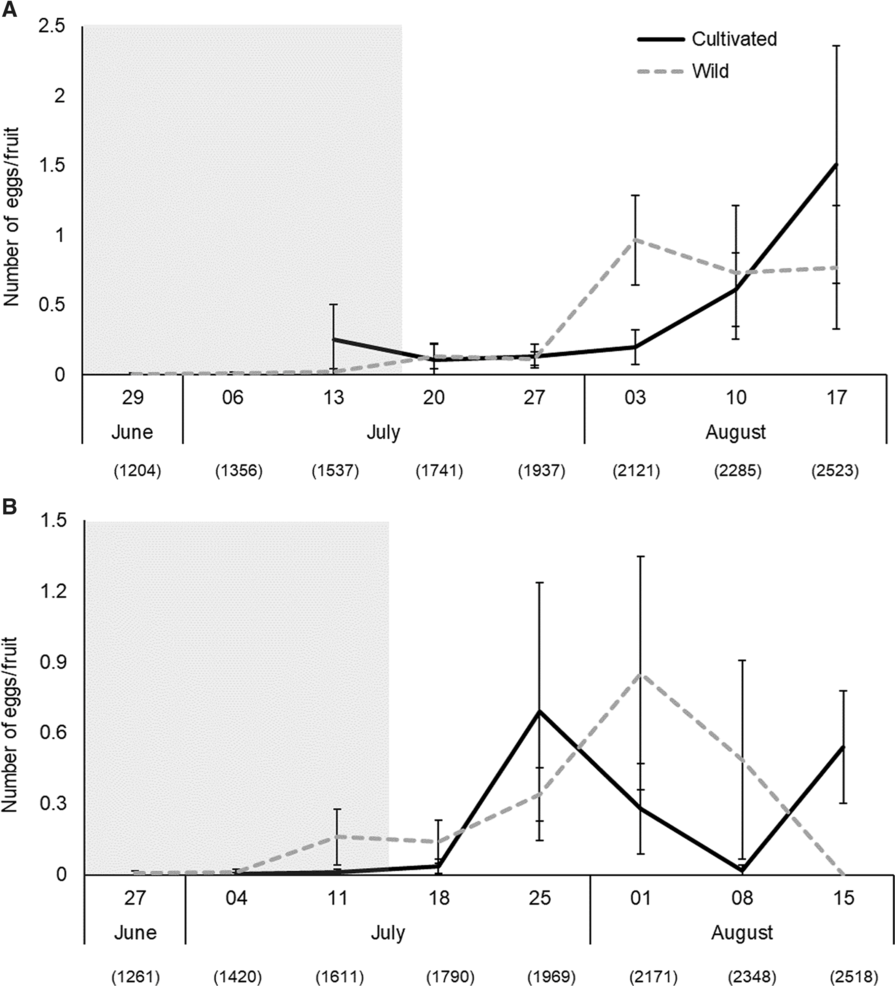
Similar to 2015, in 2016, there was no effect of cultivation (F 1,68 = 0.89; P = 0.34) on the number of D. suzukii eggs laid per fruit (Fig. 3B). However, there was a significant cultivation-by-date interaction (F 9,68 = 2.17; P = 0.03), such that eggs were found only in wild fruits during harvest and there was a tendency for higher egg laying in wild than in cultivated fruits after harvest (Fig. 3B). There were no differences in the number of eggs laid in fruits among sites (F 4,87 = 0.9; P = 0.46).
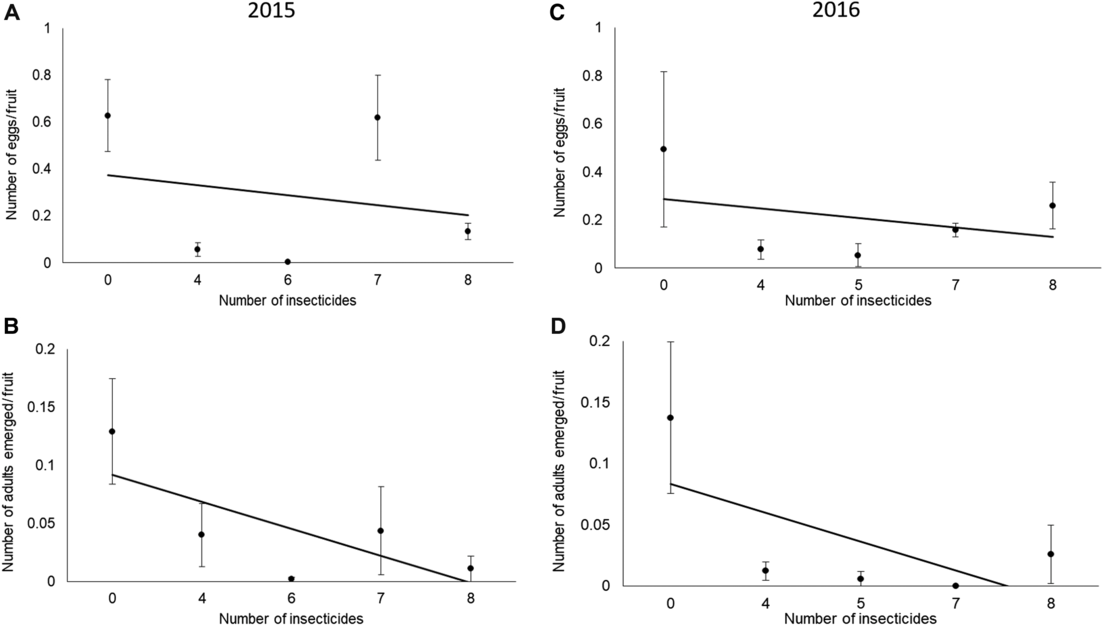
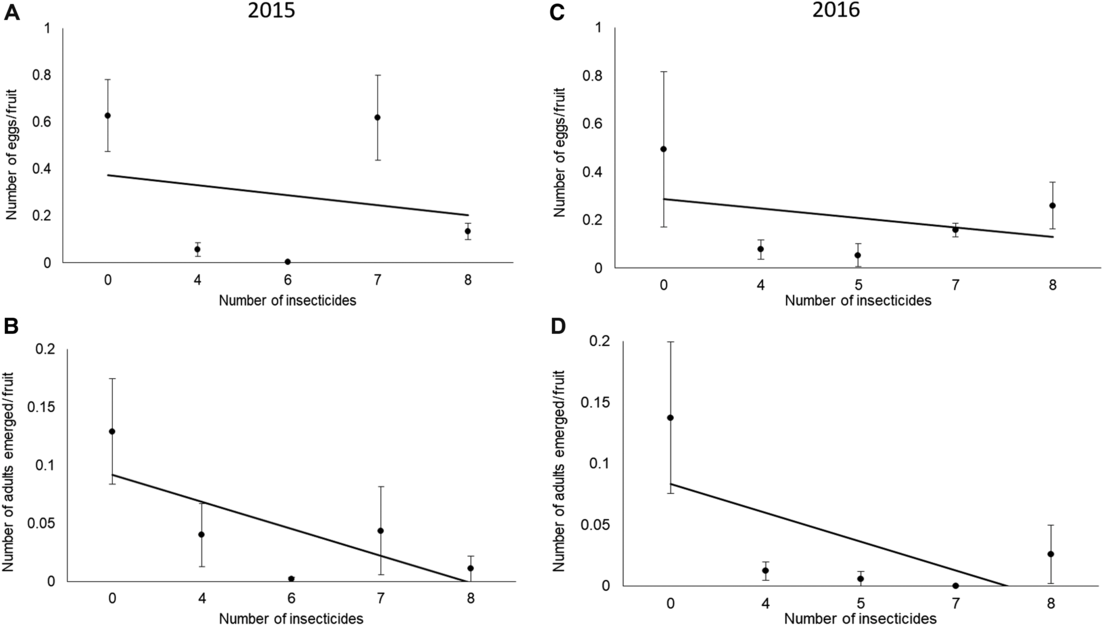
There was no correlation between the numbers of eggs laid in wild fruits and the number of eggs laid in cultivated fruits in both years (2015: Pearson correlation = 0.476, P = 0.34; 2016: Pearson correlation = −0.377, P = 0.532). The number of eggs laid per cultivated fruit also did not correlate with the number of insecticide applications in 2015 (Pearson correlation = −0.396; P = 0.509) or in 2016 (Pearson correlation = −0.559; P = 0.327) (Fig. 4A, C).
Linear relationship between the numbers of eggs laid per cultivated highbush blueberry fruit (Vaccinium corymbosum cultivar Bluecrop) and the number of insecticide applications in 2015 (linear equation: y = 0.482 – 0.039x) (A) and 2016 (y = 0.393 – 0.037x) (C). Also shown is the linear relationship between the numbers of emerged adults per cultivated fruit and the number of insecticides applied in 2015 (y = 0.116 – 0.041x) (B) and 2016 (y = 0.113 – 0.015x) (D). On the x-axis, degree-days for each sample are shown in brackets.
Adult emergence
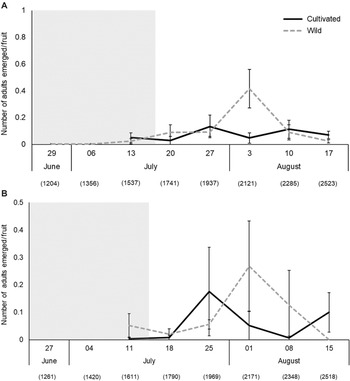
In general, adult emergence from wild and cultivated fruits closely resembled the number of eggs laid per fruit. In 2015, the number of D. suzukii adult emergence was 54% higher in wild than in cultivated fruits (F 1,123 = 5.38; P = 0.02) (Fig. 5A). There was also a significant effect of sampling date (F 10,113 = 17.97; P < 0.001) and a significant cultivation-by-date interaction effect (F 10,103 = 3.31; P < 0.001) on the number of adults emerging per fruit, indicating that the effect of cultivation varied by date (Fig. 5A). Later in the season (post-harvest), adult emergence in one sampling date was higher in wild than in cultivated fruits (Fig. 5A). Site also had a significant effect on adult emergence (F 5,124 = 14.82; P < 0.001). In 2015, immature success (per cent egg-to-adult survivorship) was 22% higher in wild than in cultivated fruit (wild fruit (mean ± standard error) = 51.46% ± 5.62; cultivated fruit = 29.51% ± 5.33; t = 2.93, df = 29, P = 0.007). In 2016, there was no effect of cultivation (F 1,86 = 2.04; P = 0.15) on the number of D. suzukii adults emerging per fruit, although the interaction between cultivation and date was significant (F 9,68 = 2.5; P = 0.01) (Fig. 5B). Sampling date also had a significant effect on the number of adults emerging per fruit (F 9,77 = 8.22; P < 0.001), such that adult emergence was low during harvest and higher as the season progressed (Fig. 5B). There was an effect of site on adult emergence (F 4,87 = 2.58; P < 0.001). Although immature success (per cent egg-to-adult survivorship) was approximately 11% higher in wild than in cultivated fruit, this was not statistically significant (wild fruit (mean ± standard error) = 23.73% ± 3.09; cultivated fruit = 12.88% ± 3.25; t = 1.67, df = 9, P = 0.129).
Numbers (mean ± standard error) of Drosophila suzukii adults emerged from wild and cultivated highbush blueberries (Vaccinium corymbosum cultivar Bluecrop) in 2015 (A) and 2016 (B). The period in grey represents the time of harvest. On the x-axis, degree-days for each sample are shown in brackets.
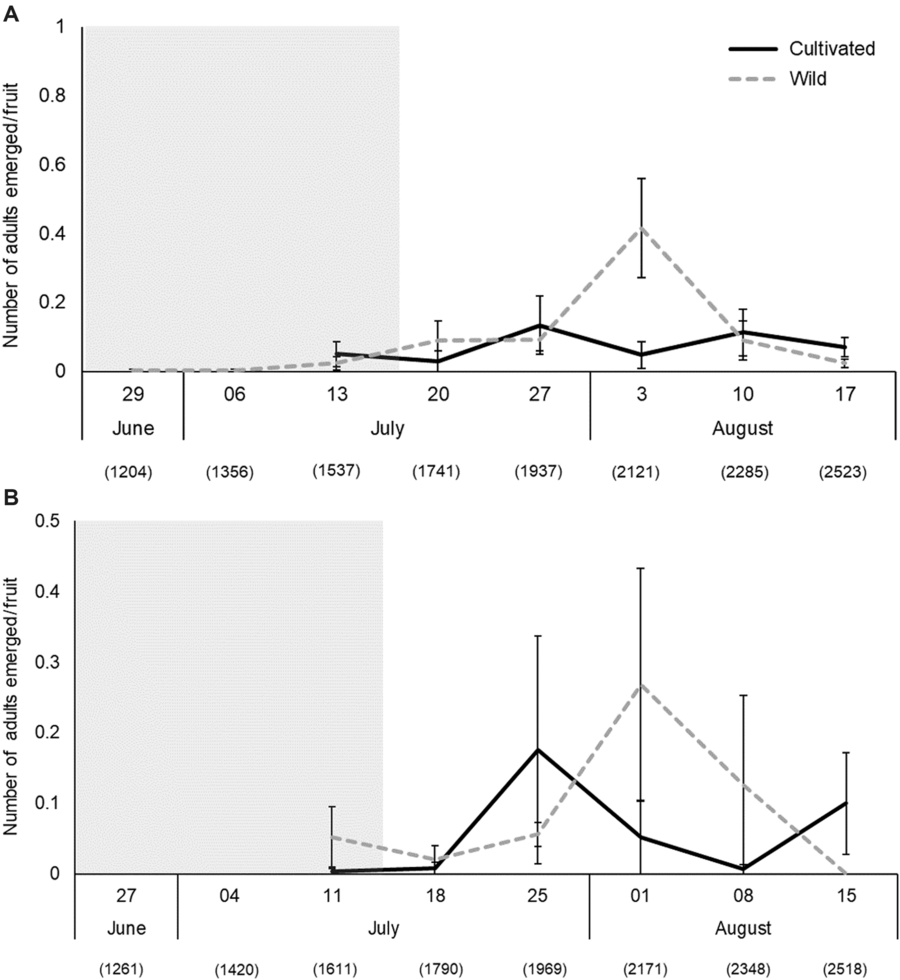
There was a marginally significant (Pearson correlation = −0.820; P = 0.089) and a significant (Pearson correlation = −0.886; P = 0.046) negative correlation between the number of adults emerged from cultivated fruits and the number of insecticide applications in 2015 (Fig. 4B) and 2016 (Fig. 4D), respectively, showing that adult emergence decreases as number of applications increase.
Fruit phenology
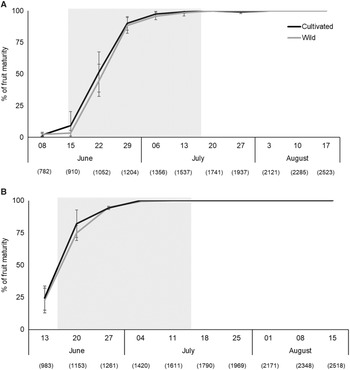
Per cent fruit maturation increased asymptotically during harvest, quickly reaching 100% by early July (significant date effect; 2015: F 10,113 = 120.44, P < 0.001; 2016: F 9,77 = 29.36, P < 0.001) (Fig. 6). In 2015, fruit phenology (i.e., percentage mature fruit) did not differ between cultivated and wild blueberries (F 1,123 = 0.24; P = 0.62) (Fig. 6A), and there was no cultivation-by-date interaction (F 10,103 = 1.26; P = 0.25), indicating that both wild and cultivated fruits matured at the same time throughout the season (Fig. 6A). There was no effect of site on the percentage of mature fruit (F 5,124 = 1.36; P = 0.24).
Percentage (mean ± standard error) of mature fruit of wild and cultivated highbush blueberries (Vaccinium corymbosum cultivar Bluecrop) in 2015 (A) and 2016 (B). The period in grey represents the time of harvest. On the x-axis, degree-days for each sample are shown in brackets.
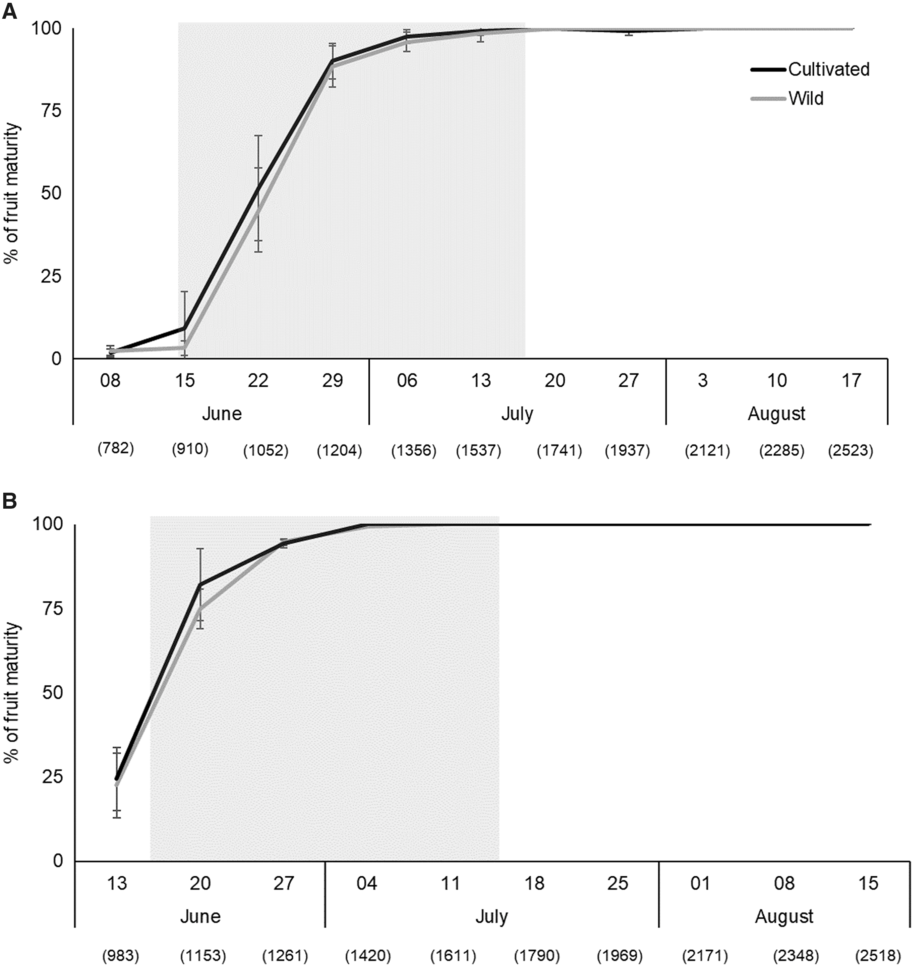
Similar to 2015, in 2016, fruit phenology did not differ between cultivated and wild blueberries (F 1,86 = 0.73, P = 0.39), and there was no cultivation-by-date interaction (F 9,68 = 1.19; P = 0.31) (Fig. 6B). There was also no effect of site on the percentage of mature fruit in 2016 (F 4,87 = 0.5; P = 0.73).
Discussion
This study aimed to better understand the season-long population dynamics of D. suzukii in non-crop habitats, and the susceptibility of fruits therein to infestation by this pest, in relation to nearby highbush blueberry fields. Our results provide three key findings. First, D. suzukii adults are active in non-crop habitats throughout the harvest and post-harvest blueberry seasons. Second, wild blueberries serve as suitable alternative hosts for D. suzukii oviposition and development during the ripening period of cultivated fruits. Third, fruit from wild and cultivated blueberries synchronise in maturation. Therefore, our findings indicate that these non-crop habitats and wild hosts therein can be a potential source of D. suzukii adults to neighbouring blueberry fields.
Non-crop habitats in the landscape can provide alternative resources, overwintering habitats, and refugia for D. suzukii adults (Burrack et al. Reference Burrack, Fernandez, Spivey and Kraus2013; Lee et al. Reference Lee, Dreves, Cave, Kawai, Isaacs and Miller2015, Reference Lee, Dalton, Swoboda-Bhattarai, Bruck, Burrack and Strik2016; Arnó et al. Reference Arnó, Solà, Riudavets and Gabarra2016; Pelton et al. Reference Pelton, Gratton, Isaacs and Timmeren2016; Evans et al. Reference Evans, Toews and Sial2017). For example, during the cold season, non-crop (forest) habitats provide suitable overwintering sites for D. suzukii (Santoiemma et al. Reference Santoiemma, Trivellato, Caloi, Mori and Marini2019). As a result, non-crop habitats can influence the abundance, early season captures, and movement of D. suzukii adults in neighbouring small fruit crops (Pelton et al. Reference Pelton, Gratton, Isaacs and Timmeren2016; Elsensohn and Loeb Reference Elsensohn and Loeb2018; Leach et al. Reference Leach, Hagler, Machtley and Isaacs2019). For instance, Weißinger et al. (Reference Weißinger, Schrieber, Breuer and Müller2019) found evidence that blackberry field margins can enhance the abundance of D. suzukii adults in adjacent vineyards. Our trapping data show that D. suzukii adults inhabit non-crop habitats surrounding blueberry fields throughout the entire harvest and post-harvest periods. Fly populations in non-crop and crop habitats tended to be similar in numbers during the harvest period. During this period, D. suzukii adults from non-crop habitats could move to crop habitats and vice versa and, thus, serve as a potential risk of fruit infestation to blueberry fields. After harvest, our trapping data show a tendency of greater D. suzukii adult numbers in non-crop habitats than in crop habitats. It is possible that after blueberry fields are harvested, flies seek habitats with more suitable or greater availability of alternative hosts. Indeed, D. suzukii moves rapidly from one habitat to another when resources are not accessible or are in decline (Mitsui et al. Reference Mitsui, Beppu and Kimura2010; Wong et al. Reference Wong, Cave, Lightle, Mahaffee, Naranjo and Wiman2018). Future studies need to confirm the possible movement of D. suzukii adults from non-crop habitats into the cultivated blueberry habitats by conducting mark-recapture studies (e.g., Klick et al. Reference Klick, Lee, Hagler, Bruck and Yang2014, Reference Klick, Yang, Walton, Dalton, Hagler and Dreves2016). In one such study, Leach et al. (Reference Leach, Hagler, Machtley and Isaacs2019) used a protein immune-marking technique to determine that D. suzukii moves from Asian bush honeysuckle (Lonicera species) plants into the surrounding blueberry fields, particularly early in the growing season. The fact that numbers of D. suzukii adults in traps located in non-crop habitats do not correlate with those in the blueberry fields indicates that factors other than landscape characteristics, such as pest management practices, may influence adult abundance in our studied cropping system. Moreover, in this study, we covered the entire period of harvest of blueberries (June–August) in our region because our main focus was to address the risk of non-crop habitats to the crop during the fruiting season. Although non-crop habitats can provide suitable hosts and overwintering sites for D. suzukii (Santoiemma et al. Reference Santoiemma, Trivellato, Caloi, Mori and Marini2019) during the off-season, this was beyond the scope of this study.
In this study, we show that non-crop habitats surrounding blueberry fields provide suitable alternative hosts for D. suzukii. Wild blueberries (Vaccinium species), a common component of non-crop habitats in the Pinelands of New Jersey (McCormick Reference McCormick and Forman1979) where highbush blueberries are mainly produced, were used by D. suzukii for oviposition and development throughout the cropping season. It has been argued that uniformity in phenology (i.e., flowering and fruit ripening times) due to domestication can make crops more susceptible to insect pests (Chen et al. Reference Chen, Gols, Stratton, Brevik and Benrey2015); however, this was not the case in blueberries, likely due to the recent domestication history of the crop. At all farms surveyed, we found that wild blueberry plants produced ripe fruits at the same time as the cultivated blueberries. Numbers of eggs laid in and adults emerged from both wild and cultivated blueberries were low and similar during the harvest period. This could be due to a low abundance of flies early in the season or to pest control measures or both. The lack of correlation between the number of eggs laid in cultivated versus wild fruits implies that oviposition was not determined by landscape factors alone. Local management practices also appeared to have no effect on the number of eggs laid in cultivated fruits but do have an effect on the number of adults emerging from fruits. Insecticides such as organophosphates, spinosyns, and neonicotinoids have been shown to have lethal effects on D. suzukii eggs and larvae when applied to blueberry fruits post-infestation (Wise et al. Reference Wise, Vanderpoppen, Vandervoort, O’Donnell and Isaacs2015). Variation in fruit availability between non-crop and crop habitats could have also influenced levels of fruit infestation by D. suzukii. Although the factors determining variation in oviposition across landscapes still need to be identified, our results indicate not only that D. suzukii populations are partially influenced by insecticide applications but also that blueberry fields near non-crop habitats are at constant risk of infestation despite these chemical control measures. Future studies are needed to compare the relative contribution of landscape features versus local management practices on the abundance of D. suzukii adults and on the risk of infestation in cultivated blueberries. In this study, we focussed on wild blueberries because they are the main alternative fruit available to D. suzukii during blueberry harvest in our region. Whether other fruits are available during the off-season and their susceptibility to D. suzukii needs investigation.
In agreement with our trapping data, we observed an increase in D. suzukii oviposition and adult emergence after harvest, that is, at 100% ripe fruit, which could be due to an increase in female preference for (over)ripe fruit, an increase in population size, or both. Drosophila suzukii has an oviposition preference for blueberry fruits that are changing in colour (pink-blue) and for ripe (blue) fruits but not for green or overripe fruits (Lee et al. Reference Lee, Bruck, Curry, Edwards, Haviland, Van Steenwyk and Yorgey2011); thus, the stage of fruit maturation is an important determinant for oviposition. We also found that oviposition and adult emergence tended to be higher in wild than in cultivated blueberries. In the field, both ripe and overripe wild blueberries offered D. suzukii females with suitable oviposition sites during the harvest and post-harvest periods of cultivated blueberries, and flies could even prefer wild over cultivated blueberry fruits. In fact, in laboratory studies, we found that wild blueberries are more attractive to D. suzukii and produce higher quantities of volatiles than cultivated blueberries (unpublished data). On the other hand, Rodriguez-Saona et al. (Reference Rodriguez-Saona, Cloonan, Sanchez-Pedraza, Zhou, Giusti and Benrey2019a) showed that, under laboratory conditions, D. suzukii oviposition and development were higher in cultivated than in wild blueberry fruits. Together, these laboratory studies indicate that, although cultivated fruits are less attractive to the adults, they are more susceptible to D. suzukii infestation because they are larger and less defended than wild fruits (Rodriguez-Saona et al. Reference Rodriguez-Saona, Cloonan, Sanchez-Pedraza, Zhou, Giusti and Benrey2019a). Nonetheless, the authors did not consider the potential effects of pest management practices that are common in blueberry fields on D. suzukii survival. Under field conditions, we found that immature success was higher in wild than in cultivated fruits, possibly because non-crop habitats served as refugia to D. suzukii from exposure to insecticides applied to the crop. Alternatively, the quality and availability of fruits for D. suzukii oviposition and development may have varied in time between non-crop and crop habitats and, thus, influenced D. suzukii oviposition (Burrack et al. Reference Burrack, Fernandez, Spivey and Kraus2013; Kinjo et al. Reference Kinjo, Kunimi, Ban and Nakai2013; Lee et al. Reference Lee, Dreves, Cave, Kawai, Isaacs and Miller2015).
In summary, we found evidence that wild blueberries have synchronised fruit maturation with cultivated blueberries throughout the harvest season, and their presence in non-crop habitats can, thus, potentially enhance the abundance of D. suzukii adults in adjacent cultivated blueberry fields. This study represents the first step towards understanding the role of non-crop habitats and the fruits therein as potential sources of D. suzukii to cultivated highbush blueberries. As indicated by Pulliam (Reference Pulliam1988), insect populations may be locally maintained in crop habitats by continued immigration from more productive source areas nearby. In our study system, we showed that D. suzukii exploits wild blueberries for oviposition and development concurrently with cultivated blueberries and could, thus, move to blueberry fields when susceptible (mature) fruits become available. Although cultivated fruits are more suitable hosts for D. suzukii oviposition and development than wild fruits (Rodriguez-Saona et al. Reference Rodriguez-Saona, Cloonan, Sanchez-Pedraza, Zhou, Giusti and Benrey2019a), crop habitats like blueberry fields can be unstable environments for this pest, more so than non-crop habitats, due to insecticide applications. This knowledge about agricultural landscape structure and composition and pest activity is key for designing effective pest management strategies (Schneider Reference Schneider1989; Holland and Fahrig Reference Holland and Fahrig2000; Blackshaw and Vernon Reference Blackshaw and Vernon2006; Carriere et al. Reference Carriere, Ellsworth, Dutilleul, Ellers-Kirk, Barkley and Antilla2006; Hennig and Mazzi Reference Hennig and Mazzi2018). For instance, future strategies for D. suzukii control in highbush blueberries should consider the types of landscapes surrounding commercial fields. These strategies could include, for example, the augmentative releases of biological control agents (Lee et al. Reference Lee, Wang, Daane, Hoelmer, Isaacs and Sial2019) and, if feasible, the removal of alternative hosts from non-crop habitats.
Acknowledgements
We thank members of the P.E. Marucci Blue-Cran-Ent laboratory (Chatsworth, New Jersey, United States of America), including Vera Kyryczenko-Roth, Robert Holdcraft, and Evan Gunn, for laboratory and fieldwork assistance. We also thank the growers who provided field sites for this study. This research was partially funded by the United States Department of Agriculture, National Institute of Food and Agriculture, Specialty Crops Research Initiative program (award 2015-51181-24252); the New Jersey Blueberry and Cranberry Research Council; a New Jersey Specialty Crop Block grant SCBG (agreement 12-25-B-1476) to C.R.-S.; and by Hatch funds to C.R.-S. (NJ08192 and NJ08140).