1. Introduction
The world is currently confronting profound environmental challenges, underscored by recent reports from the World Meteorological Organization (Chen and Liu, Reference Chen and Liu2023). In response, a global consensus has emerged, advocating a strategic shift away from traditional development models characterized by high energy consumption and carbon emissions (Islam, Reference Islam2025) and toward high-quality development that balances economic and environmental objectives (Jiang and Gao, Reference Jiang and Gao2023). Since the mid-20th century, environmental movements have highlighted the critical importance of a multi-stakeholder governance framework for resolving complex ecological issues (Zhou and Ding, Reference Zhou and Ding2023), which actively involves governments, businesses, non-governmental organizations (Guo and Qiao, Reference Guo and Qiao2024) and the public (Zhang et al., Reference Zhang, Zhou, Liu and Zhang2022).
As societies evolve, the role of the public in environmental governance has become increasingly prominent. Nations worldwide have consistently implemented policies to translate the concept of public environmental governance into practice (Yang and Yee, Reference Yang and Yee2022). Landmark international measures, such as the EU’s Aarhus Convention, emphasize the public’s right to knowledge, participation and justice in environmental matters (Xu et al., Reference Xu, Abbas, Rafique and Ali2023). Similarly, the US National Environmental Policy Act, with its provisions for public hearings and comment periods, and Japan’s River Law, reinforce the significance of public involvement (Michalak et al., Reference Michalak, Staszkiewicz and Waniak-Michalak2023). These institutional mechanisms are vital for ensuring the effective implementation of environmental governance (Munawar et al., Reference Munawar, Yousaf, Ahmed and Rehman2022).
As a responsible global power, China has also introduced a series of policies to strengthen public participation (Li et al., Reference Li, Zhang and Wang2024c). A key example is the Measures for Public Participation in Environmental Protection, implemented in 2015, which clearly defines the guidelines, procedures and rights for all parties involved, thereby safeguarding the rights of citizens and businesses to participate in and oversee environmental protection (Li et al., Reference Li, Yang and Wang2025c). Furthermore, China has established diverse participation channels, including online government consultation platforms and environmental protection hotlines, to facilitate this engagement.
Public green attention (PGA), which reflects the public’s understanding, attitudes and behavioural intentions toward environmental issues (Zhou et al., Reference Zhou, Zhang, Tao and Wang2024), is thus a critical force in this governance landscape. In China, PGA is evolving beyond a transient trend into a fundamental component of the national strategy to achieve its ‘dual carbon’ goals, fuelled by growing public environmental concern and the rapid expansion of green consumer groups (Wang et al., Reference Wang, Zhao, Shi, Liu and Tan2024c). The success of such macro-level strategies, however, ultimately depends on the practical actions of micro-level economic entities (Liu et al., Reference Liu, Wang and Liu2024). As the primary agents of production, the green transformation of enterprises is a crucial determinant for achieving high-quality socio-economic development (Bouattour et al., Reference Bouattour, Gharbi, Kalai and Helali2025).
Within this context, green technological innovation (GTI) is widely regarded as the principal catalyst for corporate green transformation. GTI enables firms to develop unique products, enhance resource efficiency, reduce production costs and ultimately realize a ‘win-win’ for economic and environmental performance (He et al., Reference He, Yan, Hao and Wu2022). Therefore, promoting enterprise GTI constitutes the critical link between macro-level sustainable development goals and micro-level corporate value creation (Li et al., Reference Li, Wang, Li and Wang2025a). In today’s digital era, characterized by increasing information transparency, public scrutiny of corporate environmental practices is becoming more prevalent (Han and Luo, Reference Han and Luo2024). Shifts in PGA can influence corporate reputation and market expectations and can also prompt responses from regulatory authorities, thereby collectively shaping corporate investment in GTI.
Existing literature has thoroughly examined the influencing factors of GTI, with findings primarily concentrated in two areas: external environmental factors, such as government environmental regulation informed by the ‘Porter Hypothesis’ (Alves and Meneses, Reference Alves and Meneses2024), and internal corporate factors, including executive characteristics, resource capabilities and firm size (Zhang et al., Reference Zhang, Lai and Jie2024). Despite these contributions, significant research gaps remain. First, while formal regulatory pressures have been extensively studied, there has been insufficient focus on the growing role of PGA as a ‘bottom-up’ social force (Han and Luo, Reference Han and Luo2024). Although some studies acknowledge the public as a powerful external factor influencing corporate environmental behaviour (Dai, Reference Dai2024), there is no consensus on the fundamental question of whether PGA encourages GTI; findings remain complex and even contradictory (Asif et al., Reference Asif, Yang and Hashim2024). Some research indicates a positive impact of public oversight on GTI (Yang et al., Reference Yang, Ling and Chen2024), while other studies suggest the relationship may not be strictly linear and could even have inhibitory effects (Chen and Liu, Reference Chen and Liu2023). These discrepancies highlight the imperative to further elucidate the mechanisms through which PGA influences GTI. This leads to a second, related gap: a lack of in-depth investigation into the transmission mechanisms. Many existing studies concentrate on pathways of political influence or institutional pressure (Li et al., Reference Li, Yaacob and Xie2024d).
Yet, the ‘policy paradox’ phenomenon suggests that companies may respond to subsidy pressures by engaging in ‘greenwashing’ or prioritizing short-term projects over long-term GTI, reflecting underlying conflicts of interest between management and shareholders (Zhang et al., Reference Zhang, Lai and Jie2024). Analyses focusing solely on environmental regulations may therefore be biased if they fail to account for these internal governance mechanisms (Buntaine et al., Reference Buntaine, Greenstone, He, Liu, Wang and Zhang2024). Furthermore, the existing literature often relies on single-industry or single-region case studies, lacking systematic cross-group comparisons. This limits the generalizability of findings and obscures the varied effects PGA may have across different corporate and regional contexts (Zhou et al., Reference Zhou, Song and Huang2023). Finally, there is a general lack of systematic evaluation of the economic consequences of GTI in current research (Gruenhagen and Cox, Reference Gruenhagen and Cox2025). A critical, under-explored question remains: Can PGA-driven GTI genuinely yield sustainable corporate value? To address these gaps, this paper systematically investigates the impact of PGA on GTI and its underlying mechanisms. Leveraging advancements in digital technology, we employ the Baidu Keyword Index to measure latent public engagement, offering a novel approach to elucidating this complex relationship.
The marginal contributions of this study are threefold. First, it provides a theoretical contribution by developing and testing a bottom-up influence model that enhances institutional theory. It demonstrates how informal public pressure shapes formal environmental regulations (FER) and corporate strategy, moving beyond the conventional top-down governance paradigm. Second, it makes an empirical contribution by utilizing large-sample data and a novel data science metric for PGA. This allows for a robust empirical test of a critical but understudied driver of GTI, supplemented by rigorous robustness checks and an analysis of the resulting economic effects. Finally, the study offers practical implications. For policymakers, it highlights the potential of public awareness as a supplementary tool for environmental governance. For corporate managers, it underscores the strategic necessity of building capacity to monitor and proactively respond to public opinion, thereby mitigating risks and capitalizing on green market opportunities.
The remainder of this paper is structured as follows. Section 2 develops the theoretical framework. Section 3 details the research design, including the model, variables and data. Section 4 presents the empirical results and robustness tests. Section 5 delves into further analysis, examining mechanisms, heterogeneity and economic effects. Section 6 concludes the paper by discussing the findings and acknowledging limitations.
2. Theoretical basis and research hypotheses
2.1. Public green attention and green technological innovation
The rise in PGA has established green consumption as both a societal norm and a key market expectation (Jiang and Gao, Reference Jiang and Gao2023). This shift exerts direct normative pressure on corporate behaviour (Zhou and Ding, Reference Zhou and Ding2023). From the perspective of organizational legitimacy theory, when firms face significant expectations from external social groups, they are motivated to proactively adapt their strategies to conform to prevailing social norms. This alignment is essential for securing critical resources, ensuring long-term operational continuity and maintaining social recognition (Wang et al., Reference Wang, Chen, Long and Li2024a). Public concern over environmental issues stems not only from fundamental demands for health and safety but is also reinforced by continuous information oversight and public opinion pressure (Ren and Ren, Reference Ren and Ren2024).
Furthermore, the focus of public attention on a specific domain fundamentally directs societal resource allocation (Lee, Reference Lee2023). Even when not directly translating into financial investment, concentrated attention from the public and policymakers can be converted into valuable market-based resources such as consumer trust, corporate reputation and preferential policy treatment (Zheng et al., Reference Zheng, Wan, Wang, Chen, Li, Wu and Song2023; Mahmoudian et al., Reference Mahmoudian, Nazari and Poursoleyman2025). Within this context, GTI emerges as a critical strategic response for enterprises. As a verifiable signal of a firm’s commitment to environmental stewardship, GTI serves to enhance its environmental image and solidify its legitimacy. Consequently, GTI represents a pivotal pathway for companies to constructively address the pressures and opportunities presented by PGA.
Based on this theoretical reasoning, the following hypothesis is proposed:
H1: Public green attention has a positive stimulating effect on corporate green technological innovation.
2.1. Analysis of the internal influence mechanism of PGA on GTI
2.1.1. Environmental regulation
Institutional theory posits that organizational behaviour is significantly shaped by both formal and informal rules within the institutional environment. The rise of PGA amplifies this influence by increasing the sensitivity of enterprises to policy signals and strengthening the willingness of government bodies to implement and enforce environmental regulations (Du et al., Reference Du, Li, Fan and Liang2023). PGA acts as a catalyst, urging governments to deploy a more robust portfolio of environmental policy tools, which in turn shapes corporate innovation strategies through a dual-channel mechanism of rewards and penalties (Xiong et al., Reference Xiong, Di and Gao2023). This dynamic operates through two distinct types of environmental regulations. On one hand, punitive environmental regulations, such as emission limits, environmental taxes and stricter enforcement, raise the cost of non-compliance for firms. Faced with the prospect of financial penalties and operational restrictions, companies are compelled to pursue GTI as a strategic response to mitigate pollution and avoid sanctions (Zor, Reference Zor2023). On the other hand, incentive-based environmental regulations, including green credit, fiscal subsidies and tax incentives, enhance the anticipated returns on GTI. By lowering the financial burden and risk of GTI investments, these incentives positively motivate firms to increase their engagement in innovative activities (Zhang and Huang, Reference Zhang and Huang2022). Critically, these two regulatory approaches are not mutually exclusive; they often create a synergistic effect with PGA (Yan, Reference Yan2023; Li et al., Reference Li, Li and Wang2024b). Together, they form a comprehensive external institutional environment that exerts combined pressure and provides supportive encouragement, effectively accelerating the pace of GTI.
Based on this analysis, the following hypotheses are proposed:
H2a: Public green attention indirectly promotes green technological innovation in enterprises by strengthening punitive environmental regulations.
H2b: Public green attention indirectly promotes green technological innovation in enterprises by strengthening incentive-based environmental regulations.
2.1.2. Corporate social responsibility
Reputation theory suggests that in highly visible environments, companies engage in strategic behaviour to manage their public image and secure external recognition and market advantages (Saleem and Bashir, Reference Saleem and Bashir2024; Wang et al., Reference Wang, Ye and Li2025d). Intensified PGA amplifies this dynamic, strengthening corporate motivation to fulfil social obligations, particularly those related to the environment (Li et al., Reference Li, Lei and Wang2024a). By actively meeting their environmental-related corporate social responsibility (CSR), firms can accumulate social capital, project a positive public image and mitigate potential reputational damage from public or media scrutiny (Wang et al., Reference Wang, Chen, Jin and Li2025a). Confronted with these rising social expectations and explicit environmental demands from stakeholders (Yuan and Cao, Reference Yuan and Cao2022), companies increasingly recognize GTI as a crucial strategic instrument. Investing in GTI serves as a tangible and proactive demonstration of a firm's commitment to its environmental responsibilities, thereby enhancing its legitimacy and external acknowledgment. Therefore, CSR acts as a mediating pathway through which PGA influences corporate innovation behaviour.
Based on this reasoning, the following hypothesis is proposed:
H3: Public green attention indirectly promotes corporate green technological innovation by strengthening corporate social responsibility.
2.1.3. Internal growth effect of enterprises
Agency theory highlights the potential for conflict in modern corporations where ownership and control are separated, as managers may prioritize short-term financial gains over long-term, value-creating investments like green innovation (Wang et al., Reference Wang, Gao and Li2024b). PGA can help mitigate this conflict by imposing external discipline. As the PGA rises, firms face stricter disclosure requirements and enhanced external scrutiny from the public, media and investors (Han and Luo, Reference Han and Luo2024). This increased transparency reduces information asymmetry, making it more difficult for managers to pursue self-interested goals at the expense of long-term corporate value (Alves and Meneses, Reference Alves and Meneses2024). Consequently, heightened oversight can lead to a reduction in agency costs (Wang et al., Reference Wang, Liu, Jin and Li2025c), freeing up resources and aligning managerial incentives with long-term strategic objectives, including investments in GTI (Bessler et al., Reference Bessler, Gonenc and Tinoco2023). Furthermore, PGA empowers internal governance bodies, such as boards of directors and shareholders, by providing them with clearer metrics to evaluate management's environmental performance, thus creating internal pressure for GTI investment.
Thus, we propose the following hypothesis:
H4: Public green attention indirectly promotes corporate green technological innovation by reducing agency costs.
3. Model and data sources
3.1. Definition of variables
3.1.1. Core explanatory variables
PGA reflects societal sensitivity to environmental risks, support for sustainable development and the capacity to exert institutional pressure on corporations through oversight and market feedback. The proliferation of internet technology has transformed this attention from a passive awareness into an active force, enabling continuous monitoring and response to environmental issues within daily information flows. To capture this phenomenon, this study constructs a PGA index by integrating the Baidu Keyword Index with established methodological approaches (Yu and Jin, Reference Yu and Jin2022; Wang et al., Reference Wang, Chen, Wang and Li2025b). Baidu Search dominates the domestic search engine market with a 96.3% penetration rate, as reported in the ‘2023 China Search Engine Industry Research Report’ (CTR Market Research, 2023). Therefore, its keyword index provides a highly representative and reliable metric for assessing PGA (Li et al., Reference Li, Wang, Li and Wang2025b).
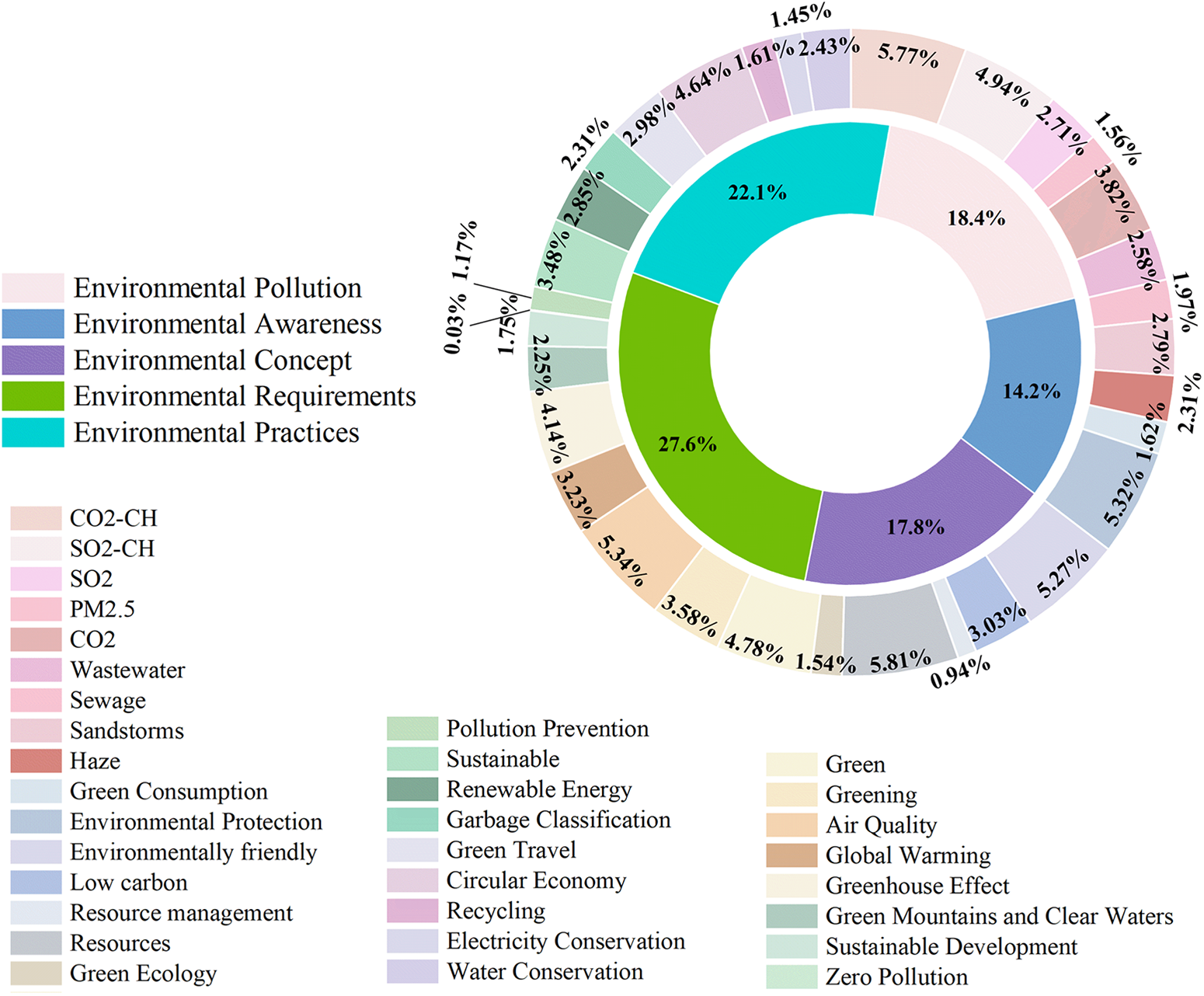
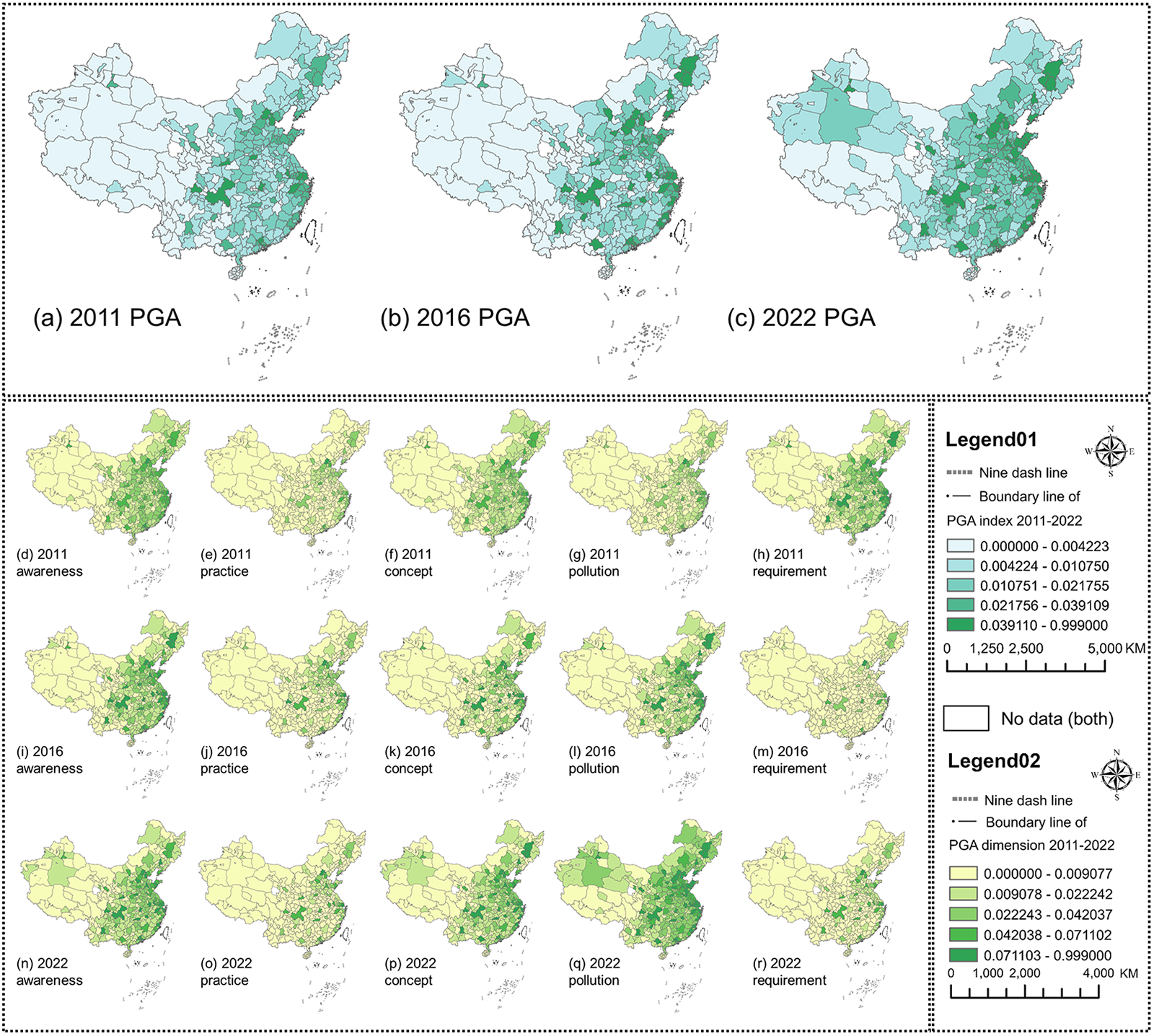
The construction of the PGA index followed a series of procedures. First, we identified relevant keywords by reviewing key policy documents, including the Chinese government’s 2015 environmental protection initiatives, the 2022 Communist Party of China National Congress report and the 2023 ‘White Paper on China's Green Development in the New Era’. To ensure a comprehensive and scientifically robust keyword database, we supplemented this list with terms identified in prior research (Ma et al., Reference Ma, Song and Zhang2023; Yang et al., Reference Yang, Ling and Chen2024). These keywords were subsequently categorized into five distinct dimensions (Tao et al., Reference Tao, Wang, Ye, Wu and Zhang2023), as detailed in online appendix Table A1. Second, we used Python to crawl the annual search volume data for these keywords for each city from 2011 to 2022, which were then organized and aggregated into city-year panel data. We applied the entropy method to calculate comprehensive PGA index scores and determine the weights for each dimension. The weights are visualized in Figure 1, while the specific calculation formulas and weight distributions are provided in the online appendix. Finally, we visualized the spatial distribution of the PGA index and its five dimensions, which reveals a strengthening trend from west to east over the time series (Figure 2; planning approval map, GS (2020) No. 4619).
Weight distribution of keywords in the PGA.

PGA – the temporal and spatial change trend in 2011–2022.

3.1.2. The explained variable
To measure corporate GTI, this study adopts a well-established methodology that integrates green patents into the analytical framework (Ma et al., Reference Ma, Cao, Ma and Wu2020; Chen et al., Reference Chen, Jean, Zhang and Lu2022). Green patents serve as a direct and reliable indicator of GTI output due to their widespread use in corporate applications and their strong representativeness and authenticity. This paper employs two primary metrics to capture different aspects of innovation. The number of green patent applications (GTI1) and the number of green patent grants (GTI2) are used as the core measures, reflecting the scale of innovative activity. To further assess the quality dimension of GTI, we also utilize the number of green invention patent applications (GTI1_1) and grants (GTI2_2). Invention patents are particularly suitable for this purpose, as they are characterized by greater uniqueness and inventiveness compared to utility model patents. This multi-measure approach ensures the robustness of the findings when evaluated using alternative variables.
3.1.3. Control variable
To isolate the effect of PGA on GTI, it is necessary to account for other potential influencing factors. This paper selects a set of control variables at both the corporate and city levels, guided by existing literature. Firm-level controls include Size (firm scale), Lev (leverage ratio), TOP1 (ownership concentration), Boards (board size), HHI (market competition) and RDIn (R&D intensity). At the city level, controls include PGDP (economic development), Envir (environmental governance) and Open (openness to trade). Comprehensive definitions for all variables are provided in online appendix Table A2.
3.1.4. Mechanism variables
This paper investigates three pathways through which PGA influences GTI: two external mechanisms (environmental regulation and CSR) and one internal mechanism (agency costs).
Environmental regulation: Existing literature employs various methods to quantify FER. Following Wen et al. (Reference Wen, Lee and Zhou2022), we categorize FER into punitive (FER1) and incentive-based (FER2) types. FER1 is measured by aggregating the total annual fines from environmental penalty notices issued to listed companies. For FER2, we follow Wu et al. (Reference Wu, Wang and Zhang2022) by using the total amount of government subsidies allocated to listed companies for environmental governance.
CSR: This study utilizes the comprehensive CSR scores for Chinese listed companies provided by Hexun.com, a methodology consistent with Cai et al. (Reference Cai, Sun and Hu2024).
Agency costs (Agcost): Given the multifaceted nature of agency problems, we employ two indicators. The first, the management expense ratio, reflects information asymmetry and resource misuse between managers and shareholders (Baxamusa and Jalal, Reference Baxamusa and Jalal2024; Sun et al., Reference Sun, Ma and Ma2024). The second, the ratio of other receivables to operating revenue (OAR), captures the diversion of resources by controlling shareholders or management (Alves and Meneses, Reference Alves and Meneses2024).
3.1.5. Economic consequences analysis variables
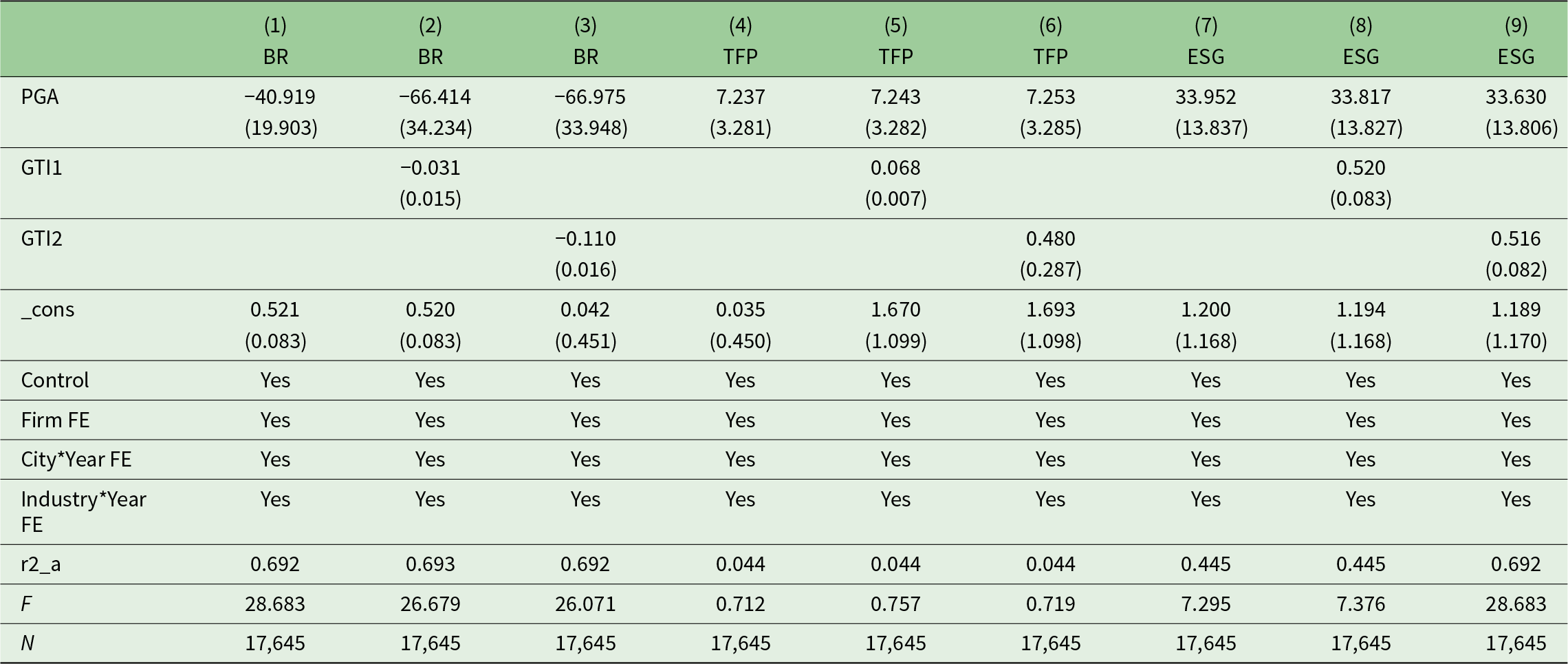
To evaluate the economic outcomes of GTI, this study employs several established metrics. Total factor productivity (TFP) is calculated using firm-level input–output data and the Olson–Pommerening method, serving as a proxy for corporate operational performance influenced by innovation and efficiency (He et al., Reference He, Yan, Hao and Wu2022; Suo et al., Reference Suo, Zhang, Guo, Lin, Yu and Du2024). Business risk (BR) is assessed using the coefficient of variation (standard deviation divided by the mean) of quarterly total revenue throughout the year, following Zhao et al. (Reference Zhao, Song and Chen2016). A higher coefficient indicates greater revenue volatility and higher BR, while a lower value suggests more stable operations. Finally, corporate Environmental, Social and Governance (ESG) performance is measured using the Huazheng ESG rating system, consistent with prior research (Yang et al., Reference Yang, Ling and Chen2024; Zhang et al., Reference Zhang, Lai and Jie2024).
3.2. Data sources and descriptive statistics
The initial research sample consists of A-share companies listed on the Shanghai and Shenzhen stock exchanges from 2011 to 2022, selected for their market representation. Data processing and analysis were conducted using STATA 18. Data were compiled from multiple sources. The core explanatory variable, PGA, was constructed from the Baidu Keyword Index. Data for GTI were sourced from the National Intellectual Property Administration and the CNRDS database. Firm-level data, as well as city-level control variables, were obtained from the CSMAR database, the China Economic Data Statistics Network, the China Statistical Yearbook, the China Environmental Statistics Yearbook and Hexun.com. The data processing workflow is outlined as follows: (1) exclusion of entities classified as ST, PT, or *ST; (2) removal of firms in the financial and real estate sectors; (3) elimination of observations with missing data for critical variables; (4) removal of firms with only a single year of data within the sample period; and (5) exclusion of firms with negative net assets or a debt-to-equity ratio exceeding 1. All continuous variables were winsorized at the 1st and 99th percentiles to mitigate the influence of outliers. The final dataset comprises 17,645 firm-year observations.
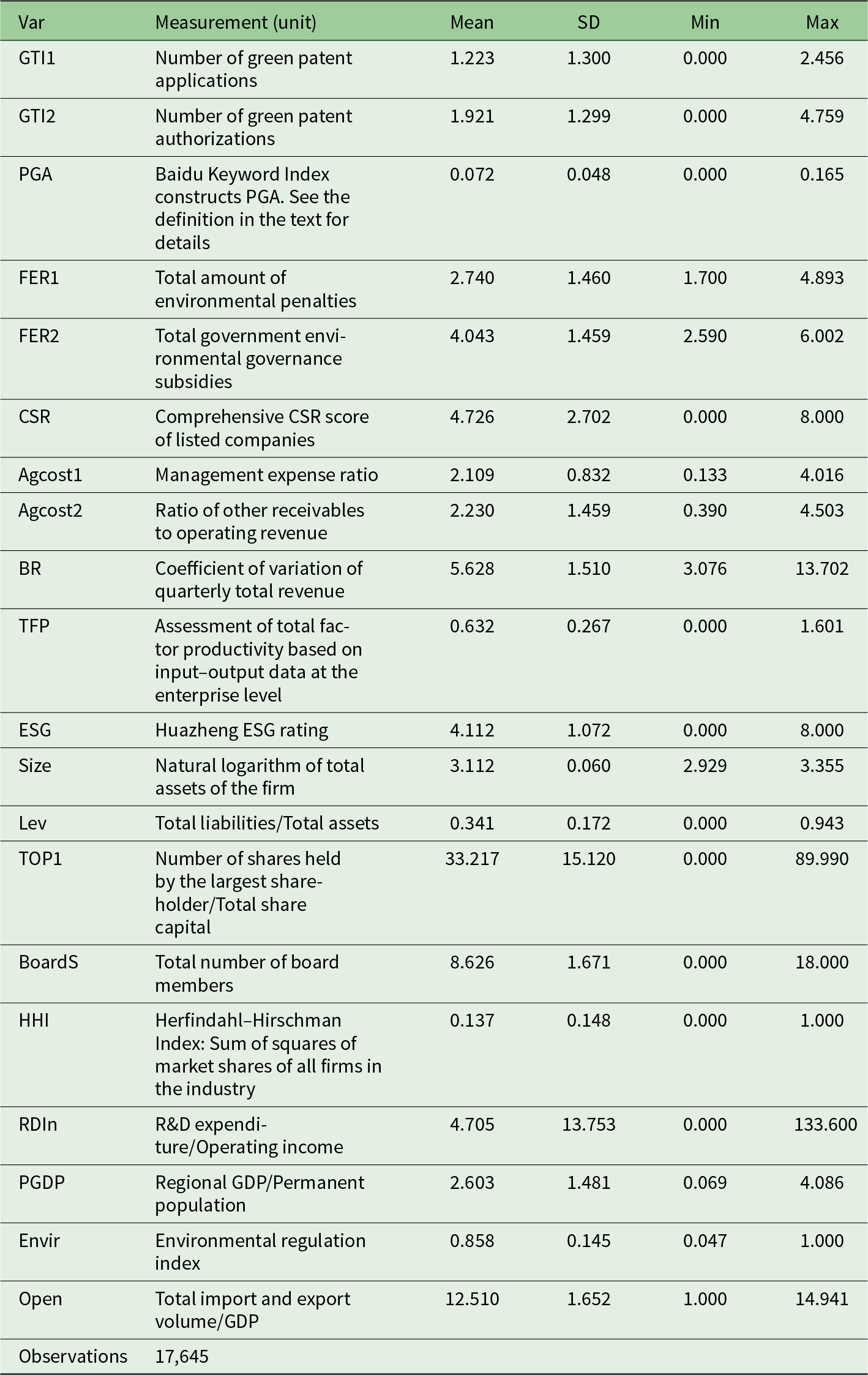
This study presents a descriptive statistical analysis of the variables based on the collected data, with detailed results summarized in Table 1. As shown, GTI1 ranges from 0.000 to 2.456, while GTI2 varies between 0.000 and 4.759, suggesting considerable heterogeneity in the level of GTI across regions. Similarly, FER1 spans from 1.700 to 4.893, and FER2 ranges from 2.590 to 6.002, reflecting substantial regional differences in the stringency of government environmental regulation. In contrast, the cross-regional variation in PGA, though present, appears relatively modest compared to the disparities observed in GTI and environmental regulation (ER). Detailed results for all variables are provided in Table 1.
Variable definitions and descriptive statistics

3.3. Model construction
Drawing on the research by Yang et al. (Reference Yang, Ling and Chen2024), Shen et al. (Reference Shen, Pan and Feng2023) and Hao et al. (Reference Hao, Fu and Albitar2023), the following model was constructed to examine the impact of PGA on GTI:
 \begin{equation}{\text{GT}}{{\text{I}}_{it}} = {\beta _0} + {\beta _1}{\text{PG}}{{\text{A}}_{it}} + \sum {\beta _i}{\text{Contro}}{{\text{l}}_{it}} + {u_i} + {\gamma _{ct}} + {\lambda _{int}} + {\varepsilon _{it}},\end{equation}
 \begin{equation}{\text{Me}}{{\text{d}}_{it}} = {\alpha _0} + {\alpha _1}{\text{PG}}{{\text{A}}_{it}} + \sum {\alpha _i}{\text{Contro}}{{\text{l}}_{it}} + {u_i} + {\gamma _{ct}} + {\lambda _{int}} + {\varepsilon _{it}},\end{equation}
 \begin{equation}{\text{GT}}{{\text{I}}_{it}} = {\vartheta _0} + {\vartheta _1}{\text{PG}}{{\text{A}}_{it}} + {\vartheta _2}{\text{Me}}{{\text{d}}_{it}} + \sum {\vartheta _i}{\text{Contro}}{{\text{l}}_{it}} + {u_i} + {\gamma _{ct}} + {\lambda _{int}} + {\varepsilon _{it}},\end{equation}
 \begin{equation}{\text{Eou}}{{\text{t}}_{it}} = {\delta _0} + {\delta _1}{\text{PG}}{{\text{A}}_{it}} + \sum {\delta _i}{\text{Contro}}{{\text{l}}_{it}} + {u_i} + {\gamma _{ct}} + {\lambda _{int}} + {\varepsilon _{it}},\end{equation}
 \begin{equation}{\text{Eou}}{{\text{t}}_{it}} = {\theta _0} + {\theta _1}{\text{PG}}{{\text{A}}_{it}} + {\theta _2}{\text{Me}}{{\text{d}}_{it}} + \sum {\theta _i}{\text{Contro}}{{\text{l}}_{it}} + {u_i} + {\gamma _{ct}} + {\lambda _{int}} + {\varepsilon _{it}}.\end{equation}
Among them, model (1) is the benchmark regression model.  ${\text{GT}}{{\text{I}}_{it}}$ is the explained variable, which represents the GTI of enterprises, the authorization of green patents
 ${\text{GTI}}1$ and its application volume measurement,
 ${\text{GTI2}}{\text{.}}$
 ${\text{PG}}{{\text{A}}_{it}}$is the explanatory variable, which represents the PGA; models (1)–(3) are mechanism test models, and models (1), (4) and (5) are economic consequences analysis.
 ${\text{Eou}}{{\text{t}}_{it}}$ represents enterprise operating performance, operating risks and ESG performance (BR, TFP and ESG);
 ${\text{Me}}{{\text{d}}_{it}}$is the mediating variable, which represents environmental regulation (
 ${\text{FER}}1$ and
 ${\text{FER}}2$), agency cost (
 ${\text{Agcost}}$) and corporate social responsibility (
 ${\text{CSR}}$); and
 ${\text{GTI}}$ in the economic consequences analysis.
 ${\text{Contro}}{{\text{l}}_{it}}$ represents a series of control variables,
 ${u_i}$,
 ${\gamma _{ct}}$ and
 ${\lambda _{int}}$ are used to control the fixed effects of individual enterprises, city*year and industry*year, respectively.
 ${\varepsilon _{it}}$ is the random error term, and the subscripts
 $i$,
 $t$,
 $c$ and
 $in$ represent enterprises, years, cities and industries, respectively. For the possible heteroscedasticity problem, this paper uses the clustered standard error at the enterprise level for statistical analysis.
4. Analysis
4.1. Benchmark regression model
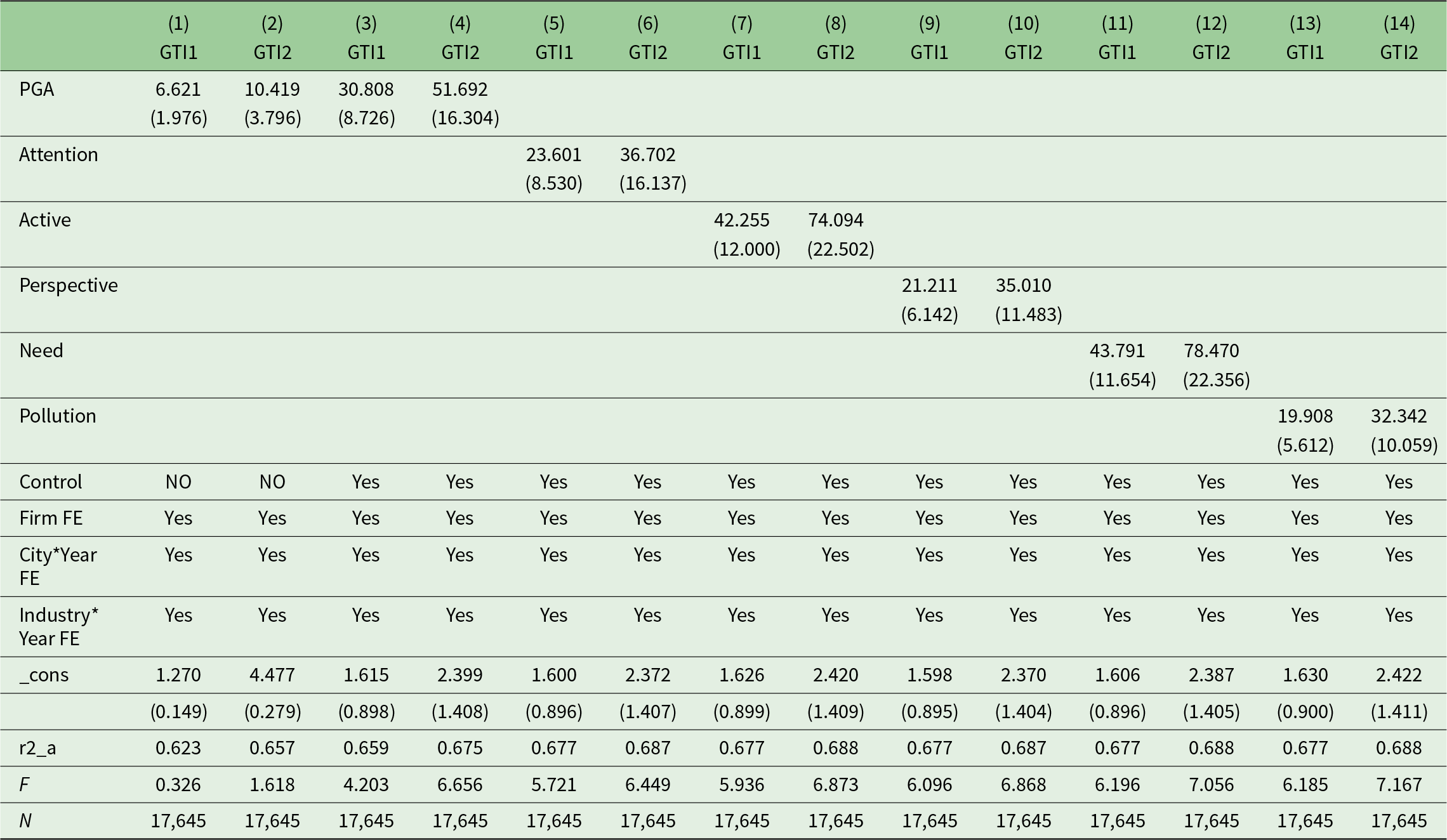
Table 2 presents the regression results analysing the impact of PGA on GTI. Columns (1) and (2) report the results without control variables, while columns (3) and (4) include the full set of controls. The results consistently show a statistically significant positive relationship between PGA and GTI, regardless of the inclusion of control variables. Specifically, the estimates in columns (3) and (4) indicate that a one-unit increase in the PGA index is associated with an increase of 30.808 units in green patent applications (GTI1) and 51.692 units in green patent grants (GTI2). This provides strong initial support for Hypothesis H1. Furthermore, to dissect this aggregate effect, we decomposed the composite PGA index into its five constituent dimensions: pollution, demand, perspective, activity and attention. The regression results for each dimension, presented in columns (5)–(11), reveal that all five components exert a positive and significant influence on both GTI. This granular analysis underscores the critical role of comprehensive public engagement across different environmental topics in motivating corporate green innovation.
Benchmark regression

4.2. Heterogeneity analysis
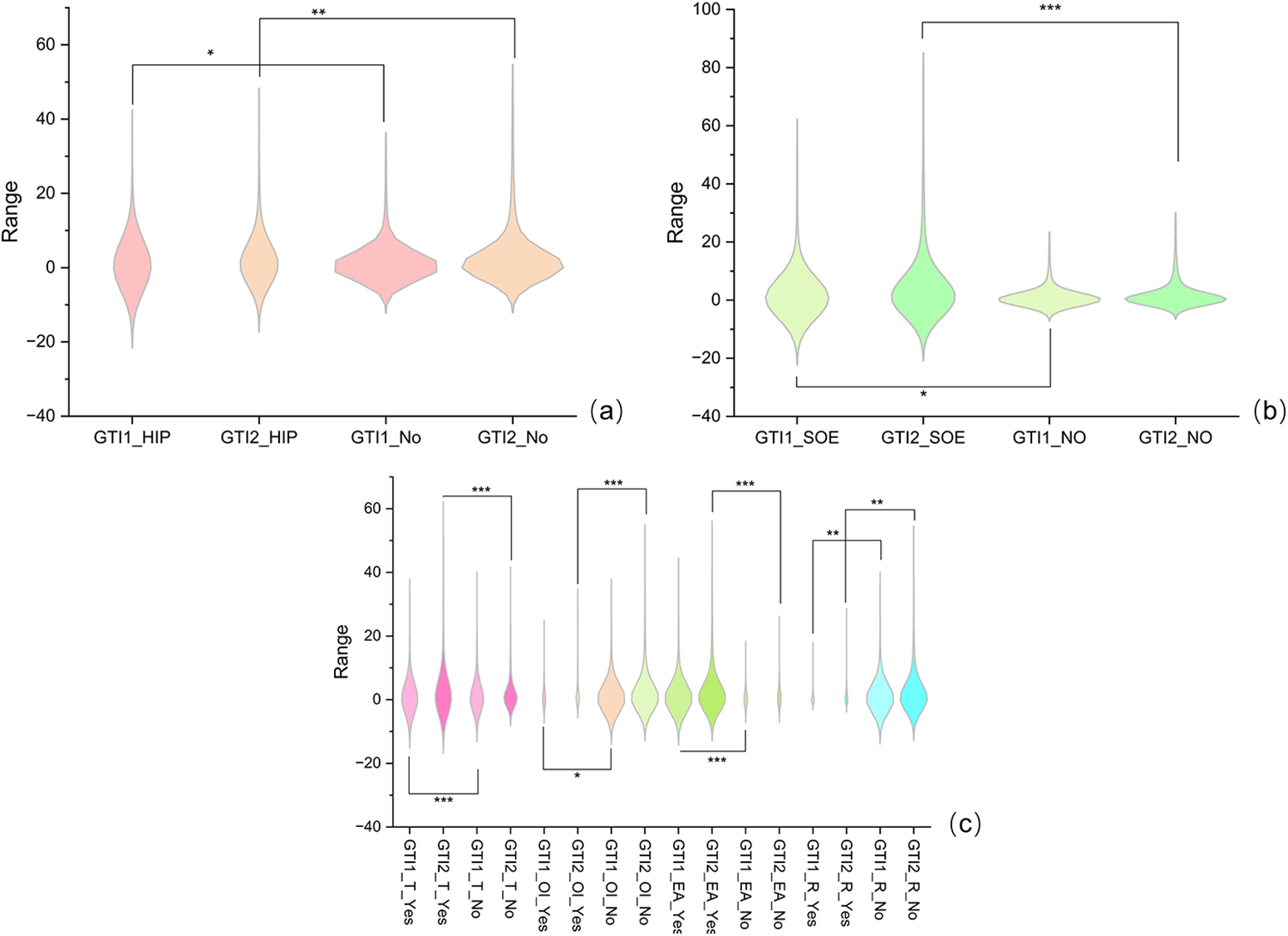
To further investigate the varying impact of PGA on GTI, this study conducts heterogeneity tests across regional and firm-level dimensions. At the regional level, we examine how differences in regulatory environments, development stages and resource endowments influence this relationship. Cities are categorized into specific types, including resource-based cities, old industrial bases, transportation hubs and key environmental protection cities, to assess the effect of different local governance contexts on PGA’s efficacy. At the firm level, the analysis introduces two dimensions: ownership structure (state-owned versus non-state-owned enterprises) and environmental impact (whether the firm operates in a heavily polluting industry). This approach elucidates the distinct role public scrutiny plays across firms with different inherent characteristics. The test results, detailed in online appendix Table A3 and summarized in Figure 3, indicate that the positive effect of PGA on GTI is significantly more pronounced in resource-based cities, old industrial areas, key environmental protection cities and transportation hubs.
Visualization of heterogeneity test results.

We propose several explanations for these findings. First, in resource-based and old industrial cities, where environmental issues are historically prominent, PGA acts as a catalyst. Increased PGA in these regions more effectively amplifies pressure on local governments and firms, making authorities more responsive to public demands and prompting them to encourage corporate green responsibility through various channels. Second, in key environmental protection areas, a complementary effect emerges between the informal pressure of PGA and formal regulatory systems. While stringent government policies already create high barriers to green transformation, PGA functions as an amplifier and accelerator. It does so by highlighting corporate environmental misconduct and pushing firms to proactively manage risks and adopt green development strategies. Finally, in transportation hubs and other central nodes characterized by high information flow, concentrated innovation resources and intense market competition, PGA fosters opportunities for innovative behaviour. In these dynamic environments (Esposito and Jalal, Reference Esposito and Jalal2025), GTI not only helps mitigate public opinion risks but also serves as a strategic imperative for firms to survive and thrive in a competitive marketplace.
4.3. Robustness test
To ensure the reliability of the baseline regression results, this study conducted a series of robustness checks, including endogeneity treatments and sensitivity analyses. The findings consistently confirm that the positive effect of PGA on GTI is robust (see online appendix Tables A4–A7).
To address potential endogeneity concerns, we employed two primary strategies. First, a two-stage least squares estimation was conducted using the ‘number of internet users’ as an instrumental variable. After controlling for fixed effects, the coefficient for PGA remains positive and statistically significant. The instrumental variable satisfies relevance conditions, and its estimated coefficient is larger than the baseline OLS estimate, suggesting that the original model may have underestimated the true effect of PGA. Second, to account for exogenous shocks from concurrent environmental policies such as the low-carbon city pilot and carbon emission trading pilot, we performed grouped regression analysis. The results confirm that the positive impact of PGA on GTI remains significant in both pilot and non-pilot cities, aligning with the baseline conclusions.
For additional robustness checks, this study performed several sensitivity tests. These included: replacing the baseline model with a Tobit mo introducing lags of one to three periods for the core explanatory variable (PGA); adjusting the measurement of GTI using patent grant data and application adjustment coefficients; modifying the measurement of core variables by taking the logarithm of PGA and distinguishing between green invention patent applications and grants; and incorporating additional city-level control variables, such as economic development level and industrial structure. Across all these alternative specifications, the significantly positive relationship between PGA and GTI remained unchanged, further underscoring the robustness of our core findings.
5. Further analyses
5.1. Mechanism test
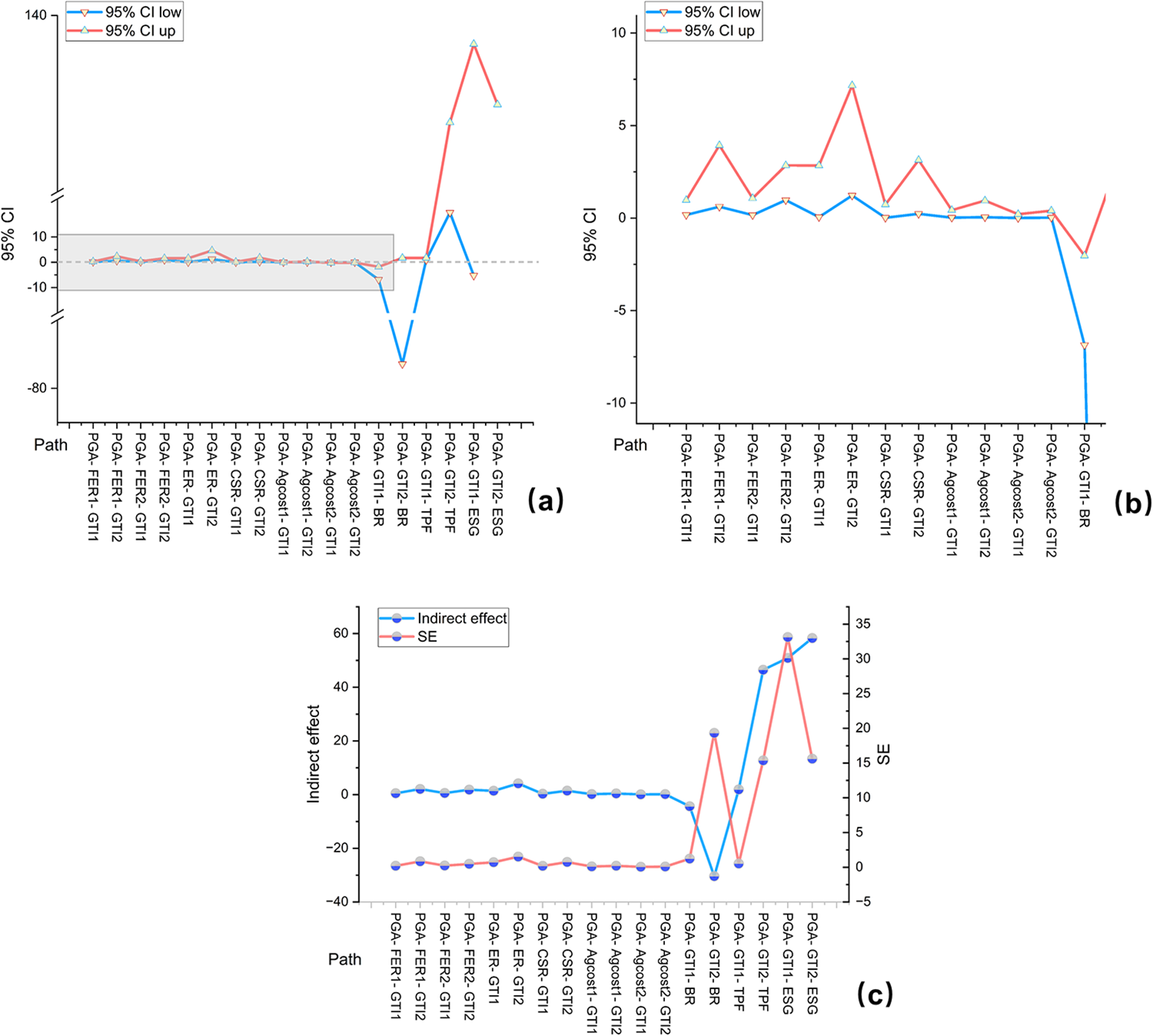
This study posits that PGA influences GTI by optimizing the external institutional environment and enhancing internal corporate governance. The results of a three-step mediation test confirm that all hypothesized pathways are statistically significant, indicating that PGA’s positive effect on GTI is partially transmitted through these indirect channels.
5.2. Results and analysis
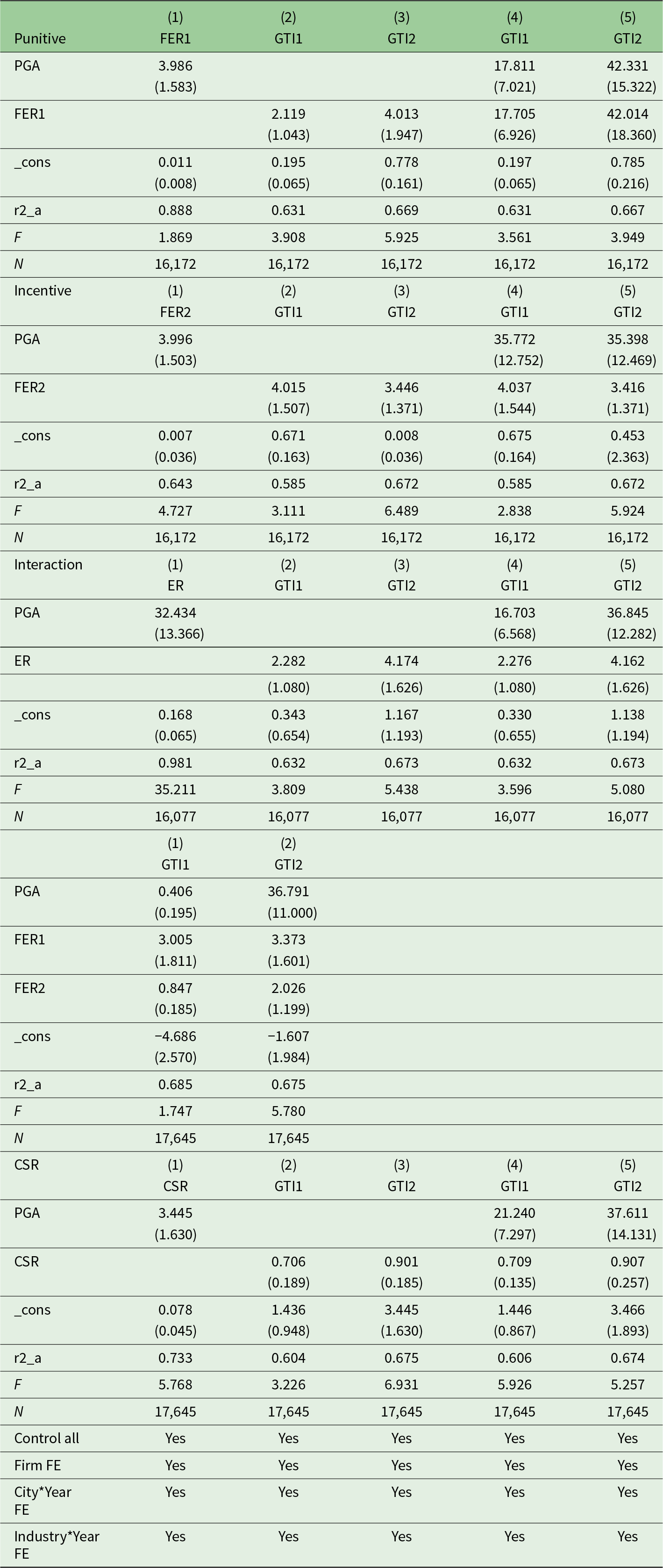
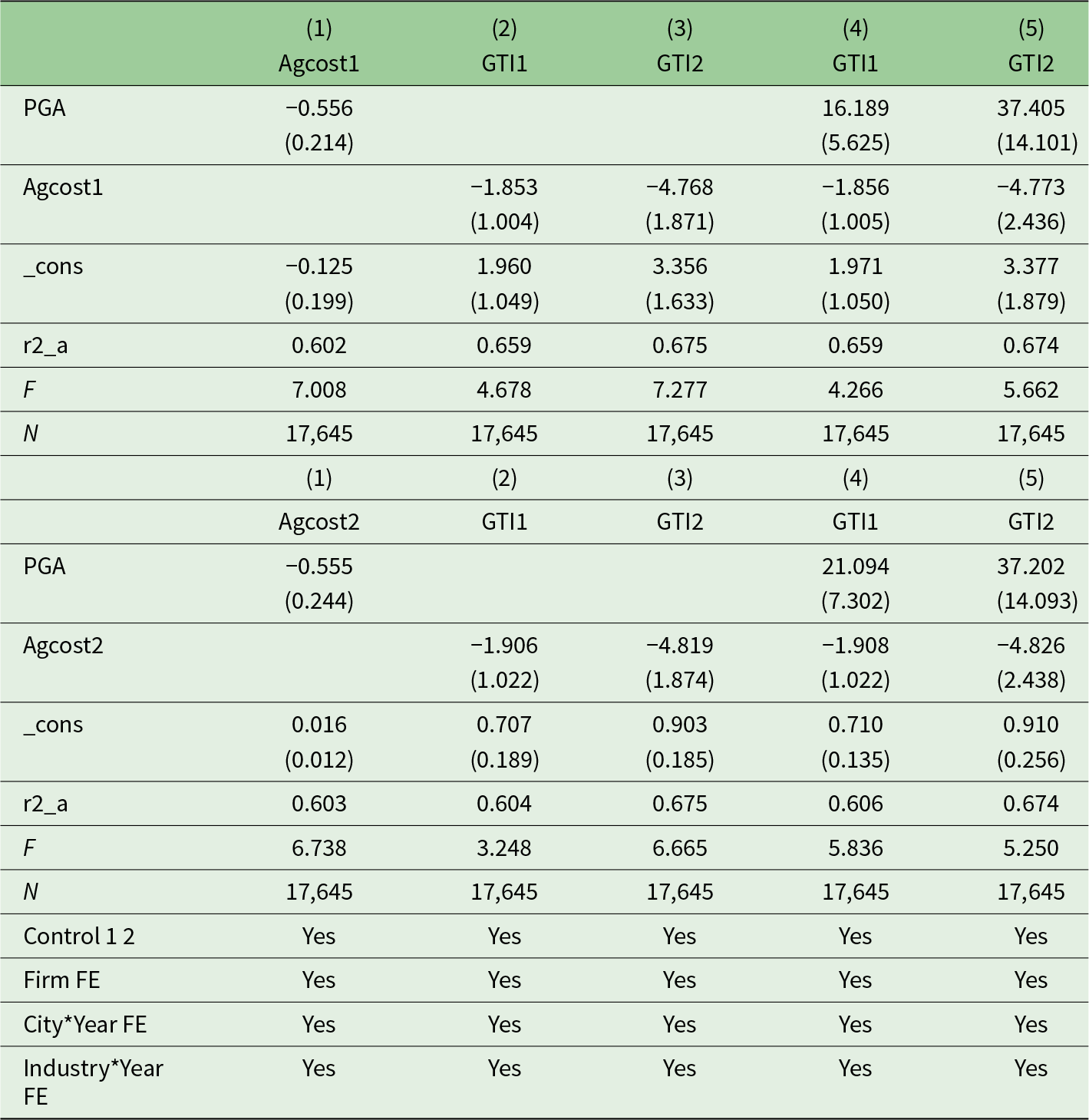
The results of the mediation analysis are presented in Tables 3 and 4, while the bootstrapped indirect effects with 95% confidence intervals are illustrated in Figure 4. The results suggest two main findings.
Mechanism test.

External environment optimization

Internal growth effect

First, the PGA exerts influence by strengthening the external institutional environment through ER. Empirical results indicate a significant mediating role for ER. Specifically, a one-unit increase in PGA leads to an increase of up to 32.434 units in regulatory stringency. This heightened regulation, in turn, significantly promotes GTI; for example, a one-unit increase in punitive regulations (FER1) can increase green patent grants (GTI2) by up to 42.331 units. When both regulatory types are included in the model, PGA’s direct effect on GTI remains positive, though slightly attenuated. This suggests that: (1) PGA pressures the government to translate public concern into concrete policy tools; (2) both incentive-based and punitive policies independently stimulate corporate green behaviour; and (3) the synergistic perception of these policies is a crucial driver for corporate green transformation. Economically, this pathway demonstrates that external policy incentives and pressures shape a stable institutional environment, reducing the uncertainty and cost of innovation for firms.
Second, the PGA transmits external pressures through CSR. The findings confirm that CSR plays a significant mediating role. A one-unit increase in PGA corresponds to a 3.445-unit increase in CSR scores. Subsequently, enhanced CSR significantly promotes GTI, with a one-unit increase in CSR leading to a maximum increase of 37.611 units in GTI. This indicates that PGA drives firms to bolster their environmental commitment, which is realized through concrete GTI activities (Sousa et al., Reference Sousa, Nogueira and Gomes2025). From an economic perspective, public opinion and reputation mechanisms create endogenous constraints, making social responsibility investment a strategic asset for building a green competitive advantage.
Finally, the PGA influences innovation by optimizing internal governance through reduced agency costs (Agcost). The results demonstrate that PGA significantly lowers Agcost, with a one-unit increase in PGA reducing agency costs by up to 0.556 units. This improvement in governance efficiency significantly promotes GTI, as a one-unit decrease in Agcost leads to a maximum increase of 37.405 units in GTI. Lower agency costs signify more efficient resource allocation and reduced managerial opportunism, thereby freeing up resources for long-term innovation. Economically, public scrutiny enhances transparency and managerial accountability, internally activating a dynamic where ‘external pressure’ is converted into ‘internal incentive’ for green innovation.
5.3. Analysis of economic consequences
Against the backdrop of persistent global economic pressures, the performance and sustainability of corporate development are of paramount concern to both governments and the public. To better understand the tangible economic outcomes of PGA-driven GTI, this study examines its impact from three perspectives (Sun et al., Reference Sun, Ma and Ma2024): BR, TFP and corporate ESG performance. As shown in Table 5, the results indicate that PGA, by promoting GTI, significantly enhances corporate ESG performance, improves TFP and BR. First, GTI stimulated by PGA enables firms to comply with increasingly stringent environmental standards, thereby mitigating compliance risks such as heavy fines or operational suspensions. This proactive approach stabilizes operational expectations and safeguards against environmental liabilities. Second, GTI often focuses on resource-efficient technologies like clean production, which directly lowers production costs. Beyond technological upgrades, this innovation can spur broader organizational and managerial improvements, thereby optimizing production processes and boosting overall productivity and operational performance. Finally, in an era where ESG metrics are critically important to capital markets, a demonstrated commitment to GTI helps firms attract environmentally conscious investors. This enhances corporate reputation, lowers financing costs and helps achieve a balance between economic and environmental objectives. Thus, PGA-driven GTI facilitates a win-win outcome, advancing both corporate development and societal well-being.
Analysis of economic consequences

6. Conclusion and policy recommendations
This paper systematically investigates the impact of PGA on corporate GTI using Chinese firm-level data. The empirical results show that, first, PGA significantly promotes GTI, highlighting the role of public oversight and environmental supervision as external drivers of corporate green transformation. Second, the effect of PGA exhibits clear heterogeneity across firms and regions, indicating that contextual conditions shape the extent of its influence. Third, PGA enhances GTI through two main mechanisms: it optimizes the external environment of the enterprise by strengthening both incentive-based, punitive environmental regulations and CSR; and it improves firms’ internal governance by reducing agency costs and increasing resource allocation efficiency. Finally, PGA-driven GTI yields substantial economic benefits, including higher production efficiency, lower operational risk and improved ESG performance. Overall, the findings underscore the pivotal role of PGA in advancing GTI and sustainable development.
Based on the main findings of this paper, the following policy recommendations are proposed. First, governments should improve the environmental information disclosure system to strengthen the transmission of PGA. Establishing unified and mandatory disclosure standards, expanding digital channels and leveraging media platforms can enhance transparency and broaden public participation. These measures help create an open and interactive oversight framework that encourages firms to accelerate GTI. Second, a balanced mix of incentive- and constraint-based green policy tools should be implemented to reinforce external institutional pressures. Differentiated environmental taxes, green subsidies and technology renovation funds, when aligned with industry characteristics and regional environmental conditions, can guide firms toward clean energy, energy efficiency, carbon reduction and recycling technologies. Promoting collaboration among industry, universities and research institutes will further support the development of a dynamic GTI ecosystem. Third, firms should strengthen internal governance to consolidate their capacity for GTI. Improving internal supervision, optimizing risk management and ensuring efficient resource allocation can help firms channel investment into GTI. Incorporating GTI performance into executive and employee evaluation systems, together with cultivating a long-term sustainability-oriented organizational culture, will reinforce internal incentives and enhance firms’ green transformation efforts.
6.1. Limitation and perspective
Like previous studies, this paper has several limitations that suggest directions for future research. First, although the Baidu Search Index provides timely information on public environmental interest, its representativeness is limited by platform algorithms, user demographics and regional differences in internet use. Moreover, search behaviour does not necessarily reflect actual green actions. Future studies may construct more comprehensive measures of PGA using multi-source data such as social media content. Second, the empirical evidence is drawn from Chinese firms and regions, which may restrict its applicability to other institutional settings. Cultural factors and organizational characteristics, which may also influence GTI, are not explicitly considered. Future work could incorporate these elements and refine measurement approaches as conditions evolve. Third, the study does not explore how emerging digital technologies, including artificial intelligence and big data, interact with environmental requirements to influence green innovation. Examining these dynamics offers a promising direction for future research. Despite these limitations, this paper provides important evidence on the role of PGA in advancing corporate green innovation.
Supplementary material
The supplementary material for this article can be found at https://doi.org/10.1017/S1355770X25100405.
Acknowledgements
The research is supported by the National Social Science Fund of China (24FJYB037) and the Innovation Strategy Research Plan Project of Fujian Province (2025R0046).
Competing interest
The authors declare none.