




No CrossRef data available.
Article contents
Attachment and behavior problems in middle childhood as reported by adult and child informants
Published online by Cambridge University Press: 28 March 2006
Abstract
The predictive relation between attachment and mother, teacher, and self-reported psychopathology was examined for a diverse socioeconomic status French Canadian sample of 96 children. Attachment classifications were assigned on the basis of reunion behavior with mother when the children were approximately 6 years old, and child problem behavior was assessed 2 years later using the Child Behavior Checklist (mother report), the Social Behavior Questionaire (teacher report), and the Dominic Questionnaire (child self-report). Results indicated that both insecure/ambivalent and insecure/controlling children children were rated higher than secure children on a composite measure of externalizing problems. Concerning internalizing problems, only the controlling group was significantly higher on both a composite adult (teacher and mother) and self-report measure of internalizing problems. Analyses of clinical cutoff scores showed that only the controlling group had a significantly greater likelihood of overall problem behavior than other children.
This research was supported by grants from the Social Sciences and Humanities Research Council of Canada and from the Conseil Quebecois pour la Recherche Sociale. We thank Jean Bégin and Elina Alexandrov for their invaluable assistance in the research project.
Information
- Type
- REGULAR ARTICLE
- Information
- Copyright
- 2006 Cambridge University Press
One of the important recent contributions of attachment theory has been in providing a developmental framework for understanding how parent–child relationships affect the cognitive–affective structures that children use to understand and cope with the world throughout childhood (Greenberg, 1999). Although the mechanisms through which attachment relationships continue to influence adaptation beyond infancy are not completely understood, it is evident that expectancies concerning self and other and self-regulatory strategies involved in the regulation of emotions play a critical role in the development of behavior problems during the school-age years. This is the first study to investigate the relation between attachment, based on age-6 separation–reunion classifications, and a comprehensive child self-report measure of externalizing and internalizing problems in middle childhood (age 8). Apart from the diagnostic importance of a self-report measure of child behavior problems, examination of child self-perceptions as a function of attachment classifications may further our understanding of child internal working models in the understudied middle childhood period. In its use of three informants (mother, teacher, and child), this study is also one of the few to provide a comprehensive picture of associations between attachment and behavior problem domains during this period. The intended contribution of this study is thus to expand our understanding of attachment–risk associations for this understudied period.
According to attachment theory, the quality of early relationships with caregivers has a continuing effect on patterns of interpersonal adaptation (Bowlby, 1982). Continuity in adaptation has been explained through the persistence of representational structures called internal working models, which affect perceptions of social events and expectations regarding relationships (Bretherton, 1985). These internalized representations are constructed on the basis of earlier attachment relationships and likely updated as a function of the ongoing quality of such relationships beyond infancy (Bowlby, 1973). Attachment classification groups are thought to differ in their representation of the availability and responsiveness of their attachment figures. Secure children, who have experienced supportive and sensitive caregiving, are more likely to develop a positive model of the self as worthy of care and of others as able to assist in resolving distress. Insecurity may lead to unresolved anger, anxiety, and fear, and related externalizing and internalizing problems (Main, 1995).
It is widely acknowledged that insecurity operates as a risk factor rather than being a necessary or sufficient cause of behavior problems (Cicchetti, Toth, & Lynch, 1995; Greenberg, Speltz, & DeKlyen, 1993; McCartney, Owen, Booth, Clarke-Stewart, & Vandell, 2004). Insecurity may increase the child's vulnerability to contextual stress, and in turn, to socioemotional difficulties, whereas security may act as a protective factor. In general, associations between insecurity and behavior problems have been found to be stronger in higher risk than in lower risk samples, a result that is consistent with the idea that the emotional and interpersonal regulation function of the attachment system is more critical in a context of greater family risk (Carlson & Sroufe, 1995; Rutter, 1995). Studies with low risk samples have shown inconsistent associations between attachment and behavior problem risk, with some studies showing no association (Bates & Bayles, 1988; Belsky, Hsieh, & Crinic, 1998).
There is a definite lack of consensus concerning the degree and type of risk associated with different insecure classifications (avoidant, ambivalent, or disorganized). Both the number of insecure attachment classifications included in analyses, and the age at which attachment is coded have an important influence on results. There are several longitudinal studies using a three-way infant classification system that have indicated associations between the avoidant classification and development of externalizing behavior problems (Burgess, Marshall, Rubin, & Fox, 2003; Erickson, Sroufe, & Egeland, 1985; Pierrehumbert, Miljkovitch, Plancherel, Halfon, & Ansermet, 2000; Renken, Egeland, Marvinney, Mangelsdorf, & Sroufe, 1989). However, these are not directly comparable to studies that also code for disorganization at infancy. Among studies using a four-way infant classification scheme, results are mixed. Several large-scale studies with normative (Belsky & Fearon, 2002) or higher risk (Keller, Spieker, & Gilchrist, 2006) samples continue to find externalizing behavior-problem associations for children whose attachment behavior is classified as avoidant, with no evidence of such links for those classified as disorganized; whereas others with higher risk samples (Lyons-Ruth, Alpern, & Repacholi, 1993; Lyons-Ruth, Easterbrooks, & Cibelli, 1997; Shaw, Owens, Vondra, & Keenan, 1996) find the opposite pattern. Still others find associations for both the avoidant and disorganized groups (Munson, McMahon, & Spieker, 2001; NICHD Early Child Care Research Network, 2001). With respect to the ambivalent classification, although several studies using a three-way infant classification system found links between infant ambivalence and internalizing problems (Oppenheim, Sagi, & Lamb, 1988; Sroufe, Fox, & Pancake, 1983; Troy & Sroufe, 1987), studies using a four-way infant classification system have generally found fewer associations for this group (Lyons-Ruth et al., 1997; Munson et al., 2001; Shaw et al., 1996). These studies also show that concomitant risk factors such as maternal psychosocial difficulties, dysfunctional mother–child interaction patterns, and marital problems interact with infant attachment in predicting behavior problem outcomes.
When preschool or school-age attachment classifications are used to examine attachment–behavior problem associations, more consistent associations are generally found between insecurity and behavior problems (Anan & Barnett, 1999; Booth, Rubin, & Rose-Krasnor, 1998; Easterbrooks, Davidson, & Chazan, 1993; McCartney et al., 2004; Moss, Rousseau, Parent, St-Laurent, & Saintonge, 1998; NICHD Early Child Care Research Network, 2001; Teti & Ablard, 1990). It is important to point out that, whereas postinfancy attachment classifications for children whose attachment behavior is classified as secure, avoidant, and ambivalent are conceptually similar to infant classifications, two profiles are associated with disorganization at preschool/school age. Children who display a behaviorally disorganized profile fail to show a coherent strategy for accessing mother in times of stress and display sequences of behavior that seemingly lack a goal or evidence a collapse of strategy (Main & Solomon, 1990). Children classified insecure/controlling show role-reversed behaviors of a punitive or caregiving type that are embedded in a coercive relationship structure with the caregiver.
This conceptual difference may partly explain the more frequent associations found between the controlling classification and behavior problems, particularly of an externalizing nature (Greenberg, Speltz, DeKlyen, & Endriga, 1991; Moss, Cyr, & Dubois-Comtois, 2004; Moss et al., 1998; NICHD Early Child Care Research Network, 2001; Solomon, George, & De Jong, 1995; Speltz, Greenberg, & DeKlyen, 1990) in comparison with that found for infant disorganization. When postinfancy classifications are used, avoidant children are generally less likely to show externalizing behavior problems than when predicting from infant classifications. These findings are in keeping with the theoretical ideas of Crittenden (1992), who predicted a shift to more coercive strategies during the preschool years. Associations between the ambivalent/dependent classification and externalizing problems are more in evidence (Cohn, 1990; Moss et al., 1998, 2004), although many postinfancy studies have not tested these associations owing to insufficient numbers of ambivalent children (Main & Cassidy, 1988; Main, Kaplan, & Cassidy, 1985; Wartner, Grossmann, Fremmer-Bombik, & Suess, 1994). They also are in line with the findings of a recent NICHD Early Child Care Research Network (2004) study showing that children classified as dysregulated at 24 months were more likely to have been classified as avoidant at 15 months and as ambivalent or controlling at 36 months. Thus, although children classified insecure at various points in childhood are less likely to have secure attachment patterns both earlier and concurrently, the specific patterns vary over time. This idea is also supported by results of stability studies that indicate only low to moderate stability for attachment classifications between infancy and preschool age with kappas ranging from .01 to .49 (Bar-Haim, Sutton, Fox, & Marvin, 2000; Fagot & Pears, 1996; Howes & Hamilton, 1992; NICHD Early Child Care Research Network, 2001).
By the middle childhood period, children may also serve as reporters of the quality of their attachment relationships using representational measures such as narratives (Solomon et al., 1995), projective measures (such as the Separation Anxiety Test; Main et al., 1985) and questionnaires (Kerns, Klepac, & Cole, 1996). Results of several studies with 5- to 10-year-old children using both representational and behavioral measures of attachment indicate that attachment influences self processes related to adaptation in the home and peer setting (Cassidy, 1988; Cicchetti & Barnett, 1991; Easterbrooks & Abeles, 2000; Kerns et al., 1996; Kerns, Tomich, Aspelmeier, & Contreras, 2000; Moss & St-Laurent, 2001; Verschueren & Marcoen, 1999; Verschueren, Marcoen, & Schoefs, 1996). In these studies, secure attachment was associated with greater ego resiliency and social competence, a more balanced view of the self and others, and lower levels of internalizing and externalizing symptoms. Although only a few of these studies have analyzed differences between insecure classification groups, there is some evidence that children with disorganized representations of attachment or controlling strategies have more negative self-perceptions, poorer school performance, and higher levels of anxiety (Cassidy, 1988; Goldwyn, Stanley, Smith, & Green 2000; Jacobsen, Edelstein, & Hoffman, 1994; Moss & St-Laurent, 2001; Moss, St-Laurent, & Parent, 1999; Suess, Grossmann, & Sroufe, 1992) than their secure peers. Studies by Verschueren and Marcoen (1999) and Easterbrooks and Abeles (2000) also indicate that children with ambivalent or ambivalent/bizarre representations of attachment show lower socioemotional competence and ease of access to the self than children with either secure or avoidant representations in the middle childhood period.
In summary, a review of the literature has shown that there is still considerable ambiguity concerning associations between attachment and behavior problem risk, particularly with respect to the role of different insecure classifications in predicting level and type of problem behavior. This is particularly true of middle childhood, a period during which fewer studies have been conducted and in which none have used a comprehensive self-report measure of behavior problems. Inconsistency in the literature is also partly due to reliance on single reporters, usually either mother or teacher, which may create informant discordance. Studies have typically shown greater interreporter disagreement concerning internalizing as opposed to externalizing symptoms (Achenbach, McConaughy, & Howell, 1987; Bergeron, Breton, & Valla, 1993). Moreover, it has been widely acknowledged that external observers may underestimate the prevalence of internalizing disorders (Seiffge-Krenke & Kollmar, 1998; Youngstrom, Loeber, & Stouthamer-Loeber, 2000). Given children's increasing reluctance to share internalizing symptoms with adults despite the increase in such symptoms during middle childhood, self-report measures become increasingly important in the detection of behavior problems (Edelbrock, Costello, Dulcan, Kalas, & Conover, 1985).
Exclusive reliance on maternal or teacher reports is partly due to the fact that validated self-report measures of psychopathology for children aged 6–12 have only recently become available. One recently developed measure, the Dominic Questionnaire (Valla, Bergeron, Bérubé, Gaudet, & St-Georges, 1994), uses a picture-based format, and therefore does not require the cognitive, verbal, and conceptual sophistication often demanded by the interview-based methods, such as the Kiddie Schedule for Affective Disorders and Schizophrenia (K-SADS; Orvaschel & Puig-Antich, 1987) or the Diagnostic Interview Schedule for Children (DISC; Costello & Edelbrock, 1985). The content of the Dominic Questionnaire takes advantage of the propensity of images to help children convey feelings and thoughts, which they may be reluctant to acknowledge verbally. In addition, the brevity of the instrument is less taxing on the attention span of children (age 6–11) than structured and semistructured interview methods for diagnosing mental health (Valla et al., 1994).
The objective of this study is to examine the longitudinal relation between attachment classifications measured at early school age (age 6) and the development of behavior problems (both externalizing and internalizing) 2 years later (age 8), as evidenced by teacher, child, and maternal reports. Although there is broad agreement that appropriate assessment of child behavior problems requires data from multiple informants, there is currently no gold standard for the assessment of childhood psychopathology or a consensus on how to combine divergent information provided by different informants (Achenbach et al., 1987). In this study, we adopted three strategies: (a) a principal component analysis to extract latent dimensions of externalizing and internalizing behavior symptoms; (b) a more microanalytic strategy, using behavior problem subscales, to shed light on specific components of problem behavior (e.g., conduct disorder [CD], depression); and (c) a pooling strategy to examine clinical cutoff behavior problem risk.
We expected greater consistency between reporters for externalizing behaviors, but lower consistency between child and adult reports of internalizing behavior. We predicted that children with insecure attachment strategies would show higher rates of behavior problems than would secure children on both internalizing and externalizing dimensions, as well as on subscale scores associated with demonstrated attachment–risk associations. Because the avoidant, ambivalent, and disorganized/controlling classifications have all been linked in previous studies to behavior problems, we expected each group to potentially show higher rates of behavior problems than secure children. In addition, we expected insecure children to be at greater risk for psychopathology, with respect to clinical cutoff levels of behavior problem symptoms, as reported by mother, child, or teacher.
Method
Participants
Participants in this study were 113 French-speaking mother–child dyads (62 girls, 51 boys), who were recruited through schools in diverse socioeconomic areas of Montreal. Parents were asked to participate in a longitudinal study of the influence of parent–child relationships on child adaptation. The attachment measure included in this report was collected during a laboratory visit when the children were 5–7 years of age (M = 6.3 years, SD = 1.0 year) and the remaining measures were collected 2 years following recruitment (M = 8.5 years, SD = 7.4 months, range = 7–9 years). Outliers (i.e., subjects with an obvious response set, n = 4) and subjects for whom full data sets were not available (n = 10) were excluded. Because the number of insecure-other (IO) children (n = 3) was insufficient for data analyses, they were dropped from further analyses. This strategy is supported by recent studies indicating differences in the behavioral profiles of IO and controlling children (Moss et al., 2004). A total of 96 participants constituted the final sample. This smaller sample did not differ from the original one on any background measures.
In this sample, 17% of families had an income level under $20,000, 42% earned between $20,000 and $50,000, and 41% earned $50,000 or more. In the sample, average maternal education was 14.5 years (SD = 3.3). Regarding family structure, 34% of children in the sample were living in a mother-headed single parent family, while the rest were living with both parents. The mean family income for two-parent families was $45,000, and the mean family income for one-parent families was $25,000. At the time the sample was recruited, census data on the Montreal population (Leclerc & Lepage, 2000) showed that mean family income (two-parent families) was $50,000, with one-parent families earning approximately $25,000. Approximately 50% of urban adults had more than 11 years of schooling, and the rate of one-parent families varied from 21 to 50%. Based on these data, our sample can be characterized as fairly representative of a large Canadian urban population.
Measures and procedure
Child separation–reunion behavior was observed during a laboratory visit occurring when children were 5–7 years old. Parent and teacher behavior problem reports were also collected at this time and were used as control variables in this study. Data on behavior problems as a function of attachment classification for this age period were reported in a previous study (Moss & St-Laurent, 2001). At that time, no self-report child measure was included because there were no validated measures available. The family background information and teacher, parent, and self-reported behavior problem measures were collected at a follow-up lab visit occurring approximately 2 years later.
Attachment protocol and classification (age 6)
Because children were approximately 6 years old at the time of the attachment assessment, the procedure adopted by Main and Cassidy (1988), involving two long separations and two reunions, was used. On arrival at the laboratory, mothers and children participated in an interactive play period, which included a joint problem-solving task (20 min). This play was followed by a separation (approximately 45 min) in which the child completed problem-solving tasks with an experimenter, while the mother completed questionnaires in another room. Just prior to the reunion, there was a free-play session, in which the experimenter was available to the child. Following the separation, mothers were told to rejoin the child but received no specific instructions concerning the reunion. After the 5-min reunion period, the mother and child remained in the room for a 10-min snack time. A second 30-min separation and 5-min reunion period (structured like the first) then took place. The child's attachment classification was given on the basis of behavior observed during both reunion periods. The validity of this procedure for classifying attachment behavior in children between 5 and 7 years of age, with respect to socioemotional and academic adaptation, has been demonstrated in several studies (Cassidy, 1988; Cohn, 1990; Easterbrooks et al., 1993; Main et al., 1985; Moss et al., 1998; Moss, Parent, Gosselin, Rousseau, & St-Laurent, 1996; Moss & St-Laurent, 2001; Solomon et al., 1995).
Attachment classification
Separation–reunion behavior was coded according to the Main and Cassidy (1988) classification system. The child's attachment classification was given on the basis of behavior observed during both reunion periods. The secure (B) pattern is manifested when the child responds to the mother's return in a confident, relaxed, and open manner. The child seems relaxed throughout the reunion and shows some pleasure in being with the parent. The insecure avoidant (A) pattern is characterized by the child's neutral coolness toward the parent and minimization of physical or verbal contact. Generally, children classified as avoidant avoid intimacy rather than their attachment figures per se in a more global manner. In the insecure ambivalent/dependent (C) attachment pattern, the child shows exaggerated intimacy with dependency on the attachment figure through cute or babyish behavior along with subtle signs of anger. The insecure controlling (Dcont) classification is characterized by role reversal of a caregiving or punitive type. Caregiving behavior is manifested when the child is focused on helpfully guiding, orienting, or cheering up the parent. Punitive behavior is manifested when the child uses hostile, directive behavior with the caregiver, which may include verbal threats or harsh commands. Certain children display both caregiving and punitive behaviors or a general controlling style. Children classified IO seem unable to use the caregiver as a secure base for exploration without clearly showing an A or C pattern. They may also combine the A and C patterns.
Videotaped reunions were coded by two coders who were unaware of participant scores on any other study measures. Coders were trained by Robert Marvin or Ellen Moss, and achieved reliability with these expert coders on a separate sample of tapes. All discrepancies were resolved by a reviewing of the tapes until a consensus was reached. Overall agreement for the major classifications, calculated on 30% of sample cases, was 88% (κ = .81). Agreement for each of the four major classifications (A, B, C, and D: combining Dcont and IO) ranged from 83 to 92%, indicating no significant coding discrepancies as a function of attachment classification.
Distribution of attachment classifications
Separation–reunion classifications for the sample were as follows: 61 (60%) were secure B (36 girls), 17 (16%) avoidant A (9 girls), 10 (10%) ambivalent/dependent C (4 girls), 11 (11%) insecure-controlling (6 girls) Dcont, and 3 (3%) insecure-other IO (all girls). This distribution is comparable to that reported in a recent meta-analysis based on 2000 cases from 15 normative US samples (van IJzendoorn, Schuengel, & Bakermans-Kranenburg, 1999) where the proportion of A, B, C, and D classifications was respectively 15, 62, 12, and 15%.
Self-reported behavior problems (age 8)
The Dominic Questionnaire—Version 5 (Valla et al., 1994) was used to assess child perceptions of behavior problems. The test, requiring about 20–30 min of administration time, is presented to the child orally by an experimenter. The Dominic Questionnaire is a highly structured carbon-based notebook questionnaire about a boy or a girl called Dominic, who is either alone or with peers or adults, and facing daily life situations. Drawings depict the abstract emotional and behavioral content of the DSM-III-R criteria for the most prevalent disorders in the 6–11 age group: attention-deficit/hyperactivity disorder (ADHD), CD, oppositional defiant disorder (ODD), major depressive disorder (MDD), separation anxiety disorder (SAD), overanxious disorder (OAD), and simple phobia (SPh). A few drawings depict normal situations not related to any disorders, and all pictures are mixed to avoid a halo effect. Children are asked whether they act, feel, think, or are like Dominic (answers are yes/no).
The Dominic Questionnaire generates seven subscales in accordance with the seven DSM-III-R disorders described above. A total behavior problem score is calculated by the addition of behavior problem scores for every subscale of the Dominic (ADHD, ODD, CD, SAD, OAD, MDD, and SPh). The addition of the ADHD, ODD, and CD subscales yields an externalizing score, while the addition of the SAD, OAD, MDD, and SPh subscales yields an internalizing score. Clinical cutoff points were created by categorizing the subjects in two groups: those above the clinical cutoff for at least one subscale and those not reaching any clinical cutoff level. Although the Dominic is a structured pictorial interview based on DSM-III-R criteria, it does not yield frequency and duration criteria. Hence, clinically significant levels of symptoms could not be based solely on DSM-III-R criteria. To establish clinical cutoff points for each of the Dominic subscales, the 2 SD method (Velez, Johnson, & Cohen, 1989) and the DSM-III-R criteria were used to create cutoff points. Diagnostic cutoffs were established in a large (N = 1,575) representative sample of Quebec children aged 6–11 years of age, balanced for age and gender. Cutoff points for each of the subscales are as follows: SAD = 6, MDD = 7, OAD = 5, ADHD = 8, ODD = 5, CD = 3, and SPh = 5. These cutoff points yielded prevalence estimates of 4.05% for ADHD, 4.7% for ODD, 1.9% for CD, 3.4% for MDD, 3.35% for SAD, 2.25% for SPh, and 3.85% for OAD (Breton, Bergeron, Valla, Berthiaume, & Gaudet, 1999; Valla et al., 1994), for an overall prevalence estimate of 15.8% in agreement with the range of 17–23% found in other surveys based on DSM-III or DSM-III-R criteria (Costello et al., 1996).
Psychometric proprieties of the Dominic are reported in Valla et al. (1994). Cronbach's alphas measuring internal consistency ranged from .62 to .88, according to diagnoses. Intraclass correlation coefficients (.59–.74), measuring short-term test–retest reliability (7–15 days), exceeded reliability results of comparable measures for children less than 10 years of age (K-SADS: .24–.70; Chambers et al., 1985; DISC: average = .43, Edelbrock et al., 1985). Significant differences between clinical and nonclinical samples were also demonstrated on prevalence estimates and mean scores for every diagnosis. Criterion validity was also assessed by devising a picture-based validation procedure that would take into account the cognitive immaturity in the target age group. The procedure consisted of asking children to explain their yes/no answers. For every drawing, the children's explanations were recorded and later blindly analyzed by three independent clinical judges as to their correspondence with the DSM-III-R criteria. Kappa values were high (.64–.88) between Dominic-based diagnoses and the DSM-III-R diagnoses based on judges' clinical judgments, as well as between the judges (.79–.95).
Teacher-reported behavior problems (age 8)
When the children were between 7 and 9 years of age, the child's elementary school teacher completed the Social Behavior Questionnaire (SBQ; Tremblay, Vitaro, Gagnon, Piché, & Royer, 1992). This questionnaire was selected because it was designed specifically for observation of children in the kindergarten and early elementary years, showed good psychometric properties specific to this time period, and because it has been widely used and validated with French Canadian samples. The 48-item rating scale combines Rutter's Children's Behavior Questionnaire (CBQ; Rutter, 1967) with 20 items of the Prosocial Behavior Questionnaire (PBQ; Weir & Duveen, 1981). Both rating scales use a 0–2 scale to indicate how true each item is for the child. Three subscales representing externalizing, internalizing, and social competence dimensions of child behavior were constructed on the basis of a factor analysis of the PBQ and CBQ (Tremblay et al., 1992). Teacher evaluations were completed in the last 3 months of the school year, and all teachers who submitted reports had known the child for at least 6 months.
The SBQ yields scores for total problem behavior (48 items), disruptiveness (13 items) and anxiety–withdrawal (6 items). The validity and reliability of the two instruments comprising the SBQ has been well established by research studies using samples of school-age children (kindergarten to third grade; Behar & Stringfield, 1974; Rutter, 1967; Weir & Duveen, 1981, Vitaro, Gagnon, & Tremblay, 1991). Concurrent and predictive validity data indicate that the disruptive and anxious scales of the measure can be used to identify children at risk for adjustment problems in the early elementary years and who are at risk for maintaining or increasing problem behavior during primary school (Tremblay et al., 1992). Clinical cutoff scores were calculated based on age and gender norms for a sample of 2,000 children representative of Quebec children 7–9 years of age. The 90th percentile of the total problem score was selected as the cutoff level, a level that is equivalent to the Child Behavior Checklist (CBCL; Achenbach & Edelbrock, 1983) T score of 64.
Mother-reported behavior problems (age 6 and 8)
Mothers completed the CBCL (Achenbach & Edelbrock, 1983) at home. This instrument consists of 118 items scored on a 3-point scale (not true, somewhat or sometimes true, very true or often true). The CBCL generates a total problem score as well as scores on nine subscales; withdrawn, somatic complaints, anxious/depressed, social problems, thought problems, attention problems, delinquent behavior, aggressive behavior, and other problems. The addition of the delinquent behavior and aggressive behavior subscales yields an externalizing score, while the addition of the withdrawn, somatic complaints, and anxious/depressed subscales yields an internalizing score. Standardized t scores for gender and age were used in this study. Clinical cutoff groups were generated using the norms suggested by the CBCL, that is, children receiving a T score equal or higher than 64 are included in the clinical group.
The instrument has excellent psychometric qualities. Test–retest reliability was established for short term (7 days; average = .89 for all scales) as well as for long term (average = .75 after 1 year and .71 after 2 years for all scales). Analyses reveal that almost all the CBCL items allow us to discriminate between clinical and nonreferred children, indicating excellent content validity. Construct validity has been demonstrated by significant correlations between the CBCL scales and analogous scales of the Parent Questionnaire (Conners, 1973).
Teacher-reported behavior problems (age 6)
Teachers evaluated child social adaptation using the Preschool Socioaffective Profile (PSP; LaFreniere, Dumas, Capuano, & Dubeau, 1992). Teachers had known the participants for at least three months before completing the questionnaire and completed their ratings within 3 months of the attachment evaluation. The PSP is an 80-item rating scale that measures behavior problems using scores on three factors: social competence (SC), anger-aggression (AA), and anxiety-withdrawal (AW). The instrument permits classification of children in either externalizing or internalizing problem groups using standardized z scores calculated separately for boys and girls. In validating the instrument, approximately 10% of the nonclinical population was defined as having problem behavior. The 90th percentile of the total problem score was selected as the cutoff level, a level that is equivalent to a CBCL T score of 64.
Continuous scores for externalizing and internalizing behavior and overall social competence can also be computed. The authors report very good interreliability between independent teacher reports of the same child (correlation range = .72–.89), internal consistency (correlation range = .79–.91), and test–retest reliability of the three PSP factors as well as orthogonality of the AA and AW factors (correlation range = .74–.93). The validity of the PSP has been supported by substantial correlations with CBCL-Teacher Report Form ratings (Achenbach & Edelbrock, 1981), observations of behavior with teachers and peers and mother–child interactions (LaFreniere et al., 1992; Moss et al., 1998).
Results
Descriptive statistics for study variables are presented in Table 1. Correlations among mother, teacher, and child reports for internalizing and externalizing symptoms are shown in Table 2. To determine if dimensions of externalizing and internalizing behavior could be derived from multi-informant reports, two principal component factor analyses (with varimax rotation) were performed: one for externalizing and a second for internalizing symptoms. Results of these analyses are presented in Table 3.
Descriptive statistics for study variables

Pearson correlations for externalizing and internalizing symptoms as reported by mothers, teachers, and children

Multiinformant principal component factor analyses for externalizing and internalizing symptoms

Factors with an eigenvalue greater than 1 were retained. All factors were internally consistent and well defined by the variables; the lowest factor loading on at least one factor was .71. One factor, representing shared perceptions of externalizing symptoms, was extracted from the principal component analysis of the three externalizing variables. However, two factors were retained from analysis of the three internalizing scores. The first rotated factor represented shared adult perceptions of child internalizing symptoms, while the second represented child perceptions. To derive composite measures representing these factors, we calculated (a) the mean of mother, teacher, and child scores to represent the externalizing dimension, and (b) the mean of mother and teacher scores to represent adult perceptions of internalizing symptoms. The Dominic internalizing scale score represented the child's perception of internalizing symptoms. All data, except for child internalizing symptoms, was standardized prior to aggregation.
Child attachment and externalizing and internalizing symptoms
Preliminary analyses were undertaken to identify covariates in statistical analyses that are significantly related to the three dimension scores (one externalizing and two internalizing) as dependant variables. Correlational analyses revealed no significant associations between the three dimension behavior scores, child age, or background variables (maternal education, family income, and family status), r values between −.04 and .16. One-way analyses of variance (ANOVAs) comparing boys and girls on the three dimension scores revealed significant differences for externalizing symptoms, F (1, 94) = 16.32, p < .01, as well as for adult, F (1, 94) = 6.70, p < .05, and child, F (1, 94) = 4.42, p < .01, perceptions of internalizing symptoms. Boys presented more externalizing and internalizing symptoms as evaluated by adults, whereas girls saw themselves as having more internalizing symptoms than boys. Gender was included as a covariate in further analyses involving child attachment classifications, but the further testing of Gender × Attachment Group interaction effects was not possible owing to small cell size.
To examine differences on the externalizing and internalizing dimensions as a function of attachment classification, we performed a series of analysis of covariances (ANCOVAs) with gender as a covariate. Included in these analyses were three a priori contrasts consistent with our hypotheses. Accordingly, a set of simple contrasts comparing each insecure group to the secure group was performed: avoidant (A) versus secure (B), ambivalent/dependant (C) versus secure (B), and controlling (Dcont) versus secure (B). Tables 4 and 5 present statistics for the three dimensions as a function of child attachment.
Mean scores and standard deviations for externalizing and internalizing dimensions (with gender as a covariate) as a function of child attachment at school age

Mean scores and standard deviations for externalizing and internalizing dimensions (with gender and age-6 behavior problem scores as covariates) as a function of child attachment at school age

Externalizing symptoms
The results of an ANCOVA on the externalizing dimension, with gender as a covariate, revealed a significant main effect, with planned comparisons showing that both the ambivalent and controlling groups had significantly higher levels of externalizing symptoms than the secure group, t (91) = 2.93, p < .01; t (91) = 3.30, p < .01, respectively. The avoidant group did not differ from the secure group, t (91) = .19, ns. To determine if attachment continued to influence the development of behavior problem levels during the early elementary years, we repeated the analyses controlling for age-6 levels of externalizing symptoms, as reported by both mothers and teachers. When age-6 scores were added to the ANCOVA model as covariates, the C and Dcont groups still presented more externalizing symptoms than the B group, t (91) = 2.41, p < .05; t (91) = 3.47, p < .01, respectively. The contrast involving the A group was not significant, t (91) = .62, ns.
Adult perceptions of internalizing symptoms
Results of an ANCOVA on adult perception of internalizing symptoms, with gender as a covariate, revealed a marginal main effect. Despite this nonsignificant overall finding, we pursued the analyses of planned comparisons, because these were a priori hypothesis driven. Results showed that the controlling group had significantly higher levels of internalizing symptoms than the B group, t (91) = 2.38, p < .05. The avoidant group also had marginally higher scores than the secure group, t (91) = 1.71, p = .09. The contrast involving the C group was not significant, t (91) = .84, ns. When age-6 internalizing symptoms were added to the model as covariates, the overall ANCOVA yielded no significant main effects. Controlling children were marginally higher than the B group, t (89) = 1.84, p = .07, and contrasts involving the A and C groups were not significant, t (89) = .97, ns; t (89) = .80, ns, respectively.
Child-perception of internalizing symptoms
Results of an ANCOVA on child perceptions of internalizing symptoms, with gender as a covariate, revealed a significant main effect with planned comparisons showing that the controlling group had a significantly higher level of internalizing symptoms than the secure group, t (91) = 2.81, p < .01. Contrasts involving the A and C group yielded no significant results, t (91) = −16, ns; t (91) = .70, ns, respectively. Although no age-6 score for child-reported internalizing symptoms was available, we nevertheless repeated the analysis including the age-6 mother and teacher internalizing scores as covariates. Results of this analysis revealed a main effect of attachment with planned comparisons showing that the controlling group still presented more internalizing symptoms than the secure group, t (89) = 2.71, p < .01. Contrasts involving the A and C groups were not significant, t (89) = −.23, ns; t (89) = .67, ns, respectively.
Subscale analyses of externalizing and internalizing behaviors
Follow-up analyses were conducted on the subscales of the mother (CBCL) and child (Dominic) report measures to clarify questions concerning the types of externalizing symptoms that differentiate C and Dcont children from secure children, and the types of internalizing symptoms that differentiate Dcont children from secure children. Therefore, only Dcont versus B and C versus B contrasts were tested for the externalizing subscales, and a Dcont versus B contrast was tested for the internalizing subscales. The SBQ was not included in this series of analyses because the externalizing and internalizing scales cannot be deconstructed into subscales (Tremblay et al., 1992). All subscale scores underwent a logarithmic transformation following determination of skewness. Because preliminary one-way ANOVAs revealed that child gender was associated with several of the CBCL (withdrawn, aggressive behavior) and Dominic subscales (attention deficit and hyperactivity, CD, separation anxiety, and SPh symptoms), child gender was included in further analyses when appropriate.
Externalizing subscales
To examine how ambivalent and controlling children differ from secure children, t tests (with means adjusted for gender when appropriate) were performed on the CBCL and Dominic externalizing subscales. Results of contrasts showed that mothers evaluated ambivalent and controlling children as presenting more aggressive symptoms than secure children, t (91) = 2.90, p < .01 (B: M = 55.78, SD = 6.47; C: M = 63.41, SD = 10.92); t (91) = 2.77, p < .01 (B: M = 55.78, SD = 6.47; D: M = 62.47, SD = 10.99), respectively. They also evaluated ambivalent and controlling children as having more conduct problems, t (91) = 2.9, p < .05 (B: M = 0.23, SD = 0.61; C: M = 1.18, SD = 2.54); t (91) = 3.42, p < .01 (B: M = 0.23, SD = 0.61; D: M = 1.55, SD = 2.30), respectively. Controlling children also rated themselves higher on hyperactive behavior, t (91) = 2.88, p < .01 (B: M = 2.79, SD = 2.81; D: M = 5.73, SD = 3.58). No significant differences were found on the delinquent and oppositional behavior subscales between B and C children, t (91) = −1.61, ns, t (91) = −1.45, ns, respectively, nor between B and Dcont children, t (91) = −1.64, ns, t (91) = −1.06, ns, respectively.
Internalizing subscales
To examine how disorganized children differ from secure children, t tests (with means adjusted for gender when appropriate) were performed on the CBCL and Dominic internalizing subscales. Results of contrasts showed that mothers evaluated controlling children as presenting more anxiety/depression symptoms than secure children, t (91) = −2.52, p < .05 (B: M = 55.69, SD = 6.57; D: M = 60.91, SD = 8.04). Analyses of contrasts showed that controlling children also rated themselves higher on the depression and the separation anxiety subscale, t (91) = −3.19, p < .05 (B: M = 5.33, SD = 3.77; D: M = 9.36, SD = 3.83); t (91) = 2.25, p < .05 (B: M = 3.04, SD = 2.68; D: M = 5.18, SD = 2.83), respectively. No significant differences were evident on the withdrawn, somatic complaints, overanxiety, or SPh subscales, t (91) = 1.70, ns; t (91) = −.79, ns; t (91) = −1.79, ns; t (91) = .74, ns, respectively.
Clinical cutoff levels of behavior problems as a function of child attachment
Given that we were dealing with a normal population of limited size, we defined only one problem group (rather than separate externalizing and internalizing groups) using the overall behavior problem score of each instrument. The respective proportion of children classified in the clinical problem group was as follows: teacher (25%), mother (34%), and child report (30%). A Q-Cochran test comparing these proportions revealed no significant differences indicating that each reporter identified similar proportions of children in the clinical group, χ2 (N = 96) = 2.35, ns.
To examine whether classification in one of the three insecure groups was related to clinical level of behavior problems at 7–9 years of age, we conducted a chi-square analysis. To aggregate data from the three informants in one outcome variable, we adopted the following pooling strategy based on the “or” rule that is, psychopathology is assumed if at least one informant reports its presence (Goldwasser & Fitzmaurice, 2001). Children who were never identified by any informant received a score of 0, those identified by one informant received a score of 1, children identified by two informants received a score of 2; and those identified by all three informants received a score of 3. This score can then be interpreted as a prevalence score of psychopathology, taking into account the fact that following the “or” rule rather than a similar “and” rule may result in overestimation, rather than underestimation of psychopathology.
At a descriptive level, 37 children were never identified by any informants, 36 were identified by one informant, 16 were identified by two informants, and seven were identified by all three informants. Because of the small cell size of children included the last category, children identified by two or more informants were combined. Results of a chi-square analysis revealed that proportions of children at risk for psychopathology differed as a function of attachment classification (see Table 6). Post hoc analyses of standardized adjusted residuals revealed that a higher proportion of controlling children and a lower proportion of secure children were at risk for psychopathology in comparison with others (z = 2.5 and −2.9, respectively). In comparison with other children, a lower proportion of controlling children were never identified by any informant (z = −2.1).
Clinical identification from multiple informants as a function of attachment classification

Discussion
The objective of this study was to increase our understanding of the relation between attachment patterns and development of behavior problems in the understudied middle childhood period. To provide a comprehensive picture of the nature of child behavior problems, and associations with types of insecure attachment, we included both adult (mother and teacher) and child informants. This is the first study to include a comprehensive child self-report of behavior problems in the early school-age period in examining attachment–behavior problem associations. In analyzing the data, we sought to both provide summary measures of the extent of symptomatology based on all informant reports, as well as exploit the richness of this data set with respect to the types of socioemotional difficulties that children are experiencing at early school age. Our principal component analyses revealed an underlying dimension of externalizing behavior as perceived by mothers, teachers, and the children themselves, but two dimensions for internalizing behavior. Factor loadings for adult internalizing measures were high on the first dimension, while the second dimension clearly represented child self-perceptions. Results indicated that, in comparison with secure children, children with either a controlling or ambivalent/dependent attachment pattern with mother at age 6 had higher scores on the externalizing dimension. However, only controlling children were higher on the internalizing dimension, as perceived by adult informants as well as by children. In addition, controlling children were more likely than any other group to show clinical cutoff levels of behavior problems, as reported by any informant. Because these results were largely maintained when controlling for age-6 behavior problem scores (mother and teacher), they suggest that attachment at age 6 predicts change in behavior problems during the early school-age years for both the controlling and ambivalent groups.
Our results are consistent with the literature on levels of correspondence between specific pairs of informants and correspondence as a function of type of problem, in demonstrating that ratings are typically more consistent for externalizing than for internalizing problems (Achenbach et al., 1987; Briggs-Gowan, Carter, & Schwab-Stone, 1996; Youngstrom et al., 2000). Agreement is enhanced between raters when they are reporting on external observable behaviors that violate social role expectations (Jensen, Traylor, Xenakis, & Davis, 1988). Our finding of a general consensus between all reporters concerning attachment–behavior problem associations is particularly innovative and important in showing that children as young as 8 years can serve as accurate reporters of their own problem behaviors. Our results also provide evidence for the importance of self-report measures in the detection of internalizing symptoms during the middle childhood period, when reliance on adult reports may lead to underestimation of symptoms (Barrett et al., 1991; Costello et al., 1988; Weissman et al., 1987). As depressed children are not necessarily all impaired in their functioning at home or at school, parents and teachers may not identify depressive disorders, unless such disorders become associated with impairment (Breton et al., 1999).
Our comparison of insecure and secure groups on the composite score representing shared perceptions of externalizing behaviors revealed that both ambivalent and controlling children showed higher levels than their secure peers. The association between controlling attachment and the development of aggressive behavior problems is supported by several previous studies with both high- and low-risk samples (Easterbrooks et al., 1993; Greenberg et al., 1991; Moss et al., 1996, 1998; Solomon et al., 1995; Wartner et al., 1994). A few studies have also noted associations between the ambivalent/dependent classification coded at preschool or early school-age and externalizing behavior problems (Cohn, 1990; Moss et al., 2004), although such associations with infant classifications are rarely in evidence (Lyons-Ruth et al., 1997) or studies do not include enough ambivalent children to permit analysis (Munson et al., 2001).
Both the controlling and ambivalent/dependent attachment strategies can be considered to be coercive child strategies designed to focus parental attention through either role reversal (controlling) or exaggerated dependency. Several studies (Fagot & Pears, 1996; NICHD Early Child Care Research Network, 2004; Moss et al., 2004) support the hypothesis that these strategies may become increasingly associated with affective dysregulation in the mother–child dyad and general increase in externalizing symptoms during the difficult transitions of the toddler years. In the case of the ambivalent/dependent child, the child shows exaggerated dependency with parental figures, often accompanied by angry resistance and conflictual exchanges. This attention-seeking strategy may become increasingly maladaptive with age, as developmental expectations for autonomy increase. This idea is supported by studies that have linked the preoccupied attachment pattern in adolescence with elevated rates of externalizing symptoms (Allen & Land, 1999; Allen, Moore, Kuperminc, & Bell, 1998; Kobak & Cole, 1994). Our finding of a link between the ambivalent classification and externalizing problems in the middle childhood period is particularly important because few studies conducted with children of this age have included sufficient numbers of ambivalent children to test this hypothesis. They also extend the link found between representational measures of ambivalent (Easterbrooks & Abeles, 2000) or ambivalent/bizarre attachment relationships (Verschueren & Marcoen, 1999) and socioemotional difficulties to observational measures based on separation–reunion behavior.
In the case of the controlling group, a role-reversal strategy may be adopted by the child to compensate for caregiver ineffectiveness in managing their own and the child's negative emotions (Main & Cassidy, 1988). Observational studies at preschool and school age have described the unsynchronized affective communication of mothers and their controlling children characterized by failed reciprocity, and periods of very low engagement or hostile, conflictual interaction (Main et al., 1985; Moss et al., 1998; NICHD Early Child Care Research Network, 2001; Stevenson-Hinde & Shouldice, 1995; Teti, 1999). Disorganized and controlling children may not believe that they can master the challenges of engaging competently with others and see them as a potential threat, they may demonstrate fight or flight behaviors, that is aggression accompanied by fearful affect, in which children aggress to ward off perceived threats (Jacobvitz & Hazen, 1999).
Our analyses of attachment group differences as a function of clinical cutoff scores indicated that the controlling group was the only insecure group to show greater risk for psychopathology in comparison with other children. This finding is consistent with some previous findings using preschool attachment classifications, mainly conducted with high-risk samples (Greenberg et al., 1991; Speltz et al., 1990) and others that have used the infant disorganized classification to predict behavior problems in middle childhood (Carlson, 1998; Lyons-Ruth et al., 1997; Munson et al., 2001). Our result for a low-risk sample is important given recent findings showing few risk associations for children classified as disorganized (Belsky & Fearon, 2002) and claims that insecurity in low-risk samples is not associated with elevated behavior problem levels (McCartney et al., 2004). As noted previously, the affective dysregulation of the controlling child is already embedded in a role-reversed relationship structure, often characterized by hostility and anger. Although for some children there is continuity from infant disorganization to controlling attachment behavior in the school years, other children may shift into this category as a result of stressful life events occurring during the preschool period (Moss, Cyr, Bureau, Tarabulsy, & Dubois-Comtois, 2005; Moss et al., 2004). The fact that other attachment groups did not show higher levels of clinical cutoff behavior problems probably reflects the low-risk nature of the sample. Higher risk is likely to interact with insecure attachment strategies of an avoidant or ambivalent type in predicting behavior problem risk (Belsky & Fearon, 2002; Greenberg et al., 1991; Munson et al. 2001).
To better identify the particular behaviors or symptoms linked with these attachment–behavior problem associations, we followed up our initial contrasts of the externalizing and internalizing dimensions with subscale comparisons for those measures that could be further deconstructed (i.e., mother and child reports). Our examination of mother and child externalizing subscales showed that both ambivalent and controlling groups were rated higher by mothers on the aggressive subscale and by the children themselves on conduct problems. The Controlling group also evaluated themselves higher on hyperactivity. These results provide a fairly consistent portrait of the kind of externalizing problems reported by all three observers. The fact that only Controlling children evaluated themselves higher on ADHD symptoms may indicate a more comorbid form of externalizing problems, where impulsivity and lack of attentional skills enhance the likelihood of behavioral and emotional dysregulation. This idea is supported by our analyses showing that the controlling group had greater likelihood of risk for more severe overall behavior problems.
Analyses of attachment group differences associated with the two internalizing dimensions (adult and child) showed that the controlling group was rated higher than the secure group on both dimensions. This finding is particularly important, because the majority of previous studies, based on adult reports of children's problem behavior, have made links between the disorganized or controlling classification and externalizing behavior. Our finding is supported by several studies that have found higher levels of internalizing symptomatology for disorganized (Carlson, 1998; Shaw, Keenan, Vondra, Delliquadri, & Giovanelli, 1997) or controlling children (Moss et al., 2004). Why would the controlling strategy be more likely to be associated with internalizing symptoms than other insecure patterns? Both ambivalent and avoidant children can use respectively hyperactivation or minimization of attachment behavior to seek proximity to the caregiver. Although neither of these strategies are as effective in regulating negative affect as the secure child's strategy of integrating emotion and attachment-related information in resolving difficulties, they permit the resolution of distress, to some extent. On the other hand, the role-reversal strategy adopted by the controlling child obliges the child to keep up the image of a supercompetent self while receiving no assistance from the caregiver in regulating the child's own distress. These findings support theoretical ideas suggesting that confused or split models of self and segregation of distressing emotions may lead to intensification of depression and anxiety during the school-age years (Solomon et al., 1995; Toth & Cicchetti, 1996).
When controlling for age-6 internalizing symptoms, findings for the controlling group on the adult report dimension became only marginally significant, whereas those on the child-reported dimension remained significant. This finding underscores the importance of child self-reports in the detection of depressive symptoms, the most important marker for internalizing psychopathology in middle childhood. Adult informants are more likely to base their internalizing reports on observations of anxious and solitary behavior in children, symptoms that characterize the internalizing trajectory more in the preschool and early school-age period, than in later childhood (Hymel, Rubin, Rowden, & Le Mare, 1990). However, it is also important to consider that child reports may involve some exaggeration of depressive symptoms relative to adult reporters (Angold et al., 1987; Barrett et al., 1991).
Our follow-up contrasts on the internalizing subscales helped clarify the kinds of symptoms experienced by the controlling group. In maternal reports, controlling children were rated higher than secure children on the anxiety/depression subscale. The Dominic subscales revealed differences for controlling children on both the depression and separation anxiety subscales. These findings corroborate studies based on representational measures of attachment in showing that children classified as disorganized have more negative self-perceptions, fewer constructive strategies for coping with separation, and higher levels of anxiety in comparison with secure children (Goldwyn et al., 2000; Jacobsen et al., 1994). However, controlling children did not differ from secure children on the phobia or somatic complaints subscales.
Despite evidence from studies using infant classifications that children in the avoidant group showed elevated behavior problem risk, we found, that in general, this group resembled the secure group on outcome measures. This finding is consistent with the majority of studies using preschool or school-age attachment measures (Easterbrooks & Abeles, 2000; Moss et al., 2004; Verschueren & Marcoen, 1999). As discussed previously, children showing ambivalent or controlling patterns at early school age may well have been classified avoidant at earlier developmental periods. Shifts to these more coercive classifications may be particularly likely to occur when additional risk factors are present in the early environment or traumatic attachment-related experiences occur (Fagot & Pears, 1996). However, this explanation remains speculative until more evidence from longitudinal studies of stability of attachment from infancy to preschool/school age is available. It is also possible that both adult and self-reports regarding the avoidant group may underestimate symptomatology, particularly of an internalizing nature owing to avoidant children's tendency to portray the self as perfect and to minimize communications concerning negative affect (Cassidy & Kobak, 1988). In fact, in our results, there was a tendency for avoidant children to show higher internalizing symptomatology on the adult-reported dimension. This marginal finding, given that it is supported by a few other studies at preschool/early school age (Goldberg, Gotowiec, & Simmons, 1995; Lyons-Ruth et al., 1997; Moss et al., 1998), may actually indicate a more severe level of symptomatology for avoidant children. With increasing demands for intimacy in peer relationships during the adolescent period, such symptoms may become more pronounced for the avoidant group.
Some general limitations of the study should be noted. Because the study did not include attachment measures either preceding or following the 5- to 7-year age period, no conclusions can be made concerning the influence of early attachment on psychopathology at school age or concurrent associations between attachment and outcomes for the 7- to 9-year-olds. In addition, despite our analytic strategy designed to minimize reporter biases, the fact that different measures of problem behavior were used for each reporter increased the error variance in analyses. In creating dimensions, we sought to maximize generality and minimize error. From a psychometric perspective, it also would have been preferable to have stronger associations between measures. Finally, given the restricted sample available, we could not reliably examine interactions between attachment and gender or between risk and attachment classification. Therefore, our findings cannot be generalized to more at-risk populations, where associations between all insecure attachment classifications and behavior problems are likely to be stronger. Future studies with larger samples are needed to test these important questions.
In conclusion, the results of this study have expanded our understanding of associations between attachment and behavior problem risk for the understudied middle childhood period. They are particularly important because they are based both on adult and child informants. Our results have demonstrated the importance of using such measures to study attachment–risk associations, even with children as young as 8 years old. Findings of this study also provide additional support for the construct validity of the Main and Cassidy (1988) system in demonstrating that attachment continues to influence the development of behavior problems during middle childhood. Further longitudinal studies will be needed to confirm these results and to further specify how attachment, child characteristics, and peer group experiences in middle childhood influence the risk pathway.
References
REFERENCES
Achenbach, T. M., &
Edelbrock, C. S.
(1981).
Behavioral problems and competencies reported by parents of normal
and disturbed children aged four through sixteen.
Monographs of the Society for Research in Child Development,
46,
82.CrossRefGoogle Scholar
Achenbach, T. M., &
Edelbrock, C. S.
(1983).
Manual for the Child Behavior Checklist and Revised Child Behavior
Profile.
Burlington, VT:
University of Vermont, Department of Psychiatry.
Achenbach, T. M.,
McConaughy, S. H., &
Howell, C. T.
(1987).
Child/adolescent behavioral and emotional problems: implications
of cross-informant correlations for situational specificity.
Psychological Bulletin,
101,
213–232.CrossRefGoogle Scholar
Allen, J. P., &
Land, D.
(1999).
Attachment in adolescence. In
J. Cassidy &
P. Shaver (Eds.),
Handbook of attachment: Theory, research and clinical
applications (pp.
319–335).
New York:
Guilford Press.
Allen, J. P.,
Moore, C.,
Kuperminc, G., &
Bell, K.
(1998).
Attachment and adolescent psychosocial functioning.
Child Development,
69,
1406–1419.CrossRefGoogle Scholar
Anan, R. M., &
Barnett, D.
(1999).
Perceived social support mediates between prior attachment and
subsequent adjustment: A study of urban African American children.
Developmental Psychology,
35,
1210–1222.CrossRefGoogle Scholar
Angold, A.,
Weissman, M. M.,
John, K.,
Merikangas, K. R.,
Prusoff, B. A.,
Wickramaratne, P.,
et al.
(1987).
Parent and child reports of depressive symptoms in children at low
and high risk of depression.
Journal of Child Psychology and Psychiatry,
28,
901–915.CrossRefGoogle Scholar
Bar-Haim, Y.,
Sutton, B.,
Fox, N., &
Marvin, R.
(2000).
Stability and change of attachment at 14, 24, and 58 months of age:
Behavior, representation, and life events,
Journal of Child Psychology and Psychiatry and Allied
Disciplines,
41,
381–388.Google Scholar
Barrett, M. L.,
Berney, T. P.,
Bhate, S.,
Famuyiwa, O. O.,
Fundudis, T.,
Kovin, I.,
et al.
(1991).
Diagnosing childhood depression: Who should be
interviewed—Parent or child? The Newcastle Child Depression
Project.
British Journal of Psychiatry,
159,
22–27.Google Scholar
Bates, J. E., &
Bayles, K.
(1988).
Attachment and the development of behavior problems. In
J. Belsky &
T. Nezworski (Eds.),
Clinical implications of attachment. Child psychology (pp.
253–299).
Hillsdale, NJ:
Erlbaum.
Behar, L., &
Stringfield, S.
(1974).
A behavior rating scale for the preschool.
Developmental Psychology,
10,
601–610.CrossRefGoogle Scholar
Belsky, J., &
Fearon, P. R. M.
(2002).
Infant–mother attachment security, contextual risk, and early
development: A moderational analysis.
Development and Psychopathology,
14,
293–310.Google Scholar
Belsky, J.,
Hsieh, K.-H., &
Crinic, K.
(1998).
Mothering, fathering, and infant negativity as antecedents of
boys' externalizing problems and inhibition at age 3 years:
Differential susceptibility to rearing experience?
Development and Psychopathology,
10,
301–319.Google Scholar
Bergeron, L.,
Breton, J. J., &
Valla, J. P.
(1993).
Enquête québécoise sur la santé mentale
des jeunes.
Montréal:
Santé Québec.
Booth, C. L.,
Rubin, K. H., &
Rose-Krasnor, L.
(1998).
Perceptions of emotional support from mother and friend in middle
childhood: Links with social-emotional adaptation and preschool attachment
security.
Child Development,
69,
427–442.CrossRefGoogle Scholar
Bowlby, J.
(1973).
Attachment and loss: Vol. 2. Separation.
New York:
Basic Books.
Bowlby, J.
(1982).
Attachment and loss: Retrospect and prospect.
American Journal of Orthopsychiatry,
52,
664–678.CrossRefGoogle Scholar
Bretherton, I.
(1985).
Attachment theory: Retrospect and prospect.
Monographs of the Society for Research in Child Development,
50(1–2, Serial No. 209).CrossRefGoogle Scholar
Breton, J. J.,
Bergeron, L.,
Valla, J. P.,
Berthiaume, C., &
Gaudet, N.
(1999).
Quebec Child Mental Health Survey: Prevalence of DSM-III-R
mental health disorders.
Journal of Child Psychology and Psychiatry,
40,
375–384.CrossRefGoogle Scholar
Briggs-Gowan, M. J.,
Carter, A. S., &
Schwab-Stone, M.
(1996).
Discrepancies among mother, child, and teacher reports: Examining
the contributions of maternal depression and anxiety.
Journal of Abnormal Child Psychology,
24,
749–765.CrossRefGoogle Scholar
Burgess, K. B.,
Marshall, P. J.,
Rubin, K. H., &
Fox, N. A.
(2003).
Infant attachment and temperament as predictors of subsequent
externalizing problems and cardiac physiology.
Journal of Child Psychology and Psychiatry,
44,
819–831.CrossRefGoogle Scholar
Carlson, E. A.
(1998).
A prospective longitudinal study of attachment
disorganization/disorientation.
Child Development,
69,
1107–1128.CrossRefGoogle Scholar
Carlson, E. A., &
Sroufe, L. A.
(1995).
Contribution of attachment theory to developmental
psychopathology. In
D. Cicchetti &
D. J. Cohen (Eds.),
Developmental psychopathology: Vol. 1. Theory and methods. Wiley
series on personality processes (pp.
581–617).
New York:
Wiley.
Cassidy, J.
(1988).
Child–mother attachment and the self in six-year-olds.
Child Development,
59,
121–134.CrossRefGoogle Scholar
Cassidy, J., &
Kobak, R.
(1988).
Avoidance and its relation to other defensive processes. In
J. Belsky &
T. Nezworski (Eds.),
Clinical implications of attachment: Child psychology (pp.
300–323).
Hillsdale, NJ:
Erlbaum.
Chambers, W. J.,
Puig-Antich, J.,
Hirsh, M.,
Paez, P.,
Ambrosini, P. J.,
Tabrizi, M. A.,
et al.
(1985).
The assessment of affective disorders in children and adolescents by
semistructured interview.
Archives of General Psychiatry,
42,
696–702.CrossRefGoogle Scholar
Cicchetti, D., &
Barnett, D.
(1991).
Attachment organization in maltreated preschoolers.
Development and Psychopathology,
3,
397–411.CrossRefGoogle Scholar
Cicchetti, D.,
Toth, S. L., &
Lynch, M.
(1995).
Bowlby's dream comes full circle: The application of attachment
theory to risk and psychopathology.
Advances in Clinical Child Psychology,
17,
1–75.CrossRefGoogle Scholar
Cohn, D. A.
(1990).
Child–mother attachment of six-year-olds and social competence
at school.
Child Development,
61,
152–162.CrossRefGoogle Scholar
Conners, C. K.
(1973).
Rating scales for use in drug studies with children.
Psychopharmacology Bulletin: Pharmacotherapy with Children,
9,
24–84.Google Scholar
Costello, E.,
Angold, A.,
Burns, B.,
Stangl, D. K.,
Tweed, D. L.,
Erkanli, A.,
et al.
(1996).
The Great Smoky Mountains Study of youth: Goals, design, methods,
and the prevalence of DSM-III-R disorders.
Archives of General Psychiatry,
53,
1129–1136.CrossRefGoogle Scholar
Costello, E.,
Costello, A.,
Edelbrock, C.,
Burns, B.,
Dulcan, M. K.,
Brent, D.,
et al.
(1988).
Psychiatric disorders in pediatric primary care.
Archives of General Psychiatry,
45,
1107–1116.CrossRefGoogle Scholar
Costello, E., &
Edelbrock, C.
(1985).
Detection of psychiatric disorders in pediatric primary care: A
preliminary report.
Journal of the American Academy of Child Psychiatry,
24,
771–774.CrossRefGoogle Scholar
Crittenden, P. M.
(1992).
Quality of attachment in the preschool years.
Development and Psychopathology,
4,
209–241.CrossRefGoogle Scholar
Easterbrooks, M. A., &
Abeles, R.
(2000).
Windows to the self in 8-year-olds: Bridges to attachment
representation and behavioral adjustment.
Attachment and Human Development,
2,
85–106.CrossRefGoogle Scholar
Easterbrooks, A. M.,
Davidson, E. E., &
Chazan, R.
(1993).
Psychosocial risk, attachment, and behavior problems among
school-aged children.
Development and Psychopathology,
5,
389–402.CrossRefGoogle Scholar
Edelbrock, C.,
Costello, A.,
Dulcan, M. K.,
Kalas, R., &
Conover, N.
(1985).
Age differences in the reliability of the psychiatric interview of
the child.
Child Development,
56,
265–275.CrossRefGoogle Scholar
Erickson, M. F.,
Sroufe, L. A., &
Egeland, B.
(1985).
The relationship between quality of attachment and be havior
problems in a preschool high-risk sample.
Monographs of the Society for Research in Child Development,
50(1–2, Serial No. 209).CrossRefGoogle Scholar
Fagot, B. I., &
Pears, K. C.
(1996).
Changes in attachment during the third year: Consequences and
predictions.
Development and Psychopathology,
8,
325–344.CrossRefGoogle Scholar
Goldberg, S.,
Gotowiec, A., &
Simmons, R. J.
(1995).
Infant–mother attachment and behavior problems in healthy and
chronically ill preschoolers.
Development and Psychopathology,
7,
267–282.CrossRefGoogle Scholar
Goldwasser, M. A., &
Fitzmaurice, G. M.
(2001).
Multivariate linear regression analysis of childhood psychopathology
using multiple informant data.
International Journal of Methods in Psychiatric Research,
10,
1–10.Google Scholar
Goldwyn, R.,
Stanley, C.,
Smith, V., &
Green, J.
(2000).
The Manchester Child Attachment Story Task: Relationship with
parental AAI, SAT and child behaviour.
Attachment and Human Development,
2,
71–84.CrossRefGoogle Scholar
Greenberg, M. T.
(1999).
Attachment and psychopathology in childhood. In
J. Cassidy &
P. Shaver (Eds.),
Handbook of attachment: Theory, research and clinical
applications (pp.
469–496).
New York:
Guilford Press.
Greenberg, M. T.,
Speltz, M. L., &
DeKlyen, M.
(1993).
The role of attachment in the early development of disruptive
behavior problems.
Development and Psychopathology,
5,
191–213.CrossRefGoogle Scholar
Greenberg, M. A.,
Speltz, M. L.,
DeKlyen, M., &
Endriga, M. C.
(1991).
Attachment security in preschoolers with and without externalizing
problems: A replication.
Development and Psychopathology,
3,
413–430.CrossRefGoogle Scholar
Howes, C., &
Hamilton, C.
(1992).
Children's relationships with child care teachers: Stability
and concordance with parental attachments.
Child Development,
63,
467–878.CrossRefGoogle Scholar
Hymel, S.,
Rubin, K. H.,
Rowden, L., &
Le Mare, L.
(1990).
Children's peer relationships: Longitudinal prediction of
internalizing and externalizing problems from middle to late
childhood.
Child Development,
61,
2004–2021.Google Scholar
Jacobsen, T.,
Edelstein, W., &
Hoffman, V.
(1994).
A longitudinal study of the relation between representations of
attachment in childhood and cognitive functioning in childhood and
adolescence.
Developmental Psychology,
30,
112–124.CrossRefGoogle Scholar
Jacobvitz, D., &
Hazen, N.
(1999).
Developmental pathways from infant disorganization to childhood
peer relationships. In
J. Solomon &
C. George (Eds.),
Attachment disorganization (pp.
127–159).
New York:
Guilford Press.
Jensen, P. S.,
Traylor, J.,
Xenakis, S. N., &
Davis, H.
(1988).
Child psychopathology rating scales and interrater agreement: I.
Parents' gender and psychiatric symptoms.
Journal of the American Academy of Child and Adolescent
Psychiatry,
27,
442–450.CrossRefGoogle Scholar
Keller, T.,
Spieker, S., &
Gilchrist, L.
(2006).
Patterns of risk and trajectories of preschool problem behaviors: A
person-oriented analysis of attachment in context.
Manuscript submitted for publication.
Kerns, K. A.,
Klepac, L., &
Cole, A.
(1996).
Peer relationships and preadolescents' perceptions of security
in the child–mother relationship.
Developmental Psychology,
32,
457–466.CrossRefGoogle Scholar
Kerns, K. A.,
Tomich, P. L.,
Aspelmeier, J. E., &
Contreras, J. M.
(2000).
Attachment-based assessments of parent–child relationships in
middle childhood.
Developmental Psychology,
36,
614–626.CrossRefGoogle Scholar
Kobak, R., &
Cole, H.
(1994).
Attachment and meta-monitoring: Implications for adolescent
autonomy and psychopathology. In
D. Cicchetti &
S. L. Toth (Eds.),
Disorders and dysfunctions of the self. Rochester Symposium on
Developmental Psychopathology
(Vol. 5, pp.
267–297).
Rochester, NY:
University of Rochester Press.
LaFreniere, P. J.,
Dumas, J. E.,
Capuano, F., &
Dubeau, D.
(1992).
Development and validation of the Preschool Socioaffective
Profile.
Psychological Assessment,
4,
442–450.CrossRefGoogle Scholar
Leclerc, M., &
Lepage, H.
(2000).
Portrait du Québec et des régions administratives:
Scolarité, travail et mobilité.
L'Écostat,
March,
8–16.Google Scholar
Lyons-Ruth, K.,
Alpern, L., &
Repacholi, L.
(1993).
Disorganized infant attachment classification and maternal
psychosocial problems as predictors of hostile aggressive behavior in the
preschool classroom.
Child Development,
64,
572–585.CrossRefGoogle Scholar
Lyons-Ruth, K.,
Easterbrooks, A., &
Cibelli, C.
(1997).
Infant attachment strategies, infant mental lag, and maternal
depressive symptoms: Predictors of internalizing and externalizing
problems at age 7.
Developmental Psychology,
33,
681–692.CrossRefGoogle Scholar
Main, M.
(1995).
Recent studies in attachment: Overview, with selected implications
for clinical work. In
S. Goldberg,
R. Muir, &
J. Kerr (Eds.),
Attachment theory: Social, developmental, and clinical
perspectives (pp.
407–474).
Hillsdale, NJ:
Erlbaum.
Main, M., &
Cassidy, J.
(1988).
Categories of response to reunion with the parent at age six:
Predictable from infant attachment classifications and stable over a
1-month period.
Developmental Psychology,
24,
415–526.CrossRefGoogle Scholar
Main, M.,
Kaplan, N., &
Cassidy, J.
(1985).
Security in infancy, childhood, and adulthood: A move to the level
of representation.
Monographs of the Society for Research in Child Development,
50(1–2, Serial No. 209).CrossRefGoogle Scholar
Main, M., &
Solomon, J.
(1990).
Procedures for identifying infants as disorganized/disoriented
during the Ainsworth Strange Situation. In
M. Greenberg,
D. Cicchetti, &
E. M. Cummings (Eds.),
Attachment in the preschool years: Theory, research, and
intervention (pp.
121–160).
Chicago:
University of Chicago Press.
McCartney, K.,
Owen, M. T.,
Booth, C. L.,
Clarke-Stewart, A., &
Vandell, D. L.
(2004).
Testing a maternal attachment model of behaviour problems in early
childhood.
Journal of Child Psychology and Psychiatry,
45,
765–778.CrossRefGoogle Scholar
Moss, E.,
Cyr, C.,
Bureau, J.-F.,
Tarabulsy, G. M., &
Dubois-Comtois, K.
(2005).
Stability of attachment during the preschool period.
Developmental Psychology,
41,
773–783.CrossRefGoogle Scholar
Moss, E.,
Cyr, C., &
Dubois-Comtois, K.
(2004).
Attachment at early school-age and developmental risk: Examining
family contexts and behavior problems of controlling-caregiving,
controlling-punitive and behaviorally-disorganized children.
Developmental Psychology,
40,
519–532.CrossRefGoogle Scholar
Moss, E.,
Parent, S.,
Gosselin, C.,
Rousseau, D., &
St-Laurent, D.
(1996).
Attachment and teacher-reported behavior problems during the
preschool and early school-age period.
Development and Psychopathology,
8,
511–525.CrossRefGoogle Scholar
Moss, E.,
Rousseau, D.,
Parent, S.,
St-Laurent, D., &
Saintonge, J.
(1998).
Correlates of attachment at school-age: Mother–child
interaction, maternal self-reports, and teacher-reported behavior
problems.
Child Development,
69,
1390–1405.CrossRefGoogle Scholar
Moss, E., &
St-Laurent, D.
(2001).
Attachment at school age and academic performance.
Developmental Psychology,
37,
863–874.CrossRefGoogle Scholar
Moss, E.,
St-Laurent, D., &
Parent, S.
(1999).
Disorganized attachment and developmental risk at school
age. In
J. Solomon &
C. George (Eds.),
Attachment disoganization (pp.
160–187).
New York:
Guilford Press.
Munson, J. A.,
McMahon, R. J., &
Spieker, S. J.
(2001).
Structure and variability in the developmental trajectory of
children's externalizing problems: Impact of infant attachment,
maternal depressive symptomatology, and child sex.
Development and Psychopathology,
13,
277–296.CrossRefGoogle Scholar
NICHD Early Child Care Research Network.
(2001).
Nonmaternal care and family factors in early development: An
overview of the NICHD Study of Early Child Care.
Journal of Applied Developmental Psychology,
22,
457–492.Google Scholar
NICHD Early Child Care Research Network.
(2004).
Affect dysregulation in the mother–child relationship in the
toddler years: Antecedents and consequences.
Development and Psychopathology,
16,
43–68.Google Scholar
Oppenheim, D.,
Sagi, A., &
Lamb, M.
(1988).
Infant–adult attachments on the kibbutz and their relation to
socioemotional development 4 years later.
Developmental Psychology,
24,
427–433.CrossRefGoogle Scholar
Orvaschel, H., &
Puig-Antich, J.
(1987).
Schedule for affective disorder and schizophrenia for school-age
children.
Epidemiologic version (Kiddie-SADS-E; 4th ed.).
Pittsburgh, PA:
Western Psychiatric Institute and Clinic.
Pierrehumbert, B.,
Miljkovitch, R.,
Plancherel, B.,
Halfon, O., &
Ansermet, F.
(2000).
Attachment and temperament in early childhood: Implications for
later behavior problems.
Infant and Child Development,
9,
17–32.3.0.CO;2-#>CrossRefGoogle Scholar
Renken, B.,
Egeland, B.,
Marvinney, D.,
Mangelsdorf, S., &
Sroufe, L. A.
(1989).
Early childhood antecedents of aggression and passive-withdrawal in
early elementary school.
Journal of Personality,
57,
257–281.CrossRefGoogle Scholar
Rutter, M.
(1967).
A children's behavior questionnaire for completion by teachers:
Preliminary findings.
Journal of Child Psychology and Psychiatry,
8,
1–11.Google Scholar
Rutter, M.
(1995).
Clinical implications of attachment concepts: Retrospect and
prospect.
Journal of Child Psychology and Psychiatry,
36,
549–571.Google Scholar
Seiffge-Krenke, I., &
Kollmar, F.
(1998).
Discrepancies between mothers' and fathers' perceptions of
sons' and daughters' problem behaviour: A longitudinal analysis
of parent–adolescent agreement on internalising and externalising
problem behaviour.
Journal of Child Psychology and Psychiatry,
39,
687–697.CrossRefGoogle Scholar
Shaw, D. S.,
Keenan, K.,
Vondra, J. I.,
Delliquadri, E., &
Giovanelli, J.
(1997).
Antecedents of preschool children's internalizing problems: A
longitudinal study of low-income families.
Journal of the American Academy of Child and Adolescent
Psychiatry,
36,
1760–1767.CrossRefGoogle Scholar
Shaw, D.,
Owens, E.,
Vondra, J., &
Keenan, K.
(1996).
Early risk factors and pathways in the development of early
disruptive behavior problems.
Development and Psychopathology,
8,
679–699.CrossRefGoogle Scholar
Solomon, J.,
George, C., &
De Jong, A.
(1995).
Children classified as controlling at age six: Evidence of
disorganized representational strategies and aggression at home and at
school.
Development and Psychopathology,
7,
447–463.CrossRefGoogle Scholar
Speltz, M. L.,
Greenberg, M. T., &
DeKlyen, M.
(1990).
Attachment in preschoolers with disruptive behavior: A comparison of
clinic-referred and nonproblem children.
Development and Psychopathology,
2,
31–46.CrossRefGoogle Scholar
Sroufe, L. A.,
Fox, N., &
Pancake, V.
(1983).
Attachment and dependency in developmental perspective.
Child Development,
54,
1615–1627.CrossRefGoogle Scholar
Stevenson-Hinde, J., &
Shouldice, A.
(1995).
Maternal interactions and self-reports related to attachment
classifications at 4.5 years.
Child Development,
66,
583–596.CrossRefGoogle Scholar
Suess, G.,
Grossmann, K. E., &
Sroufe, L. A.
(1992).
Effects of infant attachment to mother and father on quality of
adaptation in preschool: From dyadic to individual organization of
self.
International Journal of Behavioral Development,
15,
43–65.CrossRefGoogle Scholar
Teti, D. M.
(1999).
Conceptualizations of disorganization in the preschool years: An
integration. In
J. Solomon &
C. George (Eds.),
Attachment disorganization (pp.
213–242).
New York:
Guilford Press.
Teti, D. M., &
Ablard, K. E.
(1990).
Security of attachment and infant-sibling relationships: A
laboratory study.
Child Development,
60,
1519–1528.Google Scholar
Toth, S. L., &
Cicchetti, D.
(1996).
Patterns of relatedness, depressive symptomatology, and perceived
competence in maltreated children.
Journal of Consulting and Clinical Psychology,
64,
32–41.CrossRefGoogle Scholar
Tremblay, R.,
Vitaro, F.,
Gagnon, C.,
Piché, C., &
Royer, N.
(1992).
A prosocial scale for the preschool behaviour questionnaire:
Concurrent and predictive correlates.
International Journal of Behavioral Development,
15,
227–245.CrossRefGoogle Scholar
Troy, M., &
Sroufe, L. A.
(1987).
Victimization among preschoolers: The role of attachment
relationship history.
Journal of the American Academy of Child Psychiatry,
26,
166–172.CrossRefGoogle Scholar
Valla, J.-P.,
Bergeron, L.,
Bérubé, H.,
Gaudet, N., &
St-Georges, M.
(1994).
A structured pictorial questionnaire to assess
DSM-III-R-based diagnoses in children (6-11 years): Development,
validity and reliability.
Journal of Abnormal Child Psychology,
22,
403–423.CrossRefGoogle Scholar
van IJzendoorn, M. H.,
Schuengel, C., &
Bakermans-Kranenburg, M. J.
(1999).
Disorganized attachment in early childhood: Meta-analysis of
precursors, concomitants, and sequelae.
Development and Psychopathology,
11,
225–250.CrossRefGoogle Scholar
Velez, C. N.,
Johnson, J., &
Cohen, P.
(1989).
A longitudinal analysis of selected risk factors for childhood
psychopathology. Journal of the American Academy of
Child and Adolescent Psychiatry,
28,
861–864.CrossRefGoogle Scholar
Verschueren, K., &
Marcoen, A.
(1999).
Representation of the self and socioemotional competence in
kindergartners: Differential and combined effects of attachment to mother
and to father.
Child Development,
70,
183–201.CrossRefGoogle Scholar
Verschueren, K.,
Marcoen, A., &
Schoefs, V.
(1996).
The internal working model of the self, attachment and competence in
five-year-olds.
Child Development,
67,
2493–2511.CrossRefGoogle Scholar
Vitaro, F.,
Gagnon, C., &
Tremblay, R. E.
(1991).
Teachers' and mothers' assessment of children's
behaviors from kindergarten to grade two: Stability and change within and
across informant.
Journal of Psychopathology and Behavioral Assessment,
13,
325–343.CrossRefGoogle Scholar
Wartner, U. G.,
Grossmann, K.,
Fremmer-Bombik, E., &
Suess, G.
(1994).
Attachment patterns at age six in South Germany: Predictability from
infancy and implications for preschool behavior.
Child Development,
65,
1014–1027.CrossRefGoogle Scholar
Weir, K., &
Duveen, G.
(1981).
Further development and validation of the prosocial behaviour
questionnaire for use by teachers.
Journal of Child Psychology and Psychiatry,
22,
357–374.CrossRefGoogle Scholar
Weissman, M. M.,
Wichramaratne, P.,
Warner, V.,
John, K.,
Prusoff, B. A.,
Merikangas, K. R.,
et al.
(1987).
Assessing psychiatric disorders in children. Discrepancies between
mothers' and children's reports.
Archives of General Psychiatry,
44,
747–753.CrossRefGoogle Scholar
Youngstrom, E.,
Loeber, R., &
Stouthamer-Loeber, M.
(2000).
Patterns and correlates of agreement between parent, teacher, and
male adolescent ratings of externalizing and internalizing
problems.
Journal of Consulting and Clinical Psychology,
68,
1038–1050.CrossRefGoogle Scholar
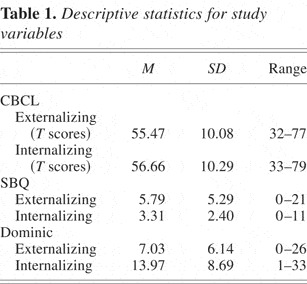
Descriptive statistics for study variables
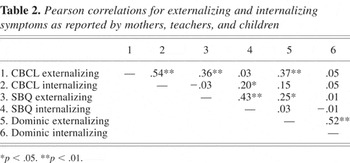
Pearson correlations for externalizing and internalizing symptoms as reported by mothers, teachers, and children
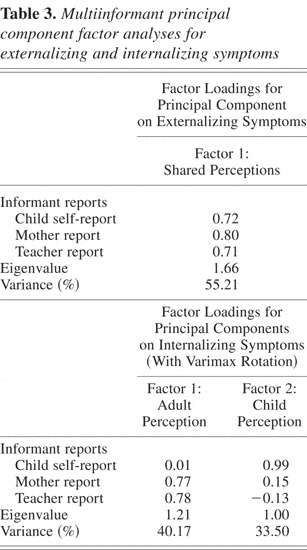
Multiinformant principal component factor analyses for externalizing and internalizing symptoms
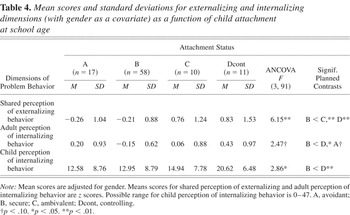
Mean scores and standard deviations for externalizing and internalizing dimensions (with gender as a covariate) as a function of child attachment at school age
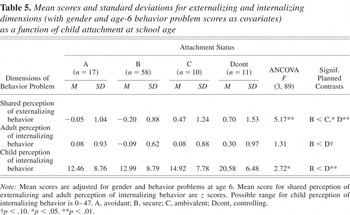
Mean scores and standard deviations for externalizing and internalizing dimensions (with gender and age-6 behavior problem scores as covariates) as a function of child attachment at school age
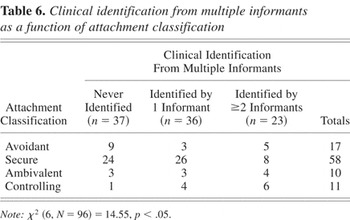
Clinical identification from multiple informants as a function of attachment classification
 You have
Access
- 98
- Cited by