In the mines of Guanajuato, Mexico, when miners drill and dynamite for metallic ore, they dislodge other substances. Among these are elements and compounds known as “minerals,” sold and collected in their own right as scientific specimens or aesthetic collectibles. These minerals often fetch thousands of dollars at mineral shows and collector showrooms in Tucson, Arizona and other mineral collecting hubs. In this process, minerals move from byproducts and even waste to highly valued commodities in their own right.
Among mined substances, minerals occupy a specialized niche. While they may be chemically identical to gems or to metallic ore they are not cut or faceted, nor are they melted down and sold for a price set on the world markets. Minerals are prized for their rarity, scientific or aesthetic value in their so-called “natural” form. Many of the minerals sold as collectibles piggyback on the mining economy in this way. This is because, at least for minerals that occur in conjunction with metallic ore (such as those in Guanajuato), capital for mineral extraction is provided by a company that is not organized in a way that makes it possible to realize the value of minerals (as opposed to ore) in an efficient manner.Footnote 1
All the miners in Guanajuato (and most other mining localities) are men, as are most of the collectors and dealers in Tucson (and most other mineral marketplaces). Additionally, the minerals themselves are enmeshed in webs of meaning that emphasize gender prominently, though not always in predictable ways. This article explores the complex ways in which producers and consumers interact with minerals as gendered objects and, in doing so, create themselves as gendered subjects. Their interactions with minerals, of course, are not the sole site for acts of self-creation, but they are a site that brings together processes of human labor, embodied and sensory experience, and the organization of social networks in the making of gendered subjectivity.
I begin from the premise that the gendering of the mineral economy is intimately linked to the peculiar circumstances of mineral production and consumption: in particular, minerals are extracted (in Guanajuato and many places) as the byproduct of ore extraction; and once they leave the mine, they are not supposed to be altered (though as we will see, they often are). These distinctive characteristics of mineral production and consumption in Guanajuato and Tucson allow for a concentration of gendered associations at both ends of the commodity chain. In the process of making and accommodating these gendered meanings, producers and consumers relate to minerals in creative, culturally rich, and sometimes oddly parallel ways.
Scholars have frequently asked how consumers make themselves and their lived worlds through their interaction with commodities.Footnote 2 The role of producers has not been entirely ignored in this process, but it has tended to be limited to examining relations among people and between people and their own labor. There has been far less attention to the relation between producers and their products as a cultural process.Footnote 3 What happens if we look at how producers of mineral specimens also make themselves through their interaction with the things they produce, and ask how this might affect the global commodity chain of mineral specimens?
In what follows, I build on feminist analyses of global commodity chains that have forcefully demonstrated the ways in which gender is embedded with global arrangements of capital and labor, often in shifting and/or contradictory ways (Collins Reference Collins2003; Wright Reference Wright and Vila2003; Ramamurthy Reference Ramamurthy2004; Salzinger Reference Salzinger2003; Freeman Reference Freeman2001). I focus especially on the link between the creation of the commodity as valued object and the creation of the person—producer or consumer—as gendered subject. That is to say, men and women make themselves not only through their relations to each other but also through their relations to the things they produce and consume.
Minerals, Gender, and Display
David Graeber (Reference Graeber1996) has elaborated a theory of two modalities of wealth, one invisible and linked to the capacity to act, and one visible, expressed through adornment and display and linked to the capacity to be acted upon. Drawing on the work of John Berger, he points out that within what he characterizes as “relatively recent Western society” (ibid.: 7) (to which both groups we are looking at belong), these form part of a system of gender relations, with invisible wealth linked to men and visible to women. However, these are not distinct spheres. In fact, often the first form of wealth, to be ratified or recognized, must be converted to the second. Graeber writes: “It is an anthropological commonplace that clothing and adornment serve as markers of social identity. They define differences between kinds of people. The display of heirloom jewelry, too, could be said to assert the distinctiveness of its owner. And so with wealth in general: in our own society, anyone who has managed to accumulate a very large amount of money will inevitably begin to translate some of it into objects of unique historical value: old mansions, Van Goghs, pedigreed thoroughbreds—all of which may be considered adornment to the owner's person” (ibid.: 6).
Graeber's example here could easily apply both to producers and consumers’ uses of minerals. When miners give minerals away, they show control over a pretty, feminine, and distinctive resource that has little use but that comes to them as a “perq” of their labor as miners. Their labor, then, produces both the invisible wealth of silver (which is unremarkable to the eye and which must be melted down for its value to be realized) and the more visible wealth of minerals. Collectors in Tucson also demonstrate their control over minerals as aesthetically pleasing bits of “pristine nature.” Though the value of the minerals is now much more directly expressed in high prices, they are still often seen as an object that only a few connoisseurs can truly appreciate, in part because they are not useful in any immediate sense. They are treasured bits of cultural capital acquired as “adornments to the owner's person,” in Graeber's words.
Mineral specimens have two dimensions that make them especially apt for the production of gendered value in the terms laid out by Graeber. First, mineral specimens in Guanajuato (and many other localities) emerge from mines as a byproduct of the commodity production of metallic ore. Unlike ore, they do not have an immediately recognized global price, nor are they obvious inputs into objects such as cars, computers, or even coins and jewelry. Because of this, miners and mining companies tend to downplay their importance as valuable commodities and to see them as rather trivial or ancillary. Second, both in Guanajuato and in Tucson, men who exchange minerals (selling them, giving them away, or buying them) tend to see them as ornamental or aesthetic objects. Here, too, their value does not come from their uses but from their apparent uselessness. In both Guanajuato and Tucson, objects that derive value from their uselessness are often seen as feminine objects. At the same time, control over such objects can be experienced as an especially masculine form of control. In this way, miners in Guanajuato and collectors in Tucson, whose circumstances differ enormously, concur in their uses of mineral specimens as trivial, even wasteful objects that help to establish them as potent men.
This article maps some of the symbolic terrain within which mineral specimens in Guanajuato and Tucson are located and shows some of the ways that producers and consumers make use of that terrain to create and express their own distinctive versions of masculinity. In each case, their control over minerals and the creation of value not through use but through uselessness creates an effect of male potency. I conclude with a discussion of why an attention to the creative uses of commodities by producers has been overlooked by most scholars, and of what looking at producers’ and consumers’ self-fashioning through commodities side by side can reveal about global supply chains and related contemporary economic arrangements.
The article traces how these tendencies play out in two cities linked to the mineral commodity chain. In Guanajuato, those miners who extract minerals use them as strategic economic resources, as gifts and religious offerings, and as signs of economic and social well-being. The particular use of minerals depends on the whole economic circumstances of the household at a given time, so that when miners are able to meet their needs and obligations without selling minerals, they may keep them or give them away. For this reason, having minerals but refraining from selling them can indicate that the miner has met his familial obligations and can dispose of minerals in other ways, or keep them for his own family. When this happens, it tends to be linked to a sense of working-class masculinity that is not uncommon in industrial production (Safa Reference Safa1995; Klubock Reference Klubock1996; Creighton Reference Creighton1996).
Others continue to sell minerals and even to report that they work in the mines primarily to get access to minerals, in the process investing in an entrepreneurial, “flexible” strategy oriented toward tourism and the service economy (which had been growing from the 1990s to 2008, but which has since suffered a sharp decline). As we have seen, those more strongly committed to the silver mining economy sometimes characterize those more committed to selling minerals as less masculine. Patterns of gender with respect to minerals and their uses thus also manifest shifts in Guanajuato's economy and contrasting responses to those shifts.
In Tucson, elaborate constructions of connoisseurship based on the aesthetic qualities of minerals, their rarity, and their links to “big men” collectors and dealers characterize the collecting world, particularly in its higher echelons. These echelons are frequented mostly by white, middle-class or upper-class men, especially from the West and Southwest (though there are many from other regions as well). Those who are most committed travel to attend shows several times a year, maintain close contact with other dealers and collectors, and subscribe to the Mineralogical Record and other high-end journals, which in turn help to teach the principles and habitus of mineral connoisseurship.
Like mineral producers, mineral consumers cite a variety of motivations for collecting. In particular, some tend to emphasize the scientific and/or historical value of specimens. These people sometimes collect according to mineral classification or locality. Others are more drawn to the aesthetic qualities of minerals, and these often gravitate toward the more brightly colored, larger, and otherwise “showy” pieces. The distinction between “science” and “aesthetics” as valuable qualities lies along a continuum and people usually invoke some combination. However, those clustered at each end often disparage each other as either stodgy and boring or frivolous. This distinction appears to map onto two versions of non-working class masculinity, in this case linked to region (northeastern versus southern and western United States).Footnote 4
Mineral Collecting
The Dictionary of Mining, Mineral and Related Terms (United States Department of the Interior 1996) defines a “mineral” as “a naturally occurring inorganic element or compound having an orderly internal structure and characteristic chemical composition, crystal form, and physical properties.” Based on this definition, we already know several things. Minerals are not made by humans. They are not organic. Since they have an orderly internal structure, they are not gases or liquids. They are identifiably distinct materials—that is, they are not rocks, which are agglomerations of minerals formed through geologic processes. So far, so good.
However, this only takes us part of the way to understanding the protagonists of this article, who are defined more specifically than this. Minerals can be melted down as ore or cut into gemstones. We ingest them in our food and water and make them into components of human-made objects like watches, radios, lampshades, and bombs. They can be found in or used to make almost anything, in short, but most of these instances lie outside the scope of this article. The article looks specifically at those minerals that are treated as distinct objects in their own right rather than as ingredients or components of something else. It concentrates on them as byproducts of ore mining and as collectibles.
Mineral collecting in the medieval and Early Modern periods was limited to royalty and aristocrats, but as mining expanded in Europe and in the colonial expansion to the New World, more and more specimens became available (Wilson Reference Wilson1994). As with other forms of collecting, the control over the natural world in the form of minerals became an increasingly widespread activity. Mineral collecting as such took off in the sixteenth century along with the expansion of colonial voyages and the rise of science as a complex of organized modes of inquiry and categorization (ibid.: 19). During the sixteenth and seventeenth centuries it remained the occupation of relatively few scholarly collectors. The vogue among aristocratic collectors at this time was predominantly for antiquarian rather than natural objects. Natural history collections began to gain widespread popularity only after about 1750 (Pomian Reference Pomian1990: ch. 4).
The rise of international expositions and the growth of museums in Europe and the United States in the eighteenth and nineteenth centuries fueled the interest of the public in mineral specimens. The major mineral collections of Germany, Britain, and France were formed through the bequests of private collectors combined with personal and scholarly links with mine owners, officials, and engineers in the New World (Wilson Reference Wilson1994). For instance, much of the collection of Brazilian minerals in the British Museum of Natural History, one of the world's largest mineralogical collections, was donated by officials of the St. John D'El Rey Mining Company that exploited the Morro Velho mine in Minas Gerais, Brazil (British Museum DF10/51).
Similarly, the major collections of the United States tended to be founded on bequests from collectors, often wealthy from other industrial occupations. Examples of these are J. Pierpoint Morgan, who purchased and bestowed the Clarence Bement collection that forms the core of the American Museum of Natural History department of mineralogy, and the architect Washington Roebling, who designed the Brooklyn Bridge (Roe Reference Roe1990). These industrialists and collectors formed part of an international network of dealers, purchasers, and specialists who corresponded extensively concerning the collection, examination, and disposition of mineral specimens.Footnote 5 They were joined by mining engineers, assayers, dealers, doctors, and other scientists located at the sites of mineral specimen production and who also contributed knowledge and specimens to the field of mineralogy.Footnote 6
In the twentieth century, mineral specimen collecting has grown and democratized.Footnote 7 In the United States, it is now a hobby especially (though not only) of middle-class, white men, often with jobs in the engineering, computer, or other scientifically related fields.Footnote 8 In recent years, while the hobby continues to be popular, and many people participate in the lower echelons of the market, the prices at the top of the market have increased dramatically. This surge in mineral prices began in the 1970s and has continued (with some valleys at times of economic crisis) until the present. This means that even though more people in this century are involved in mineral collecting than ever before, there continues to be an upper stratum of extremely wealthy collectors who can possess specimens that are totally out of the reach of most other mineral enthusiasts.
In mines where metallic ore is the primary commodity extracted (as in Guanajuato), miners can sometimes make several times their wages selling mineral specimens to dealers and collectors (Ferry Reference Ferry2005b), and in cases where they are forbidden to extract minerals, they risk punishment by sneaking out minerals in their lunchboxes or clothes.Footnote 9 Once the specimens leave their immediate environs at the mine, they become valued as primary, often very costly, commodities. From the perspective of dealers, collectors, and curators in the United States, ore mining provides the convenient conditions under which the true object of value—the mineral—can be brought to light. This shift from byproduct to primary commodity has profound effects on the ways in which specimens are gendered and the role they play in the expression of virility and masculine control.Footnote 10
Mining and Minerals in Guanajuato
Guanajuato, a city of approximately one hundred thousand in the state of Guanajuato in central Mexico, has been a center for silver (and secondarily gold and copper) mining since its founding in the sixteenth century. But until the mid-eighteenth century, there was little extensive exploitation. The bonanza of the Valenciana mine in 1768 brought a boom to Guanajuato, and in the latter half of the eighteenth century silver became the source and motor for what Ángel Palerm called “the first economic world system” (Reference Palerm1980). The city owes its fine Baroque architecture, university, and more recently, UNESCO World Heritage status, to the riches from silver mining (Ferry Reference Ferry2005a).
U.S. mining companies began to arrive in the last several years of the nineteenth century; between 1897 and 1913 about seventy companies operated in Guanajuato, the vast majority of them U.S.-owned (Meyer Cosío Reference Meyer Cosío1999: 101). One of the largest was the Guanajuato Reduction and Mines Company, founded in Denver, Colorado in 1904. The company operated in the city until the 1930s, when low silver prices and a wave of strikes forced them to leave the country, ceding their holdings to the workers. In June 1939, the workers reorganized as a producers’ cooperative, the Sociedad Cooperativa Minero-Metalúrgica Santa Fe de Guanajuato (hereafter “the Santa Fe Cooperative”).
The Santa Fe Cooperative operated from 1939 to 2005, when it sold most of its surface holdings to a Canadian company, Great Panther Resources, Limited, through a Mexican partner, El Rosario. During its roller coaster life, the Cooperative went from penury and crisis in the 1940s (when an engineer from Mexico City was brought in to run it), slow stasis in the 1950s–1970s, and a boom period in the 1980s, when the price of silver skyrocketed from 8 to 50 dollars an ounce. In its final fifteen years, it went through several economic and political crises usually sparked by low silver prices, but hung on by a thread. Arguably, it survived as long as it did because of its historical importance in the city and the multiple strategies for managing crisis by Cooperative members (Ferry Reference Ferry2005a). These strategies included extracting and selling mineral specimens.
Since 2005, Great Panther has restructured the workforce, employing only about 20 percent former Cooperative members, and bringing many workers in from outside of Guanajuato. It has rebuilt much of the central plant, built a new assay laboratory, and recapitalized the mines. Great Panther is one of dozens of Canadian large and “junior” mining companies that have entered Mexico over the past ten years, in response to high silver prices and a government strongly favorable to foreign investment. As of August 2011 the price of silver was around $40.00 an ounce, up from approximately $5.00 an ounce in the 1990s.
The mines of Guanajuato produce native silver and silver sulfide and sulfosalt minerals along with calcites and amethysts. The ore is captured with a bed of quartz and calcite and sulfide minerals, especially pyrite (Wallace et al. Reference Wallace, Francis, Megaw and Hall-Wallace1999). In lay terms, this means that as miners drill and blast for silver and gold ore they also gain access to quartz, calcite, pyrite, and other “gangue” (the area or mineralization surrounding the ore deposits) minerals, and also rarer silver-bearing minerals (acanthite, pyrargyrite, polybasite, stephanite, etc.). Miners can then gather up the loose minerals or work them free with a crowbar. One miner from the Valenciana said to me, “Once we blast, getting the stones is easy, like picking pears.” Miners may keep minerals for their own uses or sell them.
The gangue minerals—especially white quartz, amethyst, calcite, and pyrite—are sold to tourists on the grounds of the mines, at the swanky Hotel Santa Cecilia, and near the Mercado Hidalgo in the city center. These are usually sold on an occasional basis and do not typically form part of long-term commercial relationships between buyers and sellers. They may cost anywhere from 5 to 250 pesos, and they are usually intended to be used as souvenirs and decoration.
Some minerals, however, especially the finer calcites and silver minerals, tend to bring much higher prices. These are sold more usually through personal trade networks, often with the financial backing of dealers who then sell the minerals in the United States and Europe. In contrast to the cheaper gangue minerals, sales are often part of business arrangements that may last for months or years.
Minerals have been sold in Guanajuato since at least the late nineteenth century. Around the same time, Guanajuato minerals began appearing in North American and European collections. In the 1940s and 1950s, the mineral specimen economy began to accelerate rather dramatically. Mexican minerals began to be prized by U.S. collectors and Mexican and U.S. dealers began traveling around to mining localities like Guanajuato, Concepción de Oro (Zacatecas), and Santa Eulalia (Chihuahua) in search of specimens. In Reference Johnson1965, Paul Johnson published A Field Guide to the Gems and Minerals of Mexico that described both the mineralogy and the markets of a number of Mexican localities, and was aimed at North American collectors. Over the second half of the twentieth century, as in other Mexican mining localities, a small but enduring network of mineral dealers and suppliers developed. A merchant named Santitos set up a stand near the Plaza San Roque in the 1940s; he is reported to have been the first to sell minerals in a regular way. During the 1960s into the 1980s, many merchants sold minerals (and other tourist goods) near the bus station on the Avenida Juárez. When the station was moved to the outskirts of town in the early 1990s, this trade began to die down. From the 1950s to the 1980s, George Griffiths of Gómez Palacios traveled periodically to Guanajuato with his wife, as did some other North American dealers. In the 1990s, Chris Tredwell, a British auto executive living in the city of Irapuato, not far from Guanajuato, obtained permission to enter the Cooperative mines and collect. He also purchased specimens from miners. His collection was eventually sold to the Harvard Museum of Natural History and the University of Arizona Mineral Museum.
Minerals from Guanajuato attract the attention of those collectors who specialize in minerals with silver content, such as acanthite, pyrargyrite, and proustite. As a “classic” locality, Guanajuato minerals continue to have an appeal, though they typically cost in the hundreds and low thousands (rather than in the tens and hundreds of thousands as do minerals from some other Mexican localities such as Mapimí, Durango). At the same time, sales of these minerals have made the modest fortunes of a few in Guanajuato, and Guanajuato minerals form an integral part of the larger mineral specimen market.
During my fieldwork in the late 1990s, the Santa Fe Cooperative, with a membership of approximately nine hundred, was the largest non-governmental employer in the city, and the only remaining Mexican mining cooperative of dozens founded in the 1930s and 1940s. During the years when the Cooperative operated the mines, miners relied more heavily on pneumatic drills, dynamite, and crowbars rather than large-scale machinery such as scooptrams (underground loaders).Footnote 11 Cooperative workers thus came into more direct contact with the rock face, and therefore with minerals. More highly mechanized techniques in these mines have reduced the number of mineral specimens being extracted, but the market remains.
One reason for the Cooperative's survival for such a long period was that engineers tacitly allowed miners to extract specimens and sell them to local and foreign merchants. By permitting Cooperative members to extract minerals, the Cooperative was able to keep men working in the mines even when profits were very low (and when, at some particularly bleak moments, wages were suspended altogether).
The Cooperative's policy towards mineral specimen extraction was relatively lenient, compared with other private companies within Guanajuato and elsewhere in Mexico. This changed a good deal when Great Panther arrived in 2005. In 2007, the engineer in charge of the Great Panther mines told me that they were cracking down on the extraction of ore (which he considered a more serious offense) and also of mineral specimens. He said, “In the case of these [mineral specimens] it's not so serious [as the illicit extraction of ore] because they don't have much value, but they do waste time. A piece like this one [indicating a mineral displayed in his office, which had been confiscated from miners attempting to take it out for sale], since it's delicate, it might take three hours to take it out, which is half a shift.”
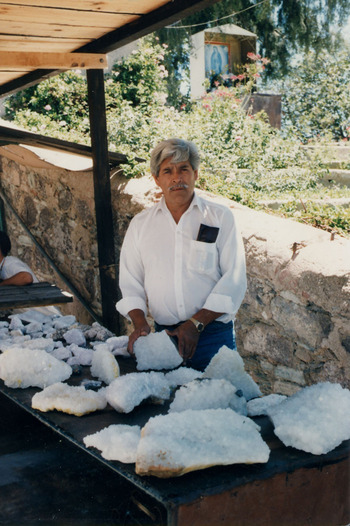
Cooperative member selling minerals on the grounds of the Valenciana mine. Photo Elizabeth Ferry.

His statement “they don't have value” brings up a central fact about value-making, since a piece like the one he had in his office might cost hundreds or even thousands of dollars in Tucson and, depending on the price of silver, might even rival silver in price. However, since the company does not produce for this market, it has no value for the company (except when a company itself engages in specimen mining, which occasionally happens, though not in Guanajuato).
The different levels of criminalization and punishment for removing ore and minerals demonstrate the way in which value is a relational concept—it must always be thought of as “value for whom?” Although the state concession for exploitation covers all the subsoil within its determined territory, mining companies react much more strongly when silver or other ores are stolen. Miners who steal ore (lupios) are dismissed from the company and often thrown in jail, and their names are published in the local newspaper as a further mark of shame (“DETIENEN A 11 LUPIOS.—Robaban mineral de la mina del Cubo,” AM de Guanajuato, 29 Feb. 2000). In contrast, miners who are caught removing minerals, depending on the company, may be sent home for one or more days but they do not typically lose their jobs, much less go to jail and get their names in the paper. Even when companies treat mineral specimen extraction more seriously, as miners reported Great Panther has been doing, it is often for questions of productivity or safety rather than the perceived value of the mineral. Value, especially the kind of value that can be expressed by price, must exist in the context of a market, so that while minerals might be valuable to dealers and collectors, they are less so to engineers and companies, unless these are also tied into mineral specimen markets.
“The Mine Was a Young Girl”
In describing mineral extraction in terms of gender, I will make reference to a symbolic universe of oppositions, such as silver/minerals, primary commodity/byproduct, and male/female. This symbolic universe has both historical depth and cultural breadth, but, unsurprisingly, it is not a static or determinative force for miners or their families. I also recount the ways in which this people draw on that symbolic universe to make a politics of gender through normative claims concerning particular places, objects, and practices (Scott Reference Scott1999: 44).
In Guanajuato, mineral specimens first leave their source when they are knocked loose by drillers as they place and detonate explosives to remove the ore-bearing rock. The driller has the most dangerous job in the mine and he also works most closely to the source of the mine's potency: silver, which makes his role particularly virile. The virility of the driller draws on a symbolic universe of long standing in Guanajuato, in which silver, the mine, and mining form part of a gendered world. For instance, the mine and the system of ore-bearing veins are inscribed linguistically as female spaces: indeed, as mentioned above, the system as a whole is known as the Veta Madre (the Mother Lode). As the translation suggests, mines as imagined female anatomical spaces (wombs, vaginas) is documented in a number of cases cross-culturally (Ferry 2005a; Finn Reference Finn1997; Harris Reference Harris2000; Nash Reference Nash1979).
The idea of the mine as female space goes back a long while; miners and others in Mexico have told me that women used not to be allowed down in the mine, because the vein would become jealous (la veta se pondra celosa) and withdraw its riches, or because the presence of women would cause accidents. (However, I went down in the mines of the Cooperative and other companies in Guanajuato about two dozen times and also saw and heard of other women going down, and never met with any objection.)
One worker told me that when the Valenciana reopened operations in the mid-1960s, “the mine was a young girl” (la mina era niña). By this he meant that production was high and there were many avenues for exploitation. Thus, his characterization both feminizes the mines and gives a sense that it is now reaching the end of its productive/reproductive life. Moreover, workers and their families have reported strongly gendered associations with the mine's exterior structure, interior contents, and inhabitants. That is, the exterior and interior of the mine are both particularly associated with the activities of gendered persons (especially men); they also exhibit qualities that appear distinctively male or female. Silver and the matrix that surrounds it have strongly gendered symbolism in Guanajuato. In Spanish mining terminology, notions of the fertility of the mine as a female space and its sterility in comparison with male potency are both expressed. On the one hand, the Spanish word “la matríz” which means “matrix,” “gangue,”Footnote 12 and also, “womb.” At the same time, this womblike source of silver is also referred to as “tepetate,” the opposite of “mineral,” a word defined in Spanish as “roca estéril” (sterile rock). These contrasting terms tell us a good deal about mining in Guanajuato as an act carried out in a female space, but only made possible by male potency. This suggests that in the symbolic universe of mining in Guanajuato the (female) mine is sterile until its generativity is called into being by male action. Miners describe silver as a male substance. For instance, male babies are sometimes described as “mineral” (silver ore), while female babies are “tepetate” (non-ore-bearing rock; see Ferry Reference Ferry2005a: 136).
In keeping with this gendered mapping of the mine's substances, mineral specimens occur as part of the “sterile” matrix of the mine, the locus but not the source of true value, which is more closely associated (or more fully embodied) with silver and gold. This gendered ranking of mine substances might be written as: male = silver = intrinsic, “real” value; female = minerals = apparent, “trivial” value. The ranking of metallic ore above minerals makes a certain amount of sense, since capital and labor in Guanajuato mines have historically been aimed at the production of silver and gold, not minerals. Miners and dealers in Guanajuato draw on this gendered mapping of the mine and its substances to rank both its products and the labor of producing and exchanging them.Footnote 13
My discussion so far has focused especially on gendered vocabulary and metaphor, but miners and others also use gendered meanings in ways that speak to gender's continuing relevance in the moral universe and other forms of livelihood in Guanajuato. To see this, we need to know a bit more about the demographics of mining and mineral dealing in the city.
Those who buy directly from miners and sell to other merchants or itinerant dealers and collectors in Guanajuato are mostly male. Although both men and women sell minerals in the city and environs of Guanajuato, selling minerals that one did not extract oneself is sometimes seen as an unmanly activity, both because market-vending tends to be associated with women in Guanajuato and because the merchant did not extract the mineral by risking his own body and using his own strength. I once heard the foreman of the Valenciana mine speak disparagingly of a man about his age (his late twenties) who kept a stall on the Valenciana grounds with specimens and trinkets. “Why doesn't he go down in the mines,” he asked, “with the body he's got?”
Several days after one engineer, Alfredo Gálvez, was ousted from the Cooperative (after a failed coup), I was driving by the main marketplace with a Cooperative member who joked, “There's Alfredo with his achichicles [a local term for inexpensive mineral specimens, mostly quartz, calcite and pyrite],”Footnote 14 and imitated the high-pitched call of a market woman hawking her wares. This comment signaled Alfredo's decline in power and therefore in perceived virility. Now located at the margins of Cooperative influence, he becomes the butt of jokes that characterize him as a seller of minerals rather than a miner.
When men give away specimens rather than selling them, they almost invariably give them to women. I was nearly always given specimens when I visited a mine or the house of a miner, and several people gave me specimens to take back to my mother (but never to my husband or father). When my husband visited the mines with me, miners sometimes gave him rocks containing silver or gold ore, exhorting him to sell them for a good price. Giving mineral specimens to women and girls to whom one is not related (and usually for whom one does not have any romantic interest) is for Guanajuatense miners a common gesture of manly benevolence. When I asked Álvaro, the captain at the Valenciana mine, what he did with the specimens he took out of the mine, he said, “I have them at home and when the girls (las chavas; his two teenage daughters) have friends to the house, they take them off my hands.” This statement aptly characterizes the offhand generosity of a father whose actions in the mines have given him not only the resources to make a home for his wife and children, but also these pretty, trivial objects that he can dispose of freely. Implicitly, it is the fact that he can meet his obligations through mining that allows him, most of the time, to give minerals away.
Álvaro maintains this attitude even though he freely admits that in times of trouble, he can also sell specimens. He once described to me the crisis period of Christmas 1991, when the Cooperative stopped wages the week before Christmas. He said, “Only imagine how sad, to come home with nothing for Christmas and the children asking for gifts and wanting to have some fun. That's when I started to sell achichicles and I bailed myself out that way.” From this perspective, we can see that the dispensing of minerals to girls and women expresses a comfortable state within which men are able to meet their primary obligations to family and still have something pretty and distinctive left over with which to show beneficent largesse. The ability to use minerals as a hedge against risk, selling them when needed and giving them away when possible, also denotes miners’ control over their own incomes and its disposition.
Miners also sometimes keep minerals to decorate their houses and see this as another form of successful masculinity. One day at the San Ignacio mine near the town of La Luz, Guanajuato, a miner told me of a friend who took minerals out for his own domestic use, usually saying, “I'll put this on top of the television set.” After he had said this many times, his friends remarked, “What's the deal? You're going to squash the television with all those minerals.” He replied, a little abashed, “Well, I don't have money yet for the television, but I hope I will soon.”
In saying he planned to put the minerals on the television set, this miner linked his holding on to minerals (rather then selling them) to the purchase of luxuries and conveniences for the home. Such items (beds and other furniture, TVs, radios, DVD players, home appliances, and so on) have been a sign of the fulfillment of masculine duties towards the household for members of the working class in Guanajuato for many years (Tortolero Cervantes Reference Tortolero Cervantes1992). It is as if he was keeping the minerals as a way to fulfill his fantasy of some future time when he would have both the minerals and the furniture and conveniences to go with them. When I remarked to the miner that his friend might have sold the rocks he collected to buy the TV, he rather ruefully responded that he himself had gathered some fine minerals, but felt compelled to sell them to enhance his income. In this case, selling the minerals might indicate the inability to maintain a comfortable working-class domestic space through the labor of mining.
Both the pleasure of giving away specimens and the sense of control of being able to sell them when needed come, at least in part, from specimens’ incidental character as a byproduct. They are literally and figuratively beside the point in the act of the drilling and therefore can become an area for individual disposition, either as commodities or gifts. To use minerals primarily as gifts is to show that one's activities as a miner are sufficient to meet one's obligations as husband and father. To sell them on occasion demonstrates an entrepreneurial spirit that positions the miner as someone who controls their own economic situation by manipulating different sources to wealth, especially those he has access to through his work in the mine. In contrast, to sell minerals as one's main livelihood, especially when one has not extracted them oneself, taps into other versions of Guanajuatense manhood. Those who align themselves more with an economy based on the sale of minerals to tourists and collectors may use their status as miners (or their links to miners) to gain access to minerals, but the price of silver and the organization of labor in the Cooperative or another mining company in Guanajuato are not their primary concerns. The role of mineral dealer as entrepreneur also entails certain ideas of masculinity. But this claim pulls against another claim, that the manly work in the mine is that dedicated to the extraction of silver, with minerals as a side venture. I focus especially on the latter, whose gendered characterizations of minerals tend to be more pronounced and explicit, while noting that both claims have force.
These two positions, moreover, align with two versions of the Guanajuato economy—one oriented about mining and the other around tourism and services. In the 1990s the mining economy appeared to be moribund. However, in the wake of the H1N1 epidemic and increasing reports of drug-related violence in Mexico, as well as erratic tourism development in Guanajuato (Shieldhouse Reference Shieldhouse2010), the tourism and services economy has suffered a downturn. At the same time, the price of silver is at a thirty-year high and mining has become again a central dimension of the city's economy.
At the same time, mining in Guanajuato has become more mechanized, which lessens opportunities for mineral extraction. In other places, where open pit mining has become the norm, this trend is even more pronounced. However, mineral extraction continues to occur, and to be done mostly by miners; indeed mechanization often goes along with tighter mine security, leaving open fewer opportunities for non-miners. In this context the rival claims of miners and mineral dealers over mined substances—and the gendered terms in which these claims are debated—persist and, furthermore, manifest current tensions over whether Guanajuato's economy is or should be based on industrial production or entrepreneurial commerce.Footnote 15
Minerals in Tucson and the “Main Show”
Mineral collecting gives a great opportunity for thinking about value because even those most committed to collecting do not see their value as self-evident. Furthermore, collectors tend to be very aware that the value they see in minerals is not apparent to all; they accept that they belong to a group of people who puts a premium on objects that other people think are useless and odd. As I discuss below, they take pride in the fact that their passion for minerals is not universally shared or even understood (in contrast to gold or diamonds or to fine art). As part of this, they spend a good deal of time debating what qualities make a given mineral more valuable than another.
Most people I interviewed cited similar factors that contribute to a mineral's value (by which they often meant price), though they all emphasized that different collectors would give priority to different factors. The elements of a mineral's value include: aesthetics, locality, rarity, condition (how free from breaks and repairs it is), associations with other minerals, provenance, and size. As I describe below, many of these qualities contribute to the mineral's effectiveness in creating and ratifying masculinity.
Mineral specimens appeal to a number of markets. They are bought by tourists in Guanajuato who would like a small souvenir of the place they have visited and by dealers and collectors with a much more profound interest in minerals. These people buy and sell minerals at rock shops, on the web, and at one of the hundreds of gem fairs that take place every year in the United States, Canada, and Europe, from a few days to up to two weeks or more for large combined shows, such as those in Tucson. Many people also self-collect, taking weekend or vacation trips to mines and quarries in their state or region, or in some cases, joining international mineral collecting tours to Minas Gerais, Brazil, or Tsumeb, Namibia. The minerals market, then, has points of access for people of many different levels both of wealth and interest. My research has focused especially on mid- to high-end collectors, those who purchase minerals from dealers through the various shows or through personal contacts at other times of year.Footnote 16 In the course of this research I have found that the actions and associations of mineral collectors in Tucson also work to produce collectors as gendered subjects, in ways that diverge from and run parallel to those of mineral producers in Guanajuato.
The city of Tucson, seventy miles north of the U.S.-Mexican border, lies at the edge of a silver and copper mining zone. The deposits that are now located in the United States (since the Mexican-American War) began to be exploited on a large scale in the 1870s. In 1880, the transcontinental Southern Pacific railroad route reached Tucson, allowing copper and silver to be shipped east. The city, like Guanajuato, owes much of its history and identity to mining. Also like Guanajuato, Tucson now gets a good deal of its income from tourism. It has become something of a haven for mineral enthusiasts.Footnote 17
The “Tucson Gem and Mineral Show,” sponsored by the Tucson Gem and Mineral Society (TGMS) was founded in 1954. It has gained nearly mythic status among mineral collectors and is now at the tail end of a “Tucson Gem, Mineral and Fossil Showcase” made up of forty-nine individual shows. Anthropologist Hecky Villanueva writes, “The Tucson Show[case] is simultaneously a show, museum tour, exhibition, market, bazaar, swap meet, convention, conference, workshop, party, fiesta, pow-wow, food-fest, and tourist destination that brings together over 50,000 unique visitors, curators, collectors, dealers, buyers, scholars, enthusiasts, tourists, students, artists, even hippies to this three-week event” (Reference Villanueva2007: 1). The shows are extremely important contributors to the Tucson economy, both in terms of direct revenue and taxes.
According to a report commissioned by the Tucson Convention and Visitors’ Bureau, “The 2007 Tucson Gem Show[case] featured forty-nine individual shows and 5,079 exhibitors. The total gate attendance was 363,816 buyers, who attended 6.6 shows (on average), for an estimated attendance of 55,056 unique persons” (FMR Associates 2007). The report, which primarily focused on the tax and sales revenue for the city, demonstrated a steady rise in attendance at the shows and expenditures since 2000. In 2007, it was estimated that $9,057,217 were paid in local taxes (including sales tax and tax on car rentals and hotel rooms), up 51.2 percent from 2000 revenues (ibid.).
The Tucson show's position as “the event in the mineral world” was at least partially underwritten by the flow of Mexican minerals into the Southwest in the 1960s and 1970s. At the same time, it far transcends the particularity of any one source. Guanajuato specimens occupy a small niche of the market, and do not attract the highest prices by any means. However, as a “classic” Mexican and silver locality with established miner-dealer networks, Guanajuato has a modest but secure place in the mineral market as a whole.
Just as nearly all producers and many dealers in Guanajuato are men, so are nearly all the important collectors and most dealers in Tucson. When I asked dealers and collectors about why this was so, they pointed both to the “scientific interest” of mineral collecting that they feel would tend to appeal to men, and to what they themselves described as a “macho” aspect of collecting. Several informants half-jokingly used some version of the phrase “mine is bigger than yours” to describe the appeal of collecting and the competition among collectors. Indeed, female collectors are supposed to prefer the smaller, more delicate “thumbnail” specimens to the larger “museum” or “sculptural” pieces that men tend to select.Footnote 18 One dealer said to me that when his wife was alive she used to like to collect large pieces, “and I used to tease her: ‘Come on, you're supposed to collect thumbnails; that's what wives collect.’” This reputed preference for smaller specimens accords with what literary critic Susan Stewart, in discussing the appeal of miniatures, has called the “petite feminine” (Reference Stewart1993: 62). The label “thumbnail” for these small specimens emphasizes their miniature quality as measured against the scale of the human body.
There are some female high-end collectors. Examples include Erika Pohl from Switzerland, who has been purchasing enormous numbers of high-end specimens over the past few years, and Kay Robertson, who was featured in a collector profile in the March-April 2007 Mineralogical Record, which described her as “a living archive of the history of serious mineral collecting, both in the U.S. and Europe, since the mid-20th century” (Moore Reference Moore2007: 125). These are two of the few women who are perceived as collectors “on their own,” not attached to a man (as wife, especially, or daughter, for instance). An obituary of Juanita Curtis in the same issue of Mineralogical Record, describes Ms. Curtis’ entry into mineral collecting as follows: “Her … father took a position as a night watchman at one of the [Colorado] mines. We don't know if any of her three brothers took up mineral collecting there, but Juanita did, beginning with ‘pretty rocks’ from the mines” (Wight Reference Wight2007: 91). The author goes on to say, “A problem in thinking of Juanita is that she wasn't plain ‘Juanita.’ She and her husband Bob formed one of those pair bonds that just stick in other people's minds. It was always ‘Bob and Juanita’ or ‘Juanita and Bob’; in whatever they did, they were involved together.… they were a pair” (ibid.). Such a description highlights the ways in which women in the mineral collecting world are often seen as connected to minerals through their male kin (fathers, brothers, and husbands).
I spoke with one female high-end collector who is very outspoken about the place of women in mineral collecting, in Tucson in February 2009. She said, “You have to stand up to the nastiness [on the part of some men in the mineral world]. They think that women don't know anything or that they only collect rocks because they're pretty.” She prides herself on speaking out when she sees this view in practice. After talking with her, I asked several others, both men and women, if they agreed with her assessment, and all did so without hesitation. One male mineral dealer said, using almost the same words, “Yeah, I guess so, people don't think they're serious, or they just like them because they're pretty.” This characterization of the gendering of the mineral world underscores the importance of a masculinized view of knowledge and connoisseurship that goes unrecognized in women, even where it exists.
Integral to the minerals market in the United States and elsewhere is the cultivation of a consuming (usually male) public that combines desire for minerals and “taste,” acquired through study, observation, and the cultivation of specialized knowledge or connoisseurship. These qualities work together to produce a knowledgeable, passionate, consuming man who takes pleasure in collecting minerals; he stands as an alternative to the virile, beneficent, producing Mexican miner who takes delight in bestowing minerals upon women and girls of his acquaintance (and also, though somewhat outside the scope of this article, upon divinities in household and mine altars; see Ferry Reference Ferry2005a, ch. 6).
A few examples demonstrate my point. In the introduction to his classic work, Mineralogy for Amateurs, John Sinkankas writes: “Practically all amateur mineralogists trace their entry into the hobby from the moment their sensibilities were first devastatingly yet pleasantly assaulted by the vision of a superlative specimen. The experience is almost always followed by a burning desire to have similar specimens for one's own, and so another mineral collector is born” (Reference Sinkankas1964: 3). In describing the “birth” of a mineral collector, this excerpt emphasizes the arousal of an innate, sensual desire for the sight and possession of minerals that can then be honed into a more refined—though no less pleasurable—sensibility through study and experience. The process of forming a mineral collector, it is suggested, begins in the senses and naturally gives rise to a “burning desire” for possession. The link between the specimen as visual stimulus, the arousal of an internal passion (often likened to lust), and the resultant desire to possess the specimen is typical of many reports of the emergence of an interest in the hobby of mineral collecting.
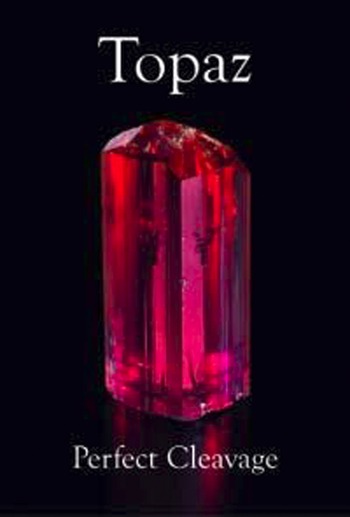
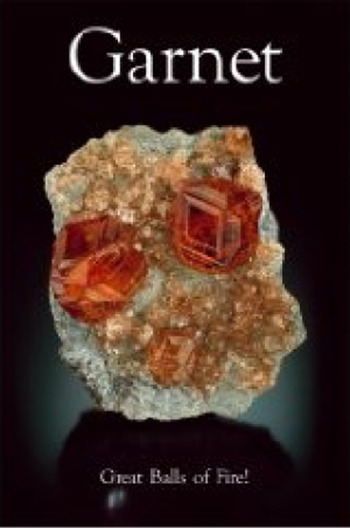
This description is, on the face of it, a particularly male narrative of sensual possession through sight and ownership. As one collector, an earth sciences teacher who also founded a mineral appraisal and auction house, said when I explained my research: “It's an interesting question—what moves men. And I'm quoting here from the movie the Treasure of the Sierra Madre. It's an interesting experience, to feel that greed, that lust, for the specimen, and then to decide if you're going to give in to it or not.” Now that the mineral specimen—rather than ore—is the object being commodified, we see a shift in the ways in which specimens are treated in general and the ways in which they are gendered in particular. In Guanajuato, minerals seemed to be a part of the enveloping but ultimately sterile (until made fertile by male power) womb of the mine, a female object suitable for women and children in its glinting prettiness, but not otherwise of great value. Once minerals move to gem fairs, museums, and dealers’ shelves, and once they begin to fetch hundreds or thousands of dollars each, they become the main event. Their primacy is expressed in two main ways. At some moments, they appear as the male source of potency to be lovingly cared for, polished, beautifully lit and photographed, but never altered (see Figures 2 and 3).Footnote 19 The joking response “mine is bigger than yours” also speaks to the mineral specimen as phallic symbol.
#14 Topaz: Perfect Cleavage. Lithographie, LLC Monograph Series.

#10 Garnet: Great Balls of Fire. Lithographie, LLC Monograph Series.

On the mineral collectors online community site Mindat.org, Daniel Russell posted the following blog entry, a satire of the competition between mineral collectors and the anxiety that goes along with it. The Rhodochrosite he refers to is a manganese carbonate mineral found only a few places on earth, with a spectacular deep rose color. The mineral dealers Collector's Edge pioneered high-end specimen mining at the Sweet Home mine in Alma, Colorado, producing several specimens that sold for over a million dollars.
Rhodochrosite-Envy: Psychic Crisis In the Mineralkulture
by Dr. Sigmund Fraud
University of Vienna Sausage
Hoboken, NJ
A diverse assemblage of exotic psychoses have been observed in the mineralkulture worldwide (generically lumped together as “petropsychosis” by Bumtwizzler in his landmark 1932 study, but subsequently differentiated as “franklinlagnia,” “fluorescophilia,” “tsumebmania” and “incipient tourmaline-dust psychosis” by Graber and Skweez, 1975).
However, in recent years, greater attention has been placed on the more fundamental (and more common) neuroses of the mineralkulture. Key to the understanding of both the neuroses and psychoses is the newly identified “rhodocrosite-envy,” a unique manifestation of profound and deep-seated feelings of inadequacy over the size of the patient's rhodochrosite.
The etiology of rhodochrosite-envy demonstrates in a variety of complex forms. These range from rhodochrosite-denial (in which the patient denies his need to even possess a rhodochrosite) to a paraphilic rhodochrosite-fixation, in which the patient has an overpowering urge to see and fondle the rhodochrosites of other collectors. However, a few symptoms may be considered diagnostic:
1) the patients turns pale and breaks out in a cold sweat when shown a rhodochrosite larger than his own; and
2) the patient demonstrates increasingly erratic and bizarre behavior patterns in an effort to acquire a larger rhodochrosite.
Verbal manifestations of rhodochrosite-envy include such comments, often made in casual conversation, as “I wish I had a nicer [read “larger”] rhodochrosite” and “Look at his rhodochrosite … it's twice the size of mine” (http://www.mindat.org/blog.php/138/Rhodocrosite-Envy).
While satirizing the identification of mineral specimens with the phallus, this piece also communicates a sense, widespread among my informants, that others see their investing so much value and energy in these stones as odd, or even pathological. This sense of collectors’ peculiarity in the eyes of outsiders enhances rather than diminishes the minerals’ potency. The piece also demonstrates another dimension of mineral collectors’ sense of themselves as men: they tend to be quite aware of the link between mineral collecting and masculinity, often going out of their way to point it out to me, and are liable to make self-deprecating jokes about the forms of maleness expressed through mineral collecting. The sense of masculinity inhabited by many mineral collectors is not puffed-up or otherwise unassailable, but amenable to humor and self-satire.
Collectors also frequently equate minerals with women as the object of desire. For instance, over the course of a week's stay in Denver for the 2005 Denver mineral shows, I asked a dozen collectors to list “the ten best minerals” (either ones they themselves had owned or others). This question provoked lively arguments (similar to the response other male audiences might give to the question of the best baseball games ever played or the best jazz albums). Some people either did not like or wished to qualify the term “best” (and in fact, my wording it this way was intended in part to probe for any discomfort over that term, so as to get at the issue of subjective and objective criteria for mineral appreciation). Such responses often took a gendered form. One collector said, “That's like rating your ex-girlfriends!” and others made similar remarks. The issue of mineral appreciation as personal and subjective (like sexual desire) often shaped collectors’ responses to the question, as well as their more explicit characterizations of minerals as women.
Several times in my research I have heard versions of the following urban legend: There once was a curator of a famous museum in the Western United States who desired the beautiful wife of a mineral dealer. So he proposed a deal: in exchange for being allowed to sleep with the dealer's wife, the curator would allow the dealer to go into the museum's mineralogy department after hours and choose whatever piece he liked the best.
One curator recounted this story in more general terms, saying that in the 1970s some mineral dealers exchanged specimens for women. Amused at the “anthropological-ness” of this story, I said, “It's interesting, because, on the one hand, I think ‘yikes,’ but at the same time.…” He interrupted me, even as my mouth was forming the word “Lévi-Strauss,” to say, “I know. At the same time, you think, ‘I'd like to see that mineral!’” This view of minerals as desired female objects aligns well with the sense of them as decorative, non-useful objects that both ratify and generate male power.
Whether mineral specimens are seen as potent male or desired female objects, they seem to call up pleasurable feelings at the level of the senses and of the psyche.Footnote 20 Collectors and other enthusiasts have often told me of the pleasure they get from looking at the specimens, citing their colors, patterns of crystallization, composition, likeness to other natural forms (such as trees or landscapes), and other aesthetic qualities. The sense that these complex forms are the serendipitous products of “nature” and that they are nearly untouched by human hands also adds to the appeal of these specimens (though as I have argued elsewhere, quite a lot of labor goes into producing this pristine effect: Ferry Reference Ferry2005b).
Among these collectors, mineral specimens change from hand to hand relatively frequently. In part this is a function of the view of collections held by many of these collectors as dynamic and fluid (Ferry Reference Ferry, Ferry and Limbert2008). From this perspective, collectors often say it is a good thing to exchange minerals frequently. Collectors who buy minerals often are also likely to have privileged access to minerals not shown to less active buyers. At least part of the impetus to exchange minerals, however, comes from the fact that owning a specimen owned by another collector (particularly one known for his connoisseurship) enhances one's prestige.
In this respect, minerals seem like Kula valuables. Unlike with Kula valuables, there is no sanction attached to not exchanging minerals, but handing them on to the right people (after first documenting one's possession) certainly enhances the prestige of the collector and the price of the mineral. And as with Kula valuables, prominent minerals acquire histories.Footnote 21 Phrases like “ex-Steve Smale” and “ex-Wayne Thompson” add to the desirability of a specimen by demonstrating that a particularly eminent collector, or one known for his good taste, has owned a specimen.
The former possession of a world-famous mineral can be demonstrated through photography and publication in one of the mineralogical journals (especially the Mineralogical Record). One collector (whom I will call George Guss), who is also a “mineral broker” who works helping to arrange and represent exchanges between the most elite collectors, brought me to the Mineralogical Record's booth at the Colorado Gem and Mineral Show and showed me a photograph of a mineral captioned “ex-George Guss collection.” “Now I can pass it on,” he said, “since my name is attached to it.” Here the connection to Kula is even clearer. It appears that the rate at which mineral specimens enter and leave the market and/or pass from collector to collector is increasing (though I only have anecdotal reports of this trend). One museum curator opined that the rise of mineral photography and publishing has enabled the more frequent movement of minerals, since a record exists of former possession.Footnote 22 However, not all mineral collectors approve of this trend; on a recent thread on mindat.org called “Elitism in Mineral Collecting,” some people complained about the tendency for elite collectors to pass minerals from hand to hand and the high prices attached to minerals from a famous collector's collection.
Control, Masculinity, and Global Supply Chains
In Tucson as in Guanajuato, mineral specimens become a vehicle by which proper and pleasing senses of masculinity are experienced and expressed. In Guanajuato, minerals act as mediators for a sense of male fulfillment based on proper extraction and disposition. In Tucson, they act as mediators for a sense of male fulfillment based on proper possession and appreciation of the specimens themselves.
Both producers’ and consumers’ interactions with minerals express control. Miners demonstrate that they have some degree of control over their own labor and its products by choosing how and to whom they can be exchanged. They have no such control over silver, at least not “legitimately,” and this is one of the things that distinguishes silver from minerals. Collectors, on the other hand, demonstrate their control over money and over nature. They show that they can afford to buy minerals, which have no discernable use. And they can compel these desired bits of “pristine nature” to leave their original places and come to their own collections (Ferry Reference Ferry2005b).
When I first started asking questions about mineral specimens in Guanajuato, my friend and key informant Martín said to me, “Why do you want to study those? They're not important.” Indeed, I saw his point and yet even at that time I sensed that there was something significant about the fact they seemed so very unimportant. Now that I have pursued the topic further and into many different contexts, I remain convinced that mineral specimens’ apparent triviality is central to the work they do in creating gendered producers and consumers. In both Guanajuato and Tucson, the ability to recognize minerals as trivial objects and yet to use them in ways that create value marks people as proper men.
Miners in Guanajuato show their ability to provide for their families through mining when they give away minerals (the byproduct or waste of the real work of silver mining), because in doing so they broadcast that they can afford to give these objects away, instead of selling them. In doing so, they invent themselves as men who meet their obligations through mining. Collectors in Tucson show their taste and scientific knowledge by choosing to spend their time and money on objects that, as they often point out, everyone else thinks are useless and weird. They even revel in the absurdity (from the perspective of others, who are not “into” minerals) of their consumption choices, and in doing so, they invent themselves as men who can afford to spend their money on things that other people think are trivial. These commodities, then, have not so much use-value as the value of uselessness.
At the same time, some important differences exist between the ways that producers and consumers use minerals to make themselves as men. The first— “producers’ masculinity,” let us say—operates within a cosmological sense of minerals as feminine (in comparison with silver) and expresses control over different sources of income and wealth and the capacity to fulfill one's proper obligations as a padre de familia (literally, “father of the family,” the conventional term for “head of household”). The second—consumers’ masculinity—focuses on the aesthetic and sensuous qualities of the minerals themselves as objects to be possessed and/or passed on and in doing so allowing collectors to manifest their control over the feminine and to link themselves to other men through that control. These modes are clearly influenced by the respective positions that miners and collectors occupy in the mineral specimen commodity chain. Producers act like producers and consumers like consumers; the first place emphasis on extraction and disposition, the second on desire and possession.
With a few exceptions, such as Dorinne Kondo's marvelous work on artisanal producers in Japan (Reference Kondo1990), producers’ uses of commodities to fashion their own selves has been vastly underplayed in the literature on commodity production. I think this is so, especially in those parts of the literature influenced by Marx (in which group I include myself), because it feels as though talking about the creative relationships that producers have with their products would mean saying that producers are not really alienated from their labor and its products in the way that Marx described. And it feels as though that would mean saying that these workers are not really being exploited. In fact, discussions of producers’ relationships to their products tend to focus on formerly “non-alienated” relationships that have been ripped asunder by global capitalist relations (Taussig Reference Taussig1982; Myers Reference Myers2002; Hendrickson Reference Hendrickson and Howes1996; Chalfin Reference Chalfin2004; West Reference West2006). However, acknowledging that producers also fashion themselves through their products does not deny their insertion into relations of global exploitation and inequality. In fact, producers’ relations to their products may help to provide their conditions.
In a recent article entitled “Supply Chains and the Human Condition” (2009), Anna Tsing discusses the role of diversity within what she describes as “supply chain capitalism,” defined as “commodity chains based on subcontracting, outsourcing and allied arrangements in which the autonomy of the component enterprises is legally established even as the enterprises are disciplined with the chain as a whole” (p. 148). This definition includes a broad range of actors, including Wal-Mart, Nike, FedEx, chicken farmers, and integrators such as Tyson and matsutake mushroom pickers.
While mineral producers have relatively more control over whom they sell to and whether they sell at all, they are still disciplined into the mineral supply chain in a manner strongly reminiscent of Tsing's examples. Tsing points out that suppliers frequently enter into and compete within chains by performing their own differences, of gender, race, nation, citizenship, and so on. For instance, the feminization of global production can be seen both as the exploitation of relatively powerless women workers who may or may not prove more docile than male workers and as the active entrance into the economy by women who can claim certain skills based on their gender (dexterity or patience, for instance) and who may be more likely to work for less, because of gendered expectations such as the “male breadwinner” (Safa Reference Safa1995).
To see the phenomenon of women entering the workforce from both perspectives does not imply that exploitation does not exist in these arrangements of production and distribution (as some might suggest) but instead that their structure favors those forms of discipline that can more easily become self-discipline. In many instances, self-discipline and self-fashioning are one and the same. The chicken farmers studied by Michael Watts (and described in Tsing's piece) are willing to work long hours for little pay and enter into crushing debt in part because their sense of themselves as white American men is intimately tied to property ownership. They may be screwed, but they are screwed as independent farmers and not as workers (Watts Reference Watts, Hughes and Reimer2004; Tsing Reference Tsing2009: 167–68).
Something like this seems to be happening for the producers of mineral specimens in Guanajuato. The miners I spoke with placed varying emphasis on their role as sellers of minerals. Some miners take out minerals primarily to sell (and also to give away) while others take them out primarily to give away (and also to sell). The minerals can sometimes bring a good income, but not always (at least not in Guanajuato where the mineral economy is softer than in other localities). And extracting them takes knowledge and time, and can be risky. In 1990s Guanajuato, extracting minerals formed one of a number of possible secondary sources of income (such as working as a plasterer, repairing cars or furniture, or working as a tour guide). But controlling mineral specimens did extra work to create masculinity, because minerals demonstrated a form of wealth that men can control, and because the ability to choose whether to sell minerals or give them away showed that their owner fulfilled his obligations as a padre de familia. It is impossible to tell how much this influenced miners to extract minerals rather than follow some other pursuit. However, we can see that exchanging minerals as commodities and as gifts did accomplish a variety of aims for miners.
Tsing does not focus on the role of consumers in global supply chains, but undoubtedly minerals accomplish a variety of aims for them as well. They serve as “objectified cultural capital” (Bourdieu Reference Bourdieu and Richardson1986) that helps to display their status, taste, and knowledge. As the products of scientific laws with aesthetic appeal, they may tend to appeal to men who would find other forms of aestheticism somewhat effete. Indeed, they often appeal to men who have scientific or technical interests and professions. As a commodity whose market has steadily grown, they may also be used as an investment (though more in times of plenty than in a recession). As I have been emphasizing throughout this article, they provide an idiom for the expression of masculine control and potency, in part through the fact that their value is seen, even by those who collect them, as esoteric, even peculiar. Indeed, mineral collectors are often bemused by their own desire for minerals, imagining how odd they must seem to others. This bemusement, moreover, forms part of the cultural intimacy (Herzfeld Reference Herzfeld1997) shared by collectors.
Without making an argument for universal forms of masculinity and without ignoring the vast differences between Guanajuatense miners and Tucson collectors, this article has looked at the ways both groups produce a sense of masculinity through their interaction with mineral specimens. Accounting for the motivations of both producers and consumers in their interactions with minerals allows us to see more fully their range of possible actions, and the effects of those actions. It shows us that producers’ and consumers’ creative actions both matter for our understanding of global supply chains.
This approach does not contradict accounts of alienation of labor and commodity fetishism. The price differences between minerals at their source and in Tucson and the differential physical and legal risks carried by miners demonstrate the former, while the imagination on the part of collectors that minerals are bits of pristine nature exemplifies the latter. However, the perspective I have laid out in this article gives us a fuller understanding of the motivations and actions of actors at all points along the chain and the effects that these might have on the system as a whole.