Introduction
Depressive disorders are currently predicted to become the leading global cause of morbidity and disability by 2030 (WHO, 2011). Despite the potential negative impact on individuals, families and communities, prevention strategies and early intervention are only latterly becoming key areas in the public mental health arena. The World Health Organisation’s prediction is being enunciated despite the fact that the concept of depression remains notoriously difficult to classify (Gruenberg et al. Reference Gruenberg, Goldstein and Pincus2005). Differing theories of depression invariably yield different classification systems, and coupled with a lack of objective measurements, implies that variability and heterogeneity of expression may characterise the presentation of the depressive syndrome within and between cultures (Luthra et al. Reference Luthra, Bhugra and Bhintade2006). The broadness of depression as an entity also allows for definition along sociological, existential and psychological lines as well as the illness model that can have validity when considering severe presentations of the depressive spectrum.
Despite its’ high lifetime prevalence in a community context (Blazer et al. Reference Blazer, Kessler, Mc Gonagle and Swartz1994), many individuals experiencing depression have difficulty accessing care (Kessler et al. Reference Kessler, Berglund, Demler, Jin, Koretz, Merikangas, Rush, Walters and Wang2003). Others remain sceptical of the diagnosis considering their symptoms as part of a normal or natural reaction to life stress and refuse to take appropriate treatment. The National Institute for Health and Clinical Excellence (NICE) in the United Kingdom recommends cognitive behavioural therapy (CBT) for mild to moderate depression (NICE, 2009). In many jurisdictions there are shortages of trained mental health professionals to address the increasing prevalence of depression and deliver evidence-based psychological therapies such as CBT (Yeung et al. Reference Yeung, Feldman and Fava2010). New strategies are therefore required to deliver efficient and effective treatment for depression in the context of long waiting lists for individual psychological therapy. CBT may be delivered in different ways (e.g. group therapy or computerised packages) in an attempt to address this problem, and an alternative to traditional or high intensity CBT (with a fixed number of hourly sessions with a CBT specialist) is low intensity working, of which self-help CBT is an example (Ridgway & Williams, Reference Ridgway and Williams2011). Low intensity working includes the delivery of written CBT resources (bibliotherapy) with practitioner support, offered one to one or in a class setting.
Background
A number of countries have seen the establishment of community-based initiatives to increase population access to effective therapies and services (Hegerl et al. Reference Hegerl, Wittmann, Arensman and Van Audenhove2008), which additionally have a favourable cost-benefit profile and can potentially bridge the gap between primary care and more specialised services. In Ireland a number of organisations in the voluntary sector have been established, with the objective of increasing overall mental health literacy in society, and/or undertaking specific interventions supporting people experiencing mental health difficulties.
Aware is one such organisation that, being a national charity in Ireland, has provided support, education and information around depression and mood disorder since its inception in 1985. Aware, which has grown from one local support group to a nationwide organisation of over 400 volunteers based in Dublin is the leading support organisation in the Republic of Ireland for those experiencing depression and for their supporters, and also works closely with its sister organisation Aware Defeat Depression in Northern Ireland. Following a strategic review in 2009 Aware researched a number of group programmes based on CBT principles, with a view to implementing one of these as a new community-based support and education service. The decision was made in 2011 to proceed with a programme entitled ‘Living Life to the Full’ (Williams & Morrison, Reference Williams and Morrison2010) which was developed by Dr Chris Williams, Professor of Psychosocial Medicine at the University of Glasgow having been previously successfully rolled out in Scotland and Northern Ireland. The Aware programme (termed Life Skills), which is delivered free of charge over 6 weekly 90-minute sessions was piloted in 2011 and following a successful evaluation elicited initial 1120 applications to undertake the programme in 2012, with 772 completing the 6-week course (Aware, 2012).
Objectives
The primary aim of this article is to present the results of data collated so far in respect of the Life Skills Programme’s (LSP) evaluation and it’s utility as a treatment intervention for symptoms of depression and anxiety, measured after completion of the 6-week programme, by the Patient Health Questionnaire (PHQ-9) (Spitzer et al. Reference Spitzer, Kroenke and Williams1999) and Generalised Anxiety Disorder Assessment (GAD-7) (Spitzer et al. Reference Spitzer, Kroenke, Williams and Lowe2006) . The PHQ-9 is a brief multipurpose instrument, useful in clinical practice, for screening, diagnosing, monitoring and measuring the severity of depression (Kroenke et al. Reference Kroenke, Spitzer and Williams2001). It can completed by the patient in minutes and can be administered repeatedly and be scored rapidly by the clinician. The GAD-7 is a sensitive self-administered test to assess generalised anxiety disorder normally used in outpatient and primary care settings (Lowe et al. Reference Lowe, Decker, Muller, Brahler, Schellberg, Herzog and Herzberg2008).
The wider potential of interventions offered by organisations such as Aware as an alternative or additional treatment option for mild to moderate depression, for use in primary care and community settings will be discussed. Services provided by the voluntary/support sector could be more effectively integrated with specialised mental health services, broadening the portfolio of available therapies in a fiscally constrained healthcare environment and bridging the gap between primary care and secondary mental health care. Such a blending of services may additionally have an impact on the promotion of positive mental health, reducing the rates of under-diagnosis and under-treatment and perhaps even prevention, of major depression By extension this could also have an impact on the prognostic negativism implicitly contained in statements by the World Health Organisation and others that depression will become, or already is, the leading cause of disability worldwide (Ustun & Kessler, Reference Ustun and Kessler2002).
The services provided by Aware continue to evolve using new technologies to increase accessibility (such as an on-line CBT and LSP) and have also been subjected to an independent evaluation process to ensure conformity to quality standards mandated by Aware’s Board of Directors and to expand the evidence base for the effectiveness of their services. This article argues that properly co-ordinated efforts by the voluntary/support sector and use of the existing and new infrastructures of psychological support provided by organisations like Aware, may be less stigmatising for the public to use. These can produce real benefits for those experiencing symptoms of depression who may have difficulty accessing information and support in a clinical practice environment constrained by pressures, insufficient resources or sources of expertise.
Methodology
Background
Traditional CBT consists of 12–20 one hour sessions with a CBT ‘expert’ and can be delivered in community settings (Wiles et al. Reference Wiles, Thomas, Abel, Ridgway, Turner, Campbell, Garland, Hollinghurst, Jerrom, Kessler, Kuyken, Morrison, Turner, Williams, Peters and Lewis2013). It remains difficult to provide, however, and access to such services may be constrained by long waiting lists. An alternative is to supplement high intensity delivery with low intensity CBT which includes the use of written CBT materials and support from trained practitioners, one to one or in group classes. This study presents the results of an independent external evaluation to determine the impact of a CBT-based LSP and to demonstrate its effectiveness using standardised quantitative and qualitative measures. The 6-week programme involved weekly 90-minute classes where class leaders guided up to 30 participants through written self-help booklets aimed at teaching key life skills. Outcomes were measured at 3 and 6-week intervals.
Recruitment
An online enrolment strategy was the primary recruitment method used by Aware to attract participants to the LSP . An open recruitment policy was applied with no screening measures being employed. Details about the programme and its appropriateness in helping people who had mild to moderate depressive symptoms for those aged 18 years and over were stated on the promotional material displayed on Aware’s main website. Potential participants were offered a place based on the geographical availability of classes (organised in a number of community locations nationwide) and a ‘first come, first served’ approach was taken. A registration form was completed (recording name, gender, contact details, age category and employment status only) upon confirmation of a place, and details of the group times and dates were provided by return email. No participants were recruited directly from Health Service Executive services, nor were those registering requested to provide details of previous interventions or treatment received or planned in order to remediate depressive symptoms during the duration of the programme.
When considering applying for the programme, potential participants were asked if the statements below applied to them;
∙ I am currently affected by mild to moderate depression or anxiety
∙ I would like to make some changes in my life and am prepared to try new ways of dealing with life’s challenges
∙ I am not currently experiencing a major life event such as a recent bereavement, major relationship problem or a significant trauma
∙ I can commit to attending all six sessions of the programme
∙ I have basic reading skills
∙ I feel comfortable in a group setting
∙ I feel I can concentrate and give my attention for the duration of each session that is about 90 minutes
In addition, participants were informed that LSPs are independently evaluated by Aware and that they will all be invited to voluntarily contribute to this evidence base by completing outcome measures at three-time points across the programme.
Programme attendees were also informed that there would be the opportunity to provide and record any personal insights they wished to offer into subjective changes, that were potentially attributable to attendance at the Life Skills sessions.
Programme delivery
Aware educational programme and talks are delivered nationwide by professional trained contractors. Aware has found this method has proven to be very a successful and consistent means of delivering high-quality instruction in a variety of settings. Sixteen trained contractors working nationwide delivered the LSP. All contractors are recruited on the basis that they are:
∙ Self employed.
∙ Full clean driving license.
∙ Car owner, comprehensive insurance.
∙ Tax compliant
∙ Public liability and professional indemnity insurance.
∙ 5 years relevant experience.
∙ Third level qualification.
Despite being drawn from a range of backgrounds including health, social sciences and business, all contractors undergo specific training on delivering the LSP from a member of Chris Williams’ staff to ensure fidelity to the programme. Ongoing monitoring and support is provided by the Aware education manager following this training.
Outcome measures
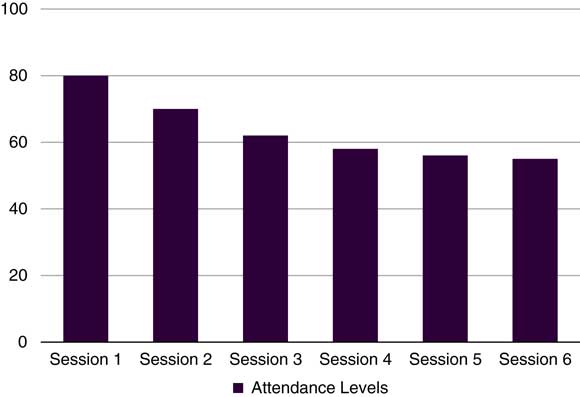
Two outcome measures were administered and self-completed during classes at three intervals across the 6-week period of the programme and participants completed both measures at week 1 (baseline), week 3 (midpoint) and week 6 (endpoint). These were the Patient Health Questionnaire (PHQ-9) and Generalised Anxiety Disorder (GAD-7) rating scale. Completion of these questionnaires was optional and respondents were assured that no personal or identifying information was used by Aware when reviewing the evaluation information provided by individuals taking the LSP. Completed forms were codified to preserve anonymity and were placed in a sealed envelope before being sent to an independent evaluator in Northern Ireland. Qualitative feedback gathered at week 6 offered insight into individual impact about significant change that had taken place, which participants attributed to the programme. Weekly attendance records were maintained to gauge retention and uptake in relation to the programme throughout the 6 weeks (Fig. 1).
illustrates attendance rates week by week.

Sample information

Statistical methods
A matched pairs t-test was used to conduct a repeated measures analysis on PHQ-9 and GAD-7 scores. These compared scores at baseline, mid-point and endpoint based on available data. Outcome measures at baseline, mid-point and endpoint are available for 1885 participants across five cycles of implementation of the LSP between October 2012 to January 2014. A further 404 individuals completed baseline and midpoint measures but not end point scores, although this offers an indication of potential impact of the programme by week 3. A further set of matched pairs was included for analysis where baseline and end point scores are available but not mid-point values. To this end, three separate repeated measures analyses were conducted on the data across the five implementation cycles. Analysis of retention and uptake to the programme was summarised as percentages. Participants provided feedback at week 6 on their experience of the programme, its impact to date and potential change to their health and well-being.
Sample details
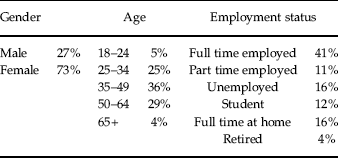
At the registration point participants completed an online form recording demographic and personal contact details. Table 1 summarises the demographic information for those registered across the cycles of implementation presented in this paper. Inspection of the demographic information for participants who registered and attended at least 1 session points to a predominance in the overall sample of females, participants in the 35–49 age bracket and those in full time employment attending the life skill programme.
Results
Uptake and retention
A total of 82% who registered for the programme attended at least one or more sessions, resulting in 18% from recruitment not attending across all cycles. In terms of retention, 47% remained in the programme from week 1. There was an average attendance of 67% for the 6-week programme, with the largest attendance recorded for full attendance (all six sessions; 47%).
Efficacy
Mean depression (PHQ-9) and anxiety (GAD-7) scores at baseline (week 1), mid-point (week 3) and end point (week 6) are presented in Table 2. The analysis will address potential for bias given that data is not available at the third measurement point for 15% of the sample. The findings include both a Per Protocol (PP) analysis to examine outcomes for fully compliant participants who outcome scores across all data points and an Intention to Treat (ITT) approach for missing outcomes caused by non completion of the programme.
Summary-Depression outcome (PP analysis)

Outcome for depression: PP analysis
Within-group differences at the end point of the programme (week 6) found depression scores to be significantly different from zero (Table 2). A large effect size for outcome mood scores was recorded for individuals who completed the full 6-week programme delivered by Aware.
Outcome for depression: ITT analysis
By carrying the last recorded outcome value forward in the ITT analysis, the results indicate a medium effect size with mood scores significantly different to zero. This would indicate a strong likelihood of impact had individuals remained in the programme (Table 3).
Summary-Depression outcome (ITT analysis)

Outcome for anxiety: PP analysis
A similar result emerged for anxiety scores where within-group differences at the endpoint of the programme (week 6) were significantly different from zero with a medium effect size observed for individuals fully compliant who completed all programme sessions (Table 4).
Summary-Anxiety outcome (PP analysis)

Outcome for anxiety: ITT analysis
Missing outcome data accounted for 15% of the sample. To take account of bias the last recorded value (midpoint) was carried forward in the ITT analysis. The summary in Table 5 suggests a medium effect size pointing to the potential for significant changes in anxiety scores had participants remained in the programme.
Summary-Anxiety outcome (ITT analysis)

Qualitative feedback: individual accounts of significant change
A structured questionnaire containing four questions about individual experience of the programme was distributed at week 6 to remaining participants. The questions asked participants to describe their experience of the sessions both positive and negative, the impact/potential impact on their health and well-being and how they would explain the programme to a friend.
The qualitative information was subject to an exhaustive thematic analysis for each question. Quotations were recorded from participants who shared personal commentary on their experience of the LSP. The feedback offered insight into personal experience of the programme and individual impact experienced as a result of attending the Life Skills sessions. A number of overlapping themes emerged from the qualitative data which pointed to impacts individuals experienced. These could be directly linked to key components of the programme such as the ‘vicious circle’ where individuals commented on changes to their thought processes, feelings and actions. Comments pointed to increased knowledge about CBT theory, repeated references to greater levels of self control and self awareness which changed responses to situations and people. For example, one respondent highlighted what had led to significant change in his life as: ‘Recognising the thoughts that were causing me to feel unhappy, and that I had a choice over these thoughts’.
There was a clear trajectory of impact which individuals mapped from improved knowledge and understanding to increased self-esteem, decreased defensiveness, and greater self control. These changes were directly related to the programme linking different components of the sessions, such as ‘vicious circle’, ‘goal setting’, ‘bite size chunks’ and ‘mind reading’ to their new perspective or approach to life. For example as one participant stated in their feedback ‘This helped me to identify some behaviours that were unhelpful to my mental health and which I needed to seek further support for. I can definitely say I am in a much healthier place than I was this time last year’. Specific tangible outcomes reported as a result of taking part in the LSP were changing jobs, entering the workforce, seeing life as now being worthwhile, reduction of stigma and becoming more open minded.
The CBT resource books (distributed each week to attendees) themselves were commonly cited in the feedback received with people drawing heavily on their content after completion of the programme. They appeared to constitute a support system and resource to individuals which they could use when required to refresh knowledge and reaffirm strategies built through the programme. Responses from people who completed the programme suggest that the information gained created a ‘tool kit’ for improving and sustaining well being by giving knowledge, skill and confidence to apply what they took from the LSP to their daily life. As one respondent stated it gave her ‘the tools to enable me to move forward’.
The social dimension and peer connectedness was strongly voiced by respondents in the follow up study. ‘Talking to others’, ‘the open discussions’ and ‘camaraderie’ at sessions was viewed as a beneficial part of the programme and for some the most beneficial. In the main this was in reference to other individuals attending the programme but the role of the facilitators and their contribution also formed part of this inclusive rapport that developed at sessions. Many saw the facilitator as bringing an extra dimension that was necessary to the success of the programme. Talking through issues in the format of open discussions offered individuals the opportunity to learn that others experience similar thoughts and feelings but also situations could be examined from a variety of perspectives which offered different insight and learning to individuals. Many participants believed they gained from this and were able to apply this approach outside the group and beyond the 6 weeks of the programme.
The implicit connections built within the service design of the programme often meant respondents could not isolate individual components but rather stated ‘all of the programme’ was beneficial and not one single element. This would suggest individuals could draw from many parts and gain benefit in a variety of ways which could be attributed to a longer term impact being observed in these findings.
Examples of comments offered by participants include;
‘This course will equip people with the tools to maintain a happy, positive and meaningful life by helping them deal better with problems they encounter’
‘It will have a lasting impact and has already made a huge difference to my life’ ‘A huge step in the right direction’
‘A great help towards a healthier and happier life’
‘I am much better now than I was 1 year ago and the only thing different has been coming to this programme’
‘Already recommending it as it is life changing’.
Discussion
After completion of a 6-week LSP, participants reported significantly reduced scores in terms of depression and anxiety according to the principal outcome measures utilised in this evaluation namely the PHQ-9 (for depression) and the GAD-7 (for anxiety), demonstrating the efficacy of the programme in improving symptoms of low mood and anxiety. Clinically this is indicative of a reduction from moderately-severe to a mild category in relation to both depressive and anxiety symptoms. Several levels have been suggested as a clinically important response in PHQ-9, including a reduction of five points or more in the score (Mc Millan et al. Reference McMillan, Gilbody and Richards2010), and clearly the findings presented are clinically, and not just statistically relevant in relation to this criterion for the subjects who completed the programme, with mean end point scores being recorded as 5.2 points lower than at baseline for example. The trend towards improvement moreover was evident mid way through the programme after only three sessions, in relation to both depression and anxiety scores.
Strengths and limitations of the survey
This is the first large study in an Irish context that has evaluated group-based life skills classes, being delivered in a community setting targeted at those with self-reported depressive symptoms. The strengths of this study include the large and geographically diverse sample size with 2289 individuals commencing the programme and 1885 completing the 6-week cycle. Participants were drawn from a range of social settings, both urban and rural, owing to the nationwide rollout of the course over five cycles of implementation of the programme since its inception in 2012. Community-based recruitment can successfully reach many individuals in need of support including those not currently receiving any support from their General Practitioner for low mood.
The appropriateness of using the PHQ-9 in community settings is reinforced by its reputation as a reliable and valid measure of depression severity, in addition to the propensity of this tool to yield criteria-based diagnoses of depression in clinical and research settings (Kroenke et al. Reference Kroenke, Spitzer and Williams2001). Equally the GAD-7 is a useful tool with strong criterion validity as well as being a robust severity measure for identifying cases of generalised anxiety disorder, which may be conceptualised as being dimensionally distinct from depression, despite the frequency of co- occurrence of depressive and anxiety symptoms in a community context (Spitzer et al. Reference Spitzer, Kroenke, Williams and Lowe2006).
Limitations and challenges for future research
The principal limitation of the present study relates to the fact that a delayed access control or comparator group was not utilised in this evaluation to compare against the effects of the Like Skills programme. The initiative of the Like Skills programme was sanctioned by the Board of Aware which was cognisant of earlier research conducted by Professor Chris Williams which had previously determined the effectiveness of his ‘Living Life to the Full’ classes (the original version of LSP delivered in Scotland) in a randomised control trial in improving depression, anxiety and social function in a manner that was cost-effective and acceptable to attendees (Williams et al. Reference Williams, Morrison and McConnachie2014). In the absence of a control group, however, it is important to acknowledge that a proportion of participants may have improved without treatment. There is also a need to extend longitudinal follow up of the participants to determine if the effectiveness of the intervention was maintained for longer intervals.
External scoring from supporters of participants in the programme, of improvement or otherwise, in relation to dependent variables such as anxiety would also have been instructive. Changes in adaptive functioning and quality of life may also be useful to measure in future surveys to highlight the potential of LSP in assisting persons with depression and anxiety in attaining healthier and more productive lifestyles. Although follow-up questionnaires are being sought and completed by participants, a complete data set is not yet available for analysis and presentation. It is hoped this data will indicate the longer term impact of the programme, as evaluation will include follow-up studies with three implementation cycles, offering a year-long indication of sustained impact.
The unscreened sample population is not stratified in this paper according to what may be described as usual or relevant variables such as age, gender or other detailed demographics, concomitant medication use, chronicity of symptoms or engagement with previous supports or therapies either presently or in the past. The fact that participants were self-selected in relation to programme involvement, could have yielded a sample population with many variables and potentially different characteristics this being a further confounding factor. No measure of reading or intellectual ability to determine the appropriateness of bibliotherapy or psychological therapy was employed. The registration process instead sought to respect responder anonymity, while encouraging new participants to avail of a free and what was perceived to be an urgently required community-based service aimed at those experiencing mild to moderate depressive symptoms. The life skills initiative was not specifically targeting those already engaged with Aware services or who had had protracted depressive symptoms or complex clinical histories thus no information about concurrent therapy of any kind was sought before commencement of LSP.
To ensure treatment integrity across the classes, Aware recruited and trained private contractors to deliver the programme uniformly, and in collaboration with Prof. Williams, but no adherence checks to therapeutic protocols was made during the course of the programme. The group instructors did not necessarily have mental health professional or clinical backgrounds but were trained to impart basic CBT principles and were aware of group dynamics such as the maintenance of healthy boundaries of privacy among participants. The resource materials were, however, standardised for contractors (using a standard presentation set and support scripts) and participants (who all received identical booklets and worksheets) alike. The presence of the facilitator and group effects could furthermore have introduced bias in terms of outcomes and compilation of qualitative feedback. Further scrutiny of those who registered and who failed to complete the full programme would be instructive but the efficacy (or per protocol) analysis implied that the primary focus fell on those who actually completed the programme and thus received the treatment or intervention. Potential bias was, however, reduced by the analysis of a significant cohort of 404 people who completed baseline and midpoint but not endpoint measures, yet a distinct midpoint trend towards improvement was witnessed. Interpretation of qualitative information as recorded during the final week of the programme is always tentative and bound by the context of group factors (Aveline et al. Reference Aveline, Strauss and Stiles2005) and the engagement with the group facilitators, however, in combination with data observations gives some substance to the themes that emerged in participant’s subjective accounts of the impact of the programme.
Implications of study
A group has long been regarded as a useful vehicle to conduct psycho-education and indeed uses a natural social setting to conduct a psychotherapy process with therapeutic factors and emotional developments occurring during the teaching process in a group (Knauss, Reference Knauss2005).
Group therapy is also a potentially efficient and economic treatment approach for a variety of mental disorders including depressive illness. The psycho-educational approach is nowadays regularly used in the application of cognitive-behaviour therapy in groups (Free, Reference Free1999) as well as other therapeutic approaches, bolstered by economic arguments pointing to the reduced utilisation of medical care (such as hospital stays, medication and medical appointments, sick leave and loss of productivity) in those who complete therapy (Heintzel et al. Reference Heintzel, Beyer and Klein2000).
This study builds on an emerging evidence base that guided self-help CBT classes are an effective method of managing individuals with depression and anxiety (Mc Clay et al. Reference Mc Clay, Collins, Matthews, Haig, Mc Connachie, Morrison, Lynch, Waters, Day, Mc Anee and Williams2015). Alternatives to time consuming, high intensity, traditional CBT have been in development for some time even including a drive to improve access to cognitive-behaviour therapy via computerised means which has been deemed to be a promising intervention to remediate depression (Kaltenhaler et al. Reference Kaltenhaler, Parry, Beverley and Ferriter2008). An online LSP is also presently under evaluation by Aware, a randomised controlled trial of which has recently received ethical approval from a major Dublin University. The LSP as presently constituted provides an alternative treatment option for use especially in primary care and community settings. Community-based recruitment can successfully reach people in need of support and may provide an alternative route of assistance for those who may not engage with the health service. Further research is indicated to replicate the findings of this study and could examine specific age categories and people experiencing depression and anxiety due to predictable stressors, such as financial or workplace stress. Versions of the original ‘Living Life to the Full’ programme already exist for older adults and younger people and are being developed for and extended to those who experience acute financial or economic difficulties and work-related stress and have already been successfully piloted by Aware.
Depression, the most common mental disorder, is the leading cause of global burden among all the mental illnesses yet most people affected receive little or no treatment with low service coverage rates (Thronicroft & Tansella, Reference Thornicroft and Tansella2009). A focus on prevention is arguably where attention should be directed to offset the major costs associated with medical and social support as well as the erosion of social capital and suffering associated with untreated depression. The existence of infrastructures in the community and voluntary sector may be more effective in providing support than conventional mental health services in the context of life stresses such as bereavement, unemployment and financial hardship that can place an individual at risk of depression. More than 30 years ago, Murphy (Reference Murphy1983) argued that since treating depression is not always effective, we need to pay more attention to prevention, and that because severe life events seem to be so important as triggers then perhaps we should strive to lessen their effect. Positive mental health promotion through interventions such as Aware’s LSP constitute an investment in communities that may allow mental health problems to be prevented or pre-empted where possible and to be more easily identified and addressed when they do occur. The development of Aware’s services has undoubtedly had impetus from a focus on mental health linked with recent economic difficulties in the Republic of Ireland. It is also important to note that the LSP is available to people free of charge. While the evidence base for specific services and programmes sponsored by Aware is emerging, this base continually requires further research and focus to justify funding allocations in a climate of resource constraints which has severely impacted the mental health support and voluntary sector. The challenge at a local level is to more effectively integrate initiatives led by organisations such as Aware with other agencies and services that people experiencing depression avail of at the level of primary and secondary care. If services such as Life Skills are proven to be of utility and benefit to people with depression, a key question is how hospital and community-based mental health practitioners can have productive interactions with the support sector without duplicating services, confident that many of their service users will derive real benefit from an increasingly broad canvas of programmes and services offered by voluntary organisations like Aware?
If the efforts of the support sector succeed in building resilience of individuals and communities and bridging the gap between primary and more specialised care in terms of the service infrastructure that is being presently promoted by many voluntary organisations, there may realistically be additional potential impact in neutralising the rather nihilistic and possibly dangerous predictions of bodies such as the World Health Organisation who anticipate that depression will be the number one global illness by 2030. To fail to challenge this assumption may be a case of ‘low expectations breeding bad results’, but allowing such statements to become self fulfilling prophesies as opposed to proactively preventing depression and it’s disabilities, would constitute an abdication of responsibility that few mental health clinicians would endorse.
Conclusion
Community based interventions such as the like skills proramme are a promising addition to mental health care provision and warrant further investigation.. The authors do not claim that this evaluation has been subjected to the same level of rigor associated with a randomised controlled trial. While acknowledging the absence of a control group and exclusion of regression towards the mean, positive health outcomes are observed for 1885 individuals who participated in a 6-week life skills community-based programme. Based on these findings the authors are suggesting that the LSP is effective for people is effective for people experiencing mild to moderate depression and anxiety in relation to outcome data gathered at 3 and 6 weeks using standardised quantitative and qualitative measures Given the practice pressures, insufficient resources and scarcity of expertise, the support or voluntary sector may yet come to bridge the gap between primary and more specialised levels of care in the mental health arena.
Acknowledgements
The authors wish to thank all those who attended the Life Skills programme and who participated in this study. The staff and volunteers of Aware deserve particular recognition for their tireless organization and delivery of Aware programmes nationwide.
Conflicts of Interest
D.L. is a Director and Board Member of Aware, K.C. is an independent Evaluation Psychologist commissioned by Aware to review its services, C.H. is Clinical Director of Aware but no author has received any remuneration or specific financial support for the preparation of this review.
Ethical Standards
The authors assert that all procedures contributing to this work comply with the ethical standards of the relevant national and international committee on human experimentation with the Helsinki Declaration of 1975, as revised in 2008. The study protocol was approved by the institutional review board of each participating institution. Written informed consent was obtained from all participating patients.