Emerging developmental perspectives on addiction suggest that children and youth exposed to harsh and unpredictable rearing environments are hypothesized to develop cognitive preferences for short- versus long-term rewards (Enoch, Reference Enoch2011; Koob & Kreek, Reference Koob and Kreek2007). In the context of a stressful environment where resources and opportunities are scarce and their appearance unpredictable, there is little or no reinforcement for delaying gratification in the hope of larger rewards in the future. Over time, the developing child “learns” to prefer immediate rewards, resulting in a tendency toward impulsive decision making. Accordingly, life experience is seen as being processed and appraised cognitively, shaping coping behaviors and bodily responses that support neurocognitive patterns that are calibrated to an unpredictable environment (Del Giudice, Ellis, & Shirtcliff, Reference Del Giudice, Ellis and Shirtcliff2011).
Childhood adversity poses a significant risk for substance use problems in adolescence and young adulthood (Dube et al., Reference Dube, Felitti, Dong, Chapman, Giles and Anda2003; Oshri, Rogosch, & Cicchetti, Reference Oshri, Rogosch and Cicchetti2013; Shin, Edwards, & Heeren, Reference Shin, Edwards and Heeren2009). Child abuse and neglect, in particular, represent a robust indicator of adverse rearing environments (Hussey, Chang, & Kotch, Reference Hussey, Chang and Kotch2006; Shin et al., Reference Shin, Edwards and Heeren2009). Adolescents and young adults exposed to child abuse and neglect report elevated the use of alcohol (Shin, Miller, & Teicher, Reference Shin, Miller and Teicher2013), cigarettes (Anda et al., Reference Anda, Croft, Felitti, Nordenberg, Giles, Williamson and Giovino1999), and cannabis (Oshri, Rogosch, Burnette, & Cicchetti, Reference Oshri, Rogosch, Burnette and Cicchetti2011). Although the influence of child abuse and neglect on substance use is well established (Hussey et al., Reference Hussey, Chang and Kotch2006; Shin et al., Reference Shin, Edwards and Heeren2009), less is known about the neurocognitive mechanism that may underlie this link.
Early Adversity, Self-Regulation, and Impulsive Decision Making
Self-regulatory competencies, including engaging in intentional and goal-directed behaviors, are related to brain development in the prefrontal cortex. These competencies are consolidated through multiple development phases and are sensitive to the rearing environment (Morris, Silk, Steinberg, Myers, & Robinson, Reference Morris, Silk, Steinberg, Myers and Robinson2007; Rodriguez et al., Reference Rodriguez, Ayduk, Aber, Mischel, Sethi and Shoda2005). In adolescence and the transition to adulthood, the emergence of self-regulation is a critical and significant developmental landmark that balances and integrates propensities for reward-seeking behavior that emerges in adolescence (Steinberg, Reference Steinberg2005). According to the organizational model of development, regulated behavior is affected by characteristics of rearing environments at the family, school, and community levels (Cicchetti & Rogosch, Reference Cicchetti and Rogosch2002; Evans, Gonnella, Marcynyszyn, Gentile, & Salpekar, Reference Evans, Gonnella, Marcynyszyn, Gentile and Salpekar2005). Children reared in stable, responsive, and sensitive home environments exhibit heightened levels of regulatory competence (Brody & Flor, Reference Brody and Flor1997; Deater-Deckard, Reference Deater-Deckard2014). Exposure to adverse and chaotic rearing environments are thought to exacerbate impulsivity through stimulation of mesolimbic pathways (Koob & Kreek, Reference Koob and Kreek2007) and to undermine the development of self-regulation via decrements in executive functioning (McEwen, Reference McEwen2008). Accordingly, environmental influences such as those associated with familial experiences are central to the development of self-regulatory capacities and the attendant expression of impulsive decision making.
Recent perspective on stress and development suggest that life experiences are processed and appraised cognitively, shaping coping behaviors and accompanied by reorganization in the developing brain (Lovallo, Reference Lovallo2013). Neurocognitive adaptations in response to adverse childhood experiences, such as child abuse and neglect, include dampened stress reactivity, a propensity to focus on short-term goals, impulsive response selection, and emotion dysregulation with a preference toward negative states; these are all factors that contribute to impulsive behavior (Lovallo, Reference Lovallo2013; Lovic, Keen, Fletcher, & Fleming, Reference Lovic, Keen, Fletcher and Fleming2011). For example, reports from the Oklahoma Family Health Patterns Project found that individuals with a history of adversity exhibited cognitive dysregulation, including problems with delaying gratification, a core facet of impulsive decision making (Lovallo et al., Reference Lovallo, Farag, Sorocco, Acheson, Cohoon and Vincent2013; Lovallo, Farag, Sorocco, Cohoon, & Vincent, Reference Lovallo, Farag, Sorocco, Cohoon and Vincent2012). Using an experimental design, Kidd, Palmeri, and Aslin (Reference Kidd, Palmeri and Aslin2013) found that environmental unreliability affected children's delay of gratification. Similarly, a recent study documented links between child maltreatment and antisocial behaviors in children via impulsivity (Thibodeau, Cicchetti, & Rogosch, Reference Thibodeau, Cicchetti and Rogosch2015).
Although numerous studies have documented how aspects of impulsive behavior proximally predict substance use and abuse (Coskunpinar, Dir, & Cyders, Reference Coskunpinar, Dir and Cyders2013; MacKillop et al., Reference MacKillop, Amlung, Few, Ray, Sweet and Munafò2011; Verdejo-García, Lawrence, & Clark, Reference Verdejo-García, Lawrence and Clark2008), the developmental hypothesis that impulsivity acts as mechanism linking adverse rearing environments to downstream substance abuse remains to be investigated. This gap in the literature has occurred in part due to the focus of addiction research on conceptualizing impulsivity as a trait (Kreek, Nielsen, Butelman, & LaForge, Reference Kreek, Nielsen, Butelman and LaForge2005), rather than a neurocognitive adaptation to demands of the rearing environment. In the present study, we not only investigate the potential for impulsivity to act as a mechanism linking adverse childhood experience experiences to substance use but also respond to calls from researchers to provide more nuanced and multidimensional characterizations of impulsive decision making (Dick et al., Reference Dick, Smith, Olausson, Mitchell, Leeman, O'Malley and Sher2010). We include an examination of impulsivity using both trait (Whiteside & Lynam, Reference Whiteside and Lynam2001) and delay discounting (Bickel & Marsch, Reference Bickel and Marsch2001) perspectives followed by a high-resolution investigation of impulsivity effects on substance use employing a multifactorial theory of impulsive behavior.
We address these aims in two studies. Study 1 tests the indirect influence of impulsivity in linking childhood abuse and neglect to substance use in young adulthood. This hypothesis was evaluated using a national probability sample with a longitudinal design. This study permitted a proof of principle hypothesis that early adversity, in the form of child abuse and neglect, would be associated prospectively with impulsive behavior in adolescence, which in turn would predict substance use in young adulthood. Although large, longitudinal samples are ideal for testing broad hypotheses regarding mechanisms and provide high levels of generalizability, these samples, rarely, if ever, have fine-grained operationalization of key concepts. We thus conducted a second, cross-sectional study where we sampled 1,100 adults who completed multiple measures of impulsivity, assessments of their exposure to a range of adverse childhood experiences, and their current substance use. In Study 2, we investigated two perspectives on impulsivity: one using a self-report measure of impulsive behavior and the other using a task-based assessment of delay of gratification. We then conducted additional analyses of the influence of specific facets of self-reported impulsivity. We have organized the presentation of these two studies as follows. We provide an introduction to Study 1, followed by its methods, results, and discussion. This is followed by a similarly structured presentation for Study 2. Below we present each study in its entirety, followed by an integrative discussion of the findings across studies.
Study 1
Alcohol, cigarettes, and cannabis are the substances most commonly used by young people in the United States (National Center for Health Statistics, 2007). The primary aim of Study 1 was to evaluate the hypothesis that child abuse and neglect would predict young adult alcohol, nicotine, and cannabis use indirectly via impulsivity assessed in adolescence. Youth who were exposed to child abuse and neglect are expected to have “adapted” to the environment by evincing a preference for short-term gratification and attendant difficulties with regulating impulsive behavior. These cognitive vulnerabilities are known proximal risk factors for substance use and abuse (Crews & Boettiger, Reference Crews and Boettiger2009; Garavan, Reference Garavan, Adinoff and Stein2011).
In addition to our primary hypotheses, we examined the potential for sex to modulate the paths linking child abuse and neglect, impulsivity, and substance use. Sex differences in self-reported impulsivity are well documented (Cross, Copping, & Campbell, Reference Cross, Copping and Campbell2011). Little or no research, however, has examined the potential for sex to moderate the associations among child abuse and neglect, impulsivity, and substance use. Studies of other youth risk behaviors, however, suggest that sex differences may condition these paths. For example, Black, McMahon, Potenza, Fiellin, and Rosen (Reference Black, McMahon, Potenza, Fiellin and Rosen2015) found that the association between impulsivity and sexual risk taking was higher for males than for females. Comparable moderating effects were apparent in an investigation of the links between impulsivity and health risk behavior (Stoltenberg, Batien, & Birgenheir, Reference Stoltenberg, Batien and Birgenheir2008). Although studies of sex moderation on the association between child abuse and neglect and impulsivity remain to be conducted, there is evidence that sex interacts with childhood maltreatment to predict mental health outcomes (Arnow, Blasey, Hunkeler, Lee, & Hayward, Reference Arnow, Blasey, Hunkeler, Lee and Hayward2011; Lejuez et al., Reference Lejuez, Read, Kahler, Richards, Ramsey, Stuart and Brown2002). Thus, in the present study sex differences were investigated in the associations between child abuse and neglect experiences and impulsivity and between impulsivity and substance use.
Study hypotheses were tested with prospective data from National Longitudinal Study of Adolescent to Adult Health (Add Health). Given that impulsivity was measured during adolescence at Waves 2 and 3, the Add Health data provided a unique sample on which to test the proof-of-principle hypothesis that impulsivity would link child abuse and neglect to drug use in young adulthood. Data from young people at age 28 permitted assessment of drug use during a time period when the majority of young people have declined in their use. Thus, we were able to examine the persistence of drug use after a common developmental phase in which substance use is elevated.
Methods
Sample
Add Health is a nationally representative sample of adolescents in Grades 7–12 in the United States. Baseline data were collected in 1994–1995 from 20,745 middle and high school students from 144 schools using a stratified cluster-sampling method. Parents of participating students were also asked to complete questionnaires at baseline. Data were collected again in 1995–1996 (Wave 2), 2001–2002 (Wave 3), and 2007–2008 (Wave 4). For inclusion in the present study, we used data from all participants for whom Wave 4 sampling weights were calculated (n = 9,421). These weights corrected for oversampling of smaller population groups and adjusted for attrition (Brownstein et al., Reference Brownstein, Kalsbeek, Tabor, Entzel, Daza and Harris2011). Hypotheses were tested with data from the baseline parent questionnaire (demographics) and Waves 2–4 of the adolescent/young adult interview. In the analytic sample, participant mean age was 15.2 years, (SD = 1.56) at baseline, 16.2 years (SD = 1.63) at Wave 2, 21.2 years (SD = 1.63) at Wave 3, and 28.8 years (SD = 1.59) at Wave 4. The sample was 55.6% female, and the ethnic composition was Caucasian (56.6%), Hispanic (14.9%), African American (21.3%), and 7.3% Asian (7.3%). Most adolescents’ parents (75.5%) had at least a high school diploma. The median family income at baseline (1995) was $40,000. The University of Georgia Institutional Review Board approved analyses of this secondary data resource.
Measures
Child abuse and neglect
Exposure to child abuse and neglect was operationalized as a latent construct using four items obtained from youth at Wave 3. The items asked the frequency of specific child maltreatment experiences prior to Grade 6. These experiences included supervisory neglect (“How often were you left home alone?”), physical needs neglect (“not taken care of basic needs”), child physical abuse (“How often … slapped, hit, or kicked you?”), and child sexual abuse (“How often … touched you in a sexual way …”). The items were scaled from 0 (never) to 5 (more than 10 times). These items have been used in previous research and are sensitive to substance use outcomes (Fang & Corso, Reference Fang and Corso2007; Ouyang, Fang, Mercy, Perou, & Grosse, Reference Ouyang, Fang, Mercy, Perou and Grosse2008).
Impulsivity
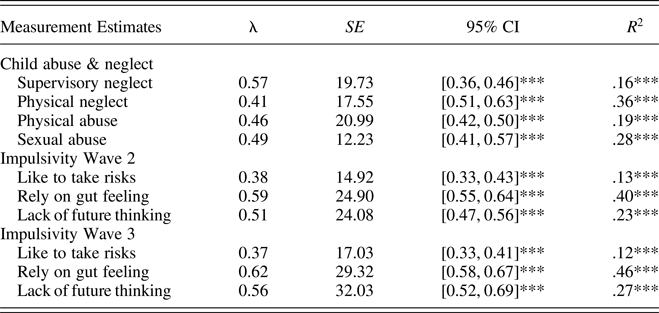
Impulsivity was operationalized as a latent construct at Waves 2 and 3 using three items. The items were “I rely on my gut feelings,” “I like to live without thinking about the future,” and “I like to take risks.” All items were assessed on a range from 1 (strongly disagree) to 5 (strongly agree). To evaluate the dimensionality of the items, confirmatory factor analysis was performed and is reported in the Results section (Table 1).
Study 1 measurement model estimates of early adversity and impulsivity

Note: Model fit for Study 1 measurement model: χ2 (28) = 113.71, p < .01, root mean square error of approximation = 0.02, comparative fit index = 0.97, standardized root mean square residual = 0.02.
***p < .01.
Substance use
Substance use was assessed via youth report at Waves 3 and 4. Alcohol, cigarette, and cannabis use items evaluated past month's usage: “How many days in the past 30 days have you used [substance]?” Alcohol and cannabis usage was scaled from 0 (none) to 6 (every day or almost every day), whereas cigarette usage was the number of days in the last month that the participant smoked at all (0–30).
Covariates
Targets’ age, gender, race/ethnicity (Caucasian, African American/Black, Latino, or Asian American) and primary caregivers’ education level (0 = < high school diploma, 1 = high school diploma or GED, 2 = some college and above) were assessed. Because our primary interest is in how child abuse and neglect constitutes a chronically harsh and unpredictable rearing environment, we used posttraumatic stress disorder (PTSD) as a proxy to control for acute trauma. At Wave 1 and Wave 2, participants were asked if they had ever been diagnosed with PTSD (0 = never diagnosed, 1 = has been diagnosed). To accommodate the developmental timing in the model, a binary indicator was created based on age at diagnosis of PTSD such that 0 = individuals who were never diagnosed with PTSD or diagnosed after age at Wave 2, and 1 = individuals who were diagnosed with PTSD prior to age at Wave 2.
Data analytic strategy
Hypotheses were tested with structural equation modeling using maximum likelihood estimation as implemented in Mplus 7.31 (Muthén & Muthén, Reference Muthén and Muthén2015). To account for the lack of independence in the data due to cluster sampling within schools, we used the TYPE=COMPLEX command (Muthén & Muthén, Reference Muthén and Muthén2015). A confirmatory factor analysis was first executed to evaluate the measurement model for impulsivity and child abuse and neglect. We examined metric and scalar measurement invariance for the impulsivity construct at Waves 2 and 3, assessing model fit changes with criteria of change in comparative factor index (CFI) > 0.01 (Cheung & Rensvold, Reference Cheung and Rensvold2002) and change in Tucker–Lewis index > 0.02 (Vandenberg & Lance, Reference Vandenberg and Lance2000). We then specified an indirect effect model where impulsivity at Wave 3 mediated the influence of child abuse and neglect on each substance use variable at Wave 4; Wave 2 impulsivity and Wave 3 substance use were included as covariates. The standard errors of indirect effects from child abuse and neglect to substance use in adulthood were estimated using bootstrapping with 5,000 sample replicates (Preacher & Hayes, Reference Preacher and Hayes2008). In a final step, we used multiple group analyses to examine if gender moderated the paths linking child abuse and neglect, impulsivity, and substance use.
Results of Study 1
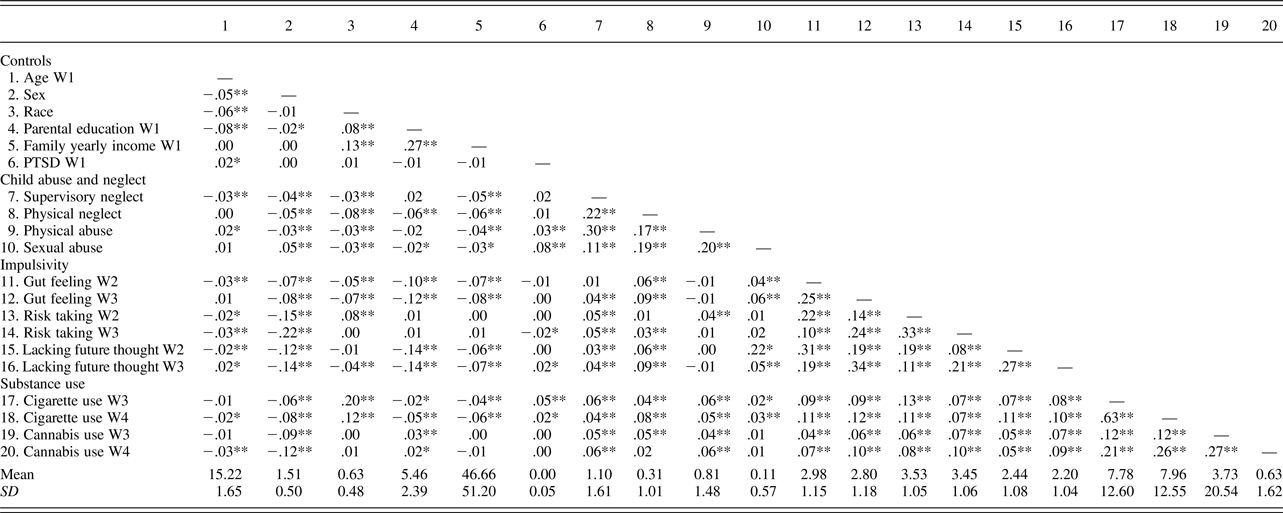
Table 2 presents descriptive statistics and bivariate correlations among Study 1 variables. Confirmatory factor analysis supported the measurement model which fit the data as follows: χ2 (28) = 113.70, p < .001; CFI = 0.97, root mean square error of approximation (RMSEA) = 0.02, standard root mean square residual = 0.02. As shown in Table 1, factor loadings were significant, in the correct direction, and exceeded 0.36 for the impulsivity and child abuse and neglect factors. No offending estimates emerged (e.g., negative residual variances or correlations greater than one). In a second analysis, we tested for metric and scalar invariance across time in the impulsivity construct. Results show no significant differences on the CFI and Tucker–Lewis index across time, confirming measurement invariance from Waves 2 to 3.
Study 1 descriptive statistics and bivariate correlations of study variables
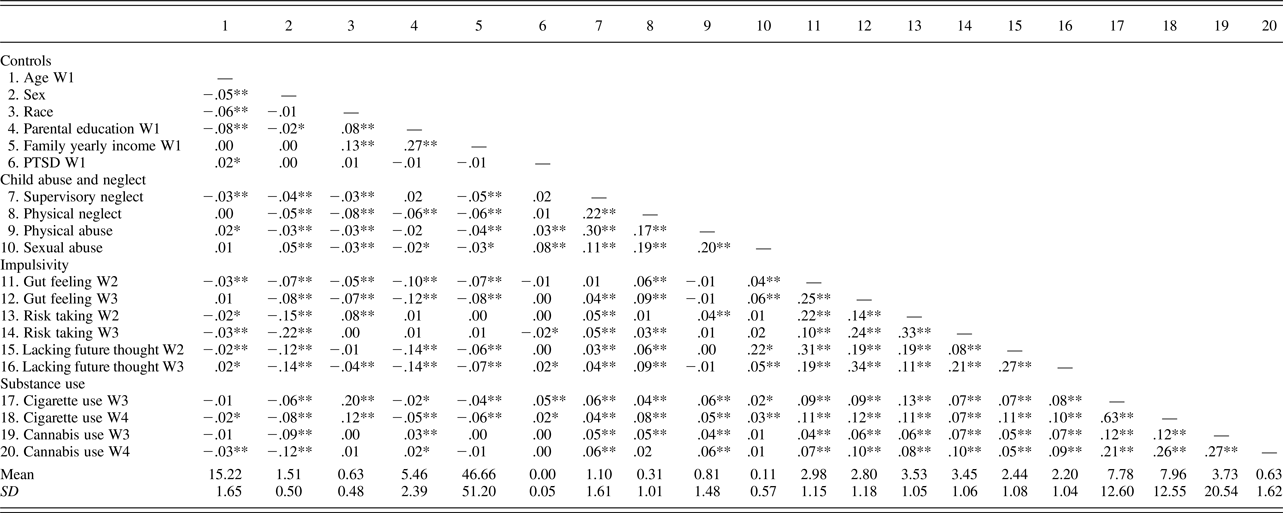
Note: W1–W4, Waves 1–4 of data collection; PTSD, posttraumatic stress disorder. Sex was coded as male = 1 and female = 2; race was coded as Caucasian = 1 and others = 0; N = 9,421.
*p < .05. **p < .01.
We next tested the pathway from child abuse and neglect to each form of substance use at Wave 4 in early adulthood (controlling for Wave 3) via changes in impulsivity from Wave 2 to Wave 3. Participants’ age at Wave 1, PTSD diagnosis, gender, race, parents’ education level, and family yearly income were included in the model as covariates. Among the control variables, male sex predicted elevated levels of impulsivity (B = –0.03, p < .01), cigarette use (B = –0.15, p < .05), and cannabis use (B = –0.12, p < .01). Age was associated positively with cannabis use (B = –0.02, p < .05). Parental education was positively (B = 0.01, p < .05) associated with cannabis use, and negatively (B = –0.03, p < .05) associated with cigarette use. Parental education (B = –0.004, p < .001) and household income (B = –0.005, p < .001) were negatively associated with impulsivity at Wave 3. Diagnosis of PTSD was not significantly associated with impulsivity at Wave 3.
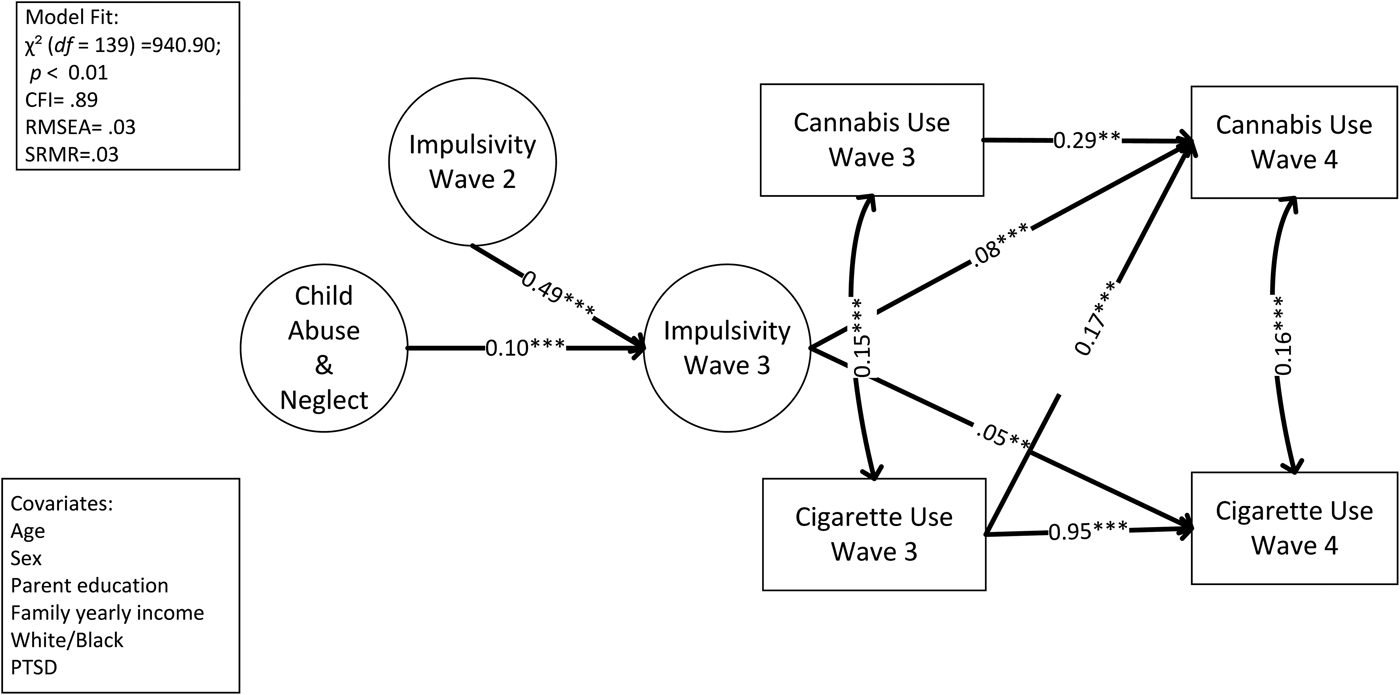
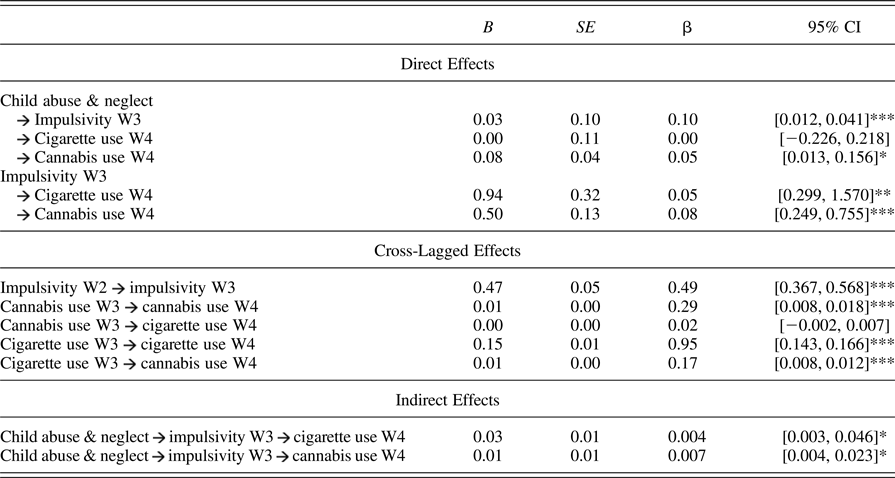
Modification indices suggested estimating cross-lagged paths between Waves 3 and 4 measures of cannabis and cigarette use, and eliminating the alcohol use outcome, which was not significantly predicted by impulsivity. In addition, earlier levels of substance use (Wave 2) did not significantly predict impulsivity in Wave 3. Therefore Wave 2 substance use was trimmed from the structural model. The final model and fit indices are presented in Figure 1, with parameter estimates shown in Table 3. Child abuse and neglect positively predicted impulsivity at Wave 3 (B = 0.10, p < .001). In turn, impulsivity at Wave 3 significantly predicted cigarette use at Wave 4 (B = 0.05, p < .01) and cannabis use at Wave 4 (B = 0.08, p < .001). The indirect effect from child abuse and neglect was significant for cigarette use, B = 0.03, SE = 0.01, 95% confidence interval (CI) [0.003, 0.046], and cannabis use, B = 0.01, SE = 0.01, 95% CI [0.004, 0.023]. A post hoc comparison (Preacher & Hayes, Reference Preacher and Hayes2008) indicated that the indirect effect from early adversity to cigarette use was significantly larger than the indirect effect from early adversity to cannabis use, B = 0.04, SE = 3.86, 95% CI [0.02, 0.07].
Longitudinal findings for childhood abuse and neglect and substance use (Add Health). Standardized parameter estimates are shown. W, wave of data; adolescent age, alcohol use at Wave 1, gender, posttraumatic stress disorder diagnosis, and parental education are covariates (not shown for clarity). *p < .05, **p < .01, ***p < .001. N = 9,139.

Study 1 parameter estimates of the paths effects models of child abuse and neglect, impulsivity, and substance use
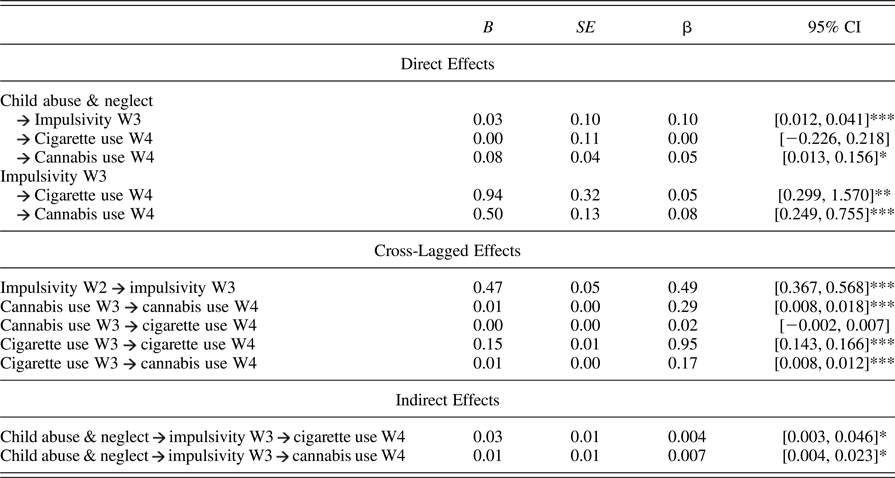
Note: Model fit for Study 1: χ2 (139) = 940.90, p < .01, root mean square error of approximation = 0.03, comparative fit index = 0.89, standardized root mean square residual = 0.03. Study 1 used age, sex, ethnicity, parent's education level, family yearly income, and posttraumatic stress disorder as covariates in these analyses. W2–W4, Waves 2–4 of data.
*p < 0.5. **p < 0.01.
In a final step, using multiple group analyses, we examined if gender modulated the paths linking child abuse and neglect to impulsivity and impulsivity to each substance use type. No significant gender differences in model paths emerged.
Discussion of Study 1
Using longitudinal data spanning middle adolescence (mean age = 15 years) to young adulthood (mean age = 28 years), we tested the hypothesis that impulsivity would, in part, explain the effects of child abuse and neglect on the frequency of substance use in young adulthood. Informed by developmental models regarding neurocognitive adaptations to stressful and unpredictable environments (Cicchetti & Rogosch, Reference Cicchetti and Rogosch2002; Del Giudice et al., Reference Del Giudice, Ellis and Shirtcliff2011), the findings from our study were largely consistent with our hypotheses. Exposure to child abuse and neglect was associated with increased impulsive behaviors from middle to late adolescence, which, in turn, predicted cigarette and cannabis use in young adulthood. The data further indicated that child abuse and neglect was indirectly associated with cigarette and cannabis use via impulsivity. These findings are consistent with the proposition that exposure to child abuse and neglect is linked to a cognitive preference for short- versus long-term rewards (Thibodeau et al., Reference Thibodeau, Cicchetti and Rogosch2015). For young people who experience child abuse and neglect, the environment is thought to be particularly harsh, unpredictable, and stressful. Such rearing contexts are hypothesized to provide little reinforcement for delaying gratification in the hope of larger rewards in the future. Over time, the developing child “learns” to prefer immediate rewards, resulting in a tendency toward impulsive decision making. These cognitive adaptations, in turn, are well established proximal antecedents to substance use (Bickel & Marsch, Reference Bickel and Marsch2001; Koob & Kreek, Reference Koob and Kreek2007).
Our findings, however, failed to find an impulsive behavior pathway for young adults’ use of alcohol. Although past studies have linked impulsivity to alcohol use, results are inconsistent (cf. Wiers, Ames, Hofmann, Krank, & Stacy, Reference Wiers, Ames, Hofmann, Krank and Stacy2010). This inconsistency in our study and others may be due to the presence of high levels of normative use of alcohol during young adulthood. Because alcohol consumption is highly prevalent, other predictors such as social norms for use may overshadow the potential influence of impulsive decision making. Impulsivity in this age group may be associated primarily with clinically relevant substance use rather than normative levels of use in this age group. Additional research is needed that makes distinctions between normative and problematic drinking patterns. An additional hypothesis regarding inconsistency in links between impulsivity and alcohol use involves the multidimensionality of impulsivity. Studies suggest that impulsivity is a multidimensional construct with subcomponents having differential predictive utility on different substances (Adams, Kaiser, Lynam, Charnigo, & Milich, Reference Adams, Kaiser, Lynam, Charnigo and Milich2012; Verdejo-García, Bechara, Recknor, & Pérez-García, Reference Verdejo-García, Bechara, Recknor and Pérez-García2007; Zapolski, Cyders, & Smith, Reference Zapolski, Cyders and Smith2009). Thus specific aspects of impulsivity that were not measured in the present study may have links to alcohol use.
This study has both important strengths and limitations. The use of a nationally representative sample of youth and young adults is useful for examining broad hypotheses in a population with repeated measures of impulsivity and substance use. Large representative data sets such as Add Health, however, often lack fine-grained measures of key constructs as well as multimethod assessments. For example, our assessment of impulsivity relied on three items selected by Add Health investigators rather than established multiple-item inventories. Additional research that provides a more diverse and high-resolution assessment of impulsivity is needed. This is addressed in Study 2 below.
Caution must be exercised in interpreting the data due to limitations inherent in retrospective self-reports of childhood abuse and neglect. Past studies support the reliability of self-reports of adverse childhood experiences particularly when relatively little time has passed in recalling major traumatic events such as child abuse and neglect (Hardt & Rutter, Reference Hardt and Rutter2004). However, retrospective measures remain vulnerable to recall biases. Studies suggest that the correspondence between prospective and retrospective reports of child maltreatment is moderate (Φ = 0.27; Tajima, Herrenkohl, Huang, & Whitney, Reference Tajima, Herrenkohl, Huang and Whitney2004), and that underreporting is common. This suggests that the strength of the association between child maltreatment and impulsivity may be underestimated in the present study. Future research that uses different methods and reporters is needed to avoid Type I error emanating from shared method variance. Despite these limitations, the present study provides evidence of impulsivity acting as a mechanism linking child abuse and neglect to substance use in young adulthood.
Study 2
Evidence from Study 1 and other research reviewed above (Thibodeau et al., Reference Thibodeau, Cicchetti and Rogosch2015) suggests that impulsivity may partially account for observed links between adverse childhood experiences and substance use. In Study 2 our goal is to provide a more comprehensive and nuanced examination of impulsivity as a mechanism linking adversity and substance use. First, we operationalized impulsivity using two distinct assessment paradigms: a trait-related perspective and a neuroeconomic one. Then we investigated specific subcomponents of impulsivity that may bear differential associations with exposure to childhood adversity and with substance use type and frequency.
Delayed reward discounting, child abuse and neglect, and substance use
The operationalization of impulsivity in Study 1 was informed by trait-related perspectives on impulsivity (Patton & Stanford, Reference Patton and Stanford1995). Recently, the utility of a neuroeconomic paradigm for assessing impulsivity has been documented in the study of substance use (MacKillop et al., Reference MacKillop, Amlung, Few, Ray, Sweet and Munafò2011). Neuroeconomics, a multidisciplinary perspective integrating decision making, neurocognitive science, and behavioral economics, has investigated impulsivity from the paradigm of delayed reward discounting. Analogous to the ability to delay gratification, delayed reward discounting captures an individual's preference for smaller and immediate, rather than larger and delayed, rewards. A tendency to prefer immediate over delayed rewards is thought to manifest in a preference for valuing the short-term benefits of substance use rather than the consideration of negative sequelae that may ensue from substance use (Amlung, Vedelago, Acker, Balodis, & MacKillop, Reference Amlung, Vedelago, Acker, Balodis and MacKillop2016; Bickel, Yi, Landes, Hill, & Baxter, Reference Bickel, Yi, Landes, Hill and Baxter2011; De Wit, Reference De Wit2009).
Delayed reward discounting is assessed with a task-based measure where an individual chooses his or her preference for monetary rewards that vary in size and delay in time of receipt. This task indexes how quickly rewards lose value as a function of their receipt latency (MacKillop et al., Reference MacKillop, Amlung, Few, Ray, Sweet and Munafò2011). Numerous cross-sectional studies have found that individuals with substance use disorders demonstrate significantly greater preferences for short-term rewards compared to control participants (Bickel & Marsch, Reference Bickel and Marsch2001; MacKillop et al., Reference MacKillop, Mattson, Anderson MacKillop, Castelda and Donovick2007; Madden, Bickel, & Jacobs, Reference Madden, Bickel and Jacobs1999; Petry, Reference Petry2001). Longitudinal studies indicate that impulsive discounting predicts the onset of addictive behavior (Audrain-McGovern et al., Reference Audrain-McGovern, Rodriguez, Epstein, Cuevas, Rodgers and Wileyto2009; Fernie et al., Reference Fernie, Peeters, Gullo, Christiansen, Cole, Sumnall and Field2013). Evidence from a meta-analysis of case-control studies suggests that the link between delayed reward discounting and substance use is robust across studies and of medium magnitude (Cohen d = 0.58; MacKillop et al., Reference MacKillop, Amlung, Few, Ray, Sweet and Munafò2011).
Recent evidence suggests that task-based discounting measures and self-reported impulsivity scales may assess distinct aspects of impulsive decision making. In general, these measures are only modestly associated (Cyders & Coskunpinar, Reference Cyders and Coskunpinar2011) and may have differential predictive validity when examining substance use. For example, Mitchell, Fields, D'esposito, and Boettiger (Reference Mitchell, Fields, D'Esposito and Boettiger2005) found that compared to self-report measures of impulsivity, a delayed discounting task better differentiated between normative and problematic use of alcohol. In contrast, other research (Jones, Fearnley, Panagiotopoulos, & Kemp, Reference Jones, Fearnley, Panagiotopoulos and Kemp2015) found the opposite, with self-reported impulsivity measures better predicting substance use in a sample of high-risk Australian youth. Given disparate findings, researchers have called for additional studies that examine the predictive effects of impulsivity obtained by self-reports compared to behavioral tasks such as delayed discounting (Cyders & Coskunpinar, Reference Cyders and Coskunpinar2011). Thus, the first aim of this study is to examine a model of impulsivity as a mediator of the link between adversity and substance use incorporating both trait-related and discounting perspectives on and measures of impulsivity.
A multidimensional model of impulsivity and substance use
Recent research has documented reliable subcomponents of impulsivity that may have differential predictive validity in modeling the etiology of substance use. Whiteside and Lynam (Reference Whiteside and Lynam2001) advanced and validated a multidimensional model of impulsive behaviors. These include urgency (i.e., proneness to act out during negative mood states), lack of premeditation (i.e., tendency to plan ahead), lack of perseverance (i.e., inability to persists in an activity), and sensation seeking (i.e., orientation to novel and stimulating experiences), which are a theory and a related instrument known as the urgency, premeditation, perseverance, and sensation seeking subscales (UPPS). Subsequently, replacing the single urgency component, a fifth factor of impulsivity was added, deriving distinct positive and negative urgency dimensions (Cyders & Smith, Reference Cyders and Smith2007). Considerable research supported the factorial validity of the five impulsivity factors and their predictive validity regarding substance use and abuse (Amlung et al., Reference Amlung, Vedelago, Acker, Balodis and MacKillop2016; Verdejo-García et al., Reference Verdejo-García, Lawrence and Clark2008; Whiteside & Lynam, Reference Whiteside and Lynam2001).
All subcomponents of impulsivity defined by the UPPS and positive urgency subscales (UPPS-P) have been linked to substance use behaviors, with more consistent associations occurring for alcohol use (Simons, Dvorak, Batien, & Wray, Reference Simons, Dvorak, Batien and Wray2010; Whiteside, Lynam, Miller, & Reynolds, Reference Whiteside, Lynam, Miller and Reynolds2005). Lack of premeditation and positive and negative urgency, however, demonstrate robust and consistent associations with a range of different substances (Adams et al., Reference Adams, Kaiser, Lynam, Charnigo and Milich2012; Verdejo-García et al., Reference Verdejo-García, Bechara, Recknor and Pérez-García2007; Zapolski et al., Reference Zapolski, Cyders and Smith2009). Moreover, examinations of urgency as an antecedent of substance use have provided insights into differential motivational pathways to substance use behaviors. For example, negative urgency has been found to influence problematic drinking primarily through coping motives (Adams et al., Reference Adams, Kaiser, Lynam, Charnigo and Milich2012). The experience of negative urgency, a tendency to act impulsively when experiencing negative emotions, encourages substance use as a coping strategy to soothe emotional distress (Carpenter & Hasin, Reference Carpenter and Hasin1999). In contrast, for individuals who exhibit positive urgency, substances are used to reinforce and extend a positive mood (Cyders & Smith, Reference Cyders and Smith2007, Reference Cyders and Smith2008). Thus, identifying how specific aspects of impulsivity affect substance use provides valuable insights into the etiology and course of young adult substance abuse.
Adverse childhood experiences and impulsivity
Research investigating the contextual antecedents of impulsivity in general, and UPPS dimensions, in particular, is notably absent. In Study 2, we investigated the influence of adverse childhood experiences on distinct aspects of impulsive behavior. Neurocognitive studies implicate multiple systems associated with the regulation of impulse control, reward, and emotion regulation in the development of impulsive decision making (Koob & Kreek, Reference Koob and Kreek2007). Harsh rearing environments have neurobiological effects on all of these systems (Heim & Nemeroff, Reference Heim and Nemeroff2002; Pechtel & Pizzagalli, Reference Pechtel and Pizzagalli2011; Sinha & Jastreboff, Reference Sinha and Jastreboff2013). Given the multiple systems involved, it is plausible that adversity may affect several subcomponents of impulsivity or potentially exhibit specific effects on particular dimensions. The existence of various motivations for engaging in substance use that are related to distinct aspects of impulsivity necessitates investigations of contextual factors that affect distinct impulsivity dimensions and can yield valuable information regarding the etiology of substance use. We thus explore the associations between adverse childhood experiences and impulsivity subcomponents in the present study.
Gender differences in the adversity, impulsivity, and substance use pathway
As noted in Study 1, the potential for gender differences in the pathways linking childhood adversity, impulsivity, and substance use requires investigation. Although men tend to score higher on measures of trait impulsivity (Cross et al., Reference Cross, Copping and Campbell2011), studies using delay discounting or executive function tasks, however, find inconsistent results, often depending on the kinds of rewards that characterize the task (Chapple & Johnson, Reference Chapple and Johnson2007). Few studies have examined the gender differences in the associations among childhood adversity, impulsivity, and substance use, particularly when both measures of trait impulsivity and delay reward discounting are administered. Thus, in the present study gender differences were investigated in the associations between adverse childhood experiences and impulsivity and between impulsivity and substance use.
Methods
Sample
Participants were recruited and data were collected using Amazon's Mechanical Turk (M-Turk) Web-based data collection platform. M-Turk is an online system that links users who are interested in participating in research studies (that can be administered online) with researchers seeking participants who meet their eligibility criteria. The platform also integrates a convenient consent and data collection process for participants. Participants receive modest incentives for their participation as set by the study investigator. Studies that have examined the representativeness and quality of data that M-Turk yields have been promising. M-Turk yields racially and ethnically diverse samples that are representative of young adults who do not attend college (Berinsky, Huber, & Lenz, Reference Berinsky, Huber and Lenz2012). Studies of M-Turk data quality find reliability and concurrent validity coefficients that are similar and in some cases exceed those using face-to-face data collection platforms (Mason & Suri, Reference Mason and Suri2012). Data quality and sample representatives do not appear to be significantly affected by variability in incentive rates offered on M-Turk (Buhrmester, Kwang, & Gosling, Reference Buhrmester, Kwang and Gosling2011; Goodman, Cryder, & Cheema, Reference Goodman, Cryder and Cheema2013).
In this study, participants were recruited using the following inclusion criteria: (a) 18+ years old and (b) geographically located in the United States. Participants signed an electronic consent form approved by the university institutional review board and received $1 for their participation. The sample comprised 1,011 individuals (41% male, 59% female), with a mean age of 32 years (SD = 11.44), median annual income of $30,000–$44,999, and mean years of education of 15.29 (SD = 2.76). The sample was predominantly Caucasian (76.8%), with smaller proportions self-reporting African American (10.1%), multiracial (5.3%), Asian (4.1%), and Native American/Alaskan Native (1.2%) race.
Measures
Child abuse and neglect
Child abuse and neglect was operationalized as a latent variable at Time 1 using items from the Adverse Childhood Experiences instrument (Hardt & Rutter, Reference Hardt and Rutter2004). Four items on child abuse and neglect address the occurrence of neglect, emotional abuse, physical abuse, and sexual abuse prior to age 16. Studies support the reliability and validity of the Adverse Childhood Experiences instrument when used with young adults from diverse racial/ethnic and gender groups (Koss et al., Reference Koss, Yuan, Dightman, Prince, Polacca, Sanderson and Goldman2003; Ramiro, Madrid, & Brown, Reference Ramiro, Madrid and Brown2010). To evaluate the unidimensionality of the four items, confirmatory factor analysis was performed and reported in the Results section.
Substance use
Participants’ alcohol use in the past 3 months was assessed with a three-item subscale of the Alcohol Use Disorders Identification Test (α = 0.87; Saunders, Aasland, Babor, De la Fuente, & Grant, Reference Saunders, Aasland, Babor, De la Fuente and Grant1993). Participant cigarette and marijuana use were characterized by self-reported use over the last 3 months using single items. Response options ranged from 0 (none) to 4 (multiple times daily).
Delayed reward discounting
Delayed reward discounting was assessed with the Monetary-Choice Questionnaire (Amlung & MacKillop, Reference Amlung and MacKillop2014; Kirby, Petry, & Bickel, Reference Kirby, Petry and Bickel1999). It comprises 54 dichotomous choices that range in size of the reward and delay to receipt. Example items include “Would you rather have $19 today or $25 in 53 days” and “Would you rather have $49 today or $60 in 89 days.” A k value is calculated from the individual's point of indifference (i.e., the amount of immediate money that is equal to a larger delayed amount of money for that individual) across multiple delays. The k value, or “discounting rate,” represents the rate at which an individual devalues a reward based on its delay. A higher k value indicates a steeper discounting rate and suggests a stronger preference for smaller, immediate rewards. As is common, the k values were skewed and were thus all logarithmically transformed.
Impulsivity
Participants completed the Impulsive Behavior Scale (Whiteside & Lynam, Reference Whiteside and Lynam2001), a 59-item measure that assesses five dimensions of impulsivity, including positive/negative urgency (e.g., “When I feel bad/good, I will often do things I later regret in order to make myself feel better now”; α = 0.91 for negative urgency; α = 0.96 for positive urgency), lack of premeditation (e.g., “I am one of those people who blurt out things without thinking”; α = 0.87), lack of perseverance (e.g., “I tend to give up easily”; α = 0.86), and sensation seeking (e.g., “I quite enjoy taking risks”; α = 0.87). Each item on the UPPS-P is rated on a 4-point Likert scale from 1 (strongly agree) to 4 (strongly disagree). Studies have confirmed the factor structure of the UPPS-P (Cyders, Reference Cyders2013; Lynam, Miller, Miller, Bornovalova, & Lejuez, Reference Lynam, Miller, Miller, Bornovalova and Lejuez2011) and support its predictive validity in substance use research (Magid & Colder, Reference Magid and Colder2007; Zapolski et al., Reference Zapolski, Cyders and Smith2009).
Covariates
Participant age, gender, parent education, and financial stress were included as covariates. Financial stress was assessed using a single item that asked about the participant's current financial situation. Response options ranged from 1 (not enough to pay bills) to 4 (enough for extras). Parent's education was assessed as years of schooling received.
Data analytic strategy
Study hypotheses were tested with structural equation modeling using Mplus version 7.31 (Muthén & Muthén, Reference Muthén and Muthén2015). We first examined measurement models specifying latent child abuse and neglect and impulsive personality constructs. The child abuse and neglect confirmatory factor analysis was modeled with four binary items using a robust weighted least squares estimator (Muthén, du Toit, & Spisic, Reference Muthén, du Toit and Spisic1997). This model estimates probit regressions for the factor indicators regressed on the factor, resulting in an underlying continuous latent variable of child abuse and neglect. The UPPS-P latent construct and the delayed reward discounting k value index were then specified as indirect effects linking childhood adversity to alcohol, cigarette, and cannabis use. For these analyses, significance testing applied the Holm-based Bonferroni correction (Jaccard & Guilamo-Ramos, Reference Jaccard and Guilamo-Ramos2002). Subsequently, we examined the indirect effect of each UPPS-P subscale using parallel mediation analyses (Preacher & Hayes, Reference Preacher and Hayes2008). The significance of indirect paths was tested with the product coefficient method (delta) using the maximum likelihood estimator.
Results of Study 2
Preliminary analyses
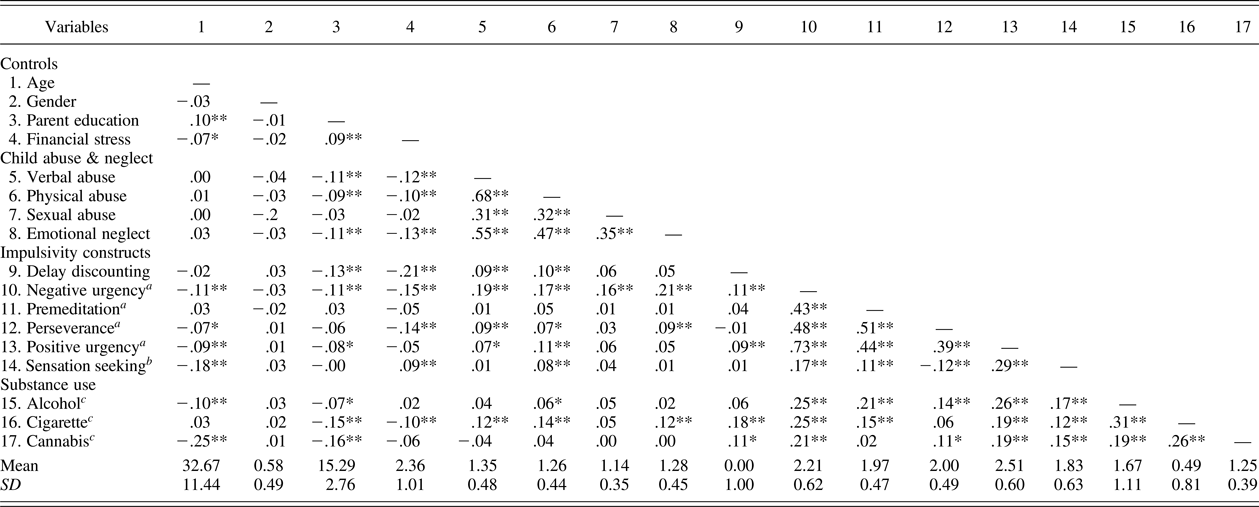
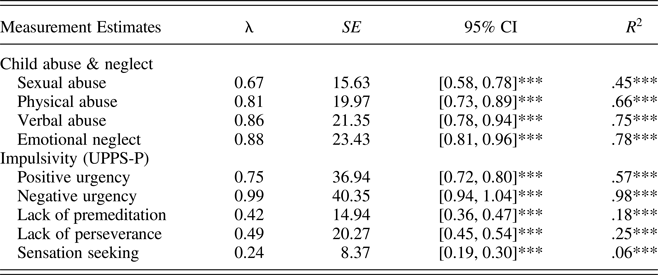
Table 4 presents descriptive statistics and the bivariate correlations for the study variables. The measurement model is presented in Table 5. The model fit the data well: χ2 (21) = 36.06, p = .02; CFI = 0.99, RMSEA = 0.03, weighted root mean square residual (WRMR) = 0.75. As shown in Table 5, factor loadings were significant, in the correct direction, and exceeded 0.36, with the exception of sensation seeking (0.24). No offending estimates were present in the analyses (i.e., negative residual variances, correlations greater than 1, or modification indices greater than 4.0).
Study 2 cross-sectional study descriptive statistics and bivariate correlations of study variables

aUrgency, urgency, premeditation, perseverance, sensation seeking, and positive urgency impulsive behavior scale subscale composites. Gender was coded as male = 0 and female = 1.
bTransformed with a square root.
cAUDIT, Alcohol Use Disorder Identification Test composite score last 3 months.
*p < .05. **p < .01.
Study 2 measurement model estimates of early adversity and impulsivity (UPPS-P)

Note: Model fit for Study 1 measurement model: χ2 (21) = 36.06, p < .05, root mean square error of approximation = 0.03, comparative fit index = 0.99, weighted root mean square residual = 0.93. UPPS-P, urgency, premeditation, perseverance, sensation seeking, and positive urgency subscales.
Indirect effects via latent impulsivity and delayed reward discounting
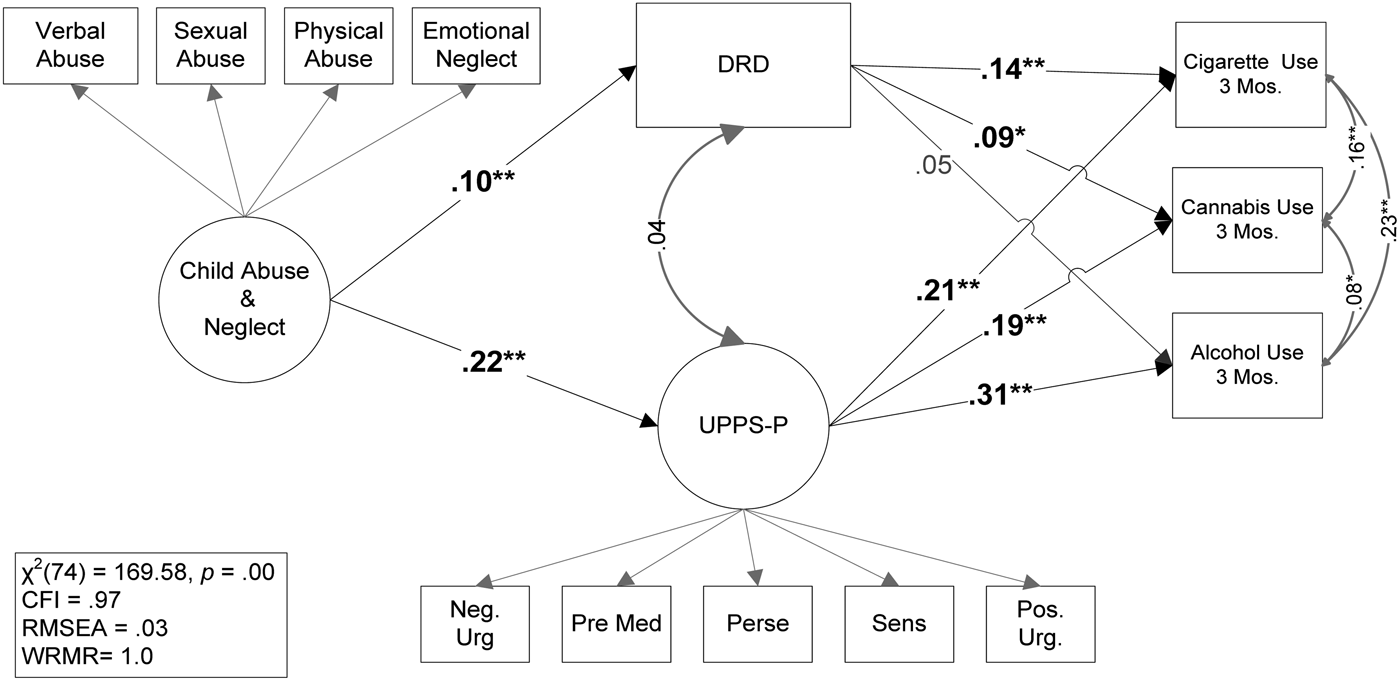
We examined the pathway from child abuse and neglect to substance use through the impulsivity factor and the delay discounting variable. The model was tested initially with age, gender, and financial stress controlled. The model fit the data as follows: χ2 (74) = 169.58, p < .01; CFI = 0.97, RMSEA = 0.03, WRMR = 1.05. Youth age was associated negatively with cannabis use (B = –0.01, p < .01). Financial stress was associated negatively with delayed reward discounting (B = –0.01, p < .01).
Child abuse and neglect was significantly associated with the impulsivity construct (B = 0.20, p < .01) and the delay discounting measure (B = 0.01, p < .05; Figure 2). The impulsivity construct was significantly and positively associated with alcohol (B = 0.56, p < .01), cigarette (B = 0.29, p < .01), and cannabis use (B = 0.12, p < .01), whereas delay discounting was significantly associated only with cannabis (B = 0.81, p < .05) and cigarette use (B = 2.58, p < .01).
Study 2 child abuse and neglect, UPPS-P, discounting, and standard use. Standardized parameter estimates shown. Age, gender, and financial stress are covariates. *p < .05, **p < .01.

The indirect effect from child abuse and neglect to substance outcomes via the UPPS-P was significant for alcohol use (B = 0.11, SE = 4.63, 95% CI [0.06, 0.16]), cigarette use, B = 0.06, SE = 3.44, 95% CI [0.02, 0.09], and cannabis use, B = 0.03, SE = 3.17, 95% CI [0.01, 0.04]. The indirect effect from child abuse and neglect to cigarette use via delay discounting was significant as well, B = 0.02, SE = 2.02, 95% CI [0.001, 0.03], though the indirect effect for cannabis use was not, B = 0.01, SE = 1.47, 95%CI [−0.002, 0.01]. To examine the relative strengths of these indirect effects, post hoc comparisons were conducted (Preacher & Hayes, Reference Preacher and Hayes2008). These comparisons indicated that for cigarette use, the impulsivity construct was a significantly stronger mediator of child abuse and neglect than was delayed reward discounting (ΔB = 0.04, p < .05). The impulsivity factor most strongly mediated the effect of child abuse and neglect on alcohol use (ΔB = 0.06, p < .01), followed by cigarette use (ΔB = 0.03, p < .05). Finally, the strength of the impulsivity construct as a mediator between child abuse and neglect and substance use was the weakest for cannabis use (ΔB = 0.01, p < .01) when compared to either alcohol or cigarette use.
Gender differences in the paths between adverse early childhood experiences and impulsivity/delayed reward discounting and impulsivity/delayed reward discounting to alcohol, cigarette, and cannabis use were examined with multiple group analyses. No significant differences in the path coefficients emerged based on sex.
Indirect effects via subcomponents of impulsivity
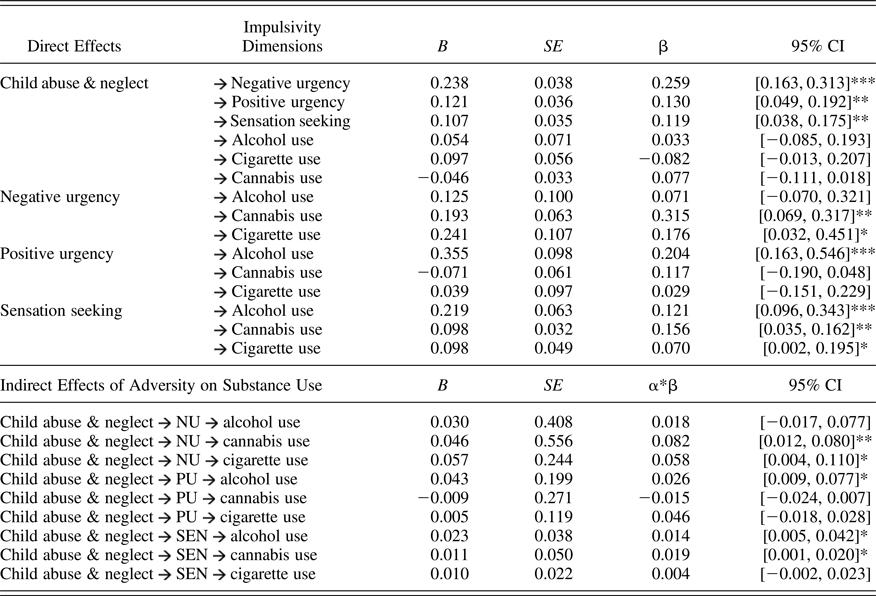
To clarify the associations among child abuse and neglect, specific subcomponents of impulsivity, and substance use outcomes, a parallel indirect effects model was used (Preacher & Hayes, Reference Preacher and Hayes2008). Specifically, the five subscales of the UPPS-P were modeled concurrently to test their independent role as indirect effects between adverse childhood experiences and alcohol, nicotine, and cannabis use. Financial stress, gender, and age were included as covariates. Model fit was acceptable: χ2 (4) = 38.82, p < .01; CFI = 0.98, RMSEA = 0.09, standard root mean square residual = 0.02. Financial stress was significantly associated with negative urgency (B = –0.10, p < .01) and sensation seeking (B = 0.04, p < .01). Males evinced higher levels of sensation seeking (B = –0.30, p < .01) and positive urgency (B = –0.20, p < .01) than did females. Younger individuals reported higher levels of sensation seeking (B = –0.01, p < .01) and negative urgency (B = –0.01, p < .01) than did older individuals. As shown in Table 6, adverse childhood experiences were associated significantly with negative urgency (B = 0.05, p < .01), positive urgency (B = 0.02, p < .01), and sensation seeking (B = 0.03, p < .01); no significant effects emerged for lack of premeditation (B = 0.01, p = ns) or lack of perseverance (B = 0.01, p = ns). Alcohol use was significantly associated with negative urgency (B = 0.25, p < .01), sensation seeking (B = 0.15, p < .05), and lack of premeditation (B = 0.21, p < .05). Cannabis use was significantly associated with negative urgency (B = 0.09, p < .05), sensation seeking (B = 0.07, p < .05), and lack of premeditation (B = –0.10, p < .05). Finally, cigarette use was significantly associated with negative urgency (B = 0.30, p < .01), lack of premeditation (B = 0.22, p < .01), and lack of perseverance (B = –0.18, p < .01).
Study 2 direct and indirect paths predicting dimensions of impulsivity, and substance use

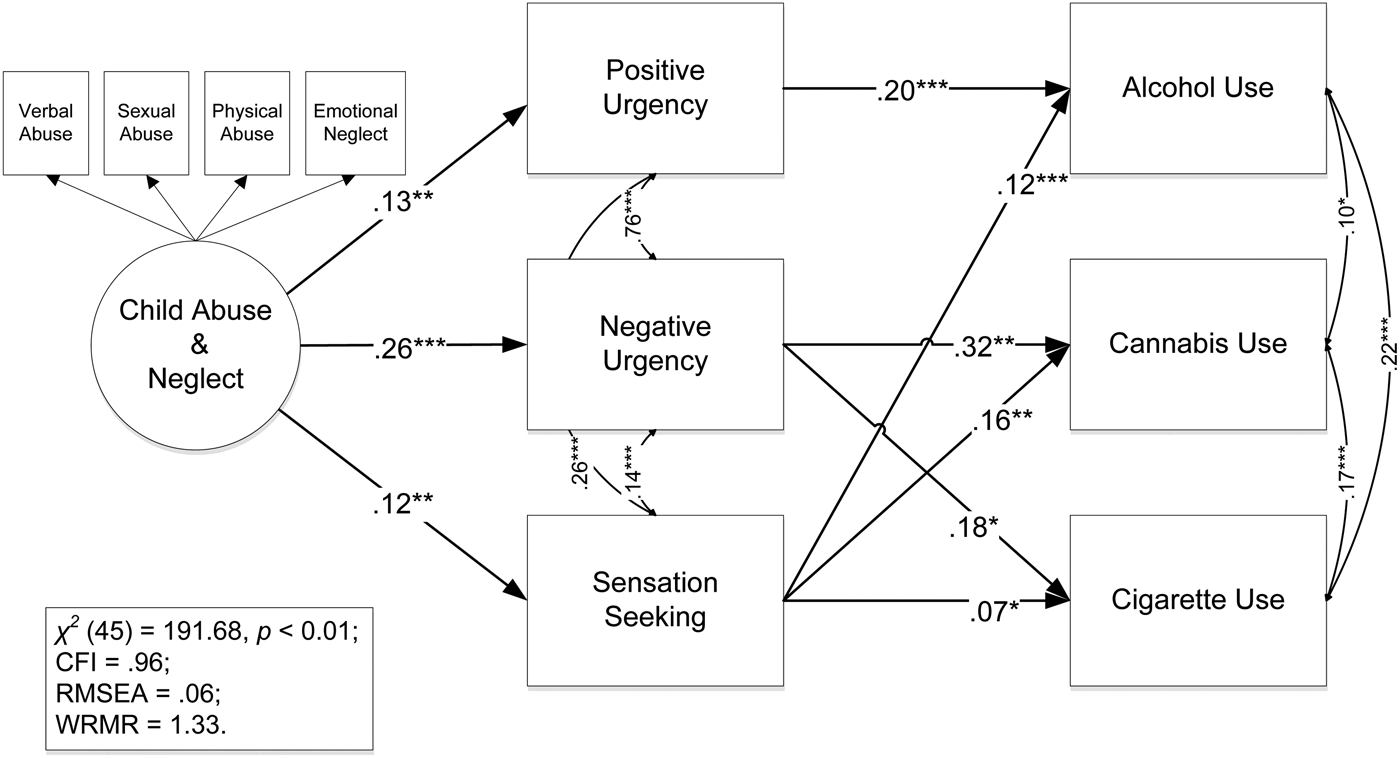
Note: NU, negative urgency; PU, positive urgency; SEN, sensation seeking. Model fit is as follows: χ2 (45) = 191.68, p < 0.01; comparative fit index = 0.96, root mean square error of approximation = 0.06, weighted root mean square residual = 1.33. Age, gender, and financial stress are used as covariates (not shown for brevity).
*p < .05. **p < .01, ***p < .001.
Next, we tested the significance of indirect effects after trimming nonsignificant mediators from the model (i.e., lack of premeditation or lack of perseverance). The resulting model fit the data as follows: χ2 (13) = 87.63, p < .01; CFI = 0.96, RMSEA = 0.06, WRMR = 1.33; direct and indirect effects are presented in Table 3 and Figure 3. Indirect effect analyses revealed that all three impulsivity subscales significantly mediated the link from adverse childhood experiences to alcohol use, whereas negative urgency, B = 0.005, SE = 1.93, 95% CI [0.001, 0.01], and sensation seeking, B = 0.002, SE = 2.30, 95% CI [0.001, 0.005], mediated the link from adverse childhood experiences to cannabis use. Only negative urgency mediated the link from adverse childhood experiences to cigarette use, B = 0.02, SE = 3.49, 95% CI [0.01, 0.02].
Study 2 cross-sectional findings for child abuse and neglect, dimensions of impulsivity, and substance sue outcomes. Standardized parameter estimates shown. Nonsignificant paths not shown for clarity's sake. Age, gender, and financial stress are used as covariates. *p < .05, **p < .01, ***p < .001.

Discussion of Study 2
We investigated the indirect influences of delay discounting and self-reported impulsivity on the link between adverse childhood experiences and past 3 months’ substance use. Findings supported the importance of investigating associations between substance use and different aspects and conceptualizations of impulsivity, obtained by self-report and task-based measures. We found evidence to support the potential for delayed reward discounting and a latent impulsivity construct to transmit the influence of adverse childhood experiences to substance use. These putative mediators were independent of each other, suggesting distinct impulsivity-related pathways that are affected by childhood adversity. The discounting path was most robust in explaining cigarette use, although mediation was evident for the use of other substances as well. In a set of dismantling analyses, we examined the unique contributions of different UPPS-P subscales in connecting adverse childhood experiences to substance use. Child abuse and neglect was significantly associated with negative urgency, positive urgency, and sensation seeking, but not significantly associated with lack of premeditation or lack of perseverance. Negative urgency, positive urgency, and sensation seeking indirectly connected child abuse and neglect to alcohol use, whereas negative urgency and sensation seeking indirectly linked child abuse to cannabis use. Finally, child abuse and neglect and cigarette use were indirectly associated via negative urgency. These results support research that has suggested that impulsivity is a heterogeneous construct with differential association across risk behaviors (Cyders & Smith, Reference Cyders and Smith2008; Smith et al., Reference Smith, Fischer, Cyders, Annus, Spillane and McCarthy2007; Whiteside & Lynam, Reference Whiteside and Lynam2001).
Past research has noted that discounting and self-reported measures of impulsivity are only modestly associated and there are inconsistent associations between different conceptualizations of impulsivity and substance use (Cyders & Coskunpinar, Reference Cyders and Coskunpinar2011). In our study, the constructs were distinct (no association) although both demonstrated independent associations with child abuse and neglect. These links supported the theoretical contention that child abuse and neglect is linked to a neurocognitive adaptation resulting in impulsive behavior, providing complementary and distinct forms of impulsivity measurement. In addition, the findings document the pathways from adverse rearing environment and substance use with greater specificity of the associations between the factor of child abuse and neglect and the modeled impulsivity dimensions. In examining the influence of impulsivity on substance use, delay discounting only predicted cigarette use, whereas self-reported impulsivity predicted all three form of substance use. Across studies, discounting has been particularly robust in predicting behavior in clinical samples (MacKillop et al., Reference MacKillop, Amlung, Few, Ray, Sweet and Munafò2011). It may be the case in our findings that cigarette users were more likely to be experiencing dependence and thus the discounting measure is especially sensitive to cigarette use. In contrast, discounting appears to be less robust as a predictor of nonclinical levels of substance use such as that reported for alcohol and marijuana by the vast majority of our sample. From a developmental psychopathology perspective, it is possible that self-reported impulsivity captures an early stage of vulnerability in the pathway to problematic substance use whereas delay discounting reflects a more advanced stage in addiction. Further research is needed to examine temporal associations between forms of impulsivity as well as to better understand the neurocognitive processes being assessed.
In our analyses of the unique effects of distinct UPPS-P subscales, we found associations between child abuse and neglect and (a) positive and negative urgency and (b) sensation seeking. The links between these subscales and substance use were complex, with only negative urgency predicting all three substances. The pattern of findings suggests that negative urgency is a robust indirect effect linking adversity to substance use. This is consistent with a recent study that found that child maltreatment independently predicted negative urgency net of other aspects of impulsivity (Gagnon, Daelman, McDuff, & Kocka, Reference Gagnon, Daelman, McDuff and Kocka2013). From a developmental perspective, child adversity affects multiple systems that regulate threat sensitivity and emotion processing (Kim & Cicchetti, Reference Kim and Cicchetti2010; Maughan & Cicchetti, Reference Maughan and Cicchetti2002; Morris et al., Reference Morris, Silk, Steinberg, Myers and Robinson2007). Adverse childhood experiences may present significant threats to the optimal development of emotional understanding and regulation, partly due to chaotic or hostile interactions in the household. In such environments, children are less likely to learn effective strategies to regulate their emotional states. An unpredictable and disorganized environment would make children particularly vulnerable to frequent negative emotional experiences, including anger, frustration, reactivity, and irritability (Alessandri, Reference Alessandri1991; Erickson, Egeland, & Pianta, Reference Erickson, Egeland, Pianta, Cicchetti and Carlson1989; Shields & Cicchetti, Reference Shields and Cicchetti1998).
An indirect pathway via sensation seeking, though less robust, was also in evidence, connecting adversity to alcohol use and marijuana use. Sensation seeking refers to the tendency to seek out novel or thrilling stimulation (Whiteside et al., Reference Whiteside, Lynam, Miller and Reynolds2005). Past studies document the influence of adverse childhood experiences on systems associated with reward and self-control. Reward pathways are known to affect sensation-seeking behavior and the self-control systems that modulate tendencies toward sensation seeking (Steinberg, Reference Steinberg2007). It is conceivable that increased exposure to adversity potentiates higher levels of sensation seeking due to a combination of higher inclinations to seek excitement coupled with reduced effectiveness in self-regulation (Sinha & Jastreboff, Reference Sinha and Jastreboff2013).
Positive urgency was a mediator of the link between child abuse and neglect and alcohol use. This finding is consistent with research on substance use motives that identify enhancement motives as important in subclinical levels of alcohol use (Adams et al., Reference Adams, Kaiser, Lynam, Charnigo and Milich2012). That is, drugs can be used recreationally or viewed as a means to enhance social activities. Thus, increased use of drugs in adolescence may occur in the context of positive as well as negative emotions.
Limitations
Limitations of Study 2 pertain to the use of self-report measures, the cross-sectional collection of data, and sample generalizability. Self-report biases have been discussed above in Study 1. Cross-sectional findings must be interpreted with caution due to the potential for substance use to influence impulsivity. This concern is mitigated to some degree by Study 1, which included a longitudinal design with repeated measures. It is possible that the linkages between the child abuse and neglect and substance use were significant only among two of the five UPPS dimensions due to limited power or a lack of variability in substance use among this sample. Finally, because M-Turk does not use random sampling, the correspondence of participants’ demographic characteristics with those of representative US samples is unknown.
General Discussion
Childhood adversity and impulsivity are established predictors of substance use in adolescence and young adulthood. In the present study, we tested the hypothesis that the latter may be a mechanism through which the former increases the risk for subsequent substance use. We investigated this hypothesis using two studies. The main aim of Study 1, with a longitudinal, representative data set, was to test the indirect link between child abuse and neglect and substance use in young adulthood via impulsivity in adolescence. The results supported a model in which child abuse and neglect experiences are related to cannabis and cigarette use via impulsive behavior in adolescence, after controlling for prior impulsivity, substance use, and demographic characteristics. The aim of the cross-sectional study was to investigate the indirect influence of impulsivity using delayed discounting and trait measures of impulsivity allowing greater assessment specificity. Results confirmed that the indirect paths from early life adversity to substance use were linked via two distinct perspectives on impulsivity: a self-report trait measure and a task-based assessment of delay discounting. We further found that among impulsivity trait subcomponents, negative urgency was the most robust factor connecting adversity to substance use.
The present research suggests that aspects of impulsivity, particularly those implicated in emotion regulation systems, reflect important neurocognitive intermediaries that link adverse childhood experiences and subsequent substance use in adulthood. These findings are consistent with theoretical models and recent research with both animals and humans that address neurobiological changes that affect substance use vulnerability. Lovallo (Reference Lovallo2013) proposed a model whereby early adversity gives rise to a constellation of physiological, cognitive, and affective tendencies that promote impulsive decision making. According to this model, stressful life experiences are processed through, and impacted by, regions of the brain that evaluate ongoing events and shape coping behaviors and behavioral responses. Backed primarily by animal research, this model suggests that early-life adversity may reinforce tendencies to discount future rewards. For example, Lovic et al. (Reference Lovic, Keen, Fletcher and Fleming2011) found that maternal separation and social isolation among rat pups led to greater impulsive action and reduced the pups’ behavioral flexibility when they became adults. Animal studies suggest that early-life adversity may alter dopamine activity and induce adaptations in regions such as the orbitofrontal cortex and nucleus accumbens, factors which are known to underlie impulsive behavior and substance use (Hosking & Winstanley, Reference Hosking and Winstanley2011; Winstanley, Olausson, Taylor, & Jentsch, Reference Winstanley, Olausson, Taylor and Jentsch2010).
Emerging research with humans supports a similar link (Klanecky & McChargue, Reference Klanecky and McChargue2013; Lovallo, Reference Lovallo2013; Sinha & Jastreboff, Reference Sinha and Jastreboff2013). The key frontolimbic structures that determine the hypothalamic–pituitary–adrenal axis response to psychological stress include the amygdala (van Marle, Hermans, Qin, & Fernández, Reference van Marle, Hermans, Qin and Fernández2009), its outputs via the bed nuclei of the stria terminalis (Spencer, Buller, & Day, Reference Spencer, Buller and Day2005), the nucleus accumbens and the subgenual prefrontal cortex (Muhammad, Carroll, & Kolb, Reference Muhammad, Carroll and Kolb2012), and their collective outputs to the hypothalamus and brainstem (McEwen & Morrison, Reference McEwen and Morrison2013). These structures are, in turn, regulated by cortisol feedback during states of stress (Lovallo, Reference Lovallo2006). The adaptive purpose of this system is understood to be motivating approach and avoidance behaviors. Dysregulation of these frontolimbic relationships can result in reduced control over motivated behavior, which compromises affect and behavioral regulation processes associated with vulnerability to addiction. In addition, harsh rearing environments influence stress reactivity as measured by hypothalamus–pituitary–adrenal axis and cortisol regulation. Maltreated children have shown dampened diurnal cortisol regulation and increased internalizing problems, suggestive of serious threat to their neurobiological regulation capacities (Cicchetti, Rogosch, & Oshri, Reference Cicchetti, Rogosch and Oshri2011). Dysregulation of dopaminergic activity in the nucleus accumbens is putatively associated with reduced experience of reward and potentially greater chronic dysphoria, generating enhanced sensitivity to dopamine released following substance intake (Koob & Kreek, Reference Koob and Kreek2007). This research is consistent with evidence that stress exposure during development may affect brain structures needed for normal stimulation of cortisol release during stress (De Bellis et al., Reference De Bellis, Baum, Birmaher, Keshavan, Eccard, Boring and Ryan1999). Overall, mounting evidence and theoretical conceptualization suggest that early stressful experiences may alter development of critical brain structures involved in downregulating dopamine activity, which can lead individuals exposed to adversity to develop disinhibited behaviors and a behavioral tendency toward substance use (Hosking & Winstanley, Reference Hosking and Winstanley2011).
Clinical implications
Accumulating research suggests that delayed reward discounting and impulsive personality traits are strongly linked to an individual's executive functioning (Bobova, Finn, Rickert, & Lucas, Reference Bobova, Finn, Rickert and Lucas2009; Shamosh et al., Reference Shamosh, DeYoung, Green, Reis, Johnson, Conway and Gray2008). Hence, clinical researchers have become interested in changing impulsivity-related behaviors including discounting of future rewards with interventions designed to enhance executive functioning. As youth who were exposed to early life stress induced by child abuse and neglect appear to be at increased cognitive risk, they may benefit from preventive intervention programs that address cognitive vulnerabilities at early stages of development. Ultimately, the goal of this research is to better conceptualize the etiology of the decision-making impairments observed in youth and young adults exposed to harsh rearing environments and, from there, to develop interventions that will help individuals make more appropriate choices. At present, relatively few evidence-based interventions for maltreated children and adolescents focus on impaired decision making. Recent research, however, underscores the promise of such approaches. Jankowski et al. (Reference Jankowski, Bruce, Beauchamp, Roos, Moore and Fisher2016) examined the impact of participation in multidimensional foster care treatment during preschool to maltreated children who received services as usual. Children who received multidimensional foster care treatment showed increased response inhibition as early adolescents. Weller, Leve, Kim, Bhimji, and Fisher (Reference Weller, Leve, Kim, Bhimji and Fisher2015) found that maltreated foster girls, assigned to risk prevention intervention during early adolescence were able to improve their decision making compared to a treatment as usual control. This study was particularly noteworthy as it demonstrated the plasticity of executive functioning training in girls several years after experiencing childhood adversity. Taken together, these studies suggest the importance of approaches that targeted both individual and family-based modalities that support self-regulation. In addition, several such interventions have shown to be effective in reducing risk behaviors among adults with prefrontal cortex deficits (Bickel et al., Reference Bickel, Yi, Landes, Hill and Baxter2011; Hewitt, Evans, & Dritschel, Reference Hewitt, Evans and Dritschel2006). In particular, recent studies show that future thinking reduces the rate of delay discounting through a modulation of neural decision-making and episodic future thinking networks (Bickel et al., Reference Bickel, Yi, Landes, Hill and Baxter2011; Daniel, Stanton, & Epstein, Reference Daniel, Stanton and Epstein2013; Peters & Büchel, Reference Peters and Büchel2010). Alternatively, given the prominence of negative urgency in the current findings, strategies for improving coping with strong affective states, such as emotion regulation training (Kimbrough, Magyari, Langenberg, Chesney, & Berman, Reference Kimbrough, Magyari, Langenberg, Chesney and Berman2010; Mendelson et al., Reference Mendelson, Greenberg, Dariotis, Gould, Rhoades and Leaf2010), may be of particular benefit for individuals who have experienced early life stress.
Strengths and limitations
The present studies have limitations that should be considered. The use of self-report measures is subject to a number of biases, which have been discussed above. Future studies that incorporate archival records of childhood adversity, observations of impulsivity, as well as additional task-based measures and biomarkers of substance use are needed to validate the present findings. In addition, to assess for adverse rearing environment, child abuse and neglect, was modeled as a latent factor, which was possible due to the signficant covariance between child maltreatment types. However, future research may contribute to knowledge on the specificity in associations between child maltreatment types and impulsivity dimensions. Effect sizes observed in the two studies were generally in the small to medium range, suggesting that these influences are present but are by no means the exclusive drivers of the link between adversity and substance abuse. Intergenerational continuities, such as behaviors and lifestyles transferred from parent to child (i.e., parental alcoholism), are not specifically examined in the current study, though they may represent pathways through which the development of substance use behaviors occur (Wickrama, Conger, Wallace, & Elder, Reference Wickrama, Conger, Wallace and Elder1999). These limitations notwithstanding, across two studies with diverse methodologies, we documented impulsivity as a potential consequence of adverse childhood experiences that increases vulnerability to substance use in adolescence. Our findings also are consonant with a growing consensus that impulsivity is a multidimensional construct, and that the various impulsivity measures reflect separate underlying processes.