Introduction
Nasopharyngeal carcinoma (NPC) is a common head and neck cancer in Southeast Asia. Platinum-based concurrent chemoradiotherapy is the recommended treatment for NPC stage III or IV.Reference Al-Sarraf, LeBlanc, Giri, Fu, Cooper and Voung1–Reference Lee, Lau, Tung, Chau, Chappell and Xu5 Hearing loss that may impact quality of life is one of the major complications of the chemoradiotherapy.
Many studies have reported individual ototoxicity effects of cisplatin or cisplatin plus carboplatin and radiation.Reference Musial-Bright, Fengler, Henze and Hernáiz6–Reference Dean, Hayashi, Albert, King, Karzon and Hayashi8 In a study by Bertolini et al., 15 per cent of 120 children treated with a median cumulative dose of 400 mg/m2 of cisplatin and 1600 mg/m2 of carboplatin developed hearing loss at 1–8 kHz.Reference Bertolini, Lassalle, Mercier, Raquin, Izzi and Corradini7 The rate of hearing loss is expected to increase with the use of combined modality therapy.Reference Pearson, Meyer, Adams and Ondrey9–Reference Oh, Kim, Choi, Kang and Chun12 Pearson et al. reported that more than 50 per cent of the patients had a change in pure tone average (PTA) of more than 10 dB or greater, and more than 85 per cent of the patients had high frequency hearing loss.Reference Pearson, Meyer, Adams and Ondrey9
Many clinical trials of induction chemotherapy with taxanes have been conducted to provide a new chemotherapeutic regimen with less toxicity that improves efficacy for treating advanced NPC.Reference Ekenel, Keskin, Basaran, Ozdemir, Meral and Altun13, Reference Kong, Zhang, Hu and Guo14 Induction chemotherapy with docetaxel, cisplatin and 5-fluorouracil followed by concurrent chemoradiotherapy is a modality of treatment for advanced NPC conducted in a tertiary centre.15 This has resulted in excellent overall survival and locoregional control, with acceptable toxicity.Reference Bossi, Orlandi, Bergamini, Locati, Granata and Mirabile16–Reference Guo, Lin, Xu, Chen, Wang and Huang19
To date, there has been no direct comparative study of the rate of hearing loss between such treatments in NPC patients. This study aimed to compare the incidence of sensorineural hearing loss (SNHL) between those treated with docetaxel, cisplatin and 5-fluorouracil induction chemotherapy followed by concurrent chemoradiotherapy and those treated with concurrent chemoradiotherapy followed by adjuvant chemotherapy for advanced NPC.
Materials and methods
Thirty-six patients were clinically defined as having advanced nasopharyngeal carcinoma stage IIB–IVB at the time of receiving treatment (at the Department of Otolaryngology, Songklanagarind Hospital), from 2010 to 2012.
The patients were classified into two groups by computer randomisation. The first group (arm 1) consisted of 17 patients who received induction chemotherapy with docetaxel, cisplatin and 5-fluorouracil followed by carboplatin concurrent chemoradiotherapy. The second group (arm 2) consisted of 19 patients who received conventional treatment; that is, cisplatin concurrent chemoradiotherapy followed by adjuvant cisplatin and 5-fluorouracil regimen.
Patients with a second primary carcinoma, evidence of metastasis or recurrent tumour, carcinoma involvement of the middle or inner ear, severe sepsis, or an Eastern Cooperative Oncology Group performance status of more than 1, and those who had undergone previous radiation or chemotherapy, were excluded.
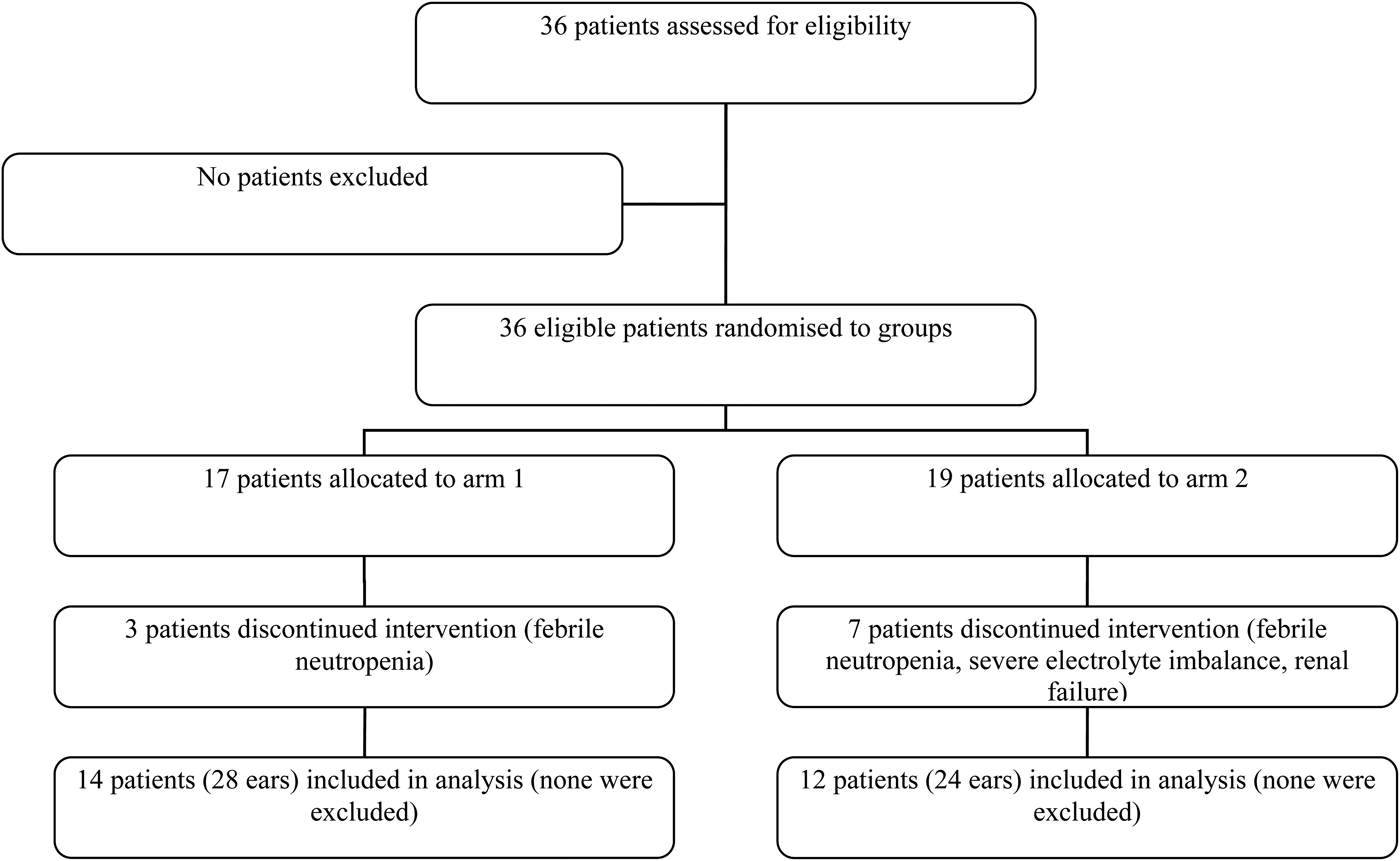
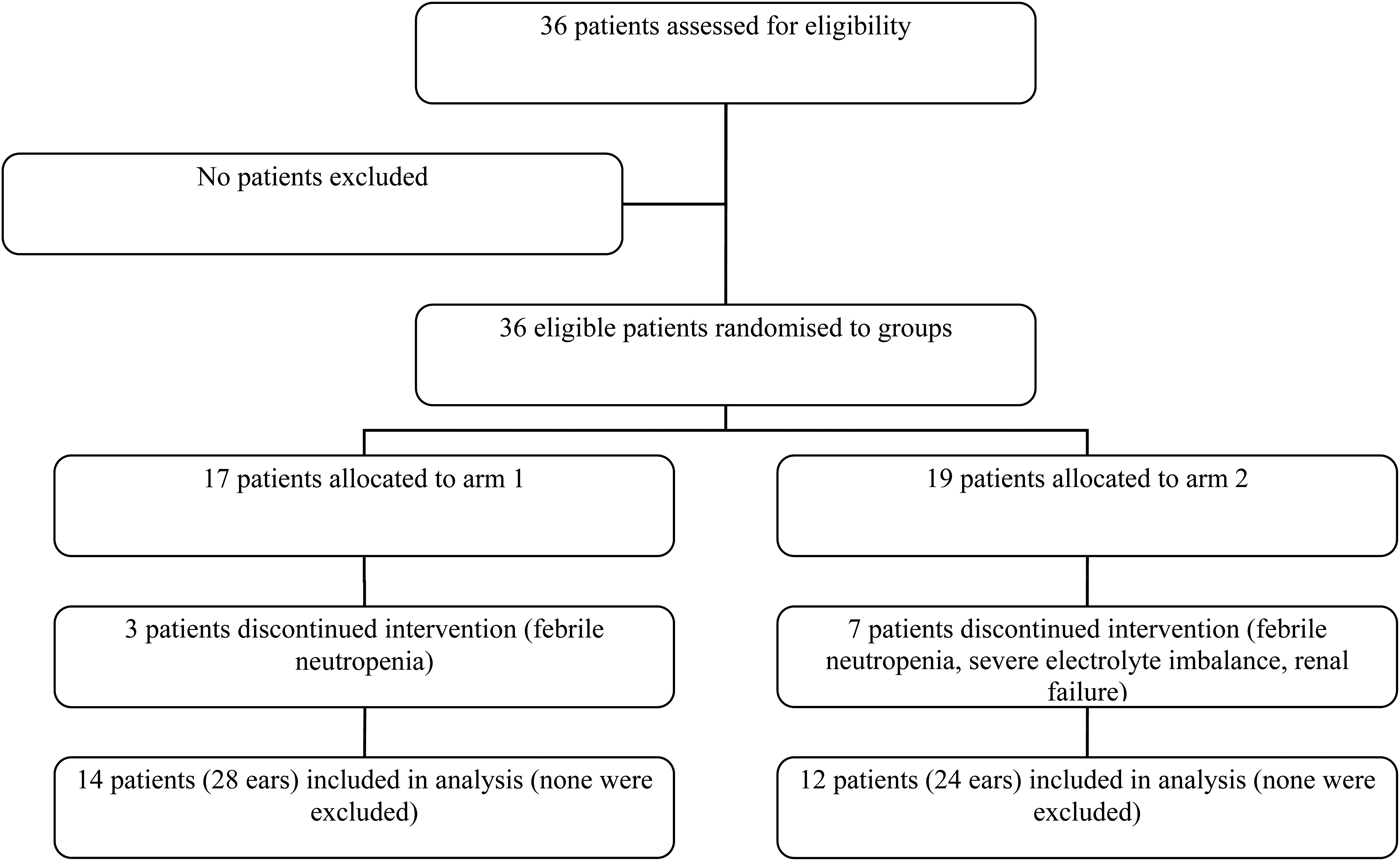
Patients who participated in this study signed an informed consent form that was approved by the Ethics Committee (Faculty of Medicine, Prince of Songkla University). After the medical history had been taken, and physical examination and laboratory investigation data had been recorded, all patients were treated in either arm 1 or arm 2 (Figure 1).
Flow diagram of the study, which compares ototoxicity effects between patients in arm 1 (treated with docetaxel, cisplatin and 5-fluorouracil induction chemotherapy followed by carboplatin concurrent chemoradiotherapy) and arm 2 (concurrent chemoradiotherapy followed by a cisplatin and 5-fluorouracil regimen).
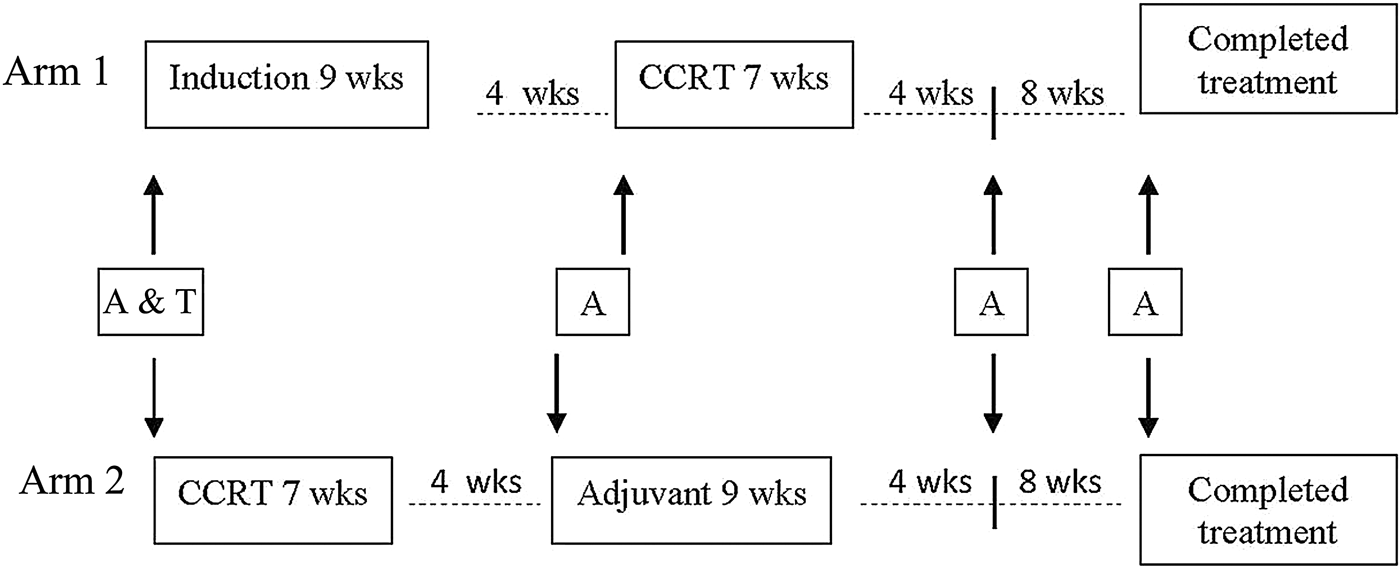
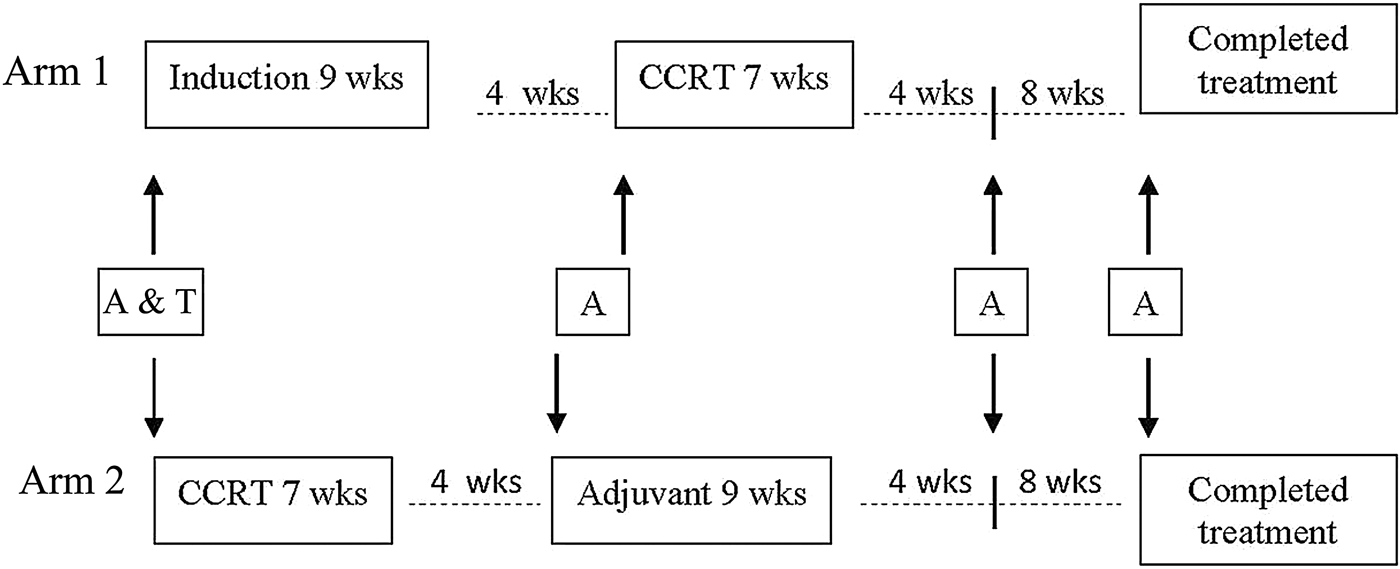
In arm 1, serial audiometry and/or tympanometry were performed: before the treatment (pre-treatment), 4 weeks after induction therapy (post-induction), 4 weeks after concurrent chemoradiotherapy (post concurrent chemoradiotherapy) and 12 weeks after concurrent chemoradiotherapy (post-treatment). In arm 2, serial audiometry and/or tympanometry were performed: before the treatment (pre-treatment), 4 weeks after concurrent chemoradiotherapy (post concurrent chemoradiotherapy), 4 weeks after adjuvant treatment (post-adjuvant) and 12 weeks after adjuvant treatment (post-treatment) (Figure 2).
Schematic of study design. Audiometry and tympanometry were performed before and 12 weeks after treatment in both arms. Serial audiometry was performed four weeks after induction and concurrent chemoradiotherapy in arm 1, and four weeks after concurrent chemoradiotherapy and adjuvant treatment in arm 2. Wks = weeks; CCRT = concurrent chemoradiotherapy; A = audiometry; T = tympanometry
Baseline hearing characteristics and post-treatment scattergrams relating average air conduction PTA thresholds to word recognitions score were reported according to the American Academy of Otolaryngology – Head and Neck Surgery hearing outcomes reporting guidelines. The reported PTA was calculated using 0.5, 1, 2 and 3 kHz air conduction thresholds.
The incidence of SNHL at speech frequencies and bone conduction threshold changes were compared between the two groups. The SNHL at speech frequencies was defined as an increase in bone conduction thresholds at 0.5, 1, 2 and 4 kHz of more than 10 dB after treatment completion. The presence of otitis media with effusion was also recorded. We used bone conduction thresholds measured at 0.5–4 kHz that were less affected by outer- or middle-ear lesions to evaluate the SNHL.
Statistical analysis
Bone conduction threshold changes during treatment, post-treatment and between the two groups were assessed for significance using the Wilcoxon rank sum test. Fisher's exact test was used to assess other discrete data. A p-value of less than or equal to 0.05 was considered statistically significant.
Results
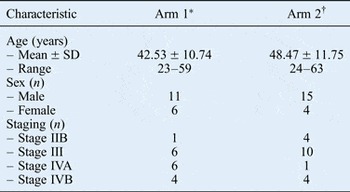
Demographic data for the 36 patients in both arms of the study are shown in Table I. Ten patients (three from arm 1 and seven from arm 2) were excluded because of the toxicity of the treatment, which resulted in prolonged febrile neutropenia, severe renal failure and severe electrolyte imbalance. The mean follow-up period was seven months and the mean radiation dose was 7000 cGy.
Demographic data

*n = 17; †n = 19. SD = standard deviation
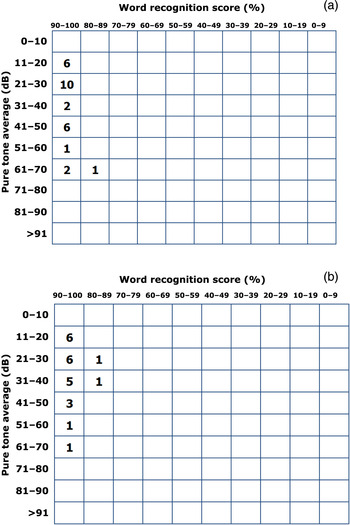
Baseline hearing characteristics of those in arm 1 (28 ears) and arm 2 (24 ears) are shown in Figure 3. The incidence of otitis media with effusion pre-treatment was 50 per cent (14 of the 28 ears) in arm 1 and 54 per cent (13 of the 24 ears) in arm 2 (p = 0.98).
Scattergram of pre-treatment hearing results for patients in arm 1 (a) and arm 2 (b). Values in squares represent numbers of ears.

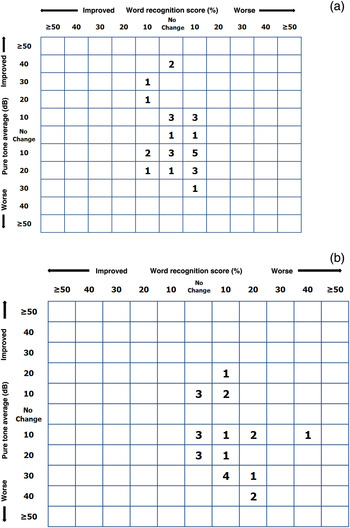
Hearing outcomes after completion of the treatment are shown in Figure 4. In arm 1, 9 of the 28 ears had a decrease in PTA and a worse word recognition score. In arm 2, 12 of the 24 ears had a decrease in PTA and a worse word recognition score.
Post-treatment scattergram showing change in hearing of patients in arm 1 (a) and arm 2 (b). Values in squares represent numbers of ears.

The incidence of otitis media with effusion post-treatment was 25 per cent (7 of the 28 ears) in arm 1 and 54 per cent (13 of the 24 ears) in arm 2. The incidence of SNHL at speech frequencies was 10 per cent (3 of the 28 ears) in arm 1 and 50 per cent (12 of the 24 ears) in arm 2 (p = 0.0027).
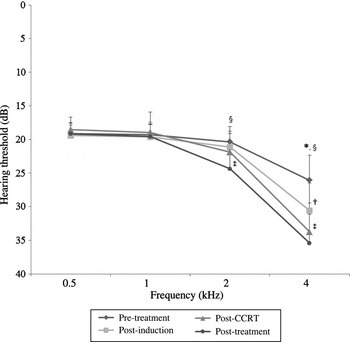
In arm 1, significant differences between mean baseline and post-treatment bone conduction thresholds were observed at 2–4 kHz (p < 0.05). During treatment, bone conduction threshold changes were observed at 4 kHz after induction chemotherapy and following concurrent chemoradiotherapy (Figure 5).
Bone conduction threshold changes for patients in arm 1. Data are shown as means (standard error) (p < 0.05). *Pre-treatment versus post-induction; †post-induction versus post concurrent chemoradiotherapy; ‡post concurrent chemoradiotherapy versus post-treatment; §pre-treatment versus post-treatment. CCRT = concurrent chemoradiotherapy

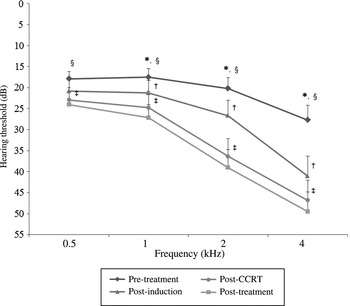
In arm 2, significant differences between the mean baseline and post-treatment bone conduction thresholds were observed at all speech frequencies (0.5–4 kHz) (p < 0.05). During treatment, bone conduction threshold changes were observed at 1–4 kHz following concurrent chemoradiotherapy and adjuvant chemotherapy (Figure 6).
Bone conduction threshold changes for patients in arm 2. Data are shown as means (standard error) (p < 0.05). *Pre-treatment versus post concurrent chemoradiotherapy; †post concurrent chemoradiotherapy versus post-adjuvant; ‡post-adjuvant versus post-treatment; §pre-treatment versus post-treatment. CCRT = concurrent chemoradiotherapy

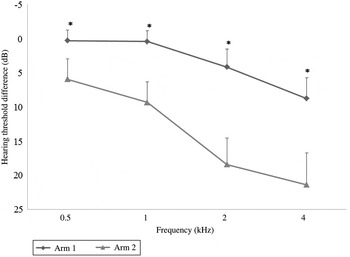
There was a significant difference in the mean difference of bone conduction thresholds pre- and post-treatment between arm 1 and arm 2 at 0.5–4 kHz (p < 0.05) (Figure 7).
Comparison of bone conduction threshold changes after completed treatment between patients in arm 1 and arm 2. *p < 0.05

Discussion
Platinum-based concurrent chemoradiotherapy is the recommended treatment for advanced nasopharyngeal cancer (NPC). The effect of the treatment on hearing loss has been reported in many studies, with high frequency thresholds being more affected than the speech frequencies.Reference Musial-Bright, Fengler, Henze and Hernáiz6–Reference Oh, Kim, Choi, Kang and Chun12 Sensorineural hearing loss and/or otitis media effusion were the cause of post-treatment hearing loss in our study. Hearing outcomes following completion of treatment in this study are shown in Figure 4. There were more patients in arm 2 that had a decrease in PTA and a worse word recognition score than in arm 1.
This study aimed to compare the rate of SNHL at speech frequencies between the new modality of treatment and the conventional treatment; therefore, bone conduction threshold changes at 0.5, 1, 2 and 4 kHz of more than 10 dB following treatment completion were used to determine SNHL.
There was a significantly lower incidence of SNHL at speech frequencies (10 per cent) in arm 1 patients, who received induction chemotherapy with docetaxel, cisplatin and 5-fluorouracil followed by concurrent chemoradiotherapy, when compared to arm 2 patients (50 per cent). The first reason for this finding is the lower total dose of cisplatin in arm 1 (225 mg/m2) than in arm 2 (540 mg/m2). A cumulative cisplatin dose greater than 400 mg/m2 is associated with increased risk of cisplatin-induced ototoxicity.Reference Bertolini, Lassalle, Mercier, Raquin, Izzi and Corradini7 The second reason is the evidence to suggest that using carboplatin during concurrent chemoradiotherapy (as in arm 1) at a standard dose does not appear to be a significant risk factor for ototoxicity, even in patients who have already been treated with cisplatin or radiation.Reference Bertolini, Lassalle, Mercier, Raquin, Izzi and Corradini7, Reference Oh, Kim, Choi, Kang and Chun12
There was a significant change in bone conduction thresholds only at 4 kHz after induction chemotherapy and following concurrent chemoradiotherapy in arm 1. This may be the effect of cisplatin, which initially impairs hearing in the higher frequencies and progresses to lower frequencies with an increasing cumulative dose.
Taxanes, the new generation of antineoplastic agents, are now frequently given to patients for various types of malignancies, especially NPC patients who have the highest risk of SNHL from receiving radiation to cochlear structures and platinum-based chemotherapy. Few studies have investigated the ototoxic effects of taxanes. Atas et al. demonstrated that taxol causes mild to moderate hearing loss in mice, and histopathological studies showed degenerative changes in the cochlea.Reference Atas, Agca and Sarac20 Ridwelski et al. reported ototoxic effects of taxanes when used with cisplatin in 2 of 39 non-head and neck cancer patients.Reference Ridwelski, Gebauer, Fahlke, Kroning, Kettner and Meyer21 Our study also showed that cisplatin and 5-fluorouracil induction with docetaxel, followed by concurrent chemoradiotherapy, in head and neck cancer has minimal ototoxic effects, although this side effect could also be attributed to platinum compounds. In one study that evaluated the ototoxicity of only taxanes in 101 breast and ovarian cancer patients, 2 of the patients (1.9 per cent) had SNHL in the 4–8 kHz range.Reference Sarafraz and Ahmadi22
• This study investigated sensorineural hearing loss (SNHL) rates in advanced nasopharyngeal cancer (NPC) patients
• A docetaxel, cisplatin and 5-fluorouracil induction chemotherapy plus concurrent chemoradiotherapy regimen was compared with a conventional concurrent chemoradiotherapy regimen
• Incidence of SNHL was lower after docetaxel, cisplatin and 5-fluorouracil induction chemotherapy plus concurrent chemoradiotherapy in the short-term follow up
• Half of NPC patients had reduced hearing ability and SNHL at speech frequencies following conventional concurrent chemoradiotherapy
In arm 2 of the current study, the incidence of SNHL at speech frequencies was 50 per cent. Changes in bone conduction thresholds were observed in the 0.5–4 kHz range after treatment. In addition, the mean difference in bone conduction thresholds pre- and post-treatment in arm 2 was significantly higher than that in arm 1 at all frequencies. Cheng et al. reported a similar incidence (57 per cent) of SNHL at the range of speech frequencies for patients receiving combined modality treatment for NPC.Reference Chen, Jackson, Budnick, Pfister, Kraus and Hunt10 The major risk factors for SNHL in arm 2 are the combined effects of radiation and cisplatin, which have been reported in many studies.Reference Pearson, Meyer, Adams and Ondrey9–Reference Oh, Kim, Choi, Kang and Chun12 Based on our findings, half of NPC patients may have reduced hearing ability after conventional concurrent chemoradiotherapy. The new modality of treatment may be an alternative treatment for high-risk patients to reduce the incidence of irreversible hearing loss and to optimise cancer control.
The limitations of our study are the small number of patients and the short follow-up period. The incidence of SNHL may be higher in long-term follow up because the radiation-induced ototoxicity develops within 6–12 months and progresses within 2 years after completion of the treatment.Reference Grau and Overgaard23 Additionally, other potential confounding factors may be the baseline hearing threshold and concurrent use of medication.
Conclusion
Induction chemotherapy with docetaxel, cisplatin and 5-fluorouracil followed by concurrent chemoradiotherapy has a lower incidence of SNHL at speech frequencies than conventional concurrent chemoradiotherapy. This regimen may be the preferred choice of treatment for hearing preservation.