Over five million men served in the British armed forces in the Second World War, roughly 3.8 million of them in the army. It was a central, formative experience in the lives of this large cohort, who were age eighteen to forty-five during the war years. And yet, although we have innumerable memoirs and a rich literature detailing the various military campaigns, very few social histories of the armed forces exist. Seventy years on, it is remarkable how much our assumptions and stereotypes still owe to popular novels and films; indeed, in recent years arguably more scholarly attention has been devoted to the women's auxiliaries (some 500,000 strong) and even to the experiences of American GIs in Britain. In part this lacuna reflects the long-standing division between social historians and the practitioners of military history, although for earlier periods—notably the First World War—some excellent studies have appeared.Footnote 2 It also stems from the explicit or implicit equation of the home front and the “civilians'” war, notwithstanding the fact that the majority of the army spent most of the war years on British soil. As a result, in numerous accounts of Britain at war, servicemen are treated as some kind of invisible “Other” whose absence and needs shaped the lives and anxieties of those at home, but otherwise scarcely appear.
Yet soldiers based in Britain moved back and forth between their homes and their camps and depots; sometimes they were called upon to clear rubble and help rescue squads in blitzed cities. During labor disputes on the docks, for example, they were deployed to unload cargo.Footnote 3 In a war where the line between combatants and civilians was constantly blurred by rhetoric that defined the home island as a battlefront, it is especially important to integrate the civilians' and forces' experiences. This essay offers some preliminary suggestions as to how this might be done, by focusing upon the conflicts that emerged between wartime publicity that depicted the war as transforming Britain into a more democratic and egalitarian society and an army structure that often seemed firmly resistant to that aim. This was especially evident in growing public discontent about the role of class in the selection of officers; ordinary servicemen's protests over conditions by using “strikes” and similar tactics from civilian life; and the contradictions that arose between the goal of raising morale by promoting discussion about what Britain was fighting for and the blanket restrictions of King's Regulations upon political expression and debate.
For the second time in a quarter century, the British army, a small, conservative, professional force, mostly designed for imperial duties, had to be rapidly transformed into a conscript force more than ten times its peacetime size, capable of fighting a modern, mechanized war in North Africa, Southeast Asia, and the European continent. Already two years after the end of the previous war, the army had shrunk to 370,000 men, and by 1927 its size was around 200,000, many of them dispersed in small garrisons overseas rather than in large fighting formations. Military expenditures were reduced drastically in the interwar decades, when the navy and air force had strategic priority. As the threat of fascism and the possibility of another conflict grew in the 1930s, the pressure to introduce conscription increased, but continuing disagreement over the issue within the Labour Party and the Conservative government's reluctance to face the likelihood of war meant that it was only in April 1939 that the first peacetime conscription was authorized.Footnote 4 At first service was limited to six months' training followed by service in the reserves for men age twenty to twenty-one. With the outbreak of war, military obligation was extended to all males from eighteen to forty-one years old, although registration proceeded slowly at first, affecting only those up to twenty-seven years by May 1940. Men of forty were not included until the summer of 1941. Even so, the sudden expansion created major problems in the supply of weapons and equipment, which were further increased by the heavy losses incurred in the retreat from France. Many men were forced to live under canvas for extended periods, and new recruits found themselves training without weapons. “After nearly three months in the army,” one private complained in December 1940, “I have not yet fired a rifle, never handled the equipment I am supposed ultimately to use, and possess no more knowledge than I did in civilian life of how to defend myself, let alone defend other people, and have all the time lived in the most miserable conditions under canvas.”Footnote 5 One considerable source of discontent was the army's regimental method of allocating recruits to its different occupational categories almost immediately after enlistment based on a perfunctory interview. This resulted in many mismatches and wastage of skills; men with valuable electrical and engineering skills, for example, were placed in boring jobs well below their capacity. Eventually, in the summer of 1941 a new system was introduced whereby recruits went first into a General Service Corps; there they did their six weeks of basic training and were given psychological and aptitude tests to determine their eventual placement. Job satisfaction improved markedly as a result.Footnote 6
Between the outbreak of war and June 1941, the army almost tripled in size to 2.2 million men. Some (less than a quarter) volunteered, motivated either by patriotism or the assumption that they might have a wider choice of service options. Most waited for their call-up letters; there was no reprise of the tumultuous scenes at enlistment centers in August 1914. Servicemen who had grown up after 1918 were in general better educated, more cynical and suspicious of the army, and more inclined to question authority than the generation that fought the Great War. Many had heard too much from their fathers about the carnage of the Somme and Ypres and the empty promises of “homes fit for heroes” to rush to join up.Footnote 7 On entering the forces, they underwent basic training: an endless round of parades, route marches, drills, saluting, and “spit and polish” designed to erode individuality and instill discipline, conformity, and obedience. Basic training had changed little since the previous war, and to many recruits the time spent polishing and preparing for inspections seemed pointless in the age of modern warfare.Footnote 8 Small infractions resulted in punishment or fatigues, and new recruits quickly learned the basic rules of survival: Avoid officers; never volunteer; carry out an order no matter how ridiculous; always walk as though you are on an errand, preferably with a bucket or a piece of paper in hand, so as to avoid being nabbed for some job; remain inconspicuous and learn how to look busy while doing nothing. It was a world sharply divided into “Them” and “Us,” calculated to promote teamwork and cooperation among “squaddies” and obedience to officers. But with mounting public dissatisfaction over the army's failures in Norway, France, and later Greece and Crete, it attracted growing criticism, especially from later intakes of men who tended to be older, many of them with trade union backgrounds. And while many officers returned from Dunkirk convinced that more discipline and drill was needed,Footnote 9 these army rituals often seemed to confirm the public's suspicion that its army was old-fashioned and obsolete in an era of Blitzkrieg.Footnote 10 Low's famous caricature of Colonel Blimp, which originated in the mid-1930s, became cultural shorthand for the army's perceived inadequacies.Footnote 11
By the end of 1941, and especially in comparison with the air force and navy, the army was widely viewed as inefficient and unprepared for the challenges it faced. A string of battlefield defeats and growing criticism directed at the pace and efficiency of wartime industrial mobilization generated a flood of articles and publications calling for radical reform. At first they focused largely on Neville Chamberlain and his fellow appeasers for failing to prepare the country for war. But the search for individual scapegoats soon gave way to a broader critique of Conservatism and the prewar social and political order, including the army—although war commentators were careful to distinguish the basic quality of the British fighting man and the systemic failings of the institution; thus, the debacle in France was “the story of an army doomed before they took the field.”Footnote 12 Just as pressure mounted for reorganization of the civilian war effort, including demands for greater joint consultation between workers and management in war production, so the hand of reformers within the War Office and Army Council was strengthened. Official documents described a growing crisis of morale among troops who, it was argued, lacked confidence in themselves, their commanders, and the quality of their training. The result was a series of major changes, calculated to improve efficiency and bring the army more closely into line with the prevailing ethos of a “people's war.” The reform agenda had four basic aspects: first, a revision of the basic military doctrine; second, the improvement of army welfare—which included pay, dependents allowances, provision of welfare services, and recreation (this paralleled the vast expansion of welfare and leisure provision for men and women conscripted into war factories); third, an expansion of educational services to raise morale and enhance soldiers' understanding of why they were fighting; and finally, measures to improve the relationship of officers and men, including an overhaul of the system of officer selection, which was widely considered unfair and a major cause of the army's poor performance. Military historians disagree over whether army leaders undertook fundamental reform of their military doctrine.Footnote 13 In the areas of welfare, officer training, and army education, there was a marked shift in the direction of recognizing that “civilians in uniform” required different treatment than the prewar professional force—even if some commanders resisted these changes and tried to limit their introduction at the regimental level.
Officers and Men
Every aspect of military life underscored the distance between officers and men, or “Other Ranks,” as they were usually called. Officers were explicitly advised to avoid undue socializing with ordinary soldiers. They had different food, accommodation, uniforms, clothing coupons, pensions, allowances, pay, medals, first-class (as opposed to third) rail permits, a separate mess, servants and—under the Geneva Convention—were segregated as POWs and could not be put to work. Around bases at home and overseas it was common practice to designate restaurants, bars, even brothels as out of bounds to ordinary soldiers. In few places, however, was the gulf between officers and men more glaring than on the overcrowded troopships that took thousands from England around the Cape to Suez or the Far East. Servicemen's memoirs and letters home describe these voyages at length: Not only were they the first journeys overseas for many, but in a ship's confined space military hierarchy seemed all the more oppressive. “Even after a year and a half's experience of the army's caste system,” Richard Hoggart remembered, “this was a shock.” The contrast between thousands of men herded into airless decks, sleeping wherever they could sling hammocks and eating in batches of 500, often stripped to the waist because of the heat, and the officers' cabins, with waiter service, white table napkins, and printed menus, was so marked as to be almost surreal. John Colville (Winston Churchill's private secretary and later a fighter pilot), uncharacteristically roughing it with a thousand other rankers on a six-week voyage to south Africa in early 1942, found that they were crammed into the three lowest decks, while officers, nurses, and members of the Women's Auxiliary Air Force (WAAFs) shared the “two spacious upper decks.” Most were bound for Singapore. “In the evenings,” he wrote “we watched the dancing on A-deck and listened to the music from a string orchestra. The menus for the five course dinners for the commissioned ranks were handed round on the mess-decks while we were fed on our unsavory rations. . . . It is not surprising that strong and bitter political feeling was rampant . . . long before we reached Durban.”Footnote 14
The segregation of officers and men exists to a degree in every army, the goal being to promote sufficient contact and familiarity to win loyalty and respect, but not so much as to endanger unquestioning obedience to authority. But in the British army, especially in the early war years, the division was particularly great, being heavily reinforced by differences of class. In its social composition, the British officer corps was not much different in 1939 from the pre-1914 era. The creation of a mass army in the First World War resulted in the commissioning of large numbers of officers from the ranks, but few of them remained in uniform or survived the budgetary parsimony and forced retirements once peace returned. Soldiering between the wars was a gentlemanly and not very taxing career. Promotion was slow and the pay was bad, and, even if they could somehow have surmounted the social barriers, working- or lower-middle-class recruits would have found costs of being an officer and belonging to a mess prohibitive without additional private resources. By the 1930s only five percent of commissioned officers were noncommissioned officers (NCOs) promoted from the ranks. Of the officers trained at the military academies of Sandhurst and Woolwich between 1920 and 1939, some eighty-five percent were privately educated (and sixty percent from the most prestigious private boarding schools), and even in 1939 their intake included only five percent from state grammar schools.Footnote 15
It was this socially exclusive military caste that became the chief scapegoat of radical critics—seen as a bastion of old-fashioned ideas and more adept at outmaneuvering domestic enemies than fighting foreign ones, including Leslie Hore-Belisha, whose removal from the War Office in early 1940 was widely interpreted as victory for “Blimpery.”Footnote 16 “The senior ranks of the army,” David French writes, “were in danger of becoming a self-perpetuating gerontocracy.”Footnote 17 Aware of the problem, the Army Council made serious efforts to weed out or demote older, incompetent officers, many of them called up from the reserves to fill the extreme shortage of the early months of the war. By the spring of 1942, some 17,600 reviews resulted in about 3,800 officers being transferred to other duties or retired altogether, and this helped to make room for the promotion of younger men.Footnote 18 Yet worries about the quality of officers continued, and not simply among radical critics—the diary of General Sir Alan Brooke, chief of the Imperial General Staff, attests to his continuing conviction that the army's best potential leaders had died on the Western Front two decades before.Footnote 19
The acute shortage of officers quickly became apparent after conscription was introduced. Large numbers of officer cadet training schools (OCTUs) were established, but to meet the crisis some commissions were awarded immediately to those with an OTC or Territorial Army background, while the initial selection of candidates for OCTUs gave preference to those recommended by their universities. Thereafter, selection was made after a mandatory period in the ranks; men nominated by their commanding officers (COs) as potential candidates were given a brief interview by a regimental panel and, if found suitable, sent off for an OCTU course. This system rapidly came under attack. Not only was there little uniformity of standards among the regimental panels, but by January 1941 some twenty-five to thirty percent of those selected were failing to pass the course. The process aroused a storm of political criticism. In the brief initial interviews, it was argued, family background, school, accent, and social skills counted much more than intelligence, temperament, or capacity for leadership; regular officers were predisposed to replicate themselves and to judge intelligent workers or capable NCOs as lacking the necessary style and social skills for a commission. In the fall of 1940, it was said, boys from “public” (i.e., private) schools still had fourteen times more chance of becoming an infantry officer than those from the state system. For some observers, however, efforts at reform were moving too rapidly. In January 1941 The Times published a letter from Lieutenant-Colonel R.C. Bingham, an OCTU commander, who argued that the “middle, lower middle, and working classes . . . now receiving the King's commission” had no grasp of “man management.”
These classes, unlike the old aristocratic and feudal (almost) classes who led the old Army, have never had “their people” to consider. They have never had anyone to think of but themselves. This aspect of life is completely new to them . . . they do not know how to begin. Man management is not a subject which can be “taught”; it is an attitude of mind, and with the old school tie men this was instinctive and part of the philosophy of life.
“Never,” he argued, “was the old school tie and the best that it stands for, more justified than it is today.”Footnote 20
Bingham's letter—itself a breach of King's Regulations, for which he was soon sacked—drew forth some sympathetic reactions in the conservative press, but it provoked a flood of scathing responses in the tabloids and questions in the Commons. Here, it seemed, was Colonel Blimp incarnate, the representative of a caste system that had to go. Eager to put out the fire, the War Office revealed that seventy-six percent of a recent sample of officer candidates came from the state sector and only twenty-four percent from private schools; but the Daily Mirror quickly retorted that this still gave public schoolboys a ten-to-one advantage. A Times editorial, while admitting that Bingham's views were “couched perhaps in terms unnecessarily calculated to excite prejudice,” insisted that class was less at issue than whether the national education system inculcated the qualities required for good officers. A.D. Lindsay, the Master of Balliol, suggested that state-educated boys had often been so focused on exams that they had neglected “the training of body and character.” “The quality chiefly required is the ability to command,” wrote another correspondent, “and in this, of course, the public school boy excels.” He added, “the place of the day school boy is to serve: need we be surprised therefore if in any other position he goes to excesses and generally displays the worst characteristics of self-consciousness?”Footnote 21 Blaming newly minted lower- or lower-middle-class officers for the low morale of the troops was not uncommon in official sources, including War Office morale reports, which were prepared by commanding officers, mostly regular army men, and addressed to the Army Council. The sentiment that a good deal of rank-and-file discontent derived from poor man-management on the part of subalterns “coming from the smaller universities” or “gentlemen by proxy” was not uncongenial to some conservative commanders “of the right background.” Echoes of Bingham's views also seeped into the accounts of radical critics.Footnote 22 A March 1942 American intelligence report detailed widespread dissatisfaction in the ranks, “expressing itself chiefly in inter-class friction,” and concluded: “Officer-men relationships have become immensely complicated, resolving at times into a class struggle which threatens the whole organization with disunity.”Footnote 23
Efforts were made to improve the quality and democratize officer recruitment. The Army Council, for example, made changes to remove some of the financial obstacles that caused many potential candidates to reject being put forward for officer training. However, it continued to meet resistance from some commanding officers. In September 1942, J.A. Crang writes, the adjutant-general, Robert Adam—a key figure in pressing for reforms—was convinced that “the greatest hindrance is still the reluctance of the commanding officer to put up more than a few candidates, and his lack of knowledge of the [human] material available.”Footnote 24 One possible solution was to give ordinary soldiers more say in the selection of candidates, but the Army Council firmly rejected this. Finally, in the spring of 1942 the system was completely revamped. Personnel Selection Officers and Commanding Officers now made recommendations during the early period of a recruit's training. The old panels of senior officers were replaced by War Office Selection Boards (WOSBs), which included a senior officer as president, a psychiatrist, and military testing officers. Candidates underwent a series of written tests, interviews, and practical assignments over three days or more, usually held at a country house. The process was widely judged a success: Applications for commissions rose twenty-five percent above the 1939–1941 level, and by the war's end, out of 140,000 who took the tests, 60,000 were sent on to OCTUs, where the pass rate improved significantly, to ninety-two percent.Footnote 25 But traditionalists, including Churchill and General Bernard Paget, Commander of the Home Forces, were very dubious about the large role given to psychiatrists (often labeled “trick cyclists,”) and in March 1943, probably because of Churchill's consistent pressure, the proportion of men given psychological tests was reduced to about half.Footnote 26 Psychiatrists were also forbidden to ask questions about sex or religion. Overall the changes (coupled with victory at El Alamein) did much to restore public confidence in the system and to undercut charges of unfairness and social elitism, although it was still true that few of those commissioned were working class. “Socially,” wrote Richard Hoggart of his group “our central or most common point of origin was lower-middle- to slightly middle-class with a very few from the upper-middle-class at one end and a very few from the cleverer among the respectable working-class at the other.”Footnote 27 No systematic data, however, was gathered on the social background of officers in the last half of the war.
The War Office introduced other reforms. Changes were made in military training, new instructional manuals were issued about how to lead,Footnote 28 and practices like reserving the best bars in an area for the exclusive use of officers and the commandeering of military vehicles for recreational travel were (at least in theory) outlawed. Some attempt was also made to reduce the glaring inequality between the living conditions of officers and men on troopships. A good deal more emphasis was given to providing recruits with information—“putting them in the picture” was the phrase commonly used at the time. Moreover, army education was organized so as to encourage more interchange between officers and men, and weekly “request hours” were introduced, during which a recruit could speak informally with his officer about anything that was troubling him. If some subalterns bought swagger canes and affected patrician ways, more of these new men were critical, in the army but not of it, irritated by rules and regimentation, and politically inclined to the left.
The cinema also attempted to represent Britain's new army, especially in Carol Reed's The Way Ahead (1944), which starred David Niven as a sympathetic junior officer raised from the Territorials who welds eight recruits into an efficient fighting unit. Reed's band of recruits is the people's army, drawn from different classes and occupations, transformed by military discipline and united in a common task. Niven is the new officer ideal—humane, patient, capable, trusted, and concerned with his men's welfare. The final scenes show the unit acquitting itself well in North Africa, bravely counterattacking after a German assault and moving steadily forward. The project was launched in 1942, when army morale was low and public anxiety over the infantry's poor performance was at its height, but production delays postponed the film's release until 1944—by which time public anxieties had been replaced by an expectation of victory.
All these changes made for a different army by the last years of the war. The commissioning of 200,000 new officers inevitably changed the service in fundamental ways; many were specialists (camouflage, press, censorship, and embarkation officers, for example) with no time for and little contact with regular army rituals. The army became more meritocratic and inclusive and more focused on soldiers' welfare and morale. Its ethos was more defined by conscripts serving their time, whether as officers, NCOs, or “Other Ranks.” But it is easy to exaggerate the changes; new men fit into a preexisting hierarchical system and were subject to its ways and constraints. Certainly, overseas in combat infantry and tank units, in which junior officers especially experienced the same danger, suffering, close quarters, and lack of amenities as everyone else, strong bonds of trust and loyalty could develop. But at rear-echelon bases and depots, real friction was much more likely. There, the aloofness of officers and their privileges produced resentment, as did punishments, drills, and inspections among bored, underpaid troops, starved of leave and long absent from their families.Footnote 29 Tensions between the autocratic aspects of army life and wartime pressures for democratization were always present. Compared with the lavishness of the American army, material conditions remained spartan. The ethos of the British military remained far less democratic than the American or, for that matter, the Australian or Canadian forces.Footnote 30 After the war, although conscription continued, it took little time for innovations like psychological testing and WOSBs to be swept aside in favor of nominations by commanders. Few of the newer type of officer chose to make the army a career, and the officer corps, as Simon Raven discovered, reverted in the 1950s to its traditional public school profile.Footnote 31
Uniformed Civilians and Discipline
No detailed account exists of discipline in the forces, but it is clear that, for the most part, British servicemen in World War II were extremely law-abiding. Violent crimes were rare, theft and men going absent without leave (AWOL) were the largest categories of offenses, and the number of courts-martial remained low. Most scholarly attention has focused upon the rare cases in which groups of soldiers refused to fight, especially the Salerno Mutiny which occurred among soldiers of the Fiftieth Northumbrian and Fifty-first Highland Divisions in September 1943. In this case, resulting largely from an administrative blunder, the troops felt they had been lied to and tricked and announced they were “on strike,” refusing to be drafted into other units and go into action.Footnote 32 By contrast, my focus is on two areas: the mistreatment of servicemen in military prisons and detention barracks and instances, in noncombat situations, where recruits rebelled against circumstances and standards of welfare that they saw as unreasonable and a violation of their basic rights.
The first area can be dealt with very briefly. Few cases came to light and much of the public had little sympathy with soldiers or, for that matter, conscientious objectors who were sent to prison or mistreated. The case of Rifleman William C. Clayton at Fort Darland, Gillingham, in the spring of 1943 was an exception. Clayton was around forty and suffered from deafness and advanced tuberculosis. He should never have been passed as medically fit to serve. Incarcerated several times and regarded as a perpetual malingerer, Clayton died from brutal mistreatment by two sergeants after complaining that he could not march. The two sergeants were later convicted of manslaughter by a civilian court and jailed. The Clayton inquest, Home Intelligence reported, became “a main topic of conversation,” especially among the working classes and “those in contact with the ranks.” Many believed that the NCOs and the doctor had gotten off far too lightly, while others expressed their “severe shock that cruelty, which was thought to be peculiar to the Gestapo, should be practiced on British citizens in an English camp.”Footnote 33 Pressure built up for a parliamentary investigation, especially when almost immediately other cases came to light and were taken up by the press.Footnote 34 The report on military prisons issued in November 1943 was viewed, especially by servicemen, as a whitewash. Some of the reforms introduced were designed to reduce the long waiting periods for trials, improve legal representation for dependants, and permit appeals. But among forces overseas, cases of mistreatment, excessive punishments, and flagrant suppression of basic rights continued to surface.Footnote 35
A second group of incidents is more revealing about civil-military relations. In these situations, groups of servicemen refused orders and took collective action to protest what they considered injustice or the failure of officers to look after their welfare. How common such collective protests were is impossible to determine. In most cases, one would assume conciliatory gestures by officers and promises of improvement were sufficient to resolve the disputes without formal charges being filed. Few channels existed for voicing grievances. The military code had changed very little in legal terms since the nineteenth century and hardly suited an army of recruits who were repeatedly told that they were citizen-soldiers fighting for democracy.Footnote 36 In the eyes of most recruits, “mutiny” implied dramatic disloyalty—refusing to go into combat, injuring an officer, or violence of some kind. But under the army disciplinary code, collective insubordination—a combination of two or more persons resisting or inducing others to resist lawful authority—constituted mutiny. Few individuals risked going to the orderly room to voice their grievances or protest a punishment. Yet as soon as men banded together, they risked serious charges. In theory, officers were tasked with informing recruits of what constituted mutiny, but in practice this rarely happened. Critics recommended setting up soldiers' committees or holding regular mass meetings to make it easier for soldiers to bring complaints before commanding officers, some drawing an analogy with industrial workers, who could rely on shop stewards or joint production committees to express their views.Footnote 37 But little was done, and even peaceful collective actions to redress grievances ran the risk of triggering charges of mutiny, potentially a capital offense.
The collective protests for which we have records fall into two major groups: those in response to deplorable conditions on troopships and protests at the war's end against demobilization delays and the perceived efforts of officers—now that the war was over—to reimpose traditional army “spit and polish” and drills. The best documented of the shipboard mutinies occurred at Durban, a vital transit port for forces bound for the Middle and Far East, in January 1942. The protest has been carefully analyzed by Gerry Rubin and illustrates both the combination of factors that could produce a walkout and the conflict between military discipline and civilian-style assertions of rights.Footnote 38
The story can be told briefly. A large number of troops, both soldiers and airmen, arrived in Durban on troopships, some of them modern and fairly luxurious vessels. After a brief stay in a well-appointed transit camp and a warm welcome from the local population, they were reembarked to be convoyed to Singapore, then engaged in a desperate struggle against Japanese forces. On January 12, many of the men who were assigned to a small vessel, the City of Canterbury, complained that the ship was “dirty, bug infested, lousy, old and unseaworthy, and lacking life-saving apparatus and sufficient lifebelts in good condition.” As one reported, hammocks were crawling with bed bugs. After a night aboard the ship, the men became still angrier and many complained of being “bitten alive and feeling filthy.” Sentries were posted on the gangways, but a large group of men left the ship anyway and some 300 to 400 voiced their refusal to sail on it. An air commodore who inspected the ship agreed to make an official complaint about its condition but insisted that the troops go aboard or be charged with mutiny or desertion. There were signs that the protest might spread, and several other vessels at the port were immediately moved away from the quayside. Around the City of Canterbury the scene was one of considerable confusion. Most men reembarked after threats and discussion, including some of the original ringleaders; some were taking cover from the rain in nearby sheds and did not know the ship was finally departing, while others thought the order to cast off was a bluff and were surprised when it actually left. When it sailed to group up with the rest of the convoy, 160 airmen, mostly skilled air crews, and twenty-eight soldiers remained ashore; aside from a member of the Royal Air Force (RAF) and an army sergeant, all were “Other Ranks.”
Worried that such protests might spread at a time when reinforcements were urgently needed, London decided to court-martial all 188 men rather than make an example of the NCOs or just send them on to their destination. They were tried in three separate groups in February. The first trial, involving thirty RAF men, resulted in an acquittal; there seemed to be some confusion whether formal orders to board had been issued. In any case, many of the accused denied hearing them, and numerous witnesses were by this time on their way to Singapore. When the army tried its twenty-eight men, it decided to play safe and add to mutiny a more general charge (Army Regulations, Section 40) of being absent from their place of duty. Here the NCO was convicted of joining a mutiny and sentenced to two years prison with hard labor; the rest got eighteen months with hard labor. This in turn made it difficult for the Air Ministry to avoid trying the remaining airmen, given the verdict of the first trial. It opted for the lesser Section 40 charge. These men too were found guilty and sentenced to one year's imprisonment with hard labor, and the NCOs were reduced to the ranks. Thus, for the same actions, the three groups were given three different penalties and the first thirty airmen escaped punishment altogether, although they were equally involved in the disturbance. Shortly thereafter, except for the army sergeant who was singled out as the “worst offender,” the protesters sailed for the Far East; their prison sentences were suspended (unless triggered by some later indiscipline) and later remitted altogether. Singapore had by now surrendered and most went to India. Those who had sailed with the City of Canterbury were mostly killed or captured by the Japanese at Singapore or Batavia.
Rubin's detailed reconstruction shows clearly that the protest concerned the filthy condition of the ship, all the more atrocious because of the sharp contrast with the men's experience on the voyage out to Durban. It was not an attempt to avoid going to Singapore—in fact, many of those who actually left with the ship did not know their destination. Second, as official enquiries made clear, the protest was badly mishandled by officers at the scene. Not only had they failed to inspect the ship properly, but the lines of responsibility for embarkation were unclear, not least because of the different services involved. Had clear promises been given about cleaning and fumigating the ship, it is likely that the last group of holdouts could have been persuaded to board. As it was, discontent spiraled into sullen refusal. Many of those involved were skilled tradesmen with trade union backgrounds, who clearly felt they were within their rights to protest nonviolently. At the core of the dispute was anger at the insensitivity of the military to their basic needs, and they resorted to the kind of walkout they would have employed in civilian life.
In April 1942, three months after the Durban events, another protest occurred on the City of Canterbury, this time in Bombay by Canadian and British airmen over the rotten food. Similar actions involved other ships. In August 1942, again in Durban, a thousand RAF men “walked off” the Empire Woodlark, claiming that it was unseaworthy. Most were coaxed back onto the ship, and a few holdouts sailed for India in other vessels. Army and RAF NCOs at Madras led a protest against conditions on the Ellenga, also considered unseaworthy, until repairs had been made. Also, in December 1945 nine corporals were tried for mutiny after two hundred troops left the Empress of Scotland in Liverpool in protest against the ship's condition and the refusal of officers to heed their complaints.Footnote 39
A much larger group of protests took place at the end of the war among servicemen awaiting demobilization. Compared to the widespread unrest at the end of the First World War,Footnote 40 demobilization proceeded fairly smoothly. Most important was that the scheme should be simple and fair, treating everyone alike. Basically, time of release was calculated according to a combination of length of service and age with some exceptions for hardship cases and the early release of specialists whose skills were badly needed in the peacetime economy. However, problems soon arose, compounded by the sudden end of the war against Japan. A shortage of officers meant that their releases were often delayed, while aircraft ground crews, pay clerks, and other categories of men vital to the demobilization scheme could not be sent home on time. Acute shortages of transport ships also kept many men waiting, while prior agreements to assist in the repatriation of US and Commonwealth forces produced resentment. In at least one case, furious British soldiers smashed up a cinema after watching newsreels of GIs going home aboard Cunard liners.Footnote 41 Once the war ended, servicemen were impatient to return home. They worried about job prospects, finding a place to live, resuming relationships with wives and families. Some found themselves bored with little or nothing to do and few sources of entertainment. Others, especially if they were part of the release process, found themselves busier than ever. Letters to MPs and the press blamed the new Labour government for delays, and men in the Far East felt especially badly treated when the TUC passed a resolution that troops in northern Europe where ships were available should be repatriated ahead of them. The release of industrial workers from munitions factories further increased their bitterness and fears that the best jobs would be taken before they got home. Reporting on morale in India in the summer of 1945, Lieutenant-Colonel John Sparrow found that a “barrier of mistrust and even hostility” existed between the troops and senior officers who, they thought, “could perfectly well improve the conditions and shorten the period of service overseas if they wished.”Footnote 42 Their attitude was: “They got me into the Army quick enough, why the fuck can't they get me out just as quick?”
Now that the war was over, troops increasingly viewed themselves as civilians trapped in the military. They especially resented the attempts of some commanders to reassert discipline by drills and punishments. The use of British troops to restore French and Dutch colonial regimes in Indo-China and Java and to support the royalist Right against the communists in Greece was also unpopular; in the eyes of many soldiers, these were not conflicts they had been conscripted for.Footnote 43 Mentally, conscripts awaiting their “demob” papers were already out of the forces. Discontent surfaced in myriad petitions and a growing number of small-scale “strikes” protesting conditions and delays, drills, dress codes, poor camp conditions, and petty fatigues. Sympathetic commanders could usually resolve minor crises, but at some bases they developed into more serious confrontations. The peak of these “strikes” came in January 1946, when more than twenty RAF bases were affected in the Middle East, India, Ceylon, Burma, and Singapore.Footnote 44 For some time station commanders had been warning the Air Ministry to expect trouble, noting that the loss of experienced NCOs had aggravated the situation. Air crews on these bases (more than on army bases) included many skilled technicians with trade union experience. Some of them had completed five years of service, much of it overseas, but their own repatriation was often delayed because they were crucial to the return of other forces. As one senior officer complained, “They looked upon themselves far too much as factory hands and far too little as men of a great fighting service admired by the whole world.”Footnote 45 At the Dum Dum base near Calcutta, for example, over 1,200 airmen went on strike to protest repatriation delays and to demand BOAC rates for servicing BOAC planes. Other troubles occurred around Karachi, especially the huge maintenance depot at Drigh Road, where the spark was the CO's insistence, despite the appalling heat and rainy conditions, that the men parade in their blue serge walking-out uniforms rather than the usual light tropical kit. At Dum Dum and at Cawnpore, where some 5,000 RAF personnel quit work, Indian airmen also took part; one month later there were serious disturbances in the Indian navy and air force, which coincided with growing civilian protests against British rule.Footnote 46
Many station heads and unit commanders adopted a conciliatory attitude toward the strikes, often pledging that there would be no victimization if men returned to their duties. At many camps, food and conditions did improve as a result, and the government accelerated RAF releases in the next months. But senior officers, who were convinced that communist ringleaders were chiefly to blame, opposed leniency, and Special Branch (SIB) began interrogations.Footnote 47 Most of the alleged “ringleaders” belonged to trade unions, and in Britain defense campaigns were launched by groups of fellow unionists and questions were raised in the Commons by left-wing MPs. The accused men, it became clear, endured considerable hardship in prison, while threats and intimidation, including delays in repatriation and economic penalties against dependents, were used to make recruits sign incriminating statements. The most publicized cases involved two Communist Party members: Aircraftsman Arthur Attwood, a member of the Electrical Trades Union, who had led the grievance delegation at Drigh Road, and Aircraftsman Norris Cymbalist, a leather worker in civilian life, who had been active in the protests at the RAF Seletar and Kallang bases in Singapore. Attwood's court-martial was held near Bombay, some eight hundred miles from Drigh Road, where most potential witnesses for his defense were located. Acquitted by a first court, he was then reprosecuted and found guilty; but, with a growing protest movement developing among organized labor in Britain, the verdict was annulled by the Air Council. Cymbalist, who had been in trouble before in Egypt, was treated more harshly. Convicted of inciting mutiny, he was sentenced to ten years' penal servitude, later reduced to five. After repeated demands for an enquiry, Cymbalist was also released, but only after serving almost two years in prison. These cases attracted newspaper coverage, mass meetings, petitions, and protests from trade union organizations across Britain.Footnote 48
Protests also spread to army bases, especially the Muar base in Malaya in May 1946, where the Thirteenth Parachute Battalion of the Lancastrian Regiment had been sent to “rest” camp after service in northern Europe and Java. At Muar there were none of the promised recreational facilities: The men lived under canvas amid heavy rain and flooding, many of them becoming sick. And a new commander and his sergeant-major seemed determined to tighten up discipline by frequent parades and drills. When the paratroopers rebelled and refused to turn out for a parade, some 258 of them were arrested and court-martialed; some appeared in court handcuffed. Most were very young, under twenty-one years, and sixty percent had little combat experience. The original charge of mutiny was downgraded to “refusal to obey an order.” The trial lasted almost a month and was widely covered in the press. It ended in guilty verdicts for all but three of the accused; eight were sentenced to five years' penal servitude and the rest to three years. This caused an uproar in Britain, where protest petitions began circulating quickly and questions were tabled in parliament. Looking for a way out, the Army Command quickly suspended the sentences and the Labour government then quashed them altogether on grounds of procedural irregularities.Footnote 49 Unrest spread among army units in Egypt as well, especially when the government announced in November that it would slow down demobilization in order to meet its overseas commitments. Evidence about these incidents is sparse (in part because many disturbances were settled without formal charges), but at the huge Tel el Kebir base several thousand men stopped work and trouble developed at nearby camps. At Tel el Kebir the military authorities made a show of force by deploying a loyal battalion of riflemen with fixed bayonets around the camp, although (as with the RAF “strikes”) most men were treated leniently in the end and only those considered ringleaders faced a court-martial.Footnote 50
These soldiers' and airmen's protests, both on ships and over demobilization, were rooted in servicemen's belief that they were entitled to a basic level of welfare and consideration and that, with the war over, their obligations to the forces should quickly come to an end. Senior commanders, in the air force especially, focused on the role of politically motivated ringleaders, but the wave of unrest was largely spontaneous. These servicemen were citizen-soldiers who believed that their basic rights were being violated. In the case of the shipboard “walk offs,” anger was often directed at their immediate officers; in the demobilization period this was less often true—their focus being the senior command and the government at home, which claimed that no ships were available for repatriation but seemed to find them for GIs and their British wives and were viewed as maintaining high troop levels for British commitments in India, Malaya, Java, and elsewhere. Most participants had little notion that such actions could bring charges of mutiny; they were resorting to civilian methods in a military structure that had changed a good deal but remained very reluctant to establish formal structures for voicing collective grievances.
Politics in the Army
The actions of members of the armed forces had their counterpart in a growing assertiveness of civilians in the war years. The war saw a decline in deference, distrust of conventional politics, and the spread of a more inclusive understanding of the nation and the definition of democracy. All the talk of “equal sacrifice” and “fair shares” and the promises of postwar reform encouraged more vocal expression of criticism and collective action, whether it was in the industrial sphere or over issues such as shelter protection, rationing, or housing. As Ross McKibbin and others have argued, political attitudes also moved to the left, embracing often a vague oppositional radicalism, but in the final war years assuming more concrete form in response to national debate over reconstruction.Footnote 51 The armed forces shared in this process of politicization, but those in uniform who wished to engage in political debate had to contend with an army structure that was deeply ambivalent about its place, even in a mass-conscript force.
Under King's Regulations, which had been drawn up for a very different army, officers, NCOs, and other ranks were forbidden to participate in political meetings and demonstrations, canvass, distribute political tracts, or spread disaffection or sedition (very ill-defined) among serving members of the forces.Footnote 52 To some degree, of course, the restrictions were simply ignored: Servicemen did attend political meetings, wrote to their MPs and the newspapers (though sometimes anonymously as Private X), and circulated political literature.Footnote 53 But inevitably, tensions arose between senior commanders (and Churchill, for that matter) who believed that politics interfered with good discipline and those who sought to address what was seen as a crisis of low morale in the forces by expanding army education and opening up channels for debate and “sounding off” through the forces' press. The belief of those pushing for a substantial expansion of army education was that troop morale and fighting spirit would be strengthened by debate about what they were fighting for; underlying this was a nagging suspicion that German and Japanese forces were more ideologically motivated, with a stronger sense of national identification, and that this contributed to their successes. However, drawing a line between citizenship education and politics was often difficult, as evidenced by the conflicting models often cited, viewing its aim as liberal adult education on the one hand while comparing it to Cromwell's New Model Army (with its radical rank-and-file “Agitators”) on the other.Footnote 54
Much has been written about army education. Some historians and quite a few Conservatives after their electoral defeat in 1945 ascribed it an important role in radicalizing the forces' vote in Labour's favor.Footnote 55 After a shaky start, the Army Council decided to launch a dramatic expansion of its educational programs with the establishment of the Army Bureau of Current Affairs (ABCA).The scheme was novel in several ways—it focused heavily on current affairs, it was compulsory, it was scheduled in duty hours, and it aimed at improving the relations of officers and men by giving the task of leading discussions to officers at the platoon or section level. To help them, two publications were supplied to units weekly: War, which covered the latest battlefield events, and Current Affairs, which focused on a new topic in every issue, including from late 1942 topics concerning postwar reconstruction. Starting in November 1942, the scheme was expanded, with additional time allotted to classes focusing more specifically on citizenship and facets of British life; this was dubbed BWP after the British Way and Purpose booklets produced for it.Footnote 56 Scholars disagree over the impact of these sessions, and, to be sure, they varied greatly from one place to another. While some commanders supported the idea, others thought them a waste of time. In some units discussions were informative. In others officers delegated to introduce the weekly topic were incompetent or considered the task an unreasonable additional burden. “T'want bad,” concluded one soldier, “But why do they bloody talk about what they know fuck all about?”Footnote 57 In some units, overseas especially, there was little time (just under half the overseas troops were estimated to have ABCA classes, only a third regularly) and in others, sessions were simply a break, a chance to sit down and smoke.
But there are signs of the scheme's growing popularity, especially in noncombat base areas like Egypt in 1943, where troops had time for leisure activities and were anticipating release.Footnote 58 While ABCA's effectiveness and impact varied, it did legitimate debate and in some instances gave radical soldiers a forum. After a session about the Beveridge Report, H.A. Wilson, a payroll clerk in the Royal Engineers stationed in Egypt, commented in his diary: “Very soon the lecture developed into an open discussion and the embarrassed Major was beset by rampant, fanatical socialists holding forth on economics and world affairs, especially Russian affairs.”Footnote 59 Some senior commanders and officials in the War Office worried that the scheme could become an outlet for left-wing propaganda; Churchill also wanted to scrap it.Footnote 60 But ABCA also had powerful backers,Footnote 61 and blatant attempts to censor it—such as the withdrawal of the December 1942 issue of Current Affairs containing Beveridge's own summary of his report—caused a firestorm of protest, which included civilians and MPs. What, it was asked, was the war about, if not a soldier's democratic right to discuss his nation's future? Citizenship education meant instructing troops about making political choices.Footnote 62
Just as ABCA created a space for political discussion, so did the forces' press. Wherever troops were stationed, much of army life was monotonous, with lots of time spent waiting around. Demand for books, magazines, and newspapers was high. Servicemen stationed at home had at their disposal a wide range of newspapers and magazines, some of which (like the Daily Mirror, Sunday Pictorial, Picture Post, Lillitput, and Men Only) established regular columns to address the concerns of those in uniform. Overseas the supply of newspapers was less regular, and soldiers also wanted news of the battlefield and of their own units. Very quickly a wide range of publications developed to fill this need. Some, like Parade, The War Illustrated, and Soldier, were official in tone. Others were crudely typed divisional and battalion news sheets, wall bulletins, and mimeographed papers of a few pages. Closely attuned to the outlook of “Other Ranks,”Footnote 63 they began in North Africa but quickly spread to other fronts containing service slang, jokes, sports reports, short stories, correspondence, and regular news items about home and the war. Widely read, they acted as a channel for complaints and suggestions, as well as a source of local news. From 1943, as repatriation and postwar issues increasingly preoccupied soldiers, they ran more articles on housing, jobs, education, and Beveridge's plan for social security. They reported Commons debates about service pay, the miners' strikes of spring 1944, and the revival of partisan politics in Britain as government critics tested the party truce in a number of by-election contests.Footnote 64 While controversial and criticized in some quarters for their cynicism and persistent leftist slant, some of them recruited well-known journalists who had been conscripted into the forces, and some received influential official backing from Montgomery and others who recognized their importance for morale.Footnote 65 The strength of the forces' papers lay in their popularity among servicemen; their predicament was that the more faithful they were to their readers' concerns, the more likely they were to attract complaints from senior officers and Conservative politicians in London.
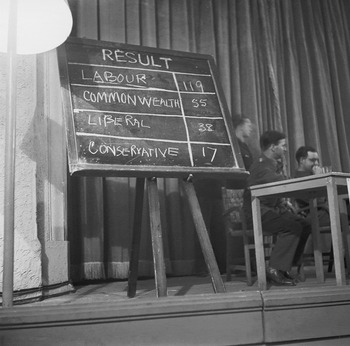
Private letters and diaries as well as later memoirs attest to the prevalence of reading and discussion groups, especially among units stationed in Britain and overseas in ordnance depots and transit camps. Often men with trade union backgrounds or who had previously been active in politics acted as catalysts, but their influence derived from the fact that a much larger segment of the forces took an interest in planning for postwar reconstruction and the revival of partisan politics at home. Another illustration of this was the spread of “mock parliaments.” There were various examples in wartime Britain,Footnote 66 but in the army they spread rapidly as a way of engaging in party political debate without contravening King's Regulations. The most famous of them was organized in Cairo in 1944 by a small group of radicals at the Music for All Services Club, an off-base meeting place for Allied servicemen, with reading rooms and inexpensive food, concerts and plays. “There,” wrote H.A. Wilson in his diary, “for the first time in my life, I had the pleasure of seeing privates, sappers, NCOs and officers of all ranks and all services and of all nationalities mix together without the slightest embarrassment.”Footnote 67 Several thousand troops on the HQ staffs were permanently based in Cairo, and it was the main destination for servicemen on leave in the Middle East theater. Members of the core group who established the Cairo parliament were politically active before joining the forces; they followed Westminster procedural rules and soon moved from general political discussion to adopting party labels and holding an election, which resulted in a sweeping victory for a Labour government (really a Labour-Communist ticket). It then set forth a radical agenda of social reform and nationalization. At this point the brigadier in charge of the area, who had originally sanctioned these debates, decided to intervene and shift the parliament onto the base, where its activities could be more easily policed. At the next meeting, when a large crowd assembled to hear debate on bills to nationalize the banking system and create a national investment board, an officer declared the proceedings contrary to regulations and stipulated restrictions that must govern future meetings. Despite an overwhelming vote of protest, the parliament was dissolved and over the next months several of those involved were transferred. These events were widely publicized in the press (even Goebbels commented on them). Numerous war correspondents and broadcasters were still in Egypt, and since the fighting had shifted to Italy, there was little competing news.Footnote 68 Clumsy efforts to stifle criticism by censoring mail and preventing reporters from filing stories only inflated the publicity surrounding these events. Other “mock” parliaments were organized among forces in India, Burma, and occupation troops in Germany; none gained the same notoriety as Cairo, and most commanders avoided the ham-fisted reaction of the authorities there.
Clearly, one cannot make assumptions about political attitudes in the forces from the small groups of activists who aroused disproportionate concern among War Office officials. But worries in London that soldiers, especially noncombat troops, were being exposed to leftist ideas through army education and the forces press did indeed have real foundation. By 1943 public opinion in Britain began to focus more heavily upon postwar reconstruction and party politics, and the same was true within the armed forces, both those at home and overseas. S.P. Mackenzie found the same thing among British prisoners of war.Footnote 69 The Beveridge report, for example, drew forth the same mixture of positive enthusiasm and cynicism about whether it could ever be adopted as was evident among civilians: “. . . it's all too good to be true, they'll water it down a lot.”Footnote 70 As one commander put it: “There is general hope for a better world. Everybody thinks some sort of ‘Beveridge Plan’ is required. A fair proportion, however, show skepticism in their letters and fear that their hopes will be shattered as they were after the last war.”Footnote 71 Soldiers, three-quarters of whom were never or rarely in combat, became increasingly preoccupied with their postwar prospects: jobs, housing, and getting home before the best opportunities were taken. But while at one level these were private, personal concerns, they were not separated from politics. The cohort that had grown up in the Depression years, and then had their lives dictated by the military, understood that their aspirations required state action. As many official morale reports indicated, they were “firm in their opinion that the state must assure an improved standard of living.”Footnote 72
Certainly, it was a minority of soldiers who followed the details of reconstruction plans; their politics were more general and negative. But anger, cynicism, and disaffection should not be confused with indifference. When Slater and Woodside interviewed soldiers and their wives from the London area, many stated initially that they had no time for politics—“nothing to do with me, we're too busy with our families and jobs.” But as the interviews continued, the two researchers discovered that “Marxian ideas” were “common currency” and that “passive acceptance of the old order” was fast disappearing. They encountered strong class consciousness, a view of society divided between “them” and “us,” and strong support for redistribution of wealth, resentment of privilege and those with money and power. These men and women had a deep sense of their rights and entitlement as a result of their service, and they wanted a better life and more opportunities for their children; “there was no servility or evidence of inferiority feelings.”Footnote 73 Such opinions were perhaps all the stronger among those who spent as much as six years overseas away from their families.
The forces “parliament” in Cairo elects a Labour government, February 1944. Reproduced by permission of the Imperial War Museum, London.

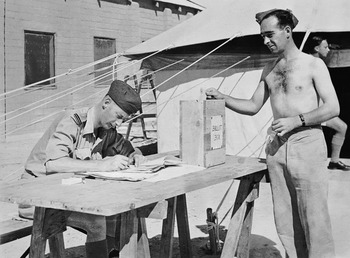
As the defeat of Germany approached and with it anticipation of a General Election, so efforts to register servicemen increased and the contradictions in official policy became all the more evident. If citizenship education meant providing troops with the information to make sound political choices, it made little sense to insist that political debate had no place in the army. Since the previous election took place in 1935, electoral roles were seriously outdated and a large proportion of those in uniform had never voted. Soldiers had to fill out a form to be eligible to vote or to appoint a proxy. By the summer of 1944, the response was low. At the time, left-wing activists blamed commanding officers who, they said, attached little priority to registration or went out of their way to make it difficult.Footnote 74 Historians have been more inclined to view low registration as indicative of forces' cynicism and indifference to politics.Footnote 75 But several things should be taken into account: Until April 1945 in Germany and the end of June in Burma, many units were engaged in some of the most costly battles of the war. At the end of 1944 and even early 1945, to men in the Far East or expecting to be sent there, the war's end seemed remote (especially if they knew anything about the scale of casualties at Okinawa and other battles). And when Churchill's coalition broke up and an election date was set, many deeply resented that a “snap” vote should take place while they were still overseas.
In fact, registration did pick up in 1945 and eventually over sixty percent registered. There were numerous problems (quickly forgotten afterward) of forms and ballots arriving late and cases where votes got lost in transit or were disqualified since the forms had not been made out correctly.Footnote 76 In the end, some 1.7 million servicemen's votes were cast, which does not seem inconsiderable given that men and women were scattered across the globe and their votes required contact with over six hundred separate parliamentary constituencies. Interest among military units was high, as many contemporary observers indicated, and mock elections were organized, even on troopships.Footnote 77 “It's been a revelation to me,” wrote J. Newmark of the ordnance corps, stationed in Egypt, “how interested the lads have been in the election speeches broadcast on the GF [General Forces] programme. Tonight, for example there was complete silence when Jim Griffiths, the miner's leader, spoke in impassioned terms of the coal muddle.”Footnote 78 Aircraftsman Fred Lightwood, who left school at fourteen and worked as an office boy before being called up and eventually sent to India, followed the election closely through his father's letters. His politics had moved sharply left in the forces, although his father warned him against being politically outspoken: “No boy I should lay low as regards anything ‘political’ while your [sic] out where you are because I'm sure we've never had and never will get freedom of speech or any other freedoms—there's always someone spying ready to split—so keep MUM.” Almost all their letters contain comments on politics, although the father disliked union leaders and the socialists and resisted the son's pressures to vote left—though he did cast Fred's proxy for Labour while he himself abstained. When the results were announced, his father wrote: “Well Fred . . . you know you've got what all servicemen wanted—a Labour government and a good, overwhelming majority.”Footnote 79 Another aircraftsman, Brian Poole, admitted that he admired Churchill as a war leader, “but I despise him as a leader of the Conservative party.” He added: “We must have nationalization of the mines, power, transport and other public utilities. The world is hurtling leftwards and we must go with it if we are to live in unison with others.”Footnote 80 Spread over more than six hundred constituencies, the forces vote was not a major factor in Labour's landslide victory and Churchill's defeat. There is no doubt, however, that these “civilians in uniform” voted overwhelmingly for Labour.
Like other British institutions, the army reeled from the shock of the nation's defeats in the early war years, becoming more flexible and introducing a range of reforms, especially in the areas of officer selection and job allocation, army education, and the welfare of soldiers. By 1942 the vast influx of conscripts and new officers had transformed it into a different “people's army.” But there were limits to these reforms and the army, like other institutions, also showed a surprising resilience and an ability to contain pressures for change. The pace of reform slowed after 1943 with more battlefield success and growing anticipation of victory. Old rituals and attitudes survived, and individual commanders who disliked the new ways and new ideas often limited their implementation. The disputes examined here, over welfare and conditions, rights of political expression, and demobilization delays reflected a strong sense on the part of ordinary troops of their basic rights and entitlement to fair treatment, even though officially documented incidents are the tip of the iceberg. To a large degree, Britain's forces in the Second World War remained “civilians in uniform” and, as peace approached, some commanders were troubled at the prospect of defending an empire with such men. After 1945, although Britain retained a large conscript force, earlier reforms were further eroded: Old practices were revived in the allocation of service jobs and the selection of officers; the role of psychologists was reduced; army education became more practical and lost its citizenship emphasis; and there was no relaxation of the restrictions on politics in the early Cold War years.
Military institutions reflect the societies in which they develop: their values, attitudes, priorities, and policies. This was certainly true of British forces in the Second World War, many of whom spent a large part of the war stationed at home training or preparing for the invasion of the Continent. Just as there is scholarly disagreement about the extent to which the war radicalized political opinion among civilians, in recent years accounts have tended to downplay the extent of political engagement in the forces, with the argument centering primarily around the putative impact of ABCA. Certainly, there were enormous variations among troops and units; some were highly politicized, others far less. But a great deal of evidence (letters, diaries, memoirs, and oral histories) attests to the political consciousness of many recruits. To be sure, they were often cynical, and their politics were often predominantly negative and anti-Tory, mediated not simply by ABCA or the forces press, but shaped by the myriad ways in which army life reinforced class attitudes and divisions. But discontent and cynicism should not be mistaken for indifference, nor should their deep concern in 1945 about jobs, housing, and reconstituting families simply be construed as a preoccupation with private life—for men who grew up in the slump of the 1930s and then spent years being ordered about in the forces, the separation of private and public spheres was not that sharp; they understood that the solution to many of their private aspirations lay in the political realm. What is striking is the congruence of soldiers' and civilians' attitudes—over Beveridge's proposals, for example, and the government's refusal to guarantee their implementation—and the ways in which their vaguely formed hopes for reform and a better life crystallized into support for Labour in 1945. In the population as a whole young people, new voters, and working-class men voted heavily for Labour—and these groups made up a very large proportion of the forces.
There was no special GI Bill for British servicemen who returned from the war, and relatively little was done to ease their reentry into civilian society. They got a new suit and a few pounds, but the prevailing rhetoric was that all had served and sacrificed. Only recently have the immediate problems of demobilization and readjustment, including the special problems of ex-POWs and those disabled, been studied by scholars.Footnote 81 Also, while the war is acknowledged as a central experience in their lives, little research has attempted to trace its long-term impact on veterans' careers, behavior, and social attitudes, including their views of the nation.Footnote 82 A similar dearth of academic studies exists for postwar national service, although between 1945 and 1963, 2.3 million men were conscripted into the forces (two-thirds into the army), including for many service in smaller conflicts in Malaya, Cyprus, Kenya, and elsewhere.Footnote 83 A growing flood of memoirs, letters in the archives, and numerous websites through which veterans reestablish contact, attest to the continuing personal significance of this “rite of passage.” But relatively little has been done to investigate the ways it shaped gender, class, and racial attitudes or to integrate it more fully into the social and political history of the postwar decades. Politician and veteran Woodrow Wyatt, who won a seat for Labour in 1945, commented: “It is strange to have had to go into the Army to find out about England, but that is what happened to me.”Footnote 84 Perhaps his comment contains advice for historians.
A Scottish aircraftsman in North Africa casts his vote in the general election, July 1945. Reproduced by permission of the Imperial War Museum, London.