INTRODUCTION
Buckwheat (Fagopryum esculentum Monch) is derived from the Anglo-Saxon boc (beech) and whoet (wheat) because it resembles the beech nut (Edwardson Reference Edwardson, Matano and Ujihara1995). It is classified as a pseudocereal because of the similarity to conventional cereals in its use and chemical composition (Campbell Reference Campbell1997). Historically, it was a very popular food during the 17th–19th centuries, although it was later neglected during the 20th century in Western countries because of competition from wheat (Cawoy et al. Reference Cawoy, Kinet and Jacquemart2008). Yet it is well recognized as a potential functional food source in some countries, such as China, Japan and Taiwan.
Buckwheat has a powerful ecological adaptability that allows the plant to grow in almost all kinds of extreme environments (Li & Zhang Reference Li and Zhang2001). Major cultivation areas are located in Asia and particularly in southeast Asia, where crops are grown on marginal and fairly unproductive land. In these areas, it is often cultivated as a subsistence crop with barley, often at higher altitudes. Tartary and common buckwheat exhibit different growth behaviours: tartary buckwheat is a frost-tolerant crop and is generally grown at higher altitudes, whereas common buckwheat is grown at lower altitudes. In many areas, the trend is for the replacement of common buckwheat, which has a lower yielding ability and lacks frost tolerance, with finger millet or other crops (Campbell Reference Campbell1997).
Buckwheat is a dicotyledon and belongs to the family Polygonaceae. Its seeds are brown in colour, irregularly shaped and have four triangular surfaces. Buckwheat seeds are smaller than soybean seeds by about a factor of ten (thousand grain weight of 20 and 200 g, respectively). The seeds germinate and emerge rapidly when planted in warm soil, typically in 3–4 days. Plants grow rapidly, producing small heart-shaped leaves with slender, hollow stems. Flowering begins c. 3 weeks after planting and is prolific for a few weeks, before gradually tapering off as the plant matures. At the peak of flowering, a buckwheat field is a striking sea of white petals. After a flower is pollinated, a full-sized seed will form within 10 days, although that seed will need another 1–2 weeks to reach maturity. Seeds appear and mature earlier on the lower stem, with seed development continuing up the stem as the plant matures. Plant height and speed of maturity depend on planting date. If planted early in the summer and given good fertility, plants will usually be at least 1 m tall, and may take 11–12 weeks to mature. If planted in the latter part of July, buckwheat will mature in c. 9–10 weeks and will be shorter, c. 0·76 m on good soils and 0·61 m tall, or less, on poor soils. A hot, dry period during plant development will limit the vigour and size of the crop. Buckwheat grows best on soils that are neither too compacted, nor too coarse or sandy. It can tolerate wet soils to a slight degree, but will generally fair better on soils where drainage is adequate. Buckwheat does not require highly fertile soils, but it benefits from having modest levels of nitrogen (N) fertility (Ye & Guo Reference Ye, Guo, Lin, Zhou, Tao, Li and Zhang1992; Ohnishi & Matsuoka Reference Ohnishi and Matsuoka1996; Campbell Reference Campbell1997). The cultivation of buckwheat has numerous advantages, such as being easy to cultivate, having a short growing period (70–90 days) and a longer storage time without alteration due to its phenolic and antioxidant properties. The major disadvantages of buckwheat cultivation include lower grain yield, as its seeds ripen more asynchronously, and as a result there are many more technical harvesting problems compared with cereals. Similarly, buckwheat sets seed quickly and may, if allowed to go to seed, become a weed problem in subsequent crops.
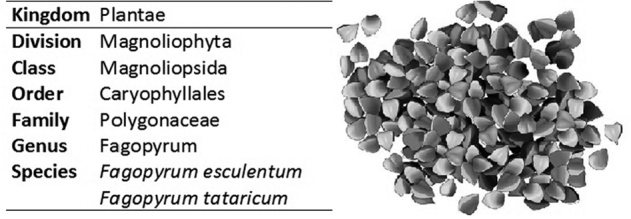
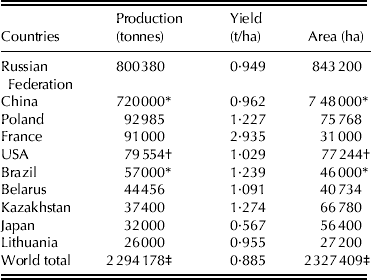
Many species of buckwheat are grown around the world; however, only nine have agricultural and nutritional value (Krkoskova & Mrazova Reference Krkoskova and Mrazova2005). Out of these, only two species are used as food around the world; common buckwheat (F. esculentum) and tartary buckwheat (F. tataricum). Detailed classification is presented in Fig. 1. China, the Russian Federation, Ukraine and Kazakhstan are the leading producers of common buckwheat (Li & Zhang Reference Li and Zhang2001; Bonafaccia et al. Reference Bonafaccia, Marocchini and Kreft2003b) with production also in Slovenia, Poland, Hungary and Brazil (Kreft et al. Reference Kreft, Knapp and Kreft1999).The current leading producers of buckwheat, together with yield and area harvested are presented in Table 1 (FAOSTAT 2013).
Classification of buckwheat.

World's largest producers of buckwheat (production year 2011) (FAOSTAT 2013)
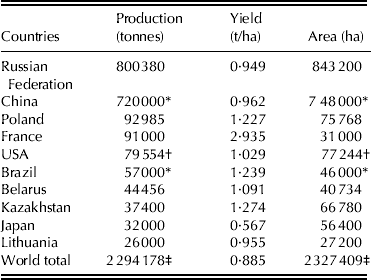
* FAO estimates.
† Data based on imputation methodology.
‡ Aggregate data (official, semi-official and estimated).
There is interest in buckwheat for the production of nutraceutical preparations (He et al. Reference He, Klag, Whelton, Mo, Chen, Qian, Mo and He1995) with the potential for functional food development that may provide health benefits beyond basic nutrition (Li & Zhang Reference Li and Zhang2001; Bonafaccia et al. Reference Bonafaccia, Gambelli, Fabjan and Kreft2003a, Reference Bonafaccia, Marocchini and Kreftb). The present review collates and synthesizes the available information on important aspects related to the functional potential of buckwheat that is being produced in most parts of Asia. The emphasis is on exploiting the importance of buckwheat as a potential functional food and for utilization in the prevention and treatment of human diseases.
Vernacular names in major languages
Buckwheat has been named by many people during the history of its development. According to some researchers, the ancient Yi people of the Yunnan province called buckwheat er, common buckwheat er chi, and tartary buckwheat er ka (Li & Zhang Reference Li and Zhang2001). Buckwheat names are important in order to trace its migration through Europe and Asia. Today, common buckwheat is called ogal in India, mite phapar in Nepal, soba (traditional noodles) in Japan, jawas in Pakistan, tian qiao mai in Mandarin, jare in Bhutan, grecicha kul'furnaja in Russia and tatarka gryka or poganka in Poland. In French, it is called sarrasin, ble noir, renouee or bouquette, in Italy fagopiro, grano saraceno, Sarasin or faggina and in Germany Buchweizen or Heidekorn (Hammer Reference Hammer and Schultze-Motel1986; Campbell Reference Campbell1997).
Tartary buckwheat is called phapar in India, tite phapar in Nepal, bjo in Bhutan and brow in Pakistan. It is of interest to note that in both China and Nepal, common buckwheat is referred to as sweet buckwheat, while tartary buckwheat is called bitter buckwheat (Ohnishi Reference Ohnishi1993).
CHEMISTRY OF BUCKWHEAT
Chemical composition of buckwheat
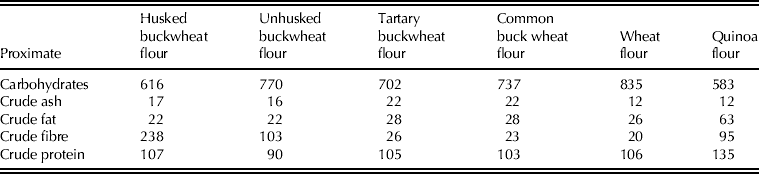
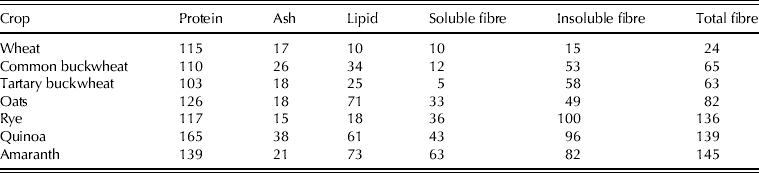
Buckwheat contains a variety of nutrients in its grains. The main compounds are proteins, rutin, polysaccharides, dietary fibre, lipids, polyphenols and micro nutrients (minerals and vitamins) (Kim et al. Reference Kim, Kim and Park2004; Qin et al. Reference Qin, Wang, Shan, Hou and Ren2010). The total content of these components depends on different factors, such as the species and the environment (Barta et al. Reference Barta, Kalinova, Moudry and Curn2004; Qin et al. Reference Qin, Wang, Shan, Hou and Ren2010). Whole buckwheat groats (the hulled seeds) contain 550 mg/g starch, 120 mg/g protein, 70 mg/g total dietary fibre (TDF), 40 mg/g lipid, 20 mg/g soluble carbohydrates and 180 mg/g other components such as organic acids, phenolic compounds, tannins, phosphorylated sugars, nucleotides and nucleic acids (Im et al. Reference Im, Huff and Hsieh2003; Bonafaccia et al. Reference Bonafaccia, Marocchini and Kreft2003b). Detailed composition of buckwheat flour in comparison with wheat flour is presented in Table 2.
Proximate composition (mg/g DW) of buckwheat flour, wheat flour and quinoa flour (Ogungbenle Reference Ogungbenle2003; Lin et al. Reference Lin, Liu, Yu, Lin and Mau2009; Qin et al. Reference Qin, Wang, Shan, Hou and Ren2010)
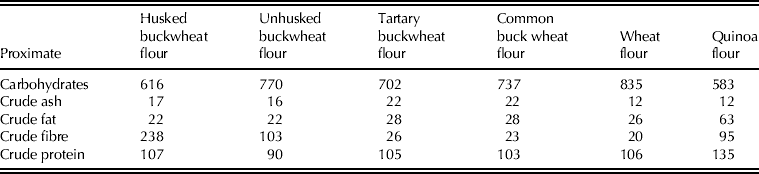
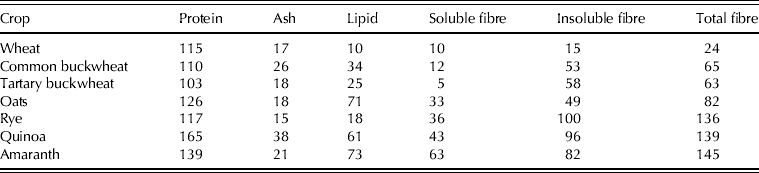
Buckwheat flour is mostly derived from the endosperm consisting of 700–750 mg/g starch, 60–100 mg/g proteins, 20–240 mg/g TDF, 10–30 mg/g lipids and 130 mg/g other components, while bran with little central endosperm consists of 360 mg/g proteins, 180 mg/g starch, 150 mg/g TDF, 110 mg/g lipids, 60 mg/g soluble carbohydrates and 70 mg/g other components (Bonafaccia et al. Reference Bonafaccia, Gambelli, Fabjan and Kreft2003a; Skrabanja et al. Reference Skrabanja, Kreft, Golob, Modic, Ikeda, Ikeda, Kreft, Bonafaccia, Knapp and Kosmelj2004; Alvarez-Jubete et al. Reference Alvarez-Jubete, Holse, Hansen, Arendt and Gallagher2009; Lin et al. Reference Lin, Liu, Yu, Lin and Mau2009; Qin et al. Reference Qin, Wang, Shan, Hou and Ren2010). Buckwheat bran is a rich source of dietary fibre, and in particular bran with hull fragments contains 400 mg/g TDF, of which 250 mg/g is soluble dietary fibre (SDF), while bran without hull fragments contains 160 mg/g TDF, of which 750 mg/g is soluble. Bran fractions also contain the highest concentration of protein among all milling fractions (Steadman et al. Reference Steadman, Burgoon, Lewis, Edwardson and Obendorf2001b; Krkoskova & Mrazova Reference Krkoskova and Mrazova2005). The proximate composition of buckwheat is well in line with other cereals and pseudocereals consumed all over the world (Table 3). It is important to note that buckwheat fibre is free of phytic acid, a major anti-nutritional factor in common wheat (Steadman et al. Reference Steadman, Burgoon, Lewis, Edwardson and Obendorf2001a). Soluble dietary fibre concentration (77–92 mg/g) in buckwheat bran is higher when compared with wheat bran (43 mg/g), or even oat bran (72 mg/g). In uncooked buckwheat groats, starch resistant to digestion comprises 303–380 g/100 g of total starch, but after cooking RS is 70–100 mg/g (Skrabanja & Kreft Reference Skrabanja and Kreft1998; Steadman et al. Reference Steadman, Burgoon, Lewis, Edwardson and Obendorf2001b). It was observed that soluble carbohydrates are concentrated in the embryo, with a low concentration in the endosperm but higher in the bran. Since starch is concentrated in the central endosperm, light-coloured flour, grits and whole groats are mostly composed of starch (Steadman et al. Reference Steadman, Burgoon, Lewis, Edwardson and Obendorf2001b).
Comparison of buckwheat flour composition (m/g DW) with other commonly used cereals and pseudo-cereals (Bonafaccia & Fabjan Reference Bonafaccia and Fabjan2003; Czerwiński et al. Reference Czerwiński, Bartnikowska, Leontowicz, Lange, Leontowicz, Katrich, Trakhtenberg and Gorinstein2004; Vega-Gálvez et al. Reference Vega-Gálvez, Miranda, Vergara, Uribe, Puente and Martínez2010)
Fatty acid composition in buckwheat
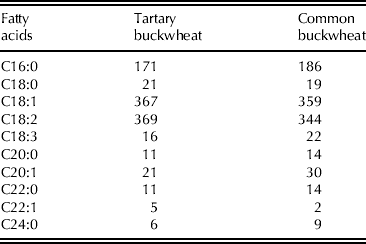
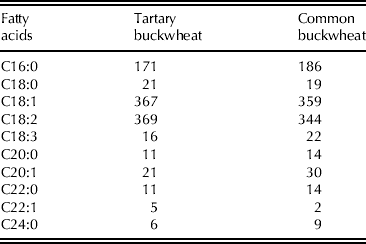
The lipids in whole buckwheat, buckwheat flour, steamed and stored buckwheat have been reviewed by several researchers (Pomeranz & Lorenz Reference Pomeranz and Lorenz1983). Seeds of common buckwheat contain 15–37 mg/g total lipids (Campbell Reference Campbell1997). The highest concentration is in the embryo at 70–140 mg/g and the lowest is in the hull at 4–9 mg/g. Groats or dehulled seeds of Mancan, Tokyo and Manor buckwheat contain 21–26 mg/g total lipids, of which 810–850 mg/g are neutral lipids, 80–110 mg/g are phospholipids and 30–550 mg/g are glycolipids (Campbell Reference Campbell1997). The major fatty acids of common buckwheat are palmitic, oleic, linoleic, stearic, linolenic, arachidic, behenic and lignoceric (Table 4). The long-chain acids arachidic, behenic and lignoceric, which represent c. 80 mg/g of the total acids in buckwheat, are only minor components or are not present in cereals. Buckwheat contains about the same amount of total lipids as wheat rye (Becker Reference Becker and Chow2008). In buckwheat, the neutral lipids constitute 810–850 mg/g of the total lipids, compared with c. 350 mg/g in wheat and rye. The major classes of fatty acids of all cultivars and lipid classes were palmitic (16 : 0), oleic (18 : 1) and linoleic (18 : 2).
Fatty acid profile (mg/g) of tartary and common buckwheat (Mazza Reference Mazza1988; Tsuzuki et al. Reference Tsuzuki, Ogata, Akasaka, Shibata and Suzuki1991; Becker Reference Becker and Chow2008; Gulpinar et al. Reference Gulpinar, Erdogan Orhan, Kan, Senol, Celik and Kartal2011)
In buckwheat, lipids are also concentrated in the embryo, making the bran the most lipid-rich fraction during milling. Triacylglycerides are the main component of the lipid fraction; linoleic, oleic and palmitic account for 880 mg/g of total fatty acids (Horbowicz & Obendorf Reference Horbowicz and Obendorf1992). Buckwheat is nutritionally superior in fatty acid composition to cereal grains with 800 mg/g unsaturated fatty acids, out of which 40 mg/g of fatty acids are polyunsaturated (Steadman et al. Reference Steadman, Burgoon, Lewis, Edwardson and Obendorf2001a). In another study by Kim et al. (Reference Kim, Son, Hwang, Kim, Hur and Park2001) total saturated fatty acid was 200 mg/g, while unsaturated fatty acid was 790 mg/g, with a major fraction of 460 mg/g linoleic acid.
Proteins and amino acids in buckwheat
In buckwheat seeds, the protein content ranges from 85·1 to 188·7 mg/g depending on the variety (Aubrecht & Biacs Reference Aubrecht and Biacs2001; Li & Zhang Reference Li and Zhang2001; Krkoskova & Mrazova Reference Krkoskova and Mrazova2005). The buckwheat proteins include albumin, globulin, prolamin and glutelin (Ikeda et al. Reference Ikeda, Yamashita and Kreft1999; Ikeda & Asami Reference Ikeda and Asami2000), but the relative content of these individual protein fractions show considerable variation and are dependent on variety. Buckwheat protein consists of 180 mg/g albumin, 430 mg/g globulin, 8 mg/g prolamin, 230 mg/g glutelin and 50 mg/g other nitrogen residues (Javornik & Kreft Reference Javornik and Kreft1984; Ikeda et al. Reference Ikeda, Sakaguchi, Kusano and Yasumoto1991; Ikeda & Asami Reference Ikeda and Asami2000). It is generally recognized that albumin and globulin are the major storage proteins in buckwheat seeds, and prolamin and glutelin content are very low (Guo & Yao Reference Guo and Yao2006). The major storage proteins from common buckwheat seeds, including 8S and 13S globulins, and 2S albumins, have been characterized (Radovic et al. Reference Radovic, Maksimovic and Varkonji Gasic1996, Reference Radovic, Maksimovic, Brkljacic, Varkonji Gasic and Savic1999; Fujino et al. Reference Fujino, Funatsuki, Inada, Shimono and Kikuta2001; Milisavljevic et al. Reference Milisavljevic, Timotijevic, Radovic, Brkljacic, Konstantinovic and Maksimovic2004). Salt-soluble 13S globulin has a hexameric structure with disulphide-bonded subunits composed of acidic and basic polypeptides with molecular masses between 43 and 68, 57 and 58 and 26 and 36 kDa (Radovic et al. Reference Radovic, Maksimovic and Varkonji Gasic1996); 2S albumins are composed of polypeptides of molecular mass from 8 to 16 kDa (Radovic et al. Reference Radovic, Maksimovic, Brkljacic, Varkonji Gasic and Savic1999). Buckwheat protein isolate (BPI) is composed mainly of globulin and albumin fractions. Tang & Wang (Reference Tang and Wang2010) studied the conformational properties of globulin and albumin fractions from common buckwheat seeds and compared them with those of BPI; they concluded that albumin from buckwheat seed had a higher content of uncharged polar amino acids, but lower acidic amino acids than globulin. Due to the well-balanced amino acid composition, buckwheat proteins have a high biological value, and the main disadvantage of buckwheat is its low protein digestibility (79·9%) (Ikeda & Kishida Reference Ikeda and Kishida1993). Similarly, proteins of the albumin family with disulphide bonds appear to be responsible for the allergic response that is induced by buckwheat products (Satoh et al. Reference Satoh, Koyano, Takagi, Nakamura, Teshima and Sawada2008).
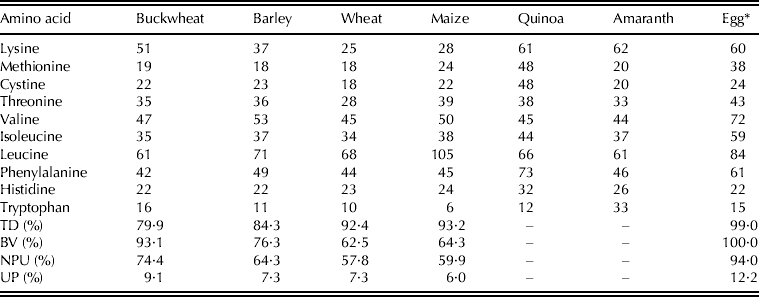
The protein content in buckwheat is significantly higher than in rice, wheat, sorghum, millet and maize. Similarly, its protein content is the second highest after oat flour. Buckwheat has a well-balanced amino acid profile with a good quality of lysine which is generally recognized as the first limiting amino acid in wheat and barley and arginine (Table 5). The quality of protein can be judged by the fact that buckwheat flour has an amino acid score of 100, which is one of the highest amino acid scores among plant sources (Ikeda Reference Ikeda2002). No or low gluten types have been identified in buckwheat, thus contributing as an ingredient in the gluten-free diet for people suffering from coeliac disease.
Essential amino acid composition (mg/g protein) of buckwheat, cereals, pseudo-cereals and egg (Radovic et al. Reference Radovic, Maksimovic, Brkljacic, Varkonji Gasic and Savic1999; Mendonça et al. Reference Mendonça, Saldiva, Cruz and Arêas2009; Tang & Wang Reference Tang and Wang2010; Vega-Gálvez et al. Reference Vega-Gálvez, Miranda, Vergara, Uribe, Puente and Martínez2010)
TD, true protein digestibility; BV, biological value (based on amino acid composition); NPU, net protein utilization; UP, utilizable protein (protein×NPU/100).
* For whole egg.
The major problem with buckwheat protein is low digestibility in both humans and animals (Farrell Reference Farrell1978; Javornik et al. Reference Javornik, Eggum and Kreft1981). The low digestibility is because of anti-nutritional factors present in common buckwheat, including protease inhibitors (such as trypsin inhibitors) and tannins (Ikeda et al. Reference Ikeda, Oku, Kusano and Yasumoto1986, Reference Ikeda, Sakaguchi, Kusano and Yasumoto1991). Trypsin inhibitors in buckwheat seeds are resistant to thermal processing, especially at elevated temperatures and due to acidic conditions (Ikeda et al. Reference Ikeda, Oku, Kusano and Yasumoto1986, Reference Ikeda, Sakaguchi, Kusano and Yasumoto1991). Germination of buckwheat seeds considerably reduces the activity of protease inhibitors; therefore seedlings and buckwheat plants are a source of food with improved utilization of proteins (Kreft Reference Kreft, Nagatomo and Adachi1983; Ookubo Reference Ookubo, Yamauchi and Ookubo1992).
‘Resistant proteins’ such as those in buckwheat are also effective in lowering blood cholesterol (Kayashita et al. Reference Kayashita, Shimaoka, Nakajoh and Kato1996; Iwami Reference Iwami1998; Tomotake et al. Reference Tomotake, Shimaoka, Kayashita, Yokoyama, Nakajoh and Kato2000). Huff & Carroll (Reference Huff and Carroll1980) reported that ratios of lysine/arginine (Lys/Arg) and methionine/glycine (Met/Gly) are the key factors in determining the cholesterol lowering properties of proteins. The ratios of Lys/Arg and Met/Gly in buckwheat are significantly lower than in the other plant proteins. Similarly, nutritional studies have shown that buckwheat proteins have the highest cholesterol-lowering properties among the plant proteins known to science so far (Huff & Carroll Reference Huff and Carroll1980). The amino acids in buckwheat regulate the hepatic low-density lipoprotein (LDL) receptors, and thus lower the serum cholesterol, resulting indirectly in the prevention of arteriosclerosis. Moreover, Kayashita et al. (Reference Kayashita, Shimaoka and Nakajyoh1995) identified that the BPI was more efficient in cholesterol lowering than soybean protein isolates and other plant isolates. They also showed that weight gain of BPI-fed rats was not negatively affected when compared with casein-fed rats, suggesting that buckwheat proteins were sufficiently digested and absorbed to provide adequate amount of amino acids for growth. The BPI was shown to be more effective in lowering ‘bad cholesterol’, LDL and very low-density lipoproteins (VLDL), when compared with other plant and animal proteins (Saeki et al. Reference Saeki, Shiozawa, Yanagisawa and Shibata1990).
Buckwheat protein isolates can also be used as a functional food ingredient to treat hypertension, obesity and constipation. These proteins lower the activity of angiotensin converting enzyme (ACE) and directly control hypertension (Kato et al. Reference Kato, Kayashita and Tomotake2001; Tomotake et al. Reference Tomotake, Shimaoka, Kayashita, Yokoyama, Nakajoh and Kato2001, Reference Tomotake, Shimaoka, Kayashita, Nakajoh and Kato2002). Rat feeding experiments showed that high-fat diets and overeating did not affect the body weight of the animals when buckwheat protein hydrolysate was included in the diet. This protective effect was much weaker for soybean protein hydrolysates (Tomotake et al. Reference Tomotake, Shimaoka, Kayashita, Yokoyama, Nakajoh and Kato2001).
Mitsunaga et al. (Reference Mitsunaga, Matsuda, Shimizu and Iwashima1986) reported the presence of thiamine-binding protein (TBP) in buckwheat seeds. After ingestion, this complex is digested by proteases and thiamine is released and absorbed. The protein moiety in the TBP complex improves the stability of thiamine during storage and processing and enhances its bioavailability (Mitsunaga et al. Reference Mitsunaga, Matsuda, Shimizu and Iwashima1986).
Buckwheat protein, together with dietary fibre, can ameliorate constipation (Kayashita et al. Reference Kayashita, Shimaoka and Nakajyoh1995). Several epidemiological studies have shown that buckwheat proteins, like dietary fibre, can suppress the development of colon cancer (Cassidy et al. Reference Cassidy, Bingham and Cummings1994; Lipkin et al. Reference Lipkin, Reddy, Newmark and Lamprecht1999). Hard to digest proteins interact with RS and are the main source of short chain fatty acids (SCFA), known to positively affect the tissues and physiology of the colon (Scheppach et al. Reference Scheppach, Sommer, Kirchner, Pagneli, Bartram, Christl, Richter, Dusel and Kasper1992; Morishita et al. Reference Morishita, Ishiguro and Sato1998). Liu et al. (Reference Liu, Ishikawa, Huang, Tomotake, Kayashita, Watanabe and Kato2001) utilized buckwheat protein extract containing c. 730 mg/g buckwheat protein to assess its effect on induced colon tumours in rats. It was shown that dietary buckwheat protein reduced the incidence of colonic adenocarcinomas by 47%. Buckwheat protein also reduced carcinoma cell proliferation and expression in colonic epithelium. The results clearly suggest that buckwheat proteins have a protective effect against colon carcinogenesis.
Minerals in buckwheat
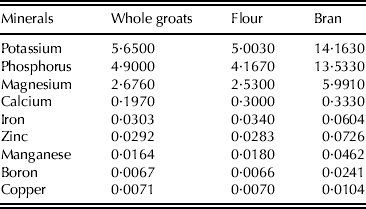
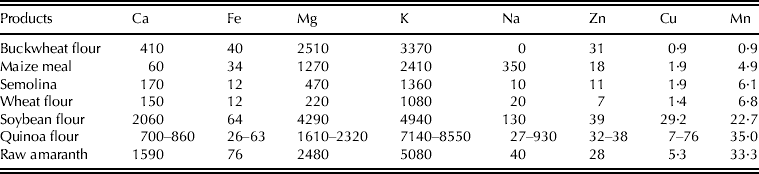
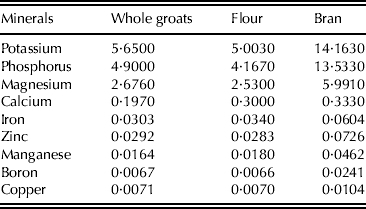
The nutritional functions of essential minerals in buckwheat and foods prepared from it have been studied by many scientists (Ikeda & Yamashita Reference Ikeda and Yamashita1994; Ikeda et al. Reference Ikeda, Tomura, Yamashita and Kreft2001, Reference Ikeda, Tomura and Kreft2002, Reference Ikeda, Tomura, Miya and Kreft2003, Reference Ikeda, Tomura, Lin and Kreft2004, Reference Ikeda, Yamashita, Kusumoto and Kreft2005). All of these studies concluded that buckwheat seeds are a good source of many essential minerals (Table 6). In comparison with other cereals such as rice, wheat flour or maize, buckwheat contains higher levels of zinc (Zn), copper (Cu) and manganese (Mn) (Ikeda et al. Reference Ikeda, Yamashita and Kreft1999; Steadman et al. Reference Steadman, Burgoon, Lewis, Edwardson and Obendorf2001b) (Table 7).
Mineral concentrations (mg/g) in buckwheat and milling fractions (Steadman et al. Reference Steadman, Burgoon, Lewis, Edwardson and Obendorf2001b; Ikeda et al. Reference Ikeda, Yamashita, Tomura and Kreft2006)
Comparison of mineral composition (mg/g) of buckwheat flour with maize meal, semolina, wheat flour, soybean flour, quinoa flour and raw amaranth (Ranhotra et al. Reference Ranhotra, Gelroth, Glaser, Lorenz and Johnson1993; Edwardson Reference Edwardson, Matano and Ujihara1995)
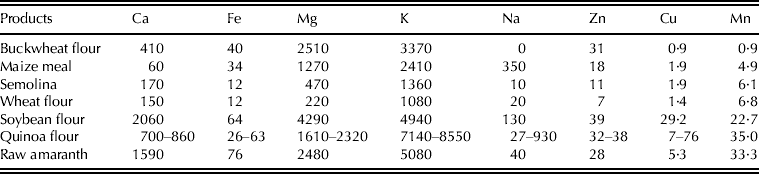
Ca, calcium; Fe, iron; Mg, magnesium; K, potassium; Na, sodium; Zn, zinc; Cu, copper; Mn, manganese.
The bioavailability of Zn, Cu and potassium (K) from buckwheat is especially high. It has been determined that 100 g of buckwheat flour can provide c. 13–89% of the recommended dietary allowance (RDA) for Zn, Cu, magnesium (Mg) and Mn. A major quantity of these minerals exists in bran portions, followed by endosperm. Buckwheat flour contains relatively high levels of Zn, Cu, Mn and Mg, with a slightly lower content of calcium (Ca) in comparison with other flours, especially wheat (Bonafaccia et al. Reference Bonafaccia, Marocchini and Kreft2003b).
Recently, Ikeda et al. (Reference Ikeda, Yamashita, Tomura and Kreft2006) compared the composition of eight essential minerals, i.e. Fe, Zn, Cu, Mn, Ca, Mg, K and phosphorus (P), of buckwheat flour to those of cereal flours by using an in vitro enzymatic digestion technique. The results showed a higher content of essential minerals in buckwheat flour in comparison with other cereal flours. Further enzymatic digestion proved that a larger portion of the Zn, Cu and K were released in soluble form from the buckwheat flour, relative to that in cereal flours.
Vitamins in buckwheat
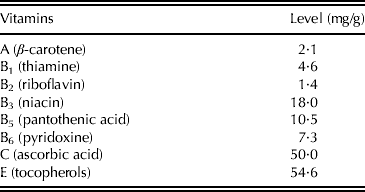
Vitamins are a group of organic compounds that are essential in very small amounts for the normal functioning of the human body. They vary widely in their chemical and physiological functions and are broadly distributed in natural food sources (Wijngaard & Arendt Reference Wijngaard and Arendt2006). Vitamin content of common buckwheat groats are presented in Table 8. Buckwheat grains contain higher levels of vitamin B1 (thiamine), B2 (riboflavin), E (tocopherol) and B3 (niacin and niacinamide) compared with most cereals. Generally, tartary buckwheat has more vitamin B1, B2 and B3, but less vitamin E than common buckwheat (Bonafaccia et al. Reference Bonafaccia, Marocchini and Kreft2003b; Ikeda et al. Reference Ikeda, Yamashita, Tomura and Kreft2006).
Vitamin composition of common buckwheat (Wijngaard & Arendt Reference Wijngaard and Arendt2006)
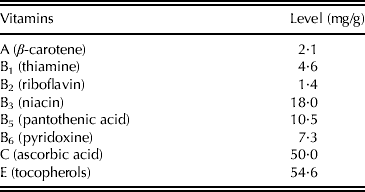
Thiamine (vitamin B1) is known to adhere strongly to TBPs in buckwheat seeds (Mitsunaga et al. Reference Mitsunaga, Matsuda, Shimizu and Iwashima1986; Rapala-Kozik et al. Reference Rapala-Kozik, Chernikevich and Kozik1999). In general, tartary buckwheat has higher levels of vitamin B than common buckwheat (Pomeranz & Lorenz Reference Pomeranz and Lorenz1983; Bonafaccia & Fabjan Reference Bonafaccia and Fabjan2003). Thiamine-binding proteins can improve the stability of thiamine during storage and improve the bioavailability of thiamine (Li & Zhang Reference Li and Zhang2001). Levels of vitamin C and the sum of vitamin B1 and B6 can be increased by germinating buckwheat. The level of vitamin C can be increased by up to 0·25 mg/g in buckwheat sprouts (Lintschinger et al. Reference Lintschinger, Fuchs, Moser, Jager, Hlebeina, Markolin and Gossler1997; Kim et al. Reference Kim, Kim and Park2004). Wheat, barley, oat, rye and buckwheat groats exhibit the same maximum level of tocopherols, with γ-tocopherol being the main one (Zielinski et al. Reference Zielinski, Ciska and Kozlowska2001; Kim et al. Reference Kim, Kim and Park2002), while Przybylski et al. (Reference Przybylski, Lee and Eskin1998) reported α-tocopherol as the major tocopherol in buckwheat. Differences in tocopherol forms have been attributed to different cultivars of common buckwheat (Przybylski et al. Reference Przybylski, Lee and Eskin1998; Zielinski et al. Reference Zielinski, Ciska and Kozlowska2001; Kim et al. Reference Kim, Kim and Park2002). Tartary buckwheat contains higher levels of tocopherols than common buckwheat (Kim et al. Reference Kim, Kim and Park2002).
Iminosugars in buckwheat
Polyhydroxylated piperidines (azasugars or iminosugars) have gained increasing synthetic interest due to their high biological activity as glycosidase inhibitors (Zechel & Withers Reference Zechel and Withers2000). Koyama & Sakamura (Reference Koyama and Sakamura1974) isolated 1 and 2-dideoxy-azasugars such as d-fagomine and its stereoisomers from the seeds of Japanese buckwheat Fagopyrum esculentum australe Moench. If used as a dietary supplement or functional food component, d-fagomine may reduce the risks of developing insulin resistance, becoming overweight and suffering from an excess of potentially pathogenic bacteria (Amézqueta et al. Reference Amézqueta, Galán, Fuguet, Carrascal, Abián and Torres2012). These azasugars are potential therapeutic agents for the treatment of a wide range of diseases, including diabetes, cancer, AIDS, viral infections and many more (Butters et al. Reference Butters, Dwek and Platt2000). Fagomine itself has strong inhibitory activity towards mammalian α-glucosidase, β-galactosidase (Kato et al. Reference Kato, Asano, Kizu, Matsui, Watson and Nash1997) and has also been found to have a potent anti-hyperglycaemic effect in streptozocin-induced diabetic mice and a potentiation of glucose-induced insulin secretion (Nojima et al. Reference Nojima, Kimura, Chen, Sugihara, Haruno, Kato and Asano1998).
Amézqueta et al. (Reference Amézqueta, Galán, Fuguet, Carrascal, Abián and Torres2012) determined d-fagomine and its diastereomer, 3,4-di-epi-fagomine in buckwheat groats, bran and leaves, and also in buckwheat flour. The highest content of d-fagomine and 3·4-di-epi-fagomine was present in groats (44 and 43 mg/kg, respectively). Fagopyrum tataricum seeds contained less d-fagomine than F. esculentum (Amézqueta et al. Reference Amézqueta, Galán, Fuguet, Carrascal, Abián and Torres2012).
NEUTRACEUTICAL AND FUNCTIONAL COMPONENTS OF BUCKWHEAT
Buckwheat grains and hulls consist of some components that have biological activity, i.e. flavonoids and flavones, phenolic acids, condensed tannins, phytosterols, fagopyrins, RS, dietary fibre, lignans, plant sterols, vitamins and minerals.
Dietary fibre
Dietary fibre is a nutrient used for the proper digestion of foods, proper functioning of the digestive tract at large and for adding bulk to food. It also gives a feeling of satiety and helps in losing weight. A low intake of fibre can lead to constipation, haemorrhoids and elevated levels of cholesterol and sugar in the blood. Conversely, an excess of fibre can sometimes lead to bowel obstruction, diarrhoea or even dehydration (Anderson et al. Reference Anderson, Baird, Davis, Ferreri, Knudtson, Koraym, Waters and Williams2009).
The amount of TDF in buckwheat varies with differences in genetic and environmental factors. The major components of TDF are cellulose, non-starch polysaccharides and lignin. These are concentrated in the cell walls of starchy endosperm, aleurone, seed coats and hulls (Joshi & Rana Reference Joshi and Rana1995; Zheng et al. Reference Zheng, Ma and Matsumoto1998; Steadman et al. Reference Steadman, Burgoon, Lewis, Edwardson and Obendorf2001b; Izydorczyk et al. Reference Izydorczyk, Symons, Dexter, Marquart, Slavin and Fulcher2002). A considerable portion of buckwheat dietary fibre is soluble. Soluble non-starch polysaccharides of buckwheat contain xylose, mannose, galactose and glucuronic acid (Asano et al. Reference Asano, Morita and Fujimaki1970). Bran fractions obtained by the milling of buckwheat are especially rich in dietary fibre (130–160 mg/g), but buckwheat flours contain considerably lower amounts of fibre (17–85 mg/g) (Steadman et al. Reference Steadman, Burgoon, Lewis, Edwardson and Obendorf2001a).
For nutritional purposes, TDF is classified into SDF and insoluble dietary fibre (IDF). Insoluble dietary fibre (IDF) decreases transit time in the stomach, small intestine and colon and increases faecal mass. It is commonly used as a bulking agent to prevent or treat constipation. Soluble dietary fibre, due to its high viscosity, slows gastric emptying, reduces the adsorption of certain nutrients and increases transit time in the small intestine by slowing down glucose absorption. Soluble dietary fibre and to a lesser extent IDF are fermented by microflora in the digestive system to produce SCFA, implicated in serum cholesterol and colon cancer reduction (Elleuch et al. Reference Elleuch, Bedigian, Roiseux, Besbes, Blecker and Attia2011). A considerable portion of buckwheat dietary fibre is soluble (Joshi & Rana Reference Joshi and Rana1995; Zheng et al. Reference Zheng, Ma and Matsumoto1998; Steadman et al. Reference Steadman, Burgoon, Lewis, Edwardson and Obendorf2001b; Izydorczyk et al. Reference Izydorczyk, Symons, Dexter, Marquart, Slavin and Fulcher2002). However, relatively little is known about the composition and properties of SDF in buckwheat. Asano et al. (Reference Asano, Morita and Fujimaki1970) isolated water soluble non-starch polysaccharides from buckwheat and reported that they consisted of xylose, mannose, galactose and glucuronic acid. It was postulated that the main chain of these polysaccharides consisted of glucuronic acid, mannose and galactose. More recently, arabinose and glucose residues have also been identified in water-extractable buckwheat polysaccharides (Izydorczyk et al. Reference Izydorczyk, Symons, Dexter, Marquart, Slavin and Fulcher2002). One of the most important characteristics of buckwheat water soluble non-starch polysaccharides is their very high molecular weight; as a consequence they can form very viscous solutions when dissolved in water.
Buckwheat bran containing hulls has c. 400 mg/g fibre, including 250 mg/g soluble fibre, while ‘pure’ bran without hulls contains c. 160 mg/g fibre, including 750 mg/g soluble fibre (Górecka et al. Reference Górecka, Dziedzic and Sell2010; Dziedzic et al. Reference Dziedzic, Górecka, Kucharska and Przybylska2012). Depending on the type of technological processes applied in the production of buckwheat groats, the level and fraction composition of dietary fibre affects the functional properties (Górecka et al. Reference Górecka, Hęś, Szymandera-Buszka and Dziedzic2009, Reference Górecka, Dziedzic and Sell2010; Dziedzic et al. Reference Dziedzic, Górecka, Kucharska and Przybylska2012). In buckwheat grains, dietary fibre constitutes 50–110 mg/g, and the soluble fibre content is 30–70 mg/g, while the amount of the insoluble fibre is 20–40 mg/g (Krkoskova & Mrazova Reference Krkoskova and Mrazova2005). Soluble fibre reduces blood cholesterol levels, the risk of incidence of ischaemic heart disease and postprandial glycaemia (Brown et al. Reference Brown, Rosner, Willett and Sacks1999). Functional properties of dietary fibre, such as water holding capacity and cation binding, play a significant role in the prevention of diet-dependent diseases, e.g. obesity, atherosclerosis and colon cancer (Esposito et al. Reference Esposito, Arlotti, Bonifati, Napolitano, Vitale and Fogliano2005; Górecka et al. Reference Górecka, Korczak, Konieczny, Hęś and Flaczyk2005; Mehta Reference Mehta2005).
Dziedzic et al. (Reference Dziedzic, Górecka, Kucharska and Przybylska2012) examined the influence of the technological process of buckwheat groat production on dietary fibre content and its fraction with the absorption of selected bile acids by buckwheat groats and products such as buckwheat grains, buckwheat grains after roasting, buckwheat hull, buckwheat bran, whole buckwheat groats, broken buckwheat groats and buckwheat waste. They recorded the highest content of TDF in hulls, while the lowest was in whole and broken buckwheat groats. Buckwheat hulls contain higher lignin and cellulose fractions, while the hemicellulose fraction predominated in broken groats. Similarly, roasting of buckwheat grains resulted in an increase in the content of dietary fibre and the all fractions dietary fibre (Dziedzic et al. Reference Dziedzic, Górecka, Kucharska and Przybylska2012).
Resistant starch
The term ‘resistant starch’ (RS) was first coined by Englyst et al. (Reference Englyst, Wiggins and Cummings1982) to describe a small fraction of starch that was resistant to hydrolysis by exhaustive amylase and pullulanase treatment in vitro. Resistant starch is the starch that is not hydrolysed after 120 min of incubation at 37 °C (Englyst et al. Reference Englyst, Kingman and Cummings1992). However, starch reaching the large intestine may be more or less fermented by the gut microflora.
Starch is the major component of buckwheat (Skrabanja & Kreft Reference Skrabanja and Kreft1998). Buckwheat flour contains 700–910 mg/g of starch depending on the flour types, and the starch consists of c. 250 mg/g amylose and 750 mg/g amylopectin (Qin et al. Reference Qin, Wang, Shan, Hou and Ren2010; Takahama & Hirota Reference Takahama and Hirota2010). Scanning electron microscope (SEM) studies showed granules of buckwheat starch (Fig. 2) to be polygonal and of irregular shape (Christa et al. Reference Christa, Soral-Smietana and Lewandowicz2009). Buckwheat starch particles range from 2 to 9 μm in diameter (Lorenz & Dilsaver Reference Lorenz and Dilsaver1982; Soral-Smietana et al. Reference Soral-Smietana, Fornal and Fornal1984; Acquistucci & Fornal Reference Acquistucci and Fornal1997). The buckwheat starch has small granules as particles of grain cotyledons and they are smaller than those of maize starch (12·2 μm), tapioca starch (18 μm) and potato starch (30·5 μm) (Mishra & Rai Reference Mishra and Rai2006).
Buckwheat starch micrographs from different origins adopted from Qian & Kuhn (Reference Qian and Kuhn1999).
It has been found that the consumption of boiled buckwheat groats or bread baked using 0·50 buckwheat flour induced significantly lowered postprandial blood glucose and insulin responses compared with white wheat bread (Skrabanja et al. Reference Skrabanja, Liljeberg Elmstahl, Kreft and Bjorck2001). Buckwheat products may provide an important source of retrograded starch and RS (Christa & Soral-Smietana Reference Christa and Soral-Smietana2008). The in vitro rate of starch hydrolysis and RS formation in boiled and baked buckwheat indicated the highest concentration of RS in boiled buckwheat groats (60 mg/g total starch basis), while the RS level in bread products based on different proportions of buckwheat flour and groats varies from 90 to 40 mg/g. The rate of in vitro amylolysis was significantly lower (P<0·05) in all buckwheat products in comparison with white flour bread (Skrabanja et al. Reference Skrabanja, Liljeberg Elmstahl, Kreft and Bjorck2001).
The inclusion of 30 g buckwheat in the daily diet has been sufficient to produce clinically relevant reductions in serum total and LDL-cholesterol, triglycerides and increases in HDL-cholesterol, thus reducing the risk of cardiovascular diseases (CVD) (He et al. Reference He, Klag, Whelton, Mo, Chen, Qian, Mo and He1995). Their results support the view that buckwheat proteins and RS could have beneficial effects on various diseases, including hyperlipidemia. Similarly, He et al. (Reference He, Klag, Whelton, Mo, Chen, Qian, Mo and He1995) demonstrated that the inclusion of buckwheat in the diet of non-independent insulin diabetes mellitus (NIDDM) led to a significant reduction in their fasting and post-prandial blood glucose levels since it is rich in d-chiro-inositol, which contributes to the improvement of insulin resistance by enhancing the action of insulin.
Antioxidant activity
Antioxidant activity is the fundamental prophylactic property which is important for humans. A variety of biological functions such as antimutagenic, anticarcinogenic and antiaging originated from an antioxidant property (Holasova et al. Reference Holasova, Fiedlerova, Smrcinova, Orsak, Lachman and Vavreinova2002). Condensed catechins and phenolic acids, including hydrobenzoic acids, synigric, p-hydroxy-benzoic, vanillic and p-coumaric acids that have antioxidant properties are present in the bran-aleurone layer of buckwheat grains (Przybylski et al. Reference Przybylski, Lee and Eskin1998). The primary antioxidants in buckwheat are rutin, quercetin and hyperin (Morishita et al. Reference Morishita, Yamaguchi and Degi2007). Buckwheat bran and hulls have 2–7 times higher antioxidant activity than barley, triticale and oats (Holasova et al. Reference Holasova, Fiedlerova, Smrcinova, Orsak, Lachman and Vavreinova2002; Zdunczyk et al. Reference Zdunczyk, Flis, Zielinski, Wroblewska, Antoszkiewicz and Juskiewicz2006). Zielinski & Kozlowska (Reference Zielinski and Kozlowska2000) established the following hierarchy of antioxidant activity for 80% methanolic extracts which originated from different whole grains: buckwheat>barley>oat>wheat>rye.
The antioxidant activities of buckwheat are comparable to butylated hydroxyanisole (BHA), butylated hydroxytoluene (BHT) and tertiary butylhydroquinone (TBHQ), as determined by 1,1-diphenyl-2-picrylhydrazyl (DPPH) assay and the Rancimat method (Sun & Ho Reference Sun and Ho2005). Fabjan et al. (Reference Fabjan, Rode, Kosir, Wang, Zhang and Kreft2003) extracted tartary buckwheat seeds (F. tataricum Gaertn.) with methanol and found that tartary buckwheat seeds contained more rutin (8–17 mg/g dry weight (DW)) than common buckwheat seeds (0·1 mg/g DW). For buckwheat, 80% methanol was found to extract 64 times more phenolic compounds and four times the antioxidant activity than water (Zielinski & Kozlowska Reference Zielinski and Kozlowska2000). Important components include rutin, rutin aglycone, quercetin, epicatechin, catechin 7-O-β-d-glucopyranoside, epicatechin, 3-O-p-hydroxybezoate and epicatechin 3-O(3,4-di-O-methyl)-gallate that were extracted with ethanol from buckwheat groats (F. esculentum Moench) by Watanabe (Reference Watanabe1998), while the presence of proanthocyanidins in flour (1·59 mg/g DW) was confirmed by Quettier-Deleu et al. (Reference Quettier-Deleu, Gressier, Vasseur, Dine, Brunet, Luyckx, Cazin, Cazin, Bailleul and Trotin2000).
Inglett et al. (Reference Inglett, Rose, Chen, Stevenson and Biswas2010, Reference Inglett, Chen, Berhow and Lee2011) studied the antioxidant activity in buckwheat with water, 0·50 aqueous ethanol, or total ethanol using microwave irradiation or a water bath for 15 min at various temperatures (23–150 °C). They found the highest antioxidant activity of 5·61–5·73 μmol Trolox equivalents/g in total ethanol extract at 100 and 150 °C, independent of the heat source. Lin et al. (Reference Lin, Liu, Yu, Lin and Mau2009) proved antioxidant activity by reducing power and DPPH radical scavenging ability in buckwheat enhanced wheat bread. Similarly, Sedej et al. (Reference Sedej, Sakac, Mandic, Misan, Pestoric, Simurina and Canadanovic-Brunet2011) proved that buckwheat flours exhibited significantly higher (P<0·05) antiradical activity on hydroxyl (.OH), superoxide anion (O2.) and DPPH radicals, antioxidant activity and reducing power in comparison with wheat fractions.
Flavonoids in buckwheat
Flavonoids are polyphenolic compounds that are ubiquitous in plants and are a group of more than 4000 polyphenolic compounds that occur naturally in foods of plant origin. They have been shown to possess a variety of biological activities at non-toxic concentrations in organisms. These compounds possess a common phenylbenzopyrone structure (C6-C3-C6) and they are categorized according to the saturation level and opening of the central pyran ring, mainly into flavones, flavanols, isoflavones, flavonols, flavanones and flavanonols (Ren et al. Reference Ren, Qiao, Wang, Zhu, Zhang, Lu, Zhang and Wang2003). Phenolic compounds in buckwheat also possess antioxidant activity (Holasova et al. Reference Holasova, Fiedlerova, Smrcinova, Orsak, Lachman and Vavreinova2002; Sun & Ho Reference Sun and Ho2005; Sensoy et al. Reference Sensoy, Rosen, Ho and Karwe2006). Four flavonol glycosides including rutin, quercetin, kaemferol-3-rutinoside and a trace amount of a flavonol triglycoside were found in the methanol extract of buckwheat (Tian et al. Reference Tian, Li and Patil2002). Tartary buckwheat has been shown to contain a higher content of flavonoids (19·02 mg/g) in comparison with common buckwheat (0·28 mg/g) (Jiang et al. Reference Jiang, Burczynski, Campbell, Pierce, Austria and Briggs2007).
Buckwheat contains more rutin compared with other grain crops. This is a quercetin-3-rutinoside with antioxidant, anti-inflammatory and anticarcinogenic properties, and it can also reduce the fragility of blood vessels related to haemorrhagic disease and hypertension in humans (Oomah & Mazza Reference Oomah and Mazza1996; Baumgertel et al. Reference Baumgertel, Grimm, Eisenbeiss and Kreis2003). It has been found that whole buckwheat contains 2–5 times more phenolic compounds than oats or barley, while buckwheat bran and hulls have 2–7 times higher antioxidant activity than barley, triticale and oats (Holasova et al. Reference Holasova, Fiedlerova, Smrcinova, Orsak, Lachman and Vavreinova2002; Zdunczyk et al. Reference Zdunczyk, Flis, Zielinski, Wroblewska, Antoszkiewicz and Juskiewicz2006). Buckwheat contains a majority of phenolic compounds present in the free form and distributed throughout the entire grain (Hung & Morita Reference Hung and Morita2008). Recently, 2-hydroxy-3-O-β-d-glucopyranosil-benzoicacid,1-O-caffeoyl-6-O-alpha-rhamnopyranosyl-β-glycopyranoside and epicatechin-3-(3′′-O-methyl) gallate were identified in buckwheat by reverse phase high performance liquid chromatography–electrospray ionisation-mass spectrometry (Tian et al. Reference Tian, Li and Patil2002), and then again with reverse phase high performance liquid chromatography–electrospray ionization-time of flight-mass spectrometry (Verardo et al. Reference Verardo, Arraez-Roman, Segura-Carretero, Marconi, Fernandez-Gutierrez and Caboni2011).
The flavonoid content and composition in seeds vary between different buckwheat species and development phases. Flavonoid content in F. tataricum is generally higher than that in F. esculentum. In F. tataricum seeds, the flavonoid content is c. 40 mg/g, while that of F. esculentum seeds is c. 10 mg/g (Li & Zhang Reference Li and Zhang2001). In F. tataricum flowers, leaves and stems, the flavonoid content can exceed 100 mg/g. Buckwheat tissues can serve as very useful resources for high-quality flavonoids, though flavonoid content varies with development and is significantly influenced by the contents of phenylalanine and tyrosine and the activity of kinetin in the issues along with different existing forms of nitrogen in the soil (Li & Zhang Reference Li and Zhang2001).
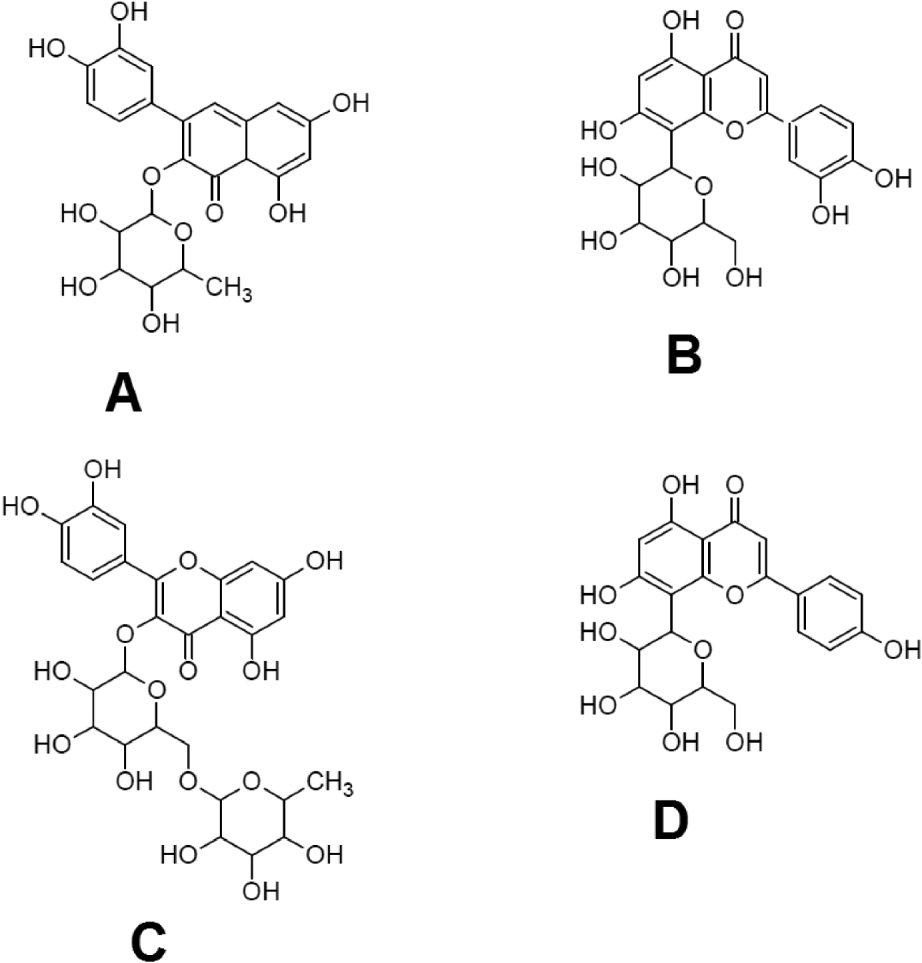
Six flavonoids (Fig. 3) have been isolated and identified in buckwheat grain. All six flavonoids (rutin, quercetin, orientin, vitexin, isovitexin and isoorientin) have been found in buckwheat hulls (Dietrych-Szostak & Oleszek Reference Dietrych-Szostak and Oleszek1999; Kreft et al. Reference Kreft, Knapp and Kreft1999; Tian et al. Reference Tian, Li and Patil2002). Epidemiological studies have suggested a protective role of dietary flavonoids against coronary heart diseases and possibly cancer (Chao et al. Reference Chao, Hsiu and Hou2002). In recent years, flavonoids have attracted increasing interest because they have various beneficial health effects such as anti-allergic, antiviral, anticancer and anti-oxidation properties (Fotsis et al. Reference Fotsis, Pepper, Aktas, Breit, Rasku, Adlercreutz, Wahala, Montesano and Schweigerer1997; Chao et al. Reference Chao, Hsiu and Hou2002). The flavonoid content in tartary buckwheat (c. 40 mg/g) is higher than that in common buckwheat (10 mg/g) (Li & Zhang Reference Li and Zhang2001).
Important phenolic compounds in buckwheat: A, isorientin; B, orientin; C, rutin; D, vitexin (Verardo et al. Reference Verardo, Arraez-Roman, Segura-Carretero, Marconi, Fernandez-Gutierrez and Caboni2011).
Flavonoids are known for their effectiveness in reducing cholesterol levels in the blood, keeping capillaries and arteries strong and flexible, reducing high blood pressure and reducing the risk of arteriosclerosis (Li & Zhang Reference Li and Zhang2001; Fabjan et al. Reference Fabjan, Rode, Kosir, Wang, Zhang and Kreft2003). Verardo et al. (Reference Verardo, Arraez-Roman, Segura-Carretero, Marconi, Fernandez-Gutierrez and Caboni2011) quantified 32 free and 24 bound phenolic compounds in buckwheat flour and buckwheat spaghetti, with two new compounds, i.e. protochatechuic-4-O-glucoside acid and procyanidin proving the further phenolic potential of buckwheat. Kim et al. (Reference Kim, Park and Lim2011) reported the effect of methyl jasmonate on phytochemical production in buckwheat sprouts cultivated in dark conditions, and their findings proved that isoorientin, orientin, rutin and vitexin were the main flavonoids in buckwheat sprouts. Similarly, buckwheat flour (476·3 and 618·9 mg GAE/g extract) contain polyphenolic contents four times higher than wheat flour (37·1 and 137·2 mg GAE/g extract) (Sedej et al. Reference Sedej, Mandic, Sakac, Misan and Tumbas2010).
Rutin content
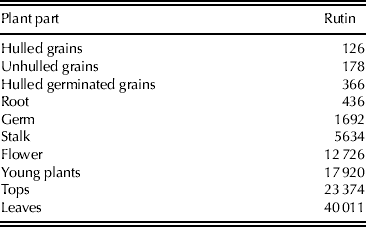
Rutin (quercetin-3-beta-d-rutinoside) is an important therapeutic substance that favourably influences the increase of blood vessel elasticity (Mukasa et al. Reference Mukasa, Suzuki and Honda2009), the treatment of circulatory disorders and atherosclerosis, the reduction of blood pressure, and stimulates the utilization of vitamin C (Yildizoğlu-Ari et al. Reference Yildizoğlu-Ari, Altan, Altinkurt and Öztürk1991). Rutin is widely present in plants, but is relatively rare in their edible parts. It was first detected in Ruta graveolens, which gave the common name to this pharmaceutically important substance (Chen et al. Reference Chen, Huang, Huang, Wang and Ou2001). No rutin has been found in cereals or pseudocereals except buckwheat, which can be used as a good source of dietary rutin (Ohsawa & Tsutsumi Reference Ohsawa and Tsutsumi1995; Watanabe Reference Watanabe1998; Kreft et al. Reference Kreft, Knapp and Kreft1999; Park et al. Reference Park, Kang, Kim, Ko, Yum, Kim, Hong and Lee2000; Jiang et al. Reference Jiang, Burczynski, Campbell, Pierce, Austria and Briggs2007). The content of rutin is dependent on the buckwheat genotype, growing conditions, developmental phase, plant part and year of harvest (Table 9) (Lachmann & Adachi Reference Lachmann and Adachi1990). Different cultivars of buckwheat may have different contents of rutin (Ohsawa & Tsutsumi Reference Ohsawa and Tsutsumi1995) with potential variation also in different plant parts. Most rutin is accumulated in the inflorescence (up to 0·12 mg/g DW), in stalks (0·004–0·01 mg/g DW), upper leaves (0·08–0·10 mg/g DW) (Hagels Reference Hagels1999) and 0·12–0·36 mg/g DW in grains depending on the variety and growth conditions (Kitabayashi et al. Reference Kitabayashi, Ujihara, Hirose and Minami1995; Brunori et al. Reference Brunori, Baviello, Zannettino, Corsini, Sandor and Vegvari2010; Park et al. Reference Park, Li, Uddin and Park2011). The highest quantity of rutin is found in leaves immediately before flowering (Michalova et al. Reference Michalova, Dotlacil and Cejka1998) therefore providing the opportunity for utilizing buckwheat tops for the natural fortification of food with rutin. Among fruits, vegetables and grain crops, grapes and buckwheat are the most important rutin-containing foods. Ecological factors such as ultra-violet (UV) irradiation may also have a great influence on rutin content (Kreft et al. Reference Kreft, Strukelj, Gaberscik and Kreft2002).
Rutin content (mg/g DW) in different parts of buckwheat (Park et al. Reference Park, Park, Chang, Park, Faberová, Dvořáček, Čepková, Hon, Holubec and Stehno2004; Paulícková et al. Reference Paulícková, Vyzralova, Holasová, Fiedlerová, Vavreinová, Faberová, Dvořáček, Čepková, Hon and Holubec2004)
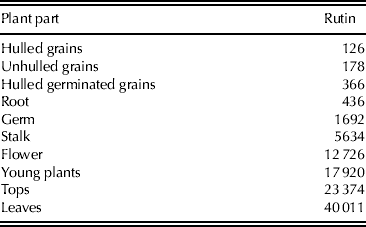
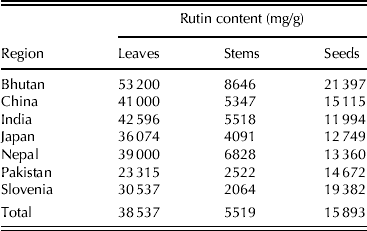
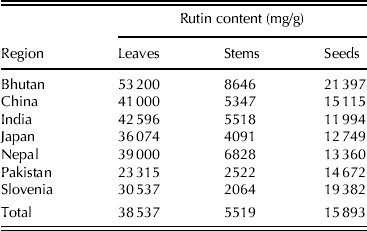
In a research report by Park et al. (Reference Park, Park, Chang, Park, Faberová, Dvořáček, Čepková, Hon, Holubec and Stehno2004), rutin content in 50 seeds and plants of different tartary buckwheat strains from all over the world was compared. These 50 strains were collected from China (27 strains), India (5 strains), Nepal (9 strains), Bhutan (3 strains), Pakistan (1 strain), Slovenia (3 strains) and Japan (2 strains). They found the rutin content in seed and plant parts of tartary buckwheat to be higher than that of F. esculentum and F. cymosum (Park et al. Reference Park, Park, Chang, Park, Faberová, Dvořáček, Čepková, Hon, Holubec and Stehno2004). Similar results were obtained by Jiang et al. (Reference Jiang, Burczynski, Campbell, Pierce, Austria and Briggs2007) and Brunori et al. (Reference Brunori, Baviello, Zannettino, Corsini, Sandor and Vegvari2010). The rutin content of tartary buckwheat was c. 3·2 times higher in the flower, c. 3·1 times in the stem and c. 65 times higher in the seed compared with F. esculentum (Park et al. Reference Park, Park, Chang, Park, Faberová, Dvořáček, Čepková, Hon, Holubec and Stehno2004). Similarly, rutin content in buckwheat varied with cultivation region (Table 10). Rutin content in the leaf, stem and seed of the strains collected from the Bhutan area were higher than in the strains collected from Slovenia and Pakistan (Park et al. Reference Park, Park, Chang, Park, Faberová, Dvořáček, Čepková, Hon, Holubec and Stehno2004).
Comparison of rutin content in leaves, stems and seeds of tartary buckwheat of different origins (Park et al. Reference Park, Park, Chang, Park, Faberová, Dvořáček, Čepková, Hon, Holubec and Stehno2004)
Rutin has desirable physiological and biological properties, such as anti-oxidation, anti-inflammation, anti-hypertension, vasoconstrictive, spasmolitic and a positive inotropic effect (Kuntić et al. Reference Kuntić, Filipović and Vujić2011; Landberg et al. Reference Landberg, Sun, Rimm, Cassidy, Scalbert, Mantzoros, Hu and van Dam2011). Rutin also provides protection against gastric lesions, improves sight and hearing, protects against UV light, lowers plasma cholesterol, protects from oxidative stress (Gong et al. Reference Gong, Qin, Huang, Zhou, Yang and Li2010), causes muscle hypertrophy (Gaberscik et al. Reference Gaberscik, Voncina, Trost, Germ and Bjorn2002) and also suppresses gallstone formation and cholesterol levels (Kuntić et al. Reference Kuntić, Filipović and Vujić2011). Guo et al. (Reference Guo, Yao and Chen2007) concluded that adding rutin to the digestion mixture in the flour caused a significant increase in pepsin digestibility.
Fagopyrins and fagopyritols
Fagopyrin is a photo-sensitive substance found in buckwheat plants, belonging to the naphthodianthrones and structurally related to hypericin (Kreft & Germ Reference Kreft and Germ2008). The fagopyrins found in buckwheat grains are unique, but the concentration is very low and isolation is difficult. In buckwheat, some anthranoides have also been found in concentrations which could cause very small laxative effects (Hagels Reference Hagels, Kreft, Ries and Zewen2007). The fagopyrins found in buckwheat can be utilized in the treatment of type II diabetes (Krkoskova & Mrazova Reference Krkoskova and Mrazova2005).
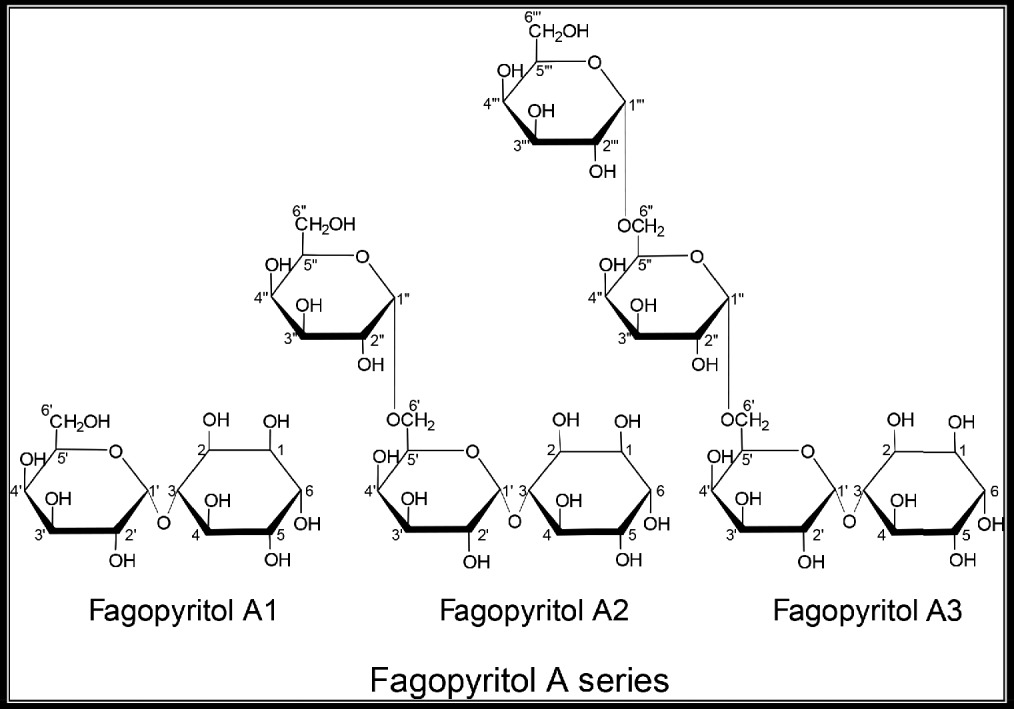
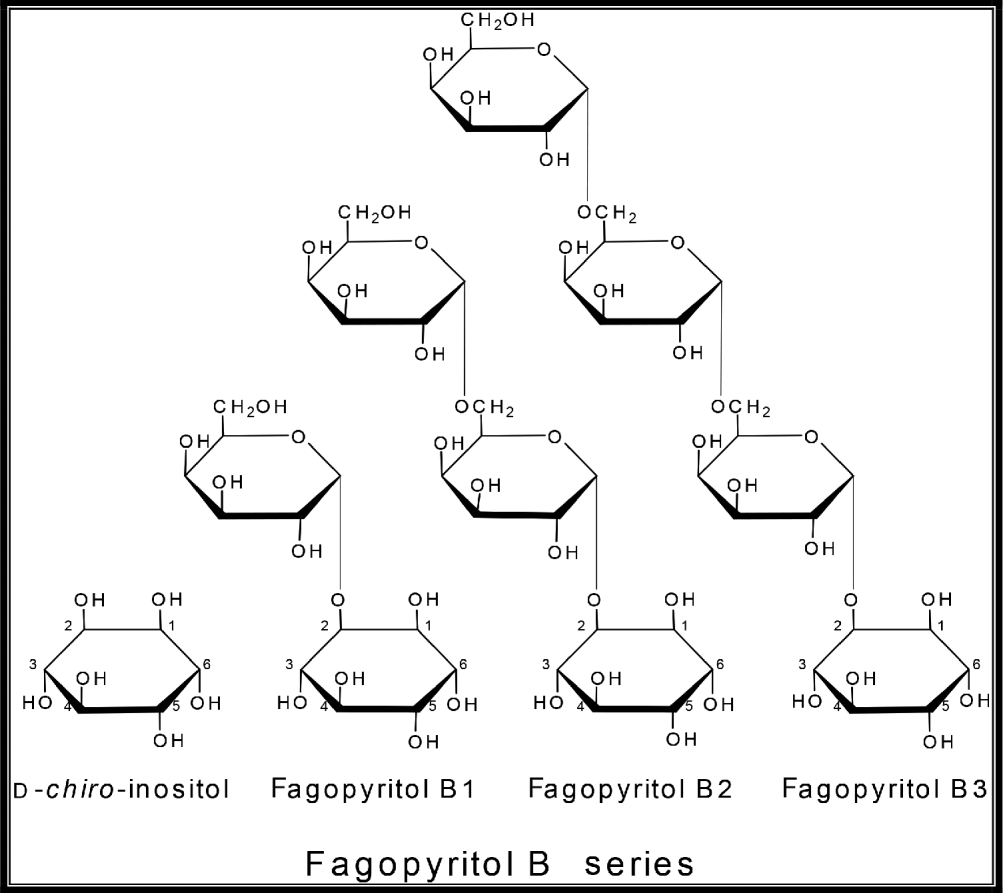
Buckwheat seeds accumulate the soluble carbohydrates sucrose and fagopyritols in the embryo and aleurone tissues. Fagopyritols are carbohydrate compounds which were first identified in buckwheat and are ex-galactosyl derivatives (mono, di and trigalactosyl derivatives) of d-chiro-inositol (Horbowicz et al. Reference Horbowicz, Brenac and Obendorf1998).
Six fagopyritols (Figs 4 and 5), representing two distinct series differing in bonding positions, have been found in buckwheat seeds (Horbowicz et al. Reference Horbowicz, Brenac and Obendorf1998; Szczecinski et al. Reference Szczecinski, Gryff-Keller, Horbowicz and Obendorf1998; Obendorf et al. Reference Obendorf, Steadman, Fuller, Horbowicz and Lewis2000; Steadman et al. Reference Steadman, Burgoon, Schuster, Lewis, Edwardson and Obendorf2000, Reference Steadman, Fuller and Obendorf2001c). These are fagopyritol A1 (α-d-galactopyranosyl-(1→3)-1D-chiro-inositol), fagopyritol A2 (α-d-galactopyranosyl-(1→6)-α-d-galactopyranosyl-(1→3)-1D-chiro-inositol), fagopyritol A3(α-d-galactopyranosyl-(1→6)-α-d-galactopyranosyl-(1→6)-α-d-galactopyranosyl-(1→3)-1D–chiro-inositol), fagopyritol B1(α-d-galactopyranosyl-(1→2)-1D-chiro-inositol), fagopyritol B2(α-d-galactopyranosyl-(1→6)-α-d-galactopyranosyl-(1→2)-1D-chiro-inositol) and fagopyritol B3 (α-d-galactopyranosyl-(1→6)-α-d-galactopyranosyl-(1→6)-α-d-galactopyranosyl (1→2)-1D-chiro-inositol) (Obendorf Reference Obendorf1997; Ueda et al. Reference Ueda, Coseo, Harrell and Obendorf2005).
Fagopyritol A series present in buckwheat (Horbowicz et al. Reference Horbowicz, Brenac and Obendorf1998).
Fagopyritol B series present in buckwheat (Horbowicz et al. Reference Horbowicz, Brenac and Obendorf1998).
Fagopyritol B1 and A1 (Obendorf et al. Reference Obendorf, Steadman, Fuller, Horbowicz and Lewis2000, Reference Obendorf, Sensenig, Wu, Ohashi, O'Sullivan, Kosina and Schnebly2008) are the major fagopyritols accumulated in buckwheat seeds (Horbowicz et al. Reference Horbowicz, Brenac and Obendorf1998), and these constitute 0·50 of the total soluble carbohydrates of buckwheat embryos (Cid et al. Reference Cid, Alfonso and Martin-Lomas2004). Fagopyritols accumulate in the dicotyledonous embryo of buckwheat seeds, mostly in the cotyledons (Horbowicz et al. Reference Horbowicz, Brenac and Obendorf1998). Recently, Obendorf et al. (Reference Obendorf, Sensenig, Wu, Ohashi, O'Sullivan, Kosina and Schnebly2008) determined the molecular structure of fagopyritol A1 as O-α-d-galactopyranosyl-(1-3)-d-chiro-inositol by 1H and 13C NMR and concluded that fagopyritol A1 is a positional isomer of fagopyritol B1 (O-α-d-galactopyranosyl-(1-2)-d-chiro-inositol, which has a positive effect on blood glucose levels and insulin activity (Fonteles et al. Reference Fonteles, Almeida and Larner2000).
Buckwheat is the richest source of these carbohydrates. The bran milling fractions may contain 26 mg of fagopyritols per g DW, whereas dark and light buckwheat flours contain 7 and 3 mg/g DW, respectively (Fonteles et al. Reference Fonteles, Almeida and Larner2000).
Buckwheat is being studied for use in treating type II diabetes (Kawa et al. Reference Kawa, Taylor and Przybylski2003) and can also help to control the development of polycystic ovaries (Nestler et al. Reference Nestler, Jakubowicz, Reamer, Gunn and Allan1999): it contains d-chiro-inositol, a component of the secondary messenger pathway for insulin signal transduction found to be deficient in type II diabetes and polycystic ovary syndrome (PCOS). Research on d-chiro-inositol and PCOS has shown promising results (Nestler et al. Reference Nestler, Jakubowicz, Reamer, Gunn and Allan1999). A buckwheat protein has been found to bind cholesterol tightly, thus reducing plasma cholesterol in people with hyperlipidemia (Tomotake et al. Reference Tomotake, Shimaoka, Kayashita, Yokoyama, Nakajoh and Kato2001). d-chiro-inositol is a component of galactosamine d-chiro-inositol, a putative insulin mediator (Larner et al. Reference Larner, Huang, Schwartz, Oswald, Shen, Kinter, Tang and Zeller1988) believed to be deficient in subjects with NIDDM (Asplin et al. Reference Asplin, Galasko and Larner1993) because of an abnormal d-chiro-inositol metabolism. Adding d-chiro-inositol as a dietary supplement appeared to be effective in reducing the symptoms of NIDDM and PCOS (Ortmeyer et al. Reference Ortmeyer, Larner and Hansen1995; Fonteles et al. Reference Fonteles, Almeida and Larner2000). Several research groups are developing sources for natural and synthetic supplies of d-chiro-inositol (Kennington et al. Reference Kennington, Hill, Craig, Bogardus, Raz, Ortmeyer, Hansen, Romero and Larner1990). One natural source of d-chiro-inositol (in free form and as galactosides, predominantly fagopyritol A1 and fagopyritol B1) is in buckwheat seed. During dry milling, fragments of the outer cotyledon adhere to the bran (Steadman et al. Reference Steadman, Fuller and Obendorf2001c). Therefore, the bran milling fraction from buckwheat seed (Steadman et al. Reference Steadman, Burgoon, Schuster, Lewis, Edwardson and Obendorf2000, Reference Steadman, Fuller and Obendorf2001c) can be used for the isolation and preparation of fagopyritols and can free d-chiro-inositol for the production of nutraceuticals and pharmaceuticals (Obendorf et al. Reference Obendorf, Steadman, Fuller, Horbowicz and Lewis2000, Reference Obendorf, Sensenig, Wu, Ohashi, O'Sullivan, Kosina and Schnebly2008; Steadman et al. Reference Steadman, Burgoon, Schuster, Lewis, Edwardson and Obendorf2000; Kawa et al. Reference Kawa, Taylor and Przybylski2003).
ALLERGIES TO BUCKWHEAT
Allergy to buckwheat was first reported in the literature in 1909 (Smith Reference Smith1909), and it is mostly an immediate IgE-mediated reaction that can cause a severe allergic reaction similar to that caused by peanut allergy (Asero et al. Reference Asero, Antonicelli, Arena, Bommarito, Caruso, Colombo, Crivellaro, De Carli, Della Torre, Della Torre, Heffler, Lodi Rizzini, Longo, Manzotti, Marcotulli, Melchiorre, Minale, Morandi, Moreni, Moschella, Murzilli, Nebiolo, Poppa, Randazzo, Rossi and Senna2009). Several buckwheat allergens have been identified, of which the 24 kDa (Fag e 1), 26 kDa and 67–70 kDa proteins have been suggested to be of importance (Tohgi et al. Reference Tohgi, Kohno, Takahashi, Matsuo, Nakayama and Morita2011). Fag e 1, which is homologous to 11S or 12S globulin, has reacted with the serum IgE of all buckwheat allergy patients. The 16 kDa protein (Fag e 2), which is resistant to digestion, has been identified as a major buckwheat allergen in Japanese and Korean patients with buckwheat allergy (Park et al. Reference Park, Kang, Kim, Ko, Yum, Kim, Hong and Lee2000).
CONCLUSION
Buckwheat is an important food, as it contains proteins with high biological value and balanced amino acid composition, relatively high fibre content, high contents of available Zn, Cu and Mn and dietary Se. The nutraceutical potential of buckwheat and its use in food products emphasizes the need to further exploit the use of bioactive compounds and precious functional ingredients which are well researched and established by various studies in the related area. This will not only help in the prevention and treatment of various human diseases, it will also be helpful in improving various traditional and local buckwheat foods and better use of the by-products of buckwheat. Proper utilization of buckwheat will also promote food industries in the development of new functional foods.