Introduction
Skin and heart are not usually spoken of together, but on a structural level, they prove to be remarkably similar organs. Both are subject to a near-constant mechanical shear stress and thus need to resist it. This is achieved on a cellular level via intercellular connecting structures, the adhering junctions (desmosomes in the skin and desmosome-like structures in the area composita of the heart), which provide mechanical resilience and flexibility to the tissue.Reference Mandal, Shrestha, Ghimire, Joshi and Agrawal1, Reference Bolling and Jonkman2
Desmosomes are composed of cadherins, armadillo proteins, and plakins, including desmoplakin, which is critical for both cutaneous and cardiac integrity.Reference Caiazzo, De Simone and Monda3
The uncommon presentation of a systemic cardiac disease with symptoms such as dyspnoea, oedema, and bilateral crepitation—alongside dermatological findings like woolly hair and palmoplantar keratosis—should prompt consideration of this syndrome as a differential diagnosis.Reference Mandal, Shrestha, Ghimire, Joshi and Agrawal1
Case report
A 7-year-old boy, born of a third-degree consanguineous marriage, developmentally normal, presented to paediatric emergency with fever, generalised swelling over the body (starting from feet and progressing to abdomen and face), dyspnoea for one week, accompanied by cough for the last two days. His past medical history was free of any cardiovascular or systemic diseases. Family history revealed five spontaneous abortions.
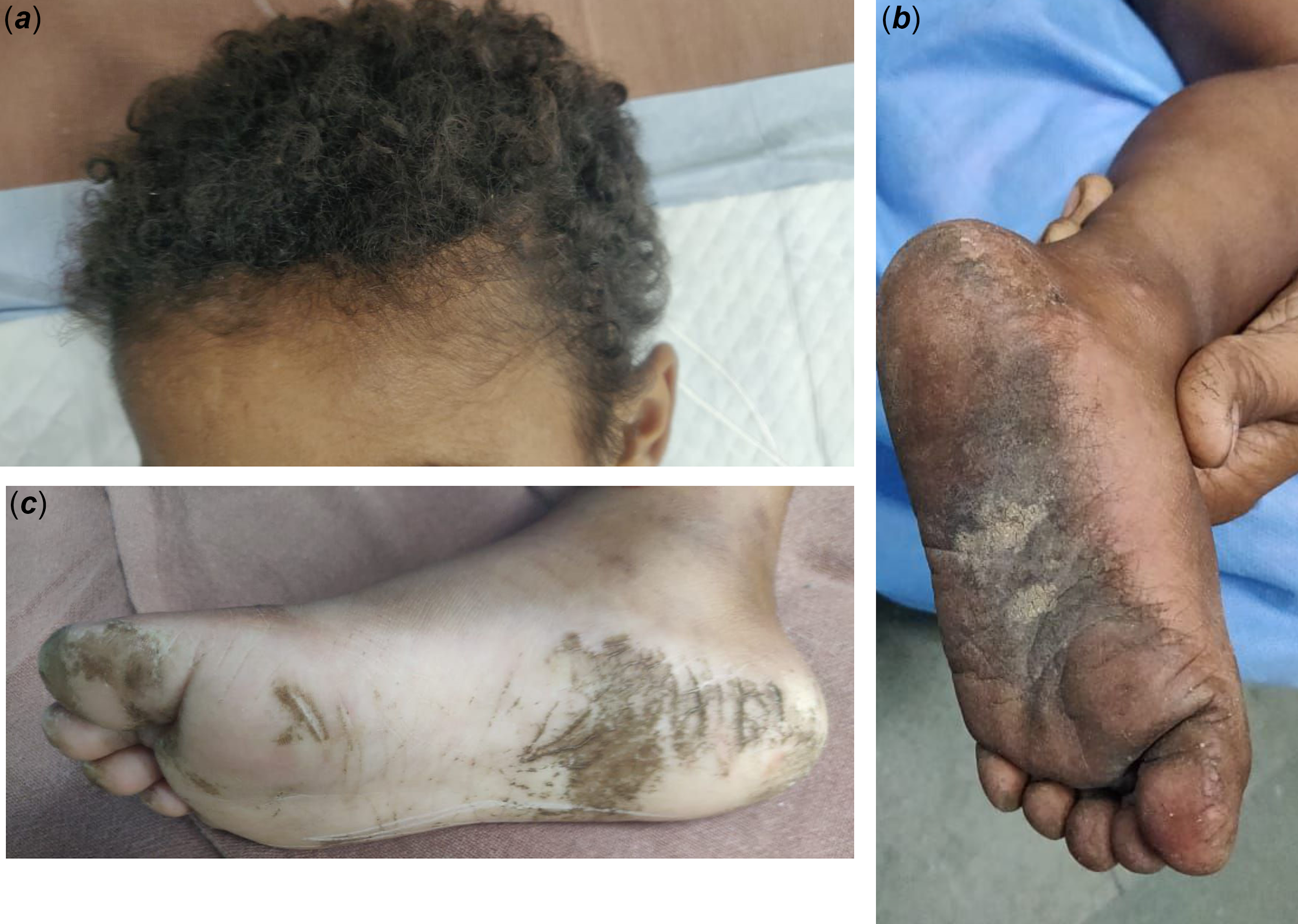
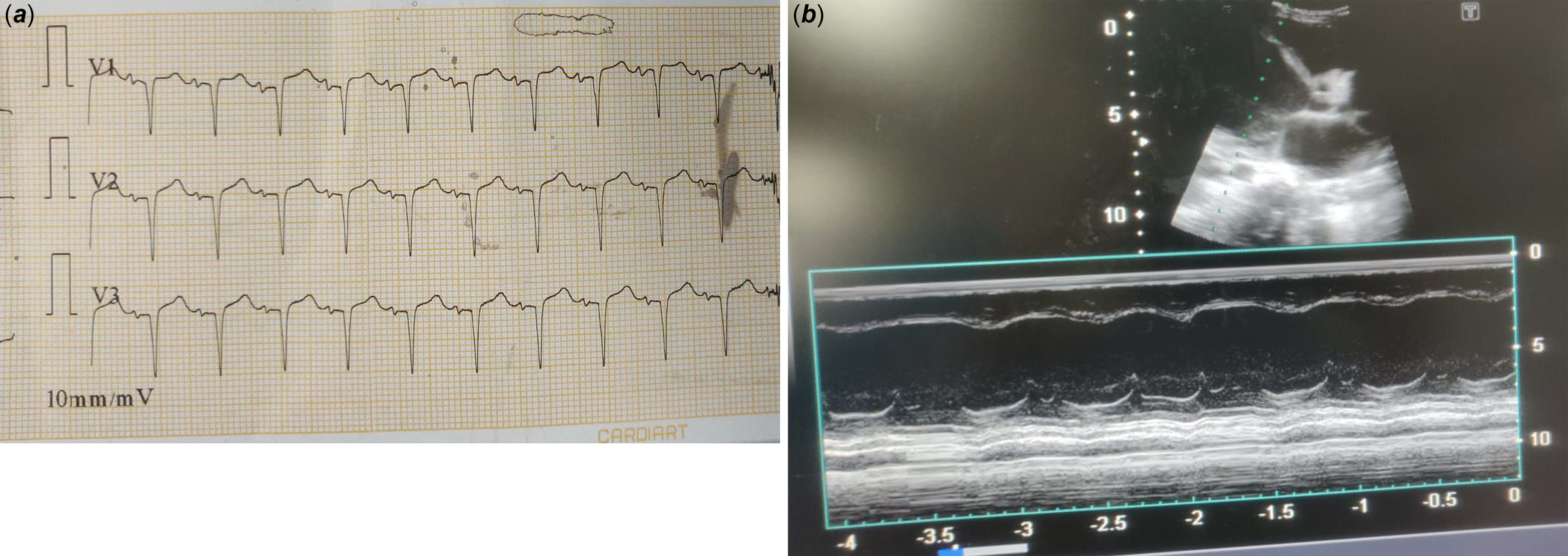
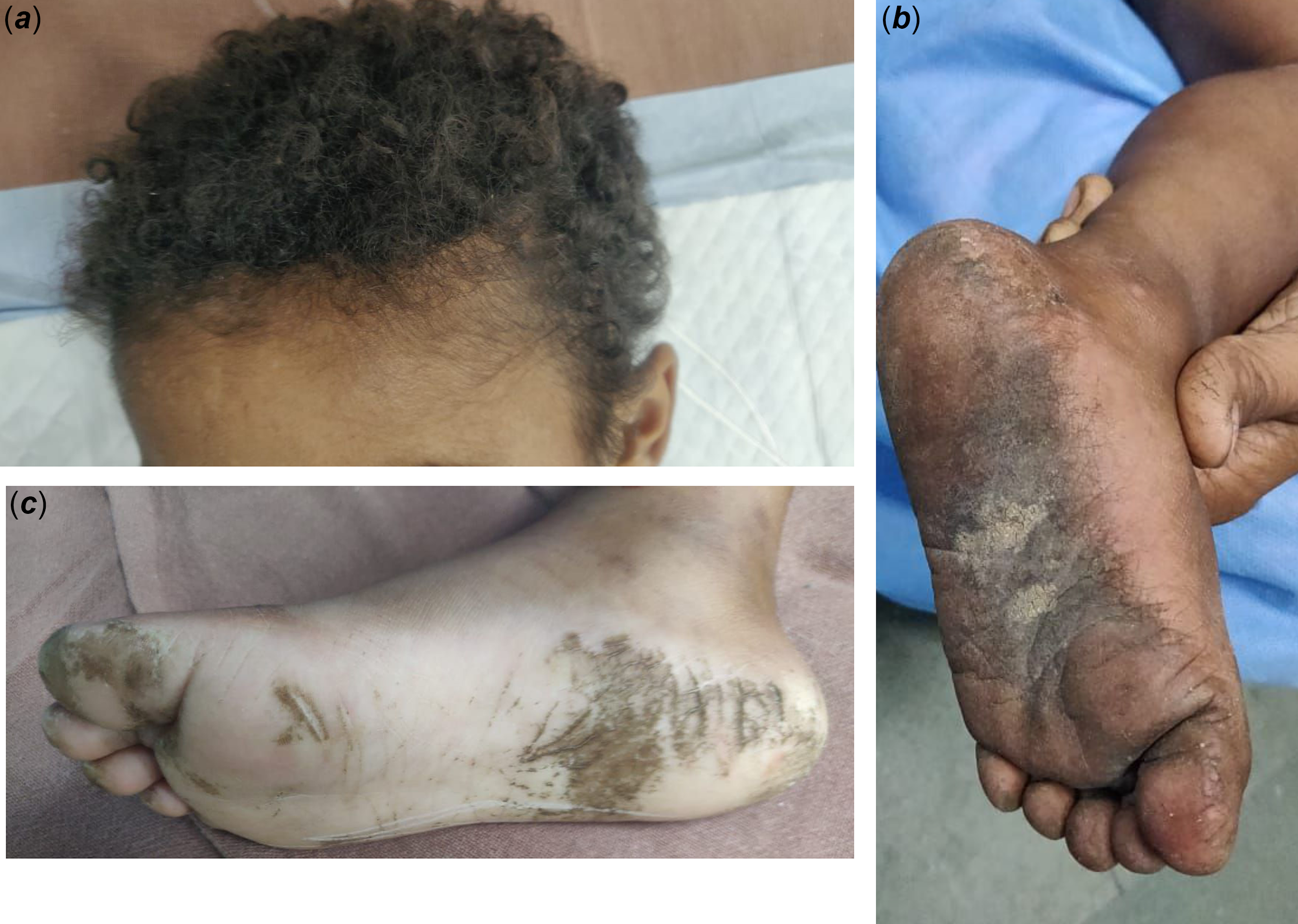
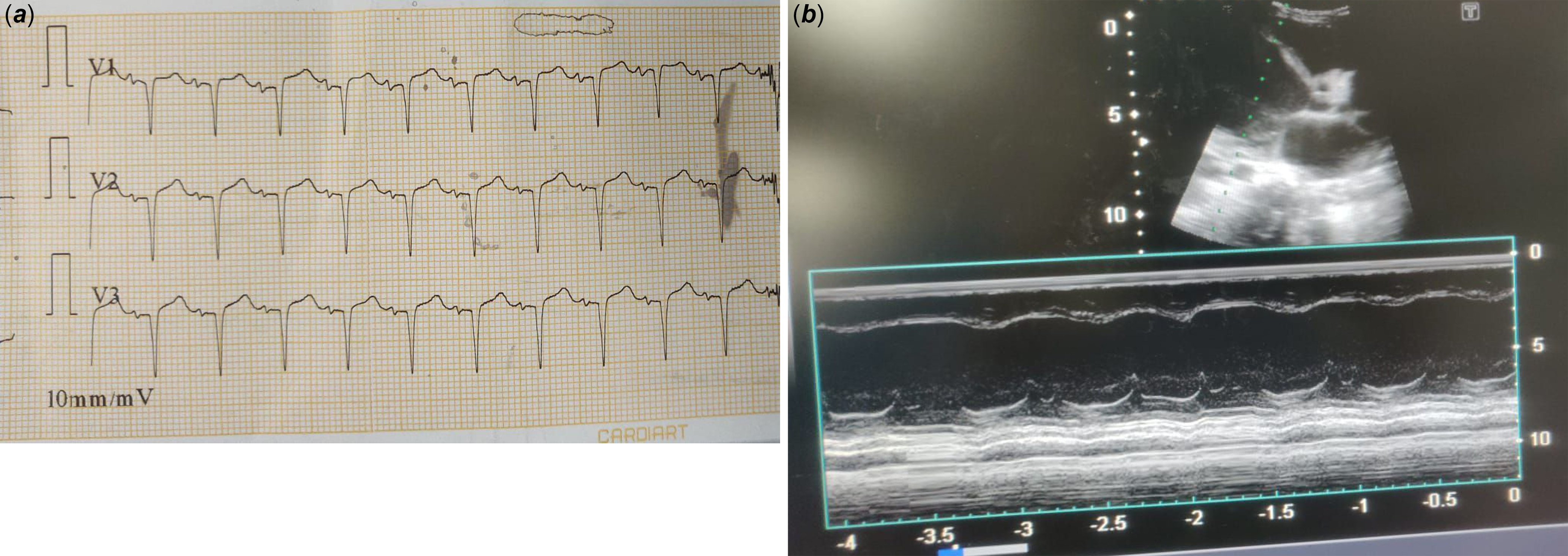
On presentation, the child appeared sick, with a dull look and poor general appearance. General examination showed lustreless woolly scalp hair (Figure 1 a ), hyperkeratosis of the palms and soles (Figure 1 b ), pedal oedema, and pallor. His younger brother also had a similar phenotype, exhibiting woolly hair and hyperkeratosis of palms and soles (Figure 1 c ). Vital signs were heart rate 142/min, respiratory rate 56/min, blood pressure 80/60 mmHg, palpable femoral pulses only, raised jugular venous pressure, and oxygen saturation 76% on room air. Examination revealed cardiomegaly with muffled heart sounds. Bilateral crepitations were present, and the liver was palpable 5 cm below the costal margin. Chest X-ray was suggestive of cardiomegaly. Electrocardiogram demonstrated right axis deviation, poor R-wave progression, and premature ventricular complexes (Figure 2 a ). Echocardiography revealed dilatation of all chambers and markedly reduced ejection fraction (8%) (Figure 2 b ).
( a ) Woolly hair in the index case. ( b ) Plantar keratosis in the index case. ( c ) Plantar keratosis in the younger sibling.
( a ) ECG showing ectopic beats. ( b ) Bedside echo showing dilated atria and ventricles. ECG = electrocardiogram.
The patient was admitted to the critical care unit with a diagnosis of cardiac failure and required ventilatory support, inotropes, and decongestive therapy for stabilisation. Laboratory investigations revealed mild anaemia, total leukocyte count 18,000/µL (80% neutrophils and 15% lymphocytes), and platelets 44,000/µL. Liver function tests showed transaminitis (aspartate transaminase 107 U/L, alanine transaminase 457 U/L, and total bilirubin 2.96 mg/dL [direct 2.09 mg/dL]). Kidney function tests showed urea 68.6 mg/dL and creatinine 0.65 mg/dL. The child was continued on intravenous antibiotics, cardiogenic shock management, and supportive care. During the hospital course, the child required prolonged mechanical ventilation with multiple extubation failures. Beta-blockers (carvedilol), angiotensin-converting enzyme inhibitors (enalapril), diuretics (furosemide), carnitine, and vitamin D supplementation were continued. Fractional shortening remained persistently low (12–15%) despite inotropic support. Given the characteristic clinical phenotype of a cardio-cutaneous disorder, genomic sequencing identified a homozygousdesmoplakin (DSP) gene mutation on chromosome 6 (OMIM #605676), variant c.5188G>T, NM_004415.4, based on the Hg19 genome reference build. This variant is novel as it has not been detected in any of the databases—normal population as well as disease databases like ClinVar.
After stabilisation, the patient was referred to cardiothoracic and vascular surgery evaluation for consideration of cardioverter-defibrillator implantation and other treatment modalities.
Discussion
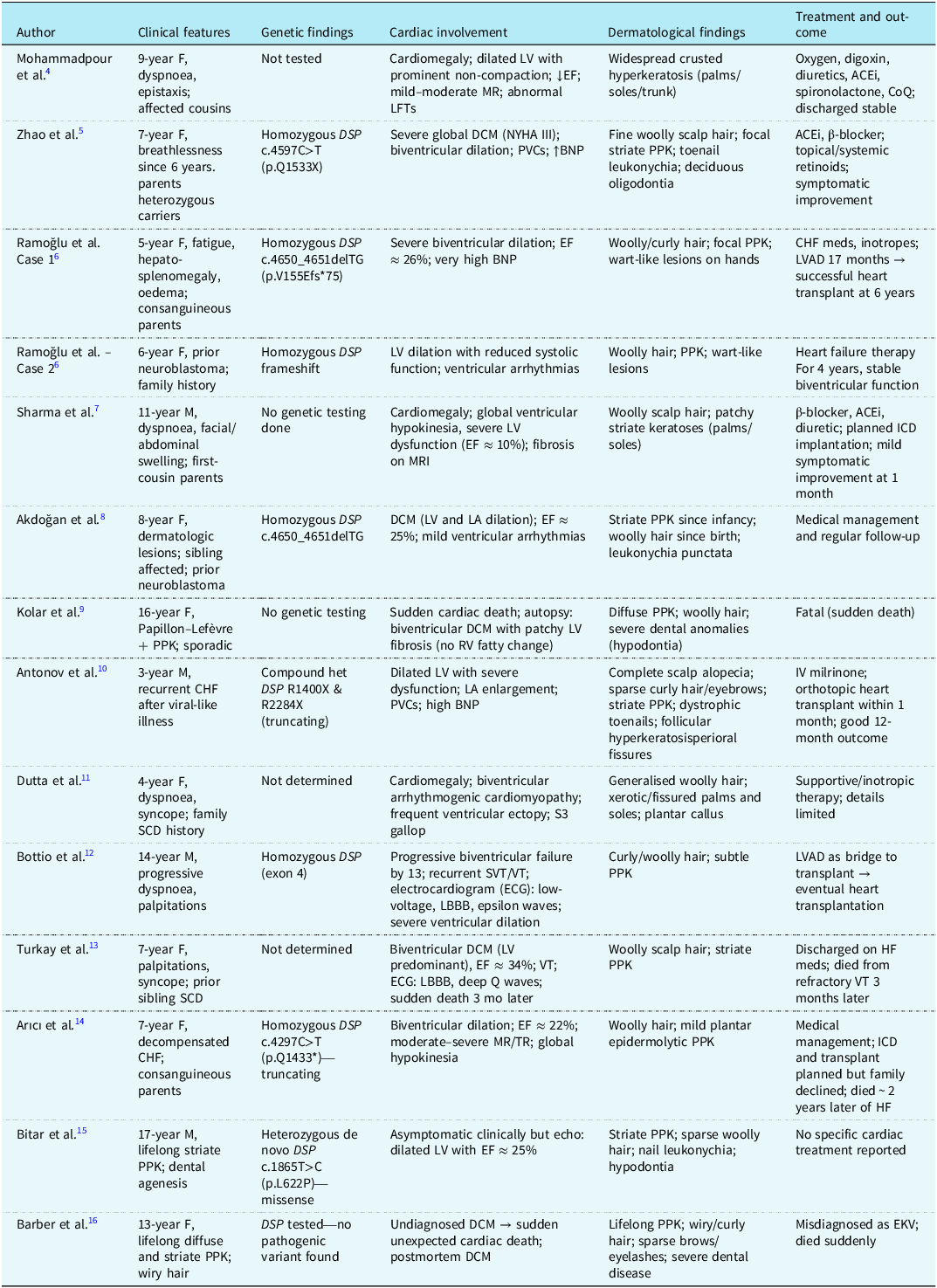
Our patient presented with phenotypic findings similar to the previously reported cases (Table 1). The child exhibited the characteristic phenotype of woolly hair, palmoplantar keratosis, and signs of heart failure. Woolly scalp hair is often present since birth, and symmetric palm/sole hyperkeratosis appears in infancy or early childhood.Reference Binfadel, Aleem and Alhabdan17 Beyond these classical symptoms, it can also show some phenotypical variations with dental anomalies, oligodontia, nail dystrophy, or leukonychia.Reference Akdogan, Incel-Uysal, Cavdarli, Topcu and Yalcin8–Reference Antonov, Kingsbery and Rohena10,Reference Barber, Day, Judge, Toole and Fayle16 These distinctions are observed more commonly in Carvajal than in Naxos, a closely related disease. In contrast to early onset of dermatological manifestations, our case presented with cardiac symptoms such as heart failure, arrhythmias, and cardiogenic shock, which usually manifest between ages 5 and 12 years.Reference Zhao, Bai and Li5
Published paediatric Carvajal syndrome cases: cardiac and dermatological manifestations with outcomes
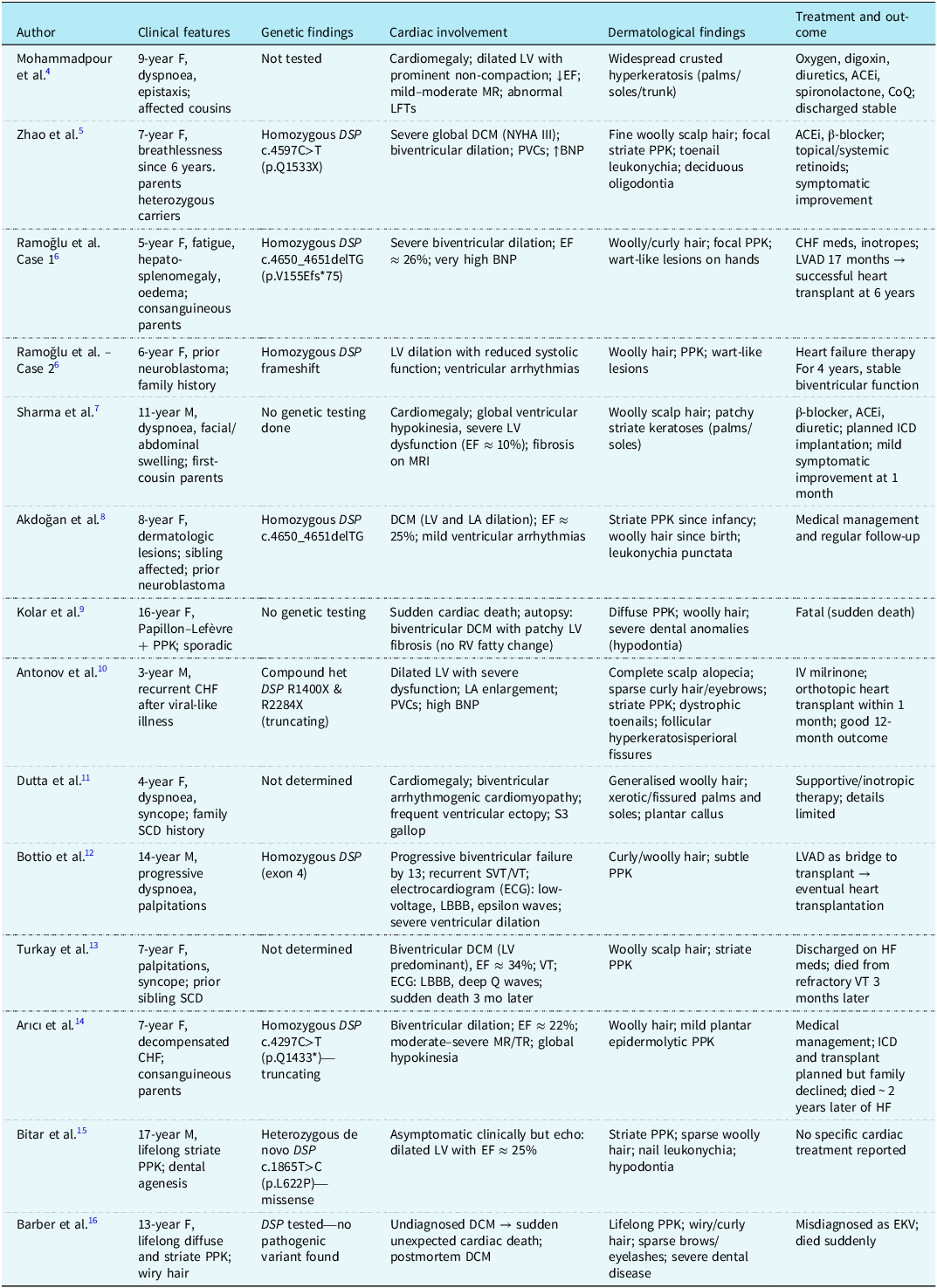
Table 1 Long description
The table presents data on pediatric Carvajal syndrome cases, focusing on clinical features, genetic findings, cardiac involvement, dermatological findings, and treatment outcomes. It has 18 rows and 6 columns. The columns are labeled Author, Clinical features, Genetic findings, Cardiac involvement, Dermatological findings, and Treatment and outcome. Each row provides specific details for different cases. For example, Row 1: Mohammadpour et al., 9-year F, dyspnoea, epistaxis; affected cousins, Not tested, Cardiomegaly; dilated LV with prominent non-compaction; LVEF; mild-moderate MR; abnormal LFTs, Widespread crusted hyperkeratosis (palms/soles/trunk), Oxygen, digoxin, diuretics, ACEi, spironolactone, CoQ; discharged stable. Row 2: Zhao et al., 7-year F, breathlessness since 6 years. parents heterozygous carriers, Homozygous DSP c.4597C>T (p.Q1533X), Severe global DCM (NYHA III); biventricular dilation; PVCs; TBPN, Fine woolly scalp hair; focal striate PPK; toenail leukonychia; deciduous oligodontia, ACEi, β-blocker; topical/systemic retinoids; symptomatic improvement.
Notes: ACE = angiotensin-converting enzyme; LV = left ventricle; EF = ejection fraction; MR = mitral regurgitation; DSP = desmoplakin; DCM = dilated cardiomyopathy; PVC = premature ventricular contraction; BNP = B-type natriuretic peptide (brain natriuretic peptide); PPK = palmoplantar keratoderma; CHF = congestive heart failure; LVAD = left ventricular assist device; ICD = implantable cardioverter-defibrillator; SCD = sudden cardiac death; TR = tricuspid regurgitation; EKV = erythrokeratoderma variabilis.
Thus, early recognition of hair/keratosis clues is critical, since left ventricular dilation appears in most affected children by their early teens. Given the hereditary nature of the disease, family history is also significant. Similar to our case, many cases involve consanguineous parents and siblings may be at risk. Genetic counselling and screening of relatives is recommended.Reference Ramoğlu, Uçar, Ceylaner, Atalay and Tutar6,Reference Akdogan, Incel-Uysal, Cavdarli, Topcu and Yalcin8,Reference Turkay, Odemis and Karadag13–Reference Barber, Day, Judge, Toole and Fayle16
These familial patterns reflect the underlying genetic architecture: Carvajal is commonly due to biallelic mutations in the DSP gene (encoding desmoplakin), on chromosome 6 (OMIM #605676), which anchors intermediate filaments to desmosomes in skin and heart. Over 120 DSP gene mutations (both dominant and recessive) have been reported in human skin/heart disease.Reference Pigors, Schwieger-Briel and Cosgarea 18
Genetic data across reported cohorts show a clear predominance of biallelic truncating DSP gene variants underlying classic Carvajal syndrome, with consanguinity frequently reported and homozygous loss-of-function mutations accounting for most paediatric cases.Reference Zhao, Bai and Li5,Reference Ramoğlu, Uçar, Ceylaner, Atalay and Tutar6,Reference Akdogan, Incel-Uysal, Cavdarli, Topcu and Yalcin8,Reference Arıcı, Akalın and Geckinli14 Occasional heterozygous or de novo missense DSP gene variants produce milder or atypical phenotypes, expanding the genetic spectrum.Reference Bitar, Najjar and Hayashi15,Reference Pigors, Schwieger-Briel and Cosgarea18 Overall, DSP gene mutations reliably segregate with the clinical triad of dilated cardiomyopathy, woolly hair, and palmoplantar keratoderma, although additional features such as leukonychia, dental anomalies, alopecia, and rare associations (e.g., neuroblastoma) have been described.Reference Zhao, Bai and Li5,Reference Ramoğlu, Uçar, Ceylaner, Atalay and Tutar6,Reference Akdogan, Incel-Uysal, Cavdarli, Topcu and Yalcin8,Reference Antonov, Kingsbery and Rohena10 Our patient likewise carried a homozygous nonsense DSP gene mutation (homozygous p.Glu1730Ter, c.5188G>T), NM_004415.4, based on the Hg19 genome reference build, consistent with the recessive, truncating-variant pattern. Viewed in the context of existing genotype–phenotype correlations, our case expands the molecular spectrum of DSP gene-related disease by identifying a novel homozygous truncating variant associated with a classic Carvajal phenotype. Biallelic truncating DSP gene variants tend to produce severe left ventricular dysfunction with fibrofatty change, malignant arrhythmias, and high sudden-death risk, whereas heterozygous DSP gene alleles more often present as arrhythmogenic right or biventricular cardiomyopathy without prominent cutaneous signs.Reference Caiazzo, De Simone and Monda3,Reference Pigors, Schwieger-Briel and Cosgarea18–Reference Protonotarios, Asimaki and Basso20 Importantly, the extent of skin involvement does not always predict cardiac severity, so dermatologic clues should prompt genetic testing and cardiac surveillance.Reference Bolling and Jonkman2,Reference Pigors, Schwieger-Briel and Cosgarea18,Reference Pantou, Gourzi and Vlagkouli19,Reference Heliö, Brandt and Vaara21
Within this framework, Carvajal syndrome represents the full phenotypic expression of recessive DSP gene truncations, while heterozygous variants occupy variable points along the arrhythmogenic cardiomyopathy spectrum, reinforcing the notion that the skin can serve as a “window to the heart.” Closely related to this condition is Naxos disease caused by plakoglobin (JUP) mutations, which manifests in adolescence with right ventricular arrhythmias, woolly hair, and diffuse palmoplantar keratoderma.
Thus, a practical distinction is that DSP gene mutations primarily affect the left ventricle, whereas plakoglobin mutations involve the right ventricle.Reference Protonotarios, Asimaki and Basso20 Beyond paediatric syndromic cases, DSP gene variants are also increasingly recognised in adults as arrhythmogenic left ventricular cardiomyopathy, often first manifesting as arrhythmias before progression to heart failure.Reference Binfadel, Aleem and Alhabdan17,Reference Heliö, Brandt and Vaara21
Conclusion
Carvajal syndrome exemplifies the connection between skin and heart, where simple dermatologic findings may signal life-threatening cardiomyopathy. Paediatricians should recognise woolly hair and palmoplantar keratoderma as early diagnostic clues, particularly in children from consanguineous families. Timely recognition enables genetic confirmation, counselling, and cardiac surveillance, which may reduce the risk of sudden death. Our case underscores the importance of considering rare cardio-cutaneous syndromes in the differential diagnosis of paediatric heart failure.
Declaration of generative AI and AI-assisted technologies in the manuscript preparation process
During the preparation of this work, the authors used ChatGpt in order to rectify grammatical and language errors. After using this tool/service, the authors reviewed and edited the content as needed and take full responsibility for the content of the published article.