Background
Anxiety disorders are prevalent in childhood and it is likely that the precursors to anxiety disorders in childhood are multifactorial and include both psychological and biological factors operating together from conception onwards (Glover, Reference Glover2011; Lewis, Galbally, Gannon, & Symeonides, Reference Lewis, Galbally, Gannon and Symeonides2014; Paulus, Backes, Sander, Weber, & von Gontard, Reference Paulus, Backes, Sander, Weber and von Gontard2015). There is increasing interest in fetal programming theories to understand early-life factors that may increase the risk for child mental health disorders.
There are numerous fetal exposures, which could be considered important in any pathway to childhood anxiety disorders (CADs), but one promising area to understand is the link between maternal antenatal depression and CAD (Capron et al., Reference Capron, Glover, Pearson, Evans, O'Connor, Stein and Ramchandani2015; Goodman et al., Reference Goodman, Rouse, Connell, Broth, Hall and Heyward2011; Madigan et al., Reference Madigan, Oatley, Racine, Fearon, Schumacher, Akbari and Tarabulsy2018; McLean, Cobham, & Simcock, Reference McLean, Cobham and Simcock2018). A recent review suggested a doubling of risk of anxiety symptoms in children when exposed to maternal antenatal depression and notably this was much greater than for postnatal or paternal depression exposure (Capron et al., Reference Capron, Glover, Pearson, Evans, O'Connor, Stein and Ramchandani2015; McLean et al., Reference McLean, Cobham and Simcock2018). In addition to maternal depression, there is also the consideration of the potential influence of transgenerational effects of trauma experiences on the risk of offspring developing an anxiety disorder. This is supported by evidence that maternal distress and parenting can mediate the association between the history of maternal childhood abuse and poorer child outcomes (Plant, Pawlby, Pariante, & Jones, Reference Plant, Pawlby, Pariante and Jones2018).
Evidently, the mechanisms involved in pregnancy through which maternal depression and/or past trauma experiences may increase the later development of CAD, will differ from the postnatal period, because in pregnancy, this requires a biological pathway, which may be reasonably expected to influence the fetus' development of stress reactivity and neurodevelopment. While not the only potential biological mechanism, there is already evidence that antenatal maternal mental health does alter the mother's cortisol response to stress and it is also known that circulating maternal cortisol can be transported across the placenta (Glover, O'Connor, & O'Donnell, Reference Glover, O'Connor and O'Donnell2010; Kammerer, Taylor, & Glover, Reference Kammerer, Taylor and Glover2006). Thus, alteration of the prenatal intra-uterine environment through maternal stress regulation and cortisol may represent an early mechanism of vulnerability to the development of CAD; there is some evidence to suggest this may increase vulnerability further for CAD when there are also stressors in the early environment such as those associated with parenting and the parent–child relationship (Bergman, Sarkar, Glover, & O'Connor, Reference Bergman, Sarkar, Glover and O'Connor2010; de Kloet, Joels, & Holsboer, Reference de Kloet, Joels and Holsboer2005; Glover et al., Reference Glover, O'Connor and O'Donnell2010; Lewis et al., Reference Lewis, Galbally, Gannon and Symeonides2014; Zijlmans, Riksen-Walraven, & de Weerth, Reference Zijlmans, Riksen-Walraven and de Weerth2015).
Antenatal depression has also been associated in at least two meta-analyses with increased risk of preterm birth (Grote et al., Reference Grote, Bridge, Gavin, Melville, Iyengar and Katon2010; Jarde et al., Reference Jarde, Morais, Kingston, Giallo, MacQueen, Giglia and McDonald2016). In turn, preterm birth is an early child risk factor for a range of developmental and behavioural outcomes including for children born at late preterm (Robinson et al., Reference Robinson, Whitehouse, Zubrick, Pennell, Jacoby, McLean and Newnham2013). A study specifically assessing late preterm birth and mental health disorders in preschool children found late preterm birth was associated with increased risk for early CAD, and furthermore, this association was mediated by maternal depression (Rogers, Lenze, & Luby, Reference Rogers, Lenze and Luby2013). While this study did not collect information on the timing of maternal depression, a meta-analysis has found that antenatal depression is associated with an increased risk of preterm birth (Jarde et al., Reference Jarde, Morais, Kingston, Giallo, MacQueen, Giglia and McDonald2016).
In the postnatal period, early parenting has been previously identified as both a potential risk and a protective factor for CAD (Lewis & Olsson, Reference Lewis and Olsson2011). Parenting is a broad and complex concept and studies have varied in focus from parenting behaviours to parenting stress and the quality of the parent–child relationship (Galbally & Lewis, Reference Galbally and Lewis2017). Previously, early parenting stress has been identified as an independent predictor of childhood anxiety symptoms (Lewis & Olsson, Reference Lewis and Olsson2011).
In this study, we hypothesize that an offspring's risk of developing CAD will be associated with a set of risk factors that affect maternal stress regulation: maternal expression of psychopathology and altered maternal HPA function. That is, the risk of CAD in offspring will be higher if the mother has experienced (i) exposure to childhood trauma; (ii) antenatal depression; (iii) chronic antenatal stress measured using maternal cortisol levels; and (iv) postnatal parenting stress. Firstly, we will examine whether there are associations between antenatal maternal mental health and postpartum parenting stress with CAD at 4 years age. We will then test whether antenatal maternal mental health and maternal early-life trauma, antenatal cortisol, gestational age at delivery and early parenting stress predict CAD in children at 4 years of age in a multivariate model. Finally, we will examine the marginal effects of maternal parenting stress and cortisol on the probability of childhood CAD.
Method
This study draws on participants from the Mercy Pregnancy Emotional Wellbeing Study, a prospective, selected cohort pregnancy study; women were recruited before 20 weeks of pregnancy and followed up during third trimester, at delivery, 6 months, 12 months and at 4 years postpartum. This study utilizes data from a subset of 198 women and children who have completed data on the study variables from pregnancy to 4 years. Study participants comprised two groups: those with current depressive disorder at recruitment (depressed; n = 39) and control women (n = 159). On repeat diagnostic assessment at 6 months postpartum, a further 10 women had developed major depression. A further 52 women in the overall sample met the criteria for a past depressive disorder that occurred more than 2 years prior to pregnancy. Further details of the study are described in the published study protocol (Galbally et al., Reference Galbally, van IJzendoorn, Permezel, Saffery, Lappas, Ryan and Lewis2017). Mercy Health Human Research Ethics Committee approved this study and all participants provided informed, written consent.
Measures
Maternal mental health
At recruitment, the Structured Clinical Interview for DSM-IV (SCID-IV) was administered and then repeated at 6 months postpartum (First, Spitzer, Gibbon, & Williams, Reference First, Spitzer, Gibbon and Williams1997). The Edinburgh Postnatal Depression Scale (EPDS) and the State-Trait Anxiety Inventory (STAI) were also administered in pregnancy, postpartum and 4 years assessment (Cox, Holden, & Sagovsky, Reference Cox, Holden and Sagovsky1987; Spielberger & Gorsuch, Reference Spielberger and Gorsuch1983). The EPDS has 10 items and a response scale of 0–3. Summed EPDS can range between 0 and 30. The STAI yields both State and Trait total scores, with 20 items each and using a response scale of 1 (Not at all) through 4 (Very much so) and total STAI scores range between 20 and 80. For both scales, internal consistency across waves ranged between 0.85 and 0.92. In pregnancy and the postpartum, antidepressant use was self-reported by women in this sample and there were 36 women taking antidepressant medication. There were a range of different antidepressant medications and further details are published (Galbally et al., Reference Galbally, van IJzendoorn, Permezel, Saffery, Lappas, Ryan and Lewis2017).
Maternal childhood trauma
Maternal childhood trauma history was measured using the brief screen version of the Childhood Trauma Questionnaire (CTQ), which is a 28-item self-report measure (Bernstein & Fink, Reference Bernstein and Fink1998; Bernstein et al., Reference Bernstein, Stein, Newcomb, Walker, Pogge, Ahluvalia and Zule2003). As previously reported, in our sample, the total score CTQ and each of the five subscales (emotional abuse and neglect, physical abuse and neglect, and sexual abuse) demonstrated adequate to strong internal consistency, with Cronbach's αs ranging from 0.75 to 0.92 (Galbally, Watson, Boyce, & Lewis, Reference Galbally, Watson, Boyce and Lewis2019b). We have also previously reported the specific numbers of women across each of the subscales for the sample (Galbally et al., Reference Galbally, Watson, Boyce and Lewis2019b). In this study, we used a dichotomized total CTQ score because of the positively skewed reports of CTQ, with many women reporting no history. Responses were dichotomized using severity cut-off scores, provided by the CTQ manual to create binary groups (None-to-Minimal v. Moderate-to-Severe).
Hair cortisol
As previously described for this cohort, a length of maternal hair of approximately 20 g (150 strands) was collected on day 1 post-delivery, which allows to retrospectively provide average cortisol for each trimester of pregnancy (Galbally, van Rossum, Watson, de Kloet, & Lewis, Reference Galbally, van Rossum, Watson, de Kloet and Lewis2019a; Manenschijn, Koper, Lamberts, & van Rossum, Reference Manenschijn, Koper, Lamberts and van Rossum2011; Smy et al., Reference Smy, Shaw, Amstutz, Smith, Berger, Carleton and Koren2016). A hair questionnaire was administered, and as previously reported, both bleaching and treating hair during pregnancy were not associated with differences in hair cortisol concentration (HCC) (Galbally et al., Reference Galbally, van Rossum, Watson, de Kloet and Lewis2019a). At least 5 mg of the most proximal 3 cm of hair was weighed for each hair sample and samples were collected, processed and analysed as previously described (Galbally et al., Reference Galbally, van Rossum, Watson, de Kloet and Lewis2019a; Noppe, Rijke, Dorst, Akker, & van Rossum, Reference Noppe, Rijke, Dorst, Akker and van Rossum2015). Hair cortisol was quantified by liquid chromatography – tandem mass spectrometry using a Xevo TQ-S system (Waters, Milford, MA, USA) (Galbally et al., Reference Galbally, van Rossum, Watson, de Kloet and Lewis2019a; Noppe et al., Reference Noppe, Rijke, Dorst, Akker and van Rossum2015). Minimum detection limits were between 1.3 and 210 pg/mg.
Parenting stress
At 6 months postpartum, parenting was assessed using the Parenting Stress Index, Short-form (PSI-4-SF; Abidin, Reference Abidin2012; Barroso, Hungerford, Garcia, Graziano, & Bagner, Reference Barroso, Hungerford, Garcia, Graziano and Bagner2016). PSI-4-SF is a 36-item index, which uses a five-point Likert scale, which yields a total score of overall parenting stress and three subscales (Difficult Child, Parent Distress, and Parent–Child Dysfunctional Interactions). Raw scale and total scores can be converted to percentile scores for easier comparison across research. Internal consistency of the total score on the PSI and three subscales have been reported as adequate to strong, with Cronbach's αs ranging between 0.75 and 0.92 (Barroso et al., Reference Barroso, Hungerford, Garcia, Graziano and Bagner2016). Due to strong associations between the Parent Distress subscale and mental health measures, we used an average of only the Difficult Child and Parent–Child Dysfunctional Interactions subscales as percentiles.
Childhood anxiety disorders
Preschool Age Psychiatric Assessment
CADs were assessed at 4 years of age using the Preschool Age Psychiatric Assessment (PAPA). This is a structured diagnostic interview for 3–8 years of age children that was administered to the mothers of the children. It takes approximately 1 h to administer and draws on DSM-V-based symptoms to use computer algorithms to generate DSM-V diagnoses. Our research team has undertaken training with Duke University, Developmental Epidemiology (Egger et al., Reference Egger, Erkanli, Keeler, Potts, Walter and Angold2006). Both the test–retest reliability and the inter-rater reliability have been established (Egger et al., Reference Egger, Erkanli, Keeler, Potts, Walter and Angold2006; Luby, Gaffrey, Tillman, April, & Belden, Reference Luby, Gaffrey, Tillman, April and Belden2014). The CADs assessed by the PAPA are generalized anxiety disorder, social phobia, specific phobias, panic disorders, separation anxiety disorder and obsessive-compulsive disorder.
Child Behaviour Checklist
Child Behaviour Checklist (CBCL) for ages 1.5–5 was collected through maternal report (Achenbach & Rescorla, Reference Achenbach and Rescorla2001). The CBCL 1.5–5 consists of 99 items including an anxiety problem scale. Psychometrics of the instrument has been well demonstrated including in an Australian sample (Achenbach & Rescorla, Reference Achenbach and Rescorla2001; Hensley, Reference Hensley1988). For this study, anxiety problem scale was examined and this assesses the symptoms of generalized anxiety disorder, separation anxiety disorder and specific phobia.
Covariates
Maternal age, ethnicity, parity, employment status, education (0 = no university, 1 = university), relationship status (0 = not in a married or otherwise stable relationship, 1 = Married, de facto or otherwise stable relationship), body mass index at recruitment, and smoking and alcohol use during pregnancy were collected. For the child, gender (0 = female, 1 = male) and gestational age at birth were also collected.
Data analysis
We first present descriptive statistics and then unadjusted associations (odds ratios [OR] for associations between CADs and binary variables, and correlation coefficients between CADs and continuous variables) between sociodemographic characteristics and observed mental health variables with the CADs binary variable (1 = any CADs). We have previously described the approach to how we transformed raw HCC (Galbally et al., Reference Galbally, van Rossum, Watson, de Kloet and Lewis2019a) using the natural log for this paper. Women who reported taking oral steroid medication were excluded. From the PAPA, five children met the criteria for a depressive disorder and these were excluded from our analyses so that children in the comparison group did not meet the criteria for an emotional disorder. Then, using a logistic regression model, we include maternal self-report childhood trauma, major depression diagnosis at recruitment in early pregnancy, antenatal HCC and parenting stress at 6 months postpartum as the predictors of CADs at 4 years of age. In addition, we include in the model the interaction term between antenatal HCC during pregnancy and parenting stress at 6 months of age (Karaca-Mandic, Norton, & Dowd, Reference Karaca-Mandic, Norton and Dowd2012). In models with binary outcomes, the interpretation of continuous by continuous interaction terms in the model is complex and the significance of the interaction term can vary. To properly evaluate the interaction term in our multivariate logistic model, we follow Karaca-Mandic et al. who recommend exploring continuous by continuous interactions using the margins command to plot the marginal effect of one continuous variable on the logit of the outcome at specific values of the other continuous variable (Karaca-Mandic et al., Reference Karaca-Mandic, Norton and Dowd2012). We plot these margins to assist in demonstrating the exploration of differences within differences. In the model, continuous variables were centred and missing data were handled using case-wise deletion. All statistical analyses were conducted using Stata 16 (Statacorp, Reference Statacorp2017).
Results
Sample characteristics
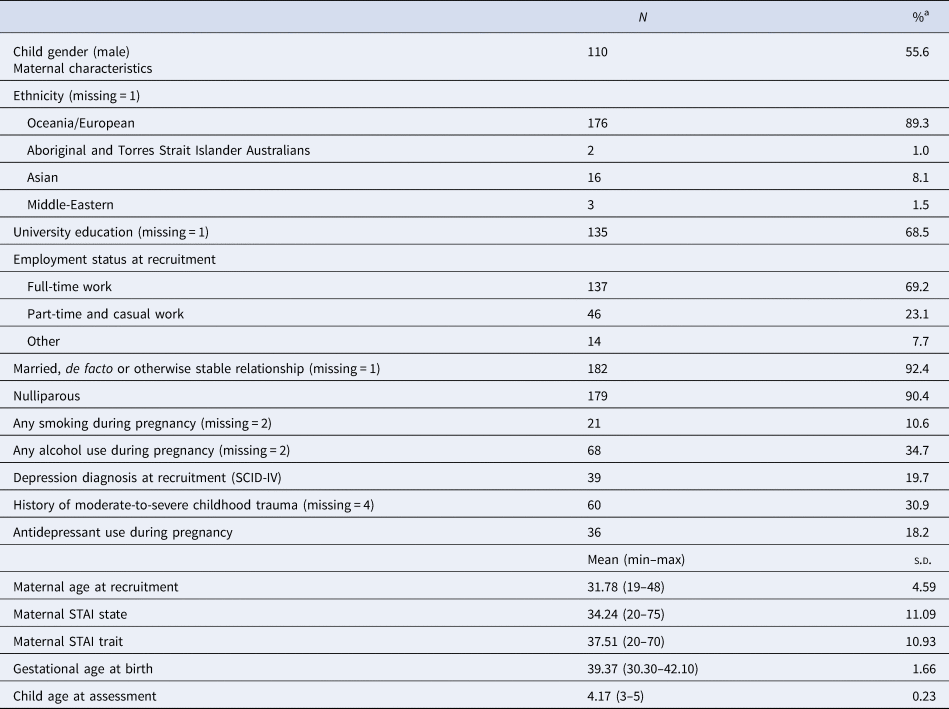
Sample descriptive statistics for maternal sociodemographic and other key variables are presented in Table 1. While this cohort was recruited from a public maternity hospital, these data do demonstrate that in this sample women are mostly Oceanic/European (89.3%), married, de facto or otherwise stable relationship at recruitment (92.4%) and predominantly university-educated (68.5%) possibly reflecting the longitudinal nature of the study and capacity of participants to commit to this. Within the sample, women with current depression also were noted to have significantly higher anxiety including state (Not depressed M = 32.0, s.d. = 9.79 and Depressed M = 43.00, s.d. = 11.86) and trait anxiety (Not depressed M = 35.01, s.d. = 9.83 and Depressed M = 47.71, s.d. = 9.23) as measured on STAI suggesting statistically significant maternal co-morbid anxiety symptoms (both p < 0.001).
Sample sociodemographic and other key characteristics (N = 198)
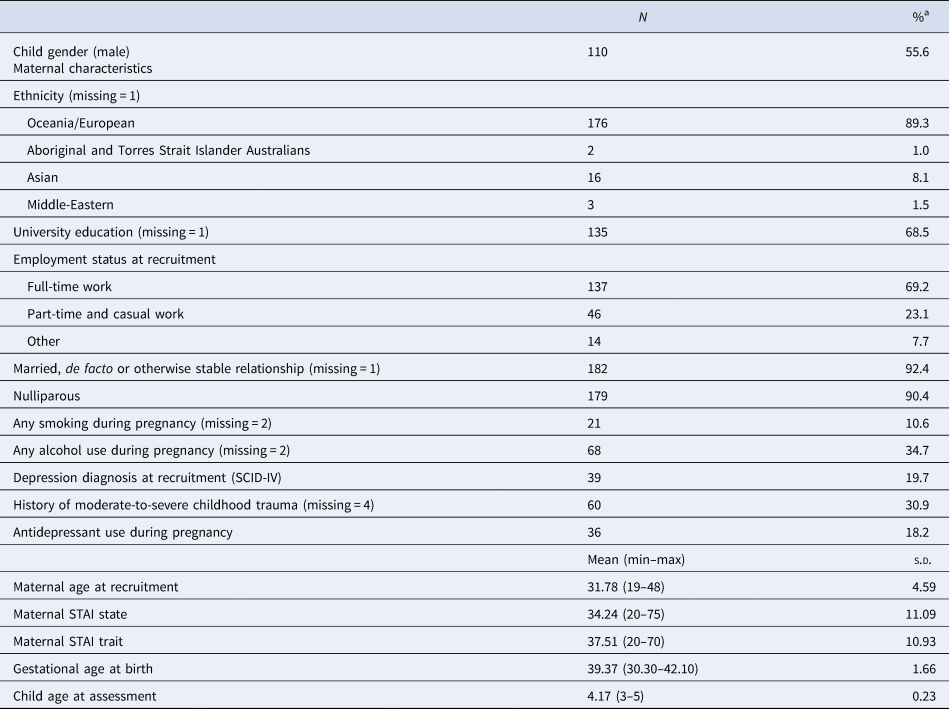
a Valid percentage.
Childhood anxiety disorders
In total, 41.8% of the children in this sample met diagnostic criteria for one or more CAD. The most prevalent CADs were specific phobias (n = 58, 29.3%), followed by social phobia (n = 30, 15.2%) and then generalized anxiety disorder (n = 21, 10.6%). Only one child was diagnosed with panic disorder without agoraphobia.
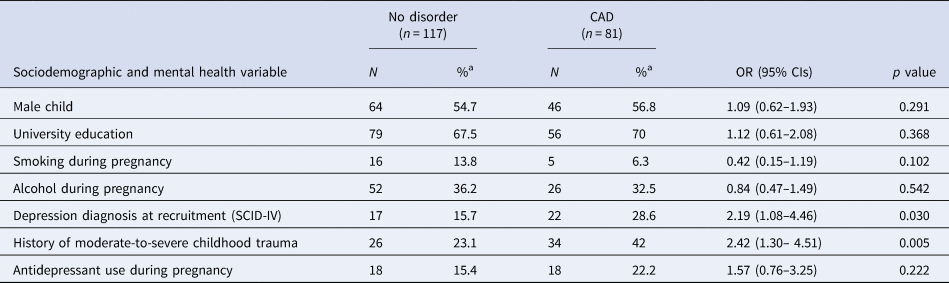
Table 2 displays the proportions of children with CADs, v. those without a CAD, across sociodemographic and mental health binary variables. Children of women who reported a childhood history of moderate-to-severe trauma, compared to women who reported none-to-minimal childhood trauma, were at 2.42 greater odds of having a CAD at 4 years of age. Likewise, children of women with depression in early pregnancy, compared to those without depression, were at 2.19 greater odds of having a CAD.
Unadjusted associations (OR 95% CIs) between sociodemographic and mental health variables with childhood anxiety disorders diagnosed at 4 years of age using the preschool age psychiatric assessment (N = 198)
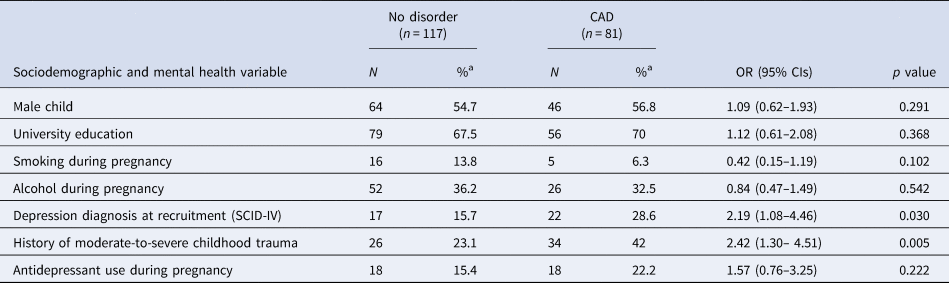
CAD, childhood anxiety disorders; OR, odds ratio; CIs, confidence intervals.
a Missing data handled using case-wise deletion.
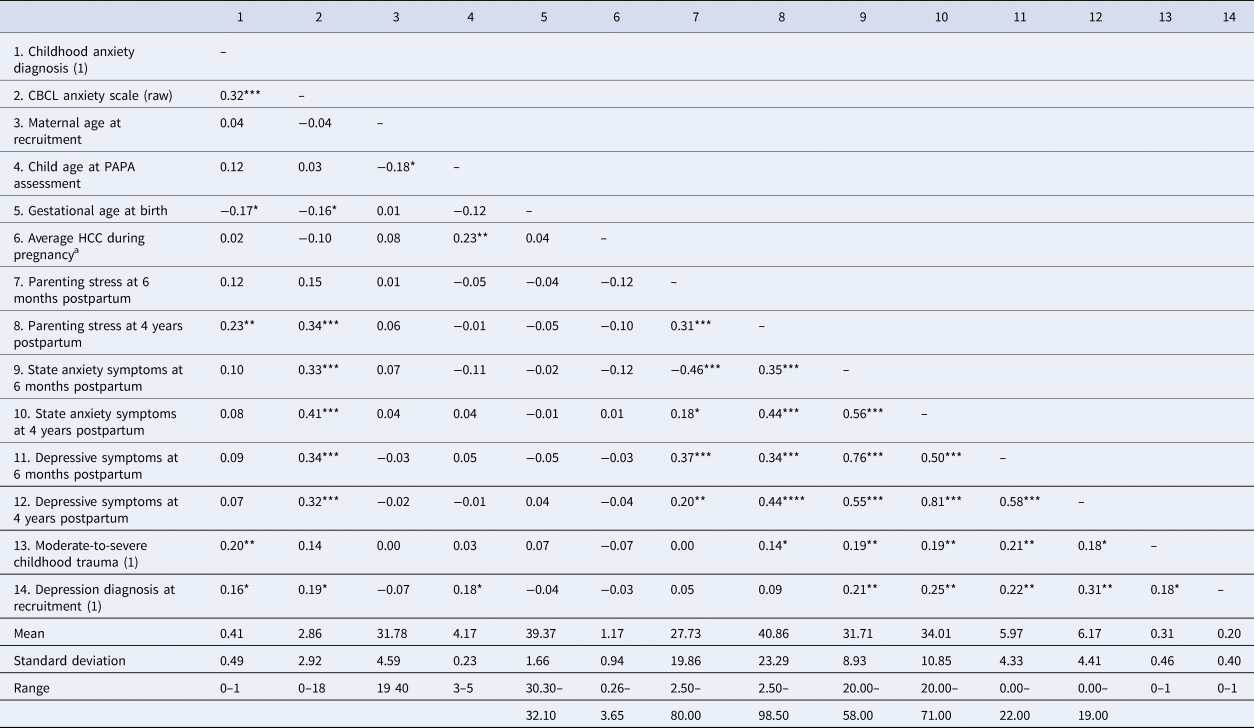
Table 3 displays zero-order correlations amongst sociodemographic and mental health variables with the CADs variable, as well as univariate descriptive statistics for each variable. These correlations demonstrate that in addition to childhood trauma and depression at recruitment, CAD at 4 years of age was significantly associated with lower gestational age at birth. Antidepressant medication in pregnancy was not associated with CAD. When examining the CBCL Anxiety Problem scale, children with CADs scored significantly higher raw scores on the anxiety problem scale using the CBCL (p < 0.001). Children of mothers who had depression diagnosed in pregnancy scored significantly higher raw scores on the Anxiety Problems scale (p = 0.024), but no difference when using t-scores (p = 0.095).
Zero-order bivariate correlations between sociodemographic characteristics and mental health with childhood anxiety disorders diagnosed at 4 years of age, and univariate descriptive statistics (n = 198)
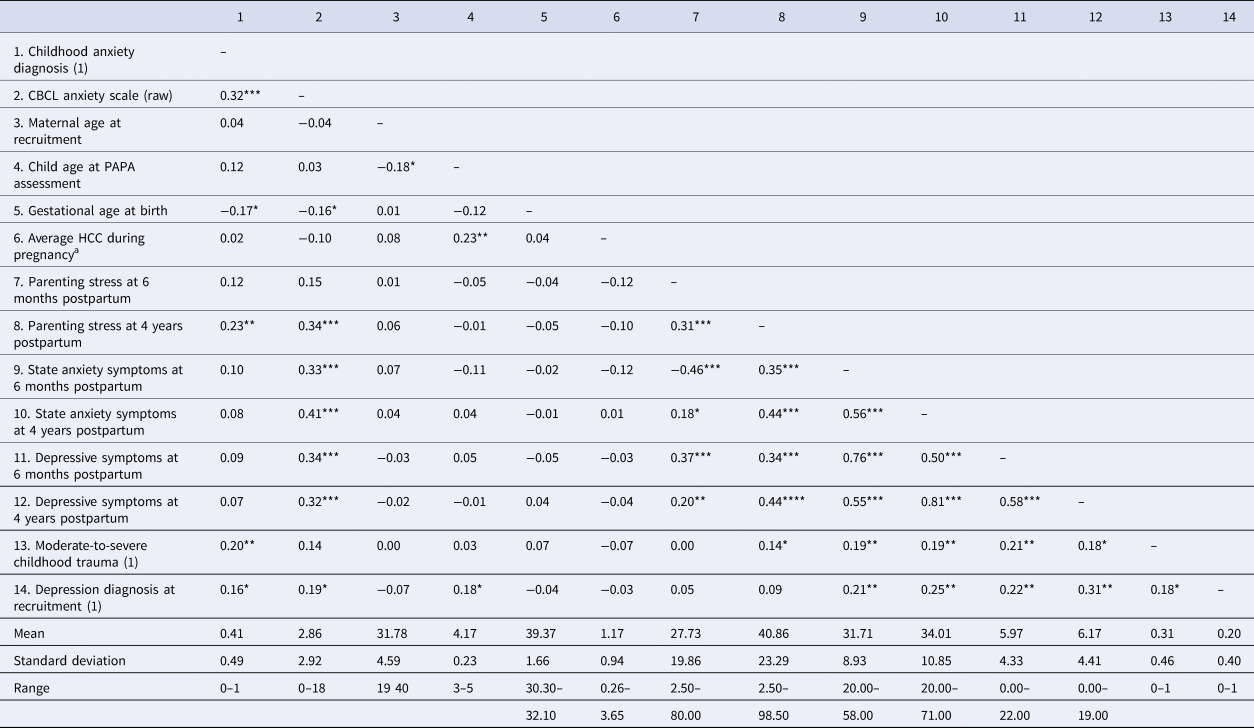
Correlations between binary and continuous variables represent point-biserial coefficients, and between binary and binary variables represent Phi coefficients.
a Log-transformed variable (raw descriptive statistics for average HCC during pregnancy: Mean = 3.22, s.d. = 2.56, range: 1.30–38.47).
*p < 0.05, **p <0.01, ***p <0.001.
Maternal trauma, antenatal mental health and early postpartum parenting stress predicting CADs
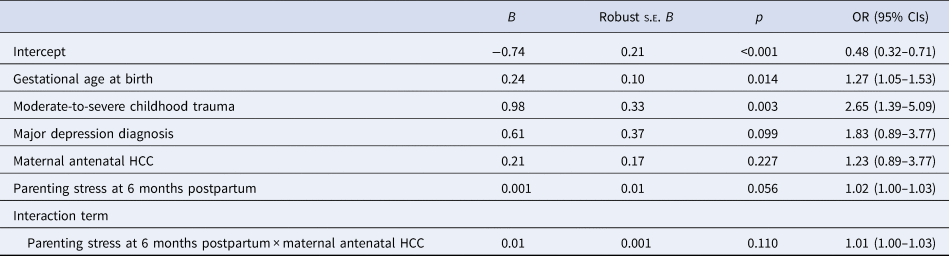
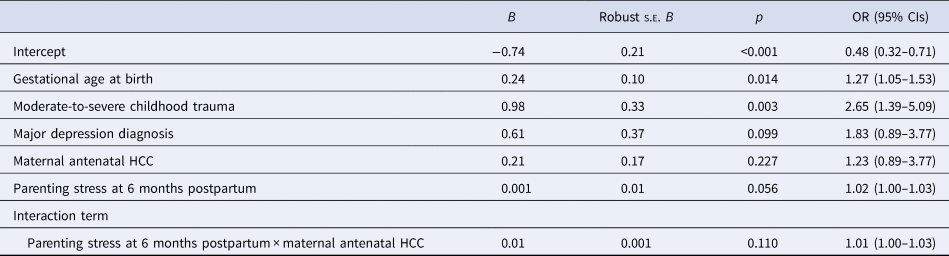
We next fit a multivariate binary logistic regression model. The fitted regression model was a significantly better predictive model of CAD than the null model was of CAD [Wald χ2(df = 6) = 20.48, p = 0.002], explaining approximately 9% of the variance of the CAD latent response variable. Model estimates are presented in Table 4. In the multivariate model, diagnosed depression at recruitment was not associated with CADs (p = 0.099), but maternally reported moderate-to-severe childhood trauma was associated with significantly higher odds ratio of CAD diagnosis at 4 years postpartum compared to women who reported none-to-minimal childhood history of trauma (p = 0.003). Lower gestational age at birth was also associated with a significantly higher odds ratio for CAD, when compared to higher gestational age at birth (p = 0.014). Both average maternal antenatal HCC (p = 0.227) and parenting stress at 6 months postpartum were not significantly associated with CADs; however, the effect of parenting stress at 6 months postpartum was approaching significance (p = 0.056). A sensitivity analysis excluding the 52 women in the control group who met diagnostic criteria for past depressive disorder more than 2 years prior to pregnancy demonstrated the same substantive results as presented in Table 4.
Results for logistic regression model using maternal predictors of CAD diagnosis in offspring at 4 years of age, by maternal predictors, with robust standard errors and 95% confidence intervals for odd ratios (n = 194)
*p < 0.05, **p < 0.01.
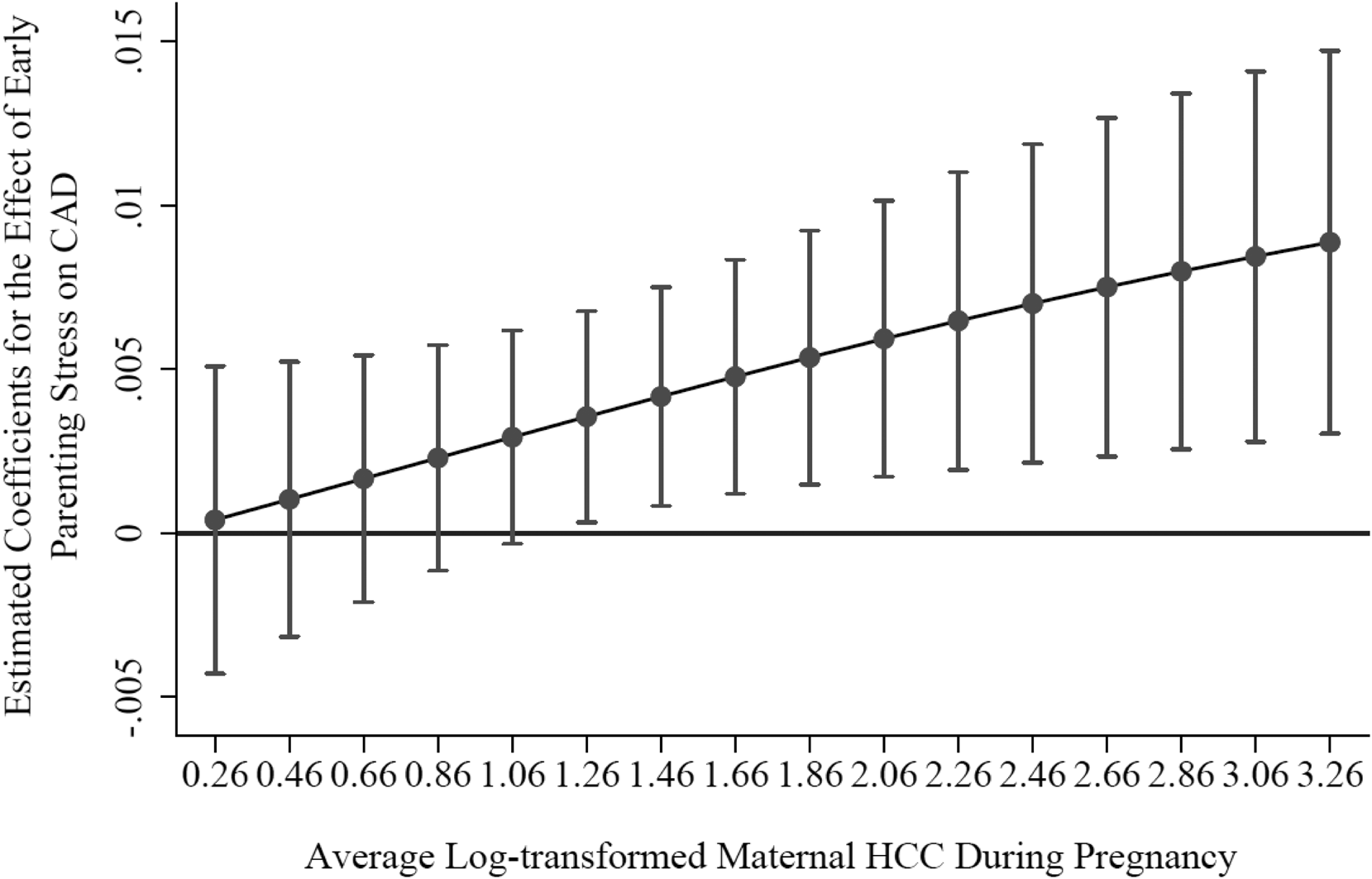
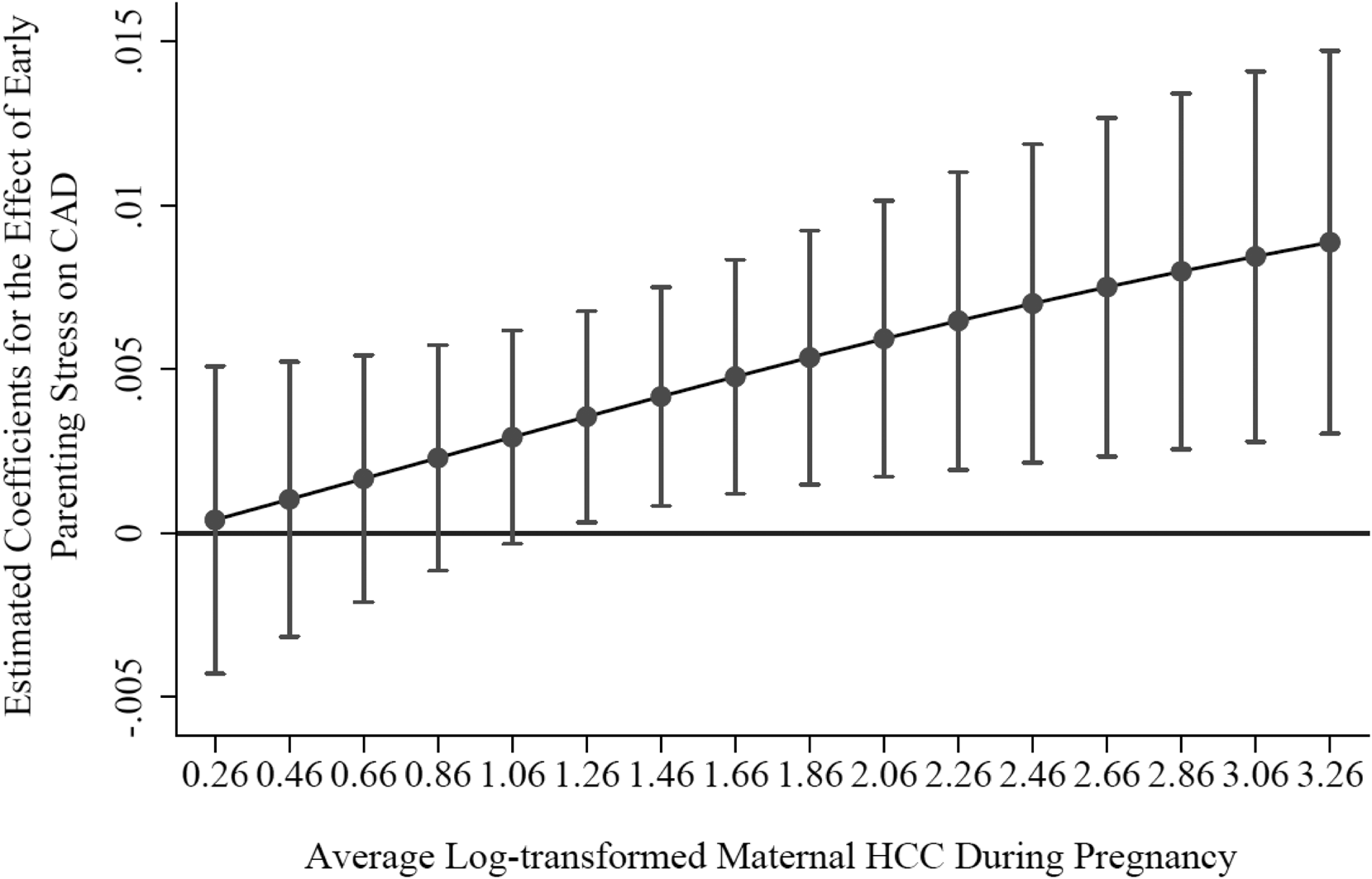
Although the interaction term was not significant between parenting stress at 6 months postpartum and average maternal antenatal HCC within our model, as planned we plotted the marginal effect of the continuous variable, parenting stress, on the logit of CADs at specific values of the other continuous variable, HCC. Figure 1 demonstrates that the effect of parenting stress at 6 months postpartum on the logit of CAD varies by level of antenatal HCC. The figure demonstrates that for levels of antenatal HCC that are above the mean (1.17), higher levels of parenting stress at 6 months postpartum are associated with significantly higher logits for CAD, and the size of this effect increases as HCC increases. However, for average and below-average levels of antenatal HCC, there is no significant effect of parenting stress in the early postpartum on the logit of CAD. Given the HCC variable was skewed towards lower concentrations, this suggests that for most of this sample, CADs are not associated with variation in parenting stress in the early postpartum; however, for women with above-average antenatal HCC, higher parenting stress at 6 months postpartum was associated with higher probability of CAD at 4 years of age.
The marginal effect of parenting stress at 6 months postpartum on the logit of the outcome, CAD at 4 years of age, across the range of maternal antenatal hair cortisol concentrations. CAD, childhood anxiety disorders; HCC, hair cortisol concentrations. Error bars denote 95% confidence intervals of the marginal estimates.
To compare the symptom-based self-report measures with diagnostic measures of child and maternal mental health, we fit several alternative models similar to the CAD model reported in Table 4. We first replaced the SCID diagnosis with self-reported depressive symptoms on the EPDS in pregnancy (average of EPDS reported in early pregnancy and third trimester), and in a separate model, we replaced with the average score on the self-reported trait anxiety measure in pregnancy (STAI-T), and these two models were used to predict CAD at 4 years old. In both models, the pattern of the results was the same as the results of the CAD model reported in Table 4 using the SCID. Although, both pregnancy depressive symptoms (B = −0.03, s.e. = 0.04, p = 0.56), and separately, trait anxiety symptoms (B = 0.02, s.e. = 0.02, p = 0.349), demonstrated weaker, non-significant effects on CAD compared to antenatal depression diagnosed by the SCID. In another alternative model using the same predictors as those reported in Table 4, we replaced CAD diagnosis from the PAPA as the outcome with the CBCL anxiety problem scale (raw). In this model, none of the included variables significantly predicted anxiety symptoms in children.
Discussion
There are three key findings of this study. Firstly, that CAD in offspring at 4 years of age is associated independently with maternal antenatal depression and maternal exposure to childhood trauma, and these are of a similar magnitude as the small-to-moderate association found in previous research using predominantly symptom measures of maternal and child mental health (Goodman et al., Reference Goodman, Rouse, Connell, Broth, Hall and Heyward2011; Plant et al., Reference Plant, Pawlby, Pariante and Jones2018). Secondly, we were able to predict 9% of variance for CAD within a multivariate model that included maternal antenatal depression, maternal childhood trauma, cortisol levels in pregnancy, gestational age of the infant at birth and parenting stress at 6 months postpartum, but found maternal childhood trauma and gestational age at birth were the only significant predictors in the model. Thirdly, that the relationship between antenatal hair cortisol, parenting stress and CAD was such that the likelihood of a child having CAD was only significant when there were both higher levels of antenatal maternal cortisol and higher postpartum parenting stress, but not when there was low maternal antenatal cortisol levels.
Overall, these findings from our longitudinal study, albeit derived from observational data, provide preliminary evidence that is consistent with an association between early-life maternal risk factors and CAD in offspring. The implied aetiological model of CAD, which our findings suggest, is one that is likely to be multifactorial, trans-generational and where maternal factors operating pre-conception as far back as early-life trauma, as well as factors in pregnancy and the postpartum are all vital to understand the early development of CAD (Glover, Reference Glover2011; Glover et al., Reference Glover, O'Connor and O'Donnell2010; Lee & Vaillancourt, Reference Lee and Vaillancourt2019; Murray, Creswell, & Cooper, Reference Murray, Creswell and Cooper2009). The role of cortisol in understanding maternal mental health and child outcomes that we found is consistent with reviews and commentaries where there is not a simple relationship with either maternal or child outcomes (Galbally et al., Reference Galbally, van Rossum, Watson, de Kloet and Lewis2019a; Zijlmans et al., Reference Zijlmans, Riksen-Walraven and de Weerth2015). Nevertheless, our findings suggest that cortisol may influence pathways across early life towards child mental health outcomes through potential exposure to increased glucocorticoids in utero influencing early neurodevelopment but only in the context of early environment and in particular the quality of caregiving (Bergman et al., Reference Bergman, Sarkar, Glover and O'Connor2010; Zijlmans et al., Reference Zijlmans, Riksen-Walraven and de Weerth2015). This model of developmental programming is supported by previous research which found an association between poorer child cognitive outcomes and exposure to higher antenatal cortisol was moderated by the quality of infant–parent relationship (Bergman et al., Reference Bergman, Sarkar, Glover and O'Connor2010).
This study confirmed the association between lower gestational age at birth and an increased risk of developing CAD (Treyvaud et al., Reference Treyvaud, Ure, Doyle, Lee, Rogers, Kidokoro and Anderson2013). While we examined this as a continuous variable and did not specifically focus on preterm infants, this finding highlights the importance of gestational age at birth for mental health outcomes. Furthermore, previous research has identified, even for those infants born as late pre-term babies, there may be a potential increased risk for later mental health symptoms (Robinson et al., Reference Robinson, Whitehouse, Zubrick, Pennell, Jacoby, McLean and Newnham2013; Rogers et al., Reference Rogers, Lenze and Luby2013). Preterm birth has been associated with a range of poorer developmental and behavioural outcomes, most likely due to both the pregnancy complications that result in preterm birth as well as post-delivery complications from being born preterm (Slattery & Morrison, Reference Slattery and Morrison2002). Together with a previous study, these study findings suggest the importance of continuing to explore a potential association specifically with CAD (Rogers et al., Reference Rogers, Lenze and Luby2013).
There has been a substantial body of research, including two meta-analyses, suggesting that maternal depression is associated with poorer child mental health (Glynn et al., Reference Glynn, Howland, Sandman, Davis, Phelan, Baram and Stern2018; Goodman et al., Reference Goodman, Rouse, Connell, Broth, Hall and Heyward2011; Madigan et al., Reference Madigan, Oatley, Racine, Fearon, Schumacher, Akbari and Tarabulsy2018; McLean et al., Reference McLean, Cobham and Simcock2018). Our findings complement these earlier studies by confirming the importance of maternal antenatal depression as a risk factor for CAD but demonstrated that other factors such as maternal childhood trauma and a child's gestational age at delivery were also important predictors.
Maternal trauma history has been found to be associated with poorer child outcomes and our study shows now a specific link to anxiety disorders (Capron et al., Reference Capron, Glover, Pearson, Evans, O'Connor, Stein and Ramchandani2015; Plant et al., Reference Plant, Pawlby, Pariante and Jones2018). Within our sample, 31% of women had a history of moderate-to-severe trauma and this is consistent with previous studies (Scher, Forde, McQuaid, & Stein, Reference Scher, Forde, McQuaid and Stein2004; Xie et al., Reference Xie, Wu, Zheng, Guo, Yang, He and Peng2018). Overall, our findings suggest that maternal childhood trauma is an important focus for understanding the predictors of CAD, and against the hypothesis, our study findings suggest this does not appear to be either through or due to associations with maternal depression, maternal antenatal cortisol or parenting stress but may be an independent risk factor. While there is now a substantial body of research to show the detrimental impact of childhood trauma on an individual's later life outcomes (Bellis et al., Reference Bellis, Hughes, Leckenby, Hardcastle, Perkins and Lowey2015), there are also increasing findings that suggest these impacts are also inter-generational (Le-Scherban, Wang, Boyle-Steed, & Pachter, Reference Le-Scherban, Wang, Boyle-Steed and Pachter2018; Plant et al., Reference Plant, Pawlby, Pariante and Jones2018). It is now a challenge for researchers to find the potential mechanisms and pathways that underlie how historical childhood trauma experiences impact on the mental health outcomes for the next generation.
The high rate of CAD was surprising given the reported population rates for these disorders in Australia. In contrast to 5.7%, as reported in the 2nd National Survey of Australian Children in 2016 and 19–22% in pre-school children in other community samples, 41.8% of children in our sample met the criteria for an anxiety disorder placing the children in this sample of the MPEWS cohort at a 6.75 increased risk of having a CAD (95% CI 4.45–10.21, p < 0.001) relative to the Australian population data (Finsaas, Bufferd, Dougherty, Carlson, & Klein, Reference Finsaas, Bufferd, Dougherty, Carlson and Klein2018; Lawrence et al., Reference Lawrence, Hafekost, Johnson, Saw, Buckingham, Sawyer and Zubrick2016; Paulus et al., Reference Paulus, Backes, Sander, Weber and von Gontard2015). Although it should be noted the Australian National Survey of Child Mental Health utilized a diagnostic measure that has limited validity and reliability for 4-year-old children and recruited a general community sample (Lawrence et al., Reference Lawrence, Hafekost, Johnson, Saw, Buckingham, Sawyer and Zubrick2016). Our study is a selected cohort for depression and as such represents a higher risk sample for mental health than a community sample. For instance, in this study, 46% of women had a history of depression at some point in their lifetime and higher rates of anxiety symptoms and this supports the notion that this is a high-risk sample for transgenerational anxiety and depressive disorders.
One of the strengths of this study was the use of both diagnostic and symptom-based measures in mother and child. Using the CBCL anxiety problem subscale, we demonstrated the children with a diagnosis of CAD had higher anxiety symptoms on this well-validated and widely used measure. However, when the CBCL anxiety subscale was substituted for the PAPA in the model, it was no longer significant. The CBCL provides a continuous measure of symptoms in the child, whereas the PAPA is precise in identifying those children who have reached clinical diagnostic threshold for an anxiety disorder. These findings support a focus on diagnostic measurement of mental health as vital to progressing knowledge about CAD rather than the broader more common anxiety symptoms. The use of a diagnostic measure in mother and child also places these findings and this research in a clinical context where these women and these children do reach diagnostic threshold for clinical care and as such the research is of direct relevance to this context.
While this study has focused on maternal predictors of CAD, a limitation includes the lack of inclusion of data on paternal parenting and mental health as an additional influence on CAD (Bogels & Phares, Reference Bogels and Phares2008). As a selected cohort with over-representation of mothers with past and current depression, many of the offspring are likely to carry an increased genetic risk for anxiety disorders and this study cannot account for such transmission. Due to sample size restrictions, this study was also unable to examine the impact of maternal factors on individual CAD. Sample size also restricted the complexity and variables that can be included within any statistical model.
In conclusion, our study underscores the importance of risk factors from pre-conception, pregnancy through to postpartum in the development of CAD. Future research can continue to refine our understanding of the pathways from conception to CAD and identify the earliest modifiable pathways and risk factors beginning in utero.
Acknowledgements
The authors would like to thank those who have supported the development of MPEWS including Marinus van IJzendoorn, Michael Permezel and Yolanda de Rijke for her assistance with the hair analysis. The authors also thank staff, students and volunteers on the MPEWS study as well as study co-ordinator Tina Vaiano for their contribution to MPEWS. The authors are also sincerely grateful to the study participants who have contributed a substantial amount of time to participating in this study.
Financial support
2012 National Priority Funding Round of Beyond Blue in a 3-year research grant (ID 519240) and a 2015 National Health and Medical Research Council (NHMRC) project grant for 5 years (APP1106823).
Conflict of interest
The authors declare that they have no competing interests.