Introduction
In the last few decades, meat production has risen to historically high levels as a result of the increasing demand for animal protein products. Since 1961, the worldwide production of broiler meat has increased more than eight-fold. In 2010 the number of chicks produced worldwide was 55.3 billion resulting in a production of 86.1 million tons of chicken meat (FAOSTAT, Reference FAOSTAT2011). Since 1990, the price of chicken meat oscillated between $800 and $1000 USD/ton, except between 1999 and 2004 when it dropped below $600 USD/ton (FAO, Reference FAO2010). Therefore, there is a challenge for producers who must take some actions to optimise their incomes. These optimisations include increasing the size of incubators, maximising the hatchability of incubated eggs, producing high quality chicks, preserving liveability during the rearing period and ensuring good feed conversion efficiency. However, incubation of larger numbers of eggs in larger incubators may result in simultaneously incubating eggs of different origins, due to availability constraints. Such eggs may originate from breeder flocks of different ages, and may differ in size, weight and in the storage conditions (including duration) that have been implemented before incubation. Eggs of a non-uniform origin are associated with a long hatch window (HW), which is defined as the period of time elapsed from the hatching of the first chick to the hatching of the last chick (Decuypere et al., Reference DECUYPERE, TONA, BRUGGEMAN and BAMELIS2001). In modern hatcheries, with a fixed management schedule, the end of the HW is defined by ‘take-off’, i.e. the time when most chicks have hatched and are removed from the incubators. Hatcheries have a common interest in improving chick quality, because their payment and profit are often based on the number of viable chicks after the first week of rearing.
Broiler chicks hatch after 461 h - 510 h of incubation (Almeida et al., Reference ALMEIDA, VIEIRA, REIS, BERRES, BARROS, FERREIRA and FURTADO2008; Tong et al., Reference TONG, MCGONNELL, ROMANINI, EXADAKTYLOS, BERCKMANS, BERGOUG, GUINEBRETIÈRE, ETERRADOSSI, N., GARAIN and DEMMERS2011). A large HW has been reported to be associated with a high heterogeneity among the batch after placement on rearing farms. According to Careghi et al. (Reference CAREGHI, TONA, ONAGBESAN, BUYSE, DECUYPERE and BRUGGEMAN2005), the first chicks, hatched 30 h before take-off, can lose up to 10% of their body weight while the last chicks, hatched only 2 h before take-off, lose only 1 to 3% of their body weight. Therefore, a large HW may result in poor welfare and performance, because early hatched chicks spend up to 50 h in sub-optimal conditions (air temperature of ~37°C, RH of 80% and ~1% of CO2) and have a delayed access to feed and water. In addition, poor zootechnical performances can be exacerbated by the early post-hatch handling of chicks: sorting, sexing, vaccination, transportation, and placement conditions. In commercial hatcheries, sorting, sexing, and vaccination do not normally exceed 2 to 4 h. Afterwards, chicks wait at the shipping dock for transportation, which should not exceed 24 h provided that it is completed within 72 h after hatch (Council of the European Union, Reference COUNCIL OF THE EUROPEAN UNION2005). The waiting time of chicks at the shipping docks depends on the transportation schedule (which takes into account the distance of transportation) and the availability of trucks. These factors make transportation time, together with the environmental conditions during transportation, the two most important post-hatch factors which affect chick quality at placement. After transportation the placement conditions (temperature, humidity, etc.) are also critical for broiler performance and quality.
The objective of this paper is to review the important factors affecting the HW and chick quality before and during incubation, and shortly after hatch. For the purpose of this review, these factors will be divided into three groups: 1) pre-incubation factors, which are related to the breeder flocks and to the quality and handling of eggs before incubation, 2) incubation conditions with an effect on HW and chick quality, and 3) early post hatch handling and placement conditions with an effect on broiler performances and health during the rearing period.
Effect of pre-incubation conditions
Chick quality and HW are not only related to incubation conditions but also to the quality of incubated eggs. The quality of eggs cannot be fully controlled by the hatcheries, so that hatchery managers have to adjust and adapt the incubation program whenever necessary.
egg characteristics and age of breeders
The quality of the incubated eggs (fertility, shell thickness and porosity), as well as the duration of incubation are highly affected, among other factors, by the age of breeders (Wilson, Reference WILSON1991; Kumpula and Fasenko, Reference KUMPULA and FASENKO2005; Wolanski et al., Reference WOLANSKI, RENEMA, ROBINSON, CARNEY and FANCHER2007; Almeida et al., Reference ALMEIDA, VIEIRA, REIS, BERRES, BARROS, FERREIRA and FURTADO2008). Egg weight increases with breeder age (55g at 27 weeks compared to 70g at 60 weeks; Tona et al., Reference TONA, BAMELIS, COUCKE, BRUGGEMAN and DECUYPERE2001), while fertility decreases with breeder age due to the lower efficiency of sperm storage tubules in older hens (Gumułka and Kapkowska, Reference GUMUŁKA and KAPKOWSKA2005). Hatchability increases from 88% for young breeders (27 weeks) to a maximum of 96% at 40 to 42 weeks of age before dropping to 73% for older breeders (59 to 61 weeks; Tona et al., Reference TONA, BAMELIS, COUCKE, BRUGGEMAN and DECUYPERE2001; Abiola et al., Reference ABIOLA, MESHIOYE, OYERINDE and BAMGBOSE2008). The lower hatchability of eggs laid by older breeders is in part due to increased total embryo mortality (Tona et al., Reference TONA, BAMELIS, COUCKE, BRUGGEMAN and DECUYPERE2001; Vieira et al., Reference VIEIRA, ALMEIDA, LIMA, CONDE and OLMOS2005; Almeida et al., Reference ALMEIDA, VIEIRA, GALLO, CONDE and OLMOS2006).
Maximum hatchability (~96%) is obtained with medium-sized eggs (50 to 60 g) (Wilson, Reference WILSON1991; Abiola et al., Reference ABIOLA, MESHIOYE, OYERINDE and BAMGBOSE2008). Hatchability decreases in heavier eggs, for example, hatchability declines by 5.9% for eggs weighing 60 g to 65 g and by 13.5% for eggs weighing more than 70 g (Kirk et al., Reference KIRK, EMMANS, MCDONALD and ARNOT1980). It is not clear whether this reduced hatchability of larger eggs is the result of an increase in the early mortality (Kirk et al., Reference KIRK, EMMANS, MCDONALD and ARNOT1980; Hagger et al., Reference HAGGER, STEIGER-STAFL and MARGUERAT1986; Rosa et al., Reference ROSA, GUIDONI, LIMA and BERSCH2002; Abiola et al., Reference ABIOLA, MESHIOYE, OYERINDE and BAMGBOSE2008), or of an increase in both early and late mortality (Elibol and Brake, Reference ELIBOL and BRAKE2008b) of the embryos. The number and size of shell pores and shell thickness are factors that influence the ability to exchange gases, fluids and heat with the micro-environment around the eggs (Hulet et al., Reference HULET, GLADYS, HILL, MEIJERHOF and EL-SHIEKH2007). With the same eggshell porosity, large eggs produce heavier embryos (Burton and Tullett, Reference BURTON and TULLETT1985) and as a consequence have greater difficulty in losing metabolic heat produced by the embryo. Therefore large eggs hatch better when the incubation temperature is reduced from 37.5°C to 36.5°C during the second half of incubation (French, Reference FRENCH1997).
Raju et al. (Reference RAJU, CHAWAK, PRAHARAJ, RAO and MISHRA1997) reported that there is a positive correlation between the egg weight and the body weight of the resulting broilers at all ages. Breeder age affects egg weight and therefore influences chick weight (Tanure et al., Reference TANURE, CAFE, LEANDRO, BAIAO, STRINGHINI and GOMES2009). Chicks from larger eggs were significantly heavier at market age but this effect could not be differentiated from breeder age (Hulet et al., Reference HULET, GLADYS, HILL, MEIJERHOF and EL-SHIEKH2007). According to Wilson (Reference WILSON1991) chick weight represents 62% to 76% of the initial egg weight. He concluded that a 1 g change (positive or negative) in egg weight resulted in a corresponding change of 2 g to 13 g in broiler weight at six to eight weeks of age. This effect was more important (8.2 g) with eggs from young breeders (29 weeks old), than with those from old breeders (2.1 g to 2.6 g at 58 weeks old).
The weight and size of the hatching eggs has been reported to influence the development of broiler intestines in the post hatch period, regardless of hen age (Vieira and Moran, Reference VIEIRA and MORAN1999). Chicks hatched from medium-sized eggs (61 g to 70 g) had a significantly higher intestinal weight, as compared with small-sized (50 g to 60 g) eggs (Shivazad et al., Reference SHIVAZAD, BEJAEI, TAHERKHANI, ZAGHARI and KIAEI2007). Improved performances observed in chicks hatched from medium-sized eggs may have been due to a better development of the small intestine and consequently an increased absorption area, or due to a larger available yolk sac and enhanced intestine development during the incubation of medium-sized eggs (Moran, Reference MORAN1990; Vieira and Moran, Reference VIEIRA and MORAN1999).
Wilson's review in 1991 clearly showed that the incubation time increases with egg weight. The average hatch time (HT) was 488 h for eggs of 52 g and increased to 494 h for eggs of 72 g (Burton and Tullett, Reference BURTON and TULLETT1985). Large eggs not only were associated with a longer incubation time but also with a greater cull rate (percentage of low-quality chicks not kept for rearing). Chicks from small eggs are the quickest to hatch (Hamdy et al., Reference HAMDY, HEL, HENKEN, GALAL and ABD-ELMOTY1991; Wilson, Reference WILSON1991; Kumpula and Fasenko, Reference KUMPULA and FASENKO2005; Vieira et al., Reference VIEIRA, ALMEIDA, LIMA, CONDE and OLMOS2005). Vieira et al. (Reference VIEIRA, ALMEIDA, LIMA, CONDE and OLMOS2005) found that eggs of young breeders (27 weeks old) hatched earlier than those of old breeders (59 weeks old). This was not confirmed by Almeida et al. (Reference ALMEIDA, VIEIRA, REIS, BERRES, BARROS, FERREIRA and FURTADO2008) who found that eggs of old and mid-aged breeders hatched earlier. However, Reis et al. (Reference REIS, GAMA and SOARES1997) did not find differences in HT of eggs from young (32 to 34 weeks) or old (48 to 50 weeks) breeders. These discrepancies may be due to the use of different incubation methods (single stage vs. multi stage) or different incubation settings (temperature, humidity or ventilation).
Mortality in chicks from older breeders (63 weeks) was higher (9.67%), as compared with 5.04% and 3.11% for young breeders of 35 weeks and 27 weeks old respectively (Peebles et al., Reference PEEBLES, DOYLE, PANSKY, GERARD, LATOUR, BOYLE and SMITH1999a). Chicks from younger breeders (35 weeks) had a better quality (98 vs. 94 out of 100, with chick quality evaluated using a 100-point scale) when compared with mid-age breeders (45 weeks) but the quality of chicks was deteriorated in mid-age breeders when eggs were stored for 7 days (97 vs. 79 out of 100) (Tona et al., Reference TONA, ONAGBESAN, DE KETELAERE, DECUYPERE and BRUGGEMAN2004a). Eggs from different breeds may hatch differently too. It was demonstrated by Tona et al. (Reference TONA, ONAGBESAN, JEGO, KAMERS, DECUYPERE and BRUGGEMAN2004b) that eggs of heavy breeds hatched earlier (1.3 h to 1.6 h) compared to those from dwarf gene breeds.
health status of breeders
Desired levels of egg production, high internal and shell quality of hatching eggs, optimum hatchability and quality of chicks may not be achieved when there are health problems in the breeders. For instance, breeders infected with intestinal spirochaetosis had reduced egg production (-7.5%) (Smit et al., Reference SMIT, DWARS, DAVELAAR and WIJTTEN1998; Stephens and Hampson, Reference STEPHENS and HAMPSON2002) and lower egg quality, resulting in an increased number of weak chicks with slower growth and poorer FCR than the progeny of unaffected flocks (Smit et al., Reference SMIT, DWARS, DAVELAAR and WIJTTEN1998). A number of other infectious and non infectious disorders are known to affect fertility, egg production, and possibly quality of chicks. Common sense dictates that comprehensive biosecurity and health programs remain in practice at the breeder farm level. Any deficiencies at this stage will adversely affect production performance parameters (Roberts et al., Reference ROBERTS, SOUILLARD and BERTIN2011).
breeder feed
Both the quantity and quality of breeder feed may affect the subsequent quality of the eggs and progeny. With regards to quantity, both feed excess and deprivation are detrimental. Underfeeding the hen can have an impact on chick quality and this is particularly noticeable in the early production period. Low feed allocation in young commercial breeder flocks has been shown to compromise nutrient transfer to egg, resulting in increased late embryonic death, poorer chick viability and uniformity (Leeson, Reference LEESON2004). In breeders fed ad libitum (widely used as an overfeeding model), ovarian development is affected and results in excessive follicular development or ‘Erratic Oviposition and Defective Egg Syndrome’ (EODES). Breeders with EODES have poor egg shell quality, a reduced duration of fertility and poor hatchability. It was also reported that semen survival is lower but it is not clear how semen was affected and if weaker embryos were generated (Leeson, Reference LEESON2004).
With regards to quality, the composition of breeder feed affects egg weight and composition and as a consequence also affects hatchability and the quality of progeny, specifically body weight, immunity, and metabolism (Spratt and Leeson, Reference SPRATT and LEESON1987a; Reference SPRATT and LEESON1987b; Reference SPRATT and LEESON1987c; Lopez and Leeson, Reference LOPEZ and LEESON1995a; Reference LOPEZ and LEESON1995b; Fisher, Reference FISHER1998; Peebles et al., Reference PEEBLES, DOYLE, PANSKY, GERARD, LATOUR, BOYLE and SMITH1999a; Reference PEEBLES, DOYLE, PANSKY, GERARD, LATOUR, BOYLE and SMITH1999b; Fisher and Kemp, Reference FISHER and KEMP2000; Leeson and Summers, Reference LEESON and SUMMERS2000; Surai, Reference SURAI2000; Peebles et al., Reference PEEBLES, ZUMWALT, GERARD, LATOUR and SMITH2002a; Reference PEEBLES, ZUMWALT, SMITH, GERARD and LATOUR2002b; Reference PEEBLES, KIDD, MCDANIEL, TANKSLEY, PARKER, CORZO and WOODWORTH2007; Pappas et al., Reference PAPPAS, ACAMOVIC, SPARKS, SURAI and MCDEVITT2005; Reference PAPPAS, ACAMOVIC, SPARKS, SURAI and MCDEVITT2006a; Reference PAPPAS, ACAMOVIC, SURAI and MCDEVITT2006b). Indeed, the developing embryo and newly hatched chick are completely dependent for their growth and development on nutrients deposited in the egg.
In general, protein and energy levels in breeder diets had no effect on chicken weight at slaughter age (Kidd, Reference KIDD2003). However, Whitehead et al. (Reference WHITEHEAD, PEARSON and HERRON1985) presented evidence that a high protein to energy ratio depresses hatchability and this ratio is important not only for parent performance but also for chick quality (Spratt and Leeson, Reference SPRATT and LEESON1987a; Reference SPRATT and LEESON1987b; Reference SPRATT and LEESON1987c; Lopez and Leeson, Reference LOPEZ and LEESON1995a; Reference LOPEZ and LEESON1995b). Source and quality of protein, i.e. the amino acid composition, can impact on the quality of progeny (Fisher, Reference FISHER1998). For instance, dietary carnitine in breeder feed reduced abdominal fat pad in progeny at processing - irrespective of progeny diet, and hen carnitine levels interacted with increased progeny dietary nutrient density resulting in increased breast meat (Kidd et al., Reference KIDD, MCDANIEL, PEEBLES, BARBER, CORZO, BRANTON and WOODWORTH2005).
However, attention must also be paid to fat composition and particularly to the requirement for unsaturated fats such as linoleic acid. This essential fatty acid is required for cell membrane integrity, immune competence and embryonic development, and therefore directly affects chick quality. In practical terms, added fats into breeder feeds should be kept at a low level, with a preference for unsaturated rather than saturated fats (Leeson and Summers, Reference LEESON and SUMMERS2000). As an example, maize oil increased body weight at 21 days of age and at slaughter, as compared with poultry fat (Peebles et al., Reference PEEBLES, DOYLE, PANSKY, GERARD, LATOUR, BOYLE and SMITH1999a) and lard (Peebles et al., Reference PEEBLES, DOYLE, PANSKY, GERARD, LATOUR, BOYLE and SMITH1999a; Reference PEEBLES, ZUMWALT, GERARD, LATOUR and SMITH2002a). Thus, preference should be given to unsaturated vegetable oils rather than saturated animal fats, since high polyunsaturated fatty acids reduce hatchability (Qureshi et al., Reference QURESHI, BRAKE, HAMILTON, HAGLER, JR and NESHEIM1998; Pappas et al., Reference PAPPAS, ACAMOVIC, SPARKS, SURAI and MCDEVITT2006a; Reference PAPPAS, ACAMOVIC, SURAI and MCDEVITT2006b).
Calcium, phosphorus, sodium, potassium, magnesium and chloride are involved in shell formation. General improvements in shell quality lead to better egg and chick quality (NRC, Reference NRC1994). A positive correlation exists between the mineral nutrition of the mother hen and mineral levels transferred to the yolk for embryonic utilisation (Leeson and Summers, Reference LEESON and SUMMERS2000). Kidd et al. (Reference KIDD, ANTHONY and LEE1992; Reference KIDD, ANTHONY, NEWBERRY and LEE1993) and Virden et al. (Reference VIRDEN, YEATMAN, BARBER, ZUMWALT, WARD, JOHNSON and KIDD2003) reported that a breeder diet enriched in zinc and manganese improved the early immunity and vitality of the chick. Flinchum et al. (Reference FLINCHUM, NOCKLES and MORENG1989) demonstrated that the progeny of leghorn breeders fed supplemental zinc methionine had better survival during an Escherichia coli challenge. However, Hudson et al. (Reference HUDSON, DOZIER, III, FAIRCHILD, WILSON, SANDER and WARD2004) did not find any effect of zinc in breeder diets on the vitality of their progeny. Parental supplementation with selenium showed a beneficial impact on chicks (better growth performance) which lasted up to day 14 (Poley et al., Reference POLEY, WILSON, MOXON and TAYLOR1941; Cantor and Scott, Reference CANTOR and SCOTT1974). Several recent studies have focused on the antioxidant status of breeders, embryos, progeny and the role of selenium (Surai, Reference SURAI2000; Pappas et al., Reference PAPPAS, ACAMOVIC, SPARKS, SURAI and MCDEVITT2005; Reference PAPPAS, ACAMOVIC, SPARKS, SURAI and MCDEVITT2006a; Reference PAPPAS, ACAMOVIC, SURAI and MCDEVITT2006b). Surai (Reference SURAI2000) has shown a positive effect of feeding selenomethionine on both vitamin E and glutathione peroxidase levels in eggs, embryos and chicks up to 10 days of age. In addition, Pappas et al. (Reference PAPPAS, ACAMOVIC, SPARKS, SURAI and MCDEVITT2005) have demonstrated a beneficial impact of a maternal dietary supplementation with organic selenium on the quality of eggs during storage.
Vitamins are involved in most metabolic processes and are an integral part of embryonic development, therefore sub-optimal levels of these nutrients in commercial diets are known to have a negative impact on both parent and progeny performance (Fisher and Kemp, Reference FISHER and KEMP2000). Among the vitamins, vitamin E has the most significant impact on progeny. Broiler breeders fed supplemental vitamin E were reported to produce chicks with improved lymphocyte proliferation (Haq et al., Reference HAQ, BAILEY and CHINNAH1996), improved humoral immunity (Haq et al., Reference HAQ, BAILEY and CHINNAH1996; Boa-Amponsem et al., Reference BOA-AMPONSEM, PRICE, DUNNINGTON and SIEGEL2001), and reduced susceptibility to peroxidation (Surai et al., Reference SURAI, NOBLE and SPEAKE1999; Surai, Reference SURAI2000). Higher final body weight at day 42, improved feed efficiency and reduced mortality were reported in chicks hatched from eggs that had been injected in ovo with vitamin E (Hossain et al., Reference HOSSAIN, BARRETO, BERTECHINI, RIOS and SILVA1998). The combination of dietary selenium and vitamin E in broiler breeders has been shown to increase liver glutathione activity of progeny (Surai, Reference SURAI2000), whereas the combination of vitamin E and β-carotene improved lymphocyte proliferation (Haq et al., Reference HAQ, BAILEY and CHINNAH1996).
storage duration and conditions
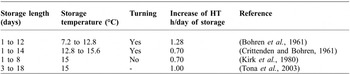
Embryo development starts in the oviduct of the hen. After oviposition, the embryo development becomes latent until the egg is placed in optimal conditions for incubation. Egg storage takes advantage of this latency for an optimised production. However, the environmental conditions during storage and storage duration can have a dramatic impact on hatchability, as reviewed in Brake et al. (Reference BRAKE, WALSH, BENTON, PETITTE, MEIJERHOF and PENALVA1997). To achieve maximum hatchability, it is recommended that eggs be stored for no longer than three days and it is important to maintain temperature and relative humidity (RH) during egg storage at 18°C and 70-78%, respectively. Fertile eggs stored in recommended conditions of temperature and humidity completely failed to hatch when held in storage for more than 25 days. Even after seven days of storage (hatchability of 87% to 90%), a significant (3% to 76%) reduction in hatchability was noticed (Butcher and Nilipour, Reference BUTCHER and NILIPOUR2009). When egg storage periods are prolonged, temperature and RH settings need to be adjusted to preserve internal integrity of eggs. Generally, as egg storage time increases, temperature in the storage room should be decreased and RH increased to prevent dehydration (Christensen et al., Reference CHRISTENSEN, WINELAND, FASENKO and DONALDSON2002; Elibol et al., Reference ELIBOL, HODGETTS and BRAKE2002a; Reference ELIBOL, PEAK and BRAKE2002b). For instance, eggs can be stored at a temperature of 18°C to 20°C for up to eight days. If storage is longer, temperature has to be dropped to 15°C to 16°C (Kirk et al., Reference KIRK, EMMANS, MCDONALD and ARNOT1980). Thus, independently of breeders' age, long storage periods decrease hatchability of fertile eggs (Tanure et al., Reference TANURE, CAFE, LEANDRO, BAIAO, STRINGHINI and GOMES2009). The detrimental effects of high storage duration on viability in older breeders are mostly due to an increased incidence of culls and embryonic losses at all stages (Lapão et al., Reference LAPÃO, GAMA and SOARES1999). It was concluded that the major contributor for changes during storage is albumen. As the most dynamic component, a compromised albumen impacts the eggs buffering capacity (Brake et al., Reference BRAKE, WALSH, BENTON, PETITTE, MEIJERHOF and PENALVA1997; Elibol and Brake, Reference ELIBOL and BRAKE2008a). The pH of albumen increases with storage duration, but most of this increase occurs during the first four days of storage. Hatchability of fertile eggs decreases by 0.2% up to seven days of storage, after which it decreases by 0.5% for each day up to day 14 (Yassin et al., Reference YASSIN, VELTHUIS, BOERJAN, VAN RIEL and HUIRNE2008). However, Schmidt et al. (Reference SCHMIDT, FIGUEIREDO, SAATKAMP and BOMM2009) reported more negative impact in which storage reduces hatchability by 1.17% and increases embryo mortality by 1.15% per storage day. During long storage periods, hatching time varies with hen age independently of breeder line, storage temperature and egg laying time. For the same long storage period (8 to 14 days), eggs from young breeders (25 to 30 weeks) had a more pronounced reduction in hatchability (0.8% per day) when compared with older breeders aged 51 to 60 weeks (Ruiz and Lunam, Reference RUIZ and LUNAM2002). Long egg storage may delay HT, i.e. the peak of hatch (50% of total hatched chicks) is reached after 486 h of incubation for eggs stored for three days but it is reached 18 h later for 18 days of storage (1 h/day of storage) without affecting the HW (Tona et al., Reference TONA, BAMELIS, DE KETELAERE, BRUGGEMAN, MORAES, BUYSE, ONAGBESAN and DECUYPERE2003). Similarly, Mather and Laughlin (Reference MATHER and LAUGHLIN1976) found that storage of eggs for 14 days increased the mean total incubation period of 13.4 h (0.96h/day of storage) but with no effect on HW. Pre-warming the eggs prior to incubation and turning the eggs four to 24 times a day may help reduce the negative effects of an extended storage period. Turning eggs seems to be more important for eggs from older breeders (Elibol et al., Reference ELIBOL, HODGETTS and BRAKE2002a; Reference ELIBOL, PEAK and BRAKE2002b). However, it is recommended to avoid the exposure of eggs from old breeders to high temperature (36°C) for extended periods before storage (Silva et al., Reference SILVA, FARIA, TORRES, FARIA FILHO, COELHO and SAVINO2008). Hatchability could be improved by allowing a longer incubation time (0.7 h to 1.28 h/day of storage; Table 1) and storing eggs with smaller end up (Tiwary and Maeda, Reference TIWARY and MAEDA2005).
Increase in incubation time per day of pre-incubation storage.

sexing embryos
No differences in weight was observed between males and females during embryo development (Morita et al., Reference MORITA, BOLELI and CARGNELUTTI2009). However, the sex of the embryo affects HT. Females hatch earlier than males, and the difference in peak hatching time between females and males is between 2.3 h to 3.3 h (Mather and Laughlin, Reference MATHER and LAUGHLIN1976; Burke, Reference BURKE1992; Reis et al., Reference REIS, GAMA and SOARES1997). After 504 h of incubation, 71% of females were already hatched, compared to only 52% to 57% of the males (Burke, Reference BURKE1992). These results are in agreement with a study by Van de Ven et al. (Reference VAN DE VEN, VAN WAGENBERG, DEBONNE, DECUYPERE, KEMP and VAN DEN BRAND2011) who found that 78% of the total hatched chicks after 465 h of incubation were females, while after 493 h only 42% of total hatched chicks were females. In laying hens, the difference in HT between males and females varies among breeds. Female Rhode Island chicks hatched 2.3 h earlier than males, but for White Leghorns this difference varied between 0.1 h and 0.7 h and increased with the breeder age (2 h for 45 weeks and 3 h for 95 weeks) and during the hot season (Ichinoe, Reference ICHINOE1973). However, Mather and Laughlin (Reference MATHER and LAUGHLIN1976) reported that the difference between HT of both sexes disappears if the storage duration is raised to 14 days.
Effect of incubation conditions
Many factors contribute to optimal incubating conditions and good hatchability. Each factor has its own optimal and sub-optimal levels, but they are intricately related and cannot be separated. Lourens (Reference LOURENS2003) suggested that incubation temperature, or more specifically embryo temperature, is probably the most important factor affecting chick quality. The factors which influence embryo temperature are heat production of the embryo itself (varying according to breed, breeder age, stage of incubation, and level of overheating), temperature in the setter and hatcher, air velocity (a higher air velocity induces more heat loss) and humidity.
temperature during incubation
Optimal incubation temperature for avian species varies between 33°C and 39°C (Visschedijk, Reference VISSCHEDIJK1991). In broilers, the highest hatchability, chick quality, and post-hatch performance (FCR and body weight) are obtained when eggs are incubated at an average temperature of 37.8°C. Strain and line differences affect the tolerance to variations in standard temperature and to temperature fluctuations occurring during incubation. This optimal incubation temperature lies within the range of 37°C to 38ºC (Decuypere and Michels, Reference DECUYPERE and MICHELS1992; French, Reference FRENCH1997; Decuypere et al., Reference DECUYPERE, TONA, BRUGGEMAN and BAMELIS2001; Hulet et al., Reference HULET, GLADYS, HILL, MEIJERHOF and EL-SHIEKH2007; Saito and Kita, Reference SAITO and KITA2011). The tolerance zone for temperature above this optimal level is smaller (+0.2°C) than for lower temperatures (-0.8°C). Tolerance to deviations from the optimal temperature depends on the duration of exposure and the stage of embryonic development. Hatched chicks that experience heat stress during incubation are weaker, less alert and have a higher incidence of culls. Indeed, exposure to temperatures of 46.1ºC for 3 h or 48.9ºC for 1 h at day 16 of incubation may be lethal for embryos (Thompson et al., Reference THOMPSON, WILSON and VOITLE1976; Wilson, Reference WILSON1991). Hill (Reference HILL2002) reported that the metabolism of optimally incubated birds is able to direct resources to organ development and growth whereas those incubated outside the optimal temperature must utilise resources to survive and therefore show reduced development and growth.
The chicken embryo is considered an ectothermic organism because it cannot regulate its own temperature (Meijerhof and Lourens, Reference MEIJERHOF and LOURENS1999; Hiebert and Noveral, Reference HIEBERT and NOVERAL2007; Piestun et al., Reference PIESTUN, SHINDER, RUZAL, HALEVY, BRAKE and YAHAV2008a; Walter and Seebacher, Reference WALTER and SEEBACHER2009). Embryos appear to be more sensitive to sub-optimal temperatures at the beginning than at the end of the incubation (French, Reference FRENCH1997). Ande and Wilson (Reference ANDE and WILSON1981) conducted two experiments in which embryos of various ages during incubation were subjected to acute high temperature stress to determine the effect on embryonic mortality and hatchability. Hatchability dropped to 50% when exposing three day old embryos to a temperature of 43.3ºC for 12 h, whereas a similar effect was observed after only 4h in seven day old embryos. Therefore three day old embryos were more resistant to heat stress than those aged seven days. During the last third period of incubation, decreasing temperature below the optimal level (36°C) induced a decrease of the metabolic activity and resulted in prolonged incubation time. However, submitting embryos to high temperature (39.5°C to 40°C) resulted in early hatch and increased late embryo mortality (Yildirim and Yetisir, Reference YILDIRIM and YETISIR2004; Leksrisompong et al., Reference LEKSRISOMPONG, ROMERO-SANCHEZ, PLUMSTEAD, BRANNAN and BRAKE2007). Different incubation temperatures do not only accelerate or delay the development of embryos, but also affect the ultimate performance during growth and reproduction (Decuypere, Reference DECUYPERE1984; Lourens et al., Reference LOURENS, VAN DEN BRAND, MEIJERHOF and KEMP2005; Yalçin et al., Reference YALÇIN, BABACANOĞLU, GÜLER and AKŞIT2010). Willemsen et al. (Reference WILLEMSEN, KAMERS, DAHLKE, HAN, SONG, ANSARI PIRSARAEI, TONA, DECUYPERE and EVERAERT2010b) found that the weight of chicks hatched from eggs incubated under high temperature (40.6°C) during the last five days was lower than those incubated under optimal (37.6°C) or low (36.6°C) temperatures. However, no differences were observed in post-hatch performance from altering incubation temperature (Morita et al., Reference MORITA, BOLELI and DE OLIVEIRA2010; Barri et al., Reference BARRI, HONAKER, SOTTOSANTI, HULET and MCELROY2011), except for differences in the development of the intestinal epithelium. However, changes in morphology and nutrient transporter density may not result in performance differences, because of variable demands for energy expenditure, metabolism, or other physiological responses (Barri et al., Reference BARRI, HONAKER, SOTTOSANTI, HULET and MCELROY2011). Increasing the temperature to 38.5°C for 3 h during incubation days 16, 17 and 18 had no effect on the weight of the hatching chicks, but led to better resistance to heat stress in the post-hatch period (Yahav et al., Reference YAHAV, RATH and SHINDER2004; Piestun et al., Reference PIESTUN, SHINDER, RUZAL, HALEVY, BRAKE and YAHAV2008a). Continuous thermal manipulation negatively affects hatch results and post-hatch performances (Piestun et al., Reference PIESTUN, SHINDER, RUZAL, HALEVY, BRAKE and YAHAV2008a; Reference PIESTUN, SHINDER, RUZAL, HALEVY and YAHAV2008b). Also exposure to cold (15°C) for 30 min on day 18 and 19 of incubation reduced ascites syndrome development by increasing the chickens’ cold tolerance. (Shinder et al., Reference SHINDER, RUSAL, GILOH and YAHAV2009; Reference SHINDER, RUZAL, GILOH, DRUYAN, PIESTUN and YAHAV2011).
humidity during incubation
Chick weight at hatch is highly related to egg weight and egg weight loss during incubation. Egg weight loss is affected by shell quality (number of pores per surface unit and thickness of egg shell), embryo activity, and humidity inside the incubator due to exchanges between the egg and its environment. Chicks tend to be smaller and more dehydrated when humidity during incubation is low (Deeming, Reference DEEMING2005; Barbosa et al., Reference BARBOSA, CANÇADO, BAIAO, LANA, LARA and SOUZA2008), with a high prevalence of unhealed navels (Crespo and Shivaprasad, Reference CRESPO and SHIVAPRASAD2003). The capacity of air to absorb and hold moisture increases rapidly as temperature rises. Good incubation results can be obtained with humidity ranging between 40% to 70% RH with an optimum at 50% RH (Lundy, Reference LUNDY1969). This optimum depends on the egg quality and the breeder age (Robertson, Reference ROBERTSON1961). Later studies reported that a maximum hatchability of eggs from young breeders (28 to 44 weeks) was achieved with 53% to 55% RH (Kirk et al., Reference KIRK, EMMANS, MCDONALD and ARNOT1980). Hatchability decreases by 1% with an increase of 17% over, or a decrease of 6% below, the optimal RH. For old breeders (48 and 60 weeks), hatchability decreases by 1% with each 3.7% increase in RH, ranging from 44% to 70% (Kirk et al., Reference KIRK, EMMANS, MCDONALD and ARNOT1980; Hamdy et al., Reference HAMDY, HEL, HENKEN, GALAL and ABD-ELMOTY1991; Bruzual et al., Reference BRUZUAL, PEAK, BRAKE and PEEBLES2000; Barbosa et al., Reference BARBOSA, CANÇADO, BAIAO, LANA, LARA and SOUZA2008). Decreasing hatchability with high humidity (75% to 80% RH) can be associated with high early and late embryo mortality (Robertson, Reference ROBERTSON1961). Eggs incubated with 45% RH, lose more weight when compared to eggs incubated with 55% RH. As a result, chicks hatched from eggs incubated under high RH are heavier but they tend to lose more weight when exposed to high temperature during the post-hatch period, as compared with chicks incubated with a low humidity (45%), which are more adapted to dehydrating conditions (Hamdy et al., Reference HAMDY, HEL, HENKEN, GALAL and ABD-ELMOTY1991; Barbosa et al., Reference BARBOSA, CANÇADO, BAIAO, LANA, LARA and SOUZA2008). However, no difference of chick body weight was observed in a another study when eggs were incubated under different humidity levels (43%, 53% and 63%) (Bruzual et al., Reference BRUZUAL, PEAK, BRAKE and PEEBLES2000).
ventilation and co2 concentration during incubation
Commercial incubators are closed machines that provide ideal conditions for embryonic development, replacing what would be done by a breeding hen. In addition to controlling temperature and humidity, the incubator controls the level of oxygen and carbon dioxide through ventilation. The concentration of CO2 observed in multistage incubators is 0.1% to 0.4% during incubation and 0.8% during hatching (Brian, Reference BRIAN2000). This level seems to be similar to levels in natural incubation where the concentration of CO2 in the nest is around 0.4% to 0.6% (Boerjan, Reference BOERJAN2001). In modern incubators, the air flow is controlled as an attempt to provide the best conditions for embryonic development. A CO2 concentration in the incubator higher than 1% is often considered to be deleterious (Owen, Reference OWEN1991). However, several studies contradict this, and show that the timing of high CO2 exposure and the level of CO2 play a crucial role in determining the tolerance of the embryo for CO2. Several studies, Taylor et al. (Reference TAYLOR, SJODIN and GUNNS1956; Reference TAYLOR, KREUTZIGE and ABERCROMBIE1971) and Taylor and Kreutziger (Reference TAYLOR and KREUTZIGER1965; Reference TAYLOR and KREUTZIGER1966; Reference TAYLOR and KREUTZIGER1969), investigated the CO2 threshold during several short periods of incubation of White Leghorn eggs. When eggs were exposed to up to 1% of CO2 during the first four days of incubation, no decrease in hatchability was found (Taylor et al., Reference TAYLOR, SJODIN and GUNNS1956). When incubated eggs were exposed to 5% CO2 between days nine and 12 of incubation, Taylor and Kreutziger (Reference TAYLOR and KREUTZIGER1966) observed a reduced hatchability. Everaert et al. (Reference EVERAERT, KAMERS, WITTERS, DE SMIT, DEBONNE, DECUYPERE and BRUGGEMAN2007) have shown that Cobb (modern commercial broiler line) broiler embryos can tolerate 4% CO2 between days 10 and 18 of incubation without any effect on pre- and post-hatch growth, embryonic mortality, and hatchability. Moreover, Hogg (Reference HOGG1997) reported 2% increase in hatchability when Ross Breeder eggs were exposed to CO2 up to 1.5% on day 10. Results of De Smit et al. (Reference DE SMIT, BRUGGEMAN, TONA, DEBONNE, ONAGBESAN, ARCKENS, DE BAERDEMAEKER and DECUYPERE2006) showed beneficial effects of a gradual increase of CO2 until day 10 (up to 1.5%) on embryonic growth and hatching parameters. All these experiments reveal an increasing tolerance to CO2 with increasing embryonic age. The physiological mechanisms underlying this age dependent tolerance in the embryo are not yet understood but are considered to be related to the increasing capacity of the aging embryo to buffer against acidosis caused by high levels of dissolved CO2 (Taylor and Kreutziger, Reference TAYLOR and KREUTZIGER1966). An increasing concentration of CO2 (up to 1% to 1.2%) within the first 10 days of incubation sped up the HT and increased the HW (De Smit et al., Reference DE SMIT, BRUGGEMAN, TONA, DEBONNE, ONAGBESAN, ARCKENS, DE BAERDEMAEKER and DECUYPERE2006). Early hatch was due to an acceleration of the embryo development between days six and 10, which was associated to a low albumen pH and a high pCO2 in the egg's air cell incubated under gradual increase of CO2 levels (up to 2% within day 10 of incubation). However, it did not affect the final weight of the hatched chicks (Bruggeman et al., Reference BRUGGEMAN, DE SMIT, TONA, EVERAERT, WITTERS, DEBONNE, DEGRAEVE, GARAIN and DECUYPERE2006; Decuypere et al., Reference DECUYPERE, ONAGBESAN, DE SMIT, TONA, EVERAERT, WITTERS, DEBONNE, VERHOELST, BUYSE, HASSANZADEH, DE BAERDEMAEKER, ARCKENS and BRUGGEMAN2006; Bruggeman et al., Reference BRUGGEMAN, WITTERS, DE SMIT, DEBONNE, EVERAERT, KAMERS, ONAGBESAN, DEGRAEVE and DECUYPERE2007). The level of CO2 during the hatch process may induce physiological changes that are related to the timing and control of piping and hatching events as well as to cardiovascular or pulmonary changes that alter the sensitivity for ascites later in post-hatch period (Decuypere et al., Reference DECUYPERE, ONAGBESAN, DE SMIT, TONA, EVERAERT, WITTERS, DEBONNE, VERHOELST, BUYSE, HASSANZADEH, DE BAERDEMAEKER, ARCKENS and BRUGGEMAN2006).
Effect of post-hatch handling
The mean incubation duration for chicken eggs is 21 days and includes a hatching stage of 24 to 48 h (Willemsen et al., Reference WILLEMSEN, DEBONNE, SWENNEN, EVERAERT, CAREGHI, HAN, BRUGGEMAN, TONA and DECUYPERE2010a). Despite all the differences in individual chick's HT, hatchlings are commonly removed from hatcher at the same time (take-off). The post-hatch treatment includes sorting, sexing, and vaccination in the hatchery, transportation, and finally placement in the rearing farm. The process of sorting, sexing and vaccination does not normally exceed 2h to 4h. Chicks are then put in a shipping dock, waiting for transportation. The waiting time depends on the transportation schedule. The placement of chicks takes between 24-48 h (Moran, Reference MORAN1990; Noy and Sklan, Reference NOY and SKLAN1997) or in some cases up to 72h when breeder chicks are transported internationally by planes or trucks. This makes the transportation the most important post-hatch handling factor which affects chick quality at placement.
effect of transportation of day-old chicks
There is abundant scientific data dealing with transportation in poultry. This reflects the importance of transportation on product quality and animal welfare in the poultry industry. However, most studies have dealt with transportation of broilers to the slaughter-house (Mitchell and Kettlewell, Reference MITCHELL and KETTLEWELL1998; Hunter et al., Reference HUNTER, MITCHELL and CARLISLE1999; Nijdam et al., Reference NIJDAM, ARENS, LAMBOOIJ, DECUYPERE and STEGEMAN2004; Delezie et al., Reference DELEZIE, SWENNEN, BUYSE and DECUYPERE2007; Gregory, Reference GREGORY2008; Ghareeb and Böhm, Reference GHAREEB and BÖHM2009; Vieira et al., Reference VIEIRA, SILVA, BARBOSA FILHO, VIEIRA and BROOM2010; Vosmerova et al., Reference VOSMEROVA, CHLOUPEK, BEDANOVA, CHLOUPEK, KRUZIKOVA, BLAHOVA and VECEREK2010) or a few on transportation of laying hens (Broom, Reference BROOM1990). Relatively little detailed information is available regarding the transportation of day-old chicks (EFSA Panel on Animal Health and Welfare (AHAW), 2011). However, day-old chicks’ welfare, growth, development, and performance are influenced by the first episode of transportation from the hatchery to the rearing site (Chou et al., Reference CHOU, JIANG and HUNG2004). As such, optimising transportation conditions is vital to reduce mortality rates during and after transportation.
Recommendations by the Council of The European Union (Reference COUNCIL OF THE EUROPEAN UNION2005) regarding the stocking density of day-old chick during transportation are 21 to 25 cm² per chick (400 to 475 chicks/m²) The number of transported chicks taken into account at this stage must be equal to the number of chicks necessary to reach the final density allowed at the rearing stage plus additional chicks intended to compensate for the possible mortality during transportation and the early rearing period. In practice and according to the current legislation in Europe, the storage of chicks is not allowed for more than 24 h in hatcheries. The chicks are then transferred to rearing farms over a maximum of 24-48 h (maximum time allowed including waiting in hatchery and transportation is 72 h). The main factors affecting the quality of day-old chick during transportation are temperature, humidity, vibration and sound, and delay before feed and water intake.
temperature during transportation
Recent decades have seen significant developments in fast-growing meat-type broiler chickens, predominately due to changes in broiler genetics (Havenstein et al., Reference HAVENSTEIN, FERKET and QURESHI2003). This increased growth is associated with an increase in their metabolic rate. Some previous studies have tried to define thermo-neutral or optimal thermal environments for day-old chicks on the basis of metabolic heat production and body temperature responses (Misson, Reference MISSON1976), but without taking in account other homeostatic status indicators. More recently, an experiment using a range of temperatures (20°C to 35°C) found thermal neutrality for unfed, group-housed neonatal chicks to be between 30°C and 32°C, based on a criteria of least thermoregulatory efforts and mortality (Xin and Harmon, Reference XIN and HARMON1996). By simulating transportation of broiler day old chicks, Mitchell et al. (Reference MITCHELL, KETTLEWELL, CARLISLE, HUNTER and MANNING1996) used a range of temperature between 20°C and 36°C for different exposure durations (3 h, 6 h, 9 h and 12 h). These authors suggested an optimal temperature during transportation between 24.5°C and 25°C, taking into account all physiological and metabolic responses (body temperature, plasma sodium and metabolite profiles). Using grandparent stock chicks, Xin (Reference XIN1997) reported that cyclic air temperature from 21.1°C to 37.8°C for 50 h did not affect mortality or body weight loss compared to a constant temperature of 29°C. The exposure of broiler chicks to heat stress at an early age reduced the risk of mortality if these chickens were exposed to heat stress at the end of the rearing period (Arjona et al., Reference ARJONA, DENBOW and WEAVER1990; Yahav and Hurwitz, Reference YAHAV and HURWITZ1996), but there was no difference in zootechnical performances. Other researchers reported no effect of heat stress at day old on mortality (Al-Aqil et al., Reference AL-AQIL, ZULKIFLI, SAZILI, OMAR and RAJION2009), but exposed chicks had lower performance. Transportation conditions from the hatchery to the farm may affect the leg health of broilers, specially the incidence of twisted legs when chicks are transported at 40°C, compared to chicks transported at 34°C (Oviedo-Rondon et al., Reference OVIEDO-RONDON, WINELAND, SMALL, CUTCHIN, MCELROY, BARRI and MARTIN2009). In other species, e.g. ostriches, transportation of chicks during the night caused less stress (low heart rate and low skin temperature) than during the day thanks to lower ambient temperature and darkness (Crowther et al., Reference CROWTHER, DAVIES and GLASS2003). According to the recommendations of the European Union (Council Of The European Union, Reference COUNCIL OF THE EUROPEAN UNION2005), environmental temperatures during transportation of day-old chicks must be between 16°C and 24°C, although in practice, most hatcheries recommend temperatures between 24°C and 26°C (Mitchell and Kettlewell, Reference MITCHELL and KETTLEWELL2009). The effective control of the air temperature in the truck container is an issue since the gradient in the 3D volume may generate temperature spots which may in turn affect chick uniformity at placement.
humidity during transportation
The main pathway of heat dissipation for birds in a hot environment is through respiratory evaporation (Dawson, Reference DAWSON1982), especially when ambient temperature approaches body temperature. However, low importance is given to humidity control in hatcheries during post-hatch handling and transportation. As reported by Misson (Reference MISSON1976), reducing environmental humidity from 80% to 20% raised the upper survival limit from 41.5-43°C. More recent studies conducted by Mitchell et al. (Reference MITCHELL, KETTLEWELL, CARLISLE, HUNTER and MANNING1996) suggested an optimal RH ranging from 60 to 63% for an average temperature of 24.5-25°C. The amount of evaporative heat loss depends on air humidity and is suppressed when humidity rises. When air temperature rises, the breathing frequency of chickens is increased, and evaporative heat loss is significantly enhanced (Raup, 1990; Lin et al., Reference LIN, ZHANG, JIAO, ZHAO, SUI, GU, ZHANG, BUYSE and DECUYPERE2005). In addition, high levels of humidity (e.g.~80% compared to ~30%) accelerate the risk of bacterial contamination and, as consequence, penalise the health status of chicks (Line, Reference LINE2006). No recommendation for humidity is mentioned in official regulations, however breeder companies recommend controlling humidity at 75% RH at 24°C (Mitchell and Kettlewell, Reference MITCHELL and KETTLEWELL2009).
ventilation during transportation
As noted, when travelling chicks at higher temperatures, it is very important to keep them well-ventilated to allow for more effective thermoregulation via convection. With restricted ventilation and when temperature around the crates is 34°C or above, temperature inside the crates quickly rises to 40°C or more due to the heat generated by the chicks themselves. Chicks begin panting, which increases the RH inside the crate and reduces the amount of heat loss by evaporation. Consequently the body temperature of chicks increases up to 43°C to 44°C within 40 to 50 min, resulting in comas and death (Hoogerbrugge and Ormel, Reference HOOGERBRUGGE and ORMEL1982). The usual recommendation is a minimum ventilation rate of 0.019 l/s per chick in cold weather. To obtain this minimum air flow, the vertical distance between containers should be approximately 8 cm (Tanaka and Xin, Reference TANAKA and XIN1997).
vibration and sound during transportation
Wild animals are highly affected by sounds, light conditions, odours, thermal and tactile experiences (Morgan and Tromborg, Reference MORGAN and TROMBORG2007). Continuous noise, vibration, and movement are stressors arising during transportation, and they are categorized as either irritant (stressors most likely to occur over prolonged periods; Crowther et al., Reference CROWTHER, DAVIES and GLASS2003) which are considered to have less impact than thermal stressors (MacCaluim et al., Reference MACCALUIM, ABEYESINGHE, WHITE and WATHES2003). To the best of our knowledge, there are no studies on the effect of vibration and noise during transportation on day old chicks, as most investigations were conducted on broiler chickens transported to the slaughter house.
The normal quantity of noise that an animal can perceive without any dysfunction is between 30 dB to 55 dB (Minka and Ayo, Reference MINKA and AYO2009). Noise stimuli of both 80 dB and 100 dB intensities for 10 min induced a significant elevation in plasma corticosterone levels of broilers (Chloupek et al., Reference CHLOUPEK, VOSLÁŘOVÁ, CHLOUPEK, BEDÁŇOVÁ, PIŠTĚKOVÁ and VEČEREK2009). Broilers aged 42 days that were exposed to a noise stimulus of 100 dB exhibited a significant increase in the cholesterol and total protein levels in blood. Simulating normal road transportation vibration by exposure to narrow band vibration (2, 5, 10 Hz), Warriss et al. (Reference WARRISS, BROWN, KNOWLES, EDWARDS and DUGGAN1997) showed that vibration exposure for 3 h increased body temperature (0.2°C to 0.5°C) and resulted in reduced glycogen concentrations in liver and biceps femoris muscle (as a sign of fatigue) at the higher vibration frequencies (10 Hz). Conversely, Garcia et al. (Reference GARCIA, SILVA, BARBOSA FILHO, VIEIRA and DIAS2008) found no effect of vibration on body temperature or weight loss when birds were submitted to different vibration frequencies for 4 h. To maintain standing postural stability during transportation, birds adopt strategies such as wing extension and by flapping or squatting to reduce the effects of resonance by skeletal muscle response to movement and vibration (Scott, Reference SCOTT1994).
delays in feed and water intake post-hatch
Birds that hatch early may be held for several hours without food or water. Typically, the longer the hatched chicks remained in the hatcher, the worse their final performance (Fanguy et al., Reference FANGUY, MISRA and VO1980). Similarly, Wyatt et al. (Reference WYATT, WEAVER and BEANE1985) observed that chicks which remained in hatching trays between 14-32 h weighed 5-32% less than chicks maintained in trays for up to 7 h. Using male broiler chickens, Nir and Levanon (Reference NIR and LEVANON1993) found that growth retardation caused by 24 h or 48 h holding periods was equivalent to a loss of one or two days body weight gain at market age, respectively. Hager and Beane (Reference HAGER and BEANE1983) and Baião and Cançado (Reference BAIÃO and CANÇADO1998) carried out experiments to evaluate the effects of maintaining chicks in the hatching chambers. Birds were removed from the hatcher after incubation periods between 486 h and 522 h. Hager and Beane (Reference HAGER and BEANE1983) observed significant negative effects on performance only in birds removed from the hatcher at 522 h, but Baião and Cançado (Reference BAIÃO and CANÇADO1998) did not show any statistical differences in the performance of broilers. On the other hand, Casteel et al. (Reference CASTEEL, WILSON, BUHR and SANDER1994) found that the weight of chicks held for 24 h after hatching was less than those removed directly after hatch. Comparing the performance of birds fed immediately after hatching with the performance of birds fed 36 h later resulted in a 100-200 g lower body weight at 40 days of age. Feeding in the hatching trays not only limited this weight loss, but improved growth and uniformity of birds up to 21 days after placement (Sklan et al., Reference SKLAN, NOY, HOYZMAN and ROZENBOIM2000). Numerous studies have indicated a positive correlation between the weight of the small intestine and improved weight gain and feed efficiency (Sklan and Noy, Reference SKLAN and NOY2000; Geyra et al., Reference GEYRA, UNI and SKLAN2001b; Reference GEYRA, UNI and SKLAN2001a; Bigot et al., Reference BIGOT, MIGNON-GRASTEAU, PICARD and TESSERAUD2003). Halevy et al. (Reference HALEVY, GEYRA, BARAK, UNI and SKLAN2000) concluded that sufficient feed in the immediate post-hatch period is critical for satellite cell proliferation and skeletal muscle development and is thus important for optimal muscle growth, but giving an injection of glucose did not have any significant effect on broiler post-hatch performances, rather it had a negative effect on small size eggs (Shivazad et al., Reference SHIVAZAD, BEJAEI, TAHERKHANI, ZAGHARI and KIAEI2007). Conflicting results were reported by Nir and Levanon (Reference NIR and LEVANON1993) and Noy and Sklan (Reference NOY and SKLAN1997), who did not find any difference in feed conversion or mortality, but reported that feed intake and body weight were inversely related to the period of holding at 21 and 40 days of age. However, Noy and Sklan (Reference NOY and SKLAN1997) found no effect of holding for 24 h on the performance measured at 43 days. The European Food Safety Authority's Scientific Panel on Animal Health and Welfare cautions that the body reserves of domestic fowl chicks may be used up by 48 h. When temperatures are high, these reserves are used up much earlier (European Food Safety Authority, Reference EUROPEAN FOOD SAFETY AUTHORITY2004), and, in the case of fast-growing modern breeds of commercial birds which have a much higher metabolism than traditional breeds, the chicks are less equipped to withstand long fasting periods (about 48 h). Providing access to nutrients during transportation may mitigate the effects of delayed feeding (Careghi et al., Reference CAREGHI, TONA, ONAGBESAN, BUYSE, DECUYPERE and BRUGGEMAN2005).
The period immediately after hatching is critical for the development of the immune and gastrointestinal systems. During the first few days of the bird's life, the small intestine grows five times faster than the body, and microvilli of the small intestine grow significantly faster in birds supplied with water and feed immediately after hatching (Bigot et al., Reference BIGOT, TESSERAUD, TAOUIS and PICARD2001). Providing the optimum balance of nutrients immediately after hatch results in heavier bursa weights, earlier appearance of biliary IgA and germinal centres, and an improved resistance to disease challenges (Dibner et al., Reference DIBNER, KNIGHT, KITCHELL, ATWELL, DOWNS and IVEY1998). Chicks held in the hatcher for 24 h after hatching had significant lower antibodies titres than those removed directly after hatch (Casteel et al., Reference CASTEEL, WILSON, BUHR and SANDER1994). As a long delay in feed and water access has a significant impact on physiological condition, it seems likely that a long duration of transportation could compound with feed and water-deprivation in chicks and may even cause mortality. Xin and Rieger (Reference XIN and RIEGER1995) have demonstrated that mortality rates at placement of chicks transported by aircraft is proportional to travel time. For journeys approaching 72 h, the mortality rate was more than 11%, while the seven-day mortality for chicks was nearly 50%. This study reported crate temperature ranging from 31°C to 35°C during ground transportation and 26°C to 34°C during flight. For ground transportation, Chou et al. (Reference CHOU, JIANG and HUNG2004) observed an increase in mortality from 1.2% to 1.36% during the first week after placement when chicks were transported for distances exceeding 50 km.
Conclusions
Different pre-incubation or incubation factors affect hatchability and HW. These factors cannot be separated and mutually influence each other. Egg size and quality are highly correlated to the age of breeders and maximum hatchability is obtained with medium-size eggs from mid-age breeders. Storage losses are highly affected by the age of breeders. Egg quality, the size of eggs, and the age of breeders have to be taken into account when setting the programs for incubation. To synchronise hatch, large eggs (>65 g) and eggs from older breeder flocks have to be incubated earlier than small or medium-size eggs and eggs from younger flocks. The possible negative effects on embryo development caused by storage conditions and duration could be mitigated by turning the eggs during storage and pre-warming them accordingly. The sex of embryos affects HW (as females hatch earlier than males), however sexes cannot be incubated separately since there are currently neither inexpensive nor non-invasive means to determine the sex of embryos prior to hatch. Incubation conditions cannot be set separately since heating, cooling, and ventilation affect egg shell temperature and air temperature as well as humidity and CO2 concentration simultaneously. To improve the hatchability and reduce HW, hatchery managers can make some adjustment to incubation profiles. CO2 concentration (up to 1%) during the first 10 days of incubation improves hatchability whereas CO2 concentration during the last half of incubation has to be adjusted to reach maximum hatchability. The main challenges are to accurately control the 3D gradients that exist in large incubators, and adjust air temperature to egg shell temperature. All these factors need to be adjusted, taking in consideration the increased requirement of embryos and chicks metabolism due to genetic selection. The available literature suggests that the first few hours post-hatch seem to be critical and could have long lasting effects on the quality of chicks at placement. The most important factor that could affect the quality and welfare of chicks at placement is the delay before feed is made available, when chicks are submitted to long periods of fasting. Weight loss during transportation may also be affected by the transportation environment (temperature and humidity).
Continuing studies are needed to adapt the incubation conditions in order to synchronize HT, produce good quality chicks, and investigate the effect of transportation conditions, taking into account the interactions of these parameters with breeder age, with the aim of improving chick quality at placement, chick welfare and performances up to slaughter age.
Acknowledgments
H. Bergoug, Q. Tong, N. Roulston and C.E.B. Romanini are supported by a Marie Curie Fellowship within the BioBusiness European Project (FP7/PEOPLE/ITN2008, project No 238296).