Introduction
The epidemiological transition occurred in the 19th and 20th centuries, in which a change in prevalence and the main cause of mortality was noted, with infectious communicable diseases being overcome by noncommunicable diseases (NCDs), such as cardiovascular diseases, diabetes, and cancer.Reference Giroux1, Reference Omran2 There are several risk factors that contribute to NCDs’ emergence and development, which include atherogenic dyslipidemia, hypertension, insulin resistance, abdominal obesity, and impaired glucose metabolism. The literature indicates the association between these risk factors, which overlap in different stages of metabolic diseases, increasing the risk of NCD onset and prevalence. This clustering of metabolic risk factors is called metabolic syndrome (MetS).Reference Samson and Garber3, Reference Sherling, Perumareddi and Hennekens4
The Developmental Origins of Health and Disease (DOHaD) concept addresses the relationship between early-life environment and metabolism in adult life. The period from conception through pregnancy, lactation to adolescence constitutes a window of time where events can shape the life-long metabolism of an individual through mechanisms not yet fully understood, but linked to epigenetic modulation of gene expressions.Reference Suzuki5 Barker and colleagues, in the 1990s, published the groundbreaking study of the DOHaD concept, showing the epidemiological association between low birth weight and later impaired glucose metabolism and type 2 diabetes (T2D).Reference Hales and Barker6 Since then, this connection between early-life environment and metabolic programming that increases the organism’s susceptibility to MetS, and therefore to NCDs in adulthood, has been confirmed by various epidemiological, experimental, and clinical data.Reference McMillen and Robinson7
Disorders during early stages of development represent a strong predictor of metabolic programming, and there is a wide range of environmental, biological, and chemical agents that can trigger a malprogramming at these stages, such as maternal nourishment, physical state, and drug abuse, among others.Reference Plagemann, Harder, Schellong, Schulz and Stupin8 Growing evidence includes environmental contaminants in the list of disturbance agents that may lead to metabolic malprogramming, pointing out that these compounds may play a role in the long-term metabolic function and health.Reference Ashley-Martin, Levy and Arbuckle9
Since the industrial revolution, increasing hazardous waste in the environment has forced countries to legislate and seek alternatives to reduce the damage to public health from environmental contaminants. The World Health Organization (WHO) has been working for years to draw public attention to the issue of environmental pollution, which can be found in air, water, and food and, in a dose-dependent manner, cause several types of metabolic diseases.Reference Harrison and Dawson10
It is important for research purposes to isolate different polluting substances, which may be the cause of metabolic disorders and diseases, but it is likely that the combined cocktail of contaminants is the main cause of the observed pathologies related to environmental contamination.Reference Fabricio, Malta, Chango and De Freitas Mathias11, Reference Signorelli and Ferrante12 The list of environmental contaminants that negatively affect metabolism and have the potential for metabolic programming is broad. Here, considering the source of pollutants, the potential for human exposure, especially in the developmental stages, and the literature linking pollutants to obesity and metabolic programming, we focus mainly on four types of pollutants: bisphenol-A (BPA), organophosphorus pesticides, particulate matter (PM) air pollution, and pharmaceutical drugs. In this review, we discuss the obesity epidemic, DOHaD concept, toxicology of pollutants, environmental control, and the role of environmental contaminants in central and peripheral programming for obesity, MetS, and NCDs.
The obesity epidemic
Obesity is usually characterized by an abnormal and excessive accumulation of body fat to an extent that may cause health damage.Reference Fruh13 A common population measure used to identify obesity is the body mass index (BMI – weight in kilograms divided by height in meters-squared); an adult with a BMI ≥30 kg/m2 is generally defined as obese, whereas a BMI between 25 and 29.9 kg/m2 indicates overweight. Although BMI is a widely used and commonly accepted indicator of overweight and obesity in the population, this index has limitations due to variations in the body composition of different individuals. Measures of central adiposity, such as waist circumference and waist-to-hip ratio, are more accurate predictors of the risk of NCDs compared with BMI.Reference Apovian14, Reference Seidell and Halberstadt15
Over the past 50 years, we have seen an increase in the prevalence of obesity reaching epidemic proportions. Epidemiological data show that half of the population in the United States is overweight or obeseReference Flegal, Kruszon-Moran, Carroll, Fryar and Ogden16; meanwhile, in developing countries such as Mexico and Brazil, a quarter of the population present a similar status of body weight.Reference Jimenez-Cruz and Bacardi-Gascon17 As obesity is a condition strongly related to MetS and NCDs, it affects the quality of life of people and consumes a large part of the economic resources, having an impact on the gross domestic product of the countries.Reference Kinge, Strand, Vollset and Skirbekk18 This is a difficult scenario for economies around the world, especially for developing countries, where the domestic economy is more vulnerable to the burden of obesity and related comorbidities in the public health system.Reference Rtveladze, Marsh and Webber19
The prevention and treatment of obesity are not yet fully understood. In fact, even considering the great scientific advances in this field, the battle against obesity is still far from having an end.Reference Gluckman, Hanson, Zimmet and Forrester20 The obesity etiology is broad; however, two main factors – diet, especially the so-called Western diet, rich in carbohydrates and fat calories, and low or insufficient levels of physical activity – have been regularly reported to promote obesity. While this information is widely disseminated, it does not appear to be enough to interrupt, or at least delay, the increasing rates of obesity among the population.
For different causes, including financial and cultural, nutritional and physical exercise guidelines have not been sufficient in the fight against obesity.Reference Husemann21 It is preponderant that we accumulate more knowledge about the etiology and pathophysiology of obesity to find additional ways of counteracting the ever-increasing rates of obesity. Understanding the role of environmental contaminants and metabolic programming in this obesity epidemic can bring a new perspective to this issue.
The DOHaD concept
As discussed earlier, in the early 1990s, the concept that health and disease can have its origins on the developmental phases of life began to receive more attention within the scientific community. Initial epidemiological observations showed a strong association between reduced growth factor and increased risk of cardiovascular diseases in adult life.Reference Barker, Bull, Osmond and Simmonds22
During the final period of World War II, because of the siege of Europe by the Nazi troops, the Netherlands, like other European countries, were exposed to the Dutch famine, and the population, including woman in the last third of pregnancy, ate below their caloric needs. Babies born in this late period of war had below-average birth weight.Reference Lumey23 Decades later, they were in a different environment with abundant food availability, and this mismatch between their late environment and early life led them to glucose intolerance, especially for those who became obese adults.Reference Ravelli, van der Meulen and Michels24 The difference in food availability between early life, when the organism adopts strategies to cope with the nutritional status, and later life is the basis of the match/mismatch hypothesis,Reference Cleal, Poore and Boullin25 an important concept within the DOHaD field.
We may then consider that a poor intrauterine nutrition associated with caloric abundance in the postnatal life triggers the onset of obesity and metabolic dysfunction. It is worth mentioning that in countries where the population is exposed to a chronic caloric restriction, mainly in the rural areas, there are low rates of obesity. Nevertheless, in case of migration of these populations to urban areas, with greater food availability, the risk of developing obesity and T2D increases significantly.Reference Veena, Wills and Fisher26 The possibility of eating higher-calorie diets during the postnatal life is a strong predictor of obesity and MetS.Reference Cureau, Duarte, dos Santos and Reichert27
The literature shows that not only poor perinatal nutrition but also a large caloric intake may expose the individual to a greater propensity of future metabolic diseases, suggesting that an unbalance in early nutrition, by poor or excessive feeding, may increase the susceptibility to future MetS.Reference Metges28 The developmental pathway of overnutrition is described as related to changes in appetite control and eating behavior, which predisposes to later hyperphagia and altered adipose tissue development. Adipogenesis occurs from the middle to the end of gestation, and can be programmed by early events. An increase in fetal adipogenesis may program the adipose tissue for further expansion and increased fat accumulation, also contributing to later obesity.Reference Gluckman and Hanson29, Reference Wu, Puigserver and Spiegelman30
Currently, increasing numbers of clinical, epidemiological, and experimental evidence support the DOHaD concept, now extended beyond the perinatal period to include other developmental stages such as preconception, childhood, and adolescence.Reference de Oliveira, Gomes and Miranda31, Reference de Oliveira, Lisboa and de Moura32 The role of the preconception period in metabolic and phenotypic programming is suggested, as evidences show that parents who exhibited excessive BMI gains during childhood and in adulthood were related to a higher BMI and a high risk of obesity of their offspring.Reference Li, Law, Lo Conte and Power33 A study by Ng and colleagues showed that chronic high-fat diet (HFD) feeding by Sprague–Dawley male rats induced higher body weight, beta-cell dysfunction, and impaired glucose metabolism in their female offspring,Reference Ng, Lin and Laybutt34 reinforcing the role of the preconception period and epigenetic transmission in metabolic programming.
Inheritance of obesity is commonly attributed to genetic influence, as there is much evidence that genetic factors contribute to obesity. Congenital leptin deficiency was associated with the early onset of severe obesity in humansReference Montague, Farooqi and Whitehead35; one study showed that a common variation in the FTO gene is associated with an increase in body weight gain.Reference Frayling, Timpson and Weedon36 Although the traditional transmission of genetic inheritance, which is partly due to genetic mutations and variations in the DNA sequence that favors greater body weight gain with increased fat accumulation, contributes to the transmission of obesity, it seems to explain only a small part of the variability of body weight attributed to genetics.Reference Willyard37
This suggests that obesity may also depend on the environment and on the interaction between genetic heritage and environmental conditions that can affect gene expressions through epigenetic tags such as DNA methylation and chromatin remodeling, altering gene expressions without modifying DNA sequences.Reference Godfrey, Lillycrop, Burdge, Gluckman and Hanson38 Recent studies have added further evidence that the obese phenotype may be passed down through generations via epigenetic mechanisms, showing that offspring from obese individuals, even reared under controlled conditions, have the same phenotype as their parents.Reference Fleming, Velazquez and Eckert39 Considering the DOHaD concept and the high level of human exposure to environmental pollutants, including early life and to those of childbearing age, a metabolic programming due to contamination will likely have consequences on the adult life of individuals and may affect their descendants for generations.
Toxicology of environmental contaminants and metabolism
It is well known that environmental contaminants at high doses induce acute physiologic and metabolic dysfunctions with a potential for lethal risk. Tragic examples have shown the consequences of a sudden rise in pollutant levels, such as the famous case of massive radiation leakage from the Chernobyl thermonuclear power plant in Ukraine (former Soviet Union) in 1986. In addition to the victims who died immediately, residents of the neighboring areas who survived the incident suffered from later mutations that have taken hundreds to cancers and other diseases.Reference Cureau, Duarte, dos Santos and Reichert27, Reference Cahoon, Nadirov and Polanskaya40 While extraordinary events such as the above have a huge impact on the environment that still demand studies to better understand the extent of all its consequences, contaminants may also be a hazard to the environment and have health implications even at low levels, if not lethal doses.
The assessment of toxicology of different compounds is indispensable to the knowledge of environmental contaminants and the risk that these substances may pose on public Health at different levels. Experimental studies are important tools for determining the lower doses that pose a health risk, called the lowest observed effect level (LOAEL), and the doses that do not constitute a health risk, called no observed adverse effect level (NOAEL).Reference Pizzo and Benfenati41
In general, it is common to have toxic and nontoxic doses of the same compound, which does not mean that a chronic exposure to these substances, even within the LOAEL and NOAEL limits, might not lead to long-term metabolic malprogramming. For instance, the population may consume organophosphorus pesticides within the NOAEL limits, as this type of pesticide is widely used in agriculture, being easily found in the food for decades, with no apparent side effects.Reference Valcke and Bouchard42 Even so, studies showed that long-term exposure to this type of pesticides can affect the reproductive system,Reference Mehrpour, Karrari, Zamani, Tsatsakis and Abdollahi43 the endocrine system,Reference Guven, Bayram, Unluhizarci and Kelestimur44 and the central nervous system (CNS).Reference Korsak and Sato45 In a recent study, our group showed that early exposition to low doses of acephate, an organophosphorus pesticide widely used in soybean plantation, programmed rats’ offspring to metabolic dysfunctions in adult life.Reference Ribeiro, Prates and Pavanello46 In addition, organophosphate pesticides demonstrated genotoxic capacity, and exposure may result in mutagenesis and cancer.Reference How, Hashim and Ismail47
Another example of environmental pollutant widely present in our daily lives is BPA, a substance largely used in the manufacturing of polycarbonate plastic and epoxy resin products. BPA is an endocrine disruptor, which makes risk characterization non-direct and therefore more difficult. Products such as plastic bottles, toys, baby pacifiers, dental sealants, food and beverage containers contain hazardous levels of BPA and have a high potential for human exposure, including infants, children, and adults of the reproductive age,Reference Geens, Aerts and Berthot48 making them susceptible to metabolic programming.
Studies have shown that BPA is an environmental estrogenic additive that plays a hormonal role, analogous to the estrogen hormone in the organism, binding to classical nuclear estrogen receptors (ERs), ERα and ERβ, and non-classical membrane ERs. BPA has been linked to the onset of obesity and T2D, among several other diseases including cancer.Reference Gould, Leonard and Maness49, Reference Paulose, Speroni, Sonnenschein and Soto50 Although several countries have banned the commercial use of plastic products containing BPA, especially those intended for infants and young children, this compound is still used in many other countries and is a growing public health concern.51
BPA and organophosphorus pesticides are endocrine disruptors, playing a role in health impairment primarily through hormonal pathways, but there are several environmental pollutants with genotoxic and cytotoxic effects and potential for metabolic programming, operating not only through hormonal stress but also in different physiological and molecular mechanisms. The PM of air pollution, which is able to increase autonomic nervous system (ANS) activation, induces increased oxidative stress and inflammation, mainly through epigenetic mechanisms,Reference Fiordelisi, Piscitelli and Trimarco52 which is also the main mechanism of metabolic programming.
PM is a common contaminant in large urban clusters, disposed of by industrial chimney, vehicles, landfills, and tobacco smoke, which include heavy metals and organic compounds and may float for miles, affecting even the rural areas. This type of pollutant has been reported for its strong relationship to respiratory system cancers,Reference Mukherjee and Agrawal53 changes in the expression of key cell cycle proteins, such as p53 and Cdc2,Reference Zhao, Yang, Xu, Chen and Xiao54 causing cytotoxic effects,Reference Dumax-Vorzet, Tate, Walmsley, Elder and Povey55 and increased oxidative stress with methylated DNA damage.Reference Lai, Huang and Chang56
A different class of environmental pollutants comes from a group of regulated substances – pharmaceutical drugs and their metabolites – which belong to several chemical families and are part of the problem of environmental contamination.Reference Puckowski, Mioduszewska and Lukaszewicz57 Various types of pharmaceutical products, such as analgesics and anti-inflammatory drugs, contraceptives, antibiotics, and beta-blockers, among others, are disposed of to the environment after medical and veterinary use, being found in the soil and water sources, including groundwater.Reference Cardoso, Porcher and Sanchez58 In addition, inappropriate or illegal domestic waste disposal of pharmaceuticals can be a significant source of environmental contamination.Reference Barra Caracciolo, Topp and Grenni59
Pharmaceutical anti-diabetic drugs, including the sulfonylureas and metformin (dimethyl-biguanide), which are given to millions of T2D patients, have been reported as potential mutagenic agents.Reference da Silva, Rovaris and Bonotto60 There is different data in the literature on the genotoxicity of metformin, which for its wide use and inappropriate disposal is a drug commonly found in the environment. A study from our group, using plasma cells from healthy young adult humans did not show genotoxic effects for metformin.Reference Sant’Anna, Yajima and Rosada61 However, there are studies reporting on the potential genotoxicity of this compound. Harishankar et al. showed the genotoxic effects of metformin in urothelial cells from diabetic patients,Reference Harishankar, Logeshwaran and Sujeevan62 and another study using Chinese hamsters ovary cells indicated that this substance could induce DNA damage.Reference Amador, Longo, Lacava, Dorea and Almeida Santos63 The differences observed between these studies may be due to the different types of subjects and cells used, suggesting that, depending on the health status of individuals and the cell type, metformin may have genotoxic effects.
In addition, it has been shown that another anti-diabetic drug, the popular pioglitazone, may exert genotoxic effects.Reference Morais, Sant’Anna and Pereira64 These evidences reinforce the risk that pharmaceutical drugs used in the treatment of T2D, gestational diabetes, and obesity-related MetS and NCDs may exert genotoxicity, indicating the potential for epigenetic changes and metabolic programming.
Environmental contaminants and obesity epidemic
Until the early 2000s, little was investigated and discussed about the possible link between environmental contaminants and the emergence and prevalence of obesity and MetS. The Baillie-Hamilton hypothesis article was the first to propose a possible link between toxins, environmental pollutants, and the obesity epidemic.Reference Baillie-Hamilton65 Based on several in vivo and in vitro studies, Baillie-Hamilton showed that although such substances may have catabolic effects on the body at high levels, at low levels they can stimulate increased body weight gains.Reference Jobst66
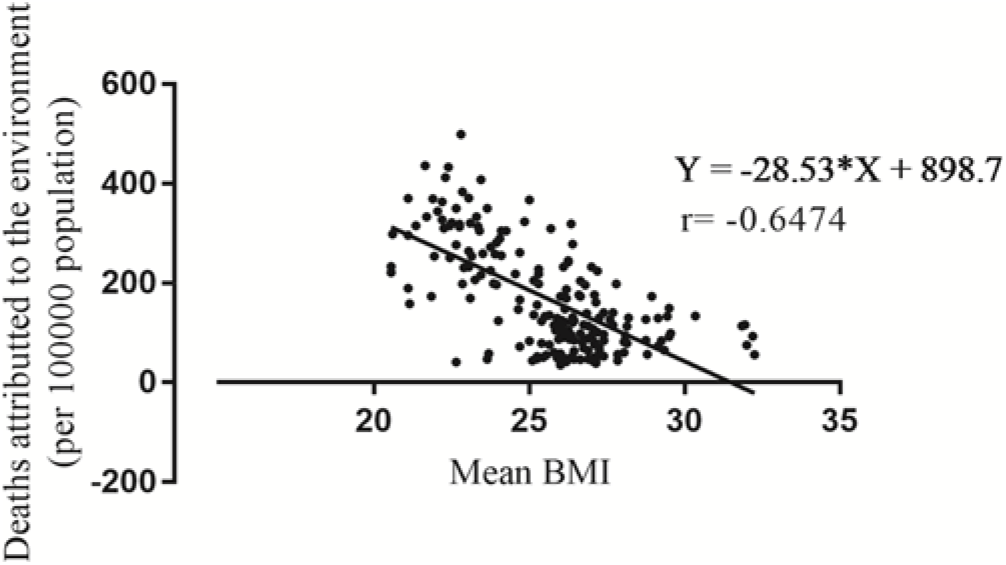
Taking the public disclosure of WHO data, we have crosschecked the absolute number of deaths attributable to the modifiable causes of environmental contamination, which include air, soil, and water pollution with chemical agents (among other modifiable environmental causes), using the population BMI average of 191 countries for 2016. Although the data did not discriminate exclusively between the levels of contamination by chemical agents or deaths caused by environmental contamination, there was a negative correlation between the average BMI and mortality rates caused by modifiable environmental causes per country (Fig. 1). This observed inverse relationship is in line with Baillie-Hamilton’s hypothesis, which suggests that, at high levels, environmental contaminants may have catabolic effects on the organism, especially in countries where the population was leaner; an increased incidence of the mortality rate being linked to environmental conditions was observed. In contrast, although at lower concentrations these pollutants contributed to a chronic weight gain, we observed that in countries where the BMI average was higher, the mortality attributed directly to the modifiable causes of environmental contamination during the period was lower. Altogether, these observations suggest that where exposure to environmental contamination is at low levels and likely to be chronic, thus not causing death in the short term, it may be involved in the onset of obesity and other NCDs.
Number of deaths attributable to modifiable causes of environmental contamination, including, but not limited to, air, soil and water pollution with chemical agents, plotted against the BMI average of the population of 191 countries for 2016. Data obtained from the WHO public disclosure. Data available at the Global Health Observatory data repository websites, available at http://apps.who.int/gho/data/node.main.A904?lang=en and http://apps.who.int/gho/data/node.main.162?lang=en, updated May 01, 2017. The analysis shows a negative correlation: in countries where people had a lower BMI, there were higher death rates attributable to modifiable causes of environmental contamination; while in countries where the mean BMI of the population was higher, there were lower death rates attributable to modifiable causes of environmental contamination.

The CNS is the organizer of physiological functions of peripheral organs; nevertheless, metabolism is under a strong influence of peripheral released hormones, such as insulin, cortisol, and adipokines. Leptin is an adipokine known for its role in the hypothalamus, influencing the neuronal nuclei that regulate feeding behavior and appetite control. In the last decade, it was established that, although a higher fat mass increased the circulating leptin levels, obesity is an inflammatory process, involving the hypothalamic nuclei and local leptin resistance.Reference de Git and Adan67 There is a strong possibility that environmental contaminants may impair this satiety control, driving toward increased calorie consumption and storage, as several evidences indicate that environmental contaminants cause inflammation in different tissues.Reference den Hartigh, Lame and Ham68 In addition, other studies have shown the effects of environmental contaminants on other organs, such as adipose tissue, and its possible role in promoting obesity.Reference Regnier and Sargis69
Additional evidence of the involvement of environmental pollutants in the obesity epidemic was presented by Li et al., through a study that showed the relationship between living near a highway, which means greater exposure to PM, and accumulation of abdominal and overall fat.Reference Li, Dorans and Wilker70 Heavy metals and organic compounds that are part of the PM may also target peripheral tissues involved in metabolism control, such as the pancreatic beta-cells, the only cells in the organism that produce and release insulin, leading to the development of T2D. The mechanisms by which PM leads beta-cells to a T2D-like state start with inflammation of the cells, followed by cell death either by necrosis or apoptosis.Reference Fabricio, Malta, Chango and De Freitas Mathias11 These events reduce the release of insulin in response to an increase in blood glucose levels, which could be aggravated by the obesity condition, as obesity also increases tissue inflammation and promotes peripheral insulin resistance and hyperinsulinemia, increasing beta-cell demands and accelerating the development of T2D. We then see that environmental pollutants can play a dual role in the development of NCDs, promoting obesity and, at the same time, aggravating other metabolic diseases.
Environment pollutants, neural plasticity, and DOHaD
As discussed, metabolic dysfunction in adulthood may result, at least in part, from poor or abundant caloric intake in developmental stages of life, especially perinatal, but also including adolescence, being influenced by the preconceptional period through epigenetic transmission. One of the suggested mechanisms of metabolic programming is the alteration or impairment of neural plasticity. Intrauterine growth restriction, caused by insufficient nutrition to the fetus, has been shown to alter the architecture and function of the hypothalamus, compromising appetite control and health in later life.Reference Li, McDonald, Wu, Nijland and Nathanielsz71 In contrast, early overnutrition, caused by excess caloric intake during perinatal life, alters DNA methylation in the hypothalamus, affecting gene expression and appetite control.Reference Plagemann, Harder and Brunn72
The DOHaD concept initially focused on nutrition, but was expanded by several researches that demonstrated the action of different agents in early-life developmental programming, including studies that specifically reported on the role of exposure to environmental contaminants in metabolic programming and later NCDs.Reference Haugen, Schug, Collman and Heindel73 Environmental contaminants such as PM, BPA, organophosphorus pesticides, and pharmaceutical drugs, among other pollutants, can also affect the development of neural plasticity and peripheral organs, predisposing the organism to long-term metabolic malfunction. Studies have indicated that the developing brain, exposed early to tiny PM through air pollution, is subject to neuroinflammation, increased brain oxidative stress, cognitive deficits, and neuropathological characteristics of Alzheimer’s disease and Parkinson’s disease.Reference Calderon-Garciduenas, Calderon-Garciduenas and Torres-Jardon74
A chronic exposure to BPA has been demonstrated to affect neural plasticity, decreasing synaptic density and negatively affecting synaptic interface in the brainReference Fang, Zhu and Gu75; besides, it has been shown that low levels of BPA can affect cellular mechanisms of the hippocampus related to learning and memory.Reference Chen, Wang and Xu76 Maternal exposure to BPA during gestation had an adverse effect on the synaptic structure of Sprague–Dawley male offspring at weaning, impairing locomotor activity, exploratory habits, and emotional behavior.Reference Wang, Niu and Zhu77 In addition, neonatal BPA exposure disrupted the hypothalamic expression of ER and Kiss1, a gene related to the release of gonadotrophins, which may affect hypothalamic organization and program reproductive deficiencies in adult life, especially in female rats.Reference Cao, Mickens and McCaffrey78
Organophosphate pesticides are also described to be neurotoxic. Developmental exposure to these substances adversely affects the peptidergic system of the hypothalamus with long-term effects, mainly in males.Reference Tait, Ricceri and Venerosi79 Low doses of acephate induced nitric oxide synthase overexpression in the hypothalamus of mice,Reference Naseh and Vatanparast80 while pre- and postnatal exposure to organophosphates impaired neurodevelopment in young humans, and boys seem to be more susceptible to these effects than girls at the same age.Reference Wang, Zhang and Ji81 Sexual differences have been observed in other studies with environmental pollutants that are endocrine disruptors. Ilagan et al. have reported sexual dimorphism in the gene expression of the liver after exposure to BPA in utero; such changes persisted into adulthood.Reference Ilagan, Mamillapalli, Goetz, Kayani and Taylor82 It seems that sexual differences in susceptibility to metabolic programming by endocrine disruptors are especially dependent on the type of disruptor (e.g. estrogenic, androgenic) and the exposure period, among other factors.
We have previously discussed the toxicology of anti-diabetic drugs widely used by diabetic and gestational diabetic patients, acting as a potent pollutant in the environment. The other pharmaceutical drug implicated in environmental pollution and considered a potential agent of developmental programming is acetaminophen (e.g., Paracetamol and Tylenol). Commonly used by the general public and frequently recommended by physicians for relief from pain and fever during pregnancy, acetaminophen is the drug most often found in surface water, and in high concentrations in groundwater.Reference Barra Caracciolo, Topp and Grenni59, Reference Lapworth, Baran, Stuart and Ward83 Acetaminophen, which may be toxic to the liver, appears to cross the placenta, as its levels in the fetal compartment have been found to be almost identical to the maternal levels. Exposure to acetaminophen during pregnancy can affect the early development of neural plasticity and is associated with attention-deficit/hyperactivity disorder (ADHD)Reference Gervin, Nordeng, Ystrom, Reichborn-Kjennerud and Lyle84, Reference Ystrom, Gustavson and Brandlistuen85 and autism spectrum disorders,Reference Liew, Ritz, Virk and Olsen86 which is a strong indicator of CNS and, potentially, metabolic programming.
The literature shows that exposure to environmental contaminants, even at low doses within the limits of NOAEL, is capable of promoting neural plasticity ruptures early in life that may contribute to metabolic malprogramming, which is in line with the DOHaD concept. In the light of the present evidences, it appears that this is a promising field of study, and although more data are needed, it is important to adjust the exposure limits of environmental pollutants to include the toxic potential of contaminants from the DOHaD perspective, which will be a factor relevant for better environmental monitoring.
Contaminant substances, DNA, and epigenetics
Environmental contaminants may damage DNA, evoking the DNA repair process. Failure to repair damaged DNA can lead to mutations that may trigger several diseases, including cancers.Reference Aoi87 In addition to the mutating process, environmental contaminants can epigenetically affect gene expression by nucleotide methylation and histone modification, which can overexpress one while silencing another gene, and post-transcriptional modifications through the action of non-coding RNAs, such as the micro-RNAs (miRNAs). The altered gene expression can affect the whole functioning of metabolism. The literature reports that organophosphate insecticides may alter methylation and hence the expression of various genes in different tissues and at different stages of life, including the sensitive phases of development.Reference Zhang, Wallace and Du88
Gestational exposure to environmental endocrine disruptors altered DNA methylation, decreased spermatogenic ability, and increased male infertility in offspring; these effects were transmitted through the male germline to subsequent generations.Reference Anway, Cupp, Uzumcu and Skinner89 An experimental study showed that BPA effects on the reproduction system may be passed down to subsequent generations through both oocytes and spermatozoids.Reference Akhter, Rahaman, Suzuki, Murono and Tokumoto90 In addition, chronic treatment with diazinon, an organophosphate insecticide, with doses lower than the LOAEL, led adult rats to infertility related to low motility and impaired spermatozoid morphology.Reference Adamkovicova, Toman and Martiniakova91
Epidemiological, clinical, and experimental data point to a strong relationship between infertility and obesity.Reference Sundaram, Mumford and Buck Louis92 As discussed earlier in this review, literature has shown associations between environmental pollutants and obesity, such as the study by Jerrett and colleagues, showing a positive correlation between traffic pollution that carries PM and elevated BMI.Reference Jerrett, McConnell and Wolch93 A dual role of environmental pollutants can be suggested in the impairment of fertility, through direct effects on the reproductive system, which has been shown to be correlated with DNA methylation, and contributing to the promotion of obesity.
PM exposure-induced lung cancer may be related to three-way epigenetic changes: DNA methylation, histone modification and miRNAs.Reference Li, Li, Bai and Song94 While DNA methylation and histone modifications alter gene expression pre-transcriptionally by silencing a gene, miRNAs act as a post-transcriptional regulator of its target mRNA, either by mRNA degradation and/or by repressing the translation process.Reference Catalanotto, Cogoni and Zardo95 In utero exposure to PM increased DNA methylation and changed the expression of key genes related to the cardiac function at birth and in adulthood, triggering an acute inflammatory response, chronic matrix remodeling, and alterations in Ca2+ handling proteins, leading to cardiac dysfunction in adulthood.Reference Tanwar, Gorr and Velten96
Some classes of pharmaceutical drugs, as mentioned previously, also exert epigenetic effects. The most common pharmacy product found in the environment, acetaminophen, has been associated with altered DNA methylation after long-term prenatal exposure in children diagnosed with ADHD.Reference Gervin, Nordeng, Ystrom, Reichborn-Kjennerud and Lyle84 Anti-diabetics have also been implicated in promoting epigenetic changes. Metformin, which acts to decrease glycemia mainly through the activation of protein kinase activated by AMP,Reference Puddu, Sanguineti and Mach97 is related to changes in miRNAs associated with T2D, reducing circulating levels of miR-221/222 and miR-140-5.Reference Zhou, Xu and Li98 Nevertheless, prenatal exposure to metformin induced poor regulation of GLUT4 mRNA in the adipose tissue of mice, contributing to insulin resistance and rapid increases in body weight and mesenteric fat in both sexes, when later exposed to a HFD.Reference Salomaki, Vahatalo and Laurila99
Conclusion
Here we reviewed the literature and discussed the role of environmental pollutants in developmental programming for obesity, MetS, and NCDs. Focusing mainly on four types of contaminants – BPA, organophosphorus pesticides, PM, and pharmaceutical drugs, all widely used and present in our environment – we learn that these pollutants are capable of affecting the CNS and important peripheral organs related to metabolism control, leading to hormonal disturbances, affecting neural plasticity and promoting various metabolic diseases. Exposure to environmental contaminants at developmental stages is seen as predisposing to later metabolic diseases that are underlined by epigenetic effects, which can be passed on to the next generations (Fig. 2).
Scheme of suggested mechanisms of how exposure to environmental contaminants in the developmental stages of life can affect the central and peripheral organs related to metabolism control, inducing epigenetic modifications and predisposing the body to later obesity, MetS and NCDs, which can also be transmitted to the next generations through epigenetic mechanisms.

Improving the quality of our environment is a hope of improving not only the quality of life of this generation but also the quality of life of the next generations, by lowering the rates of obesity, diabetes, cardiovascular diseases, and cancers. In fact, if we disregard that low doses of environmental contaminants are sufficient to cause epigenetic alterations and mutations, we will be compromising the future. There is clearly a need to think about the environment beyond the limits that we have today. The DOHaD concept points in this direction, and these evidences should be considered when developing new public health and environment monitoring policies.
Author ORCIDs
Douglas Lopes Almeida https://orcid.org/0000-0002-1596-9821
Acknowledgments
The authors thanks to all students, post-doc, and staff members of the Laboratory of Secretion Cell Biology and of the Laboratory of Mutagenesis, from the Biotechnology, Cell Biology and Genetic Departments of Maringá State University, for all their support and contributions.
Conflicts of Interest
The authors have nothing to disclosure.