



1. Introduction
1.1. The field
 $\mathbb {K}$
of formal power series over a finite field K

Let K be a finite field with q elements. We denote the ring of polynomials with coefficients in K by
 $K[x]$
and the quotient field of
 $K[x]$
by
 $K(x)$
. A non-Archimedean absolute value
 $|\cdot |$
is defined on
 $K(x)$
by setting
 $$ \begin{align*}|0|=0 \quad\text{and}\quad\bigg|\frac{a(x)}{b(x)}\bigg|= q^{\deg(a)-\deg(b)}, \end{align*} $$
where
 $a(x)$
and
 $b(x)$
are nonzero polynomials in
 $K[x]$
and
 $\deg (a)$
denotes the degree of
 $a(x)$
. The completion of
 $K(x)$
with respect to this absolute value is called the field of formal power series over K and is denoted by
 $\mathbb {K}$
. We uniquely extend the absolute value from
 $K(x)$
to
 $\mathbb {K}$
and use the same notation
 $|\cdot |$
. Any nonzero element
 $\xi $
of
 $\mathbb {K}$
is written uniquely as
 $$ \begin{align*}\xi=\sum_{n=r}^{\infty}a_nx^{-n},\end{align*} $$
where
 $a_n \in K $
for
 $n=r, r+1,\ldots $
with
 $ a_r\neq 0$
and r is the rational integer satisfying
 $|\xi |=q^{-r}$
. The elements of
 $\mathbb {K}$
are called formal power series.
Let
 $P(y)=a_0+a_1y+\cdots +a_ny^n$
be a nonzero polynomial with coefficients in
 $K[x]$
. The height
 $H(P)$
of
 $P(y)$
is defined as
 $H(P)=\max \{|a_0|, |a_1|,\ldots ,|a_n|\}$
and the degree of
 $P(y)$
is denoted by
 $\deg (P)$
. An element
 $\xi $
of
 $\mathbb {K}$
is called an algebraic formal power series if it is algebraic over
 $K(x)$
and
 $\xi $
is called a transcendental formal power series otherwise. Let
 $\alpha $
be an algebraic formal power series and
 $P(y)$
be its minimal polynomial over
 $K[x]$
. Then the height
 $H(\alpha )$
and the degree
 $\deg (\alpha )$
of
 $\alpha $
are defined by
 $H(P)$
and
 $\deg (P)$
, respectively. The roots of
 $P(y)$
are called the conjugates of
 $\alpha $
over
 $K(x)$
.
1.2. Mahler’s and Koksma’s classifications in
$\mathbb {K}$

In 1932, Mahler [Reference Mahler10] gave a classification of real numbers and separated transcendental real numbers into three disjoint classes called S-, T- and U-numbers. (See Bugeaud [Reference Bugeaud2] for detailed information about Mahler’s classification of real numbers.) Bundschuh [Reference Bundschuh3] carried over Mahler’s classification to the field
 $\mathbb {K}$
and separated transcendental formal power series into three disjoint classes as follows.
Let
 $\xi $
be a transcendental formal power series. For positive rational integers n and H, define the quantities
 $$ \begin{align*} w_n(H,\xi)=\min\{|P(\xi)|:P(y)\in K[x][y] \setminus \{0\},\,\deg(P)\leq n, H(P)\leq H\}, \end{align*} $$
 $$ \begin{align*}w_n(\xi)=\limsup_{H\rightarrow\infty}\;\displaystyle\frac{-\log w_n(H,\xi)}{\log H}\quad\text{and}\quad w(\xi)=\limsup_{n\rightarrow\infty}\;\frac{w_n(\xi)}{n}.\end{align*} $$
Bundschuh [Reference Bundschuh3] showed that
 $$ \begin{align*}w_n(H,\xi)<H^{-n}q^{n}\max\{1,|\xi|\}^n.\end{align*} $$
This implies that
 $w_n(\xi )\geq n$
for
 $n=1,2,\ldots $
and so
 $w(\xi )\geq 1$
. If
 $w_n(\xi )$
is infinite for some integer n, then denote by
 $\mu (\xi )$
the smallest such integer. If
 $w_n(\xi )$
is finite for
 $n =1,2,\ldots $
, put
 $\mu (\xi )=\infty $
. Then
 $\xi $
is said to be:
-
• an S-number if
$1\leq w(\xi )<\infty $
and
$\mu (\xi )=\infty $
; -
• a T-number if
$w(\xi )=\infty $
and
$\mu (\xi )=\infty $
; -
• a U-number if
$w(\xi )=\infty $
and
$\mu (\xi )<\infty $
.


Further,
 $\xi $
is called a
 $U_m$
-number if
 $\mu (\xi )=m$
. Oryan [Reference Oryan13] gave the first explicit examples of
 $U_m$
-numbers in
 $\mathbb {K}$
. Recently, Kekeç [Reference Kekeç7, Reference Kekeç8] found further explicit examples of U-numbers in
 $\mathbb {K}$
by applying the method of Oryan [Reference Oryan13].
In 1939, Koksma [Reference Koksma9] gave another classification of real numbers and separated transcendental real numbers into three disjoint classes called
 $S^*$
-,
 $T^*$
- and
 $U^*$
-numbers. Bugeaud [Reference Bugeaud2, Section 9.4] introduced Koksma’s classification in the field
 $\mathbb {K}$
. According to Koksma’s classification in
 $\mathbb {K}$
, transcendental formal power series are separated into three disjoint classes as follows.
Let
 $\xi $
be a transcendental formal power series. For positive rational integers n and H, define the quantities
 $$ \begin{align*}w_n^*(H,\xi)\!=\!\min\{ |\xi-\alpha|\, : \alpha \,\text{is an algebraic formal power series}, \, \deg(\alpha)\leq n, H(\alpha)\leq H\},\end{align*} $$
 $$ \begin{align*}w_n^*(\xi)=\limsup_{H\rightarrow\infty}\;\displaystyle\frac{-\log (H\:w_n^*(H,\xi) )}{\log H}\quad \text{and} \quad w^*(\xi)=\limsup_{n\rightarrow\infty}\;\frac{w_n^*(\xi)}{n}.\end{align*} $$
Denote by
 $\mu ^*(\xi )$
the smallest integer n such that
 $w_n^*(\xi )=\infty $
if such an integer exists and write
 $\mu ^*(\xi )=\infty $
otherwise. Then
 $\xi $
is called:
-
• an
$S^*$
-number if
$0< w^{*}(\xi )<\infty $
and
$\mu ^{*}(\xi )=\infty $
; -
• a
$T^*$
-number if
$w^{*}(\xi )=\infty $
and
$\mu ^{*}(\xi )=\infty $
; -
• a
$U^*$
-number if
$w^{*}(\xi )=\infty $
and
$\mu ^{*}(\xi )<\infty $
.


Moreover,
 $\xi $
is called a
 $U_m^*$
-number if
 $\mu ^*(\xi )=m$
. Recently, Ooto [Reference Ooto12] proved that a transcendental formal power series
 $\xi $
in
 $\mathbb {K}$
is a
 $U_m$
-number if and only if it is a
 $U_m^*$
-number. (See Bugeaud [Reference Bugeaud2] for further information and references on Koksma’s classification in
 $\mathbb {R}$
and in
 $\mathbb {K}$
.)
1.3. Continued fractions in
$\mathbb {K}$

Many concepts in the field
 $\mathbb {R}$
carry over to the field
 $\mathbb {K}$
. One of them is the fact that any element
 $\xi $
of
 $\mathbb {K}$
with
 $|\xi |\geq 1$
can be written as a continued fraction as follows.
Let
 $\xi $
be a formal power series with
 $|\xi |\geq 1$
. Then
 $\xi $
is written uniquely as
 $$ \begin{align*}\xi=a_mx^m+a_{m-1}x^{m-1}+\cdots+a_1x+a_0+a_{-1}x^{-1}+a_{-2}x^{-2}+\cdots,\end{align*} $$
where
 $a_i\in K$
for
 $i=m,m-1,\ldots $
with
 $a_m\neq 0$
and m is the nonnegative rational integer satisfying
 $|\xi |=q^{m}$
. Put
 $$ \begin{align*}\xi=[\xi]+(\xi),\end{align*} $$
where
 $$ \begin{align*}[\xi]:=a_mx^m+a_{m-1}x^{m-1}+\cdots+a_1x+a_0,\quad (\xi):=a_{-1}x^{-1}+a_{-2}x^{-2}+\cdots.\end{align*} $$
Let
 $b_0:=[\xi ]\in K[x]$
. Note that
 $|b_0|=|\xi |\geq 1$
. If
 $(\xi )=0$
, stop. If
 $(\xi )\neq 0$
, write
 $$ \begin{align*}\xi=b_0+\frac{1}{\xi_1},\end{align*} $$
where
 $\xi _1=1/(\xi ) \in \mathbb {K}$
with
 $|\xi _1|>1$
. Let
 $b_1:=[\xi _1]\in K[x]$
. Note that
 $|b_1|=|\xi _1|>1$
. If
 $(\xi _1)=0$
, stop. If
 $(\xi _1)\neq 0$
, write
 $$ \begin{align*}\xi=b_0+\frac{1}{b_1+\dfrac{1}{\xi_2}},\end{align*} $$
where
 $\xi _2=1/(\xi _1)\in \mathbb {K}$
with
 $|\xi _2|>1$
. Let
 $b_2:=[\xi _2]\in K[x]$
. Note that
 $|b_2|=|\xi _2|>1$
. If
 $(\xi _2)=0$
, stop. If
 $(\xi _2)\neq 0$
, continue in this way. Thus, we get the unique representation
 $$ \begin{align*}\xi=\langle b_0, b_1,\ldots,b_{n-1},\xi_n\rangle :=b_0+\frac{1}{b_1+\dfrac{1}{\ddots+\dfrac{1}{b_{n-1}+\dfrac{1}{\xi_n}}}},\end{align*} $$
where
 $b_i=[\xi _i]\in K[x]$
with
 $|b_i|=|\xi _i|>1$
for
 $i=1,2,\ldots ,n-1$
and
 $\xi _{i+1}=1/(\xi _{i})\in \mathbb {K}$
for
 $i=0,1,\ldots ,n-1$
with
 $\xi _{0}:=\xi $
.
If
 $(\xi _n)=0$
for some n, then the continued fraction expansion of
 $\xi $
is finite and
 $\xi $
is written uniquely as
 $$ \begin{align*}\xi=\langle b_0, b_1, \ldots, b_{n}\rangle :=b_0+\frac{1}{b_1+\dfrac{1}{\ddots+\dfrac{1}{b_n}}}. \end{align*} $$
A formal power series
 $\xi $
is in
 $K(x)$
if and only if its continued fraction expansion is finite.
Let
 $(\xi _n)\neq 0$
for all n; in other words, let the continued fraction expansion of
 $\xi $
be infinite. Define
 $p_{-1}=1$
,
 $p_0=b_0$
,
 $q_{-1}=0$
,
 $q_0=1$
and
 $$ \begin{align*}p_n=b_np_{n-1}+p_{n-2}, \quad q_n=b_nq_{n-1}+q_{n-2} \quad (n=1,2,\ldots).\end{align*} $$
By induction on n, it is easily seen that
 $$ \begin{align*}\frac{p_n}{q_n}=\langle b_0, b_1, \ldots, b_{n}\rangle \end{align*} $$
and
 $p_n/q_n$
is called the nth convergent of the continued fraction expansion of
 $\xi $
. Moreover, by induction on n, we have the following properties:
-
(1)
$({\beta p_n+p_{n-1}})/({\beta q_n+q_{n-1}})=\langle b_0, b_1,\ldots ,b_{n}, \beta \rangle \quad (n=0,1,2,\ldots )$
, where
$\beta \in \mathbb {K}\backslash \{0\}$
; -
(2)
$p_nq_{n-1}-p_{n-1}q_n=(-1)^{n-1} \quad (n=0,1,2,\ldots )$
; -
(3)
$|q_n|>|q_{n-1}| \quad (n=0,1,2,\ldots )$
; -
(4)
$|q_n|=|b_1b_2 \cdots b_{n}| \quad (n=1,2,\ldots )$
; -
(5)
$|p_n|=|b_0b_1b_2 \cdots b_{n}|=|b_0||q_n| \quad (n=0,1,2,\ldots )$
; -
(6)
$\xi -({p_n}/{q_n})={(-1)^n}/({q_n(\xi _{n+1}q_n+q_{n-1})}) \quad (n=1,2,\ldots )$
; -
(7)
$|\xi -({p_n}/{q_n})|={1}/({|b_{n+1}||q_{n}|^{2}})<{1}/{|q_{n}|^{2}} \quad (n=1,2,\ldots )$
.


The properties (3) and (7) imply that
 $\lim _{n\to \infty } p_n/q_n=\xi $
. So, it is meaningful to write
 $$ \begin{align*}\xi=\lim_{n\to\infty} \langle b_0, b_1, b_2,\ldots, b_n\rangle =: \langle b_0, b_1, b_2,\ldots\rangle \end{align*} $$
An important result on infinite continued fractions in
 $\mathbb {K}$
is that the continued fraction expansion of a formal power series
 $\alpha $
is infinite and periodic if and only if
 $\alpha $
is algebraic over
 $K(x)$
with
 $\deg (\alpha )=2$
. (See [Reference Chaichana, Laohakosol and Harnchoowong4, Reference Ooto12, Reference Schmidt14] for detailed information, proofs and further results on continued fractions in
 $\mathbb {K}$
.)
1.4. Construction of our main results
In 1982, Alnıaçık [Reference Alnıaçık1, Theorem] gave a method to construct explicit examples of real
 $U_m$
-numbers by using continued fraction expansions of real algebraic numbers of degree
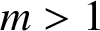
 $m>1$
. In the present paper, we establish the
 $\mathbb {K}$
-analogue of this result.
Theorem 1.1. Let
 $\alpha $
be an algebraic formal power series with
 $|\alpha |\geq 1$
,
 $\deg (\alpha )=m>1$
and continued fraction expansion
 $$ \begin{align} \alpha=\langle a_0,a_1,a_2,\ldots\rangle. \end{align} $$
Let
 $\{r_{j}\}_{j=0}^{\infty }$
and
 $\{s_{j}\}_{j=0}^{\infty }$
be two infinite sequences of nonnegative rational integers satisfying
 $$ \begin{align*} 0=r_{0}< s_0< r_{1}<s_{1}<r_{2}<s_{2}< r_{3}<s_{3}< \cdots \quad\text{and}\quad r_{n+1}-s_{n}\geq2. \end{align*} $$
Denote by
 $p_n/q_n$
the nth convergent of the continued fraction (1.1) and assume that
 $$ \begin{align} \mathrm{(a)} \ \displaystyle\lim_{n\to\infty} \frac{\log|q_{s_n}|}{\log|q_{r_n}|}=\infty, \quad \mathrm{(b)} \ \displaystyle\limsup_{n\to\infty}\frac{\log|q_{r_{n+1}}|}{\log|q_{s_n}|}<\infty. \end{align} $$
Define
 $b_j\in K[x] \ (j=0,1,\ldots )$
by
 $$ \begin{align} \begin{array}{@{}ll} b_j= & \left\{ \begin{array}{@{}lll}a_j, & r_n\leq j\leq s_n \ \ \ (n=0,1,\ldots),\\ v_j, &s_n<j<r_{n+1} \ (n=0,1,\ldots), \end{array} \right. \end{array} \end{align} $$
where
 $v_j\in K[x]$
with
 $1<|v_j|\leq S_1 |a_j|^{S_2}$
are such that
 $\sum _{j=s_n+1}^{r_{n+1}-1}|a_j-v_j|\neq 0$
and
 $S_1$
and
 $S_2$
are fixed positive rational integers. Then the formal power series
 $\xi \in \mathbb {K}$
with continued fraction expansion
 $$ \begin{align*}\xi=\langle b_0,b_1,b_2,\ldots\rangle \end{align*} $$
is a
 $U_m$
-number.
We denote by
 $\widehat {\mathbb {K}}$
the completion of the algebraic closure of
 $\mathbb {K}$
with respect to
 $|\cdot |$
. The height
 $H(P)$
of a polynomial
 $P(y)$
in
 $\widehat {\mathbb {K}}[y]$
and the height
 $H(\alpha )$
, the degree
 $\deg (\alpha )$
and the conjugates of an element
 $\alpha $
in
 $\widehat {\mathbb {K}}$
which is algebraic over
 $K(x)$
, are defined exactly as in Section 1.1.
In 1973, İçen [Reference İçen6, page 25] gave an effective upper bound for the usual height of a complex algebraic number dependent on other complex algebraic numbers. Our second result in the present paper is the following
 $\widehat {\mathbb {K}}$
-analogue of İçen’s result, which we apply to prove Theorem 1.1.
Theorem 1.2. Let L be a finite extension of degree m over
 $K(x)$
and
 $\alpha _1,\alpha _2,\ldots ,\alpha _k$
be in L. Let
 $\eta \in \widehat {\mathbb {K}}$
be algebraic over
 $K(x)$
. Assume that
 $F(\eta ,\alpha _1,\ldots ,\alpha _k)=0$
, where
 $F(y,y_1,\ldots ,y_k)$
is a polynomial in
 $y, y_{1},\ldots ,y_{k}$
over
 $K[x]$
with degree at least one in y. Then
 $$ \begin{align*} \deg(\eta)\leq dm\end{align*} $$
and
 $$ \begin{align*}H(\eta)\leq H^mH(\alpha_1)^{l_{1}m}\cdots H(\alpha_k)^{l_{k}m},\end{align*} $$
where d is the degree of
 $F(y,y_1,\ldots ,y_k)$
in y,
 $l_j$
is the degree of
 $F(y,y_1,\ldots ,y_k)$
in
 $y_j\ (j=1,\ldots ,k)$
and H is the maximum of the absolute values of the coefficients of
 $F(y,y_1,\ldots ,y_k)$
.
In Section 2, we cite some lemmas we need to prove Theorem 1.1. We prove Theorem 1.2 in Section 3 and Theorem 1.1 in Section 4.
2. Auxiliary results
Lemma 2.1 (Müller [Reference Müller11, page 291]).
Let
 $P(y)$
and
 $Q(y)$
be nonzero polynomials in
 $\widehat {\mathbb {K}}[y]$
. Then
 $$ \begin{align*}H(P \cdot Q) = H(P)\cdot H(Q).\end{align*} $$
Lemma 2.2 (Müller [Reference Müller11, page 293]).
Let
 $\alpha $
and
 $\beta $
be two distinct elements in
 $\widehat {\mathbb {K}}$
, which are algebraic over
 $K(x)$
. Then
 $$ \begin{align*} |\alpha-\beta|\geq H(\alpha)^{-\deg(\beta)}H(\beta)^{-\deg(\alpha)}. \end{align*} $$
The following lemma is a
 $\mathbb {K}$
-analogue of Alnıaçık [Reference Alnıaçık1, Lemma IV].
Lemma 2.3. Let
 $P_1/Q_1$
and
 $P_2/Q_2$
be two elements in
 $K(x)$
with continued fraction expansions
 $$ \begin{align*}\frac{P_1}{Q_1}=\langle a_0,a_1,\ldots,a_n\rangle, \quad \frac{P_2}{Q_2}= \langle b_0,b_1,\ldots,b_n\rangle \quad (|a_0|\geq1, \:|b_0|\geq1).\end{align*} $$
Suppose that
 $$ \begin{align} |b_j|\leq S_1|a_j|^{S_2} \quad (j=0,1,\ldots,n), \end{align} $$
where
 $S_1$
and
 $S_2$
are fixed positive rational integers. Then
 $$ \begin{align} \max\{|P_2|, |Q_2|\}\leq S_1 \max\{|P_1|, |Q_1|\}^{S_2+\log_2 S_1}. \end{align} $$
Proof. We have
 $$ \begin{align*} |P_2|= |b_0||Q_2|=\prod_{j=0}^{n}|b_j|. \end{align*} $$
Hence, using (2.1),
 $$ \begin{align} \max\{ |P_2|, |Q_2| \}=\prod_{j=0}^{n}|b_j|\leq S_1^{n+1}\bigg(\prod_{j=0}^{n}|a_j|\bigg)^{S_2}. \end{align} $$
Since
 $|P_1|=|a_0||a_1|\cdots |a_n|$
and
 $|Q_1|\geq 2^{n},$
it follows from (2.3) that
 $$ \begin{align*} \max\{ |P_2|, |Q_2| \}\leq 2^{(n+1)\log_2 S_1}\bigg(\prod_{j=0}^{n}|a_j|\bigg)^{S_2}\leq (2|Q_1|)^{\log_2 S_1} |P_1|^{S_2}.\end{align*} $$
So, we get (2.2).
In the classical case due to Schneider [Reference Schneider15, Hilfssatz 1, page 5], it is well known that the inequality
 $|\alpha |\leq (H(\alpha )/|a|)+1$
holds for a complex algebraic number
 $\alpha $
, where
 $H(\alpha )$
denotes its usual height, a is the leading coefficient of its minimal polynomial over
 $\mathbb {Z}$
and
 $|\cdot |$
denotes the usual absolute value on
 $\mathbb {C}$
. The following lemma is the
 $\widehat {\mathbb {K}}$
-analogue of this well-known result. Its proof can be given easily by following that of Schneider [Reference Schneider15, Hilfssatz 1] and using the property of the non-Archimedean absolute value.
Lemma 2.4. Let
 $\alpha \in \widehat {\mathbb {K}}$
be algebraic over
 $K(x)$
and a be the leading coefficient of its minimal polynomial over
 $K[x]$
. Then
 $$ \begin{align*} |\alpha|\leq\frac{H(\alpha)}{|a|}. \end{align*} $$
3. Proof of Theorem 1.2
We prove Theorem 1.2 by adapting the method of the proof of İçen [Reference İçen5, Lemma 1, page 71] to the non-Archimedean case. Let
 $a_{j}$
be the leading coefficient of the minimal polynomial of
 $\alpha _j\ (j=1,\ldots ,k)$
over
 $K[x]$
. Denote the field conjugates of
 $\alpha _j\ (\kern3ptj=1,\ldots ,k)$
for L by
 $\alpha _j=\alpha _j^{(1)},\ldots ,\alpha _j^{(m)}$
. These are the conjugates of
 $\alpha _j$
over
 $K(x)$
, each repeated
 $m/\deg (\alpha _j)$
times. Then
 $G(\eta )=0$
, where
 $$ \begin{align} G(y)=\prod_{i=1}^{m}[a_{1}^{l_1}\cdots a_{k}^{l_k}F(y,\alpha_1^{(i)},\ldots,\alpha_k^{(i)})] \end{align} $$
is a polynomial in y with coefficients in
 $K[x]$
and
 $1\leq \deg (G)\leq dm$
. Consequently,
 $\deg (\eta )\leq dm$
.
On the other hand,
 $$ \begin{align} H(F(y,\alpha_1^{(i)},\ldots,\alpha_k^{(i)}))\leq H\max\{1, {\alpha_1}\}^{l_1}\cdots\max\{1, {\alpha_k}\}^{l_k}, \end{align} $$
where
 $$ \begin{align*} {\alpha_j}=\max\{|\alpha_j^{(1)}|,\ldots,|\alpha_j^{(m)}|\} \quad (j=1,\ldots,k). \end{align*} $$
By (3.1), (3.2) and Lemma 2.1,
 $$ \begin{align} H(G)\leq H^m(|a_{1}|\max\{1, {\alpha_1}\})^{l_1m}\cdots(|a_{k}|\max\{1, {\alpha_k}\})^{l_km}. \end{align} $$
It follows from Lemma 2.4 that
 $$ \begin{align*} {\alpha_j}\leq\frac{H(\alpha_j)}{|a_{j}|} \quad (j=1,\ldots,k) \end{align*} $$
and hence
 $$ \begin{align} |a_{j}|\max\{1, {\alpha_j}\}\leq H(\alpha_j) \quad (j=1,\ldots,k). \end{align} $$
 $$ \begin{align*} H(G)\leq H^m H(\alpha_1)^{l_1m}\cdots H(\alpha_k)^{l_km}. \end{align*} $$
Since
 $G(y)\in K[x][y]$
and
 $G(\eta )=0$
, the minimal polynomial of
 $\eta $
over
 $K[x]$
divides
 $G(y)$
. Therefore, it follows from Lemma 2.1 that
 $H(\eta )\leq H(G)$
. This gives
 $$ \begin{align*} H(\eta)\leq H^m H(\alpha_1)^{l_{1}m}\cdots H(\alpha_k)^{l_{k}m}. \end{align*} $$
4. Proof of Theorem 1.1
We prove Theorem 1.1 by adapting the method of the proof of Alnıaçık [Reference Alnıaçık1, Theorem] to the field
 $\mathbb {K}$
. Define the algebraic formal power series
 $$ \begin{align*} \alpha_{r_n}:= \langle b_0,\ldots,b_{r_{n}},a_{r_{n}+1},a_{r_{n}+2},\ldots \rangle \in K(x)(\alpha) \quad (n=0,1,\ldots), \end{align*} $$
 $$ \begin{align*} \beta_{r_n}:= \langle a_{r_n+1},a_{r_n+2},\ldots \rangle \in K(x)(\alpha) \quad (n=0,1,\ldots). \end{align*} $$
Note that
 $\deg (\alpha _{r_n})=\deg (\kern3pt\beta _{r_n})=m \ (n=0,1,\ldots )$
. Then
 $$ \begin{align*} \alpha= \langle a_0,a_1,\ldots,a_{r_n},\beta_{r_n} \rangle =\frac{p_{r_{n}}\beta_{r_{n}}+p_{r_{n}-1}}{q_{r_{n}}\beta_{r_{n}}+q_{r_{n}-1}} \end{align*} $$
and therefore
 $$ \begin{align*} \alpha q_{r_n}\beta_{r_n}+\alpha q_{{r_n}-1}-p_{r_n}\beta_{r_n}-p_{{r_n}-1}=0 \quad(n=0,1,\ldots). \end{align*} $$
We apply Theorem 1.2 with
 $$ \begin{align*}F(y,y_1)= q_{r_n}y_1y+q_{{r_n}-1}y_1-p_{r_n}y-p_{{r_n}-1}\in K[x][y,y_1], \quad \eta=\beta_{r_n}, \:\: \alpha_1=\alpha \end{align*} $$
and get
 $$ \begin{align*}H(\beta_{r_n})\leq H(\alpha)^m\max\{|p_{r_n}|,|q_{r_n}|\}^m\quad(n=0,1,\ldots).\end{align*} $$
Using the equality
 $|p_{r_n}|=|a_0||q_{r_n}| \ (n=0,1,\ldots )$
,
 $$ \begin{align} H(\beta_{r_n})\leq c_1 |q_{r_n}|^m \quad(n=0,1,\ldots), \end{align} $$
where
 $c_1=H(\alpha )^{m}|a_0|^{m}$
. Put
 $$ \begin{align*} \frac{p_n^{\prime}}{q_n^{\prime}}:= \langle b_0,b_1,\ldots,b_n \rangle \quad (n=0,1,\ldots). \end{align*} $$
Then
 $$ \begin{align*} \alpha_{r_n}= \langle b_0,b_1,\ldots,b_{r_n},\beta_{r_n} \rangle =\frac{p_{r_{n}}^{\prime}\beta_{r_{n}}+p_{r_{n}-1}^{\prime}}{q_{r_{n}}^{\prime}\beta_{r_{n}}+q_{r_{n}-1}^{\prime}} \end{align*} $$
and so
 $$ \begin{align*} \alpha_{r_n}q_{r_n}^{\prime}\beta_{r_n}+\alpha_{r_n}q_{{r_n}-1}^{\prime}-p_{r_n}^{\prime}\beta_{r_n}-p_{{r_n}-1}^{\prime}=0 \quad(n=0,1,\ldots). \end{align*} $$
We again apply Theorem 1.2 with
 $$ \begin{align*}F(y,y_1)= q_{r_n}^{\prime}y_{1}y+q_{{r_n}-1}^{\prime}y-p_{r_n}^{\prime}y_{1}-p_{{r_n}-1}^{\prime}\in K[x][y,y_1], \quad \eta=\alpha_{r_n}, \:\: \alpha_1=\beta_{r_n} \end{align*} $$
and, using (4.1), we find
 $$ \begin{align} H(\alpha_{r_n})\leq c_{1}^{m} |q_{r_n}|^{m^{2}} \max\{|p_{r_n}^{\prime}|,|q_{r_n}^{\prime}|\}^m \quad (n=0,1,\ldots). \end{align} $$
By (1.3),
 $$ \begin{align*}|b_j|\leq S_1 |a_j|^{S_2} \quad (\kern3ptj=0,1,\ldots).\end{align*} $$
Hence, we can apply Lemma 2.3 with
 $P_1/Q_1=p_{r_n}/q_{r_n}$
and
 $P_2/Q_2=p_{r_n}^{\prime }/q_{r_n}^{\prime }$
and obtain
 $$ \begin{align*}\max\{|p_{r_n}^{\prime}|,|q_{r_n}^{\prime}|\}\leq S_1\max\{|p_{r_n}|,|q_{r_n}|\}^{S_2+\log_2S_1}.\end{align*} $$
Using this inequality and the relation
 $|p_{r_n}|=|a_0||q_{r_n}|$
in (4.2), we see that
 $$ \begin{align*} H(\alpha_{r_n})\leq c_2|q_{r_n}|^{c_3-1} \quad (n=0,1,\ldots), \end{align*} $$
where
 $$ \begin{align*}c_2=c_1^{m}S_1^{m}|a_0|^{mS_2+m\log_2S_1},\quad c_3=1+m^2+mS_2+m\log_2S_1.\end{align*} $$
Since
 $\lim _{n\to \infty }|q_{r_n}|=\infty $
, there is a positive integer
 $n_1$
such that
 $c_{2}\leq |q_{r_n}|$
and therefore
 $$ \begin{align} H(\alpha_{r_n})\leq |q_{r_n}|^{c_3} \end{align} $$
for all
 $n\geq n_1$
.
We now wish to show that
 $\mu ^*(\xi )=m$
. Thus, we approximate
 $\xi $
by the algebraic formal power series
 $\alpha _{r_n}$
. It follows from (1.3) and the properties of continued fractions in
 $\mathbb {K}$
that
 $$ \begin{align} |\xi-\alpha_{r_n}|\leq\max\bigg\{\bigg|\xi-\frac{p_{s_n}^{\prime}}{q_{s_n}^{\prime}}\bigg|, \bigg|\alpha_{r_n}-\frac{p_{s_n}^{\prime}}{q_{s_n}^{\prime}}\bigg|\bigg\}<\frac{1}{|q_{s_n}^{\prime}|^2} \quad (n=0,1,\ldots). \end{align} $$
Set
 $$ \begin{align*}\frac{R_{n}}{S_{n}}:= \langle a_{r_n+1},a_{r_n+2},\ldots,a_{s_n} \rangle,\end{align*} $$
so that
 $$ \begin{align*} \frac{p_{s_n}}{q_{s_n}}= \bigg\langle a_0, a_1, \ldots,a_{r_n},\frac{R_{n}}{S_{n}} \bigg\rangle =\frac{p_{r_{n}}R_{n}+p_{r_{n}-1}S_{n}}{q_{r_{n}}R_{n}+q_{r_{n}-1}S_{n}} \end{align*} $$
and
 $$ \begin{align*} \frac{p_{s_n}^{\prime}}{q_{s_n}^{\prime}}= \bigg\langle b_0, b_1, \ldots,b_{r_n},\frac{R_{n}}{S_{n}} \bigg\rangle =\frac{p_{r_{n}}^{\prime}R_{n}+p_{r_{n}-1}^{\prime}S_{n}}{q_{r_{n}}^{\prime}R_{n}+q_{r_{n}-1}^{\prime}S_{n}}. \end{align*} $$
These equalities together with
 $|R_{n}|=|a_{r_n+1}||S_{n}|>|S_{n}|$
enable us to write
 $$ \begin{align*} |q_{s_n}|=|q_{r_n}R_{n}+q_{r_n-1}S_{n}|=|q_{r_n}||R_{n}|=|q_{r_n}||a_{r_n+1}||S_{n}| \end{align*} $$
and
 $$ \begin{align*} |q_{s_n}^{\prime}|=|q_{r_n}^{\prime}R_{n}+q_{r_n-1}^{\prime}S_{n}|=|q_{r_n}^{\prime}||R_{n}|>|S_{n}|. \end{align*} $$
Then
 $$ \begin{align} |q_{s_n}|<|a_{r_n+1}||q_{r_n}||q_{s_n}^{\prime}|. \end{align} $$
We infer from Lemma 2.2 and the equality
 $|p_{r_n}|=|a_0||q_{r_n}|$
that
 $$ \begin{align} \bigg|\alpha-\frac{p_{r_n}}{q_{r_n}}\bigg|\geq\frac{1}{c_4|q_{r_n}|^m}, \end{align} $$
where
 $c_4=|a_0|^{m}H(\alpha )$
. On the other hand,
 $$ \begin{align} \bigg|\alpha-\frac{p_{r_n}}{q_{r_n}}\bigg |=\frac{1}{|a_{r_n+1}||q_{r_n}|^2}. \end{align} $$
 $$ \begin{align} |q_{s_n}|< c_4|q_{r_n}|^{m-1}|q_{s_n}^{\prime}|. \end{align} $$
By (4.8) and (1.2)(a), there exists a positive integer
 $n_2$
such that, for all
 $n\geq n_2$
,
 $$ \begin{align} |q_{s_n}|<|q_{s_n}^{\prime}|^2. \end{align} $$
We deduce from (4.3), (4.4) and (4.9) that
 $$ \begin{align*} |\xi-\alpha_{r_n}|<\frac{1}{|q_{s_n}^{\prime}|^{2}}<\frac{1}{|q_{s_n}|}\leq \frac{1}{H(\alpha_{r_n})^{\log|q_{s_n}|/(c_3\log|q_{r_n}|)}} \quad (n\geq\max\{n_1, n_2\}). \end{align*} $$
Since
 $\alpha _{r_n} \ (n=0,1,\ldots )$
are algebraic formal power series with
 $\deg (\alpha _{r_n})=m$
and (1.2)(a) holds, this implies that
 $\xi $
is a U-number in
 $\mathbb {K}$
with
 $$ \begin{align} \mu^*(\xi)\leq m. \end{align} $$
We will complete the proof by showing that
 $\mu ^*(\xi ) \geq m$
. Let
 $\beta $
be any algebraic formal power series in
 $\mathbb {K}$
with
 $1\leq \deg (\beta )\leq m-1$
and with sufficiently large height
 $H(\beta )$
. It follows from Lemma 2.2 that
 $$ \begin{align} |\beta-\alpha_{r_n}|\geq \frac{1}{H(\beta)^{m}H(\alpha_{r_n})^{m-1}}. \end{align} $$
 $$ \begin{align} |\beta-\alpha_{r_n}|\geq \frac{1}{H(\beta)^{m}|q_{r_n}|^{c_{5}}}\quad (n\geq n_1), \end{align} $$
where
 $c_5=c_3(m-1)>1$
. By (1.2)(b), there exists a real number
 $T>1$
such that
 $$ \begin{align} |q_{s_n}|^{T}\geq |q_{r_{n+1}}|. \end{align} $$
Using (4.4), (4.9), (4.12) and (4.13) in the inequality
 $$ \begin{align*}|\xi-\beta|\geq|\beta-\alpha_{r_n}|-|\xi-\alpha_{r_n}|,\end{align*} $$
we obtain
 $$ \begin{align} |\xi-\beta|\geq\frac{1}{H(\beta)^{m}|q_{r_n}|^{c_5}}-\frac{1}{|q_{r_{n+1}}|^{1/T}}\quad (n\geq\max\{n_1, n_2\}). \end{align} $$
Let j be the unique positive integer satisfying
 $$ \begin{align*} |q_{r_j}|\leq H(\beta)<|q_{r_{j+1}}|. \end{align*} $$
If
 $|q_{r_j}|\leq H(\beta )<|q_{r_{j+1}}|^{1/(T(m+c_5+1))}$
, then we take
 $n=j$
in (4.14) and get
 $$ \begin{align} |\xi-\beta|\geq \frac{1}{2H(\beta)^{m+c_5}}. \end{align} $$
If
 $|q_{r_{j+1}}|^{1/(T(m+c_5+1))}\leq H(\beta )<|q_{r_{j+1}}|$
, then we take
 $n=j+1$
in (4.14) and get
 $$ \begin{align} |\xi-\beta|\geq\frac{1}{H(\beta)^{m+c_5T(m+c_5+1)}}-\frac{1}{H(\beta)^{(\log|q_{r_{j+2}}|/\log|q_{r_{j+1}}|)(1/T)}}. \end{align} $$
Using (1.2)(a) in (4.16), we obtain
 $$ \begin{align} |\xi-\beta|\geq\frac{1}{2H(\beta)^{m+c_5T(m+c_5+1)}}. \end{align} $$
This is possible because we can take j sufficiently large in (4.16) since
 $H(\beta )$
is sufficiently large. We infer from (4.15) and (4.17) that
 $$ \begin{align*} |\xi-\beta|\geq\frac{1}{2H(\beta)^{m+c_5T(m+c_5+1)}} \end{align*} $$
for all algebraic formal power series
 $\beta $
in
 $\mathbb {K}$
with
 $\deg (\beta )\leq m-1$
and with sufficiently large height
 $H(\beta )$
. This gives
 $$ \begin{align} \mu^*(\xi)\geq m. \end{align} $$
We deduce from (4.10) and (4.18) that
 $\mu ^*(\xi )=m$
. Thus,
 $\xi $
is a
 $U_{m}^{*}$
-number in
 $\mathbb {K}$
. This implies that
 $\xi $
is a
 $U_{m}$
-number in
 $\mathbb {K}$
since the set of
 $U_{m}$
-numbers coincides with the set of
 $U_{m}^{*}$
-numbers.
We give the following example to illustrate Theorem 1.1.
Example 4.1. Let
 $\alpha $
be an algebraic formal power series with continued fraction expansion
 $$ \begin{align*}\alpha= \langle a_0, a_1, a_2, a_3,\ldots \rangle= \langle 1,x,x,x,\ldots\rangle.\end{align*} $$
Note that
 $\deg (\alpha )=2$
. Suppose that the two infinite sequences of nonnegative rational integers
 $\{r_{j}\}_{j=0}^\infty $
and
 $\{s_{j}\}_{j=0}^\infty $
are given by
 $$ \begin{align*}r_0=0, \:\: r_j=2^{2^{j}}+2 \quad \text{and} \quad s_j=2^{2^{j+1}} \quad (\kern3ptj=1,2,\ldots).\end{align*} $$
Define
 $b_j\in K[x]$
for
 $j=0,1,\ldots $
by
 $$ \begin{align*} b_j= \begin{cases} a_j, & r_n\leq j\leq s_n \quad (n=0,1,\ldots),\\ x^2+x, & j=s_n+1 \quad (n=0,1,\ldots). \end{cases} \end{align*} $$
Then, by Theorem 1.1, the formal power series
 $\xi = \langle b_0, b_1, b_2, \ldots \rangle $
is a
 $U_2$
-number.
Acknowledgements
This work is part of the first author’s PhD thesis Transcendental Numbers in Fields of Formal Power Series under the supervision of the second author in the Institute of Graduate Studies in Sciences of Istanbul University.



