


Introduction
The perinatal period, the time frame that encompasses the entire pregnancy and the first postpartum year, is considered a time in a woman’s life that requires careful evaluation, as it represents a very sensitive moment for the development of mental health disorders(Reference Dagher, Bruckheim, Colpe, Edwards and White11). Compared to men, women are more predisposed to developing mood disorders, with depression being one of the most prevalent, affecting them at twice the rate(Reference Steel, Marnane, Iranpour, Chey, Jackson and Patel33).
Perinatal depression is a specific form of this disorder and, according to the American Psychiatric Association (APA), is one of the most common complications for women during pregnancy and up to one year after childbirth(Reference Chen, Zhao, Chen, Zou and Ni10). Its global average prevalence is estimated to be approximately 24.3%, with 28.5% during the antenatal period and 27.6% during the postpartum period(Reference Al-Abri, Edge and Armitage1). However, prevalence rates vary depending on the studies and the screening methods used(Reference Steel, Marnane, Iranpour, Chey, Jackson and Patel33).
The most common perinatal depression-associated risk factors include sociodemographic, biological, psychological, and obstetric variables(Reference Dagher, Bruckheim, Colpe, Edwards and White11). Recently, nutrition has been identified as a factor that could potentially contribute to the development of perinatal depression due to the growing evidence supporting its association with mental health in the general population(Reference Arab, Mehrabani, Moradi and Amani2,Reference Fish-Williamson and Hahn-Holbrook15) .
Previous studies have shown that deficiency in certain nutrients, such as polyunsaturated fatty acids, magnesium, zinc, vitamin D, and B group vitamins, as well as lower consumption of vegetables and oily fish, have been associated with a higher risk of postpartum depression. However, previous studies that analyse specific nutrients individually and in isolation do not take into account the interactions between different dietary components(Reference Rechenberg and Humphries32,Reference Sun, Ferguson, Reeves and Kelly34) .
In contrast, dietary patterns that represent the regular consumption of a variety of foods and beverages can have a more significant impact on health and exert antidepressant effects(Reference Davis, Bryan, Hodgson and Murphy12). According to Hernández-Ruiz et al.(Reference Hernández-Ruiz, Díaz-Jereda, Madrigal, Soto-Méndez, Kuijsten and Gil13), dietary patterns offer a more comprehensive view of food and nutrient intake and, as a result, they may be more effective predictors of disease risk than individual foods or nutrients. The evaluation of dietary patterns explores eating habits by considering the consumption of a specific group of foods and the interactions between nutrients(Reference Vilela, Farias, Eshriqui, Vaz, Franco-Sena and Castro37).
Research on dietary patterns and maternal mental health has found that following a ‘healthy’ diet may offer protection against depression during pregnancy and the postpartum period(Reference Khan, Waqas, Bilal, Mustehsan, Omar and Rahman19). However, the specific mechanisms explaining such associations are not yet fully understood.
Studies investigating the relationship between diet and mental health in pregnant populations are limited, and although much of the available literature suggests a promising relationship between diet and perinatal depression, this hypothesis has not been confirmed in all studies. Therefore, the importance of dietary patterns on perinatal depression requires further investigation(Reference Rechenberg and Humphries32,Reference Yelverton, Rafferty, Moore, Byrne, Mehegan and Cotter39) .
Given the high prevalence of perinatal depression and the previously demonstrated association between nutrition and depression in the general population, our objective was to systematically review the relationship between pregnancy and postpartum dietary patterns and perinatal depression.
Methodology
We have approached a scoping review(Reference Grant and Booth17,Reference Sutton, Clowes, Preston and Booth35) of the available literature, reporting the main findings following the PRISMA (Preferred Reporting Items for Systematic Reviews and Meta-Analyses) statement, 2020(Reference Page, McKenzie, Bossuyt, Boutron, Hoffmann and Mulrow25). The protocol has been published on OSF (https://doi.org/10.17605/OSF.IO/AV8TP).
The selection of studies and eligibility criteria were based on the PECO research question. The PECO tool focuses on the Population, Exposure, Comparison, and Outcomes of a (usually quantitative) article. It is commonly used to identify components of clinical evidence for systematic reviews in evidence-based medicine and is endorsed by the Cochrane Collaboration (Higgins & Green)(Reference Higgins and Green26). In this case, P (Population) included pregnant and/or postpartum women; E (Exposure) focused on dietary patterns; C (Comparison) included studies that did not adhere to the same dietary guidelines before and during pregnancy or during postpartum periods; and O (Outcome) was perinatal depression.
Thus, the research question was: ‘Is there an association between certain dietary patterns before and during pregnancy and the postpartum period and depressive symptoms during pregnancy and/or postpartum?’
Information sources
Between 15 December 2023 and 20 December 2024, a literature search was conducted in the electronic databases MEDLINE (PubMed), Web of Science, and Scopus. The search was focused on original articles that analysed the association between specific dietary patterns and perinatal depression in pregnant or postpartum women. The Zotero tool was used as a reference manager.
Literature search strategy
To determine the search strategy, free terms and descriptors obtained from the DeCS/MeSH thesaurus were used. The key terms and descriptors were combined across the different databases using the Boolean operators ‘AND’ and ‘OR’, resulting in the following search equation:
(“Perinatal depression” OR “postpartum depression” OR “antenatal depression”) AND (“diet[MeSH]” OR “dietary” OR “nutrients[MeSH]” OR “nutrition” OR “maternal nutrition”).
Eligibility criteria
The literature search was limited to the last ten years. Studies published between 2013 and 2024 were included. Additionally, articles and research available in full text, in both English and Spanish, were included. Original studies of any design were considered eligible, and articles examining the association between dietary intake during or after pregnancy (specifically up to the first postpartum year) and depression were included. Articles that analysed different types of diets, their level of adherence, and mental well-being in pregnant women were also included.
In contrast, narrative articles without original data and those focused on the study of individual nutrients were excluded. Studies conducted in animals, those that did not address the objectives and research question, and those conducted in women previously diagnosed with depression or pre-existing health conditions such as diabetes or human immunodeficiency virus (HIV), among others, were also excluded.
The inclusion and exclusion criteria used in the selection of articles were applied equally across all databases consulted, as was the search strategy used.
Titles and abstracts were reviewed independently by L.R.-A. and B.R.-G. for inclusion and potentially relevant full-text articles were screened independently by the same authors. When a disagreement occurred, the decision for inclusion was made by consensus.
Data collection
The selection process was conducted initially by reviewing titles and abstracts to identify eligible articles. Duplicates were removed, and subsequently full-text articles were reviewed to confirm their eligibility. The reviewers performed a reverse search by manually checking the references of previously published reviews. Finally, the selection of studies was based on a detailed full-text review.
Articles that met the inclusion criteria were subjected to independent data extraction by two members of the research team (L.R-A. and B.R.-G.) using a data extraction sheet that was collaboratively developed.
Risk of bias in studies
To assess the risk of bias or methodological quality of the selected studies, the Newcastle–Ottawa Scale (NOS) (Wells et al.)(Reference Wells, Shea, O’Connell, Peterson, Welch and Losos27) and the revised Cochrane risk-of-bias tool for randomised trials (RoB 2) (Higgins et al.)(Reference Higgins, Savović, Page, Elbers, Sterne, Higgins, Thomas, Chandler, Cumpston, Li, Page and Welch28) were used. The NOS, developed to evaluate the methodological quality of observational studies in a systematic review, consists of eight items divided into three main categories: sample selection, group comparability, and, depending on the type of study, outcome (cohort studies) or exposure (case-control studies). To provide a semi-quantitative assessment of the quality of each study, it uses a star or point system. Higher-quality studies that meet the established criteria receive a maximum of one point for each item, except for the comparability item, which allows for two points. Thus, the final score ranges from zero to nine points. Studies with total scores of 0 to 3 are considered low-quality studies, those with total scores of 4 to 6 are considered medium-quality studies, and studies with total scores of 7 to 9 are considered high-quality studies (Wells et al.)(Reference Wells, Shea, O’Connell, Peterson, Welch and Losos27). RoB 2 is the recommended tool for assessing the risk of bias in clinical trials. This tool evaluates five domains of bias risk: sequence generation, allocation concealment, blinding, incomplete outcome data, selective reporting of results, and other aspects. Each of these domains is assessed and classified as ‘low risk of bias’, ‘some concerns’ and ‘high risk of bias’ (Higgins et al.)(Reference Higgins, Savović, Page, Elbers, Sterne, Higgins, Thomas, Chandler, Cumpston, Li, Page and Welch28).
Data extraction and management
To present the synthesis of the results and the main characteristics of the studies included in the scoping review, a summary data extraction table was designed. This table included: authors, year of publication, place of study, design, objectives, sample size and characteristics, exclusion criteria, dietary exposure tools, perinatal depression measurement tools, as well as the main results, strengths, limitations, and the score obtained on methodological quality.
Data extraction was performed by systematically collecting and organising the required information to ensure consistency throughout the process. References were managed using Zotero and verified during data extraction to avoid citation errors.
Results
Study selection
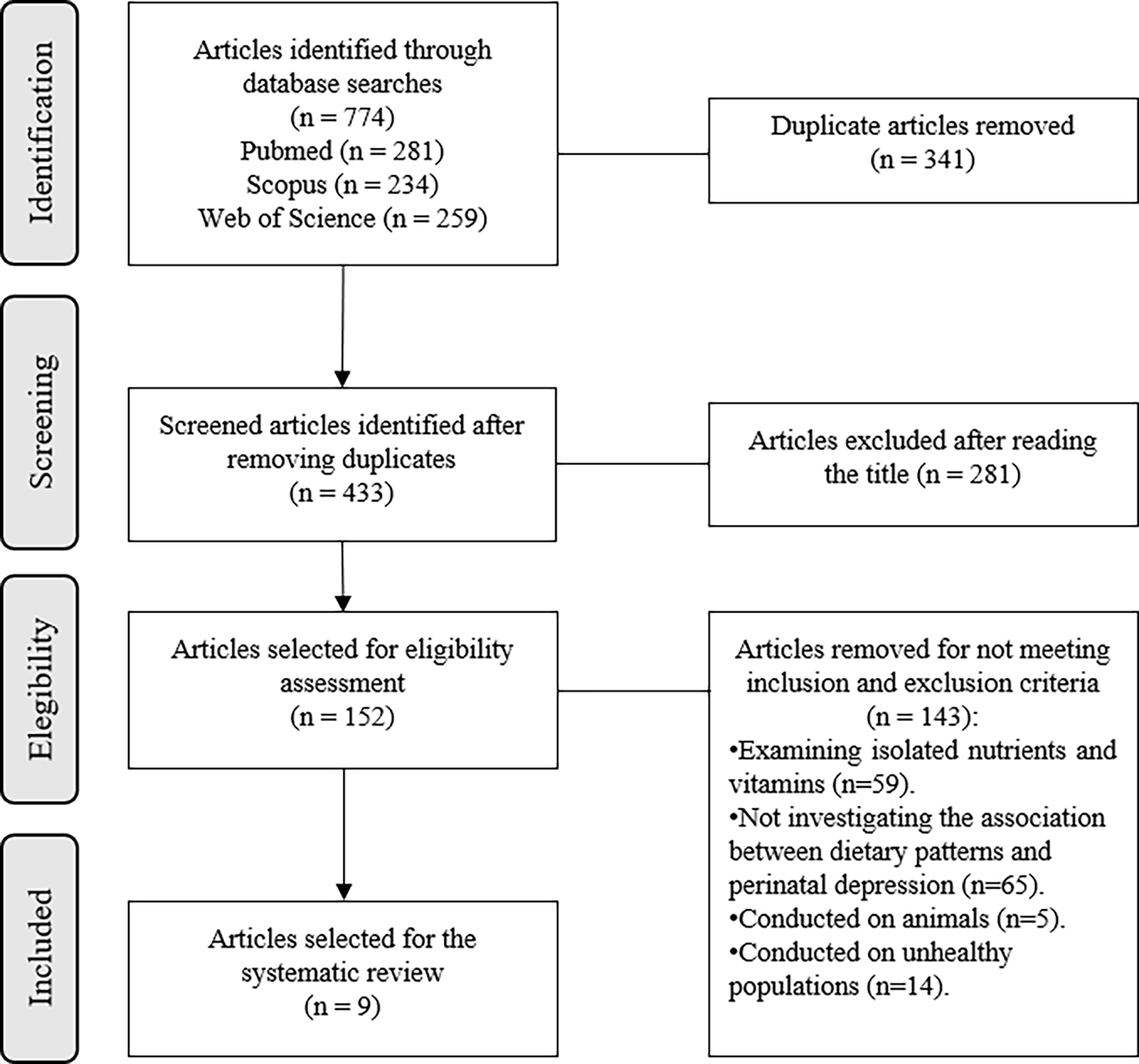
The process of searching and selecting studies was carried out according to the PRISMA 2020 statement through a flow diagram (Figure 1). Initially, after entering the same search equation into the different databases used, a total of 774 articles were found. Specifically, 281 articles were identified in PubMed, 234 in Scopus, and 259 in Web of Science. Subsequently, after removing duplicate articles (n = 341) using the Zotero reference management tool and excluding by title screening (n = 281), 152 articles were selected for eligibility assessment. Finally, 143 were excluded for not meeting the inclusion criteria. A total of nine articles were selected for the scoping review.
Flow diagram of the studies selected for the systematic review of adherence to dietary patterns and perinatal depression.
Source: PRISMA (Preferred Reporting Items for Systematic Reviews) Guidelines, 2020 update(Reference Steel, Marnane, Iranpour, Chey, Jackson and Patel33).

Fig. 1. Long description
The flowchart begins with the identification phase, where articles are identified through database searches totaling 774, including 281 from PubMed, 234 from Scopus, and 259 from Web of Science. Duplicate articles, numbering 341, are removed. The screening phase follows, where 433 articles are screened after removing duplicates. Articles excluded after reading the title amount to 281. In the eligibility phase, 152 articles are selected for eligibility assessment. Articles removed for not meeting inclusion and exclusion criteria total 143, with reasons including examining isolated nutrients and vitamins (59), not investigating the association between dietary patterns and perinatal depression (65), conducted on animals (5), and conducted on unhealthy populations (14). The final phase includes 9 articles selected for the systematic review.
Study characteristics
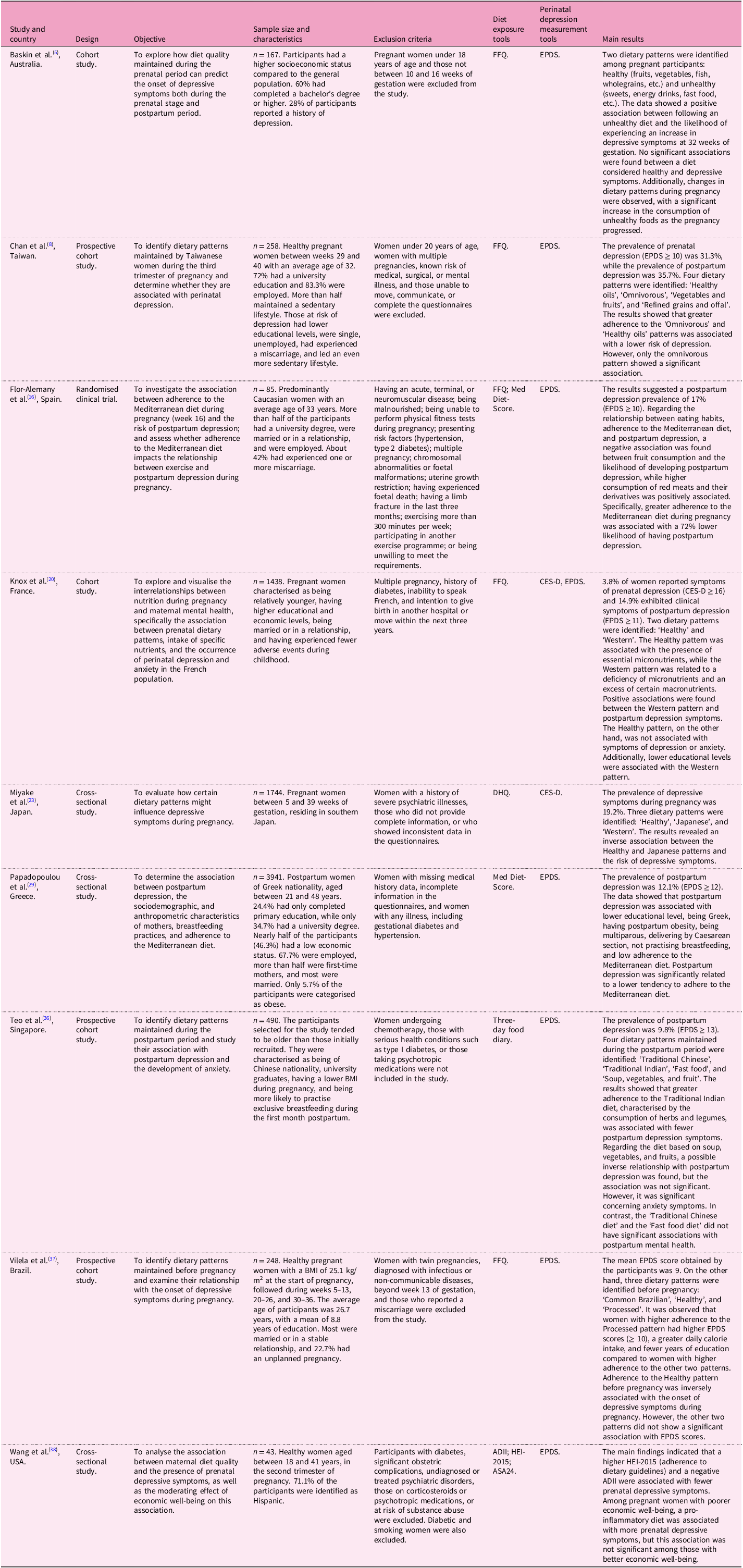
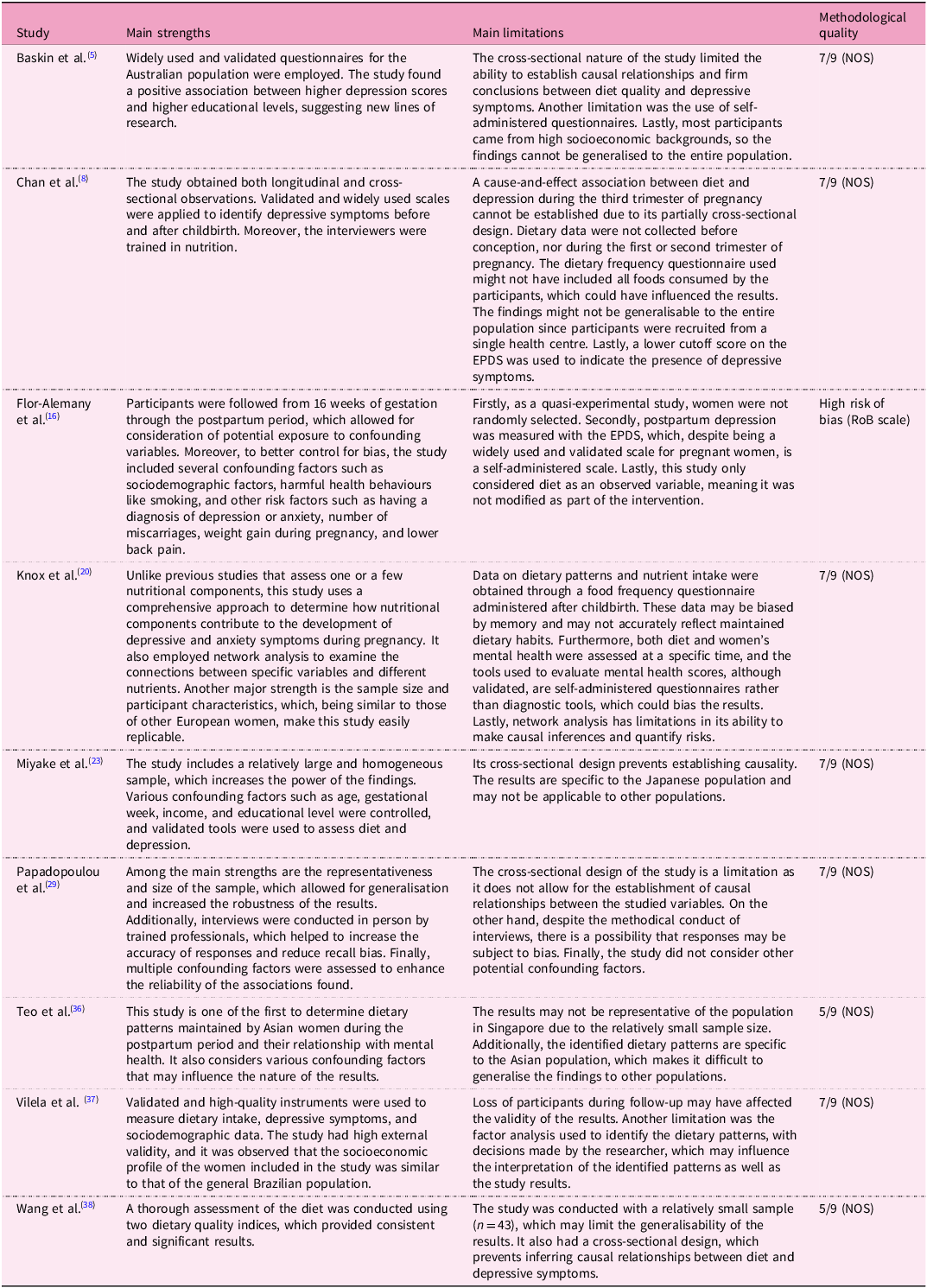
Given the substantial amount of information and the variety of variables across the studies analysed, the main characteristics and results of the studies included in this scoping review are presented in Table 1 to ensure clarity and avoid an overly dense presentation. The main strengths, limitations, and methodological quality of the reviewed studies are presented in Table 2. Of the nine articles included, five were cohort studies(Reference Baskin, Hill, Jacka, O’Neil and Skouteris5,Reference Chan, Wang, Wahlqvist, Liu, Liu and Lee8,Reference Knox, Galera, Sutter-Dallay, Heude, de Lauzon-Guillain and van der Waerden20,Reference Teo, Chia, Colega, Chen, Fok and Pang36,Reference Vilela, Farias, Eshriqui, Vaz, Franco-Sena and Castro37) , three were cross-sectional studies(Reference Miyake, Tanaka, Okubo, Sasaki, Furukawa and Arakawa23,Reference Papadopoulou, Pavlidou, Dakanalis, Antasouras, Vorvolakos and Mentzelou29,Reference Wang, Yim and Lindsay38) , and one was a randomised clinical trial(Reference Flor-Alemany, Migueles, Alemany-Arrebola, Aparicio and Baena-García16). The studies were conducted in Australia(Reference Baskin, Hill, Jacka, O’Neil and Skouteris5), Taiwan(Reference Chan, Wang, Wahlqvist, Liu, Liu and Lee8), France(Reference Knox, Galera, Sutter-Dallay, Heude, de Lauzon-Guillain and van der Waerden20), Singapore(Reference Teo, Chia, Colega, Chen, Fok and Pang36), Brazil(Reference Vilela, Farias, Eshriqui, Vaz, Franco-Sena and Castro37), Japan(Reference Miyake, Tanaka, Okubo, Sasaki, Furukawa and Arakawa23), Greece(Reference Papadopoulou, Pavlidou, Dakanalis, Antasouras, Vorvolakos and Mentzelou29), California, USA(Reference Wang, Yim and Lindsay38), and Spain(Reference Flor-Alemany, Migueles, Alemany-Arrebola, Aparicio and Baena-García16).
Characteristics and main results of the studies included in the scoping review of adherence to dietary patterns and perinatal depression

Table 1. Long description
A table with nine rows and eight columns detailing the characteristics and main results of studies on adherence to dietary patterns and perinatal depression. The columns include Study ID, Country, Study Design, Sample Size, Dietary Pattern, Adherence Measurement, Main Findings, and Notes. The studies were conducted in various countries including Australia, Taiwan, France, Singapore, Brazil, Japan, Greece, California USA, and Spain. The study designs include cohort studies, cross-sectional studies, and one randomized clinical trial. The table provides a comprehensive overview of the methodologies and outcomes of each study.
Abbreviations: Automated Self-Administered-24h (ASA24); Adapted Dietary Inflammatory Index (ADII); body mass index (BMI); Center for Epidemiological Studies Depression Scale (CES-D); diet history questionnaire (DHQ); Edinburgh Postnatal Depression Scale (EPDS); food frequency questionnaire (FFQ); Healthy Eating Index-2015 (HEI-2015).
Strengths, limitations, and methodological quality of the reviewed studies

Table 2. Long description
A table comparing strengths, limitations, and methodological quality of reviewed studies. The table has nine rows and three columns. The columns are labeled Main strengths, Main limitations, and Methodological quality. Each row corresponds to a different study, listing specific strengths, limitations, and methodological quality scores for each. The studies vary in their approaches, sample sizes, and findings, with some focusing on dietary patterns, others on mental health during pregnancy, and some combining both. The methodological quality scores range from five to nine, indicating varying levels of study rigor.
Abbreviations: Adapted Dietary Inflammatory Index (ADII); Center of Epidemiological Studies of Depression Scale (CES-D); Edinburgh Postnatal Depression Scale (EPDS); Newcastle–Ottawa Scale (NOS); Risk of Bias 2 tool (RoB).
Evaluation of dietary patterns
The selected studies evaluated the participants’ habitual dietary intake at three stages: before pregnancy (periconceptional period), during pregnancy, and after childbirth. One study assessed maternal dietary intake between weeks 5 and 13 of gestation, referring to the six months prior to the gestational period(Reference Vilela, Farias, Eshriqui, Vaz, Franco-Sena and Castro37). Another study analysed maternal diet at two time points during pregnancy, week 16 and week 32, and participants were asked to indicate how often they had consumed specific foods during the previous three months, so intake was measured both pre-pregnancy and during pregnancy(Reference Baskin, Hill, Jacka, O’Neil and Skouteris5). One article evaluated diet during the second trimester of pregnancy, approximately between weeks 11 and 23(Reference Wang, Yim and Lindsay38). One study examined adherence to the Mediterranean diet at 16 weeks of gestation(Reference Flor-Alemany, Migueles, Alemany-Arrebola, Aparicio and Baena-García16), while another evaluated adherence to this diet during the postpartum period(Reference Papadopoulou, Pavlidou, Dakanalis, Antasouras, Vorvolakos and Mentzelou29). One investigation estimated dietary intake during the third trimester of pregnancy retrospectively(Reference Knox, Galera, Sutter-Dallay, Heude, de Lauzon-Guillain and van der Waerden20). Another study that selected pregnant women between weeks 5 and 39 also evaluated maternal dietary habits retrospectively during the month prior to the questionnaire(Reference Miyake, Tanaka, Okubo, Sasaki, Furukawa and Arakawa23). Finally, two studies assessed diet during the postpartum period, specifically three weeks after childbirth(Reference Teo, Chia, Colega, Chen, Fok and Pang36) and between weeks 4 and 6 postpartum(Reference Chan, Wang, Wahlqvist, Liu, Liu and Lee8) (Table 1).
Therefore, two studies examined diet before pregnancy(Reference Baskin, Hill, Jacka, O’Neil and Skouteris5,Reference Vilela, Farias, Eshriqui, Vaz, Franco-Sena and Castro37) , five during pregnancy(Reference Baskin, Hill, Jacka, O’Neil and Skouteris5,Reference Flor-Alemany, Migueles, Alemany-Arrebola, Aparicio and Baena-García16,Reference Knox, Galera, Sutter-Dallay, Heude, de Lauzon-Guillain and van der Waerden20,Reference Miyake, Tanaka, Okubo, Sasaki, Furukawa and Arakawa23,Reference Wang, Yim and Lindsay38) and three during the postpartum period(Reference Chan, Wang, Wahlqvist, Liu, Liu and Lee8,Reference Papadopoulou, Pavlidou, Dakanalis, Antasouras, Vorvolakos and Mentzelou29,Reference Teo, Chia, Colega, Chen, Fok and Pang36) (Table 1).
The selected studies also analysed the composition and quality of the diet at different points during the perinatal period using various validated tools adapted to the characteristics of the studied populations (Table 1). Food frequency questionnaires (FFQs) were commonly used to gather information on habitual food intake in most studies(Reference Baskin, Hill, Jacka, O’Neil and Skouteris5,Reference Chan, Wang, Wahlqvist, Liu, Liu and Lee8,Reference Flor-Alemany, Migueles, Alemany-Arrebola, Aparicio and Baena-García16,Reference Knox, Galera, Sutter-Dallay, Heude, de Lauzon-Guillain and van der Waerden20,Reference Papadopoulou, Pavlidou, Dakanalis, Antasouras, Vorvolakos and Mentzelou29,Reference Vilela, Farias, Eshriqui, Vaz, Franco-Sena and Castro37) . Only one study used three-day food records for a more precise estimate of daily food consumption(Reference Teo, Chia, Colega, Chen, Fok and Pang36), while another used a dietary history questionnaire (DHQ) to assess dietary habits(Reference Miyake, Tanaka, Okubo, Sasaki, Furukawa and Arakawa23). Wang et al.(Reference Wang, Yim and Lindsay38) used an online tool called Automated Self-Administered-24h (ASA24) on non-consecutive days to observe daily variability in food intake and studied diet quality through two dietary indices: the Adapted Dietary Inflammatory Index (ADII) and the Healthy Eating Index-2015 (HEI-2015). These indices allowed for an assessment of the inflammatory potential of the diet and adherence to dietary guidelines recommended for Americans, respectively.
For data analysis and the identification of dietary patterns, some of the selected studies used statistical methods such as factor analysis and principal component analysis (PCA), which allowed exploration of the relationship between diet and perinatal depression(Reference Baskin, Hill, Jacka, O’Neil and Skouteris5,Reference Chan, Wang, Wahlqvist, Liu, Liu and Lee8,Reference Knox, Galera, Sutter-Dallay, Heude, de Lauzon-Guillain and van der Waerden20,Reference Miyake, Tanaka, Okubo, Sasaki, Furukawa and Arakawa23,Reference Teo, Chia, Colega, Chen, Fok and Pang36,Reference Vilela, Farias, Eshriqui, Vaz, Franco-Sena and Castro37) . The remaining articles did not mention the use of statistical techniques to identify dietary patterns from the collected data(Reference Flor-Alemany, Migueles, Alemany-Arrebola, Aparicio and Baena-García16,Reference Papadopoulou, Pavlidou, Dakanalis, Antasouras, Vorvolakos and Mentzelou29,40) .
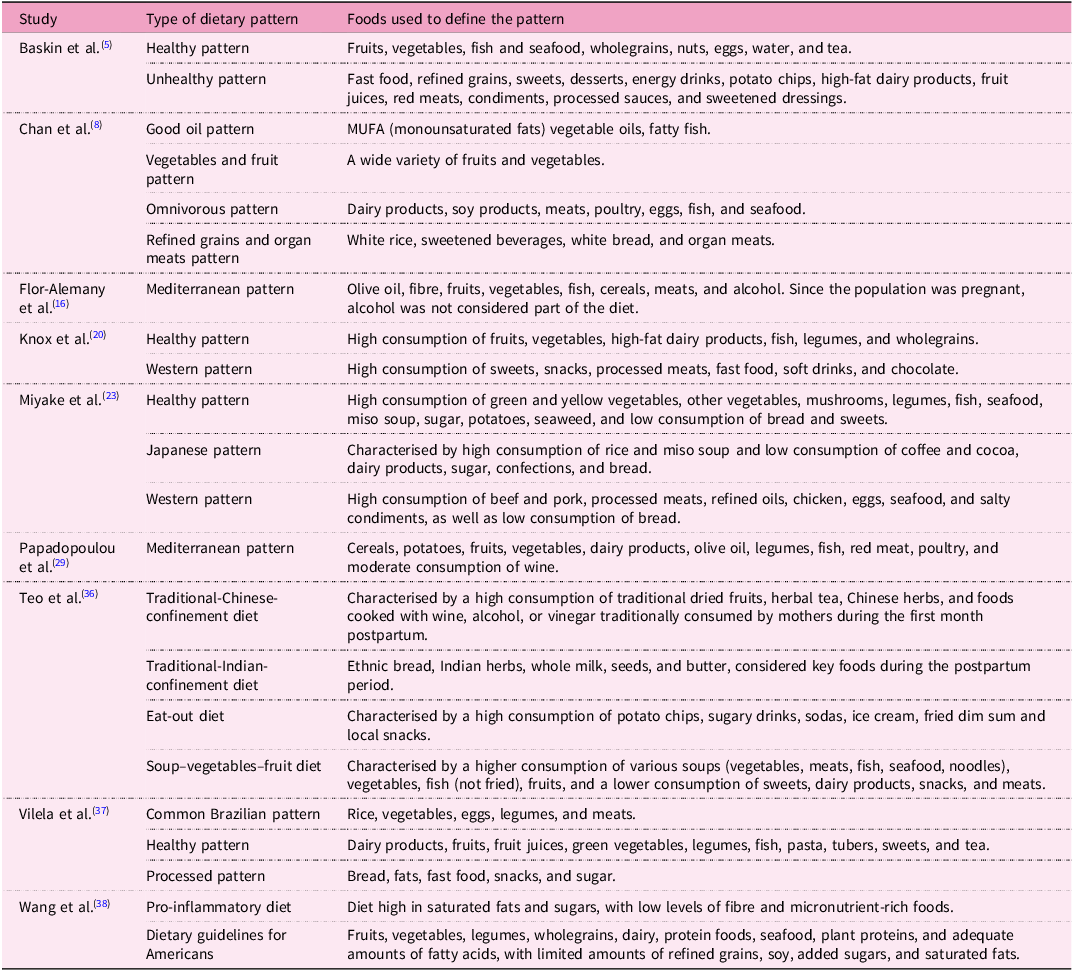
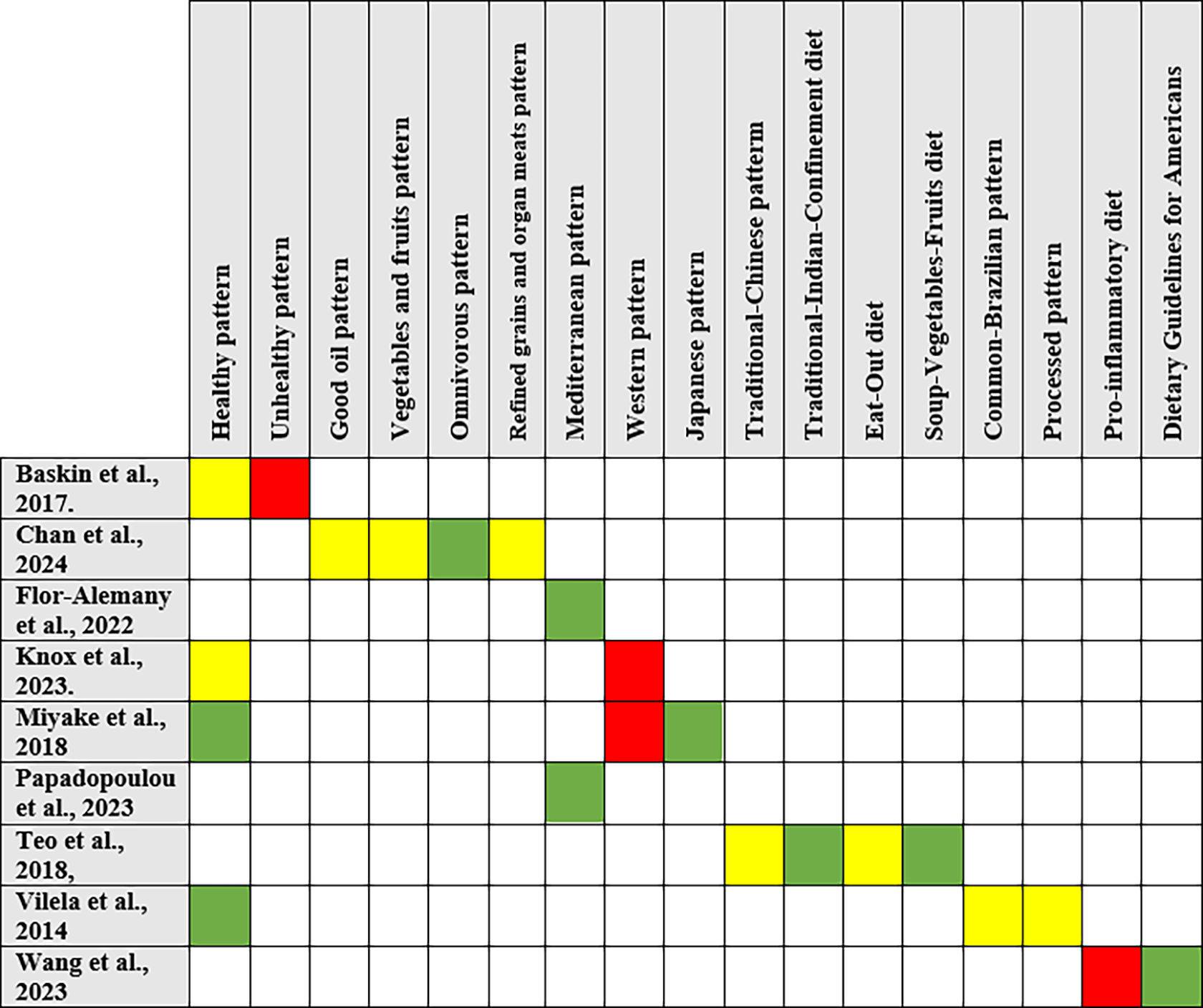
The main results, strengths, limitations, and methodological quality of the reviewed studies are shown in Table 2. Several dietary patterns were identified in the included studies. The characteristics of these patterns are shown in Table 3. The main effects of the identified dietary patterns are summarised in Figure 2, which shows those dietary patterns that, according to the results, could either protect against perinatal depression or, conversely, pose a potential risk for developing depressive symptoms before, during, or after the gestational period.
Characteristics of dietary patterns

Table 3. Long description
The table compares dietary patterns across various studies, focusing on the types of dietary patterns and the foods used to define them. It includes data from multiple studies such as Baskin et al., Chan et al., Flor-Alemany et al., Knox et al., Miyake et al., Papadopoulou et al., Teo et al., Vilela et al., and Wang et al. The table has 10 rows and 3 columns. The columns are labeled Study, Type of dietary pattern, and Foods used to define the pattern. Each row lists a study, the type of dietary pattern identified in that study, and the specific foods associated with that pattern. For example, Baskin et al. identified a healthy pattern defined by fruits, vegetables, fish, and seafood, and an unhealthy pattern defined by fast food, refined grains, and sweets. Chan et al. identified patterns such as the good oil pattern, vegetables and fruit pattern, omnivorous pattern, and refined grains and organ meats pattern, each defined by specific food groups. The table provides a comprehensive overview of how different studies categorize dietary patterns based on food consumption.
.
Summary of potential associations between dietary patterns and perinatal depression.
Note: red: significant association between the diet and increased depressive symptoms; yellow: no association found between dietary pattern and depressive symptoms; green: protective effect of the diet on the occurrence of depressive symptoms.

Fig. 2. Long description
The table presents a summary of potential associations between various dietary patterns and perinatal depression. It includes data from multiple studies, indicating whether each dietary pattern is significantly associated with increased depressive symptoms, has no association, or has a protective effect. The table has 9 rows and 15 columns, with each row representing a different study and each column representing a different dietary pattern. Notable trends include significant associations for unhealthy patterns and protective effects for healthy patterns. The studies are listed on the left, and the dietary patterns are listed across the top. Color coding is used to indicate the nature of the association: red for significant association with increased depressive symptoms, yellow for no association, and green for a protective effect.
Depression assessment tools
Perinatal depression in participants was measured by researchers using different instruments across all studies. The Edinburgh Postnatal Depression Scale (EPDS) was used in most studies(Reference Baskin, Hill, Jacka, O’Neil and Skouteris5,Reference Chan, Wang, Wahlqvist, Liu, Liu and Lee8,Reference Flor-Alemany, Migueles, Alemany-Arrebola, Aparicio and Baena-García16,Reference Knox, Galera, Sutter-Dallay, Heude, de Lauzon-Guillain and van der Waerden20,Reference Papadopoulou, Pavlidou, Dakanalis, Antasouras, Vorvolakos and Mentzelou29,Reference Teo, Chia, Colega, Chen, Fok and Pang36–Reference Wang, Yim and Lindsay38) . This self-assessment scale was originally designed for the detection of postpartum depression but has been validated for use during pregnancy and the postpartum period. It is widely used as a tool to assess perinatal depression across multiple cultures and populations(Reference Baskin, Hill, Jacka, O’Neil and Skouteris5,Reference Teo, Chia, Colega, Chen, Fok and Pang36–Reference Wang, Yim and Lindsay38) . The Center for Epidemiological Studies Depression Scale (CES-D) was used to measure the severity of depressive symptoms in two studies(Reference Knox, Galera, Sutter-Dallay, Heude, de Lauzon-Guillain and van der Waerden20,Reference Miyake, Tanaka, Okubo, Sasaki, Furukawa and Arakawa23) (Table 1).
Six studies reported information on the prevalence of perinatal depression among participants(Reference Chan, Wang, Wahlqvist, Liu, Liu and Lee8,Reference Flor-Alemany, Migueles, Alemany-Arrebola, Aparicio and Baena-García16,Reference Knox, Galera, Sutter-Dallay, Heude, de Lauzon-Guillain and van der Waerden20,Reference Miyake, Tanaka, Okubo, Sasaki, Furukawa and Arakawa23,Reference Papadopoulou, Pavlidou, Dakanalis, Antasouras, Vorvolakos and Mentzelou29,Reference Teo, Chia, Colega, Chen, Fok and Pang36) . Depending on the assessment tool used, the defined cutoff score, the evaluation period, and the population, the prevalence of depression ranged from 9.2% to 35.7% (Table 2).
Association between dietary patterns and prenatal depression
Some of the included studies evaluated the association between different dietary patterns and prenatal depression(Reference Baskin, Hill, Jacka, O’Neil and Skouteris5,Reference Chan, Wang, Wahlqvist, Liu, Liu and Lee8,Reference Miyake, Tanaka, Okubo, Sasaki, Furukawa and Arakawa23,Reference Vilela, Farias, Eshriqui, Vaz, Franco-Sena and Castro37,Reference Wang, Yim and Lindsay38) . The study by Baskin et al.(Reference Baskin, Hill, Jacka, O’Neil and Skouteris5) explored the predictive role of prenatal diet quality on the onset of both prenatal and postnatal depressive symptoms. The results revealed that an unhealthy diet (including sweets, refined grains, high-energy drinks, and fast foods) was associated with an increase in depressive symptoms at 32 weeks of gestation, and higher scores on the unhealthy pattern were linked to increased depressive symptoms in both directions of prediction, in contrast to a healthy diet (including fruit, vegetables, fish, and wholegrains). However, no significant associations were found between diet quality and depressive symptoms in either direction (Table 2).
Similarly, Vilela et al.(Reference Vilela, Farias, Eshriqui, Vaz, Franco-Sena and Castro37) highlighted that adherence to a healthy pattern (dairy products, fruits, fruit juices, green vegetables, legumes, fish, pasta, tubers, and tea) before pregnancy was inversely and significantly associated with the occurrence of depressive symptoms during pregnancy. Specifically, greater adherence to this pattern before pregnancy was related to lower EPDS scores during pregnancy. Additionally, women with higher consumption of processed foods had higher scores for depressive symptoms. However, the processed food-based and traditional Brazilian patterns were not related to depressive symptoms during pregnancy.
Similar observations were drawn from the research by Miyake et al.(Reference Miyake, Tanaka, Okubo, Sasaki, Furukawa and Arakawa23), where it was found that healthy and Japanese dietary patterns, unlike the Western pattern, were independently associated with a lower prevalence of depressive symptoms during pregnancy.
Likewise, the study by Chan et al.(Reference Chan, Wang, Wahlqvist, Liu, Liu and Lee8) determined that the omnivorous dietary pattern, characterised by its richness in essential nutrients and animal and plant-based proteins, played a protective role against symptomatic depression during the third trimester of pregnancy, an effect that extended into the postpartum period. During this trimester, it was observed that the higher the scores for the omnivorous or healthy oils pattern, the lower the risk of depression. However, the omnivorous pattern was the most beneficial in terms of nutritional quality and was the only one that showed a significant association with reduced depressive symptoms.
The study by Wang et al.(Reference Wang, Yim and Lindsay38) highlighted that greater adherence to dietary guidelines, as measured by the HEI-2015 and a negative ADII, was significantly associated with fewer prenatal depressive symptoms. Following a higher-quality diet, characterised by anti-inflammatory potential and greater adherence to dietary recommendations, was associated with a reduction in the prevalence of depressive symptoms. The study also found that economic well-being moderated the relationship between diet quality and depressive symptoms. Pregnant women with less favourable economic status and pro-inflammatory diets experienced more prenatal depression symptoms. This association was not significant in women with better economic conditions.
Association between dietary patterns and postpartum depression
The association between dietary patterns and postpartum depression was evaluated in four studies. The study by Flor-Alemany et al.(Reference Flor-Alemany, Migueles, Alemany-Arrebola, Aparicio and Baena-García16) revealed that greater adherence to the Mediterranean diet during pregnancy, as well as higher fruit consumption and lower red meat intake, was significantly associated with lower levels of depressive symptoms and a reduced risk of postpartum depression. Similar findings were reported by Papadopoulou et al.(Reference Papadopoulou, Pavlidou, Dakanalis, Antasouras, Vorvolakos and Mentzelou29), who determined that adherence to the Mediterranean diet during the postpartum period, particularly its emphasis on fruit, nuts, and legumes, was significantly related to lower EPDS scores, suggesting a protective role of this dietary pattern against postpartum depression (Table 2).
In line with this, the research conducted by Knox et al.(Reference Knox, Galera, Sutter-Dallay, Heude, de Lauzon-Guillain and van der Waerden20) identified a small but significant association between the Western diet, characterised by a deficient intake of certain micronutrients and an excess of macronutrients, and postnatal depressive symptoms. The results suggest that this pattern could increase the risk of postpartum depression, adversely affecting women’s mental health. The study did not find significant associations between either the healthy or Western dietary patterns and prenatal depressive symptoms. Similarly, it did not establish a relationship between postpartum depression scores and adherence to a healthy dietary pattern. Additionally, it was determined that the relationship between a Western pattern and postnatal depressive symptoms was inversely related to the level of education.
Conversely, Teo et al.(Reference Teo, Chia, Colega, Chen, Fok and Pang36) explored postnatal dietary patterns maintained during the quarantine period in a multicultural society from Singapore. The results highlighted that a traditional Indian pattern was associated with fewer postpartum depressive symptoms. Additionally, there was a trend, although not significant, between scores for the soup–vegetables–fruit pattern and fewer postpartum depressive symptoms. No associations were found between traditional Chinese diets and fast food-based diets with postnatal mental health.
Methodological quality analysis of the included studies
The methodological quality of the studies was evaluated using the NOS (Wells et al.)(Reference Wells, Shea, O’Connell, Peterson, Welch and Losos27) and the RoB 2 (Higgins et al.)(Reference Higgins, Savović, Page, Elbers, Sterne, Higgins, Thomas, Chandler, Cumpston, Li, Page and Welch28), as previously mentioned (Table 2). The average quality score for observational studies was 6.6 out of 9, indicating a high level of quality(Reference Baskin, Hill, Jacka, O’Neil and Skouteris5,Reference Chan, Wang, Wahlqvist, Liu, Liu and Lee8,Reference Knox, Galera, Sutter-Dallay, Heude, de Lauzon-Guillain and van der Waerden20,Reference Miyake, Tanaka, Okubo, Sasaki, Furukawa and Arakawa23,Reference Papadopoulou, Pavlidou, Dakanalis, Antasouras, Vorvolakos and Mentzelou29,Reference Vilela, Farias, Eshriqui, Vaz, Franco-Sena and Castro37) . Only two studies, one cohort study(Reference Teo, Chia, Colega, Chen, Fok and Pang36) and one cross-sectional study(Reference Wang, Yim and Lindsay38), had a final score of 5, indicating medium quality. The most common methodological flaw in the included observational studies was the lack of description of the derivation of the unexposed cohort and the failure to demonstrate that the outcome of interest was not present at baseline. Meanwhile, the selected controlled clinical trial presented a high risk of bias in several domains (random sequence generation, incomplete outcome data, and other biases) and some concerns regarding bias in outcome assessment blinding(Reference Flor-Alemany, Migueles, Alemany-Arrebola, Aparicio and Baena-García16). This suggests that the study has a high overall risk of bias, meaning that the study’s results could be influenced by various types of biases affecting their validity and reliability. Details on the scores obtained by each of the studies can be found in the supplementary material (annexes 1–3).
Discussion
The main findings of this review suggest that adherence to healthy dietary patterns before, during, and after pregnancy could be beneficial in reducing or preventing depressive symptoms during the gestational and/or postpartum periods, while unhealthy patterns, based on a Western diet and high consumption of ultraprocessed and pro-inflammatory foods, may be directly related to perinatal depression.
Previous studies conducted on pregnant and postpartum women have individually focused on micronutrient and vitamin intake, showing inverse associations between these and depressive symptoms(Reference Baskin, Hill, Jacka, O’Neil and Skouteris4). However, analysing the numerous micronutrients, vitamins, and minerals that make up the diet in isolation can provide an incomplete analysis of their effects on mental health due to the complex interaction between them(Reference Jacka, Pasco, Mykletun, Williams, Hodge and O’Reilly18).
Quirk et al.(Reference Quirk, Williams, O’Neil, Pasco, Jacka and Housden31) were pioneers in systematically reviewing the association between diet quality, dietary patterns, and depression in adult populations. However, they determined that there was limited evidence supporting the relationship between certain healthy diets, such as the Mediterranean diet, and the reduction of depressive symptoms, thus calling for stronger and more consistent evidence in this area. According to Quirk et al.(Reference Quirk, Williams, O’Neil, Pasco, Jacka and Housden31), the combination of differences in how diet and depression are measured, the variability among study populations, the presence of potential confounding factors, and discrepancies in statistical methods contribute to the contradictory or inconsistent findings reported across studies.
In non-pregnant adult populations, diet quality has been associated with a lower likelihood of depressive disorders(Reference Psaltopoulou, Sergentanis, Panagiotakos, Sergentanis, Kosti and Scarmeas30). Numerous studies have demonstrated that nutritional habits may play a fundamental role in the development and progression of depression, as well as in the intensity and severity of depressive symptoms(Reference Lassale, Batty, Baghdadli, Jacka, Sánchez-Villegas and Kivimäki21,Reference Li, Lv, Wei, Sun, Zhang and Zhang22) . The results found in this scoping review partially align with these findings. However, the number of studies conducted on pregnant populations is significantly reduced as it is a relatively new area of research. Nevertheless, available studies on prenatal nutrition and mental health corroborate the association between a higher-quality maternal diet and a reduction in prenatal depressive symptoms(Reference Baskin, Hill, Jacka, O’Neil and Skouteris4). Specifically, a cohort study observed that healthy dietary patterns were negatively associated with perinatal depression and were also linked to positive outcomes for both mothers and their babies(Reference Englund-Ögge, Brantsæter, Sengpiel, Haugen, Birgisdottir and Myhre14).
Similarly, several studies have shown that greater adherence to healthier nutritional patterns, characterised by the consumption of vegetables, fruits, legumes, fish, dairy products, and olive oil during the first weeks postpartum, has been associated with lower likelihood of developing postpartum depression(Reference Opie, Uldrich and Ball24).
In this regard, Chatzi et al.(Reference Chatzi, Melaki, Sarri, Apostolaki, Roumeliotaki and Georgiou9) found in their study that the healthy pattern had a protective effect against depressive symptoms eight to ten weeks postpartum. Likewise, greater adherence to the Mediterranean diet during pregnancy has also been associated with lower prevalence of depressive symptoms and a reduced risk of postpartum depression(Reference Arouca, Michels, Moreno, González-Gil, Marcos and Gómez3). However, it is increasingly recognised that the existing associations between the Mediterranean diet and positive outcomes are not solely due to the foods consumed but also to the sociocultural environments in which they are consumed(Reference Bonaccio, Iacoviello, Donati and de Gaetano6). Despite this evidence, Pina-Camacho et al.(Reference Pina-Camacho, Jensen, Gaysina and Barker7) found no relationship between unhealthy dietary patterns and postpartum depression in their research.
Several studies showed a significant association between certain types of dietary patterns and recommendations with depressive symptoms and maternal well-being. However, it is important to note that inconsistencies were found in the results, and, currently, there is considerable heterogeneity in the literature, making it somewhat difficult to establish a potential relationship between dietary patterns and perinatal depression.
Strengths and limitations
Although the studies analysed in this review present interesting results on the effect of diet on perinatal depression, some limitations must also be considered: (a) the review is almost entirely composed of studies with an observational design, so due to their predominantly cross-sectional nature it is difficult to draw firm and causal conclusions between certain dietary patterns and the presence of depressive symptoms during pregnancy and/or postpartum; (b) most studies use self-administered questionnaires to assess depressive symptoms and diet, which may introduce information bias, while the retrospective nature of some of the instruments used may also induce memory bias in the participants; and (c) some of the results obtained are characteristic of certain populations, which may not be fully representative of other populations. Additionally, due to time constraints and the scope of the results obtained, the search process was limited to the last ten years, and only articles in English and Spanish were included. The search was restricted to the past ten years to ensure that the evidence retrieved was up-to-date, relevant, and methodologically comparable. In the field of nutrition and perinatal mental health, dietary recommendations, dietary assessment tools, and diagnostic criteria for depression have undergone substantial changes over the last decade. Including older studies could have introduced bias due to outdated clinical practices, heterogeneous measurement tools, or less comparable sociocultural contexts. Furthermore, this temporal restriction allowed for a balance between the breadth and relevance of the evidence, ensuring a manageable volume of literature focused on findings with current clinical and public health applicability.
However, this scoping review also presents significant strengths: (a) it was conducted following the PRISMA declaration guidelines; (b) the systematic design of the review allowed for a comprehensive study of the available evidence on the topic of interest; (c) the search process was exhaustive and reproduced identically in three databases with broad importance in the health field; (d) a reference management tool, Zotero, was used to manage the articles obtained after the search process and to eliminate duplicates; (e) the risk of bias in the selected studies was assessed using validated tools; (f) the majority of the articles demonstrated high methodological quality; (g) some of the selected studies include, for better bias control, several confounding factors in their investigations, allowing for the proposal of new research avenues; (h) the representativeness and sample size of many of the selected studies enhance the robustness of the results; (i) there is great homogeneity in the use of validated instruments in pregnant populations among the selected studies; and finally (j) the variability present among the studied populations has provided an interesting range of information about predominant dietary patterns in different cultures.
Conclusions
Adherence to healthy dietary patterns (characterised by the high consumption of dairy products, fibre, fruits, vegetables, nuts, wholegrains, legumes, eggs, fish and seafood, water, tea) before, during, and after pregnancy could be beneficial in reducing or preventing depressive symptoms during the gestational and postpartum periods. Adherence to a Western diet and high consumption of ultraprocessed and pro-inflammatory foods are positively related to a higher risk of perinatal depression. Thus, although some studies showed inconsistencies in their results, the majority suggest that a high-quality diet has protective effects against perinatal depression. However, more studies and research are needed to confirm these associations and to better understand the underlying mechanisms.
Supplementary material
The supplementary material for this article can be found at https://doi.org/10.1017/S0954422426100468
Acknowledgements
None.
Financial support
No external funding was received to support this work.
Competing interests
The authors have no relevant interests to declare.
Authorships
L.R.-A., B.R.-G., and A.H.-R. were involved in the conception, design, and data collection. L.R.-A. constructed the figures with input from L.G.-M. and B.R.-G. All authors contributed to interpretation of the data and to writing, revision, and approval of the final manuscript.