


1. Introduction
Coase's (Reference Coase1960) insight that property rights considerations should play a role in managing externality problems provides the intellectual foundation for programs to pay agricultural producers to reduce negative externalities or provide positive ones. These programs include public sector payments such as the Conservation Reserve Program in the United States, agri-environmental payments in Europe, and Global Environmental Facility programs in developing countries. They also include payments by non-governmental organizations such as the Nature Conservancy or Conservation International for development rights and conservation activities and, in a growing number of cases, payments from the private sector. Since modification of agricultural production choices in developing countries often provides positive environmental externalities to people in developed countries, payment for environmental services (PES) has become an important topic in the context of economic development and poverty reduction. Many who are concerned with environmental sustainability are also concerned with poverty reduction, and the close links between the two objectives are resulting in intensified efforts to develop PES programs that aim to achieve both environmental and poverty alleviation objectives.
Tinbergen's (Reference Tinbergen1956) classic research on policy design emphasized the difficulty of attaining more than one objective with any single policy tool, and his analysis suggests that the effort to obtain both environmental quality and equity objectives with PES may be problematic. This paper aims to develop a conceptual framework to analyze the conditions under which PES programs can serve to reduce poverty and give insight into ways PES programs can be targeted to obtain poverty reduction benefits. The paper is based on the literature that recognizes heterogeneity among economic agents and locations in terms of both agricultural productivity and environmental quality and the implication of correlations between them (Wu et al., Reference Wu, Zilberman and Babcock2001). Our approach aims to investigate how these correlations affect the design of strategies utilizing a single instrument to attain multiple objectives. Specifically, we attempt to identify how the pursuit of environmental goals can be used to improve the welfare of the poor in the developing world.
Our analysis considers two broad categories of PES programs, land-diversion programs, where lands are diverted from agricultural production to other uses,Footnote 1 and working-land (WL) programs, where lands remain in agriculture but production activities are modified to achieve environmental objectives. The modeling framework is developed for the case of land-diversion PES programs. We consider the impacts of PES on three categories of micro agents – the urban consumer, the rural landless, and the rural landowner. Our approach starts with an analysis of individual agent's choices, which are then aggregated to obtain supply and demand for food and for environmental services (ES). The same modeling approach is then applied to derive impacts of WL programs. We conclude by identifying the features of PES programs that may be beneficial or harmful to the poor, and find that in general, WL programs are less likely to be harmful.
2. The model
PES is assumed to directly affect two outputs – an agricultural good and ES. The agricultural good is produced with land, labor, and a variable input (e.g. chemicals) by heterogeneous producers. Heterogeneity may be caused by differences in farm size or productivity. Production of the agricultural good results in environmental externalities, and the ES are defined as either the reduction of negative externalities or the provision of positive ones. In this first model, we assume that ES are generated by diverting land from agriculture to other uses. Four groups are affected by the program – rural landowners, rural landless, urban consumers, and beneficiaries of ES (who may fall in any of the previous categories as well).
Because the emphasis is on production choices, we assume that households have identical utility functions: u(Q, E, Z), which depend on the quantity of the agricultural product consumed (Q), consumption of the composite good (E), and environmental quality (Z). This is an expansion of the standard two-good framework (Just et al., Reference Just, Hueth and Schmitz2004) with the addition of environmental quality, Z, which is assumed to be a public good in the sense that there is non-rivalry and non-excludability in consumption, though the benefits may be limited to a region. Production of ES leads to a change in Z, for example, by improving water quality or enhancing biodiversity. Additionally, activities generating ES may improve more than one dimension of environmental quality; for instance, planting trees and shrubs in some locations may increase carbon sequestration, reduce soil erosion, and lead to improved water quality and flow. The level of Z may also differ between the urban and the rural sectors, and ES may affect only one of the sectors or both. For simplicity, in this paper we consider the impact of a PES program which results only in improvement of urban environmental quality, meaning that, without the payment, farmers would not provide any ES. For example, farmers may be paid to modify practices to reduce waste disposal, thus improving the quality of urban drinking water. In this case, the PES program is solving a rural externality problemFootnote 2 by inducing provision of a public good to the urban sector. The composite good E is measured in monetary terms, so given household income, I,Footnote 3E = I − pQ where p is the unit price of the agricultural good. Thus, under our assumptions, utility is a function of the price and consumption of the agricultural good, income, and Z. We assume that utility is measured in monetary terms and demand is additive. In particular

where h(Q) is utility (in monetary units) from consumption of the agricultural product. We assume that the marginal utility of the agricultural commodity is declining, from an initially very high level (h′ > 0, hʺ < 0, and h′(0) → ∞). The marginal utility of the composite good is constant and equal to one monetary unit, and the marginal monetary utility of environmental quality is ψ. These assumptions imply that the marginal utility of the agricultural commodity is more sensitive to changes in consumption than the marginal utilities of the composite good and Z. This simplification is an expansion of Mussa and Rosen's (Reference Mussa and Rosen1978) micro-model and allows us to derive a Hicksian demand function (a function of price only) for the agricultural commodity.
Our analysis considers mostly the rural region, which consists of N 0, landless households, and N 1, landowning households. Let n be an indicator of the households, which assumes a value from 0 to N 1. All landless households are assigned n = 0, since we treat them as homogenous agents; landowners are assigned n, which assumes values that vary from 1 to N 1. Landowners vary in their farm size and land productivity. Let Ln denote the land area of landowner n. Without loss of generality, the ns are established to reflect income, so that landowners with lower n are poorer (have less income) before PES is introduced. We also assume that each rural household has one unit of labor and the agricultural production function exhibits constant returns to scale. Output is produced with land and labor, giving the production function per acre of the nth producer as

where yn is output per acre of landowner n, αn is a multiplicative production coefficient capturing land productivity, and xn is labor per acre in agricultural production of owner n. The production function is assumed to be concave so that  .
We further assume that producers are competitive and are price takers, there are perfect markets for labor and the agricultural output, and the prices of output, p, and labor, w, are determined endogenously within the system. Our assumptions about utility, technology, and markets separate the consumption and production activities of the households and simplify the analysis on the impacts of PES programs. The use of integrated models as in Singh et al. (Reference Singh, Squire and Strauss1986) yields greater realism but leads to extra complexity that detracts from our focus on the effects of introducing PES programs on producers. Expanding the analysis to consider non-separable household models will be important to understanding program impacts where there are a number of other serious market failures, and thus remains an important area for future work.
3. Land-diversion PES programs
In this section, we consider a PES program based on land diversion, where producers are paid to convert land from agricultural uses to other land uses such as forests or other types of native ecosystems. The land-use change may generate several types of ES and may lead to return of native plants, provide wildlife habitat, prevent erosion or air pollution, etc. Following Wu et al. (Reference Wu, Zilberman and Babcock2001), we assume that each unit of land generates a fixed amount of environmental benefits, but these benefits vary across locations. The environmental benefit per unit of land of the nth landowner is bn, and the price paid per environmental benefit is constant and denoted by v.Footnote 4 For instance, diversion of land away from pasture may result in a reduction of animal waste runoff polluting local waterways, while diversion from field crop production to forest may generate carbon sequestration or biodiversity conservation. Our specification captures heterogeneity across land units in the sense that the amount of waste reduction or carbon sequestration per unit of land is allowed to vary across locations (Babcock et al., Reference Babcock, Lakshminarayan, Wu and Zilberman1997).
When PES is not available, each landowner has to determine the amount of labor per unit of land they use and whether to farm the land. Optimal labor is determined solving

subject to a non-negativity land rent constraint, pαnf(xn) − wxn ≥ 0. At the optimal solution x*n(p, w), the marginal condition equating the value of the marginal product of labor is equal to the price of labor

where  is marginal productivity of labor per acre. We assume that the production function f is concave, and thus the farmer's problem has an optimal solution. We also assume that all land is utilized and that all labor (both that of landowners and landless households) is employed. The agricultural rent of the land of owner n is

Once the PES program is introduced, the farmers have another choice – to divert land to uses that generate ES. The per acre benefit for the nth landowner from enrollment in the PES program is vbn. Let δn(p, w, v) be an indicator function, which assumes the value 1 when the nth landowner is enrolled in the PES program and is equal to 0 otherwise. The value of the indicator is determined according to

The landowner joins the PES program if doing so generates more income than the agricultural rent. Landowners are divided into groups of participants and non-participants in the PES program. The participants are the ones who belong to the SP set, and non-participants belong to SN, where

The micro-level choices form the basis for the aggregate supply of agricultural output and ES, as well as the aggregate demand for labor. Aggregate agricultural output is denoted by Y, and aggregate output supply is

Aggregate labor demand is

The aggregate supply of environmental benefits BS(p, w, v), which is a measure of the ES provided, is

By assumption, ES affects environmental quality, Z, only in the urban sector. The aggregate demand for agricultural output facing the producers of the region is denoted by YD(p) and is negatively sloped. Clearly, demand is likely to be more inelastic when access to the international market is costly. The rural supply of labor NS is the sum of the labor of the landless and landowners (NS = N 0 + N 1). Using these definitions, the equilibrium prices of output and labor given the price of the ES are derived from the solution of


Once the optimal p and w are determined, the land, labor, and land-use allocations can be derived, and then using equation (10) the aggregate level of ES provision can be computed. Resource allocation before the introduction of the PES program is used as a benchmark for the distributional analysis. Let Y 0, p 0, and w 0 denote the initial levels of output, output prices, and labor prices, respectively, corresponding to v = 0. The equilibrium levels of these variables for a positive v are denoted by YV, pV, and wV. The supply of output before the introduction of PES is given by YS(p, w 0, 0) in figure 1. The non-negativity constraint on rent (pαnf(xn) − wxn ≥ 0) results in idling of land and low output supply when the output price is sufficiently low and, given w 0, there is an output price level,p(w 0, 0), below which no output will be supplied. When output price is sufficiently high, all the land and the labor are used in agricultural production, which results in the inelastic segment of  as shown in figure 1. The output supply curve holding labor wage constant but with positive v is designated as YS(p, w 0, v). This curve is above YS(p, w 0, 0) since the introduction of the PES program will lead landowners to divert land, thus reducing agricultural supplies. However, at the new equilibrium, the wage rate will also change to wv. If wv < w 0, meaning that the wage rate declines due to the introduction of the PES program, this wage effect will indirectly enhance supply of the agricultural output, as captured by the supply curve YS(p, wv, v) corresponding to the case where wv < w 0.
Equilibrium in the output market

The introduction of a PES program increases the minimum output price required for positive supply (since farmers have alternative uses for the land) from p(w 0, 0) to p(wv, v). Similarly, comparing YS(p, w 0, 0) with YS(p, w 0, v) suggests that the minimum p that will lead to production of maximum output  will increase with the introduction of PES. That further suggests that if v is sufficiently small, it has a small impact on production and if it is sufficiently large, it may eliminate it. Figure 1 depicts a more likely middle case, where initially all land was used in production and maximum output was produced, and introduction of the program causes partial diversion of land to ES provision. In this likely case, introduction of a PES program reduces agricultural output along with land allocated to agriculture, but also leads to an increase in output price, e.g. with moderate ES payments, Yv < Y 0 and pv ≥ p 0.
The impact of the introduction of PES on the wage rate is ambiguous except in the case where demand is infinitely elastic resulting in wv < w 0. When demand is sufficiently elastic and the output price effect of introducing the PES is low, then the reduction of the marginal productivity of labor (because the labor–land ratio increases) will lead to reduction of the wage rate, as illustrated in figure 1. However, when demand is inelastic and v is sufficiently high enough to induce diversion of significant amounts of land away from farming, p increases substantially, and this increase in output price may lead to a higher w.
Thus, introduction of a land-diverting PES program will reduce the wage of the labor force, if demand for the agricultural output is sufficiently elastic. However, if the output demand is sufficiently inelastic, PES may lead to higher wage rates.
Intersectoral distribution of impacts and implications for the poor
We next consider the impacts of land set-aside PES programs on the intersectoral distribution of income. We consider three sectors – consumers, farm laborers, and landowners. An analysis of the implications for poverty reduction needs to be made across all sectors, as the poor may be found in each. Below we consider each one in turn.
The urban poor
The urban poor may be affected by PES programs in two ways: in their consumption of the agricultural product, and as direct beneficiaries of improved environmental quality resulting from the PES program.Footnote 5 Let ΔWU denote the change in welfare of an urban household (measured in monetary units) due to the PES program. From (1), this change can be approximated as

where ΔZU is the improvement in environmental quality in the urban sector due to PES. Condition (13) suggests that the PES program has a welfare-reducing effect due to the price increase of the agricultural product and a welfare-improving effect due to an increase in environmental quality. The PES program may harm the urban consumers if the price effect dominates the environmental quality effect. The likelihood that the urban poor will lose from the PES program is greater where the agricultural product comprises a large share of the consumption budget, and where demand for the product is inelastic. To the extent that the urban poor consume mostly locally produced food, they are more likely to be negatively affected by a PES program that reduces the availability of local staples. Where agricultural products are globally traded commodities, however, the impact of PES on food prices will be much smaller, and thus the impact on the poor as consumers will not be significant.
The urban poor may also be beneficiaries of PES programs that improve environmental quality in urban areas. For instance, the urban poor are often consumers of low-quality water with minimum access to sewage services, they may live in neighborhoods least protected from floods, and they are more likely to be exposed to water shortages. PES programs that improve the quality and flow of water and protect against disasters are likely to benefit this group. On the other hand, they are less likely to benefit from PES programs that improve expensive recreational possibilities, or preserve endangered species and/or other ES that produce large global public benefits but relatively low local benefits per person. The net effect depends on the magnitude of the gains from the environmental benefits versus the loss due to increased food prices. If the urban poor contribute to the PES, this must be deducted from net benefits.
The landless poor
We next turn to an assessment of the potential impacts on the landless poor. Let ΔWLL be the impact of the PES program on the landless poor, restricting the analysis to cases where PES improve environmental quality only outside the rural sector, so that ΔZR = 0, and ΔWLL becomes

The PES program affects the landless by its impact on wage rate and food prices. When the PES program has a weak impact on food prices (demand is elastic), the wage rate is likely to go down, and the impact of land diversion programs on the well-being of the landless will be negative. If the output price effect is positive and the PES program leads to an increase in wage rate, the wage earnings of the landless will increase. However, as equation (14) suggests, the higher output price will increase the cost of living for the landless, and they may lose with the introduction of PES programs despite higher wages. Thus, the landless are more likely to gain from PES programs where the program leads to higher output prices and wage rates, but where the agricultural product has a relatively small share of their overall consumption set.
Poor landholders
Let ΔWSFn be the impact from the introduction of the PES program on the well-being of a landowner with land type n. Let the optimal labor use per unit of land before the PES be denoted by x 0n. Even if the farmer does not participate in the program, the change in the output price and wage rate may affect the land rent. The change in the rent per acre is

which, once the first-order conditions are considered, becomes

If a farmer participates in the PES program, the land rent gain is

The gain in rent includes the gain from participating in the program and the gain that occurs if the farmer does not participate, 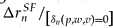 . The gain from participation includes a change in earnings, vbn − pαnf(x*n), that may be negative, plus the savings of labor, wx*n. Conditions (16) and (17) can be combined to give

Equation (18) suggests that the gain per unit of land includes the direct gain from participation when it occurs, and an indirect gain from an increase in land rent due to changes in w and p. To assess the overall effect of the PES on landowners, we have to multiply the per-land unit effects of equation (18) by the land of the farmer and add the effects of the policy on consumption and labor of the landowning household. After manipulating terms, we obtainFootnote 6

Small farms will be affected by the PES program in three ways. First, there is the land rent effect that is likely to be positive. This effect is equal to ΔrSFnLn and reflects gains per acre times the size of land (as seen in equation (18)). Additionally, there is the wage rate effect, Δw. Since smallholders are often also farm workers, they may be affected by the reduction or increase in the wage rate due to the PES program. Farm households that participate in the wage labor market will gain when the wage rate effect is positive, and lose when it is negative. The third term in equation (19) is the output price effect on consumption, −ΔpQ, which is likely to reduce welfare, since smallholders are often consumers of the output they produce. The overall effect of the PES program on the welfare of small farms depends on the relative magnitude of the three effects. Table 1 summarizes the potential positive and negative impacts on all three sectors, and presents the conditions under which the poor in each sector are likely to gain.
Impact of land-diverting PES on poverty reduction by economic sector

Since landowning households generally constitute an important segment of the rural population and this group is likely to be the most directly affected by PES programs, in the following section we use equation (19) to analyze the distributional impacts of PES on these households when key production parameters vary.
Heterogeneity and PES impacts on landholders
Equation (19) suggests that the size of the farm, Ln, the productivity of the land for agriculture, αn, and ES produced when land is diverted, bn, determine the differential impacts of PES programs on rural households. Heterogeneity among households reflected by differences in these key coefficients will result in wide variations in the impacts of PES on landowning households. Small units with low land productivity in agriculture and with limited potential for supplying ES that do not participate in the ES program will gain little land rent, and the impact of the PES program on their well-being will be similar to the impact on the landless, through changes in agricultural product and wage prices. On the other hand, large units with high agricultural productivity and/or high environmental amenities that participate in the program will gain from the difference, vbn − pαnf(x*n) + wx*n. Large units will also gain relatively more due to the appreciation of output prices, Δp[αnf(x 0n)Ln − Q], since Ln is clearly larger but Q is likely to be similar or lower for largeholders versus smallholders. Largeholders, who are more likely to hire labor, will also gain relatively more when wages decline, with the gain equal to Δw(1 − x 0nLn).
A more detailed analysis of the impacts of PES programs on landowning households requires assumptions about the properties of Ln, bn, and αn. We assume that these parameters are well-behaved (continuous, differentiable) functions of the variable n, so that 0 ≤ n ≤ N 1.Footnote 7 Additionally, we assume that land rents always increase in response to an introduction of the PES program. We consider several scenarios.
Heterogeneity in productivity among households with the same size landholding
For the following cases, we assume that Ln = L. By our initial assumption, the productivity coefficients are increasing functions of n, ∂αn/∂n > 0. In this case, we are supposing that poorer households hold lands lower in agricultural productivity. We assume that marginal benefits of n are constant for ES, e.g. bn = βn, but also consider both positive and negative βs.
1. A case of negative correlation between ES and agricultural productivity (β < 0). We define a critical n, nC. At this critical value

In this case all households with poorer quality agricultural land, n < nC, will participate in the PES program. Households with better quality land (n>nC) will not participate in the program. Furthermore, the differentiated impact of participation in the PES program amongst households is derived by differentiation of (19) with respect to n when δn(p, w, v) = 1 to yield

Equation (21)Footnote 8 suggests that when the farms are of equal size and environmental benefits are negatively correlated with agricultural productivity, the introduction of the PES program will provide more benefits to poorer households. For example, cases with negative correlation are likely to occur where poorer farmers hold marginal agricultural land (shallow soils or hills) also inhabited by valuable wildlife. In these cases, transition from farming to conservation will benefit poor households.
2. No correlation between environmental benefits and productivity (β = 0). The outcome is the same for the case of negative correlation with the same critical n, nC defined above. Here, households with less productive land will participate in the PES program and, as suggested by equation (20), will gain relatively greater benefits since the opportunity costs of shifting land out of agriculture are still greater at higher n.
Another benefit of the two cases where β ≤ 0 is that the least-productive lands are taken out of production, and thus the impact on the prices of output and labor is smaller than if the same area of more productive land were diverted to provide ES. Thus, these cases have relatively desirable impacts also for the urban poor and the landless.
3. Positive correlation between ES and productivity (β>0) with increasing productivity differences among lands (∂2α/∂n 2>0). This is the case where agricultural land productivity is a convex function of n and increases with n at a greater rate than the ES. This may be the case where lands closer to a body of water provide more valuable environmental benefits, but restricting access to water has an even larger impact on farm productivity at the margin. In this case, households with n < nC (where lands provide less valuable ES) are still those that participate in the program, but now those with both greater agricultural productivity and ES benefits continue to farm. Again, the PES program is beneficial to those with the poorer agricultural land quality.
4. A case of positive correlation between ES and productivity (β>0) with declining productivity differences among lands (∂α2/∂n 2 < 0). This is the case where productivity is a concave function of n, and the marginal increase in α is declining with n, while the marginal increase in b is constant. Equation (19) presents the formula for the critical n, nC. However, in this case the richer households, n > nC, are the ones that participate in the PES program, and the poorer ones continue to farm. From (19), the poorer farm units not enrolled in the program will still benefit if

By differentiation of (22) with respect to n, we obtain

Among the poor who do not participate in the PES program, the gain from the program increases with productivity. Thus, whereas all landholders will gain from the program, those with poorer land quality gain relatively less.
We find that those holding lands poor in agricultural productivity will gain proportionately more than their high-quality landowning counterparts from the PES program when the correlation between land quality associated with productivity of the ES and agricultural products is negative or zero, so that those with poor agricultural land participate in the program. Even if the correlation is positive, but the impact of land quality on agricultural production is increasing at a growing rate, the same results hold. In the case where returns to quality are increasing at a decreasing rate, it will be those with relatively better quality agricultural lands who join the program. Poorer households will still gain (again assuming the land rent gains are positive), but those with the lowest quality land will gain less, so that the distributional effects will be regressive. Next, we consider cases with differences in size of landholding.
Heterogeneity in productivity when household landholding size varies
For the following cases, we assume that well-to-do households own more land, ∂Ln/∂n > 0. As before, we assume that the marginal benefits of n are constant, bn = βn, but consider both positive and negative βs.
1. A case where richer households hold lands more productive for agriculture, ∂αn/∂n > 0, and there is a non-positive correlation between ES supply and agricultural productivity (β ≤ 0). The critical n value defined in (24), nC, separates poorer households, nC>n, that participate in the program from the richer ones that do not. A participating household benefits from the PES program if

If the program has no impact on wages and output prices, even the smallest household will benefit. However, if it leads to an increase in output price and reduction in labor costs, and small landowners cannot generate the gains that will overcome the extra costs due to these price changes, small landowners may lose from the PES program, despite their participation in it. To assess the impact of participation on households of different landholdings, we differentiate (24) with respect to n to obtain
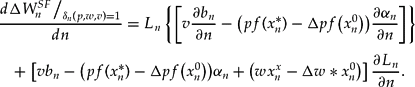
The first element on the right-hand side of equation (25) is negative and is the direct effect of having per-hectare land quality favoring provision of the ES on the poorer households’ well-being. The second element, the marginal effect of larger landholding size on household welfare, depends on the changes in land rent, which are positive for those who enter the program. This effect clearly favors those with larger landholdings. Distributional consequences then depend on whether the direct benefits to smallholders of enrolled land that provide very high ES benefits outweigh the higher land rents per hectare gained by both small and large landholders. Thus, if households with larger landholdings have higher agricultural productivity, and ES supply is non-positively correlated with size, poor households will participate in the program, but the poorest ones may gain less than enrolled units with more land.
2. A case where richer households do not hold lands more productive for agriculture, ∂αn/∂n ≤ 0, and there is a positive correlation between ES supply and agricultural productivity (β ≥ 0). In this case the richer households, with nC < n, will participate in the PES program. Poorer households that do not participate will benefit or lose from the program depending on the sign of

If the program does not affect prices, it will not have an impact on non-participants. When both output prices and wage rates increase, smallholders will lose from the establishment of the program if the gains from higher output price and less labor allocated to own production activities are smaller than the sum of the extra consumption costs and lower labor earnings. Differentiation of (26) with respect to n yields

Households with more land that do not participate in ES programs are likely to benefit more (or lose less) with the introduction of the program, due to higher land rents that increase production profits per hectare.
With heterogeneity in landholdings, the distributional consequences of the introduction of an ES program are more likely to be regressive than heterogeneity in land quality alone, particularly when the introduction of the program leads to higher land rents per hectare.
The impacts of PES for land diversion programs under heterogeneous land conditions are summarized in figure 2. Thus far, we have discussed PES programs that involve taking land out of production, but what about the impacts of WL programs?
Potential impacts of PES programs on poor landowners under heterogenous productivity and land distribution conditions

4. WL PES programs and their implications for the poor
PES programs that require diversion of land from production to ES are relatively easy to model as compared to WL programs, which require modification of farming activities rather than land-use change to generate environmental amenities. With land diversion programs, there is a separation between agricultural production and the generation of environmental amenities, while in WL programs environmental amenities are generated through the agricultural production process, and there is considerable variation in how these programs could work, making generalized modeling more challenging. For example, some WL programs may aim to sequester carbon in soils by reducing tillage, slow runoff, and erosion. In some cases these activities may increase production costs with limited impact on output. Another WL program may aim to reduce chemical use, which may lower yields and require a substitution of chemicals with labor. Econometric applications and simulations are especially challenging when modifying the production function to accommodate the specific WL program. Here we will assume that the WL program reduces yield by a certain fraction, γ, and increases the labor requirement by a certain amount per unit of land θ. On the other hand, the program pays vbn per unit of land. This may correspond to WL programs that restrict tillage and pest-control activities to reduce pollution or to protect wildlife. As before, δn(p, w, v) is equal to one if the nth household is participating in the program and is equal to zero otherwise. When the nth household participates in the WL program, its rent per unit of land is the solution to the optimization problem

Let x δ=1n be the optimal labor per unit of land if the household participates in the WL program. This consists of labor needed to accommodate the initial production technology and to generate the ES. The optimal level of labor for agricultural production is then  , and is obtained by the solution to the first-order condition

The land rent of non-participants is r δ=0n and is pαf(x) − w(x) for non-negative x values, with optimal x δ=0n determined where pαf'(x δ=0n) = w. The nth household will choose to participate in the WL program, δn(p, w, v) = 1, if

Participation is worthwhile if the payment for the ES is greater than the extra labor cost plus the revenue loss associated with the lower output. The aggregate output supply and labor demand can be derived, using the same aggregation procedure we followed for the land diversion program. The introduction of the WL program may result in changes in output price if output demand is not perfectly elastic. A direct comparison of the land diversion programs is not possible, since the overall impact will depend on how many acres enroll for a given payment; however, for any given level of enrollment, agricultural output will be higher under a WL program, and thus prices will increase less. On the other hand, labor wage is more likely to change with participation in the WL program vis-à-vis diversion programs. If θ is sufficiently large, the wage rate increases (Δw), total output decreases (ΔY < 0), and output price increases (Δp ≥ 0).
The impact of the WL program on the urban poor presented in equation (18) is ΔWUP = −ΔpQ + ΔWEP. When output price is increasing and the environmental benefits of the WL program for the urban poor are small, the urban poor are likely to lose from the introduction of the WL program. In this regard, the impacts of the WL program are to those arising from a land diversion PES program. The impact of the WL program on the rural landless from equation (15) is ΔWLL = −ΔpQ + Δw. As in the case of the land diversion program, the landless will have to pay more for the products they buy but, unlike the case of land diversion, the earnings of the landless are more likely to increase with the WL program, and thus the landless are more likely to gain from the introduction of this program.
To assess the impact of the WL program on landowners, the change in the land rent due to the introduction of the program can be derived in a manner similar to the derivation of equation (22) in the case of land diversion. The change in rent is

The change in the welfare of the nth household is thus

The difference between equations (32) and (19) – where equation (19) captures changes in smallholder welfare from the introduction of a land diversion program – is equal to

when evaluated at the same p, w pair. Given our assumption that profits are non-negative for participants in any program, equation (33) is always positive. Under the most realistic scenario, we expect output prices to increase less and wages to increase more under the WL program, reinforcing the likelihood that rents per hectare will be lower under a WL program. Thus, urban consumers and rural landless are likely to be better off than under the land diversion program, but landowners may not benefit as much.
Next, we can follow the discussion in section 3.2 and evaluate the changes in the welfare of landowners when landholdings and land productivity vary across the n households. Equation (32) suggests that if bn is negatively correlated or uncorrelated with αn, households with less productive lands will participate in the WL program. The critical n in this case is

In these cases, households with less land will gain from the WL program, both directly as their income increases from the payment, and indirectly if θ is sufficiently large to induce higher labor prices. However, these gains will be reduced to the extent that smallholders are net buyers of agricultural products, since the output price increases.
If both bn and αn increase with n, but ∂bn/∂n>∂αn/∂n, households with greater agricultural productivity participate in the WL program. The less-productive households that do not participate in the WL program will benefit if they do not have much land and the labor price effect of the program outweighs the output price effect. Thus, if a WL program pays farmers to not use chemicals, which results in an increase in labor demand, riparian households with high productivity land and even higher relative marginal contributions to ES generation will join the WL program. Less productive households will not participate but may gain from it because of increased labor demand. In the case of payment for conversion to low tillage or for the use of traditional varieties that reduce land productivity and have little impact on labor demand, non-participants in the program will not benefit when the output price effect dominates the labor price effect.
If we relax the assumption of homogenous resources and allow heterogeneity among landowning households, assume that the distribution of land is unimodal and similar in shape, and well-to-do households have an average higher mode of land productivity, we can show the following:
A. Negative or no correlation between agricultural land productivity and ES coefficients results in higher participation in the WL program by poorer farmers. If smaller households have the least land, they may lose despite participation because of the higher consumption costs and lower labor earnings. Alternatively, smallholders gain from the program if the payment has a stronger effect on agricultural profits vis-à-vis impacts on consumption and wage labor.
B. A positive correlation between productivity and the ES coefficient where marginal ES is convex in productivity and will result in a higher percentage of participation by well-to-do farmers. If the high productivity farmers also have more land, they will be the main beneficiaries of the PES program, while poorer farmers may lose as the positive gains in land rent will be outweighed by losses resulting from higher consumption costs and lower wage earnings. The results of the analysis of the impact of WL PES programs on the poor under heterogeneous land quality and distribution are shown in figure 3.
Figure 3.Potential impacts of PES programs on poor landowners under heterogenous productivity and land distribution conditions


5. Application to selected countries
Our analysis has indicated a set of factors that are important determinants of the potential poverty impact of PES programs. These include the distribution of land and heterogeneity amongst farmers in land productivity with regard to agricultural and ES production, as well as the price elasticity of food demand and the elasticity of agricultural wages with respect to changes in local labor supply.
In this section, we use data from a small set of developing countries to illustrate how concepts developed above may be applied to real-world situations. National-level statistics on agricultural population per hectare of arable land are used as a crude indicator of the supply conditions in agricultural labor markets for a selected sample of countries. We assume that countries with high ratios are likely to have more excess labor supply than those with lower ratios, recognizing this will be highly conditioned by the distribution of agricultural land, type of technology employed in agriculture, and migration. To capture land distribution, we look at the Gini coefficients on the distribution of landholdings for the same selected set of countries. These two statistics are used to develop a categorization of countries by population density and land distribution, as shown in table 2. We identify a set of farming systems the poor are engaged in for each country group, using information from a FAO study (Dixon and Gulliver, 2002). For countries with low agricultural population densities, those with a relatively even distribution of land are likely to be characterized by extensive forms of agricultural production, where the poor engage in production systems such as slash-and-burn agriculture or pastoral systems, and labor may often be a constraint. In low-density countries with uneven land distribution, which are primarily found in Latin America, smallholder mixed crop and livestock subsistence systems are prominent among the poor, together with a heavy reliance on wage labor as a supplementary income source. In countries with high agricultural population densities and equitable land distribution, labor-intensive smallholder systems, where land rather than labor is the constraint, are frequently found among the poor. In high-density countries with uneven land distribution, the poor are more likely to have very small landholdings and be reliant on wage income, or be landless wage laborers.
Country groups by agricultural population density and land distribution

We consider the likely poverty impacts of introducing WL and/or land diversion PES programs on rural populations across these four categories of countries. For countries in category (1), land diversion programs that release labor and increase land rents could be beneficial to the poor, particularly when they are located on lands poor for agricultural production but high in ES productivity. Here, labor-increasing WL programs are less likely to benefit the poor, as labor constraints preclude participation. In category (2) countries, the implementation of land-diverting PES programs could improve the returns to land held by the poor, but the wealthy are likely to gain relatively more. In this case, the correlation between agricultural and environmental productivity is critical in determining whether poor landholders will benefit. Poor landholders and landless laborers could be hurt if wages fall. WL programs that increase labor demand are most likely to be beneficial to the rural poor through wage effects. In category (3) countries, small average-size landholdings makes land diversion PES programs more problematic, but potentially beneficial to the poor if they own lands with higher returns to ES vis-à-vis agricultural production. For these countries, WL programs may also have a positive impact on poor landholders by increasing land rents, and on the landless, through wage effects. For category (4) countries, WL programs which stimulate the demand for agricultural labor and increase wages may have the greatest promise for positive impacts on the rural poor; however, land diversion programs are likely to result in losses.
6. Conclusions and implications
We have shown that meeting two objectives – improving environmental quality and reducing poverty – with one policy instrument can be challenging. Our analysis suggests there are circumstances where PES programs can achieve both objectives, but trade-offs arise between environmental and distributional objectives under many plausible scenarios. Several aspects need to be considered in assessing the potential for PES to have a positive distributional effect.
The first is the difference between production versus consumption and labor effects of PES programs. Generally speaking, PES programs are good for landowners because they are directly compensated for providing ES at a level that is equal to or greater than the value of production they forego, or they benefit from increases in output prices, and, potentially, reduction in labor costs. Consumers, however, may lose from the introduction of a PES, particularly where the demand for locally produced food is inelastic, highlighting the importance of considering the degree of integration into global food markets as an important indicator of potential poverty impacts of a PES program. Wage laborers are likely to lose from land diversion programs, which reduce labor demand and wages; however, they could gain from WL programs that increase labor demand. Here, too, the integration or isolation of labor markets will determine the strength of the PES impact on labor market conditions. Clearly, the type of PES program – land diversion or WL – is also critical in determining the distribution of impacts across consumers, laborers, and landowners. Labor and land management specifications matter and vary among PES programs, but in general the poor are more likely to benefit from WL programs that increase demand for labor, rather than land diversion payments that reduce labor opportunities.
Focusing on the effect of PES programs on landowners, we find that the distribution of land is a critical determinant of potential poverty impacts. Where land distribution is unequal, and smallholders have a high percentage of income from wage labor, they may incur significant losses with the introduction of land diversion PES programs via labor market effects. However, the distribution of land quality matters as well. Where lands that are poor in agricultural productivity are highly productive in supplying ES, and the poor are more likely to be located on lands of the latter type, the potential of PES programs to generate positive impacts for the poor are greater, which may offset negative impacts associated with unequal land distribution. Conversely, if the owners of larger farms also have lands of higher agricultural productivity and ES supply potential, then the poor with small parcels of low productivity land for either agricultural or ES supply can experience significant losses (see Pfaff et al., Reference Pfaff, Robalino and Sanchez-Azofeifa2006, for a discussion of the potential distributional consequences targeting PES to high rent lands in Costa Rica).
Another important finding of the analysis is that the impacts of PES programs may vary in their absolute vs. relative impacts on wealth distribution, using an approach developed in Just and Zilberman (Reference Just and Zilberman1988). Absolute effects refer to changes in individual utility, whereas relative effects are defined as changes in individual utility relative to the population average. The distributional effects of PES programs may differ depending on whether relative versus absolute effects are considered. For example, if PES goes mostly to the well-to-do farmers, but because of output price effects smaller farms are also better off, everyone is better off in absolute terms, but the smaller farms are worse off in relative terms. Situations where the poor may realize both absolute and relative gains are more difficult to obtain. Our analysis suggests that situations where land is fairly evenly distributed, but the quality of land held by the poor is more productive in ES supply than in agriculture, are the most likely to result in both absolute and relative gains.
The analysis here can and should be expanded to take a more in-depth look at factors that may affect the environmental and/or poverty impacts of PES programs. One important issue for the former is leakage, which can be introduced by allowing every household to have some land that is not utilized under initial agricultural price levels, but is brought into production in response to higher output prices resulting from the PES. The argument in Wu et al. (Reference Wu, Zilberman and Babcock2001) is relevant here, where leakage eliminates some of the environmental gains of the PES. Scenarios can be developed where PES programs could have both negative environmental and distributional effects as a result of leakage. For example, if most of the benefits go to large farmers, who are also the owners of extra land brought into production as leakage, environmental damages associated with the production on this land could be larger than the ES benefits gained from lands devoted to ES supply, generating a ‘lose–lose’ situation for both the environment and equity.
Several areas for extending the research on the poverty impacts of PES can be identified as well. The analysis presented here gives important insights for assessing the potential, type, and location of PES programs that might benefit the poor. However, it needs to be extended to consider barriers the poor face in participating in PES programs, such as transactions costs, risk aversion, investment constraints, and property rights. An emerging literature is available on these issues in the context of poverty and PES, and insights from this work can be used in developing extensions of the present work (c.f. Cacho and Lipper, Reference Cacho and Lipper2006; Pagiola et al., Reference Pagiola, Arcenas and Platais2005; Lipper and Cavatassi, Reference Lipper and Cavatassi2004; Landell-Mills and Porras, Reference Landell-Mills and Porras2002). One key area for further work is on PES and risk. Where farmers operate under weather and pest uncertainties, PES can affect both their average income and distribution of income. A potential advantage of PES programs may be in providing stable income relative to other sources, and under reasonable conditions smaller farms that are more vulnerable to risk are more likely to participate. On the other hand, potential reduction in food supply due to PES could augment food insecurity and increase the fluctuation of food prices. Another important extension will be considering cases where ES provision generates benefits in both the rural and urban sectors, e.g. where the suppliers may also be beneficiaries of the service.
One of the most promising areas of future research in this field is empirical work using spatial data on poverty, agricultural productivity, and potential ES supply to further investigate the potential benefits the poor may realize with PES programs. Combining this type of information with micro-level data on household natural resource decision-making will provide considerably more insight into where, when, and how the poor may benefit from PES programs.





