Introduction
Soybean, Glycine max (L.) Merrill (Fabaceae), is a major oilseed crop of the rainfed agro-ecosystems of central and peninsular India. It is grown over an area of 9.95 million ha with production of 12.57 million tonnes, thus playing an instrumental role in the socioeconomic development of small and marginal farmers of the region. India is the fifth largest producer of soybean in the world after the USA, Brazil, Argentina and China (Sharma et al., Reference Sharma, Gupta, Verma, Sharma, Bhagat, Amaresan, Saini, Chattopadhyay, Sushil, Asre, Kapoor, Satyagopal and Jeyakumar2014). Despite the phenomenal increase in area and production, productivity of the soybean crop has not increased markedly in the last 30 years, hovering around 1264 kg/ha compared to world productivity of 2233 kg/ha (Anonymous, 2007; Sharma et al., Reference Sharma, Gupta, Verma, Sharma, Bhagat, Amaresan, Saini, Chattopadhyay, Sushil, Asre, Kapoor, Satyagopal and Jeyakumar2014). The low productivity of soybean is attributed to several abiotic and biotic stresses, such as temperature, drought, weeds, insect pests and diseases. Among these, insect pests often pose a serious threat causing severe yield losses ranging from 20 to 100% (Gain and Kundu, Reference Gain and Kundu1988; Kumar et al., Reference Kumar, Nguyen, Nirmala and Hiremath2009; Sharma et al., Reference Sharma, Gupta, Verma, Sharma, Bhagat, Amaresan, Saini, Chattopadhyay, Sushil, Asre, Kapoor, Satyagopal and Jeyakumar2014; Gaur et al., Reference Gaur, Sharma and Nautiyal2015).
Stem fly Melanagromyza sojae Zehntner (Diptera: Agromyzidae) has emerged as a major pest in the soybean growing areas of India over the last two decades (Kundu and Srivastava, Reference Kundu and Srivastava1991; Venkatesan and Kundu, Reference Venkatesan and Kundu1994; Patil, Reference Patil2002; Savajji, Reference Savajji2006; Kumar et al., Reference Kumar, Nguyen, Nirmala and Hiremath2009; Naik et al., Reference Naik, Swamy, Chandrappa and Sasivihalli2013; Gaur et al., Reference Gaur, Sharma and Nautiyal2015). The soybean crop is prone to heavy infestation by M. sojae at all the stages of growth and development, right from seedling to maturity. The maggot of M. sojae enters the stem through the leaf petiole, feeds on the stem pith by mining both upwards and downwards and makes a reddish-coloured tunnel in the affected plant (van den Berg et al., Reference van den Berg, Shepard and Nasikin1998). Infestations in the early crop growth stages cause high seedling mortality and thus reduce the crop stand. Infestations during later growth stages do not kill the damaged plants; however, they may significantly affect the yield-attributing characters of the plant, e.g. reduction in plant height, number of branches per plant, number of trifoliate leaves, leaf area per plant and dry matter accumulation (Singh and Beri, Reference Singh and Beri1973; Gangrade and Kogan Reference Gangrade, Kogan, Kogan and Harzog1980; Talekar, Reference Talekar1990; van den Berg et al., Reference van den Berg, Shepard and Nasikin1998; Savajji, Reference Savajji2006). Average yield losses of 20–30% due to M. sojae infestation in soybean have been reported from various parts of the world (Du and Hong, Reference Du and Hong1982; Singh and Singh, Reference Singh and Singh1992; Venkatesan and Kundu, Reference Venkatesan and Kundu1994; Jayappa, Reference Jayappa2000).
Many studies that describe the infestation levels of M. sojae in soybean have been undertaken (Gain and Kundu, Reference Gain and Kundu1986; Kundu and Srivastava, Reference Kundu and Srivastava1991; Patil, Reference Patil2002; Savajji, Reference Savajji2006; Naik et al., Reference Naik, Swamy, Chandrappa and Sasivihalli2013; Gaur et al., Reference Gaur, Sharma and Nautiyal2015). Most of these studies used the percentage of stem tunnelling as a measure of infestation and considered merely one or two phenological stages of the host crop for sampling. Only two reports have explored the seasonality of M. sojae densities that occur at different phenophases of the soybean (van den Berg et al., Reference van den Berg, Ankasah, Hassan, Muhammed, Widayanto, Wirasto and Yully1995; Abdallah et al., Reference Abdallah, Boraei and Mohamed2014); however, this knowledge gap is critical for soybean varieties grown in India. The number of M. sojae individuals that the soybean crop can support at various growth stages would have a significant negative influence on the yield-attributing characters, such as plant height or vigour, number of leaves and dry matter accumulation. Further, this information forms a basis to quantify M. sojae damage in terms of yield loss in soybean. The planting time throughout the soybean growing areas in India is not uniform, owing partly to the onset of the monsoon rains and the availability of farm inputs. This creates a mosaic pattern of a soybean crop of different ages and growth stages in different areas, extending the window of host crop availability for the colonization and population build-up of the pest. Finding out the critical phenological stage of the host crop during which it is more prone to attack by the pest seems more reliable. Generating such information is crucial in framing holistic management strategies for this pest, e.g. manipulation of sowing times to escape the most susceptible host stage. A variety of chemical insecticides, such as thiamethoxam, chlorantraniliprole, imidacloprid, triazophos, and profenophos, are being used in a desperate attempt to manage the ravaging effects of M. sojae in soybean (Dey et al., Reference Dey, Mukherji and Trimohan2008; Kumar et al., Reference Kumar, Nguyen, Nirmala and Hiremath2009; Sharma et al., Reference Sharma, Gupta, Verma, Sharma, Bhagat, Amaresan, Saini, Chattopadhyay, Sushil, Asre, Kapoor, Satyagopal and Jeyakumar2014). However, desired control of M. sojae is not achieved, because of its cryptic nature. The maggots and puparia are concealed inside the leaf or stem of the host crop and seem to be well protected from insecticidal applications, as well as natural enemies like predators and parasitoids. Another critical issue in the management of M. sojae is the lack of consistent biological control. A variety of parasitoid species has been reported from field-collected maggots and puparia of M. sojae from various parts of the world (Rose et al., Reference Rose, Lin, Kung, Kao, Su, Chang and Goodman1976; Ipe and Bhati, Reference Ipe and Bhati1977; Talekar, Reference Talekar1990; van den Berg et al., Reference van den Berg, Ankasah, Hassan, Muhammed, Widayanto, Wirasto and Yully1995, Shepard and Barrion, Reference Shepard and Barrion1998; Jayappa, Reference Jayappa2000). However, the level of parasitism rarely exceeds 50% and it often comes late in the season when the insect has caused significant damage. Unfortunately, there is a lack of quantitative data on seasonality of parasitoid species, which has substantially limited the commercial utilization of parasitoids in suppressing the populations of M. sojae.
The present study determines the seasonal density dependence of M. sojae parasitoids and the level of parasitism in field samples using host density as a predictor variable. We also explore the diversity and relative abundance of the M. sojae parasitoid complex in the soybean ecosystem of peninsular India. The information generated on seasonality of M. sojae and its parasitoid complex at different phenological stages of soybean will be crucial in quantifying the M. sojae damage in terms of yield loss in soybean and also in gauging the usefulness of parasitoids for inclusion in an effective management strategy against M. sojae.
Materials and methods
The seasonal densities of M. sojae and its parasitoids were measured in soybean (cv JS-335) during the kharif (rainy) seasons (June–October) of 2014 and 2015 grown in the experimental farm of ICAR-National Institute of Abiotic Stress Management (ICAR-NIASM), Malegaon, Baramati in the District Pune of Maharashtra State in India (18.13° N, 74.52o E, 566 masl). The crop was sown on 10 and 12 July during 2014 and 2015, respectively, and maintained by following all the recommended agronomic practices. The soil application of phorate (Thimet 10 G) @ 10 kg/ha and foliar spraying of thiamethoxam (Actara 25 G) @ 0.3 g/litre were given at the fifth and seventh week of crop age, respectively, aiming at controlling the major pest complex of the soybean crop.
Starting from the first week after sowing till harvest, about 40–50 infested plants were sampled at weekly intervals. Each sampled plant was observed for the presence of stem fly damage and the numbers of infested plants recorded and converted to percent infestation. The values of the weekly percent infestation for each crop season were plotted against the crop age to see the seasonal trend. The samples of damaged plants with stem tunnels were collected in sterile polyethylene bags and brought to the laboratory for dissection. All stems and branches were carefully split open from top to bottom at tunnelled regions using a sharp scalpel. The live maggots and puparia recovered from damaged stems and/or branches were recorded. The maggots of M. sojae were collected by cutting 2–3 cm fragments of soybean stems. Every 3 days until puparia formation, maggots were carefully transferred with a camel hair brush to a new stem fragment. The pupae were transferred in numbered and dated homeopathic glass vials till the emergence of M. sojae adults and/or parasitoids. Stem fragments or puparia separated from one plant were put together inside a 60-ml glass tube, with a piece of tissue paper secured underneath the lid to prevent condensation inside the tube. Tubes were kept for 2–3 weeks until all adult flies or parasitoids emerged. Parasitoids were collected in small, homeopathic vials and provided with a 10% honey solution. The mean densities of M. sojae and its parasitoids (i.e. numbers per plant) were estimated and plotted against the crop age to represent the seasonal trend. Based on the data on parasitoid emergence, the values for percent parasitism were computed and plotted against host density and crop age.
The parasitoids emerged from field-collected samples were examined under a stereomicroscope (Leica S8-APO). Based on preliminary observations, parasitoids supposedly of different species were stored separately in 70% ethanol in properly labelled homeopathic glass vials for future reference. The identity of M. sojae was confirmed by Dr Kumar Ghorpade, Scientist Emeritus and Honorary Research Associate in Systematic Entomology, University of Agricultural Sciences, Dharwad, Karnataka, India. All the parasitoids recovered from puparia of M. sojae were identified by Dr P.M. Sureshan, Scientist – D (Taxonomy: Entomology) from the Zoological Survey of India, Western Ghats Regional Centre, Kozhikode, Kerala, India. The numbers of different parasitoid species that emerged during the soybean growing season were recorded. The proportion of different parasitoids was plotted against crop age at weekly intervals to represent the seasonal trend of density and diversity.
The relationships between density of M. sojae and its parasitoids, and also between host density and percentage of parasitism in the field, were determined by fitting weighted least squares regression (WLS) with binomial error structure using the Real Statistics data analysis tool pack in MS-Excel-2010 (Available online at http://www.real-statistics.com/multiple-regression/weighted-linear-regression, Accessed on 24/11/2015). The choice of WLS was oriented towards the arbitrary distribution of the response variables, i.e. density of parasitoids and percentage of field parasitism. This analysis assumed that variance of the response variables (i.e. density of parasitoids and percentage of field parasitism) vary linearly with host density rather than assuming response variables themselves must vary linearly. This was possible through the creation of an additional variable called ‘weight’. Weights were assigned as the squared inverse of predictor variable, i.e. M. sojae density (Willet and Singer, Reference Willett and Singer1987). Weekly M. sojae density was used as a predictor variable to test the density dependence of parasitoid numbers per plant and field parasitism in M. sojae. The analysis was conducted separately for parasitoid density and percent parasitism, by regressing against mean weekly values of host density of two soybean seasons, i.e. 2014 and 2015. The significance was tested at P ≤ 0.05% level and residual deviance of fit ≤ residual degrees of freedom (van den Berg et al., Reference van den Berg, Ankasah, Hassan, Muhammed, Widayanto, Wirasto and Yully1995).
Results
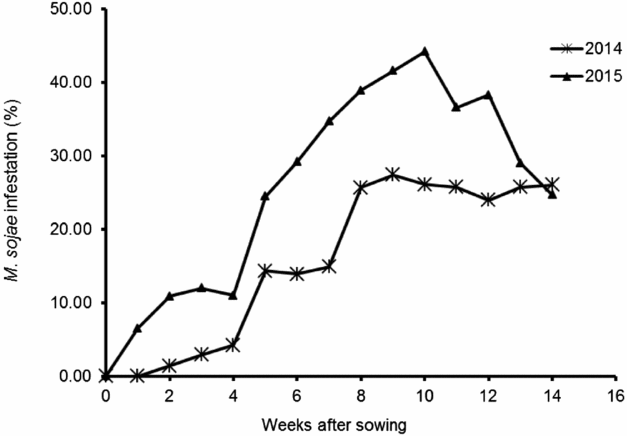
During both seasons, the infestation was initiated at seedling stage, starting from the first week after sowing and continuing up to the 14th week until harvest when live puparia could still be found inside the infested stems. The infestation was initially low, reaching its peak from the 5th till the 10th week after sowing, before declining towards the end of the season. The percent infestation of M. sojae during the crop seasons of 2014 and 2015 depicted in Fig. 1 indicates that the infestations remained at relatively low to moderate levels. The mean seasonal infestation during the soybean seasons of 2014 and 2015 ranged between 4.32 and 38.13%.
Seasonal incidence of Melanagromyza sojae on soybean during kharif seasons of 2014 and 2015.

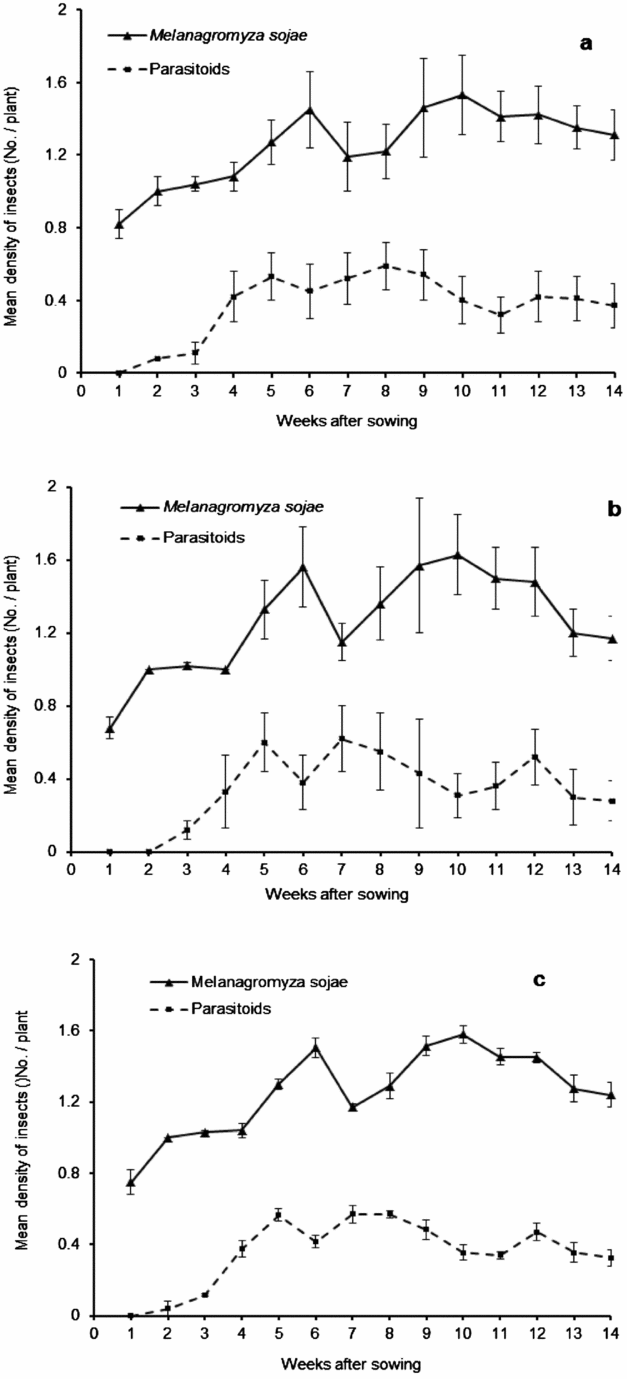
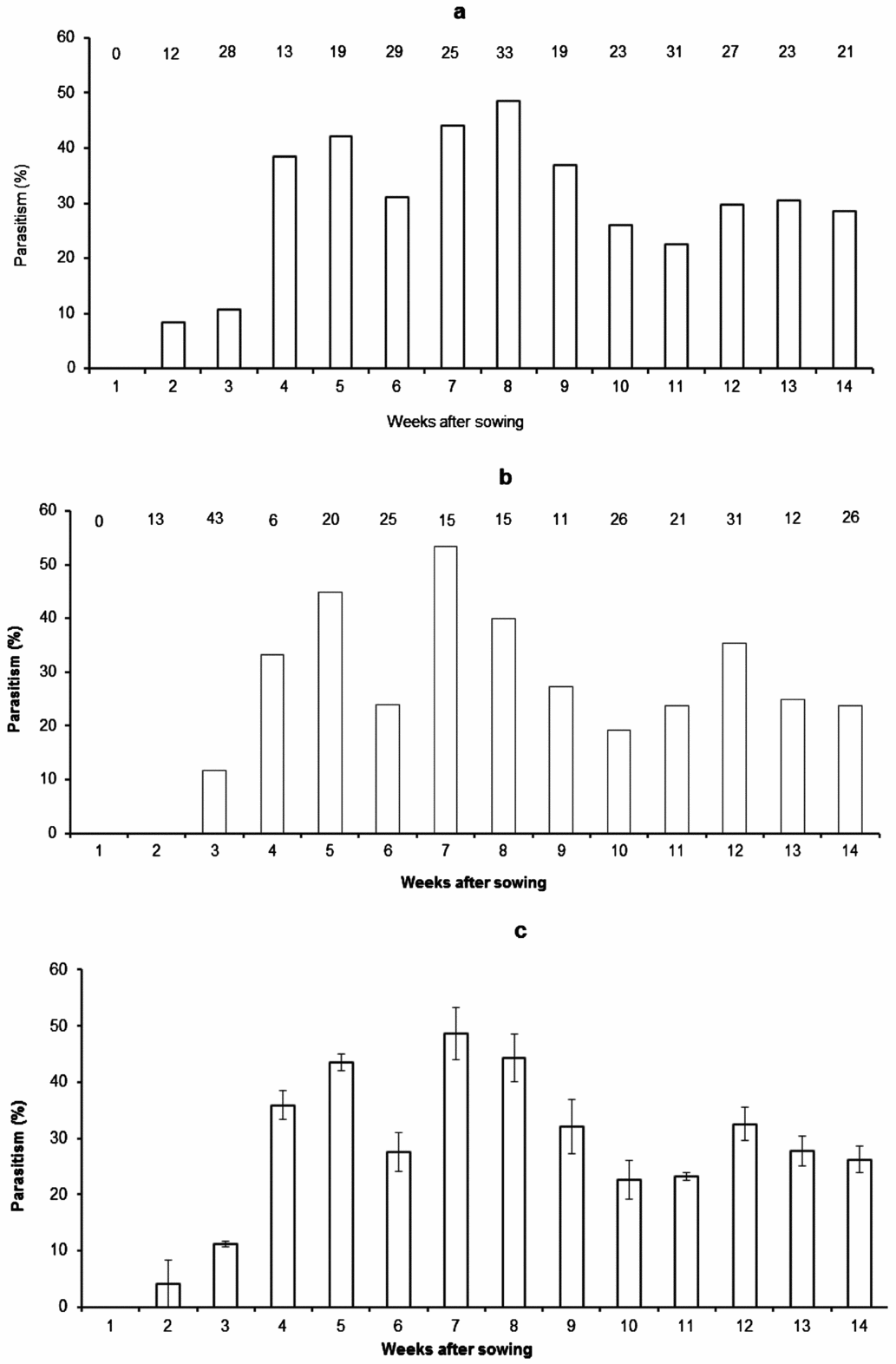
The peak pest densities coincided with the peak flowering (R2) and pod formation (R3) stages of the host crop. The average weekly pest densities during both seasons were generally below 1.7 larvae or pupae per plant, though in a few cases M. sojae numbers per plant were as high as 4. Mean densities of M. sojae during the soybean growing season of 2014 ranged between 0.82 ± 0.08 and 1.53 ± 0.22 maggots or puparia per plant, whereas the densities during the kharif season of 2015 were between 0.68 ± 0.06 and 1.63 ± 0.22 (Fig. 2). Similarly, parasitoid populations were low at the beginning of the crop season and built up during the mid-season starting from fifth week after sowing till the end of the season. Mean parasitoid densities during the 2014 crop season ranged between 0.08 ± 0.00 and 0.59 ± 0.13 parasitized pupae per plant, whereas those during the 2015 kharif season were between 0.12 ± 0.05 and 0.62 ± 0.18 (Fig. 2). Parasitism in field samples varied between weeks and also among the crop seasons. Average percent parasitism in field samples during 2014 ranged from 8.33% to as high as 48.48%, whereas its value ranged between 11.63% and 53.33% during the 2015 crop season (Fig. 3).
Mean densities of Melanagromyza sojae and its parasitoids in field during the kharif seasons of 2014 (a), 2015 (b) and mean of two crop seasons (c).

Percentage parasitism of Melanagromyza sojae based on field-collected samples during the kharif seasons of 2014 (a), 2015 (b) and mean of two crop seasons (c). The parasitism values are based on the field-collected total number of immature stages of stem fly that are reared until emergence of adult fly or parasitoid (Values indicated at the top of each bar).

Fitting host density as an explanatory variable was meaningful in describing significant deviance in the parasitoid density (R2: 0.859, P = 0.000008) as well as percent parasitism (R2: 0.806, P = 0.0005) in the field samples of soybean (Table 1), thus showing a density dependence of M. sojae parasitism. The parasitoid density and percentage of parasitism in field were significantly related to the concurrent density of the host insect M. sojae.
Parameters of weighted least squares regression fitted between host density as predictor variable and parasitoid density and % parasitism as response variables

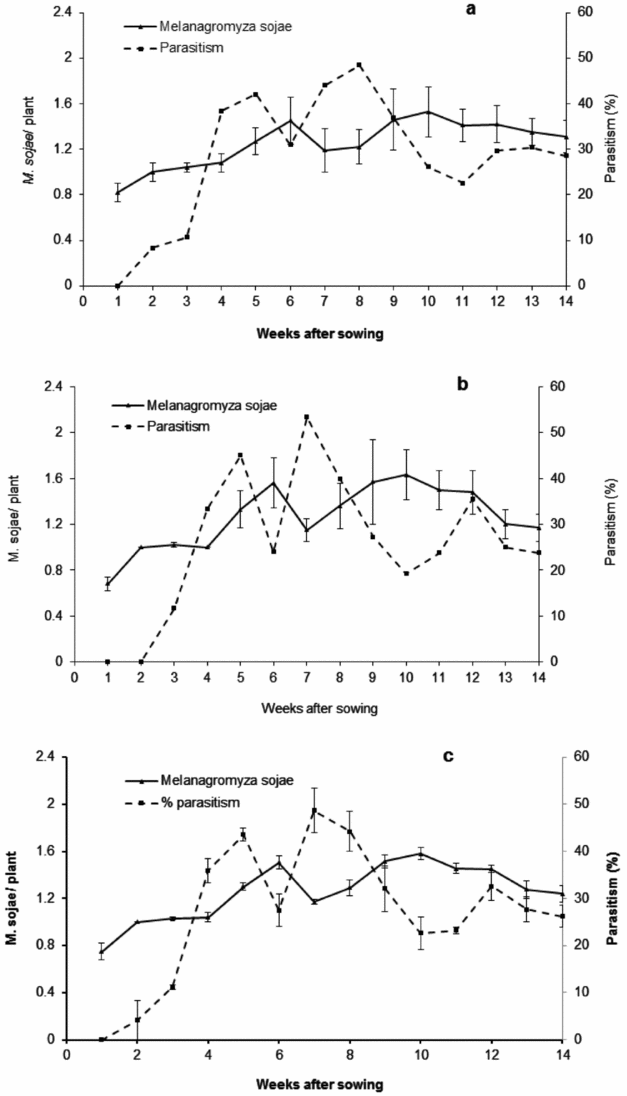
The mean seasonal trends of M. sojae populations and parasitism for the crop seasons of 2014 and 2015, and the combined trend for the two seasons show that parasitoid populations built up concomitant to the host populations exhibiting coexistence (Fig. 4). Populations of both M. sojae and its parasitoid complex built up slowly at the beginning of the season, reached their peak during the mid-season and declined towards the end of the season. Though the parasitoid populations could not reduce the percentage of field infestations, they could reduce significantly the pest numbers in the next generation.
Seasonal densities and percentage parasitism of Melanagromyza sojae during the crop season 2014 (a), 2015 (b) and average of two crop seasons (c).

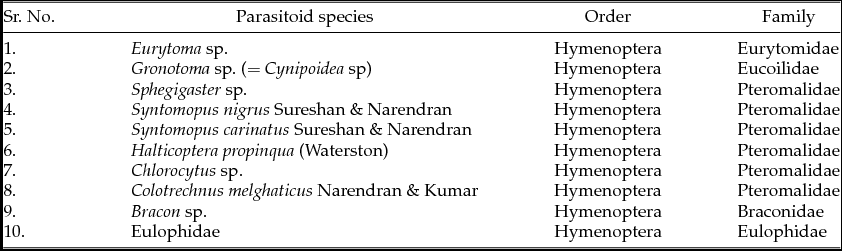
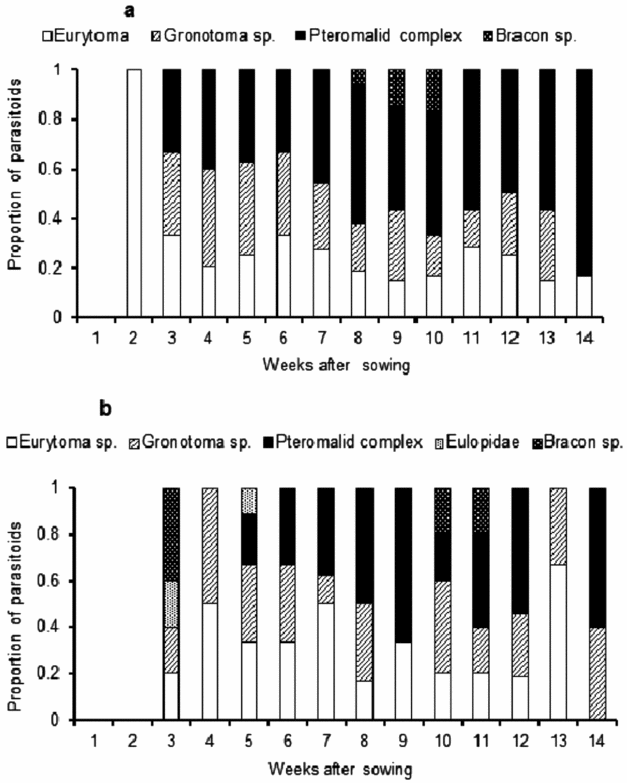
Ten species of hymenopteran parasitoids from five families, namely, Eurytomidae, Eucoilidae, Pteromalidae, Eulophidae and Braconidae emerged from the collections (Table 2, Fig. 5). All the parasitoids emerged from the pupae of the host insect. Under field conditions, the adult parasitoids escaped the plant through the exit holes for adult stem flies made by the host larvae before entering into pupation. Eurytoma sp. and Gronotoma sp. (= Cynipoidea sp.) with an average seasonal parasitism of 26.24% and 23.08%, respectively, were the most prevalent parasitoid species throughout the season. Sphegigaster sp. was the dominant Pteromalidae during the mid-season (mean seasonal parasitism 14%), whereas S. nigrus, S. carinatus, H. propinqua, Chlorocytus sp. and C. melghaticus were present in low numbers towards the end of the season. The Braconidae and Eulophidae were rare (Fig. 6).
Mean seasonal composition (2014–2015) of parasitoid species associated with Melanagromyza sojae in soybean ecosystem of semi-arid tropics of Maharashtra (India)

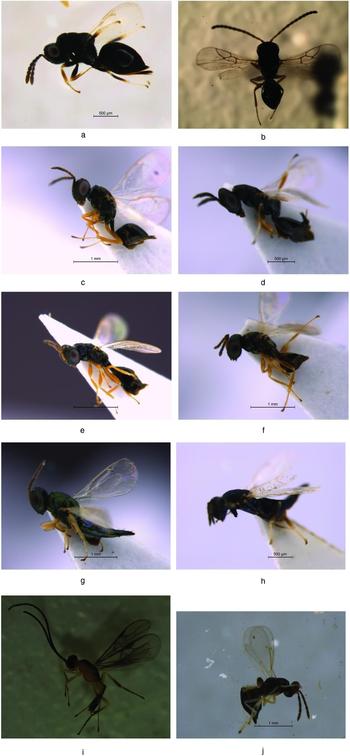
Different parasitoids recovered from puparium of Melanagromyza sojae: Eurytoma sp. (a), Gronotoma sp. (b), Sphegigaster sp. (c), Syntomopus nigrus Sureshan & Narendran (d), Syntomopus carinatus Sureshan & Narendran (e), Halticoptera propinqua Waterston (f), Chlorocytus sp. (g), Colotrechnus melghaticus Narendran & Kumar (h), Bracon sp. (i) and Eulophidae (j).

Seasonal composition of Melanagromyza sojae parasitoids during the crop season 2014 (a) and 2015 (b).

Discussion
Infestation of M. sojae occurred throughout the growing period of soybean during both seasons, i.e. 2014 and 2015; however, the level of infestation remained low to moderate. The mean seasonal infestation during the soybean seasons of 2014 and 2015 ranged between 4.32 and 38.13%. Our results are in close agreement with those of Jadhav et al. (Reference Jadhav, Naik, Giraddi, Babalad and Kataraki2013), who reported that M. sojae infestation in soybean cv JS-335 ranged between 10.87 and 32.84% at Bailhongal, Dharwad in Karnataka State of India. According to various reports, stem fly incidence in Dharwad District of Karnataka State ranged between 15 and 65% (Patil, Reference Patil2002; Anonymous 2004). Earlier workers had reported high levels of M. sojae infestations. Singh and Singh (Reference Singh and Singh1990) reported 72–100% M. sojae infestation of soybean cv Bragg in Madhya Pradesh State of India. Van den Berg et al. (Reference van den Berg, Shepard and Nasikin1998) reported 84% infestation of soybean in farmers’ fields due to M. sojae attack in Indonesia. Gaur et al. (Reference Gaur, Sharma and Nautiyal2015) reported M. sojae infestation from 30 to 100% in soybean cv Bragg at Pantnagar in Uttarakhand State. These deviances in percent infestation of M. sojae may be due to differences in local climatic conditions, soybean varieties grown and agronomic practices. ‘Bragg’ variety of soybean has been reported as being susceptible or with low resistance (Gain and Kundu, Reference Gain and Kundu1988; Awasthi et al., Reference Awasthi, Sharma and Singh2003), whereas another ruling variety of India (JS-335) is reported as moderately resistant to stem fly attack (Awasthi et al., Reference Awasthi, Sharma and Singh2003). Further, there is a great deal of variation in prevailing temperatures, as well as the onset of the monsoons and amount of rainfall received, during the soybean growing season from the northern to southern regions of the country.
The mean densities of M. sojae measured in our study were 0.75 to 1.58 maggots or puparia per plant, though in few individual cases M. sojae number per plant was as high as 4.0. Our results are in close agreement with those reported in the literature. Van den Berg et al. (Reference van den Berg, Ankasah, Hassan, Muhammed, Widayanto, Wirasto and Yully1995) reported peak densities of 1.35 maggots or puparia of M. sojae per plant of soybean in Sumatra. Mean densities of M. sojae based on the number of exit holes per plant ranged from 0.5 to 2.1 in farmers’ fields in Indonesia (van den Berg et al., Reference van den Berg, Shepard and Nasikin1998). Abdallah et al. (Reference Abdallah, Boraei and Mohamed2014) reported that M. sojae densities on five major soybean cultivars viz., Crawford, Giza 22, Giza 21, Giza 115 and Giza 35 at Kafr El-Sheikh region of Egypt, ranged between 0.95 to maximal of 1.35 live larvae or puparia per plant. This quantitative information was lacking for soybean cultivars grown in India, a country that is the world's fifth largest producer of soybeans. There exists vast numbers of studies reporting M. sojae incidence (10–85%) in soybean crop in India; however, all these studies merely recorded percentage of infestation and stem length tunnelled, and did not consider the seasonality of M. sojae and its parasitoids (Singh and Singh, Reference Singh and Singh1990; Jayappa, Reference Jayappa2000; Jadhav et al., Reference Jadhav, Naik, Giraddi, Babalad and Kataraki2013; Sharma et al., Reference Sharma, Gupta, Verma, Sharma, Bhagat, Amaresan, Saini, Chattopadhyay, Sushil, Asre, Kapoor, Satyagopal and Jeyakumar2014; Gaur et al., Reference Gaur, Sharma and Nautiyal2015). We explored the seasonality and relative abundance of M. sojae and its parasitoid complex at different phenological stages of soybean cv JS-335, a ruling variety grown over 80% of the areas in India. This quantitative pest data will be crucial in quantifying the M. sojae damage in terms of yield loss in soybean. The slight deviances in percentage of M. sojae infestations observed in the present study (5–46%, the results not shown) from that of earlier studies may be due to differences in local climatic conditions, soybean varieties grown and agronomic practices. A variety ‘Bragg’ has been reported as susceptible or of low resistance (Awasthi et al., Reference Awasthi, Sharma and Singh2003), whereas another ruling variety of India JS-335 is reported as moderately resistant to M. sojae attack (Awasthi et al., Reference Awasthi, Sharma and Singh2003; Sharma et al., Reference Sharma, Gupta, Verma, Sharma, Bhagat, Amaresan, Saini, Chattopadhyay, Sushil, Asre, Kapoor, Satyagopal and Jeyakumar2014). Further, there is a great deal of spatial variation in prevailing temperatures as well as the onset of the monsoon and amount of rainfall during the soybean growing season across the country. Moreover, earlier studies reported M. sojae incidence from unsprayed soybean fields, whereas in our study, two applications of insecticides were involved. This adds further to the variability in level of M. sojae incidence, which explains the fall in population trend at 6–8 weeks. We hypothesized that, considering the anticipated losses in yield due to pest damage, no farmer will keep his soybean crop without insecticide applications; thus, the M. sojae incidence level reported in this study might be closer to the pest population level in farmers’ fields.
The peak densities of M. sojae in our study generally occurred in the mid-season by the time the crop had already passed the seedling stage (vegetative stages VE-V3), at which the infestation has been reported to cause high mortality of damaged plants, thereby reducing the crop stands and resulting in significant yield loss (Singh and Beri, Reference Singh and Beri1973; Gangrade and Kogan Reference Gangrade, Kogan, Kogan and Harzog1980; Talekar, Reference Talekar1990; Savajji, Reference Savajji2006). However, the peak densities coincided with the peak flowering (R2) and pod formation (R3) stages of the host crop. Though the infestations during these stages failed to kill the damaged plants, they significantly affected the yield-attributing characters, such as plant height, number of trifoliate leaves, number of pods, seeds per pod, seed weight and dry matter accumulation (Singh and Beri, Reference Singh and Beri1973; Gangrade and Kogan Reference Gangrade, Kogan, Kogan and Harzog1980; Talekar, Reference Talekar1990; van den Berg et al., Reference van den Berg, Shepard and Nasikin1998; Savajji, Reference Savajji2006; Casteel, Reference Casteel2011). The damage at these stages is considered most critical, as the plant's ability to compensate for stress by modifying these factors decreases from flower initiation (R1) to seed formation (R5) stages (Casteel, Reference Casteel2011). The larvae feed on the pith tissue as they tunnel within the main stem, which reduces the plant's ability to translocate water and soil nutrients to developing pods and seeds. Yield losses of 20–30% caused by larval tunnelling have been reported (Du and Hong, Reference Du and Hong1982; Singh and Singh, Reference Singh and Singh1992; Venkatesan and Kundu, Reference Venkatesan and Kundu1994; Jayappa, Reference Jayappa2000). Significant damage resulting in soybean yield loss in India has traditionally been sporadic; however, the pest status of M. sojae appears to have increased in recent years (Kundu and Srivastava, Reference Kundu and Srivastava1991; Venkatesan and Kundu, Reference Venkatesan and Kundu1994; Patil, Reference Patil2002; Savajji, Reference Savajji2006; Kumar et al., Reference Kumar, Nguyen, Nirmala and Hiremath2009; Naik et al., Reference Naik, Swamy, Chandrappa and Sasivihalli2013; Gaur et al., Reference Gaur, Sharma and Nautiyal2015).
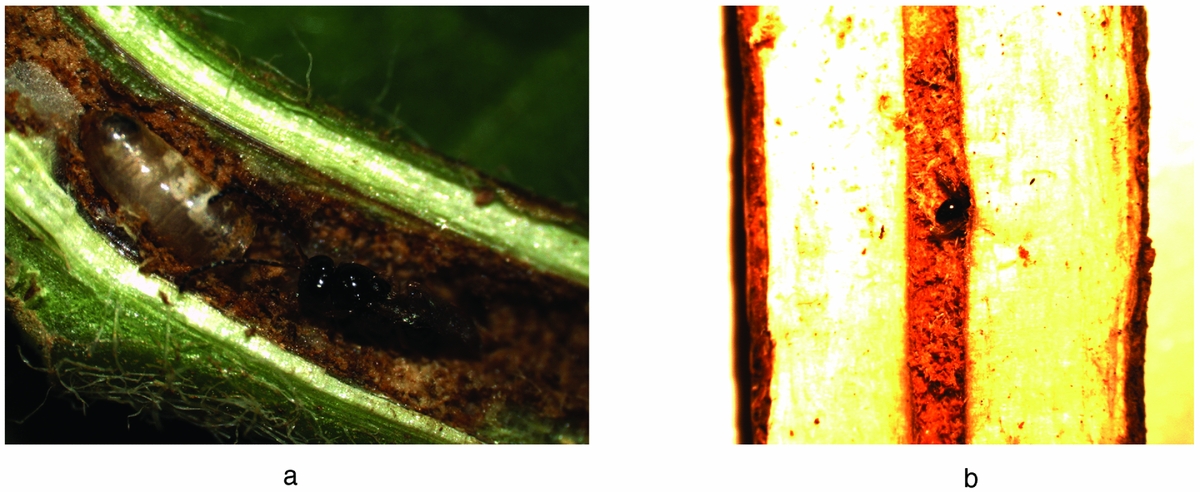
A parasitoid complex consisting of 10 species recorded from field-collected samples of M. sojae in soybean ecosystem had a significant influence on suppression of M. sojae populations under field condition. The graphical representation of the data on seasonal densities and percentage parasitism in Fig. 6 supports the role of parasitism in the dynamics of M. sojae. The parasitoid populations built up initially in response to the increased host density, and the host density dropped during the mid-season due to peak parasitism. Populations of both M. sojae and its parasitoids declined towards the end of the season, which may be to some extent, because of decreased suitability of senescing soybean plants for the pest and its parasitoids. Towards the end of the season, we observed parasitoid wasps trapped inside the stem tunnels; it seems they were unable to escape through the exit hole. This may be because of hardening of the matured and woody stems, leading to shrinking of the larval tunnels as seen in Fig. 7, thus making it difficult for the parasitic wasps to come out.
Melanagromyza sojae parasitoid inside the stem tunnel. The wider stem tunnels with less hard and woody tissues during the early to mid-season allow the parasitic wasps to escape the plant through exit hole (a), whereas shrunken and narrow stem tunnels towards the end of the crop season make it difficult for the parasitic wasps to come out (b).

Our results on parasitoid species composition and relative abundance of M. sojae are in agreement with earlier reports. Goot (Reference Goot1930) in Indonesia reported the composition of different pupal parasitoids of M. sojae: Sphegigaster voltaivei (59%) as a dominant pteromalid; Cynipoidea sp. (= Grnotoma sp.) (10.5%); Eurytoma poloni (0.2%); and Eurytoma sp. (0.2%). Singh (Reference Singh1982) recorded Opius phaseoli (= O. melanagromyzae, Braconidae) as a pupal parasitoid of M. sojae from India. Djuwarso et al. (Reference Djuwarso, Soejitno and Okada1992) reported a complex of five hymenopteran parasitoids from M. sojae in Indonesia: Cynipoidea sp. (= Grnotoma sp.); Eurytoma poloni Girault; Trigonogastra agromyza Dodd; Eurytoma sp.; and Secondela sp. A parasitoid complex of seven species had been reported from field-collected puparia of M. sojae in Sumatra (van den Berg et al., Reference van den Berg, Ankasah, Hassan, Muhammed, Widayanto, Wirasto and Yully1995). Among these, Cynipoidea sp. (= Gronotoma sp.) was the most common parasitoid followed by Chlorocytus sp. The other species, namely Sphegigaster sp. (= Trigonogastra sp.), Syntomopus sp., Eurytoma sp., Colotrechnus agromyzae and Bracon sp. were present in relatively low numbers. Shepard and Barrion (Reference Shepard and Barrion1998) recorded 10 species of hymenopteran parasitoids from M. sojae populations in soybean: Bracon sp., Cynipoidea sp., Tetrastichus sp. (Eulophidae), Sympiesis sp. (Eulophidae), Eurytoma sp., E. poloni, Sphegigaster sp., Colotrechnus agromyzae, Syntomopus sp. and Trigonogastra agromyzae Dodd. Among these, only Cynipoidea sp. (= Gronotoma sp.) was moderately abundant, whereas the remaining species were present in low numbers. Similarly, Jayappa et al. (Reference Jayappa, Reddy and Kumar2002) reported that out of five parasitoid species of M. sojae recorded from soybean fields at Bangalore in the State of Karnataka in India, Eurytoma melanagromyzae and Cynipoidea sp. (= Gronotoma sp.) with parasitism of 20 and 14% were predominant. The other three species, namely, Sphegigaster sp., Syntomopus carinatus and Aneuropria kairali Mohan & Narendran were rarely present. All these studies merely reported the species composition and relative abundance of various parasitoid species associated with M. sojae in soybean; however, except for van den Berg et al. (Reference van den Berg, Ankasah, Hassan, Muhammed, Widayanto, Wirasto and Yully1995), other workers failed to determine the parasitoid seasonality. This knowledge gap was critical for Indian soybean ecosystems wherein M. sojae has emerged as a serious threat over the last two decades. Our study helped to bridge this gap by exploring the parasitoid diversity and their seasonality associated with M. sojae from rainfed soybean ecosystems of peninsular India.
Currently, few methods are being considered for controlling M. sojae populations and central to its management is the use of chemical insecticides (Dey et al., Reference Dey, Mukherji and Trimohan2008; Kumar et al., Reference Kumar, Nguyen, Nirmala and Hiremath2009; Sharma et al., Reference Sharma, Gupta, Verma, Sharma, Bhagat, Amaresan, Saini, Chattopadhyay, Sushil, Asre, Kapoor, Satyagopal and Jeyakumar2014). However, as stated elsewhere, despite the use of several chemical insecticides, the desired control of M. sojae has not been achieved, due to the cryptic habit of the pest. Thus, chemical control is limited in potential scope and needs to be integrated with other methods for effective control. Use of cultivars that are tolerant or moderately resistant to M. sojae, namely JS 335, PK 262, NRC 12, NRC 37, MACS 124, MAUS 2 and MAUS 47 (Awasthi et al., Reference Awasthi, Sharma and Singh2003; Sharma et al., Reference Sharma, Gupta, Verma, Sharma, Bhagat, Amaresan, Saini, Chattopadhyay, Sushil, Asre, Kapoor, Satyagopal and Jeyakumar2014) may be helpful; however, timely availability of adequate and good quality seed is prerequisite. Various coloured adhesive traps (e.g. yellow and blue sticky traps) designed to capture adult flies can offer a low-cost, low-maintenance option for reducing M. sojae populations. However, their use for M. sojae management in soybean has not yet received much attention, unlike the control of sucking pests, such as whiteflies, leafhoppers and thrips, in other crops. Augmentative biological control with native parasitoids of M. sojae may also provide a long-term solution, because this method can be used over a large area. There exist no reports on deliberate importations of exotic parasitoids for the control of M. sojae in India (Singh, Reference Singh1982; Jayappa et al., Reference Jayappa, Reddy and Kumar2002), thus the parasitoid complex associated with the pest is thought to be a part of the native guild. Co-evolutionary adaptations in native habitat that allow sufficient time for evolving effective defences or counteracting mechanisms (Kraaijeveld et al., Reference Kraaijeveld, Van Alphen and Godfray1998) can lead to stable population dynamics of both the host and the parasitoids in appropriately managed agroecosystems. Thus, one advantage with augmentative biological control is that the time and effort needed in recruiting and releasing an effective, ecologically safe parasitoid of M. sojae will be saved, as the parasitoids form a part of the pest's native guild with no apparent non-target side effects. Our study suggests that the parasitoids, namely Eurytoma sp., Gronotoma sp. and Sphegigaster sp. that are abundant during the early and mid-season, can be potential biocontrol candidates for use in integrated pest management programmes for managing M. sojae infestations in soybean. However, major limitations of this method are that insufficient information is available on the biology and mass rearing techniques of stem fly parasitoids, which is a prerequisite for successful biological control. Further, the possibility of some of the parasitoids, especially pteromalids prevalent towards the end of the season, acting as hyperparasitoids of Eurytoma sp., Gronotoma sp. and Sphegigaster sp., cannot be ruled out. Further study is needed to better understand the biology and kind of relationship that may exist between M. sojae and its parasitoid complex. As all the parasitoids recorded emerged from the pupal stage of the host insect, the level of parasitism did not directly affect damage by M. sojae, but certainly affected the emergence of adult flies of M. sojae, and thus the pest population size of the next generation. We found maggots and puparia inside the infested stems simultaneously throughout the season, which indicated that overlapping generations of M. sojae occurred, with at least 3–4 generations in a season. Therefore, we suggest that increasing the prevalence of early and mid-season parasitoids through conservation practices should be a management priority that may help to reduce the population size of M. sojae in subsequent generations.
Conclusion
This study demonstrates the potential role of the parasitoid complex in regulation of an emerging pest of soybean, M. sojae. The quantitative data on seasonality of M. sojae and its parasitoid complex at different phenological stages of soybean will be crucial in quantifying M. sojae damage in terms of yield loss in soybean and also in gauging the relative usefulness of parasitoids for inclusion in an effective management strategy against M. sojae. We further suggest that careful management practices aimed at increasing parasite prevalence have the potential to significantly improve control of the pest.
Acknowledgements
This research was supported by grants from the Science and Engineering Research Board (SERB) (Department of Science and Technology), Ministry of Science and Technology, Government of India under the Fast Track Scheme for Young Scientists programme (Grant No. SB/YS/LS-06/2013). The authors gratefully acknowledge the Director of ICAR-NIASM, Baramati for institutional support in execution of the research work. The authors are thankful to Dr Kumar Ghorpade from University of Agricultural Sciences, Dharwad (Karnataka) and Dr P.M. Sureshan from the ZSI Western Ghats Regional Centre, Kozhikode (Kerala) for their valuable insect identification services, Mr Pravin More from ICAR-NIASM for technical help in formatting the figures as per the journal's style, and the anonymous editor and reviewers for their critical evaluation and helpful comments.