Introduction
In recent years, silver nanoparticles (AgNP) have been applied to a variety of consumer products, including antiseptic washing machines,[Reference Jung, Koo, Kim, Shin, Kim and Park1] antimicrobial textiles, food packaging, homeopathic medicines, and nanoscale hydrogen peroxide sensors.[Reference Liz-Marzan and Lado-Tourino2] Both shape and size are determining factors of the physical properties of AgNP,[Reference Liz-Marzan3] which in turn guide their applications in consumer goods. Shape-controlled syntheses of AgNP have yielded a wide range of products, including cubes,[Reference Chang, Chen, Hua, Ma and Huang4] octagons, rods,[Reference Wiley, Herricks, Sun and Xia5] wires,[Reference Nandikonda and Davis6] triangles,[Reference Chen, Qiao, Qiu, Chen and Jiang7] and spheres.[Reference Gou, Chipara and Zaleski8] The synthetic routes are as varied as the products, including photochemical,[Reference Cobley, Rycenga, Zhou, Li and Xia9–Reference Xue, Métraux, Millstone and Mirkin11] electrochemical,[Reference Pastoriza-Santos, Alvarez-Puebla and Liz-Marzan12, Reference Yin, Ma, Wang and Chen13] and chemical reduction.[Reference Liz-Marzan and Lado-Tourino2, Reference Liang, Wang, Huang, Zhang, Wei and Xu14, Reference Washio, Xiong, Yin and Xia15] Novel synthesis efforts are aimed at fine-tuning the size and shape of the nanoparticles (NPs) to yield desirable chemical and physical properties,[Reference Burda, Chen, Narayanan and El-Sayed16–Reference Lewis18] but many of these preparations are of limited utility due to lengthy reaction times, the need for high temperatures, the consumption of large volumes of solvent, and limited stability of the products.
Herein, we will focus on the use of a microwave reactor system to accelerate the reduction of Ag+ ions by polyvinylpyrrolidone (PVP). A microwave reactor provides greater control over reaction conditions[Reference Lidstrom, Tierney, Wathey and Westman19, Reference Rao, Vaidhyanathan, Ganguli and Ramakrishnan20] by providing uniform heating of the reaction solution, much faster reaction times, and even allowing for the use of superheated reaction conditions. These advantages can lead to greater reproducibility of desired products,[Reference Dahal, Garcia, Zhou and Humphrey21] but as our results suggest, it should be noted that the product distributions of microwave-assisted reactions may not necessarily mirror those of the analogous benchtop preparation.
Microwave-assisted syntheses of NPs have been reported extensively, but most typically yield spheroidal products.[Reference Hu, Wang, Wang, Zhang and Yu22–Reference Zhu, Palchik, Chen and Gedanken27] As previously mentioned, shape-controlled nanosynthesis is well known,[Reference Wiley, Herricks, Sun and Xia5, Reference Chen, Qiao, Qiu, Chen and Jiang7, Reference Burda, Chen, Narayanan and El-Sayed16, Reference Xia, Xiong, Lim and Skrabalak28–Reference Murphy, Thompson, Alkilany, Sisco, Boulos, Sivapalan, Yang, Chernak and Huang30] although most reactions require a shape-directing reagent, beyond the usual components of metal ion, passivant, and reducing agent. More recently, it has been postulated that the presence of Ag3+ trimers in the reaction mixture can seed the growth of triangular nanoplates as the reduction to elemental silver proceeds.[Reference Washio, Xiong, Yin and Xia15, Reference Xiong, Washio, Chen, Sadilek and Xia31] However, this phenomenon has only been observed within the context of traditional benchtop methods, rather than microwave-assisted synthesis. Herein, we report the rapid microwave synthesis of a bimodal mixture of spheroidal and triangular NPs prepared in the absence of a known shape-directing reagent, highlighting the unique impact of microwave assistance. With an eye toward applications, we also investigated the solution-phase stability of the products and addressed several other synthetic factors that are known to influence the size and shape of the products, including oxidative etching and selective passivation by halogens. We found that the resulting population of nanoplates in the final products is most heavily influenced by the relative population of trimers in the initial reaction mixture, rather than the nominal reagent ratios.
Experimental
Materials
Commercial reagents were ACS reagent grade or higher. Silver nitrate (AgNO3, 99.9% ACS certified, STREM Chemicals), PVP (repeat unit = C6H9NO, MW = 8000, Alfa Aesar), sodium chloride (99+% ACS crystals, ACROS), and Ultrapure H2O (J.T Baker Ultrex II Ultra-Pure Reagent) were used without further purification. All glassware employed during synthesis was cleaned with aqua regia and rinsed with copious amounts of ultrapure water having a resistivity of >18.0 MΩ.cm−1 (Sybron/Barnstead Nanopure II system). Microwave syntheses were carried out using a Biotage Initiator 2.5 microwave system. Silicon oxide transmission electron microscope (TEM) grids were purchased from Dune Sciences (Eugene, Oregon) and carbon-coated copper mesh grids were purchased from Ted Pella (Redding, California).
Synthesis of AgNP
AgNP were synthesized by preparing an aqueous solution of AgNO3 (188 mm), 3 mL of which were added to 5 mL of a concentrated aqueous PVP stock solution. Quantities of PVP were relative to the desired molar ratio of PVP:AgNO3, which varied from 30:1, 15:1, 10:1, 5:1, 3:1, and 1:1. The molar ratios were determined by the ratio of the terminal alcohol groups on the polymer with respect to silver ion, as it is known that the alcohol groups initiate reduction of metal ions at elevated temperatures.[Reference Wiley, Herricks, Sun and Xia5] The solutions were combined and capped in a 20 mL pressure-safe glass flask (Biotage) equipped with magnetic stir bar. The reaction mixture was subjected to pulsed wattage in the microwave reactor to maintain a constant temperature of 100 °C for 20 min. The resulting green–gray suspension was diluted with water to a final volume of 15 mL and centrifuged for 20 min at 14,000 rpm (~16,700 rcf). The impurities and excess solvent were decanted from the products, the particles were resuspended by gentle agitation in fresh solvent, and centrifugation was repeated a total of three times. Lastly, the purified AgNPs were then resuspended in 15 mL of ultrapure water for characterization.
Freshly prepared solutions of AgNO3 are reported to contain 27% Ag3+, while aged AgNO3 solutions are known to contain relatively few trimers (13%, via mass spectrometry).[Reference Xiong, Washio, Chen, Sadilek and Xia31] To assess the impact of aging the silver stock solution, AgNO3 solutions were prepared as above, wrapped with aluminum foil and stored in the dark for 24 h. To confirm that product ratios are influenced by the presence of Ag3+, the synthesis described above was repeated using this aged AgNO3 solution in a 10:1 ratio of PVP:Ag.
To study the possible shape-impacting role of halogens in oxidative etching processes, 0.3 mL of 1 mm NaCl solution was added to a 10:1 PVP:Ag reaction mixture, and synthesis proceeded as described above. To isolate the role of chloride from adventitious oxygen, this experiment was repeated once more in the absence of oxygen by utilizing degassed solvents and sealing the reaction mixture under argon prior to initiating the microwave system.
Finally, because the products are stored as suspensions, the impact of delayed purification was assessed. The products were subject to one of the three scenarios: synthesized, purified, and imaged on the same day; synthesized and purified on the same day, aged in suspension for 1 week, and imaged; or synthesized and allowed to age for 1 week as a crude suspension, and then purified and imaged.
Characterization of NP
TEM was performed using a JEOL 2010 and operated with an accelerating voltage of 200 kV. Samples for TEM were cast upon either silicon oxide or carbon-coated 300 mesh copper grids. Silicon oxide grids were cleaned by UV–ozone treatment for 20 min, rinsed with ultrapure water, followed by anhydrous ethanol, and allowed them to dry under vacuum. Continuous carbon grids were used as supplied. Samples were then prepared using a modified drop–cast method: a drop of NP suspension was placed on a grid and allowed to rest for 1 min. A Kimwipe was touched to one edge of the droplet, causing the opposite edge to recede over the surface of the grid and deposit a film of NPs. The samples were allowed to dry for several hours under vacuum. Atomic force microscopy (AFM) was performed on the same samples using an Asylum Research MFP-3D SA.
Size analysis was carried out using ImageJ (available as free download from the National Institute of Health). For a given sample type, a minimum of 3000 spheroidal particles and 300 triangular nanoplates were counted to generate size distribution data; shape-recognition filters were applied as reported elsewhere.[Reference Igathinathane, Pordesimo, Columbus, Batchelor and Methuku32] Each unique sample type (defined by reagent ratio and reaction conditions) was repeated a minimum of five times to generate large populations of particles for size analysis.
Results and discussion
Impact of varied PVP:Ag ratios
Our initial studies sought to identify the optimal ratio of PVP:Ag, with the goal of maximizing the population of triangular silver nanoplates. The role of higher-molecular weight PVP as reducer and stabilizer of Ag(I) ions has been reported elsewhere,[Reference Washio, Xiong, Yin and Xia15, Reference He, Qian, Yin and Zhu33, Reference Xiong, Washio, Chen, Cai, Li and Xia34] but we found that 8k PVP offered a higher yield of triangular structures in the context of microwave synthesis. PVP is known to act in the dual role of reducing agent and surface passivant for NP synthesis. It is evident from our results that the growth of the metal cores proceeds much more quickly in the presence of microwave radiation compared with analogous benchtop reactions. We believe that the slower growth of metal cores in benchtop preparations provides ample opportunity for PVP to wrap itself around the growing particles, hence arresting further growth. With this model, it would be expected that a trend between the size of the products and the relative amount of PVP should emerge: greater amounts of PVP should yield smaller particles. In contrast, when these reactions are performed in the microwave context, this model no longer applies, as the rate of NP growth is so rapid that there is not enough time for the PVP to interact with the surface of the metal cores, thus crystal growth proceeds unchecked until the silver ions are depleted.
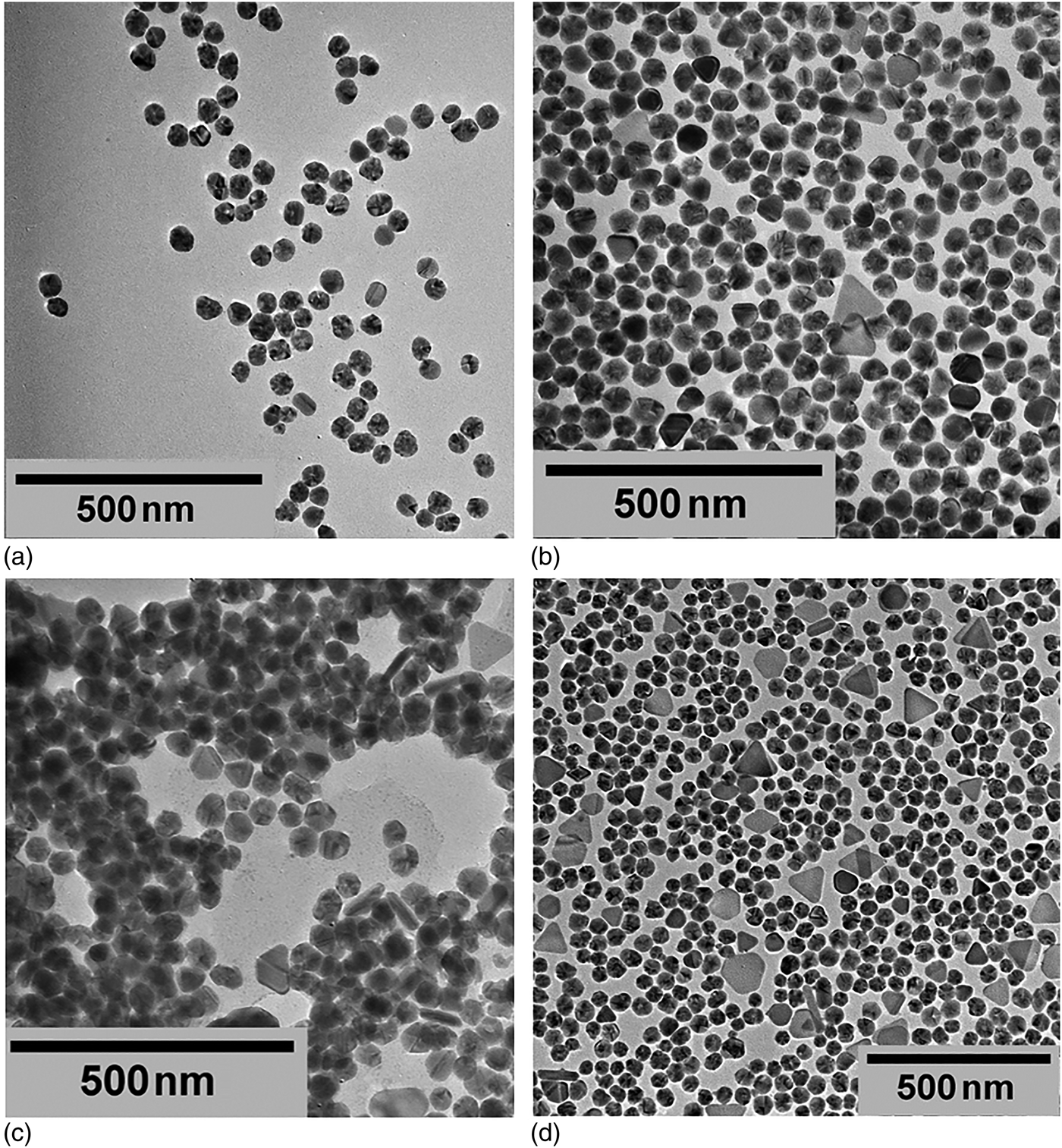
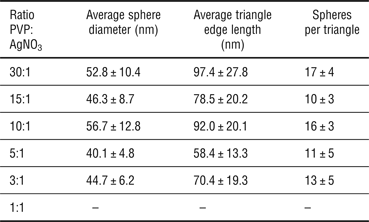
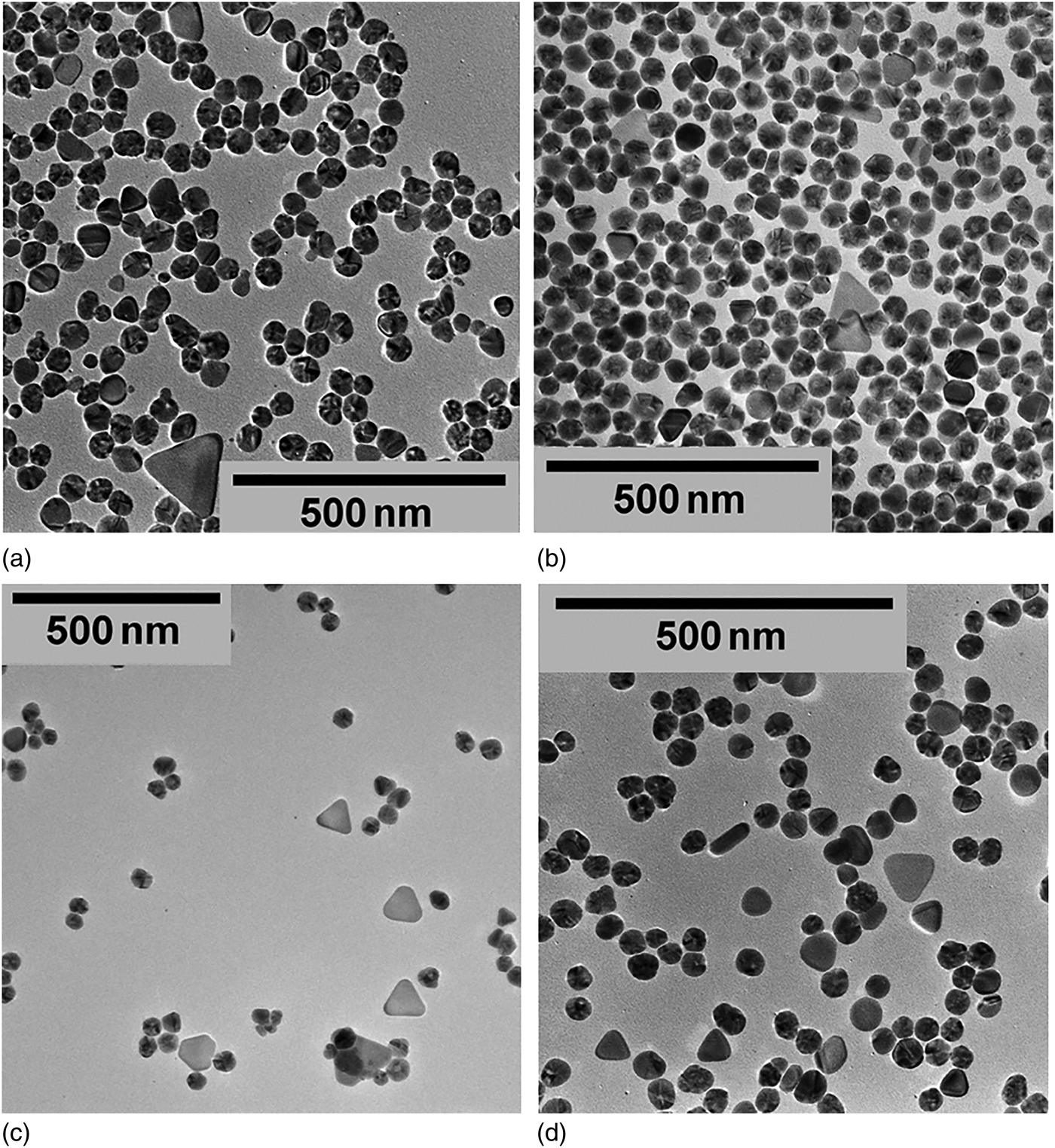
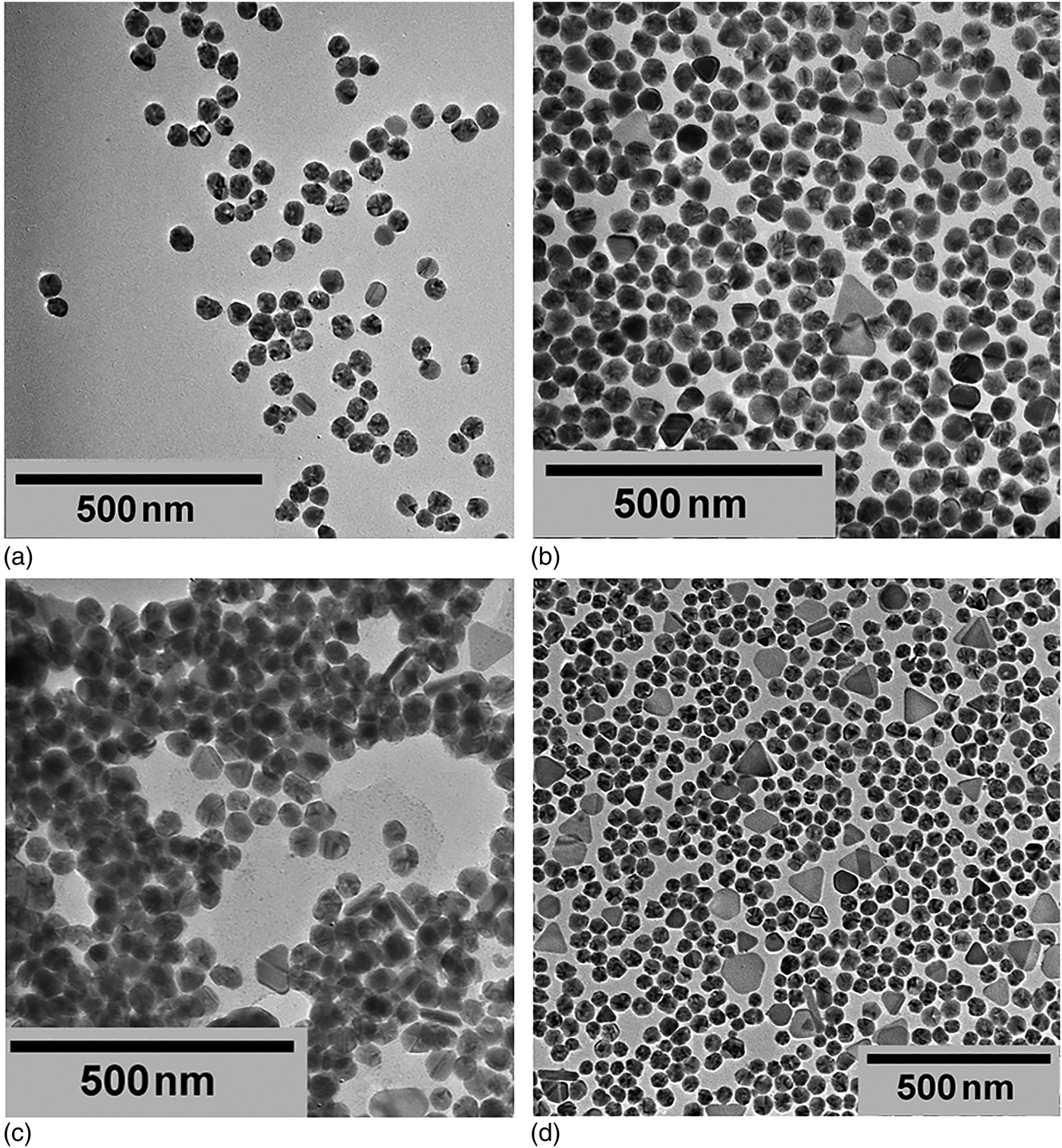
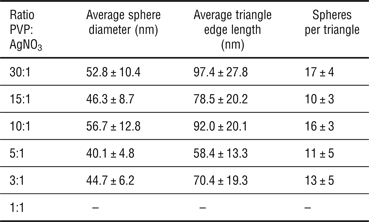
Surprisingly, we found that the ratio of PVP:AgNO3 had no significant impact on the size distributions and relative populations of spheroidal particles and triangular nanoplates (Table I, Fig. 1). Because benchtop preparations use reaction times ranging from 24 to 72 h, we attempted to increase our reaction times, but exceeding a reaction time of 30 min only resulted in the formation of precipitates and plating of the reaction vessel. The only ratio of PVP:Ag that did not yield stable products was the 1:1 mixture.
TEM images of NPs prepared from different PVP:Ag ratios: (a) 5:1, (b) 10:1, (c) 15:1, and (d) 30:1.
Impact of varied reagent ratios.
Role of trimeric clusters
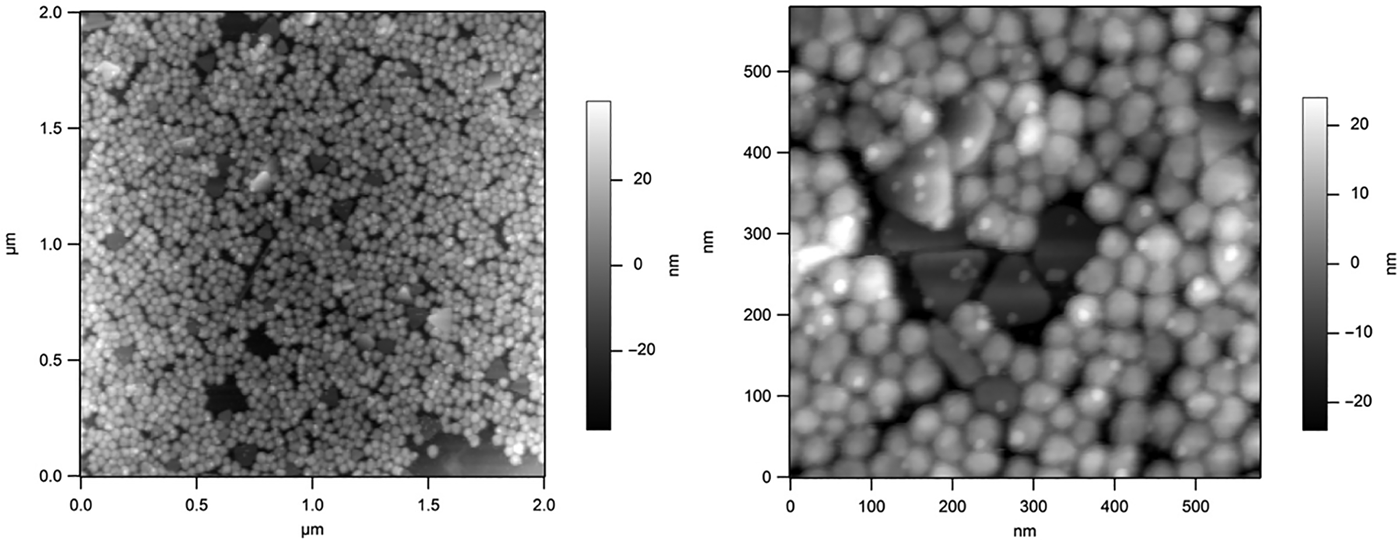
With this understanding of AGNP formation, it was surprising to find that significant populations of triangular nanoplates (Fig. 2) persisted through all of our samples, despite the absence of known shape-directing agents and the rapid reduction process. A recent report by Xiong et al.[Reference Xiong, Washio, Chen, Sadilek and Xia31] suggests that trimeric Ag3+ clusters in freshly prepared solutions of AgNO3 can act as templates for the production of triangular nanoplates, rather than spheroidal clusters. The population of these clusters decreases significantly with time, reduced by ~50% when the solutions are aged in the absence of light for more than 12 h.
AFM images confirming that the triangular structures are planar, rather than prismatic.

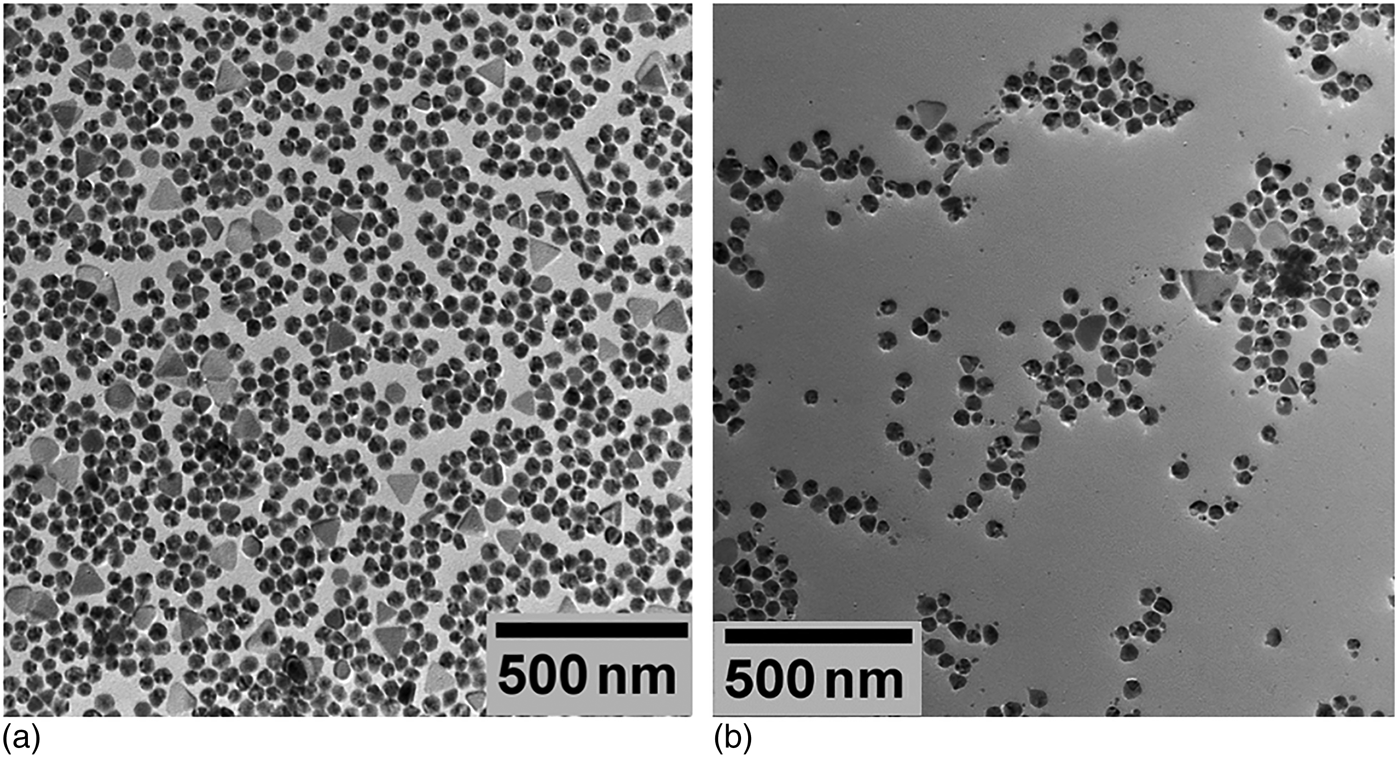
To determine whether or not a similar phenomenon might be responsible for the formation of triangular nanoplates in microwave synthesis, we prepared AgNP using both freshly prepared and aged solutions of AgNO3, using a ratio of 10:1 PVP:AgNO3. Within our microwave synthesis context, we found that the use of aged solutions resulted in a decreased population of triangles, supporting the premise of trimeric silver clusters as the origin of triangular NPs even under rapid microwave conditions (Fig. 3). Here, we found that the ratio of spheres to triangles was 28:1 when aged AgNO3 solutions were used, compared with 16:1 when fresh stock solutions are employed.
The impact of freshly prepared versus aged AgNO3 solutions. Left: triangular nanoplates products resulting from synthesis with fresh solution. Right: many fewer triangular nanoplates, resulting from synthesis with aged solution.

Comparing the results of microwave synthesis to analogous benchtop preparations, we find that the product distribution differs greatly. In benchtop reactions that use similar reagent ratios and reaction temperatures, smaller triangles form when fresh AgNO3 solutions are used, and larger triangles when aged AgNO3 solutions are employed; very few spheroidal particles are observed.[Reference Xiong, Washio, Chen, Sadilek and Xia31] It should be noted that these reactions require 48–72 h for completion; the authors propose that the slow reduction of silver over several days favors the growth of triangles based on trimeric seeds, leading to smaller triangles from fresh stock solutions (higher trimer population), and larger triangles from aged solutions (containing fewer trimers). If the reduction of silver ion is accelerated, then the newly formed silver atoms are likely to self-nucleate, creating spheroidal particles alongside the growing triangular nanoplates. Because our microwave preparation is greatly accelerated, we do not observe a significant difference in the size of the triangles as a function of Ag3+ in the stock solutions; instead, the final population of triangles tracks with initial populations of Ag3+, and the rapid reduction of silver ion leads to simultaneous self-nucleation of spheroidal particles.
Impact of water quality
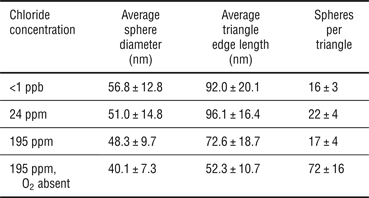
To provide further evidence that the formation of triangular silver nanoplates was directed solely by the presence of Ag3+, special attention was placed on other possible factors such as solvent quality. It has been established that trace amounts of halogens can greatly influence the morphology of the products in aqueous nanosyntheses.[Reference Wolf35] The Nanopure water used in our earliest studies was characterized independently by ICP-MS. It was found to contain 24 ppm of chloride, a known shape-directing agent. To eliminate the possibility that chloride was responsible for shape-direction in our preparation of NPs, ultra-pure water (<1 ppb Cl−) was used in subsequent syntheses. The relative populations of nanotriangles persisted in the absence of chloride, and the size of the triangles was not affected (Table II, Fig. 4), indicating that low levels of chloride have no impact on product morphology.
TEM images of particles synthesized in the presence of different chloride concentrations. (a) <1 ppm, (b) 24 ppm, (c) 195 ppm, and (d) 195 ppm in the absence of O2.
Impact of chloride concentration.
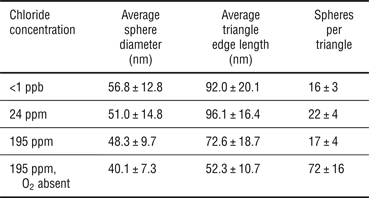
The inclusion of greater amounts of chloride in the reaction mixture (195 ppm) was also investigated to establish if chloride could have any impact at all on the morphology of NPs formed under our rapid synthesis conditions. The addition of more chloride to the solution did not significantly impact the ratio of triangles to spheres, but reduced the sizes of each, and the corners of triangular nanoplates were usually rounded. This result was anticipated due to the role the chloride takes as an etchant,[Reference Wiley, Herricks, Sun and Xia5, Reference Cobley, Rycenga, Zhou, Li and Xia9] but halogens are also known to influence the growth of noble metal NPs by selectively passivating certain faces of the growing crystal via selective passivation.[Reference An, Tang, Zheng, Zhou, Dong, Xu, Wang, Zhao and Xu36] To delineate these two possibilities, samples were prepared with 195 ppm chloride in the absence of O2. The rounded corners on the triangular nanoplates were still evident, demonstrating that selective passivation, not oxidative etching, was influencing shape transformation.[Reference Aherne, Ledwith, Gara and Kelly37] The ratio of spheres:triangles increased drastically, along with a reduction in size of both particle shapes. We propose the absence of oxygen favors binding between elemental silver and chloride, making chloride's role as a surface passivant much more apparent.
Particle stability
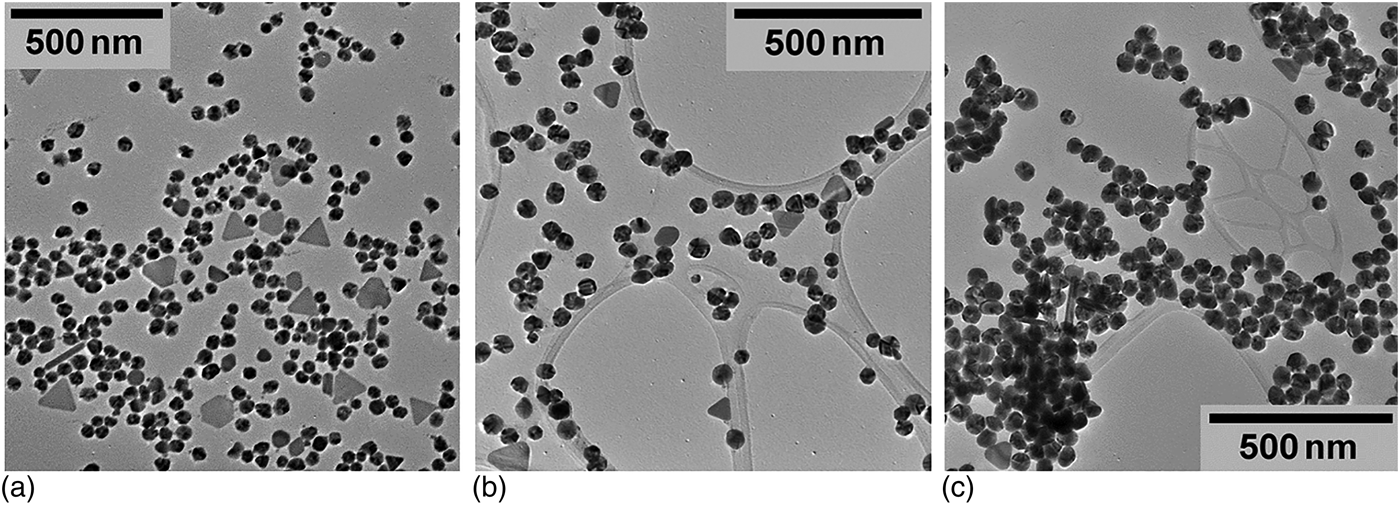
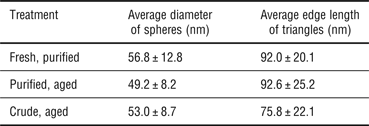
Given the knowledge that the generation of smaller daughter particles occurs spontaneously in the solid state, the stability of the silver NP suspensions was assessed. Purified and crude samples were aged for 1 week and compared with a control of freshly prepared, immediately purified samples, using reagent ratios of 30:1 PVP:Ag. It was found that a time lapse of 1 week between preparation and purification resulted in significant decreases to the average triangle length. However, aging purified samples of AgNP had no significant impact of particle size and shape (Table III, Fig. 5). These results appear to disagree with previous studies by Feng et al.[Reference Feng, Ma, Huang, Pan, Zhang, Tian, Gao, Cheng and Luo38] that suggest PVP can stabilize particles up to 1 month. However, these studies used 90k PVP, rather than the 8k PVP employed in the current study. We suggest that the shorter-chain polymer is a less effective passivant.[Reference Gou, Chipara and Zaleski8]
TEM images of (a) freshly prepared and purified NPs, (b) purified, aged NPs, and (c) crude, aged particles.
Impact of post-synthesis treatment.
Conclusion
We have demonstrated a rapid synthesis of nanomaterials that does not require a specific shape-directing agent to yield triangular silver nanoplates. Microwave radiation drives the rapid reduction of silver ion, while the formation of triangular nanoplates is dependent upon the relative age of the AgNO3 stock solution used for synthesis. The microwave reactor provides additional control of reaction conditions by enabling rapid, uniform heating of the reacting solution, decreasing reaction time and maximizing reproducibility. Although we report a bimodal product mixture of triangular nanoplate and spheroidal particles, the formation of triangles, via the presence of trimeric Ag3+ seeds, has not been reported before in the microwave context. The rapid kinetics of the microwave-assisted reaction favors the formation of triangular nanoplates from trimeric clusters in the initial reaction mixture, leading to a proportional population of these nanoplates. To further ensure the formation of stable, high-quality products, it is important to exclude trace amounts of chloride from the solvent medium, and immediate purification improves the shelf life of the solution-phase products.
Acknowledgments
The authors acknowledge the support of the UWEC Office of Research and Sponsored Programs, Dr. Anthony Wagner of the UWEC Materials Science Center, and Dr. Marcus McEllistrem for helpful discussions.