





Impact statement
This study advances the field of biodesign by developing a novel bio-enfleurage method that integrates microbial cultivation with traditional perfumery techniques. The proposed method fosters more accessible forms of biotechnological practice while contributing to the development of lower-impact fragrance production models. Through this hybrid approach, the study demonstrates how biodesign can operate as a mediating framework between sustainability, olfactory heritage and microbial innovation.
Introduction
Perfume production can have significant impacts on both human and environmental health. The fragrance industry is resource-intensive, and many synthetic aroma molecules have been detected as contaminants in aquatic ecosystems (Tasselli et al. Reference Tasselli, Rogora, Orrù and Guzzella2023). At the same time, climate instability is disrupting the cultivation and availability of natural raw materials, placing further strain on the sector (Dobhal et al. Reference Dobhal, Purohit, Chandra, Rawat, Prasad, Bhandari, Trivedi and Nautiyal2024). In response to these environmental and material challenges, biotechnology-based fragrance production has emerged as a promising alternative aligned with the industry’s growing planet-positive ambitions. Microorganisms and their secondary metabolites present novel opportunities to address emerging issues in the scent industry through more sustainable modes of production (Manina and Forlani Reference Manina and Forlani2023). However, microbial fragrance development typically requires advanced scientific expertise, controlled laboratory environments and specialised infrastructure, limiting its accessibility to a narrow technical community.
This study addresses this limitation through the development of a novel bio-enfleurage protocol for microbial fragrance production. The method aims to generate situated knowledge while expanding participation in biotechnological scent practices beyond formal laboratory contexts. The current study provides an overview of conventional perfumery materials and introduces the emerging field of microbial scent production. It examines petrichor as a case study, focusing on Streptomyces griseus, one of the microorganisms associated with the characteristic earthy aroma released after rainfall. This organism was selected to test the proposed biodesign method. Moreover, the paper compares traditional enfleurage techniques with the developed bio-enfleurage method, detailing each stage of the process from microbial culture preparation to scent capture. It situates this investigation within the historical evolution of perfume use and extraction techniques, contextualising the experimental findings within both technological and cultural frameworks.
This study is part of a wider practice-based PhD research project, titled Olfactory Echoes, that applies biodesign methodologies to develop microbial-based scents able to evoke the olfactory heritage in the city of Rome, threatened by climate change.
Perfumery materials and microbial-based scents
During the 18th, 19th and early 20th centuries, most perfumes were recreations of single-flower scents, known as soliflores, due to reliance on essential oils, which limited the creation of more imaginative or abstract fragrances. The rapid advancement of organic chemistry enabled the analysis of natural substances and the synthetic production of key aromatic molecules. The commercial synthesis of pure, nature-identical and entirely novel odorants facilitated the emergence of modern perfumery, fostering greater creativity and the development of fantasy fragrances (Ohloff et al. Reference Ohloff, Pickenhagen and Kraft2012). Natural products are defined as substances extracted directly from plants or animals using physical methods, while nature-identical compounds are synthetically produced but chemically identical to those found in nature (Bauer et al. Reference Bauer, Garbe and Surburg2001). In contrast, artificial flavour substances are synthetic compounds not yet identified in natural food sources.
Bauer et al. (Reference Bauer, Garbe and Surburg2001) argue that, despite the widespread production of synthetic materials, natural raw ingredients remain indispensable in perfumery and flavour creation. This is due to the complexity of natural products, which are often too intricate to replicate fully with synthetic mixtures, the high cost of synthesising certain key scent compounds and legal requirements mandating the use of natural materials in specific flavour compositions. The perfume industry utilises raw materials from over 250 plant species, with only a limited number derived from animals, most of which are now banned for ethical reasons. These materials are obtained from various plant parts, including flowers, fruits, seeds, leaves, bark, roots and resins (Bauer et al. Reference Bauer, Garbe and Surburg2001). Recent trends indicate an increasing consumer preference for products of natural origin, demonstrating that perceived naturalness is relevant for fragrances, as with other consumer products (Apaolaza et al. Reference Apaolaza, Hartmann, López, Barrutia and Echebarria2014). Although technological or synthetic entities are sometimes associated by consumers with negative attributes (Saleh et al. Reference Saleh, Bearth and Siegrist2019), a 2023 study (Michailidou et al. Reference Michailidou, Bearth, Deilmann and Siegrist2023) suggests that participants were open to novel production methods in the fragrance industry.
In this context, biotechnologies are increasingly attractive for producing sustainable and high-quality fragrance ingredients. Microbial-based approaches are particularly promising, as they offer a more practical, economical and sustainable alternative to plant-based biotechnological methods for producing terpene derivatives of interest to perfumery (Manina and Forlani Reference Manina and Forlani2023). In recent years, approaches such as biotransformation and genetic engineering have attracted increasing attention within the fragrance industry, as they offer new possibilities for microbial scent production. Biotransformation involves the use of bacteria, fungi or yeast to convert sustainable, low-cost raw materials into high-value aromatic molecules, offering an eco-friendly alternative to plant extraction or chemical synthesis (Nurika et al. Reference Nurika, Suhartini, Azizah and Barker2020). Genetic engineering for microbial fragrance production involves modifying microorganisms such as Escherichia coli (Manina and Forlani Reference Manina and Forlani2023) and Saccharomyces cerevisiae (Mahajan et al. Reference Mahajan, Kumbhar and Jain2024) using tools like CRISPR to express plant-based genes for the synthesis of high-value compounds such as vanillin, geosmin, rose and citrus. However, these techniques require substantial scientific expertise and specialised facilities and therefore remain accessible only to a limited niche. For this reason, the current study proposes a new low-tech method for microbial scent production, suitable for design research, scent experimentation and teaching environments without highly sophisticated laboratory equipment.
Case study: petrichor scent
Petrichor, the earthy fragrance released when rain falls on dry ground, was selected as a case study to test the feasibility of the proposed bio-enfleurage method. The protocol emerged from this specific scent–microbe relationship and has since been adapted and applied to additional microbial scents within the broader PhD research project, though these are not addressed in this study. While rooted in this case study, the method is designed to be transferable to other aromatic compounds and microbial species.
The “scent of rain” has historically been produced in India by distilling baked earth and it is known as Mitte Attar, an oil with a distinct earthy aroma reminiscent of rain falling on dry earth (Srivastava et al. Reference Srivastava, Tripathi, Singh, Lata and Barman2023). In 1964, the term petrichor was first introduced in the journal Nature by Australian researchers I. J. Bear and R. G. Thomas (Reference Bear and Thomas1964), who investigated the argillaceous odour emitted by rocks and mineral aggregates upon exposure to air and water. Although the “smell of rain” was already recognised and utilised in the fragrance industry, their research demonstrated that this characteristic scent is associated with a variety of rocks and stones, not solely clay. Following this discovery, the term petrichor, derived from the Greek petra (stone) and ichor (blood of the gods), has been used to describe the warm, earthy aroma perceived when rain falls on dry ground. In 1965, N. N. Gerber and H. A. Lechevalier isolated the molecule identified as the primary component of the petrichor scent and named it geosmin, from the Greek geo (earth) and osme (odour). In this study, petrichor refers to the familiar “smell of rain,” while geosmin denotes the specific aromatic compound at the molecular level.
Geosmin is a bicyclic, natural, volatile sesquiterpenoid. Microbial geosmin synthesis involves the conversion of farnesyl diphosphate to germacradienol and further to geosmin by a sesquiterpene synthase that is encoded by a geosmin synthase gene (geoA) found in a variety of organisms (Ball et al. Reference Ball, Frey, Haag, Frank, Hoffmann, Laska, Steinhaus, Neuhaus and Krautwurst2024). Gerber and Lechevalier (Gerber and Lechevalier Reference Gerber and Lechevalier1965) examined a range of organisms that produce geosmin as a secondary metabolite, including actinomycetes, myxobacteria, cyanobacteria, various fungi and algae. Among these, Streptomyces species are gram-positive filamentous bacteria that grow as mycelia and disperse via spores. Streptomyces exhibit considerable versatility, with over 700 species identified, and are found in both terrestrial and marine environments (Nikolaidis et al. Reference Nikolaidis, Hesketh, Frangou, Mossialos, Van de Peer, Oliver and Amoutzias2023). The widespread conservation of geosmin biosynthesis genes across nearly all Streptomyces species suggests that these volatiles confer a selective advantage to soil microbes (Becher et al. Reference Beche, Verschut, Bibb, Bush, Molnár, Barane, Al-Bassam, Chandra, Song, Challis, Buttner and Flärdh2020). S. griseus, in particular, has been studied since the 1990s for its antibiotic properties and its production of geosmin as a secondary metabolite. Consequently, this strain was selected in the present study as the primary source for petrichor extraction.
Geosmin is a volatile, chemosensory trigger of both avoidance and attraction behaviours across species. From an evolutionary perspective, many animals, including humans, can detect geosmin at extremely low concentrations, although the adaptive benefit to the producing organisms remains unclear (Zaroubi et al. Reference Zaroubi, Ozugergin, Mastronardi, Imfeld, Law, Gélinas, Piekny and Findlay2022). Humans exhibit pronounced behavioural responses to geosmin, displaying either attraction or aversion. A 2024 study by Ball et al. in the Journal of Agricultural and Food Chemistry identified and characterised a human odorant receptor for geosmin, with this function conserved across six mammalian species. The human odour detection threshold for geosmin is notably low, ranging from 4 to 10 ng/L, equivalent to approximately one teaspoon in 200 Olympic swimming pools. This exceptionally low threshold is hypothesised to reflect evolutionary pressures on vertebrate olfactory systems to detect ecologically significant chemical cues, such as indicators of water or microbial activity, which may have provided survival advantages in ancestral environments (Garbeva et al. Reference Garbeva, Avalos, Ulanova, van Wezel and Dickschat2023).
In the food industry, controlling or reducing geosmin is a key quality measure for food products and drinking water, as it imparts an undesirable “musty” flavour (Ball et al. Reference Ball, Frey, Haag, Frank, Hoffmann, Laska, Steinhaus, Neuhaus and Krautwurst2024). Conversely, geosmin is highly valued in perfumery, where it is incorporated into cosmetic products and fragrances as a middle note for its earthy and fresh aroma. Currently, geosmin is produced either by distilling sunbaked soil or through chemical synthesis, though both methods present significant drawbacks (Vittal et al. Reference Vittal, Srikanth, Manokaran and Manjunatha Reddy2019). Soil distillation is limited by seasonality and raises sustainability concerns due to its ecological impact. Chemical synthesis is complex, multi-stepped and costly, hindering large-scale production. As mentioned earlier, recent advances in applied microbiology and synthetic biology have enabled the production of various compounds, but their availability to a broader public remains limited. Therefore, the present study presents a new method focused on merging artisanal techniques relying exclusively on wild organisms’ production of aromatic compounds. Laboratory protocols are designed to encourage microbes, particularly S. griseus in this study, to produce and express their secondary metabolites.
Materials and methods
This section outlines the methodological framework of the study. Traditional enfleurage is first introduced as a historical and technical reference for fragrance extraction. Building on this foundation, a bio-enfleurage protocol was developed to adapt the principles of fat-based scent capture to microbial systems. The protocol was subsequently applied to S. griseus as a case study for petrichor-associated volatile extraction. A series of experiments was conducted to evaluate culture media suitability, compare exposure configurations and establish a qualitative olfactory assessment procedure.
Traditional enfleurage as reference method
Enfleurage is a fragrance extraction technique that utilises fat-based carriers. The earliest known method, hot enfleurage, was developed by ancient civilisations such as the Egyptians, Greeks and Romans, who specialised in extracting aromatics from plants and resins using vegetable oil (Ohloff et al. Reference Ohloff, Pickenhagen and Kraft2012). In this process, plant materials and flowers are fully immersed in warm oil or melted wax, allowing aromatic compounds to be released over time. After removal of the plant material, the result is a scented oil or wax. Fragrances produced through this technique were known as unguenta, which were perfumed oils and lotions used for cosmetic and toiletry applications. These products differed significantly from the alcoholic perfumes common today.
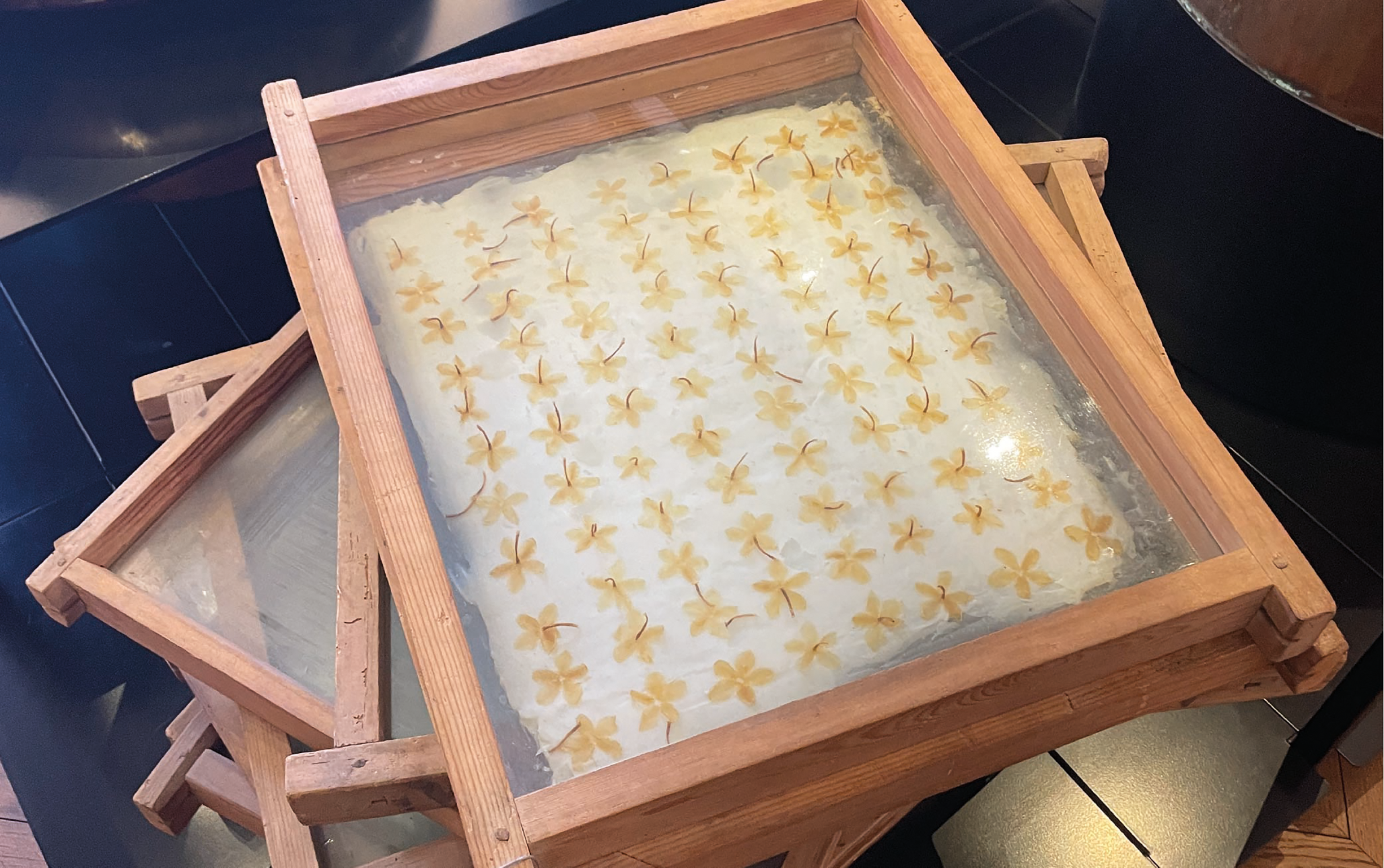
Between the 17th and the 19th century, hot enfleurage was modified into cold enfleurage, a more industrialised process developed in southern France (Bauer et al. Reference Bauer, Garbe and Surburg2001). The wooden and glass frames used in this technique are now preserved in perfumery museums (Figure 1). As illustrated in the photograph below, the chassis were arranged horizontally and stacked to maximise surface contact between the fat-coated plates and the scent-emitting material over an extended period.
Traditional enfleurage frames called “chassis” exhibited at the Fragonard Museum in Paris.

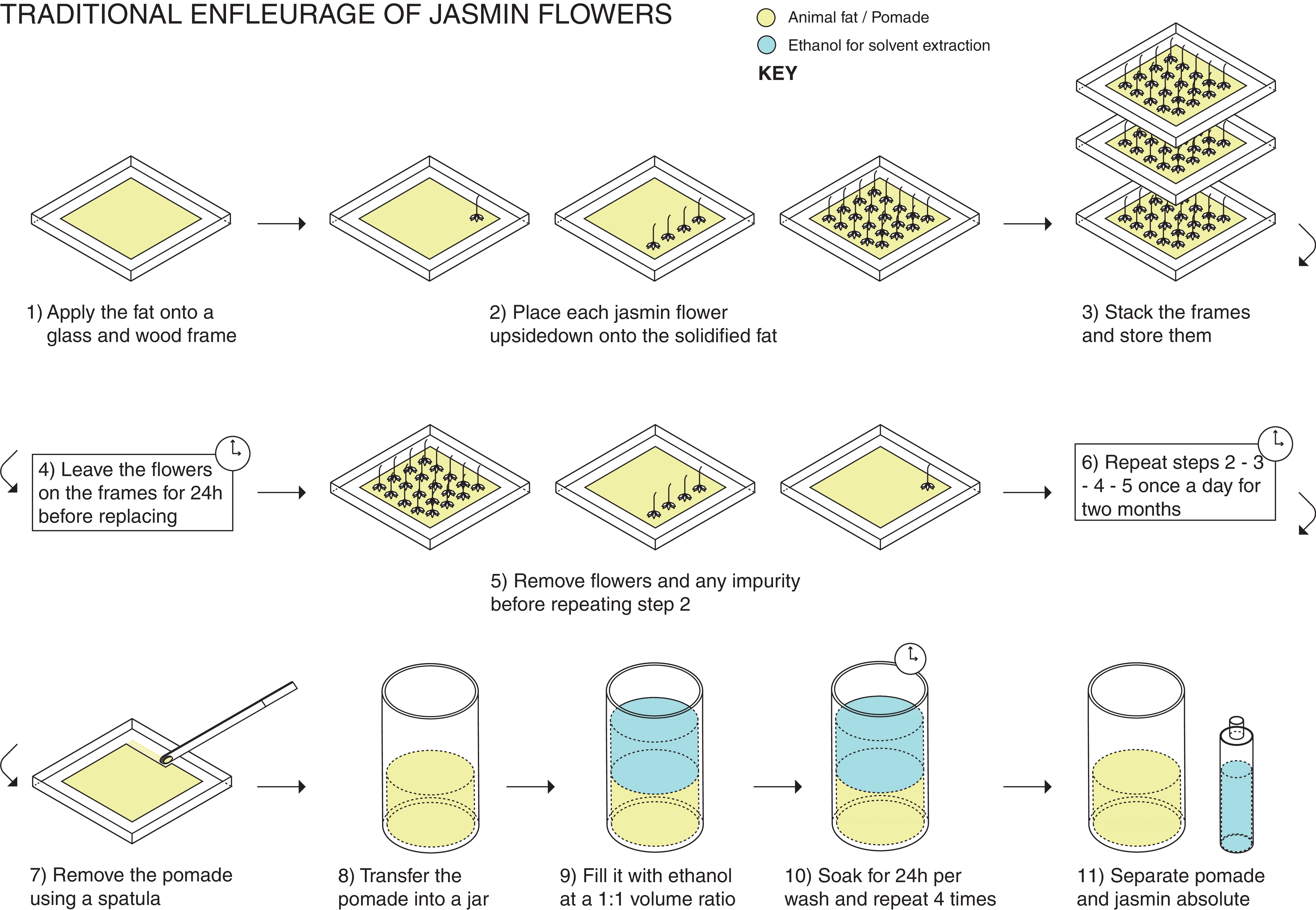
This cold enfleurage method involves spreading a layer of odourless animal fat on a glass plate mounted within a wooden frame, known as a chassis (Figure 2, step 1). Freshly picked flowers are placed upside down onto the fat, which gradually absorbs their fragrance (Figure 2 , step 2). Once each frame is filled, the chassis are stacked and left in a dry environment for up to 24 hours (Figure 2 , steps 3 and 4). The following day, all flowers and any impurities, such as petal fragments, are carefully removed, and a new batch of fresh flowers is applied to the same frames (Figure 2 , step 5). This process is repeated daily for a duration that varies depending on the flower species; for example, jasmine flowers, Jasminum grandiflorum, require nearly two months (Figure 2 , step 6). When the fat becomes saturated with the desired fragrance, it is removed using a dedicated spatula (Figure 2 , step 7). The resulting scented extract, known as pomade, can be used as a solid perfume or further processed through solvent extraction to produce a more valuable product called an absolute. To obtain the absolute, the pomade is repeatedly washed with ethanol until all fragrant molecules are transferred to the solvent (Figure 2 , steps 8-10). The pomade is then separated from the solvent, which can be evaporated to yield the absolute, or maintained diluted in ethanol, yielding a fat-free residue that is suitable in both cases as a perfumery ingredient (Figure 2 , step 11).
Schematic representation of the traditional enfleurage process.

Traditionally, enfleurage was employed for flowers too delicate to endure more aggressive extraction methods such as distillation or solvent extraction. Jasmine absolute is the most prominent scent produced through traditional enfleurage (Paibon et al. Reference Paibon, Yimnoi, Tembab, Boonlue, Jampachaisri, Nuengchamnong, Waranuch and Ingkaninan2011), as it was the only method at the time capable of yielding an aromatic compound closely resembling the volatiles emitted by the flower. Distillation is unsuitable for jasmine because the high temperatures involved significantly alter the scent molecules. Similarly, solvent extraction lacks the selectivity required to isolate only the desired fragrance, instead extracting pigments and molecules from the stems, which results in a more pungent and herbaceous aroma.
Consequently, odourless fat serves as a carrier, selectively absorbing only the volatile molecules that migrate from the flower. Once the fat is saturated, it can undergo solvent extraction, producing a rounded and accurate scent that closely resembles fresh jasmine flowers. However, traditional enfleurage is not suitable for every fragrance. Because the process relies on a lipid carrier, it primarily captures nonpolar, fat-soluble odorants, while more polar or highly volatile compounds may be poorly retained (Eltz et al. Reference Eltz, Zimmermann, Haftmann, Twele, Francke, Quezada-Euan and Lunau2007). In those cases, the extracted scent profile may be incomplete or differ from the authentic material. Organic chemistry has therefore become essential for enabling perfumers to predict how different aromatic molecules will behave during extraction. Since most scents are not produced by a single compound but are instead complex mixtures of constituents such as esters, alcohols, aldehydes and lactones, the extraction method is usually chosen based on the main olfactory constituent. This complexity is particularly evident in petrichor, which arises from multiple soil-derived odorants, with geosmin among the most prominent contributors. Since geosmin is relatively lipophilic (Guttman and van Rijn Reference Guttman and van Rijn2009), it exhibits greater affinity for nonpolar phases such as fats or organic solvents, illustrating how extraction outcomes are largely determined by molecular polarity and solubility.
Currently, the fragrance industry has replaced enfleurage with less labour-intensive techniques, such as supercritical carbon dioxide extraction and volatile solvent extraction. CO2 extraction uses low-temperature pressurised carbon dioxide as a solvent to provide high penetration and selective, quality-preserving extraction (Nozari and Kander Reference Nozari and Kander2025). Rotary evaporator distillation is also employed to remove volatile solvents from samples by combining reduced pressure, heat and flask rotation. Despite these advances, enfleurage continues to be practised as a handcrafted technique by perfumery artisans and DIY enthusiasts. Over time, craft practitioners have modified the method, introducing freezing during the solvent extraction phase to improve separation of the pomade from the solvent, as well as developing experimental contactless enfleurage to prevent petal residues from adhering to the carrier.
Development of the bio-enfleurage method
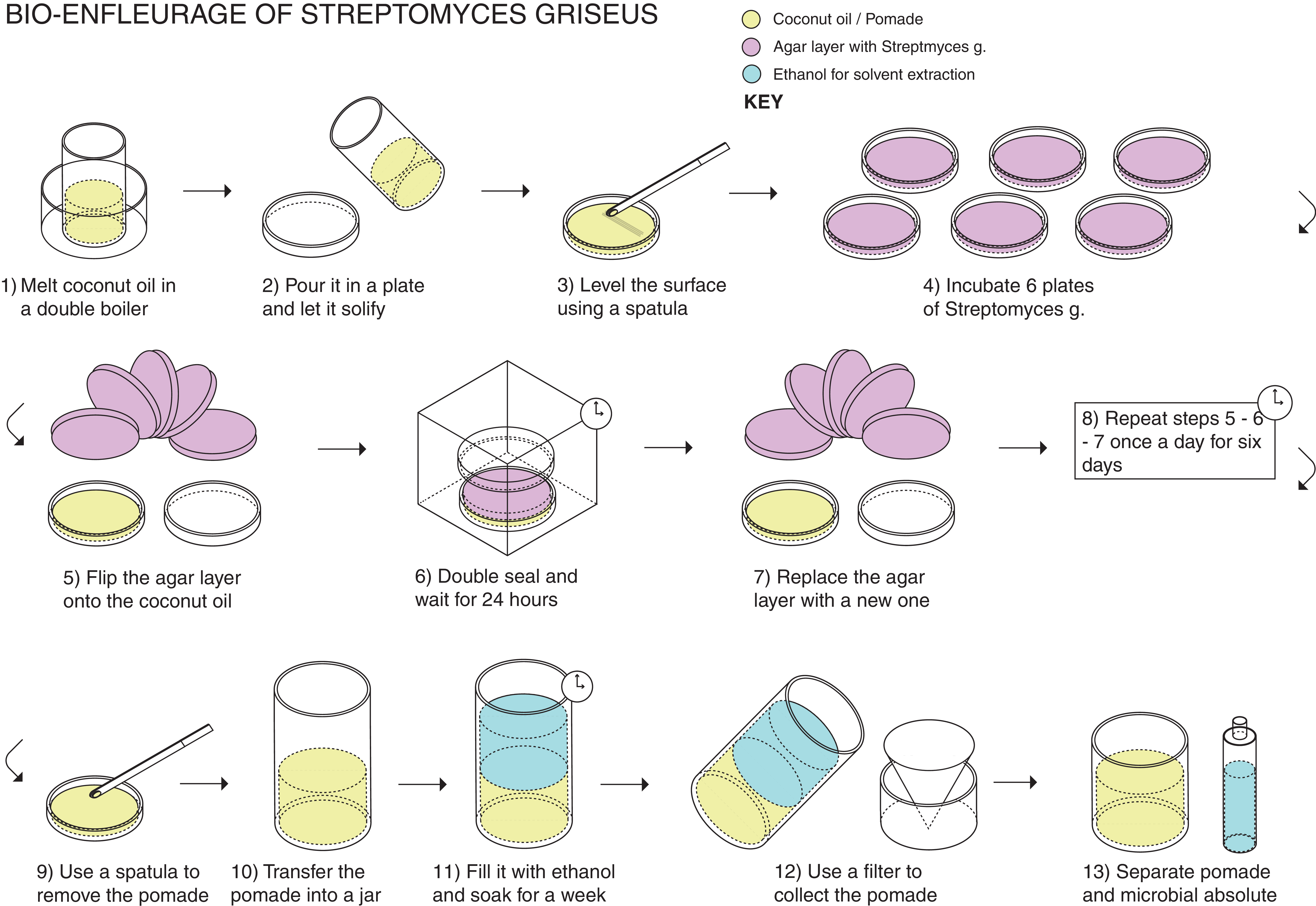
This paper introduces the term bio-enfleurage to describe a novel technique for extracting pomades and absolutes from microbes. This method adapts the cold enfleurage technique to accommodate microbial volatile organic compound (VOC) production by applying a selected organism, previously cultivated in a Petri dish, directly onto a layer of deodorised fat. A general overview of the process is provided, followed by a detailed explanation using S. griseus as the model organism. The bio-enfleurage method proposed in this study consists of a 12-step process, outlined and illustrated below.
Deodorised fat is gently double-boiled until fully melted (Figure 3 , step 1) and then poured into a glass Petri dish (Figure 3 , step 2). After solidification, the surface is levelled by removing excess fat to achieve a flat, smooth layer (Figure 3 , step 3). Simultaneously, a selected microorganism is cultivated in a Petri dish, using media and growth conditions optimised for the production of the desired aroma (Figure 3 , step 4). At the appropriate stage of metabolite production, in this case after 5 days of incubation, the agar layer containing the organism is carefully removed and placed upside-down onto the solidified fat layer in the glass Petri dish (Figure 3 , step 5). The right moment can be identified when colonies have spread across the entire plate, and the scent becomes detectable through the parafilm seal. The assembly is then tape-sealed and enclosed within a second sealed glass container (Figure 3 , step 6). The container is stored either in a refrigerator or at room temperature, provided the temperature remains below the melting point of the fat. For improved extraction, the agar layer with the organism may be replaced with a fresh culture every 24 hours (Figure 3 , step 7). During this period, the organism remains between its culture medium and the fat for several days, allowing sufficient absorption of the desired scent. Daily qualitative assessments are conducted to determine whether the aroma absorbed in the fat layer is strong enough for further processing (Figure 3 , step 8). Once saturated with the microbial fragrance, the fat is removed using a spatula (Figure 3 , step 9) and transferred to another glass container for a second solvent extraction (Figure 3 , step 10). In this step, the pomade is fully immersed in 95% ethanol and left to soak (Figure 3 , step 11). Temperatures below 0°C are preferred to ensure the fat remains solid and compact while releasing odour compounds. This extraction typically lasts one week, after which the solution is filtered to separate the fat from the scented ethanol (Figure 3 , step 12). The remaining pomade, which retains a faint scent, can be repurposed for applications such as soaps, candles and balms. Ethanol acts as a solvent to extract odour molecules from the pomade, yielding a scented ethanol solution that can be used in two ways: directly as a diluted perfume material, where alcohol acts as a preservative ensuring stability for over a year, or evaporated to produce a concentrated absolute, though the properties and shelf life of this product have not yet been investigated.
Schematic representation of the novel bio-enfleurage process.

It is important to note that, as with traditional enfleurage, the bio-enfleurage process is influenced by the chemical properties of the target compounds, such as polarity and affinity for the lipid phase, which determine the efficiency of molecular absorption into the lipid medium. As a result, the fat-based carrier selectively captures lipophilic compounds and may not retain the full volatile profile of the organism, representing an inherent limitation of this extraction approach. Additionally, the open nature of the bio-enfleurage process introduces contamination risks, especially at the fat exposure stage, which should be carefully monitored. Consistent replication of key variables, including VOCs’ production stage, exposure configuration and carrier handling, is therefore essential for reproducibility.
Nevertheless, since several aromatic compounds are lipophilic, this technique is suitable and transferable to a wide range of microbes, other than S. griseus. Moreover, the bio-enfleurage technique can be adapted based on the organism of interest and its production of aroma compounds, as microbial VOC profiles vary significantly with growth conditions and media, which influence metabolic pathways. In this study, the technique is demonstrated through its adaptation to S. griseus and its release of secondary metabolites. However, the method has been successfully applied to additional microbial species beyond those examined in the current study, further supporting its transferability across different scent–microbe relationships.
This approach was selected to enable a gentle extraction that targets only the organism’s VOCs, excluding those from the media. Consequently, distillation and solvent extraction methods were not employed. Additionally, limited access to advanced extraction equipment, such as rotary evaporators and supercritical CO2 systems, necessitated the development of a new technique that integrates traditional perfumery practices with biodesign. This process exemplifies biodesign principles, wherein designers collaborate with living organisms by guiding their growth and establishing the conditions required for the desired outcome (Karana et al. Reference Karana, Barati and Giaccardi2020). This method emphasises direct manipulation and iterative refinement, drawing parallels with craft practices in the engagement and understanding of biological media. As biodesign is characterised by a plurality of methods and perspectives rather than a single theoretical framework (Dade-Robertson and Zhang Reference Dade-Robertson and Zhang2024), it can be integrated with traditional crafts, thereby bridging biotechnology and hands-on making, generating situated knowledge and expanding participation beyond formal scientific contexts.
Bio-enfleurage application on Streptomyces griseus
A series of experiments was conducted using S. griseus to (i) identify a suitable culture medium for petrichor-associated volatile production, (ii) compare two bio-enfleurage exposure configurations and (iii) describe the qualitative olfactory evaluation protocol applied across both experiments.
Culture media
The first experiment qualitatively compared the odours produced by S. griseus when cultivated under identical conditions on two different media: Soy Bean Meal (SBM) and Soya Flour Mannitol (SFM). This process consists of two stages: cultivation and inoculation on SBM media (a) and cultivation and inoculation on SFM media (b). The two media were compared through olfactory evaluation on days 4 and 5 of incubation, as described in section Olfactory evaluation.
-
a. Cultivation and inoculation on SBM media
Gerber and Lechevalier (Reference Gerber and Lechevalier1965) identified SBM as a suitable medium for isolating pure geosmin from S. griseus in broth. In this study, agar was incorporated to prepare solid media plates. The medium was formulated per litre by mixing 500 ml of tap water with 20 g of soybean peptone and 5 g of yeast extract. This mixture was autoclaved at 126°C for 50 minutes, followed by the addition of 5 g sodium chloride, 10 g dextrose and the remaining 500 ml of tap water. The pH was adjusted to 7.5, after which 1 g of calcium carbonate and 1.5% (w/v) agar were added. The medium was autoclaved again at 126°C for 50 minutes. Approximately 20 ml of media was poured onto each of two plates. S. griseus was inoculated from -80°C storage onto one plate, while the second plate served as a control for qualitative olfactory assessment. The inoculated plate was incubated at 28°C for 5 days until sporulation.
-
b. Cultivation and inoculation on SFM media
Hobbs, G., Frazer, C.M., Gardner, D.C.J. et al. (Reference Hobbs, Frazer, Gardner, Cullum and Oliver1989) recommended SFM medium for the routine cultivation of Streptomyces species, as it supports robust sporulation. Kieser et al. (Reference Kieser, Bibb, Buttner, Chater and Hopwood2000) advised autoclaving SFM twice to break down complex carbohydrates in soy flour, enhancing their availability to Streptomyces. The medium was prepared per litre by dissolving 20 g of mannitol in 1 litre of tap water, then adding 20 g of soya flour and 15 g of agar. The mixture was autoclaved twice at 126°C for 50 minutes each. Approximately 20 ml of media was poured onto each of two plates. S. griseus was inoculated from -80°C storage onto one plate, with the second plate serving as a control for qualitative olfactory assessment. The inoculated plate was incubated at 28°C for 5 days until sporulation.
Bio-enfleurage
The second experiment compared two bio-enfleurage exposure configurations to assess which produces a more intense scent extraction. The bio-enfleurage extraction protocol consisted of four main stages: cultivation and inoculation (a), bio-enfleurage vials (b), bio-enfleurage pomades (c) and absolute extraction (d).
To evaluate the influence of exposure configuration, two experimental conditions were tested:
-
• Multiple exposure: freshly sporulated agar plates were applied to the fat carrier and replaced every 24 hours for six consecutive days.
-
• Single exposure: a single sporulated agar plate remained in contact with the fat carrier for six consecutive days without replacement.
All other extraction steps were identical across conditions. The two configurations were compared through olfactory evaluation, as described in section Olfactory evaluation.
-
a. Cultivation and inoculation
S. griseus was inoculated from −80°C storage onto seven plates containing SFM growth media, prepared following the protocol described in section Culture media (b). Six plates were used for the multiple exposure configuration, and one plate was used for the single exposure configuration. The plates were incubated at 28°C until the sporulation phase, which occurred after 5 days and was identified as the optimal period for geosmin production.
-
b. Bio-enfleurage vials
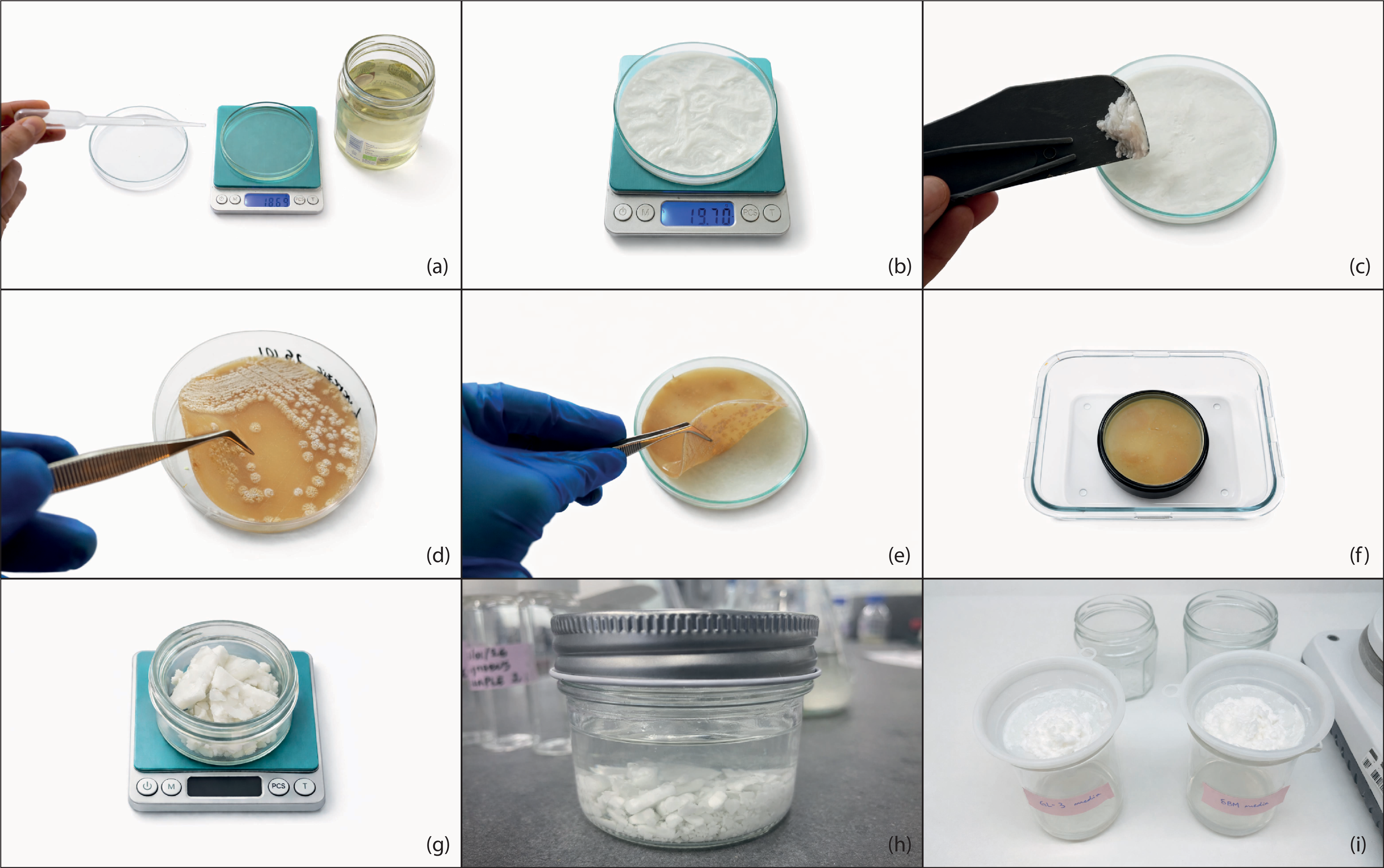
Deodorised coconut oil (supplied by Biona Organic) served as the carrier for the bio-enfleurage process. Coconut oil was melted in a water bath, and 20 g of the liquid oil was poured into each of the two glass Petri dishes (Figure 4a), previously sterilised by boiling at 100°C for 30 minutes. One Petri dish was used for the multiple exposure configuration, and the second one was used for the single exposure configuration. After solidification at 20°C (Figure 4b), the surface was levelled on both plates with a silicone spatula, removing approximately 0,3 g of coconut oil in each plate that was retained by the tool used (Figure 4c).
-
c. Bio-enfleurage pomades
Bio-enfleurage process.

The agar layer containing S. griseus was carefully removed from one plate using metal tweezers (Figure 4d) and placed upside down onto the glass Petri dish with solidified coconut oil, ensuring direct contact between the bacteria and the fat (Figure 4e). The glass plate was then sealed and stored into a second glass container (Figure 4f).
In the multiple exposure configuration, this procedure was repeated daily, replacing the previous agar layer with a freshly incubated one. In the single exposure configuration, the same agar layer was maintained in contact with the solidified coconut oil continuously for 6 days. After 6 days, a qualitative olfactory assessment was performed on both plates (multiple exposure and single exposure) containing solidified coconut oil.
-
d. Absolutes extraction
The resulting pomades were kept separated and subsequently divided into pieces approximately 1 cm in size using a clean silicone spatula and transferred into two glass containers that have been sterilised by boiling at 100°C for 30 minutes and cooled (Figure 4g). Organic extraction ethanol (95% ethyl alcohol, 5% purified water) was added until the pomades were fully submerged, using 25 g ethanol per 19,7 g pomade (Figure 4h). The containers were sealed and stored in a refrigerator at 5°C for 7 days. Afterwards, the aromatic ethanol was filtered under a fume hood with a paper filter (Figure 4i), and the remaining pomades were returned to two separate glass containers for further use. The alcoholic extracts were transferred to two screw-cap glass vials, and any residual coconut oil was removed with a pipette.
Olfactory evaluation
Olfactory evaluation was conducted across both experiments as a qualitative assessment tool to compare scent intensity and character. Evaluations were performed at four stages of the experimental process:
-
1) During bacterial growth on agar plates (performed on days 4 and 5 during sporulation), applied to both culture media in Experiment 1
-
2) During bio-enfleurage (only the multiple exposure sample, during agar layer swap)
-
3) After six days of Bio-enfleurage (both multiple and single exposure samples)
-
4) After ethanol extraction of the pomade to obtain the microbial absolute (both multiple and single exposure samples)
In stages 1, 2 and 3, Petri dishes were briefly opened and assessed through direct smelling. In stage 4, the absolutes were evaluated by dipping a scent strip into each sample (multiple and single exposure configurations). After about 10 seconds of air exposure to allow solvent evaporation, the remaining odour profile was assessed.
All evaluations were performed by the same assessor under comparable conditions. Odour intensity was recorded using a five-point ordinal scale:
-
1 = Almost imperceptible
-
2 = Slight and fleeting
-
3 = Moderate and recognisable
-
4 = Intense and persistent
-
5 = Dominant and enveloping
Observations were documented immediately after each assessment. The evaluation was qualitative, exploratory and comparative in nature, and no instrumental chemical analysis was performed.
Results
This section presents the results of the two experiments described in section Bio-enfleurage application on S. griseus, assessed through olfactory evaluation.
Section Culture media reports the outcomes of the culture medium experiment, sections Pomades and Absolutes present the results of the bio-enfleurage experiment, comparing the pomades and absolutes obtained from the two exposure configurations (multiple and single).
Culture media
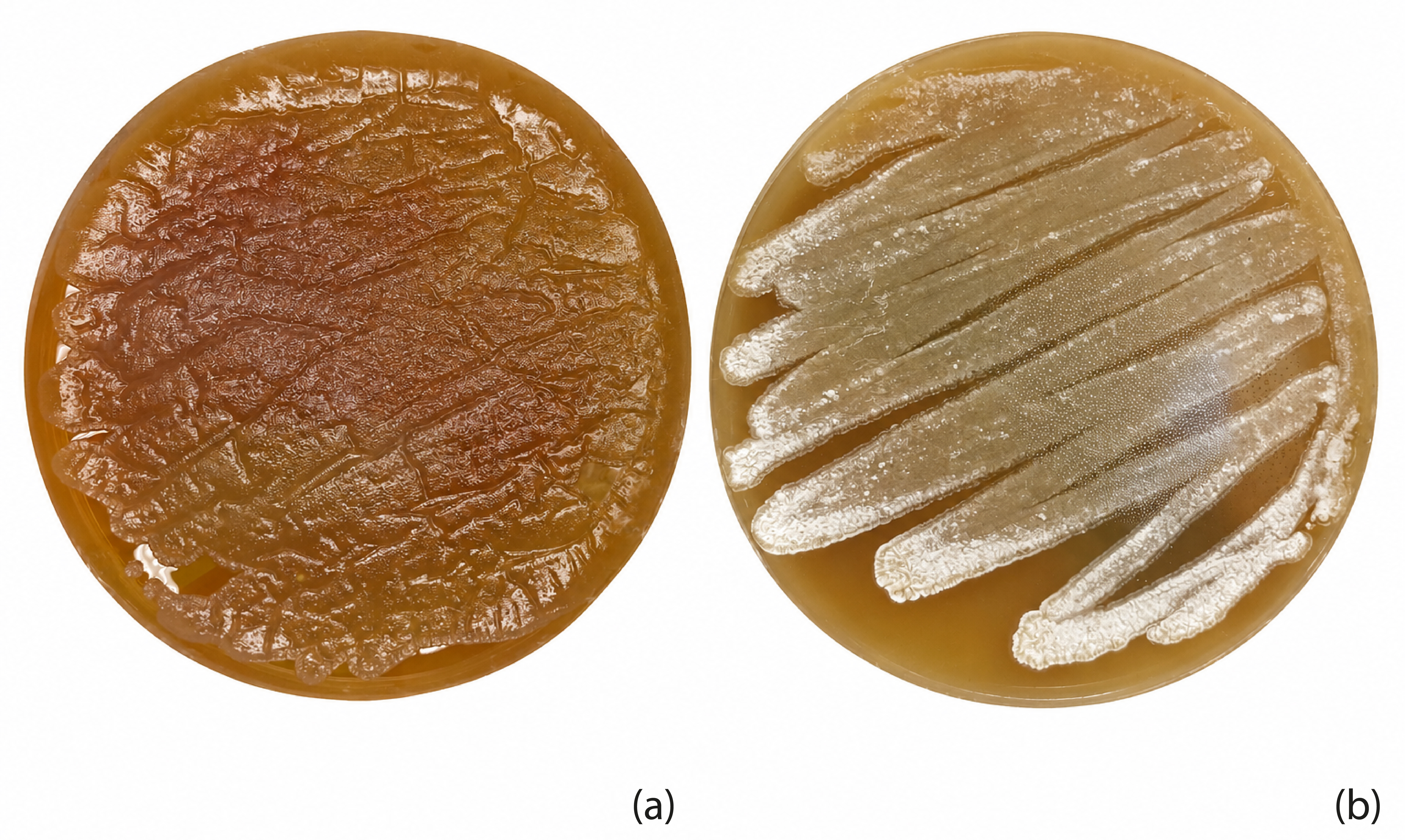
Figure 5 shows S. griseus cultivated on SBM (a) and SFM (b) media after five days of incubation, as part of the first experiment comparing culture media. Olfactory assessment was conducted on days 4 and 5, with results summarised in Table 1.
Visual comparison of Streptomyces g. grown on SBM (a) and SFM (b) media.

Media olfactory assessment

Table 1. Long description
A table summarizing olfactory assessment of S. griseus on different media over five days. The table has five rows and five columns. The columns are labeled Intensity (1-5), Day 1, Day 2, Day 3, Day 4, Day 5, and Notes. The rows are labeled SBM, SBM control, SFM, and SFM control. Row 1: SBM, Day 1: N/A, Day 2: N/A, Day 3: N/A, Day 4: 2, Day 5: 3, Notes: Faint resemblance to petrichor, slightly sweet. Streptomyces g. is visually clear and shiny. Row 2: SBM control, Day 1: N/A, Day 2: N/A, Day 3: N/A, Day 4: 0, Day 5: 0, Notes: No resemblance to petrichor, sweet malt. Row 3: SFM, Day 1: N/A, Day 2: N/A, Day 3: N/A, Day 4: 3, Day 5: 5, Notes: Strong resemblance to petrichor. Streptomyces g. is visually white and fluffy. Row 4: SFM control, Day 1: N/A, Day 2: N/A, Day 3: N/A, Day 4: 0, Day 5: 0, Notes: No resemblance to petrichor, malty.
As shown in Figure 5, the two media produced visibly different growth patterns. On SBM (Figure 5a), colonies appeared transparent and translucent, suggesting limited sporulation, while on SFM (Figure 5b), S. griseus developed characteristic white spores and typical colony morphology.
The olfactory assessment (Table 1) revealed that S. griseus grown on SBM produced a petrichor scent that was slightly sweeter than the more earthy and characteristic odour observed on SFM medium. Intensity ratings were 3 for SBM and 5 for SFM. Control plates were assigned an intensity of 0, reflecting the absence of any perceptible petrichor note. Days 1–3 are marked as N/A as the plates were not opened for olfactory assessment during the early stages of growth.
The higher intensity and more characteristic scent profile observed on SFM justified its selection as the preferred medium for all subsequent experiments.
Pomades
To assess differences in exposure time, the single exposure sample was kept sealed, while the multiple exposure sample was evaluated daily until saturation was reached (Table 2). Saturation served as the criterion for determining the required exposure period. No perceptible changes were observed between days 4 and 6; therefore, the process was concluded after six days, which was considered sufficient for the absorption of microbially produced VOCs into the fat carrier, resulting in two scented pomades. At the end of the six-day bio-enfleurage process, both samples (multiple and single) were rated at intensity 5.
Pomades olfactory assessment

Table 2. Long description
A table comparing the intensity of pomade samples over six days of bio-enfleurage. The table has two rows and seven columns. The columns are labeled as Intensity (1-5), Day 1 of bio-enfleurage, Day 2 of bio-enfleurage, Day 3 of bio-enfleurage, Day 4 of bio-enfleurage, Day 5 of bio-enfleurage, and Day 6 of bio-enfleurage. The rows are labeled as Multiple exposure sample and Single exposure sample. Row 1: Intensity (1-5), Day 1 of bio-enfleurage, 0; Day 2 of bio-enfleurage, 2; Day 3 of bio-enfleurage, 4; Day 4 of bio-enfleurage, 5; Day 5 of bio-enfleurage, 5; Day 6 of bio-enfleurage, 5. Row 2: Intensity (1-5), Day 1 of bio-enfleurage, N/A; Day 2 of bio-enfleurage, N/A; Day 3 of bio-enfleurage, N/A; Day 4 of bio-enfleurage, N/A; Day 5 of bio-enfleurage, N/A; Day 6 of bio-enfleurage, 5.
Absolutes
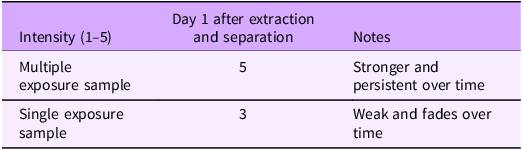
Based on the sensory assessment (Table 3), the sample obtained from the first experiment (multiple exposure configuration) exhibited a stronger resemblance to petrichor, whereas the second sample (single exposure configuration) presented a fainter petrichor-like scent. The odour intensity of the multiple exposure sample was rated at 5, while that of the single exposure sample was rated at 3. These findings indicate that bio-enfleurage performed using multiple plates yielded a higher-intensity absolute than the single-plate configuration. Notably, although both samples exhibited similar intensity in pomade form, differences became apparent following solvent extraction.
Absolutes olfactory assessment

Table 3. Long description
A table titled Absolutes olfactory assessment compares the intensity of two samples one day after extraction and separation. The table has three rows and three columns. The columns are labeled Intensity (1-5), Day 1 after extraction and separation, and Notes. The first row under Intensity (1-5) is labeled Multiple exposure sample with an intensity value of 5 and notes stating Stronger and persistent over time. The second row under Intensity (1-5) is labeled Single exposure sample with an intensity value of 3 and notes stating Weak and fades over time.
Discussion
The results underscore the critical role of growth medium composition in modulating microbial VOC production, together with the influence of exposure modality. Variations in the culture substrate appeared to shape the qualitative expression of volatile compounds, suggesting that nutrient availability directly affects metabolic pathways linked to scent formation. Likewise, the exposure configuration influenced the final yield of the absolute. The daily replacement of freshly sporulated plates resulted in a higher-intensity absolute compared to continuous contact with a single plate for six days. Although both configurations reached comparable saturation at the pomade stage, renewal of microbial material appears to have increased the amount of volatiles available for recovery during solvent extraction. This suggests that sustained replenishment of active cultures throughout the exposure period enhanced extractable yield, whereas prolonged use of a single plate may have limited overall volatile availability.
Several limitations of the current study should be acknowledged. Olfactory evaluation was conducted by a single assessor without instrumental chemical analysis, which restricts the objectivity and reproducibility of the sensory findings. The absence of biological replicates means that results reflect a single experimental run, and further repetition would be needed to confirm consistency. Controls for the potential influence of the culture medium and carrier material on scent output were also limited. Additionally, the fat-based carrier system presents practical constraints, including the risk of contamination during prolonged exposure periods, which may affect the reliability of results if not carefully managed. The inherent limitations of the fat-based carrier system and the conditions required for reproducibility are discussed in further detail in section Development of the bio-enfleurage method.
Perfumery extraction techniques applied to the biodesign field
In contrast to the most advanced techniques used in the biotechnological field and industrial perfumery, some traditional fragrance extraction methods can often be carried out outside of laboratory settings and are generally more accessible, as they are also widely taught in courses and workshops for the general public. In Common Fragrance and Flavour Materials (Bauer et al. Reference Bauer, Garbe and Surburg2001), the authors categorise the principal methods in perfumery for concentrating plant flavours and fragrances into three groups:
-
1. Distillation
-
2. Mechanical separation, also known as pressing
-
3. Solvent extraction
The sensory qualities of a fragrance product are highly influenced by the extraction method employed. For example, extracts often contain numerous nonvolatile compounds that are absent in essential oils obtained through distillation. These nonvolatile components can substantially affect the development of a scent, resulting in products that may differ significantly in aroma despite having similar volatile aromatic compounds. High-temperature distillation can alter heat-sensitive substances, and certain fragrance components are released only from plant precursors under these conditions. Solvent extraction is generally used for producing essential oils in very low yields, such as those derived from blossoms. This method is also selected when nonvolatile compounds are desired for their fixative properties, as seen in resinoids produced from plant resins.
Since the aim of the experiments was to evaluate the feasibility of the bio-enfleurage method on S. griseus, allowing for the selective collection of VOCs emitted by the organism, distillation and solvent extraction were rejected in favour of a gentler technique to prevent the heat-sensitive agar-based medium from altering the olfactory profile of the extract. Based on the results obtained from applying bio-enfleurage to microbial systems, the proposed method offers a low-tech approach to the design of microbe-derived scents.
Rather than relying on highly specialised equipment, it draws on perfumery craftsmanship, reinforcing the concept of biodesign as a bridge between diverse fields of expertise. The method has been successfully applied to additional microbial species beyond those examined in the current study, supporting its broader transferability, though a full account of these applications falls outside the scope of this paper. Further validation could be achieved through its systematic application to a wider range of microbial species and aromatic compounds, documenting the necessary adaptations and outcomes across different scent–microbe relationships. Moreover, future investigations may include gas chromatography–mass spectrometry (GC–MS) analysis to characterise the volatile profiles of the extracts. Olfactory evaluation could also be expanded beyond a single assessor to include a trained panel, providing a more robust and intersubjective assessment of scent intensity and character.
Beyond its technical contributions, the proposed method carries potential ecological implications at a small, exploratory scale. By drawing on microbial systems, it avoids the toxicity associated with synthetic aroma molecules and reduces dependence on resource-intensive natural raw material extraction, both significant concerns for the fragrance industry. Furthermore, the scented pomade produced through this process has potential as a solid perfume, which could offer additional ecological advantages over conventional liquid fragrances, including reduced packaging and lower transport emissions, though these benefits warrant further investigation.
Conclusion
To conclude, this study has contributed to developing new knowledge at the intersection of traditional perfume production and biodesign by developing a novel bio-enfleurage approach for the extraction of microbial-based petrichor scent compounds. It situates the research within the broader context of scent studies, olfactory heritage and biodesign, highlighting the growing relevance of alternative, biologically driven methods for fragrance production.
The study provides an overview of perfumery materials, presenting contemporary developments in biotechnology. Furthermore, the work has examined petrichor not only as a culturally significant and recognisable olfactory phenomenon, but also as a complex scent resulting from specific microbial metabolic processes. Building upon this foundation, the research explored enfleurage as a traditional perfumery technique and proposed its reinterpretation through the design of a bio-enfleurage method applicable to living microbial systems. This methodological adaptation was tested through a series of laboratory experiments conducted with S. griseus, demonstrating the feasibility of capturing petrichor-like aromatic profiles from microbial cultures. The experimental results suggest that bio-enfleurage can function as a low-tech yet effective strategy for microbial scent extraction, offering a more sustainable alternative to conventional industrial approaches that often rely on toxic synthetic chemistry or resource-intensive natural raw material extraction.
Therefore, the current study proposes a method that is both highly accessible beyond strictly scientific environments and transferable to a wide range of microorganisms. By combining traditional perfumery knowledge with laboratory-based cultivation of living systems, this research emphasises the role of biodesigners in bridging artisanal practices and emerging biotechnologies. In doing so, it contributes to interdisciplinary research on scent preservation, sustainable fragrance innovation and biodesign methodologies, while opening new possibilities for future exploration of microbial olfactory resources in both scientific and creative contexts.
Data availability statement
The authors confirm that the data supporting the findings of this study are available within the article.
Acknowledgments
We are grateful for the technical assistance of B. Paes and P. Corsini from the GrowLab at Central Saint Martins, UAL.
Author contributions
Conceptualisation, Investigation, Writing, Visualisation: L. Alessandroni; Project supervision: C. Collet, Dr A. Taylor, Dr B. Smith; all authors approved the final submitted draft.
Financial support
This study is part of a wider practice-based PhD research project, which is supported by grants from the University of the Arts London. UAL Research Project Studentship Award: Biodesigning the future of scent experience using microbial organisms. Award Type: Full-time Home Fees and UKRI rate maintenance for 3 Years. Grant number N/A.
Competing interests
None.
Ethical standards
The research meets all ethical guidelines, including adherence to the legal requirements of the study country.



 Open access

