Introduction
Against the background of increasing worldwide ageing, cognitive impairment among older adults has become a global public issue (World Health Organization 2021). Cognitive impairment is characterised by a loss of cognitive functioning, including memory, reasoning, judgement and language skills, which may result in serious health problems such as dementia and death (Batty et al. Reference Batty, Deary and Gottfredson2007). Cognitive functioning is thus crucial for the quality of life for individuals and their families. Intergenerational relationships, some of the most important social relationships in later life, have been considered crucial resources for preventing or slowing down the decline in cognitive functioning among older adults (Livingston et al. Reference Livingston, Huntley, Sommerlad, Ames, Ballard, Banerjee, Brayne, Burns, Cohen-Mansfield, Cooper, Costafreda, Dias, Fox, Gitlin, Howard, Kales, Kivimäki, Larson, Ogunniyi, Orgeta, Ritchie, Rockwood, Sampson, Samus, Schneider, Selbæk, Teri and Mukadam2020; Zhu et al. Reference Zhu, Hu and Efird2012). Previous studies have revealed that supportive and gratifying intergenerational relationships predict better cognitive performance (Thomas and Umberson Reference Thomas and Umberson2018; Yang and Jia Reference Yang and Jia2022). However, the complexities of intergenerational relationships resulting from their multi-dimensional and ambivalent natures and variation across different children make it unclear how intergenerational relationships shape the trajectories of older parents’ cognitive functioning, especially in multi-child families.
Intergenerational relationships are often evaluated according to various dimensions such as contact, affinity, consensus, function, norms and structure (Bengtson and Roberts Reference Bengtson and Roberts1991). These dimensions are not always positively related to each other; this inconsistency is considered a manifestation of intergenerational ambivalence defined as the contradictions that parents and children experience in their relationships (Bengtson et al. Reference Bengtson, Giarrusso, Mabry and Silverstein2002; Lüscher and Pillemer Reference Lüscher and Pillemer1998). To efficiently capture the major patterns of complicated parent–child interactions, while also maintaining intrinsic connectedness among different dimensions, the typology method (eg latent class analysis and clustering analysis) for discerning major types of parent–child relationship is widely adopted (eg Guo et al. Reference Guo, Chi and Silverstein2012; Silverstein and Bengtson Reference Silverstein and Bengtson1997). Furthermore, intergenerational relationships are not homogenous across multiple children within a family: this heterogeneity is conceptualised as ‘collective ambivalence’ (Ward et al. Reference Ward, Spitze and Deane2009). The ‘within-family differences’ approaches (Suitor et al. Reference Suitor, Gilligan, Pillemer, Fingerman, Kim, Silverstein and Bengtson2017, Reference Suitor, Sechrist, Plikuhn, Pardo and Pillemer2008) are often applied to resolve the measurement challenge of collective ambivalence through extracting and aggregating patterns of multiple parent–child dyads. The complexities of intergenerational relationships complicate the perception of how the coexistence of various types of parent–child relationship shapes the trajectories of older parents’ cognitive functioning. For instance, does the closest or the most distant parent–child relationship influence older parents’ cognitive functioning decline the most? Do parents with more variation in their relationships across multiple children have a faster decline in cognitive functioning? To the best of our knowledge, this study is the first to explicitly answer these questions. We employed the widely adopted typology method to discern the intergenerational relationship type for each parent–child dyad in multi-child families. Subsequently, we used the ‘within-family differences’ approaches to capture the heterogeneity of intergenerational relationship types in multi-child families and to examine its associations with cognitive functioning trajectories.
China provides a unique social setting for this study. Owing to the absence of functional social security systems and the long influences of Confucian culture, older parents rely heavily on their adult children (particularly the eldest son) for old-age care and support (Hsu Reference Hsu, Tseng and David1985). Functional exchanges have long sustained intergenerational relationships; further, favouritism towards certain children (particularly eldest sons) is acceptable and normative (Cong and Silverstein Reference Cong and Silverstein2012). However, fundamental social changes in recent decades have reshaped Chinese people’s perceptions of intergenerational relationships and their associated value. In fact, emotional affinity is now being emphasised more than functional resources, and a comprehensive and harmonious relationship with all children has become more valued than the functional benefits of an individual parent–child relationship (Li and Zhang Reference Li and Zhang2023; Liu Reference Liu2021). Against this background, to promote our understanding of the social determinant of cognitive functioning and obtain practical ways to alleviate cognitive impairment through potential family interventions and therapy, we investigate how older Chinese parents’ cognitive functioning responds differently to various types of parent–child relationship and to variations across multiple children.
Moreover, it is well-documented that, from a social point of view, women play the roles of nurturing, caretaking, and kinship maintenance within a family and their sense of value is more likely to be defined by their connections to significant others in their lives (Umberson et al. Reference Umberson, Chen, House, Hopkins and Slaten1996). Further, owing to their socialisation processes, women are more vulnerable to complexities and changes in the family (Kessler and McLeod Reference Kessler and McLeod1984). This is probably more present in a social setting with a long patriarchal history and a growing emphasis on close relationships between the mother and all her children (Liu Reference Liu2021). Therefore, in contemporary China, mothers’ cognitive functioning decline is more likely to be shaped by parent–child relationships, as compared to fathers’.
In relation to three waves of data (2014, 2016, and 2018) from a nationally representative survey – the China Longitudinal Ageing Social Survey (CLASS) – we used the k-means clustering method and growth curve models to address the following research questions. First, how are the closest and the most distant intergenerational relationships across multiple adult children associated with the trajectories of older parents’ cognitive functioning? Second, how is the heterogeneity in intergenerational relationships across multiple adult children associated with the trajectories of older parents’ cognitive functioning? Third, do these two associations differ by gender?
Theoretical background
Theorising and measuring intergenerational relationships and collective ambivalence
Investigating how intergenerational relationships shape trajectories of cognitive functioning presents several challenges, mostly because of the complexities in the conceptualisation and measurement. The first challenge comes from evaluation of each parent–child relationship, a developing complicated concept with multiple and even conflicting aspects. Six aspects were proposed to evaluate intergenerational relationships: associational, affectual, consensual, functional, normative and structural aspects (Bengtson and Roberts Reference Bengtson and Roberts1991). However, these aspects are not always positively associated with each other. For example, frequent functional exchanges do not necessarily indicate high emotional affinity, and intensive functional support may create tensions and stress in relationships. Moreover, conflicts and possible negative effects of excessive solidarity within intergenerational relationships have been emphasised by scholars (Silverstein et al. Reference Silverstein, Chen and Heller1996). Therefore, to further investigate contradictions and ambiguities within intergenerational relationships, the concept of intergenerational ambivalence has been developed (Connidis and McMullin Reference Connidis and McMullin2002; Lüscher and Pillemer Reference Lüscher and Pillemer1998).
Measurement of the ambivalent nature of intergenerational relationship presents significant challenges. Measures to capture coexisting contradictory emotions and behaviours are often employed to evaluate ambivalence (see Connidis Reference Connidis2015 for a review; Lendon et al. Reference Lendon, Silverstein and Giarrusso2014). Corresponding to the view of Connidis and McMullin (Reference Connidis and McMullin2002), such ambivalence involves push–pull situations where children and parents are torn between demands, obligations, normative expectations and time schedules. As they combine a variety of measures, typology methods are widely adopted strategies for capturing ambivalence by distinguishing parent–child relationship types (Connidis Reference Connidis2015). In general, the classified categories of intergenerational relationships roughly comprise alienated, ambivalent, non-reciprocal, close and reciprocal types (Guo et al. Reference Guo, Chi and Silverstein2012; Silverstein and Bengtson Reference Silverstein and Bengtson1997; van Gaalen and Dykstra Reference van Gaalen and Dykstra2006), which are also expected to be identified in this study.
The second challenge stems from the variation in intergenerational relationships across multiple children. The concept of ‘collective ambivalence’ has been proposed in light of the mixed feelings relating to parent–child relationships across multiple children within a family (Ward et al. Reference Ward, Spitze and Deane2009). In fact, older parents’ cognitive functioning is likely to be influenced by each parent–child dyad’s characteristics as well as the stress generated from parents having to handle varying relationship types with multiple children. To evaluate collective ambivalence, Suitor et al. (Reference Suitor, Sechrist, Plikuhn, Pardo and Pillemer2008, Reference Suitor, Gilligan, Pillemer, Fingerman, Kim, Silverstein and Bengtson2017) have summarised three strategies, known as ‘within-family differences’ approaches. Specifically, a ‘threshold strategy’ emphasises a threshold effect on older parents’ wellbeing in various ways, for example by identifying the impact of the closest or the most distant parent–child relationship for each older parent. An ‘additive strategy’ treats positive (or negative) relationships as additive: having more favourable (or problematic) ties is associated with better (or worse) wellbeing. An ‘interactive strategy’ stresses the interaction of various relationships; for instance, favourable ties may have a mitigating effect on problematic ones. The second strategy implicitly assumes that a parent–child relationship has a linear effect (ie the effects of each parent–child dyad are additive), while the first and third strategies assume a non-linear effect (ie the effects of parent–child dyads are not simply superimposed). Considering the potential non-linear effects of intergenerational relationships, we employed both the threshold strategy and the interactive strategy to examine collective ambivalence based on parent–child relationship typologies.
Intergenerational relationships, collective ambivalence and cognitive functioning
Empirical evidence on the associations between intergenerational relationship types and older parents’ mental wellbeing is quite mixed, likely owing to differing approaches to capturing intergenerational relationships, the various measures of mental outcomes and the diverse social contexts in which studies are embedded. Despite these differences in past studies, it is generally agreed that mutually supportive and gratifying relationship types can provide significant benefits to older adults’ mental wellbeing, while alienated relationship types often have a detrimental effect on mental wellbeing (Davey and Eggebeen Reference Davey and Eggebeen1998; Yang et al. Reference Yang, Ariela, Todd and Zheng2013). However, results regarding ambivalent or non-reciprocal types are less consistent. Some studies have revealed that ambivalent intergenerational relationships can undermine older adults’ mental wellbeing even more than the detached ones in Western societies (Hua et al. Reference Hua, Brown and Bulanda2021; Kim et al. Reference Kim, Zarit, Birditt and Fingerman2020; Lee and Szinovacz Reference Lee and Szinovacz2016). Scholars have noted that ambivalent ties generate stress owing to unpredictability and uncertainty, thereby exacerbating the negative parts within parent–child relationships (Fingerman et al. Reference Fingerman, Pitzer, Lefkowitz, Birditt and Mroczek2008). Moreover, parents typically respond to intergenerational ambivalence by avoiding contact with their offspring (Connidis Reference Connidis2015), which increases their feelings of guilt and impairs their mental wellbeing (Kalmijn Reference Kalmijn2020; Yahirun Reference Yahirun2022). However, another study in the Chinese context has suggested that maintaining any level of interaction, despite being unequal or ambivalent, would be better than no interactions at all (Peng et al. Reference Peng, Kwok, Law, Yip and Cheng2019).
Additionally, compared to the outcomes of life satisfaction, depression and loneliness, far less is known about how different types of intergenerational relationship are related to older parents’ cognitive functioning. As an important risk factor for dementia – a mental disorder – cognitive impairment is detrimental to the quality of life for individuals and their families. Investigating the link between intergenerational relationships and cognitive functioning may contribute to a better understanding of how these relationships serve as social determinants of cognitive impairment and the benefits and drawbacks of intergenerational relationships for mental wellbeing. To sum up, to resolve the issue of inconsistent findings on different aspects of intergenerational relationships, we adopted a typological approach to measuring intergenerational relationships, as it can comprehensively capture their multi-dimensional and ambivalent nature. To fill the research gap in the oversight of cognitive functioning and non-Western social contexts, we investigated the association between intergenerational relationships and older parents’ cognitive functioning in a multi-child Chinese context.
The stress and guilt generated by relationship ambivalence may be intensified by mixed feelings across multiple children. Parents in a parent–child relationship network with high heterogeneity are likely to experience greater phycological tension, unpredictability and confusion, resulting in more detrimental effects on their mental wellbeing, compared to those with relatively homogeneous parent–child relationships. The family systems theory (Bowen Reference Bowen and Arieti1975) endorses the link between multiple parent–child relationships and older adults’ mental wellbeing. Further, it recognises the family as a whole functioning system, involving different interactions between a parent and multiple children, with all parent–child dyads being interdependent of each other. Given this interactive nature of parent–child dyads, the influences of multiple parent–child relationships are not simply additive. Specifically, parents’ cognitive functioning may be determined by the highest or lowest threshold of parent–child relationship, known as the ‘threshold effect’. Alternatively, a positive influence of a gratifying relationship with one child may be moderated by a strained relationship with another child, known as an ‘interactive effect’. Prior studies have confirmed that having a less positive relationship with at least one adult child and experiencing a larger variation in relationships across multiple children are associated with lower parental wellbeing (Chen and Zhou Reference Chen and Zhou2021; Ward Reference Ward2008). Therefore, we examined the associations of the closest and the most distant parent–child relationship types (ie the ‘threshold’ strategy) and the heterogeneity (eg the standard deviation and range) of parent–child relationship types (ie the ‘interactive’ strategy) with older parents’ cognitive functioning.
Mothers versus fathers
Parents’ experiences with their adult children vary by gender. Mothers are socialised to value parental roles more than fathers (Katz-Wise et al. Reference Katz-Wise, Priess and Hyde2010). Women are also more often described as kin keepers with strong obligations, such as maintaining family ties, and are intensively involved in assistance and care-giving (Silverstein and Bengtson Reference Silverstein and Bengtson1997). Moreover, the gendered social roles tend to encourage older women to invest most of their time in caring for family members; therefore, their other social networks are more limited than those of older men (Zhang Reference Zhang2006). To some extent, women’s limited social support from other relationships outside the family strengthen women’s high dependency on parent–child relationships. Such demanding and exclusive family roles may carry both benefits and costs. Mothers may psychologically benefit more from supportive parent–child relationships as well as suffer more from strained or ambivalent parent–child relationships, compared to fathers (Fingerman et al. Reference Fingerman, Pitzer, Lefkowitz, Birditt and Mroczek2008; Thomas and Umberson Reference Thomas and Umberson2018; Umberson et al. Reference Umberson, Chen, House, Hopkins and Slaten1996).
Apart from different perceptions of parent–child relationships, women may appraise and interpret stress differently, meaning that they may be more sensitive to stress caused by relationship problems compared to men (Kessler and McLeod Reference Kessler and McLeod1984). Women are more likely than men to suffer distress in response to stressors generated from family responsibilities and parental roles (Aneshensel et al. Reference Aneshensel, Frerichs and Clark1981). Therefore, strained or ambivalent relationships may have greater negative influences on women’s cognitive functioning than on men’s (Thomas and Umberson Reference Thomas and Umberson2018). Taken together, compared to fathers’, women’s higher-demand parental roles and greater psychological response to relationship quality may result in a stronger vulnerability to stressful parent–child relationships, as well as mixed and conflicting feelings from multiple parent–child relationships.
The Chinese context
Owing to long and impactful influences of the Confucian culture, Chinese people put great emphasis on intergenerational relationships. For instance, filial piety explicitly define parents’ and children’s obligations and responsibilities (Hsu Reference Hsu, Tseng and David1985). According to Fei (Reference Fei1983), parents are obligated to raise their younger children, while adult children, especially the eldest son, are obligated to take care of their parents, a cycle known as the ‘feeding model’. This model is institutionalised in China’s historical self-subsistence agricultural economy and is especially important in the absence of a truly functional social security system. Thus, even though Chinese collectivist family norms emphasise collective emotional cohesion among family members, and family harmony and solidarity are highly valued, parent–child relationships are fundamentally sustained by practical functional exchanges owing to a weak social security system. This heavy reliance on functional support from older children combined with patriarchal tradition results in different investments among children and favouritism towards (the eldest) sons over daughters; this potentially implies heterogeneity in parent–child relationships within a multi-child family (Cong and Silverstein Reference Cong and Silverstein2012).
Dramatic social changes and the modernisation process over the past few decades have significantly transformed China’s intergenerational relationships and associated values. For instance, improvements in social security and the provision of old-age care services have reduced older adults’ reliance on children for old-age support and care (Du et al. Reference Du, Sun, Zhang and Wang2016; Zhu and Walker Reference Zhu and Walker2018). Moreover, the advancement of gender equity, along with the rising importance of daughters in old-age care, has made parents’ attitudes towards sons and daughters somewhat more uniform (Hu Reference Hu2017; Lei Reference Lei2013). Recent studies have revealed that old parents seek emotionally close relationships with all their children to fulfil their own psychological needs (Liu Reference Liu2021). Moreover, functional exchanges have symbolic meanings for emotional closeness beyond their practical utility in Chinese culture (Xie and Zhu Reference Xie and Zhu2009). Therefore, both the functional exchanges and the emotional affinity of each parent–child dyad may matter for older parents’ cognitive functioning. Moreover, against this new background, older parents who present a great variation in their relationships with multiple children may suffer not only stress and guilt generated from mixed feelings but also the social pressure generated from the failure to maintain family harmony and solidarity. Consequently, experiencing a combination of different types of intergenerational relationship may be detrimental to parents’ cognitive functioning.
Considering China’s long patriarchal history, parental roles and associated responsibilities are significantly dependent on gender. Even though the progress in gender equity in terms of education and the labour market has largely improved women’s status within the family and altered their values towards parenthood, women are still in a stressful position, struggling to balance work and family. Further, parental roles are still considerably gendered (Ji et al. Reference Ji, Wu, Sun and He2017). Therefore, we may observe gendered associations between intergenerational relationships and cognitive functioning in multi-child Chinese families.
In summary, employing the ‘within-family differences’ approaches, we expect that the more estranged the most distant relationship across multiple children is, the lower the levels of older parents’ cognitive functioning and the faster the decline in cognitive functioning; conversely, the closer the closest relationship across multiple children is, the higher the levels of older parents’ cognitive functioning and the slower the decline in cognitive functioning. Further, the greater the heterogeneity in parent–child relationships is, the lower the levels of cognitive functioning of older parents and the faster the decline in cognitive functioning. Moreover, the above associations are stronger among mothers compared to fathers.
Methods
Data
This study utilised three waves of data (2014, 2016 and 2018) from CLASS, a nationally representative longitudinal study conducted by Renmin University of China. The survey was initiated in 2014 and adopted a multi-stage stratified random sampling procedure, with counties as the primary sampling units and villages in rural areas and communities in urban areas as secondary sampling units. We chose CLASS because it is the only nationally representative longitudinal survey in China that collects detailed information on older adults’ intergenerational relationships with multiple children and their cognitive performance, which represents the focus of this study.
In total, CLASS surveyed 20,182 respondents (aged 50 years and older) across the 2014, 2016 and 2018 waves [person-years = 34,400]. To construct our analytical samples, we first conducted a typology analysis on the first observation of each parent–adult child relationship of older parents across the three waves, with children aged 18 and above (50,687 cases in total, referred to as the parent–child sample). The older parents were restricted to ages 60–90 (ages older than 90 were top-coded as 90 owing to a small sample size; 10 individuals [person-years = 58] were dropped). We then merged the person-year dataset of older parents with the types of parent–child relationship derived from the parent–child sample (1,678 individuals [person-years = 3,028] were dropped) and restricted the number of older parents to those who had at least two adult children (2,080 individuals [person-years = 5,161] were dropped). Finally, we excluded respondents with missing values in the measures of our interest (6,985 individuals [person-years = 14,547] were dropped, among which 4,979 individuals [person-years = 5,973] were found to have missing values of cognitive functioning). Our final sample (referred to as the parent sample) comprised 9,429 older parents with 11,606 person-year observations.
Measures
Cognitive functioning
To measure individual cognitive functioning, CLASS relies on the Mini-Mental State Examination instrument, a modified short version of the original instrument (Folstein et al. Reference Folstein, Folstein and McHugh1975) that captures orientation to time and place, registration, attention and calculation, and recall. Orientation to time and place were evaluated by answering the survey date (day and month), the name of the local neighbourhood committee or community/village, the date of the National Day, the name of the President and the Chinese Zodiac sign for the survey year on the lunar calendar. Attention and calculation were measured using the Serial 7s test, in which the respondents were asked to start at 100 and subtract in increments of seven for five trials. Registration and recall were measured using immediate and delayed recall (several minutes later) of three simple Chinese nouns, respectively. Estimates of the respondents’ cognitive functioning were obtained by summing the scores for the aforementioned different items (range 0–16), with higher scores indicating better cognitive functioning.
Intergenerational relationships in multi-child families
Based on the first observed parent–child relationship indicators across the three waves, our analysis discerned the types of parent–child relationship and aimed to predict future trajectories of cognitive functioning. We constructed four measures to capture intergenerational relationships in multi-child families – the most distant, the closest, the standard deviation and the range of parent–child relationship types.
Referring to previous studies (Bai Reference Bai2018; Bengtson and Roberts Reference Bengtson and Roberts1991; van Gaalen and Dykstra Reference van Gaalen and Dykstra2006), we first characterised the dyadic parent–child relationship using nine indicators from three dimensions in our parent–child sample: emotional affinity, functional exchange and associational connection (see Table A1 for more details). Specifically, the indicators of emotional affinity included self-rated closeness towards each child (scale 1–3), self-rated emotional indifference to each child (scale 1–4) and self-rated excessive help required by each child (scale 1–4). Specifically, the last two measures reflect the conflicting emotional aspects of parent–child relationships. The indicators of functional exchange comprise the frequency of economic support (money, food and gifts in RMB, scale 1–9) over the past 12 months (from each child to the parent and vice versa) and the frequency of housework support (scale 1–5) over the past 12 months (from each child to the parent and vice versa). The indicators of associational connection included contact frequency through in-person meetings (scale 1–5) or by phone (scale 1–5) over the past 12 months.
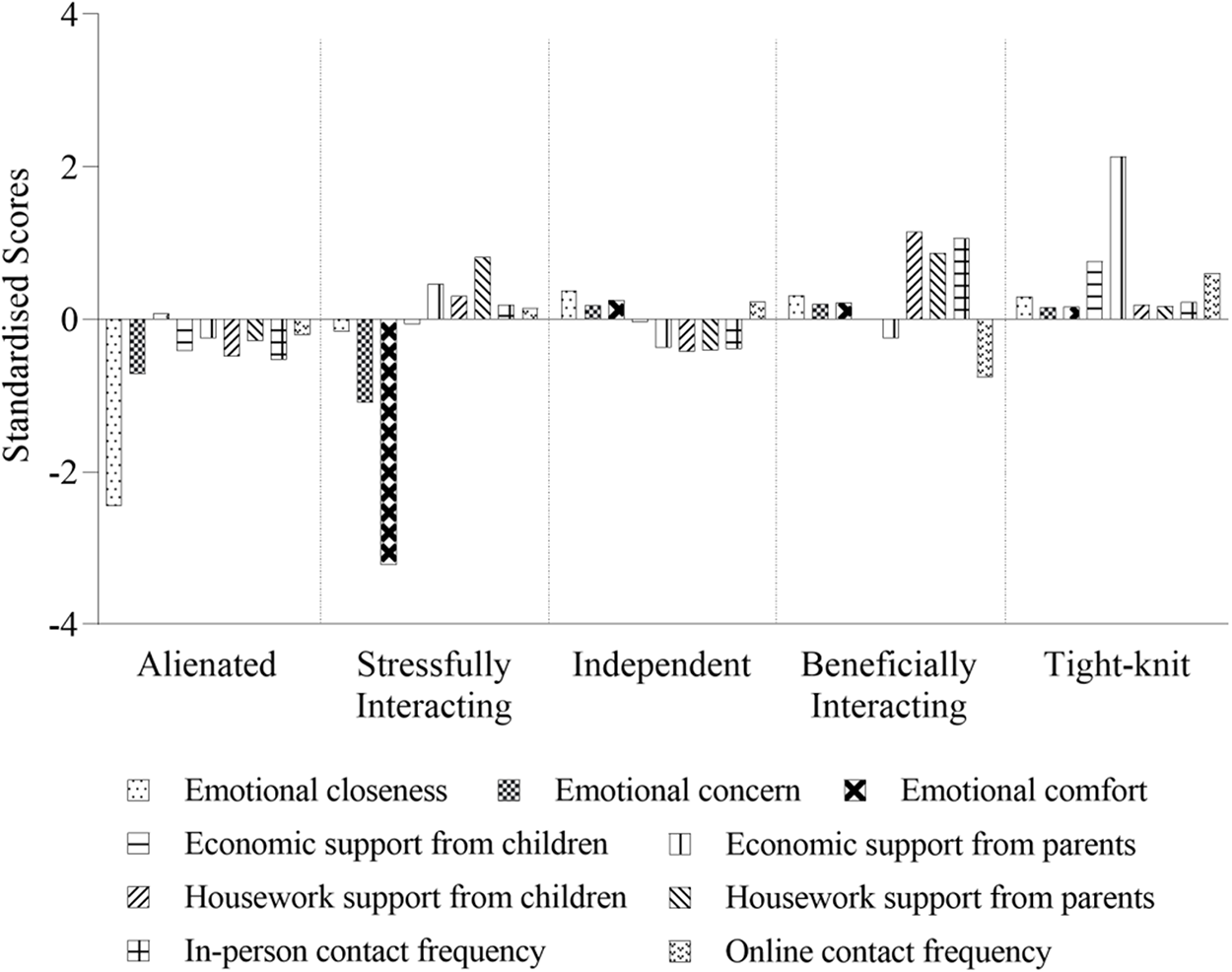
Next, we standardised the nine measures mentioned above and adopted the k-means clustering method to identify parent–child relationship types between parents and each of their children (Figure 1). We identified five types of parent–child relationship (coded from one to five): alienated, stressfully interacting, independent, beneficially interacting and tight-knit. Finally, we constructed four measures of intergenerational relationships by summarising parent–child relationship types across multiple children for each older parent – the most distant, the closest and the standard deviation and the range of parent–child relationship types.
Covariates
We controlled for various socio-economic and demographic measures, namely, age (in years); gender (0 = men, 1 = women); education (0 = under junior high school, 1 = junior high school and above); residential areas (0 = rural, 1 = urban); hukou status (0 = non-agricultural hukou, 1 = agricultural hukou); marital status (0 = without a spouse, 1 = with a spouse); parents’ total income (0 = below the median, 1 = median and above); homeownership (0 = no, 1 = yes); living arrangement (0 = live separately from children, 1 = live with children); parents’ friends social networks (contact, talk about private affairs and receive help) score (0–15; the higher the better); parents’ Centre for Epidemiologic Studies-Depression (CES-D) score (0–18; the higher the more symptoms); parents’ instrumental activities of daily living score (0–16; the higher the more difficulties). Additionally, an indicator of survey years (2014, 2016 and 2018) was controlled. When we examined the measure of the standard deviation and the range of different types of parent–child relationship, we controlled for the means of these relationships, as the variance in parent–child relationship types may be positively associated with their means. Gender and education represented time-invariant covariates (TIC), whereas the others were time-varying covariates (TVC).
Analytical strategy
To identify intergenerational relationship types in multi-child families, we employed the k-means clustering method; we derived five types of intergenerational relationship based on nine measures of three dimensions in the parent–child sample (Table A1). The silhouette coefficient (SC = 0.234) indicated that a five-type solution was preferable. Subsequently, we categorised and named five types of parent–child relationship post hoc, based on the distribution of standardised scores of the nine measures (Figure 1).
We matched the parent sample with the types of parent–child relationship derived from the parent–child sample. Older parents represent our analytical unit for main analyses. Based on the parent sample, we used growth curve models – a form of a generalised mixed model for studying between-individual differences in within-individual change (Krull and Arruda Reference Krull, Arruda, Cautin and Lilienfeld2015) – to explore how types of parent–child relationship are associated with age trajectories of older parents’ cognitive functioning. Age, centred by its mean (approximately 70.50), was employed as the ‘growth’ variable. As the cognitive functioning trajectory is highly associated with age, we employed age rather than wave. We specified a linear age trajectory of cognitive functioning following previous studies (Thomas and Umberson Reference Thomas and Umberson2018; Yuan and Grühn Reference Yuan and Grühn2021). We then nested individual-year observations (Level 1) within individual subjects (Level 2), obtaining the following basic models:
Level-1 model:
 \begin{equation}{y_{it}} = {\beta _{0i}} + {\beta _{1i}}\left( {Ag{e_{it}} - \overline {Age} } \right) + \sum\limits_{j = 3}^k {{\beta _{ji}}TV{C_{it}}} + {\varepsilon _{it}}\end{equation}
Level-2 model:
 \begin{equation}{\beta _{0i}} = {\gamma _{00}} + {\gamma _{01}}MI{R_{it}} + \sum\limits_{b = 3}^k {{\gamma _{0b}}TI{C_i}} + {u_{0i}}\end{equation}
 \begin{equation}{\beta _{1i}} = {\gamma _{10}} + {\gamma _{11}}MI{R_{it}} + \sum\limits_{b = 3}^k {{\gamma _{1b}}TI{C_i}} + {u_{1i}}\end{equation}
where  ${y_{it}}$ denotes the outcome variable of cognitive functioning for individual
 $i$ at age
 $t$. Coefficients
 ${\beta _{0i}}$ and
 ${\beta _{1i}}$ represent the intercept and the linear growth rate with age, respectively. These two parameters were modelled as functions of individual attributes, measured by the indicators of multiple intergenerational relationships (
 $MI{R_{it}}$) in this study, with their coefficients denoted as
 $\gamma $. Subsequently, we adjusted the age trajectories by controlling for time-varying (
 $TV{C_{it}}$) and time-invariant covariates (
 $TI{C_i}$) in the Level-1 and Level-2 models, respectively.
We estimated the association between multiple intergenerational relationships and age trajectories of older parents’ cognitive functioning using Equations (1)-(3). Indicators of  $MI{R_{it}}$ include the most distant type of parent–child relationship, the closest type of parent–child relationship and the standard deviation and the range of multiple parent–child relationships. We then examined these associations in gender-stratified samples using Equations (1)-(3).
Results
Intergenerational relationship patterns in multi-child Chinese families
Figure 1 shows the distribution of the five types of parent–child relationship derived using the k-means clustering method. Specifically, the five types of parent–child relationship from the most distant to the closest are alienated (10.886 per cent), stressfully interacting (6.428 per cent), independent (50.924 per cent), beneficially interacting (20.049 per cent) and tight-knit (11.713 per cent). In the alienated type, parents and children exhibited low levels of emotional affinity, functional exchange and associational connections. For the stressfully interacting type, although parents and children partly maintained associational connections, their emotional affinity was low and they displayed an unbalanced pattern of functional exchanges featuring high levels of parental housework support. In the independent type, parents had high levels of emotional affinity but low levels of functional exchange with their children and their associational connections were mainly maintained online. In the beneficially interacting type, parents and children had high levels of perceived emotional affinity, low levels of economic exchange and high levels of housework exchange (relatively balanced). Further, their associational connections were primarily maintained through in-person contact. In the tight-knit type, parents and children exhibited high levels of perceived emotional affinity, functional exchange (parents’ economic support is relatively high) and associational connections.
Types of intergenerational relationship.

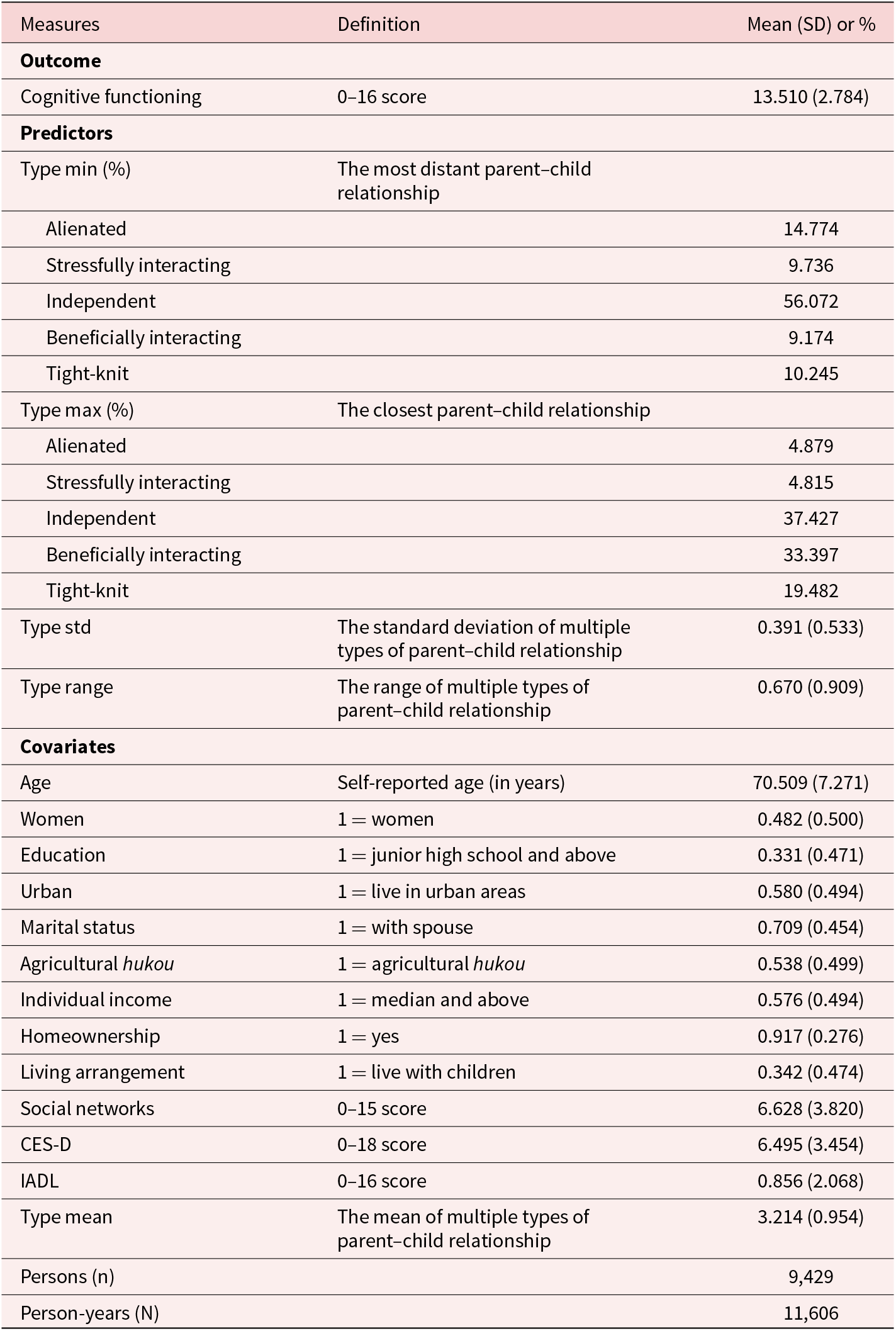
Table 1 presents the descriptive statistics for older parents in multi-child families. In terms of parent–child relationships, the mean standard deviation and the mean range of multiple types of parent–child relationship were 0.391 and 0.670, respectively. For the most distant parent–child relationships, alienated (14.774 per cent), stressfully interacting (9.736 per cent) and independent (56.072 per cent) types accounted for more than 80 per cent of the sample. For the closest parent–child relationship, the independent (37.427 per cent), beneficially interacting (33.397 per cent) and tight-knit (19.482 per cent) types accounted for more than 90 per cent of the sample. Additionally, approximately 44.546 per cent (1-55.454 per cent) of the older parents presented more than one relationship type (Table A2).
Descriptive statistics of older parents in multi-child families from three waves of CLASS (2014, 2016 and 2018)

Intergenerational relationships and age trajectories of cognitive functioning
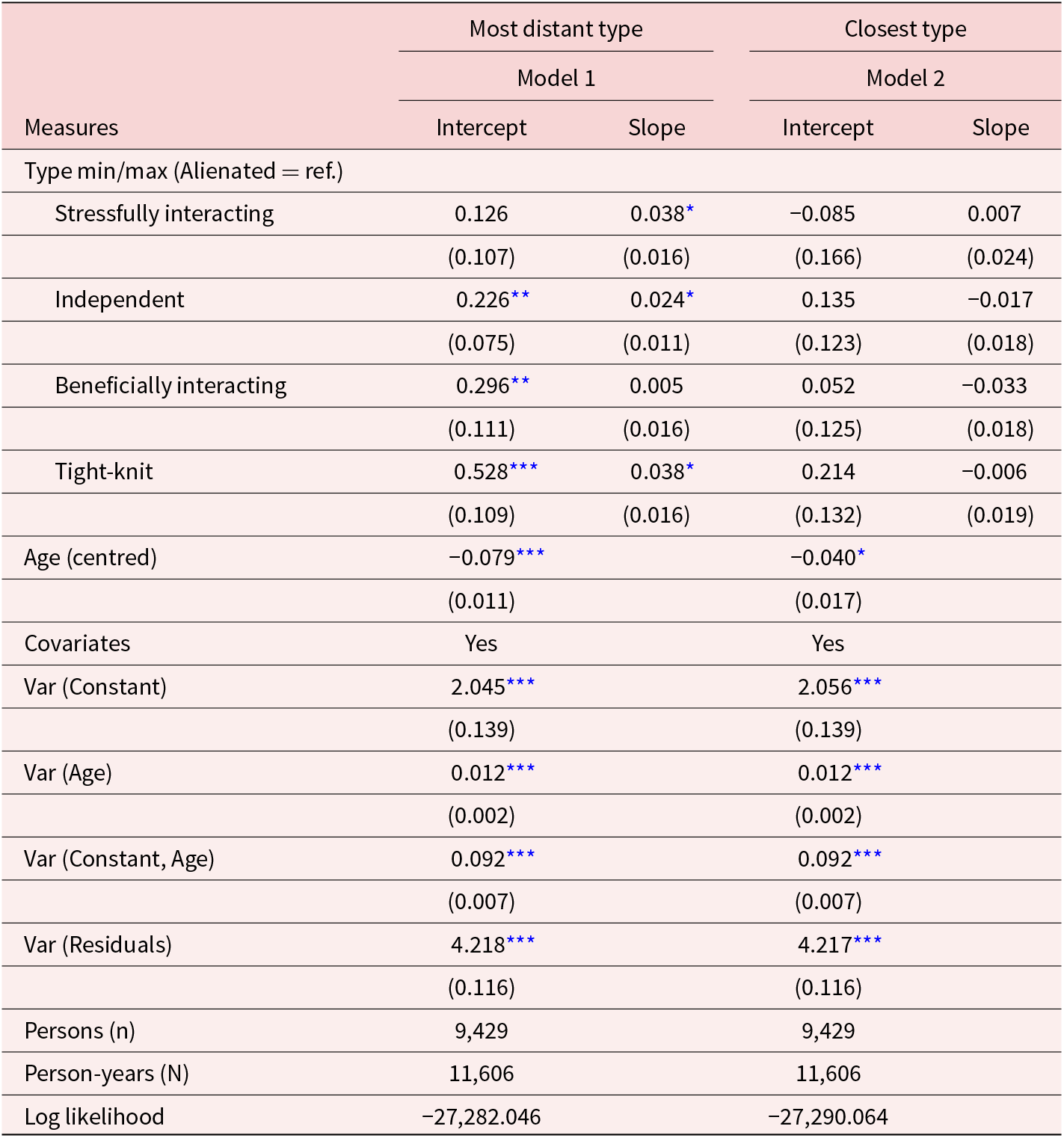
Table 2 shows the associations of the most distant type (Model 1) and the closest type (Model 2) of parent–child relationships with older parents’ cognitive functioning. In Model 1, the alienated type yielded the lowest cognitive functioning score, followed by stressfully interacting, independent and beneficially interacting types, whereas the tight-knit type yielded the highest cognitive functioning score. Specifically, compared to those with an alienated relationship type, parents with independent, beneficially interacting and tight-knit relationship types yielded significantly higher scores of cognitive functioning by 0.226 (p < 0.01), 0.296 (p < 0.01) and 0.528 (p < 0.001) units, respectively. However, parents’ cognitive functioning in the alienated relationship type was not significantly lower than in the stressfully interacting type. For a robustness check, we used the Bonferroni procedure for correction of the number of comparisons (see Table A4 for p-values). The estimates on the intercept of independent, beneficially interacting and tight-knit types were statistically significant. Additionally, the Bonferroni test results for the overall difference in the estimated intercept of the most distant intergenerational relationships were significant.
Conditional growth curve model estimates of intergenerational relationships on cognitive functioning of older parents: the most distant/closest parent–child relationship and older parents’ cognitive functioning

Notes: Covariates include gender, education, residential areas, hukou status, parents’ total income, homeownership, living arrangement, parents’ social networks score, parents’ CES-D score, parents’ IADL score and the survey year indicators. Gender and education are time-invariant covariates (TIC), whereas others are time-varying covariates (TVC).
Significance levels:
* p < 0.05, **p < 0.01, ***p < 0.001.
Furthermore, we tested whether the most distant parent–child relationship is associated with the rate of cognitive functioning decline. The slopes of the associations between types of parent–child relationship and cognitive functioning indicate that, compared to those with an alienated type, the decline in cognitive functioning was significantly slower among parents with stressfully interacting (b = 0.038, p < 0.05), independent (b = 0.024, p < 0.05) and tight-knit types (b = 0.038, p < 0.05). These results suggest that, generally, the more estranged the most distant relationship is, the lower the levels of older parents’ cognitive functioning and the faster the decline in cognitive functioning. However, our results should be cautiously interpreted because the estimated slopes of stressfully interacting and tight-knit types were not statistically significant at the 5 per cent level after correcting for the number of comparisons using the Bonferroni procedure (Table A4), whereas the Bonferroni test for the overall difference in the estimated slope of the most distant intergenerational relationship was significant. Moreover, considering the cumulative changes that happen over a lifecourse, the differences in cognitive functioning between different types of parent–child relationship were not negligible. For example, compared to parents with an alienated type, parents with a tight-knit type would have higher scores of cognitive functioning by 1.668 units (0.528 + 0.038*30) over 30 years (from age 60 to 90).
We also examined the association between the closest parent–child relationship and older parents’ cognitive functioning in Model 2. However, neither the intercept nor the slope of the closest type on cognitive functioning was statistically significant. These results suggest that the closest parent–child relationship type was not significantly associated with older parents’ cognitive functioning. Taken together, the results in Models 1 and 2 indicate that the lowest boundary, not the highest, of parent-child relationship type across multiple children determined the baseline (age 60) and the declining rate of cognitive functioning trajectories.
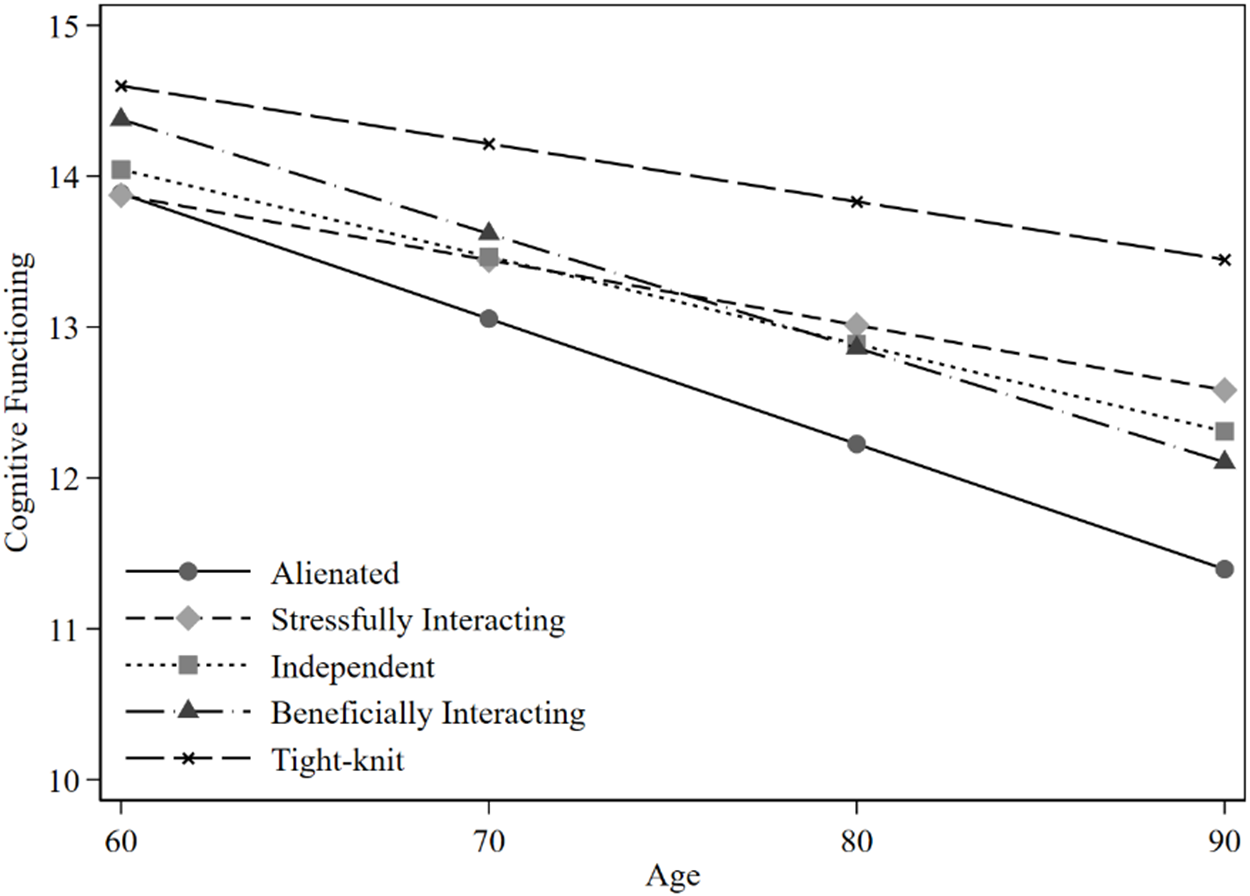
To facilitate the interpretation of Model 1 results, especially for the slope of trajectories, we illustrate the age trajectories of predicted cognitive functioning by the most distant types of parent–child relationship (Figure 2). At age 60, parents in the tight-knit type showed the highest levels of cognitive functioning, followed by those in the beneficially interacting and independent types. Parents in the alienated or stress-interacting types generally displayed the lowest levels of cognitive functioning. Moreover, as age increased, the differences in cognitive functioning between those in an alienated relationship type and in other types widened. No significant differences were found among those in the stressfully interacting, independent or beneficially interacting types, even though they were significantly different from those in the alienated or tight-knit types. For a robustness check, we changed the reference group to be the tight-knit type and found that the conclusions remained consistent.
Growth curves for cognitive functioning at the most distant parent–child relationship.

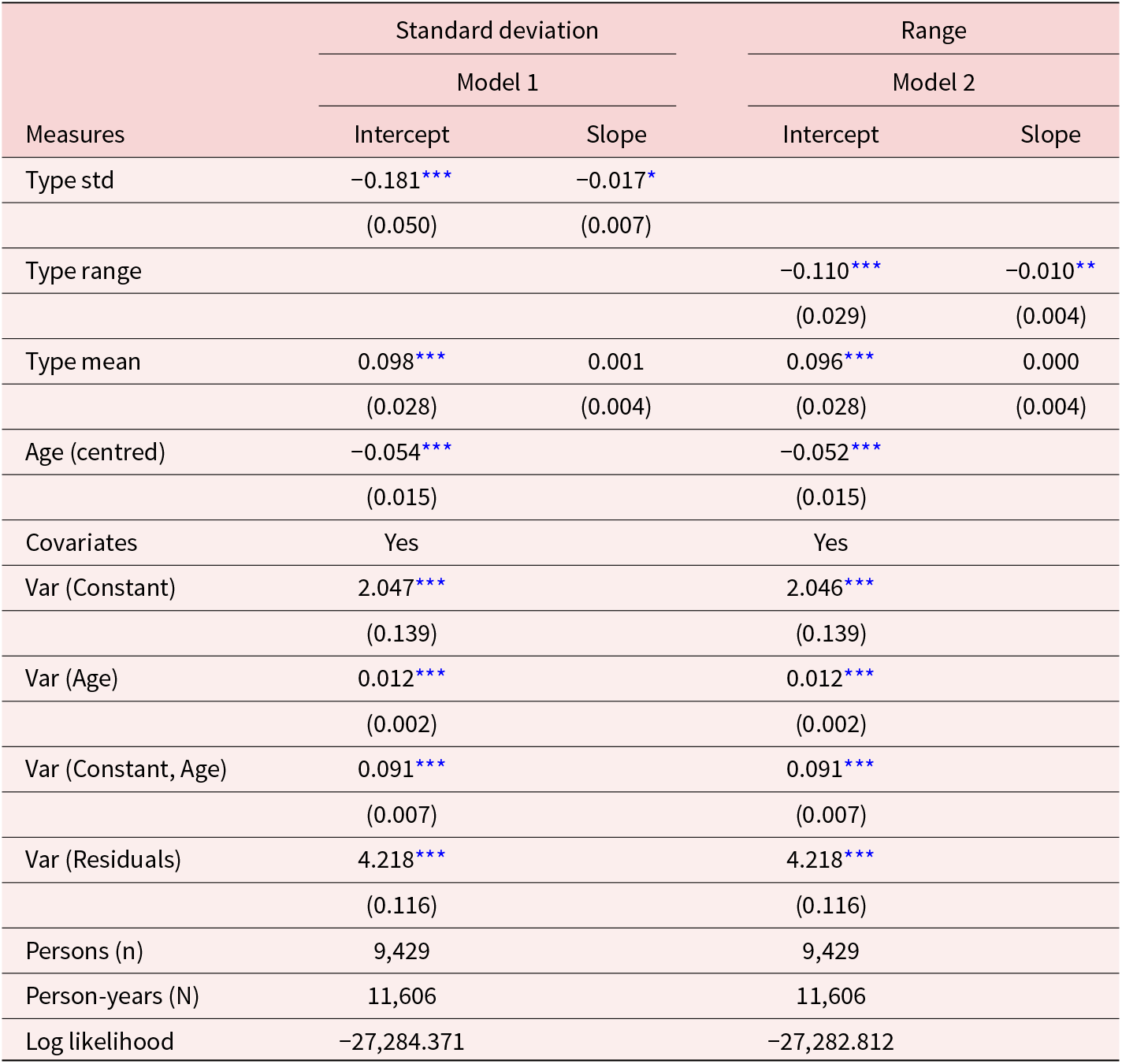
Table 3 shows the association between the heterogeneity of parent–child relationships and older parents’ cognitive functioning. Owing to the potential correlation between the standard deviation or the range of and the average level of intergenerational relationships, the intercept and the slope of the mean of multiple parent–child relationships were controlled. The results show that a one-unit increase in the standard deviation of types of parent–child relationship reduced cognitive functioning by 0.181 (p < 0.001) units. Moreover, this association varied across the individuals’ lifecourse because the slope of the standard deviation was −0.017 (p < 0.05), indicating that cognitive functioning declined faster for parents with more variance in parent–child relationships. The results in Model 2 validated the results in Model 1, showing that an increase in the range of types reduced cognitive functioning (b = −0.110, p < 0.001) and accelerated cognitive functioning decline (b = −0.010, p < 0.01). These results indicate that the greater the collective ambivalence of the parent–child relationship is, the lower the levels of older parents’ cognitive functioning and the faster the decline in cognitive functioning. Additionally, considering the cumulative changes over the lifecourse, one SD increase in the standard deviation and the range of parent–child relationship types reduced the score of older parents’ cognitive functioning by 0.098 SD (−0.017*30*0.533/2.784) and 0.098 SD (0.010*30*0.909/2.784) from age 60 to 90, respectively.
Conditional growth curve model estimates of intergenerational relationships on cognitive functioning of older parents: the standard deviation/range of types of intergenerational relationships and older parents’ cognitive functioning

Notes: Covariates include gender, education, residential areas, hukou status, parents’ total income, homeownership, living arrangement, parents’ social networks score, parents’ CES-D score, parents’ IADL score and the survey year indicators. Gender and education are time-invariant covariates (TIC), whereas others are time-varying covariates (TVC).
Significance levels:
* p < 0.05, **p < 0.01, ***p < 0.001.
Gender difference in the association between intergenerational relationships and age trajectories of cognitive functioning
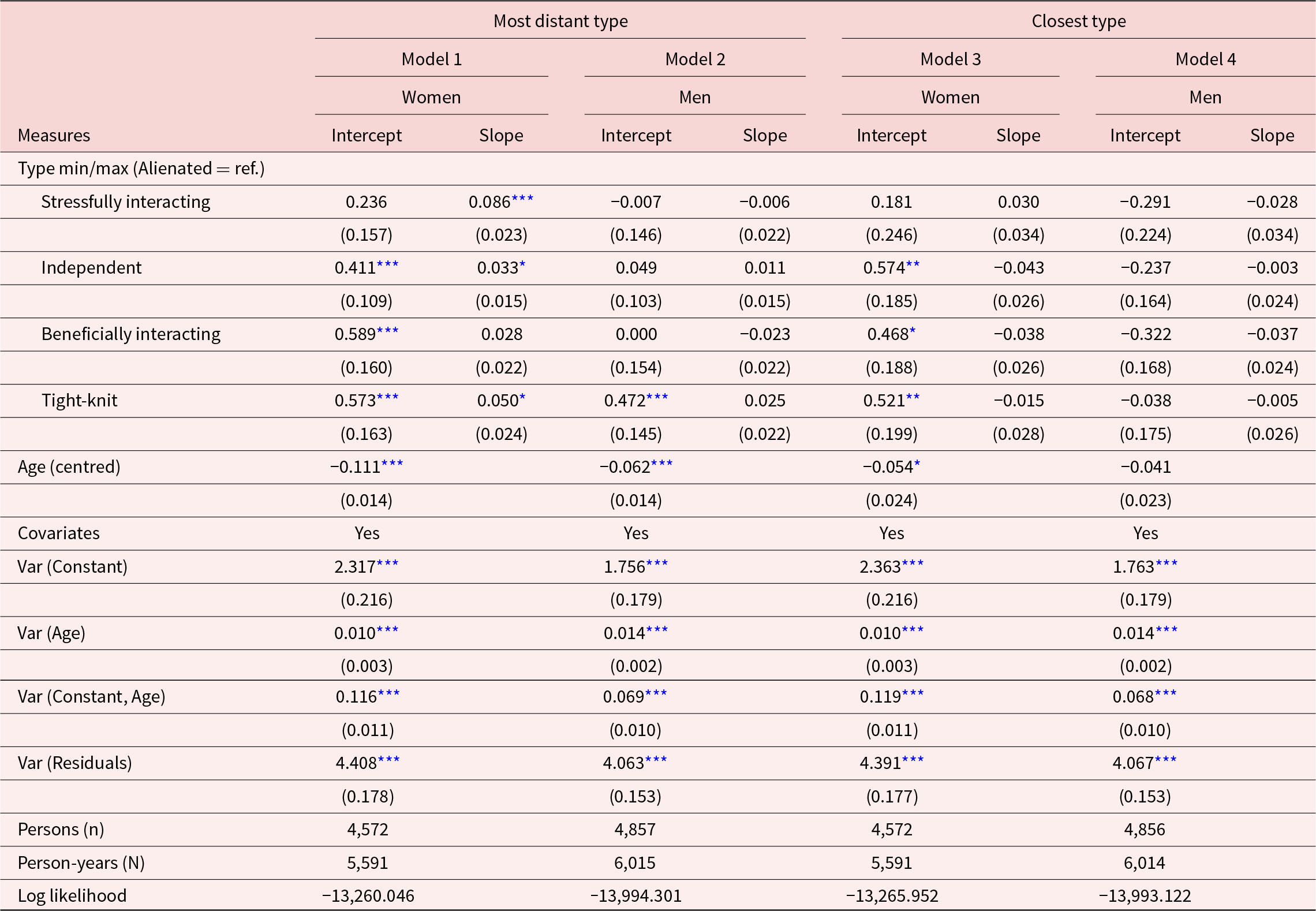
We examined whether the associations between intergenerational relationships and older parents’ cognitive functioning vary by gender. Table 4 shows gender differences in associations between the most distant type (Model 1 for women and Model 2 for men) and the closest type (Model 3 for women and Model 4 for men) of parent–child relationships with older parents’ cognitive functioning. In Model 1, compared to those with an alienated type, mothers with independent, beneficially interacting and tight-knit types displayed significantly higher levels of cognitive functioning by 0.411 (p < 0.001), 0.589 (p < 0.001) and 0.573 (p < 0.001) units, respectively. Further, compared to those in an alienated relationship type, the decline in cognitive functioning was significantly slower among mothers in stressfully interacting (b = 0.086, p < 0.001), independent (b = 0.033, p < 0.05) and tight-knit types (b = 0.050, p < 0.05). However, in Model 2, compared to those with an alienated type, we found that fathers with a tight-knit type had higher levels of cognitive functioning by 0.472 (p < 0.001) units. Additionally, after correcting for the number of comparisons using the Bonferroni procedure, most of the results remained consistent (Table A4). The Bonferroni tests for mothers’ overall difference in the estimated intercept and slope of the most distant intergenerational relationship were both significant.
Conditional growth curve model estimates of intergenerational relationships on cognitive functioning of older parents by gender: the most distant/closest parent–child relationship and older parents’ cognitive functioning

Notes: Covariates included education, residential area, hukou status, parents’ total income, homeownership, living arrangement, parents’ social networks score, parents’ CES-D score, parents’ IADL score and survey year indicators. Gender and education are TIC, whereas the others are TVC.
Significance levels:
* p < 0.05, **p < 0.01, ***p < 0.001.
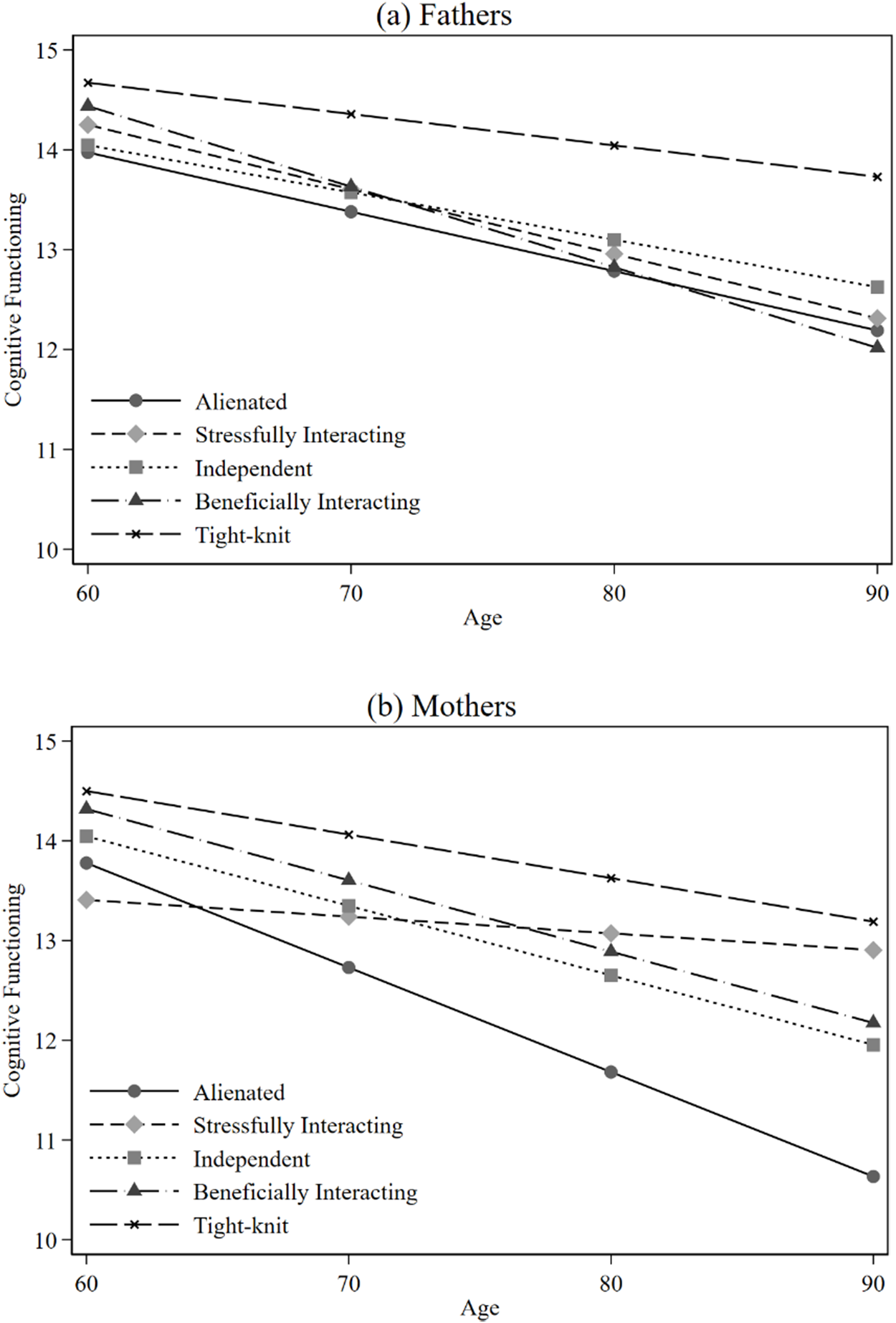
To facilitate interpretation of the results, we display the age trajectories of predicted cognitive functioning by order of the most distant parent–child relationship, with gender as a variable (Figure 3). In most cases, mothers generally displayed lower levels of cognitive functioning than fathers and their cognitive functioning declined faster over their lifecourses. Moreover, for mothers, the gaps in cognitive functioning between those in the alienated type and those in other types were significantly large; further, these two types even diverged over the lifecourse. As for fathers, we found significant differences in the levels of cognitive functioning between those in the alienated type and those in other types; nevertheless, their gaps did not significantly widen over their lifecourses.
Gender differences in growth curves for cognitive functioning at the most distant parent–child relationship.

We also estimated gender differences in the association between the closest intergenerational relationship and older parents’ cognitive functioning. In Model 3, the intercept of types of parent–child relationship on cognitive functioning indicates that, compared to those in an alienated relationship type, mothers in independent, beneficially interacting and tight-knit types fostered significantly higher scores of cognitive functioning by 0.574 (p < 0.01), 0.468 (p < 0.05) and 0.521 (p < 0.05) units, respectively. Additionally, after the Bonferroni corrections, the estimates on the intercept of independent and tight-knit types were still statistically significant. However, in Model 4, fathers belonging to such categories did not exhibit significant differences. Moreover, comparing fathers and mothers, we did not find significant differences in the slope of the types of parent–child relationship on cognitive functioning.
Our results indicate that although, on average, mothers displayed lower levels of cognitive functioning than fathers, their cognitive functioning trajectories were more likely to be influenced by their relationships with their children, especially the most distant ones. Further, we found that the positive associations between the most distant intergenerational relationships and cognitive functioning are stronger among mothers, while we recorded insufficient evidence for the expectation that the positive associations between the closest intergenerational relationships and cognitive functioning are stronger among mothers.
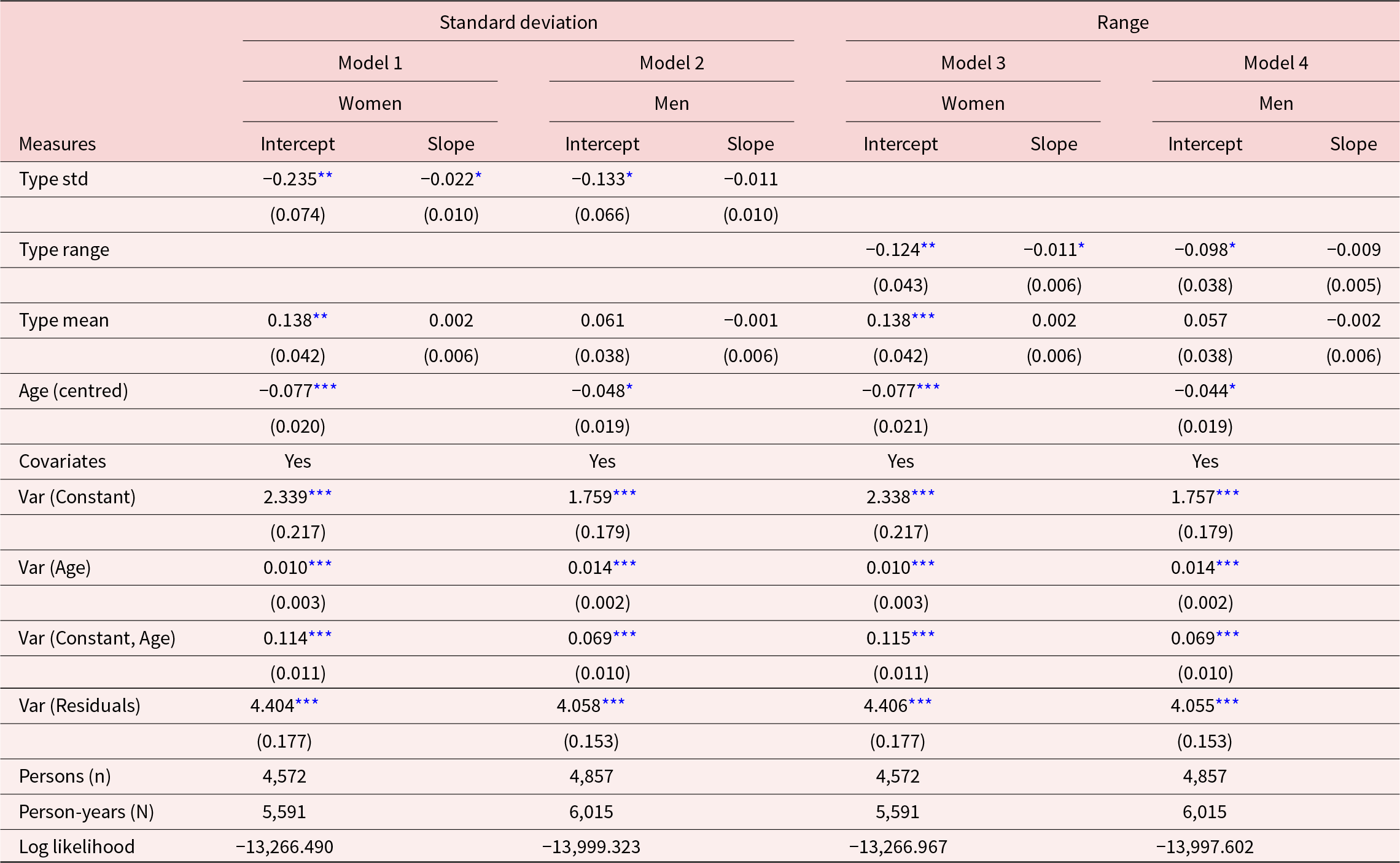
Table 5 shows gender differences in associations between the standard deviation of parent–child relationships and older parents’ cognitive functioning. The results of Models 1 and 2 indicate that the negative association between the standard deviation of parent–child relationship types and cognitive functioning was stronger among mothers compared to fathers. Specifically, an increase in the standard deviation of types of parent–child relationship reduced the levels of mothers’ and fathers’ cognitive functioning by 0.235 (p < 0.01) and 0.133 (p < 0.05) units, respectively. Moreover, among mothers, this negative association strengthened over the lifecourses (b = −0.022, p < 0.05). Additionally, the results of the range of types of parent–child relationships in Models 3 and 4 confirmed the results in Models 1 and 2. Specifically, an increase in the range of parent–child relationship types reduced the levels of mothers’ cognitive functioning by 0.124 (p < 0.01), accelerating their cognitive functioning decline (b = −0.011, p < 0.05). However, although an increase in the range of parent–child relationship types reduced the level of fathers’ cognitive functioning by 0.098 (p < 0.05) units, the rate of fathers’ cognitive functioning decline was not associated with the range of parent–-child relationship types.
Conditional growth curve model estimates of intergenerational relationships on cognitive functioning of older parents by gender: the standard deviation/range of types of intergenerational relationships and older parents’ cognitive functioning

Notes: Covariates included education, residential area, hukou status, parents’ total income, homeownership, living arrangement, parents’ social networks score, parents’ CES-D score, parents’ IADL score and survey year indicators. Gender and education are TIC, whereas the others are TVC.
Significance levels:
* p < 0.05, **p < 0.01, ***p < 0.001.
Discussion
Employing a nationally representative longitudinal dataset in China, this study investigated the association between patterns of intergenerational relationships in multiple-child families and older parents’ cognitive functioning. To the best of our knowledge, this is the first study to comprehensively assess how the dyadic parent–child relationship shapes older adults’ cognitive functioning trajectories. Further, this research explicitly considers the multi-dimensional and ambivalent natures of intergenerational relationships and their variance across multiple children.
We explored intergenerational relationship patterns within multi-child families through the widely employed typology method. Based on indicators capturing emotional affinity, functional exchanges and associational connections, five types of parent–child relationship – alienated, stressfully interacting, independent, beneficially interacting and tight-knit – were identified. Among them, the stressfully interacting type contained the most ambivalence, including conflicts between low emotional affinity and frequent functional exchanges and associational connections, as well as unbalanced functional exchanges. The tight-knit type also indicated a certain degree of ambivalence, reflected by unbalanced economic exchanges, albeit exhibiting high levels of comprehensive solidarity.
Subsequently, drawing on the ‘within-family differences’ approaches, we estimated the associations of the most distant type, the closest type and the heterogeneity (ie standard deviation and range) in parent–child relationships with trajectories of older parents’ cognitive functioning. We found that the more alienated the most distant type is, the lower the levels and the faster the decline in older parents’ cognitive functioning, whereas the closest type was not significantly associated with older parents’ cognitive functioning, indicating that the lowest boundary of intergenerational relationships in multi-child families somewhat determines older parents’ trajectories of cognitive functioning. This finding is consistent with prior studies on happiness and depression, which have revealed that the minimum degree of relationship quality across multiple children significantly improves happiness and reduces depression among older parents (eg Ward Reference Ward2008). Furthermore, we discovered that the alienated (the tight-knit) type was associated with the lowest (highest) levels of and the fastest (slowest) decline in cognitive functioning (Figure 2). As for the other three types, their associations with cognitive functioning were not significantly different. These findings suggest that any interaction, though conflicting and ambivalent (eg the stressfully interacting type), would be more beneficial for Chinese older parents’ cognitive functioning than no interaction at all (ie the alienated).
Moreover, we revealed that the standard deviation and the range of parent–child relationship types were negatively associated with levels of cognitive functioning, with these negative associations strengthening over the lifecourse. These findings suggest that high heterogeneity in parent–child relationships would be detrimental to older parents’ cognitive functioning, potentially because of stress generated from high unpredictability and guilt and social pressure derived from the collectivist family norms, which emphasise collective emotional cohesion and solidarity.
Furthermore, we analysed whether the associations between multiple intergenerational relationships and trajectories of cognitive functioning in older parents vary by gender. Our results showed that, compared to fathers’, mothers’ levels of cognitive functioning and their rate of decline are more likely to be influenced by the most distant type of parent–child relationship and the heterogeneity of such relationships. As aforementioned, maternal roles are more demanding and exclusive than paternal roles: mothers tend to rely more on the parent–child relationship and are more likely to perceive its quality as important (Kessler and McLeod Reference Kessler and McLeod1984; Miller and Cafasso Reference Miller and Cafasso1992; Umberson et al. Reference Umberson, Chen, House, Hopkins and Slaten1996). Compared to fathers’, mothers’ cognitive functioning benefits more from tight-knit parent–child relationships and suffers more in cases of an alienated or ambivalent parent–child relationship. Mothers are often perceived as being responsible for maintaining family harmony and solidarity; therefore, they may be under more stress and pressure if they have unbalanced and inharmonious relationships with different children.
This study has several limitations. First, although we found an association between the collective ambivalence of intergenerational relationships and older parents’ cognitive functioning, the mechanism by which the positive and the negative aspects of relationships interact to influence older parents’ cognitive development requires further investigation. Second, for a robustness check, we employed parent–child relationship types based on the first observed information and used it to predict the trajectories of older parents’ cognitive functioning to address the issue of reverse causality. Nevertheless, our findings should be interpreted as correlational rather than causal. Third, certain values were missing in the measures of interest, such as cognitive functioning. We compared the descriptive statistics between our final sample and the excluded cases with missing values in the measures relevant for our study (Table A3). Compared with the final sample, the excluded respondents were older and performed worse in cognitive functioning, owned more distant intergenerational relationships with larger collective ambivalence and had disadvantaged socio-economic conditions (eg lower income levels and home ownership rates, lower marriage rates and more with rural hukou) as well as lower scores of physical health, mental health and social connections. Consequently, we have a higher chance of underestimating, rather than overestimating, the associations between intergenerational relationships and older parents’ cognitive functioning, given that dropped respondents were more likely to display worse intergenerational relationships and cognitive functioning.
Despite these limitations, this study provided new theoretical and practical insights into the psycho-social risk factors of older parents’ cognitive functioning in terms of intergenerational relationships. Specifically, this research extends the theoretical models of intergenerational relationships to understand the evolution of cognitive functioning over the lifecourse. Moreover, this study underscores the importance of examining older adults’ family dynamics, including multiple parent–child dyads and their interactions, when assessing cognitive functioning – a crucial consideration for mental health professionals. Empirical studies have consistently documented Chinese women’s higher risk for cognitive impairment in later life than men (Lei et al. Reference Lei, Hu, McArdle, Smith and Zhao2012; Miyawaki and Liu Reference Miyawaki and Liu2019; Zhang Reference Zhang2006); further, limited social support was potentially a crucial factor accounting for this gender disparity (Lee et al. Reference Lee, Shih, Feeney and Langa2014; Miyawaki and Liu Reference Miyawaki and Liu2019). Therefore, exploring intergenerational relationships and dynamics may enhance the assessment of cognitive functioning in older women and lead to more effective interventions and therapies, potentially helping to narrow this gender gap. Finally, this study also promotes the understanding of intergenerational relationship complexities in a multi-child Chinese context, which will be a new challenge in the future of China, given its recent relaxation of the long-time-stringent one-child policy.
Supplementary material
The supplementary material for this article can be found at https://doi.org/10.1017/S0144686X24000795.
Data availability statement
The data used in this study are open to the public (http://class.ruc.edu.cn/English/Home.htm).
Financial support
The research was supported by the National Social Science Foundation of China (grant 22CRK010).
Competing interests
The authors report no conflict of interest.