Introduction
Supporting people to “live well” (i.e. facilitating the presence of positive health, well-being, and functioning) following a timely diagnosis of dementia is a priority for healthcare systems and policy-makers across the globe (see http://www.alzheimer-europe.org/Policy-in-Practice2/National-Dementia-Strategies). However, while increasing evidence demonstrates that it is possible for people with dementia to live well (e.g. Wolverson et al., Reference Wolverson, Clarke and Moniz-Cook2016) relatively little is currently known about how living well is actually achieved and the factors that might influence this.
Although understood as an on-going process rather than a single event (Fisk et al., Reference Fisk, Beattie, Donnelly, Byszewski and Molnar2007), receiving a diagnosis of dementia has been identified as a key transition and potential stressor that can influence subsequent well-being and quality of life (Aminzadeh et al., Reference Aminzadeh, Byszewski, Molnar and Eisner2007). Evidence indicates that people diagnosed with dementia tend to have positive attitudes to diagnosis but vary in how positive they experience the diagnostic process to be (e.g. Husband, Reference Husband1999). Studies examining the experience of receiving a diagnosis of dementia (e.g. Vernooij-Dassen et al., Reference Vernooij Dassen, Derksen, Scheltens and Moniz-Cook2006) strongly suggest that well-being over time is affected by the quality of diagnostic disclosure and satisfaction with clinician communication (see also Mate et al., Reference Mate, Pond, Magin, Goode, McElduff and Stocks2012).
The importance of clinicians explicitly discussing and promoting well-being during diagnostic disclosure is highlighted by its salience in best practice guidelines (for example, standard 1.4.6.1; National Institute of Health and Clinical Excellence (NICE), 2012), key national frameworks and initiatives (e.g. Department of Health (DoH), 2009; Doncaster et al., Reference Doncaster, Hodge and Orrell2012). In particular, the UK memory service accreditation program (MSNAP; see Doncaster et al., Reference Doncaster, Hodge and Orrell2012), emphasizes that
-
1. During diagnostic disclosure support is given to people and their families to ensure that sufficient time is made available for disclosure (standard 3.8.5).
-
2. The implications of a diagnosis and the support available are focused on explicitly (standard 3.8.7.9N).
-
3. A variety of information is provided regarding living positively and maximizing quality of life (standard 3.8.7.8M).
Similarly, Lecouturier et al. (Reference Lecouturier2008) identified specific behaviors that constitute probable best practice in disclosure, based on reviews of the literature, expert consensus, and interviews conducted with people living with or affected by dementia. A focus on quality of life and well-being emerged as a key element of best practice in disclosing a diagnosis of dementia and the clinician behaviors connected with this included; fostering hope and positive attitudes, balancing hope with realism, focusing on remaining strengths and capacities, and exploring coping strategies.
Despite the existence of these standards and guidance, there is evidence that disclosure is often not delivered in accordance with best practice (Carpenter and Dave, Reference Carpenter and Dave2004). Furthermore, there is evidence that significant variation exists amongst health professionals with respect to attitudes toward disclosing a diagnosis of dementia as well as in practices of sharing diagnostic and prognostic information (see Bamford et al., Reference Bamford, Lamont, Eccles, Robinson, May and Bond2004). Therapeutic nihilism remains a prevalent feature of clinicians’ attitudes toward dementia (Werner et al., Reference Werner, Karnieli-Miller and Eidelman2013) and may represent an underlying belief amongst some professionals that life with dementia is inevitably absent of positive well-being.
Investigating clinicians’ subjective experiences is an important way to determine what factors might contribute to a disparity between actual and best practice with respect to the diagnostic disclosure of dementia. There is an associated need to understand more clearly how the quality and consistency of diagnostic disclosure in dementia can be maximized (Husband, Reference Husband, Moniz-Cook and Manthorpe2009). To date, no research has explored clinicians’ experiences of discussing positive well-being when sharing a diagnosis of dementia, and so the factors that may help or hinder this particular aspect of diagnostic disclosure remain poorly understood. It is also not known whether nihilistic views about dementia extend to beliefs about well-being in living with dementia and whether this may impact clinicians’ ability to discuss well-being around the time of diagnosis in accordance with best practice guidelines. Furthermore, research into clinicians’ experiences of diagnostic disclosure has so far tended to focus on General Practitioners (GPs), thus creating a gap in understanding the experiences of others professions frequently involved in disclosure (such as psychiatrists).
This study therefore aimed to explore the meaning of living well with dementia from the perspective of psychiatrists, as well as their subjective experiences of discussing aspects of well-being directly during diagnostic disclosure meetings.
Method
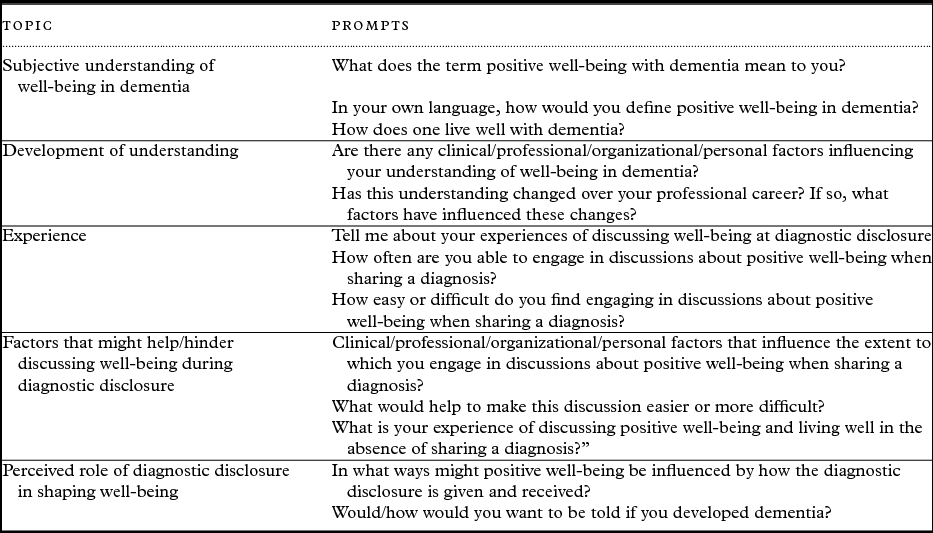
Due to its exploratory nature and focus on subjective experiences, this study employed a qualitative design based upon a phenomenological epistemological approach. Data was collected via audiotaped semi-structured interviews. An interview schedule was designed to elicit participants’ subjective understanding and experiences of well-being in dementia and was developed through consultation with a focus group of practicing old age psychiatrists (see Table 1 for main topics covered within the interview schedule). Well-being was not formally defined in the interviews in order to allow for participants’ own subjective understandings to develop within the conversation, rather than being guided by any prescribed or formal definition. Ethical approval was secured via the Research Ethics Committee of the Faculty of Health and Social Care at the University of Hull.
Topics outlined in interview schedule

Notes: The table details the key areas explored within the semi-structured interview schedule and outlines prompts used to facilitate discussion in each of these areas.
The participant sample was selected following a preliminary, pilot survey of accredited memory services that was conducted by the primary researcher and supported by the UK Memory Service National Accreditation Program (MSNAP). This survey confirmed that of the memory clinics that participated (n = 15), old age psychiatrists were the professional group most frequently involved in diagnostic disclosure. On the basis of this, 11 participants (six females, five males) were recruited opportunistically from three NHS Foundation Trusts in the North of England, all of whom were practicing old-age psychiatrists. Overall, 18 psychiatrists were invited to participate in the research but data collection was ceased following eleven interviews, as the data collected was of sufficient richness and depth to examine perceptions and experiences both within and between participants.
Interviews were analyzed using IPA (Smith et al., Reference Smith, Flowers and Larking2009) due to its focus on phenomenology (study of experience), idiography (consideration of the specific individual), and recognition of the researcher's contribution to the research process (Smith et al., Reference Smith, Flowers and Larking2009). For each transcript, data was analyzed through reading and re-reading followed by initial coding before the identification and naming of themes. These steps were repeated between transcripts to identify commonalities and relationships across the data set, which enabled the formulation and refinement of themes across participants. To support the credibility of coding (by ensuring themes were representative of raw data), the second and third authors and an independent peer completed the reading and initial coding stages of the analysis process for a subset of data.
Results
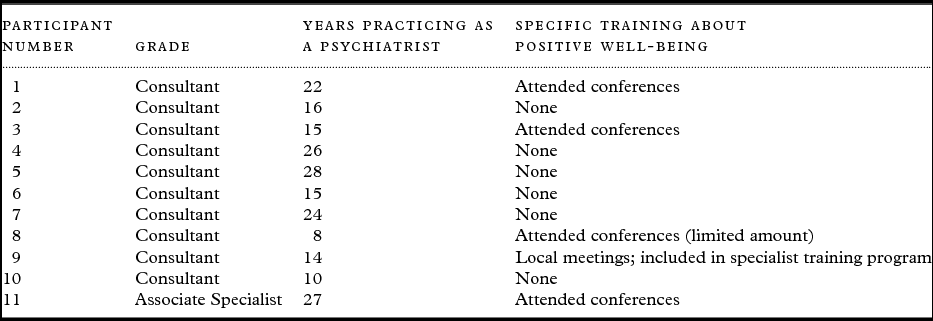
Table 2 outlines participants’ demographic details. Although all participants regularly engaged in diagnostic disclosure, only one reported having received additional training (training defined as dedicated teaching/workshops/conference attended specifically regarding living well with or well-being in dementia) in breaking bad news. All interviews were conducted at the participants’ places of work and lasted an average of 70 minutes (range 46–90).
Participant characteristics

Notes: The tables outline participants’ demographic details. The table displays that although all participants regularly engaged in diagnostic disclosure, only one participant reported having received any additional training in breaking bad news since their initial medical training, with only five having received any training in living well with dementia.
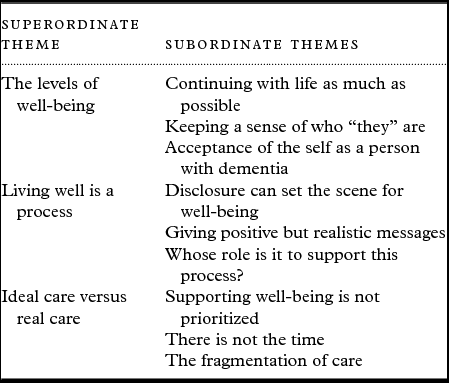
Three superordinate themes comprising nine subordinate themes emerged from the data analysis. The first superordinate theme reflects participants’ subjective understanding of what it means to live well in light of the “threat” of dementia. The second superordinate theme reflects participants’ understanding of living well with dementia as a journey, of which diagnostic disclosure can be a key step that impacts upon subsequent well-being. The final superordinate theme relates to participants’ experiences of supporting people with dementia, highlighting the tensions and ethical dilemmas faced when comparing ideal care with the care participants feel able to actually provide. Themes are presented in Table 3.
Superordinate and subordinate themes generated from IPA

Notes: This tables displays the three superordinate themes, comprised of nine subordinate themes, that emerged from the data.
Superordinate theme 1: the levels of well-being
Although participants believed that sources of well-being vary significantly for different individuals, most understood living well with dementia to mean a combination of: continuing with life as much as possible, keeping a sense of self, and accepting the diagnosis.
Participants’ understandings of well-being appeared to be embedded in their medical training and underpinning each subordinate theme was a nihilistic and reductionist view of dementia as an overall threat to well-being directly associated with a decline in functioning. Throughout participants’ accounts there were powerful undertones that although people could achieve a level of well-being with dementia, this was done in-spite of the illness. Dementia was portrayed as an aggressor that was associated with significant and ultimately inevitable loss:
dementia just robs people of so many things and takes away, hacks away at who you are as a being. (Participant 2)
However, this understanding was refined through ongoing clinical and academic experiences and there was recognition from each participant that psychological and social aspects of people's lives are fundamental to the well-being of those living with dementia:
medical training and the understanding of illness and disability. . . is a skeleton on which the experience of the people that you then see hangs. (Participant 1)
As such, living well with dementia was perceived to result from a combination of biological, psychological, and social factors, viewed within the constraints posed by dementia.
Continuing with life as much as possible
All participants perceived living well in terms of continuity and being able to live a full life while minimizing the impact dementia. On the whole, sources of well-being were viewed as being the same before and after diagnosis and thus living well with dementia was perceived to relate to a process of maintaining these sources for as long as possible. This was largely perceived as an active process that involved personal agency and encompassed aspects of coping and adjustment:
changing one's lifestyle as little as possible. And understanding how as the dementia develops, one can actually sort of accommodate, interests and. . .enjoyment. To actually mean that that could continue . . . (Participant 11)
Participants described the view that people's ability to continue with life was supported by a combination of medical and social interventions but they also highlighted the perceived dangers of over-protective caring in all stages of the illness. At the same time, in most accounts there was a clear sense that the ability to continue with life was inevitably reduced by dementia and efforts to minimize its negative impact were invariably time-limited:
obviously unfortunately as the illness progresses people's ability to do things that they might have enjoyed and got meaning from previously deteriorates. (Participant 6)
Keeping a sense of who “they” are
For most, maintaining a sense of personal identity was seen as an integral part of living well with dementia. This was based around protecting and sustaining a sense of being a human being and an individual with idiosyncratic likes, strengths, and abilities. Some participants referred to this directly as personhood:
that person's sense of who they are and sense of personhood, and a being and you know their sense of being a being. (Participant 2)
Some participants spoke about how dementia, and in particular its impact on driving, can affect a persons’ sense of self-worth; “their self-worth seems to rest quite a lot on being a, competent driver you know and, it can be a real knock for them” (Participant 4). Participants also described the disempowering and dehumanizing effects of being unable to maintain person-hood and identity;
maintaining some sort of, awareness about who this person is. Even if they've got the most advanced dementia. . . because otherwise. . . I think sometimes people become almost less human. (Participant 2)
Dementia was therefore viewed as a threat to a persons’ sense of identity and maintaining identity was described as an effortful process of “trying to see beyond that to the person” (Participant 7) that at times also felt hopeless; “she's losing everything about herself and he's losing her as well” (Participant 2). The way that a sense of self could be supported and maintained was also seen to change. In early dementia, participants spoke of protecting people's autonomy, whereas in more advanced dementia there was a view that others maintained a person's sense of self by knowing and supporting that person's wishes. There was recognition that as well as the threat posed by cognitive changes, the reactions of others can damage a persons’ sense of self at all stages of the illness:
people have actually come back and said “Well you know I regret that. . . maybe I shouldn't have disclosed the diagnosis to those around me. . . I don't feel any different. Yet people are treating me as though I am, different. They don't seem to value my opinions.” (Participant 11)
Acceptance of the self as a person with dementia
Participants felt that, on the whole, people were able to live better if they were able to emotionally accept their diagnosis but that this was not a prerequisite for achieving some level of well-being:
I think there are people who can, at one level . . . accept a diagnosis of dementia and carry on with their lives as if they have not, heard the news. . .I would suggest that perhaps they'll live less well than those who are able acknowledge and accept it. (Participant 4)
This was described as a normal process that people and their families go through after any serious diagnosis, since “with all diagnoses let alone dementia which is a pretty, shocking one. . . people go through that process of you know, denial, crossness, sadness, and then hopefully acceptance” (Participant 8).
However, there was also a perception that a person's ability to go through this internal process of adjustment was limited by cognitive impairment and that a certain level of well-being could not be achieved by everybody because “the very thing that you would normally use, to help you make sense of what's going on has been damaged. And so it's doubly difficult for people with dementia” (Participant 7).
Although some described this as a normative process, there was an undertone in participants’ accounts of having to accept dementia in the absence of a cure. As such, it may be interpreted that rather than a state of acceptance reflecting self-determination post-diagnosis, accepting a diagnosis might also have been perceived as a person's way of coping with helplessness and a lack of perceived alternatives:
accept it from an emotional perspective and then move on from that really rather than being, burdened by, by the despair that's often associated with being told that you've got some form of, chronic progressive condition. (Participant 4)
Superordinate theme 2: living well is a process
This superordinate theme encompassed three subordinate themes relating to the process of living well with dementia, also highlighting the complexities of discussing this process with people at different stages in their journey with dementia.
Disclosure can set the scene for well-being
For some, living well with dementia was seen to begin before people are diagnosed and linked with people's awareness and representations of dementia:
living well is pre-diagnosis, diagnosis and post-diagnosis so awareness of dementia is important to well-being because it tackles stigma. . . Most of the living well is going to come from the awareness concept. (Participant 9)
Others perceived receiving the diagnosis to be the starting point of living well and saw themselves as having an active part to play in contributing to this. The diagnostic disclosure meeting was seen as a key event in a person's life and was perceived as an opportunity to set the scene of living with dementia by opening up discussions about well-being and facilitating engagement with services which should then be on-going:
Cause I think that what you want to do is you want to try and build up a positive connection with someone. So that when they are actually in the process of having their diagnosis made, and their early experiences around having dementia, you want them to look back on it in a good light. (Participant 11)
However, some also questioned the value of such discussions with people who are living with a memory impairment, and at a time when people may be shocked and overwhelmed:
Cause the diagnosis itself is often quite a shock. So if somebody suddenly started to turn around and talked about living well with it, so maybe its something to address a bit, later along the track. You know after you've received the diagnosis and it's sunk in. (Participant 10)
Within participants’ accounts there was a sense that increased understanding of the illness and its symptoms could help set the scene for living well with dementia, with disclosure viewed as a potentially useful step that may relieve anxiety, enable advanced planning, and allow people access to support services:
Putting a label on something. . . can help people understand some of their symptoms and their worries and that in itself can be an anxiety relieving process I've seen. (Participant 8)
However, there was a clear tension within participants’ descriptions of balancing the potential benefits of an increased understanding of dementia with the negative implications of diagnosis. Most participants only viewed direct diagnostic disclosure as a helpful step in supporting well-being if people were “ready” and wished to hear their diagnosis:
there's nothing worse than somebody not really wanting to know and, just, plodding something on them, with a negative impact. (Participant 3)
This tension was particularly prominent in participants’ experiences of diagnosing people with mild dementia. Most participants who discussed this experience felt that early diagnosis was often detrimental to well-being, perceiving the costs to well-being as larger than the potential benefits:
Unless or until there's an effective treatment for people then we're just inflicting diagnostic misery on people or potential diagnostic misery on people. (Participant 4)
Participants negotiated this balance by taking steps to ensure the disclosure was in line with the wishes and expectations of the person as far as possible. This was described as largely being achieved by ensuring people were prepared to receive their diagnosis and by tailoring language to ensure that people were able to take in and process the news. However, for some participants, this raised dilemmas about what language to use and whether or not to disclose the diagnosis in full and explicit terms:
I don't think it's unreasonable . . . to tailor your language to accommodate what people can handle. And sometimes that amounts to, not using a diagnosis which is going to be a block for people. (Participant 5)
Of note, one participant reported feeling a tension between supporting people's disclosure preferences and encouraging acceptance but concluded that autonomy must be protected above all else:
In one sense I think it's very important to be to be clear to show someone that you can have, absolute respect for them despite the fact they've got dementia. And at the same point you're being told that you know you can't name the name. Then that's almost that's being contradictory isn't it? (Participant 11)
Giving positive but realistic messages
Participants discussed the importance of giving people a positive message in supporting well-being. This was achieved by highlighting the person's strengths and competencies, and through offering medical and social interventions. This appeared to provide hope and a sense of control to both the person with dementia and the participant:
[Absence of positive message] it's not good for them and it's not good for you. . . If you can offer something even if it's, in a small way that allows people a little bit more control, that helps you to feel more useful too. (Participant 4)
These were generally experienced as rewarding conversations to have, but were underpinned by a tension between positivity and reality. Participants stressed the importance of remaining mindful of providing positive messages that were genuine and realistic, to enable people to manage the challenges associated with dementia:
whilst there's all this this fantasy about, miracle cures and things. . .they're not gonna be able to get on with their lives and live well and, deal with all the things that they have to do. (Participant 2)
As such, there was some disparity between participants as to whether diagnostic disclosure was perceived to be an appropriate setting for promoting positive attitudes. For some, providing positive messages at disclosure was perceived as a vital component of the disclosure process, whereas for others, it felt juxtaposed to the diagnosis and so positive messages became diluted within the disclosure meeting. Underpinning participants’ accounts of providing positive messages was a sense of having to offer something to people because of the perceived loss associated with receiving a diagnosis. This suggests that such conversations were perceived by participants as helpful in managing what they perceived to be their patients’, as well as their own, nihilistic perceptions of dementia; “they need to take something positive and something good out of those appointments otherwise, what's the point really?” (Participant 3).
Whose role is it to support this process?
Participants reflected on the complexity of engaging in discussions about well-being directly and often experienced a level of uncertainty in their role with respect to this, considering the availability of the multi-disciplinary team (MDT) combined with pressure to discharge people quickly from services. Most participants felt the whole MDT had a role in discussing well-being but varied in the extent to which they saw it as an integral aspect of their own role. There was also an acknowledgement that others may be better placed to support well-being, based on their expertise, relationship with the person, time available, and relative cost of their service:
jobs that don't require your level of skill or your level of knowledge can be done by somebody else who is cheaper. . . And actually that person. . .may well be better at that kind that side of things anyway. (Participant 2)
Conversely, others spoke passionately about discussions about well-being being fundamental to their role, describing how a perceived push towards pigeonholing the psychiatrist as “diagnoser and prescriber” felt devaluing:
you feel devalued I think really in terms of your contribution as a professional really. That people are, completely underestimating what it is that you actually do when you see patients and what you contribute to the process. (Participant 6)
Interestingly, while all participants felt that increased understanding and maintenance of functioning may support well-being, none perceived diagnostic disclosure or prescription of medication to fully constitute discussions about well-being. In fact, for many, discussions about well-being were perceived as completely distinct from diagnosis and prescribing, with some feeling that using the word dementia was detrimental to engaging in discussions about well-being:
reminding somebody every time they come back to see me now I'm the [person] that told you that you've got dementia and you can't drive probably isn't a good way of starting off the conversation so for the individual, having disclosed the diagnosis once I wouldn't keep coming back to it. (Participant 1)
Although the majority of participants focused on the practical complexity of discussing well-being, for some, there was a sense of a deeper questioning of their role as a doctor in caring for a person with an incurable condition. Within this, many described the high and often unrealistic expectations placed on the psychiatrist by both the patient and the MDT. Although this was described as part of the job, for some it created a sense of helplessness and nihilism:
there's a degree of helplessness on my part, because, as a doctor I'm used to people coming to me, and I have to do something and they get better. Whereas this is an illness people come to me and no matter what I do I know they are not going to get better. (Participant 3)
Superordinate theme 3: ideal care versus real care
Dementia was described as overwhelming for people, services, and psychiatrists. In their accounts, participants discussed the discrepancies between the care they wished to offer in an ideal world and the care they felt able to offer in reality. Providing a cure for dementia was viewed as an ideal but unrealistic expectation of care. In its absence, participants described the challenges of supporting people to live well within a context of limited and over-stretched services that do not pay equal attention to the psychological, social, and medical needs of people with dementia, often resulting in a lack of appropriate support. Thus, participants experienced a number of key tensions and dilemmas caused by the disparity between the care they feel people should have, and the care people receive in reality.
Supporting well-being is not prioritized
In the current economic climate, participants felt that services (and psychiatrists in particular) are reserved for diagnosis and crisis management rather than supporting well-being:
there is something, not quite right, ethically about . . . putting what you have into diagnosis, without really thinking about what we put in to post-diagnostic intervention. (Participant 5)
we can't do anything positive or you know you know, to be able to create something great for someone we have to wait until things get awful and then the services swing into action. (Participant 8)
Social and psychological support described as essential for well-being was perceived to be significantly lacking, due to services that were either partly functioning or present but unavailable. As such, participants felt limited in their ability to discuss positive well-being while also unsure of the validity of their own role because they perceived that people with dementia were being “left in this void “(Participant 8) in which they were let down by services and not getting the care they deserved:
but you do sort of feel a little bit of a fraud underneath all of that. . . ultimately people are sort of, just sort of surviving out there because of lack of. . . support and resources. (Participant 2)
This was described as overwhelming and unsatisfying and created feelings of frustration and helplessness for both patients and psychiatrists:
I think you're just kind of left in a little bit of a helpless role. . . you have an individual and their family sat there in front of you and you're not able to give them what they need. (Participant 8)
Participants described a number of approaches that helped them to manage their own feelings of helplessness resulting from both the nature of dementia and the lack of support services. Some became proactive or even “a bit bolshy, whatever you need to do. Because you if you have a clear vision of what works and what doesn't” (Participant 11). Others distanced themselves from services, siding with their patients as a way of both encouraging engagement and managing their own emotions:
And I actually say “yeah. That is terrible.”. . . Cause I think well it's indefensible sometimes and it's not, mine to defend. (Participant 2)
There is not the time
All participants within the study identified a disparity between ideal and real care in terms of time. Time was a perceived barrier to engaging in discussions about well-being both at the point of diagnostic disclosure and during subsequent appointments; “There isn't time to give a conversation like this the justice the depth that it needs” (Participant 1). This was experienced as unsatisfying for participants and ineffective for patients; “it's just like bombarding these people. . . . But, I do that because it's more efficient and I don't think sometimes that it's the best way” (Participant 2).
Participants also discussed how service pressures have a detrimental impact on the experiences of both the participant and the patient. It was felt that the push for quick and early diagnoses impacted on people's abilities to process their own diagnosis at both a cognitive and emotional level and so limited the ability of the clinician to discuss well-being with them:
I don't know whether it's the fact that when you see them and at the first appointment you've given them that time to think . . .which makes it easier for me when I see them again. Or whether it is just too much within an hour for somebody who has memory problems. (Participant 8)
The fragmentation of care
In addition to pressures on time and service availability, participants described how a perceived push toward efficiency has caused a fragmentation of services and a subsequent compartmentalizing of the roles of different professionals. Throughout their accounts, many participants reflected on how moves toward separating aspects of care between professionals was perceived to have limited their ability to do their job as they would wish, describing the practical and emotional difficulties of disclosing a diagnosis to a person for whom they did not complete the assessment and crucially with whom they do not have a therapeutic relationship:
I'm just some distant shadowy figure that has come up with some form of diagnosis. But then, if they do come and see me I've got to try and build a relationship with that patient. One step behind them. (Participant 4)
Participants managed this challenge in different ways. Some spoke of ensuring they were completing their part in the process as thoroughly as possible “And if I follow that structure I know that I haven't missed anything. So I haven't neglected part of their care” (Participant 3). While others described having to stretch the rules “you can cheat and decide that you're gonna bring people back a bit earlier. Which I have to admit I do quite regularly” (Participant 11) to ensure they felt able to appropriately support their patients.
Discussion
Clinicians’ attitudes toward disclosing a diagnosis of dementia potentially impact on their ability to adhere to best practice guidelines as well as the subsequent well-being of the person receiving a diagnosis. While best practice guidance advocates the explicit discussion and promotion of aspects of well-being as part of the disclosure process, it has not been clear how and to what degree clinicians go about this and how they frame well-being and living well with dementia. This study is the first to examine these specific issues within the context of psychiatrists’ lived experiences of diagnostic disclosure. Well-being was framed by participants as a multi-faceted construct that is significantly influenced by the perceived threat of dementia as well a perceived lack of services. Engaging in discussions about well-being was often a positive and rewarding experience for participants, but also heavily affected by dilemmas emanating from a perceived discrepancy between real and ideal care.
The meanings of positive well-being in dementia
The factors perceived to be important in the process of living well with dementia identified in this study (e.g. autonomy, meaningful activities, acceptance) correspond with literature reporting the lived experiences of people with dementia (Steeman et al., Reference Steeman, Casterlé, Dierckx, Godderis and Grypdonck2006). It may be argued, therefore, that psychiatrists (in this sample) developed a person-centered understanding of living with dementia, and of the factors that can enable and hinder the process of living well following diagnosis.
All of the psychiatrists interviewed took a biopsychosocial position in their understanding of well-being and most explicitly recognized that agency, continuity, self-hood, and social relationships are key determinants of well-being. Most perceived well-being in functional rather than emotional terms, possibly reflecting an approach to understanding based on traditional notions of health-related quality of life rather than broader conceptions of well-being from the perspective of positive psychology or social health. Although they varied in their view of whether it was their role or not, all perceived supporting psychological and social needs of equal importance as addressing biological needs when encouraging and enabling a person with dementia to live well.
However, underpinning all participants’ understandings was a powerful sense of the limits of the potential to live well with dementia. In accordance with Kitwood (Reference Kitwood1997), participants considered aspects of malignant social psychology to be a key threat to personhood and well-being. In particular, outpacing, imposition, objectification, disempowerment, invalidation, and treachery were highlighted within participants’ accounts as key threats to well-being following diagnosis. There was also a sense within most participants’ accounts that dementia itself was a direct threat to well-being, due to the cognitive and functional changes associated with the progression of the illness. This may be interpreted as suggesting that although there has been a clear shift in perspectives away from a narrow and medicalized understanding of what it means to live with dementia, for most participants, both the direct “threat” of the illness and resulting malignant social interactions meant that the ability to live well following diagnosis was perceived as finite.
Experiences of discussing well-being
Participants identified how stigma, perceived readiness of the person, helplessness, and fear of eliciting negative emotions represented barriers to engaging in discussions about well-being. This is consistent with existing literature exploring clinicians’ experiences of diagnostic disclosure itself (Keightley and Mitchell, Reference Keightley and Mitchell2004; Werner et al., Reference Werner, Karnieli-Miller and Eidelman2013), thus demonstrating that similar barriers may exist in relation to discussing positive well-being as those identified with respect to communicating a diagnosis generally. Participants’ experiences of trying to manage a tension between providing positive messages and giving people candid information while also discussing well-being suggest that these aspects of best-practice in the diagnostic disclosure of dementia (see Lecouturier et al., Reference Lecouturier2008) are particularly challenging to successfully combine in clinical situations.
This study's findings also highlight the potential influence of perceptions regarding the availability of support on the development and maintenance of nihilistic attitudes and disclosure practices. In contrast to the findings of Moore and Cahill's (Reference Moore and Cahill2013) study of GPs, the level of support perceived to be available to the person living with dementia appeared to be a key contributor to participants’ nihilistic attitudes regarding well-being in this study. Participants consistently recognized that people with dementia could live well (or better), at earlier stages of the illness but only given appropriate support. Therefore, nihilistic views were largely a consequence of participants’ perceptions of a disparity between ideal and real care available, which rendered proactive and person-centered care inaccessible. At a deeper level, participants also experienced an ethical dilemma with respect to well-being by disclosing diagnoses with potentially negative implications but without sufficient post-diagnostic support. As such, the current findings build on existing research (Hansen et al., Reference Hansen, Hughes, Routley and Robinson2008) by suggesting that psychiatrists perceive fewer benefits to discussing well-being, and consequently more costs, in the absence of adequate support structures.
To manage this dilemma and its impact, participants described effectively deviating from best practice guidance in terms of how they discussed well-being (e.g. standard 3.8.7.9N and 3.8.7.8M; Doncaster et al., Reference Doncaster, Hodge and Orrell2012) in order to protect the well-being of their patient, and arguably themselves. Many described behaviors that may be considered consistent with reframing and stalling strategies, as described in the breaking bad news literature (Shaw et al., Reference Shaw, Dunn and Heinrich2012; Shaw Brown and Dunn, Reference Shaw, Brown and Dunn2013). Although participants were clear in stating the primary purpose of providing a positive but balanced message (reframing) was to promote the well-being of the patient, they also described that such conversations provided them with a sense of satisfaction. As such, reframing may be interpreted as enabling the psychiatrist to manage the negative affect triggered by the clinical encounter as well as supporting the well-being of the person with dementia (Shaw et al., Reference Shaw, Dunn and Heinrich2012).
Due to a perceived lack of appropriate and longitudinal support available to the people with dementia, several participants described behaviors that can be understood as stalling – defined as a delay or avoidance in delivering news (Shaw et al., Reference Shaw, Dunn and Heinrich2012). These included (a) discussing well-being in vague terms, (b) discussing well-being at a later occasion, and (c) distancing themselves from services in which they work. Stalling is used as a form of emotion-focused coping by clinicians to create a sense of emotional distance between them and the news they are delivering (Shaw et al., Reference Shaw, Brown and Dunn2013). Some participants described feeling less inclined to pursue an early diagnosis of dementia, as recommended in the National Dementia Strategy (DoH, 2009), due to their belief that their patients’ well-being would be reduced by malignant social interactions before the “threat” of the illness itself had impacted well-being. Participants perceived this as unnecessary and distressing for patients, and again described using stalling behaviors to manage their own negative affect triggered. Although such behaviors were primarily perceived by participants to be beneficial for patients, it may be interpreted that when participants felt reframing was disingenuous or beyond the scope of their role they managed the negative affect triggered by deviating from best practice guidelines by engaging in stalling (Doncaster et al., Reference Doncaster, Hodge and Orrell2012).
Participants’ experiences of discussing well-being directly were also shaped by their experience of working within an MDT. The availability of the MDT impacted participants’ perceived ability to engage in best practice discussions about well-being and may have made stalling behaviors more likely, as participants did not feel they had opportunity to have full discussions due to a lack of both time and a therapeutic relationship. Existing literature highlights the importance of a trusting therapeutic relationship (Cornett and Hall, Reference Cornett and Hall2008) between a psychiatrist and patient throughout the whole care pathway (Whitehouse et al., Reference Whitehouse, Frisoni and Post2004) and that having a specialist disclose a diagnosis of dementia within an MDT approach to offering information is in line with patients’ wishes (Chaturvedi and Chandra, Reference Chaturvedi and Chandra2010). The present findings add to the literature by highlighting how challenges associated with increasing role ambiguity for psychiatrists working within MDT contexts along with time pressures that reduce the scope for forming therapeutic relationships and opportunity to disclose a diagnosis of dementia over time, are potentially impacting upon services’ capacity to implement best practice guidelines with regards to discussing well-being (Doncaster et al., Reference Doncaster, Hodge and Orrell2012).
Methodological considerations
While the methodology used in this study does not assume generalizability, the clinical applicability of the findings is strengthened by the inclusion of participants from a variety of locations as well as the sample size. Bar one, all participants were consultants. Although no clear and consistent differences in views and experiences were evident it is possible that differing levels of training may have also influenced experiences of discussing well-being. The researcher was overt in stating the positive stance of the study, therefore it is also possible that only those who held more positive views about dementia volunteered to participate.
Furthermore, it is possible that the experiences of other professional groups involved in diagnostic disclosure will differ from those reported in this study due to the additional training they receive in living well with dementia, breaking bad news, and associated therapeutic skills (Chaturvedi and Chandra, Reference Chaturvedi and Chandra2010). It is also possible that the experience of psychiatrists working in other countries will vary from those reported in this study due to differences training, professional guidance, and post-diagnostic support available, which were all highlighted within the results as factors that influence participants’ understandings and experiences.
The primary researcher was of a different level of experience and from a different profession (Clinical Psychology) to the participants. As recognized within the double hermeneutic process of IPA, such out-group differences will have influenced the research process, both in terms of the influence of the researchers’ subjective assumptions and experiences and also, potentially, participants’ acceptance of an “out-group” researcher (Dwyer and Buckle, Reference Dwyer and Buckle2009).
Conclusions and future directions
These findings highlight serious concerns about the provision of support services in dementia care and the dilemmas and challenges these might create for clinicians attempting to foster well-being during the process of diagnostic disclosure. The findings add to a wealth of literature outlining the difficult balance professionals face between informing and protecting their patients in disclosure (British Psychological Society (BPS), 2014), by identifying that a lack of services is an important determinant in their judgment and therefore their perceived ability to engage in positive and timely disclosure in line with best-practice and current health policies in the United Kingdom (DoH, 2009; Doncaster et al., Reference Doncaster, Hodge and Orrell2012).
The findings also highlight the need for additional training and supervision for key professionals involved in diagnostic disclosure. Additional training in how to discuss and promote specific aspects of well-being (e.g. hope, continuity, and positive coping) within the context of breaking bad news may increase awareness and management of the challenges associated with having such discussions and improve adherence to best practice. Furthermore, it is possible that facilitated or peer-based supervision for professionals involved in diagnostic disclosure to explore the personal impact of providing a diagnosis within challenging service contexts may support them in negotiating the ethical and clinical dilemmas raised in order to reduce the risk of stalling behaviors.
This study's findings further highlight the need for clinicians to consider ways of supporting emotional acceptance following a diagnosis of dementia. This is potentially a further aspect of best practice in communicating a diagnosis but one that is currently missing from existing guidelines and policy. There is a body of literature supporting the view that people experience a process of emotional acceptance and can be supported to live better with their condition if this is facilitated (de Boer et al., Reference de Boer, Hertogh, Dröes, Riphagen, Jonker and Eefsting2007). It is vital that this need is recognized within policy, reflected in service provision, considered with regards to MDT working, and specified within staff training if people are to be supported to maximize their well-being in a way that is qualitatively more than the minimization of sources of ill-being (WHO, 2011).
Additional research is needed across professional groups and larger samples to understand how attitudes, service provision, and organizational culture may interactively affect the way that well-being is discussed and promoted as part of a process of diagnostic communication. This is important because although psychiatrists are heavily involved in diagnostic disclosure within memory clinic settings they are not the only professionals involved in this process in the United Kingdom or internationally. In light of policy initiatives emphasizing early diagnosis in UK primary care settings, further research is needed to explore the attitudes of other professional groups toward discussing and promoting well-being as part of the diagnostic communication process, given differing levels of training and experience (Moore and Cahill, Reference Moore and Cahill2013; Chaturvedi and Chandra, Reference Chaturvedi and Chandra2010). Building a complete understanding of these issues is fundamental to improving consistency of best practice diagnostic disclosure and therefore ensuring that people receiving a diagnosis of dementia are supported to sustain their well-being and quality of life from the outset.
Conflict of interests
None.
Description of the authors’ role
Dr A. Vince designed, conducted, and wrote-up the study under the supervision of Dr C Clarke and Dr E Wolverson.
Acknowledgments
The research was completed as doctoral study for University of Hull.