





Introduction
Waterhemp is among the most troublesome weeds in corn and soybean production in Wisconsin and the upper Midwest (Chudzik et al. Reference Chudzik, Nunes, Arneson, Arneson, Conley and Werle2024; Ugljic et al. Reference Ugljic, Mobli, Oliveira, Proctor, Dille and Werle2025). The extended emergence window of waterhemp, which begins in early May and continues through late August, results in multiple emergence flushes that complicate control efforts (Mobli et al. Reference Mobli, Kezar and Werle2025; Werle et al. Reference Werle, Sandell, Buhler, Hartzler and Lindquist2014). Waterhemp interference has been documented to cause yield losses of up to 69% of corn and 73% of soybean (Soltani et al. Reference Soltani, Dille, Burke, Everman, VanGessel, Davis and Sikkema2016; Vyn et al. Reference Vyn, Swanton, Weaver and Sikkema2007). As a dioecious and prolific seed-producing species (Hinz and Owen Reference Hinz and Owen1997; Steckel et al. Reference Steckel, Sprague, Hager, Simmons and Bollero2003), waterhemp maintains high genetic diversity through cross-pollination between male and female plants (Sarangi Reference Sarangi2016), which enhances its adaptability to evade weed control practices and persist in corn and soybean production systems.
Since the 1940s, herbicides have been valuable tools for controlling weeds in the United States, particularly to manage troublesome weeds (Patzoldt et al. Reference Patzoldt, Tranel and Hager2005). In the mid-1990s, the widespread adoption of herbicide-resistant crops led to an increase in herbicide reliance and simplified weed management practices (Duke and Powles Reference Duke and Powles2008). Currently, more than 95% of corn and soybean acreage in the United States receives at least one herbicide application during each growing season (USDA-NASS 2024). Herbicides have long served as effective and widely adopted tools for weed control over the years, significantly reducing labor requirements and increasing crop productivity across diverse agricultural systems (Kraehmer et al. Reference Kraehmer, Laber, Rosinger and Schulz2014). However, the extensive reliance on herbicides has created continual selection pressure, driving the evolution of herbicide-resistant weed populations (Beckie et al. Reference Beckie, Ashworth and Flower2019).
Waterhemp has developed resistance to several herbicides through both target-site (TSR) and non–target site (NTSR) mechanisms (Beckie et al. Reference Beckie, Ashworth and Flower2019; Heap Reference Heap2025; Nandula et al. Reference Nandula, Ray, Ribeiro, Pan and Reddy2013). In 1993, the first case of waterhemp herbicide resistance was reported in corn and soybean in the United States (Heap Reference Heap2025). To date, more than 55 cases of waterhemp biotypes with resistance to herbicides involving single or multiple sites of action (SOAs) have been documented (Heap Reference Heap2025). Herbicides are categorized into groups by the Weed Science Society of America (WSSA) according to its SOA. These include resistance to acetolactate synthase (ALS) inhibitors (WSSA Group 2; Bell et al. Reference Bell, Hager and Tranel2013), auxin mimics (WSSA Group 4; Bernards et al. Reference Bernards, Crespo, Kruger, Gaussoin and Tranel2012), 5-enolpyruvyl shikimate phosphate synthase (EPSPS) inhibitors (WSSA Group 9; Nandula et al. Reference Nandula, Ray, Ribeiro, Pan and Reddy2013), photosystem II (PS II) inhibitors targeting serine 264 binders (WSSA Group 5; Faleco et al. Reference Faleco, Oliveira, Arneson, Renz, Stoltenberg and Werle2022), protoporphyrinogen oxidase (PPO) inhibitors (WSSA Group 14; Bell et al. Reference Bell, Hager and Tranel2013), very long-chain fatty acid (VLCFA) elongase inhibitors (WSSA Group 15; Kerr et al. Reference Kerr, Concepcion, Strom and Riechers2023), and hydroxyphenyl pyruvate dioxygenase (HPPD) inhibitors (WSSA Group 27; Kohlhase et al. Reference Kohlhase, O’Rourke, Owen and Graham2019). In Wisconsin, waterhemp accessions have been confirmed to be resistant to ALS, PS II, EPSPS, and PPO inhibitors (Faleco et al. Reference Faleco, Oliveira, Arneson, Renz, Stoltenberg and Werle2022, Reference Faleco, Werle, Lopez, Raiyemo, Tranel, Colquhoun, Renz, Stoltenberg and Werle2026; Heap Reference Heap2025). The previous statewide herbicide resistance screening of waterhemp accessions in Wisconsin in 2018 showed widespread postemergence resistance to imazethapyr and glyphosate, while resistance to 2,4-D, atrazine, and dicamba was observed at lower frequencies. Additionally, preemergence application of atrazine at three times the recommended field-use rate was somewhat ineffective because 45% of waterhemp accessions exhibited less than 90% plant density reduction (Faleco et al. Reference Faleco, Oliveira, Arneson, Renz, Stoltenberg and Werle2022). Moreover, reports of an accession exhibiting multiple resistance to imazethapyr, atrazine, glyphosate, and 2,4-D were alarming for Wisconsin corn and soybean producers managing waterhemp in their fields (Faleco et al. Reference Faleco, Oliveira, Arneson, Renz, Stoltenberg and Werle2022).
Despite the effectiveness of several herbicides in controlling waterhemp (Mobli et al. Reference Mobli, DeWerff, Arneson and Werle2023; Silva et al. Reference Silva, Arneson, DeWerff, Smith, Silva and Werle2023), the declining efficacy of herbicides such as glyphosate and imazethapyr, once valuable for managing waterhemp in corn–soybean production systems, underscores the growing challenges posed by herbicide resistance. Reports suggest that the reduction in effective herbicide options, including glyphosate, could result in economic losses exceeding US$4.17 billion annually in crop revenue across North America (Brookes et al. Reference Brookes, Taheripour and Tyner2017). Therefore, a better understanding and continued monitoring of waterhemp herbicide resistance evolution to commonly used corn and soybean herbicides over time is necessary for assessing the effects of current weed management practices and identifying effective herbicide options. It also allows researchers to document the evolution of waterhemp resistance and raise awareness of how quickly this species can become increasingly difficult to control. Therefore, this research was designed with the following objectives: (1) to evaluate the response of waterhemp accessions collected statewide in 2023 from fields where stakeholders reported reduced efficacy of dicamba, 2,4-D, and/or mesotrione to commonly used corn and soybean herbicides applied both preemergence and postemergence; and (2) to assess changes in herbicide resistance in waterhemp after a 5-yr window by comparing the current results with data from previous studies conducted in 2018 (Faleco et al. Reference Faleco, Oliveira, Arneson, Renz, Stoltenberg and Werle2022).
Materials and Methods
Waterhemp Seed Sampling
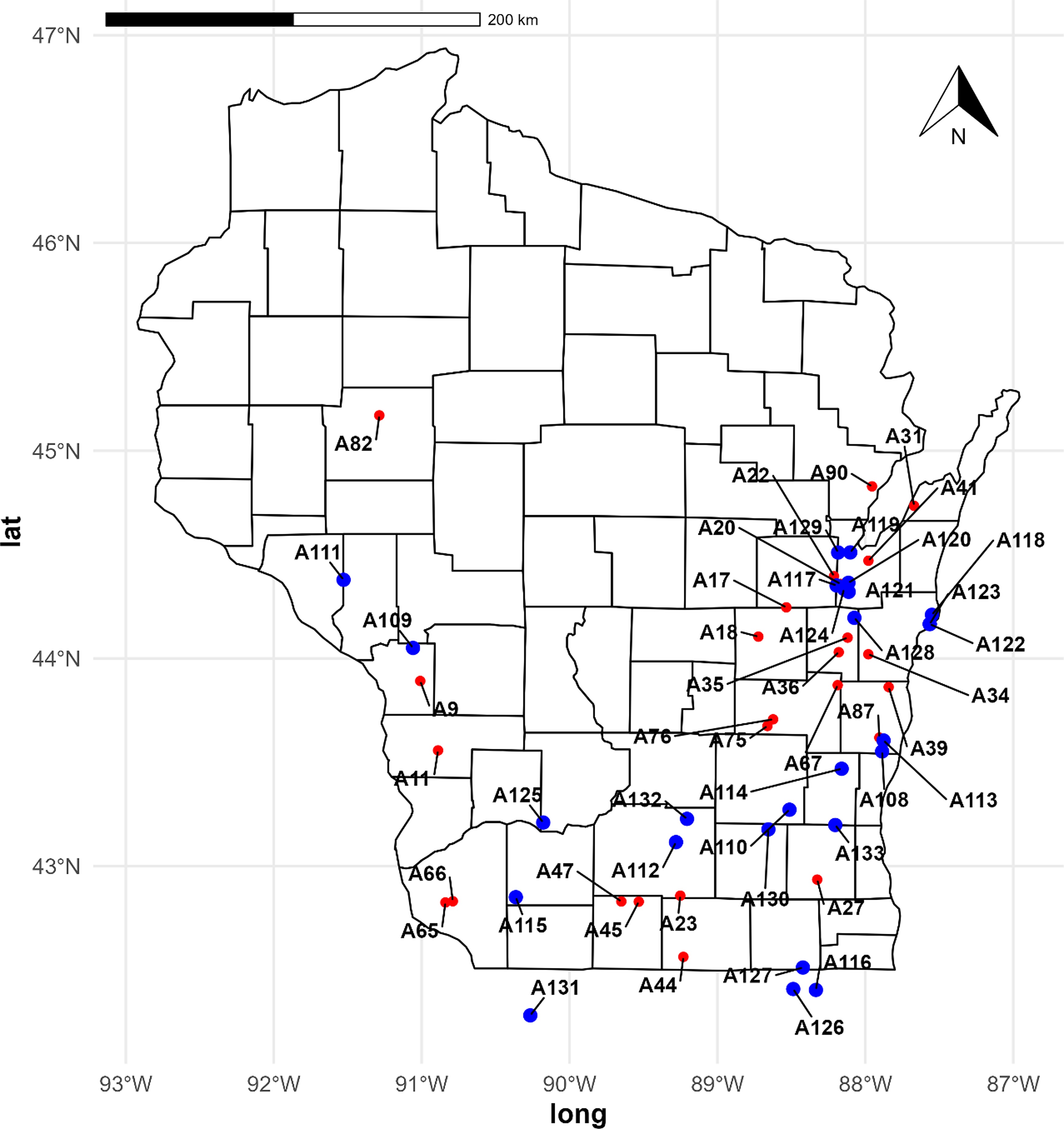
In fall 2023, the Wisconsin Cropping Systems Weed Science Program invited stakeholders (e.g., farmers, agronomists, industry representatives, and Extension educators) through our social media platform (X/twitter) and the WiscWeeds email listserv to collect waterhemp seeds from corn and soybean fields throughout Wisconsin before harvest with a history of suspected reduced control following postemergence applications of 2,4-D, dicamba, and/or mesotrione. The sampling followed procedures similar to those outlined by Faleco et al. (Reference Faleco, Oliveira, Arneson, Renz, Stoltenberg and Werle2022). Twenty-three waterhemp accessions were submitted from various regions across the state, and three additional accessions were submitted from northern Illinois near the Wisconsin border (Figure 1). All seed samples were threshed, cleaned using an air separator (Oregon Seed Blower; Hoffman Manufacturing, Inc., Corvallis, OR), and cold stratified to enhance germination (Faleco et al. Reference Faleco, Oliveira, Arneson, Renz, Stoltenberg and Werle2022). During the cold stratification process, seeds were placed in Falcon tubes with a thin layer of water, just enough for them to float, and stored in the dark at 5 C for 2 wk, adapted from the protocol described by Kohlhase et al. (Reference Kohlhase, Edwards and Owen2018). After this period, seeds were rinsed with water using a sieve to retain them, dried on paper towels at room temperature for 24 h, and stored in plastic bags at 5 C until the experiments began.
Geographic distribution of Wisconsin waterhemp accessions collected in 2018 (red) and 2023 (blue).

Figure 1. Long description
A map of Wisconsin showing the geographic distribution of waterhemp accessions collected in 2018 and 2023. The map is divided into counties and includes markers indicating the locations where waterhemp samples were collected. Red markers represent collections from 2018, while blue markers represent collections from 2023. Key labeled locations include various counties across Wisconsin, with notable concentrations of markers in the southern and eastern parts of the state. The map also includes a scale bar indicating a distance of 200 kilometers and a north arrow for orientation. The purpose of the map is to illustrate the spread and distribution of waterhemp accessions over the five-year period.
Postemergence and Preemergence Herbicides
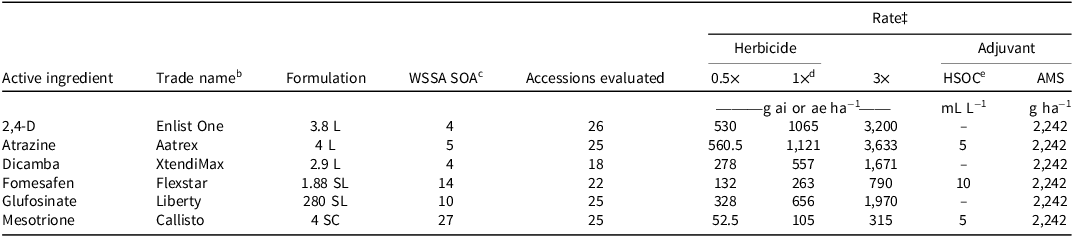
Postemergence and preemergence herbicide screenings were conducted as separate experiments, both using a completely randomized design with four replications per treatment and replicated over time for a total of two experimental runs. In both experiments, treatments were arranged in an A × H × R factorial design, where A represented the number of accessions, H the number of herbicides, and R the herbicide rates (0.5×, 1×, and 3× the recommended product label rates). Each experiment included a nontreated control (NTC) for all accessions to provide a baseline for comparison. Herbicide label rates followed those outlined by Faleco et al. (Reference Faleco, Oliveira, Arneson, Renz, Stoltenberg and Werle2022). The number of accessions (A) and the herbicides used in the postemergence and preemergence studies are provided in Tables 1 and 2. The number of accessions varied among experiments due to seed availability. The only modification relative to Faleco et al. (Reference Faleco, Oliveira, Arneson, Renz, Stoltenberg and Werle2022) was an increase in the 1× rate of 2,4-D from 800 g ae ha⁻¹ to 1,065 g ae ha⁻¹, to reflect the manufacturer’s updated recommendation for waterhemp control (Table 1) (Corteva 2025; DeWerff and Werle Reference DeWerff and Werle2024).
Postemergence herbicide treatments used to evaluate the response of waterhemp accessions.a

Table 1. Long description
A table comparing herbicide treatments for waterhemp accessions. The table has 6 columns and 6 rows, including the header row. The columns are labeled as follows: Active ingredient, Trade name, Formulation, WSSA SOA, Accessions evaluated, and Rate. The Rate column is further divided into sub-columns for Herbicide and Adjuvant rates. The Herbicide sub-column includes rates at 0.5x, 1x, and 3x, measured in grams of ai or ae per hectare. The Adjuvant sub-column includes rates for HSOC in milliliters per liter and AMS in grams per hectare. The rows list different active ingredients: 2,4-D, Atrazine, Dicamba, Fomesafen, Glufosinate, and Mesotrione. Each row provides details on the trade name, formulation, WSSA SOA, number of accessions evaluated, and specific rates for each herbicide and adjuvant. For example, the first row for 2,4-D includes the trade name Enlist One, formulation 3.8 L, WSSA SOA 4, 26 accessions evaluated, and herbicide rates of 530, 1065, and 3200 grams ai or ae per hectare, with adjuvant rates of 2.242 grams per hectare for AMS.
a Abbreviations: AMS, ammonium sulfate; HSOC, high surfactant oil concentrate; L, liquid; SC, soluble concentrate; SL, soluble liquid; SOA, site of action; WSSA, Weed Science Society of America.
b Herbicide manufacturers: Enlist One: Dow Agrosciences, LLC, Indianapolis, IN; Aatrex, Flexstar, and Callisto: Syngenta Crop Protection, LLC, Greensboro, NC; XtendiMax: Monsanto Company, St. Louis, MO; Liberty: Bayer CropScience LP, research Triangle Park, NC.
c Herbicide SOA as classified by the WSSA.
d The 1× herbicide adjuvant rates were based on the respective herbicide label crop use directions for postemergence application in corn or soybean, and recommendations for controlling waterhemp when specified.
e A dash (–) indicates adjuvant was not included.
Preemergence herbicide treatments used to evaluate the response of waterhemp accessions.a

Table 2. Long description
A table comparing herbicide rates for different active ingredients used in preemergence treatments to evaluate waterhemp accessions. The table has six columns: Active ingredient, Trade name, Formulation, WSSA SOA, Accessions evaluated, and Herbicide rate. The Herbicide rate column is further divided into three sub-columns: 0.5x, 1x, and 3x, with rates given in grams of ai or ae per hectare. The table lists six active ingredients: Atrazine, Fomesafen, Mesotrione, Metribuzin, and S-metolachlor. Each row provides details on the trade name, formulation, WSSA SOA, number of accessions evaluated, and the herbicide rates for each active ingredient. For example, Atrazine with the trade name Aatrex has a formulation of 4 L, WSSA SOA of 5, 16 accessions evaluated, and herbicide rates of 560.5, 1,121, and 3,363 grams ai or ae per hectare for 0.5x, 1x, and 3x respectively. The table provides a comprehensive comparison of the herbicide rates used in the experiments.
a Abbreviations: DF, dry flowable; EC, emulsifiable concentrate; L, liquid; SL, soluble liquid; SC, soluble concentrate; SOA site of action; WSSA, Weed Science Society of America.
b Herbicide manufacturers: Aatrex, Callisto, and Dual II Magnum: Syngenta Crop Protection, LLC, Greensboro, NC; Flexstar: FMC Corporation, Philadelphia, PA; Tricor: United Phosphorus, Inc., King of Prussia, PA.
c Group represents the herbicide SOA as classified by the WSSA.
d The 1× herbicide rate was based on the respective herbicide label crop use directions for preemergence application in corn or soybean on medium not highly erodible soils with 3.0% organic matter, and recommendations for controlling waterhemp when specified.
For the postemergence experiment, waterhemp seeds were sown at a depth of 1.5 cm in 23-cm-diam disposable aluminum trays filled with potting medium (Promix HP Mycorrhizae; Premier Tech Horticulture, Rivière-du-Loup, QC, Canada). Once seedlings reached the 2 true leaf stage, they were transplanted into 656-mL pots (D40H Deepots; Stuewe & Sons Inc., Tangent, OR) containing the aforementioned potting medium. Each pot, holding a single seedling, represented an experimental unit (Faleco et al. Reference Faleco, Oliveira, Arneson, Renz, Stoltenberg and Werle2022). Postemergence herbicide treatments were applied when plants reached a height of 8 to 10 cm.
For the preemergence experiment, the experimental units consisted of approximately 190 seeds (measured by volume; Faleco et al. Reference Faleco, Oliveira, Arneson, Renz, Stoltenberg and Werle2022) sown at a depth of 1.5 cm in 360-mL pots (8.9 cm Kord Traditional Square Pots; The HC Companies, Twinsburg, OH). The pots were filled with nonsterilized field soil classified as silty clay loam (6.4 pH; 3.0% organic matter; 18% sand, 53% silt, and 3.0% clay). The soil was watered immediately after planting and before herbicide application to promote seed germination, followed by daily irrigation to maintain consistent soil moisture and ensure preemergence herbicide availability in the soil solution (Faleco et al. Reference Faleco, Oliveira, Arneson, Renz, Stoltenberg and Werle2022). For both experiments, the greenhouses were maintained at temperatures between 35 C and 20 C (day max, night min, respectively) with a natural ventilation system and supplemental lighting from 400-W high-pressure sodium bulbs, ensuring a 16-h photoperiod (Faleco et al. Reference Faleco, Oliveira, Arneson, Renz, Stoltenberg and Werle2022). Plants were fertilized weekly using a 20-10-20 water-soluble fertilizer (Peters Professional; ICL Fertilizers, Dublin, OH), supplying 300 ppm of nitrogen and potassium and 250 ppm of phosphorus.
Except for dicamba, all herbicides were applied using a single-nozzle research track spray chamber (DeVries Manufacturing, Hollandale, MN) equipped with an AI9502EVS nozzle (TeeJet Technologies, Glendale Heights, IL) at a carrier volume of 140 L ha⁻¹. To minimize vapor drift risk in the greenhouse, dicamba was applied in the field at the University of Wisconsin-Madison Arlington Agricultural Research Station (43.3026°N, 89.3454°W), and plants were returned to the greenhouse the same day (Faleco et al. Reference Faleco, Oliveira, Arneson, Renz, Stoltenberg and Werle2022). Dicamba was applied with a CO₂-pressurized backpack sprayer with a four-nozzle boom (TeeJet TTI110015 nozzles) at a carrier volume of 140 L ha⁻¹.
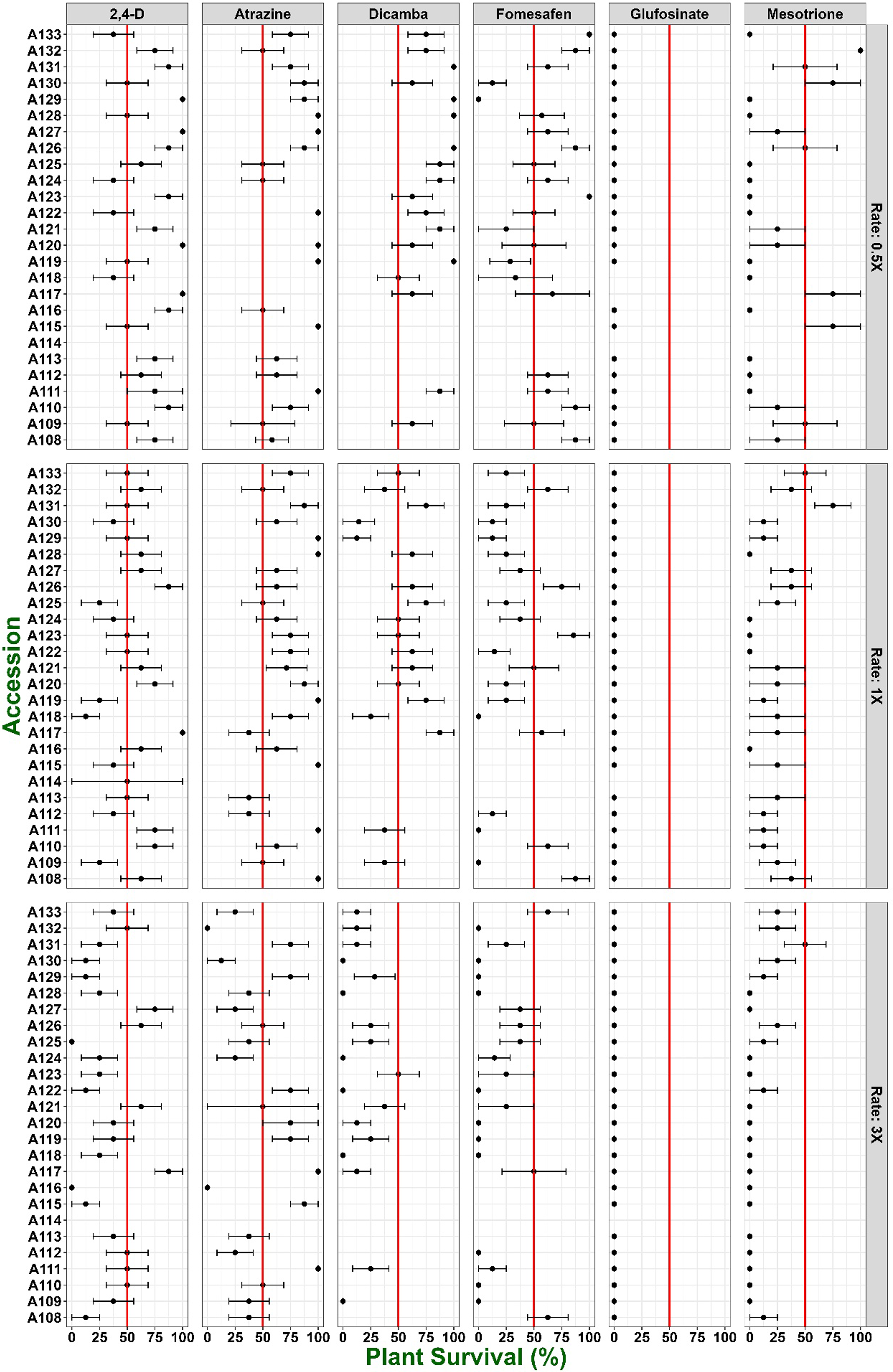
For the postemergence experiment, 21 d after treatment, plant survival was visually evaluated, and individual plants were categorized as either dead (no green tissue; scored as 0) or alive (presence of green tissue and evidence of regrowth; scored as 1; Supplementary Figure 1). Accessions exhibiting ≥50% (± standard error) plant survival were classified as resistant to the respective herbicide × rate treatment (Faleco et al. Reference Faleco, Oliveira, Arneson, Renz, Stoltenberg and Werle2022; Schultz et al. Reference Schultz, Chatham, Riggins, Tranel and Bradley2015; Vennapusa et al. Reference Vennapusa, Faleco, Vieira, Samuelson, Kruger and Werle2018). The waterhemp aboveground biomass from the postemergence experiment was harvested and dried in a forced-air oven at 52 C until reaching a constant weight. Biomass data were then used to calculate percent biomass reduction relative to NTC using Equation 1 as follows (Faleco et al. Reference Faleco, Oliveira, Arneson, Renz, Stoltenberg and Werle2022; Wortman Reference Wortman2014):
 ${\small{Biomass\;Reduction\;\left( \% \right) = \left( {1 - {{{\rm{Biomass}}\;{\rm{of}}\;{\rm{the}}\;{\rm{experimental}}\;{\rm{unit}}} \over {{\rm{Average}}\;{\rm{biomass}}\;\;{\rm{of}}\;{\rm{the}}\;{\rm{NTC}}}}\;\;} \right) \times 100}}$
For the preemergence experiment, 28 d after treatment the number of emerged plants per experimental unit was recorded. Waterhemp density reduction, expressed as a percentage relative to NTC, was calculated using Equation 2 as follows (Faleco et al. Reference Faleco, Oliveira, Arneson, Renz, Stoltenberg and Werle2022; Wortman Reference Wortman2014):
 ${Plant\;Density\;Reduction\;\left( \% \right) = \left( {1 - {{\;{\rm{Waterhemp}} \; {\rm{density}} \;{\rm{in}}\; {\rm{the}}\; {\rm{experimental}}\; {\rm{unit}}} \over {{\rm{Average}}\;{\rm{waterhemp}}\;{\rm{density}}\;{\rm{in}}\;{\rm{the}}\;{\rm{NTC}}\;}}} \right) \times 100}$
Herbicide × rate treatments that resulted in <90% (± standard error) waterhemp density reduction were classified as ineffective density reduction for each accession (Faleco et al. Reference Faleco, Oliveira, Arneson, Renz, Stoltenberg and Werle2022; Vennapusa et al. Reference Vennapusa, Faleco, Vieira, Samuelson, Kruger and Werle2018).
Statistical Analyses
All statistical analyses were conducted in R software (v. 4.4.2; Posit team 2025). The responses of 2023 accessions to postemergence and preemergence herbicide applications were first analyzed independently to assess their herbicide resistance status. Waterhemp survivorship and biomass reduction data from the postemergence and density reduction for preemergence experiments were further analyzed using a generalized linear mixed model with a Gaussian distribution, implemented in the glmmtmb package (v. 1.0.2.1; Brooks et al. Reference Brooks, Kristensen, van Benthem, Magnusson, Berg and Nielsen2017). Type II Wald chi-square ANOVA was performed, followed by pairwise comparisons using a Tukey HSD test (α = 0.05) via the emmeans package (v. 1.5.4; Lenth et al. Reference Lenth, Buerkner, Herve, Love, Riebl and Singmann2021). To evaluate the overall response of 2023 accessions from Wisconsin to the postemergence and preemergence experiment, herbicides and rates were treated as fixed effects, while accessions and experimental runs were treated as random effects. Response variables were logit-transformed to meet normality assumptions (Barnes et al. Reference Barnes, Knezevic, Lawrence, Irmak, Rodriguez and Jhala2020; Davies et al. Reference Davies, Hull, Moss and Neve2018, Reference Davies, Onkokesung, Brazier-Hicks, Edwards and Moss2020; Striegel et al. Reference Striegel, Eskridge, Lawrence, Knezevic, Kruger, Proctor, Hein and Jhala2020). For ease of interpretation, back-transformed means are presented in the results.
Data from the 2018 Wisconsin Weed Science screening of waterhemp accessions (Faleco et al. Reference Faleco, Oliveira, Arneson, Renz, Stoltenberg and Werle2022) were obtained and compared with results from the 2023 accessions to assess potential shifts in herbicide resistance status after a 5-yr period. The overall comparative responses of 2018 and 2023 waterhemp accessions were assessed using survivorship and biomass reduction data from postemergence herbicide applications at 1× and 3× rates, along with waterhemp density reduction data from preemergence herbicide applications across all comparable rates (0.5×, 1×, and 3×). Means were compared using a Tukey HSD test (α = 0.05), following the same procedures described above.
Results and Discussion
Response of the 2023 Waterhemp Accessions to Postemergence Herbicides
Waterhemp accession survival (%) varied across the six postemergence herbicide treatments at different application rates (Figure 2). All accessions exhibited ≥50% survivorship following the application of 2,4-D, atrazine, and dicamba at a 0.5× rate. At the 0.5× rate of fomesafen and mesotrione, 82% and 28%, respectively, of accessions evaluated demonstrated ≥50% survivorship. Of the accessions evaluated, 85%, 83%, 41%, and 24% demonstrated ≥ 50% survivorship following treatment with 2,4-D, dicamba, fomesafen, and mesotrione, respectively, at the 1× rate. All accessions exhibited ≥50% survivorship at the 1× rate of atrazine and 70% of accessions exhibited ≥50% survivorship at the 3× rate. Fifty-two, At the 3× rate of 2,4-D, dicamba, and fomesafen, 52%, 11%, and 27%, respectively, of accessions evaluated exhibited ≥50% survivorship. Accession A131 was the only one to exhibit ≥50% survivorship when exposed to 3× rate of mesotrione. No survivorship was observed in any accession following glufosinate application at any rate. Accessions A126, A127, A132, and A133 demonstrated ≥50% survivorship when treated with the 1× rate of all five herbicides evaluated in the postemergence experiment: 2,4-D, atrazine, dicamba, fomesafen, and mesotrione. Ten accessions demonstrated ≥50% survivorship to at least four herbicides at the 1× rate. Sixteen accessions exhibited ≥50% survivorship to at least three herbicides, and 25 accessions exhibited ≥50% survivorship to at least two herbicides at 1× rate. Among all accessions, A118 was the only one that exhibited ≥50% survivorship to a single herbicide (atrazine) at the 1× rate.
Waterhemp survivorship (± standard error) in response to postemergence herbicides. Accessions with survivorship ≥50% (represented by the red line) were classified as resistant to the respective herbicide × dose treatment.

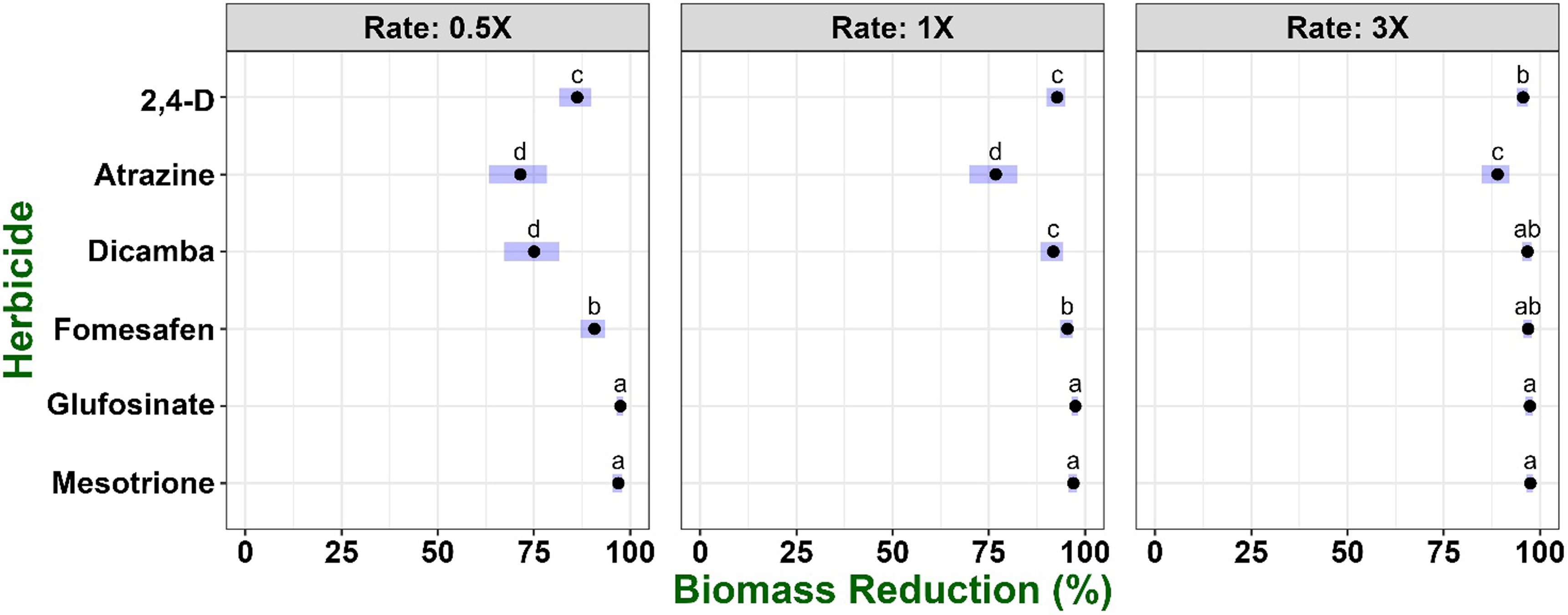
Following the analysis of 2023 accessions survivorship across herbicides and rates, overall biomass reduction across all accessions was also influenced by herbicide treatments and rates (Figure 3). Overall, waterhemp biomass was reduced by 86%, 71%, 75%, 91%, 97%, and 97% following application of a 0.5× rate of 2,4-D, atrazine, dicamba, fomesafen, mesotrione, and glufosinate, respectively compared with biomass of the NTC. Except for atrazine at the 1× rate (77%) and 3× rate (89%), all postemergence herbicides evaluated here reduced waterhemp biomass by >90% at both the 1× and 3× rates.
Waterhemp biomass reduction represented by the interaction between the postemergence-applied herbicide and its application rate. Accessions were considered as a random effect. The blue boxes represent the 95% confidence intervals. Treatments with the same letters within each herbicide did not differ among application rates according to a Tukey HSD test at α = 0.05.

Response of the 2023 Waterhemp Accessions to Preemergence Herbicides
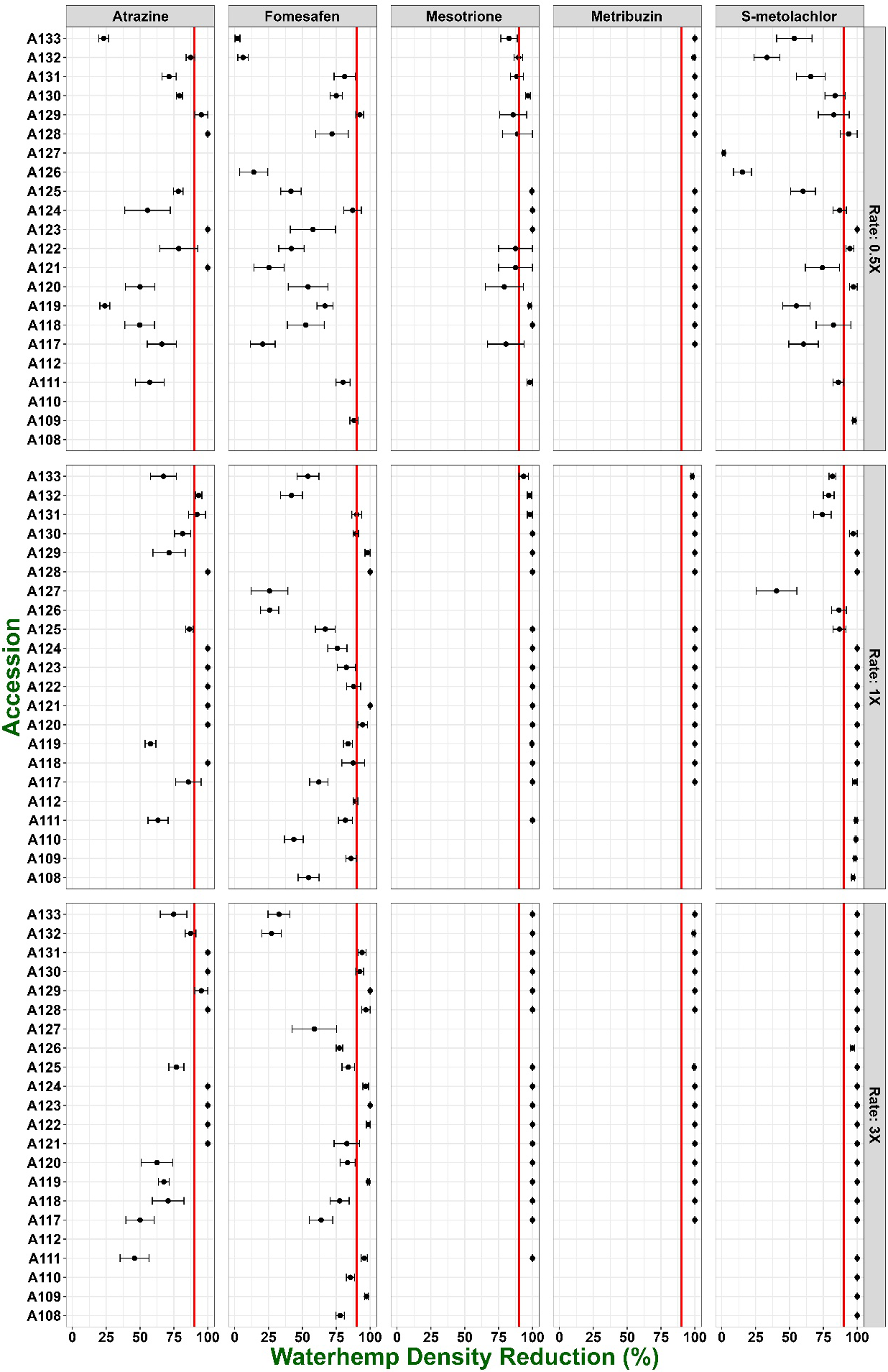
Density reduction (%) of waterhemp accessions was influenced by the application of preemergence herbicides and their respective rates (Figure 4). Seventy-five percent, Of the accessions we evaluated, 75%, 94%, 28%, and 79% exhibited <90% density reduction following application of, respectively, 0.5× rates of atrazine, fomesafen, mesotrione, and S-metolachlor. Following application of 1× rate of atrazine, fomesafen, and S-metolachlor, 52%, 82%, and 28% respectively, of the evaluated accessions exhibited <90% density reduction. After the 3× rates of atrazine and fomesafen were applied, 50% and 52%, respectively, exhibited a density reduction of <90%. Mesotrione at both the 1× and 3× rates, S-metolachlor at the 3× rate, and metribuzin at all tested rates resulted in >90% reduction in waterhemp density. Accessions A111, A117, A118, A119, A126, and A127 exhibited <90% density reduction at the 1× rate in response to at least two herbicides, while accessions A125, A130, A131, A132, and A133 exhibited <90% density reduction in response to three herbicides.
Waterhemp density reduction (± standard error) in response to preemergence herbicides. Treatments with plant density reduction <90% (represented by the red line) were classified as ineffective.

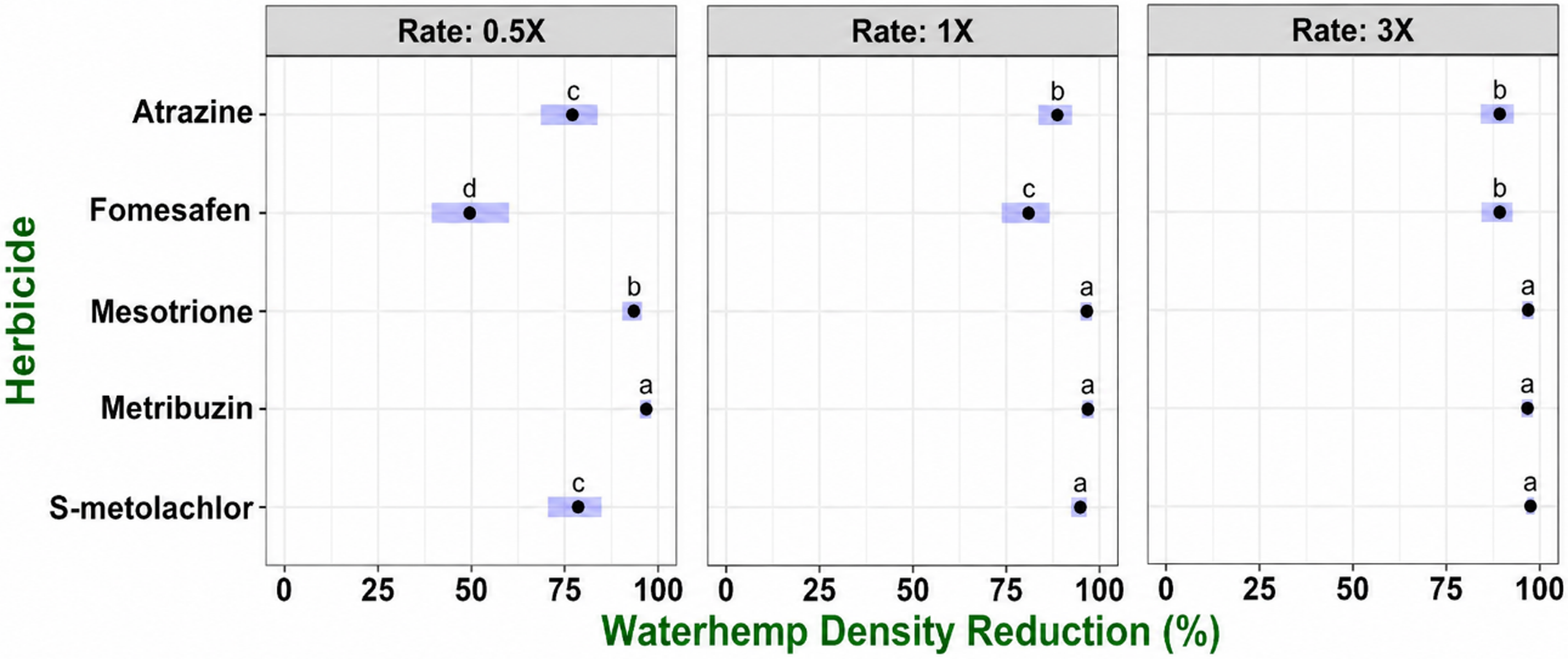
Overall, when results were pooled across 2023 accessions, waterhemp density reduction varied among herbicides (Figure 5). At the 0.5× rate, metribuzin was the most effective herbicide, resulting in 97% density reduction, whereas atrazine and fomesafen were least effective (73% and 50% density reduction, respectively). At the 1× rate, waterhemp density reduction (>95%) was highest when S-metolachlor, metribuzin, and mesotrione were applied, with no differences among them. In contrast, fomesafen at the 1× rate resulted in a density reduction of 81%, and when atrazine was applied at the 1× rate a reduction of 91% was observed. At the 3× rate, atrazine and fomesafen applications resulted in the lowest density reductions (89%), whereas mesotrione, metribuzin, and S-metolachlor maintained biomass reductions of ≥97%.
Overall, waterhemp density reduction represented by the interaction between the preemergence-applied herbicide and its application rate. Accessions were considered as a random effect. The blue boxes represent the 95% confidence intervals. Treatments with the same letters within each herbicide did not differ among application rates according to a Tukey HSD test at α = 0.05.

Comparison of the Responses of Waterhemp Survival in 2018 and 2023 to Postemergence Herbicides
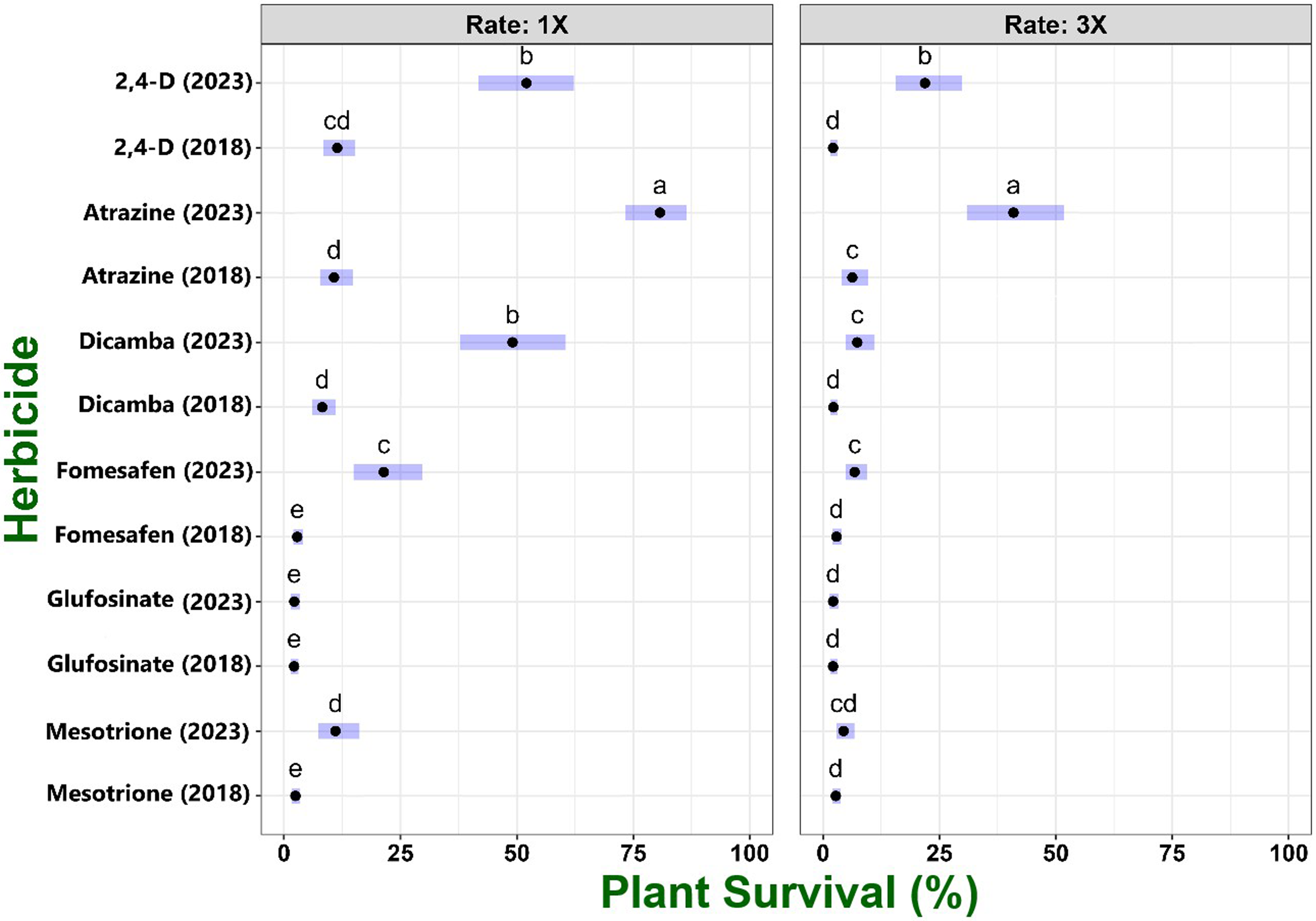
Survival (%) and biomass reduction of waterhemp accessions to individual postemergence herbicides evaluated herein varied by the year accessions were collected and application rates (Figures 6 and 7). At the 1× and 3× rates of 2,4-D, 2023 accessions exhibited greater rates of survival (52% and 22%, respectively) than the 2018 accessions (11% and 2%, respectively). Survivorship (%) among the 2018 accessions in response to atrazine was 11% and 3%, whereas survivorship of the 2023 accessions was 81% and 41% at the 1× and 3× rates, respectively. The 2023 accessions exhibited increased survival to dicamba, with 49% survival at the 1× rate compared with 8% for 2018 accessions. Similarly, survival of the 2023 accessions after exposure to fomesafen increased from 3% in 2018 to 21% in 2023 at the 1× rate. Survival when the plants were exposed to the 1× rate of mesotrione increased from 2% to 11% between the 2018 and 2023 accessions. Glufosinate was the only herbicide for which accession survival showed no differences between 2018 and 2023 accessions at either application rate.
Comparison between waterhemp survival of the accessions evaluated in 2018 and 2023 represented the interaction between the postemergence-applied herbicide and its application rate. Accessions were considered as a random effect. The blue boxes represent the 95% confidence intervals. Treatments with the same letters within each herbicide did not differ among application rates according to a Tukey HSD test at α = 0.05.

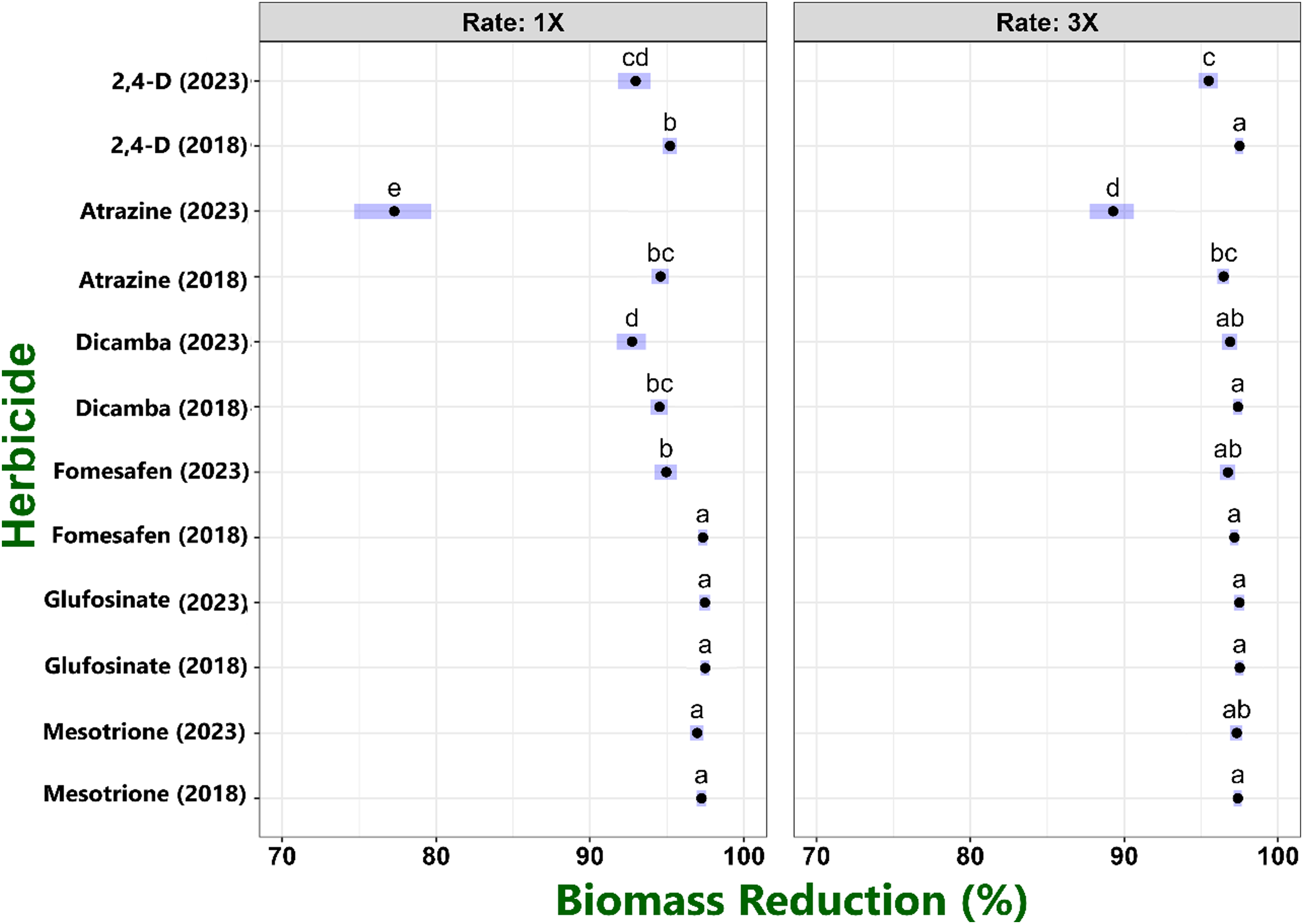
Comparison between waterhemp biomass reduction of the accessions evaluated in 2018 and 2023 represented the interaction between the postemergence-applied herbicide and its application rate. Accessions were considered as a random effect. The blue boxes represent the 95% confidence intervals. Treatments with the same letters within each herbicide did not differ among application rates according to a Tukey HSD test at α = 0.05.

Biomass reduction of the 2023 accessions after 2,4-D applications was 93% at the 1× rate and 96% at the 3× rate, compared with the 2018 accessions, for which 1× and 3× rates resulted in a 97% reduction in biomass (Figure 7). Biomass reduction in response to atrazine decreased from 94% to 77% at the 1× rate, and from 96% to 89% at the 3× rate, when comparing 2018 and 2023 accessions, respectively. When dicamba was applied, the biomass reduction in 2018 accessions was 94% at the 1× rate and 97% at the 3× rate, while for 2023 accessions, the reduction in biomass declined slightly to 92% at the 1× rate but remained stable at 97% at the 3× rate for accessions in both years. Biomass reduction with fomesafen at the 1× rate was slightly lower in the 2023 accessions (95%) than 2018 (97%). At the 3× rate, control was statistically similar (97%) across 2018 and 2023 accessions. Biomass reduction for glufosinate and mesotrione did not differ between the 2018 and 2023 accessions or among application rates and remained ≥97%.
Comparison of the Responses of Waterhemp Resistance in 2018 and 2023 to Preemergence Herbicides
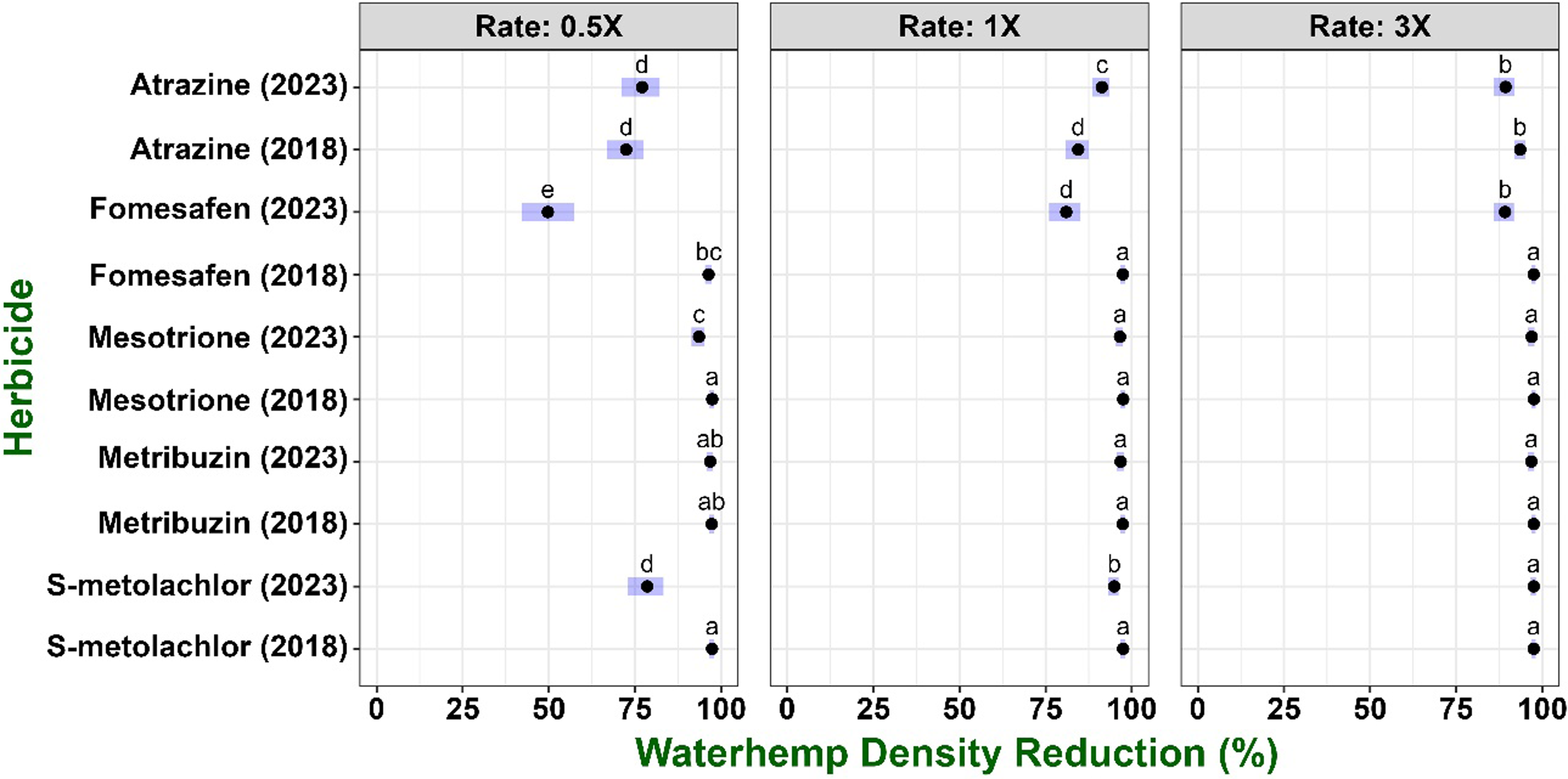
Overall, waterhemp density reduction (%) in response to individual preemergence herbicides evaluated herein varied between the 2018 and 2023 accessions and among application rates (Figure 8). No difference in waterhemp density reduction was observed following atrazine application at the 0.5× and 3× rates between the 2018 and 2023 accessions, when pooled across accessions. However, when atrazine at the 1× rate was applied, the waterhemp density reduction was lower in 2018 (84%) than in 2023 (91%). The 2018 accessions exhibited a greater density reduction response to fomesafen at the 0.5× rate (96%) than the 2023 accessions (50%). Of the 2018 accessions, fomesafen applications resulted in waterhemp density reductions of 97% at both the 1× and 3× rates, whereas in the 2023 accessions, density reduction declined to 81% and 89% at those rates. Except S-metolachlor at 0.5× rate, mesotrione, metribuzin, and S-metolachlor provided effective density reduction (>90%) at the 0.5 ×, 1 ×, and 3× rates for both 2018 and 2023 accessions. S-metolachlor at 0.5× rate was more effective in reducing waterhemp density of 2018 accessions (94%) compared with the 2023 accessions (79%).
Comparison between waterhemp density reduction of the accessions evaluated in 2018 and 2023 represented the interaction between the preemergence-applied herbicide and its application rate. Accessions were considered as a random effect. The blue boxes represent the 95% confidence intervals. Treatments with the same letters within each herbicide did not differ among application rates according to a Tukey HSD test at α = 0.05.

Figure 8. Long description
The image contains three vertical bar graphs side by side, each representing different application rates of herbicides: 0.5X, 1X, and 3X. The y-axis of each graph shows the waterhemp density reduction percentage, ranging from 0 to 100 percent. The x-axis lists various herbicides evaluated in 2018 and 2023, including Atrazine, Fomesafen, Mesotrione, Metribuzin, and S-metolachlor. Each herbicide is represented by two bars, one for 2018 and one for 2023. The blue boxes around the bars represent the 95 percent confidence intervals. Treatments with the same letters within each herbicide did not differ among application rates according to a Tukey HSD test at alpha equals 0.05. Panel A: The graph on the left shows the waterhemp density reduction at the 0.5X rate. Panel B: The middle graph shows the waterhemp density reduction at the 1X rate. Panel C: The graph on the right shows the waterhemp density reduction at the 3X rate. Each graph indicates the effectiveness of different herbicides at varying rates in reducing waterhemp density, with some herbicides showing significant reduction while others show less effectiveness.
Resistance to multiple herbicide SOAs in waterhemp has been widely reported across Midwestern states where corn and soybean are grown (Faleco et al. Reference Faleco, Oliveira, Arneson, Renz, Stoltenberg and Werle2022; Heap Reference Heap2025). Our results demonstrated that >83% of the 2023 accessions exhibited ≥50% survival following application of the 1× rate of 2,4-D or dicamba; however, waterhemp biomass was reduced by >90% (Figures 2 and 3). Moreover, the overall comparison showed substantially higher survival and lower biomass reduction in the 2023 accessions following the auxin mimic herbicides (2,4-D and dicamba) compared with the 2018 accessions. The 2,4-D rate applied to the 2018 accessions (1× rate: 800 g ai ha⁻¹) was lower than the rate used on the 2023 accessions (1× rate: 1,065 g ai ha⁻¹), which made the results even more concerning. Despite the >90% biomass reduction observed among 2023 accessions, waterhemp high survival can still pose challenges. For example, Jha et al. (Reference Jha, Norsworthy, Bridges and Riley2008) documented that waterhemp can maintain substantial physiological integrity even after experiencing high levels of injury and biomass reduction, allowing for regrowth and potential seed production (Bernards et al. Reference Bernards, Crespo, Kruger, Gaussoin and Tranel2012; Haarmann et al. Reference Haarmann, Young and Johnson2020). The observed increase in plant survival in this study may be directly related to the intensified use of these herbicides in recent years, driven by the widespread adoption of soybean cultivars that are tolerant to 2,4-D or dicamba (Singh and Jhala Reference Singh and Jhala2025; Tranel Reference Tranel2020; Werle et al. Reference Werle, Mobli, Striegel, Arneson, Dewerff, Brown and Oliveira2022). However, the background information we had about our waterhemp seeds showed that this pattern occurred even in locations where auxin mimic herbicides had not been used for weed control within the past 5 yr (Supplementary Table S1). Similar cases were reported in Illinois, where waterhemp evolved resistance to 2,4-D and later to dicamba despite no application history of either herbicide (Bobadilla et al. Reference Bobadilla, Giacomini, Hager and Tranel2022; Evans et al. Reference Evans, Strom, Riechers, Davis, Tranel and Hager2019). These findings may support the potential cross-resistance or metabolic resistance, adding to the complexity of auxin mimic herbicide resistance (Bobadilla et al. Reference Bobadilla, Giacomini, Hager and Tranel2022).
Similar to 2,4-D, the extensive and repeated use of atrazine has imposed strong selection pressure, leading to its widespread resistance. Atrazine resistance has been documented since the 1990s, particularly in corn crops (Anderson et al. Reference Anderson, Roeth and Martin1996; Beckie et al. Reference Beckie, Ashworth and Flower2019; Heap Reference Heap2025), and has contributed to the broad distribution of resistant waterhemp accessions. Consistent with this trend, the 2023 accessions in our study exhibited the highest survivorship (81%) and the lowest biomass reduction (77%) to the 1× rate of atrazine among the postemergence herbicides evaluated (Figures 6 and 7). Moreover, a slight difference in waterhemp density reduction (84% to 91%) in response to atrazine applied preemergence was observed between the 2018 and 2023 accessions, only at the 1× rate. Considering the 91% reduction in waterhemp density observed in the 2023 accessions following atrazine (1×) applied preemergence, compared with 100% survival after postemergence application at the same rate, our results indicated that atrazine was more effective when applied preemergence than postemergence. The effective control of the 2023 accessions observed when atrazine was applied preemergence may be attributed to enhanced absorption and translocation and highlights the complex interactions between plant physiology and herbicide efficacy (Beckie et al. Reference Beckie, Ashworth and Flower2019; Mudhoo and Garg Reference Mudhoo and Garg2011). Benoit et al. (Reference Benoit, Soltani, Hooker, Robinson and Sikkema2019) also reported that atrazine applied preemergence provided 73% control of waterhemp, whereas postemergence applications resulted in only 58% control.
Fomesafen-resistant waterhemp biotypes have been reported in at least eight Midwestern states (Heap Reference Heap2025). In the current study, overall, comparison between the 2018 and 2023 accessions showed that survival following postemergence application of fomesafen at the 1× rate increased from 3% in 2018 to 21% in 2023 (Figure 6). These results align with those reported by Hamberg et al. (Reference Hamberg, Yadav, Dixon, Licht and Owen2023) that no resistance to lactofen was reported in waterhemp accessions collected in Iowa in 2013, but resistance was observed in 16% of accessions collected in 2019. This trend was further supported by our preemergence herbicide evaluations in 2023, when fomesafen was less effective at reducing waterhemp density, contrasting with earlier resistance screenings in Wisconsin in 2018 (Faleco et al. Reference Faleco, Oliveira, Arneson, Renz, Stoltenberg and Werle2022), highlighting the recent and widespread emergence of resistance to PPO-inhibiting herbicides (Dayan et al. Reference Dayan, Barker and Tranel2018; Tranel et al. Reference Tranel, Riggins, Bell and Hager2011). These findings are also consistent with recent studies in our laboratory that characterized resistance to PPO-inhibiting herbicides and provided molecular confirmation of target-site resistance following both preemergence and postemergence applications (Faleco et al. Reference Faleco, Lopez, Werle, Raiyemo, Tranel, Stoltenberg and Werle2025).
The first documented case of waterhemp resistance to PPO inhibitors, in combination with ALS resistance, was reported in Kansas in 2001 (Shoup et al. Reference Shoup, Al-Khatib and Peterson2003). Resistance to fomesafen has since been confirmed as target-site resistance associated with mutations in the PPX2 gene, most notably the R128G and R128I amino acid substitutions (Nie et al. Reference Nie, Mansfield, Harre, Young, Steppig and Young2019). Genetic studies have further demonstrated that PPO and ALS resistance genes are physically linked on the same chromosome in waterhemp, resulting in co-segregation and challenging the assumption that resistance mechanisms evolve independently (Tranel et al. Reference Tranel, Wu and Sadeque2017). Consequently, the widespread resistance of waterhemp to ALS-inhibiting herbicides in the Midwest (Faleco et al. Reference Faleco, Oliveira, Arneson, Renz, Stoltenberg and Werle2022; Heap Reference Heap2025) may increase the likelihood of concurrent resistance to PPO inhibitors. However, in our previous screening of Wisconsin waterhemp accessions (Faleco et al. Reference Faleco, Oliveira, Arneson, Renz, Stoltenberg and Werle2022), 98% of accessions exhibited ≥50% survivorship to imazethapyr, whereas none showed ≥50% survivorship to fomesafen. Collectively, increasing survivorship and declining efficacy indicate that continued reliance on fomesafen may compromise long-term waterhemp control and accelerate resistance evolution, similar to patterns previously observed for imazethapyr and glyphosate (Faleco et al. Reference Faleco, Oliveira, Arneson, Renz, Stoltenberg and Werle2022).
Despite a slight increase in waterhemp survival to mesotrione at the 1× rate between the 2018 (2%) and 2023 (11%) accessions, the increased use of HPPD-inhibiting herbicides in Wisconsin (USDA-NASS 2025) has likely intensified selection pressure for mesotrione-resistant biotypes. For example, accession A131 was the only accession to exhibit ≥50% survival at the 3× application rate. Application records indicated that tembotrione, an HPPD-inhibiting herbicide from the same chemical family as mesotrione (triketones) (HRAC 2025), was applied for three consecutive years (2020–2023) in the area where accession A131 was collected (Supplementary Table S1), likely increasing selection pressure and contributing to reduced mesotrione efficacy. Repeated exposure to mesotrione may have favored the evolution of metabolic resistance mechanisms, potentially conferring cross-resistance to other HPPD inhibitors (Tranel Reference Tranel2020). Supporting this trend, Hamberg et al. (Reference Hamberg, Yadav, Dixon, Licht and Owen2023) reported a progressive increase in mesotrione resistance in Iowa waterhemp populations over a 6-yr period, with resistance frequency increasing from 5% to 15% when treated at the 1× rate (105 g ai ha⁻¹). Resistance to HPPD-inhibiting herbicides has also been reported in Nebraska waterhemp populations, with resistance levels ranging from 14-fold to 23-fold for topramezone and 4-fold to 6-fold for mesotrione and tembotrione compared with a susceptible population (Jhala et al. Reference Jhala, Sandell, Rana, Kruger and Knezevic2014), further indicating regional expansion of this resistance trait.
In contrast to reduced postemergence efficacy, mesotrione applied at both the 1× and 3× rates maintained effective waterhemp control (≥97%) in both the 2018 and 2023 accessions. Notably, mesotrione applied preemergence at the 1× rate (270.5 g ai ha⁻¹; label restricted) were substantially higher than postemergence rates (105 g ai ha⁻¹ as 1× the label rate for postemergence use), which may explain the greater performance observed with preemergence over postemergence applications. These findings are consistent with those reported by Kaundun et al. (Reference Kaundun, Hutchings, Dale, Howell, Morris, Kramer, Shivrain and McIndoe2017) that in a mesotrione-resistant population, resistance levels were 2.4-fold higher following preemergence application and 45-fold higher following postemergence application. These results suggested that resistance-associated genes may be weakly expressed, or not fully expressed, during germination, resulting in reduced resistance expression at preemergence relative to postemergence application timing (Kaundun et al. Reference Kaundun, Hutchings, Dale, Howell, Morris, Kramer, Shivrain and McIndoe2017), which has a tremendous practical implication regarding herbicide use pattern/resistance management.
In our study, metribuzin consistently provided >90% waterhemp density reduction at all evaluated rates for both the 2018 and 2023 accessions, highlighting a clear difference in efficacy relative to atrazine, despite both herbicides having the PS II site of action. The sustained efficacy of metribuzin likely reflects differences in resistance mechanisms rather than SOA alone. Resistance to atrazine is frequently associated with non–target site resistance, particularly rapid metabolism mediated by glutathione S-transferase activity, which may not confer cross-resistance to metribuzin (Vennapusa et al. Reference Vennapusa, Faleco, Vieira, Samuelson, Kruger and Werle2018). Previous studies have shown that atrazine-resistant waterhemp populations exhibiting metabolic resistance often remain susceptible to metribuzin, whereas populations with target-site resistance to PS II inhibitors exhibit reduced sensitivity to metribuzin even at higher application rates (560 and 1,120 g ha⁻¹) (Westerveld et al. Reference Westerveld, Soltani, Hooker, Robinson, Tranel, Laforest and Sikkema2021). Collectively, these findings indicate that metribuzin can maintain reliable control even in populations in which atrazine efficacy has declined, highlighting the importance of resistance mechanism, rather than site of action alone, in predicting herbicide performance and supporting decisions. Further research is needed to better characterize metabolic resistance pathways in waterhemp and to refine the role of metribuzin in integrated resistance management programs.
Although S-metolachlor remained effective for most accessions in this study, the <90% waterhemp density reduction at the 0.5× rate in the 2023 accessions is concerning and may indicate early shifts toward reduced efficacy, particularly given the more consistent and effective control observed in the 2018 accessions (Figure 8). This decline in effectiveness may be associated with increased use of VLCFA-inhibiting herbicides in recent years. In Wisconsin, S-metolachlor use in corn-soybean rotations increased by 120% between 2018 and 2023 (USDA-NASS 2025), likely intensifying selection pressure. Waterhemp resistance to VLCFA inhibitors was first documented in Illinois in 2016 (Heap Reference Heap2025; Strom et al. Reference Strom, Gonzini, Mitsdarfer, Davis, Riechers and Hager2019) coinciding with a substantial increase in S-metolachlor use, which rose from 175 kg in 2012 to 956 kg in 2015 (USDA-NASS 2025). Overall, these trends support the hypothesis that increased selection pressure has contributed to the observed decline in S-metolachlor effectiveness for waterhemp density reduction.
Glufosinate provided effective control of waterhemp in the 2018 and 2023 accessions (Figure 6) compared with the other herbicides evaluated, regardless of the application rate. This reinforces the continued viability of glufosinate for waterhemp management; however, its effectiveness should not be taken for granted. Repeated reliance on glufosinate increases selection pressure and can accelerate the evolution of resistance over time. Resistance to glufosinate has already been confirmed in Palmer amaranth (Amaranthus palmeri S. Watson) populations in Arkansas and North Dakota (Carvalho-Moore et al. Reference Carvalho-Moore, Norsworthy, González-Torralva, Hwang, Patel, Barber, Butts and McElroy2022; Heap Reference Heap2025; Jones et al. Reference Jones, Dunne, Cahoon, Jennings, Leon and Everman2024). More recently, glufosinate-resistant waterhemp has been confirmed in Illinois through greenhouse dose-response experiments, with resistance ratios ranging from 2.2-fold to 3.4-fold based on survival and 1.3-fold to 2.8-fold based on dry biomass (Werle Noe et al. Reference Werle Noe, Bernardi Rankrape, Miller, Lago, Singh, Lopez, Hager, Gage and Tranel2026). These findings highlight the importance of implementing strategies that do not rely solely on glufosinate or any single SOA.
The selection pressure imposed by the continuous and repeated use of herbicides with the same SOAs has accelerated the evolutionary process of waterhemp resistance (Gaines et al. Reference Gaines, Duke, Morran, Rigon, Tranel and Küpper2020). In addition to this selection pressure, other factors might also have contributed, such as gene flow from resistant populations, preexisting genetic variation, and/or metabolic resistance, which can confer cross-resistance to multiple herbicides (Kreiner et al. Reference Kreiner, Sandler, Stern, Tranel, Weigel, Stinchcombe and Wright2022). Waterhemp is a wind-pollinated, obligate outcrossing species capable of dispersing resistant alleles over long distances via pollen movement (Jhala et al. Reference Jhala, Norsworthy, Ganie, Sosnoskie, Beckie, Mallory-Smith, Liu, Wei, Wang and Stoltenberg2021; Liu et al. Reference Liu, Bridges, Kaundun, Glasgow, Owen and Neve2016). In our study, field herbicide application history (2019 to 2023) for the collected accessions indicated that not all fields received the herbicides to which these accessions exhibited reduced control (Supplementary Table S1). Furthermore, the accessions A117, A120, A121, and A124 were collected near an area where resistance to multiple herbicides (2,4-D, atrazine, glyphosate, and imazethapyr) had already been reported (Faleco et al. Reference Faleco, Oliveira, Arneson, Renz, Stoltenberg and Werle2022). This suggests that resistance may have evolved through mechanisms beyond direct selection. However, in our current study, the herbicide resistance mechanism was not investigated and warrants further research to better understand their role in herbicide resistance evolution.
Practical Implications
The results of this study highlight the increasing complexity of managing waterhemp in Wisconsin corn and soybean production systems and its continued adaptation to current herbicide applications. Although the 2023 waterhemp seed collection was biased toward accessions reported as difficult to control or with suspected lack of performance to 2,4-D, dicamba, and mesotrione, a comparison with 2018 data revealed a significant increase in survival to several herbicides, including 2,4-D, atrazine, dicamba, and fomesafen, under both postemergence application timings. Similarly, increased survival under preemergence applications was observed in 2023 accessions relative to 2018, most notably for atrazine and fomesafen. Producers and farmers should prioritize integrated weed management strategies, such as rotating herbicide SOAs (Anderson et al. Reference Anderson, Ellsworth, Faria, Head, Owen and Pilcher2019; Beckie et al. Reference Beckie, Ashworth and Flower2019), using residual herbicide programs (Mobli et al. Reference Mobli, DeWerff, Arneson and Werle2023), and integrating cultural practices like cover crops, crop rotation and narrow row spacing (Arsenijevic et al. Reference Arsenijevic, DeWerff, Conley, Ruark and Werle2022; Chudzik et al. Reference Chudzik, Nunes, Arneson, Arneson, Conley and Werle2024; Nunes et al. Reference Nunes, Arneson, Smith, Ruark, Conley and Werle2024) are essential to delay resistance evolution and maintain long-term control. Additionally, the spread of resistance through gene flow and the presence of metabolic resistance mechanisms demand proactive monitoring and adaptive management (Huffman et al. Reference Huffman, Hausman, Hager, Riechers and Tranel2015; Kreiner et al. Reference Kreiner, Sandler, Stern, Tranel, Weigel, Stinchcombe and Wright2022; Oliveira et al. Reference Oliveira, Gaines, Dayan, Patterson, Jhala and Knezevic2018). Therefore, continuous resistance screening, site-specific herbicide planning, and broader adoption of nonchemical practices should be prioritized to sustain the efficacy of current tools and preserve future control options for waterhemp.
Supplementary material
To view supplementary material for this article, please visit https://doi.org/10.1017/wet.2026.10132
Acknowledgments
We thank the University of Wisconsin-Madison Cropping Systems Weed Science members for their technical assistance in conducting this research, and the stakeholders for collecting and sending seed samples. We also acknowledge the Walnut Street Greenhouse staff for their support, and the Wisconsin Soybean Marketing Board for partially sponsoring this research. The authors acknowledge Tatiane Severo Silva (University of Wisconsin-Madison), Victor Hugo Vidal Ribeiro (Oregon State University), Caio Brunharo (Pennsylvania State University), and Daniel Valadão Silva (Federal Rural University of the Semi-Arid Region, Brazil) for their contributions to the manuscript.
Funding
Luma Lorena Loureiro da S. Rodrigues’s graduate research assistantship was partially sponsored by Coordenação de Aperfeiçoamento de Pessoal de Nível Superior - Brasil (CAPES), Finance Code 001.
Competing interests
The authors declare they have no competing interests.



 Open access

