Introduction
Mood and anxiety disorders are prevalent and incapacitating disorders that commonly run a recurrent and chronic course (WHO, 2000). Different psychotherapies, short and long, are widely applied in the treatment of these disorders, and therefore their effectiveness is an important issue. Clinical trials have demonstrated that short-term psychodynamic psychotherapy, which is a brief, focused and active treatment, is effective in the treatment of mood and anxiety disorders (Anderson & Lambert, Reference Anderson and Lambert1995; Barber & Ellman, Reference Barber and Ellman1996). Long-term psychodynamic psychotherapy, which is a more intensive approach than short-term psychodynamic psychotherapy, is widely used in ordinary clinical practice. The evidence on the effectiveness of long-term psychodynamic psychotherapy is, however, limited and entirely based on non-randomized studies (Piper et al. Reference Piper, Debbane, Bienvenu and Garant1984; Wilczek et al. Reference Wilczek, Barber, Gustavsson, Asberg and Weinryb2004; Bond & Perry, Reference Bond and Perry2006). Solution-focused therapy, which is a brief goal-focused treatment developed from therapies applying a problem-solving approach and systemic family therapy (Gingerich & Eisengart, Reference Gingerich and Eisengart2000), has been reported to produce rapid effects with reductions in psychiatric symptoms after only a few sessions (Lambert et al. Reference Lambert, Okiishi, Finch and Johnson1998).
Short-term psychodynamic psychotherapy has, with some exceptions (Svartberg & Stiles, Reference Svartberg and Stiles1991), been found to be equally effective as other short-term individual treatments, such as cognitive (Crits-Christoph, Reference Crits-Christoph1992; Anderson & Lambert, Reference Anderson and Lambert1995; Leichsenring, Reference Leichsenring2001; Wampold et al. Reference Wampold, Minami, Baskin and Callen2002; Leichsenring et al. Reference Leichsenring, Rabung and Leibing2004), interpersonal (Crits-Christoph, Reference Crits-Christoph1992), supportive therapy (Anderson & Lambert, Reference Anderson and Lambert1995; Leichsenring et al. Reference Leichsenring, Rabung and Leibing2004) and solution-focused therapy (Knekt & Lindfors, Reference Knekt and Lindfors2004). The effects of short-term psychodynamic psychotherapy have also been shown to be stable or even to increase during follow-up (Leichsenring et al. Reference Leichsenring, Rabung and Leibing2004). Since the follow-up times in trials published so far have been relatively short, the maintenance of treatment effect in different brief individual psychotherapies in the long run is an issue which remains unanswered. So far, no evidence from randomized clinical trials exists on the differential effectiveness of short- and long-term therapies.
To address the lack of evidence concerning the effectiveness of long-term psychodynamic psychotherapy and the stability of the treatment effects of short-term therapies we conducted a randomized clinical trial comparing the effectiveness of long- and short-term psychodynamic psychotherapy as well as psychodynamic psychotherapy and solution-focused therapy in the treatment of depressive and anxiety disorders during a 3-year follow-up from the start of therapy.
Patients and method
The methods used have been described in detail elsewhere (Knekt & Lindfors, Reference Knekt and Lindfors2004) and are summarized briefly here. Patients gave written informed consent. The project follows the Helsinki Declaration and was approved by the Helsinki University Central Hospital's ethics council.
Patients and settings
A total of 580 out-patients were recruited from psychiatric services in the Helsinki region from June 1994 to June 2000. They were referred to the project by psychiatrists working in private practice, the community mental healthcare and student healthcare systems, and by occupational health services. Eligible patients were 20–45 years of age and had a long-standing (>1 year) disorder causing dysfunction in work ability. They had to meet DSM-IV criteria (APA, 1994) for anxiety or mood disorders and be estimated in a psychodynamic assessment interview of suffering from neurosis to higher-level borderline disorder, according to Kernberg's classification of personality organization (Kernberg, Reference Kernberg, Clarkin and Lenzenweger1996). Patients were excluded from the study on the basis of a semi-structured DSM-IV diagnostic interview (Knekt & Lindfors, Reference Knekt and Lindfors2004) for any of the following reasons: psychotic disorders or severe personality disorder (DSM-IV cluster A personality disorder and/or lower-level borderline personality organization), adjustment disorder, substance-related disorder, organic brain disease or other diagnosed severe organic disease, and mental retardation. Individuals treated with psychotherapy within the previous 2 years, psychiatric health employees and persons known to the research team members were also excluded.
The distribution of patients by diagnosis is presented in Knekt & Lindfors (Reference Knekt and Lindfors2004).
Study design
The patients who remained eligible at baseline were randomly assigned according to a central computerized randomization schedule in a 1:1.3:1 ratio to short- and long-term psychodynamic psychotherapy and solution-focused therapy. Consecutively numbered envelopes containing concealed assignment codes were assigned sequentially to eligible patients by a research associate.
Treatments
After randomization the patients were monitored for 3 years. During the 3-year follow-up, patients were provided either with brief therapy followed by no treatment or long-term therapy.
The therapies
Short-term psychodynamic psychotherapy was scheduled for 20 treatment sessions, one session per week, over 5–6 months. The frequency of sessions in long-term psychodynamic psychotherapy was 2–3 times a week, and the duration of therapy was up to 3 years. The frequency of sessions in solution-focused therapy was flexible, usually one session every second or third week, up to a maximum of 12 sessions, over no more than 8 months.
Short-term psychodynamic psychotherapy is a brief, focal, transference-based therapeutic approach which helps patients by exploring and working through specific intra-psychic and interpersonal conflicts. Short-term psychodynamic psychotherapy is characterized by the exploration of a focus, which can be identified by both the therapist and the patient. This consists of material from current and past interpersonal and intra-psychic conflicts and the application of confrontation, clarification and interpretation in a process in which the therapist is active in creating the alliance and ensuring the time-limited focus. The orientation was based on approaches described by Malan (Reference Malan1976) and Sifneos (Reference Sifneos and Davanloo1978).
Long-term psychodynamic psychotherapy is an open-ended, intensive, transference-based therapeutic approach which helps patients by exploring and working through a broad area of intra-psychic and interpersonal conflicts. Long-term psychodynamic psychotherapy is characterized by a framework in which the central elements are exploration of unconscious conflicts, developmental deficits, and distortions of intra-psychic structures. Confrontation, clarification and interpretation are major elements, as well as the therapist's actions in ensuring the alliance and working through in the therapeutic relationship to attain conflict resolution and greater self-awareness. Therapy includes both expressive and supportive elements, the use of which depends on patient needs. The orientation follows the clinical principles of long-term psychodynamic psychotherapy (Gabbard, Reference Gabbard2004).
Solution-focused therapy is a brief resource-oriented and goal-focused therapeutic approach which helps clients change by constructing solutions (Johnson & Miller, Reference Johnson and Miller1994; Lambert et al. Reference Lambert, Okiishi, Finch and Johnson1998). The technique includes the search for pre-session change, miracle and scaling questions, exploration of exceptions, use of a one-way mirror and consulting break, positive feedback and home assignments. The orientation was based on an approach developed by de Shazer and Berg (de Shazer et al. Reference de Shazer, Berg, Lipchik, Nunnally, Molnar, Gingerich and Weiner-Davis1986; de Shazer, Reference de Shazer1991).
The therapists
Altogether 55 therapists participated in the study; 41 provided long-term psychodynamic psychotherapy, 12 short-term psychodynamic psychotherapy, and six solution-focused therapy. The therapists giving short-term and long-term psychodynamic psychotherapy were mainly psychologists (83% and 81%, respectively) whereas those giving solution-focused therapy had a more heterogeneous educational background (e.g. psychologists, physicians or social workers).
All the therapists providing psychodynamic psychotherapy had received standard training in psychoanalytically orientated psychotherapy that was approved by one of the psychoanalytic or psychodynamic training institutes in Finland. Clinical principles of psychodynamic orientation and technique were adhered to in each basic training course although the emphasis of different theoretical models varied (e.g. ego psychological, object-relations, self-psychological and attachment models) (Gabbard, Reference Gabbard2004). During their training, the therapists received a minimum of 3–6 years analytical (psychoanalysis or long-term psychotherapy) training and those giving short-term therapy received 1–2 additional years of specific short-term focal psychodynamic therapy training. The mean number of years of experience in long-term psychodynamic psychotherapy was 18 (range 6–30) for therapists providing long-term therapy and 16 (range 10–21) years for those providing short-term therapy. The therapists providing short-term therapy had added to this, on average, 9 (range 2–20) years of experience in short-term psychodynamic psychotherapy. None of the therapists providing psychodynamic psychotherapy had any experience of solution-focused therapy. A total of six therapists provided solution-focused therapy. All therapists had been trained for the method and received a qualification in solution-focused therapy provided by a local institute. The mean number of years of experience in solution-focused therapy was 9 (range 3–15). None of the therapists had received any training in psychodynamic psychotherapy.
In psychodynamic psychotherapies, the therapies were conducted in accordance with clinical practice, where the therapists might modify their interventions according to a patient's needs within the framework of psychodynamic therapies. Accordingly, no adherence monitoring was organized and no manuals were used. The solution-focused therapy was manualized and adherence monitoring was performed. The external quality of study treatment was assessed (Knekt & Lindfors, Reference Knekt and Lindfors2004). The external quality of study treatment describes how well the treatment satisfied the criteria based on the characteristics of the treatment intended. The characteristics considered were waiting time from baseline measurement to the first therapy session, frequency of sessions, length of therapy, number of sessions, unusual breaks in treatment, change of therapist, and discontinuation of therapy.
Assessments
Approved methods were used for assessment of psychiatric symptoms and psychiatric diagnosis (Knekt & Lindfors, Reference Knekt and Lindfors2004). The measurements were carried out as ratings based on interviews and self-report questionnaires. The interviews were conducted by experienced clinical raters. The quality of the interview data (i.e. the agreement between raters and the long-term stability of ratings) was continuously controlled (Knekt & Lindfors, Reference Knekt and Lindfors2004). The interviews, although not blinded, were carried out at a separate physical location from the treatment sessions. The assessments were completed at baseline examination and during follow-up at 3, 7, 9, 12, 18, 24 and 36 months. Questionnaires were administered on each of these occasions whereas the interviews were repeated at 7, 12 and 36 months.
The primary outcomes measured, specified a priori, were depressive and anxiety symptoms. Symptoms of depression were assessed by the Beck Depression Inventory (BDI; Beck et al. Reference Beck, Ward, Mendelson, Mock and Erbaugh1961) and by the Hamilton Depression Rating Scale (HAMD; Hamilton, Reference Hamilton1960). Symptoms of anxiety were assessed by the Symptom Check List Anxiety Scale (SCL-90-Anx; Derogatis et al. Reference Derogatis, Lipman and Covi1973) and the Hamilton Anxiety Rating Scale (HAMA; Hamilton, Reference Hamilton1959).
The Symptom Check List Global Severity Index (SCL-90-GSI; Derogatis et al. Reference Derogatis, Lipman and Covi1973), a measure of general psychiatric symptoms, was used as a secondary outcome variable. Other secondary measures were remission from depressive symptoms and recovery from psychiatric diagnosis on Axis I. Self-report remission from depressive symptoms was defined as a total score of <10 in the BDI (Beck et al. Reference Beck, Steer and Garbin1988) and recovery from psychiatric diagnosis was assessed according to the DSM-IV diagnostic criteria (APA, 1994) using a semi-structured interview (Knekt & Lindfors, Reference Knekt and Lindfors2004).
Since the patients were also allowed to use auxiliary treatment during the 3-year follow-up for ethical reasons, information on the use of psychotherapy, psychotropic medication, and psychiatric hospitalization was continuously assessed by questionnaires and using nationwide public health registers (Knekt & Lindfors, Reference Knekt and Lindfors2004). Socio-economic factors (sex, age, marital status, education and employment status), psychiatric history data (age at onset of first psychiatric symptoms, number of previous episodes and duration of symptoms), and attempted suicides were assessed at baseline using questionnaire and interview. Previous psychiatric treatment was also assessed. A telephone interview, including information on the symptom status and the reason for the drop-out (Psychiatric Symptoms Questionnaire; PSQ) was completed whenever possible for each drop-out patient for whom no other interview or questionnaire data were available.
Statistical methods
It was estimated that 100 patients in the short-term psychodynamic and solution-focused therapy groups and 130 in the long-term psychodynamic psychotherapy group were required to have a 95% probability of detecting a significant 20% difference during a 3-year follow-up between the three groups in the BDI and SCL-90-Anx.
The main analyses were based on the ‘intention-to-treat’, and complementary ‘as treated’ analyses were performed. The data contained repeated measurements of the main response variables, quality of study treatment, auxiliary treatments, and drop-outs of patients from measurement occasions. The primary analyses were based on the assumption of ignorable drop-outs. In secondary analyses missing values were replaced by multiple imputation. The imputation was based on Markov chain Monte Carlo methods. The variables in the imputation model were assumed to follow a multinormal distribution, and the treatment groups were imputed separately. The imputation model contained the outcome variable, an indicator for whether the patient received the study treatment or not, discontinuation of the study treatment, the most relevant information on auxiliary treatments, and the indicators SCL-90-GSI and Global Assessment of Functioning scale (APA, 1994).
In the case of continuous response variables, the statistical analyses were based on linear mixed models (Verbeke & Molenberghs, Reference Verbeke and Molenberghs1997), and in the case of binary responses, logistic regression models and generalized estimating equations estimation were used (Liang & Zeger, Reference Liang and Zeger1986). The dependencies between the design points were accounted for in the case of the linear mixed models by assuming the unstructured correlation structure. In the case of the logistic regression models, the alternating logistic regression method (Carey et al. Reference Carey, Zeger and Diggle1993) with fully parameterized clusters was applied. Also simpler structures were used when necessary. Several model-adjusted statistics were calculated for different design points (Lee, Reference Lee1981). For continuous responses, means and mean differences and for binary responses, prevalences and relative odds were estimated. The delta method was used for calculation of confidence intervals (Migon & Gamerman, Reference Migon and Gamerman1999). Statistical significance was tested with the Wald test.
Three primary ‘intention-to-treat’ models were used. Time was handled as a categorical variable, which had the eight possible values 0, 3, 7, 9, 12, 18, 24 and 36 (months). The basic model included the main effects of time, treatment group, the difference between theoretical and realized date of measurement, and first-order interaction of time and treatment group. A complete model further included the potential confounding factors of age, sex, marital status, education, age at onset of first psychiatric disorder, separation experiences, and Axes I and II diagnosis. A test for significance of effect modification of baseline diagnosis on the treatment effect was carried out in a third model by including an interaction term between diagnosis, time, and treatment group in the basic model. Complementary analyses were carried out adjusting for the baseline level of the outcome measures. ‘As-treated’ models were carried out by including variables describing compliance (i.e. waiting time from randomization to initiation and degree of participation, including an indicator for whether the patient received the study treatment or not and for discontinuation of the study treatment) and auxiliary treatment (i.e. psychiatric medication, therapy or psychiatric hospitalization) during follow-up as main effects in the models. All models were carried out based on both the original data and on multiple imputed data. The results were validated using a dynamic Bayesian approach (Härkänen et al. Reference Härkänen, Knekt, Virtala and Lindfors2005). Since no major differences were found between the different models, the results presented are based on the basic ‘intention-to-treat’ model. Cohen's d statistic was used as a measure of effect size (ES) (Rosenthal & Rosnow, Reference Rosenthal and Rosnow1991).
The statistical analyses were mainly carried out with the SAS software sas/stat (procedures MIXED, GENMOD and MI) and sas/iml (procedure IML) (SAS Institute Inc., 1999).
Results
Patient enrolment and treatment received
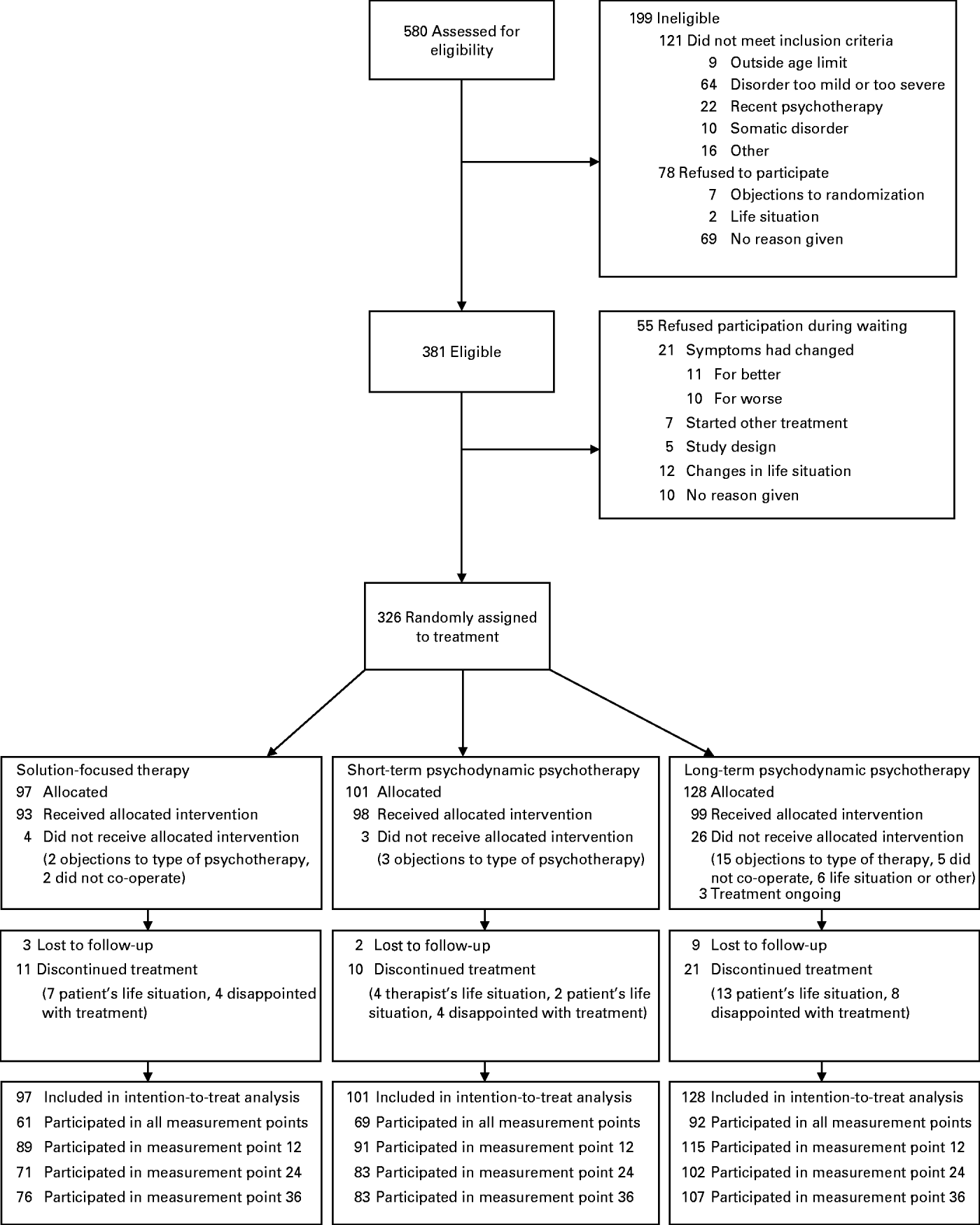
Of the 580 patients referred to the project, 381 satisfied the eligibility criteria and were willing to participate in the study (Knekt & Lindfors, Reference Knekt and Lindfors2004). During the waiting time (average 56 days) from the assessment of eligibility to baseline examination, 55 of these decided not to participate (Fig. 1). Of the remaining 326 patients, 128 were randomly assigned to long-term psychodynamic therapy, 101 to short-term psychodynamic therapy, and 97 to solution-focused therapy. Of the patients randomized, 26 patients assigned to long-term psychotherapy and seven assigned to brief therapies refused to participate after assignment to the treatment group. Of the patients starting the assigned therapy a total of 42 patients discontinued the treatment prematurely. The patients discontinuing solution-focused therapy had more symptoms than those continuing treatment (data not shown). The average number of therapy sessions for patients starting the therapy was 232 (s.d.=105) in the long-term psychodynamic psychotherapy, 18.5 (s.d.=3.4) in the short-term psychodynamic psychotherapy and 9.8 (s.d.=3.3) in the solution-focused therapy group, and the mean length of therapy was 31.3 (s.d.=11.9), 5.7 (s.d.=1.3) and 7.5 (s.d.=3.0) months, respectively.
Number of patients assessed for eligibility, assigned to study group, and who completed the protocol.

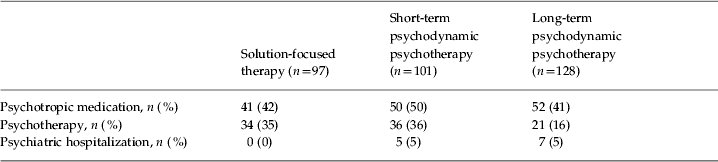
About 60% of the patients used auxiliary treatment during the 3-year follow-up (Table 1). Use of psychotropic medication was more common in the psychodynamic psychotherapy groups than in the solution-focused therapy group and auxiliary psychotherapy was more common in the two brief therapy groups than in the long-term psychodynamic psychotherapy group. Only 3.1% of the patients were treated at a psychiatric hospital during follow-up and none of these patients came from the solution-focused therapy group. After adding the auxiliary therapies to the treatment given by the project, the average total number of therapy sessions among the patients starting the therapy were 235 (s.d.=104), 46.9 (s.d.=61.9) and 29.9 (s.d.=43.9) and for the patients not starting the therapy 14.2 (s.d.=32.0), 148 (s.d.=140) and 180 (s.d.=208) in the three groups, respectively.
Auxiliary treatment during the 3-year follow-up

Characteristics at baseline examination
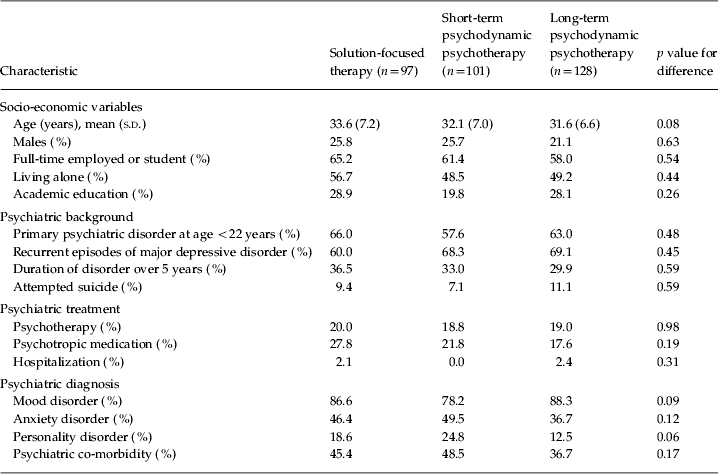
The patients were relatively young and predominantly females (Table 2). About half of them were living alone and over one-fifth had an academic education. More than half of them were either employed or students. A total of 84.7% of the patients suffered from mood disorder (67.5% major depressive disorder), 43.6% from anxiety disorder and 18.1% from personality disorder. No statistically significant differences among treatment groups were found with respect to baseline demographic or clinical characteristics.
Baseline characteristics of the 326 patients intended to treat by treatment group

s.d., Standard deviation.
Drop-out during follow-up
The mean drop-out over the eight measurement occasions was 13% in the short-term psychodynamic psychotherapy group, 18% in the long-term psychodynamic psychotherapy group and 15% in the solution-focused therapy group. The corresponding values among individuals starting the therapy after randomization were 12%, 5% and 12%, respectively. Two patients from the short-term psychodynamic psychotherapy group, nine from the long-term psychodynamic psychotherapy group and three from the solution-focused therapy group participated only at baseline measurement. Of these 14 patients, two participated in the assigned therapy. The major reason for drop-out from a study occasion was refusal, because the study occasion was experienced as mentally stressful or because the patient was disappointed with the treatment. Disappointment with study treatment was statistically significantly a more common reason for drop-out in the solution-focused therapy group than in the two psychotherapy groups (p<0.001). Of the patients refusing, 42% gave information on their symptoms (major psychiatric symptoms, anxiety symptoms or depressive symptoms) and perceived need for psychiatric treatment by answering questions on the PSQ. Symptoms and perceived need for psychiatric treatment were statistically more common in the solution-focused therapy group (data not shown).
Treatment effects
Symptom scores
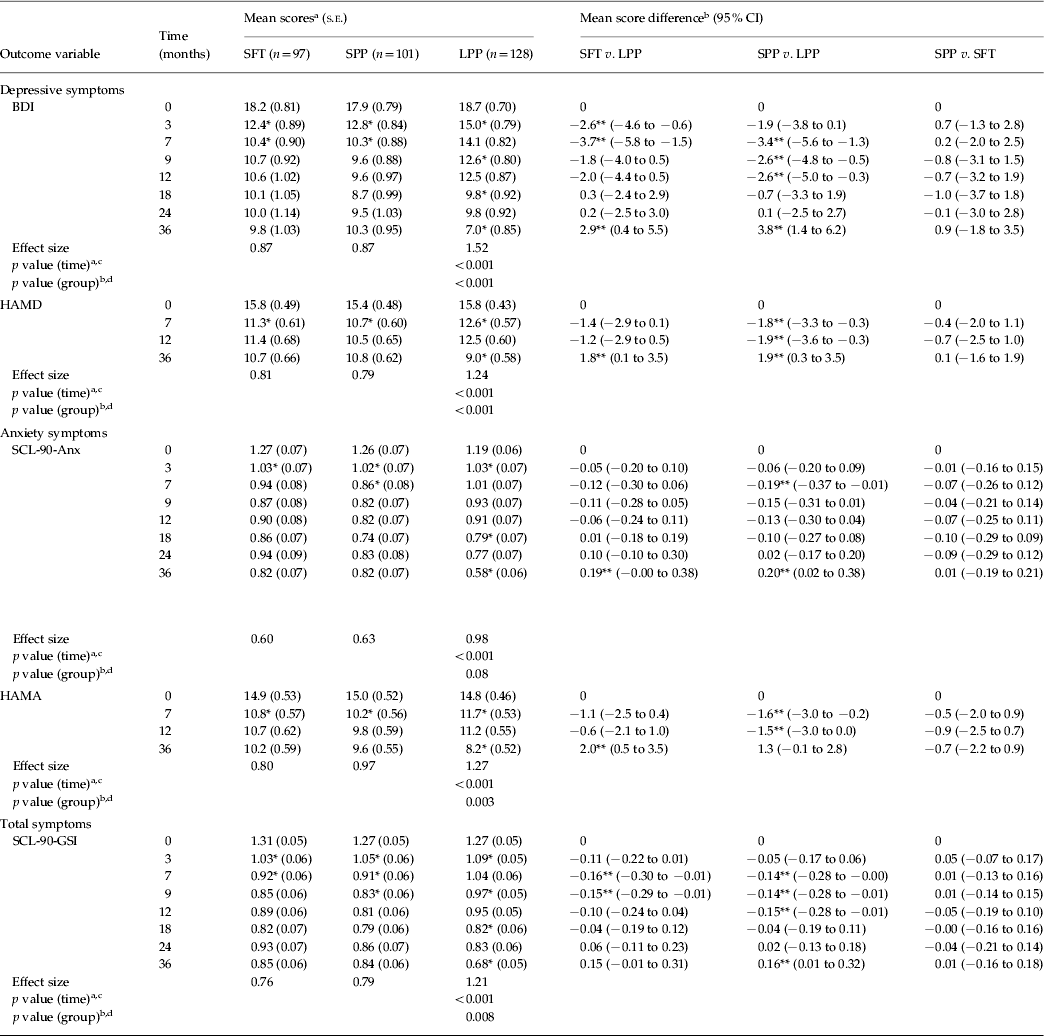
A statistically significant reduction of symptoms was noted for all five scores considered in all three treatment groups during the 3-year follow-up (p<0.001, Table 3). The average score reduction was 51% (range of ESs within treatment groups=0.87–1.52) in the BDI and 36% (ES=0.79–1.24) in the HAMD. The corresponding values for the anxiety score SCL-90-Anx and the HAMA were 41% (ES=0.60–0.98) and 38% (ES=0.80–1.27), respectively. The reduction was 39% (ES=0.76–1.21) in the global measure SCL-90-GSI. For all scores, the reduction was faster in the short-term therapy groups during the first year of follow-up after which the reduction continued during the entire 3-year follow-up only for the long-term psychodynamic psychotherapy group.
Mean score levels (s.e.) of psychiatric symptoms in treatment groups and mean score differences (95% CI) between the treatment groups

CI, Confidence interval; s.e., standard error; SFT, solution-focused therapy; SPP, short-term psychodynamic psychotherapy; LPP, long-term psychodynamic psychotherapy; BDI, Beck Depression Inventory; HAMD, Hamilton Depression Rating Scale; SCL-90-Anx, Symptom Check List Anxiety Scale; HAMA, Hamilton Anxiety Rating Scale; SCL-90-GSI, Symptom Check List Global Severity Index.
A total of four patients were excluded from the analyses because of missing values at baseline.
a Basic model.
b Basic model adjusted for the baseline level of the outcome measure considered.
c p value for time difference for the treatment groups combined.
d p value for the interaction of the treatment group and time.
* A statistically significant change occurred in comparison with the value at the previous time point.
** p<0.05.
Short-term psychodynamic psychotherapy was more effective in reducing symptoms of depression than long-term psychodynamic psychotherapy at the 7–12 months follow-up points, showing significantly lower score values both for BDI and HAMD (Table 3). The mean BDI and HAMD score differences between the two treatment groups after the first year of follow-up were −2.6 [95% confidence interval (CI) −5.0 to −0.3] and −1.9 (95% CI −3.6 to −0.3), respectively. During the second year of follow-up, no significant differences were found between the two psychotherapy groups, and after 3 years of follow-up, long-term psychodynamic psychotherapy was statistically significantly more effective than short-term psychodynamic psychotherapy with 3.8 (95% CI 1.4–6.2) units lower BDI values and 1.9 (95% CI 0.3–3.5) units lower HAMD values than in short-term psychodynamic psychotherapy. The ES was moderate, 0.32 for BDI and 0.27 for HAMD. The results for anxiety symptoms and the global symptom score were similar. Short-term psychodynamic psychotherapy was more effective than long-term psychodynamic psychotherapy at the 7-month follow-up point with mean differences for SCL-90-Anx and HAMA of −0.19 (95% CI −0.37 to −0.01) and −1.6 (95% CI −3.0 to −0.2), respectively. At the 3-year follow-up point, the effectiveness was reversed with mean differences of 0.20 (95% CI 0.02–0.38) for SCL-90-Anx and 1.3 (95% CI −0.1 to 2.8) for HAMA. For SCL-90-GSI the difference at the 1-year time point was −0.15 (95% CI −0.28 to −0.01) and after 3 years of follow-up 0.16 (95% CI 0.01–0.32).
The differences in effectiveness between long-term psychodynamic psychotherapy and solution-focused therapy were similar to those between short- and long-term psychodynamic psychotherapy (Table 3). The major difference was that solution-focused therapy was more effective in reducing subjective depressive symptoms than long-term psychodynamic psychotherapy at an earlier stage and for a shorter time period than short-term psychodynamic psychotherapy. Another difference was that solution-focused therapy was no more beneficial in the treatment of anxiety symptoms during the first year of follow-up. No statistically significant score differences were found between the two short-term therapies at any of the seven measurement occasions during the follow-up for any of the five outcome measures considered (Table 3).
The results of the comparisons between treatment groups were mainly the same in all the ‘intention-to-treat’ models adjusting for potential confounding factors, and no significant interactions between treatment group and diagnosis were found (data not shown). Also the results of the ‘as-treated’ models, including waiting time to start of therapy, withdrawal from therapy after randomization, discontinuing of treatment, and use of auxiliary treatment (i.e. psychotropic medication, therapy, or hospitalization) during follow-up were similar (data not shown). Multiple imputation of missing values weakened some of the associations, but the main findings remained (data not shown).
Remission from symptoms and recovery from diagnosis
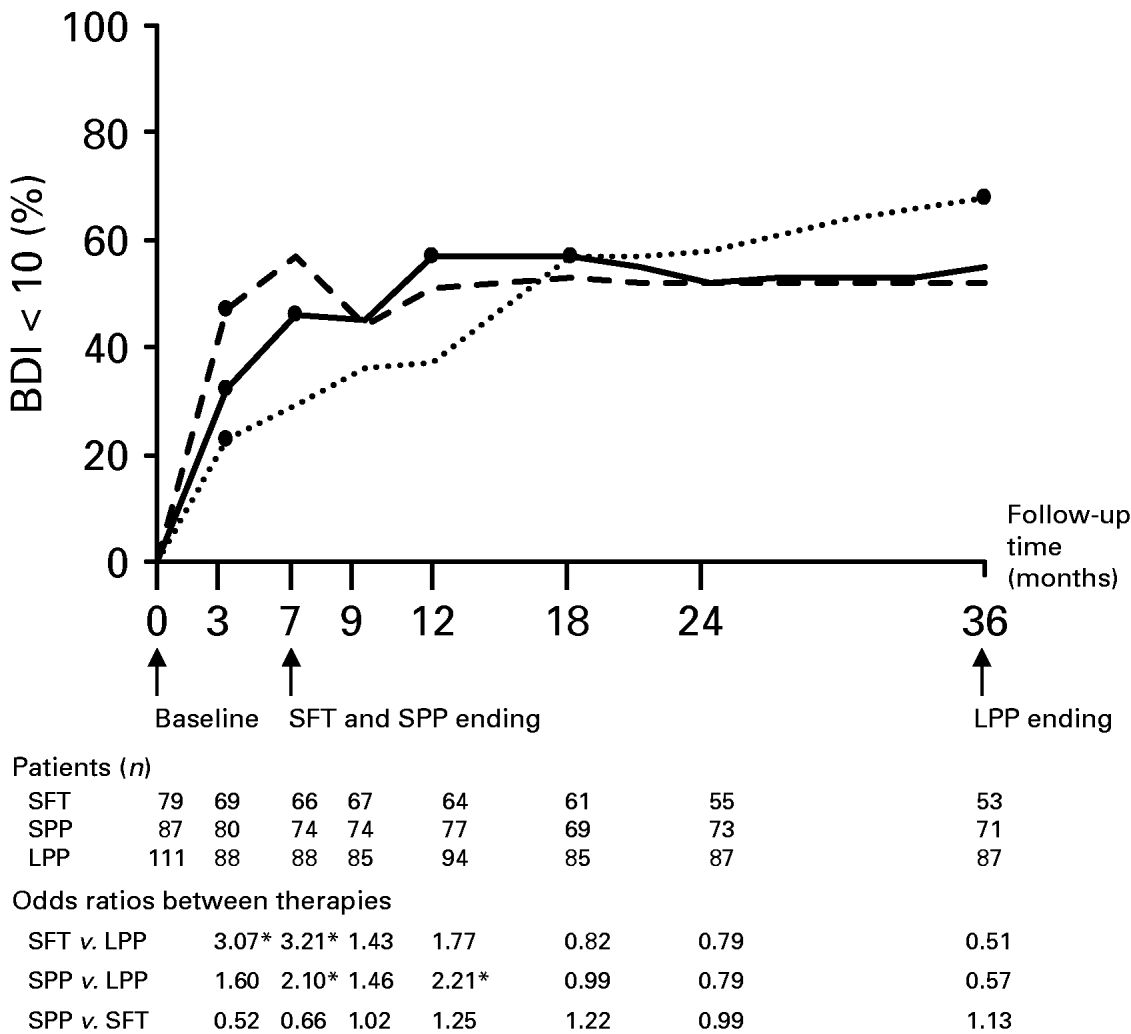
Remission from depressive symptoms showed a similar pattern to the BDI and HAMD scores, but the associations were somewhat weaker (Fig. 2). The brief therapies were statistically significantly more effective than long-term psychodynamic psychotherapy during the first 7–12 months of follow-up, with an odds ratio (OR) of 3.21 (95% CI 1.65–6.27) for solution-focused therapy at the 7-month time point and with an OR of 2.21 (95% CI 1.20–4.07) for short-term psychodynamic psychotherapy at the 12-month point. At the 3-year time point the long-term psychotherapy appeared to be suggestively more effective than the brief therapies, with ORs of 0.57 (95% CI 0.30–1.08) and 0.51 (95% CI 0.25–1.03) in comparison with the short-term psychodynamic psychotherapy and the solution-focused therapy, respectively. The effect of solution-focused therapy was non-significantly more rapid than that of the short-term psychodynamic psychotherapy, with an OR of 0.52 (95% CI 0.27–1.02) after 3 months of follow-up. Inclusion of need for auxiliary treatment among drop-outs did not notably alter the results (data not shown).
Remission from depressive symptoms (Beck Depression Inventory; BDI) among patients with BDI ⩾10 in the solution-focused therapy group (SFT; – – –), the short-term psychodynamic psychotherapy group (SPP; ——) and the long-term psychodynamic psychotherapy group (LPP; · · · · ·). ●, Statistically significant difference from preceding point of time; * statistically significant difference between groups.

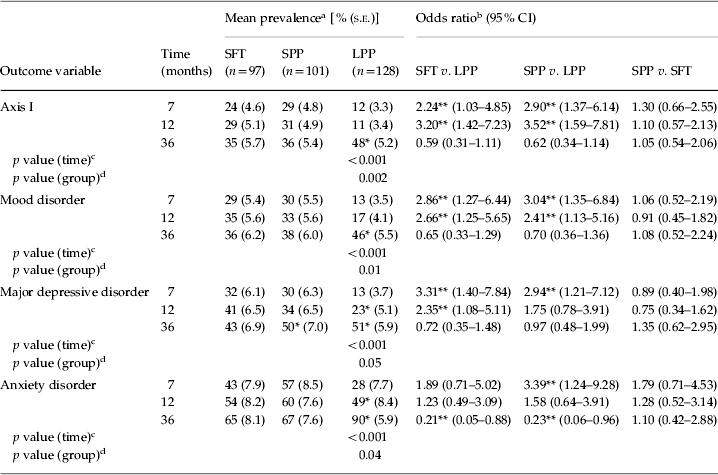
The study of changes in diagnoses during the follow-up showed that a statistically significantly greater number of patients in the brief therapy groups recovered from mood disorder, and more patients in the short-term psychodynamic psychotherapy group recovered from anxiety disorder than in the long-term psychotherapy group during the first 7–12 months of follow-up (Table 4). After 3 years of follow-up, recovery from anxiety disorder was fourfold and statistically significantly higher in the long-term psychodynamic psychotherapy group than in either of the brief therapy groups, whereas no significant excess benefit on depression was seen in the long-term psychodynamic psychotherapy group. No differences in recovery were observed between the two brief therapy groups. No notable differences in results were found in the different statistical models used (data not shown).
Recovery from diagnosis among individuals with respective diagnosis at baseline by treatment groups during the 3-year follow-up

s.e., Standard error; CI, confidence interval; SFT, solution-focused therapy; SPP, short-term psychodynamic psychotherapy; LPP, long-term psychodynamic psychotherapy.
a Basic model.
b Basic model adjusted for the baseline level of the outcome measure considered; the latter group is the reference group.
c p value for time difference for the treatment groups combined.
d p value for the interaction of the treatment group and time.
* A statistically significant change occurred in comparison with the value at the previous time point.
** p<0.05.
Discussion
Main findings
The present trial compared the effectiveness of two short-term therapies and long-term psychodynamic psychotherapy among patients with depressive and anxiety disorders. During the first year of follow-up, patients treated with short-term psychodynamic psychotherapy recovered faster from both depressive and anxiety symptoms, and patients treated with solution-focused therapy recovered faster from depressive symptoms than patients receiving long-term psychodynamic psychotherapy. After 3 years of follow-up, however, the situation was reversed with a stronger treatment effect in the long-term psychodynamic treatment group both for patients with depressive and anxiety symptoms. Thus in the long run, long-term psychodynamic psychotherapy was more effective than the brief therapies. The differences in effects observed were moderate but they were consistent over all five outcome measures considered. These findings are in line with the theoretical backgrounds of the therapies considered. In short-term therapies, an active, problem-based or dynamically focused orientation is applied, which makes it possible for patients to utilize these helpful elements of therapy in a short time frame. On the other hand, psychodynamic therapists working long term focus on working more slowly and deeply, aiming to produce more global changes by affecting the patient's long-term vulnerability to stressors (Gabbard et al. Reference Gabbard, Gunderson and Fonagy2002).
We found a rapid and similar decrease in both self-reported and observer-rated depressive and anxiety symptoms in both short-term therapies during the therapy and a less prominent reduction of symptoms later on. The finding that both short-term therapies produced a comparable reduction in symptoms seems to point to the fact that common beneficial ingredients in these therapies are more important than specific theoretical orientation and unique ingredients in producing changes (Wampold et al. Reference Wampold, Mondin, Moody, Stich, Benson and Ahn1997). Moreover, the majority of previous studies on effectiveness of short-term psychodynamic psychotherapy have reported a similar rapid decline in approximately 3–6 months both in depressive (McLean & Hakstian, Reference McLean and Hakstian1979; Hersen et al. Reference Hersen, Bellack, Himmelhoch and Thase1984; Brockman et al. Reference Brockman, Poynton, Ryle and Watson1987; Gallagher-Thompson et al. Reference Gallagher-Thompson, Hanley-Peterson and Thompson1990) and anxiety symptoms (Durham et al. Reference Durham, Murphy, Allan, Richard, Treliving and Fenton1994; Wiborg & Dahl, Reference Wiborg and Dahl1996).
The effect reached during the first few months persisted in both brief treatment groups during the entire 3-year follow-up. This is in accordance with earlier studies on the effectiveness of short-term psychodynamic psychotherapies in which the pre-post and pre-follow-up effects have been practically identical (Leichsenring et al. Reference Leichsenring, Rabung and Leibing2004). However, as far as we know, no previously published follow-up data for treatment of depression or anxiety with solution-focused therapy are available. The stability in the level of psychiatric symptoms indicates the equal maintenance of benefits but also an equal lack of additional symptom improvement after both short-term treatments. Although it cannot fully be excluded that this effect might, in part, be due to auxiliary treatment, the similar effect in the two treatment groups are apparently not due to confounding.
The orientation in solution-focused therapy uses amplification of patient improvement and relies heavily on a resource-oriented collaboration (McKeel, Reference McKeel, Miller, Hubble and Duncan1996). This highly supportive and encouraging technique is probably a key factor for rapid changes early on in therapy. Accordingly, we found a more rapid decrease of depressive symptoms and a more rapid remission of depression in the solution-focused therapy group than in the short-term psychodynamic psychotherapy group during the first 3–7 months. This finding is also in agreement with previous research which has reported that in comparison with other therapies the treatment effects were already seen after only a few sessions (Lambert et al. Reference Lambert, Okiishi, Finch and Johnson1998). The rate of patients reaching remission in our study was comparable with that observed in most of the previous research (Hersen et al. Reference Hersen, Bellack, Himmelhoch and Thase1984; Gallagher-Thompson & Steffen, Reference Gallagher-Thompson and Steffen1994; Piper et al. Reference Piper, McCallum, Joyce, Azim and Ogrodniczuk1999).
The study of the effect of treatment on the diagnosis of anxiety disorders showed that long-term psychodynamic psychotherapy was about four times as effective as the brief therapies at the 3-year measurement point. No similar effect was noted for mood disorders. The far better outcome in anxiety disorders could be explained by the possibility that a more thorough approach is required for the resolution of psychological conflicts related to anxiety disorders. In depression, the recovery rates in all therapies were more modest. It is possible that the neurophysiological elements of depression are such crucial predictors of remission that long-term treatment of up to 3 years does not in itself show similarly superior effects (Keller, Reference Keller2003). It cannot, however, be excluded that the different recovery rates in depression and anxiety disorder may be due to differences in the diagnostic procedures. Full recovery from a diagnosis like major depressive disorder (the most usual diagnosis in the present population) can be seen as more demanding in respect of the length and extent of a symptom-free period than what is required in the DSM-IV criteria of anxiety disorders.
Methodological aspects
As far as we know this is the first randomized clinical trial comparing the effect of brief and long-term psychotherapies. There are several definite advantages in this study. First, the relatively large randomized sample ensures that relevant effects can be detected not only in the total study population but also for different diagnostic groups. Second, the long follow-up time with frequently repeated measurements offers the possibility to estimate a profile of changes in the outcome variables. Third, the large number of outcome measures, covering psychiatric symptoms and diagnoses, need for psychiatric treatment, working ability, social functioning, personality functions, lifestyle, and cost-effectiveness, of which the first two are presented here, makes it possible to evaluate the effects of psychotherapy from various perspectives (Knekt & Lindfors, Reference Knekt and Lindfors2004). Fourth, the possible effects of the auxiliary treatment on the therapy outcome can be studied due to the comprehensive follow-up of auxiliary psychiatric treatment from the start of treatment to the end of follow-up. Finally, the data can be analysed using both intention-to-treat and as-treated settings.
Comparison of the effect of short-term and long-term treatment might potentially be complicated, however. Because our focus was on possible differences in symptoms during the 3-year follow-up between patients allocated to short-term and those to long-term therapy, the exposure provided by the study group was simply interpreted to be either short-term therapy for about 6 months and 2.5 years without treatment or long-term therapy for about 3 years. Because of the long follow-up, no non-treatment control group could be included for ethical reasons. Consequently, we could not control for possible reductions in symptoms due to factors other than the treatments given. This restriction, however, did not affect the comparability among the three treatment groups. One potential reason for symptom reduction might be regression to the mean but this was not the case in the present study because there were different symptom reductions for short- and long-term therapy during the first months of follow-up. Our finding that the largest gains were made during the initial sessions of treatment in the brief therapies is also in agreement with those from previous studies (Schaefer et al. Reference Schaefer, Koeter, Wouters, Emmelkamp and Schene2003).
Since we aimed to study the effectiveness of treatment given in normal clinical practice in a sample of out-patients, no treatment manuals were used in the psychodynamic therapies. The possibilities and benefits of applying manuals and adherence monitoring has been a controversial issue and poses a dilemma especially in long-term treatments where general process guidelines rather than detailed manuals may be of use (Piper et al. Reference Piper, McCallum, Joyce, Azim and Ogrodniczuk1999). Even though we can see that diagnosis and process-oriented manuals could be of use, up to now only a few steps have been taken in that direction concerning depressive and anxiety disorder (Busch et al. Reference Busch, Milrod and Singer1999, Reference Busch, Rudden and Shapiro2004). It has been suggested that studies which do not use treatment manuals are more prone to therapist effects (Crits-Christoph, Reference Crits-Christoph1992), but also that the use of a treatment manual does not necessarily lead to greater treatment benefits (Castonguay et al. Reference Castonguay, Arnow, Blatt, Jones, Pilkonis and Segal1999). Any possible therapist effects in the present study did not alter the results significantly (Härkänen et al. Reference Härkänen, Knekt, Virtala and Lindfors2005). Continuous monitoring of the internal and external quality of treatment during the entire treatment period might have helped to reduce the therapist effects in the present study (Knekt & Lindfors, Reference Knekt and Lindfors2004). The lack of therapist effects might also be due to the fact that the training of therapists is widely standardized in Finland and that the therapists were very experienced. However, since the specific theoretical framework and technique in long-term psychodynamic psychotherapy are not as uniformly defined as in short-term psychodynamic psychotherapy (Malan, Reference Malan1976; Sifneos, Reference Sifneos and Davanloo1978) and in solution-focused therapy (de Shazer et al. Reference de Shazer, Berg, Lipchik, Nunnally, Molnar, Gingerich and Weiner-Davis1986; de Shazer, Reference de Shazer1991) but instead cover various theoretical models, we included a larger number of therapists in long-term therapy than in short-term therapies to ensure that results could be generalized.
Further methodological issues that are of special importance regarding the interpretation of the results from the main ‘intention-to-treat’ analyses of this study are the success of randomization, compliance with study treatment (i.e. withdrawal from treatment after randomization, discontinuation of therapy, and use of auxiliary treatment during follow-up), and drop-out of patients from the measurement occasions. The randomization of the patients was successful, apparently because of the relatively large number of patients in the three therapy groups. Consequently, only a few confounding factors had to be included in the models, and their effects on the results appeared to be negligible. Another consequence of the successful randomization was that the diagnosis distributions in the three treatment groups did not differ from one another. Therefore, every diagnostic group could be interpreted as an independent randomized design and could be studied separately as has been done in some other studies (Hoglend & Perry, Reference Hoglend and Perry1998). However, there is no definite information so far on whether short- and long-term psychotherapy has similar or different effects on different diagnostic groups. In the present study we therefore investigated whether the effect of the therapies on psychiatric symptoms differed between depression and anxiety disorder by inclusion of an interaction term between treatment group and diagnosis in the model. No interaction was found and, accordingly, we could report the combined effects of the diagnostic groups.
Any possible bias resulting from different baseline levels of the outcome variables in the three treatment groups was adjusted by inclusion of the variable at baseline as a covariate in the models. The fact that over 20% of the patients in the long-term psychotherapy group withdrew from treatment after randomization might potentially have caused bias in the data. These individuals might have experienced weaker symptoms and might therefore have been unwilling to commit themselves for 3 years. The fact that those individuals discontinuing solution-focused therapy had more symptoms than those completing treatment may have biased the results. Since it was unethical to deny use of auxiliary treatment during the 3-year follow-up, information on the use of treatment for psychiatric disorders was collected continuously during the entire follow-up period (Knekt & Lindfors, Reference Knekt and Lindfors2004). The fact that the occurrence of auxiliary treatment (psychotropic medication, psychotherapy or hospitalization) was lower in the long-term psychodynamic psychotherapy group during the 3-year follow-up than in the short-term treatment groups was a potential source of bias. Adjustments for withdrawal, discontinuing, and auxiliary treatment in ‘as-treated’ analyses did not, however, notably alter the results from those of the ‘intention-to-treat’ analyses. Although the rate of drop-out of patients from the measurement occasions during follow-up was low, the fact that those who dropped out from the solution-focused group more often had psychiatric symptoms and more often needed psychiatric treatment might have biased the results in the basic ‘intention-to-treat’ analyses. Analyses based on multiple imputation and taking into account the need for treatment at the time of drop-out did not, however, notably alter the results, suggesting that the results presented are unbiased (data not shown). Finally, raters were not blinded since they were provided with information on the treatment group at the five interview sessions during the 3-year follow-up. The similarity of the findings based on questionnaires and interviews, however, suggested that no notable bias occurred.
Conclusions
In conclusion, patients receiving short-term psychodynamic psychotherapy recovered faster from both depressive and anxiety symptoms during the first year of follow-up, and those receiving solution-focused therapy recovered faster from depressive symptoms than patients receiving long-term psychodynamic psychotherapy. During the following 2 years, the symptoms persisted at the level reached in the two brief therapy groups, whereas in the long-term psychodynamic psychotherapy group the improvement continued during the entire 3-year period. In the long run, long-term psychodynamic psychotherapy thus gave greater benefits than those achieved by the brief therapies. The findings indicate that the length of therapy rather than the form is important when predicting the outcome of the therapy. More research comparing the effects of different forms of short-term and long-term therapies is needed, however.
Acknowledgements
The Helsinki Psychotherapy Study Group (Knekt & Lindfors, Reference Knekt and Lindfors2004) was responsible for collection of the data. The study was financially supported by the Social Insurance Institution, Finland.
Declaration of Interest
None.